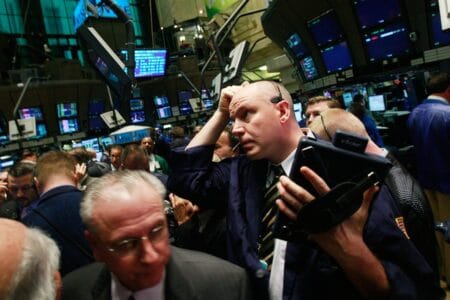


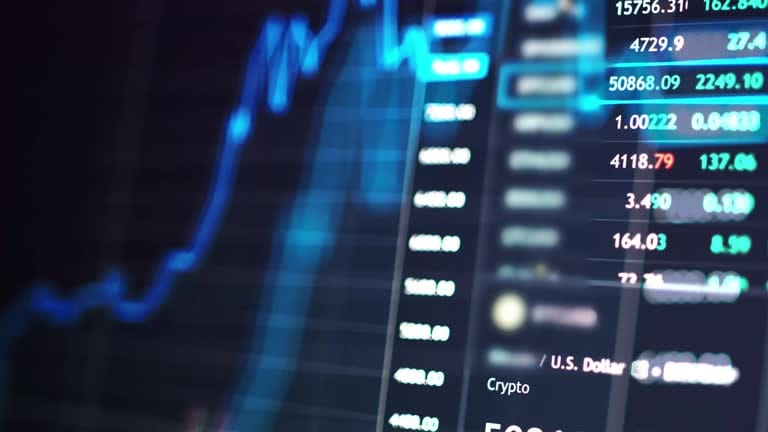
S&P 500 futures and crude oil contracts on the Chicago Mercantile Exchange (CME) at approximately 6:50 a.m. ET Monday—mere minutes before President Donald Trump posted on Truth Social that the United States and Iran had held “very good and productive conversations” toward resolving hostilities in the Middle East.
The timing has raised eyebrows across trading desks and prompted quiet scrutiny from market participants, even as the White House forcefully denies any impropriety.
According to Bloomberg data reviewed by multiple outlets, roughly 6,200 Brent and West Texas Intermediate (WTI) futures contracts traded in a single minute around 6:50 a.m., representing a notional value of approximately $580 million.
At virtually the same instant, S&P 500 e-mini futures recorded an isolated burst of activity that stood out against an otherwise subdued pre-market session. Both oil and equity futures then moved dramatically once Trump’s post appeared at 7:05 a.m.

WTI crude plunged nearly 12% to around $83–$88 per barrel by the close, while Brent fell below $100 for the first time since early March. S&P 500 futures, by contrast, jumped more than 2.5% in the minutes following the announcement, reflecting investor relief that planned U.S. strikes on Iranian energy infrastructure had been postponed for five days.

The volume anomalies occurred during thin early-morning liquidity, when even modest order flow can create noticeable spikes. Still, veteran traders described the coordinated moves—aggressive selling or shorting of oil while buying equity futures—as unusually prescient.
“It’s hard to prove causality… but you have to wonder who would have been relatively aggressive at selling futures at that point, 15 minutes before Trump’s post,” one senior market strategist at a major U.S. broker told the Financial Times. Another hedge-fund portfolio manager with 25 years of experience called the pattern “really abnormal” for a quiet Monday morning with no scheduled data releases or Fed speakers.

The SEC and CME Group declined to comment. White House spokesperson Kush Desai rejected any suggestion of insider activity, stating: “The only focus of President Trump and Trump administration officials is doing what’s best for the American people… any implication that officials are engaged in such activity without evidence is baseless and irresponsible reporting.”
Markets React to De-Escalation — For Now
Trump’s Truth Social post described “productive conversations” with Iran and ordered the postponement of strikes on Iranian power plants and energy infrastructure for five days, subject to continued talks. Iran’s parliament speaker, Mohammad-Bagher Ghalibaf, quickly denied that any negotiations were underway, calling the claim “fake news” designed to manipulate oil and financial markets.

Most Read in Middle East




Oil prices, which had climbed aggressively in recent sessions on fears of supply disruption through the Strait of Hormuz, reversed sharply. WTI settled down roughly 10–12% at $83–$88 per barrel, while Brent dropped 11–13% to just under $100. European natural gas (TTF) also fell sharply.
The moves provided temporary relief to risk assets but highlighted how fragile sentiment remains. Morgan Stanley analysts warned that a sustained rise to $120 per barrel oil could shave 20–30 basis points off Asian GDP growth and force rate hikes in several emerging economies later this year.
A Pattern of Well-Timed Trades?
This is not the first instance of unusually prescient trading ahead of major Trump administration announcements in recent months. Hedge funds and energy consultants have privately noted several large block trades that appeared well-timed relative to official statements on Iran and Venezuela.
While such patterns are difficult to prove as improper without concrete evidence, they have generated “a level of frustration” among institutional investors, according to one portfolio manager.
Algorithmic and macro strategies can produce rapid cross-asset flows, especially in thin pre-market hours, but the scale and precision of Monday’s moves—selling oil and buying equities just before a de-escalation announcement—left many questioning whether non-public information circulated.
Political and Market Context
The episode unfolds against a backdrop of heightened geopolitical tension and domestic political pressure on the Trump administration’s aggressive posture toward Iran. While Trump framed the postponement as a sign of progress, critics argue the administration’s brinkmanship has already inflicted economic pain through elevated energy prices and market volatility.
For now, the market appears to be pricing in cautious optimism that a wider conflict can be avoided. Yet with Iran denying talks and both sides continuing information operations, the “fog of war” remains thick.
Investors would be wise to treat headline-driven moves with skepticism—especially when large, well-timed trades precede them.