Almost anyone who has used the internet has probably experienced that alarming moment when a window pops up claiming your device has a virus, encouraging you to click for tech support or download security software. It’s a common online scam, and one that Google is aiming to fight more aggressively using artificial intelligence.
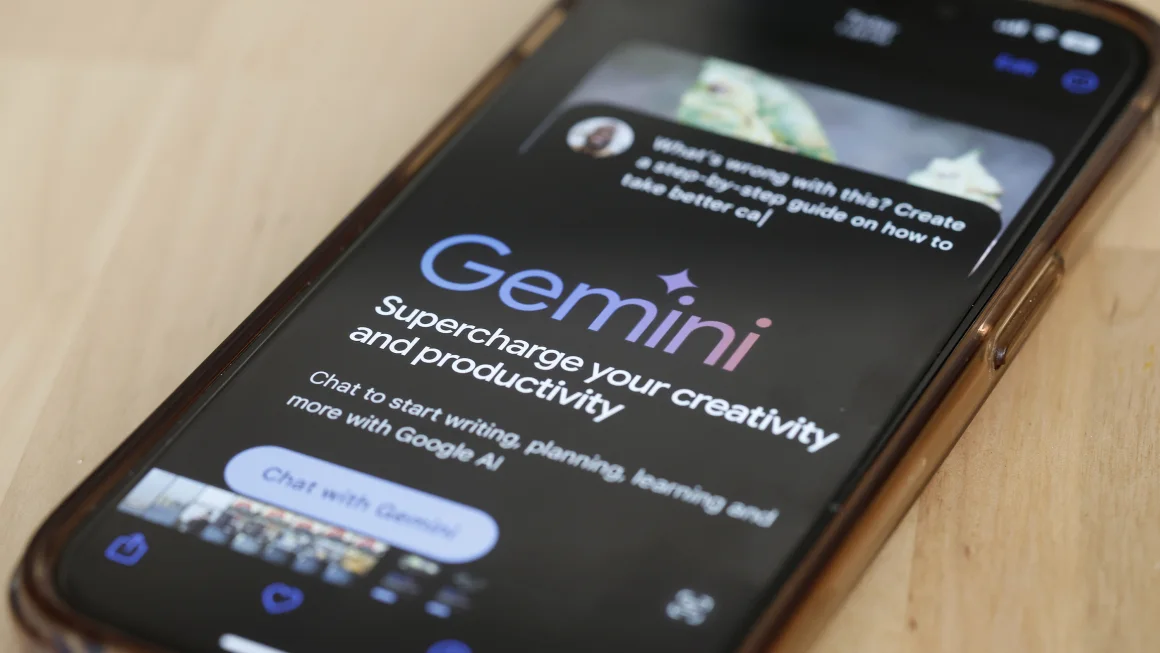
Google says it’s now using a version of its Gemini AI model that runs on users’ devices to detect and warn users of these so-called “tech support” scams.
It’s just one of a number of ways Google is using advancements in AI to better protect users from scams across Chrome, Search and its Android operating system, the company said in a blog post Thursday.
The announcement comes as AI has enabled bad actors to more easily create large quantities of convincing, fake content — effectively lowering the barrier to carrying out scams that can be used to steal victims’ money or personal information. Consumers worldwide lost more than $1 trillion to scams last year, according to the lobbying group Global Anti-Scam Alliance. So, Google and other organizations are increasingly using AI to fight scammers, too.
Phiroze Parakh, senior director of engineering for Google Search, said that fighting scammers “has always been an evolution game,” where bad actors learn and evolve as tech companies put new protections in place.
“Now, both sides have new tools,” Parakh said in an interview with CNN. “So, there’s this question of, how do you get to use this tool more effectively? Who is being a little more proactive about it?”
Although Google has long used machine learning to protect its services, newer AI advancements have led to improved language understanding and pattern recognition, enabling the tech to identify scams faster and more effectively.
Google said that on Chrome’s “enhanced protection” safe browsing mode on desktop, its on-device AI model can now effectively scan a webpage in real-time when a user clicks on it to look for potential threats. That matters because, sometimes, bad actors make their pages appear differently to Google’s existing crawler tools for identifying scams than they do to users, a tactic called “cloaking” that the company warned last year was on the rise.
And because the model, called Gemini Nano, runs on your device, the service works faster and protects users’ privacy, said Jasika Bawa, group product manager for Google Chrome.
As with Chrome’s existing safe browsing mode, if a user attempts to access a potentially unsafe site, they’ll see a warning before being given the option to continue to the page.
In another update, Google will warn Android users if they’re receiving alerts from fishy sites in Chrome and let them automatically unsubscribe, so long as they have Chrome website notifications enabled.
Google has also used AI to detect scammy results and prevent them from showing up in Search, regardless what kind of device users are on. Since Google Search first launched AI-powered versions of its anti-scam systems three years ago, it now blocks 20 times the number of problematic pages.
“We’ve seen this incredible advantage with our ability to understand language and nuance and relationships between entities that really made a change in how we detect these scammy actors,” he said, adding that in 2024 alone, the company removed hundreds of millions of scam search results daily because of the AI advancements.
Parakh said, for example, that AI has made it better able to identify and remove a scam where bad actors create fake “customer service” pages or phone numbers for airlines. Google says it has has now decreased scam attacks in airline-related searches by 80%.
Google isn’t the only company using AI to fight bad actors. British mobile phone company O2 said last year it was fighting phone scammers with “Daisy,” a conversational AI chatbot meant to keep fraudsters on the phone, giving them less time to talk with would-be human victims. Microsoft has also piloted a tool that uses AI to analyze phone conversations to determine whether a call may be fraudulent and alert the user accordingly. And the US Treasury Department said last year that AI had helped it identify and recover $1 billion worth of check fraud in fiscal 2024 alone.
MoviePass, the startup that made its mark with its movie theater subscription service, has always been known for shaking things up, and its latest venture is no exception.
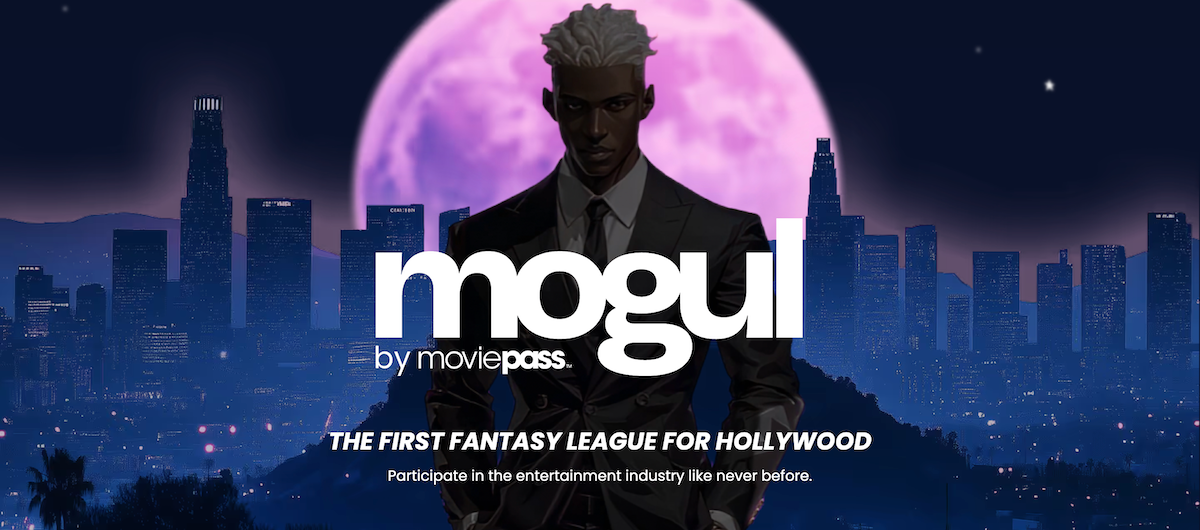
The company announced on Thursday the beta launch of Mogul, a new daily fantasy entertainment platform designed specifically for the Hollywood industry.
To understand what Mogul is, it’s important to first grasp the concept of daily fantasy sports. This subcategory of fantasy sports allows players to compete over short-term periods, rather than an entire season. Players assume the role of team managers, creating their own dream teams made up of real-world athletes and earning points based on how those athletes perform in actual games.
Mogul takes this idea by allowing users, who are likely passionate movie enthusiasts interested in this sort of thing, to act as studio heads in the film industry. Players are provided with a budget and “studio credits” (in-game currency) to spend on selecting actors for their leagues.
Users can update their lineup of movie actors each day. They then participate in fantasy-style tournaments that last about a week, plus one-on-one competitions and solo challenges. Participants make calls on the results of various things, such as box office results, audience turnout, critic ratings, and potential award winners.
As users level up, they earn digital collectibles — think signed posters and memorabilia — that help them climb the leaderboard.
Mogul is built on Sui, a layer 1 blockchain and smart contract platform developed by Mysten Labs. Beta testers will receive a digital wallet to securely store their in-game virtual currency, rewards, and collectibles.
MoviePass is taking a bold leap with the introduction of Mogul, as it has never really been done before. But CEO Stacy Spikes believes it’s a huge market waiting to be tapped. He said, “People can name more actors than they can probably name sports athletes. So I think there’s a really big market opportunity there.”
Initially, when we first learned about Mogul, we didn’t anticipate that it would take off, at least not in the early stages. We wondered if there are many movie fans willing to compete with others about box office revenue or ratings.
However, we may have underestimated its appeal. The company claims that more than 400,000 people have already signed up for the early-access waitlist. It remains to be seen whether it can maintain this level of interest leading up to the official launch, but it could become popular among niche film industry followers.
During our initial conversation with Spikes, he positioned Mogul as a predictive market platform. Later on, we were told that a more fitting description would be to classify Mogul as a daily fantasy sports platform, but it may evolve to include this functionality in the future. For now, though, Mogul operates exclusively with virtual currency.
This distinction is important, especially considering the regulated nature of daily fantasy sports, as opposed to prediction market platforms, which currently exist in a legal gray area. Kalshi, for instance, has been in ongoing legal battles with state gambling regulators.
“It’s murky what needs to be approved. There are different types of clearances, depending on the markets you want in the U.S. You have to go state by state. It literally is like a Chinese puzzle with stuff all over the place,” Spikes said.
Mogul represents the initial phase of MoviePass’s long-term web3 strategy. The company has previously revealed its intention to provide on-chain rewards for attending movies. It’s also backed by Animoca Brands, a venture capital firm specializing in blockchain technology.
Last year, MoviePass partnered with Sui to allow subscribers to make payments using USD coin.
Starting Friday, the Trump administration is shelving a nearly century-old tax loophole that saved companies from paying tens of billions of dollars in fees on cheap imports, most of which come from China. The move stems from the sweeping tariffs President Donald Trump announced last month on most U.S. trading partners, and it will affect businesses from Etsy sellers and family-run footwear companies to e-commerce behemoths.
In fiscal 2022, 83 percent of all U.S. e-commerce imports used the “de minimis” loophole, according to a government report.
Trump initially did away with the de minimis exemption in February, but the move quickly overwhelmed U.S. Customs and Border Protection workers and prompted the U.S. Postal Service to briefly suspend inbound shipments from China and Hong Kong. The administration then reinstated the loophole to allow the Commerce Department to craft a way to collect the levy. The agency now has “adequate systems … in place to collect tariff revenue” on these low-value goods, the White House had said.
According to an executive order last month, imports from Chinathat previously qualified for the exemption now face a duty of at least 145 percent if they arrive via commercial shipping. Shipments through the Postal Service are subject to a fee of $100 per package — rising to $200 next month — or 120 percent of the import value.
“If a retailer is really reliant on manufacturing or shipping directly from China, this is going to be really painful for them,” Jess Meher, a senior vice president at the returns-management software company Loop, told The Post.
Ultimately, such costs generally filter down to consumers. Here’s why.
What is the de minimis exception?
In Latin, “de minimis” means something that is too small or insignificant to be considered. The rule, passed by Congress in the 1930s and amended over the years, spares merchandise worth less than $800 from import taxes.
E-commerce sites Shein and Temu have thrived off this loophole, allowing them to avoid paying billions of dollars in duties. Some trade experts contend that these retailers have fueled a surge in imports since fiscal 2015, when the number of de minimis entries hovered at about 139 million, according to CBP data. Between that fiscal year and 2023, the number of de minimis exceptions swelled over 600 percent. By 2024, they had surged to 1.36 billion, worth about $66 billion, said Gary Hufbauer, a nonresident senior fellow at the Peterson Institute for International Economics, a nonpartisan think tank based in Washington.
While those volumes represent a mere fraction of U.S. imports — now totaling more than $3 trillion annually — they help boost margins for small- to medium-size businesses in the United States, said Maggie Barnett, chief executive of LVK, a third-party logistics company with warehouses in the U.S. and Canada.
Many of these companies have about “30 percent of their revenue in retail, but the other 70 percent is leveraging the de minimis,” she said. If they’re not shipping directly from China, they often ship their items in bulk from manufacturers in China or Southeast Asia to warehouses in Canada or Mexico and “ship them over [to the U.S.] one by one when the orders come in,” she said.
So far, only items originating from China are prohibited from using the de minimis loophole, according to Trump’s executive order.
What does this have to do with Trump’s tariffs?
Killing the de minimis loophole is part of Trump’s broader strategy to boost domestic production. On April 2, he ordered a 10 percent tariff on all U.S. imports starting April 5, as well as additional taxes that would bring levies of as much as 50 percent on goods from certain countries starting April 9. Since then, Trump said he was pausing and lowering tariffs on goods from most nations for 90 days while simultaneously imposing a minimum tariff of 145 percent on all Chinese imports. Beijing responded with a 125 percent blanket levy.
Opposition to the de minimis loophole largely has been bipartisan, with some critics arguing that it has enabled illicit drugs, such as fentanyl, to be sent through the mail into the U.S. President Joe Biden, in his final days in office, issued limitations on the loophole, excluding certain imports from circumventing tariffs.
How will this affect my orders from Shein, Temu and Amazon Haul?
Without de minimis, prices on those orders could rise much as 30 percent, costing consumers about $22 billion annually, Hufbauer said.
A good chunk of that applies to Temu and Shein orders, which are responsible for an estimated 30 percent of packages shipped into the U.S. each day, according to a report from the Peterson Institute. Nearly half of all de minimis shipments originate in China, according to a report by House Republicans.
In a statement Friday, Temu said it is moving to a “local fulfillment model,” with U.S. orders handled by sellers in the U.S.
The vast majority of products for sale on Temunow have a green “local” sticker, indicating that they are already located in the U.S. at purchase. Shoppers took to social media this week to lament that a slew of items had been removed from their Temu shopping carts because they did not have that “local” tag. At one point last month, the company also displayed tariff-related costs to consumers by adding a charge at checkout for any imported item.
Shortly after Trump’s executive order ending de minimis, Shein said it would start making price adjustments on April 25. The retailer doesn’t break down import costs at checkout, but its website displays a message telling consumers that all tariff costs get included in the price they pay.
Also affected is Amazon, which launched its own platform in November called Haul that similarly sells cheap goods directly from China.Trump chastised the e-commerce giant this week after a news report said it planned to display tariff costs to consumers. An Amazon spokesperson previously told The Washington Post that the team that runs Haul “has considered listing import charges on certain products” but later added that “this was never approved and is not going to happen.”
With the tax loophole going away, brands that rely on sourcing low-cost goods, especially from China, “are going to have a really tough time because their margins are already really thin,” Meher said.
Shein, Temu and Amazon did not immediately respond to The Washington Post’s request for comment. (Amazon founder Jeff Bezos owns The Post.)
Who are the winners and losers?
American companies that haven’t been able to take advantage of the exemption could be the biggest winners, UBS analyst Jay Sole wrote in a February note after Trump initially revoked the loophole. He pointed to U.S. “fast fashion” retailers, specialty retailers, off-price retailers, department stores and kids’ clothing companies that have lost customers to these foreign e-commerce sites.
The flip side is that budget-seeking consumers, who have turned to these companies for cheap apparel and housewares, will bear the brunt of any price changes, Hufbauer said.
The same goes for small- and medium-size businesses, Barnett said. They have less cash on hand, less flexibility on inventory, fewer options to diversify their supply chain and less leverage to negotiate fair prices with major retailers selling their product.
“It’s going to be hard for those medium-sized businesses to maintain in this chaotic environment,” she said.
Elon Musk’s Net Worth Surges Past $400 Billion, Setting a Historic Record. (Forbes)
The past several weeks might have been tumultuous or even existential for a lot of U.S. businesses caught up in trade wars, but they’ve been pretty darn good for Starlink, the satellite company owned by Elon Musk.
After years of regulatory holdups, Starlink reached distribution deals in March with two giant internet providers in India, the world’s most populous country, and won approval in neighboring Pakistan as well. Another of America’s major trade partners, Vietnam, waived a rule that required Starlink to partner with a domestic company and said it would launch a five-year pilot program with Starlink.
Bangladesh, the second-largest exporter of garments to the U.S., just announced its own deal with Starlink after months of stalled negotiations. And in Lesotho, officials brushed aside long-standing objections to Starlink’s foreign ownership and granted the company a license.
I can find no publicly available data that lets us reliably compare the pace of Starlink’s dealmaking in the first part of this year to previous years. But all of these countries represent long-sought partnerships for Musk, and all of them but Lesotho will rank among Starlink’s top markets in terms of population.
This flurry of expansion, of course, comes as most of the world views Musk as the second most powerful man in D.C. So it raises some obvious questions.
Starlink Availability Data Chart
Starlink Availability Data
Visualization of Starlink service availability across different regions and continents.
Available
Coming soon
Waitlist
Blacklisted
By Continent
By Status
Expansion Timeline
Data represents the current global distribution of Starlink service availability as of May 2025.
I’ve spent the past month trying to untangle the complicated case of Bangladesh because it goes directly to the intersection of Musk’s unprecedented role in the Trump administration, his personal interests and American trade policy.
A country that somehow packs half the population of the United States into a land mass roughly the size of Alabama (think about that for a minute), Bangladesh finds itself in a particularly delicate position. Last year, a student-led uprising led to the ouster of the country’s authoritarian leader, Sheikh Hasina, and the establishment of an interim government led by Muhammad Yunus, a Nobel laureate. Yunus has attracted intellectuals and former dissidents to his government as he tries to build the country’s first functioning democracy, while facing stiff resistance from his much larger neighbor, India, where Hasina has taken sanctuary.
It’s the kind of democratic revolution America has often embraced — especially since Yunus is a past recipient of both the Presidential Medal of Freedom and the Congressional Gold Medal. But the Trump administration’s stance toward Bangladesh has hovered somewhere between indifferent and hostile. Trump’s director of national intelligence, Tulsi Gabbard, has echoed dubious allegations from India that the new government persecutes Hindus and harbors Islamist terrorists.
This is a major concern for the Bangladeshis, who rely heavily on exporting T-shirts and the like to America. So, in February, shortly after Trump took office, Yunus dispatched a special envoy, Khalilur Rahman, to Washington in hopes of building bridges on trade and security issues.
According to a source familiar with the Bangladeshi government, who spoke on the condition of anonymity, Rahman visited the White House complex in mid-Februaryand met with an official from the trade representative’s office, who pressed him on the issue of cotton imports. Bangladesh, the world’s largest cotton importer, gets most of its supply from West Africa and Brazil, and the United States was insisting it buy more American cotton if it wanted to head off tariffs.
According to the account from the source, Rahman readily agreed to this demand if it would lead to a new trade deal — but his visit wasn’t quite finished. Rahman was then led to an office where he was surprised to find the world’s richest man.
Musk wanted to discuss ongoing negotiations between Starlink and Bangladeshi regulators, who were under pressure from local telecom companies to keep Starlink out. I was told Rahman called Yunus from that meeting and relayed Musk’s concerns.The apparent implication, though it wasn’t stated outright, was that one of the world’s largest textile exporters would not be able to get favorable trade terms from the United States if Starlink wasn’t allowed entry into the Bangladeshi market.
When I asked the Bangladeshi government, through its embassy in D.C., whether any of its officials had met with Musk in Washington or if the country felt pressured to approve a license for Starlink, I got the same one-sentence reply to both: “The answer is no.” Privately, government officials maintain that Yunus’s government has long wanted to bring Starlink into the country (mainly because the previous regime had shut down the locally controlled internet in an effort to thwart the student revolution), so there would have been no need for Musk to lean on them.
There’s no doubt Bangladesh did want a deal with Starlink. It’s also true that officials there don’t want to disclose anything that would risk souring relations with Musk because the last thing they want right now is to antagonize the Trump administration. It’s hard to blame them for that.
We know a few otherthings for sure, too. Around the same time Rahman was in Washington, newspapers in Bangladesh reported that Yunus and Rahman met by videoconference for 90 minutes with Musk and Richard Griffiths, one of his lieutenants at Starlink, and that Yunus invited Musk to come to Bangladesh to witness the launch of the Starlink system. On X, Yunus posted that he had a “great meeting” with Musk and looked forward to working with him.
We also know that Bangladesh was not the only country trying to avoid tariffs that talked with Musk about Starlink. The same week that Rahman was in Washington, Musk met with India’s prime minister, Narendra Modi, at Blair House, across the street from the White House. According to India Today, which published a picture of Musk and three of his children sitting with Modi, a central agenda item was Starlink’s pending approval in India.
I realize it feels hopelessly naive to dwell on ethics laws in Washington these days (you might as well reminisce about all the spittoons that once dotted offices on Capitol Hill), but in case you were wondering: federal law generally makes it illegal for an official of the executive branch to take part “personally and substantially in an official capacity” in any discussion where he or she has a personal financial interest. A meeting between Musk and foreign leaders about Starlink from the White House would appear problematic.
When I told Sen. Mark R. Warner (Virginia), the ranking Democrat on the Intelligence Committee, about Starlink’s recent flurry of agreements and Musk’s purported discussions with foreign leaders on government grounds, he was taken aback.
“I think that crosses virtually every ethical and legal standard that has at least been the traditional way our country operates,” Warner said. “Musk has created some great companies, but they should not have such an unfair advantage that they get forced on countries by their founder sitting in government spaces.”
Even if Musk isn’t making an explicit connection in these meetings between Starlink approvals and his influence on the president, the perception that there is one has taken hold among anxious officials in other countries. As I was reporting this column, the story about Bangladesh was making its way around political and business circles in South Africa, which is seeking its own crucial trade deal with the Trump administration.
Like Vietnam, South Africa has a law against foreign communications companies operating without local partners — in this case, specifically a Black-owned partner, as the country continues to shed the vestiges of the apartheid era. Musk, a South African native, has repeatedly denounced that law as racist; in March, he posted on X that “Starlink is not allowed to operate in South Africa, because I’m not black.”
Two South African insiders told me that that they now assumedthat approval of a license for Starlink was a prerequisite for getting a favorable trade deal. As if to underscore that point, a leading legislator just introduced a controversial measure to exempt Starlink from the partnership law.
(The White House, which fields questions related to Musk’s work at the so-called Department of Government Efficiency, declined to answer questions about Starlink’s role in trade negotiations or Musk’s meetings with Rahman and Modi. It has previously said that Musk abides “by all applicable federal laws.”An email I sent to Starlink’s media department went unanswered, as well.)
The idea that some of America’s worried trade partners think they’re trading Starlink licenses for merciful policy is disturbing enough. What makes it even worse, perhaps, is that they could get suckered in the process.
Consider, again, the case of Bangladesh. After resolving its impasse with Musk and stepping up its efforts to import American cotton, Bangladeshi officials were stunned to turn on the television in early April and see their country listed on Trump’s giant whiteboard of targeted trade partners — next to a draconian tariff rate of 37 percent. All their efforts to placate Musk and Trump, just a few weeks earlier, had essentially won them nothing (although Trump has since paused the implementation of most tariffs).
You could argue that this proves there isn’t any link, after all, between trade negotiations and Musk’s business dealings. But it seems the Bangladeshis were under a different impression. Days later, after Trump laid out his proposed tariffs, Yunus sent a letter to the president, recounting the many ways in which Bangladesh was cooperating with American trade demands — such as the construction of a “bonded warehousing facility” to increase cotton imports — and pleading with the president to postpone the tariffs for three months. Among the concessions to which he pointed: the country’s pending approval of Starlink.
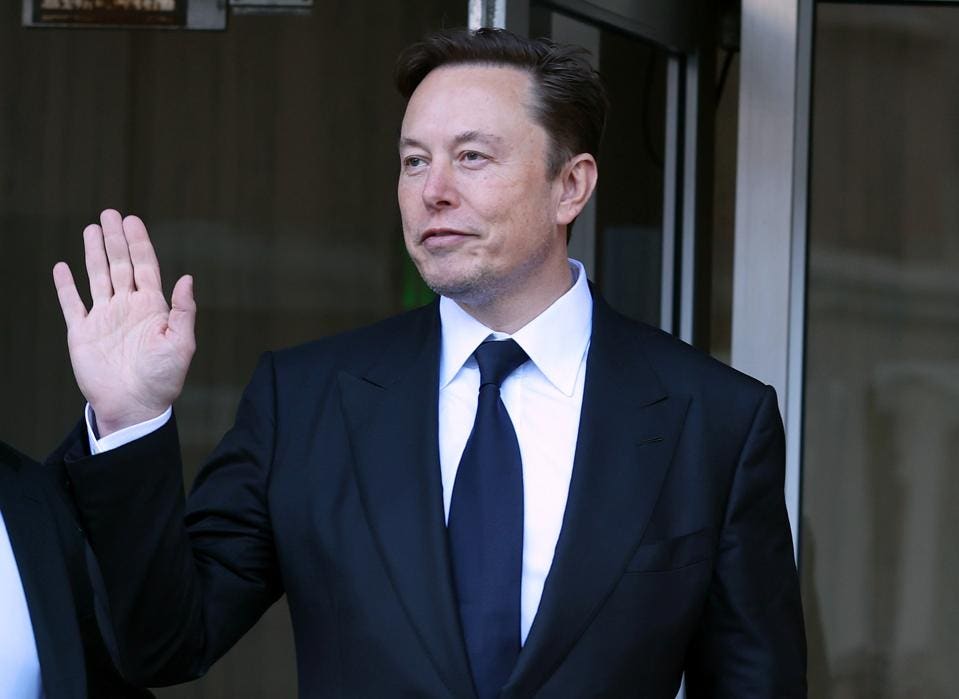
Elon Musk attends a Cabinet meeting at the White House on April 10. (Nathan Howard/Reuters)
As I talked about this with dozens of insiders in Washington and abroad over the past few months, what struck me most was the lack of evident outrage. I mean, this is a city that once found itself, in the Clinton years, paralyzed for weeks over possible conflicts of interest in the White House travel office. But in just the first three months since Trump returned to town and installed Musk as a kind of prime minister for efficiency, everyone seems to have resigned themselves to a new kind of ethical normal.
The conflicts between Musk’s government work and his private businesses are too myriad to track. Not only do licenses for Starlink appear to have worked their way into trade negotiations,but the service has now been installed across the federal government — including at the White House campus — and may soon be included in a federal grant program to low-income areas. Trump’s new NASA administrator, Jared Isaacman, is a friend of Musk’s who commanded the first-ever civilian spaceflight by SpaceX, Musk’s rocket company; he is now in charge of designing the missions for which SpaceX will be bidding. (At his confirmation hearing, Isaacman repeatedly assured senators that he would not be influenced by his relationship to Musk.)
The Wall Street Journal reported in February that a lawyer at X had pressured the large advertising firm Interpublic to direct more ads toward the social media platform — a move interpreted by the firm as a warning that its proposed merger with Omnicom could face government scrutiny if it didn’t. (X declined comment at the time.)According to Wired, the Social Security Administration is now moving its entire communications operation to X. And Trump himself held what amounted to a public sales pitch for Tesla on the White House grounds.
The most common take you hear on all this — at least among non-Trump supporters — is that Musk is all about enriching himself, which is why he’s ignoring ethical conflicts and bending the government to his will. This seems simplistic to me. Musk is worth more than $300 billion; it strains credulity to think that he’s executed a plan to take over Washington just so he can land a few more contracts. This is like saying Napoleon invaded Italy because he wanted more wine.
No, I’m inclined to believe Musk can’t actually conceive of the conflicts here because he fundamentally believes that his businesses are forces for good. This is the central theme of his career: that he is single-handedly saving the planet and leading humankind to colonize Mars. The getting-rich part is just what happens when you’re a visionary. A corollary to that theme is that Musk disdains any rule or regulation that would stand in the way of his saving humanity, which is why he generally loathes government.
So in Musk’s mind, there would be no conflict in using his power to proselytize for his technologies to the rest of the world. The world will be better off for it. Great men of action do not suffer ethical watchdogs in badly tailored suits.
In some respects, he may be right — hard as that is to admit. You can jump up and down about Trump hyping Teslas on the White House lawn, but aren’t we supposed to want the proliferation of cleaner cars? If Musk’s rockets can make the quest for Mars faster and cheaper, wouldn’t any competent government accept his help? If Starlink can bring reliable internet to countries where repressive governments have had the ability to shut off the internet, isn’t that a good thing?
The truth is that if Musk were merely an influential outsider who happened to own some of the most innovative companies in America, his getting richer off government contracts wouldn’t be hard to justify. In fact, it would be the government’s job to champion his cause, as it always does for American industries when they create jobs.
What Musk can’t seem to grasp is that he isn’t just an influential outsider; he is, instead, the most powerful government official with no apparent accountability that the country has ever seen (or at least he will be for another month or so, after which he has said he will step back).Practically everything he does after getting up in the morning and brushing his teeth raises an ethical dilemma.
For instance, Musk has emerged over these past few weeks as the most vocal critic of the tariff policy inside the administration, going as far as to attack Peter Navarro, Trump’s principal trade adviser. Musk has long been a free trader.
But given his spate of new Starlink deals, how do we know he isn’t engaged in lobbying against the tariffs on behalf of other governments, in exchange for those governments removing obstacles to his business? We don’t, which is exactly why ethics laws exist in the first place.
The damage from Musk’s arrogance isn’t simply that he is spinning a web of impenetrable conflicts. It’s that he is doing more than anyone — except perhaps Trump himself — to obliterate the concept of “American exceptionalism,” the idea that the United States conducts itself by a different code than other world powers, past and present.
This, after all, is the thing that shocks officials in Bangladesh and South Africa and other countries who feel caught in Musk’s grip — not that a billionaire businessman would have influence over trade policy but that he could brazenly discuss his company’s licenses from the White House complex in the middle of trade negotiations.
Things have long been done this way in most developing countries, but never in Washington, where our lofty ideals about the rule of law are what supposedly set us apart. Other governments used to grumble that America always behaved as if it were better and more righteous than the rest of the world. Under the Trump-Musk regime, they are coming to understand that we no longer give a damn.
ChatGPT creator OpenAI and Yahoo would like to buy Google’s Chrome web browser if a federal judge orders a sale of the internet’s most popular gateway.
The interest of these companies emerged this week during a trial that will determine whether Alphabet’s Google search empire will be broken up by federal judge Amit Mehta, who ruled last year that Google operated an illegal online search monopoly.
The Justice Department wants Google to sell its Chrome browser, and potentially its Android operating system, among other remedies.
Executives from OpenAI and Yahoo both disclosed in court that they would like their names in the mix if Chrome were to become available.
Brian Provost, Yahoo Search’s general manager, said so Thursday, noting it would cost tens of billions and that the company would be able to fund it with backing from its owner, Apollo Global Management (APO).
He said Chrome would help boost Yahoo’s market share in search from 3% to double digits, according to The Verge. As of March 2025, Chrome dominated the browser market with a market share of about 66%. Apple’s Safari held roughly 18%, and Microsoft’s Edge held 5%.
It is “arguably the most important strategic player on the web,” Provost said, according to Bloomberg.
Under questioning, he also said Yahoo had been working to develop its own prototype browser.
Executives from artificial intelligence-based search providers also took the stand and said they would have an interest in Chrome if it were up for sale.
One was Nick Turley, head of product for OpenAI’s artificial intelligence-based search platform ChatGPT.
Turley said integrating ChatGPT with Chrome could expand OpenAI’s distribution and boost the quality of its search, which currently relies on Microsoft’s Bing browser technology. Microsoft is OpenAI’s biggest backer.
Dmitry Shevelenko, chief business officer for Perplexity AI, also testified that the AI-fueled search startup could effectively run Chrome and that Chrome could boost its growing business.
However, he cautioned that a buyer could shutter Google’s Chromium, the open-source technology that powers Chrome, which developers use to iterate and build new web browsers and other products.
For that and other reasons, Google has pushed back against the government’s divestiture proposal.
A Google representative told Yahoo Finance that forcing it to sell Chrome would jeopardize rival browser providers that rely on Chromium’s open-source code, including Microsoft’s Edge and others, and undermine privacy and security for consumers who use the search tools.
The trial is expected to conclude on May 9. Judge Mehta is expected to issue a decision by August on how to remedy Google’s anticompetitive practices.
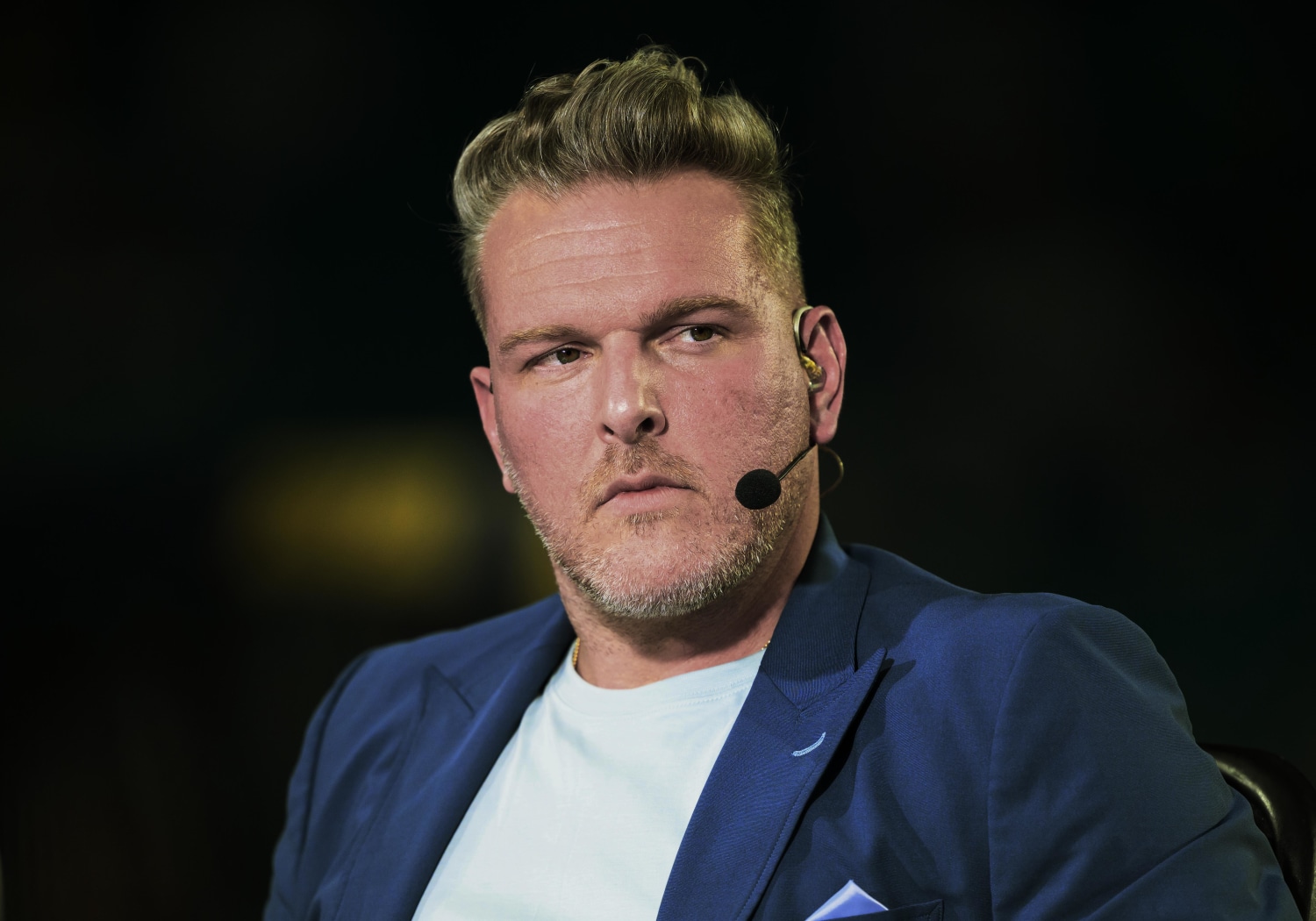
Mary Kate Cornett, a then-18-year-old student at the University of Mississippi, moved into emergency campus housing not long after sports talk show host Pat McAfee, whose ESPN show has 2.8 million subscribers on YouTube, spread a wholly unsubstantiated and vicious rumor on a February broadcast about an unnamed freshman on that campus he said “allegedly” had sex with her boyfriend’s father.
When a phone number for the teenager, who vehemently denies the rumor, circulated online, she began receiving hateful messages, including messages instructing her to kill herself. In what NBC News confirmed was a “swatting” case, police showed up to Cornett’s mother’s house with their guns drawn. For amplifying a nasty rumor that has made her family’s life hell, Cornett and her family told NBC News they intend to take legal action against McAfee and against ESPN, which licenses McAfee’s show.
Image Source: NBC News
In what NBC News confirmed was a “swatting” case, police showed up to Cornett’s mother’s house with their guns drawn.
Thus, McAfee is once again embroiled in a conversation about sports media, “journalistic standards” and the responsibility that comes with a platform as enormous as his. Cornett spoke about her ordeal this month, first for a lengthy piece by The Athletic’s Katie Strang, and then later to NBC News’ Tom Llamas.
Cornett is the victim of a sports media environment that prioritizes salaciousness and seems disinterested in distinguishing between what’s true and what’s false. But as she rightly told NBC News, she’s not a public figure, and McAfee should have never amplified a campus rumor that seems to have originated on YikYak, an anonymous, message-based gossip app popular among the college set, before spreading to X. And no responsible adult, especially not one with an audience of millions, should be mining social media for salacious rumors to discuss nonpublic figures. Even nonjournalists used to agree that some subjects were off-limits, especially private citizens and children.
McAfee appeared to address the controversy for the first time in a live show Wednesday night, saying he never wants “to be a part of anything negative in anybody’s life” although he did not elaborate further. Neither McAfee nor ESPN has commented more explicitly about the case, but McAfee’s defenders are quick to note that he didn’t name the woman during the segment and that he repeatedly said “allegedly”— as if that automatically absolves him of responsibility when discussing a nonpublic figure to his millions of followers. In the past, McAfee, who has a history of amplifying misinformation, has repeatedly denied being a journalist and has mocked the idea that he be held to “journalistic standards.”
There’s therefore a slight irony in his repeated, almost derisive use of the word “allegedly”: It’s a convention almost exclusively used by journalists and, at times, law enforcement and legal professionals, to hedge while discussing accused crimes. (It should also be noted there’s considerable debate among journalists, especially those of us who often cover gender-based violence, about the use of “allegedly” when covering domestic violence or sexual assault cases; some contend that the word confers disbelief and doubt toward accusers.) Still, despite McAfee using that common journalistic standard, he insists that he not be held to journalistic standards.
I’d argue that regardless of the name or size of the platform, everyone with a microphone should have the human decency not to parrot unsubstantiated rumors involving nonpublic figures — especially nonpublic figures who are teenagers. That goes double when you have the institutional backing of an entity like ESPN. But for too long there’s been a blurring of the line between journalists and entertainers, within sports media in general, including at ESPN. Full disclosure: I used to write for ESPN and appear on the network’s shows, and can confidently assert that the network employs numerous journalists and entertainers who are very good at their jobs.
During the past year, in response to criticisms of McAfee and his apparent allergy to fact-checking, ESPN has said the company does, in fact, “bear some responsibility” for what gets put on its platform. ESPN licenses McAfee’s show, so he’s technically not an employee, although that does not automatically negate any potential legal exposure for ESPN over things McAfee says on its airwaves.
Cornett’s case is a stark example of how being flippant and unconcerned with the truth can hurt people, even if they aren’t named.
In November, MSNBC’s Chris Hayes called out McAfee and NFL quarterback Aaron Rodgers when they cited a made-up stat that claimed Detroit Lions quarterback Jared Goff was 6-0 in games where he’d thrown at least four interceptions. After McAfee and Rodgers credulously spotlighted it, X user MisterCiv, the person who made the original post, wrote, “if you’ve ever wondered how easy it is to spread fake information, i made this stat up while laying in bed at halftime of the game.”
As Hayes said then, “Thankfully, this is a totally harmless example of disinformation and the only consequence was McAfee getting embarrassed and having to walk it back. But what happened in that exchange between McAfee and Aaron ‘Do your own Research‘ Rodgers is basically the entire story of our information environment right now.”
But McAfee devoting more than two minutes to discussing a rumor about a father-son-girlfriend love triangle wasn’t harmless. Mary Kate Cornett says his amplification of that lie upended her life.
We can’t continue to give people a pass from the responsibility of their platforms. Cornett’s case is a stark example of how being flippant and unconcerned with the truth can hurt people, even if they aren’t named.
People are using Internet in Pennsylvania.
Richell Fredson/The NewYorkBudgets
In early March, Karen Kama woke up early to hand out flyers in her neighborhood. She wanted people to know about a program at her local library in Reading, Pennsylvania, that helps people learn how to use the internet.
It was only one year ago that Kama started using the internet herself. She described for me a whole world opening up to her: using Google to translate conversations with her Spanish-speaking neighbor, playing games to keep her brain sharp and looking up test results from her doctor. But she said the best part has been showing people in her community what the internet can do for them.
“I’m so grateful for it because now I can tell somebody else how to do it,” she said. “I’m proud to show somebody what I can do.”
Kama is one of the millions of Black Americans who have been impacted by the digital divide, the gulf between people who have access to any internet at all and those who don’t. For as long as the internet’s been around, people of color have been more likely than their white counterparts to fall on the wrong side of this divide.
The Pew Research Center has asked US adults about how they use the internet since 2000, and every survey has shown Black and Hispanic Americans lagging behind white respondents.
“I like to joke that you give me an issue, and I’ll tell you why internet connectivity impacts it,” said Claudia Ruiz, a senior analyst at UnidosUS, a civil rights organization.
The flip side of that coin is that people without it — a group that is disproportionately Black, Hispanic and Native American — experience all those effects in the opposite direction.
To reap the benefits of the internet, you need three things: a connection available where you live, the means to afford it and the tools to use it. Every situation is unique, but in my seven years of reporting on the broadband industry, I’ve found that those boxes have often gone largely unchecked for minority communities.
“Having access to the internet is a social determinant of well-being, and it is something that improves quality of life, which has a series of economic and social outcomes for communities,” said Nicol Turner Lee, a senior fellow at the Brookings Institution.
What is the racial digital divide?
There are a lot of statistics you can look at to try to figure out how different groups use the internet, but the source researchers pointed me to the most is the Pew Research Center.
In Pew’s most recent survey, from June 2024, 83% of white respondents said they subscribed to home internet, compared with 73% each for Black and Hispanic adults. (Native Americans weren’t included in Pew’s survey, but US Census Bureau data has them at similar adoption rates as Black Americans.)
A McKinsey analysis of census data found that the gap was even larger in some places: Black households in Chicago and Baltimore, for instance, are twice as likely as their white counterparts to lack a high-speed internet subscription.
The racial divide is, to a large extent, a proxy for the income divide, which is what drives broadband adoption.
Alisa Valentin, broadband policy director at Public Knowledge
“This question is pretty roundly studied across the country, and the results are almost always the same, where Blacks and Latinos just universally lag behind in broadband and devices,” said Drew Garner, a director of policy engagement for the nonprofit Benton Institute for Broadband & Society.
The reasons for the gap are more complicated, but let’s start with the money. The latest Federal Reserve data shows that for every $100 in wealth held by white households, Black households hold only $16 and Hispanic households hold $22.
“The racial divide is, to a large extent, a proxy for the income divide, which is what drives broadband adoption,” said Alisa Valentin, broadband policy director at the digital advocacy nonprofit Public Knowledge.
That tracks with Pew’s survey results, which show that 92% of Americans making over $100,000 have home internet, compared with 57% who make less than $30,000.
These numbers paint a simple picture: Poor people can’t afford internet access, and poor people are disproportionately Black and Hispanic in the US. But to get a better view, you have to go back to the 1930s.
Digital redlining: How neighborhoods get left behind
The term redlining has its roots in the New Deal when the Federal Housing Administration was created in 1934 to provide insurance for mortgages from private lenders. With the help of real estate agents, the government created color-coded maps to rank neighborhoods from least to most risky in terms of loanworthiness. Not coincidentally, they assigned the “most risky” grade to neighborhoods where Black residents lived, effectively barring them from qualifying for loans.
The practice was banned when the Fair Housing Act passed in 1968, but by then, the damage had been done. A 2022 FiveThirtyEight analysis of 138 metropolitan areas found that “nearly all formerly redlined zones in the country are still disproportionately Black, Latino or Asian.”
What does all that have to do with internet access? Pick out any city in the country. If you place a map of redlined neighborhoods next to one showing internet speeds, you will likely see the same pattern: faster speeds in neighborhoods given the “least risky” grade and slower speeds in redlined areas.
An analysis by The Markup and the Associated Press found that slower speeds were offered in historically redlined neighborhoods in cities like Kansas City, Missouri.
Map: Joel Eastwood, Source: The Markup analysis of AT&T; Mapping Inequality
The most damning evidence came from a 2022 report co-published by The Markup and the Associated Press, which analyzed 800,000 internet plan offers in 38 US cities. In two-thirds of the cities where they had enough data to compare, internet providers offered the worst plans to the least-white neighborhoods.
“I don’t think it’s a case of executives at AT&T sitting in smoke-filled rooms conspiring about how to not build infrastructure in mostly Black and brown neighborhoods,” said Sean Gonsalvez, a director of communication with the advocacy group The Institute for Local Self-Reliance. He said internet service providers don’t always see the economic incentive to build network infrastructure in these neighborhoods. (AT&T recently pulled its wireless internet plans in New York in response to a state law requiring ISPs to offer low-income residents plans of $15 monthly.)
“We’re focused on doing our part to close the digital divide across the country,” an AT&T spokesperson told CNET in a statement. “As we expand high-speed internet connectivity, we consider a number of factors, including costs, competitive offerings and customer demand. Any suggestion that we discriminate in providing internet access is wrong.”
Barriers to homeownership created wealth disparities; wealth disparities meant that those same redlined neighborhoods have been last in line for technologies like fiber, which is considered “the gold standard” for internet connectivity, according to Cornell rural planning researchers.
Is it systemic racism? Yeah, obviously it is. Whether it was intentional or not is another question. I think in many places, it probably was.
Andy Stutzman, executive director at Next Century Cities
But it’s probably too simple to say that income is the only determinant of where broadband infrastructure is built. In a study of Los Angeles County from 2014 to 2018, researchers at USC looked at where fiber had been deployed.
“Income was the main driver of the disparities, but even after controlling for income, we did find a significant racial disparity in some areas lagging behind fiber deployment,” said Hernan Galperin, a professor at USC and one of the authors of the study.
Cid Espinal, who works at the Reading Public Library in Pennsylvania training seniors in digital literacy skills, has seen these disparities firsthand. One 2024 study published in the Annual Review of Sociologydetermined that the city of Reading had the highest segregation rate between white people and Latinos of any city in the country.
“You’re literally crossing the bridge. Here, on one side of the bridge, is strictly Comcast. The moment you cross the bridge, you have access to FastBridge Fiber,” he said.
FCC broadband map of fiber availability in Reading, PennsylvaniaFCC National Broadband Map
FCC National Broadband Map
The FCC’s broadband map shows fewer than 1% of homes can get fiber in Reading, compared with 41% across the Schuylkill River in the adjacent borough of Wyomissing. That doesn’t necessarily mean people in Reading can’t get fast internet — Comcast offers download speeds up to 2,100 megabits per second in parts of the city — but it does mean there’s a lack of competition.
“Comcast has a chokehold on the city. They get to charge whatever price they can because there are no competitors here,” Espinal said.
Comcast’s prices start at just $35 per month in Reading, but after two years, the same plan jumps to $83. When that happens in a city with essentially one provider, consumers are stuck with three options: try to negotiate a better deal, cancel or pony up.
“We offer low-cost Internet options like Internet Essentials for $14.95 and prepaid NOW Internet for $30, and a variety of other speed tiers, that cater to every household and budget in Reading and nationwide,” a Comcast spokesperson told CNET in a statement. “We encourage our customers to contact us when their promotional period ends, so we can find an Internet plan that meets their needs.”
The FCC created digital discrimination rules, but they haven’t been implemented
“Is it systemic racism? Yeah, obviously it is,” said Andy Stutzman, executive director at the nonprofit Next Century Cities. “Whether it was intentional or not is another question. I think in many places, it probably was.”
This question about intent in digital redlining has been the subject of much debate. In 2023, the Federal Communications Commission ruledthat intent isn’t necessary to allege digital discrimination; only conduct with a “discriminatory effect, based on income level, race, ethnicity, color, religion or national origin” is.
“The idea was to better understand and even define what we mean by digital discrimination, which the FCC defined as direct and indirect acts of discrimination, which ISPs hated,” said Christopher Ali, a professor of telecommunications at Penn State University who sat on the FCC council that helped draft the rules.
It would be exceedingly difficult to prove that internet providers directlydiscriminated against minority communities. Indirect discrimination is another story.
“You didn’t have to prove AT&T was racist,” Garner said. “You just had to prove that the effect of their network design disproportionately disadvantaged racial minorities.”
The FCC adopted these rules in November 2023 and was almost immediately sued by the US Chamber of Commerce and two cable industry lobbying groups. The rules are currently being challenged in court, and industry experts don’t expect Trump’s FCC to defend them. (The FCC didn’t respond to a request for comment.)
“They really haven’t been implemented yet,” Stutzman said. “I think we were looking towards a brighter future. But that’s not what we’re necessarily seeing at the moment.”
Rural doesn’t always equal white
When we talk about the broadband gap, rural areas tend to get most of the attention (and funding). Take the Broadband, Equity, Access and Deployment program, a $42.5 billion fund passed as part of the Infrastructure Investment and Jobs Act of 2021.
“The idea [with BEAD] was always to take the number of options that people have from zero to one. It is never to take them from one to two,” said Bill Callahan, director of the nonprofit Connect Your Community.
BEAD prioritized fiber as often as possible, with an exception for sparsely populated areas where fiber would be prohibitively expensive to build. (I recently reported on how this fiber preference is starting to change with the Trump administration, which is expected to shift BEAD’s rules to favor satellite options like Elon Musk’s Starlink.)
“Historically, when we were talking about issues related to the digital divide, I was hearing it more so as ‘digital divide equals rural issue,’ and then folks would say rural equates to white. And that’s not true,” Valentin said.
According to the 2020 census, nearly 14 million rural Americansidentified as Black, Hispanic or Latino, Native, Asian, or multiracial — a population larger than that of New York City and Los Angeles combined.
The Brookings Institution, “Mapping rural America’s diversity and demographic change”
A 2021 study from the Joint Center for Political and Economic Studiesfound that 38% of Black Americans lacked home internet access in the Black Rural South, compared with 23% of white Americans in the region and 22% of Black Americans nationwide.
Even when it is available, it’s often much slower. The report notes that 36.6% of all American households don’t use the internet at speeds of at least 25Mbps download — the FCC’s minimum definition for broadband at the time — compared with 72.6% in the Black Rural South. Last year, the FCC quadrupled the broadband threshold to 100Mbps download to reflect the greater needs of Americans for fast internet.
In other words, the racial broadband gap doesn’t just exist in rural areas too — it’s actually wider than it is in cities in some cases.
Affordability is a bigger barrier for most people
Digital redlining has kept many minority groups from a speedy internet connection, but the cost of a connection is an even bigger hurdle for most people.
A 2021 Pew Research Center survey found that one in five people who don’t have home internet cited cost as the main reason — the highest of any answer and well above the number who said service isn’t available. Another study found that “for every American without broadband service available, up to twice as many have service available but still don’t subscribe.”
The No. 1 reason that we hear from our community on why folks are not adopting broadband is cost.
Daiquiri Ryan Mercado, strategic legal adviser and policy counsel for the National Hispanic Media Coalition
“As folks in this space like to say, if it’s not affordable, it’s not accessible,” Gonsalvez said.
Over the years, the vast majority of federal broadband money has gone to expanding infrastructure. Comparatively little has been spent on helping people afford an internet connection once it’s there.
That started to change with the COVID-19 pandemic, when Congress passed the Emergency Broadband Benefit to help low-income families keep internet service. At the beginning of 2022, this morphed into the longer-term Affordable Connectivity Program.
“The ACP program really saved my life,” said Dorothy Burrell, a digital navigator with the Kansas City nonprofit Essential Families.
The ACP provided $30 monthly to anyone making below 200% of the federal poverty guidelines, or $60,000 for a family of four. By the time the $14.2 billion program ran out of money in May 2024, more than 23 million households had enrolled.
According to a (since-deleted) White House fact sheet, one in four households participating in the ACP program were Black, one in four were Latino and nearly half were military families, along with 4 million seniors and 10 million Americans over the age of 50.
“The No. 1 reason that we hear from our community on why folks are not adopting broadband is cost,” said Daiquiri Ryan Mercado, strategic legal adviser and policy counsel for the National Hispanic Media Coalition.
Digital literacy and tools
Along with the ability to access and afford an internet connection, you also need the tools to use it. Otherwise, it’s like having a meal in front of you but no utensils to eat it with.
The data shows that the digital divide is just as strong on the device end. According to a 2021 Pew survey, eight in 10 white adults own a desktop or laptop computer, compared with 69% of Black adults and 67% of Hispanic adults.
Additionally, 22% of Hispanic and 19% of Black adults are considered smartphone-dependent, meaning they own a smartphone but don’t subscribe to home internet service, compared with 12% of white adults.
“It’s really hard to apply for a scholarship or a job on a [mobile] phone,” Mercado said.
“Sites, including BackMarket and eBay Refurbished, sell deeply discounted laptops from qualified refurbished, and they typically come with a one-year warranty,” Goldman said.
Along with the devices themselves, many marginalized groups have never been taught the skills to use them. Essential Families partnered with T-Mobile to offer people living within 150% of the poverty level discounted internet plans and devices, plus an initial two-hour training session.
Dorothy Burrell started as a student in the program but has since become a digital navigator herself, teaching people in the program how to use their new devices.
“I let them know that I was once where you were sitting. And that kind of gives them hope that, okay, I can do this,” Burrell said.
Lynnette White, a 77-year-old in San Francisco, told me she’s noticed that Black people are often quieter in her digital literacy classes with the nonprofit Community Tech Network.
“It has a lot to do with their pride,” she said. “They don’t want people to know that they don’t know.”
Nicol Turner Lee, a senior fellow at the Brookings Institution, told me that it’s important not to teach minority communities outdated digital literacy tools.
“That often happens in an economy where digital literacy is tethered to racial stereotypes and tropes,” she said. “Low-income black people in particular are sort of stereotyped into being seen as people that know nothing about how to turn on a computer.”
“In actuality, we should be also catering digital literacy towards ways in which they can protect their online privacy.”
“Sprinting before so many of us even walk”
When I asked Burrell whether she would ever consider canceling her internet, she seemed shocked that I would even ask.
“Never. Never. You need it. You need the internet no matter what,” she said. “I could go without getting my nails done, but not my internet.”
Phyllis Jackson, a retired administrative assistant in Monroeville, Pennsylvania, gave me the same answer.
“I can’t live without it,” she said. “I will find some way — cutting down on food or heat or whatever. Because it’s really necessary. I live alone, and the computer’s like my best friend.”
Ultimately, the broadband divide isn’t a force with a mind of its own — it’s a result of our choices as a country. And those choices don’t just leave communities of color behind.
“Equity does not just mean racial equity,” said Valentin. “We’re talking about rural communities, low-income communities, veterans, communities of color, of course — and all the ways in which those intersect.”
“We’re sprinting before so many of us can even walk,” said Claudia Ruiz, the civil rights analyst at UnidosUS. “We’re all so focused on what AI can bring, on how AI is going to revolutionize everything. But we still haven’t even dealt with the basic gaps of digital connectivity.”
Several of the experts I spoke with for this article recommended contacting your representatives and letting them know that the digital divide is a top concern. You can find the contact information for your senators and representatives by entering your address on Congress’ website.
“If constituents come to their members and say, ‘This is something that impacts us,’ I think at least it will give them pause,” said Mercado.
The tech giant Meta Platforms Inc. continues to refresh its board of directors, naming Dina Powell McCormick and Patrick Collison as board members, effective April 15.
Collison is the co-founder and CEO of the payments platform Stripe, while Powell McCormick is vice chair, president and head of global client services at the merchant bank BDT & MSD Partners.
Powell McCormick also has strong connections in Republican politics, serving as deputy National Security Advisor to President Trump, and as an assistant Secretary of State for Condoleezza Rice. She is also married to Republican Senator Dave McCormick of Pennsylvania.
The additions of Collison and Powell McCormick to Meta’s board comes just a few months after Meta CEO Mark Zuckerberg announced three new board members, including UFC CEO Dana White. The company has now added five new board members in just four months.
“Patrick and Dina bring a lot of experience supporting businesses and entrepreneurs to our board,” Zuckerberg said in a statement. “Patrick is deeply committed to expanding economic opportunity, and Dina has a long career advocating for economic development and supporting entrepreneurs. Their perspective will be extremely valuable to businesses that rely on our services to grow.”
“Between WhatsApp, Instagram and Facebook, Meta is one of the internet’s most important platforms for businesses. I look forward to helping them navigate the abundant opportunities of the coming years,” said Collison.
“I’m excited to bring my experience in finance, government and economic development to support the people and entrepreneurs who use Meta’s services,” added Powell McCormick.
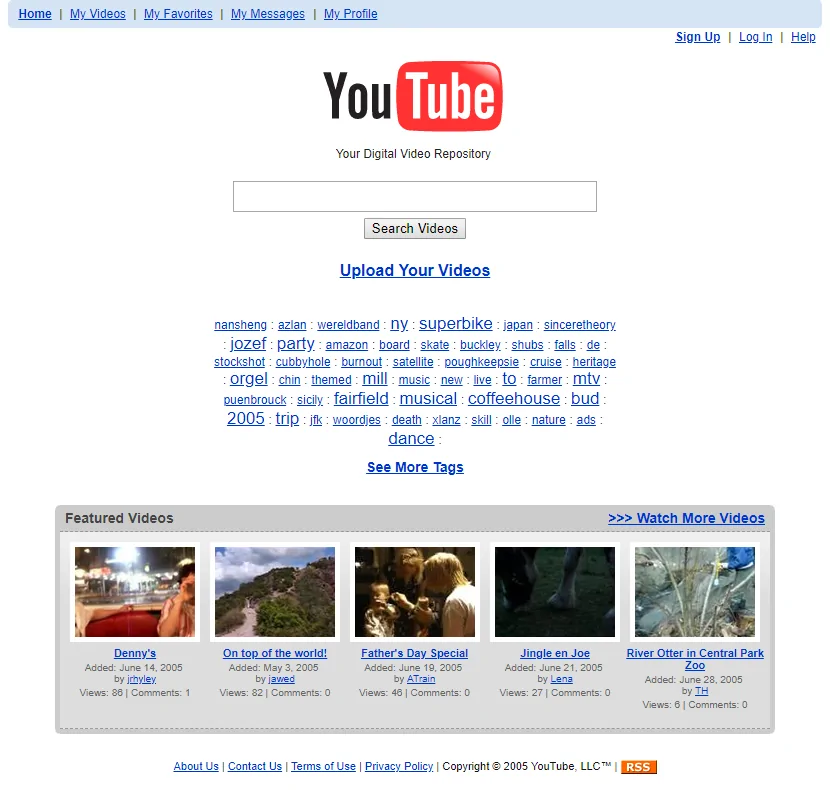
Google Inc. is snapping up YouTube Inc. for $1.65 billion in a deal that catapults the Internet search leader to a starring role in the online video revolution.
The all-stock deal announced Monday unites one of the Internet’s marquee companies with one of its rapidly rising stars. It came just hours after YouTube unveiled three agreements with media companies in an apparent bid to escape the threat of copyright-infringement lawsuits.
The price makes YouTube, a still-unprofitable startup, by far the most expensive purchase made by Google during its eight-year history.
Although some cynics have questioned YouTube’s staying power, Google is betting that the popular Web site will provide it an increasingly lucrative marketing hub as more viewers and advertisers migrate from television to the Internet.
“We are natural partners to offer a compelling media entertainment service to users, content owners and advertisers,” said Eric Schmidt, Google’s chief executive officer.
YouTube will continue to retain its brand, as well as all 67 employees, including co-founders Chad Hurley and Steve Chen. The deal is expected to close in the fourth quarter of this year.
“I’m confident that with this partnership we’ll have the flexibility and resources needed to pursue our goal of building the next-generation platform for serving media worldwide,” said Hurley, YouTube’s 29-year-old CEO.
“One of the problems with YouTube is that they’ve been known to carry copyrighted material without the permission of the copyright holders,” Magid said.
But Hurley and Chen, 27, have spent months dealing with the copyright hurdle by cozying up with major media executives in an effort to convince them that YouTube could help them make more money by helping them connect with the growing number of people who spend most of their free time on the Internet.
While Google has been hauling away huge profits from the booming search market, it hasn’t been able to become a major player in online video.
That should change now, predicted Forrester Research analyst Charlene Li. “This gives Google the video play they have been looking for and gives them a great opportunity to redefine how advertising is done,” she said.
Investors applauded the possible acquisition as Google shares climbed $8.50, or 2 percent, to close at $429 on the Nasdaq Stock Market.
Several other suitors, including Microsoft Corp., Yahoo Inc. and News Corp., reportedly have discussed a possible YouTube purchase in recent weeks.
“This deal looks pretty compelling for Google,” said Standard & Poor’s analyst Scott Kessler said. “Google has been doing a lot of things right, but they are not sitting on their laurels.”
Google’s YouTube coup may intensify the pressure on Yahoo to make its own splash by buying Facebook.com, the Internet’s second most popular social-networking site. Yahoo has reportedly offered as much as $1 billion for Palo Alto-based Facebook during months of sporadic talks.
“Yahoo really needs to step up and do something,” said Roger Aguinaldo, an investment banker who also publishes a deal-making newsletter called the M&A Advisor. “They are becoming less relevant and looking less innovative with each passing day.”
Selling to Mountain View-based Google will give YouTube more technological muscle and advertising know-how, as well as generate a staggering windfall for a 67-employee company that was running on credit card debt just 20 months ago.
Since Hurley and Chen founded the company in February 2005, YouTube has blossomed into a cultural touchstone that shows more than 100 million video clips per day. The video library is eclectic, featuring everything from teenagers goofing off in their rooms to William Shatner singing “Rocket Man” during a 1970s TV show. The clips are submitted by users.
“What’s nice from YouTube’s perspective is that they don’t even have to pay for a lot of that content,” reported Magid. “Much of it is uploaded by people who just want to use the service to show off their talent.”
YouTube’s worldwide audience was 72.1 million by August, up from 2.8 million a year earlier, according to comScore Media Metrix.
YouTube’s conciliatory approach with major media has recently yielded several licensing and promotional agreements that have eased some of the copyright concerns while providing the company with some financial breathing room until it becomes profitable.
To conserve money as it subsisted on $11.5 million in venture capital, YouTube had been based in an austere office above a San Mateo pizzeria until recently moving to more spacious quarters in nearby San Bruno.
As its negotiations with Google appeared to near fruition, YouTube on Monday announced new partnerships with Universal Music Group, CBS Corp. and Sony BMG Music Entertainment. Those alliances followed a similar arrangement announced last month with Warner Music Group Inc.
The truce with Universal represented a particularly significant breakthrough because the world’s largest record company had threatened to sue YouTube for copyright infringement less than a month ago.
Li and Kessler expect even more media companies will be lining up to do business with YouTube now that Google owns it.
“It’s going to be like, ‘You can either fight us or you can make money with us,”‘ Li predicted.
Cookie Consent
We use cookies to improve your experience on our site. By using our site, you consent to cookies.
Contains information related to marketing campaigns of the user. These are shared with Google AdWords / Google Ads when the Google Ads and Google Analytics accounts are linked together.
90 days
__utma
ID used to identify users and sessions
2 years after last activity
__utmt
Used to monitor number of Google Analytics server requests
10 minutes
__utmb
Used to distinguish new sessions and visits. This cookie is set when the GA.js javascript library is loaded and there is no existing __utmb cookie. The cookie is updated every time data is sent to the Google Analytics server.
30 minutes after last activity
__utmc
Used only with old Urchin versions of Google Analytics and not with GA.js. Was used to distinguish between new sessions and visits at the end of a session.
End of session (browser)
__utmz
Contains information about the traffic source or campaign that directed user to the website. The cookie is set when the GA.js javascript is loaded and updated when data is sent to the Google Anaytics server
6 months after last activity
__utmv
Contains custom information set by the web developer via the _setCustomVar method in Google Analytics. This cookie is updated every time new data is sent to the Google Analytics server.
2 years after last activity
__utmx
Used to determine whether a user is included in an A / B or Multivariate test.
18 months
_ga
ID used to identify users
2 years
_gali
Used by Google Analytics to determine which links on a page are being clicked
30 seconds
_ga_
ID used to identify users
2 years
_gid
ID used to identify users for 24 hours after last activity
24 hours
_gat
Used to monitor number of Google Analytics server requests when using Google Tag Manager