Category: Investment

  • Trading surge hits markets minutes before Trump’s Iran announcement

    Trading surge hits markets minutes before Trump’s Iran announcement

    S&P 500 futures and crude oil contracts on the Chicago Mercantile Exchange (CME) at approximately 6:50 a.m. ET Monday—mere minutes before President Donald Trump posted on Truth Social that the United States and Iran had held “very good and productive conversations” toward resolving hostilities in the Middle East.

    The timing has raised eyebrows across trading desks and prompted quiet scrutiny from market participants, even as the White House forcefully denies any impropriety.

    According to Bloomberg data reviewed by multiple outlets, roughly 6,200 Brent and West Texas Intermediate (WTI) futures contracts traded in a single minute around 6:50 a.m., representing a notional value of approximately $580 million.

    At virtually the same instant, S&P 500 e-mini futures recorded an isolated burst of activity that stood out against an otherwise subdued pre-market session. Both oil and equity futures then moved dramatically once Trump’s post appeared at 7:05 a.m.

    WTI crude plunged nearly 12% to around $83–$88 per barrel by the close, while Brent fell below $100 for the first time since early March. S&P 500 futures, by contrast, jumped more than 2.5% in the minutes following the announcement, reflecting investor relief that planned U.S. strikes on Iranian energy infrastructure had been postponed for five days.

    108281637 1774280819322 Untitled

    The volume anomalies occurred during thin early-morning liquidity, when even modest order flow can create noticeable spikes. Still, veteran traders described the coordinated moves—aggressive selling or shorting of oil while buying equity futures—as unusually prescient.

    “It’s hard to prove causality… but you have to wonder who would have been relatively aggressive at selling futures at that point, 15 minutes before Trump’s post,” one senior market strategist at a major U.S. broker told the Financial Times. Another hedge-fund portfolio manager with 25 years of experience called the pattern “really abnormal” for a quiet Monday morning with no scheduled data releases or Fed speakers.

    108281640 1774280840778 wtivolume

    The SEC and CME Group declined to comment. White House spokesperson Kush Desai rejected any suggestion of insider activity, stating: “The only focus of President Trump and Trump administration officials is doing what’s best for the American people… any implication that officials are engaged in such activity without evidence is baseless and irresponsible reporting.”

    Markets React to De-Escalation — For Now

    Trump’s Truth Social post described “productive conversations” with Iran and ordered the postponement of strikes on Iranian power plants and energy infrastructure for five days, subject to continued talks. Iran’s parliament speaker, Mohammad-Bagher Ghalibaf, quickly denied that any negotiations were underway, calling the claim “fake news” designed to manipulate oil and financial markets.

    108281641 1774280869001 image 3

    Oil prices, which had climbed aggressively in recent sessions on fears of supply disruption through the Strait of Hormuz, reversed sharply. WTI settled down roughly 10–12% at $83–$88 per barrel, while Brent dropped 11–13% to just under $100. European natural gas (TTF) also fell sharply.

    The moves provided temporary relief to risk assets but highlighted how fragile sentiment remains. Morgan Stanley analysts warned that a sustained rise to $120 per barrel oil could shave 20–30 basis points off Asian GDP growth and force rate hikes in several emerging economies later this year.

    A Pattern of Well-Timed Trades?

    This is not the first instance of unusually prescient trading ahead of major Trump administration announcements in recent months. Hedge funds and energy consultants have privately noted several large block trades that appeared well-timed relative to official statements on Iran and Venezuela.

    While such patterns are difficult to prove as improper without concrete evidence, they have generated “a level of frustration” among institutional investors, according to one portfolio manager.

    Algorithmic and macro strategies can produce rapid cross-asset flows, especially in thin pre-market hours, but the scale and precision of Monday’s moves—selling oil and buying equities just before a de-escalation announcement—left many questioning whether non-public information circulated.

    Political and Market Context

    The episode unfolds against a backdrop of heightened geopolitical tension and domestic political pressure on the Trump administration’s aggressive posture toward Iran. While Trump framed the postponement as a sign of progress, critics argue the administration’s brinkmanship has already inflicted economic pain through elevated energy prices and market volatility.

    For now, the market appears to be pricing in cautious optimism that a wider conflict can be avoided. Yet with Iran denying talks and both sides continuing information operations, the “fog of war” remains thick.

    Investors would be wise to treat headline-driven moves with skepticism—especially when large, well-timed trades precede them.
  • Bond Market Flashes Warning Signal Not Seen Since Before 2008 Financial Crisis

    Bond Market Flashes Warning Signal Not Seen Since Before 2008 Financial Crisis

    Troubling developments unfolded in the U.S. bond market on Thursday that had some investors drawing comparisons with the run-up to the 2008 financial crisis.

    The current problems start with rising oil prices as a result of the U.S.-Israeli war against Iran, which is raising the risk of stagflation and the prospect of a 2026 interest-rate hike by the Federal Reserve. Brent crude the global oil benchmark, briefly blew past $119 a barrel on Thursday as attacks escalated on oil-and-gas infrastructure in the Persian Gulf. West Texas Intermediate crude-oil futures briefly crossed $100 a barrel.

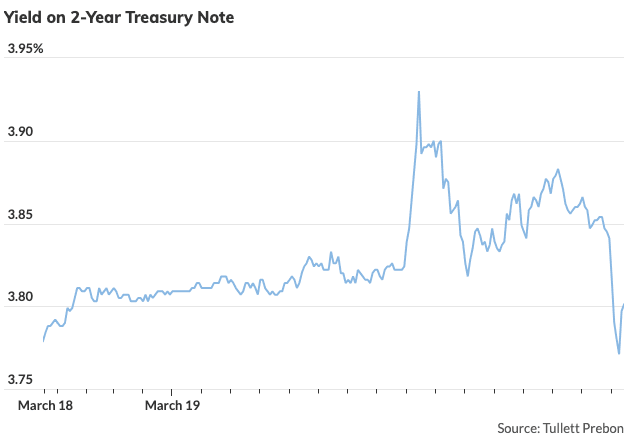
    But even as oil prices have spiked and stock prices come down, Treasurys, often seen as a haven during times of market unease, haven’t rallied on a continual basis. Instead, fears that the war in the Middle East could morph into a full-blown energy crisis pushed the policy-sensitive 2-year Treasury yield above the Federal Reserve’s interest-rate target on Thursday. Bond yields move inversely with prices and rise during selloffs.

    Thursday’s bond-market selloff caused the Treasury yield curve to exhibit what traders describe as a “bear-flattening” pattern. This actually began back in early February. Typically, the pattern emerges when bond traders are bracing for a difficult economic environment ahead.

    The confluence of these three developments — oil above $100 a barrel, a 2-year yield above the fed funds rate, and a bear-steepening dynamic in the bond market — is making some investors nervous.

    The last time all three things unfolded simultaneously was in the late spring of 2008, according to Bloomberg data. About four or five months later, Lehman Brothers collapsed, ushering in the most acute phase of the 2008 financial crisis. The S&P 500 declined 38.5% that year. Widespread mortgage defaults also resulted in many Americans losing their homes.

    The current environment includes both similarities and differences to that troubling time. Whereas the 2008 crisis was triggered by the bursting of a housing bubble and the subsequent collapse of the subprime mortgage market, investors are currently focused on the continued war with Iran, which began on Feb. 28, as well as signs of increasing stress in the private-credit industry.

    Already, investors have been impacted by twin declines in stocks and bonds, which amount to a double-whammy for anybody holding their retirement savings in a 60-40 portfolio.

    The backdrop now “does remind me of 2007-2008, when you did have cracks in the financial system,” said economist Derek Tang of Monetary Policy Analytics in Washington. The bad news now is “we are going into an energy-price shock and the Fed’s hands are tied because of inflation risks, which make it harder to cut rates.” This is all happening as the chance of a U.S. recession is growing, which is “not healthy” for risk assets. “That’s why people are on a knife’s edge right now.”

    All three major U.S. stock indexes closed lower on Thursday, despite attempting to climb during the final hour of trading.

    Earlier in the day, the 2-year yield, which is tied to expectations for the path of interest rates, jumped by as much as 21.8 basis points to an intraday high of almost 3.96% as the underlying government note aggressively sold off. The rate rose 8.8 basis points to 3.83% by 3 p.m. Eastern time, leaving it above the Fed’s interest-rate target of between 3.5% and 3.75%

    Screenshot 2026 03 20 at 12.50.14 PM

    The 2-year yield climbed at a faster pace than the benchmark 10-year yield which rose just 2.5 basis points to 4.28% —producing a bear-flattening pattern of the Treasury curve. The difference between 2- and 10-year Treasury yields shrank to around 45.1 basis points on Thursday from 51.5 basis points a day ago, and it is down from 74 basis points in early February.

    The curve’s bear flattening is already hurting financial institutions, which rely on borrowing at short-term rates to lend at long-term rates, and retirement-age investors who held the 2-year Treasury note because of its cash-like qualities. As the note sells off, its yield rises so those older investors could have waited to buy at a lower price and higher yield. The bear-flattening’s significance to investors more broadly rests in the signals it sends about the likely upward path for interest rates and a negative economic outlook.

    The 2-year rate is pricing in a scenario in which “the Fed will have to move into a rate-hiking cycle for the next few years,” said Ben Emons, founder of the New York-based investment management firm FedWatch Advisors, who added that he does not share this view.

    However, a repeat of the 2008 financial crisis is not necessarily in the cards because “we’re not in stagflation yet and the economy is not as reliant on oil prices as it was back then,” Emons said in a phone interview. “We have private-credit issues, but there’s a difference between that and the subprime crisis at the time. The banking system is far more resilient than before.”

    Fed-funds futures traders currently see a 93.8% chance of no change in borrowing costs this year and a 6.2% likelihood of one rate hike by December. On Wednesday, Fed Chair Jerome Powell lent some credence to the idea of a hike by saying officials have deliberated on whether their next move should be to lift rates, though this is not currently the central bank’s base-case scenario.

  • Prediction Platforms Kalshi and Polymarket Seek Funding at Nearly $20 Billion Valuation

    Prediction Platforms Kalshi and Polymarket Seek Funding at Nearly $20 Billion Valuation

    Prediction market platforms Kalshi and Polymarket are discussing potential fundraising rounds that could value each company at about $20 billion.

    If completed at that level, the deals would roughly double their valuations from late 2025. The discussions remain early and may not lead to finalized investments, according to the Wall Street Journal.

    Prediction markets allow users to trade contracts tied to real-world events, with categories including sports, politics, elections, and more. Traders buy and sell those contracts based on what they think will happen. Essentially, it allows users to monetize information on world events.

    Kalshi already operates in the United States under approval from the Commodity Futures Trading Commission. Founded in 2018 by Tarek Mansour and Luana Lopes Lara, raised $1 billion at an $11 billion valuation in December last year.

    The company recently reached an annualized revenue run rate of about $1.5 billion, according to the WSJ report citing people familiar with the business.

    Polymarket, founded in 2020 by Shayne Coplan, was valued at $9 billion in October after Intercontinental Exchange agreed to invest up to $2 billion in the platform.

    None of the platforms immediately responded to requests for comments from CoinDesk.

    Both platforms are leading in the sector, as prediction markets have become the latest hype for traders.

    According to a Dune dashboard, open interest on Kalshi is hovering over $400 million, while on Polymarket it’s at $360 million. The third-largest market, Opinion, is at $36 million.

    Similarly, the weekly notional volume (total underlying value of all prediction contracts traded) on Polymarket was $1.9 billion last week, and on Kalshi, $1.87 billion, according to Dune data. Opinion saw weekly volume of $150 million, down from over $1.2 billion ahead of its token launch.

    The sector has become so popular that companies, including Coinbase and Robinhood, have entered the prediction market. In fact, Wall Street giants Nasdaq and Cboe recently said they are considering rolling out yes-or-no “binary bets” for traders on the direction of traditional markets, similar to prediction-market betting.

  • Crypto Exchange Accidentally Sends $40 Billion in Bitcoin to Users

    Crypto Exchange Accidentally Sends $40 Billion in Bitcoin to Users

    A South Korean cryptocurrency exchange apologised on Saturday after mistakenly transferring more than $40 billion worth of bitcoin to users, which briefly prompted a selloff on the platform.

    Bithumb said it accidentally sent 620,000 bitcoins, currently worth more than $40 billion, and blocked trading and withdrawals for the 695 affected users within 35 minutes after the error occurred on Friday.

    According to local reports, Bithumb was meant to send about 2,000 won ($1.37) to each customer as part of a promotion, but mistakenly transferred roughly 2,000 bitcoins per user.

    “We sincerely apologise for the inconvenience caused to our customers due to the confusion that occurred during the distribution process of this (promotional) event,” Bithumb said in a statement released Saturday.

    The platform said it had recovered 99.7 percent of the mistakenly sent bitcoins, and that it would use its own assets to fully cover the amount that was lost in the incident.

    It admitted the error briefly caused “sharp volatility” in bitcoin prices on the platform as some recipients sold the tokens, adding that it brought the situation under control within five minutes.

    Its charts showed the token’s prices briefly went down 17 percent to 81.1 million won on the platform late Friday.

    The platform stressed that the incident was “unrelated to external hacking or security breaches”.

    Bitcoin, the world’s biggest cryptocurrency, sank this week, wiping out gains sparked by US President Donald Trump’s presidential election victory in November 2024.

  • Weight-Loss Drug Price Wars Are Upending Big Pharma’s Business Model

    Weight-Loss Drug Price Wars Are Upending Big Pharma’s Business Model

    The multibillion-dollar market for GLP-1 weight-loss drugs, once a duopoly dominated by Novo Nordisk and Eli Lilly, is fracturing under intense pricing pressure, political intervention, and rising competition from compounded alternatives. What began as a revolutionary breakthrough in obesity treatment has evolved into a fierce price war that’s challenging the core business models of Big Pharma giants, raising questions about innovation, profitability, and access to life-changing medications.

    Novo Nordisk, the Danish pioneer behind Ozempic and Wegovy, stunned investors this week by forecasting a 5% to 13% sales decline in 2026 – its first drop since 2017 – amid “unprecedented” U.S. price cuts and patent expirations in key markets like China and Brazil. The company’s shares plunged 17% on Wednesday, erasing nearly $50 billion in market value, as CEO Mike Doustdar acknowledged short-term “pain” from slashing prices to boost volumes and compete with Lilly’s surging Zepbound and Mounjaro.

    In contrast, U.S. rival Eli Lilly delivered a bullish outlook, projecting 25% revenue growth to $80-83 billion in 2026, far exceeding Wall Street expectations. Lilly’s tirzepatide-based drugs raked in over $36 billion in 2025, outpacing Novo’s semaglutide portfolio and positioning Lilly as the clear leader in the GLP-1 race. “We’re seeing incredible demand, and our manufacturing investments are paying off,” Lilly CEO David Ricks told analysts, downplaying pricing headwinds as a temporary drag offset by volume gains.

    As illustrated in the accompanying chart from LSEG Workspace, Novo’s revenues have boomed in double digits for years, driven by weight-loss drug sales, but the firm now anticipates a sharp reversal in 2026 due to these pressures.

    The divergence highlights how pricing dynamics, fueled by U.S. President Donald Trump’s “most favored nation” (MFN) policy and direct-to-consumer platforms like TrumpRx.gov, are reshaping the industry. Launched on February 5, TrumpRx connects Americans to discounted drugs from manufacturers like Novo, Lilly, Pfizer, and AstraZeneca, offering prices as low as $149 for Wegovy’s starter dose – a fraction of the original $1,000 monthly list price. In exchange, companies received tariff relief and expedited approvals, but critics argue it sidesteps systemic issues, with limited impact for insured patients who may still pay less through coverage.

    “TrumpRx could have some impact, but it’s far from revolutionary,” said Craig Garthwaite, director of health care at Northwestern University’s Kellogg School of Management. Experts like economist Öner Tulum warn that MFN relies on opaque global pricing, allowing companies to game the system by raising overseas prices or delaying launches.

    Adding fuel to the fire, telehealth provider Hims & Hers Health launched a $49 compounded semaglutide pill on February 5 – just weeks after Novo’s Wegovy pill debut – prompting Novo to vow “legal and regulatory action” for alleged patent infringement and patient safety risks. Hims uses liposomal technology to aid absorption, bypassing Novo’s proprietary SNAC method acquired in a $1.8 billion deal. The FDA has warned against compounded GLP-1s, citing lack of safety evaluations, while the Department of Health and Human Services referred Hims to the Justice Department for investigation.

    This isn’t the first clash: Novo previously partnered with Hims for Wegovy injections but ended ties acrimoniously last summer. Now, compounded knockoffs – estimated to serve 1.5 million Americans – threaten the duopoly’s pricing power. “This new offering could test how far compounders can skirt Big Pharma’s patents,” said Deb Autor, Hims’ chief policy officer.

    The broader shift to cash-pay channels has made prices more sensitive, with injectables now starting at $149-$299 on company sites, down from $1,000. Analysts like Markus Manns at Union Investment fear a “no-win” price war: “There’s no assurance cuts will pay off.” Bernstein’s Courtney Breen noted Novo’s cuts are risky given its trailing position.

    Lilly holds clinical edges – Zepbound achieves higher weight loss than Wegovy’s injection, while Novo’s pill edges Lilly’s upcoming orforglipron in trials. Lilly expects orforglipron approval in Q2 2026, potentially expanding the market further. “Pills could reshape GLP-1s like consumer products,” one analyst noted.

    Yet the market is crowding: Pfizer and Amgen eye 2028 launches, while GSK focuses on obesity’s downstream effects like liver disease. Goldman Sachs raised Lilly’s target to $1,260, citing confidence in 25% growth despite pressures.

    Critics argue Big Pharma’s model prioritizes shareholders over patients. Economist William Lazonick’s research shows U.S. pharma spent $747 billion on buybacks and dividends from 2012-2021, exceeding $660 billion on R&D. During the pandemic, 18 firms distributed $377.6 billion to shareholders – over 90% of profits – while claiming high prices fund innovation. “It’s a fallacy,” said UNAIDS’ Winnie Byanyima. “Profits go to Wall Street, not cures.”

    A Senate HELP Committee report echoed this: In 2022, Bristol Myers Squibb spent $12.7 billion on buybacks, dividends, and exec pay versus $9.5 billion on R&D. Overall, 10 firms with drugs under Medicare negotiation spent $162 billion on shareholder handouts and marketing in 2023 – far outpacing $95.9 billion on R&D.

    As shown in the second chart from LSEG, Novo’s market cap peaked in June 2024 before a sharp plunge, reflecting these pressures and Lilly’s ascent toward a trillion-dollar valuation.

    What tames Big Pharma? Tulum suggests emulating the VA system’s deep discounts via centralized negotiation. Biden’s Inflation Reduction Act (IRA) enabled Medicare negotiations for 10 drugs in 2026, including GLP-1s like Ozempic in 2027. Yet industry lobbies fiercely, with $83.2 million in trade dues funding opposition in 2023.

    Mark Cuban’s Cost Plus Drugs offers transparent markups, but scalability is limited. Ultimately, reformers like Lazonick advocate banning buybacks and stock-based pay to redirect profits toward innovation.

    As prices fall and competition rises, the GLP-1 war may force Big Pharma to adapt – or face a reckoning. For patients, lower costs could mean broader access, but sustained innovation requires reining in financialization.

  • Crypto Enters Another Winter, Leaving Longtime Bulls Searching for Answers

    Crypto Enters Another Winter, Leaving Longtime Bulls Searching for Answers

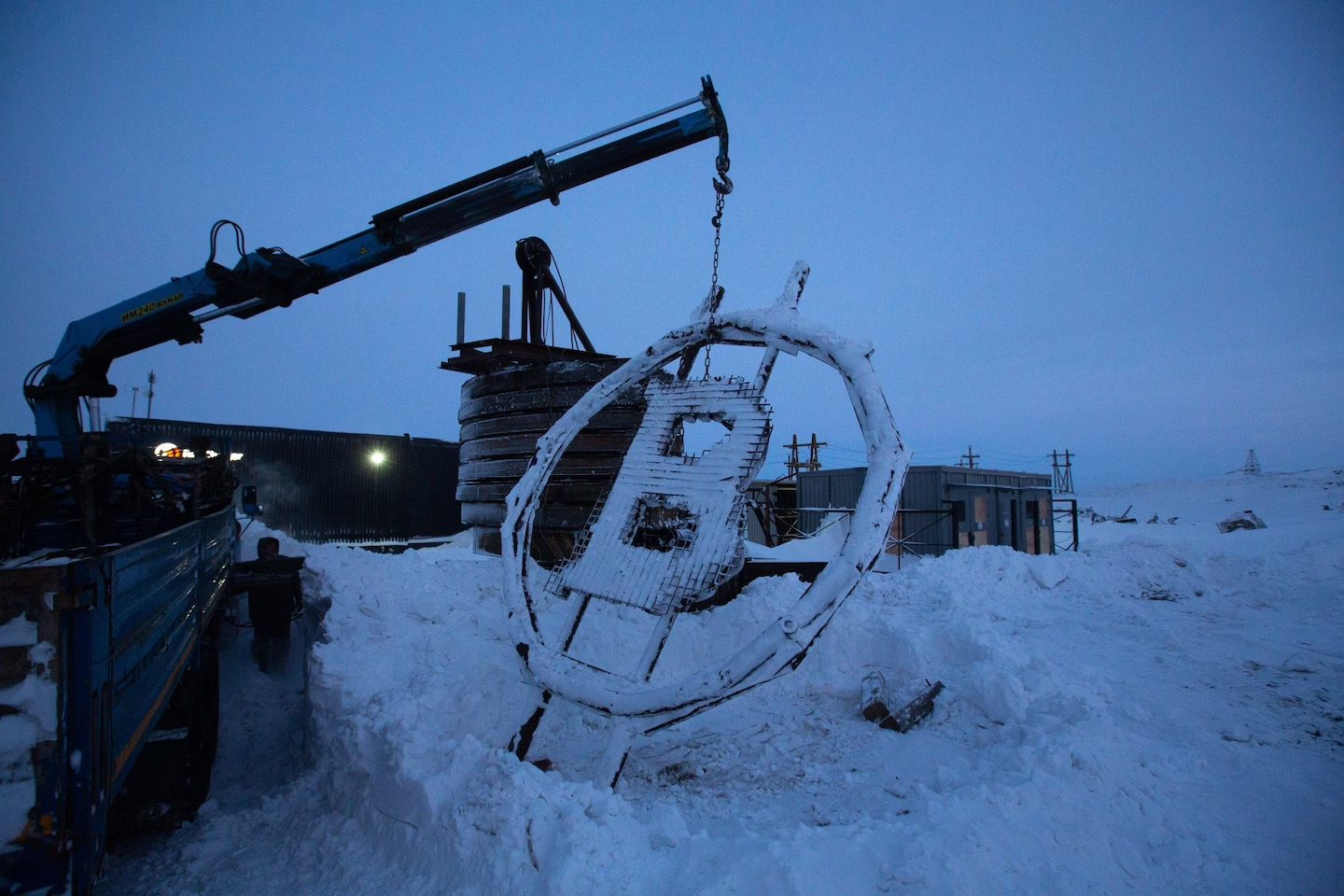
    (Andrey Rudakov/Bloomberg News)
    (Andrey Rudakov/Bloomberg News)

    Bitcoin just suffered its largest weekly decline in more than three years. But the worst part for some of crypto’s permabulls is that they aren’t sure what exactly caused the crash.

    The selloff left many of the market’s luminaries—those so well-known that they go simply as “Pomp” and “Novo” and “Mooch”—searching for answers.

    “Bitcoin is crashing and investors are freaking out,” Anthony Pompliano, a crypto evangelist and investor, wrote Friday.

    Bitcoin fell 16% to $70,008 this past week, down a sharp 45% from its all-time high of $126,273 in October. Ether dropped 24% to $2,052, off 59% from its own high of last year. Both tokens staged furious rallies Friday, but the week remained a historically bad one for crypto. And few seem to know what went wrong.

    Market theories for the selloff ranged from investors’ pivot toward the prediction markets and other risky bets, to widespread profit-taking after a blistering bull run.

    Price performance, past two years
    Price performance, past two years
    Trump’s surprise announcement of
    100% tariffs against China
    Source: The NY Budgets Crypto Index

    “There was no smoking gun,” said Michael Novogratz, who runs Galaxy Digital, a crypto merchant-banking and trading firm.

    For much of last year, crypto was in ascendance. President Trump’s return to the White House ushered in a new era for digital assets, which continued to gain acceptance among individual investors and legitimacy on Wall Street. As bitcoin and other popular tokens touched record highs, it seemed as though the market’s best days always lay ahead.

    “I really didn’t think that we’d see a six at the beginning of the bitcoin price ever again,” said Cory Klippsten, chief executive officer of the bitcoin financial services firm Swan Bitcoin.

    And yet, for a 24-hour stretch that ended Friday afternoon, bitcoin was back at that level. Past crypto selloffs had clearer explanations, which made this one more mystifying.

    In 2018, bitcoin fell 80% from its peak after the initial coin offering bubble burst, ending an era in which thousands of unproven startups raised billions of dollars with little more than a sales pitch. In 2022, the $40 billion collapse of TerraUSD and Luna coins triggered a cascade of company failures across the crypto sector that culminated in the implosion of Sam Bankman-Fried’s FTX exchange.

    Alan Chapman/Dave Benett/Getty Images
    Alan Chapman/Dave Benett/Getty Images

    This time, there is no clear consensus. “If you ask five experts, you’ll get five explanations,” said Anthony Scaramucci, who served for 11 days as communications director during Trump’s first term and is among the best-known crypto bulls at his firm, SkyBridge Capital.

    Here are some of the most popular explanations:

    New shiny objects

    There is no shortage of other markets for traders to make audacious bets, said Pompliano, the CEO of ProCap Financial. Prediction markets, gold, silver, artificial intelligence and so-called meme stocks are all vying for their attention of late, drawing eyes away from crypto.

    “It used to be that bitcoin was the consensus view where asymmetry existed,” Pompliano said. “Now you have AI, prediction markets…many other areas where people can go and they can speculate.”

    More supply?

    Wall Street has sought to capitalize on crypto’s popularity by launching a growing array of exchange-traded funds and derivatives linked to bitcoin and other popular tokens. Their proliferation might not affect the sheer number of bitcoins, ethers and other tokens, but some investors thought their arrival has dented bitcoin’s appeal as a scarce asset.

    Bitcoin’s main appeal has always been its limited supply of 21 million coins. By launching ETFs and complex derivatives, Wall Street has enabled investors to bet on the price of bitcoin without needing to buy or hold the actual coins, some analysts said.

    New sheriff

    Other investors suspected that Kevin Warsh, Trump’s pick to be the next chair of the Federal Reserve, might be bringing down crypto prices.

    Warsh, they said, is seen as more hawkish on interest rates as a tool to tame inflation, and more supportive of a stronger U.S. dollar. Higher rates and a stronger dollar are conditions that typically hurt some alternative assets, such as gold and crypto, making them less attractive to investors. And this past week, the WSJ Dollar Index edged up 0.4%.

    Still, Warsh and the Fed are expected to cut rates this year, not raise them. And Warsh has warmed to bitcoin. He famously dubbed the digital currency a “policeman for policy,” saying in a TV interview that bitcoin’s price can inform policymakers when they are doing things right and wrong.

    Clouded clarity

    After Trump signed into law the Genius Act last year, paving the path for stablecoins—digital assets pegged to fiat currencies like the dollar—the industry turned its attention to the next important piece of legislation: the Clarity Act. This bill would create a clear regulatory framework for the burgeoning industry.

    Congress appeared on the cusp of moving the bill ahead when a dispute between crypto exchanges and traditional banks stalled that momentum. Without this measure, many financial firms are hesitant to integrate digital assets into their offerings. And unless a compromise is reached, the dust-up might deny the crypto market a catalyst that could have extended the rally.

    Profit-taking

    Novogratz and some other investors thought much of the selloff was driven by investors eager to lock in gains they collected when bitcoin, ether and other digital tokens rallied in the midst of the “euphoria” of Trump’s election in 2024 and pledge to make the U.S. the world’s crypto capital.

    And those gains were indeed spectacular. Bitcoin, for one, rocketed around 80% from Election Day until early October of last year.

    Sharp selloffs are hardly unusual in crypto, of course. They are so regular, in fact, that investors give them a name—crypto winter—that befits the belief that these downturns are as predictable as the seasons.

    Some analysts believe this crypto winter could thaw faster than those of the past. No key companies have collapsed or faced allegations, revelations that have elicited crises of confidence in past crashes.

    For believers, Friday’s rally served as reassurance that cryptocurrencies have always bounced back, part of why they stick with these investments.

    “The infrastructure is stronger, stablecoin adoption continues to grow and institutional interest hasn’t evaporated, it’s just sidelined,” said Jasper De Maere, a strategist at the crypto trading firm Wintermute. Interest in these investments “can return quickly,” he said.

    Many of crypto’s true believers are willing to wait.

    On a Thursday afternoon conference call, Strategy founder Michael Saylor sought to reassure investors that bitcoin was coming back.

    Republicans are way ahead of Democrats regarding their opinion of crypto and bitcoin, said MicroStrategy's Michael Saylor. (Danny Nelson/CoinDesk)
    Republicans are way ahead of Democrats regarding their opinion of crypto and bitcoin, said MicroStrategy’s Michael Saylor. (Danny Nelson/CoinDesk)

    Moments earlier, his company, which stockpiles bitcoin, had reported a $12 billion quarterly loss related to the token’s late-2025 swoon. Saylor told his investors the only way to handle the downturn is to hold on—and tune out the market’s volatility.

    “Your time horizon needs to be, minimal, four years,” Saylor said.

  • SpaceX Pushes for Early Index Inclusion Ahead of Potential IPO

    SpaceX Pushes for Early Index Inclusion Ahead of Potential IPO

    Elon Musk’s SpaceX is seeking an early boost for shares after the rocket-and-satellite business makes its stock market debut later this year.

    Advisers for the company, which recently merged with xAI, have reached out to major index providers, including Nasdaq, to discuss how SpaceX and this year’s other hot startups might join key indexes sooner than normal, according to people familiar with the matter.

    Companies typically must wait several months or a year after their public debut before gaining inclusion in a major index such as the S&P 500 or the Nasdaq 100. Inclusion unlocks access to retail and institutional capital from funds, particularly those mimicking the performance of indexes that have to hold the companies in the index.

    The traditional waiting period is intended to give the companies time to demonstrate that they are stable and liquid enough to handle extensive buying from index funds.

    SpaceX hopes to skirt traditional rules in an effort to bring liquidity to its shareholders sooner as part of its planned IPO. SpaceX advisers have sought index policy changes that would fast-track its entry into major indexes for the company and benefit other highly-valued private companies, the people said.

    Last valued at $800 billion, SpaceX is targeting a valuation of more than $1 trillion, a listing that would become the largest-ever U.S. IPO.

    The headquarters of the Office of Personnel Management in Washington.
    Elon Musk. © Al Drago/Bloomberg

    Investors and advisers to companies planning to go public this year are concerned not only about initial trading, but also that the standard six-month lockup period—which prevents early investors, executives and employees from selling their stock—might prompt significant selling that pressures shares. After Meta went public in 2012, shares sank when early investors unloaded all at once.

    SpaceX is exploring ways to better balance supply and demand to avoid that outcome, some of the people said.

    Advocates of index methodology changes have said that by allowing newly public companies earlier entry to key indexes, individual investors, who have famously missed out on the big gains in private markets, could secure earlier exposure via popular exchange-traded funds and index funds.

    Earlier this week, the Nasdaq Stock Market shared proposals to update some of the Nasdaq 100 index methodology and asked for feedback from market participants.

    Among the proposals is a potential “fast entry” process. Under this option, companies whose market capitalizations rank in the top 40 of the Nasdaq 100’s constituents could be added to the index after 15 trading days. Companies typically now must wait at least three months to be added to the index. At their current valuations, SpaceX, OpenAI and Anthropic would all qualify.

    The S&P Total Market Index and MSCI indexes have fast-track options, which some advisers to SpaceX are also exploring in an effort to ensure the IPO trades well, some of the people familiar with the matter said.

    The one index where there is now no fast-entry option is also one of the most important: The S&P 500. To join the index, a company must be U.S.-based, profitable and have a market capitalization of at least $22.7 billion. Joining gives it access to a steadier index-fund investor base.

    OpenAI is laying the groundwork for a fourth-quarter IPO as it races rival Anthropic to list shares publicly. OpenAI is aiming to raise $100 billion before the IPO at a valuation of more than $800 billion, while Anthropic is raising billions more at a valuation of $350 billion.

  • US-Japan Panel Holds Second Meeting to Advance $550B Trade Deal Investments

    US-Japan Panel Holds Second Meeting to Advance $550B Trade Deal Investments

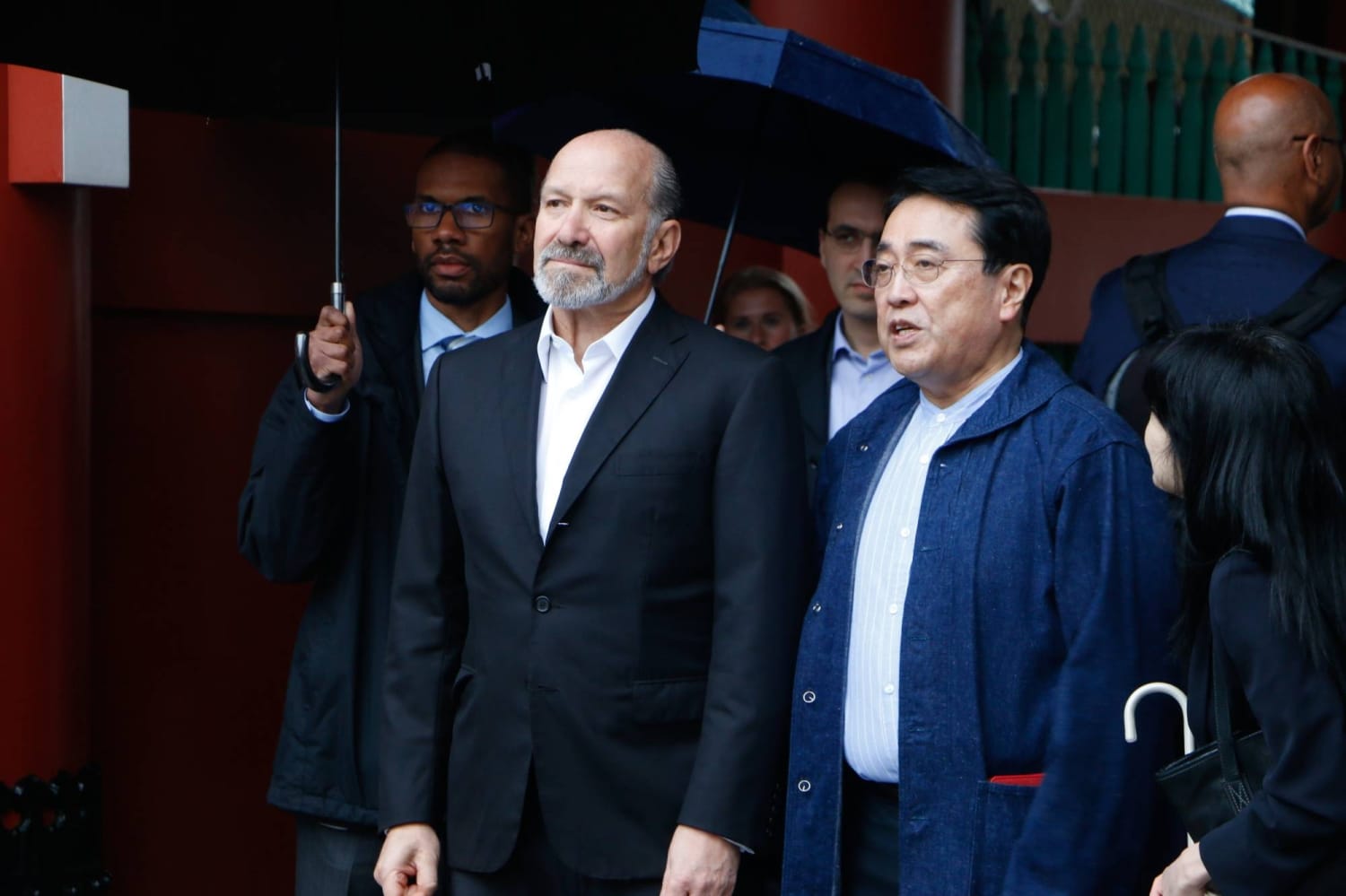
    Japan and the United States convened their second high-level consultation committee meeting on Tuesday, signaling renewed momentum in deploying a landmark $550 billion Japanese investment pledge that anchors the allies’ hard-won trade agreement. The two-hour virtual session, co-chaired by Japanese Economy, Trade and Industry Minister Ryosei Akazawa, U.S. Commerce Secretary Howard Lutnick, and U.S. Energy Secretary Chris Wright, focused on expediting project selections, with officials pledging to announce the inaugural initiative “as soon as possible,” according to a statement from Japan’s Ministry of Economy, Trade and Industry (METI).

    The gathering builds on the panel’s inaugural online meeting last week, where representatives from Japan’s foreign, trade, and finance ministries joined U.S. counterparts from the Commerce and Energy Departments to exchange views on potential investments. Energy projects emerged as early frontrunners, with sources familiar with the discussions indicating a handful under review for priority funding. Recommendations from the consultation committee will feed into an investment panel chaired by Lutnick, culminating in final approvals by President Donald Trump—a structure that underscores Washington’s directive role in allocating the funds.

    This accelerated pace reflects mounting pressure to operationalize the pledge, formalized in a September memorandum of understanding (MOU) following July’s framework accord. The $550 billion commitment—upped from an initial $400 billion discussion at Trump’s insistence—secured Japan’s relief from steep U.S. tariffs, capping duties at 15% on automobiles and most goods after an earlier spike to 25%. Non-compliance risks penalty clauses, including tariff hikes, potentially unraveling the deal and exposing Tokyo to renewed trade friction.

    Target sectors span strategic priorities: semiconductors, pharmaceuticals, critical minerals, metals, shipbuilding, energy, artificial intelligence, and quantum computing. Financing will flow through project-by-project commitments, leveraging institutions like the Japan Bank for International Cooperation (JBIC) and Nippon Export and Investment Insurance (NEXI) for equity, loans, and guarantees. Investments must materialize by January 19, 2029—the end of Trump’s term—aligning with his administration’s push to revitalize U.S. industrial capacity and bolster supply chains amid global competition, particularly from China.

    Market reactions have been muted but positive. The Nikkei 225 edged up 0.4% on Wednesday, buoyed by clarity on tariff stability, while U.S. futures showed modest gains in chip and energy stocks. Analysts at Nomura Securities project the fund could inject $100-150 billion annually into U.S. infrastructure, creating hundreds of thousands of jobs in swing states—a political windfall for Trump. However, skeptics note execution hurdles: Japan’s characterization of the pledge as facilitated private-sector flows contrasts with U.S. portrayals of direct government-directed capital, potentially complicating disbursements.

    The process traces to Trump’s October visit to Tokyo, where an initial project shortlist was floated. Early contenders include LNG terminals, rare earth processing facilities, and semiconductor fabs—areas ripe for de-risking U.S. dependencies. “This isn’t charity; it’s mutual security,” Lutnick remarked in a recent CNBC interview, emphasizing profit-sharing tilted heavily toward America post-recoupment (90-10 split).

    For Japan, already the largest foreign investor in the U.S. with over $800 billion in holdings, the pledge reinforces alliance ties while mitigating tariff pain on exporters like Toyota and Sony. Yet, domestic critics decry it as concessional, with opposition lawmakers questioning the fiscal burden amid Japan’s aging demographics and debt load.

    As the committee eyes a third session next week and potential Trump sign-offs in early 2026, the initiative tests the Trump administration’s dealmaking prowess. Success could blueprint similar pacts with other trading partners; delays risk reigniting trans-Pacific tensions in an era of reshoring and economic nationalism.

  • British Steel Merger Proposal Risks Shutting Scunthorpe Blast Furnaces

    British Steel Merger Proposal Risks Shutting Scunthorpe Blast Furnaces

    A radical plan to halt “virgin steelmaking” in the UK is being considered in a move that threatens the loss of 2,000 jobs at British Steel’s works in Scunthorpe.
     
    Government officials are weighing a proposal to switch off Britain’s last two remaining blast furnaces despite launching emergency legislation this year preventing the works’ Chinese owners from doing the same.
     
    The proposal is understood to envisage merging British Steel with part of Speciality Steel UK (SSUK), a division of Sanjeev Gupta’s metals empire that crashed into a government-led insolvency in August.
     
    It is one of several options being considered, Whitehall sources said.
     
    But the merger option is said to be favoured by Jon Bolton, co-chairman of the government’s Steel Council, which was launched by the government in January. Under this approach, SSUK’s electric arc furnace in Rotherham, which will require significant investment to get back up and running, would be used to feed the downstream operations of British Steel, according to senior industry sources.
     
    This would allow the two blast furnaces at Scunthorpe to be switched off, reducing losses that are said to be costing taxpayers more than £1 million a day. But it would leave the UK as the only country in the G7 without virgin steelmaking capabilities.
    Industry figures are split on whether Rotherham could produce the correct types, grades and gauges of semi-finished steel — and in sufficient quantities — for British Steel’s downstream operations. The company employs about 4,000 people in the UK, of which 2,700 work in Scunthorpe.
     
    In April, MPs were called for a Saturday sitting of parliament for only the sixth time since the Second World War to fast-track emergency legislation giving the government the ability to direct the company’s workforce and managers and order raw materials for the furnaces.
    British Steel has been in the hands of Chinese firm Jingye since March 2020. The legislation meant that although Jingye remained the owner of the steelworks, the UK state was in control of day-to-day operations.
     
    The government intervention followed claims by ministers that the Chinese company was trying to unilaterally close the blast furnaces by refusing to buy enough raw materials. Blast furnaces require a steady supply of iron ore and coking coal to continue running. Although production can be halted temporarily, any longer than a few days can render the equipment redundant.
     
    In the summer, Jingye submitted a compensation bill of more than £1 billion to the UK government in return for handing over its shareholding in the business. Ministers are understood to have sought to reduce the compensation costs by offering to wave through China’s controversial new “mega embassy” in London.
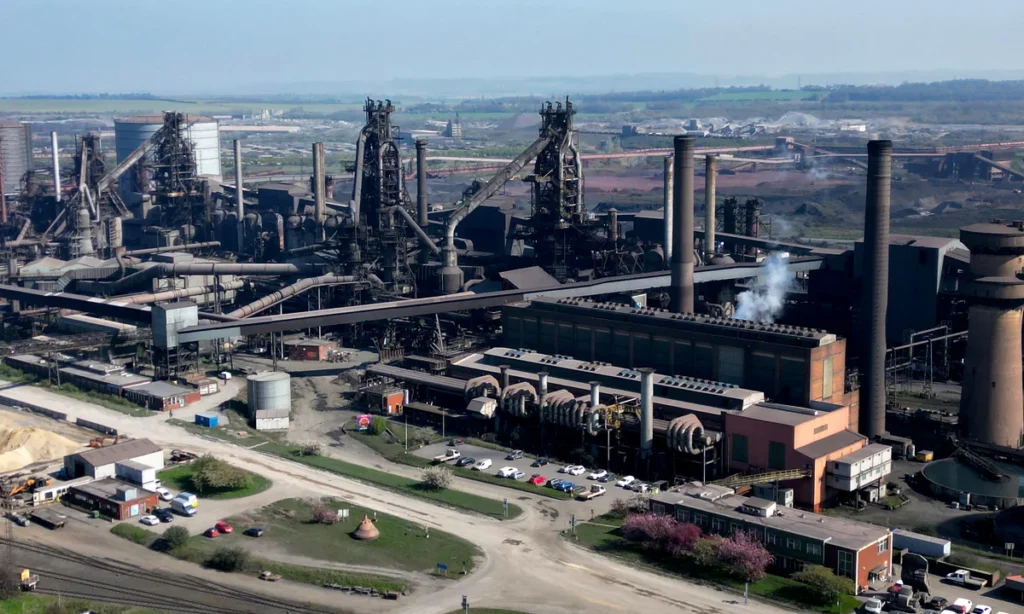
    A view of a signboard of a British Steel's Scunthorpe plant, in Scunthorpe, northern England, Britain, March 31, 2025. © REUTERS/Dominic Lipinski/File Photo
    A view of a signboard of a British Steel’s Scunthorpe plant, in Scunthorpe, northern England, Britain, March 31, 2025. © REUTERS/Dominic Lipinski/File Photo
    A spokesman for the government said: “We will ensure a bright and sustainable future for steelmaking and steel jobs in the UK and are continuing discussions with Jingye over the long-term future of the site.”
     
    SSUK employs nearly 1,500 people in Rotherham and its other works in Sheffield and is part of the wider Liberty Steel Group, which in turn is part of Gupta’s GFG Alliance, an employer of 16,500 people globally across more than 200 locations.
     
    SSUK was placed under the control of the government’s official receiver in August after the High Court granted a winding-up order pursued by creditors owed hundreds of millions of pounds.
     
    The official receiver, supported by special managers from consultancy Teneo, wants to sell SSUK whole rather than in piecemeal fashion.
     
    Bids have been submitted for the business, though the electric arc furnace in Rotherham is said to be less attractive because it will need millions of pounds of investment to bring it up to working order. The merger plans would be scuppered if a suitable buyer for the Rotherham site can be found.
     
    Using the Rotherham works to feed British Steel’s downstream activities would not be without its difficulties. However, it does have a precedent: the two operations were previously part of Tata Steel’s long products division. The Scunthorpe operation was sold to turnaround fund Greybull Capital in 2016 and the Rotherham works to Gupta the following year.
     
    Separately, an £8 billion green energy plant in the North East will go ahead with an order for steel from China instead of the UK, snuffing out hopes of a U-turn.
    Alasdair McDiarmid, assistant general secretary at the steelworkers’ union Community, said: “Reports that the government is considering ending steelmaking at Scunthorpe, just months after making their historic intervention at the site, are extremely concerning and scarcely believable.
     
    “The loss of the UK’s last-remaining primary steelmaking facility — a vital strategic asset for the country — would represent a devastating blow to national security and sovereignty. Community and the wider trade-union movement will not accept the closure of the blast furnaces outside of a long-term investment strategy that secures the future for Scunthorpe steelmaking.”
     
    This newspaper revealed in November that Net Zero Teesside, a joint venture between BP and the Norwegian energy company Equinor, was on the cusp of awarding a major steel contract to a Chinese firm called Modern. Net Zero Teesside will build the world’s first gas-fired power station with carbon capture and storage.
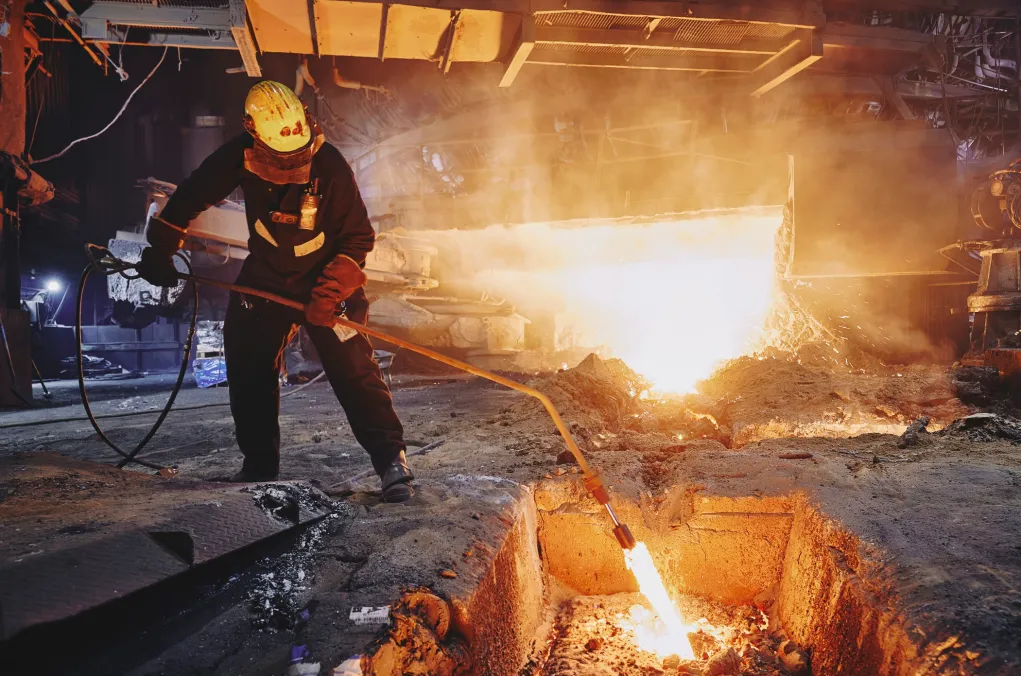
    In the short term, Scunthorpe steelworks needs materials to keep the furnaces from cooling down. © Darren Staples/AFP/Getty Images
    In the short term, Scunthorpe steelworks needs materials to keep the furnaces from cooling down. © Darren Staples/AFP/Getty Images
    Backed with taxpayer cash, the joint venture had promised that at least 50 per cent of the engineering, procurement and construction contrasts would be sourced from the UK.
     
    Lord Houchen, the local Conservative mayor, called for “an immediate rethink”. This prompted BP to intervene, raising hopes that British Steel — an under-bidder — would prevail.
     
    Sources said, however, that the joint venture had decided to stick with China, ordering 7,000 tonnes that will be made and then fabricated overseas. The contract is understood to be worth £20 million.
     
    A government source said ministers are “keen to see UK steel sourced for UK projects”.
  • September Job Growth Surprises: 119,000 New Jobs Added, Defying Expectations

    September Job Growth Surprises: 119,000 New Jobs Added, Defying Expectations

    nonfarm payrolls chart 1

    U.S. job growth defied expectations in September, according to a Labor Department report issued nearly seven weeks late due to the government shutdown.

    Payrolls rose by a seasonally adjusted 119,000 on the month, the strongest gain since April, the Labor Department said Thursday.

    That was well above the gain of 50,000 jobs economists polled by The Wall Street Journal expected to see. The September report covers the month before the recent government shutdown began on Oct. 1.

    However August’s payrolls number was revised to a loss of 4,000 jobs, and July’s payrolls were revised slightly lower to a 72,000 gain. That meant employment in July and August combined was 33,000 lower than previously reported.

    The unemployment rate, which is based on a separate survey from the jobs figures, rose slightly to 4.4%, reaching the highest level in four years as nearly half a million people joined the labor force. Economists expected the unemployment rate to hold at 4.3%.

    Stocks rose sharply Thursday. Investors were already responding enthusiastically prior to the employment report to Nvidia’s strong earnings report late Wednesday, but the jobs figures added fuel to the fire.

    unemployment rate chart 1

    Separately, the Labor Department released updated weekly jobless claims that suggest layoffs didn’t rise sharply during the government shutdown, which ended last week. In the week through Nov. 15, 220,000 people newly filed for jobless benefits—broadly in line with the range that held for most of 2025.

    But the report also showed that the number of continuing unemployment claims, a measure of the size of the unemployed population, rose by 28,000 to 1,974,000 in the week ended Nov. 8. That was the highest level since November 2021, and reflects a low-hire environment where it has been difficult for those workers who are laid off to find work again.

    The latest data will likely do little to resolve the debate at the Federal Reserve, where some policymakers, wary of inflation, want to leave rates on hold, while others are pushing for a rate cut in December as insurance against a labor market deterioration.

    Hawks can point to the bump up in job growth as a reason to postpone any further easing, while doves can focus on rise in the unemployment rate, as well as the general trend toward weaker job growth, as reasons to cut. Thursday’s report was the last official snapshot the Fed will see before the next rate-setting meeting in December. As a result of the shutdown, the Labor Department pushed back its release of the November jobs report to Dec. 16, the week after the rate decision. It will also release some October jobs data on that day.

    “There’s no sign of a rapid deterioration in the American labor market that warrants a rate cut out of the Federal Reserve,” said Joseph Brusuelas, chief economist at RSM. Thursday’s data point to “sustained modest growth in the economy and employment,” he added.

    Interest-rate futures implied the odds of a quarter-point cut at the December meeting stood at about 40% following Thursday’s report, up from about 30% earlier.

    In September, employers added jobs at a steady clip in retail, construction, healthcare, leisure and hospitality and government. They let go of workers in transportation and warehousing and temporary help services. Those are often the industries that pull back on hiring first in a slowdown as households and businesses rein in spending.

    Though greatly delayed—these numbers were initially scheduled for release on Oct. 3—the September report offered the first official look since before the shutdown on the state of a critical economic marker for investors and policymakers. The Federal Reserve, for instance, uses the job report to help it make decisions about interest rates.

    While the federal data are incomplete, there are other signs that the labor market remains unsettled. Major companies including Amazon.com and Target recently announced they were cutting thousands of corporate jobs.

    Meantime, consumer sentiment dropped in early November on concerns about the shutdown’s negative economic impact, according to a survey by the University of Michigan. More than 70% of households said they expect unemployment to increase over the next year.

    A survey from the National Federation of Independent Business found small-business optimism also declined slightly in October. Owners reported lower sales and reduced profits, NFIB said, and many firms said they were having difficulty finding labor.

    The third quarter was largely strong for company earnings—Nvidia reported record sales and strong guidance Wednesday, helping soothe jitters about an artificial-intelligence bubble. But some companies cautioned that consumers are increasingly bifurcated, with high income households spending strongly while younger and lower-income consumers are under strain.

    Earlier this week, Home Depot reported lower third-quarter profit and trimmed its full-year outlook, as economic uncertainty, high interest rates and a stagnant housing market prompted homeowners to scale back home improvements.

    “Our customers tell us that they remain on the sidelines due to uncertainty and perhaps the hesitation to make larger financial commitments amid an uncertain economic environment,” Chief Financial Officer Richard McPhail said Tuesday.

    Target on Wednesday trimmed its profit guidance for this year, saying fewer shoppers visited its stores in the third quarter and those who did spent less. The quarter was volatile because of several external factors, such as the pause in federal food-assistance benefits funding and the government shutdown, according to incoming Chief Executive Michael Fiddelke.