Category: Airlines

  • Senate Debates New Plan to End the Ongoing Government Shutdown

    Senate Debates New Plan to End the Ongoing Government Shutdown

    im 09086710 1
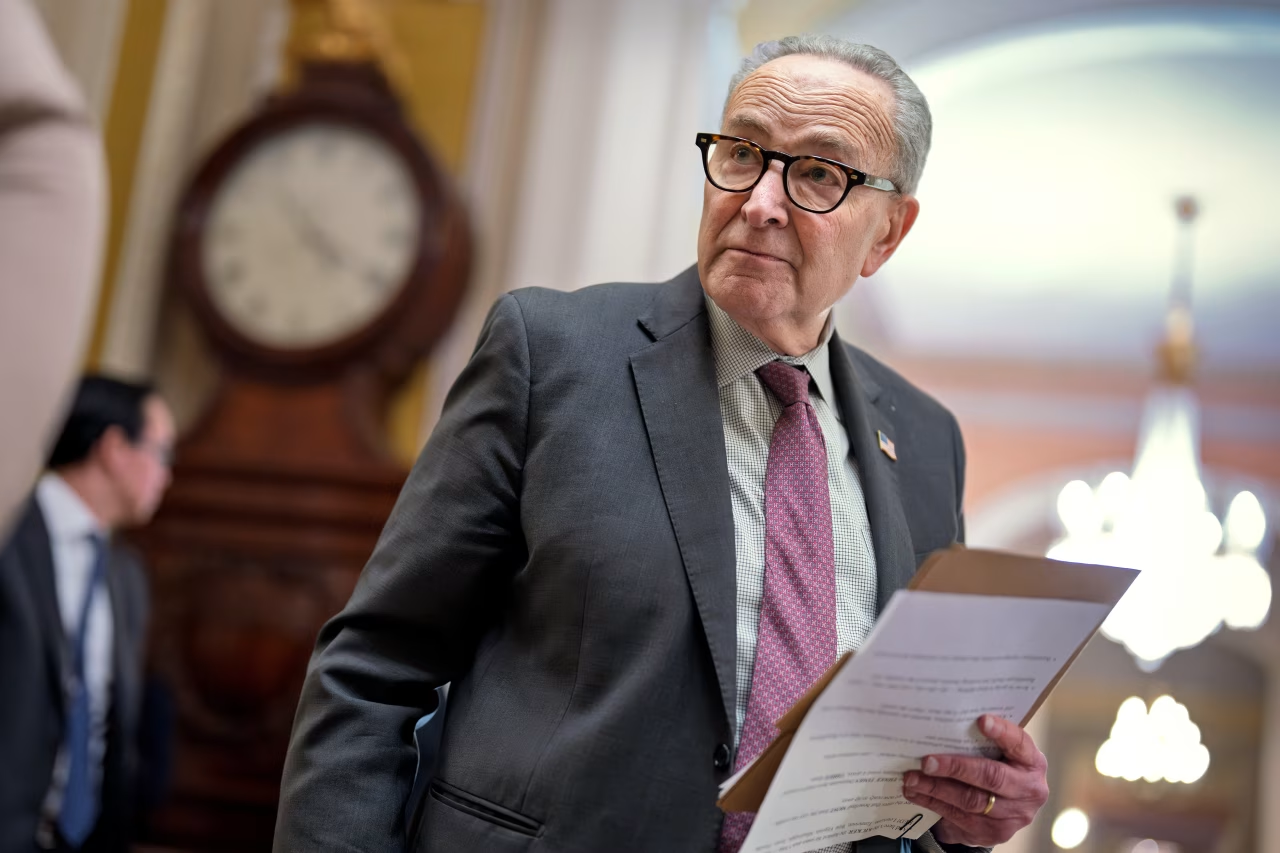
    Senate Minority Leader Chuck Schumer, D-N.Y., looks over notes as Senate Republicans work to cancel $9.4 billion in previously approved spending targeted by DOGE, at the Capitol in Washington, Tuesday, July 15, 2025. © AP Photo/J. Scott Applewhite

    WASHINGTON—Senate Majority Leader John Thune (R., S.D.) told Senate Republicans Thursday that they should expect to vote on a new proposal Friday aiming to end the government shutdown, according to people familiar with the plan, in an attempt by GOP leaders to build momentum toward a deal. 

    Democrats, however, indicated they weren’t sold on the emerging package, with some saying they would need their core demand of extending Affordable Care Act subsidies to be part of any legislation. 

    The plan to vote on a revised proposal comes as the impact of the shutdown continues to grow. Government workers have gone without pay for weeks, and low-income families are seeing cuts in food aid and other assistance programs. On Thursday, airlines scrambled to review flight plans after federal officials said they would reduce commercial air traffic starting Friday in response to the government shutdown.

    The proposal would combine a short-term spending measure with a package of three full-year funding bills, covering the legislative branch, agriculture, and military construction and veterans affairs. It was unclear whether the interim measure would aim to keep the government open through mid-December or January. 

    How ACA subsidies, a central concern of Democrats, would figure into the revised approach also remained in flux, and some Democrats warned they wouldn’t be satisfied by a pledge of future action.

    Sen. Richard Blumenthal (D., Conn.) said the subsidies needed to be included in any stopgap bill. “Settling for some kind of vague promise about a vote in the future on some indeterminate bill, without any definite inclusion in the law, I think is a mistake.”

    Thune acknowledged the uphill fight. Democrats “seem to be walking back or slow-walking this,” he told reporters. “This is what they asked for.” 

    To draw Democratic support, one element under discussion includes a proposal to stop or even roll back the firings that the White House initiated at the start of the shutdown. Sen. Tim Kaine (D., Va.) has for weeks made plain that he could support an interim spending bill if he had a guarantee against more so-called reductions in force—an important addition to the bloc of Democrats who have already voted to fund the government.

    Some Democrats, particularly in the progressive wing, have insisted on a guarantee that enhanced Affordable Care Act healthcare subsidies, which flow to 22 million people, would be extended past the end of this year, but Republican leaders declined to make that promise. Instead, Thune has offered a vote on extending ACA subsidies, but no guarantee it will pass.

    “We’ve got a dilemma,” said Sen. Peter Welch (D., Vt.). “There’s no other institution that can protect folks from the hammer blow of these explosive premium increases,” he said, “and the dilemma of a shutdown that does cause harm to people.”

    The House, which would also need to approve any deal, adds a complication. GOP lawmakers pushed through their own stopgap spending deal in mid-September that would have kept the government funded until Nov. 21. House Speaker Mike Johnson (R., La.) has insisted the Senate approve that bill before any talks could take place and has kept the chamber out of session for more than a month.

     On Thursday, Johnson said he wasn’t part of the talks and wouldn’t make any guarantees.

    “The House did its job on Sept. 19,” he said. “I’m not promising anybody anything.”

    Since September, Senate Minority Leader Chuck Schumer (D., N.Y.) has demanded talks to extend the expiring enhanced ACA subsidies before Democrats will provide the votes for a GOP bill to reopen the government. Republicans have a 53-47 Senate majority, and so far, only three senators who caucus with Democrats have crossed the aisle in more than a dozen failed votes. Democrats felt that favorable election results Tuesday bolstered their negotiating hand.
    im 46414997
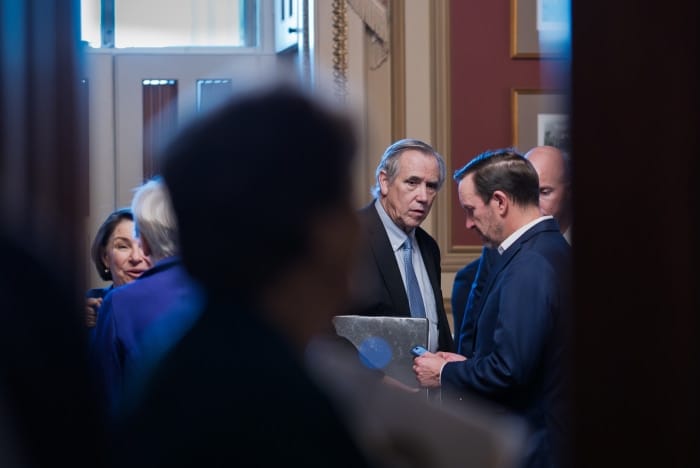
    Senate Democrats gathered at the Capitol on Thursday to discuss ways to end the shutdown. © J. Scott Applewhite/Associated Press

    President Trump has declined to engage in talks with Democrats since the shutdown began, insisting that they vote to reopen the government first. In recent days, he has pressed Senate Republicans to bypass Democrats by eliminating the filibuster rule, which requires 60 votes to advance most legislation. GOP senators have largely pushed back against Trump’s demand but have grown frustrated by the lack of progress.

    “This thing, I’ve told you before, this is a total goat rodeo,” said Republican Sen. John Kennedy of Louisiana, as he departed the meeting with Senate Republicans. “I can’t tell you what it’s going to be. I don’t think they know what it’s going to be.”

    Senate Democrats spent hours behind closed doors on Thursday in the hopes of finding a breakthrough but were tight-lipped on details. 

    “It was a caucus in which we were trying to organically come to a conclusion and I think that process is still happening,” said Sen. Chris Murphy (D., Conn.). “I just think we had a real desire in that meeting and previous meetings today to try to find a way to get together and we’re closer.”
    im 75205416
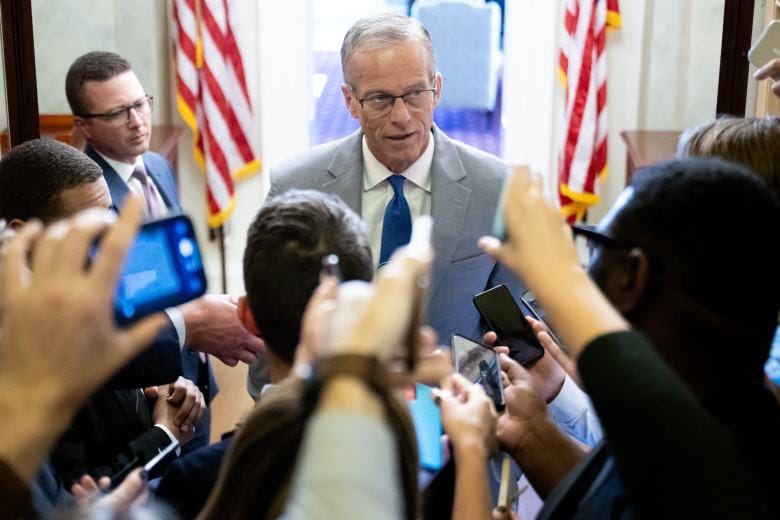
    South Dakota Republican John Thune, the Senate majority leader, has offered a vote on extending Affordable Care Act subsidies. © saul loeb/AFP/Getty Images

    Senate Republicans have been urging their Democratic colleagues to back the revised approach, which would provide full-year funding for three of 12 annual appropriations bills and aim to create time to complete the rest. Passing annual appropriations laws—rather than so-called continuing resolutions—would limit the executive branch’s discretion to withhold congressionally approved funds, and members of both parties have bristled at the budget cuts and firings Trump’s budget director has initiated this year.

    “The argument I’m making is we’ve got to get going on these [appropriations] bills or we’re going to end up with a yearlong” continuing resolution, Sen. John Hoeven (R., N.D.) said.
  • Air Canada Flight Attendants, Airline Forge Tentative Deal, Ending Strike Threat

    Air Canada Flight Attendants, Airline Forge Tentative Deal, Ending Strike Threat

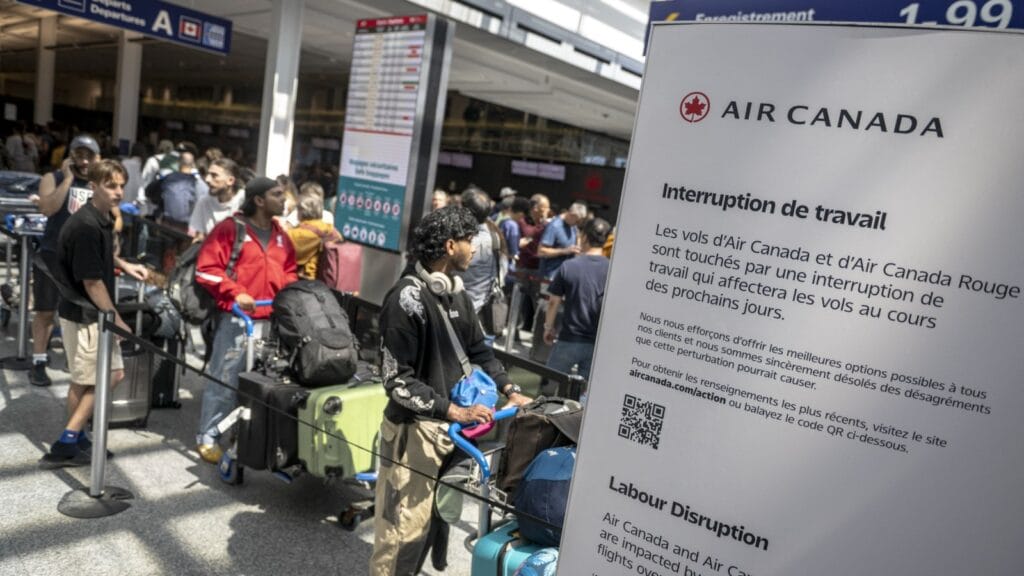
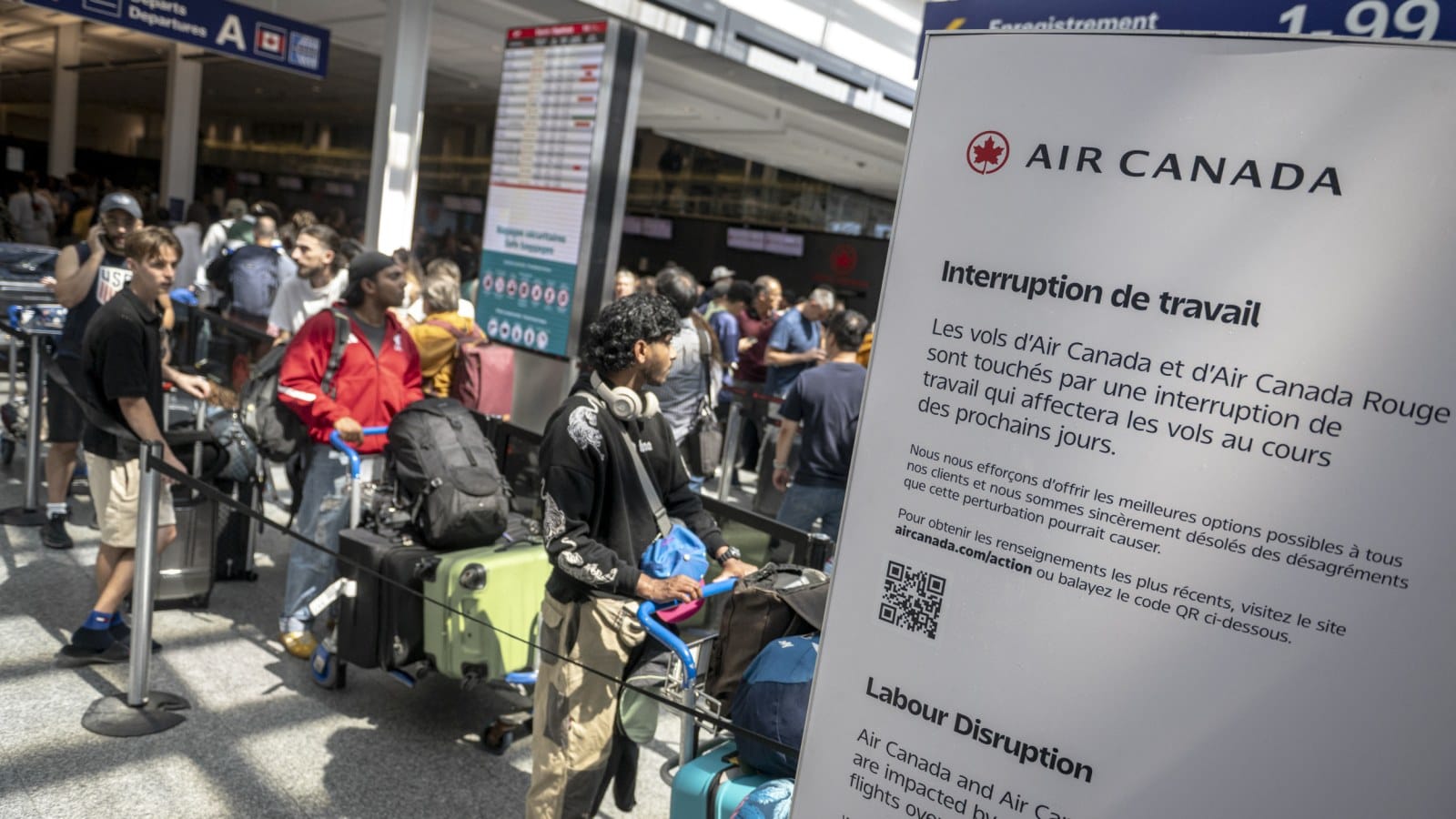
    Passengers wait in line to speak with Air Canada representatives at the Pierre-Elliott Trudeau Airport in Montreal on August 15. © ANDREJ IVANOV/AFP via Getty Images
    Passengers wait in line to speak with Air Canada representatives at the Pierre-Elliott Trudeau Airport in Montreal on August 15. © ANDREJ IVANOV/AFP via Getty Images

    MONTREAL/TORONTO — Air Canada and its 10,000 flight attendants, represented by the Canadian Union of Public Employees (CUPE), reached a tentative agreement early Tuesday, August 19, 2025, ending a disruptive four-day strike that canceled approximately 500,000 passengers’ flights during the peak summer travel season. The breakthrough, announced after intense overnight negotiations, allows Canada’s largest carrier to begin resuming operations, though the airline warns that a full return to normal service could take seven to ten days.

    “The strike has ended. We have a tentative agreement we will bring forward to you,” CUPE’s Air Canada Component stated, confirming that members will comply with the resumption of operations. Air Canada echoed the announcement, noting that mediation began Monday at 7 p.m. ET and concluded just after 4 a.m. ET on Tuesday, with the condition that flight attendants return to work immediately. “This allows the airline to resume the operations of Air Canada and Air Canada Rouge, which have been grounded since Aug. 16,” the airline said in a statement.

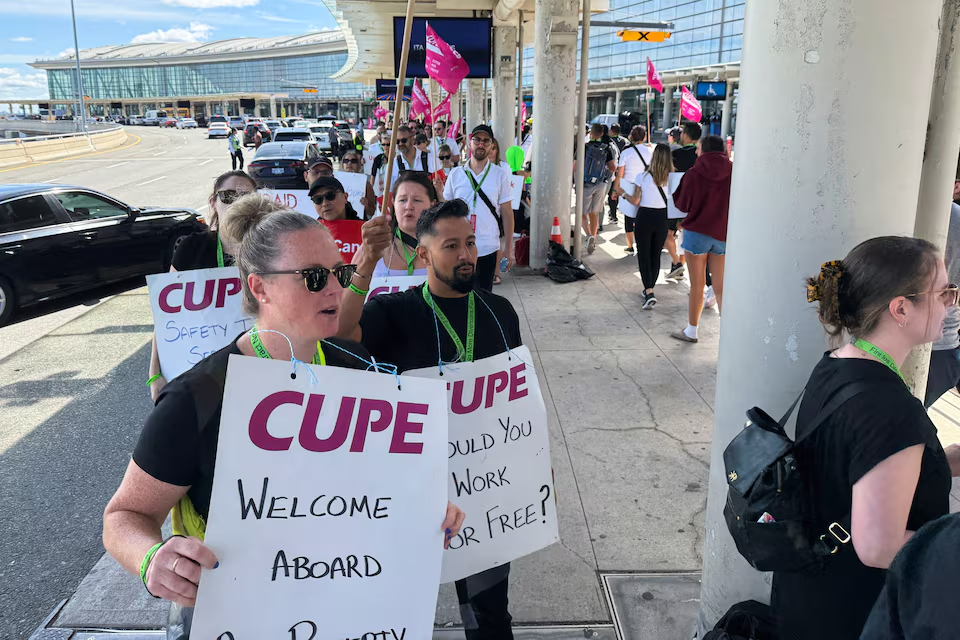
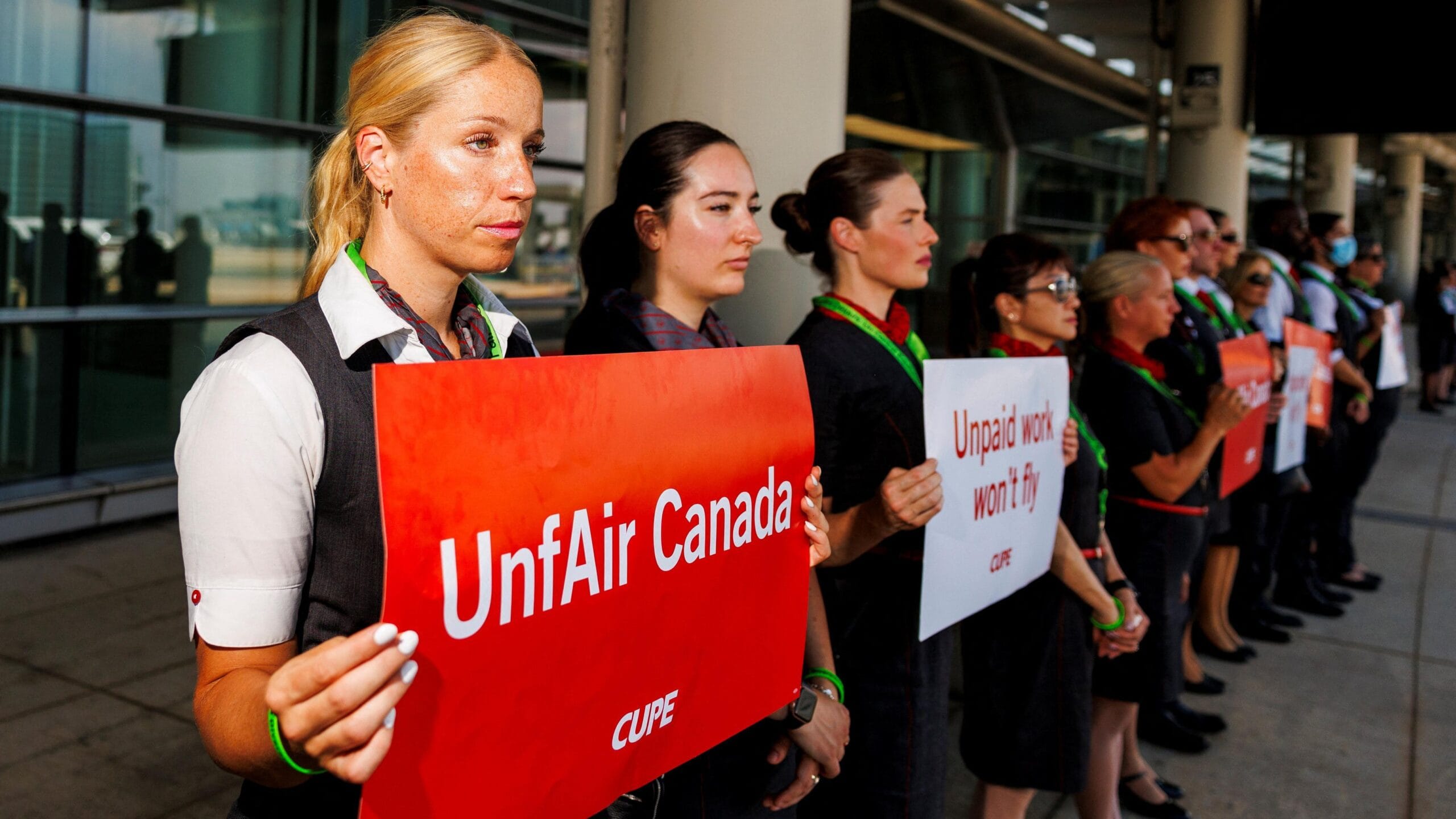
    The strike, which began on Saturday, August 16, followed months of stalled talks over wages and unpaid ground work, such as boarding and safety checks. CUPE rejected Air Canada’s initial offer of a 38% compensation increase, arguing it amounted to only a 17.2% wage hike over four years, insufficient given inflation and industry standards. The union also defied a Canada Industrial Relations Board (CIRB) order to return to work on Sunday, prompting the board to declare the strike unlawful. CUPE challenged the order in Federal Court, with national president Mark Hancock stating on Monday, “If it means folks like me going to jail, then so be it. We’re looking for a solution here.”

    The tentative agreement’s details remain undisclosed pending ratification by union members, but it follows significant pressure from federal Jobs Minister Patty Hajdu, who urged both sides to negotiate and announced a probe into allegations of unpaid work in the airline sector. “The claims are deeply disturbing,” Hajdu said, referencing flight attendants’ demands for compensation for ground duties.

    Passenger Disruptions and Recovery Challenges

    The strike left passengers stranded across Canada and beyond, with Air Canada operating around 700 flights daily. Travelers faced canceled flights, limited rebooking options, and significant out-of-pocket expenses. The airline advised that only passengers with confirmed bookings on operating flights should head to airports, as aircraft and crew remain out of position. “Some flights will be cancelled over the next seven to ten days until the schedule is stabilized,” Air Canada warned, offering refunds, travel credits, or rebooking on other airlines, though capacity is constrained due to the busy summer season.

    The agreement comes as a relief to passengers like John and Lois Alderman, who faced a potential week-long delay in Toronto with dwindling insulin supplies for John, a diabetic. Others, like Beverley and Martin Newstead, also U.K.-bound, expressed frustration over extended stays and mounting costs. In Montreal, Luca Pozzoli considered driving to Boston to catch a flight to Italy, while Sandra Major, a Bahamian grandmother, received no immediate rebooking options after her flight was canceled.

    Broader Implications for Labor

    The strike’s defiance of the CIRB order drew support from other labor groups, with the Canadian Labour Congress and Air Canada’s pilot union rallying behind CUPE. The resolution marks a significant moment for Canada’s labor movement, as CUPE’s push for fair compensation and paid ground work could influence future negotiations in the aviation sector. The federal probe into unpaid work, prompted by the strike, may further reshape industry practices.

    Prime Minister Mark Carney, speaking on Monday, expressed disappointment over the prolonged dispute but emphasized the importance of fair compensation for flight attendants. “Ottawa recognizes the critical role that flight attendants play in keeping Canadians and their families safe as they travel,” he said, urging a swift resolution.

    As Air Canada ramps up operations, with the first flights scheduled for Tuesday evening, passengers and the airline face a challenging recovery period. The tentative deal signals a step toward normalcy, but the union’s fight for better working conditions and the government’s scrutiny of airline labor practices suggest lasting impacts from this high-profile standoff.

  • Air Canada Cabin Crew Strike Enters Day Four as Talks Resume

    Air Canada Cabin Crew Strike Enters Day Four as Talks Resume

    Stock Widget

    MONTREAL/TORONTO — Air Canada AC.TO -3.85% ▼‘s flight attendants, represented by the Canadian Union of Public Employees (CUPE), extended their strike into its fourth day on Tuesday, August 19, 2025, disrupting travel for hundreds of thousands of passengers during the peak summer season. While talks between the union and the airline resumed late Monday, a standoff persists after CUPE defied a federal labor board order to return to work, escalating tensions with both Air Canada and the Canadian government.

    The strike, which began on Saturday, August 16, has grounded approximately 700 daily flights, affecting around 130,000 passengers daily, according to Air Canada, Canada’s largest carrier and a member of the global Star Alliance. The Canadian Industrial Relations Board (CIRB) declared the strike unlawful and ordered flight attendants back to work by 2 p.m. ET on Sunday, but CUPE’s leadership, led by president Mark Hancock, refused to comply, with Hancock stating he would “risk jail time” rather than force cabin crews back. The union insists the strike will continue until Air Canada negotiates on key demands, including higher wages and compensation for unpaid ground work, such as boarding passengers.

    Late Monday, CUPE announced on Facebook that it had met with Air Canada and federal mediator William Kaplan in Toronto, marking the first talks since the strike began. However, the union emphasized that the strike remains active, and a source familiar with the discussions told Reuters that mediation hinges on flight attendants returning to work—a condition CUPE has rejected. The resulting three-way standoff between the airline, workers, and the government has drawn attention from other labor groups, who view the dispute as a pivotal moment for workers’ rights in Canada.

    Government Response and Unpaid Work Probe

    Jobs Minister Patty Hajdu has intensified pressure on Air Canada, urging both sides to accept government mediation while announcing a probe into allegations of unpaid work in the airline sector. Flight attendants have long argued that their contracts should include pay for ground duties, such as boarding and safety checks, which currently go uncompensated. “I’ve ordered a probe into the allegation of unpaid work in the airline sector,” Hajdu said, expressing surprise at the practice in posts on X. The investigation, a key demand of CUPE, could reshape labor standards in Canada’s aviation industry.

    Hajdu also invoked Section 107 of the Canada Labour Code on Saturday to refer the dispute to the CIRB for binding arbitration, a move CUPE called “unconstitutional” and accused of “caving to corporate pressure.” The government’s options to end the strike include seeking court enforcement of the CIRB’s back-to-work order or passing legislation, though the latter would require support from opposition parties in a minority government and approval from both houses of parliament, currently on recess until September 15.

    Union Demands and Airline Offer

    The core issues fueling the strike are wages and unpaid ground work. CUPE has criticized Air Canada’s offer of a 38% increase in total compensation over four years, claiming it translates to only a 17.2% wage hike, which they argue is “below inflation, below market value, below minimum wage,” according to a union statement. Air Canada’s CEO, in a Reuters interview on Monday, defended the offer as positioning flight attendants as “the best compensated in Canada” but acknowledged a “big gap” with the union’s demands, offering no immediate plan to bridge it.

    The dispute follows months of stalled negotiations, with 99.7% of CUPE’s 10,000 flight attendants voting for strike action earlier this month. The union has highlighted the financial strain on workers, with some relying on food banks due to wages lagging inflation since their last contract a decade ago, as noted by CUPE Strike Committee Chair Shanyn Elliott in a prior Reuters interview.

    Passenger Impact and Labor Solidarity

    The strike has left passengers stranded, with many expressing frustration over limited support from Air Canada. James Numfor, 38, from Regina, Saskatchewan, told Reuters he and his family have been sleeping in Toronto’s Pearson International Airport for two nights after returning from Cameroon. “We find any place comfortable with the kids, they just lay down,” Numfor said, adding that Air Canada provided only one night of hotel accommodation. Retiree Klaus Hickman, who missed a Toronto flight and rebooked with another airline, sympathized with the workers but worried about making a connecting flight to Germany, citing health concerns.

    Other labor groups have rallied behind CUPE. Bea Bruske, president of the Canadian Labour Congress, representing 3 million workers, told Reuters that unions are prepared to escalate support, including covering CUPE’s legal costs. Air Canada’s pilot union, the Air Line Pilots’ Association, encouraged its members to join picket lines during off-hours, stating, “This is an important moment for organized labor across Canada.”

    As talks resume, the outcome remains uncertain. The strike’s defiance of the CIRB order marks a rare challenge to federal authority, drawing parallels to recent U.S. labor gains by flight attendants at American Airlines and Alaska Airlines. With passengers stranded and labor tensions rising, the resolution of this dispute could set a precedent for Canada’s aviation industry and beyond.

  • Air Canada Flight Attendants Strike: Travellers Face Continued Disruption

    Air Canada Flight Attendants Strike: Travellers Face Continued Disruption

    Stock Widget

    TORONTO/MONTREAL — Thousands of passengers faced another day of travel chaos on Monday, August 18, 2025, as Air Canada AC.TO -3.85% ▼‘s 10,000 flight attendants continued their strike, defying a Canada Industrial Relations Board (CIRB) order to return to work. The ongoing labor dispute, now in its third day, has led to the cancellation of approximately 500,000 passengers’ flights, leaving travelers stranded across Canada and beyond during the peak summer travel season.

    Among those affected are John and Lois Alderman, a British couple stranded in Toronto with their two teenage children. “I’m a diabetic and I’m going to run out of insulin in about four days,” John told reporters at Pearson International Airport. “That’s going to cause a problem.” The family, facing a four-to-five-day wait for a flight back to Manchester, U.K., feels like “prisoners in the hotel,” hesitant to explore the city due to the risk of missing a last-minute flight notification. The Aldermans are paying $700 per night for accommodations, with alternative flights on competitor airlines costing upwards of $8,000 for the family of four.

    Similarly, Beverley and Martin Newstead, also U.K. residents, saw their Toronto flight canceled and are now grappling with an indefinite extension of their vacation. “It’s not ideal,” Martin said. “It is nice in Canada, but we’ve been here for two weeks and a bit and are running out of clothes to wear.” In Montreal, Luca Pozzoli, attempting to reach Milan, Italy, found his flight canceled and is now considering driving to Boston to catch a flight. “Everything is fully booked,” he said, highlighting the scarcity of alternatives.

    The disruptions have sparked frustration, with passengers like Sandra Major, a Bahamian grandmother visiting Canada, receiving little support. After her 2:45 p.m. flight was canceled, Major told The Canadian Press, “I came down here for some assistance to see if they could transfer me on another flight, and they said they can’t help because they’re all shut down.” The lack of immediate options has left travelers feeling abandoned, with Air Canada offering rebookings on competitor airlines but no compensation for hotels, meals, or transportation.

    Union Defies CIRB, Talks Stalled

    The strike, initiated by the Canadian Union of Public Employees (CUPE) on Saturday, August 16, centers on demands for higher wages and compensation for unpaid ground work, such as boarding and safety checks. The CIRB declared the strike unlawful on Monday, with vice chairperson Jennifer Webster ordering, “The members of the union’s bargaining unit are directed to resume the performance of their duties immediately and to refrain from engaging in unlawful strike activities.” The order followed federal Jobs Minister Patty Hajdu’s invocation of Section 107 of the Canada Labour Code, directing the dispute to binding arbitration.

    VFUZ6WN3BBJH7F44TTRZL36FQE
    Mark Hancock, National President of the Canadian Union of Public Employees (CUPE) which represents striking Air Canada flight attendants, speaks at a news conference in the hotel media room at Toronto Pearson International Airport in Mississauga, Ontario, Canada, August 18, 2025. © REUTERS/Wa Lone

    CUPE, however, has defied the CIRB’s order and challenged it in Federal Court, arguing it violates workers’ constitutional rights. Union president Mark Hancock stated, “If Air Canada thinks planes will be flying this afternoon, they’re sorely mistaken,” signaling an intent to continue the strike until negotiations address their demands. Air Canada, which planned to resume flights on Sunday, was forced to delay operations, exacerbating the travel disruptions.

    Prime Minister Mark Carney expressed disappointment over the failure of Air Canada and CUPE to reach an agreement after eight months of negotiations. “It’s critical that both sides quickly resolve the situation causing chaos for travellers,” Carney said, acknowledging the “critical role that flight attendants play in keeping Canadians and their families safe as they travel” and emphasizing the need for equitable compensation.

    Passenger Sympathy Amid Frustration

    Despite the chaos, some passengers voiced support for the striking flight attendants. Lisa Smith, stranded in Montreal with her sister Nicole Power, told The Canadian Press, “I think that’s important. If you’re here to do your job and you’ve already started to do your job, then you should get paid for it.” The sisters, who were visiting San Francisco, were initially assured their return to Newfoundland would proceed but learned on Sunday that their flight was canceled. Rebooked on a competitor airline, they face a wait until Wednesday, with no compensation for accommodations or meals.

    Air Canada, a key member of the Star Alliance, typically serves 130,000 passengers daily. The prolonged strike has drawn attention from other labor groups, with the Canadian Labour Congress and Air Canada’s pilot union expressing solidarity. The dispute’s resolution remains uncertain as CUPE challenges the CIRB order and negotiations remain stalled, leaving travelers like the Aldermans, Newsteads, and Major to navigate mounting costs and uncertainty.

  • Delta Air Lines Confirms to U.S. Legislators That It Will Not Personalize Ticket Prices with AI

    Delta Air Lines Confirms to U.S. Legislators That It Will Not Personalize Ticket Prices with AI

    ATLANTA, GA — Delta Air Lines is facing mounting scrutiny over its adoption of artificial intelligence in airfare pricing, following sharp criticism from U.S. lawmakers who raised concerns about potential “personalized pricing” — a practice where AI could tailor fares based on a customer’s individual data or perceived willingness to pay.

    In a letter sent Friday to three Democratic senators — Ruben Gallego (AZ), Mark Warner (VA), and Richard Blumenthal (CT) — Delta firmly denied any intent to use AI in that manner, stating:

    “There is no fare product Delta has ever used, is testing or plans to use that targets customers with individualized prices based on personal data. Our ticket pricing never takes into account personal data.”

    The issue surfaced after the senators expressed alarm at comments made by Delta President Glen Hauenstein in December, when he said that Delta’s AI pricing system can predict “the amount people are willing to pay for the premium products related to the base fares.” The lawmakers interpreted this to mean Delta could eventually implement AI tools that price tickets based on individual “pain points” — essentially, the maximum price a specific person might accept.

    In a joint statement last week, the senators warned that such a practice would “likely mean fare price increases up to each individual consumer’s personal ‘pain point.’” The phrase sparked public backlash, fueling concerns over digital price discrimination in a sector where pricing transparency is already murky.

    While Delta clarified that it is not using AI to set fares on a per-person basis, it acknowledged that it will expand AI-powered dynamic pricing systems to cover 20% of its domestic network by the end of 2025, in collaboration with Israeli startup Fetcherr, which specializes in AI-driven pricing models.

    Delta reiterated that this technology is intended to streamline conventional pricing systems based on aggregate market factors — such as demand, fuel prices, and competition — not consumer behavior or identity.

    Delta emphasized that dynamic pricing has been used across the airline industry for over 30 years, long before the arrival of advanced machine learning tools. Historically, ticket prices have fluctuated based on broad variables like demand spikes during holidays, competitor pricing, or regional economic trends.

    In the letter to lawmakers, Delta wrote:

    “Given the tens of millions of fares and hundreds of thousands of routes for sale at any given time, the use of new technology like AI promises to streamline the process by which we analyze existing data and the speed and scale at which we can respond to changing market dynamics.”

    In other words, AI would merely optimize what was already a complex pricing algorithm — not personalize it.

    Still, lawmakers remain unconvinced. Senator Gallego responded to Delta’s letter, stating:

    “Delta is telling their investors one thing, and then turning around and telling the public another. If Delta is in fact using aggregated instead of individualized data, that is welcome news — but we need clarity.”

    Delta’s assurances came amid broader industry and regulatory unease. American Airlines CEO Robert Isom voiced his own concerns during an earnings call last week:

    “This is not about bait and switch. This is not about tricking. Talk about using AI in that way — I don’t think it’s appropriate. And certainly from American, it’s not something we will do.”

    At the legislative level, Representatives Greg Casar (TX) and Rashida Tlaib (MI) introduced a bill last week that would ban the use of AI for pricing or wage decisions based on personal data. The bill directly references potential scenarios such as airlines raising ticket prices after detecting a consumer searching for a family obituary — a hypothetical scenario designed to illustrate emotional exploitation through algorithmic targeting.

    The bill comes after the Federal Trade Commission (FTC) released a January staff report warning that companies increasingly use personal information — such as location, demographics, and even mouse movements — to adjust prices for goods and services.

    According to the FTC:

    “Retailers frequently use people’s personal information to set targeted, tailored prices… A consumer profiled as a new parent could be intentionally shown higher-priced baby thermometers.”

    Delta’s partnership with Fetcherr and its AI revenue management strategy signals a broader trend in the travel and transportation sector. Airlines are exploring AI to help navigate volatile fuel prices, shifting post-pandemic demand patterns, and ongoing labor shortages.

    Fetcherr’s AI pricing platform is designed to mimic stock market dynamics, adjusting prices in real-time based on numerous market variables — from macroeconomic indicators to real-time seat availability. While powerful, such models inevitably raise transparency and fairness concerns.

    Despite the controversy, investors have reacted with cautious optimism. Delta shares (NYSE: DAL) rose 1.4% Friday following the company’s public response, reflecting investor confidence in Delta’s ability to manage AI implementation without triggering regulatory blowback.

    Industry analysts, however, remain split.

    Morgan Stanley aviation analyst Richard Hill commented:

    “AI will inevitably change airline economics. But companies must tread carefully. Crossing the line into personal pricing is a reputational and legal minefield — and Congress is watching.”

    While Delta has now publicly pledged not to use personal data for individualized fares, pressure from lawmakers and consumer advocates shows no sign of abating.

    Expect greater regulatory scrutiny in the coming months, as AI tools proliferate across industries. For now, the travel sector remains a key battleground in the growing debate over algorithmic fairness, data ethics, and the power of artificial intelligence to reshape market behavior.

  • Cockpit recording from Air India suggests the captain cut fuel to the engines before the crash, source says

    Cockpit recording from Air India suggests the captain cut fuel to the engines before the crash, source says

    A cockpit recording of dialogue between the two pilots of the Air India flight that crashed last month supports the view that the captain cut the flow of fuel to the plane’s engines, said a source briefed on U.S. officials’ early assessment of evidence.

    The first officer was at the controls of the Boeing 787 and asked the captain why he moved the fuel switches into a position that starved the engines of fuel and requested that he restore the fuel flow, the source told Reuters on condition of anonymity because the matter remains under investigation.

    The U.S. assessment is not contained in a formal document, said the source, who emphasized the cause of the June 12 crash in Ahmedabad, India, that killed 260 people remains under investigation.

    There was no cockpit video recording definitively showing which pilot flipped the switches, but the weight of evidence from the conversation points to the captain, according to the early assessment.

    The Wall Street Journal first reported similar information on Wednesday about the world’s deadliest aviation accident in a decade.

    2XGCHXTWKBPUROGQB22PVIXLT4
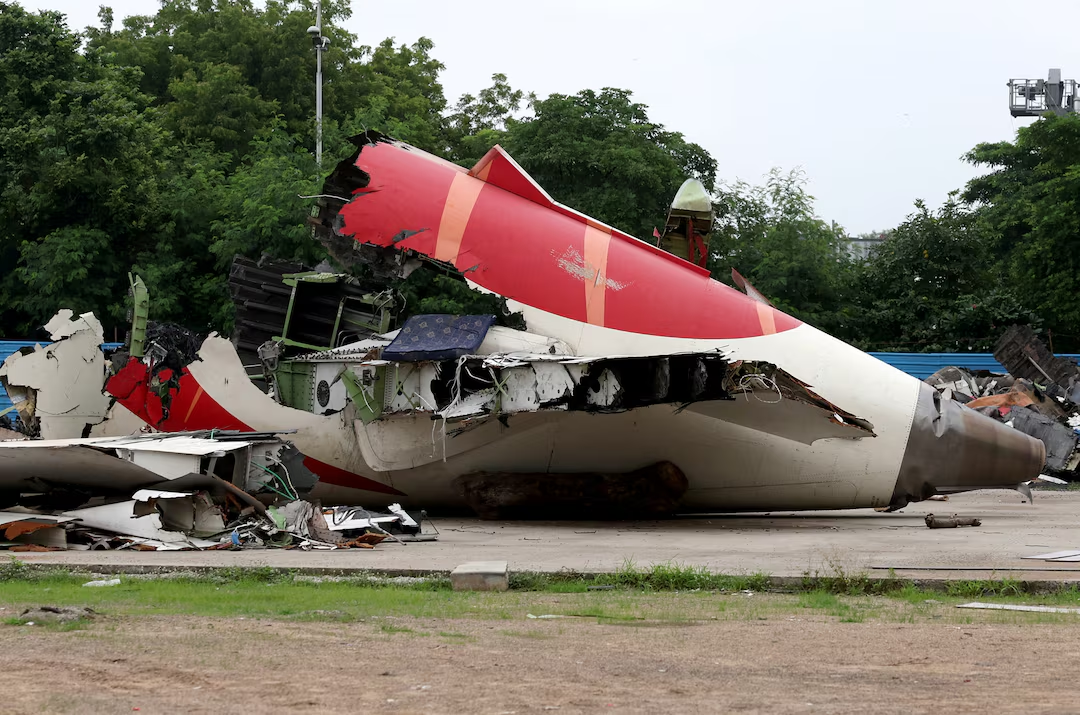
    A police officer stands in front of the wreckage of an Air India aircraft, bound for London’s Gatwick Airport, which crashed during take-off from an airport in Ahmedabad, India June 12, 2025. (REUTERS/Adnan Abidi/File Photo)

    India’s Aircraft Accident Investigation Bureau (AAIB), which is leading the investigation into the crash, said in a statement on Thursday that “certain sections of the international media are repeatedly attempting to draw conclusions through selective and unverified reporting.” It added the investigation was ongoing and it remained too early to draw definitive conclusions.

    Most air crashes are caused by multiple factors, and under international rules, a final report is expected within a year of an accident.

    A preliminary report released by the AAIB on Saturday said one pilot was heard on the cockpit voice recorder asking the other why he cut off the fuel and “the other pilot responded that he did not do so.”

    Investigators did not identify which remarks were made by Captain Sumeet Sabharwal and which by First Officer Clive Kunder, who had total flying experience of 15,638 hours and 3,403 hours, respectively.

    The AAIB’s preliminary report said the fuel switches had switched from “run” to “cutoff” a second apart just after takeoff, but it did not say how they were moved.

    Almost immediately after the plane lifted off the ground, closed-circuit TV footage showed a backup energy source called a ram air turbine had deployed, indicating a loss of power from the engines.

    The London-bound plane began to lose thrust, and after reaching a height of 650 feet, the jet started to sink.

    The fuel switches for both engines were turned back to “run”, and the airplane automatically tried restarting the engines, the report said.

    But the plane was too low and too slow to be able to recover, aviation safety expert John Nance told Reuters.

    The plane clipped some trees and a chimney before crashing in a fireball into a building on a nearby medical college campus, the report said, killing 19 people on the ground and 241 of the 242 on board the 787.

    No safety recommendations

    In an internal memo on Monday, Air India CEO Campbell Wilson said the preliminary report found no mechanical or maintenance faults and that all required maintenance had been carried out.

    The AAIB’s preliminary report had no safety recommendations for Boeing or engine manufacturer GE.

    After the report was released, the U.S. Federal Aviation Administration and Boeing privately issued notifications that the fuel switch locks on Boeing planes are safe, a document seen by Reuters showed and four sources with knowledge of the matter said.

    The U.S. National Transportation Safety Board has been assisting with the Air India investigation and its Chair Jennifer Homendy has been fully briefed on all aspects, a board spokesperson said. That includes the cockpit voice recording and details from the flight data recorder that the NTSB team assisted the AAIB in reading out, the spokesperson added.

    “The safety of international air travel depends on learning as much as we can from these rare events so that industry and regulators can improve aviation safety,” Homendy said in a statement. “And if there are no immediate safety issues discovered, we need to know that as well.”

    The circumstantial evidence increasingly indicates that a crew member flipped the engine fuel switches, Nance said, given there was “no other rational explanation” that was consistent with the information released to date.

    Nonetheless, investigators “still have to dig into all the factors” and rule out other possible contributing factors which would take time, he said.

    The Air India crash has rekindled debate over adding flight deck cameras, known as cockpit image recorders, on airliners.

    Nance said investigators likely would have benefited greatly from having video footage of the cockpit during the Air India flight.

  • Delta Airlines is in recovery mode after severe weather messed up weekend travel plans

    Delta Airlines is in recovery mode after severe weather messed up weekend travel plans

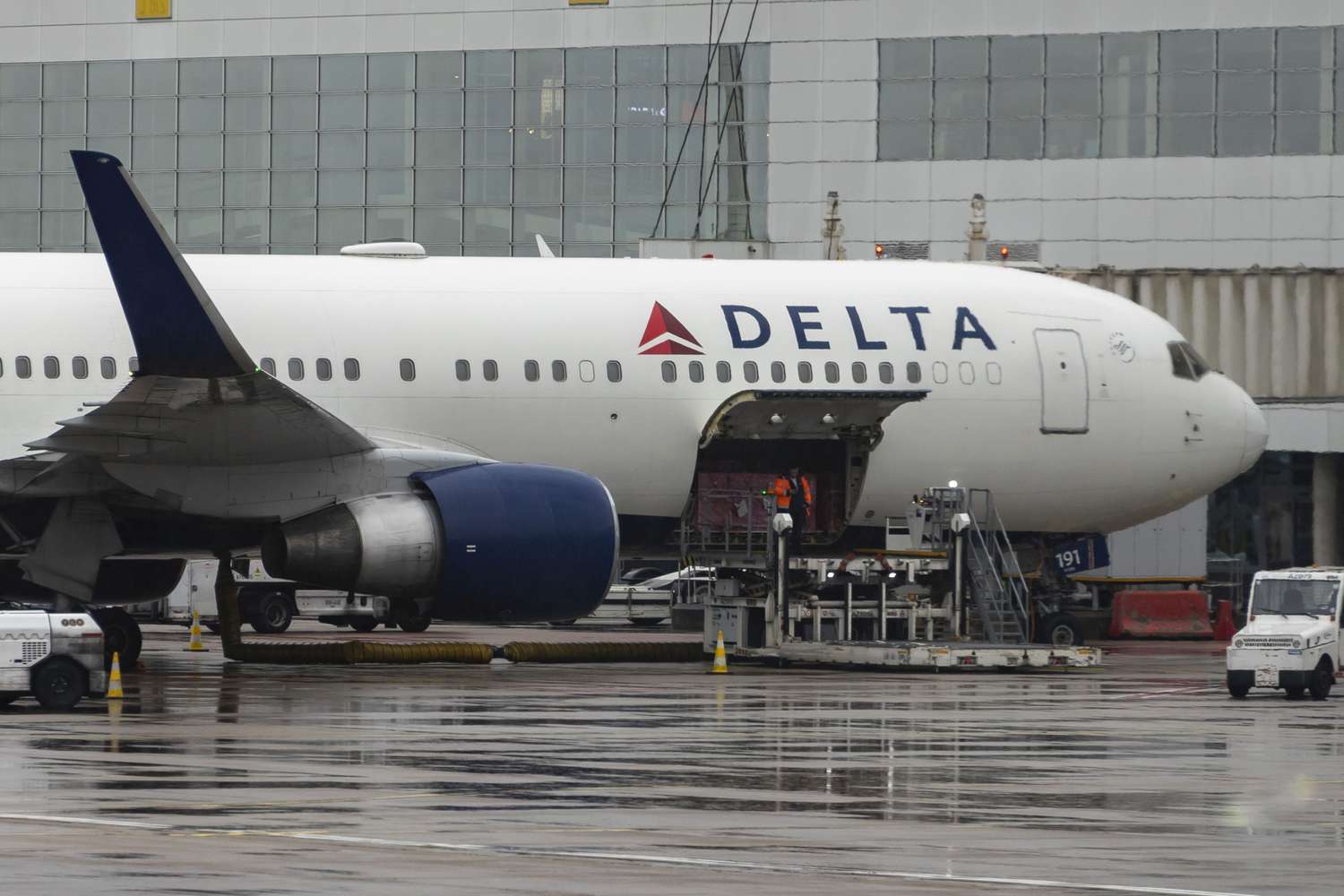
    Delta Air Lines is working around the clock to restore normal service after severe storms hammered its bustling Atlanta hub late Friday, triggering the cancellation of more than 2,800 U.S. flights across multiple carriers since Friday due to widespread weather disruptions.

    On Friday evening, a powerful line of thunderstorms—including intense lightning, quarter-inch hail, microbursts, and flash flooding—forced the evacuation of much of the FAA’s air-traffic-control tower at Hartsfield‑Jackson Atlanta International Airport. Air traffic was ground-stopped temporarily, halting arrivals and departures between 7:11 and 8:30 p.m. ET.

    Delta was forced to divert around 90 flights, cancel 581 mainline flights Saturday, and delay or inspect more than 100 aircraft for hail damage by Sunday, though cancellations dropped sharply to 56 that day.

    As Atlanta handles approximately 900 Delta flights daily, disruptions there rippled through Delta’s national network, compounding delays and cancellations in other East Coast hubs. Regional airports in Boston, New York City, Philadelphia, Washington, and Florida also saw knock-on delays—as did other carriers—pushing the total U.S. flight cancellations past 2,800.

    Delta cautioned customers to expect “several hundred more cancellations” this weekend amid continued recovery efforts.

    Delta’s Chief Customer Experience Officer Erik Snell told passengers via email: “When we fall short, we work around the clock to make it right,” and the airline set up waivers, reimbursements, and travel assistance. He expressed gratitude to the teams working to reset operations ahead of the holiday rush.

    Expedited aircraft inspections: Over 100 planes underwent hail damage checks overnight, allowing most to return to service by Saturday.

    Ground staff mobilization: Delta deployed thousands of employees to rebook passengers, support stranded travelers, and manage logistics.

    Tech-enabled communications: The Fly Delta app was instrumental in issuing real-time travel updates and rebooking options.

    Passengers today report lower wait times, though some described the initial weekend response as slow, citing long app queues and understaffed counters wsj.com.

    Industry observers warn even short-term disruptions ahead of Fourth of July travel can dent customer satisfaction and brand loyalty. In 2025, airlines are already on edge—weather, geopolitical shocks, and tech outages have weighed on revenue forecasts. Delta, for example, slashed Q1 revenue estimates by $500 million amid similar storms .

    Investors remained cautious: Delta stock dipped slightly after the storm reports, though broader industry factors—fuel prices and travel demand—are driving overall valuation .

    This incident adds to a pattern of weather- and tech-related disruptions. Delta and rivals may consider bolstering hub redundancies and weather-resilient infrastructure. This incident adds to a pattern of weather- and tech-related disruptions. Delta and rivals may consider bolstering hub redundancies and weather-resilient infrastructure. Airlines could face higher insurance costs and more pressure on customer service if such storms become more frequent or severe.

    “A single hub disruption at Atlanta cascades across the network,” says aviation analyst Karen Walker at Jane Hughes & Co. “Delta’s rapid recovery is a positive, but frequent weather shocks could force carriers to rethink their hub-and-spoke designs.”

    With the Fourth of July travel surge imminent, Delta faces a critical test: restoring reliability, rebuilding trust, and avoiding further operational hiccups. How swiftly they stabilize service in the next 48 hours will determine both passenger trust and their summer earnings trajectory.

  • Hawaiian Airlines experiencing a cyber problem, however, flights are operating as usual

    Hawaiian Airlines experiencing a cyber problem, however, flights are operating as usual

    Hawaiian Airlines disclosed a cybersecurity event affecting some of its IT systems on June 26, sparking concerns across the industry. Despite the breach, the airline emphasized that flight operations remained unaffected, and the Federal Aviation Administration confirmed there was no safety impact.

    Hawaiian identified a “cybersecurity event” on June 23, first notifying the public early on June 26 via its newsroom.

    The airline did not specify which IT systems were targeted, though third-party reporting suggests reservation, check-in, and backend tools may have been affected.

    No ransomware group has claimed responsibility, and there have been no confirmed ransom demands or data breaches.

    Despite the disruption, Hawaiian affirmed that “flights are operating safely and as scheduled,” and brought in cybersecurity experts and federal authorities to manage the incident.

    The FAA’s safety office affirmed it’s in active contact with Hawaiian and there is no impact on flight safety. Monitoring continues as investigators work to contain and resolve the situation.

    Cybersecurity experts note that airlines are increasingly being targeted due to their reliance on interconnected systems storing sensitive passenger data. Google’s Mandiant, for example, suggests the attack bears hallmarks of the notorious Scattered Spider gang—though no definitive attribution has been made.

    This incident follows similar cyberattacks in recent months—including those affecting WestJet and Japan Airlines—and underscores a systemic vulnerability in aviation’s digital infrastructure.

    Hawaiian’s cybersecurity event also drew attention on financial markets. Alaska Air Group (parent company of Hawaiian) saw shares dip slightly following news of the incident, though broader upward trends attributed to travel recovery persisted.

    Ensure critical systems (booking, check-in, loyalty) are fully reinstated. Forensics underway—CISA, FBI, Mandiant-like firms assisting in attribution. FAA and CISA to determine compliance or mitigation steps. Strengthen MFA, patch legacy systems, and consolidate redundancies.

    Dr. Darren Williams, CEO of BlackFog, warns that airlines must elevate defenses beyond basic protections:

    “The primary goal of cyber attacks is often not just to access systems but to use sensitive or personal data as leverage for extortion… operators must remain vigilant”.

    Though Hawaiian Airlines has contained the incident without disrupting flights, the episode serves as a stark reminder: one weak link in IT systems can potentially cripple core airline operations. The coming weeks will be pivotal—bringing scrutiny from regulators, deep technical audits, and attention to whether sufficient resilience is being built across the aviation industry.

  • Boeing to Sidestep Prosecution for 737 Max Crashes Under Justice Department Deal

    Boeing to Sidestep Prosecution for 737 Max Crashes Under Justice Department Deal

    The justice department has reached a deal with Boeing that will allow the airplane giant to avoid criminal prosecution for allegedly misleading US regulators about the 737 Max jetliner before two of the planes crashed and killed 346 people, according to court papers filed on Friday.

    Under the “agreement in principle” that still needs to be finalized, Boeing would pay and invest more than $1.1bn, including an additional $445m for the crash victims’ families, the justice department said. In return, the department would dismiss the fraud charge in the criminal case against the aircraft manufacturer.

    “Ultimately, in applying the facts, the law, and Department policy, we are confident that this resolution is the most just outcome with practical benefits,” a justice department spokesperson said in a statement.

    “Nothing will diminish the victims’ losses, but this resolution holds Boeing financially accountable, provides finality and compensation for the families and makes an impact for the safety of future air travelers.”

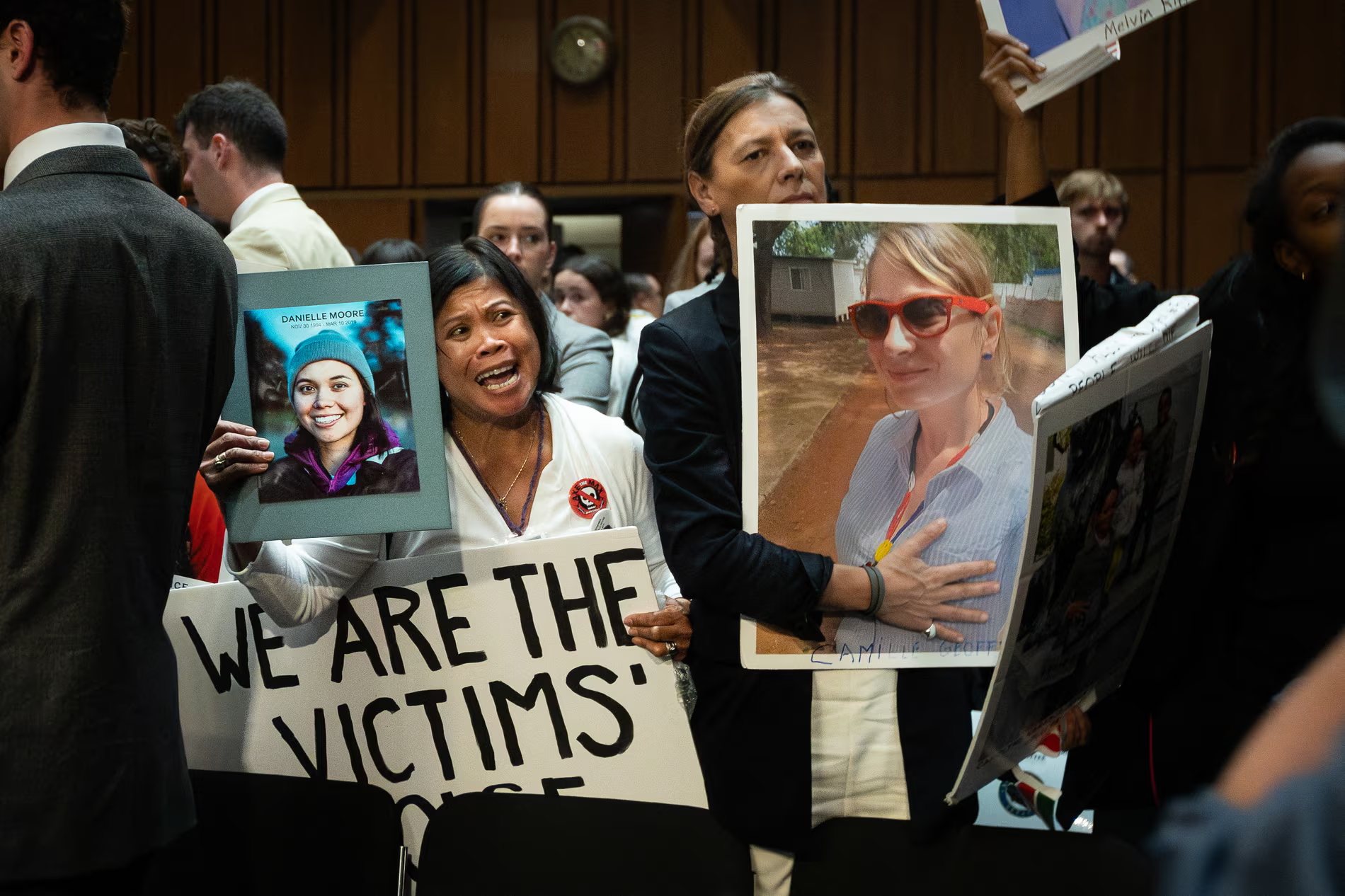
    Many relatives of the passengers who died in the crashes, which took place off the coast of Indonesia and in Ethiopia less than five months apart in 2018 and 2019, have spent years pushing for a public trial, the prosecution of former company officials, and more severe financial punishment for Boeing.

    “Although the DOJ proposed a fine and financial restitution to the victims’ families, the families that I represent contend that it is more important for Boeing to be held accountable to the flying public,” Paul Cassell, an attorney for many of the families in the long-running case, said in a statement earlier this week.

    Boeing was accused of misleading the Federal Aviation Administration about aspects of the Max before the agency certified the plane for flight. Boeing did not tell airlines and pilots about a new software system, called MCAS, that could turn the plane’s nose down without input from pilots if a sensor detected that the plane might go into an aerodynamic stall.

    The Max planes crashed after a faulty reading from the sensor pushed the nose down and pilots were unable to regain control. After the second crash, Max jets were grounded worldwide until the company redesigned MCAS to make it less powerful and to use signals from two sensors, not just one.

    Boeing avoided prosecution in 2021 by reaching a $2.5bn settlement with the justice department that included a previous $243.6m fine.

    A year ago, prosecutors said Boeing violated the terms of the 2021 agreement by failing to make promised changes to detect and prevent violations of federal anti-fraud laws. Boeing agreed last July to plead guilty to the felony fraud charge instead of enduring a potentially lengthy public trial.

    But in December, US district judge Reed O’Connor in Fort Worth rejected the plea deal. The judge said the diversity, inclusion and equity (DEI) policies in the government and at Boeing could result in race being a factor in picking a monitor to oversee Boeing’s compliance with the agreement.

  • United CEO Scott Kirby has reassured customers that Newark Airport is safe

    United CEO Scott Kirby has reassured customers that Newark Airport is safe

    United Airlines CEO Scott Kirby on Tuesday moved to calm growing concerns about operational safety at Newark Liberty International Airport (EWR), assuring customers that the facility remains “absolutely safe and fully compliant” despite a recent series of technical disruptions and staffing shortfalls that prompted the airline to reduce its daily flight schedule from the hub.

    In a letter shared with frequent flyers and during remarks at a press conference held at United’s Terminal C, Kirby acknowledged the recent frustrations experienced by passengers traveling through Newark—United’s third-busiest hub—while pushing back on what he called “sensationalist narratives” about safety risks.

    “Let me be very clear: Newark is safe,” Kirby said. “We are facing challenges, yes—but they are operational, not structural. We are proactively scaling back to ensure reliability and safety remain our top priorities.”

    United has cut approximately 14% of its daily departures out of Newark, or about 40 flights, citing a “perfect storm” of FAA staffing constraints, legacy software outages, and an unusual spate of severe weather over the past six weeks that has disproportionately affected Northeast air traffic.

    The reductions are temporary, Kirby emphasized, with most cuts affecting regional and short-haul domestic routes, such as service to upstate New York and parts of New England. Transatlantic flights and major domestic corridors remain largely intact.

    “We’d rather operate fewer flights well than stretch the system too thin,” said Toby Enqvist, United’s Chief Customer Officer.

    According to internal memos obtained by The New York Budget, recent issues at Newark have included:

    • Technology Glitches: A malfunction in United’s gate management software caused widespread delays in late April.
    • Air Traffic Staffing: FAA tower staffing at EWR remains 23% below optimal levels, according to union estimates.
    • Runway Congestion: Construction and overlapping arrival times led to ground delays averaging 65 minutes during peak evening hours.

    The FAA, which oversees air traffic control, acknowledged the staffing shortfall and pledged to accelerate hiring and training efforts. A spokesperson confirmed that Newark is among the agency’s top-priority zones for controller recruitment in 2025.

    Meanwhile, the Port Authority of New York and New Jersey—the operator of EWR—said the airport infrastructure is “not in question,” pointing instead to “national airspace bottlenecks” and rising passenger demand as contributing factors.

    “Our systems passed all recent safety inspections,” said Kevin O’Toole, chairman of the Port Authority. “We are in constant communication with United and federal authorities to minimize disruption.”

    Despite assurances, the disruptions have not gone unnoticed by travelers. On social media, some have labeled EWR the “black hole of East Coast airports,” citing multiple cancellations and missed connections.

    United’s Net Promoter Score (NPS) dropped 7 points in Q2 compared to the same period last year, with the Newark hub cited as the number one complaint area in customer service surveys.

    To win back goodwill, United is offering 5,000-mile travel credits to MileagePlus members who experienced flight disruptions out of EWR between April 10 and May 5. The airline is also deploying additional customer service personnel and rebooking agents at the terminal during peak hours.

    “We owe it to our customers to get this right,” Kirby said. “We’ve made hard choices, and we’re going to be transparent every step of the way.”

    United executives said they expect flight schedules to return to normal by late June, contingent on FAA staffing progress and continued stability in their software systems. The airline has also initiated a $300 million investment in terminal upgrades and digital infrastructure at Newark, set to roll out over the next two years.

    Industry analysts note that while United is not alone in grappling with post-pandemic capacity strains and labor mismatches, its aggressive Northeast footprint makes it particularly vulnerable to chokepoints like Newark.

    “This is about long-term resilience,” said Helane Becker, airline analyst at TD Cowen. “United has taken a short-term reputational hit, but their decision to reduce flights instead of risking bigger meltdowns shows maturity.”

    Newark remains a critical pillar of United’s domestic and international network, and despite current operational headwinds, the airline’s leadership insists safety is not up for compromise. With summer travel season approaching, United’s next challenge is to restore passenger confidence—flight by flight.