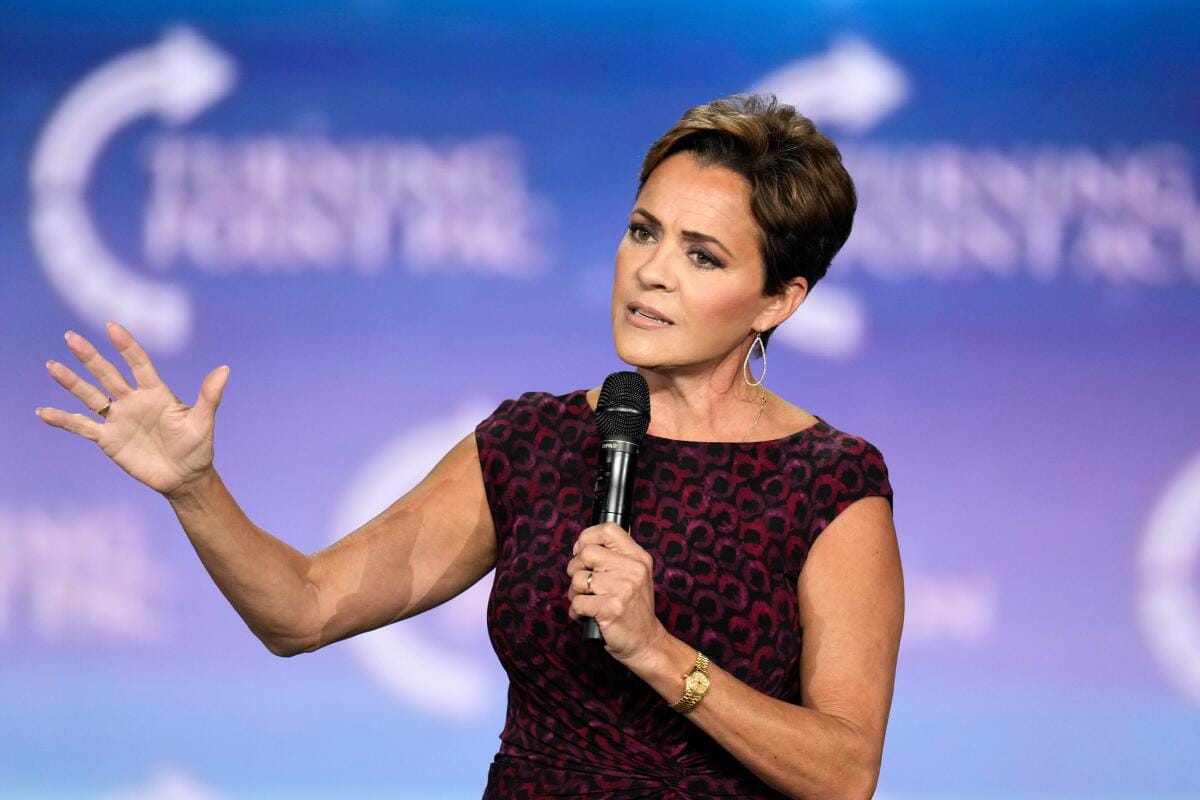
A federal judge on Saturday voided layoffs at Voice of America (VOA) while also ruling that the U.S. Agency for Global Media’s (USAGM) acting CEO, Kari Lake, unlawfully ran the independent federal agency.
U.S. District Court of Washington, D.C., Judge Royce Lamberth wrote that Lake oversaw the media agency in violation of the Constitution’s appointments clause and the Federal Vacancies Reform Act.
Lamberth’s ruling comes after VOA’s White House bureau chief Patsy Widakuswara filed the lawsuit last year.
President Trump nominated Lake to be senior adviser to acting CEO Victor Morales in February 2025. Morales designated Lake “to perform the functions and responsibilities specified” to 19 out of the 22 duties that the CEO assigns,” Lamberth wrote. By July, she was made acting CEO and “exercised control over the agency during the period relevant to the motions.”
Lamberth, a Reagan appointee, ruled that Lake’s actions after becoming acting CEO, including eliminating USAGM staff in August, are void. Morales’s actions for Lake to perform were also invalidated.
“The Court finds that these expansive delegations were an unlawful effort to transform Lake into the CEO of U.S. Agency for Global Media in all but name,” Lamberth wrote.
He noted that if Lake’s designation was “proper,” it “would require the Court to find that the President can fill a first assistantship at any time during a vacancy in a Senate-confirmed office … .”
Widakuswara and fellow plaintiffs Kate Neeper and Jessica Jerreat said they feel “vindicated and [are] deeply grateful.”
“The judge’s ruling that Kari Lake’s actions shall have no force or effect is a powerful step toward undoing the damage she has inflicted on this American institution that we love,” they said in a statement to Politico. “Even as we work through what this ruling means for colleagues harmed by her actions, it brings renewed hope and momentum to the next phase of our fight: restoring VOA’s global operations and ensuring we continue to produce journalism, not propaganda.”
Lake said she disagreed “strongly” with Lamberth’s ruling and will appeal it.
“The American people gave President Trump a mandate to cut bloated bureaucracy, eliminate waste, and restore accountability to government,” Lake said in a statement obtained by The Washington Post. “An activist judge is trying to stand in the way of those efforts at USAGM.”
Trump signed an executive order in March 2025 to gut the agency. Lake last summer defended the layoffs before a federal judge blocked them in December.
“Sometimes a lean, mean, team makes it easier to get things done,” she said of scaling down the staff by more than 500 employees.
The Saturday ruling comes one day after Ahmad Batebi, a prominent Iranian dissident, human rights activist and VOA journalist, was fired over efforts to limit coverage of Iran’s exiled Crown Prince Reza Pahlavi.
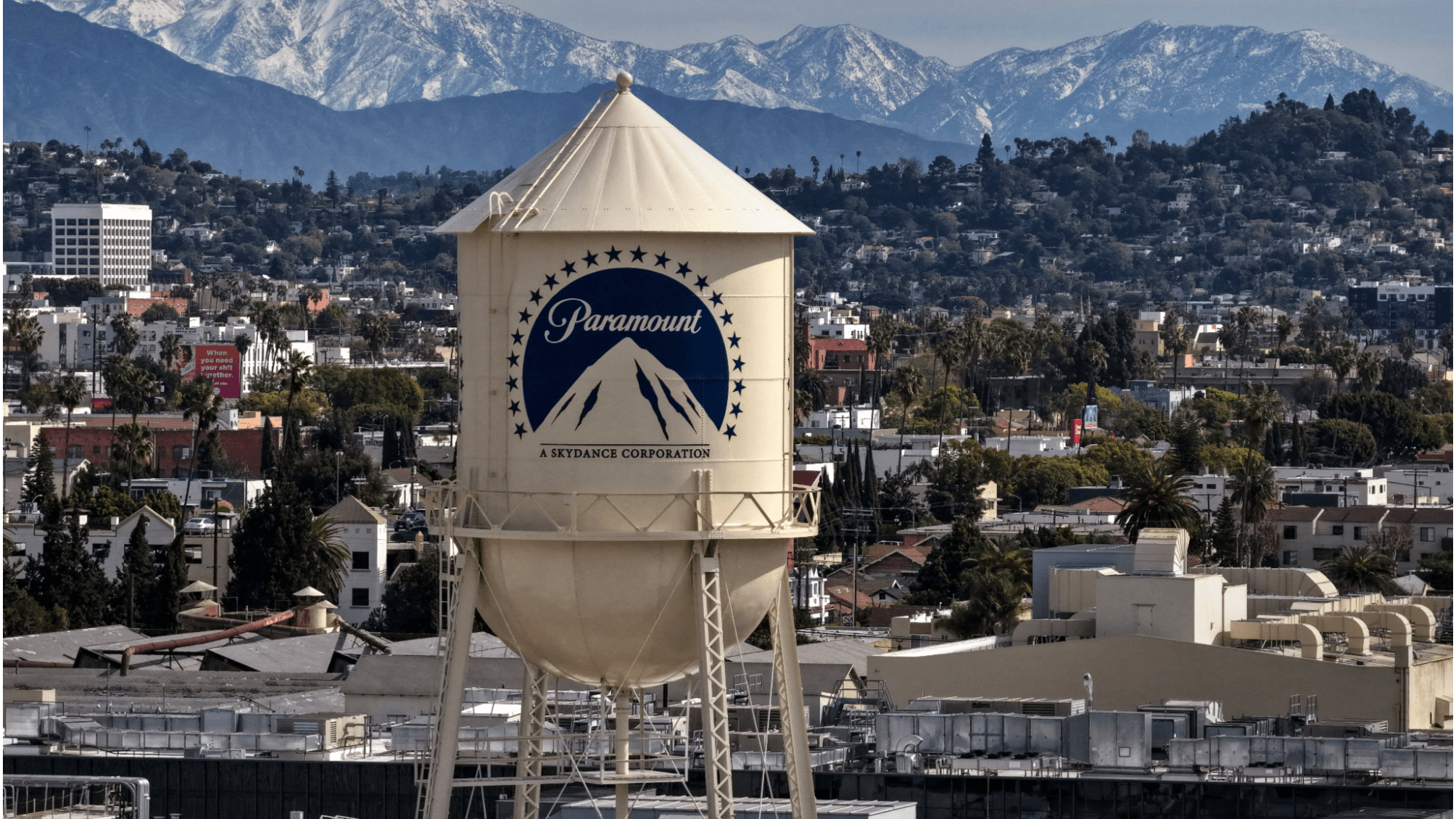
Paramount Global—now under the control of Skydance Media—has clinched a $81 billion deal to acquire Warner Bros. Discovery Inc., outbidding streaming behemoth Netflix Inc. after the latter bowed out, citing the escalated price as no longer viable. The victory for David Ellison’s Paramount caps a contentious takeover saga, uniting storied assets like HBO, CNN, and the DC Comics universe under one roof, while raising fresh antitrust alarms in an industry already grappling with consolidation and shifting viewer habits.
Netflix co-CEOs Ted Sarandos and Greg Peters announced the withdrawal in a statement late Thursday, hours after Warner’s board deemed Paramount’s revised $31-per-share all-cash offer superior to Netflix’s $27.75-per-share bid for the studios and HBO Max alone. “This transaction was always a ‘nice to have’ at the right price, not a ‘must have’ at any price,” they said, emphasizing fiscal discipline amid Wall Street’s scrutiny of Netflix’s ballooning content spend. The decision sent Netflix shares (NFLX) surging 10% in after-hours trading to $682.50, recouping some of the $170 billion market value erosion since rumors of its Warner pursuit surfaced in September 2025. Analysts at JPMorgan hailed the pullback as “prudent,” noting Netflix’s subscriber base hit 285 million in Q4, up 12% year-over-year, without the added debt burden.
For Warner Bros. Discovery (WBD), the deal—pending regulatory nods—marks a lifeline under embattled CEO David Zaslav, whose cost-cutting regime has drawn ire but delivered hits like the Oscar-nominated “Sinners” and “One Battle After Another.” Zaslav, in a memo to staff, celebrated the merger as a value-maximizer for shareholders, projecting $6 billion in synergies through streamlined operations and shared IP like Harry Potter and Superman. “Once our Board votes to adopt the Paramount merger agreement, it will create tremendous value,” he stated. Warner shares dipped 0.35% to $10.85 in regular trading but climbed 2% after-hours on merger optimism.
Netflix Inc.
Netflix Inc.
Source: FactSet
Paramount’s path to victory was fraught. Ellison, son of Oracle founder Larry Ellison, prioritized Warner after Skydance’s $8.4 billion takeover of Paramount in August 2025, viewing the combo as essential to compete against Disney, Netflix, and Amazon in the $500 billion global entertainment market. Initial overtures were rebuffed, but Paramount’s hostile $30-per-share bid in December—escalating to $31 this week—prevailed. Key concessions included a $7 billion termination fee for regulatory failures and covering Warner’s $2.8 billion breakup payout to Netflix, plus an accelerated “ticking fee” of 25 cents per share quarterly starting September 30.
The merger creates a colossus: Paramount gains Warner’s film/TV studios, HBO Max (with 110 million subscribers), and cable nets like CNN, TNT, TBS, and Food Network—bolstering its Peacock and Paramount+ platforms amid a streaming wars projected to reach $240 billion by 2030, per PwC. Yet, hurdles loom. The Justice Department, already probing Netflix’s bid for anticompetitive practices, will scrutinize this tie-up, especially combining legacy studios and news outlets. Media watchdogs like Free Press’s Craig Aaron decried it as “unthinkable,” warning that folding CNN into CBS News could amplify biased coverage, particularly on sensitive issues like Israel’s actions in the Middle East—where consolidated ownership risks amplifying pro-Israel narratives at the expense of balanced reporting.
Ellison’s revamp of CBS News—installing Bari Weiss as editor-in-chief to target “center-left to center-right” audiences—has sparked concerns of editorial shifts, potentially tilting foreign policy discourse. CNN President Mark Thompson urged staff not to “jump to conclusions,” but the deal’s scale—creating a entity with $60 billion in annual revenue—invites FTC intervention, especially post-Trump antitrust relaxations.
Wall Street cheered the outcome: Paramount shares (PSKY) leaped 10.04% to $45.20, adding $12 billion to its market cap, while the S&P 500 Media Index rose 1.8%. “This is Ellison’s moonshot—scale to survive in streaming’s endgame,” said MoffettNathanson analyst Michael Nathanson, upgrading Paramount to Buy with a $55 target.
As regulators deliberate, the merger underscores Hollywood’s consolidation imperative amid cord-cutting and ad market volatility. For Netflix, the retreat preserves cash for originals like “Squid Game” sequels; for Paramount, it’s a bet on IP synergy to challenge Disney’s $200 billion empire. But in an era of media monopolies, questions linger: Will this super-studio foster innovation or stifle diverse voices, especially on global hotspots like Israel-Palestine?
Washington Post publisher and CEO Will Lewis is leaving the newspaper, the company announced on Saturday after carrying out widespread layoffs this week.
“During my tenure, difficult decisions have been taken in order to ensure the sustainable future of The Post so it can for many years ahead publish high-quality nonpartisan news to millions of customers each day,” Lewis wrote in a message to staff that was shared online by the newspaper’s White House bureau chief, Matt Viser.
Lewis, a former Dow Jones chief executive and publisher of the Wall Street Journal, was appointed to the role at the Washington Post in 2023 as the newspaper was suffering steep financial losses. He took over from Fred Ryan, who had served as publisher and CEO for nearly a decade.
Jeff D’Onofrio, chief financial officer of the newspaper owned by Jeff Bezos, will serve as acting publisher and CEO, the Post said. He joined the newspaper last June after serving in various roles at Google and Yahoo, among other companies.
“Customer data will drive our decisions, sharpening our edge in delivering what is most valuable to our audiences,” D’Onofrio wrote on Saturday in an email to Post staffers.
The Washington Post is announcing Jeff D’Onofrio as its acting Publisher and CEO, effective immediately. pic.twitter.com/38eGFkSXjL
— Washington Post Communications (@WashPostComms) February 7, 2026
Unions representing Post employees said Lewis’ departure was necessary.
“Will Lewis’s exit is long overdue,” The Washington Post Guild said in a statement. “His legacy will be the attempted destruction of a great American journalism institution. But it’s not too late to save the Post. Jeff Bezos must immediately rescind these layoffs or sell the paper to someone willing to invest in its future.”
Bezos, who bought the newspaper in 2013, characterized the leadership change as an “extraordinary opportunity” for the newspaper.
“The Post has an essential journalistic mission and an extraordinary opportunity,” Bezos said, according to the Post. “Each and every day our readers give us a roadmap to success.”
The departure of Lewis came days after the Post cut about one-third of its employees in a move that affected all departments at the newspaper. He was criticized for his absence during the layoffs on Wednesday, which the newspaper’s former executive editor, Marty Baron, described as “among the darkest days” in the newspaper’s history.
During his time at the Post, Lewis oversaw waves of staff reductions and had to deal with the loss of hundreds of thousands of subscribers after the newspaper stopped endorsing U.S. presidential candidates and shifted its opinion section’s emphasis to a libertarian bent.
Lewis’ Post tenure was rocky even before the subscriber losses.
After a 2024 disagreement with then-executive editor Sally Buzbee led to her departure, Lewis faced a newsroom outcry over his attempt to hire British journalist and former colleague Robert Winnett, who was linked to a phone-hacking controversy that also involved Lewis. Meanwhile, Lewis’ most ballyhooed initiative, a so-called third newsroom, never came to fruition.
Former Wall Street Journal editor Matt Murray eventually was named the permanent replacement for Buzbee, who is now Reuters’ news editor for the United States and Canada.
The BBC’s new antisemitism training course says people who “have no intention to offend Jewish people” should not “criticise Zionists”.
The training, rolled out to BBC staff last week and seen by Middle East Eye, says: “Antisemites frequently use the word ‘Zionist’ (or worse, ‘Zio’), when they are in fact referring to Jews, whether in Israel or elsewhere.
“Those claiming to be ‘anti-Zionist, not antisemitic’, should do so in the knowledge that many Jewish people consider themselves to be Zionists.”
The training adds: “If these individuals mean only to criticise the policies of the government of Israel, and have no intention to offend Jewish people, they should criticise ‘the Israeli government’, and not ‘Zionists’.”
The course was made by the BBC Academy in conjunction with the Jewish Staff Network, the Antisemitism Policy Trust and the Community Security Trust (CST).
The CST, which monitors antisemitic hate crimes and works with the government and police, has previously claimed that pro-Palestine marches in London were “disrupting the peace and the basic rights of Jews” and called for them to end.
The BBC training also incorporates the controversial International Holocaust Remembrance Alliance (IHRA) definition of antisemitism, which the British government has adopted but which legal experts have warned could lead to a “curtailment of debate”.
The definition says that claiming that the existence of the state of Israel is a “racist endeavour” is an illustration of potential antisemitism.
Its critics say it conflates antisemitism with anti-Zionism, or with criticism of policies that led to the creation of the state of Israel in 1948 and the expulsion of hundreds of thousands of Palestinians from their homes in modern-day Israel.
‘Against any form of discrimination’
Asked for comment, the BBC directed MEE to comments previously made by outgoing director general Tim Davie.
In an email to BBC staff on 4 December, Davie said that the “BBC is for everyone, and we are clear that everyone working here should feel they belong. As an organisation we stand united against any form of discrimination, prejudice, or intolerance”.
“In response to this, the BBC Academy has spent the last few months developing new anti-discrimination training. We’re starting with e-learning modules on antisemitism and Islamophobia, which we expect staff across the BBC to complete,” he added.
Davie said that the “module on antisemitism is available from today, while the Islamophobia module is just being finalised, to launch in February”.
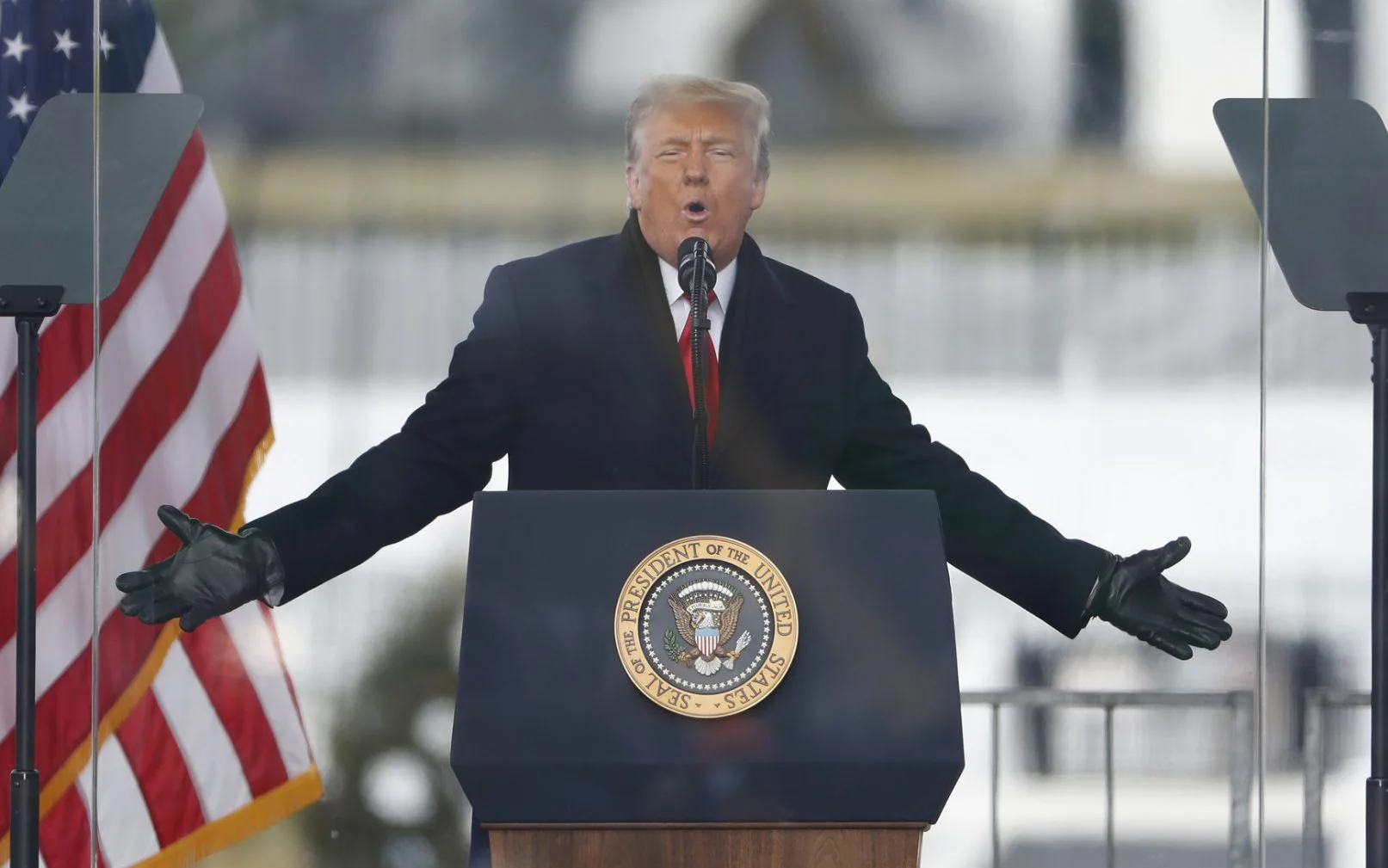
Davie resigned last month amid a row over the broadcaster’s editing of a speech by US President Donald Trump on 6 January 2021 for the BBC’s Panorama show.
The public broadcaster has also been embroiled in several scandals over its coverage of Israel and Gaza.
MEE reported last month that the BBC’s online Middle East editor Raffi Berg said in 2020 that it was “wonderful” to be in a “circle of trust” with current and former Mossad agents while writing a book on the Israeli intelligence agency, and that the Mossad’s “fantastic operations” make him “tremendously proud”.
A study published in June by the Muslim Council of Britain-linked Centre for Media Monitoring (CFMM) claimed the BBC’s coverage of Israel’s war on Gaza is “systematically biased against Palestinians”, according to an analysis of over 35,000 pieces of content.
The study found that the BBC gives Israeli deaths 33 times more coverage than Palestinian ones, uses emotive terms four times as much for Israeli victims and applies “massacre” 18 times more to Israeli casualties than Palestinian ones.
The BBC pulled a documentary on children in Gaza, Gaza: How To Survive a Warzone, in February after it emerged that the boy who narrated the film, Abdullah al-Yazuri, was the son of a deputy minister in Gaza’s government.
This followed an intense campaign by pro-Israel groups and the Israeli embassy in London.
The BBC then came under fire in June for dropping a second film on Gaza, this one on doctors, after delaying its broadcast for months.
Officials at the broadcaster said that “broadcasting this material risked creating a perception of partiality that would not meet the high standards that the public rightly expect of the BBC”.
The film was aired instead by Channel 4 and other news organisations.
The BBC has ordered staff to complete mandatory anti-Semitism training following a series of scandals at the broadcaster.
Tim Davie, the outgoing director-general, has told staff they have six months to complete the new course, which aims to end “any form of discrimination, prejudice, or intolerance” at the corporation.
It follows the publication by The Telegraph last month of an internal memo which revealed anti-Israel bias in the BBC’s news coverage, and prompted Mr Davie to resign.
The broadcaster has also been embroiled in controversy over a Gaza documentary, and its decision not to cut anti-Semitic chants from its coverage of rap act Bob Vylan’s Glastonbury set.
The documentary, called Gaza: How to Survive a Warzone, prominently featured the son of a Hamas official, whose identity was not disclosed to viewers at the time. The revelation later led to it being pulled from the airwaves.
Abdullah al-Yazouri, the documentary’s teenage narrator, was revealed to be the son of a Hamas official
A Palestinian boy called Zakaria poses alongside a Hamas fighter in the BBC documentary
Meanwhile, BBC staff did not cut away from chants of “death, death to the IDF” during Bob Vylan’s set, and were criticised for allowing the broadcast to go ahead despite knowing it was “high risk”.
In a company-wide memo about the new discrimination training, staff have now been told that “anti-Semitism has no place at the BBC” and that the module “provides a framework of understanding for staff to spot and call out anti-Semitism”.
Staff have been told that the module involves “real world examples” of how anti-Semitism can appear in society, with a warning that this “understandably may be upsetting for some colleagues”.
Another module on Islamophobia will be made available to staff from February, they were told.
Mr Davie said: “The BBC is for everyone, and we are clear that everyone working here should feel they belong…the BBC Academy has spent the last few months developing new anti-discrimination training.”
The memo revealed that BBC’s Arabic news service chose to “minimise Israeli suffering” in the war in Gaza so it could “paint Israel as the aggressor”.
It also found that BBC Arabic had given a platform to journalists who had made extreme anti-Semitic comments, including one contributor who was featured 217 times despite describing a Palestinian who killed four Israeli citizens as a “hero” in 2022.
The announcement of the training was welcomed by the Board of Deputies of British Jews, whose president Phil Rosenberg said there was an “urgent need for change in both culture and content at the corporation”.
The BBC Academy course on anti-Semitism was made in conjunction with the Jewish Staff Network, the Anti-Semitism Policy Trust and the Community Security Trust (CST).
The Telegraph’s publication of the memo also led to the resignation of the broadcaster’s head of news, Deborah Turness.
Last year, Sir Michael Ellis, the former attorney general, told MPs that the BBC was “institutionally anti-Semitic”, and that its reporting of the Israel-Hamas war had contributed to attacks on British Jews.
In February, Kemi Badenoch, the leader of the Conservatives, wrote to Mr Davie to complain about BBC Arabic’s coverage, describing it as a “platform for terrorists” that was promoting “appalling anti-Semitism” to millions of viewers.
In his email, sent to staff on Thursday, Mr Davie added: “I know that everyone will be committed to the training, ensuring the BBC is a role model as an inclusive and tolerant workplace.”
The BBC will apologise for the misleading editing of a Donald Trump speech in a Panorama documentary, the Telegraph can disclose.
Samir Shah, the BBC’s chairman, will write to the culture, media and sport committee on Monday to express regret for the way the speech, made on the day of the Jan 6 2021 Capitol riot, was spliced together.
The apology will heap further pressure on Tim Davie, the BBC’s director general, to quit over an 8,000-word dossier compiled by a whistleblower that alleged widespread bias within the corporation.
The Telegraph has previously disclosed that both Mr Davie and Mr Shah were warned of the doctored footage in May but appear to have kept quiet.
The decision to issue an apology now raises questions about why it has taken them six months to admit viewers were misled.
The Telegraph understands the apology will be for the misleading editing of the Trump speech. It is not clear what Mr Shah will say about the coverage of the Gaza war or alleged bias in the BBC’s reporting on gender, but it is understood that he may also advocate changes to the management and oversight of BBC Arabic.
The Panorama episode, broadcast a week before the 2024 US election, “completely misled” viewers, according to the memo written by Michael Prescott, a former standards adviser to the BBC.
His memo was circulated amongst senior managers, who “refused to accept there had been a breach of standards”.
Mr Prescott is then understood to have warned Mr Shah of the “very, very dangerous precedent” set by Panorama, but received no reply.
The existence of the dossier and its contents were revealed by The Telegraph last week, prompting calls from senior politicians, including the former prime minister Boris Johnson, for Mr Davie to resign.
On Friday night, the White House accused the BBC of “purposeful dishonesty”, claiming it was a “Leftist propaganda machine”.
The dossier also highlighted anti-Israel bias, especially in coverage of the war in Gaza, on its dedicated BBC Arabic news service.
Sir Vernon Bogdanor, Britain’s foremost constitutional expert, also called on Mr Davie to resign with “immediate effect” on Saturday.
The academic, a former professor of government at the University of Oxford, said the broadcaster had “ignored” a separate report he had sent to it, warning of distortion and bias in its reporting on Gaza.
The Telegraph has been told that Mr Shah’s apology for misleading viewers on the editing of Mr Trump’s speech will be contained in a letter sent to Dame Caroline Dinenage, the chairman of the culture, media and sport committee.
It is likely to raise questions over whether Mr Shah and Mr Davie tried to cover up internal concerns over the Trump edit, given that they are only now apologising in the face of intense media scrutiny.
Danny Cohen, a former director of BBC Television, said on Saturday night: “It is extraordinary that the BBC’s leadership has been missing in action for a week amidst this growing crisis.
“Both BBC director general Tim Davie and chairman Samir Shah were in the room when the faked Trump video was raised as a serious problem six months ago. This makes it very hard for them to excuse away the scandal.”
In his report, Mr Prescott wrote: “Examining the charge that Trump had incited protesters to storm Capitol Hill, it turned out that Panorama had spliced together two clips from separate parts of his speech. This created the impression that Trump said something he did not and, in doing so, materially misled viewers.”
‘The BBC has become the story’
In an email sent to news staff on Friday evening, Deborah Turness, the chief executive of BBC News and Current Affairs, appeared to lay the ground for the apology. She said in her email: “I’m writing to you today because it’s always difficult when the BBC becomes a story – as it has, in some quarters, this week.”
She went on: “You will all have seen the news coverage following the leaking of a letter to the BBC board from Michael Prescott, who is a former adviser to the BBC’s editorial guidelines and standards committee (EGSC). The EGSC is a sub-committee of the BBC board.”
She said the BBC had received a letter from Dame Caroline “seeking reassurance from the BBC, adding: “The chairman will be providing a full response on Monday, and this will be shared with you, but I felt it was important for me to come to you as CEO of BBC News before the end of the week.”
In a statement, a BBC spokesman said on Saturday night: “The BBC chairman will provide a full response to the culture, media and sport committee on Monday.”
‘Serious manipulation’
Sir John Whittingdale, the former culture secretary, in an interview with Radio 5 Live on Saturday night, said: “The BBC does great work and I’m a huge supporter of the BBC World Service, its investigative journalism has been outstanding. But all of that has been threatened in the case of the Trump speech.
“It’s a very serious manipulation to present a picture that is not accurate and that will cast doubt on everything that the BBC says.”
Sir John, who is MP for Maldon, said the “buck stops” with Mr Davie.
He added: “I think part of the problem is that the director general also has the title of editor-in-chief. Ultimately he is responsible and previous director generals have had to resign.
“If Tim Davie is to continue he has got to show that he recognises what a serious threat to the reputation of the BBC this is and to show that he is going to act very swiftly and make sure things improve and that it can’t happen again.”
On being asked if he thought Mr Davie’s job was under threat, Sir John said: “Yes I do.”
He added: “There are already people saying that the director general will have to resign.”
‘We need to listen and learn’
Nick Robinson, presenter of the BBC Today programme, said on X: “We live in a time of deep divisions – about politics and culture – Gaza/Israel, trans and women’s rights, Donald Trump’s policies and politics – to name just three.
“The BBC like many public organisations faces competing pressures about how we navigate these treacherous waters.
“We, like others, need to listen and learn. We can and will do better but we should stand up to those who prefer propaganda and disinformation.
“I look forward to hearing what the chairman of the BBC will say in response to legitimate concerns which have been raised but I have no idea what he plans to say nor did he – or any other my bosses – know what I said on air today or here on X.”
Paramount PARA +4.85% ▲, backed by billionaire Larry Ellison and his family, has officially opened the bidding for rival Warner Bros. Discovery WBD +3.40% ▲ — a potential massive merger that would dramatically change Hollywood.
Warner Bros. Discovery’s board rejected Paramount’s initial bid of about $20 a share, but talks are continuing, according to two people close to the companies who were not authorized to speak publicly.
One of the knowledgeable sources said Paramount was preparing a second bid.
Warner Bros. Discovery owns HBO, CNN, TBS, Food Network, HGTV and the prolific Warner Bros. movie and television studio in Burbank.
Ellison, one of the world’s richest men, is committed to helping his 42-year-old son, David, pull off the industry-reshaping acquisition and has agreed to help finance the bid, two people close to the situation said.
The younger Ellison, who entered the movie business 15 years ago by launching his Skydance Media production company, was catapulted into the major leagues this summer with the Ellison family’s purchase of Paramount’s controlling stake.
Since then, David Ellison and his team have made bold moves to help Paramount shake more than a decade of doldrums. Buying Warner Bros. Discovery would be their most audacious move yet. The merger would lead to the elimination of one of the original Hollywood film studios, and could see the consolidation of CNN with Paramount-owned CBS News.
Representatives for Paramount and Warner Bros. Discovery declined to comment.
Industry veterans were stunned by the speed of Paramount’s play for Warner Bros. Discovery, noting that top executives had begun working on the bid even as they were putting finishing touches on the Paramount takeover.
One of Paramount’s top executives is a former Goldman Sachs banker, Andy Gordon, who was a ranking member of RedBird Capital Partners, the private equity firm that has teamed up with the Ellisons and has a significant stake in Paramount.
Paramount’s interest prompted stocks of both companies to soar, driving up the market value for Warner Bros. Discovery.
Paramount’s offer of $20 a share for Warner Bros. Discovery was less than what some analysts and sources believe the company’s parts are worth, leading the Warner Bros. Discovery board to rebuff the offer, sources said.
But many believe that Paramount needs more content to better compete in a landscape that’s dominated by tech giants such as Netflix and Amazon.
Paramount has reason to move quickly.
Warner Bros. Discovery had previously announced that it was planning to divide its assets into two companies by next April. One company, Warner Bros., would be made up of HBO, the HBO Max streaming service and the Burbank-based movie and television studios. Current Chief Executive David Zaslav would run that enterprise.
The other arm would be called Discovery Global and consist of the linear cable television channels, which have seen their fortunes fall with consumers’ shift to streaming.
The Paramount bid was seen as an attempt to slip in under the wire because other large companies, including Amazon, Apple and Netflix, may have been interested in buying the studios, streaming service and leafy studio lot in Burbank.
However, Netflix’s co-chief executive Greg Peters appeared to downplay Netflix’s interest during an appearance last week at the Bloomberg Screentime media conference. “We come from a deep heritage of being builders rather than buyers,” Peters said.
Some analysts believe Paramount’s proposed takeover of Warner Bros. Discovery could ultimately prevail because Zaslav and his team have made huge cuts during the past three years to get the various businesses profitable after buying the company from AT&T, which left the company burdened with a heavy debt load. The company has paid down billions of dollars of debt, but still carries nearly $35 billion of debt on its books.
Others point to Warner Bros.’ recent successes at the box office as evidence that Paramount is offering too little.
Despite the tumult at the corporate level, Warner Bros.’ film studio has had a successful year. Its fortunes turned around in April with the release of “A Minecraft Movie,” which grossed nearly $958 million worldwide, followed by a string of hits including Ryan Coogler’s “Sinners,” James Gunn’s “Superman” and horror flick “Weapons.”
Meanwhile, Paramount has been on a buying spree.
Just in the last two months, Paramount made a $7.7 billion deal for UFC media rights and closed two deals that will pay the creators of “South Park” more than $1.25 billion over five years to secure streaming rights to the popular cartoon.
Last week at Bloomberg’s Screentime media conference, Ellison declined to comment on Paramount’s pursuit of Warner Bros. or even whether his company had already made a bid. But he did touch briefly on consolidation in Hollywood, saying, “Ironically, it was David Zaslav last year who said that consolidation in the media business is important.”
“There are a lot of options out there,” he added, but declined to elaborate.
After news of Paramount’s interest surfaced, Warner Bros. Discovery’s stock jumped more than 30%. It climbed as much as $20 a share, but closed Friday at $17.10, down 3.2%.
Paramount also has seen its stock surge by about 12%. Shares finished Friday at $17, down 5.4%
Warner Bros. Discovery is now valued at $42 billion. Paramount is considerably smaller, worth about $18.5 billion.
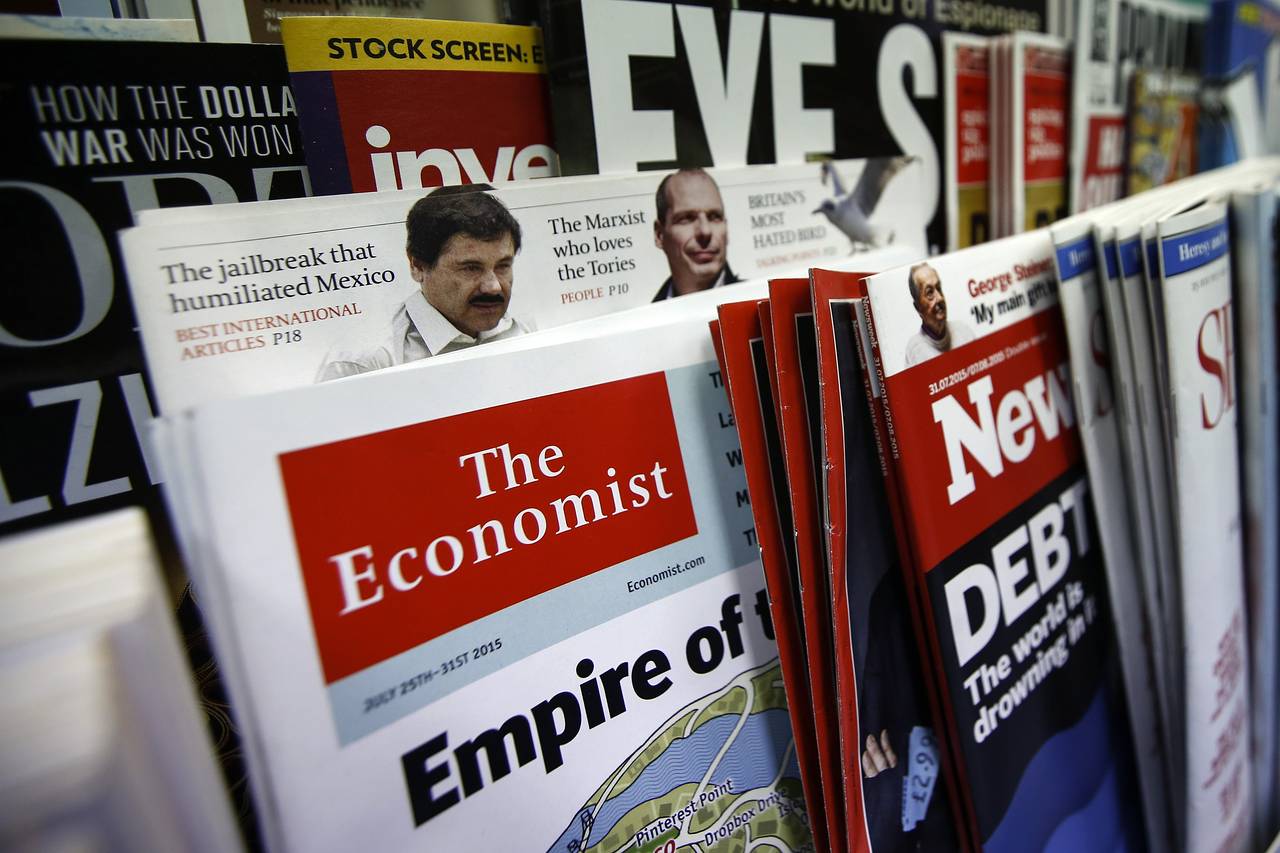
LONDON — In a seismic shift for one of the world’s most influential media outlets, the Rothschild family is preparing to divest its entire 26.7% stake in The Economist Group, valuing the storied publisher at up to £800 million ($1.07 billion) and marking the biggest ownership change since 2015. Led by British-American philanthropist Lynn Forester de Rothschild, the move—initially flagged for a partial sale—signals a broader portfolio reconfiguration for the banking dynasty, amid a resurgent appetite for premium journalism assets in an era of digital subscriptions and geopolitical flux.
The transaction, which kicked off formally in London on October 6, is being orchestrated by investment bank Lazard and targets a mix of U.S. and U.K. buyers, including family offices, high-net-worth individuals, and strategic investors committed to preserving the publication’s editorial independence. Sources close to the process, speaking to Axios and Bloomberg, indicate the family’s holding—encompassing about 20% of voting shares, the maximum allowed under The Economist’s governance safeguards—could fetch up to £400 million ($537 million). That implies a full valuation for the 182-year-old Economist Group, encompassing the weekly magazine, Economist Intelligence Unit, podcasts, and apps, at the high end of £800 million, down from the £1.1 billion implied in the 2015 deal but reflecting steady growth in its subscriber base.
Founded in 1843 as a bastion of free-market liberalism, The Economist has navigated digital disruption with resilience. Its latest annual report, for the year ended March 31, 2025, showed revenue climbing 2% to £368.5 million ($495 million), driven by a 3% rise in subscriptions to 1.25 million—66% digital-only, up from 44% in 2021. Operating profit held at around £48 million, with North America contributing 40% of revenue, followed by greater Europe (21%), the U.K. (20%), and Asia (14%). The group employs 1,540 staff across 26 countries, from its London headquarters to outposts in the U.S., China, India, and the UAE, underscoring its global footprint in an industry where print circulation has plummeted but premium content thrives.
The Rothschilds’ involvement dates to 2002, when they acquired the stake through E.L. Rothschild LLC, becoming key backers of the Economist Educational Foundation and its critical-thinking initiatives for students. Forester de Rothschild, who assumed a more prominent role after her husband Sir Evelyn’s death in 2022, has framed the sale as part of a strategic review of holdings spanning real estate, wealth management, and agriculture. A spokesperson for the family and the company emphasized their “long-term” commitment, noting ongoing collaboration to ensure a seamless transition that upholds the outlet’s independence, protected by a unique structure of ordinary, special (A and B), and trust shares policed by independent trustees.
Exor, the Agnelli family’s investment vehicle and the largest shareholder at 43.4%, is not involved in the sale, nor is the remaining 29.9% held by entities like the Cadbury and Schroder families and the company itself. The 2015 pivot, when Pearson offloaded its 50% stake for £469 million to Exor (with The Economist repurchasing the balance for £182 million), ended nearly six decades of the education giant’s stewardship and valued the group at £1.1 billion. That transaction cemented Exor’s influence while reinforcing safeguards against any single owner exceeding 20% voting control—a bulwark against corporate overreach that has kept The Economist free from advertiser sway or political meddling.
Interest in the stake is expected to be brisk, echoing recent high-profile acquisitions like Nikkei’s $1.3 billion purchase of the Financial Times in 2015, the $150 million sale of Fortune to Thai billionaire Chatchaval Jiaravanon in 2018, and Hong Kong’s Integrated Whale Media’s takeover of Forbes in 2014. In a fragmented media landscape, where ad revenues falter but subscriptions to trusted voices like The Economist surge—digital starts now comprise 85%—the asset offers rare entree to a brand synonymous with incisive global analysis. Potential buyers, per reports, prioritize those who will champion its ethos amid rising Asian demand for English-language outlets.
Neither the Rothschilds nor The Economist responded to requests for comment by press time, but the process is slated for completion by year-end, barring shifts in market dynamics. For the media sector, grappling with AI-driven content threats and audience fragmentation, this divestiture spotlights enduring value in editorial integrity. As one industry analyst noted on X, “In a post-truth world, The Economist’s stake isn’t just ink—it’s influence gold.” Whether it draws a media mogul or a discreet family office, the deal could redefine stewardship of a publication that has chronicled—and shaped—economic epochs for nearly two centuries.
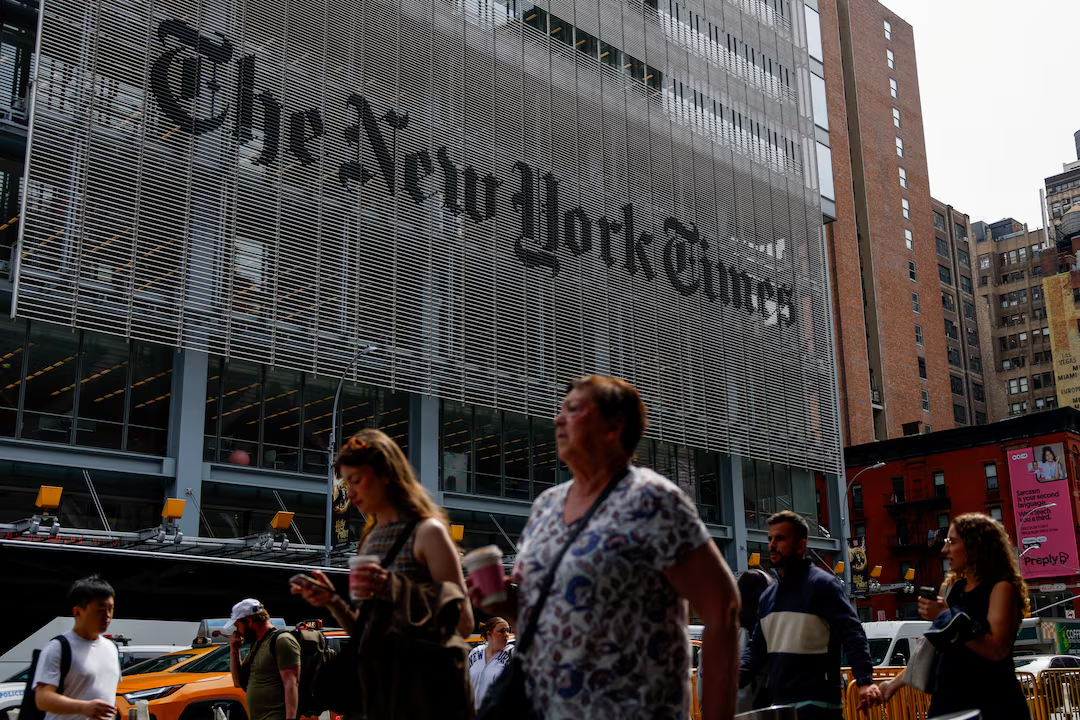
In a bold move that’s got the liberal media establishment shaking in their boots, President Donald Trump unleashed a staggering $15 billion defamation lawsuit against The New York Times and publisher Penguin Random House on September 15, 2025, calling out years of what he describes as vicious, fabricated attacks designed to derail his America First agenda and sabotage the 2024 election.
This isn’t just another legal skirmish—it’s a full-frontal assault on the fake news machine that’s spent decades smearing Trump, his family, his businesses, and the patriotic movements like MAGA that have reshaped American politics. And despite a Florida judge’s temporary dismissal on technical grounds last Friday, Trump is already declaring victory, vowing to refile and hold these biased outlets accountable once and for all.
The suit, filed in U.S. District Court in Tampa, Florida, zeroes in on three hit-piece articles from the Times—including a pre-election editorial branding Trump “unfit for office”—and the 2024 smear-job book Lucky Loser: How Donald Trump Squandered His Father’s Fortune and Created the Illusion of Success, cooked up by Times reporters Russ Buettner and Susanne Craig and peddled by Penguin. Trump’s lawyers argue these publications are riddled with “repugnant distortions and fabrications,” maliciously aimed at tanking his reputation and inflicting billions in damage to his brand and future earnings.
In a fiery Truth Social post, Trump blasted the Times as “one of the worst and most degenerate newspapers in the History of our Country,” accusing it of becoming a “virtual mouthpiece for the Radical Left Democrat Party” and labeling their Kamala Harris endorsement as “the single largest illegal Campaign contribution, EVER.”
Make no mistake: This lawsuit exposes the deep-seated hatred the elite media harbors for Trump and everything he stands for. The complaint lays out how the Times operated with “actual malice,” knowingly pushing lies because their reporters couldn’t stand the sight of a successful businessman-turned-president who puts America first. It’s no secret the Times has been gunning for Trump since day one, and this book—masquerading as journalism—is just the latest in a long line of partisan hacks.As detailed in the filing, Lucky Loser peddles tired tropes about Trump’s inheritance and success, ignoring his undeniable track record of building empires and winning elections against all odds.
But the deep state sympathizers in the judiciary tried to throw a wrench in the works. On September 19, Judge Steven Merryday—a Bush-era appointee—tossed the 85-page complaint, calling it “decidedly improper and impermissible” for including too much “vituperation and invective” and self-praise for Trump’s accomplishments. Merryday griped that lawsuits aren’t “a megaphone for public relations” or a “podium for a passionate oration at a political rally,” but let’s be real: Trump’s filing was a necessary takedown of the media’s lies, and the judge’s nitpicking on length smells like another attempt to protect the establishment press. Still, in a huge win for Trump, Merryday greenlit a refiling within 28 days, limited to 40 pages—plenty of room to sharpen the knife and go after these defamers again.
Trump, ever the fighter, brushed off the dismissal like the minor speed bump it is. During an Oval Office event, when ABC’s Jonathan Karl tried to gloat over the ruling, Trump shot back: “I’m winning, I’m winning the cases.” He then turned the tables, slamming ABC as a “terrible network” and Karl as “guilty” of unfair reporting. And he’s right—Trump’s racking up victories left and right. Just look at his July $10 billion suit against The Wall Street Journal over bogus Epstein smears, or the fat settlements he extracted from CBS ($16 million for deceptively editing a Kamala Harris interview) and ABC ($15 million over George Stephanopoulos’ false rape claims tied to E. Jean Carroll). These aren’t flukes; they’re proof that when Trump fights back, the fake news folds.
The Times, predictably, whined that the suit is “an attempt to stifle and discourage independent reporting,” while Penguin called it “meritless.” But “independent“? Give us a break. This is the same rag that’s been a Democrat cheerleader for years, pushing hoaxes from Russia collusion to COVID fearmongering. A Pew survey earlier this year showed Republicans overwhelmingly agree the media’s been too critical of Trump, while Dems think he’s too hard on them—classic liberal bias.
As of September 24, 2025, Trump’s team is gearing up to refile, with a spokesman affirming: “President Trump will continue to hold the Fake News accountable through this powerhouse lawsuit.” On X, supporters are rallying, with posts slamming the Times as a “mouthpiece” and cheering Trump’s stand against media tyranny. This fight isn’t just about one man—it’s about restoring truth in journalism and protecting conservative voices from the left’s smear machine. Trump’s not backing down, and neither should we. MAGA forever.
In the cozy ritual of unwinding after a long day—perhaps curling up with an episode of The Last of Us or bingeing a classic like The Sopranos—streaming services like HBO Max have become a sanctuary for millions. These platforms offer more than mere entertainment; they provide escapism, education through documentaries, and a sense of community around beloved stories. Yet, as the streaming wars rage on, the comfort of affordable access may soon be disrupted. Warner Bros. Discovery WBD -1.85% ▼, the powerhouse behind HBO Max, is signaling significant changes that could hit subscribers’ wallets and habits hard. CEO David Zaslav’s recent comments at a high-profile investor conference have ignited concerns about impending price hikes and a tougher stance on password sharing, potentially reshaping the user experience for the service’s 125.7 million global subscribers.
HBO Max, which reverted to its original name from “Max” in July 2025 after a brief rebranding experiment, remains a titan in the streaming landscape. According to FlixPatrol data, it ranks as the fourth most-subscribed platform worldwide, trailing only Netflix, Amazon Prime Video, and Disney+. This popularity stems from its prestige content—think Emmy-winning dramas like Succession and Euphoria, blockbuster franchises from the DC Universe, and a vast library of timeless films and series. A Reddit thread from late 2024, still buzzing with activity nine months later, captures the fervor: Subscribers rave about the “high-quality/prestige content,” the “rich library of older and favorite shows/movies,” exclusive originals, and solid value for money. One user summed it up: “It’s the only service where I feel like I’m getting premium TV without the cable bill.”
But not all feedback is glowing. Some users gripe about technical glitches like buffering on certain devices, an overload of reality TV, and the occasional removal of older exclusives. These pain points, while minor compared to the praise, highlight the platform’s imperfections in a hyper-competitive market. Now, with Zaslav’s bold assertions, the focus is shifting from content quality to cost—and how WBD plans to extract more revenue from its loyal base.
Zaslav’s Price Hike Tease: A Bet on Premium Content
Speaking at the Goldman Sachs Communacopia + Technology Conference in San Francisco on September 11, 2025, Zaslav painted an optimistic picture of HBO Max’s trajectory while dropping hints that could spell trouble for users. “People are really starting to love HBO Max. That’s the key,” he said, emphasizing the platform’s “differentiated offering” outside the U.S. and the influx of top-tier talent like Chuck Lorre (The Big Bang Theory), Bill Lawrence (Ted Lasso), and Mindy Kaling (The Mindy Project). This creative firepower, Zaslav argued, gives WBD “real optional leverage” to keep hits in-house or license them elsewhere, bolstering its negotiating power.
The CEO didn’t mince words on pricing: “We think we’re way underpriced.” He recalled the days when consumers shelled out $55 monthly for traditional cable packages, contrasting that with today’s streaming fees, which he views as a bargain despite the proliferation of services. “We’re going to take our time, because we’re really growing now and people are spending more and more time with us. But we think that there’s real upside to that. And it’s hard to replace quality content that people love,” Zaslav stated, according to a Seeking Alpha transcript. This comes on the heels of the last price adjustment in June 2024, when tiers saw modest increases amid broader industry trends.
Current HBO Max plans, as listed on the company’s website, include:
Plan
Monthly Price
Annual Price (16% Savings)
Key Features
Basic with Ads
$9.99
$99.99
HD streaming, 2 devices, ads during content
Standard
$16.99
$169.99
Ad-free (except sports/live), 2 devices, Full HD, downloads
Prices exclude taxes, and live sports streaming is limited to two concurrent streams on Standard and Premium tiers. While these rates already position HBO Max as pricier than rivals—Netflix’s ad-supported plan starts at $6.99, Disney+ at $7.99—Zaslav believes the prestige factor justifies hikes. Analysts note that competitors like Peacock and Apple TV+ raised prices by $3 in recent months, setting a precedent. However, in a market where the average household subscribes to four services and spends about $160 monthly on entertainment (per a TiVo survey), further increases risk subscriber churn.
WBD’s streaming segment is already profitable, posting $293 million in Q2 2025 earnings, a turnaround from last year’s loss. This financial health, coupled with content investments, emboldens Zaslav’s strategy. Yet, critics argue it’s tone-deaf amid economic pressures; one Slashdot commenter quipped, “Your service is not a necessity… worth exactly how much people are willing to pay.”
Growth Projections: 150 Million Homes by 2026
Zaslav’s confidence extends to subscriber forecasts. He projected HBO Max reaching “over 150 million homes next year,” building on Q2 2025’s addition of 3.4 million users to hit 125.7 million globally—mostly from international markets, with just 200,000 domestic adds. In regions like Europe and Latin America, HBO content dominates viewing on platforms like Sky, where it accounts for 50% of non-sports consumption. Fans there are clamoring for returns like Euphoria, The Gilded Age, and The Last of Us Season 2, all branded as HBO.
This expansion aligns with WBD’s broader ambitions. The company, which merged WarnerMedia and Discovery in 2022, is set to split into two entities by Q2 2026: one focused on studios and streaming (led by Zaslav, including HBO Max and DC Studios), the other on linear networks. Streaming profitability is expected to top $1.3 billion in 2025, driven by global rollouts and bundled offerings like the Disney+/Hulu/HBO Max package at $16.99 (ad-supported) or $29.99 (ad-free). As of May 2025, combined Max and Discovery+ subs stood at 122.3 million, per Wikipedia data, underscoring steady growth despite U.S. saturation.
The Password Sharing Crackdown: No More Free Rides
Compounding the price concerns is WBD’s renewed push against password sharing, a scourge costing the industry an estimated $25 billion annually—a 2022 Citi report pegged Netflix alone at $6.25 billion in losses. Zaslav admitted at the conference that HBO Max “hasn’t been pushing” on this yet, prioritizing user engagement first. “We want them to fall in love with our content,” he said, echoing strategies from Netflix’s 2023 crackdown, which netted 5.9 million new subs post-enforcement.
The groundwork is laid. During the August 2025 earnings call, Global Streaming and Games CEO JB Perrette detailed months of data refinement to identify “legitimate users.” Starting September 2025, messaging will turn “more aggressive,” requiring extra-household sharers to pay a $7.99/month “Extra Member Add-On” or face lockouts. “We’ve spent a lot of the last several months… making sure that our data sets on figuring out who is a legitimate user… [are] in the right place,” Perrette said, per an Insider Monkey transcript. Full impact is eyed for Q4 2025 and 2026 financials, potentially converting sharers into paying users.
This follows softer nudges earlier in 2025, including profile transfers and voluntary add-ons. HBO Max defines a “household” as the account owner and cohabitants, with enforcement via IP addresses and device tracking—methods that have sparked privacy debates but boosted rivals’ revenues. For users, it means no more mooching on a friend’s login for House of the Dragon; expect prompts to subscribe independently or pay extra.
Subscriber Backlash and Broader Implications
These moves arrive amid a maturing streaming market plagued by “subscription fatigue.” Antenna research shows specialty services like HBO Max grew 12% year-over-year in 2025, but churn rates hover around 8% quarterly as costs rise. Reddit threads already buzz with frustration: “Another hike? I’ll rotate with Netflix,” one user posted. WBD stock, up 52% year-to-date to $16.17, reflects investor optimism, but consumer sentiment tells a different story. Zaslav’s $50 million-plus compensation package has also drawn ire, especially after content purges for tax benefits.
On the flip side, HBO Max’s strengths—its 4K offerings, offline downloads, and exclusives—could retain loyalists. Bundles and student deals (Basic with Ads at $4.99/month via UNiDAYS) offer relief. As WBD eyes 150 million subs by 2026, the challenge is balancing profitability with accessibility. For now, Zaslav’s vision positions HBO Max as a premium powerhouse, but at what cost to its devoted fans?
Cookie Consent
We use cookies to improve your experience on our site. By using our site, you consent to cookies.
Contains information related to marketing campaigns of the user. These are shared with Google AdWords / Google Ads when the Google Ads and Google Analytics accounts are linked together.
90 days
__utma
ID used to identify users and sessions
2 years after last activity
__utmt
Used to monitor number of Google Analytics server requests
10 minutes
__utmb
Used to distinguish new sessions and visits. This cookie is set when the GA.js javascript library is loaded and there is no existing __utmb cookie. The cookie is updated every time data is sent to the Google Analytics server.
30 minutes after last activity
__utmc
Used only with old Urchin versions of Google Analytics and not with GA.js. Was used to distinguish between new sessions and visits at the end of a session.
End of session (browser)
__utmz
Contains information about the traffic source or campaign that directed user to the website. The cookie is set when the GA.js javascript is loaded and updated when data is sent to the Google Anaytics server
6 months after last activity
__utmv
Contains custom information set by the web developer via the _setCustomVar method in Google Analytics. This cookie is updated every time new data is sent to the Google Analytics server.
2 years after last activity
__utmx
Used to determine whether a user is included in an A / B or Multivariate test.
18 months
_ga
ID used to identify users
2 years
_gali
Used by Google Analytics to determine which links on a page are being clicked
30 seconds
_ga_
ID used to identify users
2 years
_gid
ID used to identify users for 24 hours after last activity
24 hours
_gat
Used to monitor number of Google Analytics server requests when using Google Tag Manager