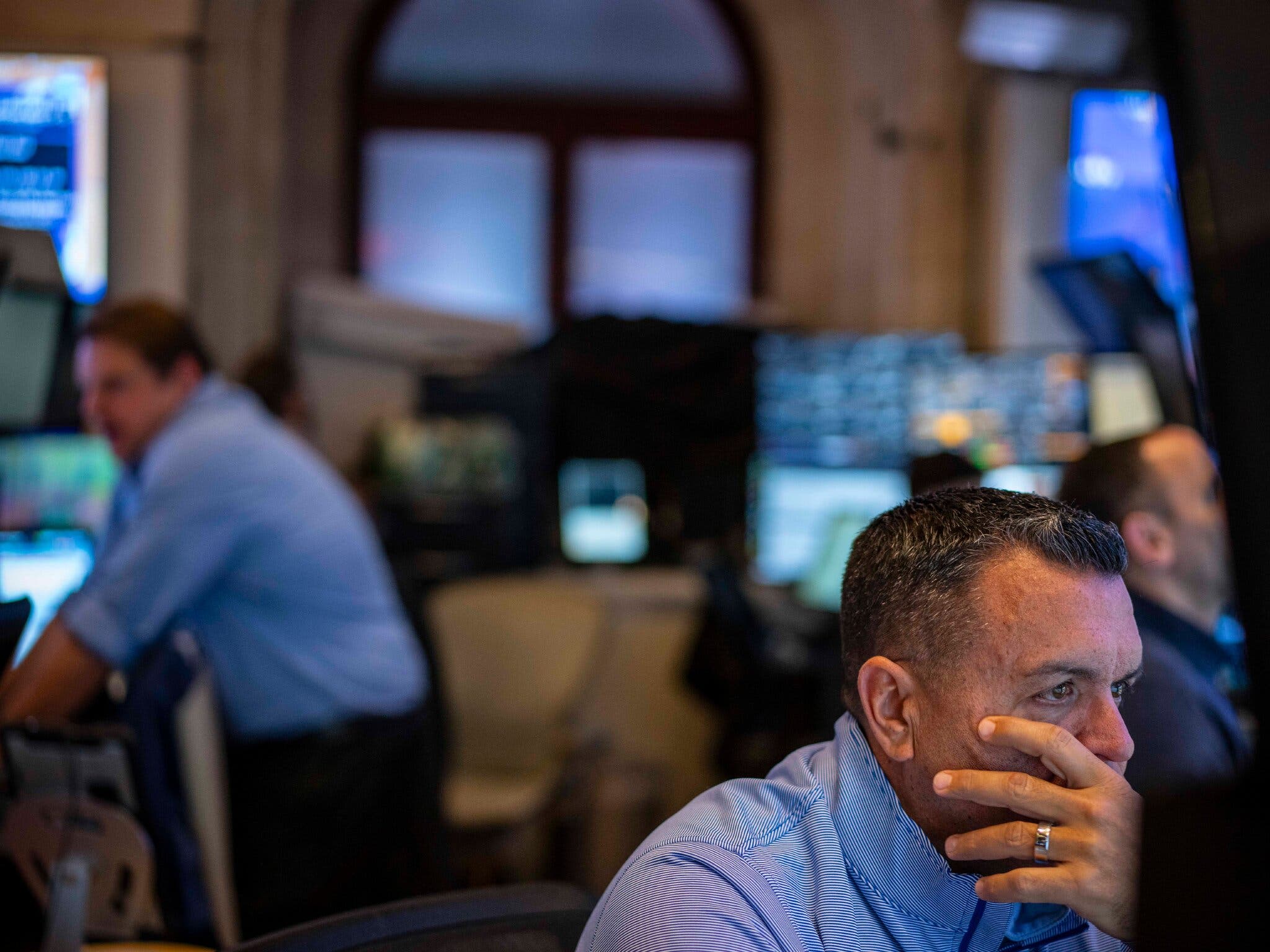
S&P 500 futures and crude oil contracts on the Chicago Mercantile Exchange (CME) at approximately 6:50 a.m. ET Monday—mere minutes before President Donald Trump posted on Truth Social that the United States and Iran had held “very good and productive conversations” toward resolving hostilities in the Middle East.
The timing has raised eyebrows across trading desks and prompted quiet scrutiny from market participants, even as the White House forcefully denies any impropriety.
According to Bloomberg data reviewed by multiple outlets, roughly 6,200 Brent and West Texas Intermediate (WTI) futures contracts traded in a single minute around 6:50 a.m., representing a notional value of approximately $580 million.
At virtually the same instant, S&P 500 e-mini futures recorded an isolated burst of activity that stood out against an otherwise subdued pre-market session. Both oil and equity futures then moved dramatically once Trump’s post appeared at 7:05 a.m.
More Middle East
WTI crude plunged nearly 12% to around $83–$88 per barrel by the close, while Brent fell below $100 for the first time since early March. S&P 500 futures, by contrast, jumped more than 2.5% in the minutes following the announcement, reflecting investor relief that planned U.S. strikes on Iranian energy infrastructure had been postponed for five days.
The volume anomalies occurred during thin early-morning liquidity, when even modest order flow can create noticeable spikes. Still, veteran traders described the coordinated moves—aggressive selling or shorting of oil while buying equity futures—as unusually prescient.
“It’s hard to prove causality… but you have to wonder who would have been relatively aggressive at selling futures at that point, 15 minutes before Trump’s post,” one senior market strategist at a major U.S. broker told the Financial Times. Another hedge-fund portfolio manager with 25 years of experience called the pattern “really abnormal” for a quiet Monday morning with no scheduled data releases or Fed speakers.
The SEC and CME Group declined to comment. White House spokesperson Kush Desai rejected any suggestion of insider activity, stating: “The only focus of President Trump and Trump administration officials is doing what’s best for the American people… any implication that officials are engaged in such activity without evidence is baseless and irresponsible reporting.”
Markets React to De-Escalation — For Now
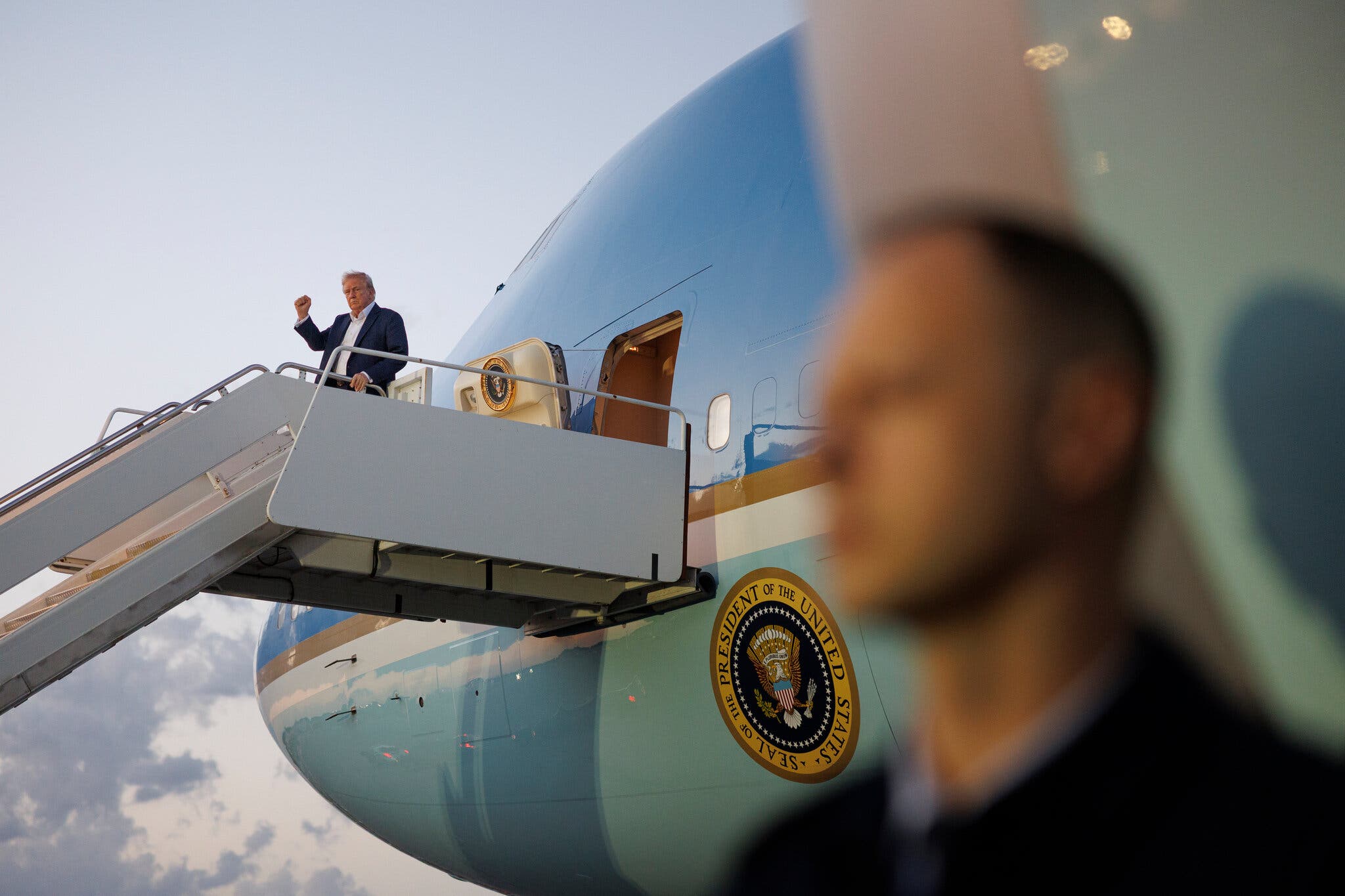
Trump’s Truth Social post described “productive conversations” with Iran and ordered the postponement of strikes on Iranian power plants and energy infrastructure for five days, subject to continued talks. Iran’s parliament speaker, Mohammad-Bagher Ghalibaf, quickly denied that any negotiations were underway, calling the claim “fake news” designed to manipulate oil and financial markets.
Oil prices, which had climbed aggressively in recent sessions on fears of supply disruption through the Strait of Hormuz, reversed sharply. WTI settled down roughly 10–12% at $83–$88 per barrel, while Brent dropped 11–13% to just under $100. European natural gas (TTF) also fell sharply.
The moves provided temporary relief to risk assets but highlighted how fragile sentiment remains. Morgan Stanley analysts warned that a sustained rise to $120 per barrel oil could shave 20–30 basis points off Asian GDP growth and force rate hikes in several emerging economies later this year.
A Pattern of Well-Timed Trades?
This is not the first instance of unusually prescient trading ahead of major Trump administration announcements in recent months. Hedge funds and energy consultants have privately noted several large block trades that appeared well-timed relative to official statements on Iran and Venezuela.
While such patterns are difficult to prove as improper without concrete evidence, they have generated “a level of frustration” among institutional investors, according to one portfolio manager.
Algorithmic and macro strategies can produce rapid cross-asset flows, especially in thin pre-market hours, but the scale and precision of Monday’s moves—selling oil and buying equities just before a de-escalation announcement—left many questioning whether non-public information circulated.
Political and Market Context
The episode unfolds against a backdrop of heightened geopolitical tension and domestic political pressure on the Trump administration’s aggressive posture toward Iran. While Trump framed the postponement as a sign of progress, critics argue the administration’s brinkmanship has already inflicted economic pain through elevated energy prices and market volatility.
For now, the market appears to be pricing in cautious optimism that a wider conflict can be avoided. Yet with Iran denying talks and both sides continuing information operations, the “fog of war” remains thick.
Investors would be wise to treat headline-driven moves with skepticism—especially when large, well-timed trades precede them.
Prediction market platforms Kalshi and Polymarket are discussing potential fundraising rounds that could value each company at about $20 billion.
If completed at that level, the deals would roughly double their valuations from late 2025. The discussions remain early and may not lead to finalized investments, according to the Wall Street Journal.
Prediction markets allow users to trade contracts tied to real-world events, with categories including sports, politics, elections, and more. Traders buy and sell those contracts based on what they think will happen. Essentially, it allows users to monetize information on world events.
Kalshi already operates in the United States under approval from the Commodity Futures Trading Commission. Founded in 2018 by Tarek Mansour and Luana Lopes Lara, raised $1 billion at an $11 billion valuation in December last year.
📊 More Investing
The company recently reached an annualized revenue run rate of about $1.5 billion, according to the WSJ report citing people familiar with the business.
Polymarket, founded in 2020 by Shayne Coplan, was valued at $9 billion in October after Intercontinental Exchange agreed to invest up to $2 billion in the platform.
None of the platforms immediately responded to requests for comments from CoinDesk.
Both platforms are leading in the sector, as prediction markets have become the latest hype for traders.
According to a Dune dashboard, open interest on Kalshi is hovering over $400 million, while on Polymarket it’s at $360 million. The third-largest market, Opinion, is at $36 million.
Similarly, the weekly notional volume (total underlying value of all prediction contracts traded) on Polymarket was $1.9 billion last week, and on Kalshi, $1.87 billion, according to Dune data. Opinion saw weekly volume of $150 million, down from over $1.2 billion ahead of its token launch.
The sector has become so popular that companies, including Coinbase and Robinhood, have entered the prediction market. In fact, Wall Street giants Nasdaq and Cboe recently said they are considering rolling out yes-or-no “binary bets” for traders on the direction of traditional markets, similar to prediction-market betting.
Activist investor Boaz Weinstein is offering to buy shares in Blue Owl Capital Inc.’s business development companies after a challenging week for the lender and broader fears about bubbling risks in the $1.8 trillion private credit market.
Saba Capital Management, led by Weinstein, and Cox Capital Partners launched the tender with an offer price that’s expected to be at a 20% to 35% discount to the most recent estimated net asset value and dividend reinvestment price. That will be determined when tender offers start after a 10-business day notice period, Cox and Saba said in a statement Friday.
Existing shareholders in the non-traded BDCs would have the option — but no obligation — to sell to the firms.
📊 More Investing
The price that any tender clears at will provide a window into where the market gauges the value of these funds and if it reflects Blue Owl’s internal net asset value. Steeply discounted exits could hurt future fundraising efforts.
“The purchasers’ tender offers would provide a liquidity solution to retail investors in the wake of a significant industry-wide increase in BDC redemption requests, multiple quarters of net outflows and a rise in redemption gate provisions,” Saba and Cox said in the statement.
The move comes just days after Blue Owl decided to restrict withdrawals from one of its private credit funds. Facing a looming deadline to return cash to investors in Blue Owl Capital Corp. II, also known as OBDC II, it raised capital by selling a $1.4 billion portfolio of loans to three of North America’s biggest pension funds and its own insurance firm.
Boaz Weinstein. (Jason Alden/Bloomberg)
Blue Owl shares extended losses on Friday, closing the week at their lowest level since June 2023, while shares in other asset managers also sold off.
“Saba and Cox are looking to capitalize on the headlines in the market,” said Michael Covello, executive managing director at investment bank Robert A. Stanger & Co. Inc.
For an investor who says, “I’ve read all the headlines, I’m scared, I don’t care what it costs, I want to get out today,” the tender offer could be a good opportunity, even with the discount, Covello said. “But there’s a cost to liquidity.”
Saba and Cox sent notice to purchase OBDC II shares on Feb. 17. They plan to make similar offers for Blue Owl Technology Income Corp. and Blue Owl Credit Income Corp., which are also BDCs.
Who’s Buying?
Weinstein is a seasoned activist investor who has waged aggressive proxy battles against Wall Street’s biggest names, including BlackRock Inc. and Nuveen. He launched Saba in 2009 and the hedge fund has focused on building stakes in closed-end funds and special purpose acquisition companies.
A Deutsche Bank AG alum, Weinstein has sometimes positioned himself as a defender of retail investors, taking on fund managers that he sees as more interested in collecting fees than maximizing returns for shareholders.
Cox Capital is an investor in dozens of private funds, from BDCs to real estate investment trusts. The Philadelphia-based firm, founded by John Cox in 2020, provides a source of “secondary liquidity” to investors in alternative assets, according to its website.
The credit secondaries market is a fast-growing area of finance, and has proven useful to private equity firms in need of cash, especially as dealmaking slowed down after the Covid-19 pandemic.
Nvidia NVDA +4.25% ▲ reported record sales and strong guidance Wednesday, helping soothe jitters about an artificial intelligence bubble that have reverberated in markets for the last week.
Sales in the October quarter hit a record $57 billion as demand for the company’s advanced AI data center chips continued to surge, up 62% from the year-earlier quarter and exceeding consensus estimates from analysts polled by FactSet. The company increased its guidance for the current quarter, estimating that sales will reach $65 billion—analysts had predicted revenue of $62.1 billion for the quarter.
Shares in the world’s most-valuable publicly listed company rose almost 5% in premarket trading Thursday.
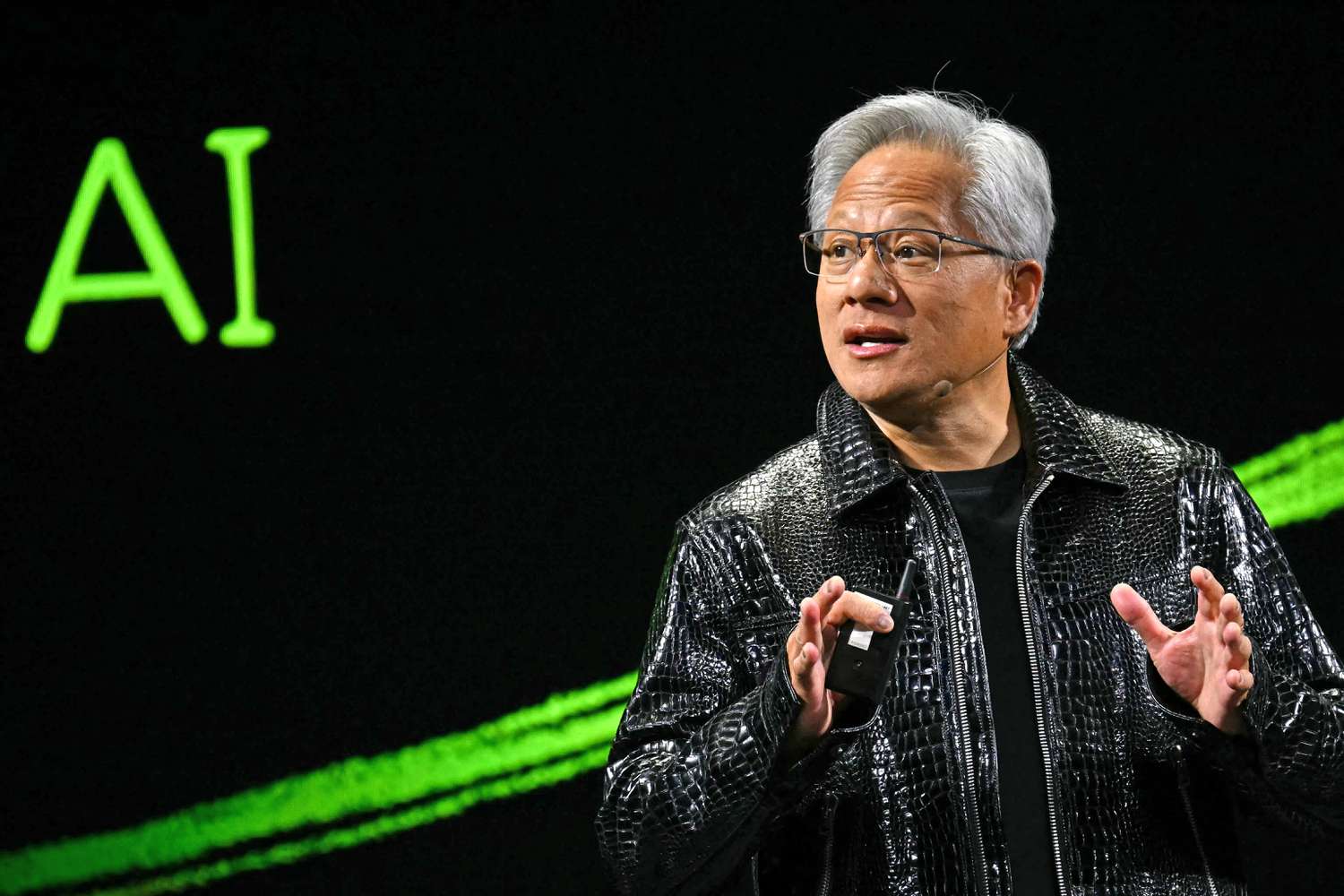
“We’ve entered the virtuous cycle of AI,” said Nvidia Chief Executive Jensen Huang. “AI is going everywhere, doing everything, all at once.”
Wednesday’s result will allow investors to breathe a sigh of relief. Each Nvidia quarterly earnings report has come to be seen as a financial Super Bowl of sorts as the AI boom has taken off. The company is regarded as a bellwether for both the health of the tech industry and the market as a whole.
This quarter, however, the stakes seemed higher. Rarely has an earnings report from a single company been greeted with such nervous anticipation.
In recent weeks, investors have sold off big tech names, worried that companies are spending far too much money on data centers, chips, and other infrastructure in the race to design and operate the world’s most powerful AI models, with little hope of recouping their investments in the near term.
Adding to the pressure is a flurry of recent AI deals structured using what critics have dubbed “circular” funding mechanisms—broadly referring to suppliers like Nvidia making large capital investments in the businesses of the customers who buy their products. Just a few months ago, investors viewed such deals with enthusiasm, pumping up shares for a variety of AI-related companies, but this week one such deal—between Nvidia, Microsoft and Anthropic—was greeted warily.
This week, 45% of global fund managers surveyed by Bank of America said that an AI stock-market bubble was one of the biggest risks facing the market.
A number of bearish moves by high-profile investors have also rattled tech markets. Last week, Masayoshi Son’s SoftBank Group sold its entire $5.8 billion stake in Nvidia to divert that money to other AI investments, while a hedge fund run by influential billionaire venture capitalist Peter Thiel unloaded its entire $100 million Nvidia stake in the third quarter.
Earlier this month, Michael Burry—who famously predicted the popping of the subprime mortgage securities bubble and was profiled in the Michael Lewis book “The Big Short: Inside the Doomsday Machine”—revealed in a securities filing that he was betting against the stocks of both Nvidia and AI-heavy defense analytics firm Palantir.
“The last few weeks, there have been some escalating cracks in the AI landscape,” said Matt Stucky, chief portfolio manager for equities at Northwestern Mutual Wealth Management Company, an Nvidia shareholder. “Nvidia is the beneficiary of a lot of AI spending, and market forces are pushing back harder and harder on that spending.”
Quarterly net income was $31.9 billion, 65% higher than a year earlier. Sales of Nvidia’s Blackwell line of graphics processing units—its most powerful chips yet—were “off the charts,” Huang said. Revenue from Nvidia’s data center segment set a record at $51.2 billion, beating analysts’ expectations of $49 billion.
The potential for revenue increases may be limited going forward after the Trump administration announced earlier this month that it is not considering allowing a version of the Blackwell chip to be sold in China, a fast-growing AI market that represents tens of billions of dollars in potential sales.
Half of the company’s long-term opportunity will come from customers’ transition to accelerated computing and generative AI, Colette Kress, Nvidia’s chief financial officer, said on a call with investors. While sizable purchase orders for Nvidia’s Hopper Platform never materialized in the quarter due to geopolitical issues with China, the company remains committed to engaging with governments, she added.
In separate news, the Commerce Department approved the sale of up to 70,000 advanced artificial-intelligence chips to two companies based in the United Arab Emirates and Saudi Arabia, a big win for the Middle Eastern nations as they seek to catch up in the AI race. The approvals are a reversal from earlier this year, when some administration officials rejected the idea of exporting directly to the state-backed companies over security concerns.
Terms of the deal will allow U.S. firms to sell up to 35,000 of Nvidia’s GB300 servers or their equivalents to both G42, a state-run AI firm based in Abu Dhabi, and Humain, a Saudi government-backed AI venture, government officials said. Nvidia competitor Advanced Micro Devices also has an agreement worth billions of dollars to work with Humain.
Nvidia’s stock price more than doubled between early April and late October, rising from the low $90s to more than $200 per share, but has lost ground in the last few weeks as bubble worries have grown. So far this year, it’s up about 30%.
Berkshire Hathaway’s Warren Buffett. (The Business Insider)
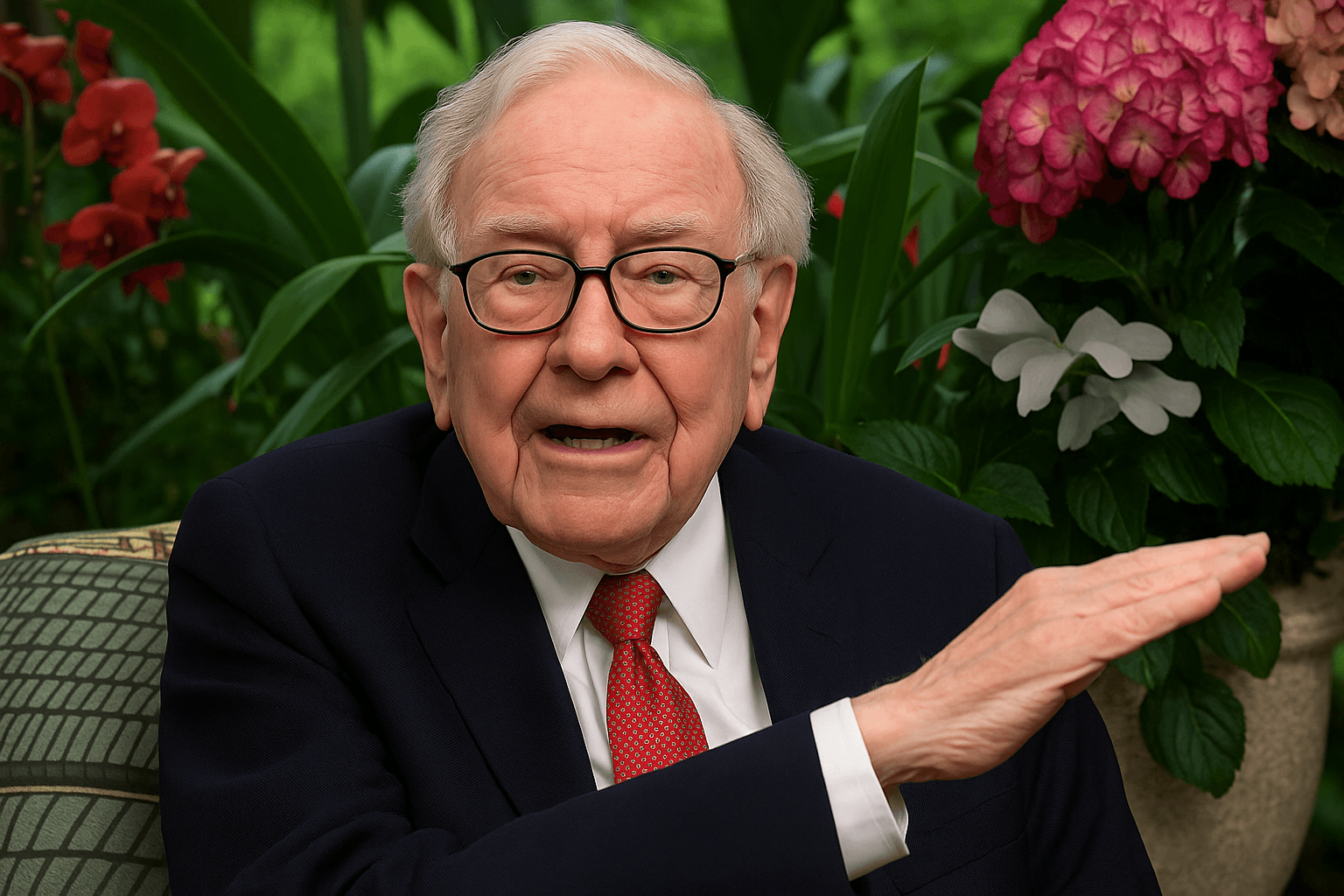
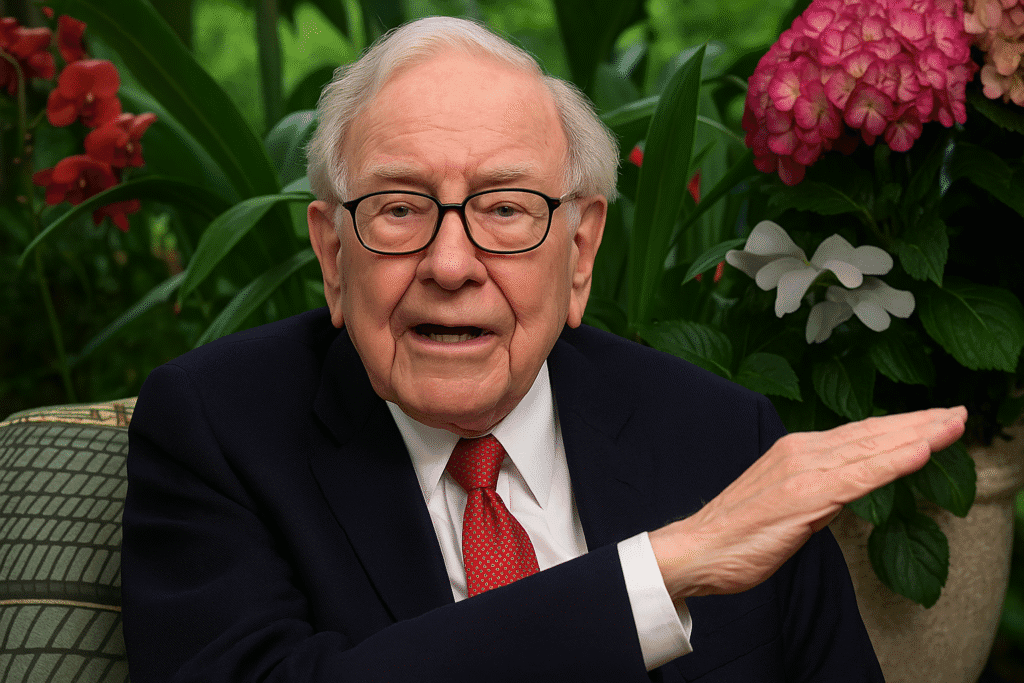
Warren E. Buffett has been at the forefront of American capitalism for decades as the chief executive of Berkshire Hathaway, the conglomerate he built into a $1.1 trillion colossus.
By the end of the year, he is preparing to give up that role.
Mr. Buffett said at Berkshire’s annual shareholder meeting on Saturday that he plans to ask the company’s board to approve making Gregory Abel, his heir apparent, the chief executive by the end of the year.
Mr. Abel would have “the final word” when it comes to the company’s operations, how it invests and more, Mr. Buffett, 94, told the tens of thousands of Berkshire shareholders at the meeting in Omaha.
But Mr. Buffett added that he “would still hang around and conceivably be useful in a few cases.” He will remain chairman of Berkshire — turning that role over to his son Howard Buffett upon his death — and remains the company’s single biggest shareholder, with a roughly 14 percent stake that is worth about $164 billion.
Mr. Buffett’s plan, which he said had been known only to two of his children who sit on the company’s board, Howard and Susan Buffett, was greeted by a minute-long standing ovation by Berkshire shareholders Mr. Abel, 62, appeared surprised by his boss’s announcement. After the announcement, several board members attending Berkshire’s meeting hugged each other.
Though Mr. Buffett looked in good health, having led several hours of questions from investors on Saturday, changes to this year’s annual meeting — his 60th at Berkshire — reflected his advancing age. He used a cane, which he first mentioned in the company’s annual letter in February, and shortened the shareholder question session by several hours.
If the board approves the plan, it would signify the end of an era for one of the most successful companies in modern capitalist history, and one of its most famous investors. Mr. Buffett has amassed a Midas-like fortune by being a savvy stock picker, buying up companies and holding them for the long term.
Through that investing philosophy, he assembled a conglomerate that runs a huge insurance operation, a major railroad, dozens of consumer companies and oversees a vast stock portfolio.
Among Berkshire’s most notable holdings are names that many consumers recognize: the auto insurer Geico, the BNSF railroad, the power utility Berkshire Hathaway Energy, Dairy Queen, See’s Candies, Fruit of the Loom, the paint company Benjamin Moore and the private jet company NetJets. Together, those businesses helped Berkshire grow a cash hoard that now sits at nearly $348 billion, more than the stock market valuation of McDonald’s.
Berkshire’s financial firepower has made Mr. Buffett one of the most influential businessmen in the world, giving his pronouncements on many topics, including politics, great weight. That included his criticism of President Trump’s trade policies, which Mr. Buffett took aim at on Saturday.
“Trade should not be a weapon,” Mr. Buffett said at the annual meeting. “I don’t think it’s right and I don’t think it’s wise.”
Mr. Buffett’s comments on tariffs were far from his first foray into politics. A Democratic supporter, his name was attached to a proposal years ago by former President Barack Obama that would have raised taxes on millionaires. But Mr. Buffett has kept a low profile for months, and even on Saturday he did not mention Mr. Trump by name.
Mr. Buffett’s plan to step down would complete one of the most-watched leadership transitions in corporate America. For years, he faced questions about who could take over Berkshire, a uniquely complicated business, and a number of executives had been floated as his successor.
But in 2021, Mr. Buffett finally confirmed that it would be Mr. Abel who joined the Berkshire fold when the company bought his energy business in 1999. Since then, the Canadian executive has risen through the ranks, turning what is now called Berkshire Hathaway Energy into one of America’s biggest power producers.
Mr. Abel is currently the vice chairman of Berkshire’s businesses other than insurance. Oversight of the conglomerate’s behemoth insurance operations has remained with Ajit Jain, a longtime Buffett lieutenant. Mr. Buffett and other executives have professed their belief that Mr. Abel could maintain Berkshire’s culture.
“Greg is ready,” Ronald L. Olson, a longtime Berkshire director who is also stepping down, told CNBC after Mr. Buffett’s announcement on Saturday.
Mr. Olson added that he hoped Mr. Buffett could serve as a valuable sounding board for Mr. Abel, much as Charles T. Munger, Mr. Buffett’s longtime business partner who died in 2023, did.
Mr. Munger, right, and Mr. Buffett in the mid- to late-1970s. “He was the architect and I was the general contractor,” Mr. Buffett said of their relationship. (via Buffalo News)
Together, Mr. Buffett and Mr. Munger entertained investors and more — notably at the Berkshire annual meetings, now in their 60th year — with a sort of vaudeville act, Mr. Buffett as the wry optimist and Mr. Munger as the sharp-tongued pessimist.
Berkshire’s latest financial report card underscored the complications that Mr. Abel will confront as chief executive.
The company reported a sharp drop in first-quarter earnings, with operating income — Mr. Buffett’s preferred measure — down 14 percent from the same time a year ago to $9.6 billion. Using generally accepted accounting principles, Berkshire reported a nearly 64 percent drop in net income, largely because of paper investment losses.
But while markets have grown more volatile in response to Mr. Trump’s whipsawing approach to trade, Mr. Buffett professed little worry about the effects of that volatility on Berkshire.
“It’s really nothing,” he told shareholders, suggesting that riding out market vicissitudes was part of stock investing.
The company reported that a “majority” of its businesses had lower sales and earnings in the first three months of the year, particularly in insurance underwriting income, which was hit by losses tied to the California wildfires.
In a regulatory filing on Saturday, Berkshire warned that Mr. Trump’s trade policies were generating “considerable uncertainty,” which could affect the company’s operating results. “We are currently unable to reliably predict the potential impact on our businesses, whether through changes in product costs, supply chain costs and efficiency, and customer demand for our products and services.”
Berkshire’s cash pile grew to $347.7 billion, a record, reflecting that Mr. Buffett has not found the kind of blockbuster investment opportunities that helped put the company on the map. In the past, he has acknowledged that given Berkshire’s size, it is nearly impossible now for Berkshire to find deals that could meaningfully augment its earnings.
During his question-and-answer session with shareholders at the annual meeting on Saturday, Mr. Buffett acknowledged stocking up on cash to prepare for any potential buying opportunity. He revealed that he had weighed a potential $10 billion investment, but later refused to elaborate.
Berkshire continued to be a net seller of stocks, selling $4.68 billion worth of equity in the quarter, compared with $3.18 billion in purchases.
One matter that Mr. Buffett did not directly address on Saturday is what would happen to Todd Combs and Ted Weschler, whom he hired more than a decade ago to help pick stocks for Berkshire. The two have been widely expected to become Berkshire’s stock pickers after Mr. Buffett steps away, though Mr. Combs has also become the chief executive of Geico.
A number of prominent corporate and business leaders were on hand on Saturday, including the Microsoft co-founder Bill Gates, Tim Cook of Apple (which is one of Berkshire’s biggest stock holdings) and the billionaire financier William A. Ackman. Two first timers, Hillary Rodham Clinton and Priscilla Chan, the wife of Meta’s chief executive Mark Zuckerberg, were also present.
Share prices of Hertz surged 56% after billionaire investor Bill Ackman’s firm disclosed a stake in the car rental company.
Pershing Square Capital Management said in a regulatory filing on Wednesday that it had acquired 12.7 million shares valued at $46.5 million. Pershing Square owns 4.1% of Hertz, making it the third-largest investor after Knighthead Capital Management and BlackRock, according to LSEG data.
CNBC reported on Wednesday that Pershing Square’s purchase — which includes shares and swaps — took its Hertz holdings to about 19.8%
Hertz shares closed 56.4% higher at $5.71 apiece on Wednesday and were up 33.8% in after-hours trade. The stock was little changed this year before Pershing Square’s disclosure.
Even though Hertz’s gains on Wednesday were massive, the car rental company’s stock isn’t a stranger to such eye-watering jumps.
In summer 2020, Hertz’s shares surged over 800% in weeks after filing for pandemic-induced Chapter 11 bankruptcy protection — making it the original meme stock.
It exited Chapter 11 bankruptcy in 2021 and started investing heavily in electric vehicles, including a plan to buy 100,000 Teslas.
However, the company started backtracking on its EV plan due to the cost of maintenance and repairs for the cars. Used EV prices have also been falling sharply.
Hertz was selling a significant number of its EVs by 2024 and was even asking customers if they wanted to buy the vehicles.
The failed bet on EVs showed up in earnings. Vehicle depreciation cost Hertz a $1 billion non-cash impairment charge in the third quarter.
Pershing Square did not immediately respond to Business Insider’s request for comment sent outside regular business hours.
There are not many certainties in the world of money, but this traditionally has been one of them: When life turns scary, people take refuge in American government bonds.
Investors buy U.S. Treasuries on the assumption that, come what may — financial panic, war, natural disaster — the federal government will endure and stand by its debts, making its bonds the closest thing to a covenant with the heavens.
Yet turmoil in bond markets last week revealed the extent to which President Trump has shaken faith in that basic proposition, challenging the previously unimpeachable solidity of U.S. government debt. His trade war — now focused intently on China — has raised the prospect of a worldwide economic downturn while damaging American credibility as a responsible steward of peace and prosperity.
“The whole world has decided that the U.S. government has no idea what it’s doing,” said Mark Blyth, a political economist at Brown University and co-author of the forthcoming book “Inflation: A Guide for Users and Losers.”
An erosion of faith in the governance of the world’s largest economy appears at least in part responsible for the sharp sell-off in the bond market in recent days. When large numbers of investors sell bonds at once, that forces the government to offer higher interest rates to entice others to buy its debt. And that tends to push up interest rates throughout the economy, increasing payments for mortgages, car loans and credit card balances.
Last week, the yield on the closely watched 10-year Treasury bond soared to roughly 4.5 percent from just below 4 percent — the most pronounced spike in nearly a quarter century. At the same time, the value of the American dollar has been falling, even as tariffs would normally be expected to push it up.
Other elements also go into the explanation for the bond sell-off. Hedge funds and other financial players have sold holdings as they exit a complex trade that seeks to profit from the gap between existing prices for bonds and bets on their future values. Speculators have been unloading bonds in response to losses from plunging stock markets, seeking to amass cash to stave off insolvency.
Some fear that China’s central bank, which commands $3 trillion in foreign exchange reserves, including $761 billion in U.S. Treasury debt, could be selling as a form of retaliation for American tariffs.
Given the many factors playing out at once, the sharp increase in yields for government bonds registers as something similar to when medical patients learn that their red blood cell count is down: There may be many reasons for the drop, but none of them are good.
One reason appears to be an effective downgrading of the American place in global finance, from a safe haven to a source of volatility and danger.
As Mr. Blyth put it, Treasury bills have devolved from so-called information invariant assets — rock-solid investments regardless of the news — to “risk assets” that are vulnerable to getting sold when fear seizes the market.
The Trump administration has championed tariffs in the name of bringing manufacturing jobs back to the United States, asserting that a short-term period of turbulence will be followed by long-term gains. But as most economists describe it, global trade is being sabotaged without a coherent strategy. And the chaotic way in which tariffs have been administered — frequently announced and then suspended — has undercut confidence in the American system.
For years, economists have worried about an abrupt drop in the willingness of foreigners to buy and hold United States government debt, yielding a sharp and destabilizing increase in American interest rates. By many indications, that moment may be unfolding.
“People feel nervous about lending us money,” said Justin Wolfers, an economist at the University of Michigan. “They are saying, ‘We’ve lost our faith in America and the American economy.’”
For Americans, that reassessment threatens to revoke a unique form of privilege. Because the United States has long served as the global economy’s safe harbor, the government has reliably found takers for its debt at lower rates of interest. That has pulled down the cost of mortgages, credit card balances and auto loans. And that has allowed American consumers to spend with relative abandon.
At the same time, foreigners buying dollar-denominated assets pushed up the value of the American currency, making products imported to the United States cheaper in dollar terms.
Critics have long argued that this model is both unsustainable and destructive. The flow of foreign money into dollar assets has permitted Americans to gorge on imports — a boon to consumers, retailers and financiers — while sacrificing domestic manufacturing jobs. Chinese companies have gained dominance in key industries, making Americans dependent on a faraway adversary for vital goods like basic medicines.
“The U.S. dollar’s role as the primary safe currency has made America the chief enabler of global economic distortions,” the economist Michael Pettis wrote last week in an opinion piece in The Financial Times.
But economists inclined to that view generally prescribe a gradual process of adjustment, with the government embracing so-called industrial policy to encourage the development of new industries. This thinking animated the Biden administration’s economic policy, which included some tariffs against Chinese industry to protect American companies while they gained time to achieve momentum in industries like clean energy technology.
Encouraging American industry requires investment, which itself demands predictability. Mr. Trump has warned companies that the only way to avoid his tariffs is to set up factories in the United States, while lifting trade protectionism to levels not seen in more than a century.
Even an abrupt decision from the White House to pause most tariffs on all trading partners except China failed to dislodge the sense that a new era is underway — one in which the United States must be viewed as a potential rogue actor.
That Mr. Trump does not bow to diplomatic decorum is hardly new. His Make America Great Again credo is centered on the notion that, as the world’s largest economy, the United States has the power to impose its will.
Yet the pullback in the bond market attests to shock at how far this principle has been extended. Mr. Trump has broken with eight decades of faith in the benefits of global trade: economic growth, lower-priced consumer goods and a reduced risk of war.
That the gains of trade have been spread unequally now amounts to a truism among economists. Anger over joblessness in industrial communities helped bring Mr. Trump to power, while altering the politics of trade. But many economists say the trade war is likely to further damage American industrial fortunes.
The tariffs threaten existing jobs at factories that depend on imported parts to make their products. The levies have been set at rates seemingly plucked at random, economists said.
“What the market really didn’t like was the random crazy math of the tariffs,” said Simon Johnson, a Nobel laureate economist at the Massachusetts Institute of Technology. “It seemed like they didn’t know what they were doing and didn’t care. It’s a whole new level of madness.”
The immediate consequence of higher interest rates on United States bonds is an increase in what the federal government must pay creditors to keep current on its debts. That cuts into funds available for other purposes, from building schools to maintaining bridges.
The broader effects are harder to predict, yet could metastasize into a recession. If households are forced to pay more for mortgages and credit card bills, they will presumably limit spending, threatening businesses large and small. Companies would then forgo hiring and expanding.
When large numbers of investors sell bonds, that forces the government to offer higher interest rates to entice others to buy its debt. And that tends to push up interest rates throughout the economy.Credit…Ashley Gilbertson for The New York Times
The chaos in the bond market is at once an indicator that investors see signs of this negative scenario already unfolding, and is itself a cause of future distress via higher borrowing rates.
President Trump has broken with eight decades of faith in the benefits of global trade.Credit…Tom Brenner for The New York Times
For years, foreign holders of American bonds have sought to diversify into other storehouses for savings. Still, the dollar and U.S. government bonds have maintained their status as the ultimate repository.
Europe and its common currency, the euro, now seem enhanced as a part of the global financial realm still subject to adult supervision. But Germany’s staunch reluctance to issue debt has limited the availability of bonds for investors seeking another place to entrust savings.
That may now change, suggested Mr. Blyth, the Brown economist. “If the Europeans decide to issue a ‘sanity bond,’ the world might jump at it,” he said.
The Chinese government has long sought to elevate the place of its currency, the renminbi. But foreign investors hardly view China as a paragon of transparency or rule of law, limiting its utility as an alternative to the United States.
All of which leaves the world in a bewildering place. The old sanctuary no longer seems so safe. Yet no other place looks immediately capable of standing in.
Jim Simons on April 16, 2007, in New York. (Mark Lennihan/AP)
James “Jim” Simons, a renowned mathematician who built a fortune on Wall Street and then became one of the nation’s biggest philanthropists, died May 10 at his home in Manhattan. He was 86.
The charitable foundation that Dr. Simons co-founded with his wife, Marilyn, announced the death but gave no specific cause.
Dr. Simons’s first career was in mathematics, making advances in the studies of particle physics such as quantum field theory and string theory. He led classes at the Massachusetts Institute of Technology and Harvard University before taking a job at the Institute for Defense Analyses in Princeton, N.J., as a code breaker for the National Security Agency. And from 1968 to 1978, he was chairman of the mathematics department at the State University of New York at Stony Brook.
In 1976, Dr. Simons received the American Mathematical Society’s Oswald Veblen Prize in Geometry for research that would prove to be influential to string theory and other areas of physics.
But in 1978, he traded academia for Wall Street. He leased a small office in a Long Island strip mall with the goal of using his skills in applied mathematics to guide investments in the stock market. The team he built was much like him: mathematicians, scientists and experts at prediction-based analysis using data and specialized computer coding.
The hedge fund he created, which eventually became known as Renaissance Technologies, pioneered the use of mathematical modeling — also known as quantitative trading — to pick stocks and other investments. The approach was wildly successful, helping Simons and his wife build over the years an estimated net worth of more than $30 billion.
“I wasn’t the fastest guy in the world,” Dr. Simons told the New York Times in 2014 about his problem-solving abilities in math. “I wouldn’t have done well in an Olympiad or a math contest. But I like to ponder. And pondering things, just sort of thinking about it and thinking about it, turns out to be a pretty good approach.”
James Harris Simons was born April 25, 1938, in Brookline, Mass. His father was the general manager of a shoe factory, and his mother was a homemaker. The family moved to nearby Newton while he was in high school.
As a boy, he was obsessed with logic and mathematical proofs, Dr. Simons recalled. One time his father was worried the car was close to running out of gas. Dr. Simons said he used theoretic math to explain to his incredulous father the impossibility of reaching zero.
“And I said to myself and then to him, ‘Well, you don’t have to run out of gas. You can use half of what you have, and then you can use half of that and then half of that, and you’ll never run out of gas,’” he recalled in a 2020 oral history withthe American Institute of Physics.
His practical side, however, was not as sharp. During a school break over the holidays when he was 14, he was demoted to floor sweeper at a garden supply store. He was hired for a stockroom job but he repeatedly forgot where to put items.
He graduated from MIT with a mathematics degree in 1958 and received a doctorate in math from the University of California at Berkeley in 1961. His doctoral work explored the mathematical structures of curved spaces, which Albert Einstein had used in his general theory of relativity to explain how gravity bends space and time.
At the NSA, his political views eventually clashed publicly with those of his boss, Army Gen. Maxwell D. Taylor. In 1967, Taylor defended the Vietnam War in a New York Times Magazine article. Dr. Simons published a reply, saying the war undermined U.S. security and appealing for a military pullout “with the greatest possible dispatch.”
Soon after, he was dismissed. Stony Brook University on Long Island offered him the job as head of the math department.
In 1978, Dr. Simons started his investment firm. He retired as CEO of the hedge fund in 2010, then focused on philanthropic work through the foundation he and his wife founded in 1994 to support scientists and organizations engaged in research in science, math and education.
Over the years, the couple donated billions of dollars to hundreds of philanthropic causes. In 2023, they gave $500 million through their foundation to the State University of New York at Stony Brook to support the university’s endowment and boost scholarships, professorships, research and clinical care.
Dr. Simons came in second behind only Warren Buffett in the Chronicle of Philanthropy’s list of the biggest charitable donations from individuals or their foundations in 2023.
His marriage to Barbara Bluestein, a computer scientist, ended in divorce. He married Marilyn Hawrys, an economist, in 1977. One son from his first marriage, Paul Simons, was killed in a bicycle accident in 1996; a son from his second marriage, Nicholas Simons, drowned off Bali in Indonesia in 2003.
Besides his wife, survivors include two children from his first marriage; a daughter from his second marriage; five grandchildren and one great-grandson.
In the oral history interview, Dr. Simons was asked whether he saw a religious or moral underpinning to his philanthropy.
“It’s not a spiritual framework,” he replied. “It makes me feel good, to give away this money and see that it’s going to a good cause, and in particular with science, learning things.”
Charles T. Munger in 1988. Warren Buffett described him as the originator of the company’s investing approach: “Forget what you know about buying fair businesses at wonderful prices; instead, buy wonderful businesses at fair prices.” (Bonnie Schiffman/Getty Images)
Charles T. Munger, who quit a well-established law career to be Warren E. Buffett’s partner and maxim-spouting alter-ego as they transformed a struggling New England textile company into the spectacularly successful investment firm Berkshire Hathaway, died on Tuesday in Santa Barbara, Calif. He was 99.
His death, at a hospital, was announced by Berkshire Hathaway. He had a home in Los Angeles.
Although overshadowed by Mr. Buffett, who relished the spotlight, Mr. Munger, a billionaire in his own right — Forbes listed his fortune as $2.6 billion this year — had far more influence at Berkshire than his title of vice chairman suggested.
Mr. Buffett has described him as the originator of Berkshire Hathaway’s investing approach. “The blueprint he gave me was simple: Forget what you know about buying fair businesses at wonderful prices; instead, buy wonderful businesses at fair prices,” Mr. Buffett once wrote in an annual report.
That investing strategy was a revelation for Mr. Buffett, who had made his name in the 1950s buying troubled companies at deep discounts. (He called them “cigar butts,” because investing in them, he said, was like “picking up a discarded cigar butt that had one puff remaining in it.”)
Mr. Munger counseled Mr. Buffett that if he wanted to build a large, sustainable company that would outperform other investors, he should buy solid brand-name companies. “He was the architect and I was the general contractor,” Mr. Buffett said of their relationship.
Mr. Munger, right, and Mr. Buffett in the mid- to late-1970s. “He was the architect and I was the general contractor,” Mr. Buffett said of their relationship. (Buffalo News)
The partnership, spanning more than 50 years, produced one of the most successful and largest conglomerates in history. Among other properties, Berkshire, which is based in Omaha, owns the insurance giant Geico and the Burlington Northern Santa Fe railroad company and holds stakes in Coca-Cola, American Express and other corporate heavyweights. By 2022 it had about 372,000 employees.
Mr. Munger, an erudite man who sprinkled his conversations with references to Cicero, Albert Einstein, Mark Twain and Confucius, was widely known for his witty common-sense maxims, so much so that they were called Mungerisms and collected in books, including “Poor Charlie’s Almanack: The Wit and Wisdom of Charles T. Munger” (2005).
“Envy is a really stupid sin,” goes one, “because it’s the only one you could never possibly have any fun at.” Another: “The ethos of not fooling yourself is one of the best you could possibly have. It’s powerful because it’s so rare.”
Mr. Buffett and Mr. Munger would talk to each other on the telephone for hours every day, Mr. Buffett from his office in Omaha (their mutual hometown) and Mr. Munger from Los Angeles.
“We’ve never had an argument,” Mr. Buffett said. Repeating one of Mr. Munger’s favorite lines, Mr. Buffett said that when they did differ, Mr. Munger would say, “Warren, think it over and you’ll agree with me because you’re smart and I’m right.”
Mr. Buffett and Mr. Munger were the faces of Berkshire’s annual meeting in Omaha, what became known as the Woodstock of Capitalism. They would hold forth in front of tens of thousands of rapt Berkshire shareholders, answering questions for up to six hours and dispensing their investment wisdom.
“The trouble with making all these pronouncements is people gradually begin to think they know something,” Mr. Munger told the audience in 2015. “It’s much better to think you’re ignorant.” He added, “If people weren’t so often wrong, we wouldn’t be so rich.”
Mr. Munger and Mr. Buffett appeared on giant screens at Berkshire Hathaway’s shareholder meeting in Omaha in 2015. The annual event became known as the Woodstock of Capitalism.(Nati Harnik/Associated Press)
Many of those listeners had become vastly wealthy themselves by investing with Mr. Buffett and Mr. Munger. A $1,000 investment in Berkshire made in 1964 is worth more than $10 million today.
Mr. Munger was often viewed as the moral compass of Berkshire Hathaway, advising Mr. Buffett on personnel issues as well as investments. His hiring policy: “Trust first, ability second.”
A Lawyer’s Son
Charles Thomas Munger was born in Omaha on Jan. 1, 1924, the son of Alfred Case Munger, a lawyer, and Florence (Russell) Munger. As a boy he worked Saturdays in a grocery store then owned by Mr. Buffett’s grandfather. (Mr. Buffett worked there for a time himself, but the two did not meet until much later.) At 17, Charles went to the University of Michigan to major in mathematics, but in his sophomore year, after the attack on Pearl Harbor, he enlisted in the Army Air Corps.
Promoted to second lieutenant, he was dispatched to the California Institute of Technology in Pasadena to train as a meteorologist. In Pasadena he met Nancy Huggins, daughter of a local shoe store owner, and they married, he at 21 and she at 19. They went on to have three children.
Soon he was assigned to Nome, Alaska, where he developed a talent that would serve him well.
“Playing poker in the Army and as a young lawyer honed my business skills,” Mr. Munger told Janet Lowe in her 2000 book “Damn Right! Behind the Scenes with Berkshire Hathaway Billionaire Charlie Munger.”
“What you have to learn is to fold early when the odds are against you,” he said, “or if you have a big edge, back it heavily, because you don’t get a big edge often, so seize it when it does come.
Shareholders wore badges in support of Mr. Munger at the annual meeting in 2022. (Chandan Khanna/Agence France-Presse/Getty Images)
Even before his discharge from the Army in 1946, Mr. Munger, who once said he had a black belt in chutzpah, applied to Harvard Law School, from which his father had graduated, even though he had desultory work habits and no undergraduate degree. He was accepted only after intervention by a fellow Nebraskan, Roscoe Pound, a retired dean of the school and a family friend.
Graduating with honors, Mr. Munger returned to California and began practicing law. He eventually struck out on his own by founding the law firm Munger, Tolles & Hills (now Munger, Tolles & Olson). But his life had begun to unravel: He and his wife divorced; their only son, Teddy, died of leukemia at 9 years old; and he suffered financial reverses.
With Mr. Munger practically broke, his daughter Molly complained to him about his beat-up yellow Pontiac. “Daddy, this car is just awful, a mess,” she said. “Why do you drive it?” As recounted in Ms. Lowe’s biography, he replied, “To discourage gold diggers.”
Seeking to rebuild, and drawing on his preternatural math skills (“I always took math courses because I could get an ‘A’ without doing any work,” he said), he began investing on the side, in stocks, businesses and real estate.
“It soon occurred to me that I’d rather be one of our rich and interesting clients than be their lawyer,” he said.
His investments generated his first million dollars.
Mr. Munger married Nancy Barry Borthwick in 1956, and he met Mr. Buffett by happenstance three years later. Mr. Munger had flown back to Omaha to organize the affairs of his recently deceased father when he was invited to lunch at the local Omaha Club. There he was introduced to Mr. Buffett by a mutual friend.
Later that week, Mr. Munger attended a dinner party to which Mr. Buffett had also been invited. They hit it off and spent the evening talking. Mr. Buffett later recalled, “He was rolling on the floor laughing at his own jokes, and I thought, ‘That is my kind of guy.’ I do the same thing.”
Days later, they and their wives went to lunch at Johnny’s Cafe.
As quoted in “The Snowball,” Alice Schroeder’s 2008 biography of Mr. Buffett, Nancy Munger at one point asked her husband, “Why are you paying so much attention to him?” Mr. Munger replied: “You don’t understand. That is no ordinary human being.”
‘A Passion to Get Rich’
The men soon found themselves on the phone nearly every day talking about investing strategies. “Warren obviously had a better business model than I did,” Mr. Munger said, referring to his billing by the hour for his legal services. “He kept pointing out to me that I had an insane way of making a living, and that his was better and that I should do what he was doing.”
Mr. Munger was won over. “Like Warren, I had a considerable passion to get rich,” Mr. Munger was quoted as saying in Roger Lowenstein’s book “Buffett: The Making of an American Capitalist” (1995). “Not because I wanted Ferraris — I wanted the independence. I desperately wanted it. I thought it was undignified to have to send invoices to other people.”
Mr. Munger began investing side by side with Mr. Buffett, in companies like Wesco Financial and See’s Candies, before officially joining him as vice chairman. For the first year, he said, “I kept one toe in the law firm in case my capitalist career cratered.”
Together they built Berkshire into a $500 billion-plus juggernaut whose original shares posted annual gains averaging 21.6 percent between 1965 and 2014, more than twice the 9.9 percent rise for the Standard & Poor’s 500. (The company got its name when, early on, Mr. Buffett took over a fading Massachusetts textile manufacturercalled Berkshire Hathaway.)
Mr. Munger in 2018. He said his biggest mistakes were not bad investments, but investments Berkshire failed to make. (Nati Harnik/Associated Press)
The money Mr. Munger made far surpassed his greatest expectations, he said, but it could have been even more. He said his biggest mistakes were not bad investments, but investments Berkshire failed to make.
He and Mr. Buffett “were offered a stake in McDonald’s way early” and decided against it, he said.
“We should have bought a big block of Wal-Mart young,” he added. “That was billions that we should’ve made. We avoided the pharmaceutical industry entirely, and it was the easiest industry to make a lot of money out of all the ones around, and we never made a nickel out of it.”
Mr. Munger used his many nickels for an unusual philanthropic passion: architecture. He gave away hundreds of millions of dollars to university architecture projects, including $65 million for the Kavli Institute for Theoretical Physics at the University of California, Santa Barbara.
At least one of his projects caused controversy: His design for a windowless dorm room building at the Santa Barbara campus, for which he contributed $200 million, was criticized by some architects and students. He defended it as efficient and effective.
Active Into His 90s
Mr. Buffett remained a vocal proponent of philanthropy through his Giving Pledge, an organization he founded with Bill and Melinda Gates to persuade billionaires to give away at least half their fortunes. But Mr. Munger was conspicuously not on the list. He said it was not that he did not want to sign the pledge. He said his wife, Nancy, who died in 2010 at 86, had wanted her half of the estate passed to the children, “and so I more than did that.” He added: “I felt it would be hypocritical for me to be a big pledger. I’ve already violated the total spirit of it.”
Mr. Munger is survived by two daughters from his first marriage, Wendy and Molly Munger; a daughter from his second marriage, Emilie Munger Ogden; three sons from that marriage, Charles Jr., Barry and Philip; two stepsons, William and David Borthwick; 15 grandchildren; and seven great-grandchildren.
A treasured retreat of his was a northern Minnesota wilderness compound on Star Island in Cass Lake, where his grandparents began summering in 1932 and which became the extended-family seat. In addition to Los Angeles, he had a home in Hawaii.
Under Mr. Buffett and Mr. Munger, Berkshire invested heavily in newspapers, among them The Washington Post, The Buffalo News and The Omaha World-Herald. Mr. Munger himself was the chairman of the Daily Journal Corporation, a newspaper publisher, from 1977 to 2022.
He remained active in Berkshire Hathaway into his 90s while serving for decades as chairman of Good Samaritan Hospital in Los Angeles, to which he lavishly donated. A Republican, he was also outspoken in support of Planned Parenthood.
Perhaps in another life Mr. Munger, with all his drive and self-assurance, would have been the chief of a giant corporation. But he had no regrets about making his fortune in the shadow of Mr. Buffett.
“I didn’t mind at all playing second fiddle to Warren,” he said in an interview for this obituary. “Ordinarily, everywhere I go I am very dominant, but when somebody else is better, I’m willing to play the second fiddle. It’s just that I was seldom in that position, except with Warren. But I didn’t mind it at all.”
Cookie Consent
We use cookies to improve your experience on our site. By using our site, you consent to cookies.
Contains information related to marketing campaigns of the user. These are shared with Google AdWords / Google Ads when the Google Ads and Google Analytics accounts are linked together.
90 days
__utma
ID used to identify users and sessions
2 years after last activity
__utmt
Used to monitor number of Google Analytics server requests
10 minutes
__utmb
Used to distinguish new sessions and visits. This cookie is set when the GA.js javascript library is loaded and there is no existing __utmb cookie. The cookie is updated every time data is sent to the Google Analytics server.
30 minutes after last activity
__utmc
Used only with old Urchin versions of Google Analytics and not with GA.js. Was used to distinguish between new sessions and visits at the end of a session.
End of session (browser)
__utmz
Contains information about the traffic source or campaign that directed user to the website. The cookie is set when the GA.js javascript is loaded and updated when data is sent to the Google Anaytics server
6 months after last activity
__utmv
Contains custom information set by the web developer via the _setCustomVar method in Google Analytics. This cookie is updated every time new data is sent to the Google Analytics server.
2 years after last activity
__utmx
Used to determine whether a user is included in an A / B or Multivariate test.
18 months
_ga
ID used to identify users
2 years
_gali
Used by Google Analytics to determine which links on a page are being clicked
30 seconds
_ga_
ID used to identify users
2 years
_gid
ID used to identify users for 24 hours after last activity
24 hours
_gat
Used to monitor number of Google Analytics server requests when using Google Tag Manager