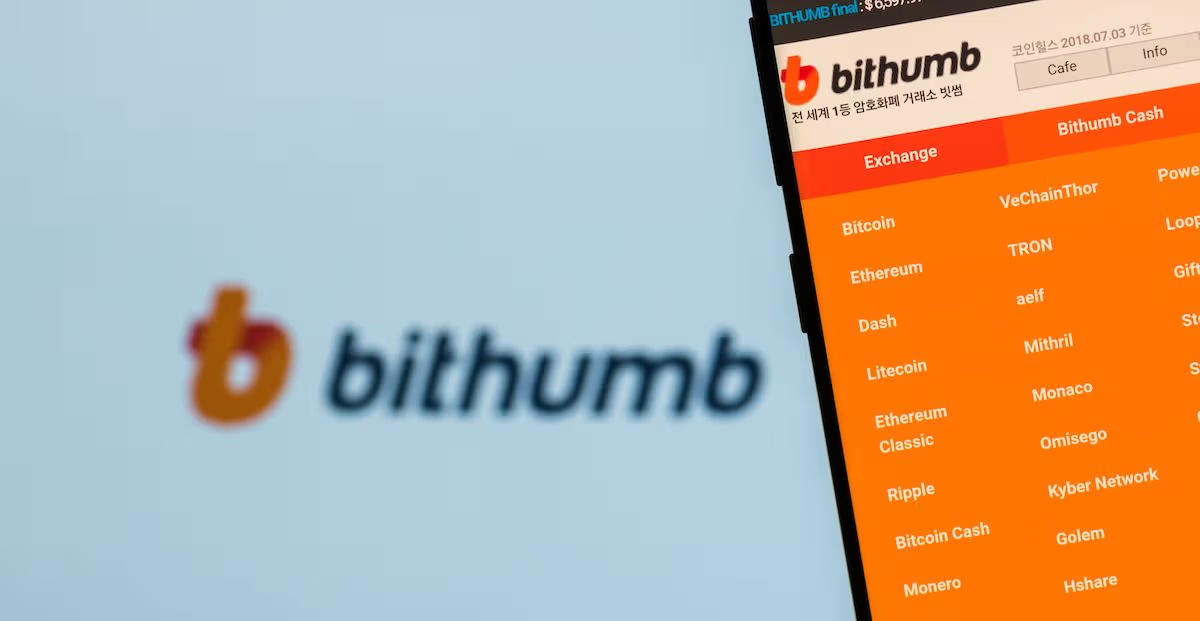
A South Korean cryptocurrency exchange apologised on Saturday after mistakenly transferring more than $40 billion worth of bitcoin to users, which briefly prompted a selloff on the platform.
Bithumb said it accidentally sent 620,000 bitcoins, currently worth more than $40 billion, and blocked trading and withdrawals for the 695 affected users within 35 minutes after the error occurred on Friday.
According to local reports, Bithumb was meant to send about 2,000 won ($1.37) to each customer as part of a promotion, but mistakenly transferred roughly 2,000 bitcoins per user.
“We sincerely apologise for the inconvenience caused to our customers due to the confusion that occurred during the distribution process of this (promotional) event,” Bithumb said in a statement released Saturday.
The platform said it had recovered 99.7 percent of the mistakenly sent bitcoins, and that it would use its own assets to fully cover the amount that was lost in the incident.
It admitted the error briefly caused “sharp volatility” in bitcoin prices on the platform as some recipients sold the tokens, adding that it brought the situation under control within five minutes.
Its charts showed the token’s prices briefly went down 17 percent to 81.1 million won on the platform late Friday.
The platform stressed that the incident was “unrelated to external hacking or security breaches”.
Bitcoin, the world’s biggest cryptocurrency, sank this week, wiping out gains sparked by US President Donald Trump’s presidential election victory in November 2024.
Bitcoin just suffered its largest weekly decline in more than three years. But the worst part for some of crypto’s permabulls is that they aren’t sure what exactly caused the crash.
The selloff left many of the market’s luminaries—those so well-known that they go simply as “Pomp” and “Novo” and “Mooch”—searching for answers.
“Bitcoin is crashing and investors are freaking out,” Anthony Pompliano, a crypto evangelist and investor, wrote Friday.
Bitcoin fell 16% to $70,008 this past week, down a sharp 45% from its all-time high of $126,273 in October. Ether dropped 24% to $2,052, off 59% from its own high of last year. Both tokens staged furious rallies Friday, but the week remained a historically bad one for crypto. And few seem to know what went wrong.
Market theories for the selloff ranged from investors’ pivot toward the prediction markets and other risky bets, to widespread profit-taking after a blistering bull run.
Price performance, past two years
Price performance, past two years
Trump’s surprise announcement of
100% tariffs against China
Source: The NY Budgets Crypto Index
“There was no smoking gun,” said Michael Novogratz, who runs Galaxy Digital, a crypto merchant-banking and trading firm.
For much of last year, crypto was in ascendance. President Trump’s return to the White House ushered in a new era for digital assets, which continued to gain acceptance among individual investors and legitimacy on Wall Street. As bitcoin and other popular tokens touched record highs, it seemed as though the market’s best days always lay ahead.
“I really didn’t think that we’d see a six at the beginning of the bitcoin price ever again,” said Cory Klippsten, chief executive officer of the bitcoin financial services firm Swan Bitcoin.
And yet, for a 24-hour stretch that ended Friday afternoon, bitcoin was back at that level. Past crypto selloffs had clearer explanations, which made this one more mystifying.
In 2018, bitcoin fell 80% from its peak after the initial coin offering bubble burst, ending an era in which thousands of unproven startups raised billions of dollars with little more than a sales pitch. In 2022, the $40 billion collapse of TerraUSD and Luna coins triggered a cascade of company failures across the crypto sector that culminated in the implosion of Sam Bankman-Fried’s FTX exchange.
Alan Chapman/Dave Benett/Getty Images
This time, there is no clear consensus. “If you ask five experts, you’ll get five explanations,” said Anthony Scaramucci, who served for 11 days as communications director during Trump’s first term and is among the best-known crypto bulls at his firm, SkyBridge Capital.
Here are some of the most popular explanations:
New shiny objects
There is no shortage of other markets for traders to make audacious bets, said Pompliano, the CEO of ProCap Financial. Prediction markets, gold, silver, artificial intelligence and so-called meme stocks are all vying for their attention of late, drawing eyes away from crypto.
“It used to be that bitcoin was the consensus view where asymmetry existed,” Pompliano said. “Now you have AI, prediction markets…many other areas where people can go and they can speculate.”
More supply?
Wall Street has sought to capitalize on crypto’s popularity by launching a growing array of exchange-traded funds and derivatives linked to bitcoin and other popular tokens. Their proliferation might not affect the sheer number of bitcoins, ethers and other tokens, but some investors thought their arrival has dented bitcoin’s appeal as a scarce asset.
Bitcoin’s main appeal has always been its limited supply of 21 million coins. By launching ETFs and complex derivatives, Wall Street has enabled investors to bet on the price of bitcoin without needing to buy or hold the actual coins, some analysts said.
New sheriff
Other investors suspected that Kevin Warsh, Trump’s pick to be the next chair of the Federal Reserve, might be bringing down crypto prices.
Warsh, they said, is seen as more hawkish on interest rates as a tool to tame inflation, and more supportive of a stronger U.S. dollar. Higher rates and a stronger dollar are conditions that typically hurt some alternative assets, such as gold and crypto, making them less attractive to investors. And this past week, the WSJ Dollar Index edged up 0.4%.
Still, Warsh and the Fed are expected to cut rates this year, not raise them. And Warsh has warmed to bitcoin. He famously dubbed the digital currency a “policeman for policy,” saying in a TV interview that bitcoin’s price can inform policymakers when they are doing things right and wrong.
Clouded clarity
After Trump signed into law the Genius Act last year, paving the path for stablecoins—digital assets pegged to fiat currencies like the dollar—the industry turned its attention to the next important piece of legislation: the Clarity Act. This bill would create a clear regulatory framework for the burgeoning industry.
Congress appeared on the cusp of moving the bill ahead when a dispute between crypto exchanges and traditional banks stalled that momentum. Without this measure, many financial firms are hesitant to integrate digital assets into their offerings. And unless a compromise is reached, the dust-up might deny the crypto market a catalyst that could have extended the rally.
Profit-taking
Novogratz and some other investors thought much of the selloff was driven by investors eager to lock in gains they collected when bitcoin, ether and other digital tokens rallied in the midst of the “euphoria” of Trump’s election in 2024 and pledge to make the U.S. the world’s crypto capital.
And those gains were indeed spectacular. Bitcoin, for one, rocketed around 80% from Election Day until early October of last year.
Sharp selloffs are hardly unusual in crypto, of course. They are so regular, in fact, that investors give them a name—crypto winter—that befits the belief that these downturns are as predictable as the seasons.
Some analysts believe this crypto winter could thaw faster than those of the past. No key companies have collapsed or faced allegations, revelations that have elicited crises of confidence in past crashes.
For believers, Friday’s rally served as reassurance that cryptocurrencies have always bounced back, part of why they stick with these investments.
“The infrastructure is stronger, stablecoin adoption continues to grow and institutional interest hasn’t evaporated, it’s just sidelined,” said Jasper De Maere, a strategist at the crypto trading firm Wintermute. Interest in these investments “can return quickly,” he said.
Many of crypto’s true believers are willing to wait.
On a Thursday afternoon conference call, Strategy founder Michael Saylor sought to reassure investors that bitcoin was coming back.
Republicans are way ahead of Democrats regarding their opinion of crypto and bitcoin, said MicroStrategy’s Michael Saylor. (Danny Nelson/CoinDesk)
Moments earlier, his company, which stockpiles bitcoin, had reported a $12 billion quarterly loss related to the token’s late-2025 swoon. Saylor told his investors the only way to handle the downturn is to hold on—and tune out the market’s volatility.
“Your time horizon needs to be, minimal, four years,” Saylor said.
The crypto industry notched a major victory on Thursday, securing legislation that could lead to digital assets becoming a significant part of Americans’ everyday lives. But delays in enacting the bill shows the industry’s power still has limits.
On Thursday afternoon, the House of Representatives in a 308-122 vote passed a bill that would set rules for so-called stablecoins, a type of cryptocurrency whose value is most often pegged to the dollar and backed by reserves. The Senate already passed the bill in June, and the White House on Thursday said President Donald Trump will sign it into law as soon as Friday.
The bill, called the Genius Act, has been a longstanding target for stablecoin company Circle Internet Group and crypto trading platform Coinbase Global. Its passage is the culmination of a multiyear effort to lobby lawmakers over to crypto’s cause—and to finance the campaigns of others who promised to support the industry.
Crypto supporters largely agree that the bills considered by Congress could transform the sector and allow for more investments, especially from institutions.
The crypto industry still has much it wants to accomplish even after Thursday’s expected victory. High on crypto boosters’ wish list is legislation to establish rulesfor crypto exchanges, brokers and tokens. But it will be more difficult for the industry to build the coalition it needs to push through that larger agenda.
On Thursday, the House also passed a bill on a 294-134 vote to establish those other rules. Seventy-eight Democrats voted in favor of the bill, more than the 71 Democrats who voted in favor of a separate bill to create crypto rules last year.
Unlike the stablecoin bill, the Senate has yet to vote on market-structure legislation.
The Senate seems a long ways away from building the bipartisan support needed to avoid a filibuster and move it into law, wrote TD Cowen analyst Jaret Seiberg in a research note this week.
“Passing this bill is symbolically important, but what will matter is the language that the Senate can pass,” Seiberg said.
Seiberg said he doesn’t expect to get full details on what the Senate plans until late this year or early next year.
Part of the hangup is that while several senators for years have pushed digital-assets tied legislation, the Senate and its committees as a whole haven’t done nearly as much work building a consensus as their counterparts in the House. Former Sen. Sherrod Brown (D., Ohio), who chaired the Senate Banking Committee, was a crypto skeptic, and he and other progressive Democrats largely froze bills moving forward even as the Republican-led House forged ahead.
The second hang-up is substantive. Some Democratic senators, including Sen. Elizabeth Warren (D., Mass.), have argued that the crypto bills would let the industry run roughshod over
investor protection laws and leave enforcement to undermanned agencies like the Commodity Futures Trading Commission not used to policing a large industry. They say that current investor laws that pertain to securities are already good enough.
Not helping matters is Trump’s own crypto ventures. The stablecoin bill itself almost faltered in the Senate after Democrats expressed concerns that it didn’t prohibit Trump or other government officials from profiting from the coins.
The Trump family owns an interest in crypto firm World Liberty Financial. Its token sales generated more than $57 million for the president, according to anethics disclosure, and the firm this year launched its own stablecoin. Some Democrats will no doubt push for restrictions on Trump profiting off crypto in a new bill.
Grayscale urges U.S. investors to push for spot bitcoin ETF. (Bloomberg)
Bitcoin has once again shattered expectations, surging to an all-time high of $118,872.85 early Friday morning as institutional investors piled into cryptocurrency exchange-traded funds (ETFs) at a record pace. The flagship digital asset was last trading around $117,955.25, up nearly 4% on the day, according to Coin Metrics.
The rally, which reignited after Wednesday’s Federal Reserve minutes hinted at potential shifts in monetary policy, marks the first new record for bitcoin since May 22 and adds further momentum to what has already been a historic year for digital assets.
The spark behind the latest rally came from Thursday’s ETF data, which showed $1.18 billion in net inflows into Bitcoin ETFs — the largest single-day total of 2025, according to data from SoSoValue. Simultaneously, Ether ETFs pulled in $383.1 million, their second-highest day of inflows ever.
“This is a clear sign that institutional confidence in crypto is accelerating,” said Markus Thielen, CEO of 10x Research. “Bitcoin’s surge is being driven not by retail hype, but by professional money managers allocating large sums via regulated vehicles.”
Thielen also noted that incoming monetary policy decisions — especially the potential departure of Federal Reserve Chair Jerome Powell — have encouraged investors to lean bullish. “It’s expected that whoever leads the Fed next will be more dovish,” he said, referring to recent Trump administration hints about Powell’s job security.
Traders are increasingly pricing in the possibility of a rate cut later this year. The minutes from the Fed’s latest meeting showed a split among policymakers, with some leaning toward easing rates to support economic growth, especially amid rising concerns over the ballooning federal deficit.
The proposed "One Big Beautiful Bill Act" — a large-scale fiscal stimulus plan expected to further expand the deficit — is seen by crypto bulls as a tailwind for bitcoin, which many view as a hedge against fiat currency debasement.
“There’s a structural macro narrative that supports bitcoin here,” Thielen said. “As the budget deficit expands and dovish policies gain favor, it strengthens the case for bitcoin as a hard asset.”
Adding fuel to the fire, the sharp rally triggered a massive short squeeze. Over the past 24 hours, $550 million in bitcoin short positions were liquidated, alongside $195 million in ether shorts, according to data from Coinglass.
When short-sellers are forced to cover their positions, they must buy back the asset — in this case, bitcoin — contributing to rapid price spikes.
“This is classic momentum-driven covering,” said a senior derivatives analyst at a Wall Street crypto trading desk. “Once key resistance broke above $114K, it triggered automated liquidations that catapulted us into price discovery territory.”
Ether (ETH), the second-largest cryptocurrency by market cap, also joined the party, surging 6% on the day and over 21% on the week, reclaiming the $3,000 level for the first time since February.
“Institutions are not only rotating into bitcoin,” said the analyst. “They’re using ETFs to diversify into the Ethereum ecosystem as regulatory clarity improves and Ethereum’s role in financial infrastructure becomes more widely accepted.”
While bitcoin is on pace for a nearly 10% weekly gain, its best week since late April, some traders are urging caution ahead of a typically quiet summer period.
“Macro events tend to slow down during the summer,” Thielen noted. “Long-only equity investors also start de-risking around this time, so momentum might stall unless we get a major catalyst.”
That catalyst could come at the Federal Reserve’s policy meeting at the end of July, where markets will be looking for signs of a dovish pivot or confirmation of Powell’s future.
Since April 17, when ETF inflows began to sharply accelerate — coinciding with Trump’s public questioning of Powell’s leadership — total inflows into bitcoin ETFs have reached nearly $16 billion, underscoring the scale of institutional participation.
Crypto prices, including bitcoin, rose on Tuesday after President Trump announced a ceasefire between Iran and Israel.
By midday Tuesday, bitcoin had passed the $105,000 level, ether jumped back above the $2,400 mark, and XRP climbed to $2.19.
The risk-on action in the markets, which also saw stocks rally on the Mideast de-escalation, wasn’t the only source of momentum, as Republican senators unveiled a major bill to set the rules of the road for crypto. Specifically, the legislation would define when crypto is a commodity or a security, allow crypto exchanges to register with the Commodity Futures Trading Commission, and reduce the Securities and Exchange Commission’s regulation of digital assets — a big reversal from the plans of President Biden’s SEC Chair Gary Gensler to closely regulate the crypto industry.
The new framework was introduced by Senate Banking Committee Chairman Tim Scott of South Carolina and Senator Cynthia Lummis of Wyoming, who heads the panel’s Digital Assets Committee. Robinhood CEO Vlad Tenev said on CNBC’s “Squawk Box” that the regulatory development was important for the U.S. to regain the lead in the crypto industry, where he said it has fallen behind other markets, including Europe.
Last week, the senate passed a stablecoin bill, marking the first major legislative win for the crypto industry, which now heads to the House for consideration of its version of the bill. Both bills prohibit yield-bearing consumer stablecoins — but differ on agency regulatory oversight. Visa CEO Ryan McInerney weighed in on the advancement of the Senate version, the Genius Act, telling CNBC’s “Squawk on the Street” that the credit card giant has been embracing stablecoins.
Meanwhile, investors increased their bets on crypto company Digital Asset, which raised $135 million in funding from several big names in banking and finance, including Goldman Sachs, BNP Paribas and hedge fund billionaire Ken Griffin’s Citadel Securities. The firm, which touts itself as a regulated crypto player, said it will use the funding to advance adoption of its Canton network, which is a blockchain for financial institutions, another sign of how major financial institutions are embedding themselves into the once obscure crypto world.
One of the detectives, Roberto Cordero, who has also served for years on Mayor Eric Adams’s security detail, picked up the victim from the airport on May 6 and brought him back to the townhouse, where he was held captive until his escape last week, the officials said.
Detective Cordero and the other detective, Raymond J. Low, who investigates narcotics cases in Manhattan, were placed on modified duty on Wednesday, according to an internal document and the officials, who were not authorized to speak because of the sensitivity of the investigation.
It is unclear whether the detectives were employed directly or whether they had been working for a private security company. Officers are not permitted to work for security firms without Police Department approval, according to the department’s patrol guide. It was also unclear whether the men were present during the crime prosecutors say occurred there.
In a statement, the Police Department confirmed that two officers had been placed on modified duty, which generally restricts a person to desk work, and that the matter was under internal review.
Neither Detective Cordero nor any legal representatives could immediately be reached for comment. When reached by phone, Detective Low declined to comment.
A 20-year veteran, Detective Cordero has served on the Executive Protection Unit, the mayor’s security detail, since December 2021, according to records from the police and the Civilian Complaint Review Board, an independent oversight agency.
The house where they worked is at 38 Prince Street in the NoLIta neighborhood. On May 23, an Italian man, Michael Valentino Teofrasto Carturan, escaped from the home, where he said he had been tortured for weeks.
The Manhattan district attorney has charged the two cryptocurrency investors — John Woeltz, 37, and William Duplessie, 33 — with kidnapping and torturing him. Mr. Woeltz has been indicted by a grand jury, though the indictment will remain sealed until he is arraigned on June 11, the Manhattan district attorney’s office said on Thursday.
When Mr. Carturan arrived at the townhouse on May 6, he was captured and held by Mr. Woeltz and a 24-year-old woman, according to prosecutors and an internal police report. They wanted the password to a Bitcoin wallet worth millions, the report said.
The woman, Beatrice Folchi, was initially charged by the police with kidnapping and unlawful imprisonment, but she was released and her prosecution was deferred, a law enforcement official said.
Detective Cordero joined the Police Department in January 2005 and has served in the 46th Precinct in the Bronx and on a narcotics team in Manhattan, according to police and Complaint Board records.
He has been the subject of several complaints accusing him of abusing his authority and using physical force. In one complaint from 2014, a man accused Detective Cordero and seven other officers of beating him, strip-searching him and taking his money. The case was settled in 2016.
Detective Low joined the Police Department on the same day as Detective Cordero, according to police records.
Detective Low was elevated to his rank in 2013. He has been named in nine complaints dating back to 2008, including one that accuses him of making a false official statement and using a chokehold, according to Complaint Board records.
— H.E. Justin Sun 👨🚀 🌞 (@justinsuntron) May 23, 2025
The event was a private dinner with the president at Trump National Golf Club, where “investors spent an estimated $148 million on the $TRUMP meme coin to secure their seats … with the top-25 holders spending more than $111 million,” Reuters reported, citing crypto intelligence firm Inca Digital. Reuters also cited an analysis that found the Trumps have made $320.19 million in fees from their meme coins.
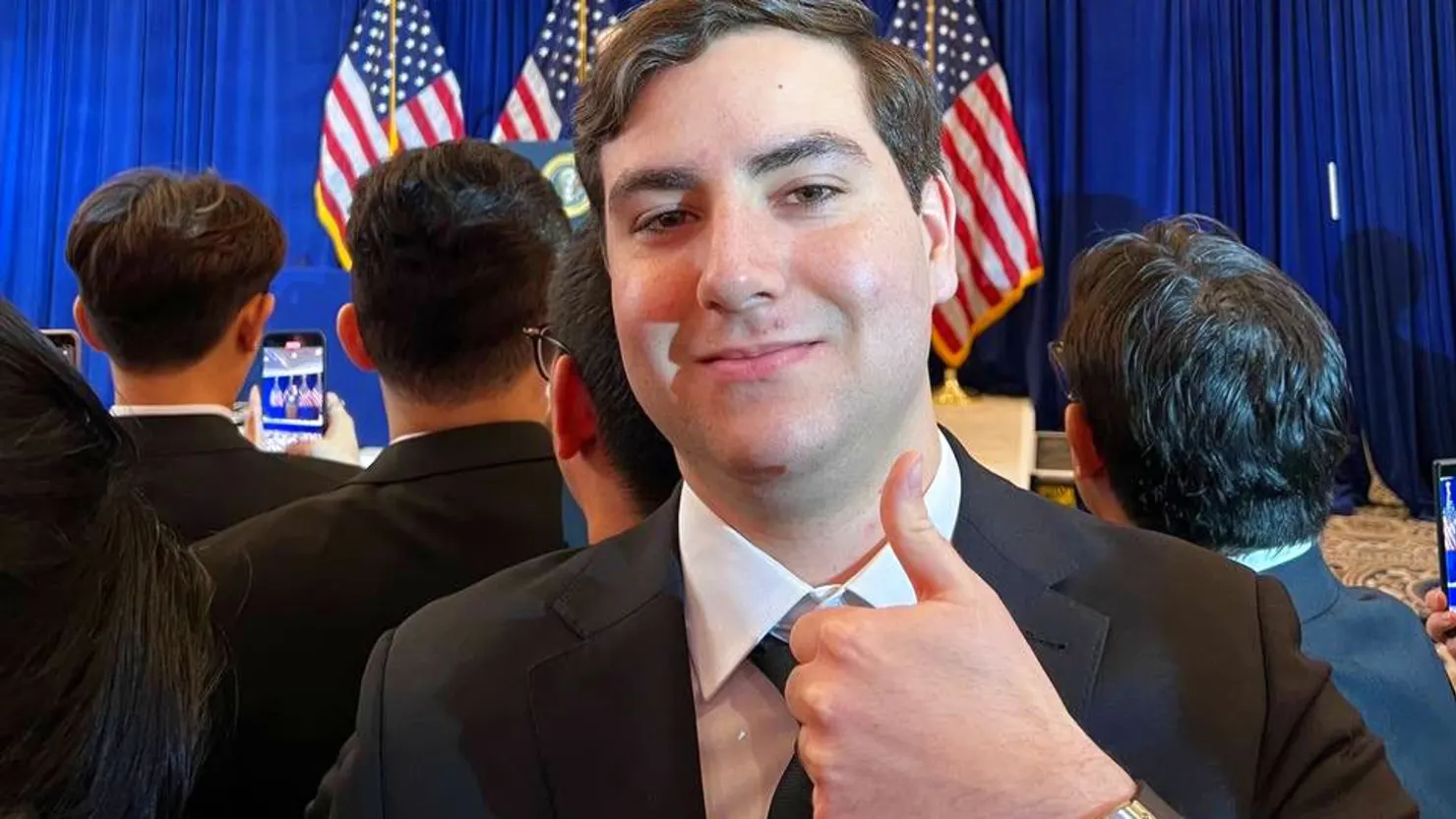
And the person in the photo is Justin Sun, a MAGA-aligned crypto bro who said he was “awarded” what he identified as a “Trump Gold Tourbillon” (a Trump-branded watch that retails for $100,000). The White House didn’t immediately respond to MSNBC’s question as to whether the president actually gifted this watch to Sun.
His investments in Trump have been considerable — but, for him, arguably worthwhile. Sun has been in the news in the last few months because, after he plowed $75 million into Trump family crypto, per NBC News, the SEC put a 60-day pause on the charges of market manipulation and offering unregistered securities it had been pursuing against him since 2023. (Sun did not reply to NBC News’ request for comment, but denied any wrongdoing to The Wall Street Journal in April.)
NBC News published a dispatch on the president’s event, for a more thorough picture of the various attendees and the MAGA movement’s blatant disregard for ethics.
But to really catch the flavor of what’s happening, it’s these images of brazen wealth and intolerably open corruption that one would expect from a president dead-set on dragging the United States back to the Gilded Age, an era marked by immense wealth inequality and widespread corruption.
As Chris Hayes noted on “All In” on Thursday, the contrasting images of Trump that day — whipping votes for a House budget with deep cuts to social programs, such as food aid and health care, in the morning, and in the evening reportedly helicoptering into a ritzy and self-enriching dinner for a few minutes — is too glaring to ignore.
Watch Hayes’ commentary on what he called the “Met Gala of pay-for-play” here:
The price of President Donald Trump’s meme coin plunged 16% as of Friday morning, just hours after he hosted a black-tie gala at his Virginia golf club for its biggest buyers — an elite crowd that spent a combined $148 million on the token for the chance to be there.
It was billed as “the most exclusive invitation in the world.”
Among the 220 attendees were crypto influencers, industry executives such as Sandy Carter of Unstoppable Domains, and former NBA star Lamar Odom, who used the occasion to praise Trump as “the greatest president” and promote his own token, $ODOM.
The top 25 wallets were promised a private reception and guided tour. Others, such as 25-year-old Nicholas Pinto — whose dad drove him to the event in his Lamborghini — left underwhelmed and still hungry.
“The food sucked,” Pinto said. “Wasn’t given any drinks other than water or Trump’s wine. I don’t drink, so I had water. My glass was only filled once.”
Trump made only a brief appearance, Pinto said. “He didn’t talk to any of the 220 guests — maybe the top 25,” he said.
All in, the president was there for 23 minutes, Pinto said. Trump delivered a brief address rehashing old crypto talking points then left on a helicopter before taking any questions or pictures with his meme coin contest winners, he said.
Phones weren’t locked in RFID pouches, and security was lax, according to Pinto.
“Once Trump left, they didn’t really worry about anything else,” Pinto added.
Contest winners who spent the most on $TRUMP meme coins added their signatures to a poster-sized printout of the leaderboard at a gala dinner at Trump National Golf Club in Potomac Falls, Virginia, May 22, 2025. (Nicholas Pinto)
The crowd’s opulence was on full display.
“Richard Mille watches weren’t even rare,” Pinto said. “I saw at least 16 people wearing them. I never see that unless I’m at a high-end restaurant in Miami or Dubai.”
But the vibe was more muted than expected, he said: “Lots of people didn’t even hold the coin anymore. They were checking their phones during dinner to see if the price moved.”
The Budgets has reached out to Trump representatives for comment on the dinner and attendees.
Protests
For lawmakers and regulators, the dinner set off alarm bells.
The #1 token holder was Chinese-born crypto mogul Justin Sun, who is currently facing Securities and Exchange Commission fraud charges that were recently paused, with the agency citing “the public interest.”
Sun holds over $22 million in the $TRUMP token and another $75 million in World Liberty Financial’s native token.
“As the top holder of $TRUMP and proud supporter of President Trump, it was an honor to attend the Trump Gala Dinner,” Sun posted on Friday. “Thank you @POTUS for your unwavering support of our industry!”
Outside the gates of Trump National Golf Club in Potomac Falls, Virginia, about a hundred protesters gathered, according to NBC News. Sen. Jeff Merkley, D-Ore., joined them, backing a new End Crypto Corruption Act with Senate Minority Leader Chuck Schumer, D-N.Y.
Signs read “Crypto Corruption” and “Trump is a traitor.”
Crypto on Capitol Hill
“The Trump family activity in the memecoin space makes my work in Congress more complicated,” Rep. French Hill, R-Ark., told CNBC News on Friday.
Hill, who’s leading negotiations on a bipartisan stablecoin regulation bill known as the GENIUS Act, called the gala “a distraction from the good work we need to do.”
Now, the GENIUS Act is at risk.
Sen. Josh Hawley, R-Mo., recently added a controversial rider to the bill that would cap credit card late fees — what’s seen as a poison pill that could alienate banking allies and stall final approval.
President Donald Trump speaks at a dinner for meme coin contest winners at Trump National Golf Club in Potomac Falls, Virginia, May 22, 2025. (Nicholas Pinto)
On Thursday night as the meme coin contest dinner was underway, a bloc of Senate Democrats announced they’d be pushing for a new provision that would ban presidents and senior officials from profiting off crypto ventures while in office — a direct challenge to the Trump-linked stablecoin USD1 that launched in the spring.
In Washington, there’s growing concern that political infighting over Trump’s crypto ventures could derail the stablecoin bill altogether. That poses an even bigger risk.
According to The Wall Street Journal, major banks including JPMorgan, Bank of America and Citi are in early talks to issue a unified digital dollar to compete with Tether, the foreign-controlled stablecoin that now commands over 60% of global market share.
Those plans hinge on legal clarity.
If the GENIUS Act stalls, the U.S. could lose its window to regain ground in the global race for digital payments.
The White House has tried to draw a line between Trump the president and Trump the private businessman.
“The president is attending it in his personal time. It is not a White House dinner,” press secretary Karoline Leavitt told reporters when pressed on attendee transparency.
The administration declined to release a guest list. But blockchain data — and a patchwork of guest photos — tell part of the story.
A Bloomberg News analysis found that all but six of the top 25 wallets used foreign exchanges, ostensibly off-limits to U.S. users. More than half of the top 220 wallets were linked to similar offshore platforms.
One Nasdaq-listed penny stock, Freight Technologies, disclosed in an SEC filing that it spent $2 million on Trump’s token to push U.S.-Mexico trade policy. It didn’t make the cut for the dinner — finishing 250th.
Since its January debut, the $TRUMP coin has generated more than $324 million in trading fees. Roughly 80% of the $TRUMP token supply is controlled by the Trump Organization and affiliates, according to the project’s website.
WLFI, the Trump’s parallel token, has sold $550 million in two token sales.
Still, White House AI and crypto czar David Sacks remained bullish on “significant bipartisan support” for stablecoin legislation.
“We already have over $200 billion in stablecoins — it’s just unregulated,” Sacks told CNBC’s “Closing Bell Overtime” on Wednesday. “If we provide the legal clarity and legal framework for this, I think we could create trillions of dollars of demand for our Treasurys practically overnight, very quickly.”
“We have every expectation now that it’s going to pass,” added Sacks, though he didn’t answer a question about concerns from Democrats that there aren’t sufficient safeguards in place to keep the president and his family from profiting from legislation.
The Trumps are financial backers of World Liberty Financial, which is behind the USD1 stablecoin that is backed by Treasurys and dollar deposits.
Abu Dhabi’s MGX investment fund recently pledged $2 billion in USD1 to Binance, the world’s largest digital assets exchange. It’s the company’s largest-ever investment made in crypto.
Hong Kong passed a stablecoin bill on Wednesday to expand its cryptocurrency licensing regime as more governments recognize the digital asset.
Unlike volatile digital assets like bitcoin, the value of stablecoins is tied to a real-world asset like fiat currencies or commodities like gold.
The new law — focused on fiat-referenced stablecoins — will require stablecoin issuers to obtain a license from the Hong Kong Monetary Authority and comply with a range of requirements, including proper management of asset reserves and segregation of client assets.
It will “enhance Hong Kong’s existing regulatory framework on virtual-asset (VA) activities, thereby fostering financial stability and encouraging financial innovation,” the central banking body said. It added that it would conduct further consultations on the detailed regulatory framework.
The Hong Kong government said in a statement that the stablecoins policy is expected to come into effect this year, with “sufficient time” allowed for the industry to understand the requirements.
In 2023, Hong Kong introduced its virtual asset licensing regime, which requires cryptocurrency firms with an official presence in the city to apply for licenses and meet specific standards and requirements to offer digital assets to retail investors in the city. However, the existing policy did not include stablecoins in its purview.
“Hong Kong’s new stablecoin policy sets a global benchmark by mandating full reserve backing, strict redemption guarantees, and HKMA oversight,” YeFeng Gong, risk and strategy director of HashKey OTC, told CNBC. HashKey OTC is a trading arm of the HashKey Group, which has a licensed crypto platform in Hong Kong.
The policy “ensures institutional-grade reliability for traders while positioning Hong Kong as a leader in compliant digital finance,” he added.
Crypto adoption and legitimacy
The move from Hong Kong comes just days after the U.S. Senate advanced the GENIUS Act, which would establish the first regulatory framework for issuers of stablecoins if implemented.
A push to regulate stablecoins has been intensifying globally, with other jurisdictions having also implemented their own regulatory frameworks, including the European Union, Singapore, the United Arab Emirates and Japan, blockchain intelligence firm Chainalysis said in a report on Wednesday.
Chengyi Ong, head of Asia-Pacific policy at Chainalysis, told CNBC that the latest regulations are expected to help with crypto adoption and legitimacy.
″[Stablecoins]form the backbone of the crypto ecosystem, but their stability also opens the door to their use in overcoming frictions dogging traditional finance, such as slow cross-border payments and settlement,” Ong said.
“This potentially transformative utility is what has driven governments around the world, from Europe to Asia, to take steps toward regulatory regimes that will facilitate the emergence of high-quality stablecoins,” she added.
According to Chainalysis, the total market cap of stablecoins is around $232 billion as of this month.
Democrats are sounding the alarm and demanding answers on potential conflicts of interest in the Trump family’s business dealings with a pardon-seeking former cryptocurrency CEO.
Trump’s trip to the Middle East has highlighted the various foreign investments Trump and his family have received since Trump’s return to the White House, and Democrats are eager to highlight what seems like obvious corruption.
Last week, Sen. Elizabeth Warren of Massachusetts and several other senators sent a letter to Treasury Secretary Scott Bessent and Attorney General Pam Bondi demanding answers about the Trump family’s business affiliations with Changpeng Zhao, the founder and former CEO of Binance, a cryptocurrency firm.
Now Democrats are raising concerns about corruption, as the Trump family’s crypto firm, World Liberty Financial, reportedly struck a deal with Binance — a deal that could net the Trump family millions of dollars, according to The New York Times. The letter sent by Democratic senators last week demands answers about the Trump administration’s plans to uphold a settlement agreement previously made between the feds and Binance, and whether the company has raised the question of a potential pardon for Zhao amid its talks with Trump administration officials.
Warren sent a separate letter — with fellow Democratic Sens. Richard Blumenthal of Connecticut and Dick Durbin of Illinois — to deputy Attorney General Todd Blanche and White House counsel David Warrington, demanding information about any discussions the Trump administration may have had about pardoning Zhao.
The senators write of the reported Binance deal:
These circumstances—involving billions of dollars in penalties and foreign investments, presidential family business interests, and the potential nullification of criminal sanctions— demand the highest levels of scrutiny to ensure that our justice system is operating free from inappropriate political and financial influence.
Democrats like Warren and Sen. Chris Murphy of Connecticut have been the most outspoken lawmakers highlighting the riches the Trump family appears to be raking in from crypto investors, many of whom appear to be based in foreign countries. And the potential for Trump’s self-dealing as his administration proposes crypto-friendly policies is part of the reason Warren has opposed a cryptocurrency bill, known as the GENIUS Act, being pushed by Senate Republicans.
In a video posted online, Warren explained her opposition to the GENIUS Act over its lack of parameters to rein in Trump’s potential self-enrichment. She told MSNBC host Chris Hayes on “All In” this week that the hasty push to pass the GENIUS Act and the Trump family’s dealings with Binance — juxtaposed with Republicans’ push to slash vital government programs like Medicaid — reveals that Trump’s vow to improve the lives of American families mainly applies to one particular family: his own.
Cookie Consent
We use cookies to improve your experience on our site. By using our site, you consent to cookies.
Contains information related to marketing campaigns of the user. These are shared with Google AdWords / Google Ads when the Google Ads and Google Analytics accounts are linked together.
90 days
__utma
ID used to identify users and sessions
2 years after last activity
__utmt
Used to monitor number of Google Analytics server requests
10 minutes
__utmb
Used to distinguish new sessions and visits. This cookie is set when the GA.js javascript library is loaded and there is no existing __utmb cookie. The cookie is updated every time data is sent to the Google Analytics server.
30 minutes after last activity
__utmc
Used only with old Urchin versions of Google Analytics and not with GA.js. Was used to distinguish between new sessions and visits at the end of a session.
End of session (browser)
__utmz
Contains information about the traffic source or campaign that directed user to the website. The cookie is set when the GA.js javascript is loaded and updated when data is sent to the Google Anaytics server
6 months after last activity
__utmv
Contains custom information set by the web developer via the _setCustomVar method in Google Analytics. This cookie is updated every time new data is sent to the Google Analytics server.
2 years after last activity
__utmx
Used to determine whether a user is included in an A / B or Multivariate test.
18 months
_ga
ID used to identify users
2 years
_gali
Used by Google Analytics to determine which links on a page are being clicked
30 seconds
_ga_
ID used to identify users
2 years
_gid
ID used to identify users for 24 hours after last activity
24 hours
_gat
Used to monitor number of Google Analytics server requests when using Google Tag Manager