Category: Business

  • Trading surge hits markets minutes before Trump’s Iran announcement

    Trading surge hits markets minutes before Trump’s Iran announcement

    S&P 500 futures and crude oil contracts on the Chicago Mercantile Exchange (CME) at approximately 6:50 a.m. ET Monday—mere minutes before President Donald Trump posted on Truth Social that the United States and Iran had held “very good and productive conversations” toward resolving hostilities in the Middle East.

    The timing has raised eyebrows across trading desks and prompted quiet scrutiny from market participants, even as the White House forcefully denies any impropriety.

    According to Bloomberg data reviewed by multiple outlets, roughly 6,200 Brent and West Texas Intermediate (WTI) futures contracts traded in a single minute around 6:50 a.m., representing a notional value of approximately $580 million.

    At virtually the same instant, S&P 500 e-mini futures recorded an isolated burst of activity that stood out against an otherwise subdued pre-market session. Both oil and equity futures then moved dramatically once Trump’s post appeared at 7:05 a.m.

    WTI crude plunged nearly 12% to around $83–$88 per barrel by the close, while Brent fell below $100 for the first time since early March. S&P 500 futures, by contrast, jumped more than 2.5% in the minutes following the announcement, reflecting investor relief that planned U.S. strikes on Iranian energy infrastructure had been postponed for five days.

    108281637 1774280819322 Untitled

    The volume anomalies occurred during thin early-morning liquidity, when even modest order flow can create noticeable spikes. Still, veteran traders described the coordinated moves—aggressive selling or shorting of oil while buying equity futures—as unusually prescient.

    “It’s hard to prove causality… but you have to wonder who would have been relatively aggressive at selling futures at that point, 15 minutes before Trump’s post,” one senior market strategist at a major U.S. broker told the Financial Times. Another hedge-fund portfolio manager with 25 years of experience called the pattern “really abnormal” for a quiet Monday morning with no scheduled data releases or Fed speakers.

    108281640 1774280840778 wtivolume

    The SEC and CME Group declined to comment. White House spokesperson Kush Desai rejected any suggestion of insider activity, stating: “The only focus of President Trump and Trump administration officials is doing what’s best for the American people… any implication that officials are engaged in such activity without evidence is baseless and irresponsible reporting.”

    Markets React to De-Escalation — For Now

    Trump’s Truth Social post described “productive conversations” with Iran and ordered the postponement of strikes on Iranian power plants and energy infrastructure for five days, subject to continued talks. Iran’s parliament speaker, Mohammad-Bagher Ghalibaf, quickly denied that any negotiations were underway, calling the claim “fake news” designed to manipulate oil and financial markets.

    108281641 1774280869001 image 3

    Oil prices, which had climbed aggressively in recent sessions on fears of supply disruption through the Strait of Hormuz, reversed sharply. WTI settled down roughly 10–12% at $83–$88 per barrel, while Brent dropped 11–13% to just under $100. European natural gas (TTF) also fell sharply.

    The moves provided temporary relief to risk assets but highlighted how fragile sentiment remains. Morgan Stanley analysts warned that a sustained rise to $120 per barrel oil could shave 20–30 basis points off Asian GDP growth and force rate hikes in several emerging economies later this year.

    A Pattern of Well-Timed Trades?

    This is not the first instance of unusually prescient trading ahead of major Trump administration announcements in recent months. Hedge funds and energy consultants have privately noted several large block trades that appeared well-timed relative to official statements on Iran and Venezuela.

    While such patterns are difficult to prove as improper without concrete evidence, they have generated “a level of frustration” among institutional investors, according to one portfolio manager.

    Algorithmic and macro strategies can produce rapid cross-asset flows, especially in thin pre-market hours, but the scale and precision of Monday’s moves—selling oil and buying equities just before a de-escalation announcement—left many questioning whether non-public information circulated.

    Political and Market Context

    The episode unfolds against a backdrop of heightened geopolitical tension and domestic political pressure on the Trump administration’s aggressive posture toward Iran. While Trump framed the postponement as a sign of progress, critics argue the administration’s brinkmanship has already inflicted economic pain through elevated energy prices and market volatility.

    For now, the market appears to be pricing in cautious optimism that a wider conflict can be avoided. Yet with Iran denying talks and both sides continuing information operations, the “fog of war” remains thick.

    Investors would be wise to treat headline-driven moves with skepticism—especially when large, well-timed trades precede them.
  • China positions itself as ‘Harbour of Stability’ to global CEOs amid U.S.–Iran tensions

    China positions itself as ‘Harbour of Stability’ to global CEOs amid U.S.–Iran tensions

    China sought to woo global chief executives including Apple’s Tim Cook, UBS’s Sergio Ermotti and HSBC’s Georges Elhedery in Beijing on Sunday, touting the country’s safety and reliability in stark contrast to a US bogged down in war with Iran.

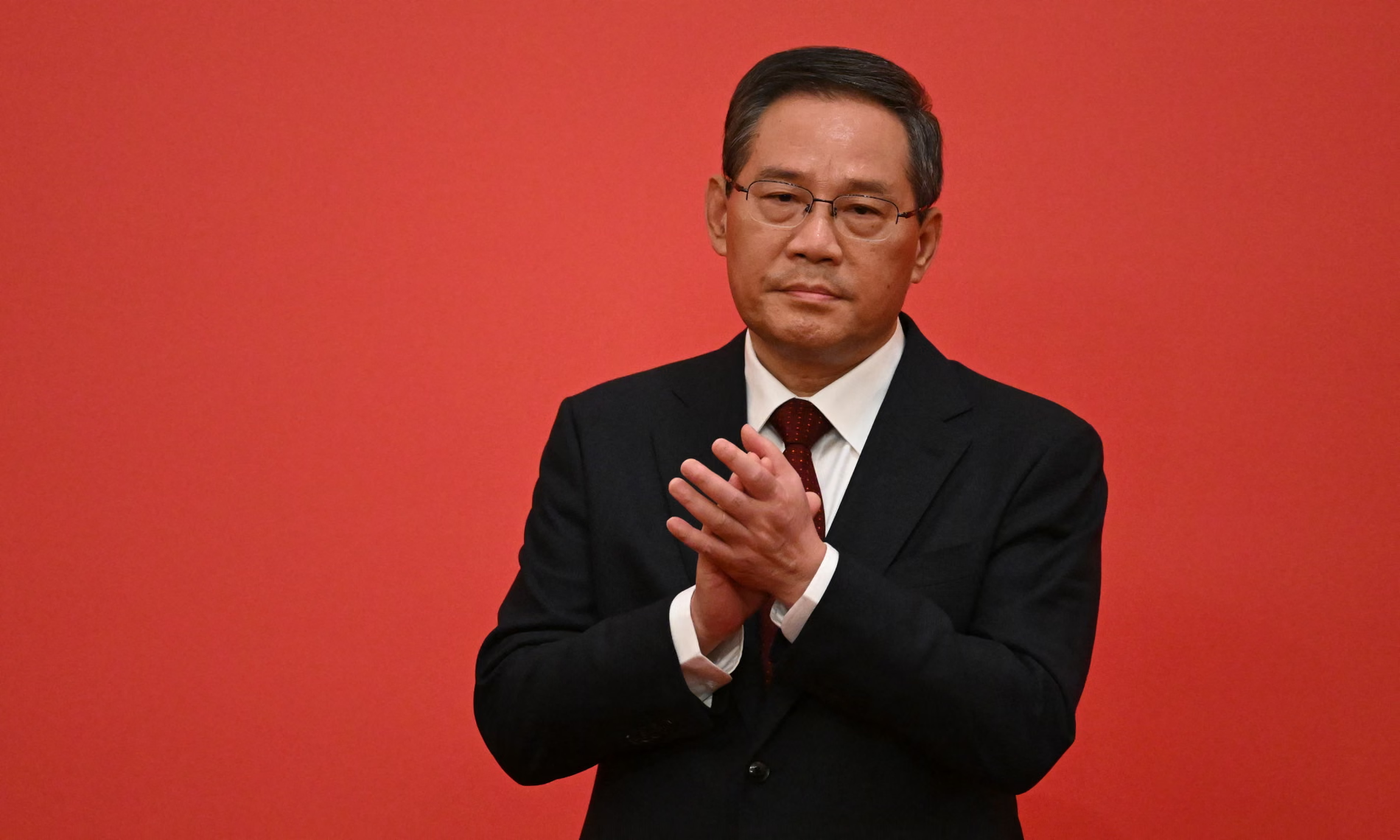
    Premier Li Qiang told more than 70 chief executives gathered in the Diaoyutai State Guesthouse for the government’s annual Davos-style forum that the world’s second-largest economy offered an unmatched supply chain and a predictable commercial environment.

    The country was committed to being a “cornerstone of certainty” and a “harbour of stability” in the face of rising trade protectionism and upheaval in the rules-based international order, said Li.

    “China will unswervingly promote high-level opening up to the outside, import more high-quality foreign goods and work with all parties to promote the optimised and balanced development of trade, jointly expanding the global economic and trade pie,” he told the audience.

    The conference, the China Development Forum, is held every year in late March after the meeting of the country’s rubber-stamp parliament. It acts as the leadership’s vehicle for pressing its talking points on global CEOs.
    This year, Beijing is selling its latest five-year economic plan to 2030 as an opportunity for foreign investment.
     
    “Li didn’t name America . . . but the message is clear that China is now safer, more reliable and stable, and more focused on economic development rather than conflicts,” said George Chen, a partner at the Asia Group consultancy who was present at the meeting.
    The conference comes amid widening concern over China’s huge trade surplus, which hit a record $1.2tn last year. In Europe, there are worries that low-cost Chinese imports are eliminating jobs.
     
    The five-year plan largely doubles down on China’s manufacturing-oriented high-tech industrial policy, raising fears of an even greater shock to western factories.
     
    People’s Bank of China governor Pan Gongsheng defended the country’s exports in a speech on Sunday about global economic “rebalancing”.
     
    Pan rejected the claim that China’s competitiveness was a result of government subsidies, attributing it to economic reforms, the size of its domestic market and the strength of its supply chains and research.
     
    Without naming the US, he described some countries’ persistent trade deficits as being the result of “an international monetary system dominated by a single sovereign currency”.
    Apple chief executive Tim Cook spoke about opportunities in China at the forum on Sunday. (Qilai Shen/Bloomberg)
    Jeanine Pirro takes aim at the ruling by James Boasberg on Friday. (Reuters)
    Other business leaders on the invitee list this year include Siemens’ Roland Busch, Volkswagen’s Oliver Blume, SK Hynix’s Kwak Noh-jung, Nestlé’s Philipp Navratil, Mercedes-Benz’s Ola Källenius, KKR’s Joseph Bae, Cargill’s Brian Sikes, Standard Chartered’s Bill Winters and Boston Consulting Group’s Christoph Schweizer.
     
    US executives were well represented this year, accounting for 45 per cent of invitees, according to an analysis by Han Shen Lin of the Asia Group. Europeans made up 36 per cent with the remainder from Asia, Australia and elsewhere.
     
    Financial services dominated, accounting for about 22 per cent of invitees, while those from the energy sector were only about 4 per cent.
     
    Apple chief executive Cook delivered a speech after Li on opportunities in education and other areas in China.
    Unlike in the previous two forums, President Xi Jinping is not expected to meet top executives this year, according to a person familiar with the matter.
     
    Asia Group’s Chen said Li’s speech was the most confident he had seen in recent years, though the premier refrained from directly criticising US President Donald Trump.
     
    Trump, who recently postponed a meeting expected on April 1 with Xi in Beijing, is still widely expected to be planning a visit this year.
     
    On Saturday evening, vice-premier He Lifeng, the economic tsar running trade negotiations with the US, held a dinner with a group of mostly European executives to tout the country’s five-year plan.
     
    The executives mostly praised China and talked up their own companies, said one of the people present at the dinner, but there was some discussion of Chinese overcapacity and the risks for European industry.
  • Live Nation Reaches Tentative Antitrust Settlement With U.S. Justice Department as States

    Live Nation Reaches Tentative Antitrust Settlement With U.S. Justice Department as States

    Live Nation reached a tentative settlement with the US Justice Department on Monday in the federal antitrust case brought against the entertainment giant.

    The settlement, which still requires the approval of District Judge Arun Subramanian, comes just days after the antitrust trial began in New York.

    The case was initiated under then-president Joe Biden, with prosecutors accusing Live Nation — which owns Ticketmaster — a monopolist that controlled virtually all live entertainment in the United States.

    The settlement requires Live Nation to open up the ticketing platform to competitors and to allow other promoters to stage events at certain Live Nation venues, a senior Justice Department official said.

    Live Nation will divest up to 13 amphitheaters and pay $280 million in damages to the nearly 40 states that were parties to the antitrust lawsuit against the California-based company, the official said.

    The increased competition should result in ticket prices coming down, the official said.

    Live Nation shares surged nearly six percent on the New York Stock Exchange following the announcement.

    New York and a number of other states declined to join the settlement and said Monday that their litigation against Live Nation would continue.

    “For years, Live Nation has made enormous profits by exploiting its illegal monopoly and raising costs for shows,” New York Attorney General Letitia James said.

    “The settlement recently announced with the US Department of Justice fails to address the monopoly at the center of this case, and would benefit Live Nation at the expense of consumers,” James said in a statement.

    “We will keep fighting this case without the federal government so that we can secure justice for all those harmed by Live Nation’s monopoly.”

    A spokesperson for the New York attorney general, a Democrat, said prosecutors would file a motion with the court seeking a mistrial and file a new case against Live Nation brought solely by the states.

    The Justice Department official said talks with a number of the states were ongoing and was hopeful some of them will eventually sign off on the settlement.

    Live Nation is a behemoth in its industry: in 2025 it organized more than 55,000 events worldwide, drawing 159 million attendees.

    Beyond promotion, it holds stakes in 460 venues and, since 2010, has controlled Ticketmaster, the world’s leading ticket seller.

    The Justice Department had accused Live Nation of abusing its dominant position to pressure artists and venues into signing with it, stifle competition, and impose excessive fees on fans.

    The Trump administration’s decision to press forward with the case against Live Nation had surprised many observers, who had interpreted the recent resignation of Justice Department competition chief Gail Slater as a sign the case would be dropped.

    Democratic Senator Elizabeth Warren condemned the settlement in a post on X.

    “Donald Trump just betrayed every fan who’s been exploited by Ticketmaster,” Warren said. “This fine is less than one percent of Live Nation’s revenue last year. We need to break up Ticketmaster and Live Nation.”

    John Kwoka, a professor of economics at Northeastern University, said the settlement appeared “inadequate.”

    “It does not deal with the fact that Ticketmaster is still an integrated company that has incentives that remain pretty much intact to disadvantage competitors,” Kwoka said.

    “This is a minor accomplishment in the face of what the Justice Department laid out as a course of business,” he said.

  • Judge Voids VOA Layoffs, Rules Kari Lake Unlawfully Ran US Media Agency

    Judge Voids VOA Layoffs, Rules Kari Lake Unlawfully Ran US Media Agency

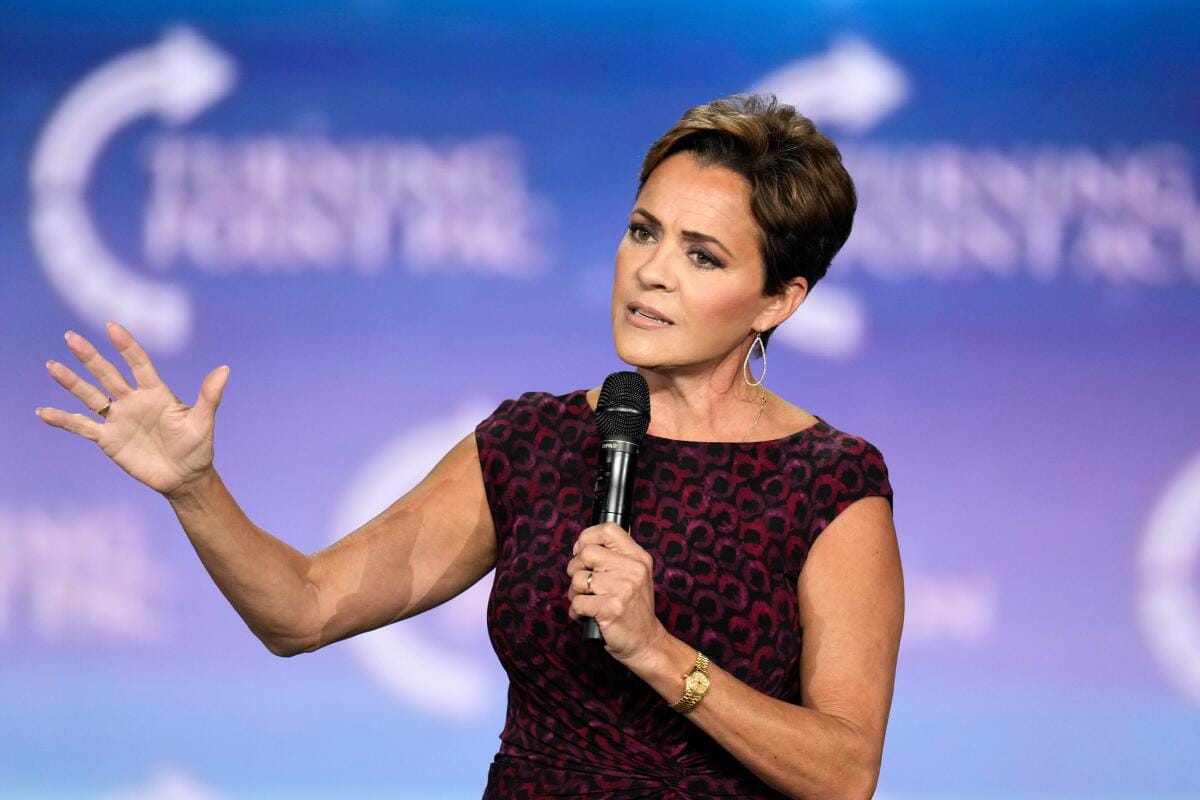
    A federal judge on Saturday voided layoffs at Voice of America (VOA) while also ruling that the U.S. Agency for Global Media’s (USAGM) acting CEO, Kari Lake, unlawfully ran the independent federal agency.

    U.S. District Court of Washington, D.C., Judge Royce Lamberth wrote that Lake oversaw the media agency in violation of the Constitution’s appointments clause and the Federal Vacancies Reform Act.

    Lamberth’s ruling comes after VOA’s White House bureau chief Patsy Widakuswara filed the lawsuit last year.

    President Trump nominated Lake to be senior adviser to acting CEO Victor Morales in February 2025. Morales designated Lake “to perform the functions and responsibilities specified” to 19 out of the 22 duties that the CEO assigns,” Lamberth wrote. By July, she was made acting CEO and “exercised control over the agency during the period relevant to the motions.”

    Lamberth, a Reagan appointee, ruled that Lake’s actions after becoming acting CEO, including eliminating USAGM staff in August, are void. Morales’s actions for Lake to perform were also invalidated.

    “The Court finds that these expansive delegations were an unlawful effort to transform Lake into the CEO of U.S. Agency for Global Media in all but name,” Lamberth wrote.

    He noted that if Lake’s designation was “proper,” it “would require the Court to find that the President can fill a first assistantship at any time during a vacancy in a Senate-confirmed office … .”

    Widakuswara and fellow plaintiffs Kate Neeper and Jessica Jerreat said they feel “vindicated and [are] deeply grateful.”

    “The judge’s ruling that Kari Lake’s actions shall have no force or effect is a powerful step toward undoing the damage she has inflicted on this American institution that we love,” they said in a statement to Politico. “Even as we work through what this ruling means for colleagues harmed by her actions, it brings renewed hope and momentum to the next phase of our fight: restoring VOA’s global operations and ensuring we continue to produce journalism, not propaganda.”

    Lake said she disagreed “strongly” with Lamberth’s ruling and will appeal it.

    “The American people gave President Trump a mandate to cut bloated bureaucracy, eliminate waste, and restore accountability to government,” Lake said in a statement obtained by The Washington Post. “An activist judge is trying to stand in the way of those efforts at USAGM.”

    Trump signed an executive order in March 2025 to gut the agency. Lake last summer defended the layoffs before a federal judge blocked them in December.

    “Sometimes a lean, mean, team makes it easier to get things done,” she said of scaling down the staff by more than 500 employees.

    The Saturday ruling comes one day after Ahmad Batebi, a prominent Iranian dissident, human rights activist and VOA journalist, was fired over efforts to limit coverage of Iran’s exiled Crown Prince Reza Pahlavi.

  • Trump’s Iran Intervention Sends US Gas Prices Climbing Toward Record Highs

    Trump’s Iran Intervention Sends US Gas Prices Climbing Toward Record Highs

    American businesses and families are staring down the barrel of another self-inflicted energy crisis, this one entirely of President Donald Trump’s making. Just weeks into his second term, the former real-estate developer turned wartime president has plunged the United States into a costly military showdown with Iran — and the bill is already landing squarely at the gas pump, on airline tickets, and in the supply chains that keep corporate America humming.

    The average price of a gallon of regular gasoline across the United States jumped 34 cents in the past week alone to $3.32 on Friday, according to AAA data. Diesel prices have climbed even faster. Industry analysts warn the upward spiral has only just begun. When oil first spiked after Trump ordered strikes on Iran last week, many on Wall Street assumed cooler heads — or at least economic reality — would prevail and force a swift diplomatic off-ramp. That assumption now looks painfully naïve.

    Oil prices are climbing
    Price per barrel of Brent Crude
    $65 $70 $75 $80 $90 08 Feb.15 2201 March $92.67
    Source: S&P Market Intelligence and Oilprice.com DAVID DANYEL / THE NEW YORK BUDGETS

    Instead, U.S. and Israeli strikes continue, Iranian drones are hitting energy infrastructure in Saudi Arabia and Qatar, and hundreds of oil tankers sit idle in the Persian Gulf, too terrified to run the gauntlet of the Strait of Hormuz. The result? A textbook supply shock that is hammering businesses large and small.

    Qatar’s energy minister, Saad Sherida al-Kaabi, delivered the latest gut punch in an interview with the Financial Times on Friday. He warned that without an immediate de-escalation, Persian Gulf producers will be forced to halt output “within days,” sending global oil prices toward $150 a barrel — more than double pre-war levels. That would push U.S. pump prices back to the $5-a-gallon peaks last seen after Russia’s invasion of Ukraine in 2022.

    “If the Trump administration does not do something to restore confidence in ships traveling through the Strait of Hormuz, these prices are going to keep heading up,” said Patrick De Haan, head of petroleum analysis at GasBuddy. “I don’t wake up too many mornings and get the chills when I look at the morning oil price numbers. It’s starting to feel like 2022 all over again.”

    The pain is already rippling far beyond the neighborhood Exxon station. United Airlines CEO Scott Kirby told investors at an industry conference Friday that jet-fuel costs are climbing so fast that airfares will have to follow — and quickly. Shipping rates are rising in tandem. Travis Maderia, co-founder of New York-based LobsterBoys, which exports live Maine lobsters to restaurants worldwide, put it bluntly: “Transportation is a big part of our business. When airline prices go up, the cost of sending lobsters overseas can be dramatically impacted.”

    Oil derivatives are embedded in everything from plastic packaging and semiconductor chemicals to industrial gases. BloombergNEF natural resources research chief David Doherty notes that Iran’s cheap drone attacks have made defending scattered energy infrastructure far harder than in past Middle East conflicts. “It is harder to protect oil infrastructure,” he said. “Defending the same breadth of space has become much more difficult than it was in the past.”

    Even Trump’s attempts to calm markets have fallen flat. On Truth Social he doubled down: “There will be no deal with Iran except UNCONDITIONAL SURRENDER!” Treasury Secretary Scott Bessent announced a 30-day waiver allowing India to keep buying Russian oil and floated “unsanctioning” more Russian barrels on Fox News. The president also offered political risk insurance to tanker companies and hinted at U.S. Navy escorts through the Strait.

    Market research firm Macquarie told clients the same day that those promises look hollow: escort vessels are “often unavailable due to other military priorities such as missile intercepts or striking Iran.” The firm warned of “an extremely large oil price move” within weeks if the Hormuz chokepoint stays blocked.

    Restarting shuttered Gulf production won’t be simple either. Vidya Mani, visiting supply-chain scholar at Cornell University’s SC Johnson College of Business, explained: “It is not as simple as flipping a switch back on. You have to get drilling operations going again. You have to get workers back in.

    When there is a conflict like this, workers leave and the number that come back in may not be as many as you need.” She and other analysts now see $150 oil as a realistic near-term scenario — levels last touched in July 2008.

    Alex Jacquez, policy chief at the progressive-leaning but economically focused Groundwork Collaborative (and a former Biden White House energy adviser), captured the growing frustration on Wall Street: “The markets are starting to realize there may be no off-ramp here. There was this thinking that if oil prices start to soar that Trump would back down in Iran. But that is not the way things are aligning. The president has shown no appetite for changing course.”

    For an administration that campaigned on “lower prices” and “pro-business” policies, the optics are disastrous. A Washington Post-ABC News-Ipsos poll last month found most Americans already view health care, cars, and housing as unaffordable.

    Republicans made lowering the cost of living the centerpiece of their midterm strategy. Now Trump’s foreign policy gamble is delivering the opposite — and doing so at the worst possible moment for corporate balance sheets and consumer wallets.

    The irony is thick. In 2022, when Russia invaded Ukraine, energy markets were disrupted by an external aggressor. This time, as Jacquez noted, “we didn’t choose to do this ourselves” — yet the economic damage looks disturbingly familiar.

  • Antitrust Trial Begins That Could Force Breakup of Live Nation, Ticketmaster’s Parent Company

    Antitrust Trial Begins That Could Force Breakup of Live Nation, Ticketmaster’s Parent Company

    A high-stakes antitrust trial that could lead to the possible breakup of Live Nation, the parent company of Ticketmaster, got underway Tuesday in a case over whether the entertainment giant’s dominance of the concert industry amounts to an illegal monopoly.

    In opening statements, a U.S. Justice Department lawyer pointed to the company’s infamously problem-plagued effort to sell Taylor Swift tickets in 2022 as he implored the Manhattan federal jury to end the company’s hold on the market and reward artists and consumers with a competitive marketplace that will leave them with more money.

    “This case is about power, the power of a monopolist to control competition,” said the attorney, David Dahlquist. “Today, the concert ticket industry is broken.”

    David Marriott, arguing on behalf of the companies, disputed the government’s claims.

    “We’ll let the numbers do the talking,” he said. “We do not have monopoly power.”

    Judge Arun Subramanian has told jurors that evidence will be presented over the next six weeks before they’ll be left to decide whether Live Nation and Ticketmaster broke antitrust laws.

    The trial stems from a lawsuit filed in 2024 that alleged the companies have dominated the industry by suffocating competitors and controlling everything from concert promotion to ticketing.

    Ticketmaster, which was established in 1976 and merged with Live Nation in 2010, is the world’s largest ticket seller across live music, sports, theater and more.

    Dahlquist noted that the ticket seller sparked outrage in November 2022 when its site crashed during a presale event for Swift’s Eras Tour.

    The company said the site was overwhelmed by both fans and attacks from bots, which were posing as consumers to scoop up tickets and sell them on secondary sites. The debacle prompted congressional hearings and bills in state legislatures aimed at better protecting consumers.

    Dahlquist said Live Nation’s anti-competitive practices include using long-term contracts ranging from five to seven years to keep venues from choosing rivals and blocking venues from using multiple ticket sellers.

    Ticketmaster’s clashes with artists and fans date back three decades. Pearl Jam took aim at the company in 1994, years before the Live Nation merger, although the Justice Department ultimately declined to bring a case.

    Live Nation has maintained that artists and teams set prices and decide how tickets are sold.

    Marriott said Live Nation was the world’s biggest supporter of musical artists, enabling 159 million people in 2025 to see 11,000 artists at 55,000 concerts.

    He said the government has exaggerated how much the companies make, including by saying Ticketmaster pockets $7 a ticket, when it actually gets $5 and clears less than $2 after expenses.

    Live Nation and Ticketmaster, he said, “are all about bringing joy to people’s lives.”

  • White House Cuts Ties With Anthropic After Pentagon Flags Security Risk

    White House Cuts Ties With Anthropic After Pentagon Flags Security Risk

    President Donald Trump said Friday that he was ordering every U.S. government agency to “immediately cease” using technology from the artificial intelligence company Anthropic.

    Trump in a Truth Social post said there would be a six-month phase-out for agencies such as the Defense Department, which “are using Anthropic’s products, at various levels.”

    Defense Secretary Peter Hegseth, soon after Trump’s order, said on X that he was ordering the Pentagon to “designate Anthropic a Supply-Chain Risk to National Security” after the AI startup refused to comply with demands about the use of its technology.

    Anthropic, which signed a $200 million contract with the Pentagon in July, wanted assurances that its AI models would not be used for fully autonomous weapons or mass domestic surveillance of Americans.

    The Pentagon, which strongly resisted that request, set a deadline of 5:01 p.m. ET Friday for Anthropic to agree to its demands that the U.S. military be allowed to use the technology for all lawful purposes.

    That deadline passed without an agreement.

    “Anthropic’s stance is fundamentally incompatible with American principles,” Hegseth said in a statement on X.

    “Their relationship with the United States Armed Forces and the Federal Government has therefore been permanently altered.”

    “Anthropic will continue to provide the Department of War its services for a period of no more than six months to allow for a seamless transition to a better and more patriotic service,” the Defense secretary said.

    “America’s warfighters will never be held hostage by the ideological whims of Big Tech. This decision is final.”

    Trump, in his Truth Social post, wrote, “The Leftwing nut jobs at Anthropic have made a DISASTROUS MISTAKE trying to STRONG-ARM the Department of War, and force them to obey their Terms of Service instead of our Constitution.”

    “Their selfishness is putting AMERICAN LIVES at risk, our Troops in danger, and our National Security in JEOPARDY.”

    “Therefore, I am directing EVERY Federal Agency in the United States Government to IMMEDIATELY CEASE all use of Anthropic’s technology,” Trump wrote.

    “We don’t need it, we don’t want it, and will not do business with them again!”

    Sen. Mark Warner, the Virginia Democrat who is vice chair of the Senate Select Committee on Intelligence, condemned Trump’s action.

    “The president’s directive to halt the use of a leading American AI company across the federal government, combined with inflammatory rhetoric attacking that company, raises serious concerns about whether national security decisions are being driven by careful analysis or political considerations,” Warner said in a statement.

    “President Trump and Secretary Hegseth’s efforts to intimidate and disparage a leading American company — potentially as the pretext to steer contracts to a preferred vendor whose model a number of federal agencies have already identified as a reliability, safety, and security threat — pose an enormous risk to U.S. defense readiness and the willingness of the U.S. private sector and academia to work with the IC [Intelligence Community] and DoD, consistent with their own values and legal ethics,” Warner said.

    Elon Musk, the mega-billionaire who had been Trump’s biggest financial backer in the 2024 election, owns xAI, which aims to compete directly with Anthropic and another major AI company, OpenAI.

    Musk in recent weeks has repeatedly bashed Anthropic on his social network X, writing on Friday that the company “hates Western civilization.”

    Anthropic CEO Dario Amodei said Thursday that his company “cannot in good conscience” allow the Pentagon to use its models without limitation.

    In a statement on Thursday, Amodei said, “It is the [Defense] Department’s prerogative to select contractors most aligned with their vision. But given the substantial value that Anthropic’s technology provides to our armed forces, we hope they reconsider.”

    “Our strong preference is to continue to serve the Department and our warfighters — with our two requested safeguards in place,” Amodei said.

    “Should the Department choose to offboard Anthropic, we will work to enable a smooth transition to another provider, avoiding any disruption to ongoing military planning, operations, or other critical missions. Our models will be available on the expansive terms we have proposed for as long as required.”

    On Friday, another major AI company, OpenAI, said it has the same “red lines” as Anthropic regarding the use of its technology by the Pentagon and other customers.

    “We have long believed that AI should not be used for mass surveillance or autonomous lethal weapons, and that humans should remain in the loop for high-stakes automated decisions,” Open AI CEO Sam Altman wrote in a memo seen by CNBC.

    OpenAI last year signed its own $200 million contract with the Pentagon.

    OpenAI’s contract is for AI models in non-classified use cases, which include everyday office tasks.

    Anthropic’s contract with the Defense Department included classified work.

    The Defense Department had no comment on Friday other than pointing to Trump’s announcement.

    Hegseth, in a post on X, included a screengrab of Trump’s post, and cc:ed Anthropic and Amodei with the message, “Thank you for your attention to this matter.”

  • Paramount Wins Bidding War for Warner Discovery After Netflix Backs Out

    Paramount Wins Bidding War for Warner Discovery After Netflix Backs Out

    Paramount Global—now under the control of Skydance Media—has clinched a $81 billion deal to acquire Warner Bros. Discovery Inc., outbidding streaming behemoth Netflix Inc. after the latter bowed out, citing the escalated price as no longer viable. The victory for David Ellison’s Paramount caps a contentious takeover saga, uniting storied assets like HBO, CNN, and the DC Comics universe under one roof, while raising fresh antitrust alarms in an industry already grappling with consolidation and shifting viewer habits.

    Netflix co-CEOs Ted Sarandos and Greg Peters announced the withdrawal in a statement late Thursday, hours after Warner’s board deemed Paramount’s revised $31-per-share all-cash offer superior to Netflix’s $27.75-per-share bid for the studios and HBO Max alone. “This transaction was always a ‘nice to have’ at the right price, not a ‘must have’ at any price,” they said, emphasizing fiscal discipline amid Wall Street’s scrutiny of Netflix’s ballooning content spend. The decision sent Netflix shares (NFLX) surging 10% in after-hours trading to $682.50, recouping some of the $170 billion market value erosion since rumors of its Warner pursuit surfaced in September 2025. Analysts at JPMorgan hailed the pullback as “prudent,” noting Netflix’s subscriber base hit 285 million in Q4, up 12% year-over-year, without the added debt burden.

    For Warner Bros. Discovery (WBD), the deal—pending regulatory nods—marks a lifeline under embattled CEO David Zaslav, whose cost-cutting regime has drawn ire but delivered hits like the Oscar-nominated “Sinners” and “One Battle After Another.” Zaslav, in a memo to staff, celebrated the merger as a value-maximizer for shareholders, projecting $6 billion in synergies through streamlined operations and shared IP like Harry Potter and Superman. “Once our Board votes to adopt the Paramount merger agreement, it will create tremendous value,” he stated. Warner shares dipped 0.35% to $10.85 in regular trading but climbed 2% after-hours on merger optimism.

    Netflix Inc.
    Netflix Inc.
    Source: FactSet

    Paramount’s path to victory was fraught. Ellison, son of Oracle founder Larry Ellison, prioritized Warner after Skydance’s $8.4 billion takeover of Paramount in August 2025, viewing the combo as essential to compete against Disney, Netflix, and Amazon in the $500 billion global entertainment market. Initial overtures were rebuffed, but Paramount’s hostile $30-per-share bid in December—escalating to $31 this week—prevailed. Key concessions included a $7 billion termination fee for regulatory failures and covering Warner’s $2.8 billion breakup payout to Netflix, plus an accelerated “ticking fee” of 25 cents per share quarterly starting September 30.

    The merger creates a colossus: Paramount gains Warner’s film/TV studios, HBO Max (with 110 million subscribers), and cable nets like CNN, TNT, TBS, and Food Network—bolstering its Peacock and Paramount+ platforms amid a streaming wars projected to reach $240 billion by 2030, per PwC. Yet, hurdles loom. The Justice Department, already probing Netflix’s bid for anticompetitive practices, will scrutinize this tie-up, especially combining legacy studios and news outlets. Media watchdogs like Free Press’s Craig Aaron decried it as “unthinkable,” warning that folding CNN into CBS News could amplify biased coverage, particularly on sensitive issues like Israel’s actions in the Middle East—where consolidated ownership risks amplifying pro-Israel narratives at the expense of balanced reporting.

    Ellison’s revamp of CBS News—installing Bari Weiss as editor-in-chief to target “center-left to center-right” audiences—has sparked concerns of editorial shifts, potentially tilting foreign policy discourse. CNN President Mark Thompson urged staff not to “jump to conclusions,” but the deal’s scale—creating a entity with $60 billion in annual revenue—invites FTC intervention, especially post-Trump antitrust relaxations.

    Wall Street cheered the outcome: Paramount shares (PSKY) leaped 10.04% to $45.20, adding $12 billion to its market cap, while the S&P 500 Media Index rose 1.8%. “This is Ellison’s moonshot—scale to survive in streaming’s endgame,” said MoffettNathanson analyst Michael Nathanson, upgrading Paramount to Buy with a $55 target.

    As regulators deliberate, the merger underscores Hollywood’s consolidation imperative amid cord-cutting and ad market volatility. For Netflix, the retreat preserves cash for originals like “Squid Game” sequels; for Paramount, it’s a bet on IP synergy to challenge Disney’s $200 billion empire. But in an era of media monopolies, questions linger: Will this super-studio foster innovation or stifle diverse voices, especially on global hotspots like Israel-Palestine?

  • ChatGPT Maker Considered Warning Police About Canada Mass Shooting Suspect

    ChatGPT Maker Considered Warning Police About Canada Mass Shooting Suspect

    TORONTO—ChatGPT-maker OpenAI said Friday it considered last year alerting Canadian police about the activities of a person who months later committed one of the worst school shootings in the country’s history.

    OpenAI said last June the company identified the account of Jesse Van Rootselaar via abuse detection efforts for “furtherance of violent activities.”

    The San Francisco tech company said it considered whether to refer the account the Royal Canadian Mounted Police but determined at the time that the account activity did not meet a threshold for referral to law enforcement. OpenAI banned the account in June 2025 for violating its usage policy.

    The 18-year-old killed eight people in a remote part of British Columbia last week and died from a self-inflicted gun shot wound.

    OpenAI said the threshold for referring a user to law enforcement is whether the case involves an imminent and credible risk of serious physical harm to others. The company said it did not identify credible or imminent planning. The Wall Street Journal first reported OpenAI’s revelation.

    OpenAI said that, after learning of the school shooting, employees reached out to the RCMP with information on the individual and their use of ChatGPT.

    “Our thoughts are with everyone affected by the Tumbler Ridge tragedy. We proactively reached out to the Royal Canadian Mounted Police with information on the individual and their use of ChatGPT, and we’ll continue to support their investigation,” an OpenAI spokesperson said.

    The RCMP said Van Rootselaar first killed her mother and stepbrother at the family home before attacking the nearby school. Van Rootselaar had a history of mental health contacts with police.

    The motive for the shooting remains unclear.

    The town of 2,700 people in the Canadian Rockies is more than 1,000 kilometers  northeast of Vancouver, near the provincial border with Alberta. Police said the victims included a 39-year-old teaching assistant and five students, ages 12 to 13.

    The attack was Canada’s deadliest rampage since 2020, when a gunman in Nova Scotia killed 13 people and set fires that left another nine dead.

  • High Court Rules Trump Exceeded Authority With Worldwide Tariff Plan

    High Court Rules Trump Exceeded Authority With Worldwide Tariff Plan

    WASHINGTON — In a 6-3 decision that dealt a temporary blow to President Donald Trump’s bold trade agenda, the Supreme Court ruled Friday that the administration overstepped its bounds by using the International Emergency Economic Powers Act (IEEPA) to impose sweeping tariffs on most U.S. trading partners. Chief Justice John Roberts, authoring the majority opinion, argued that IEEPA does not grant the president “unbounded” authority to levy peacetime tariffs at will, labeling it a “transformative expansion” of executive power.

    Yet, in a display of unyielding resolve, Trump swiftly unveiled a robust backup plan, announcing a new 10% global tariff under alternative legal authorities and vowing to restore—and potentially exceed—the original rates that have already delivered billions in revenue and narrowed key trade deficits.

    The ruling, which invalidated about 75% of the tariffs imposed in 2025—including the 10% baseline “reciprocal” duties on imports from nearly every nation—stemmed from a lawsuit by Learning Resources Inc., a manufacturer of educational materials. Justices sided with the company, emphasizing that Congress must explicitly delegate such broad tariff powers.

    Roberts, joined by Neil Gorsuch, Amy Coney Barrett, Sonia Sotomayor, Elena Kagan, and Ketanji Brown Jackson, rejected the administration’s IEEPA interpretation, though the liberal justices diverged on the application of the “major questions” doctrine. Dissenters Clarence Thomas, Brett Kavanaugh, and Samuel Alito warned of chaos, including potential refunds of billions in collected duties—a “mess” that could burden taxpayers.

    Trump, undeterred, wasted no time in countering the decision. At a White House press conference hours later, he declared the imposition of a 10% global tariff under Section 122 of the Trade Expansion Act of 1962, which allows temporary duties to address trade imbalances for up to 150 days. “We have alternatives—great alternatives,” Trump asserted. “We’ll take in more money, and we’ll be a lot stronger for it.” He also directed the U.S. Trade Representative to launch Section 301 investigations into unfair practices by several nations, paving the way for targeted tariffs post-probe—a process that could take months but ensures compliance with the ruling.

    This nimble pivot highlights the enduring strength of Trump’s pro-America trade strategy, which has already yielded tangible wins. According to Bureau of Economic Analysis data released Thursday, U.S. tariffs narrowed the goods trade deficit with China by 32% to $202.1 billion in 2025—the lowest since 2006—while slashing imbalances with Canada (25%), South Korea (14%), Germany (14%), and Japan (8%). Overall, the U.S. trade deficit dipped 0.2% despite a surge in high-tech imports for AI investments, with tariffs generating $216 billion in revenue that helped shrink the federal budget deficit from $1.84 trillion in 2024 to $1.78 trillion. “It’s ultimately pretty clear that tariffs weighed on imports,” noted Wells Fargo economists Shannon Grein and Tim Quinlan, crediting the duties for reshaping global flows in America’s favor.

    Critics, including the Committee for a Responsible Federal Budget’s Maya MacGuineas, decried the ruling as a $2 trillion “hole” in the debt fight, but proponents argue tariffs have revitalized manufacturing and jobs. The immediate post-ruling drop in effective tariff rates—from 16% to 13%, per Wells Fargo—offers short-term relief for importers, but Trump’s plan aims to reclaim that ground. “The administration retains the ability to re-impose tariffs,” economists at Morgan Stanley observed, suggesting a “lighter-touch” recalibration could balance affordability with protectionism.

    The decision injects uncertainty into global markets, with the S&P 500 dipping 0.8% Friday amid fears of refund lawsuits—potentially chaotic, as Justice Kavanaugh warned. Yet, Trump’s tariff threats have historically spurred deals, like those easing duties with allies.

    As he eyes higher rates, the move reaffirms his commitment to fair trade, countering what he calls decades of exploitation. “We’re screwed if we don’t fight back,” Trump posted on Truth Social last month—a sentiment echoed by supporters who see tariffs as essential for American sovereignty.

    This ruling, while a setback, may ultimately fortify Trump’s legacy: proving tariffs’ efficacy in deficit reduction and revenue generation, even as legal hurdles force creative enforcement. As the administration ramps up investigations, the world watches—America first, tariffs intact.