Category: Tech

  • White House Cuts Ties With Anthropic After Pentagon Flags Security Risk

    White House Cuts Ties With Anthropic After Pentagon Flags Security Risk

    President Donald Trump said Friday that he was ordering every U.S. government agency to “immediately cease” using technology from the artificial intelligence company Anthropic.

    Trump in a Truth Social post said there would be a six-month phase-out for agencies such as the Defense Department, which “are using Anthropic’s products, at various levels.”

    Defense Secretary Peter Hegseth, soon after Trump’s order, said on X that he was ordering the Pentagon to “designate Anthropic a Supply-Chain Risk to National Security” after the AI startup refused to comply with demands about the use of its technology.

    Anthropic, which signed a $200 million contract with the Pentagon in July, wanted assurances that its AI models would not be used for fully autonomous weapons or mass domestic surveillance of Americans.

    The Pentagon, which strongly resisted that request, set a deadline of 5:01 p.m. ET Friday for Anthropic to agree to its demands that the U.S. military be allowed to use the technology for all lawful purposes.

    That deadline passed without an agreement.

    “Anthropic’s stance is fundamentally incompatible with American principles,” Hegseth said in a statement on X.

    “Their relationship with the United States Armed Forces and the Federal Government has therefore been permanently altered.”

    “Anthropic will continue to provide the Department of War its services for a period of no more than six months to allow for a seamless transition to a better and more patriotic service,” the Defense secretary said.

    “America’s warfighters will never be held hostage by the ideological whims of Big Tech. This decision is final.”

    Trump, in his Truth Social post, wrote, “The Leftwing nut jobs at Anthropic have made a DISASTROUS MISTAKE trying to STRONG-ARM the Department of War, and force them to obey their Terms of Service instead of our Constitution.”

    “Their selfishness is putting AMERICAN LIVES at risk, our Troops in danger, and our National Security in JEOPARDY.”

    “Therefore, I am directing EVERY Federal Agency in the United States Government to IMMEDIATELY CEASE all use of Anthropic’s technology,” Trump wrote.

    “We don’t need it, we don’t want it, and will not do business with them again!”

    Sen. Mark Warner, the Virginia Democrat who is vice chair of the Senate Select Committee on Intelligence, condemned Trump’s action.

    “The president’s directive to halt the use of a leading American AI company across the federal government, combined with inflammatory rhetoric attacking that company, raises serious concerns about whether national security decisions are being driven by careful analysis or political considerations,” Warner said in a statement.

    “President Trump and Secretary Hegseth’s efforts to intimidate and disparage a leading American company — potentially as the pretext to steer contracts to a preferred vendor whose model a number of federal agencies have already identified as a reliability, safety, and security threat — pose an enormous risk to U.S. defense readiness and the willingness of the U.S. private sector and academia to work with the IC [Intelligence Community] and DoD, consistent with their own values and legal ethics,” Warner said.

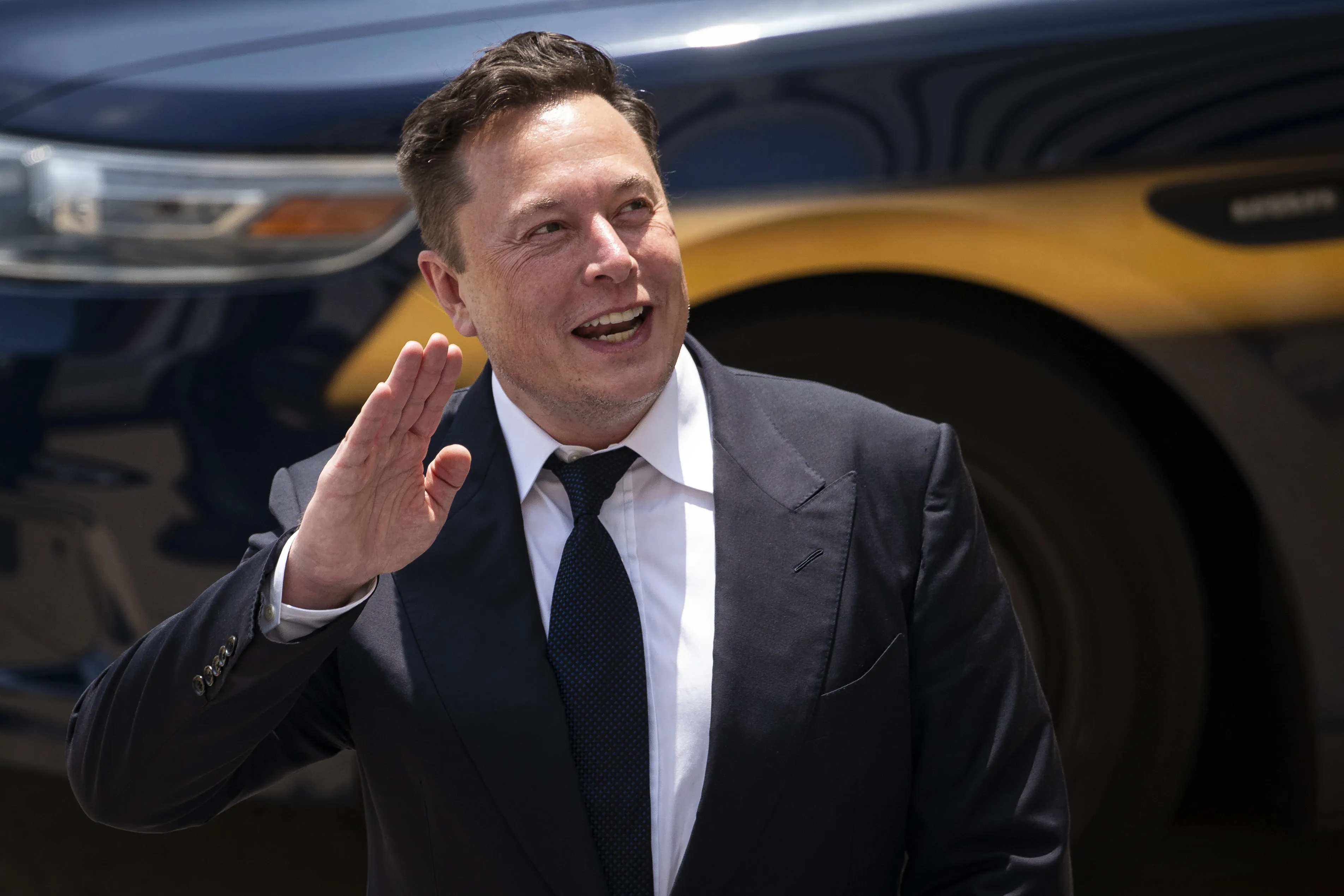
    Elon Musk, the mega-billionaire who had been Trump’s biggest financial backer in the 2024 election, owns xAI, which aims to compete directly with Anthropic and another major AI company, OpenAI.

    Musk in recent weeks has repeatedly bashed Anthropic on his social network X, writing on Friday that the company “hates Western civilization.”

    Anthropic CEO Dario Amodei said Thursday that his company “cannot in good conscience” allow the Pentagon to use its models without limitation.

    In a statement on Thursday, Amodei said, “It is the [Defense] Department’s prerogative to select contractors most aligned with their vision. But given the substantial value that Anthropic’s technology provides to our armed forces, we hope they reconsider.”

    “Our strong preference is to continue to serve the Department and our warfighters — with our two requested safeguards in place,” Amodei said.

    “Should the Department choose to offboard Anthropic, we will work to enable a smooth transition to another provider, avoiding any disruption to ongoing military planning, operations, or other critical missions. Our models will be available on the expansive terms we have proposed for as long as required.”

    On Friday, another major AI company, OpenAI, said it has the same “red lines” as Anthropic regarding the use of its technology by the Pentagon and other customers.

    “We have long believed that AI should not be used for mass surveillance or autonomous lethal weapons, and that humans should remain in the loop for high-stakes automated decisions,” Open AI CEO Sam Altman wrote in a memo seen by CNBC.

    OpenAI last year signed its own $200 million contract with the Pentagon.

    OpenAI’s contract is for AI models in non-classified use cases, which include everyday office tasks.

    Anthropic’s contract with the Defense Department included classified work.

    The Defense Department had no comment on Friday other than pointing to Trump’s announcement.

    Hegseth, in a post on X, included a screengrab of Trump’s post, and cc:ed Anthropic and Amodei with the message, “Thank you for your attention to this matter.”


  • ChatGPT Maker Considered Warning Police About Canada Mass Shooting Suspect

    ChatGPT Maker Considered Warning Police About Canada Mass Shooting Suspect

    TORONTO—ChatGPT-maker OpenAI said Friday it considered last year alerting Canadian police about the activities of a person who months later committed one of the worst school shootings in the country’s history.

    OpenAI said last June the company identified the account of Jesse Van Rootselaar via abuse detection efforts for “furtherance of violent activities.”

    The San Francisco tech company said it considered whether to refer the account the Royal Canadian Mounted Police but determined at the time that the account activity did not meet a threshold for referral to law enforcement. OpenAI banned the account in June 2025 for violating its usage policy.

    The 18-year-old killed eight people in a remote part of British Columbia last week and died from a self-inflicted gun shot wound.

    OpenAI said the threshold for referring a user to law enforcement is whether the case involves an imminent and credible risk of serious physical harm to others. The company said it did not identify credible or imminent planning. The Wall Street Journal first reported OpenAI’s revelation.

    OpenAI said that, after learning of the school shooting, employees reached out to the RCMP with information on the individual and their use of ChatGPT.

    “Our thoughts are with everyone affected by the Tumbler Ridge tragedy. We proactively reached out to the Royal Canadian Mounted Police with information on the individual and their use of ChatGPT, and we’ll continue to support their investigation,” an OpenAI spokesperson said.

    The RCMP said Van Rootselaar first killed her mother and stepbrother at the family home before attacking the nearby school. Van Rootselaar had a history of mental health contacts with police.

    The motive for the shooting remains unclear.

    The town of 2,700 people in the Canadian Rockies is more than 1,000 kilometers  northeast of Vancouver, near the provincial border with Alberta. Police said the victims included a 39-year-old teaching assistant and five students, ages 12 to 13.

    The attack was Canada’s deadliest rampage since 2020, when a gunman in Nova Scotia killed 13 people and set fires that left another nine dead.

  • Big Social Media Platforms Agree to Independent Teen Safety Ratings

    Big Social Media Platforms Agree to Independent Teen Safety Ratings

    Three leading social media companies have agreed to undergo independent assessments of how effectively they protect the mental health of teenage users, submitting to a battery of tests announced Tuesday by a coalition of advocacy organizations.

    The platforms will be graded on whether they mandate breaks and provide options to turn off endless scrolling, among a host of other measures of their safety policies and transparency commitments. Companies that reviewers rate highly will receive a blue shield badge, while those that fair poorly will be branded as not able to block harmful content. Meta, which operates Facebook and Instagram, TikTok and Snap are first three companies to sign up for the process.

    “I hope that by having this new set of standards and ratings it does improve teens’ mental health,” said Dan Reidenberg, managing director of the National Council for Suicide Prevention, who oversaw the development of the standards. “At the same time, I also really hope that it changes the technology companies: that it really helps shape how they design and they build and they implement their tools.”

    Teenagers represent a coveted demographic for social media sites and the new standards come as the tech industry faces increasing pressure to better protect young users.

    A wave of lawsuits alleges that leading firms have engineered their platforms to be addictive. Congress is weighing a suite of bills designed to protect children’s safety online. And state lawmakers have sought to impose age limits on social apps.

    But those efforts have borne little fruit. Some legal experts argue teens and their families may face difficulty in court cases proving the connection between social media use and their struggles. Officials in Washington, meanwhile, have been unable to agree on how to regulate the industry and laws passed by the states have run into First Amendment challenges.


    The voluntary standards represent an alternative approach. Reidenberg said in an interview that the ratings are not a substitute for legislation but will be a helpful way for teenagers and parents to decide how to engage with particular apps. The project is backed by the Mental Health Coalition, an advocacy group founded by fashion designer Kenneth Cole.


    Cole said in a statement that the standards “recognize that technology and social media now play a central role in mental health — especially for young people — and they offer a clear path toward digital spaces that better support well-being.”

    There is still no scientific consensus on whether social media is on the whole harmful for children and teenagers. While some research has found that the heaviest users have worse mental health, studies have also found that young people who are not online can also struggle. But teenagers themselves have reported becoming more uneasy about the time they spend online, with girls in particular telling pollsters at the Pew Research Center in 2024 that apps were affecting their self-confidence, sleep patterns and overall mental health.

    Reidenberg said it’s clear that in some cases young people’s time online becomes problematic. He said the system was developed without funding from the tech industry, but companies will have to volunteer to participate.

    Antigone Davis, Meta’s global head of safety, said the standards will “provide the public with a meaningful way to evaluate platform protections and hold companies accountable.” TikTok’s American arm said it looked forward to the ratings process. Snap called the Mental Health Coalition’s work “truly impactful.”

    Organizers compared the process to how Hollywood assigns age ratings to movies or the government assesses the safety of new cars. Companies will submit internal polices and designs for review by outside experts who will develop their ratings. In all, the companies’ performance will be measured in about two dozen areas covering their policies, app design, internal oversight, user education and content.

    Many of the standards specifically target users’ exposure to content about suicide and self harm. But one also targets the sheer length of time that some people spend scrolling, crediting platforms for offering either voluntary or mandatory “take-a-break” features.

    The standards are being launched at an event in Washington on Tuesday. Sen. Mark R. Warner (D-Virginia) said in a statement that he welcomed the standards but they weren’t a substitute for regulatory action.

    “Congress has a responsibility to put lasting, enforceable guardrails in place so that every platform is held accountable to the young people and families who use them,” he added.

  • SpaceX Pushes for Early Index Inclusion Ahead of Potential IPO

    SpaceX Pushes for Early Index Inclusion Ahead of Potential IPO

    Elon Musk’s SpaceX is seeking an early boost for shares after the rocket-and-satellite business makes its stock market debut later this year.

    Advisers for the company, which recently merged with xAI, have reached out to major index providers, including Nasdaq, to discuss how SpaceX and this year’s other hot startups might join key indexes sooner than normal, according to people familiar with the matter.

    Companies typically must wait several months or a year after their public debut before gaining inclusion in a major index such as the S&P 500 or the Nasdaq 100. Inclusion unlocks access to retail and institutional capital from funds, particularly those mimicking the performance of indexes that have to hold the companies in the index.

    The traditional waiting period is intended to give the companies time to demonstrate that they are stable and liquid enough to handle extensive buying from index funds.

    SpaceX hopes to skirt traditional rules in an effort to bring liquidity to its shareholders sooner as part of its planned IPO. SpaceX advisers have sought index policy changes that would fast-track its entry into major indexes for the company and benefit other highly-valued private companies, the people said.

    Last valued at $800 billion, SpaceX is targeting a valuation of more than $1 trillion, a listing that would become the largest-ever U.S. IPO.

    The headquarters of the Office of Personnel Management in Washington.
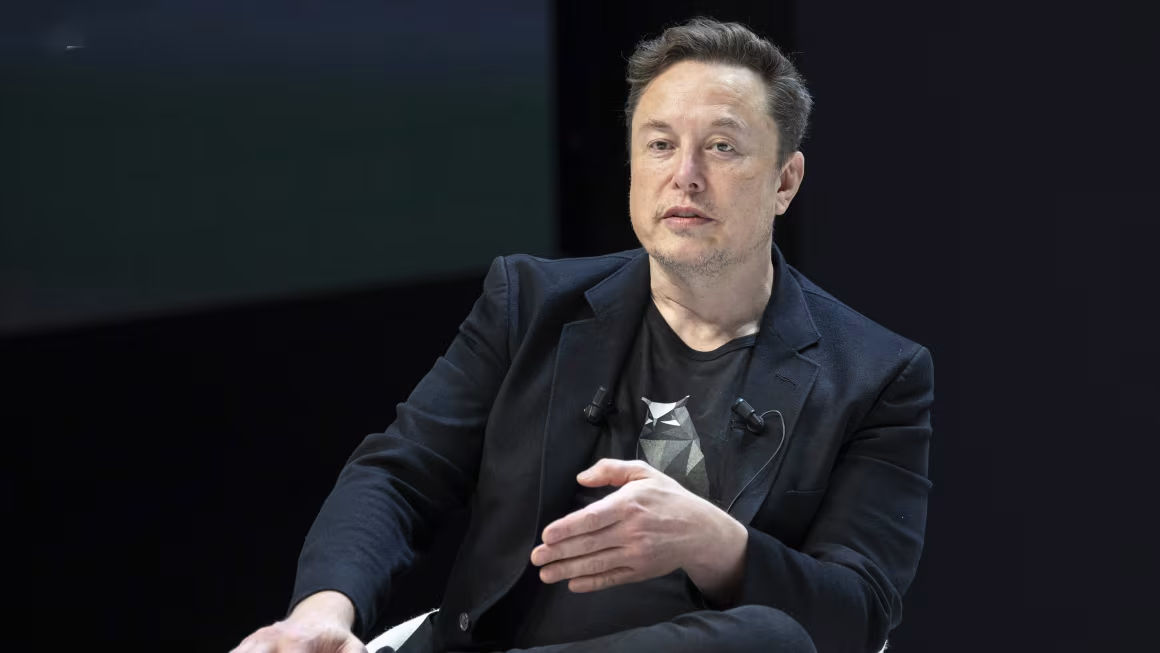
    Elon Musk. © Al Drago/Bloomberg

    Investors and advisers to companies planning to go public this year are concerned not only about initial trading, but also that the standard six-month lockup period—which prevents early investors, executives and employees from selling their stock—might prompt significant selling that pressures shares. After Meta went public in 2012, shares sank when early investors unloaded all at once.

    SpaceX is exploring ways to better balance supply and demand to avoid that outcome, some of the people said.

    Advocates of index methodology changes have said that by allowing newly public companies earlier entry to key indexes, individual investors, who have famously missed out on the big gains in private markets, could secure earlier exposure via popular exchange-traded funds and index funds.

    Earlier this week, the Nasdaq Stock Market shared proposals to update some of the Nasdaq 100 index methodology and asked for feedback from market participants.

    Among the proposals is a potential “fast entry” process. Under this option, companies whose market capitalizations rank in the top 40 of the Nasdaq 100’s constituents could be added to the index after 15 trading days. Companies typically now must wait at least three months to be added to the index. At their current valuations, SpaceX, OpenAI and Anthropic would all qualify.

    The S&P Total Market Index and MSCI indexes have fast-track options, which some advisers to SpaceX are also exploring in an effort to ensure the IPO trades well, some of the people familiar with the matter said.

    The one index where there is now no fast-entry option is also one of the most important: The S&P 500. To join the index, a company must be U.S.-based, profitable and have a market capitalization of at least $22.7 billion. Joining gives it access to a steadier index-fund investor base.

    OpenAI is laying the groundwork for a fourth-quarter IPO as it races rival Anthropic to list shares publicly. OpenAI is aiming to raise $100 billion before the IPO at a valuation of more than $800 billion, while Anthropic is raising billions more at a valuation of $350 billion.

  • Elon Musk Says SpaceX and xAI Will Merge to Build AI Data Centers in Space

    Elon Musk Says SpaceX and xAI Will Merge to Build AI Data Centers in Space

    Elon Musk in animated space. © The NY Budgets/Britta Pedersen-Pool/Getty Images

    On Monday, Elon Musk announced that he was merging two of his companies, SpaceX and xAI, in a deal said to be worth $1.25 trillion. The reason, Musk said in an announcement, was that in order for AI to grow, it needed to go to space.

    AI relies on “large terrestrial data centers” that run on “immense amounts of power and cooling,” he said, which comes at great expense to the environment and community opposition. The solution: data centers in space. “In the long term, space-based AI is obviously the only way to scale,” Musk said.

    Musk isn’t the only one looking to launch data centers into orbit. Google has Project Suncatcher to build solar-powered AI data centers in space. China is looking into space-based data centers, as is Europe. As we reported last year, space-based data centers — in the form of satellites with solar panels — are Big Tech’s latest fad and Silicon Valley’s newest investable venture.

    On the surface, it sounds like a logical solution to the unique problem presented by power-hungry data centers. Local communities are rising up against data center projects over concerns about electricity demand, water usage, and rising utility rates. Launching those data centers into space means they are not taking up any space on Earth, and in a sun-synchronous orbit there is the availability of solar energy.

    AI relies on “large terrestrial data centers” that run on “immense amounts of power and cooling,” Musk said, which comes at great expense to the environment

    But there’s another, simpler way of looking at Musk’s merger: SpaceX is profitable, and xAI is not. Not only is xAI not profitable, it’s in the midst of a serious cash burn as it races to compete with well-financed rivals like Google and OpenAI. As Bloomberg recently reported, the AI company is burning about $1 billion a month as it spends heavily to build data centers, recruit talent, and run the social media platform X.

    Meanwhile, SpaceX generated about $8 billion in profit on an estimated $16 billion of revenue ​last year, Reuters reported. The main revenue driver is Starlink, which accounts for up to 80 percent of the company’s revenue. Since 2019, SpaceX has launched over 9,500 satellites and boasts up to 9 million broadband internet users. The company is also a major government contractor, having secured over $20 billion in NASA and Defense Department deals since 2008. When it goes public later this year, SpaceX is expected to raise up to $50 billion in investment.

    Meanwhile, xAI has it own government tie-ups. The Department of Defense is using Grok, in addition to other chatbots, to analyze information that flows through its military intelligence networks.

    It’s not clear how investors will feel about merging the cash-burning xAI with the profitable SpaceX. But it’s important to note that Musk has done this before, when he merged the debt-ridden SolarCity with Tesla in 2016. Since Musk was the largest shareholder and chairman of both Tesla and SolarCity, shareholders sued to block the merger, alleging it was a $2.6 billion “bailout” of a cash-strapped, struggling company. Musk eventually won the lawsuit, with a judge ruling that he did not force Tesla to overpay for SolarCity.

    Musk now faces a new lawsuit from Tesla shareholders over his creation of xAI. The lawsuit alleges that Musk breached his fiduciary duty to Tesla by forming xAI, which competes with the automaker for AI talent, resources, and Musk’s attention. The news that SpaceX is acquiring xAI certainly won’t settle those concerns; if anything, it makes it more chaotic and complex.

    So where does this all leave Tesla? In the most recent earnings report, Tesla said it was investing $2 billion into xAI “to enhance Tesla’s ability to develop and deploy AI products and services into the physical world at scale.” Grok, xAI’s chatbot that’s currently under investigation in multiple countries for generating nonconsensual sexualized images of people, including children, was recently integrated into certain Tesla vehicles as a voice assistant. Grok also lags behind OpenAI’s ChatGPT, Google’s Gemini, Anthropic’s Claude, and other large language models in several key metrics.

    Data centers in space is pure Musk futurism that has no guarantee of success. It’s not as simple as just strapping a GPU to a rocket and hitting “launch.” First off, GPUs are total power hogs. Unless you’ve got a nuclear reactor floating up there, you’re going to need a massive solar arrays to power it. Then there’s the communication situation; even if you’re hitching a ride on Starlink, you still have to figure out the budget for sending info back and forth to Earth. Eventually, the numbers start to look pretty scary.

    Musk says merging SpaceX and xAI is the way to make it happen. And perhaps one day he’ll take the suggestion of bullish investors to combine all his companies, including Tesla, Neuralink, and the Boring Company, into one massive, Musk-run mega-corporation: Musk Inc., if you will. How will Tesla shareholders react?

    “Tesla is Musk’s liquid piggy bank, since it’s publicly traded; his other companies are not,” Tesla investor James McRitchie said during a prevote presentation before the company’s 2024 shareholder meeting, according to The Wall Street Journal. “Either he sticks around long enough to use our shareholder capital to fund his other ventures, or he shifts his attention sooner if we reject his pay package and turn off the money tap.”

  • Meta Is Blocking Links to ICE List on Facebook, Instagram and Threads

    Meta Is Blocking Links to ICE List on Facebook, Instagram and Threads

    In a move that’s sure to rile up the far-left activist crowd but makes perfect sense for anyone who values the safety of our nation’s border enforcers, Meta has quietly started blocking links to the so-called “ICE List” website across its major platforms: Facebook, Instagram, and Threads.

    This decision comes amid growing concerns over online harassment and doxxing targeted at Immigration and Customs Enforcement (ICE) agents and other Department of Homeland Security (DHS) personnel, who are on the front lines protecting America’s sovereignty from illegal crossings and criminal elements.

    The ICE List, a crowdsourced wiki-style site launched in June last year, purports to “hold accountable” DHS employees by compiling and publicizing their names, often pulled from public sources like LinkedIn profiles.

    Site creator Dominick Skinner, a self-described activist, claims the project is run by a small core team of five, bolstered by hundreds of anonymous volunteers who submit tips on ICE agents’ activities across U.S. cities. But let’s call it what it is: a thinly veiled attempt at intimidation, masquerading as “transparency.” Skinner himself griped to WIRED that Meta’s block is no surprise from a company led by Mark Zuckerberg, who he accuses of cozying up to President Trump—referencing Zuckerberg’s attendance at Trump’s inauguration and past political donations. “I think it’s no surprise that a company run by a man who sat behind Trump at his inauguration, and donated to the destruction of the White House, has taken a stance that helps ICE agents retain anonymity,” Skinner said.

    Skinner’s rhetoric reeks of the kind of liberal outrage we’ve seen time and again from those who demonize law enforcement while turning a blind eye to the real threats at our borders. ICE agents aren’t “terrorizing immigrant communities,” as Skinner alleges; they’re enforcing the laws of the land, deporting criminals, and stemming the tide of illegal immigration that strains resources and undermines wages for hardworking Americans. In a right-of-center view, this is essential work—pro-ICE all the way. These agents put their lives on the line daily, facing dangers from cartels, human traffickers, and yes, even domestic agitators who think doxxing is a form of “activism.”

    The block was first noticed by volunteers associated with ICE List on Monday night, with widespread confirmation by Tuesday morning. Attempts to share links on Facebook yield messages like, “Posts that look like spam according to our Community Guidelines are blocked on Facebook and can’t be edited,” which later updated to, “Your content couldn’t be shared, because this link goes against our Community Standards.” On Threads, links simply vanish with a curt “Link not allowed.” Instagram users see, “We restrict certain activity to protect our community. Let us know if you think we made a mistake.” Interestingly, WhatsApp—another Meta property—still allows sharing, perhaps due to its end-to-end encryption focus.

    Meta spokesperson Andy Stone pointed to the company’s policy against sharing personally identifiable information (PII), specifically prohibiting “content asking for personally identifiable information of others.” When pressed on why the block came after six months of unrestricted sharing, Stone reiterated the doxxing concerns.

    This isn’t Meta’s first rodeo; back in the day, they shut down a Chicago-based Facebook group tracking ICE sightings after pressure from the Justice Department. Good on them for stepping up again—protecting public servants from harassment aligns with basic decency, even if it irks the anti-border crowd.

    The site gained notoriety earlier this month after claiming to upload a “leaked” list of 4,500 DHS employees. But a closer look reveals it’s mostly aggregated from public data—LinkedIn bios, social media posts, and the like. ICE List describes itself as “an independently maintained public documentation project focused on immigration-enforcement activity,” aiming to “record, organize, and preserve verifiable information about enforcement actions, agents, facilities, vehicles, and related incidents.” Sounds noble, but in practice, it’s a hit list that could endanger families and fuel vigilante actions. The Trump administration has rightly pushed back against such tactics, threatening prosecutions for doxxing and leaning on tech firms to curb these efforts.

    From a pro-ICE perspective, this blocking is a win for national security. ICE isn’t about haphazard “remigrations”—that far-right buzzword for mass expulsions without due process, which we’re firmly against here. No, ICE handles targeted, legal deportations of those who break our laws, like violent offenders and repeat border-jumpers. Remigration schemes, often peddled by extremists, ignore the rule of law and humanitarian considerations; ICE, on the other hand, operates within the framework of justice, ensuring removals are justified and orderly. Liberals like Skinner and his ilk want to abolish ICE altogether, chanting “no borders, no walls” while ignoring the chaos that invites—fentanyl floods, human smuggling, and overburdened communities.

    Social media reactions have been swift and divided, as seen on X (formerly Twitter). One user, @warriors_mom, shared the WIRED story, noting, “Users of Meta’s social platforms can no longer share links to ICE List, a website listing what it claims are the names of thousands of DHS employees.” Another, @snoopyicetea, pointed out, “TikTok isn’t the only app being censored in the US. Every Meta app is blocking links to ICE list.” Tech enthusiast @f1rede weighed in thoughtfully: “Meta is blocking links to ICE List (a crowdsourced wiki naming ICE/CBP agents) on Facebook, Instagram & Threads, citing PII/doxxing rules. Protecting people is vital — but so is public accountability. Should platforms block site links like this?” Meanwhile, conspiracy-tinged posts like @z_007_z’s linked it to broader U.S.-Iran parallels and Trump control, showing how quickly these stories spiral.

    Critics on the left cry censorship, but this is about safety, not suppression. Meta’s platforms have long battled misinformation and harmful content, and blocking a site that solicits tips on agents’ identities fits squarely under that umbrella. Skinner countered Meta’s rationale by noting his site has been crowdsourcing info for months, but that doesn’t make it right—public data or not, aggregating it for targeted harassment crosses a line.

    This episode highlights the ongoing tug-of-war between free speech and security in the digital age. With the 2026 midterms on the horizon, expect Democrats to seize on this as evidence of Big Tech’s “bias” toward conservatives, while ignoring their own calls to defund ICE. But for those of us with a right-center lean, it’s refreshing to see a tech giant like Meta prioritize the protection of our ICE heroes over the whims of liberal activists. After all, secure borders mean safer communities, and that’s a policy worth defending.

  • Nvidia’s Record Profits Alleviate Investor Concerns Amid AI Boom

    Nvidia’s Record Profits Alleviate Investor Concerns Amid AI Boom

    GettyImages 2192215403 b83fd81cbd854c3587c2fe593617f3a5
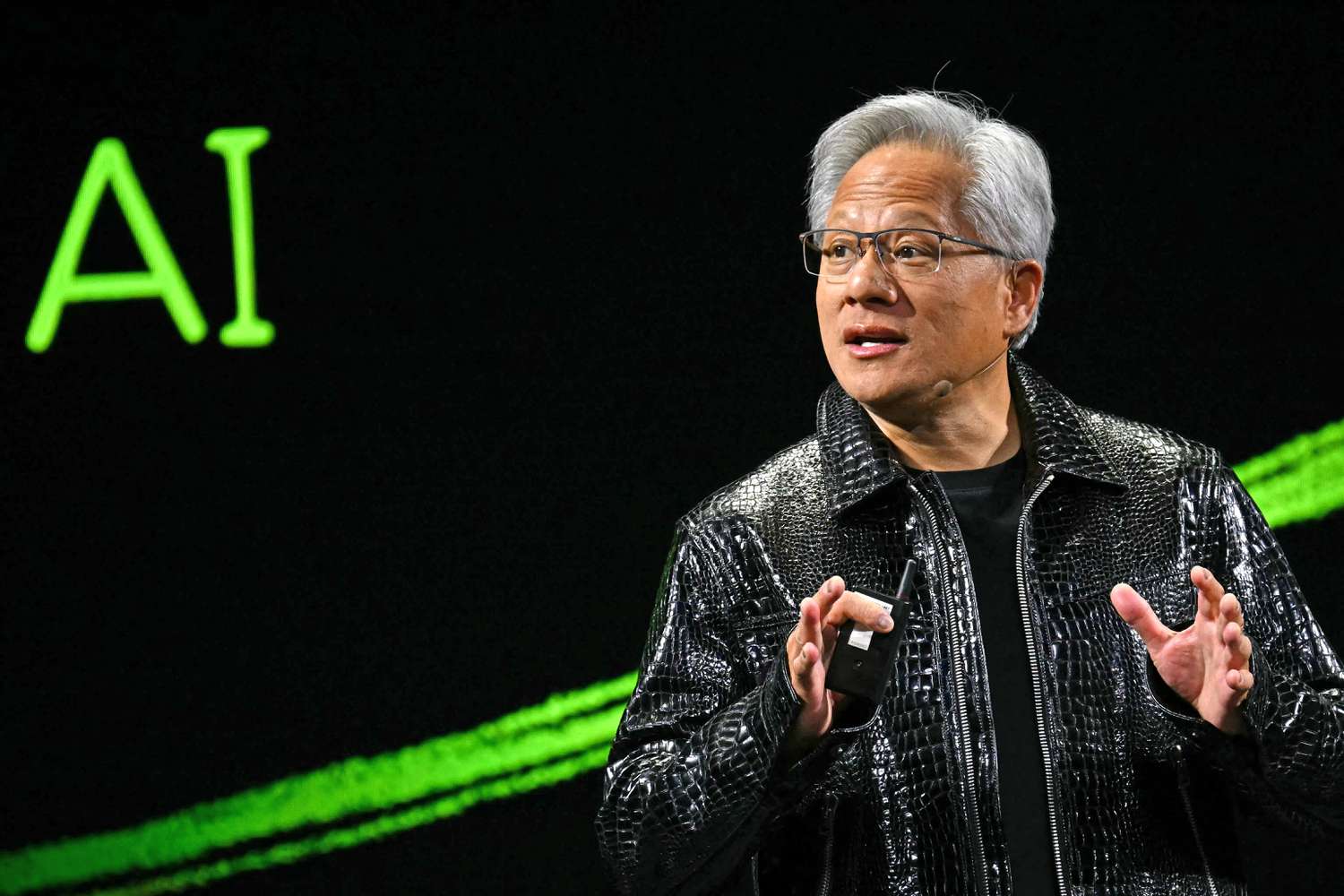
    Nvidia CEO Jensen Huang delivers a keynote address at CES on Jan. 6, 2025. © Patrick T. Fallon / Getty Images
    Stock Widget

    Nvidia NVDA +4.25% ▲ reported record sales and strong guidance Wednesday, helping soothe jitters about an artificial intelligence bubble that have reverberated in markets for the last week.

    Sales in the October quarter hit a record $57 billion as demand for the company’s advanced AI data center chips continued to surge, up 62% from the year-earlier quarter and exceeding consensus estimates from analysts polled by FactSet. The company increased its guidance for the current quarter, estimating that sales will reach $65 billion—analysts had predicted revenue of $62.1 billion for the quarter.

    Shares in the world’s most-valuable publicly listed company rose almost 5% in premarket trading Thursday.

    “We’ve entered the virtuous cycle of AI,” said Nvidia Chief Executive Jensen Huang. “AI is going everywhere, doing everything, all at once.”

    Wednesday’s result will allow investors to breathe a sigh of relief. Each Nvidia quarterly earnings report has come to be seen as a financial Super Bowl of sorts as the AI boom has taken off. The company is regarded as a bellwether for both the health of the tech industry and the market as a whole.

    This quarter, however, the stakes seemed higher. Rarely has an earnings report from a single company been greeted with such nervous anticipation.

    In recent weeks, investors have sold off big tech names, worried that companies are spending far too much money on data centers, chips, and other infrastructure in the race to design and operate the world’s most powerful AI models, with little hope of recouping their investments in the near term.

    Adding to the pressure is a flurry of recent AI deals structured using what critics have dubbed “circular” funding mechanisms—broadly referring to suppliers like Nvidia making large capital investments in the businesses of the customers who buy their products. Just a few months ago, investors viewed such deals with enthusiasm, pumping up shares for a variety of AI-related companies, but this week one such deal—between Nvidia, Microsoft and Anthropic—was greeted warily.

    This week, 45% of global fund managers surveyed by Bank of America said that an AI stock-market bubble was one of the biggest risks facing the market.

    A number of bearish moves by high-profile investors have also rattled tech markets. Last week, Masayoshi Son’s SoftBank Group sold its entire $5.8 billion stake in Nvidia to divert that money to other AI investments, while a hedge fund run by influential billionaire venture capitalist Peter Thiel unloaded its entire $100 million Nvidia stake in the third quarter.

    Earlier this month, Michael Burry—who famously predicted the popping of the subprime mortgage securities bubble and was profiled in the Michael Lewis book “The Big Short: Inside the Doomsday Machine”—revealed in a securities filing that he was betting against the stocks of both Nvidia and AI-heavy defense analytics firm Palantir.

    “The last few weeks, there have been some escalating cracks in the AI landscape,” said Matt Stucky, chief portfolio manager for equities at Northwestern Mutual Wealth Management Company, an Nvidia shareholder. “Nvidia is the beneficiary of a lot of AI spending, and market forces are pushing back harder and harder on that spending.”

    Quarterly net income was $31.9 billion, 65% higher than a year earlier. Sales of Nvidia’s Blackwell line of graphics processing units—its most powerful chips yet—were “off the charts,” Huang said. Revenue from Nvidia’s data center segment set a record at $51.2 billion, beating analysts’ expectations of $49 billion.

    The potential for revenue increases may be limited going forward after the Trump administration announced earlier this month that it is not considering allowing a version of the Blackwell chip to be sold in China, a fast-growing AI market that represents tens of billions of dollars in potential sales.

    Half of the company’s long-term opportunity will come from customers’ transition to accelerated computing and generative AI, Colette Kress, Nvidia’s chief financial officer, said on a call with investors. While sizable purchase orders for Nvidia’s Hopper Platform never materialized in the quarter due to geopolitical issues with China, the company remains committed to engaging with governments, she added.

    In separate news, the Commerce Department approved the sale of up to 70,000 advanced artificial-intelligence chips to two companies based in the United Arab Emirates and Saudi Arabia, a big win for the Middle Eastern nations as they seek to catch up in the AI race. The approvals are a reversal from earlier this year, when some administration officials rejected the idea of exporting directly to the state-backed companies over security concerns.


    Terms of the deal will allow U.S. firms to sell up to 35,000 of Nvidia’s GB300 servers or their equivalents to both G42, a state-run AI firm based in Abu Dhabi, and Humain, a Saudi government-backed AI venture, government officials said. Nvidia competitor Advanced Micro Devices also has an agreement worth billions of dollars to work with Humain.

    Nvidia’s stock price more than doubled between early April and late October, rising from the low $90s to more than $200 per share, but has lost ground in the last few weeks as bubble worries have grown. So far this year, it’s up about 30%.

  • Nvidia’s $5 Trillion Milestone: What Does It Mean for the Future of AI and Tech?

    Nvidia’s $5 Trillion Milestone: What Does It Mean for the Future of AI and Tech?

    rgjewurghiueghehui 1
    Stock Widget

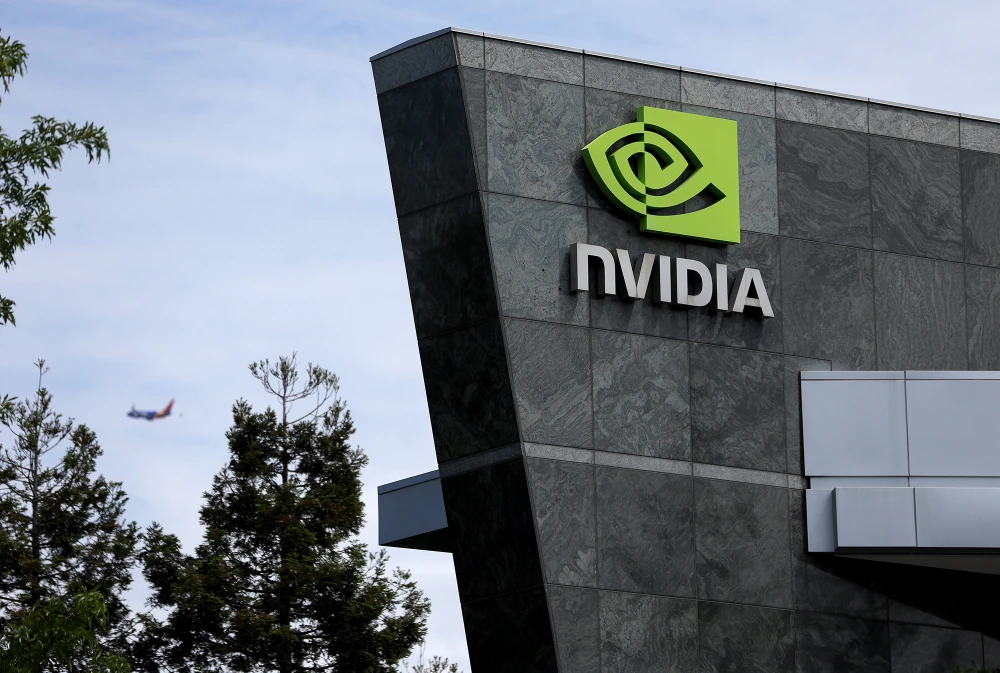
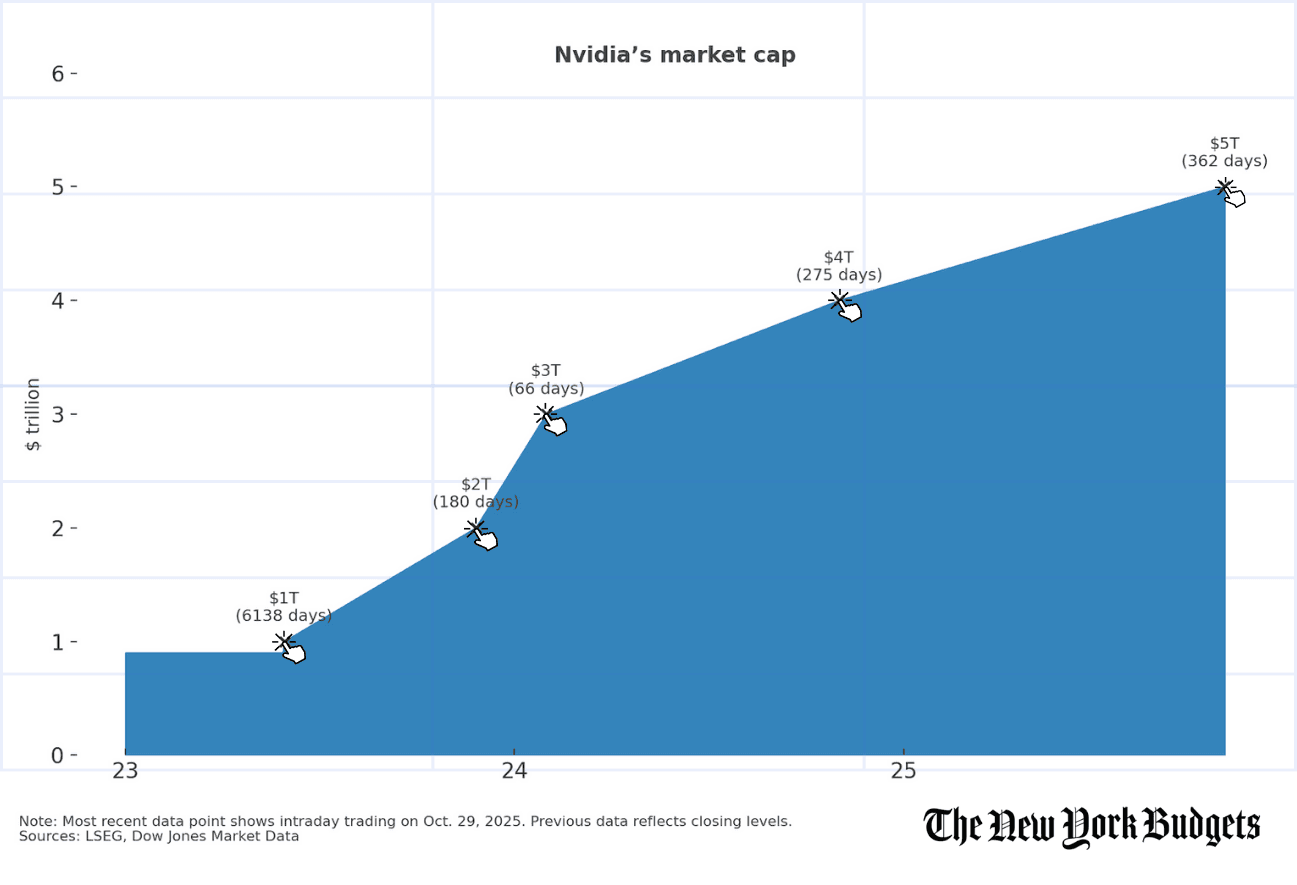
    Nvidia Corp. NVDA +5.50% ▲ etched its name deeper into history books Wednesday, becoming the first publicly traded company to eclipse a $5 trillion market capitalization—a staggering milestone that underscores the artificial intelligence revolution’s grip on global markets, even as whispers of an impending bubble grow louder. The Silicon Valley chipmaker’s shares surged as much as 5.5% during the session, closing at $207.04 with 24.3 billion shares outstanding, catapulting its valuation to $5.03 trillion. Just three months after breaching $4 trillion and a mere two years after cracking $1 trillion, Nvidia’s ascent—up 50% year-to-date and over 1,500% in the past five years—has outpaced the Nasdaq’s 23% gain this year and the S&P 500’s 17%, cementing its status as the world’s most valuable firm ahead of Microsoft MSFT +2.10% ▲ ($4 trillion) and Apple AAPL +1.80% ▲ ($3.9 trillion).

    The rally, which added nearly $140 billion to Nvidia’s coffers in a single day, was supercharged by CEO Jensen Huang’s announcements at the company’s annual AI conference in Washington, D.C., on Tuesday. Huang revealed a pipeline of $500 billion in AI chip orders through next year, alongside a flurry of high-profile deals: a partnership with Uber Technologies Inc. to advance robotaxi development, a $1 billion investment in Nokia Oyj for next-generation 6G networks, and collaboration with the U.S. Department of Energy to construct seven new AI supercomputers. Last month, Nvidia committed $100 billion to OpenAI, aiming to deploy at least 10 gigawatts of AI data centers to supercharge the ChatGPT maker’s computing prowess. “These aren’t hypotheticals—these companies are generating real revenues, and the products are profitable,” Huang told NBC News, brushing off bubble concerns. “Generative AI has evolved from interesting to indispensable.”

    Nvidia’s dominance in graphics processing units (GPUs)—repurposed from gaming rigs to the lifeblood of AI training for models like ChatGPT and image generators—has made it indispensable to Big Tech’s AI arms race. Its largest customers, including OpenAI, Tesla Inc., xAI, Meta Platforms Inc., Amazon.com Inc., and Oracle Corp., have funneled billions into Nvidia’s H100 and upcoming Blackwell chips, driving demand that outstrips supply. The semiconductor giant’s market cap now dwarfs the combined valuations of rivals like Advanced Micro Devices Inc., Intel Corp., Broadcom Inc., Taiwan Semiconductor Manufacturing Co., Micron Technology Inc., ASML Holding NV, Lam Research Corp., Qualcomm Inc., and Arm Holdings Plc—collectively worth less than half of Nvidia’s heft.

    To put $5 trillion in perspective: It’s equivalent to roughly 25 Walt Disney Cos., 50 Nikes, 96 Ford Motor Cos., 945 Macys, or over 3,311 JetBlue Airways Corps. Nvidia alone towers over the entire S&P 500 energy sector (three times its size) and eclipses major international benchmarks like Germany’s DAX and France’s CAC indices (more than double each). More strikingly, its valuation surpasses the gross domestic product of every nation on Earth except the United States ($29.1 trillion) and China ($18 trillion), per World Bank and IMF data—including India, Japan, the U.K., and Germany ($4.6 trillion last year). A $1,000 investment in Nvidia a decade ago, when shares bottomed at $0.47 in February 2015, would now be worth $441,000—a 44,000% return that has minted fortunes, including Huang’s estimated $174.4 billion net worth, ranking him eighth on Forbes’ billionaire list.

    The AI boom, often likened to the iPhone’s 2007 debut for its transformative potential, has propelled Nvidia from a $10 billion niche player in 2015 to this colossus. Yet, the speed of its rise—stock up 3.4% to an intraday high of $207.85 Wednesday—has reignited debates over sustainability. Officials at the Bank of England flagged AI’s “growing risk” of a tech stock burst earlier this month, while IMF Managing Director Kristalina Georgieva echoed warnings of parallels to the late-1990s dot-com bubble. Nvidia’s shares, trading at a forward price-to-earnings multiple of 45, reflect sky-high expectations for sustained GPU demand amid an AI infrastructure spend projected to hit $1 trillion annually by 2030, per McKinsey & Co.

    Geopolitical crosswinds add intrigue. Huang jetted to South Korea this week for the Asia-Pacific Economic Cooperation (APEC) summit, where free-trade ideals clash with escalating U.S. tariffs on tech and beyond. A pivotal sideline Thursday: a face-to-face between President Donald Trump and Chinese President Xi Jinping, where Trump pledged to discuss Nvidia’s chips. In August, the administration struck a deal with Nvidia and AMD to ease export curbs on advanced chips to China in exchange for a 15% revenue cut to Washington—despite national security qualms over potential military diversions. Commerce Secretary Howard Lutnick quipped on CNBC in July that selling America’s “fourth best” AI tech to Beijing was “cool,” but not the top tiers. Nvidia’s August overtures for a China-specific chip, plus a $5 billion infusion into Intel (where the U.S. government now holds a 10% stake worth $11 billion), highlight efforts to balance export growth with domestic bolstering under the CHIPS Act.

    For investors, Nvidia’s milestone is a double-edged sword. The Magnificent Seven tech stocks, led by Nvidia, have shouldered 60% of the S&P 500’s gains this year, but rotation risks loom if AI hype cools. “Nvidia isn’t just a company—it’s the AI proxy,” said Dan Ives, Wedbush Securities analyst. “But at $5 trillion, any earnings miss could trigger a reality check.” With Blackwell production ramping and partnerships like the Nokia tie-up eyeing 6G’s trillion-dollar frontier, Nvidia’s trajectory suggests more records ahead. Yet, as Huang attends APEC amid Trump-Xi tensions, the chip king’s fate remains intertwined with the very global supply chains it seeks to redefine.

  • Meta Stock Falls Even After Strong Revenue Report

    Meta Stock Falls Even After Strong Revenue Report

    Stock Widget

    Meta Platforms Inc. delivered a resounding third-quarter earnings beat on Wednesday, with adjusted earnings per share of $7.25 topping analyst expectations of $6.69 and revenue surging to $51.24 billion against forecasts of $49.41 billion, as polled by LSEG. The results underscored the social media giant’s robust advertising engine and user engagement amid a resurgent digital ad market, yet Meta META -1.20% ▼ shares tumbled 1.2% in after-hours trading to $582.34, capping a volatile session that saw the stock dip 0.3% during regular hours. Investors, spooked by Meta’s forecast of “significant acceleration” in AI-related infrastructure costs next year—potentially ballooning to tens of billions—brushed aside the positives, signaling growing unease over the sustainability of Big Tech’s AI arms race.

    The earnings, released after the bell on October 29, highlighted Meta’s operational resilience. Net income soared to $15.69 billion, or $6.03 per share, a 35% jump from $11.58 billion, or $4.39 per share, a year earlier—well ahead of FactSet’s consensus of $5.22. Revenue climbed 19% year-over-year, fueled by a 22% uptick in ad sales to $50.1 billion, as daily active users across Facebook, Instagram, and WhatsApp swelled to 3.28 billion, up 6% from last year. CEO Mark Zuckerberg touted the quarter as a “strong foundation” for AI integrations, including enhanced Reels recommendations and Llama model advancements, which drove a 12% increase in time spent on the platforms.

    Yet, the post-earnings glow faded swiftly. Meta’s guidance for Q4 projected revenue of $52.5 billion to $54 billion, in line with Wall Street’s $53.2 billion midpoint, but the real headwind was the capex outlook. The company flagged a “meaningful ramp” in 2026 AI infrastructure spending, on top of the $39 billion already earmarked for 2025, to fuel data centers and GPU acquisitions from Nvidia Corp. “We’re investing aggressively in AI to stay ahead,” Zuckerberg said on the earnings call, but analysts like Bank of America’s Justin Post worried aloud about the “long-term growth manifestation” of these outlays, especially as rivals like OpenAI pivot toward ads and social features, intensifying competition in Meta’s core turf.

    The reaction rippled across global markets. In Frankfurt pre-market trading Thursday, Meta (META.O) shares slipped 2.6% to €530, mirroring a 5.1% drop in Microsoft Corp. (MSFT.O) amid its own Azure cloud growth slowdown warning—dragging Nasdaq futures down over 1%. The Magnificent Seven cohort, already under scrutiny for AI hype, saw broader pressure: Alphabet Inc. and Amazon.com Inc. reports later in the week loom large, with investors parsing for similar spending spikes. “Meta’s beat was textbook, but the AI capex fog is thick—it’s all about the denominator now,” said Wedbush Securities analyst Daniel Ives, who maintains an Outperform rating but trimmed his price target to $650 from $675.

    Meta’s Q3 performance aligns with a digital ad sector rebound, projected to grow 12% to $740 billion globally in 2025 per eMarketer, buoyed by election-year spending and e-commerce tailwinds. Reality Labs, Meta’s metaverse arm, narrowed losses to $4.2 billion from $5.1 billion, with Quest headset sales up 15%—a bright spot amid Zuckerberg’s pivot to AI glasses and wearables. Still, the stock’s 1.2% after-hours slide erased $25 billion in market cap, leaving Meta at $1.48 trillion—down 5% year-to-date versus the Nasdaq’s 23% gain.

    Looking ahead, Wall Street eyes Meta’s AI monetization roadmap at next week’s investor day, where details on ad-targeting LLMs and enterprise tools could assuage fears. For now, the earnings saga encapsulates Big Tech’s paradox: explosive growth meets escalating costs in an AI gold rush that has minted trillion-dollar valuations but risks a valuation reset if returns lag. As Ives put it, “The party’s still on, but the bill just arrived.”

  • Chinese and Russian Female Spies Reportedly Use ‘Sex Warfare’ to Target Silicon Valley Secrets

    Chinese and Russian Female Spies Reportedly Use ‘Sex Warfare’ to Target Silicon Valley Secrets

    aliia roza
    SpeakerHub © Aliia Roza

    He thought it was serendipity—a chance encounter at a bustling tech conference in Palo Alto, where amid the hum of venture capitalists and AI demos, she approached him with a disarming smile and probing questions about his startup’s quantum encryption algorithms. She was poised, multilingual, with a LinkedIn profile touting a role at a Shanghai-based venture firm. Over coffee that turned into dinners, then weekends in Napa, she became his confidante, his partner—even his fiancée. It was only after a routine security audit at his firm flagged anomalous data transfers to overseas servers that the truth unraveled: She wasn’t an investor. She was an operative, deployed by Beijing’s Ministry of State Security to burrow into his life and exfiltrate the crown jewels of American innovation.

    This isn’t the plot of a Tom Clancy novel; it’s the stark reality of “sex warfare,” a resurgent espionage tactic where Chinese and Russian intelligence agencies are allegedly weaponizing romance to pilfer Silicon Valley’s secrets. Attractive female operatives—trained in seduction, psychological manipulation, and tech fluency—are infiltrating the Valley’s open ecosystem, seducing engineers, executives, and researchers. In some cases, they’ve gone nuclear: marrying targets, bearing children, and embedding for decades to ensure a steady drip of intellectual property (IP). The economic toll? Up to $600 billion annually in U.S. IP theft, with China fingered as the prime culprit. As one counterintelligence veteran put it, “It’s the Wild West out there.”

    Our investigation, drawing on interviews with former spies, U.S. intelligence officials, and tech security experts, plus declassified FBI reports and recent congressional briefings, reveals a threat that’s not just escalating—it’s evolving. From LinkedIn lures to honeypot marriages, these operations exploit the Valley’s collaborative ethos, where trust is currency and NDAs are as flimsy as a post-hack apology. With Elon Musk quipping on X, “If she’s a 10 and suddenly interested in your boring job, run,” the alarm bells are ringing from Capitol Hill to Sand Hill Road. But as threats spread beyond California to nascent hubs in Austin and Boulder, the question looms: Can America’s tech fortress hold?

    The Honey Trap 2.0: Seduction as a Strategic Asset

    The playbook is as old as Mata Hari, but the targets and stakes have skyrocketed. Since the 1970s, foreign agents have eyed U.S. tech for its golden goose—semiconductors, AI, biotech. But post-Cold War, the game shifted from brute-force hacks to “soft” economic espionage, where human vulnerabilities are the backdoor. Enter “sex warfare”: a term coined by U.S. counterintelligence pros to describe state-sponsored romantic entanglements designed for long-haul intel harvesting.

    James Mulvenon, chief intelligence officer at Pamir Consulting—a firm that schools U.S. companies on China risks—has seen the uptick firsthand. “I’m getting an enormous number of very sophisticated LinkedIn requests from the same type of attractive young Chinese woman,” he told The Times in a bombshell exposé this week. “It really seems to have ramped up recently.” Mulvenon, a 30-year FBI counterspy alum, recounts gatecrashing a Virginia conference on Chinese investment perils: Two poised Chinese women, armed with attendee lists and badges, tried to slip in. “We didn’t let them,” he said. “But they had all the information.”

    It’s not paranoia. A former U.S. counterintelligence officer, speaking anonymously to NDTV, detailed a chilling case: A “beautiful” Russian operative, fresh from a Moscow “soft-power school” and modeling academy, wed an aerospace engineer on a classified drone project. Posing as a crypto analyst, she infiltrated military-space circles. “Showing up, marrying a target, having kids with a target—and conducting a lifelong collection operation—it’s very uncomfortable to think about, but it’s so prevalent,” the officer said. The marriage yielded not just cover, but cover stories: Family outings masked dead drops, bedtime chats doubled as debriefs.

    China’s Ministry of State Security (MSS) and Russia’s SVR (Foreign Intelligence Service) are the maestros. MSS runs “drafting” ops—snapping up stakes in DoD-funded startups to choke U.S. access—while SVR leans on “illegals”: deep-cover agents posing as expats. Both recruit “sparrows,” female agents trained in the KGB’s honeypot arts, now augmented with digital tradecraft. “They have an asymmetric advantage,” Mulvenon warns. “U.S. culture and laws tie our hands in countermeasures.”

    Even allies play. South Korea and Israel have been caught quietly hoovering intel at Valley mixers, per declassified docs. But Beijing and Moscow dominate: FBI stats show China-linked IP theft hit 80% of cases in 2024, up from 60% in 2020.

    Confessions from the Shadows: Ex-Spies Spill the Secrets

    To understand the machinery, we turn to defectors. Aliia Roza, a 45-year-old Kazakh-Tatar émigré now training “seduction for self-esteem” in the U.S., broke her silence on iHeart’s To Die For podcast this year. Born to a Soviet general, Roza was funneled into a KGB successor program at 18, plucked from 350 cadets for “sexpionage” training. “We weren’t just seducing—we were mastering communication,” she told host Neil Strauss. “Dress, makeup, how to make targets believe you’re their soulmate.”

    NINTCHDBPICT000671356953
    Her lavish lifestyle is a far cry from the ‘corrupt’ regime in the Russian military
    NINTCHDBPICT000671358269
    She now lives in a $20 million mansion in Beverly Hills with her 11-year-old son.

    Pay? A measly $100 monthly for six-day weeks of martial arts and psyops drills. But the rush? “At the end of the day, when I saved someone’s life [by extracting intel], I felt good,” Roza recalled. She balanced missions with motherhood, but the toll mounted. “I saw these other female agents hit 56—miserable, lonely. No private lives, no families.” Brainwashed as a “master manipulator,” Roza fled Moscow over two decades ago with her son, resurfacing on Instagram with 1M+ followers peddling empowerment tips. “It’s not just sex—it’s the art of making them believe,” she says now. Her story, echoed in Fox News Digital interviews, underscores the human wreckage: Agents discarded like spent cartridges.

    Then there’s Anna Chapman, the flame-haired “Black Widow” whose 2010 FBI bust—Operation Ghost Stories—exposed a Russian sleeper ring in New York. Deported in a spy swap that freed poison victim Sergei Skripal, Chapman, now 43 and rebranded Anna Romanova, has pivoted to propaganda. This month, Putin tapped her to helm the SVR’s shiny new Museum of Russian Intelligence near Moscow’s Gorky Park—a hall of mirrors celebrating espionage “achievements.”

    Anna Chapman Former Russian Spy Instagram Account
    Ousted Russian Spy Anna Chapman Is Now a Trump-Loving Instagram Star. © David Azia/A.P.

    In her 2024 memoir BondiAnna: To Russia with Love, Chapman gloats: “Nature endowed me with a slim waist, full chest, cascade of red hair… I didn’t try too hard to please. And it worked like magic.” From London hedge funds (nabbed via strip poker, she claims) to Manhattan real estate fronts beaming secrets via laptop, her toolkit was charm laced with code. Post-deportation, she’s a pro-Kremlin TV star and mom, but her museum gig signals SVR’s unrepentant flex. “It’s history in the making,” SVR chief Sergey Naryshkin purred at the unveiling, per The Sun.

    Silicon Valley isn’t just code—it’s a $1.8 trillion GDP engine, per 2025 CBRE data. But espionage is a silent tax. IP theft siphons $225-600B yearly, fueling China’s “Made in 2025” push to dominate AI and EVs. Startups, hungry for funding, pitch to Chinese VCs at U.S.-hosted contests—only to watch prototypes vanish overnight. “Share your plan, lose your edge—or relocate to Shenzhen,” warns Jeff Stoff, ex-NSA analyst.

    Take the unnamed tech giant from our lead: In 2024, its security team swept in amid vanishing files—millions in R&D poached, traced to a VP’s “fiancée.” Or the aerospace case: Russian-sourced drone specs allegedly fast-tracked Moscow’s hypersonic program, costing Raytheon $2B in lost contracts.

    Broader ripples? Venture funding dipped 15% in Q3 2025, per PitchBook, as firms mandate “espionage audits.” NVIDIA stock wobbled 3% post a leaked chip blueprint tied to a “romantic entanglement.” Musk’s X post amplified the chill: “Silicon Valley sex warfare? If she’s a 10, she’s probably a 10 on the MSS payroll.” Even allies fret: UK’s MI5 flagged similar ops targeting Cambridge quantum labs.

    It’s not confined to hoodies and hackathons. China’s ops span political infiltration—recruiting Cali pols via units like the one exposed in Politico‘s Rose Pak saga, where SF’s power broker funneled influence to Beijing. Recall the 2008 Torch Run: MSS mobilized 10,000 U.S. students to quash protests, per FBI memos.

    Russia’s post-2017 consulate closure? No sweat—proxies via crypto bros and VC scouts. “Oklahoma land rush,” quips a DNI report: A frenzy for biotech in Boston, autonomy tech in Detroit.

    As hubs sprout—Boulder’s quantum corridor, Austin’s chip fabs—vulnerabilities multiply. Underreporting plagues: 70% of breaches go dark, per Verizon’s 2025 DBIR, fearing spooks or stigma.

    FBI’s upping ante: Operation Honeyguard trains agents in reverse honeypots, while CISA pushes “trust but verify” for execs—backgrounds, alibis, even polygraphs for fiancées. Congress eyes the Espionage Modernization Act, mandating disclosures for foreign ties.

    But experts like Mulvenon caution: “The Valley’s openness is our superpower—and Achilles’ heel.” Roza, from her L.A. studio, urges empathy: “These women are tools, too. Break the cycle by seeing the human cost.”

    In a firewall of flirtations, Silicon Valley’s innovators must armor up. The next pitch? Vet the pitcher. Because in sex warfare, love’s the Trojan horse.