Category: e-commerce

  • Massive Lollipop Mishap: Boy’s Accidental Amazon Order Triggers Chaos

    Massive Lollipop Mishap: Boy’s Accidental Amazon Order Triggers Chaos

    On Sunday morning, as Holly LaFavers was preparing to go to church, a delivery worker dropped off a 25-pound box of lollipops in front of her apartment building in Lexington, Ky.

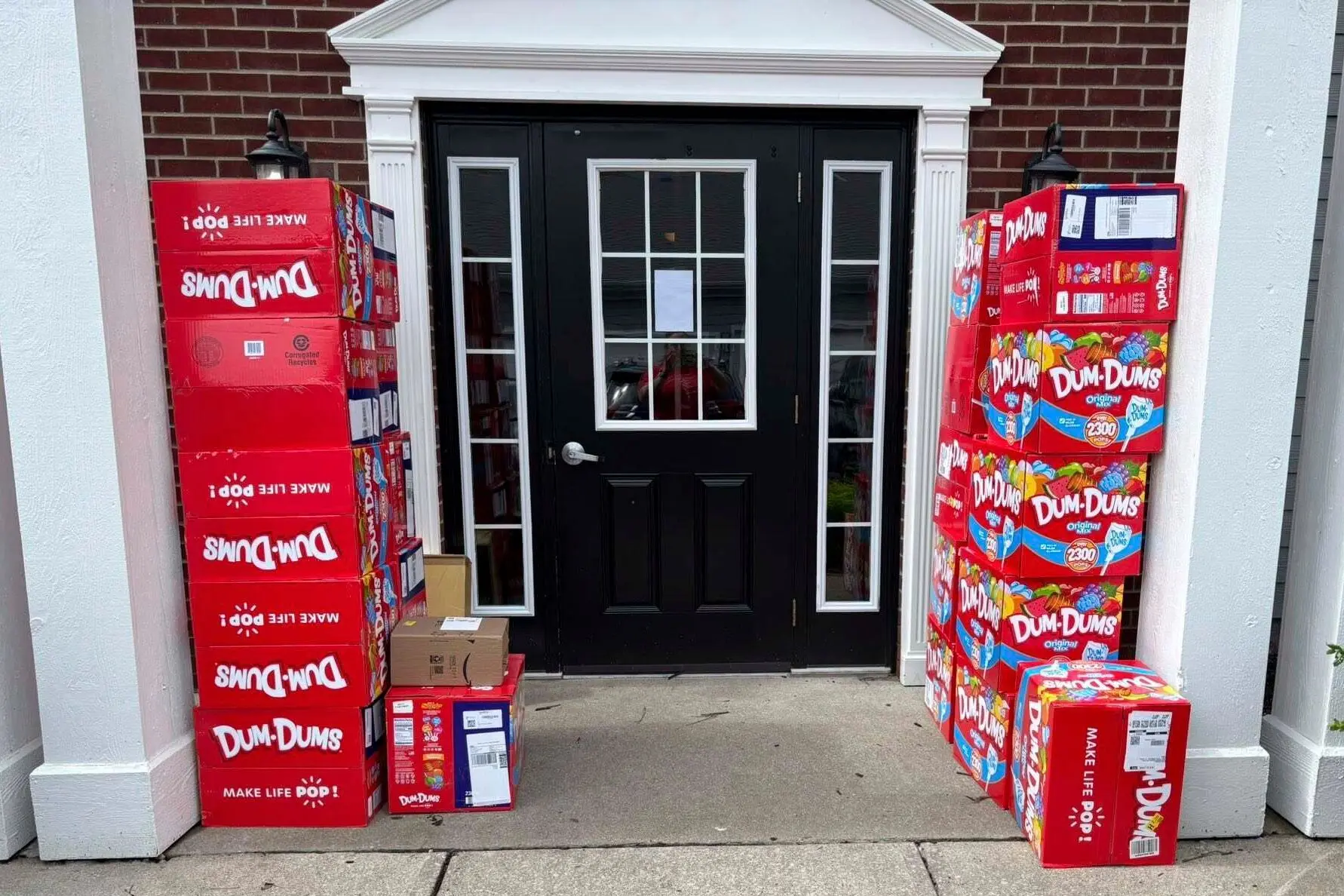
    And another. And then another. Soon, 22 boxes of 50,600 lollipops were stacked five boxes high in two walls of Dum-Dums. That was when Ms. LaFavers heard what no parent wants to hear: Her child had unwittingly placed a massive online order.

    “Mom, my suckers are here!” said her son, Liam, who had gone outside to ride his scooter.

    “I panicked,” Ms. LaFavers, 46, said. “I was hysterical.”

    Ms. LaFavers said in an interview that Liam, 8, became familiar with Amazon and other shopping sites during the pandemic, when she regularly ordered supplies. Since then, she has occasionally let him browse the site if he keeps the items in the cart.

    But over the weekend, Liam had a lollipop lapse. He told his mother he wanted to organize a carnival for his friends, and mistakenly, he said, he placed an order for almost 70,000 pieces of the candy instead of reserving it.

    And so the double ramparts of suckers rose on their doorstep, where the excesses of e-commerce crossed paths with their tight-knit community.

    Ms. LaFavers said that she discovered something was amiss after a shopping trip early on Sunday, when she checked her bank balance online. “It was in the red,” she said.

    The offending item was a $4,200 charge from Amazon for 30 boxes of Dum-Dums. Frantic and upset, she called Amazon, which advised her to reject the shipments. Ms. LaFavers was able to turn away eight of the boxes, totaling 18,400 lollipops, but the 22 boxes containing 50,600 lollipops had already landed.

    “My Alexa didn’t even ding to tell me they had been delivered,” she said.

    Ms. LaFavers said that she was then told by Amazon that it could not take the candy back for a refund because it was food. So she tried to send back to the virtual shopping world what it had unloaded on her in the first place.

    “Hi Everyone! Liam ordered 30 cases of Dum-Dums and Amazon will not let me return them. Sale: $130 box. Still sealed,” she wrote on Facebook on May 4.

    The post attracted the attention of local news stations and national media outlets, highlighting the financial treachery of online activity.

    Parents commiserated on her Facebook page and shared solutions, like detaching payment methods from online accounts, setting up alerts for large purchases or simply keeping children off phones. One child spent $980 on virtual Roblox game currency. A 3-year-old playing on a phone during an airport delay spent $300 on movies. A woman’s granddaughter spent $1,000 on Google Play.

    “As a mom that has experienced unwanted orders, I feel your pain,” a woman wrote.

    Companies offer steps on how to prevent and dispute unauthorized purchases in online shopping and games.

    Roblox advises parents to use password-protected purchasing, and to call its customer service center before initiating a dispute with a payment provider, which would stall the refund process. Epic, the makers of Fortnite, has safeguards that include an “intent-to-buy” step, and purchase cancellations.

    On Apple devices and accounts, family-verification settings include controls called Ask to Buy for a child’s device, or “don’t allow” for in-app purchases.

    Google Play’s purchase-verification process also has additional safeguards on family accounts that reverify the user is authorized to make a purchase on apps meant for children ages 12 and under.

    Amazon eventually told Ms. LaFavers that it would give her a refund. In an email, the company said that it “worked directly” with her “to turn a sticky situation into something sweet.”

    On Wednesday, after the refund came through, Ms. LaFavers decided to give away the Dum-Dums instead of selling them. One neighbor offered to distribute some on Halloween. A local chiropractor asked for two boxes, and a bank in Somerset, Ky., said they would take five boxes.

    “I am giving them to the individuals that offered to buy them from me, or I am donating them to a charity or a school or church,” Ms. LaFavers said. “People that I have relationships with were willing to buy those to help me out.”

    Spangler Candy Co., the company that has made Dum-Dums since 1924, invited Ms. LaFavers and Liam to visit its factory in Ohio. “We also love that so many people jumped in to offer to purchase the extra cases,” said Kirk Vashaw, its chief executive, in an email.

    Liam’s online browsing privileges are on pause. But Ms. LaFavers said he, too, had tried to find a way to recoup her money, telling his mother: “It’s OK, mom, we can sell my Pokémon cards.”
  • A regulatory filing reveals Jeff Bezos’ plan to sell up to $5 billion of his Amazon stock

    A regulatory filing reveals Jeff Bezos’ plan to sell up to $5 billion of his Amazon stock

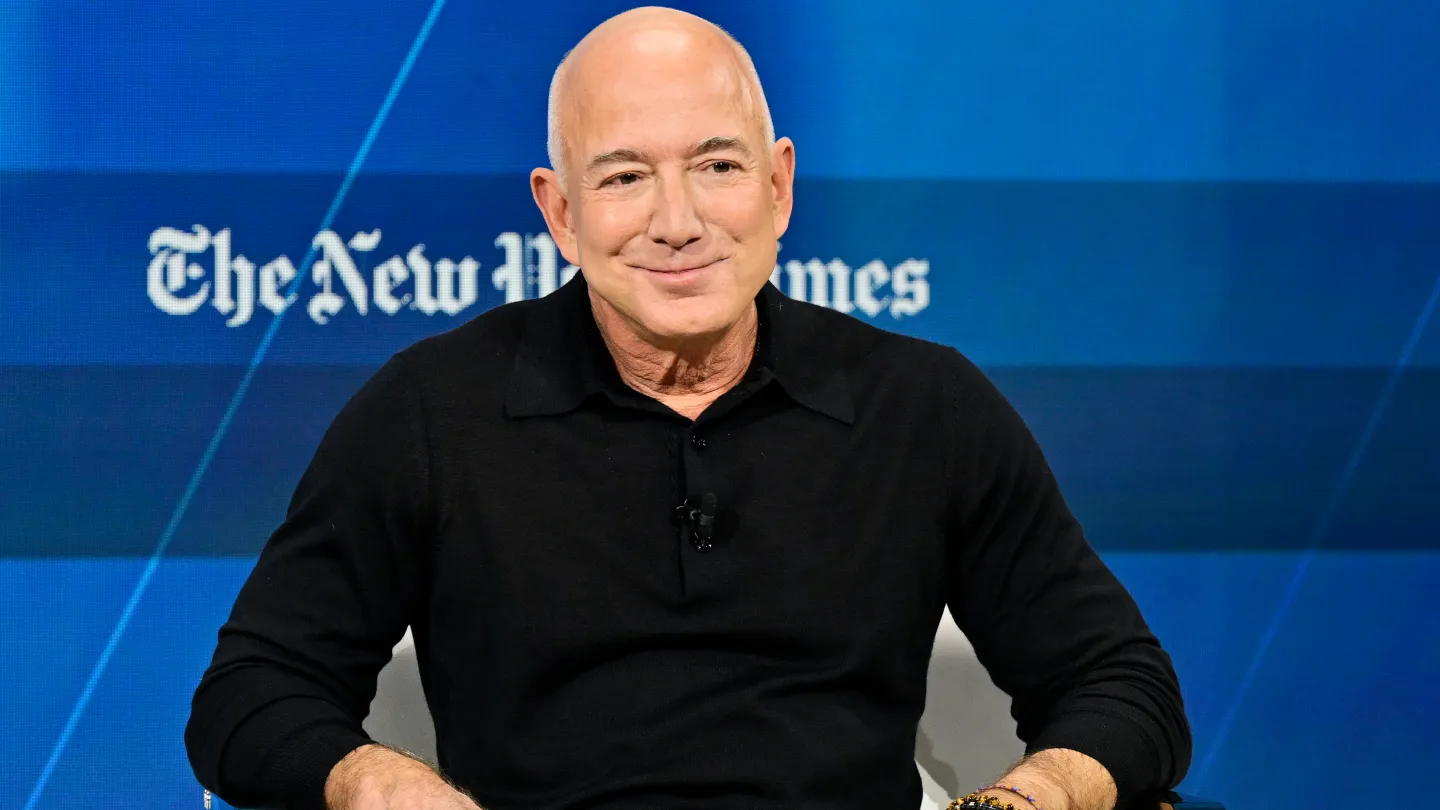
    Amazon founder and executive chairman Jeff Bezos is planning to sell some of his holdings in the company.

    Bezos, whose net worth is valued at over $200 billion, will sell up to 25 million shares in the company, valued at around $5 billion, Amazon disclosed in a regulatory filing Friday. The value of the shares could change, of course, depending on Amazon’s stock price. If it declines, they would be worth less, if it rises, they would be worth more.

    Amazon filed its quarterly 10-Q report with the Securities and Exchange Commission Friday morning, revealing a 10b5-1 trading plan for Bezos. The plans are meant to preempt concerns of insider trading by creating a pre-planned schedule for sales that are executed automatically when certain stock conditions are met.

    The specifics of the trading plan were not disclosed, beyond the 25 million share figure, and an end date of May 29, 2026. For comparison, Disney CEO Bob Iger disclosed a 10b5-1 plan late last year covering about $41 million in stock.

    Bezos, it should be noted, has consistently sold a small portion of his Amazon holdings for the last couple of years to help fund his other ventures, which include The Washington Post and the space firm Blue Origin. Last year, for example, he filed a trading plan that covered up to 50 million shares in the company.

    The planned sale comes amid a challenging environment for Amazon, which is navigating tariff uncertainty. That said, the company’s advertising business continues to surge, growing 19 percent in Q1 to $13.9 billion.

  • With a tax loophole now closed, the price of your online orders could go up

    With a tax loophole now closed, the price of your online orders could go up


    Starting Friday, the Trump administration is shelving a nearly century-old tax loophole that saved companies from paying tens of billions of dollars in fees on cheap imports, most of which come from China. The move stems from the sweeping tariffs President Donald Trump announced last month on most U.S. trading partners, and it will affect businesses from Etsy sellers and family-run footwear companies to e-commerce behemoths.

    In fiscal 2022, 83 percent of all U.S. e-commerce imports used the “de minimis” loophole, according to a government report.

    Trump initially did away with the de minimis exemption in February, but the move quickly overwhelmed U.S. Customs and Border Protection workers and prompted the U.S. Postal Service to briefly suspend inbound shipments from China and Hong Kong. The administration then reinstated the loophole to allow the Commerce Department to craft a way to collect the levy. The agency now has “adequate systems … in place to collect tariff revenue” on these low-value goods, the White House had said.

    According to an executive order last month, imports from China that previously qualified for the exemption now face a duty of at least 145 percent if they arrive via commercial shipping. Shipments through the Postal Service are subject to a fee of $100 per package — rising to $200 next month — or 120 percent of the import value.

    “If a retailer is really reliant on manufacturing or shipping directly from China, this is going to be really painful for them,” Jess Meher, a senior vice president at the returns-management software company Loop, told The Post.

    Ultimately, such costs generally filter down to consumers. Here’s why.

    What is the de minimis exception?

    In Latin, “de minimis” means something that is too small or insignificant to be considered. The rule, passed by Congress in the 1930s and amended over the years, spares merchandise worth less than $800 from import taxes.

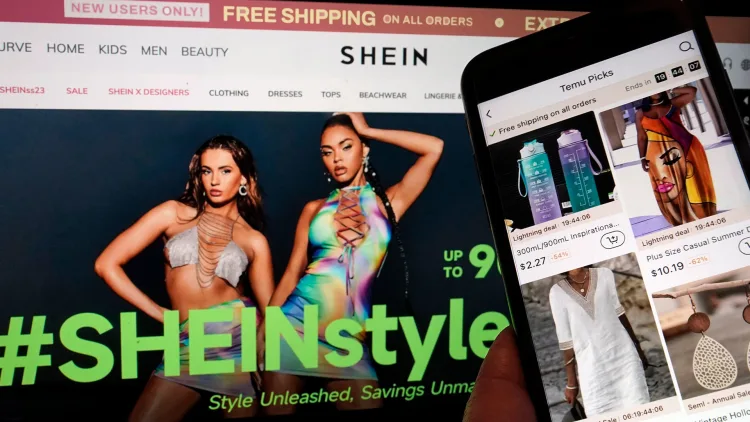
    E-commerce sites Shein and Temu have thrived off this loophole, allowing them to avoid paying billions of dollars in duties. Some trade experts contend that these retailers have fueled a surge in imports since fiscal 2015, when the number of de minimis entries hovered at about 139 million, according to CBP data. Between that fiscal year and 2023, the number of de minimis exceptions swelled over 600 percent. By 2024, they had surged to 1.36 billion, worth about $66 billion, said Gary Hufbauer, a nonresident senior fellow at the Peterson Institute for International Economics, a nonpartisan think tank based in Washington.

    While those volumes represent a mere fraction of U.S. imports — now totaling more than $3 trillion annually — they help boost margins for small- to medium-size businesses in the United States, said Maggie Barnett, chief executive of LVK, a third-party logistics company with warehouses in the U.S. and Canada.

    Many of these companies have about “30 percent of their revenue in retail, but the other 70 percent is leveraging the de minimis,” she said. If they’re not shipping directly from China, they often ship their items in bulk from manufacturers in China or Southeast Asia to warehouses in Canada or Mexico and “ship them over [to the U.S.] one by one when the orders come in,” she said.

    So far, only items originating from China are prohibited from using the de minimis loophole, according to Trump’s executive order.

    What does this have to do with Trump’s tariffs?

    Killing the de minimis loophole is part of Trump’s broader strategy to boost domestic production. On April 2, he ordered a 10 percent tariff on all U.S. imports starting April 5, as well as additional taxes that would bring levies of as much as 50 percent on goods from certain countries starting April 9. Since then, Trump said he was pausing and lowering tariffs on goods from most nations for 90 days while simultaneously imposing a minimum tariff of 145 percent on all Chinese imports. Beijing responded with a 125 percent blanket levy.

    Opposition to the de minimis loophole largely has been bipartisan, with some critics arguing that it has enabled illicit drugs, such as fentanyl, to be sent through the mail into the U.S. President Joe Biden, in his final days in office, issued limitations on the loophole, excluding certain imports from circumventing tariffs.

    How will this affect my orders from Shein, Temu and Amazon Haul?

    Without de minimis, prices on those orders could rise much as 30 percent, costing consumers about $22 billion annually, Hufbauer said.

    A good chunk of that applies to Temu and Shein orders, which are responsible for an estimated 30 percent of packages shipped into the U.S. each day, according to a report from the Peterson Institute. Nearly half of all de minimis shipments originate in China, according to a report by House Republicans.

    In a statement Friday, Temu said it is moving to a “local fulfillment model,” with U.S. orders handled by sellers in the U.S.

    The vast majority of products for sale on Temu now have a green “local” sticker, indicating that they are already located in the U.S. at purchase. Shoppers took to social media this week to lament that a slew of items had been removed from their Temu shopping carts because they did not have that “local” tag. At one point last month, the company also displayed tariff-related costs to consumers by adding a charge at checkout for any imported item.

    Shortly after Trump’s executive order ending de minimis, Shein said it would start making price adjustments on April 25. The retailer doesn’t break down import costs at checkout, but its website displays a message telling consumers that all tariff costs get included in the price they pay.

    Also affected is Amazon, which launched its own platform in November called Haul that similarly sells cheap goods directly from China. Trump chastised the e-commerce giant this week after a news report said it planned to display tariff costs to consumers. An Amazon spokesperson previously told The Washington Post that the team that runs Haul “has considered listing import charges on certain products” but later added that “this was never approved and is not going to happen.”

    With the tax loophole going away, brands that rely on sourcing low-cost goods, especially from China, “are going to have a really tough time because their margins are already really thin,” Meher said.

    Shein, Temu and Amazon did not immediately respond to The Washington Post’s request for comment. (Amazon founder Jeff Bezos owns The Post.)

    Who are the winners and losers?

    American companies that haven’t been able to take advantage of the exemption could be the biggest winners, UBS analyst Jay Sole wrote in a February note after Trump initially revoked the loophole. He pointed to U.S. “fast fashion” retailers, specialty retailers, off-price retailers, department stores and kids’ clothing companies that have lost customers to these foreign e-commerce sites.

    The flip side is that budget-seeking consumers, who have turned to these companies for cheap apparel and housewares, will bear the brunt of any price changes, Hufbauer said.

    The same goes for small- and medium-size businesses, Barnett said. They have less cash on hand, less flexibility on inventory, fewer options to diversify their supply chain and less leverage to negotiate fair prices with major retailers selling their product.

    “It’s going to be hard for those medium-sized businesses to maintain in this chaotic environment,” she said.

  • Amazon dismisses a report claiming it will detail the impact of tariffs on individual product prices, stating, “That’s never been a factor for the main Amazon site

    Amazon dismisses a report claiming it will detail the impact of tariffs on individual product prices, stating, “That’s never been a factor for the main Amazon site

    The White House is coming down on Amazon over a Tuesday report from Punchbowl News that claimed the world’s largest online retailer will start showing how much Trump’s tariffs affect the price of each product. Amazon, however, says the report was inaccurate and “never a consideration for the main Amazon site.”

    The Punchbowl report said Amazon planned to show the impact of tariffs “right next to the product’s total listed price,” according to a person familiar with the plans.

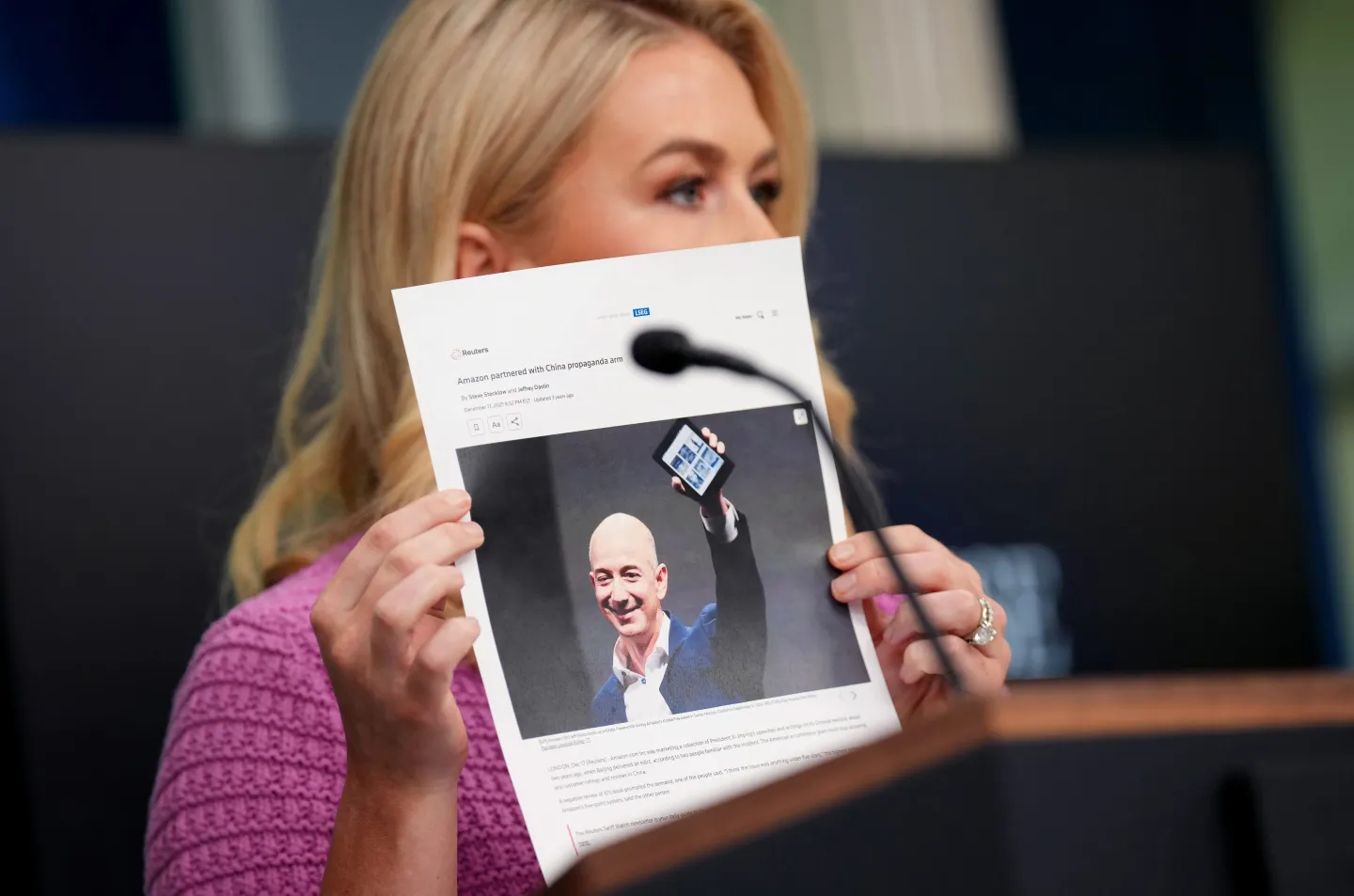
    White House press secretary Karoline Leavitt erupted at Amazon over the report on Tuesday morning, calling it a “hostile and political act.”

    But Amazon spokesperson Ty Rogers told Fortune on Tuesday morning that the company has only considered such a move, and that it would apply only to a new Temu-like section of the Amazon Haul shopping site that just launched six months ago—if implemented at all.

    “The team that runs our ultra low cost Amazon Haul store has considered the idea of listing import charges on certain products,” Rogers said in the statement. “Teams discuss ideas all the time. This was never a consideration for the main Amazon site and nothing has been implemented on any Amazon properties.”

    The company then followed up with a new, more definitive statement from a separate spokesperson, Tim Doyle, making clear the idea “was never approved and is not going to happen.”

    Previously, Amazon spokesperson Ty Rogers had clarified that if implemented, the move would be a reaction to the end of a longstanding trade loophole known as de minimis—which allows overseas companies to ship merchandise under $800 to U.S. customers without having to pay duties—and not explicitly to the Trump administration’s reciprocal tariffs. President Trump has signed an executive order that would ban the duty-free de minimis exception for goods from China and Hong Kong beginning May 2. In response, ultra-discounter Temu, which relies on de minimis to keep prices dirt-cheap, has begun listing “import fees” at checkout to help explain skyrocketing prices on its apps. Amazon had said the move under consideration would be a similar one.

    But the White House press secretary was asked about the report prior to Amazon’s clarification.

    “Why didn’t Amazon do this when the Biden administration hiked inflation to the highest level in 40 years?” Leavitt asked. “This is another reason why Americans should buy American.”

    To be clear, the inflation Leavitt is referencing, which peaked during the Biden administration, was largely organic. An array of global and domestic factors played into inflation, from disruptions in the supply chain caused by the COVID-19 pandemic to the heightened consumer demand since everyone was locked down and forced to stay home. That time was also marked by labor shortages and a big spike in energy prices from Russia’s invasion of Ukraine in early 2022. In contrast, Trump’s tariffs—particularly on Chinese goods—were a conscious and targeted policy decision, the cost of his political strategy. 

    GettyImages 2212560352 e1745935213479
    White House press secretary Karoline Leavitt, joined by Treasury Secretary Scott Bessent, holds a news article on Amazon CEO Jeff Bezos as she speaks during the daily press briefing on April 29, 2025, in Washington, D.C. (ANDREW HARNIK—GETTY IMAGES)

    Before the press briefing, Leavitt said she had “just got off the phone with the president about Amazon’s announcement.”

    Like many other retailers, especially those advertising discount prices like Shein or Temu, Amazon is particularly vulnerable to Trump’s proposed reciprocal tariffs on imports. Amazon sells millions of items across myriad product categories, from clothes to toys to electronics and more. Many of those products are manufactured in China, and Trump has imposed a 145% tariff on imports from the country, which is the world’s second-largest economy. Amazon’s third-party sellers are equally exposed.

  • Shein and Temu announce that ‘price adjustments’ will soon be implemented for U.S. customers

    Shein and Temu announce that ‘price adjustments’ will soon be implemented for U.S. customers

    China-founded e-commerce sites Temu and Shein say they plan to raise prices for U.S. customers starting next week, a ripple effect from President Donald Trump’s attempts to correct the trade imbalance between the world’s two largest economies by imposing a sky-high tariff on goods shipped from China.

    Temu, which is owned by the Chinese e-commerce company PDD Holdings, and Shein, which is now based in Singapore, said in separate but nearly identical notices that their operating expenses have gone up “due to recent changes in global trade rules and tariffs.”

    Both companies said they would be making “price adjustments” starting April 25, although neither provided details about the size of the increases. It was unclear why the two rivals posted almost identical statements on their shopping sites.

    Since launching in the United States, Shein and Temu have given Western retailers a run for their money by offering products at ultralow prices, coupled with avalanches of digital or influencer advertising.

    The 145% tariff Trump slapped on most products made in China, coupled with his decision to end a customs exemption that allows goods worth less than $800 to come into the U.S. duty-free, has dented the business models of the two platforms.

    E-commerce companies have been the biggest users of the widely used exemption. Trump signed an executive order this month to eliminate the “de minimis provision” for goods from China and Hong Kong starting May 2, when they will be subject to the 145% import tax.

    As many as four million low-value parcels—most of them originating in China—arrive in the U.S. every day under the soon-to-be canceled provision.

    U.S. politicians, law enforcement agencies, and business groups lobbied to remove the long-standing exemption, describing it as a trade loophole that gave inexpensive Chinese goods an advantage and served as a portal for illicit drugs and counterfeits to enter the country.

    Shein sells inexpensive clothes, cosmetics, and accessories, primarily targeting young women through partnerships with social media influencers. Temu, which promoted its goods through online ads, sells a wider array of products, including household items, humorous gifts, and small electronics.

    Last year the companies were among the largest advertising spenders on social media platforms, but they’ve both slashed that spending in recent weeks, according to data analytics provider Sensor Tower. That could be bad news for the platforms such as Facebook, Instagram, Snap, X, and TikTok that rely on advertising.

    In November, American e-commerce giant Amazon launched a low-cost online storefront featuring electronics, apparel, and other products priced at under $20. Many of the electronics, apparel, and other products on the storefront Wednesday resembled the types of items typically found on Shein and Temu.

    In their customer notices about the pending price increases, the companies encouraged customers to keep shopping in the days ahead.

    “We’ve stocked up and stand ready to make sure your orders arrive smoothly during this time,” Temu’s statement said. “Were doing everything we can to keep prices low and minimize the impact on you.”