Category: Style & Art

  • Fans Commemorate 250th Anniversary of Jane Austen’s Birth in Period Dress

    Fans Commemorate 250th Anniversary of Jane Austen’s Birth in Period Dress

    LONDON — Ellie Potts goes dancing with her friends most weeks. They don’t put on the latest Taylor Swift or Ed Sheeran, though – they much prefer English country dances that were popular more than 200 years ago.

    As the music starts, about two dozen men and women curtsy and bow, extend a gloved hand to their partner, before dancing in circles or skipping in elaborate patterns around each other.

    Like many of her fellow Hampshire Regency Dancers, Potts is a devotee of Jane Austen and all things from the Regency period. Not only have they studied the books and watched all the screen adaptations – they also research the music, make their own period dresses, and immerse themselves in dances Austen and her characters would have enjoyed in centuries past.

    “I’ve been interested in Jane Austen since I was about 8 or 9,” said Potts, 25. “I mainly joined (the dance group) so I can have balls and things to go to in my costumes, but I really got into it. I’ve been surprised how much I enjoy the dancing.”

    There’s no shortage of grand costumed balls and historical dancing this year, which marks the 250th anniversary of Austen’s birth. This weekend, thousands of fans who call themselves “Janeites” are descending on the city of Bath for a 10-day festival celebrating the beloved author of “Pride and Prejudice” and “Sense and Sensibility.”

    ?url=https%3A%2F%2Fassets.apnews
    Ellie Potts, right, a member of the Hampshire Regency Dancers, practices dance in Winchester, England, Sept. 10, 2025, ahead of the 10 days Jane Austen Festival starting on Friday. © AP Photo/Joanna Chan

    The highlight is a Regency costumed promenade on Saturday, where some 2,000 people in their finest bonnets, bows and costumes will parade through the streets of Bath. Organizers say the extravaganza holds the Guinness World Record for the “largest gathering of people dressed in Regency costumes.”

    Bonny Wise, from Indiana, is attending her sixth Jane Austen festival in Bath. This time she’s bringing four period dresses she made, and will lead a tour group of 25 Austen enthusiasts from all over the United States.

    “I started planning a tour four years ago, when I realized this was a big year for Jane,” said Wise, 69. She credited the 1995 adaptation of “Sense and Sensibility” with sparking her obsession.

    “That movie just opened up a whole new world for me,” she said. “You start with the books, the movies, then you start getting into the hats, the tea, the manners … one thing just led to another.”

    Wise said she loves the wit, humor and social observations in Austen’s books. She also finds the author’s own life story inspiring.

    “I admire Jane and what she managed as a woman in that era, her perseverance and her process of becoming an author,” she said.

    ?url=https%3A%2F%2Fassets.apnews
    Chris Oswald, chair of the Hampshire Regency Dancers, holds up a period costume he made during a dance practice session of Hampshire Regency Dancers in Winchester, England, Sept. 10, 2025. © AP Photo/Joanna Chan

    The Jane Austen Society of North America, the world’s largest organization devoted to the author, says it has seen a recent influx of younger fans, though most of its members – 5,000 to date – skew older.

    “We’re growing all the time because Jane Austen is timeless,” said Mary Mintz, the group’s president. “We have members from Japan, India. They come from every continent except Antarctica.”

    Many festival-goers will be making a pilgrimage to Steventon, the small village in rural Hampshire, southern England, where Austen was born in 1775.

    The author lived in Bath, a fashionable spa town in the 18th and 19th centuries, for five years. Two of her novels, “Persuasion” and “Northanger Abbey,” feature scenes set in the World Heritage city.

    Bath is also the filming location for parts of “Bridgerton,” Netflix’s wildly popular modern take on period drama based loosely on the Regency period, the decade when the future King George IV stood in as prince regent because his father was deemed unfit to rule due to mental illness.

    Thanks to the show, Austen and Regency style – think romantic flowing gowns, elegant ballrooms and high society soirees – have become trendy for a new generation.

    “I think Jane Austen is on the rise,” Potts said. “She’s definitely become more popular since ‘Bridgerton’.”

    In a church hall in Winchester, a few streets away from where Austen was buried, the Hampshire Regency Dancers gather weekly to practice for the many performances they’re staging this year in honor of the author.

    The group selects dances that appear in screen adaptations of Austen’s novels, and members go to painstaking detail to ensure their costumes, down to the buttons and stitching, are authentic looking.

    “We go to a lot of trouble to get things as close to the original as possible,” said Chris Oswald, a retired lawyer who now chairs the group. “For me it’s about getting a better understanding of what life was like then, and in the process of doing that getting a better understanding of Jane Austen herself.”

    Oswald is passionate about his group’s showcases in Hampshire, or what he jokingly calls “Jane Austen land.”

    “People get quite touched because they are walking where Jane Austen actually walked. They dance in a room that Jane Austen danced in,” he said. “For people who are very into Jane Austen, that’s extremely special.”

    Many “Janeites” say they get huge enjoyment in making Austen’s words and imageries come to life in a community of like-minded people.

    Lisa Timbs, a pianist who researches the music in Austen’s life and performs it on an antique pianoforte, puts it succinctly: She and her Regency friends are “stepping back in time together.”

    “I think it’s an escape for a lot of people,” Timbs added. “Perhaps it’s to escape the speed, noise and abrasiveness of the era in which we find ourselves, and a longing to return to the elegance and indulgent pleasures of what was really a very fleeting period in history.”
  • Iconic Retailer Slashes Footprint, Closing 80% of Stores

    Iconic Retailer Slashes Footprint, Closing 80% of Stores

    Stock Widget

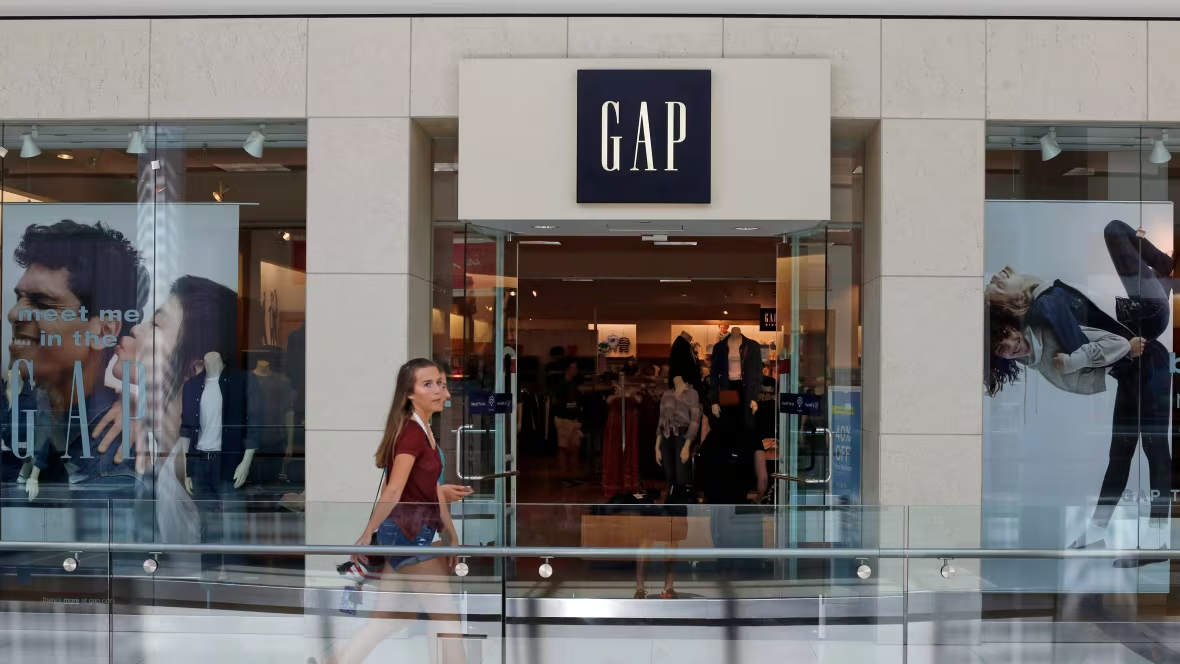
    For generations of Americans, The Gap GPS -3.20% ▼ evoked the essence of effortless style—the crisp white tees, slim khakis, and relaxed jeans that defined casual Fridays and weekend wardrobes from the 1980s through the early 2000s. Nestled in the heart of bustling indoor malls, Gap stores were more than retailers; they were cultural touchstones, symbolizing an accessible American aesthetic. But in a retail landscape reshaped by e-commerce, fast fashion, and shifting consumer habits, the once-mighty chain has quietly shuttered over 80% of its locations, shrinking from a global peak of more than 2,500 stores in 2000 to just 472 worldwide today. This dramatic downsizing, accelerated by the COVID-19 pandemic and years of strategic missteps, reflects not just The Gap’s struggles but broader challenges facing brick-and-mortar apparel giants.

    The company’s transformation—or contraction—has been underway for over two decades, but recent disclosures from CEO Richard Dickson underscore a pivotal moment. Speaking at the Goldman Sachs 32nd Annual Global Retailing Conference on September 4, 2025, Dickson detailed the “heavy lifting” of fleet rationalization, including the closure of over 350 stores since 2020. “We had declining top line. We had brands that were losing share. We had an aging fleet. We had bloated inventory. We had a lot of margin pressure. We had bloated costs. We had low morale,” he said, painting a picture of a company in dire need of reinvention. While the namesake Gap brand has borne the brunt of the cuts, the overall Gap Inc. portfolio—encompassing Old Navy, Banana Republic, and Athleta—now operates around 3,500 stores across 35 countries, with 2,486 company-operated.

    This isn’t the first time Gap Inc. has pivoted. Founded in 1969 in San Francisco as a purveyor of Levi’s jeans for teens and young adults, the retailer evolved under visionary CEO Millard “Mickey” Drexler in the 1980s. Drexler shifted the focus to everyday essentials like khakis, tees, and button-downs, fueling explosive growth. By 1990, Gap had about 1,100 stores; a decade later, that number ballooned to 2,548, including the launches of value-oriented Old Navy in 1994 and upscale Banana Republic. As of October 2000, the Gap brand alone boasted 2,002 U.S. stores (including 133 outlets) and 503 international locations, making it one of the world’s largest apparel chains with annual sales topping $13 billion.

    Drexler’s era marked The Gap’s zenith, but his 2002 departure ushered in turbulence. Subsequent leaders grappled with fast fashion disruptors like H&M and Zara, which offered trendy, low-cost alternatives mimicking Gap’s signature looks. Big-box behemoths Walmart and Target also encroached, expanding affordable apparel lines that drew budget-conscious shoppers away from malls. A infamous 2010 rebranding fiasco—dubbed “Gapgate”—saw the company briefly abandon its iconic blue square logo for a bland Helvetica font, sparking online backlash and a swift reversal that cost millions in lost goodwill.

    Compounding these woes was the seismic shift in consumer behavior. The rise of online shopping via Amazon and Shein eroded mall traffic long before the pandemic. Indoor malls, once Gap’s prime real estate, had been declining since Walmart’s national expansion in the 1980s and 1990s, which hastened the demise of anchors like Sears and Kmart (the latter merged with Sears in 2005, leading to bankruptcy in 2018). By 2019, Placer.ai data showed annual visits to indoor malls flatlining, only to plunge 41.1% in 2020 amid COVID lockdowns—a “rip-the-band-aid” moment that forced retailers to reassess.

    The pandemic amplified these trends, with Gap Inc. temporarily closing all North American stores in March 2020. In October that year, then-CEO Sonia Syngal announced plans to shutter 220 Gap and 130 Banana Republic stores, citing “hyper casualization” favoring athleisure brands like Lululemon. This was part of a broader “Power Plan 2023” to streamline operations and prioritize high-performers like Old Navy and Athleta. By fiscal 2024, the company revised closure plans downward, expecting only about 35 net store reductions for the year, a sign of stabilization.

    The toll on the Gap brand has been stark: From 2,505 worldwide stores in 2000, it’s down to 472 as of 2023, an 81% reduction. Globally, Gap Inc.’s store count hovered around 3,569 in early 2025, but the namesake brand now represents a fraction of the portfolio, with Old Navy at 1,173 locations and Athleta at 225. These closures have right-sized the fleet, closing underperformers in oversaturated malls and focusing on experiential formats like outlet centers and standalone shops.

    Financially, the strategy is showing glimmers of success. Gap Inc. reported second-quarter fiscal 2025 results on August 28, with net sales flat at $3.73 billion year-over-year, marking the sixth consecutive quarter of positive comparable sales. Diluted earnings per share rose 6% to $0.57, with net income climbing nearly 5% to $216 million. Gross margins expanded 360 basis points to 41.2%, driven by lower markdowns and supply chain efficiencies, though merchandise margins dipped slightly due to tariff pressures.

    Foot traffic data from Placer.ai corroborates the mixed recovery. Overall Gap Inc. visits surged 3.6% year-over-year in Q2 2025, led by Old Navy’s 4.8% gain as middle-income shoppers returned. The Gap brand saw a modest 1.4% uptick in the quarter, front-loaded by a 5.3% jump in April for stores open at least a year. However, momentum waned, with visits declining 5.4% in June and 5.1% in July amid seasonal softness. Company-wide, same-store visits dipped just 1.9% in June and 0.7% in July, buoyed by Old Navy’s resilience ahead of back-to-school.

    Dickson, who assumed the CEO role in 2024 after stints at Mattel and Gap’s beauty ventures, is optimistic about the pared-down footprint. At the Goldman Sachs conference, he highlighted the “portfolio of brands that were iconic and recognized,” emphasizing IP value over sheer size. Store sales for the Gap brand fell 1% in Q2, but the remaining locations are more productive, with a focus on premium real estate.

    Looking ahead, Gap Inc. is doubling down on revitalizing the Gap brand without expanding its store count aggressively. Dickson outlined a “flywheel” marketing playbook, including collaborations like the “Get Loose” campaign with singer Tyla and Jungle, followed by Gen Z-targeted efforts featuring Troye Sivan and a retro nod with Parker Posey. The company is betting on nostalgic trends, such as low-rise denim reminiscent of Y2K fashion, and expanding into high-margin categories like fragrances and beauty. At the conference, Dickson announced strategic pushes into accessories and personal care, including curated beauty assortments in 150 Old Navy stores and Gap’s first fragrance line.

    These moves aim to “attract a new generation” while leveraging the brand’s heritage. Beauty, Dickson noted, is “one of the fastest growing and most resilient” segments, with accessories offering similar upside. Online sales, which now account for about 40% of revenue, complement the physical footprint, blending e-commerce with in-store experiences like personalized styling.

    Yet, challenges persist. Tariffs on imports from key suppliers like Vietnam and China—escalating under recent trade policies—could squeeze margins further, as noted in Q2 earnings. Competition remains fierce, with Shein and Temu capturing Gen Z’s attention through social media-driven trends. And while Old Navy and Athleta thrive, the Gap brand’s identity crisis lingers; its Q1 2025 same-store sales grew 5%, but investors remain cautious, with shares up 52% year-to-date yet trading below historical highs.

    The Gap’s story is a cautionary tale of retail evolution: From mall monarch to a leaner, digital-savvy survivor. As Dickson put it, the company is no longer “underperforming significantly,” but sustaining momentum will require nailing cultural relevance in a fragmented market. With fewer stores but sharper focus, The Gap may yet reclaim its casual crown—just don’t expect to find one in every mall anytime soon.

  • A Surreal Evening on the French Riviera With Jeff Bezos and Duran Duran

    A Surreal Evening on the French Riviera With Jeff Bezos and Duran Duran

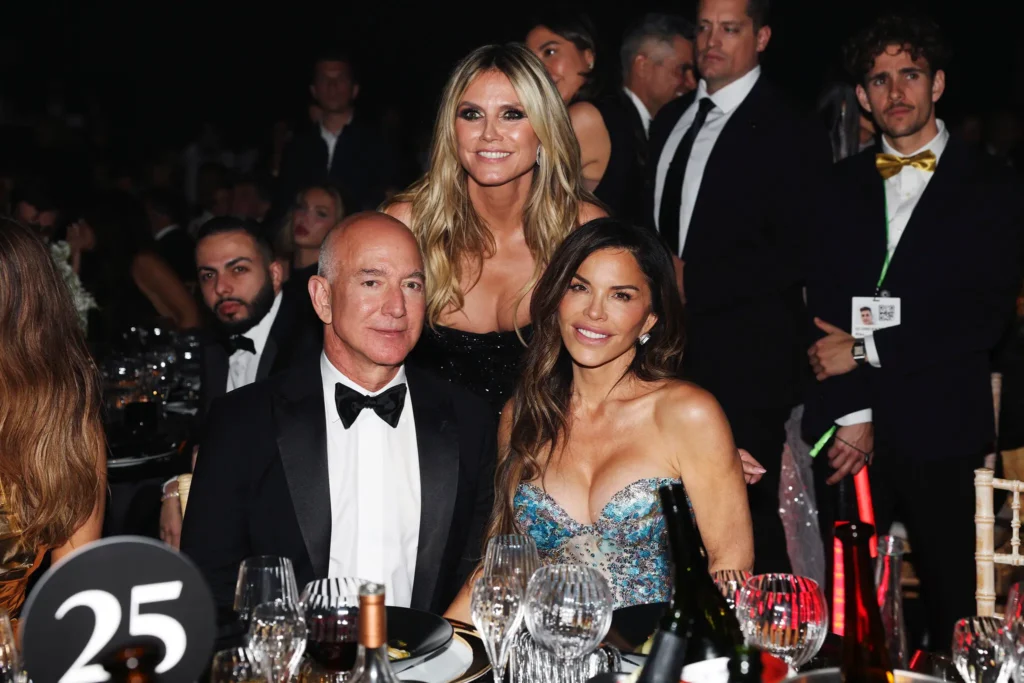
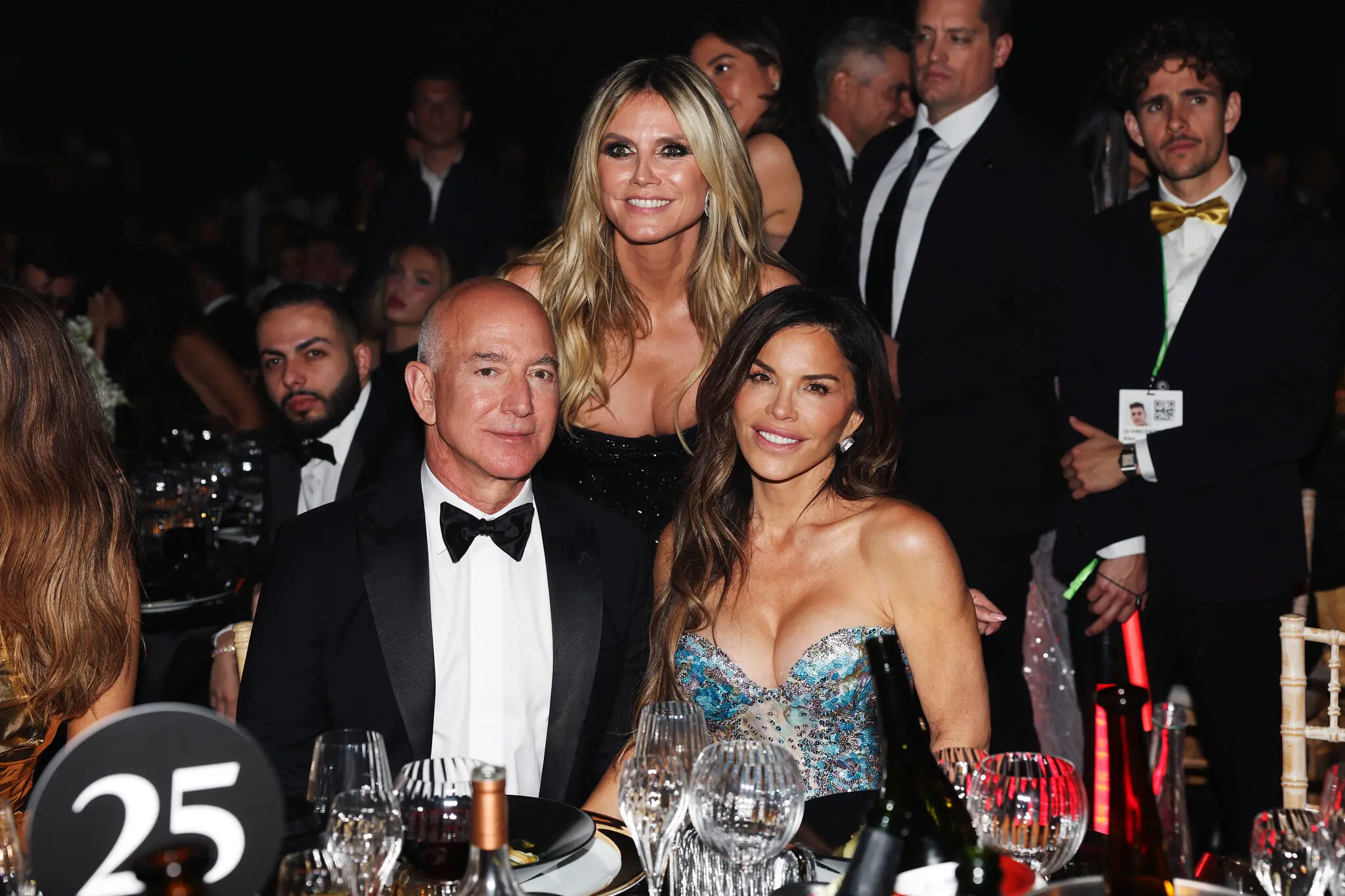
    From left, Jeff Bezos, Heidi Klum and Lauren Sánchez inside the amfAR gala on Thursday. (Pascal Le Segretain/amfAR/Getty Images)
    From left, Jeff Bezos, Heidi Klum and Lauren Sánchez inside the amfAR gala on Thursday. (Pascal Le Segretain/amfAR/Getty Images)

    Every year, as the Cannes Film Festival winds down, hundreds of celebrities and philanthropists gather at the palatial Hotel du Cap-Eden-Roc for the amfAR gala, an event that raises millions for biomedical research and also prides itself on being a lavish, fashion-forward party.

    That was certainly the case at the 31st installment Thursday, which featured performances from Ciara, Adam Lambert and Duran Duran.

    At blustery cocktails in the seaside town of Antibes overlooking the vast blue water of the French Riviera, the Oscar-nominated actor Colman Domingo, wearing a custom Valentino suit and Boucheron jewelry that he said made him feel like a “peacock,” admitted that it’s a surreal night.

    “It’s so maximalistic in all of this expression,” he said. “And it is all to draw eyes toward H.I.V. and AIDS research.”

    23ST PARTYREPORT AMFAR 02 vczj superJumbo
    From left, Spike Lee, Tonya Lewis Lee and Colman Domingo. (Andreas Rentz/amfAR,/Getty Images)
    23ST PARTYREPORT AMFAR 03 vczj superJumbo
    Adrien Brody, left, and Georgina Chapman. (Le Segretain/amfAR, /Getty Images)
    23ST PARTYREPORT AMFAR 04 vczj superJumbo
    The gala took place at the Hotel du Cap-Eden-Roc on the French Riviera.(Colby Tallia/amfAR,/Getty Images)

    The cause was the reason the actress Teri Hatcher, dressed in a sleek black gown, said she was excited to attend, “especially as an American wanting to, at this time, be putting light on causes that are important, that need funding.”

    It was her first time at the event, which was initially hosted by Elizabeth Taylor in 1993. The night raised more than $17 million.

    In his opening remarks at the dinner, the outgoing amfAR chief executive, Kevin Robert Frost, also alluded to the Trump administration’s cuts affecting H.I.V. prevention.

    “As you all know, this is not a great time for global health,” he said. “Many governments, especially mine, the U.S., but also the United Nations and others, are cutting back on investments in health, and many communities are already feeling the consequences, especially people living with H.I.V., who depend on daily medications for their survival.”

    Sitting near the stage was Kimberly Guilfoyle, Mr. Trump’s choice to be ambassador to Greece, in a bright red dress.

    23ST PARTYREPORT AMFAR 05 vczj superJumbo
    Kimberly Guilfoyle. (Pascal Le Segretain/amfAR,/Getty Images)
    23ST PARTYREPORT AMFAR adds 02 vjbm superJumbo
    Taraji P. Henson. (Sameer Al-Doumy/Agence France-Presse/Getty Images)
    23ST PARTYREPORT AMFAR adds 03 vjbm superJumbo
    Adam Lambert. (Sameer Al-Doumy/Agence France-Presse/Getty Images)

    Earlier Kyle Clifford, who is set to take over for Mr. Frost, said that the organization keeps politics outside of the gala tent, which this year was dressed up with hanging lanterns and moody red lighting.

    “We’re a nonpartisan organization and it’s a safe, fun place for people to do their philanthropy,” he said.

    Indeed, the night drew more than 850 people and many famous faces, including Jeff Bezos, Lauren Sánchez, Kevin Spacey, who was found not guilty of sexual assault charges by a British jury in 2023, and Leonardo DiCaprio, who tried to remain incognito in a black baseball cap.

    On the hotel’s perfect lawns, Ms. Guilfoyle was spotted posing for photos opposite Heidi Klum, the model and “Project Runway” host, who later bemoaned the adjacent film festival’s new dress code that prohibited nudity and “voluminous” outfits.

    “I think it’s boring,” she said, dressed in a strapless gown, with a sheer skirt and large feathered train.

    23ST PARTYREPORT AMFAR 07 vczj superJumbo
    Teri HatcherCredit…Andreas Rentz/amfAR, via Getty Images
    23ST PARTYREPORT AMFAR 08 vczj superJumbo
    Leonardo DiCaprioCredit…Kennedy Pollard/amfAR, via Getty Images
    23ST PARTYREPORT AMFAR 06 vczj superJumbo
    Ciara performed.Credit…Ryan Emberley/amfAR, via Getty Images

    At the bar, the director Spike Lee, who had just premiered his latest movie, “Highest 2 Lowest,” at the festival, chatted with the Oscar-winner Adrien Brody. Upon entering the party, Mr. Lee, a dedicated New York Knicks fan, said he was glad he missed the previous night’s playoff game, in which his team suffered a heartbreaking loss to the Indiana Pacers.

    “I was on another continent, a thousand miles away,” he said. “They cannot blame that disaster on me.”

    Mr. Brody had donated one of his artworks, a mixed media piece centered on Marilyn Monroe, to the night’s auction. He was not the only actor to do so. James Franco, who has recently been less visible following sexual misconduct allegations, also supplied a painting.

    Ciara kicked off the dinner with a performance of her hits including “1, 2 Step,” flanked by two backup dancers.

    23ST PARTYREPORT AMFAR 09 vczj superJumbo
    James FrancoCredit…Andreas Rentz/amfAR, via Getty Images
    23ST PARTYREPORT AMFAR adds 01 vjbm superJumbo
    Kevin SpaceyCredit…Scott a Garfitt/Invision, via Associated Press

    And while the night was hosted by Taraji P. Henson, the affair was dominated by the flashy live auction where items included Chopard diamond earrings, an Andy Warhol screenprint, and a Dodge Charger used in “Fast X,” the most recent installment in the “Fast & Furious” franchise, which the movie’s star, Michelle Rodriguez, hyped up with a giggly introduction.

    A George Condo painting, made specially for the occasion, was the big seller at 1,150,000 euros, or about $1.3 million. Mr. Lee contributed a surprise item of a walk-on role in his next movie, and added during the bidding he would take the winner to a Knicks game next season.

    As is now tradition at the gala, the auction featured a fashion show curated by the French fashion editor Carine Roitfeld, with a collection that immediately sold. This year’s theme was “From Cannes With Love,” a tribute to James Bond. Ms. Hatcher, who played a Bond girl in the 1997 film “Tomorrow Never Dies,” walked the runway.

    23ST PARTYREPORT AMFAR 10 vczj superJumbo
    Kevin Robert Frost, the chief executive of amfAR.Credit…Tristan Fewings/amfAR, via Getty Images

    After a brief intermission in bidding, Mr. Lambert performed a series of songs by Queen with accompaniment from the band’s drummer Roger Taylor.

    But it wasn’t until the end of the long event, well after midnight, that the 1980s pop dandies, Duran Duran, who are about to embark on a European tour, took the stage.

    While guests lit up cigarettes inside, Mr. Domingo, Mariska Hargitay and Georgina Chapman grooved along to songs like “Notorious” and “Ordinary World.”

    But the night, and the world, felt far from ordinary.

  • The Best-Dressed Stars at the 2025 Cannes Film Festival

    The Best-Dressed Stars at the 2025 Cannes Film Festival

    The Best Dressed Celebrities on the 2025 Cannes Film Festival Red Carpet. (Getty Images)
    The Best Dressed Celebrities on the 2025 Cannes Film Festival Red Carpet. (Getty Images)

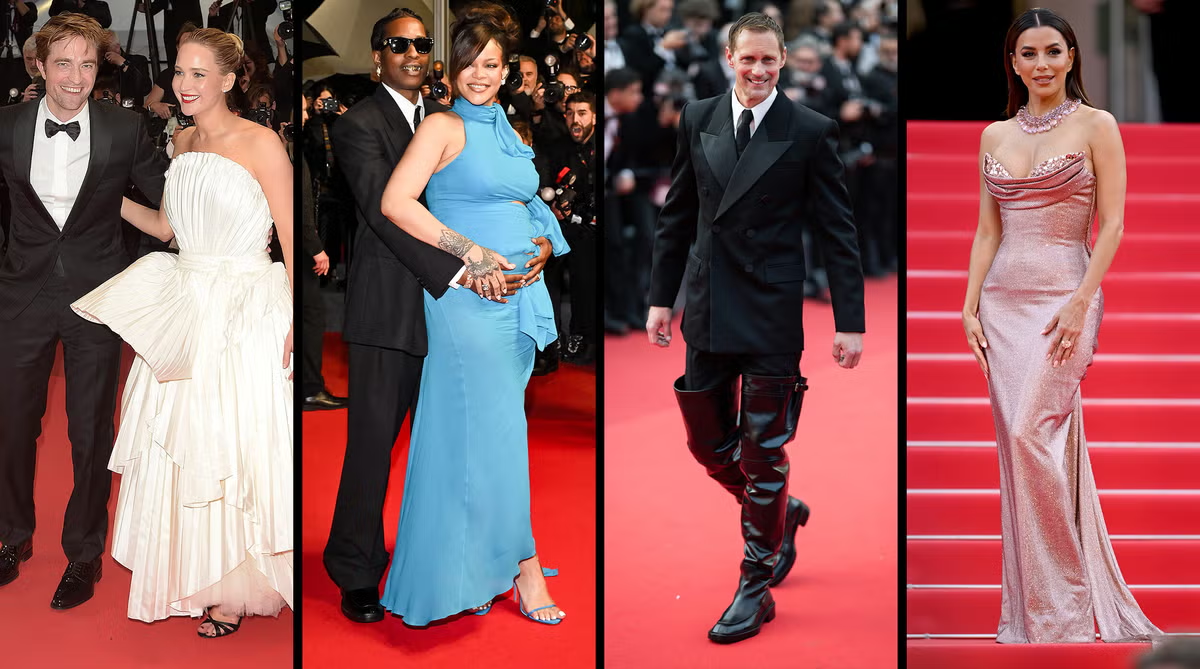
    It’s reliably one of the biggest events for style (and film!) each year, and the 2025 Cannes Film Festival once again delivered standout red carpet looks — from floor-sweeping gowns to more conceptual, fashion-forward ensembles. 

    With appearances from A-listers like Emma Stone and Jodie Foster, plus a bevy of supermodels — including Heidi Klum, Karolína Kurková and Canadian Coco Rocha — this year’s red carpet was one for the books.

    Rihanna and her husband, rapper A$AP Rocky, even shared a sweet moment together under an “umbrella, -ella, -ella” at the premiere of Highest 2 Lowest.

    Here are 12 of the year’s top Cannes Film Festival looks.

    Dakota Johnson

    dakota johnson cannes film festival
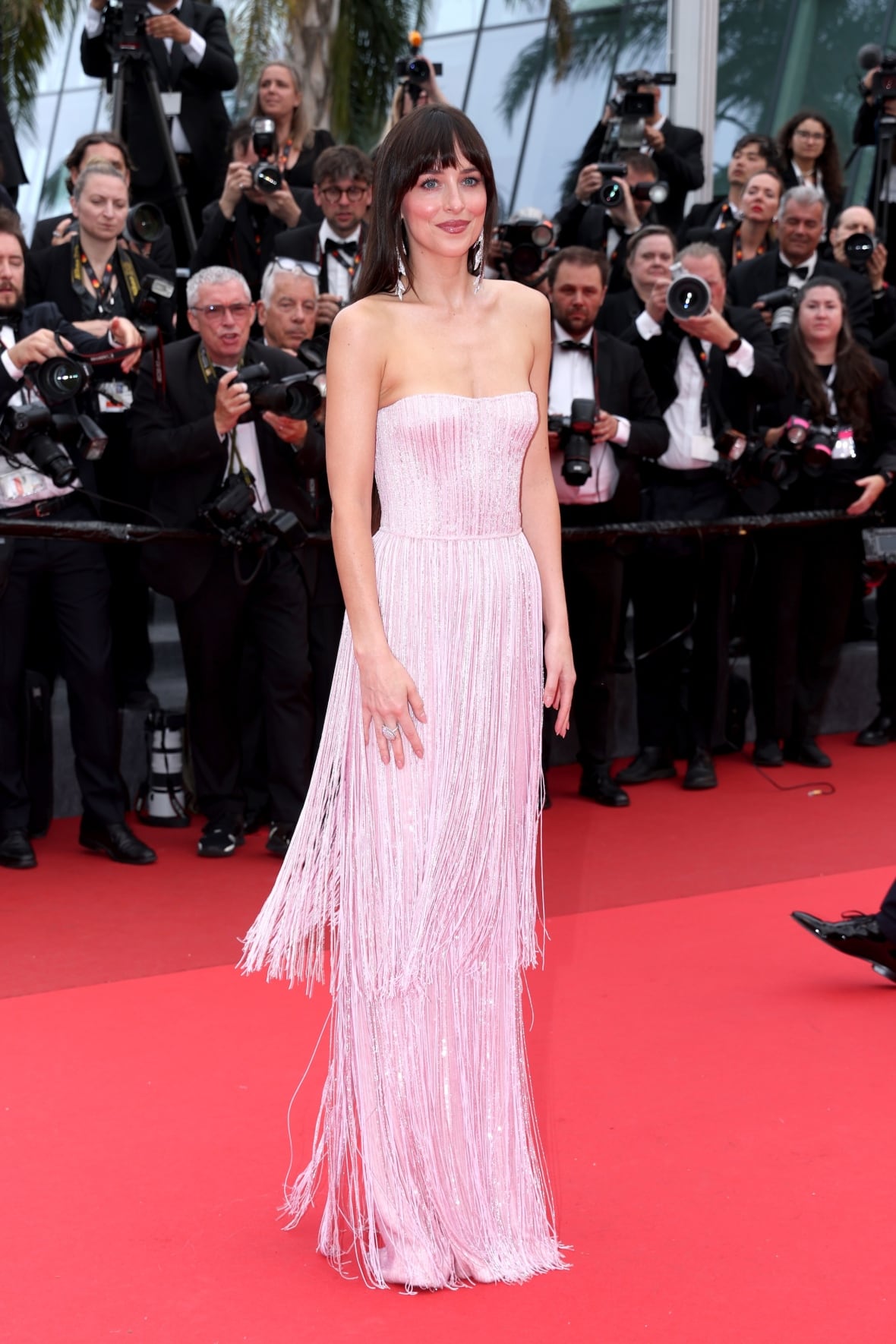
    Dakota Johnson in a Gucci dress at the Highest 2 Lowest premiere. (Pascal Le Segretain/Getty Images)

    The American actor wore Gucci multiple times at Cannes, including to the premiere of Spike Lee’s Highest 2 Lowest. Stylist Kate Young paired her strapless, sequin-embroidered fringe gown with a beautiful pair of shoulder-grazing drop earrings by Boucheron. 

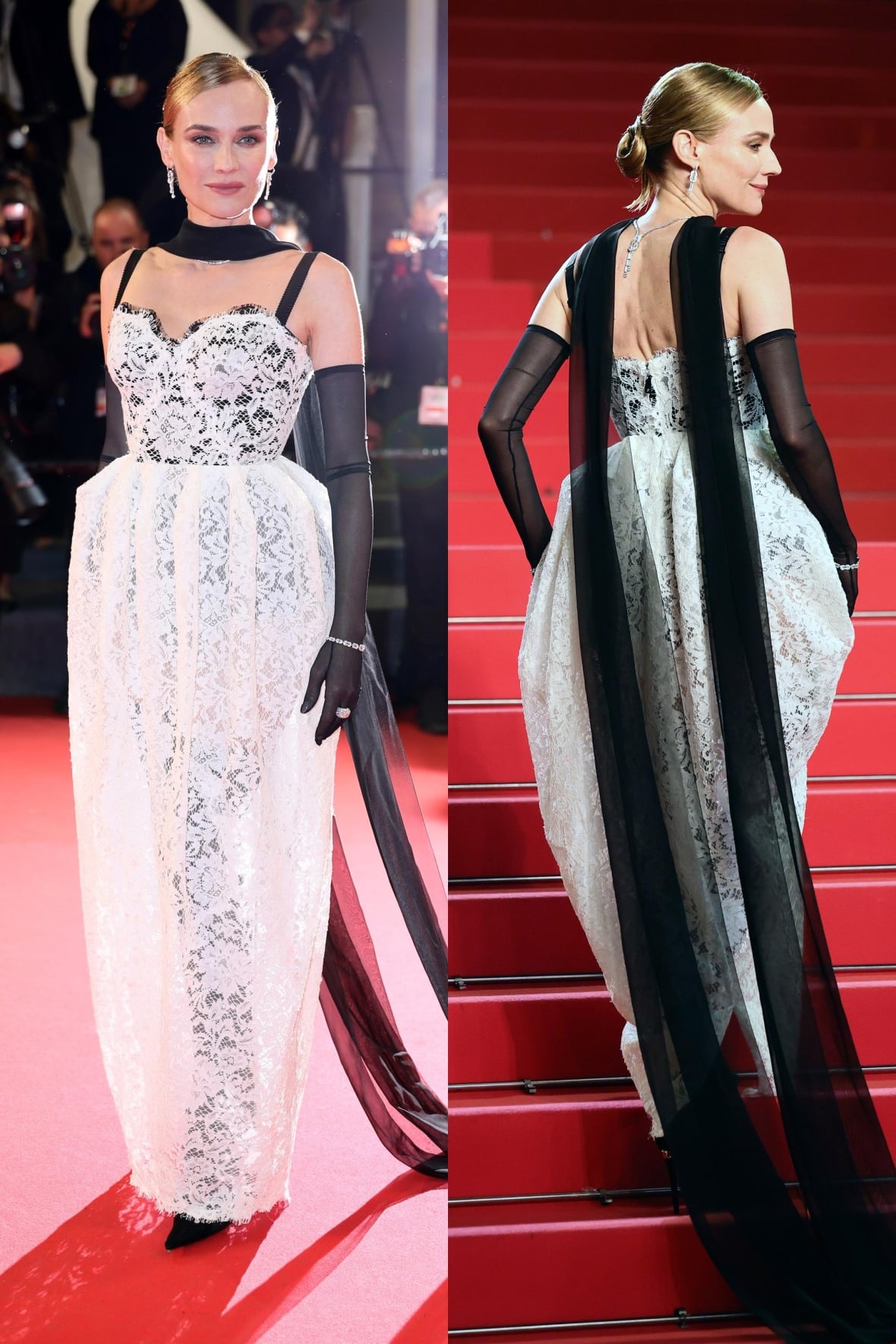
    Diane Kruger

    diane kruger cannes film festival
    Diane Kruger wore Dolce & Gabbana to the premiere of La Femme La Plus Riche Du Monde. (Andreas Rentz/Getty Images)

    Diane Kruger had multiple winning looks at Cannes this year, but a highlight was this Dolce & Gabbana ensemble featuring a sheer scarf and full-length gloves. Her jewelry  — including a back necklace — is by FRED Paris.

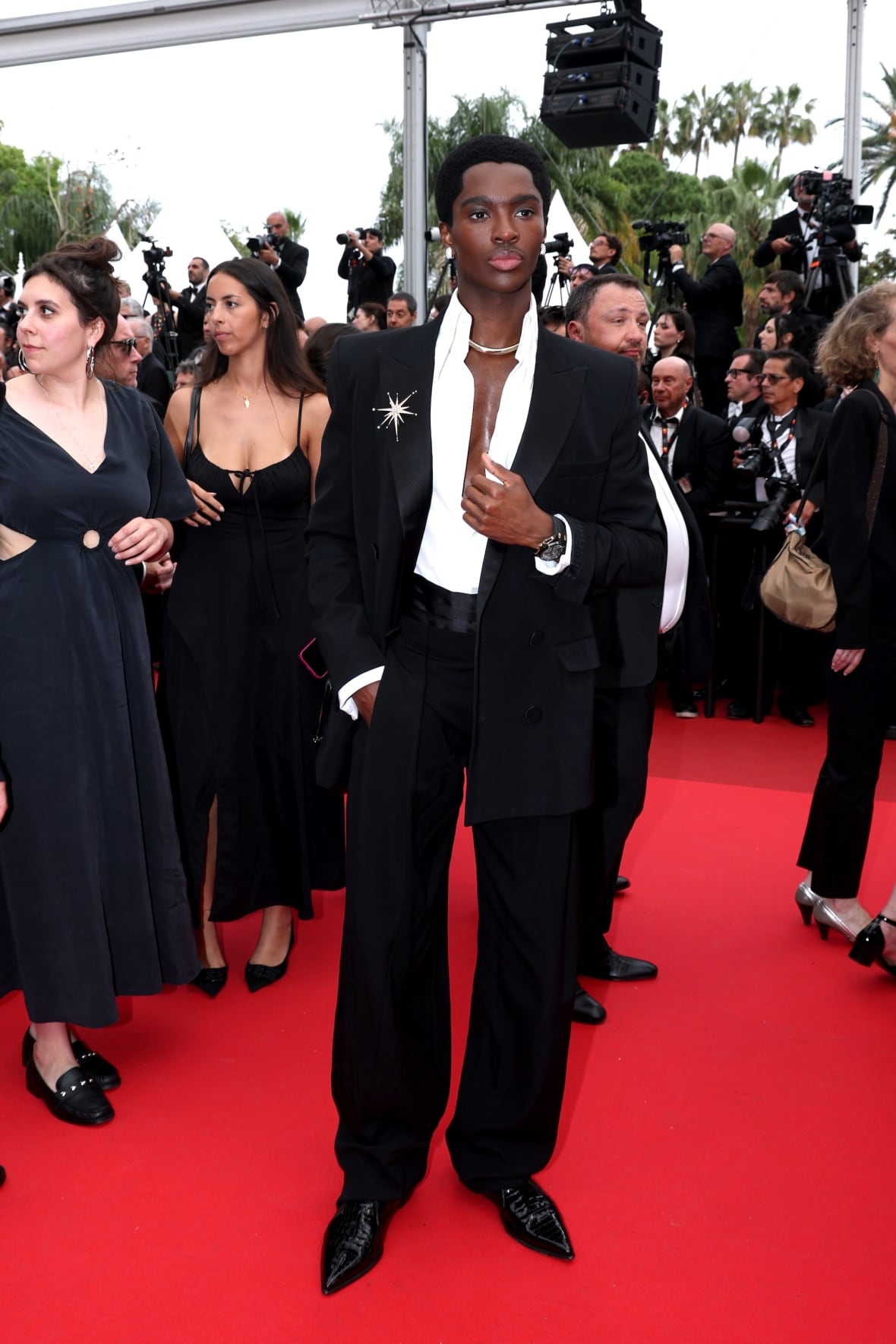
    Alton Mason

    alton mason cannes film festival
    Alton Mason in a Balmain tuxedo at Cannes. (Pascal Le Segretain/Getty Images)

    Mason, an actor and model, made the slightly-too-ubiquitous-at-Cannes black tuxedo work for him on the Highest 2 Lowest red carpet. The roomier fit of his Balmain tux complemented the unbuttoned dress shirt, while a star-shaped brooch by Ole Lynggaard Copenhagen added a perfectly on-trend touch.

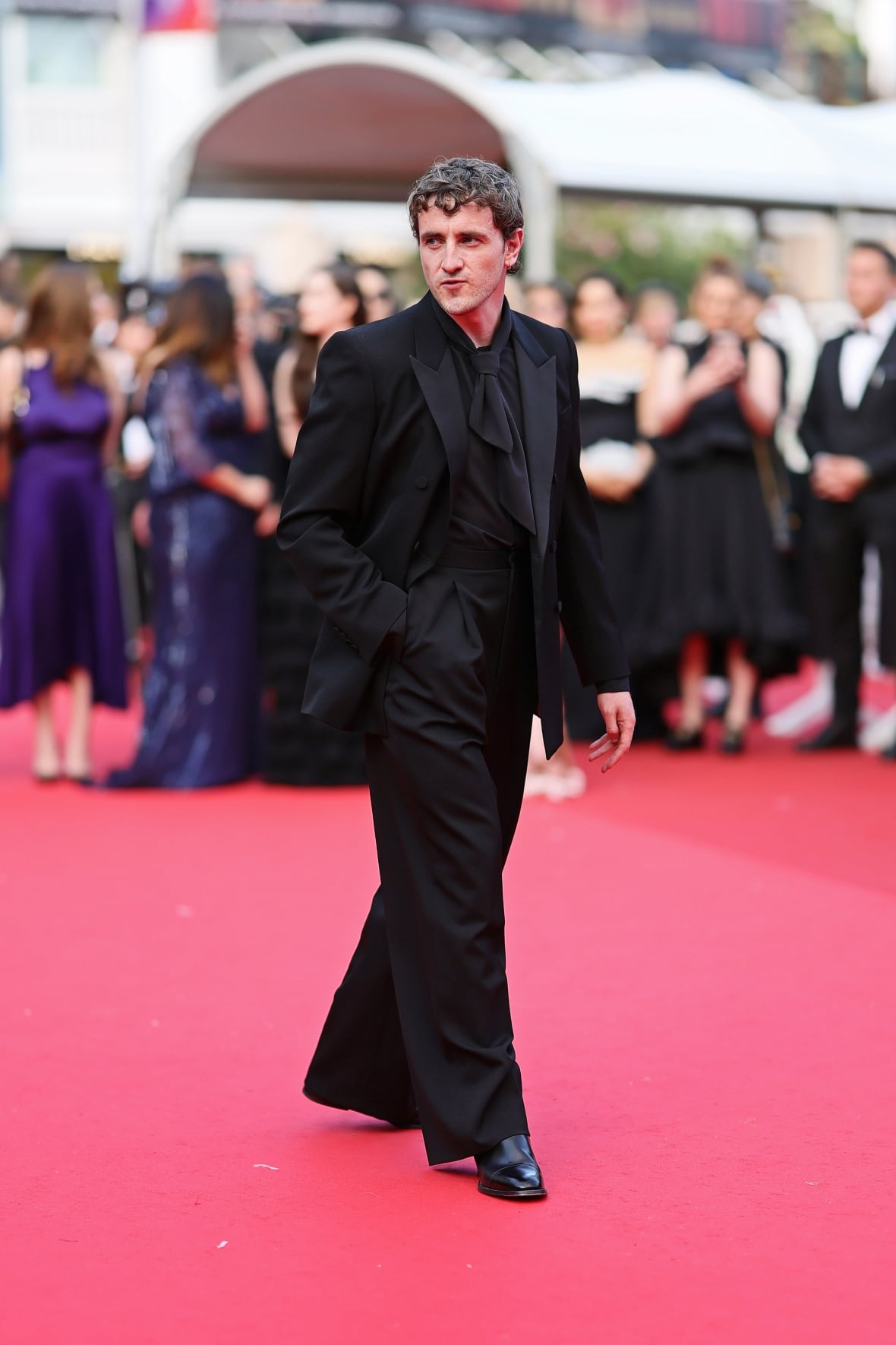
    Paul Mescal

    paul mescal cannes film festival
    Paul Mescal at the premiere of The History Of Sound in a Gucci ensemble. (Andreas Rentz/Getty Images)

    Mescal, who stars in The History Of Sound, attended the premiere of the movie in an all-black Gucci look paired with Cartier jewelry. Once again, it’s the perfectly relaxed fit of the monochrome suiting that elevates it from standard to stylish. 

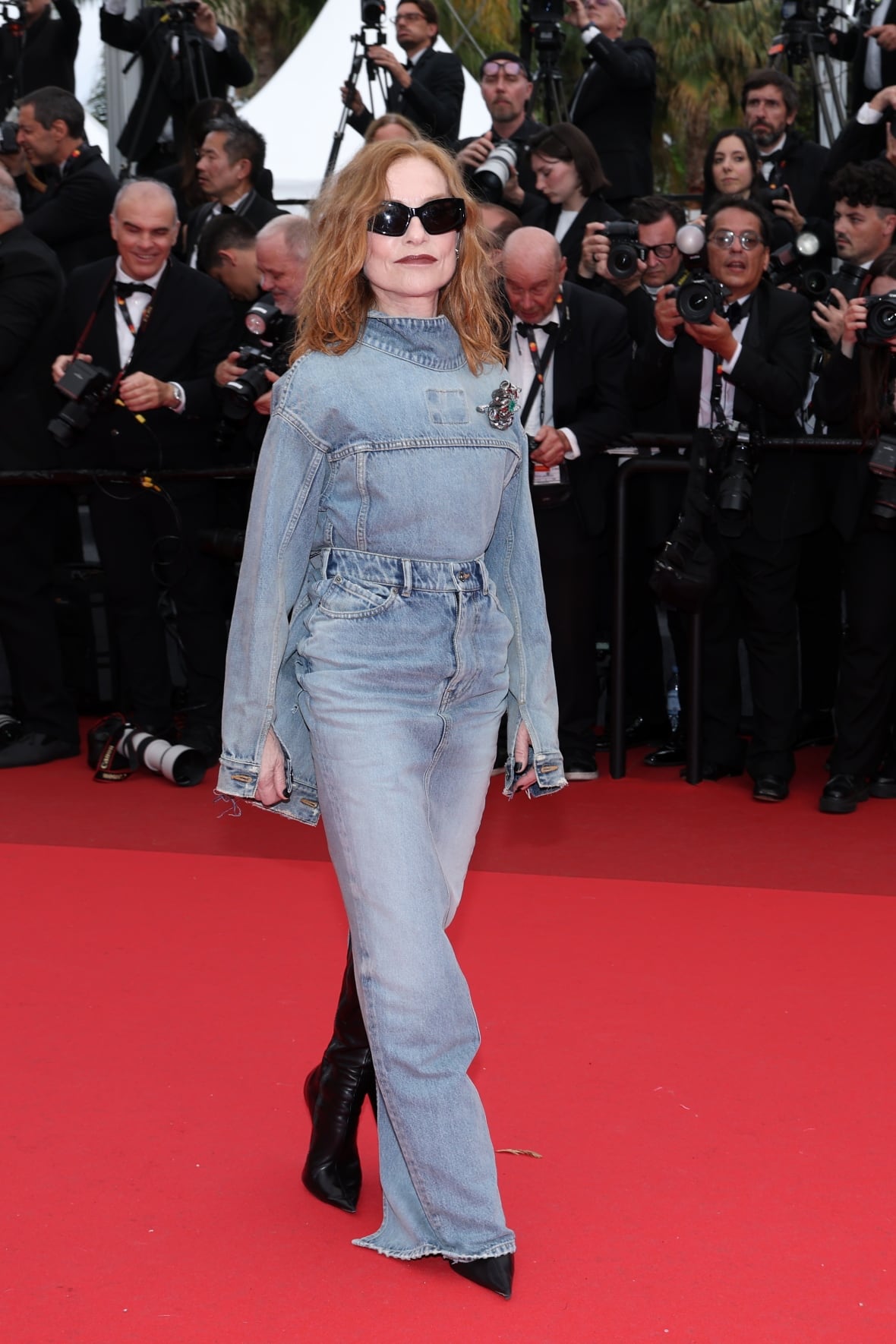
    Isabelle Huppert

    isabelle huppert cannes film festival
    Isabelle Huppert wears a denim look by Balenciaga at the Highest 2 Lowest premiere. (Pascal Le Segretain/Getty Images)

    French actor Isabelle Huppert looked effortlessly cool at the Highest 2 Lowest premiere in a denim Balenciaga ensemble, styled with a jewelry piece by Elsa Jin Studio — worn as a brooch.

    Emma Stone

    emma stone cannes film festival
    Emma Stone wearing Louis Vuitton on the red carpet for Eddington. (Tristan Fewings/Getty Images)

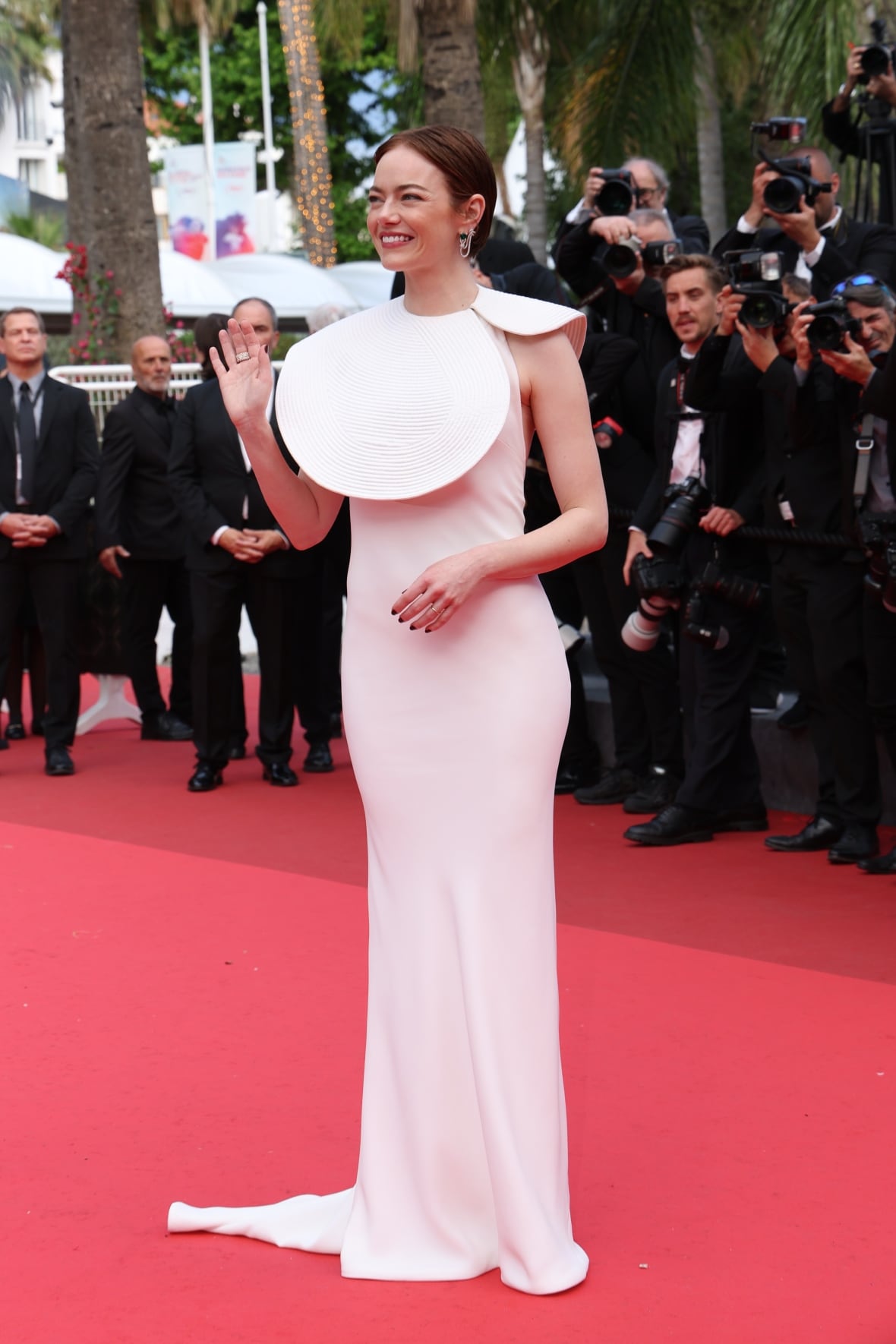
    The Eddington star was the definition of elegance in a white gown with a sculptural statement collar and sparkly earrings, both by Louis Vuitton.

    Rawdah Mohamed

    rawdah mohamed cannes film festival
    Rawdah Mohamed at the premiere for Die My Love in a dress by Rizman Ruzaini. (Monica Schipper/Getty Images)

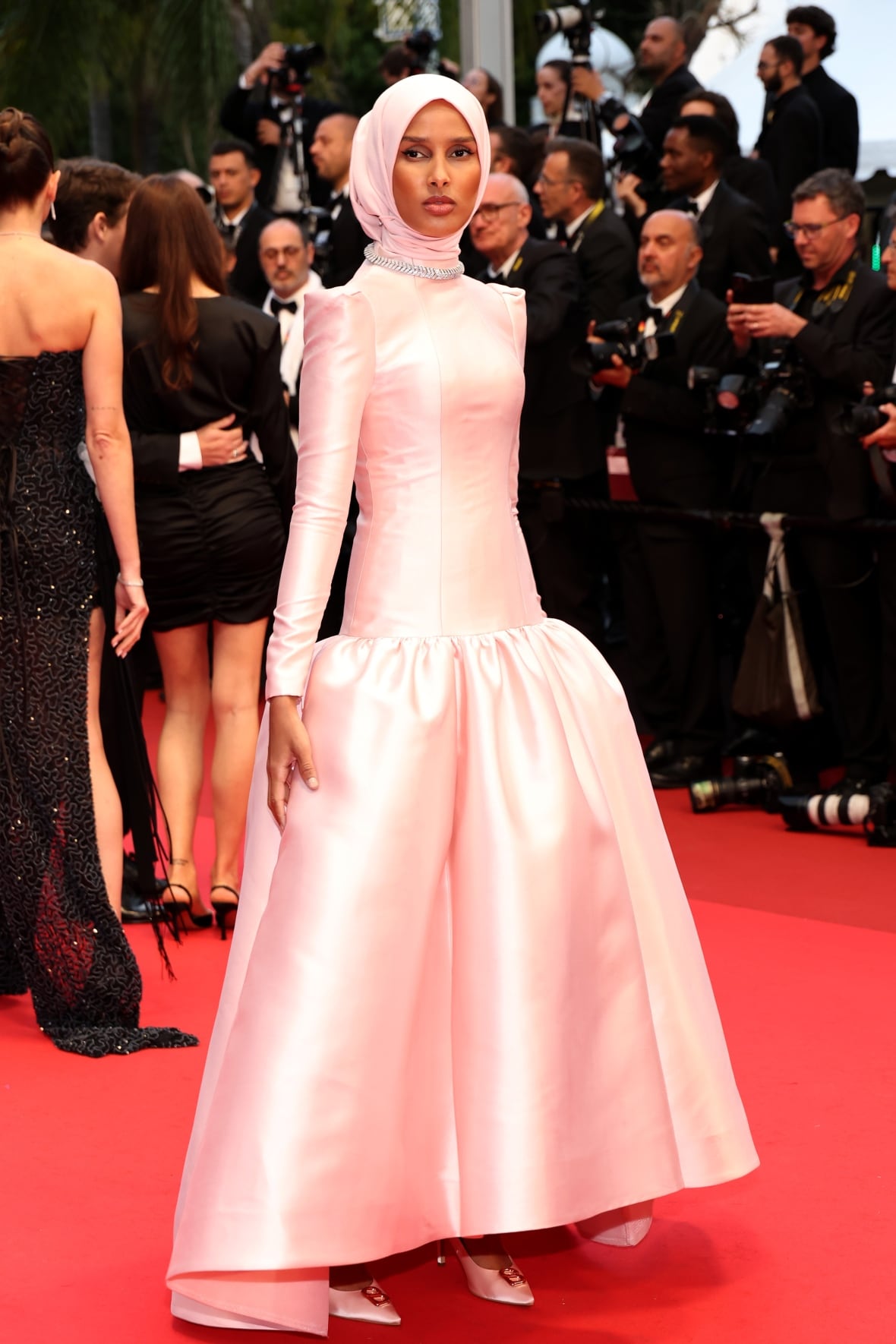
    Model Rawdah Mohamed  — who also made our Cannes best-dressed list last year  — wore two gorgeous looks at the festival, including this pale pink drop-waist gown custom made for her by Malaysian fashion label Rizman Ruzaini, and a sculptural, cream-coloured ensemble by Cheney Chan. 

    Barbara Palvin

    barbara palvin cannes film festival
    Barbara Palvin donned a Balenciaga gown for the Die My Love premiere. (Monica Schipper/Getty Images)

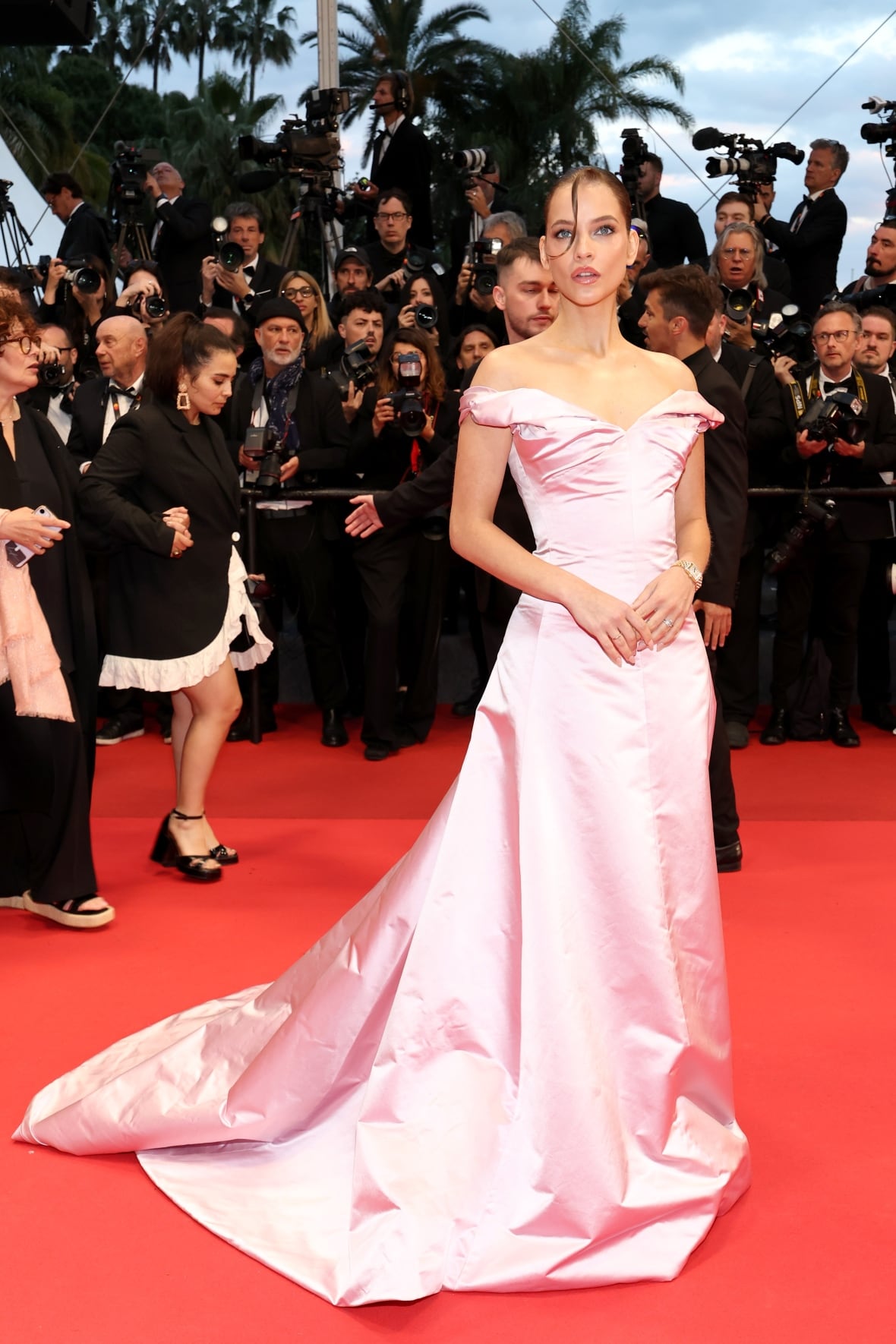
    Pink satin can sometimes read as overly saccharine on the red carpet, but this off-the-shoulder Balenciaga gown beautifully ushers Palvin into what she calls her “princess era.” 

    Mitchell Akat Maruko Raan

    mitchell akat maruko raan cannes film festival
    Mitchell Akat Maruko Raan in a Harvey Cenit ensemble. (Pascal Le Segretain/Getty Images)

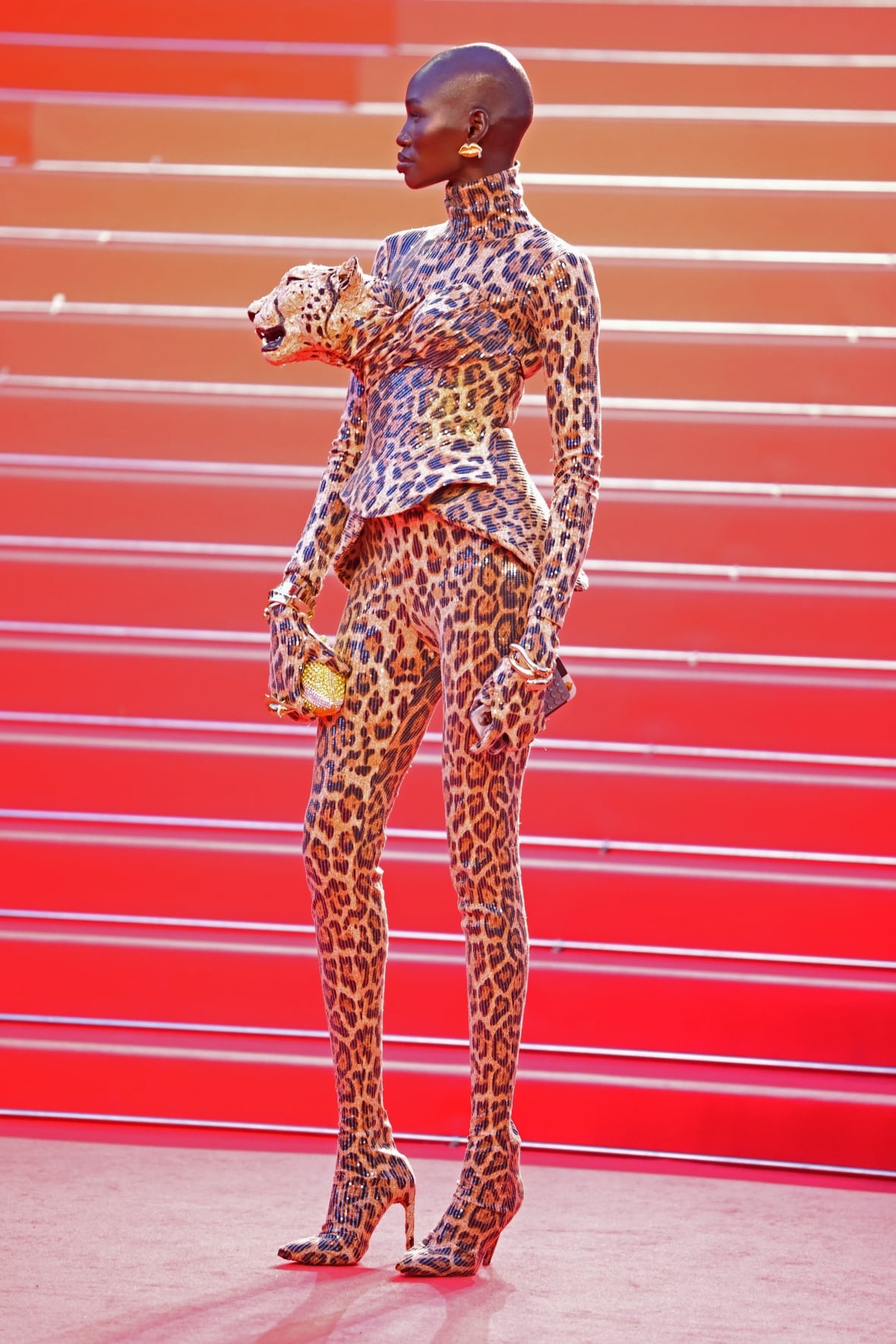
    Model Mitchell Akat Maruko Raan might have won the Cannes red carpet in this striking cheetah-print look by designer Harvey Cenit. 

    Irina Shayk

    irina shayk cannes film festival
    Irina Shayk on the red carpet for Dossier 137 in an Elie Saab gown. (Pascal Le Segretain/Getty Images)

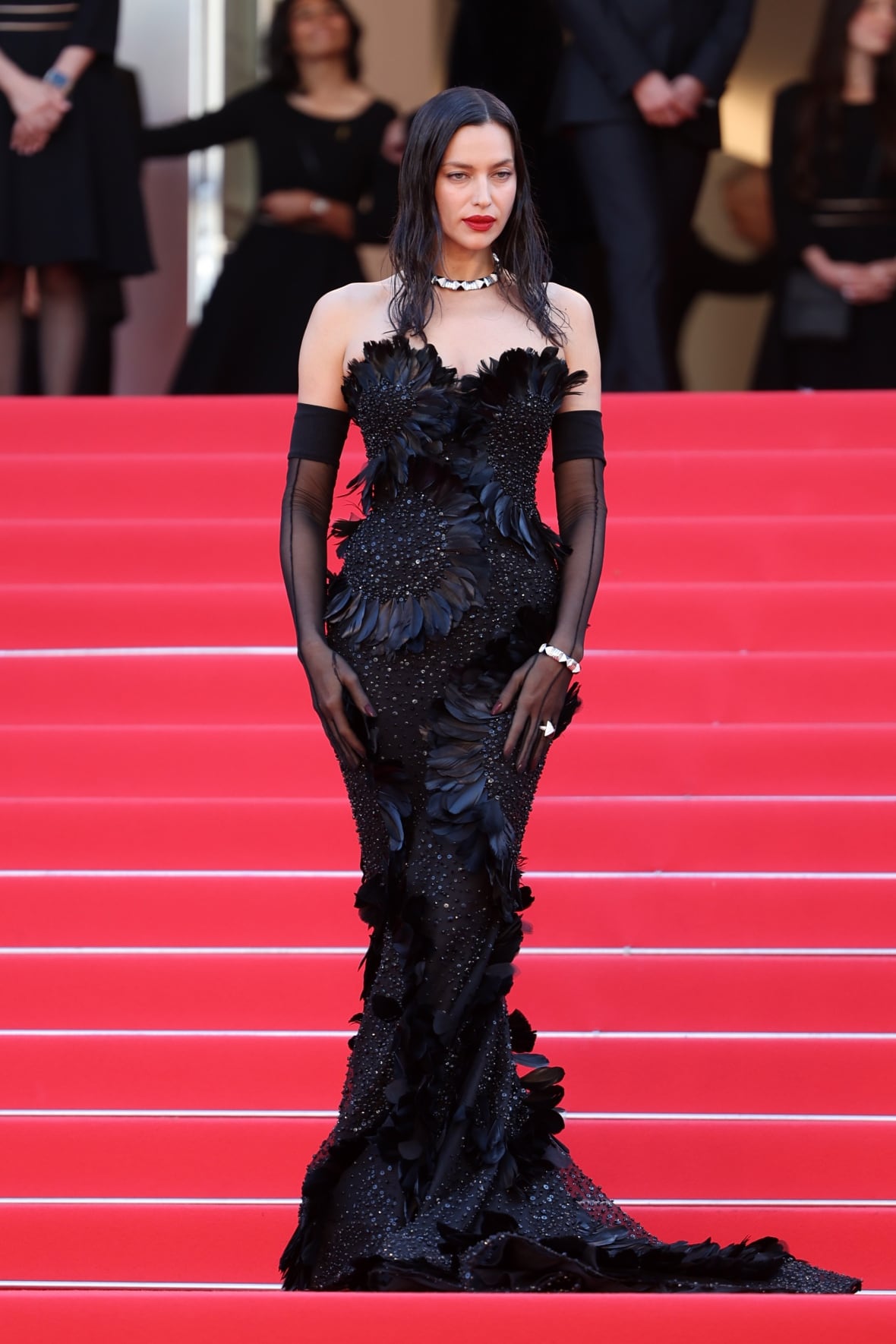
    For the Dossier 137 premiere, the model wore a stunning custom Elie Saab gown paired with fine jewelry by Marli New York. Her wet-look hair and bold red lips complemented the drama of the feathered gown well. 

    Heidi Klum

    heidi klum cannes film festival
    Heidi Klum on the red carpet for the opening ceremony of the 78th Cannes Film Festival. (Laurent Hou/Hans Lucas/AFP via Getty Images)

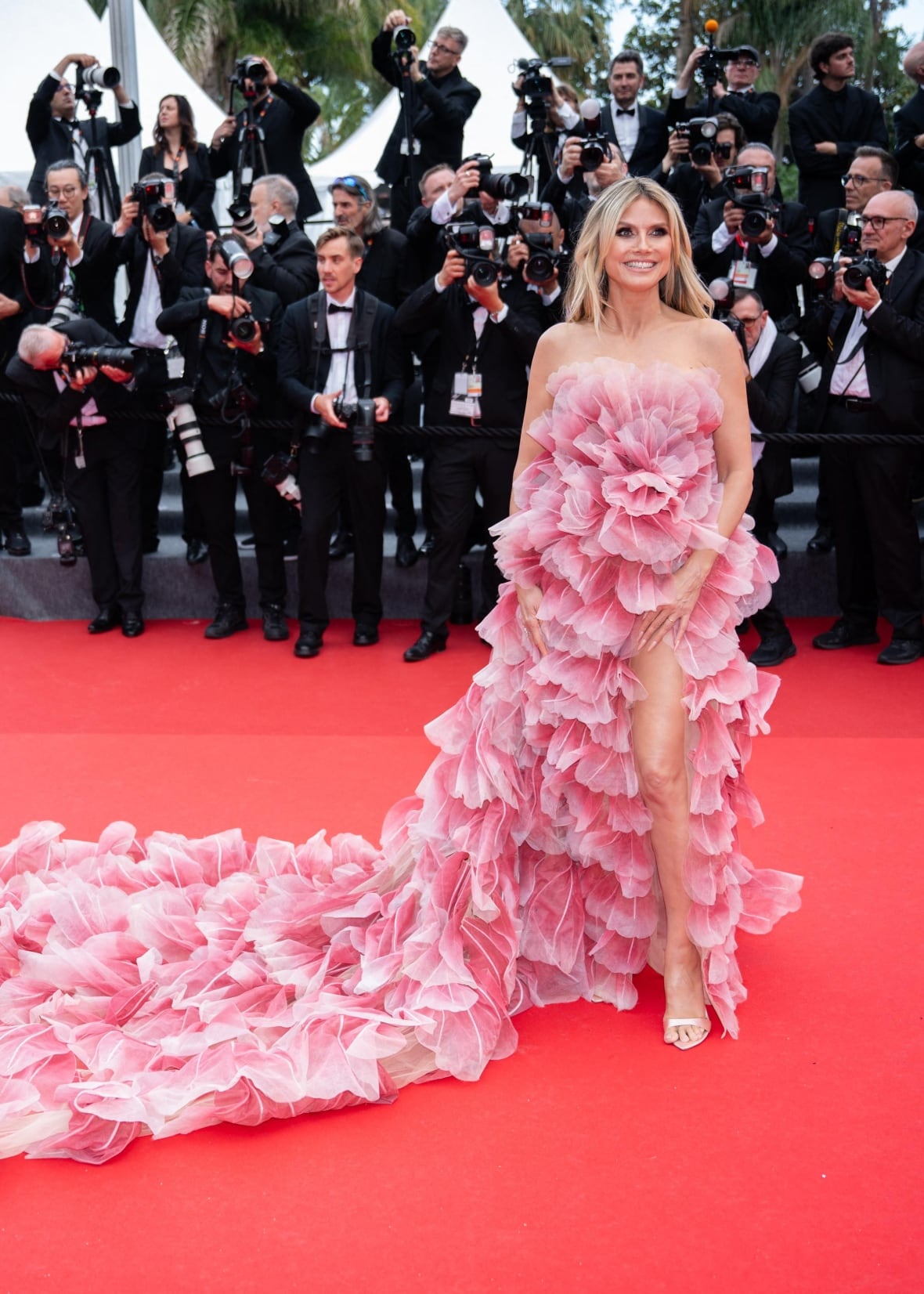
    At the festival’s opening ceremony, model Heidi Klum stole the show in a strapless pink Elie Saab gown adorned with delicate organza petals.  

    Jodie Foster

    jodie foster cannes film festival
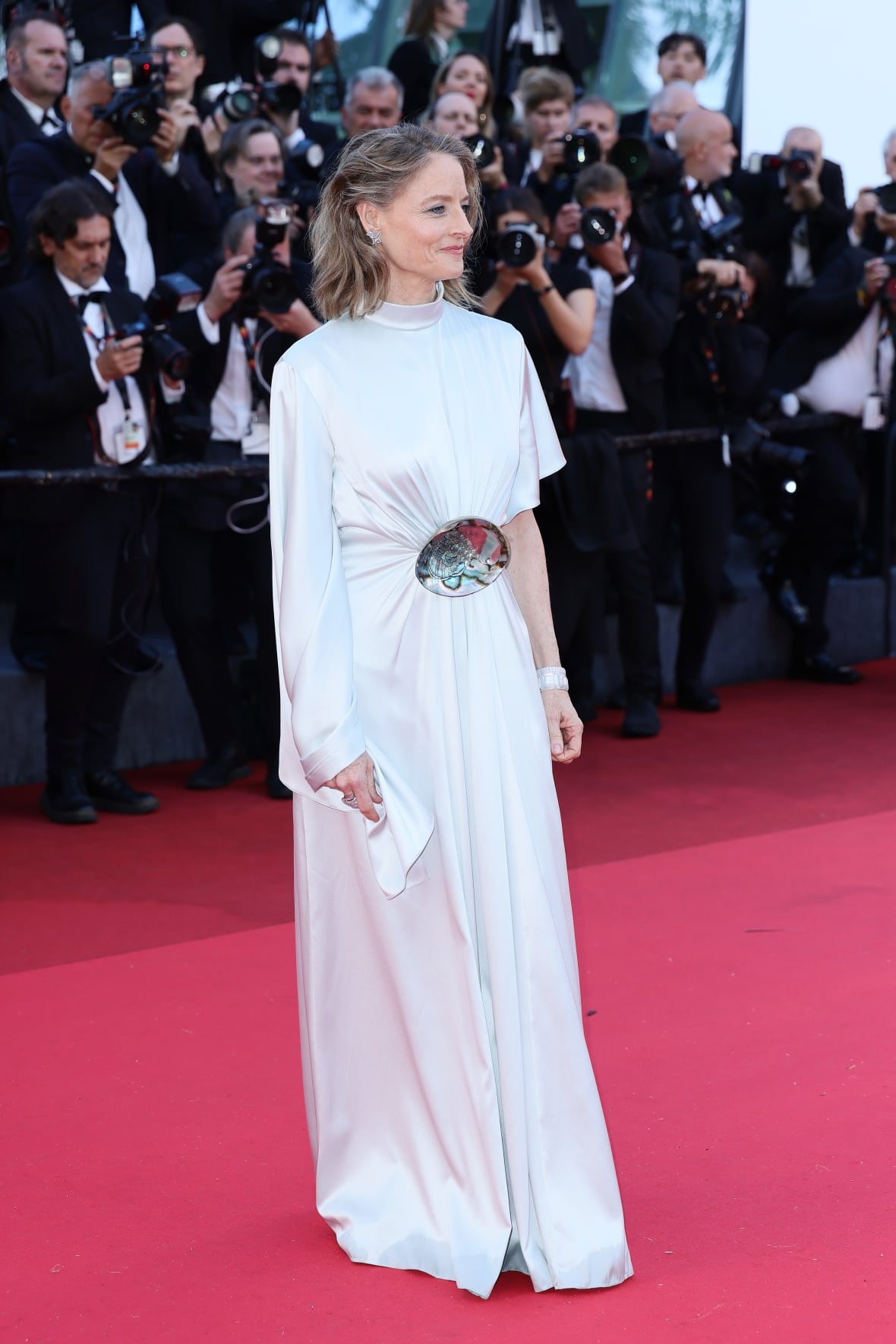
    Jodie Foster on the Vie Privée red carpet in a Loewe dress. (Andreas Rentz/Getty Images)

    Jodie Foster on the Vie Privée red carpet in a Loewe dress. (Andreas Rentz/Getty Images)

  • The Princess of Wales is back in the fashion spotlight

    The Princess of Wales is back in the fashion spotlight

    The fashion crowd in London is generally known for keeping cool. But on Tuesday, the editors and designers at a ceremony for one of the industry’s most prestigious local awards became palpably excited when Catherine, Princess of Wales, emerged to present this year’s Queen Elizabeth II Award for Design to Patrick McDowell, 29, a Liverpool-born designer.

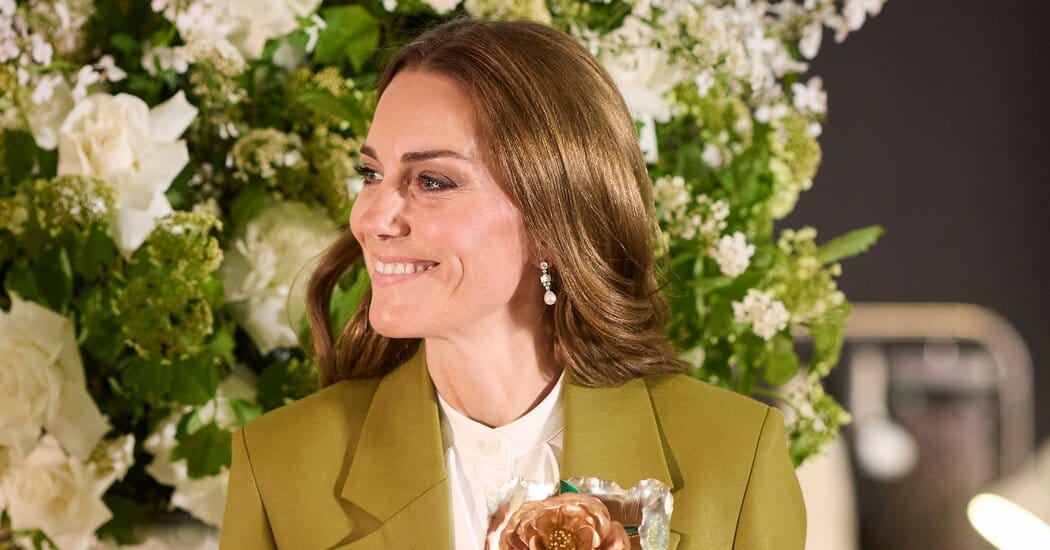
    Dressed in an olive Victoria Beckham suit and a white silk pussy-bow blouse, Catherine walked with Mr. McDowell among mannequins and models wearing the designer’s looks inside 180 the Strand, the Central London building where the event took place. It was the second time the princess had presented the award, which was created by the British Fashion Council and the British royal family in 2018 to recognize the role London’s fashion industry “plays in society and diplomacy.”

    The princess did not give public comments at the ceremony, but Mr. McDowell said that their private conversation touched on topics including a shared appreciation for craftsmanship and the designer’s efforts to make collections in Britain and offer customers the option to repair or rework old garments.

    Mr. McDowell added that, as Catherine toured the clothes on display, she took interest in a tailored sleeveless jacket called “the Wales jacket.”

    “She said, ‘Why would you call it that?’ with a big smile,” Mr. McDowell said. “What a moment, to be sharing jokes with our future queen.”

    13QEII AWARD 02 lqmw superJumbo
    Patrick McDowell, left, a Liverpool-born designer and the winner of this year’s Queen Elizabeth II Award for Design. (Shaun James Cox/BFC)

    Catherine’s appearance at the event came as she has been stepping up the pace and profile of her public engagements after her cancer diagnosis and treatment last year. In January, she said her cancer was in remission; about a month later, the Sunday Times of London published an article that suggested that Kensington Palace would no longer be disclosing any details of her outfits to the news media.

    During the awards ceremony, the princess also met with other young designers who were on hand to showcase their wares, including Conner Ives, an American working in London whose “Protect the Dolls’ T-shirt have spread widely on social media in recent weeks. On Tuesday, Mr. Ives was announced as the 2025 winner of the British Fashion Council/Vogue Designer Fashion Fund award, which came with a grant and an industry mentorship.

    In past years, the Queen Elizabeth II Award for Design went to designers including Richard Quinn, S.S. Daley and Priya Ahluwalia. It has been presented in the past by other senior royals, including Queen Elizabeth II, King Charles III and Princess Anne.

    Mr. McDowell, whose namesake brand was introduced in 2018, is known for offering made-to-order evening and occasion wear designed in London using recycled textiles and new sustainable materials like sequins made of cellulose. Lady Gaga, Sarah Jessica Parker and Keira Knightley are among the label’s notable fans.

    Winning the Queen Elizabeth II Award was “a wonderful pat on the back that provides a game-changing stamp of approval,” Mr. McDowell said, as well as an “acknowledgment that working in a circular way is a way forward.”

    “I’d love to make a piece for her,” Mr. McDowell added, referring to Catherine. “It would be a dream come true.”

  • Changes to the dress code at the Cannes Film Festival are creating controversy

    Changes to the dress code at the Cannes Film Festival are creating controversy

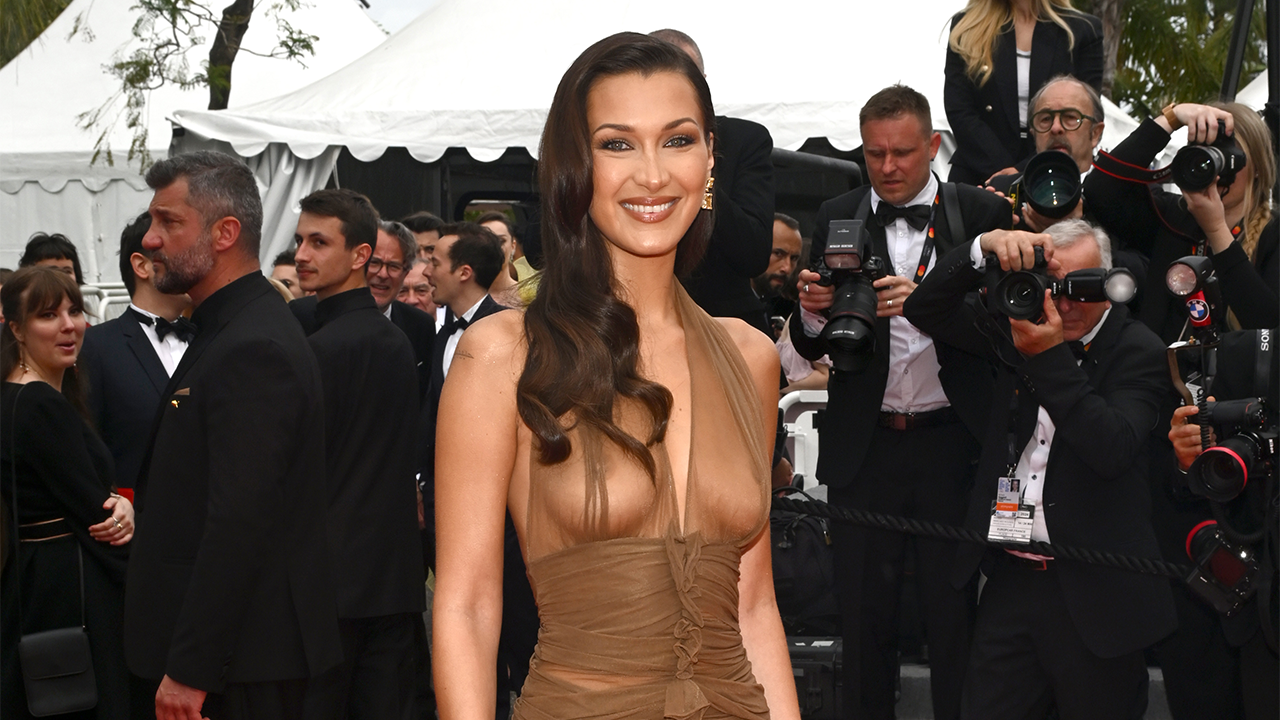
    The Cannes Film Festival is getting more covered-up — and just in time for the opening ceremony honoring the octogenarian Robert De Niro. Bella Hadid, newly blonde, is already in town, and stars expected include Halle Berry, Scarlett Johansson and Emma Stone. But anyone expecting one of the most reliable moves on the red carpet might be disappointed. The new dress code for gala screenings includes the admonition, “for decency reasons, nudity is prohibited on the red carpet, as well as in any other area of the festival.”

    Cue a crisis in the fashion-film industrial complex.

    After all, nowhere has the naked dress been more of a presence than at Cannes, where the combination of Mediterranean, sun and a certain Gallic disdain for prudishness (or at least perceived disdain for prudishness) have conspired to create its own tradition of sartorial liberation.

    And “nudity,” when it comes to celebrity dressing, is a relative term. The idea that it may no longer be a shortcut to the spotlight is even more shocking than the clothing it may be proscribing.

    “Naked dressing,” or that mode of dress in which large swaths of the normally private body are aired for public viewing, has been a tent pole of the publicity machine since long before Marilyn Monroe cooed “Happy birthday, Mr. President” into a microphone in a flesh-colored sheath so tight it left little to the imagination.

    In recent years it has become practically a category unto itself, especially at events like the Met Gala. That’s where Beyoncé played Venus on the half shell in 2015 in sheer Givenchy with strategically placed floral embroidery. Where, in 2024, Rita Ora wore a nude Marni bodysuit covered in what looked like strings, and Kylie Minogue modeled a Diesel dress with a naked torso superimposed on her actual torso. It has been framed as a post-Covid libidinal celebration and a post-#MeToo reclamation of the body. Either way, it is pretty much always a talking point.

    13ST CANNES NAKED DRESSING 03 lftj superJumbo
    La Cicciolina at the Cannes Film Festival in 1988. (Garcia/Gamma-Rapho/Getty Images)
    13ST CANNES NAKED DRESSING 02 lftj superJumbo
    Cameron Diaz at a “Gangs of New York” party in Cannes in 2002. (J. Vespa/WireImage)

    All the way back in 1985, Ilona Staller, or La Cicciolina, the porn star, politician and former wife of Jeff Koons, walked the Cannes red carpet in a white satin … well, what would you call it? An evening version of Rudi Gernreich’s monokini, with breast-baring straps and a long white satin skirt. Madonna dropped her opera cape to reveal her Jean Paul Gaultier bullet bra and undies on the carpet in 1991, and in 2002 Cameron Diaz wore a sheer beaded gown and panties, starting a peekaboo trend that is still going strong.

    Indeed, the dress as scrim, a transparent piece of nothing draped over bare skin or lingerie to suggest clothing without actually covering much of anything, is perhaps the most popular current form of naked dressing. It is more omnipresent than, say, the skirt slit up to here and the top cut down to there that has also been modeled by many on the red carpet. It provides the illusion of clothes while also teasing what is underneath.

    It’s unclear from the wording of the Cannes dress code if the new policy applies only to literal nudity or to clothing that exposes body parts that might reasonably be termed “indecent.” According to Agnès Leroy, the head of press for the festival, the new rules were established to codify certain practices that have been long in effect. The aim, she said, “is not to regulate attire per se, but to prohibit full nudity — meaning the absence of clothing — on the red carpet, in accordance with the institutional framework of the event and French law.” (Even if French law allows toplessness on some beaches, a reality that may add to the confusion around the Cannes rules.)

    Still, that leaves the dictum somewhat open to interpretation, given the general absence of fabric in many evening looks. One person’s vulgarity can be another person’s celebration, and who is to say who gets to police whose body?

    13ST CANNES NAKED DRESSING4 pwcj superJumbo
    Leila Depina at the Cannes Film Festival in 2023. (Yara Nardi/Reuters)
    13ST CANNES NAKED DRESSING 01 lftj superJumbo
    Natasha Poly at the premiere of “Emilia Perez” at Cannes last year. (Vianney Le Caer/Invision/Associated Press)

    (This is reminiscent of the time Melania Trump addressed critics of her naked photo shoots in her memoir, situating them in an artistic tradition that includes John Collier’s “Lady Godiva” and Michelangelo’s “David,” and noting that “we should honor our bodies and embrace the timeless tradition of using art as a powerful means of self-expression.”)

    Perhaps the new code is simply calculated to prevent the sort of attention-grabbing stunt that occurred at the Grammys in February, when Ye, the rapper formerly known as Kanye West, crashed the red carpet with his wife, Bianca Censori, only to have her take off her fur coat to reveal her fully naked body “covered” by an entirely transparent nylon slip that provided no coverage at all. That seemed to have taken the trend to its ultimate, disturbing extreme by breaking the last barrier in naked dressing: genitalia.

    Even though Ye had not actually been invited to the event, he and his wife dominated the headlines the next day more than the actual award ceremony.

    The fact that the Cannes dress code also prohibits “voluminous outfits, in particular those with a large train, that hinder the proper flow of traffic of guests and complicate seating in the theater” suggests that what the organizers were really forestalling was the appearance of dresses that act as their own sort of performance art, grabbing eyeballs and dominating conversations that might otherwise be focused on the films that are the nominal point of the festival.

    13ST CANNES NAKED DRESSING7 mthl superJumbo
    Bella Hadid at the Cannes Film Festival in 2021. (Valery Hache/Agence France-Presse/Getty Images)

    If that was the aim, however, it has somewhat backfired. By officially banning nudity on the carpet, the Cannes organizers simply sparked a raft of pieces (like this one) discussing nudity on the carpet. Most of them focus less on the actual meaning of the term in all its thorny nuance than the opportunity to revisit notorious nude-adjacent moments past.

    You could have seen that one coming.

  • Why were people in the US so split on Thomas Kinkade’s charming paintings? Some called them ‘boring and empty!

    Why were people in the US so split on Thomas Kinkade’s charming paintings? Some called them ‘boring and empty!

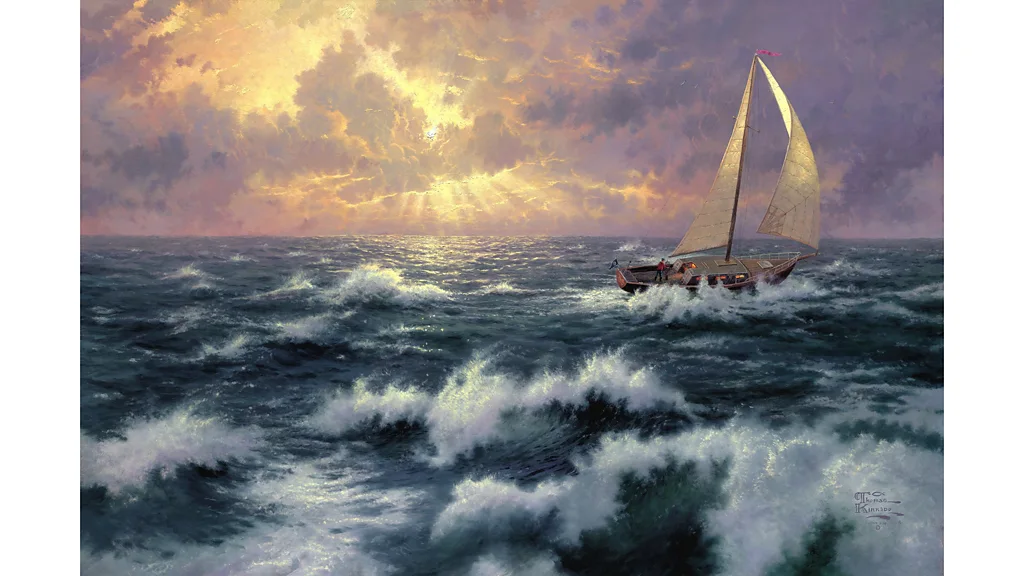
    Thomas Kinkade was one of the best-selling artists in history, as well as one of the most divisive. When he died in 2012, the American painter had been rocked by business problems, but at his commercial peak a decade earlier, his company was bringing in more than $100m a year. And yet his work was despised by many critics – not because it was blasphemous or obscene, but because, well, he specialised in quaint pictures of thatched-roof rural cottages nestling in leafy groves. “Thomas Kinkade’s style is illustrative saccharine fantasy rather than art with which you can connect at any meaningful level,” Charlotte Mullins, the author of A Little History of Art, tells the BBC. “It is schmaltzy pastiches of Disney-style woodland scenes, complete with cutesy animals and fairy tale cottages. They are… like the images you find on cheap greetings cards – sugary and forgettable.” And compared to some critics, Mullins is being polite.

    His branding was so effective that you didn’t know there was this really complicated and I would say tortured artist behind it all – Miranda Yousef

    These critics don’t just consider Kinkade’s paintings to be nauseatingly sickly, they detect something disturbing and ominous about them. In her 2003 book on California, Where I Was From, Joan Didion summed up his art by saying. “It typically featured a cottage or a house of such insistent cosiness as to seem actually sinister, suggestive of a trap designed to attract Hansel and Gretel. Every window was lit, to lurid effect, as if the interior of the structure might be on fire.” As harsh as that sounds, Didion may have been more perceptive than she realised. Art for Everybody, a new documentary directed by Miranda Yousef, shows that the man who called himself the “Painter of Light” did indeed have a dark side. “His branding was so effective that you didn’t know there was this really complicated and I would say tortured artist behind it all,” Yousef tells the BBC. “He lived a Greek tragedy of a life.”

    p0l0kb9b.jpg
    Kinkade specialised in quaint pictures of rural cottages, which were loved by many, but despised by critics (Credit: The Kinkade Family Foundation)

    The documentary features audio tapes recorded by Kinkade when he was a long-haired, bohemian-looking art student in California in the 1970s – and even then, he was already fretting over the question of whether he could make an impact as an artist while making a decent living. After a stint in Hollywood, painting backgrounds for Ralph Bakshi’s 1983 animated feature film, Fire and Ice, he concentrated on idealised, nostalgic American landscapes, and he and his wife Nanette sold reproductions of them outside a local grocer’s shop. In the 1990s, he took the idealism and the nostalgia to new heights, and swapped his rugged vistas for soft-focus pastoral scenes that a Hobbit might deem a bit on the twee side. Old-fashioned lampposts and cottage windows glowed. Streams twinkled beneath slender stone footbridges. Bushes burst with pastel flowers. And cash registers rang. Kinkade didn’t sell the paintings themselves, but the hazy idylls they depicted were soon being printed on collectible plates advertised in newspapers and magazines. For many Americans, they were comforting refuges from the modern world.

    Today we would think they had been produced by AI, designed as if by algorithm to a certain formula – Charlotte Mullins

    In Art for Everybody, Christopher Knight, the art critic of the Los Angeles Times, is contemptuous of Kinkade’s imagery. “It’s a cliché piled upon a fantasy piled upon a bad idea,” he says. “The colour is juiced and the light coming from inside those cottages is intense and blaring.” Just as importantly, as far as his critics were concerned, Kinkade’s pictures had nothing to them beyond their superficial decorative qualities. “They are banal and hollow, with no intent to say anything meaningful,” says Mullins. “Today we would think they had been produced by AI – designed as if by algorithm to a certain formula.” But Yousef insists that Kinkade’s skill can’t be discounted. “There were actually other people who were painting cottages and Christmas scenes and putting them on plates and all that stuff,” she notes, “and the thing is that Kinkade’s were so much better. His works just blew everybody else’s out of the water.”

    p0l0yf8j.jpg
    (Image credit: The Kinkade Family Foundation)

    She also believes that Kinkade’s paintings, rather than being wholly market-led, were linked to his childhood in Placerville, California, where he was raised by his single mother and only intermittently saw his violent father. “It’s a common criticism that his cottages look like they’re on fire on the inside. And then you learn that it was because when he was growing up it was always cold and dark in the house when he got home, because they didn’t have the money to keep the heat and the lights on. He was painting the thing that he wanted.”

    p0l0kbhb.jpg
    Kinkade focused on idealised, nostalgic American landscapes, before swapping his rugged vistas for soft-focus pastoral scenes (Credit: The Kinkade Family Foundation)

    Kinkade’s deprived upbringing, says Yousef, didn’t just inspire his choice of subject matter, but drove him to make as much money as he could. He and his business partners printed pictures on an industrial scale, as well as putting his immediately recognisable imagery on furniture and ornaments, and selling them on the QVC shopping network. They also set up hundreds of faux olde worlde Thomas Kinkade Signature Galleries in shopping malls around the US, and trademarked the “Painter of Light” brand. Again, Yousef doesn’t see Kinkade as entirely calculating. Having grown up in a house with no pictures on the walls, “He sincerely believed that art should be accessible to everyone.”

    Behind the fantasy

    Whatever you thought of the paintings, the mass-marketing of the work of a single artist was certainly groundbreaking. In interviews at the time, Kinkade asserted that he was no different from an author selling stacks of novels or a musician selling CDs. He even declared that by industrialising his output, he was doing what Andy Warhol had always dreamt of. But Mullins argues that Kinkade was being “obfuscatory and disingenuous” by churning out reproductions by the thousand, paying his assistants to add a few dabs of paint here and there, and then selling these prints for thousands of dollars, as if they were rare and precious works of art. “Prints offer an affordable way of buying art by great artists,” she says. “They retain their value through the limited nature of the edition. This was never Kinkade’s strategy.”

    p0l0kbk8.jpg
    Kinkade printed pictures and merchandise on an industrial scale and trademarked the “Painter of Light” brand (Credit: The Kinkade Family Foundation)

    Still, this sort of disagreement between Kinkade and his critics was one of his selling points. Art for Everybody features news reports and promotional videos, in which he tells adoring audiences that his art could be understood and appreciated by everyone, whereas only the snooty elite could see anything artistic about Chris Ofili putting elephant dung on his canvases, or Tracey Emin presenting her unmade bed to gallery-goers. “This is not legitimate art,” he proclaimed. As much a televangelist as a painter, Kinkade was a born-again Christian who assured his devotees that buying his work put them on the right side of a political and spiritual line separating them from decadent metropolitan tastemakers. He trademarked the sobriquet “Painter of Light”, not just because of all the sunlit clouds and fiery cottages in his pictures, but to signify that he was a force for virtue and Christianity. “The art world is a world of darkness today,” he thundered. He, in contrast, was “someone who stands up for family and God and country and beauty”. A doughy, plaid shirt-wearing fellow with a thick moustache, he often appeared on television with his blonde wife and his four blonde daughters: the embodiment of wholesome, traditional, all-American values. His fans weren’t just paying for his pictures; they were paying to associate themselves with this proudly conservative persona.

    A1PcckznCkS. SL1500
    Ceaco Thomas Kinkade Disney Snow White Sunlight Puzzle. Amazon

    But that persona, like the pictures themselves, was more a fantasy that Kinkade wished for than an accurate representation of reality. He was prone to swearing after the directors of his mawkishvideos called “cut”. He relied on alcohol to cope with work pressures. And, in the documentary, his daughters say that they were encouraged to smile in videos and personal appearances, but often felt as if their father cared more about his career than about them. “Thomas Kinkade and his persona and his brand really cast an extraordinarily long, dark shadow over his entire family,” says Yousef, “and there was a lot wrapped up in perpetuating the brand and preserving it.”

    In order to maintain this brand and the vast business empire that went with it, Kinkade had to present himself as a Christian paragon, and he had to complete a stylistically identical painting every month. That meant that he had to suppress other, more conflicted parts of his psyche. The strain became too much. In the mid-2000s, Kinkade fell out with his business partners, and had legal battles with gallery franchisees. He reinvented himself as a womanising, hard-drinking hellraiser. After some interventions by his friends and family, some time in rehab, and the collapse of his marriage, he died of an accidental overdose of alcohol and diazepam at the age of 54.

    p0l0kbmj.jpg
    The documentary Art for Everybody explores the dark, troubled person behind the wholesome persona Kinkade had created (Credit: Art for Everybody)

    It was only after his death that his family sorted through the vault containing his artwork, and uncovered a stash of bleak, violent drawings and paintings that seemed to express his inner rage and fear in a way that his cottage paintings never could: a shack in the middle of nowhere on a murky night; a nun pointing a gun at herself; giant monsters and distorted faces. Art for Everybody raises the questions of whether these pictures are more authentic than the ones the public knew about. Do they express how Kinkade really felt about his difficult upbringing and his frightening father? Would it have been healthier for him to explore the shadowy netherworlds in these pictures instead of shutting himself inside his stifling sylvan cottages, year after year? And were his critics right to say that his famous paintings were disturbing all along? “One of the things that was obvious early on,” says Yousef, “was that his fans had a two-dimensional view of him and his critics had another completely different two-dimensional view of him. I knew there was a three-dimensional person in there somewhere, and that’s what I wanted to try to find.”

    In some ways, Kinkade was ahead of his time. First, he was a culture warrior before culture wars were being fought as fiercely as they are now. As someone who claimed that he was taking a stand for Christianity and patriotism and against the intellectual elite, he was staking out territory occupied by more and more in the US today. He was also ahead of his time as an artist with such a brazen commercial side. “Today we’re seeing all these artist collabs,” says Yousef. “There’s Yayoi Kusama who’s working with Louis Vuitton, and Tom Sachs is working with Nike, and Kehinde Wiley is doing a collab with American Express, whereas you see in the movie an MBNA bank card with a Thomas Kinkade painting on it. He was already doing it 20 or 30 years ago.”

    Finally, by calling himself the Painter of Light, and by trading on his pious family-man persona, Kinkade turned himself into a kind of product. “Look at where we are today with social media, and everybody being a brand,” says Yousef. “He was really ahead of his time with that. But I think that one of the big questions of the film is, what are the costs of turning yourself into a brand?” In Kinkade’s case, the costs were unbearably high.