Three leading social media companies have agreed to undergo independent assessments of how effectively they protect the mental health of teenage users, submitting to a battery of tests announced Tuesday by a coalition of advocacy organizations.
The platforms will be graded on whether they mandate breaks and provide options to turn off endless scrolling, among a host of other measures of their safety policies and transparency commitments. Companies that reviewers rate highly will receive a blue shield badge, while those that fair poorly will be branded as not able to block harmful content. Meta, which operates Facebook and Instagram, TikTok and Snap are first three companies to sign up for the process.
“I hope that by having this new set of standards and ratings it does improve teens’ mental health,” said Dan Reidenberg, managing director of the National Council for Suicide Prevention, who oversaw the development of the standards. “At the same time, I also really hope that it changes the technology companies: that it really helps shape how they design and they build and they implement their tools.”
Teenagers represent a coveted demographic for social media sites and the new standards come as the tech industry faces increasing pressure to better protect young users.
A wave of lawsuits alleges that leading firms have engineered their platforms to be addictive. Congress is weighing a suite of bills designed to protect children’s safety online. And state lawmakers have sought to impose age limits on social apps.
But those efforts have borne little fruit. Some legal experts argue teens and their families may face difficulty in court cases proving the connection between social media use and their struggles. Officials in Washington, meanwhile, have been unable to agree on how to regulate the industry and laws passed by the states have run into First Amendment challenges.
The voluntary standards represent an alternative approach. Reidenberg said in an interview that the ratings are not a substitute for legislation but will be a helpful way for teenagers and parents to decide how to engage with particular apps. The project is backed by the Mental Health Coalition, an advocacy group founded by fashion designer Kenneth Cole.
Cole said in a statement that the standards “recognize that technology and social media now play a central role in mental health — especially for young people — and they offer a clear path toward digital spaces that better support well-being.”
There is still no scientific consensus on whether social media is on the whole harmful for children and teenagers. While some research has found that the heaviest users have worse mental health, studies have also found that young people who are not online can also struggle. But teenagers themselves have reported becoming more uneasy about the time they spend online, with girls in particular telling pollsters at the Pew Research Center in 2024 that apps were affecting their self-confidence, sleep patterns and overall mental health.
Reidenberg said it’s clear that in some cases young people’s time online becomes problematic. He said the system was developed without funding from the tech industry, but companies will have to volunteer to participate.
Antigone Davis, Meta’s global head of safety, said the standards will “provide the public with a meaningful way to evaluate platform protections and hold companies accountable.” TikTok’s American arm said it looked forward to the ratings process. Snap called the Mental Health Coalition’s work “truly impactful.”
Organizers compared the process to how Hollywood assigns age ratings to movies or the government assesses the safety of new cars. Companies will submit internal polices and designs for review by outside experts who will develop their ratings. In all, the companies’ performance will be measured in about two dozen areas covering their policies, app design, internal oversight, user education and content.
Many of the standards specifically target users’ exposure to content about suicide and self harm. But one also targets the sheer length of time that some people spend scrolling, crediting platforms for offering either voluntary or mandatory “take-a-break” features.
The standards are being launched at an event in Washington on Tuesday. Sen. Mark R. Warner (D-Virginia) said in a statement that he welcomed the standards but they weren’t a substitute for regulatory action.
“Congress has a responsibility to put lasting, enforceable guardrails in place so that every platform is held accountable to the young people and families who use them,” he added.
The multibillion-dollar market for GLP-1 weight-loss drugs, once a duopoly dominated by Novo Nordisk and Eli Lilly, is fracturing under intense pricing pressure, political intervention, and rising competition from compounded alternatives. What began as a revolutionary breakthrough in obesity treatment has evolved into a fierce price war that’s challenging the core business models of Big Pharma giants, raising questions about innovation, profitability, and access to life-changing medications.
Novo Nordisk, the Danish pioneer behind Ozempic and Wegovy, stunned investors this week by forecasting a 5% to 13% sales decline in 2026 – its first drop since 2017 – amid “unprecedented” U.S. price cuts and patent expirations in key markets like China and Brazil. The company’s shares plunged 17% on Wednesday, erasing nearly $50 billion in market value, as CEO Mike Doustdar acknowledged short-term “pain” from slashing prices to boost volumes and compete with Lilly’s surging Zepbound and Mounjaro.
In contrast, U.S. rival Eli Lilly delivered a bullish outlook, projecting 25% revenue growth to $80-83 billion in 2026, far exceeding Wall Street expectations. Lilly’s tirzepatide-based drugs raked in over $36 billion in 2025, outpacing Novo’s semaglutide portfolio and positioning Lilly as the clear leader in the GLP-1 race. “We’re seeing incredible demand, and our manufacturing investments are paying off,” Lilly CEO David Ricks told analysts, downplaying pricing headwinds as a temporary drag offset by volume gains.
As illustrated in the accompanying chart from LSEG Workspace, Novo’s revenues have boomed in double digits for years, driven by weight-loss drug sales, but the firm now anticipates a sharp reversal in 2026 due to these pressures.
The divergence highlights how pricing dynamics, fueled by U.S. President Donald Trump’s “most favored nation” (MFN) policy and direct-to-consumer platforms like TrumpRx.gov, are reshaping the industry. Launched on February 5, TrumpRx connects Americans to discounted drugs from manufacturers like Novo, Lilly, Pfizer, and AstraZeneca, offering prices as low as $149 for Wegovy’s starter dose – a fraction of the original $1,000 monthly list price. In exchange, companies received tariff relief and expedited approvals, but critics argue it sidesteps systemic issues, with limited impact for insured patients who may still pay less through coverage.
“TrumpRx could have some impact, but it’s far from revolutionary,” said Craig Garthwaite, director of health care at Northwestern University’s Kellogg School of Management. Experts like economist Öner Tulum warn that MFN relies on opaque global pricing, allowing companies to game the system by raising overseas prices or delaying launches.
Adding fuel to the fire, telehealth provider Hims & Hers Health launched a $49 compounded semaglutide pill on February 5 – just weeks after Novo’s Wegovy pill debut – prompting Novo to vow “legal and regulatory action” for alleged patent infringement and patient safety risks. Hims uses liposomal technology to aid absorption, bypassing Novo’s proprietary SNAC method acquired in a $1.8 billion deal. The FDA has warned against compounded GLP-1s, citing lack of safety evaluations, while the Department of Health and Human Services referred Hims to the Justice Department for investigation.
This isn’t the first clash: Novo previously partnered with Hims for Wegovy injections but ended ties acrimoniously last summer. Now, compounded knockoffs – estimated to serve 1.5 million Americans – threaten the duopoly’s pricing power. “This new offering could test how far compounders can skirt Big Pharma’s patents,” said Deb Autor, Hims’ chief policy officer.
The broader shift to cash-pay channels has made prices more sensitive, with injectables now starting at $149-$299 on company sites, down from $1,000. Analysts like Markus Manns at Union Investment fear a “no-win” price war: “There’s no assurance cuts will pay off.” Bernstein’s Courtney Breen noted Novo’s cuts are risky given its trailing position.
Lilly holds clinical edges – Zepbound achieves higher weight loss than Wegovy’s injection, while Novo’s pill edges Lilly’s upcoming orforglipron in trials. Lilly expects orforglipron approval in Q2 2026, potentially expanding the market further. “Pills could reshape GLP-1s like consumer products,” one analyst noted.
Yet the market is crowding: Pfizer and Amgen eye 2028 launches, while GSK focuses on obesity’s downstream effects like liver disease. Goldman Sachs raised Lilly’s target to $1,260, citing confidence in 25% growth despite pressures.
Critics argue Big Pharma’s model prioritizes shareholders over patients. Economist William Lazonick’s research shows U.S. pharma spent $747 billion on buybacks and dividends from 2012-2021, exceeding $660 billion on R&D. During the pandemic, 18 firms distributed $377.6 billion to shareholders – over 90% of profits – while claiming high prices fund innovation. “It’s a fallacy,” said UNAIDS’ Winnie Byanyima. “Profits go to Wall Street, not cures.”
A Senate HELP Committee report echoed this: In 2022, Bristol Myers Squibb spent $12.7 billion on buybacks, dividends, and exec pay versus $9.5 billion on R&D. Overall, 10 firms with drugs under Medicare negotiation spent $162 billion on shareholder handouts and marketing in 2023 – far outpacing $95.9 billion on R&D.
As shown in the second chart from LSEG, Novo’s market cap peaked in June 2024 before a sharp plunge, reflecting these pressures and Lilly’s ascent toward a trillion-dollar valuation.
What tames Big Pharma? Tulum suggests emulating the VA system’s deep discounts via centralized negotiation. Biden’s Inflation Reduction Act (IRA) enabled Medicare negotiations for 10 drugs in 2026, including GLP-1s like Ozempic in 2027. Yet industry lobbies fiercely, with $83.2 million in trade dues funding opposition in 2023.
Mark Cuban’s Cost Plus Drugs offers transparent markups, but scalability is limited. Ultimately, reformers like Lazonick advocate banning buybacks and stock-based pay to redirect profits toward innovation.
As prices fall and competition rises, the GLP-1 war may force Big Pharma to adapt – or face a reckoning. For patients, lower costs could mean broader access, but sustained innovation requires reining in financialization.
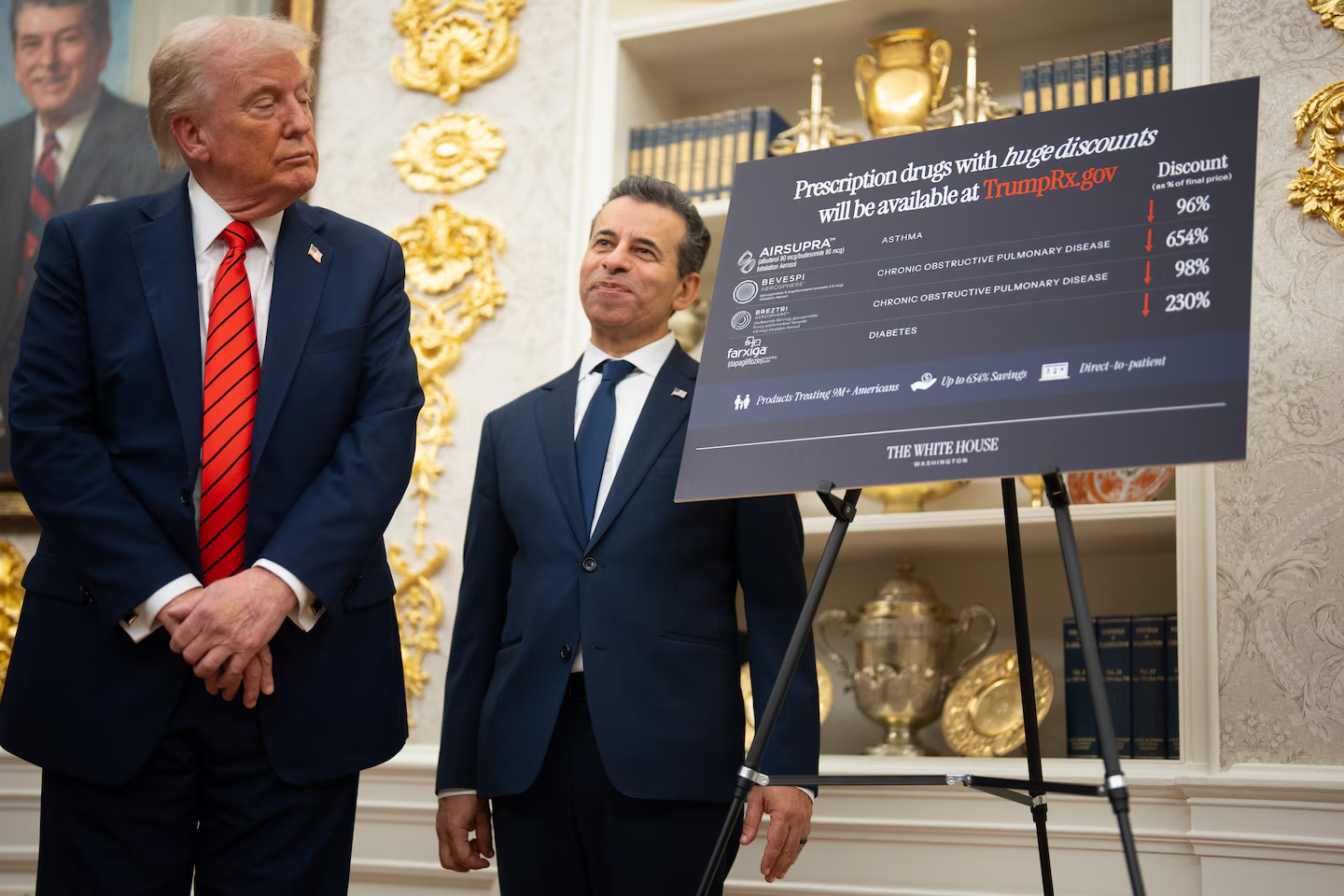
Washington, D.C. – In a move that’s equal parts policy innovation and political theater, President Donald Trump unveiled TrumpRx.gov on Thursday, a sleek new government website designed to slash prescription drug costs for everyday Americans. Billed as the centerpiece of his aggressive campaign against Big Pharma’s pricing practices, the site promises to connect users directly to manufacturer discounts, bypassing insurance middlemen and their markups. Trump, ever the showman, demonstrated the platform’s features during a high-profile event at the Eisenhower Executive Office Building, flanked by key aides and touting it as a game-changer that could propel Republicans to victory in the upcoming midterms.
“This is the biggest thing ever to happen on drug prices,” Trump declared at a recent rally in North Carolina, echoing his longstanding refrain that health care costs—dominated by pharmaceuticals—need a drastic overhaul. “It’s gonna reduce the cost of health care because health care is probably 50 percent drugs, right? This achievement alone should win us the midterms.” And with polls showing health care as a top voter concern, the president might be onto something. A fresh KFF survey released last week reveals that two-thirds of Americans fret over affording medical bills, with 55% reporting higher costs in the past year and 56% expecting even steeper hikes ahead.
The launch caps nearly a year of arm-twisting by the Trump administration, leveraging tariffs, expedited FDA reviews, and diplomatic pressure on allies to force drug makers to the table. Pharmaceutical giants have agreed to list their products on TrumpRx.gov, where users can access coupons for discounted purchases—often without insurance. Take Novo Nordisk’s Ozempic, the blockbuster weight-loss drug with a list price hovering around $1,000 monthly: Through the site, it’s available for just $350, a steep cut that White House officials highlighted as a prime example of the program’s punch.
Chief Design Officer of the National Design Studio Joe Gebbia speaks as Administrator for the Centers for Medicare & Medicaid Services Mehmet Oz looks on during an event on drug pricing in the South Court Auditorium on the White House campus on February 5, 2026 in Washington, DC. (Nathan Howard/Getty Images)
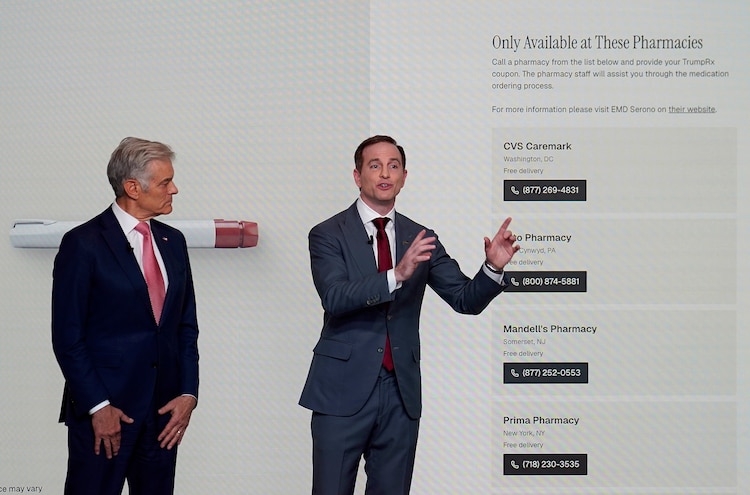
Mehmet Oz, the charismatic administrator of the Centers for Medicare and Medicaid Services (CMS), and Joe Gebbia, director of the newly minted National Design Studio, joined Trump for the rollout. Gebbia walked attendees through the user-friendly interface, showing how to search for meds, bundle coupons for commonly paired prescriptions, and even locate pharmacies offering home delivery. “I can call any one of these pharmacies, and they deliver it straight to my home. It’s that simple,” Gebbia said, emphasizing the site’s focus on transparency and convenience.
White House officials credited the National Design Studio—bolstered by tech-savvy hires like Edward Coristine, known for his bold online presence—with crafting a smooth platform. This stands in stark contrast to the infamous 2013 debut of Healthcare.gov under President Obama, which crashed spectacularly, enrolling just six people on day one and becoming a Republican punching bag. Trump, keen to sidestep such pitfalls, kept TrumpRx.gov’s scope modest but impactful, aiming for quick wins that resonate with voters weary of skyrocketing drug bills.
From a right-of-center vantage, this initiative is a textbook example of Trump’s deal-making prowess: using executive muscle to wring concessions from an industry long accused of gouging consumers. Prescription spending, which eats up about 9% of U.S. health care dollars, has climbed relentlessly despite bipartisan promises to curb it. Trump’s first-term tweaks briefly reversed that trend, a feat he ranks among his greatest hits. Now, with “Most Favored Nation” pricing—tying U.S. costs to lower international rates—the administration is pushing boundaries, even pressuring foreign leaders to shoulder more R&D burdens.
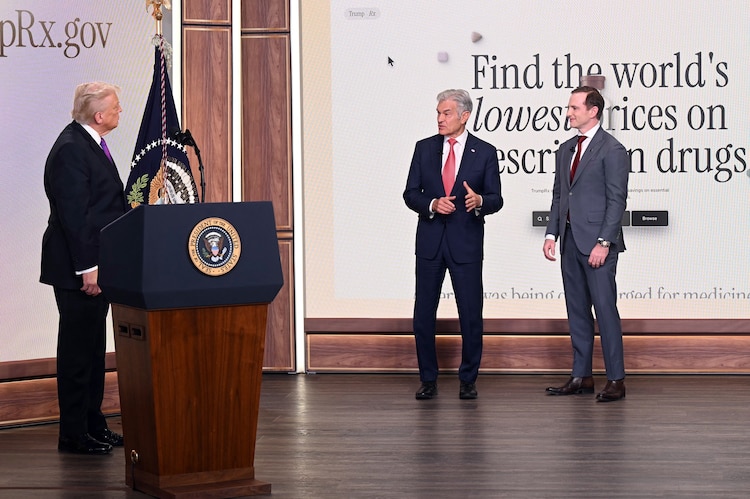
US President Donald Trump (L) listens as the Administrator for the Centers for Medicare & Medicaid Services Mehmet Oz (C) and the chief design officer of the National Design Studio Joe Gebbia introduce the new TrumpRx website, in the South Court Auditorium of the White House in Washington, DC, on February 5, 2026. (Saul Loeb/AFP via Getty Images)
Yet, experts caution that the program’s reach may be limited. “TrumpRx doesn’t sell medications,” the site clarifies upfront. “Instead, it connects patients directly with the best prices, increasing transparency and cutting out costly third-party markups.” While that could help uninsured or high-deductible plan holders, critics note that many already snag discounts via manufacturer sites or pharmacy benefit managers. Craig Garthwaite, health care director at Northwestern’s Kellogg School of Management, called it “far from revolutionary,” pointing out that for pricier brand-name drugs, cash payments remain out of reach for most—insurance is the real safety net.
Skeptics, including Democrats, question the vagueness of the pledges and potential legal snags. Expedited FDA reviews dangled as incentives raise red flags for former officials, who warn of safety risks and possible illegality. Congressional Democrats like Sen. Ron Wyden (D-Ore.) demand transparency: “The Administration has yet to provide any public information that the announcements will result in any real savings for consumers,” he said in a joint statement with colleagues last December. Economists echo this, suggesting list-price cuts might not trickle down amid existing rebates.
Even Mark Cuban, the billionaire entrepreneur behind Cost Plus Drugs—a similar discount platform and frequent Trump foil—offered measured praise during an October Senate hearing. “I don’t think it solves the ultimate problem of how the system is designed, but I think it’s something that we obviously agree on,” Cuban said, acknowledging the shared goal of affordability.
A screenshot of a Zepbound order on the TrumpRx website. Preview Filters Source Info
Politically, drug costs could be a midterm wildcard. Democrats hold a polling edge on health care overall (42-26% trust on the ACA), but it’s slimmer on prescriptions (35-30%), an arena where Trump’s relentless focus might pay dividends. He’s woven TrumpRx into his “Great Healthcare Plan,” urging Congress to enshrine it in law. With midterms looming, the site could deliver tangible savings stories for GOP campaigns, blunting Democratic attacks on affordability.
Still, broader systemic fixes—like negotiating Medicare prices or import reforms—remain elusive, constrained by industry lobbying and court challenges. For now, TrumpRx.gov stands as a symbolic win: a branded portal putting money back in Americans’ pockets, courtesy of the dealmaker-in-chief. As Trump eyes legacy and electoral gains, this could indeed tip scales in key battlegrounds.
In the high-stakes world of American healthcare, where billions of dollars in federal funds hang in the balance, UnitedHealth Group Inc. UNH -2.45% ▼ is pulling out all the stops to navigate a storm of regulatory scrutiny and policy shifts under the Trump administration. The nation’s largest health insurer, grappling with criminal investigations into its lucrative Medicare Advantage business and looming threats to its billing practices, has turned to a time-tested Washington strategy: leveraging connections to former President Donald Trump’s inner circle. From high-level meetings with Justice Department officials to dinners with Medicare overseers and a surge in lobbying expenditures, UnitedHealth is working overtime to plead its case directly with the powers that be.
This aggressive outreach comes at a pivotal moment for the Minnetonka, Minnesota-based giant. UnitedHealth’s Medicare Advantage segment, which generated over $100 billion in revenue in 2023 according to Medicare data, has long been the crown jewel of its operations. These private plans, which manage federal benefits for seniors and disabled individuals, have been a boon for insurers, offering higher reimbursements than traditional fee-for-service Medicare. But recent changes to federal payment rules under the Biden administration, coupled with ongoing probes, have eroded profitability and wiped out nearly 40% of the company’s market value since April.
The company’s troubles intensified in May when The Wall Street Journal first reported that the Justice Department’s criminal fraud unit had launched an investigation into UnitedHealth’s Medicare practices. Shortly thereafter, UnitedHealth secured an unusual meeting with senior Justice Department officials, including Chad Mizelle, the attorney general’s chief of staff. According to people familiar with the meeting, the discussion touched on the probes targeting the company—a move that former prosecutors described as atypical for a firm in the early stages of a criminal inquiry.
“You don’t typically see companies under investigation getting face time with top brass like that,” said Barbara McQuade, a former U.S. attorney for the Eastern District of Michigan and a legal analyst who has followed similar cases. “The goal in investigations is to maintain independence and avoid any perception of favoritism or leaks. This kind of access raises eyebrows.”
UnitedHealth’s CEO, Stephen Hemsley, who returned to the role in May after serving as chairman and previously as CEO, has been at the forefront of these efforts. Hemsley, a veteran of the company since the 1990s, recently met with White House Chief of Staff Susie Wiles to discuss Medicare policy and other healthcare issues, though government investigations were not on the agenda, according to a White House official. Earlier in the summer, Hemsley dined with Chris Klomp, the official overseeing Medicare at the Centers for Medicare & Medicaid Services (CMS), where they delved into topics like Medicare-plan billing policies and the supplemental benefits offered through private plans, sources familiar with the matter said.
These engagements underscore a broader playbook in Washington: direct access to decision-makers. UnitedHealth has also sought meetings with President Trump himself, though it has not yet secured one, according to people close to the discussions. The company is particularly focused on resolving the ongoing investigations, which include not only the criminal probe but also civil and antitrust inquiries.
The backdrop to these maneuvers is a company in recovery mode. UnitedHealth’s stock has shown some tentative signs of stabilization since Hemsley’s return, but the Washington overhang persists. The insurer was already reeling from the tragic public murder of Brian Thompson, CEO of its UnitedHealthcare insurance unit, in December 2024—an event that shocked the industry and added to operational disruptions. Amid this, Hemsley has outlined a recovery plan emphasizing cost controls, operational efficiencies, and advocacy in policy circles.
Financially, the hits have been hard. Changes to Medicare billing rules implemented by the Biden administration began impacting results in earnest this year, squeezing margins in the Medicare Advantage business. Investors are now laser-focused on how the Trump administration will handle these practices. Mehmet Oz, Trump’s nominee for CMS administrator and a high-profile television personality turned public health advocate, has vowed a crackdown on certain insurer tactics, including those employed by UnitedHealth. “We’re going to root out waste, fraud, and abuse in Medicare,” Oz said during his confirmation hearings earlier this year, signaling potential further reimbursement cuts or stricter oversight.
To counter these threats, UnitedHealth has ramped up its Washington presence dramatically. In the first half of 2025, the company spent $7.7 million on lobbying—roughly double the amount from the same period in 2024, according to its own disclosure filings with the Senate. This surge outpaced rivals: Humana Inc. and Cigna Group saw only modest increases in their lobbying budgets during the same timeframe.
A key part of this strategy involves hiring influencers with deep Trump ties. UnitedHealth brought on Brian Ballard, a prominent fundraiser for the president and founder of Ballard Partners, as its top outside lobbyist. Ballard’s firm, which started representing UnitedHealth in 2024, has become the company’s highest-paid external advocacy group, per disclosure records. Ballard, known for his access to the White House and Capitol Hill, has been instrumental in facilitating connections.
The company also enlisted Jesse Panuccio, a former senior Justice Department official from Trump’s first term who now partners at Boies Schiller Flexner LLP. Panuccio played a role in arranging the meeting with Justice Department officials, including Mizelle, sources said. Additionally, in a shareholder lawsuit filed against the company, UnitedHealth in July replaced its legal team from WilmerHale—a firm criticized by Trump—with Robert Giuffra, the president’s personal lawyer and a securities litigator at Sullivan & Cromwell, along with his colleagues.
This shift in legal representation highlights the personalized nature of influence-peddling in the Trump era. “Lobbying spending often ticks up year over year, but 2025 is on track to shatter records,” said Anna Massoglia, a researcher at OpenSecrets.org, a nonpartisan group that tracks money in politics. “With the administration’s inner circle so accessible, companies are going all-in on direct relationships. It’s more nuanced now—you can court the president, his family, and allies outright.”
UnitedHealth’s disclosures paint a picture of an all-hands-on-deck approach. The company has increased its roster of lobbyists and lawyers with Trump-era credentials, aiming to shape policies on Medicare payments, supplemental benefits, and regulatory relief. In a statement to reporters, UnitedHealth emphasized its proactive stance: “Public policy shapes healthcare across America, and it’s our responsibility to engage with the administration and Congress at all levels to improve patient access and affordability,” a spokesman said. “This is especially true now as critical decisions are being made.” The spokesman added that lobbying expenditures fluctuate annually based on needs.
Executives have been candid with Wall Street about these efforts. In a recent earnings call, Hemsley told analysts that the company has been “engaged and collaborative with the administration,” providing management with “a seat at the table,” according to notes from a Morgan Stanley investor briefing last week. This engagement yielded a tangible win in August, when the Justice Department cleared UnitedHealth’s long-stalled $3.3 billion acquisition of home-health provider Amedisys Inc. after the company agreed to divestitures. The deal, first announced in 2023, had been bogged down in antitrust reviews.
The White House has downplayed any special treatment. “The Administration routinely meets with insurers to deliver on the President’s mandate of improving healthcare and lowering costs for everyday Americans,” said Kush Desai, a White House spokesman, in response to inquiries about UnitedHealth’s outreach.
Yet, the investigations remain a thorn in UnitedHealth’s side. When the Journal broke the story of the criminal probe in May, the company initially stated it had not been formally notified and robustly defended its Medicare Advantage integrity. “We have full confidence in our practices,” a spokesman said at the time. But by July 24, in a securities filing with the U.S. Securities and Exchange Commission, UnitedHealth disclosed that it had proactively reached out to the Justice Department and was complying with formal criminal and civil requests. The filing reiterated the company’s commitment to cooperation.
The probe, led by the Justice Department’s criminal fraud unit, is examining potential overbilling and other practices in Medicare Advantage, sources familiar with the matter confirmed. It remains active, with no resolution in sight. Civil investigations by the Department of Health and Human Services and antitrust scrutiny of mergers add layers of complexity.
Former Justice officials like McQuade stress the rarity of such high-level interventions. “You don’t want to give anyone a heads-up,” she said, referring to the risks of discussing active cases. Panuccio, who helped orchestrate the meeting, did not respond to requests for comment.
For UnitedHealth, the stakes couldn’t be higher. Medicare Advantage accounts for a significant portion of its $371 billion in total 2024 revenue, and any adverse policy changes could derail its growth trajectory. The company serves about 8 million enrollees in these plans, making it the market leader with a roughly 30% share. Rivals like Humana, which derives even more of its business from Medicare Advantage, are watching closely, though their lobbying increases have been more measured.
Broader industry dynamics are at play. The Trump administration has promised to overhaul healthcare, with Oz’s CMS nomination signaling a focus on efficiency and fraud reduction. Insurers fear this could mean clawbacks on prior payments or caps on supplemental benefits like dental and vision coverage, which have driven enrollment surges. Enrollment in Medicare Advantage plans hit 33 million in 2025, up from 29 million the prior year, per CMS data.
UnitedHealth’s pivot to Trump allies reflects a sea change in corporate advocacy. In Trump’s first term, industries from tech to energy hired former administration officials to navigate deregulation. Now, with a second term underway, the trend is accelerating. “Companies are figuring out how to win over the new guard,” Massoglia said. “It’s not just about money—it’s about relationships.”
As UnitedHealth pushes forward, the outcomes of these efforts will shape not only its fortunes but the future of privatized Medicare. For now, Hemsley and his team are betting on personal diplomacy to turn the tide. Whether it pays off remains to be seen, but in Washington, access is everything.
A federal judge in Pennsylvania has struck down a Trump-era rule that allowed employers with religious or moral objections to opt out of an Affordable Care Act (ACA) mandate requiring health insurance plans to cover abortion and contraceptives. The decision, issued on August 13, 2025, by U.S. District Court Judge Wendy Beetlestone, declared the 2018 rules “arbitrary and capricious” and in violation of federal law, delivering a significant blow to religious liberty advocates.
The ruling, detailed in a 55-page opinion from the Eastern District of Pennsylvania, vacates both the religious and moral exemption rules enacted during President Donald Trump’s first administration. These rules permitted employers, including religious organizations, to exclude coverage for contraceptives and abortion services from employee health plans based on sincerely held beliefs. Judge Beetlestone’s decision came in response to lawsuits filed by Pennsylvania and New Jersey, which argued that the exemptions undermined access to essential healthcare services.
Beetlestone’s ruling hinged on the Religious Freedom Restoration Act (RFRA), a 1993 law prohibiting the government from substantially burdening religious exercise unless it meets strict criteria. The judge concluded that the exemption rules were not rationally connected to addressing RFRA violations. “The Rule is not arbitrary and capricious because it draws imprecise lines,” she wrote. “It is arbitrary and capricious because the Agencies identified a problem (RFRA violations) and then proposed a solution that is not rationally connected to solving that problem (exempting organizations whose compliance with the Accommodation posed no potential conflict with RFRA to begin with).”
The decision favors Pennsylvania and New Jersey, with a spokesperson for the New Jersey Attorney General’s Office telling The Epoch Times via email: “We are gratified that a federal court has agreed with us that the Trump Administration violated the law by exempting certain entities from the requirement to provide health insurance coverage for contraceptives.” The White House declined to comment on the ruling.
The case has drawn sharp criticism from religious organizations and their legal advocates, particularly the Little Sisters of the Poor, a Catholic nonprofit that has been a defendant-intervenor in the litigation. Mark Rienzi, president of Becket, a public interest legal institute, called the decision an “out-of-control effort by Pennsylvania and New Jersey to attack the Little Sisters and religious liberty.” He criticized the court for issuing a nationwide ruling without addressing constitutional issues or holding a hearing after five years of litigation. “It is absurd to think the Little Sisters might need yet another trip to the Supreme Court to end what has now been more than a dozen years of litigation over the same issue,” Rienzi said, vowing to continue the fight to protect the group’s right to serve the elderly without violating their religious convictions.
The dispute traces back to the ACA, commonly known as Obamacare, which mandates that employer-sponsored health plans cover preventive services, including contraceptives, at no cost to employees. The 2018 rules were designed to address concerns from religious groups, like the Little Sisters, that compliance with the mandate violated their beliefs. A 2020 Supreme Court decision, written by Justice Clarence Thomas, upheld the authority of federal agencies to create such exemptions, stating, “The plain language of the statute clearly allows the Departments to create the preventive care standards as well as the religious and moral exemptions.” Justice Samuel Alito, in a concurring opinion, argued that the exemptions were not arbitrary or capricious, though the Court remanded the issue to lower courts for further review.
Litigation stalled as the Biden administration drafted narrower exemption rules in 2024, only to withdraw them shortly before President Trump’s second term began. Judge Beetlestone noted that with the 2018 rules still in effect, the case was “ripe for resolution.”
The ruling reignites a contentious debate over balancing religious liberty with access to healthcare. For states like Pennsylvania and New Jersey, the decision reinforces the ACA’s mandate to ensure comprehensive coverage. For religious organizations, it raises concerns about government overreach into matters of conscience. As the Little Sisters and their advocates consider an appeal, the case may once again escalate to the Supreme Court, prolonging a legal battle that has spanned over a decade.
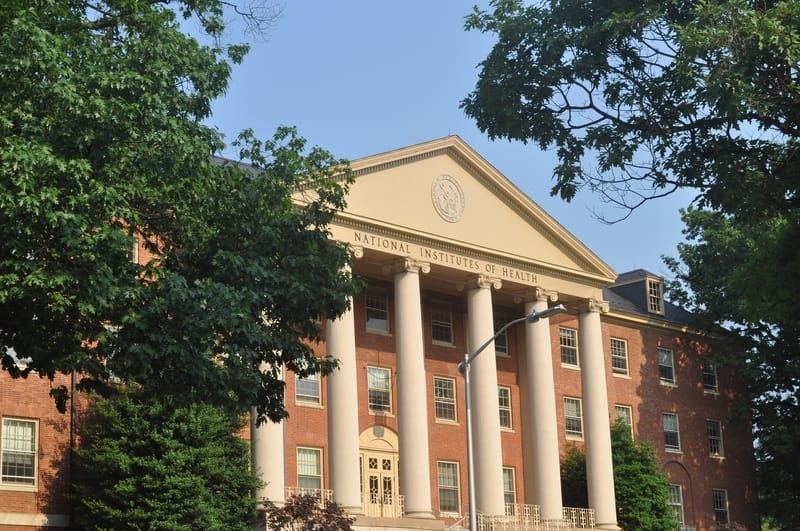
WASHINGTON, D.C. — A new report from the Government Accountability Office (GAO) has found that the National Institutes of Health (NIH), under direction from the Trump administration, unlawfully delayed and canceled billions of dollars in federally approved medical research grants. The decision, rooted in efforts to dismantle diversity, equity, and inclusion (DEI) initiatives across federal agencies, violated the 1974 Impoundment Control Act (ICA), the congressional watchdog concluded.
The GAO report, released Tuesday, revealed that nearly 1,800 grants were either canceled or delayed between January and June 2025, resulting in $8 billion less in grant awards compared to the same period in 2024. This move was made in accordance with several Trump administration executive orders that aimed to eliminate federal spending on DEI-related programs.
“The NIH intended to withhold budget authority from obligation and expenditure without regard to the process provided by the Impoundment Control Act,” the report stated bluntly.
The Impoundment Control Act of 1974 limits the ability of the executive branch to withhold or delay spending that has been approved by Congress. If the president wants to rescind or delay funding, the administration must formally notify Congress and seek approval.
According to the GAO, the NIH bypassed this process, acting on executive orders that had not been legislatively authorized. As such, the delays and cancellations constituted unlawful impoundment of funds.
The Trump Administration’s Executive Orders
Following his re-election and return to office in January 2025, President Donald Trump signed several executive orders targeting DEI initiatives. One such order required all federal agencies to cancel equity-related grants and contracts within 60 days.
The NIH, falling under the Department of Health and Human Services (HHS), responded swiftly by halting grant announcements, removing pending notices from the Federal Register, and pausing peer-review meetings—an essential step in grant distribution. This paralyzed funding flows and research programs for nearly two months, according to internal NIH data and the GAO’s findings.
Researchers and lawmakers across the political spectrum reacted with concern and, in some cases, outrage.
Senator Patty Murray (D-WA), Vice Chair of the Senate Appropriations Committee, issued a strong rebuke:
“It is critical President Trump reverse course, stop decimating the NIH, and get every last bit of this funding out. The longer this goes on, the more clinical trials that will be cut short, labs that will shutter, and lifesaving research that will never see the light of day.”
According to Science.org, dozens of leading universities and medical institutions have already reported disruptions to ongoing trials and lab operations. Some have had to suspend hiring, postpone experiments, or seek alternative private funding to stay afloat.
Dr. Lisa Granger, a biomedical researcher at a top-tier cancer research institute in New York, told STAT News,
“We were days away from final approval for a multi-year immunotherapy project when everything froze. We’ve already lost a few team members to layoffs.”
Neither the NIH nor the White House immediately responded to requests for comment on the GAO’s findings. However, a spokesperson for HHS sent a brief statement to The Hill, noting that the pause on Federal Register notices had been lifted and that peer-review meetings have resumed.
But the damage may already be done, say experts.
Dr. Michael Eisen, a policy expert at the Brookings Institution, told Politico,
“When you weaponize grant funding for political purposes—especially in health and science—you erode both trust and progress. The long-term effects of this slowdown could be devastating.”
The GAO’s determination is not legally binding but carries significant political weight. In a related legal case, a federal district court ruled in June that the Trump administration’s mass cancellation of NIH grants was unlawful. The court ordered a review of the canceled grants, but the administration has not yet signaled how it will proceed.
Republican lawmakers have backed the administration’s moves, arguing that DEI-focused research diverts resources from essential scientific objectives.
“Taxpayer money should go to actual science, not woke social engineering,” said Rep. James Comer (R-KY), Chair of the House Oversight Committee, in a statement to Fox News.
The immediate future remains uncertain. While HHS has lifted the pause on some procedures, the $8 billion shortfall has yet to be restored. The GAO recommended that Congress demand a full accounting of canceled grants and require the NIH to expedite reallocation of funds to eligible researchers.
Medical associations, including the American Medical Association and the Association of American Medical Colleges, have called on Congress to step in with emergency legislation that would protect research funding from future political interference.
“We cannot let partisanship dictate whether cancer cures or pandemic response strategies are developed,” said Dr. Amy Martinez, president of the NIH Grants Advocacy Coalition, in an op-ed for Bloomberg.
Although NIH funding is not directly tied to public markets, biotechnology and pharmaceutical stocks reacted negatively when grant cancellations were first reported in Q1 2025. According to Bloomberg Markets, the Nasdaq Biotechnology Index saw a 3.7% drop in March, when internal NIH memos revealed delays in funding cycles.
Investors and venture capitalists in the life sciences space are now watching closely to see if Congress will act—or if further executive actions will chill scientific investment.
The GAO’s ruling adds to growing scrutiny over how political decisions are influencing scientific research and public health funding. As the Trump administration continues to reshape the federal government’s priorities, the NIH—once considered a relatively neutral institution—is emerging as a political battleground.
Whether the full weight of the $8 billion in delayed funding will be restored remains to be seen. What is clear is that the implications of these actions will reverberate across the scientific community for years to come.
U.S. pharmaceutical companies are racing to assess the fallout from President Donald Trump’s proposal of a 200% tariff on imported pharmaceutical products, a policy that has sent shockwaves through the global drug industry and sparked intense scenario planning among manufacturers and investors.
Speaking on Tuesday, Trump reiterated that long-delayed, industry-wide tariffs are imminent, following the launch of a Section 232 national security investigation into pharmaceutical supply chains in April. While he hinted that the tariffs wouldn’t take effect immediately — instead offering a grace period of 12 to 18 months — industry analysts and executives warn the impact could be both disruptive and long-lasting.
“This kind of tariff would inflate production costs, compress profit margins, and risk severe supply chain disruptions, leading to drug shortages and higher prices for U.S. consumers,” analysts at Barclays warned in a research note Wednesday.
Even with a grace period, the pressure is building. UBS called the delay “insufficient time” for pharmaceutical manufacturers to shift operations back to the U.S., noting that relocating commercial-scale production typically takes four to five years.
According to Pharmaceutical Research and Manufacturers of America (PhRMA), a mere 25% tariff would already drive up U.S. drug prices by $51 billion annually, translating to as much as a 12.9% increase in consumer prices. The group blasted the proposed 200% levy as “counterproductive” to public health, especially given rising inflation and mounting healthcare costs.
“A 100% or 200% tariff would be potentially disastrous for every person because we need those pharmaceuticals, and it takes those companies a long time to produce them here in the U.S.,” said Afsaneh Beschloss, founder and CEO of RockCreek Group, speaking on CNBC’s Closing Bell.
Many of the world’s leading drugmakers — including Roche, Novartis, Sanofi, Bayer, and AstraZeneca — manufacture much of their product outside the U.S., particularly in Europe, India, and Asia, where costs are lower and supply chains more mature.
In anticipation of potential fallout, global firms are exploring relocation strategies and cost restructuring. Roche, for instance, stated it is “monitoring the situation closely” and advocating for policies that reduce barriers to patient access while continuing to expand its U.S. manufacturing footprint.
Bayer said it is focused on “securing supply chains and minimizing any potential impact,” while Novartis confirmed no changes to its current U.S. investment strategy but emphasized ongoing collaboration with the U.S. administration and trade associations.
Other firms — such as Sanofi, AstraZeneca, and Novo Nordisk — have remained largely silent, either declining comment or citing pre-earnings quiet periods.
Trump’s administration argues that reshoring pharmaceutical production is a national security imperative, especially after the COVID-19 pandemic exposed vulnerabilities in the global medical supply chain. Historically, pharmaceuticals have been exempt from trade tariffs due to their essential nature. But Trump has long criticized the industry for “offshoring profits” while “overcharging American patients.”
The president’s remarks on Tuesday reinforced this stance, describing the move as a necessary step toward bringing “American-made medicine” back to domestic shelves. Critics, however, argue that such sweeping tariffs could drive up drug costs while placing undue stress on an industry already grappling with R&D inflation, regulatory pressures, and price transparency reforms.
The pharmaceutical industry had hoped for a carve-out from broad tariffs — a strategy that appears increasingly unlikely. Some optimism has shifted toward future trade negotiations that might soften the blow.
The recently signed U.S.-U.K. trade agreement, while thin on specifics, includes a provision to negotiate preferential treatment for British pharmaceutical products and ingredients, contingent on the outcome of the Section 232 probe.
Swiss and EU pharmaceutical exporters may be pursuing similar carve-outs, but progress has been slow. With the final Section 232 report due by the end of July, drugmakers are bracing for a pivotal policy moment — one that could redefine their long-term U.S. market strategy.
Former President Joseph R. Biden Jr. was diagnosed on Friday with an aggressive form of prostate cancer that has spread to his bones, his office said in a statement on Sunday.
The diagnosis came after Mr. Biden reported urinary symptoms, which led doctors to find a “small nodule” on his prostate. Mr. Biden’s cancer is “characterized by a Gleason score of 9” with “metastasis to the bone,” the statement said.
The Gleason score is used to describe how prostate cancers look under a microscope; 9 and 10 are the most aggressive. The cancer is Stage 4, which means it has spread.
“While this represents a more aggressive form of the disease, the cancer appears to be hormone-sensitive which allows for effective management,” according to the statement from Mr. Biden’s office, which was unsigned. “The president and his family are reviewing treatment options with his physicians.”
Mr. Biden, 82, left office in January as the oldest-serving president in American history. Throughout his presidency, Mr. Biden faced questions about his age and his health, ultimately leading him to abandon his re-election campaign under pressure from his own party.
Prostate cancer experts say that Mr. Biden’s diagnosis is serious, and that once the cancer has spread to the bones — where it tends to go — it cannot be cured. But Dr. Judd Moul, a prostate cancer expert at Duke University, said men whose prostate cancer has spread “can live five, seven, 10 or more years.”
The first line of attack is to cut off the testosterone that feeds prostate cancer. Dr. Moul said that when he started out as a urologist in the 1980s, this was done by removing a man’s testicles. Today, men have a choice of two drugs given by injection that block the testicles from making testosterone or a pill that does the same thing. In addition, men take drugs that block any testosterone that manages to be made despite the drugs that inhibit its production.
Dr. Moul said he sees men Mr. Biden’s age with similar prostate cancer diagnoses on a regular basis. “Survival rates have almost tripled in the last decade,” he said.
President Trump, who has repeatedly bashed Mr. Biden and blames him for most of the country’s problems, was among those who issued supportive statements on Sunday evening.
“Melania and I are saddened to hear about Joe Biden’s recent medical diagnosis,” Mr. Trump wrote on social media. “We extend our warmest and best wishes to Jill and the family, and we wish Joe a fast and successful recovery.”
Former Vice President Kamala Harris, who served with Mr. Biden, said she and her husband were “saddened” to learn of the former president’s diagnosis.
“Joe is a fighter — and I know he will face this challenge with the same strength, resilience, and optimism that have always defined his life and leadership,” she wrote on social media. “We are hopeful for a full and speedy recovery.”
Since leaving office, Mr. Biden has largely kept a low profile, spending most of his time in Delaware and commuting to Washington to meet with staff to plan his post-presidential life. After Mr. Trump passed the 100-day mark, and ahead of the release of books about his presidency and the 2024 campaign, Mr. Biden participated in interviews to push back against claims that he suffered from mental decline.
“They are wrong,” Mr. Biden said during an interview on “The View.” “There’s nothing to sustain that.”
He also said that he could have defeated Mr. Trump had he not dropped out of the race.
Still, many top Democrats have been forced to reckon with their staunch support of Mr. Biden’s re-election campaign before a disastrous debate last June, in which he appeared disoriented and listless. After dropping out, Mr. Biden endorsed Ms. Harris, who lost to Mr. Trump.
Adding fuel to the fire was the release this weekend of the audio from Mr. Biden’s 2023 interview with Robert K. Hur, the special counsel who investigated his handling of classified documents. Axios published the full five-hour tape ahead of the Trump administration’s plans to release it this week, and it reveals Mr. Biden’s halting voice and his difficulty providing dates and details.
Mr. Hur ultimately declined to recommend charges against Mr. Biden in part because, he said, a jury would find the president to be a “sympathetic, well-meaning, elderly man with a poor memory.”
In February 2024, when Mr. Biden was still president, his longtime doctor declared him “fit to serve” after he underwent a routine physical at Walter Reed National Military Medical Center.
Mr. Biden and his family have faced numerous health challenges throughout their lives. In 1988, Mr. Biden battled two brain aneurysms that threatened to end his political career. His son Beau died in 2015from glioblastoma, an aggressive form of brain cancer.
When Mr. Biden was asked in January, shortly before leaving office, whether he would have had the vigor to serve another four years, he said he did not know.
“Who the hell knows? So far, so good,” he said in an interview with USA Today. “But who knows what I’m going to be when I’m 86 years old?”
Elizabeth Holmes is in prison for defrauding investors through her blood-testing company, Theranos. In the meantime, her partner is starting one of his own.
Billy Evans, who has two children with Ms. Holmes, is trying to raise money for a company that describes itself as “the future of diagnostics” and “a radically new approach to health testing,” according to marketing materials reviewed by The New York Times.
If that sounds familiar, it’s because Theranos similarly aimed to revolutionize diagnostic testing. The Silicon Valley start-up captured the world’s attention by claiming, falsely as it turned out, to have developed a blood-testing device that could run a slew of complex lab tests from a mere finger prick.
Mr. Evans’s company is named Haemanthus, which is a flower also known as the blood lily. It plans to begin with testing pets for diseases before progressing to humans, according to two investors pitched on the company who spoke on the condition of anonymity because they had agreed to keep the plans secret. Mr. Evans’s marketing materials, which lay out hopes to eventually raise more than $50 million, say the ultimate goal is nothing short of “human health optimization.”
The Haemanthus testing device.Credit…Haemanthus
A photo provided to potential investors of the start-up’s prototype bears more than a passing physical resemblance to Theranos’s infamous blood-testing machine, variously known as the Edison or miniLab. The device that Mr. Evans’s company is developing is a rectangular contraption with a door, a digital display screen and what the investor materials describe as tunable lasers inside.
Haemanthus says its device will test blood as well as saliva and urine.
The marketing documents provided with the photo say there is “no regulatory oversight — U.S.D.A. confirmed in writing.”
It’s not clear what the company means by that. A spokesman for the U.S. Department of Agriculture, Seth W. Christensen, said he was not able to confirm whether the agency had corresponded with Haemanthus. “U.S.D.A. does regulate vet diagnostics,” including blood testing, Mr. Christensen said.
Mr. Evans responded in an interview, “When you’re in stealth, you’re trying to be in stealth. They aren’t going to find anything associated with the name Haemanthus.” Mr. Evans sent a partially redacted document from the U.S.D.A. that said, “It does not appear that the proposed product is within the regulatory jurisdiction” of the Center for Veterinary Biologics, which is a part of the U.S.D.A.
Mr. Evans, the 33-year-old heir to a California hotel fortune who met Ms. Holmes while federal authorities were investigating her, has not publicly discussed the new venture. The documents indicate he has already assembled roughly 10 employees. He describes his employment on social media simply as working for a “stealth start-up.”
James W. Breyer, the well-known venture capitalist and early investor in Facebook, said his team had been asked to put in money and decided against it “for many of the same reasons we passed twice on Theranos.”
“In diagnostics, we’ve long held that the difference between a compelling story and a great company lies in scientific defensibility and clinical utility,” he wrote in an email.
If sequels are de rigueur in the so-called disruptive world of technology, this one is particularly bold. Theranos became one of the most celebrated start-ups in the globe last decade and attracted both big-time investors (Rupert Murdoch, Larry Ellison) and a board of advisers that included Henry Kissinger.
Ms. Holmes, often clad in a black turtleneck that invited comparisons to the Apple founder Steve Jobs, was feted on magazine covers, and at the White House.
Few knew that Theranos’s technology could not diagnose hundreds of conditions it claimed it could. As was chronicled in The Wall Street Journal, a best-selling book, a podcast, television series and later criminal proceedings, Theranos was largely using third-party technology to run rudimentary assays — when it did any testing at all. Patients received false diagnoses. The company crumbled ahead of Ms. Holmes’s indictment for fraud.
The Theranos blood-testing machine. (Jim Wilson/The New York Times)
Ms. Holmes, who has always maintained that she is innocent, was convicted of fraud in 2022 and sentenced to 11 years in prison. She is incarcerated in a Bryan, Texas, federal prison.
Mr. Evans’s idea for Haemanthus traces back at least a year and a half, when he incorporated the company in Delaware, according to public corporate filings. Documents filed in Delaware and Texas show that its offices have been at various addresses in the trendy South Lamar neighborhood of Austin, Texas, where Mr. Evans lives with his and Ms. Holmes’s two children.
Haemanthus began by soliciting $3.5 million in funding from friends and family and this spring began reaching out to other well-to-do backers in Austin and the San Francisco Bay Area for an additional $15 million, according to the investor materials.
The billionaire Michael Dell’s investment firm turned down the effort, according to two people briefed on the outreach.
The one investor who could be identified in public records is Matthew E. Parkhurst, the part owner of a Mediterranean tapas bar in downtown Austin and other investments. Mr. Parkhurst did not respond to requests for comment.
Much of the Haemanthus executive team hails from Luminar, a struggling self-driving car company where Mr. Evans worked for two years, according to his LinkedIn profile.
Pet health care is the first market Mr. Evans’s company aims to address. The start-up has thus far received one patent.
According to the company’s marketing materials and patent, the Haemanthus device will use a laser to scan blood, saliva or urine from pets and analyze the samples on a molecular level. In a matter of seconds, the marketing material said Mr. Evans’s machine would be able to identify and qualify biomarkers such as glucose and hormones, and deploy what the company calls deep learning models to detect cancer and infections.
Animal medicine has grown into a colossal industry as private-equity firms have increasingly acquired and consolidated independent veterinary practices.
Pet cancer screenings alone are a multibillion-dollar market. Edgemont Partners, a health care investment bank, describes it as a “recession-proof industry.”
Haemanthus told investors that it had roughly two dozen advisers, including veterinarians and diagnosticians, though it did not name them.
Haemanthus’s materials say the long-term goal is to develop a stamp-size, wearable version of the product for humans. “Based on our experience and partner input,” it says, that will require three years and $70 million.
The investor presentation makes no mention of Mr. Evans’s connection to Ms. Holmes.
Republicans are backing away from broad proposals to slash federal funding to Medicaid and inching toward a more modest approach, fearful of the political risk of cutting a program that has swelled to the point thatit now insures 1 in 5 Americans.
They are leaning toward smaller changes such as adding work requirements and extra eligibility checks — ideas more palatable to moderate and vulnerable Republicans, many of whom are loath to cut a program that covers a substantial slice of their constituents and risk a political backlash in next year’s midterm elections.
“Obviously there would be political ramifications for something like that,” Rep. Juan Ciscomani (R-Arizona) said Thursday, referring to proposals to reduce the federal government’s Medicaid payments to states or overhaul its method for paying them. House Speaker Mike Johnson (R-Louisiana) ruled out the first option and backed away from the second one this week.
Ciscomani, who represents a swing district where 24 percent of people are on Medicaid, said he supports work requirements, more eligibility checks and fraud-reduction efforts, but said anything more would be “very problematic for my population in Arizona, especially my district.”
Those measures alone, however, are unlikely to add up to the $880 billion in savings Republicans are seeking from programs under the jurisdiction of the Energy and Commerce Committee as they draft the “big, beautiful bill” at the center of President Donald Trump’s agenda. How to trim spending on Medicaid has become one of the hardest debates to resolve as House Republicans rush to pass the bill by Memorial Day.
Trump has repeatedly said the program should not be touched, and far-right influencer Laura Loomer, who often has the president’s ear, criticized the idea of Medicaid cuts on X this week.
Johnson ruled out some cuts to the program this week after protests from House Republicans who say they will not vote for the bill if it includes them.
“What I press leadership on a lot is my district is very reliant on [Medicaid], and when hospitals close, they don’t open back up,” said Rep. David G. Valadao (R-California), who represents a swing district where 68 percent of people are enrolled in Medicaid. “I do agree that there are areas where there’s waste, fraud and abuse. Let’s focus on that.”
The last two times Republicans tried to cut Medicaid — in 1994 and then again as part of an Affordable Care Act repeal effort in 2017 — the efforts ultimately fizzled. The program has only grown since. Eight more states have expanded Medicaid in the years since the 2017 repeal effort,and half of House Republicans now represent districts with at least 21 percent of constituents in Medicaid, according to KFF.
The stakes are especially high in nine states with “trigger” laws requiring them to end or change Medicaid expansion if the federal match rate drops. Three more states — Missouri, Oklahoma and South Dakota — embedded Medicaid expansion into their constitutions, making it hard for them to roll back coverage if they suddenly had to foot more of the bill on their own.
Three Republicans facing tough races next year — Reps. Zach Nunn of Iowa, Don Bacon of Nebraska and Derrick Van Orden of Wisconsin — introduced a resolution this week that would prohibit Republicans from cutting Medicaid benefits for children, seniors, pregnant women or people with disabilities in the bill. But Bacon said Thursday that he was reassured by Johnson’s commitment not to cut Medicaid payments to states.
Rep. Andy Harris (R-Maryland), the chairman of the hard-right House Freedom Caucus, said in a brief interview that Republicans might need to reduce that payments to states that Johnson ruled out cutting to keep the bill from adding to the deficit.
“If we eliminate all the fraud, waste and abuse — and there’s plenty of it — we’re left with at least a 25 increase in [projected Medicaid spending] over the next 10 years,” Harris said on the House floor. “Only in Washington could anyone claim that’s a cut.”
Any Medicaid cuts that House Republicans come up with would also have to be approved by the Senate. Sen. Thom Tillis (R-North Carolina), who is up for reelection next year in a competitive state, said he was unconcerned about potential cuts because Trump had pledged that the bill would not harm Medicaid beneficiaries. Instead, Tillis expects the bill to include work requirements and other more limited changes to the program.
“I believe if we implement those, we’ll be doing Medicaid a service and it won’t have a political consequence,” Tillis said in a brief interview.
Rep. Jeff Van Drew (R-New Jersey), who won reelection by 17 points last year, said he wasn’t concerned that voting for Medicaid cuts would cost him his seat — but he’s worried it could hurt Republicans’ chances of holding the House. Even Republicans who don’t represent swing districts should be concerned about cuts that could imperil the party’s majority, he said.
Vulnerable Republicans are already facing attack ads in some districts.
Protect Our Care, a liberal nonprofit, is spending $10 million on ads and billboards urging Republicans not to cut Medicaid, according to Brad Woodhouse, the group’s executive director. The group is working on another round of ads that will air if Republicans pass the bill.
Woodhouse, a longtime Democratic strategist, compared this effort to Republicans’ failed attempt to repeal the Affordable Care Act, also known as Obamacare, which helped Democrats recapture the House in 2018. This time around, Republicans are considering cutting funding for Medicaid in the same bill in which they are seeking to extend tax cuts that disproportionately aid the richest Americans, he said.
“They’re going to take health care away from poor people to pay for tax cuts for the rich,” Woodhouse said. “That’s an ad that makes itself.”
Democrats running against vulnerable Republicans are already gearing up to talk about possible Medicaid cuts as an example of how the party in power is hurting voters on a personal level. Medicaid covers 1 in 4 births in the United States, it is the largest payer of long-term care, and it is especially critical for rural hospitals, which cover lower-income patients.
“If these cuts go through … you may not feel the pain right now, but it is coming,” said Bob Harvie, a Democrat on the Board of Bucks County Commissioners in Pennsylvania who is challenging Rep. Brian Fitzpatrick, one of three House Republicans who represent a district that Democratic presidential nominee Kamala Harris won last year.
For Sarah Trone Garriott, the Democratic state senator challenging Nunn in Iowa, the biggest concern may be how any funding cuts to Medicaid would affect rural hospitals, which are struggling with staffing and at risk of closure.
“If there are cuts to Medicaid, it is going to impact everybody in my state. Rural hospitals will close,” said Trone Garriott, a Lutheran pastor who has worked as a hospital chaplain.
Nunn said in a statement that he woulddefend Medicaid “for Iowa’s most vulnerable, and fight the fraud & abuse hurting all Americans.”
“Iowa’s rural hospitals are lifelines that must be protected,” Nunn said.
Rep. Richard Hudson (R-North Carolina), chairman of the National Republican Congressional Committee, accused Democrats of misrepresenting what the bill would do. He predicted that the Medicaid changes being discussed would be popular and said he was encouraging Republicans to campaign on them.
“The Democrats are killing Medicaid by loading it with illegals and able-bodied adults who don’t qualify,” Hudson said, describing the message he is giving Republicans.
Republicans such as Rep. Darrell Issa (California) have presented the proposed changes as a return to Medicaid the way it was under former presidentBill Clinton — before the Affordable Care Act expanded it to cover people up to 133 percent of the federal poverty level.
“The wrongful inclusion of significant numbers of people, including undocumented people, including people who are not entitled and including able-bodied men who aren’t looking for jobs — those are not cuts to Medicaid, those are a return to the sanity of Bill Clinton,” Issa said Thursday.
Undocumented immigrants aren’t allowed to enroll in Medicaid, and there are no reliable estimates of fraud in the program.
Republicans started running ads this week defending more than a dozen incumbents who represent swing districts. American Action Network, a conservative nonprofit organization, is spending $7 million on ads praising House Republicans for “supporting President Trump’s common sense reforms to root out waste, fraud and abuse.”
Cookie Consent
We use cookies to improve your experience on our site. By using our site, you consent to cookies.
Contains information related to marketing campaigns of the user. These are shared with Google AdWords / Google Ads when the Google Ads and Google Analytics accounts are linked together.
90 days
__utma
ID used to identify users and sessions
2 years after last activity
__utmt
Used to monitor number of Google Analytics server requests
10 minutes
__utmb
Used to distinguish new sessions and visits. This cookie is set when the GA.js javascript library is loaded and there is no existing __utmb cookie. The cookie is updated every time data is sent to the Google Analytics server.
30 minutes after last activity
__utmc
Used only with old Urchin versions of Google Analytics and not with GA.js. Was used to distinguish between new sessions and visits at the end of a session.
End of session (browser)
__utmz
Contains information about the traffic source or campaign that directed user to the website. The cookie is set when the GA.js javascript is loaded and updated when data is sent to the Google Anaytics server
6 months after last activity
__utmv
Contains custom information set by the web developer via the _setCustomVar method in Google Analytics. This cookie is updated every time new data is sent to the Google Analytics server.
2 years after last activity
__utmx
Used to determine whether a user is included in an A / B or Multivariate test.
18 months
_ga
ID used to identify users
2 years
_gali
Used by Google Analytics to determine which links on a page are being clicked
30 seconds
_ga_
ID used to identify users
2 years
_gid
ID used to identify users for 24 hours after last activity
24 hours
_gat
Used to monitor number of Google Analytics server requests when using Google Tag Manager