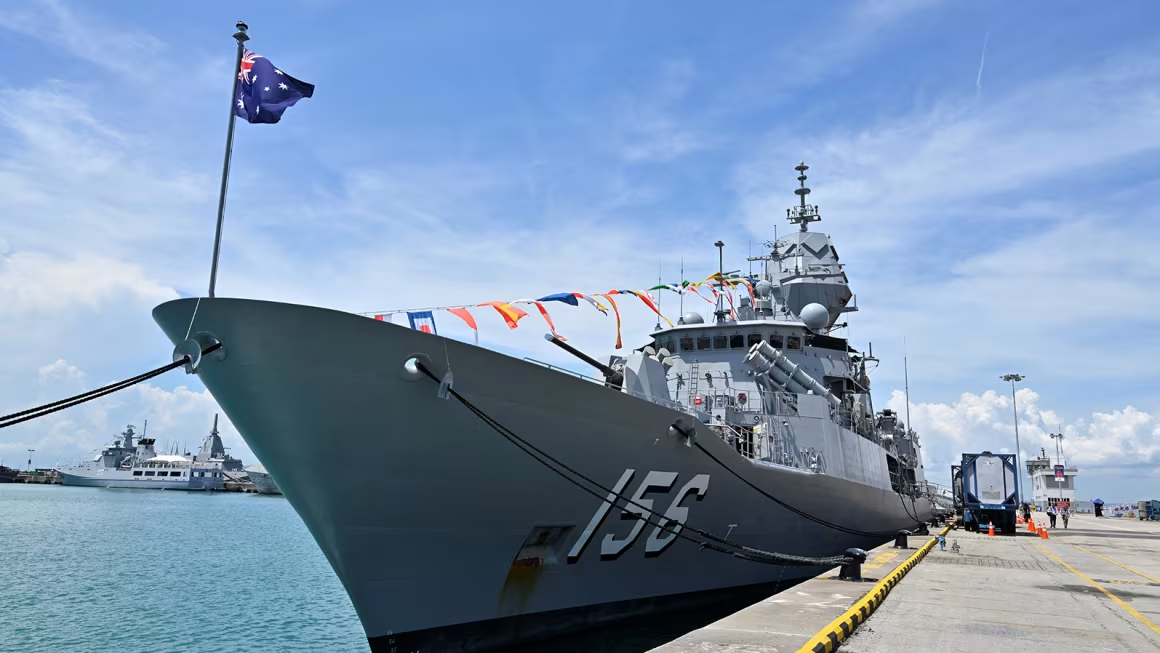
Perth, Australia – In a strategic move that puts American interests front and center without the endless quagmires of past interventions, the Pentagon is gearing up to station up to four nuclear-powered submarines at HMAS Stirling, a naval base in Western Australia, starting as early as 2027. This deployment, part of the AUKUS security pact, serves as a smart “insurance policy” against potential Chinese aggression in the Indo-Pacific—ensuring U.S. trade routes stay open, supply chains remain secure, and American workers aren’t left holding the bag for Beijing’s bullying. It’s a classic America First play: leveraging allies to share the load, deter threats, and protect our economic edge without committing to another forever war.
The announcement, detailed in a recent Wall Street Journal report, highlights how Washington is repositioning its naval assets closer to flashpoints like Taiwan and the South China Sea. HMAS Stirling, located near Perth, is undergoing a massive $5.6 billion upgrade funded largely by Australia, including new maintenance facilities that will allow U.S. subs to operate more efficiently—reducing strain on American bases in Guam and Hawaii. By 2027, the base will host rotational deployments of Virginia-class attack submarines, with up to four U.S. boats and one from the U.K., under the banner of Submarine Rotational Force-West (SRF-West). This isn’t about basing them permanently—it’s rotational, keeping flexibility while building Australia’s skills for their own nuclear-powered fleet in the 2030s.
From an America First perspective, this is gold: It deters China without overextending U.S. forces. Beijing’s aggressive claims in the South China Sea threaten vital shipping lanes that carry trillions in American trade annually. By parking subs Down Under, we’re sending a clear message—back off—while letting allies like Australia pull their weight. No more freeloading on Uncle Sam’s dime; this pact ensures shared burdens for shared security. And unlike the neocon dreams of regime change, it’s focused on deterrence, not invasion—protecting American jobs in manufacturing and tech that rely on stable Pacific trade.
The move comes amid a broader realignment in Asia, where U.S. policies are reshaping alliances to counter China’s economic and military clout. Take President Trump’s recent tariff tweaks with India: On February 8, he slashed reciprocal tariffs from 25% to 18% and axed a 25% penalty on Indian goods, rewarding New Delhi for slashing Russian oil imports—a smart play to wean allies off adversarial energy sources while boosting U.S. exports. India’s electronics boom, fueled by schemes like Make in India and Productivity Linked Incentives, has catapulted it to the world’s second-largest mobile phone maker, with exports surging from $21.3 billion in 2014-15 to $127 billion in 2024-25. Yet, this growth hinges on Chinese components—39.7% of India’s electronic imports come from Beijing—highlighting the tangled web of dependencies Washington is working to untangle.
Most Read in Politics


This tariff relief positions India to challenge Vietnam in the U.S. market, where Hanoi faces a 45% transshipment tariff to block Chinese rerouting. In 2024, Vietnam grabbed 4% of U.S. imports versus India’s 2.7%, but with electronics making up 17.6% of India’s U.S. exports—and now tariff-free—expect a shift that benefits American consumers and weakens China’s supply chain dominance. It’s America First economics: Reward friends who align with our interests, punish those who don’t.
Further south, political winds are shifting in Bangladesh, where February 12 elections follow the 2024 ouster of Sheikh Hasina amid student uprisings. The interim government under Nobel laureate Muhammad Yunus is cozying up to China and Pakistan, irked by India’s sheltering of Hasina despite extradition demands. This realignment could tip South Asia’s balance, with Beijing eyeing infrastructure deals to expand its Belt and Road footprint. For U.S. interests, it’s a reminder to back stable partners like India without getting bogged down in regional squabbles—focus on trade pacts that secure American access to markets, not endless diplomatic meddling.
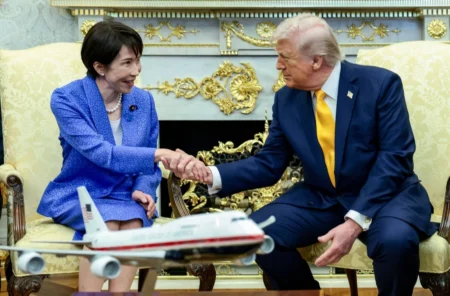
Across the East China Sea, Japan’s snap election on February 9 saw Prime Minister Sanae Takaichi’s hawkish stance on China dominate headlines. Her November 2025 vow to defend Taiwan militarily if attacked drew Beijing’s ire—bans on Japanese seafood, tourism curbs, and threats to rare earth exports. Young voters like Aoi Nakamura rallied behind her: “Japan should maintain a firm stance without making any compromises.” A strong win for Takaichi would signal Tokyo’s resolve, aligning with U.S. efforts to fortify alliances against Chinese coercion. But America First means encouraging Japan to step up its own defense spending—now at 2% of GDP—rather than relying on U.S. troops as a crutch.
These threads weave into the AUKUS fabric: The submarine deal accelerates Australia’s nuclear sub program, with U.S. and U.K. rotations building expertise. Recent visits, like the USS Vermont in October 2025 and USS Minnesota in February 2025, test maintenance protocols at Stirling, paving the way for SRF-West. By 2032, Australia gets three Virginia-class subs, enhancing collective deterrence. Experts note this brings U.S. forces 4,000 miles closer to Taiwan than Pearl Harbor, cutting response times in a crisis.

Critics worry about escalation, but proponents argue it’s preventive—deterring Beijing from adventurism that could disrupt global trade. With China flexing in the Taiwan Strait, this base ensures America can protect its interests from afar, without boots on the ground. As one Pentagon official put it, “It’s about presence, not provocation.”
In this era of great-power competition, Trump’s strategy—trade incentives for India, alliances like AUKUS, and firm lines with rivals—puts American workers, security, and prosperity first. No more nation-building; just smart power that keeps the peace and pays dividends at home.
For the full story on the submarine deployment, read The Wall Street Journal’s report here. Details on AUKUS from the Australian Submarine Agency. Coverage of India’s trade surge from Dow Jones. The New York Times on Japan’s election dynamics.