Close Menu
The New York BudgetsThe New York Budgets
  • Latest
  • Politics
    • World & Politics
    • US Politics
      • U.S. Administration
      • Donald Trump
    • UK
    • Middle East
      • Middle East Tensions
    • Russia-Ukraine War
  • Business
  • Economy
  • Opinion
  • AI & Tech
  • New York
  • US NEWS
  • Climate
  • Health
  • Entertainment
  • Tech
  • Media
  • Tariffs
  • US NEWS
  • Economic Policy
  • Trade
  • New York
  • Investment
  • Social Media
  • Hollywood
  • Real Estate
  • Health
  • Asia
  • Automotive
  • Food
  • Crime
  • Movies
  • Bankruptcy
  • Cryptocurrency
  • Education
  • National
  • Airlines
  • Religion And Culture
  • Internet
  • UK News
  • Private Equity
  • Financial
  • Retail
  • Markets
  • Store
  • Climate
  • India-Pakistan Tensions
  • Medical
  • Commodities
  • Aviation
  • e-commerce
  • e-commerce
  • Streaming
  • Investing
  • Sports
  • Style & Art
  • Ukraine Conflict
  • Stock Market
  • Oil and Gas
  • Latest Headlines
  • Politics
  • Economy
  • Opinion
  • Tech
  • Style & Art
  • Sports
  • Climate
  • Investigative Journalism
The New York BudgetsThe New York Budgets
Subscribe
The New York BudgetsThe New York Budgets
United States - Japan Asia Asia News Business Economic Policy Economy Investment Japan News Private Equity Trade Trump Administration

US-Japan Panel Holds Second Meeting to Advance $550B Trade Deal Investments

Japan and US Hold Crucial Second Consultation Committee Meeting to Expedite Initial Projects Under Historic $550 Billion Investment Pledge – Key Pillar of Trump-Era Trade Deal Reducing Tariffs
By Fred RobinsonDecember 24, 20250
Facebook Twitter LinkedIn WhatsApp Bluesky Telegram Email Copy Link
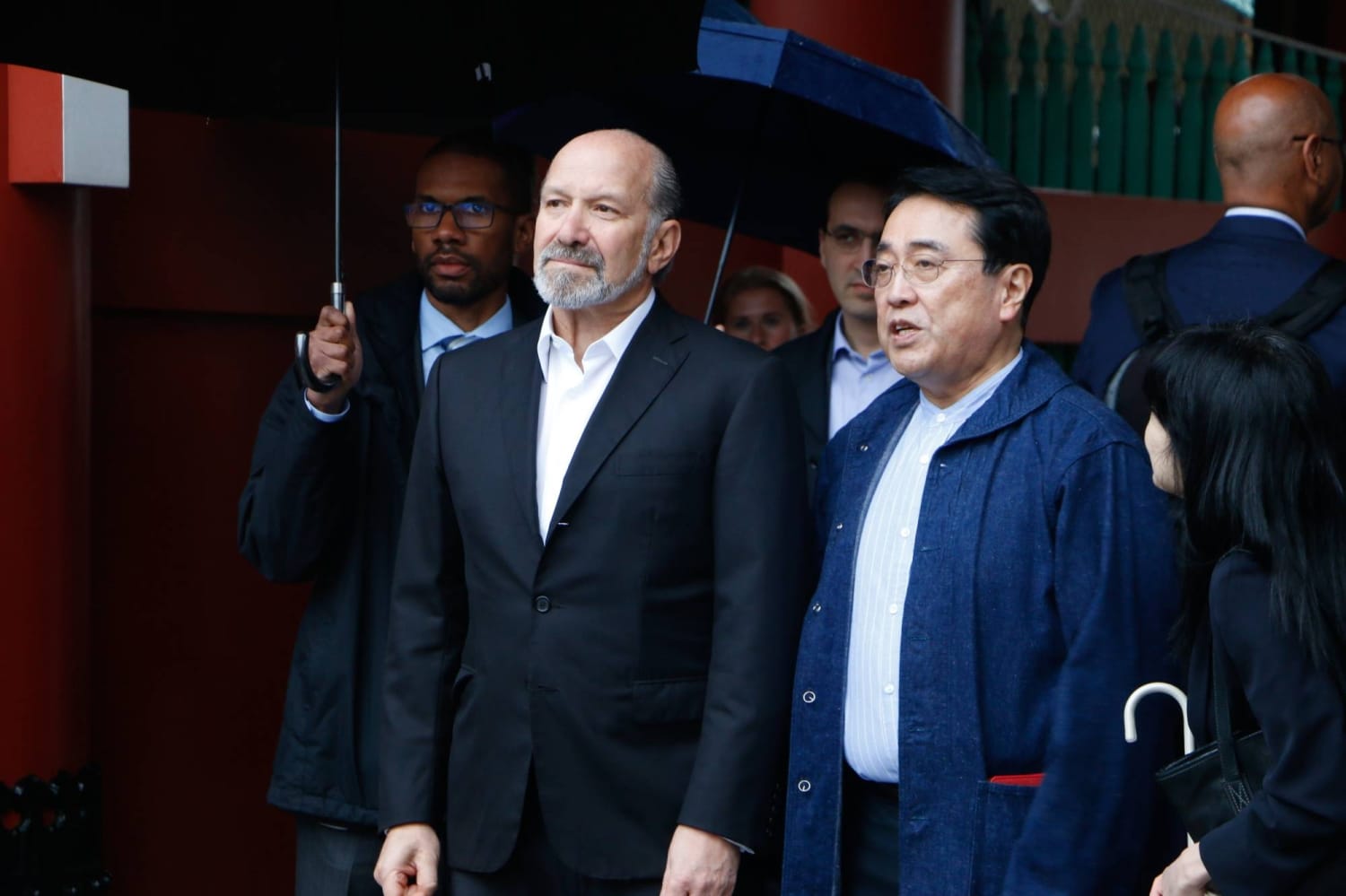
Economy Minister Ryosei Akazawa and U.S. Commerce Secretary Howard Lutnick at Sensoji Temple, Tokyo, in October. © Francis Tang

Japan and the United States convened their second high-level consultation committee meeting on Tuesday, signaling renewed momentum in deploying a landmark $550 billion Japanese investment pledge that anchors the allies’ hard-won trade agreement. The two-hour virtual session, co-chaired by Japanese Economy, Trade and Industry Minister Ryosei Akazawa, U.S. Commerce Secretary Howard Lutnick, and U.S. Energy Secretary Chris Wright, focused on expediting project selections, with officials pledging to announce the inaugural initiative “as soon as possible,” according to a statement from Japan’s Ministry of Economy, Trade and Industry (METI).

The gathering builds on the panel’s inaugural online meeting last week, where representatives from Japan’s foreign, trade, and finance ministries joined U.S. counterparts from the Commerce and Energy Departments to exchange views on potential investments. Energy projects emerged as early frontrunners, with sources familiar with the discussions indicating a handful under review for priority funding. Recommendations from the consultation committee will feed into an investment panel chaired by Lutnick, culminating in final approvals by President Donald Trump—a structure that underscores Washington’s directive role in allocating the funds.

This accelerated pace reflects mounting pressure to operationalize the pledge, formalized in a September memorandum of understanding (MOU) following July’s framework accord. The $550 billion commitment—upped from an initial $400 billion discussion at Trump’s insistence—secured Japan’s relief from steep U.S. tariffs, capping duties at 15% on automobiles and most goods after an earlier spike to 25%. Non-compliance risks penalty clauses, including tariff hikes, potentially unraveling the deal and exposing Tokyo to renewed trade friction.

Target sectors span strategic priorities: semiconductors, pharmaceuticals, critical minerals, metals, shipbuilding, energy, artificial intelligence, and quantum computing. Financing will flow through project-by-project commitments, leveraging institutions like the Japan Bank for International Cooperation (JBIC) and Nippon Export and Investment Insurance (NEXI) for equity, loans, and guarantees. Investments must materialize by January 19, 2029—the end of Trump’s term—aligning with his administration’s push to revitalize U.S. industrial capacity and bolster supply chains amid global competition, particularly from China.

More from Economics
Copyright AP Photo/ Nabil al-Jurani

Oil prices surge above $102 as Saudi Arabia and UAE weigh joining Iran war

gettyimages 1360649042 640x640 1

Trading surge hits markets minutes before Trump’s Iran announcement

A man refills fuel in his car at a petrol station in Ljubljana, Slovenia, March 22, 2026. (REUTERS/Antonio Bronic)

Slovenia limits fuel purchases as shortages hit pumps amid Iran war impact

gettyimages 2263990084

Iran threatens to target Middle East energy and water infrastructure amid U.S. escalation warning

A Chevron station in Los Angeles displays a gasoline price per gallon of over $7 in June 2022. (Frederic J. Brown/Agence France-Presse/Getty Images)

Oil price surge from Iran war threatens US growth and fuels inflation, economists warn

Traders work on the floor moments before the morning bell at the New York Stock Exchange November 21, 2008 in New York City. (Photo by Mario Tama/Getty Images)

Bond Market Flashes Warning Signal Not Seen Since Before 2008 Financial Crisis

Jerome Powell, chairman of the US Federal Reserve, during a news conference in Washington on Wednesday. (Al Drago/Bloomberg)

Jerome Powell Says US Job Creation Near Zero as Fed Signals Steady Unemployment

EJ Antoni, left, in the Oval Office with Donald Trump. Antoni says higher energy prices are going to ‘put upward pressure on prices throughout the economy’ (YouTube)

Trump Ally Warns U.S. Economy Too Weak to Withstand Iran War Shock

Market reactions have been muted but positive. The Nikkei 225 edged up 0.4% on Wednesday, buoyed by clarity on tariff stability, while U.S. futures showed modest gains in chip and energy stocks. Analysts at Nomura Securities project the fund could inject $100-150 billion annually into U.S. infrastructure, creating hundreds of thousands of jobs in swing states—a political windfall for Trump. However, skeptics note execution hurdles: Japan’s characterization of the pledge as facilitated private-sector flows contrasts with U.S. portrayals of direct government-directed capital, potentially complicating disbursements.

The process traces to Trump’s October visit to Tokyo, where an initial project shortlist was floated. Early contenders include LNG terminals, rare earth processing facilities, and semiconductor fabs—areas ripe for de-risking U.S. dependencies. “This isn’t charity; it’s mutual security,” Lutnick remarked in a recent CNBC interview, emphasizing profit-sharing tilted heavily toward America post-recoupment (90-10 split).

For Japan, already the largest foreign investor in the U.S. with over $800 billion in holdings, the pledge reinforces alliance ties while mitigating tariff pain on exporters like Toyota and Sony. Yet, domestic critics decry it as concessional, with opposition lawmakers questioning the fiscal burden amid Japan’s aging demographics and debt load.

As the committee eyes a third session next week and potential Trump sign-offs in early 2026, the initiative tests the Trump administration’s dealmaking prowess. Success could blueprint similar pacts with other trading partners; delays risk reigniting trans-Pacific tensions in an era of reshoring and economic nationalism.
Business Christ Wright Donald Trump Economic Howard Lutnick Japan Politics Tariffs Tech Trade Trump Presidency United States
Fred Robinson

    Fred Robinson is a veteran market news writer and financial columnist who has been informing and engaging readers since 1994. With over three decades of experience, Fred covers a wide range of topics including the stock market, shares, banking, finance, personal finance, and corporate trends. He is particularly known for his in-depth features on company market movements and the rich histories behind major corporations—from tech giants and automotive pioneers to legacy food brands. Fred's sharp insights, historical perspective, and clarity of analysis make him a trusted authority for professionals, investors, and curious readers alike. His work blends market intelligence with storytelling, offering readers not just the "what," but the "why" behind financial shifts.

    What to Read Next

    Premier Li Qiang told more than 70 chief executives in Beijing that China offered an unmatched supply chain and a predictable commercial environment. (Ng Han Guan/Pool/AFP via Getty Images)

    China positions itself as ‘Harbour of Stability’ to global CEOs amid U.S.–Iran tensions

    March 21, 2026
    A Chevron station in Los Angeles displays a gasoline price per gallon of over $7 in June 2022. (Frederic J. Brown/Agence France-Presse/Getty Images)

    Oil price surge from Iran war threatens US growth and fuels inflation, economists warn

    March 20, 2026
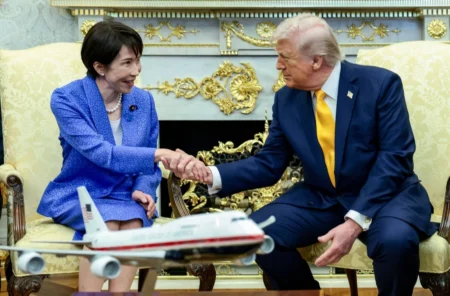
    Prime Minister Sanae Takaichi meets with U.S. President Donald Trump in the Oval Office of the White House in Washington on Thursday. (REUTERS)

    Trump praises Japan’s support in Iran war during White House meeting with PM Sanae Takaichi

    March 19, 2026
    Screenshot 2026 03 21 at 2.30.20 AM

    Donald Trump White House tries to sell war and death as a game

    March 19, 2026
    Traders work on the floor moments before the morning bell at the New York Stock Exchange November 21, 2008 in New York City. (Photo by Mario Tama/Getty Images)

    Bond Market Flashes Warning Signal Not Seen Since Before 2008 Financial Crisis

    March 19, 2026
    Jerome Powell, chairman of the US Federal Reserve, during a news conference in Washington on Wednesday. (Al Drago/Bloomberg)

    Jerome Powell Says US Job Creation Near Zero as Fed Signals Steady Unemployment

    March 19, 2026
    Add A Comment
    Leave A Reply Cancel Reply

    Facebook X (Twitter) Instagram Pinterest
    © 2026 ThemeSphere. Designed by ThemeSphere.

    Type above and press Enter to search. Press Esc to cancel.

    Go to mobile version