Category: Asia News

  • US-Japan Panel Holds Second Meeting to Advance $550B Trade Deal Investments

    US-Japan Panel Holds Second Meeting to Advance $550B Trade Deal Investments

    Japan and the United States convened their second high-level consultation committee meeting on Tuesday, signaling renewed momentum in deploying a landmark $550 billion Japanese investment pledge that anchors the allies’ hard-won trade agreement. The two-hour virtual session, co-chaired by Japanese Economy, Trade and Industry Minister Ryosei Akazawa, U.S. Commerce Secretary Howard Lutnick, and U.S. Energy Secretary Chris Wright, focused on expediting project selections, with officials pledging to announce the inaugural initiative “as soon as possible,” according to a statement from Japan’s Ministry of Economy, Trade and Industry (METI).

    The gathering builds on the panel’s inaugural online meeting last week, where representatives from Japan’s foreign, trade, and finance ministries joined U.S. counterparts from the Commerce and Energy Departments to exchange views on potential investments. Energy projects emerged as early frontrunners, with sources familiar with the discussions indicating a handful under review for priority funding. Recommendations from the consultation committee will feed into an investment panel chaired by Lutnick, culminating in final approvals by President Donald Trump—a structure that underscores Washington’s directive role in allocating the funds.

    This accelerated pace reflects mounting pressure to operationalize the pledge, formalized in a September memorandum of understanding (MOU) following July’s framework accord. The $550 billion commitment—upped from an initial $400 billion discussion at Trump’s insistence—secured Japan’s relief from steep U.S. tariffs, capping duties at 15% on automobiles and most goods after an earlier spike to 25%. Non-compliance risks penalty clauses, including tariff hikes, potentially unraveling the deal and exposing Tokyo to renewed trade friction.

    Target sectors span strategic priorities: semiconductors, pharmaceuticals, critical minerals, metals, shipbuilding, energy, artificial intelligence, and quantum computing. Financing will flow through project-by-project commitments, leveraging institutions like the Japan Bank for International Cooperation (JBIC) and Nippon Export and Investment Insurance (NEXI) for equity, loans, and guarantees. Investments must materialize by January 19, 2029—the end of Trump’s term—aligning with his administration’s push to revitalize U.S. industrial capacity and bolster supply chains amid global competition, particularly from China.

    Market reactions have been muted but positive. The Nikkei 225 edged up 0.4% on Wednesday, buoyed by clarity on tariff stability, while U.S. futures showed modest gains in chip and energy stocks. Analysts at Nomura Securities project the fund could inject $100-150 billion annually into U.S. infrastructure, creating hundreds of thousands of jobs in swing states—a political windfall for Trump. However, skeptics note execution hurdles: Japan’s characterization of the pledge as facilitated private-sector flows contrasts with U.S. portrayals of direct government-directed capital, potentially complicating disbursements.

    The process traces to Trump’s October visit to Tokyo, where an initial project shortlist was floated. Early contenders include LNG terminals, rare earth processing facilities, and semiconductor fabs—areas ripe for de-risking U.S. dependencies. “This isn’t charity; it’s mutual security,” Lutnick remarked in a recent CNBC interview, emphasizing profit-sharing tilted heavily toward America post-recoupment (90-10 split).

    For Japan, already the largest foreign investor in the U.S. with over $800 billion in holdings, the pledge reinforces alliance ties while mitigating tariff pain on exporters like Toyota and Sony. Yet, domestic critics decry it as concessional, with opposition lawmakers questioning the fiscal burden amid Japan’s aging demographics and debt load.

    As the committee eyes a third session next week and potential Trump sign-offs in early 2026, the initiative tests the Trump administration’s dealmaking prowess. Success could blueprint similar pacts with other trading partners; delays risk reigniting trans-Pacific tensions in an era of reshoring and economic nationalism.
  • Magnitude 5.5 Earthquake Strikes Bangladesh: At Least Five Lives Lost

    Magnitude 5.5 Earthquake Strikes Bangladesh: At Least Five Lives Lost

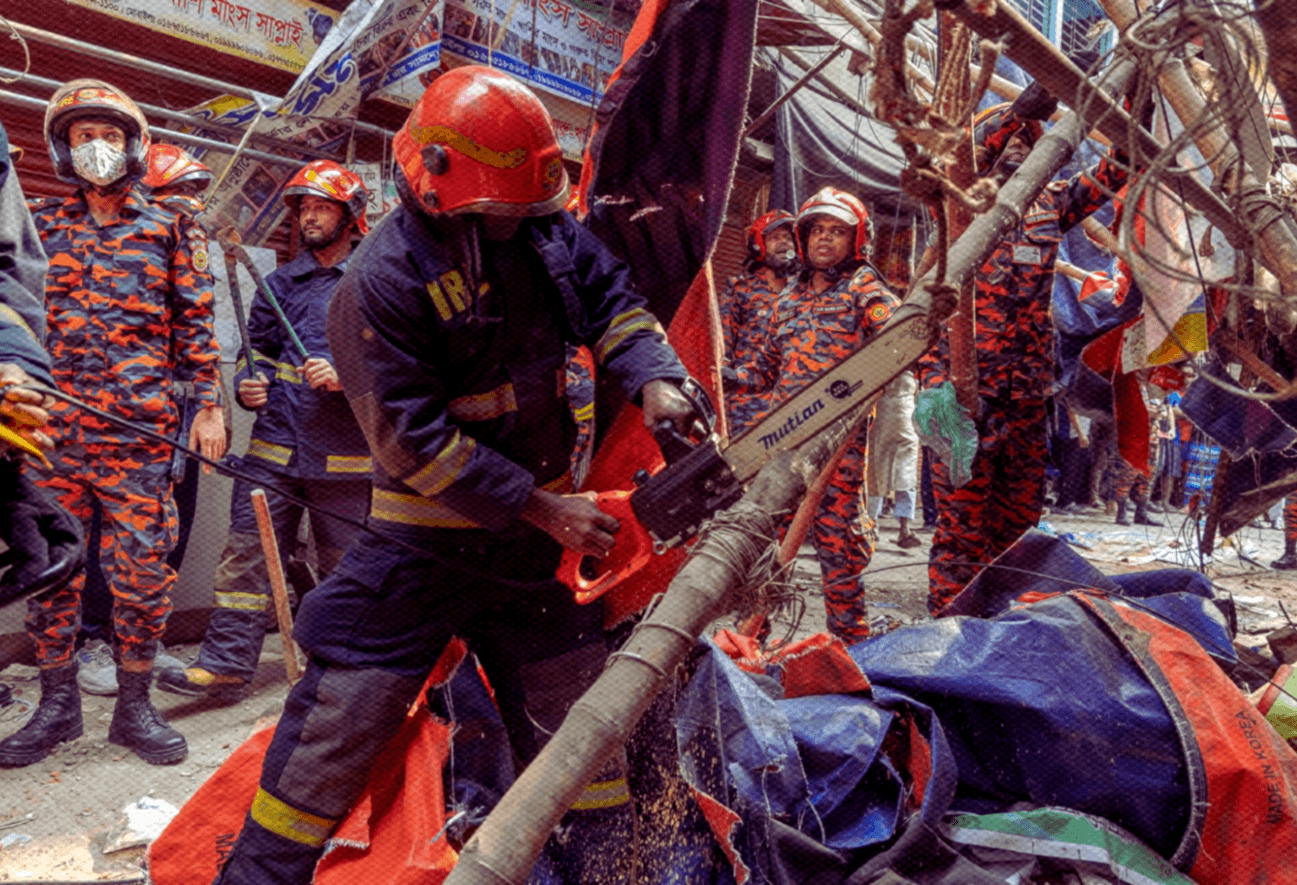
    Dhaka, Bangladesh — A powerful 5.5-magnitude earthquake struck central Bangladesh on Friday morning, claiming at least five lives—including a child and a medical student—and injuring more than 100 others in a wave of panic that saw residents fleeing swaying buildings across the densely populated capital of Dhaka. The shallow quake, centered just 25 kilometers (16 miles) east of Dhaka in the Ghorashal area of Narsingdi district, rattled the nation at 10:38 a.m. local time (04:38 GMT), sending tremors as far as neighboring Indian cities like Kolkata, Guwahati, Agartala, and Shillong.

    Authorities reported a death toll ranging from three to six, with the higher figure cited by Dhaka-based DBC Television, attributing fatalities to collapsing building roofs, walls, and railings that crushed pedestrians below. Three pedestrians in Dhaka’s Koshaitoli area were killed instantly when a six-story building’s railing gave way, while two others—a medical student who fell from an eight-story structure and a newborn in Narayanganj—succumbed to injuries from debris. Injuries mounted to over 250 in some estimates, including more than 200 garment factory workers caught in a stampede in Gazipur and five Dhaka University students who jumped from residence halls in fright. Dhaka police officer Ashish Kumar Ghosh confirmed two victims died on the spot, with another passing at Mitford Hospital.

    The U.S. Geological Survey (USGS) pegged the quake at magnitude 5.5 with a depth of just 10 kilometers (6 miles), warning of potential “significant casualties” due to its proximity to Dhaka’s 170 million-strong population. Bangladesh’s Meteorological Department recorded a slightly higher 5.7 magnitude, noting the shaking lasted 26 seconds and originated from reverse faulting within the Indian Plate. While northern and southeastern Bangladesh lie in a seismically active zone where the Indian and Eurasian plates collide, the central region—including Friday’s epicenter in Madhabdi—has seen only 14 quakes of 5.5 or greater since 1950, making this event a rare jolt for the area.

    Panic gripped Dhaka, a city of over 20 million where many were home on their weekly day off. “I’ve never felt an earthquake like this before, never in my life—this was the first time,” one resident recounted, describing how the sudden rumble woke him from sleep and sent his building into a frenzy. “We felt a strong jolt and buildings were shaking like trees,” echoed Suman Rahman, another local, as staircases jammed with terrified families rushing downstairs, children crying amid the chaos. AFP reporters witnessed weeping crowds in the streets, some in shock, while social media flooded with videos of swaying high-rises and crumbling facades. In Kolkata, over 325 kilometers away, 66-year-old Sumit Dutta bolted from his bed as his furniture trembled, though no casualties or major damage were reported across the border.

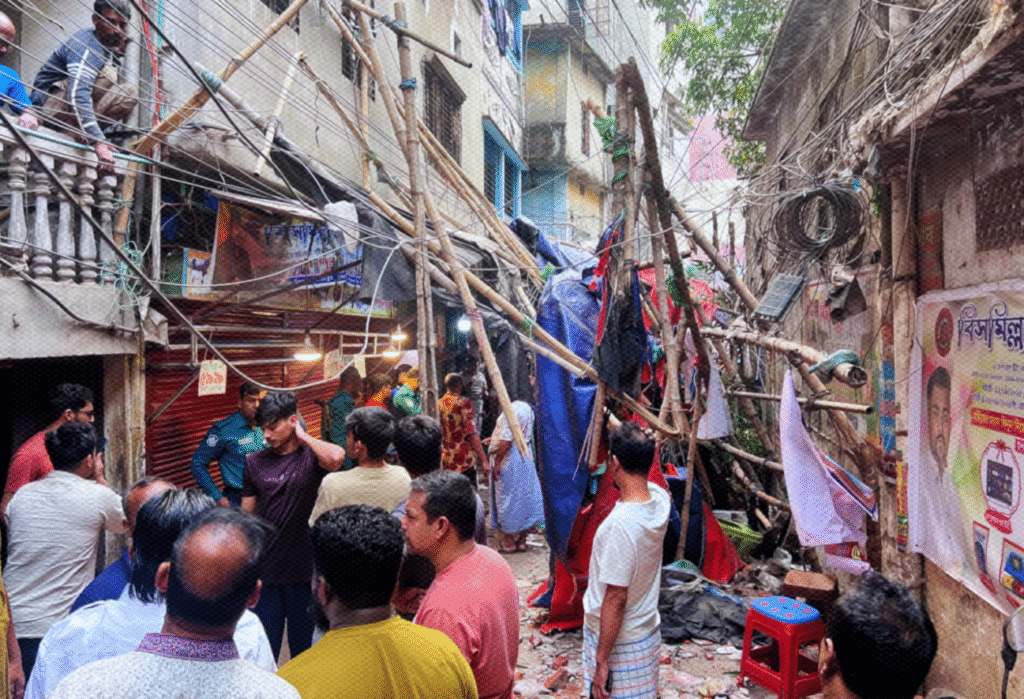
    People stand in an alley after vacating their homes following an earthquake in Dhaka. © REUTERS
    People stand in an alley after vacating their homes following an earthquake in Dhaka. © REUTERS

    The quake’s ripples extended to sports, briefly suspending the second Test match between Bangladesh and Ireland at Dhaka’s Sher-e-Bangla National Cricket Stadium in Mirpur. Play halted for about three minutes as players, umpires, and spectators—including Irish cricketers—sprinted to the open field for safety, with television cameras capturing the confusion. “Goodness. Play has stopped here due to a minor tremor/earthquake,” Cricket Ireland posted on X, formerly Twitter. Witnesses in the press box described jammed stairwells and reluctance to re-enter enclosed spaces, even after tremors subsided.

    Interim government chief Muhammad Yunus swiftly addressed the nation, expressing condolences and mobilizing emergency services. “The government is taking all necessary measures, giving the utmost importance to the safety of the people,” he said in a statement, urging calm and vigilance against rumors. “Everyone is urged to remain alert… Further guidance will be provided through hotlines and official channels if necessary. We remain committed to ensuring the safety of all citizens.” Relief teams fanned out to inspect older multistory buildings and construction sites, where falling bricks and loose cement caused many injuries. Power disruptions rippled nationwide from affected stations, exacerbating the disarray.

    As aftershocks loomed, officials warned the death toll could rise with incoming reports from remote areas. Seismologists emphasized the quake’s moderate strength but noted its shallow depth and urban proximity amplified the human toll. For a nation still recovering from political upheaval, this seismic surprise underscored vulnerabilities in one of South Asia’s most earthquake-prone corridors.

  • South Korea Investigates Rights Violation Claims After Hyundai Raid

    South Korea Investigates Rights Violation Claims After Hyundai Raid

    250912 south korea mb 0831 219aee
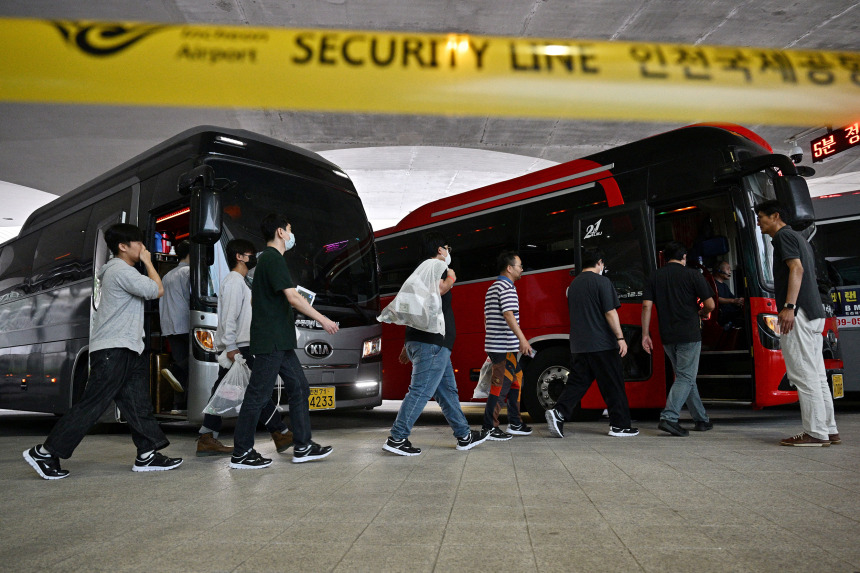
    Hyundai plant workers arrive at Incheon International Airport in Seoul on Friday after leaving the U.S. ©  Anthony Wallace / AFP – Getty Images
    Stock Widget

    SEOUL – In a bold move that exposes the overreach of federal immigration enforcers, the South Korean government has launched an investigation into potential human rights violations stemming from a massive ICE raid on a Hyundai HYMLF -2.85% ▼LG LPL -3.20% ▼ battery plant in Georgia earlier this month. The probe, announced Monday, targets the treatment of over 300 skilled Korean workers—essential to America’s push for domestic EV manufacturing—who were swept up in what critics are calling a heavy-handed operation that could chill billions in foreign investment under President Trump’s America First agenda.

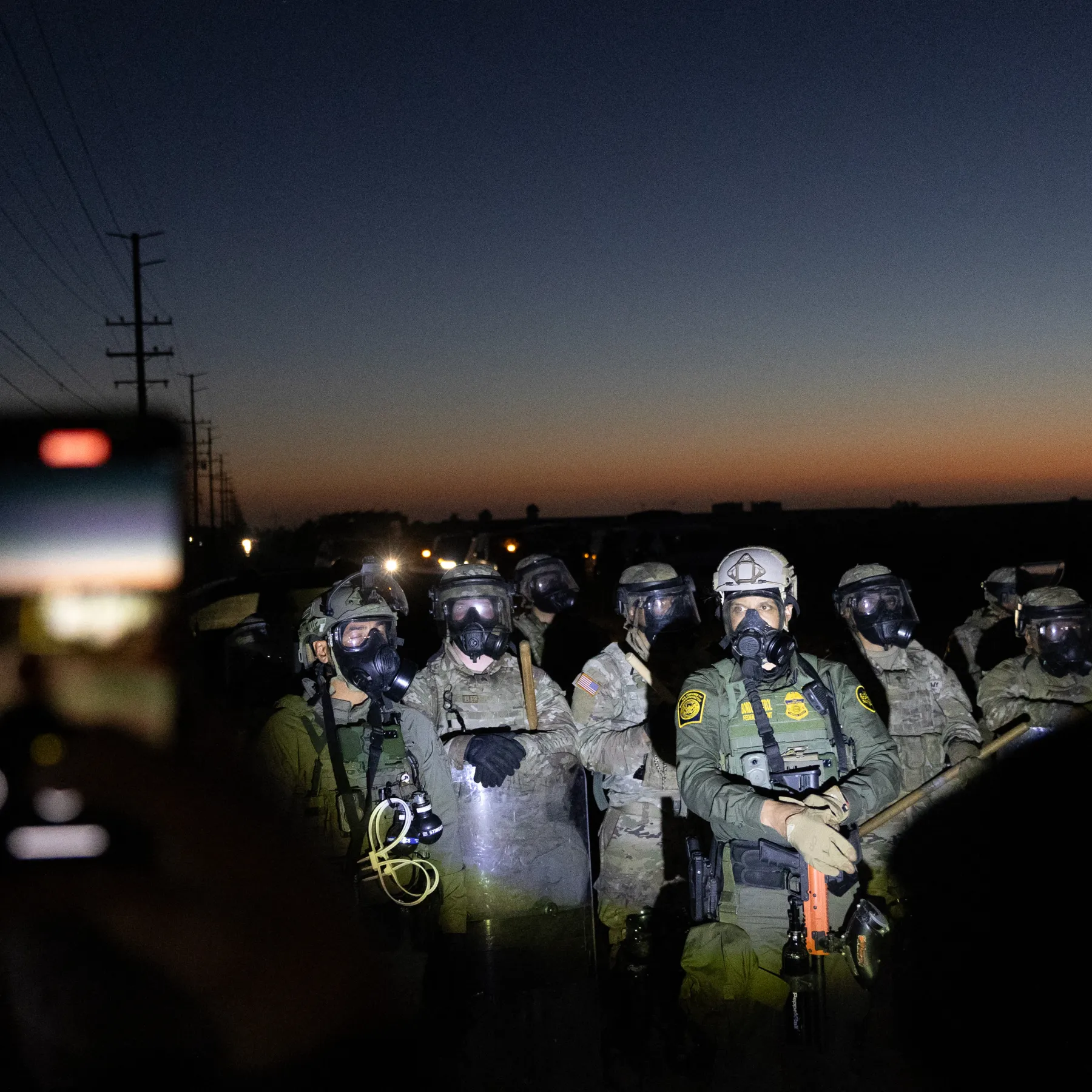
    The September 4 raid, dubbed “Operation Low Voltage” by Homeland Security Investigations (HSI), saw nearly 500 federal, state, and local agents storm the 3,000-acre Hyundai Motor Group Metaplant site in Ellabell, near Savannah. The facility, a crown jewel of Georgia’s economic boom, includes Hyundai’s $7.6 billion EV assembly plant—already employing 1,200 Americans—and an adjacent $4.3 billion battery factory joint venture with LG Energy Solution, set to create thousands more jobs. But instead of targeting clear-cut illegal activity, ICE detained 475 people, the majority South Korean nationals (over 300), along with 10 Chinese, three Japanese, and one Indonesian, on suspicions of visa overstays and unlawful employment.

    Under a swift diplomatic agreement between the Trump administration and Seoul, DHS released 330 detainees—316 South Koreans among them—who boarded a chartered Korean Air Boeing 747 from Atlanta’s Hartsfield-Jackson International Airport on Thursday, arriving home Friday amid emotional reunions at Incheon International Airport. The remaining 145 face ongoing deportation proceedings, with some held at the Folkston ICE facility in southeast Georgia. South Korean President Lee Jae Myung, a staunch ally in Trump’s trade wars against China, slammed the raid as an “unjust infringement” on his citizens’ rights and businesses, warning it could make Korean firms “very hesitant” about pouring billions into U.S. soil.

    Kang Yu-jung, spokesperson for President Lee, confirmed the review during a press briefing, stating: “I understand that the government is conducting a more thorough review with the companies to determine whether any human rights violations occurred.” One anonymous Korean worker recounted to Yonhap News Agency the chaos: ICE agents allegedly skipped Miranda rights, herded detainees into five overcrowded 72-person rooms without adequate food or water, and shackled them in chains around hands, ankles, and waists—footage of which went viral, drawing outrage from conservatives who see it as bureaucratic bullying rather than border security.

    250822 Lee Jae myung rs 6411cc
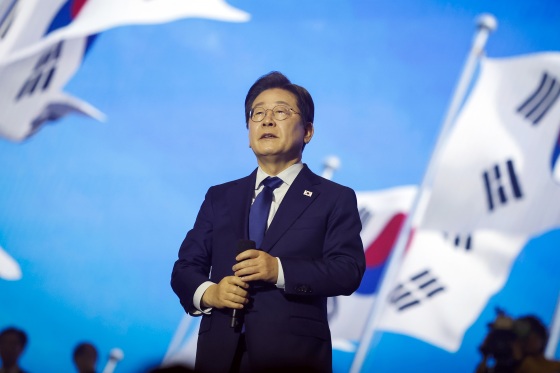
    South Korean President Lee Jae Myung in Goyang on April 27. © Woohae Cho / Bloomberg via Getty Images

    Immigration attorney Charles Kuck, representing four detainees, told the Associated Press that many were engineers and equipment installers on valid B-1 visas, meant for short-term business activities like training or contract negotiations. A leaked ICE document obtained by The Guardian backs this up, revealing at least one worker entered on a valid B-1/B-2 visa and hadn’t violated terms, yet was pressured into “voluntary departure.” USCIS guidelines confirm B-1 visas allow such professional work, underscoring what Kuck called an “outrageous” and “unlawful” overzealous sweep by HSI, which involved the FBI, DEA, IRS, U.S. Marshals, and Georgia State Patrol.

    The raid stemmed from a months-long DHS probe into illegal hiring practices among subcontractors—not Hyundai or LG directly. Hyundai Motor North America insisted none of the detained were its employees, emphasizing full compliance with U.S. laws, while LG suspended U.S. business trips and dispatched its HR chief to demand releases. The operation halted battery plant construction, delaying startup by at least two to three months, per Hyundai CEO José Muñoz. With Hyundai pledging $26 billion in U.S. facilities by 2028 and South Korea committing $350 billion overall to dodge Trump’s 15% tariffs on imports, this fiasco risks unraveling the very investments Trump champions to bring manufacturing home.

    Enter President Trump, who on Sunday took to Truth Social to walk back the optics without undermining his immigration crackdown. “I don’t want to frighten off or disincentivize Investment into America by outside Countries or Companies,” he posted. “When Foreign Companies who are building extremely complex products, machines, and various other ‘things,’ come into the United States with massive Investments, I want them to bring their people of expertise for a period of time to teach and train our people how to make these very unique and complex products, as they phase out of our Country, and back into their land.” Trump added: “We welcome them, we welcome their employees… If we didn’t do this, all of that massive Investment will never come in the first place!”

    White House Press Secretary Karoline Leavitt echoed the sentiment Tuesday, stressing Trump’s commitment to making America “the best place in the world to do business” while enforcing immigration laws. Commerce Secretary Howard Lutnick blamed Hyundai for not securing proper visas and offered to help, but the damage is done—South Korean media warns of a “chilling effect,” and Foreign Minister Cho Hyun, fresh from meetings with Secretary of State Marco Rubio, reiterated concerns in Washington. Georgia Gov. Brian Kemp, a Trump ally who touted the Hyundai project as the state’s biggest economic win, has stayed mum, but local Korean-American communities are reeling.

    This isn’t the deep-state sabotage of open borders under Biden; it’s Trump’s zero-tolerance policy in action, rooting out exploitation by subcontractors who skirt rules to cut costs. But as Labor Notes highlighted, the raid spotlights Hyundai’s spotty labor record—three worker deaths during construction, safety lapses at other sites like Ultium Cells. Conservatives argue ICE did its job, ensuring a “level playing field” for American workers, but the human rights probe from Seoul could strain alliances at a time when Trump needs Korean investment to counter China’s EV dominance. As one analyst put it, Trump’s agendas are colliding: Secure borders yes, but not at the expense of the factories rebuilding Rust Belt jobs.

    The investigation’s outcome could reshape visa policies for foreign experts, but for now, it’s a wake-up call: Enforce the law smartly, or watch allies like South Korea take their billions elsewhere. Trump’s vision of American greatness demands both—immigration control and investment influx—or the raid’s fallout could cost us big.