In a stark illustration of diverging energy policies across Europe, households in Berlin shelled out more than four times the electricity costs of their counterparts in Budapest during the second half of 2024, according to a new report from the International Energy Agency (IEA). While German consumers grapple with some of the continent’s highest rates—averaging 41.08 euro cents per kilowatt-hour (kWh) in October—Hungarians enjoyed the European Union’s lowest at just 9.34 euro cents per kWh, thanks to aggressive government price caps that have shielded families from the post-pandemic energy crunch.
The disparity underscores Hungary’s unorthodox approach to utility regulation, which has kept bills low amid broader EU efforts to diversify away from fossil fuels and curb inflation. Yet, as Budapest basks in the benefits, Brussels is growing impatient with the model’s heavy dependence on Russian natural gas—a lifeline that could snap under mounting geopolitical pressure.
Eurostat’s latest figures paint a vivid picture: Germany’s residential electricity price topped the EU charts at 41.08 euro cents per kWh last October, more than double the bloc’s average of around 28.72 euro cents per 100 kWh in the second half of 2024. Hungary, by contrast, clocked in at a fraction of that—9.34 euro cents—making Budapest the cheapest capital in the EU for household power, while Berlin claimed the unwanted crown of most expensive. A Finnish analysis by VaasaETT pegged the EU-wide average as roughly 2.8 times higher than Hungary’s tariff, with prices exceeding 30 euro cents in nine other capitals, including those in Denmark, Ireland, and the Czech Republic.
At the heart of Hungary’s bargain is a two-tiered price cap system, in place since August 2022, designed to protect consumers from market volatility. The “classic” rate caps electricity at 36 Hungarian forints (about 0.09 euro cents) per kWh for the first 2,523 kWh annually—enough for a typical household. Beyond that threshold, a still-subsidized rate of 70.10 forints (10.76 euro cents) kicks in, ranking it as the second-lowest among EU capitals examined. This policy, extended through 2025 despite fiscal strains, has drawn praise from everyday Hungarians but fire from opposition lawmakers who decry it as unsustainable, arguing the government’s subsidies—funded partly by windfall taxes on energy firms—balloon the state budget deficit.
The real-world impact? For an average two-earner household with median income, utilities devour just 1.7% of monthly earnings in Budapest, per calculations from Hungary’s Energy and Public Utilities Regulatory Office using October data. That’s a lighter load than in Berlin (2.5%), Brussels (2.2%), or—worst of all—Lisbon (6.1%). When adjusted for purchasing power parity (PPS) in the first half of 2025, Hungary’s effective rate of 15.01 PPS placed it second only to Malta (13.68), far below the Czech Republic’s punishing 39.16.
The IEA’s report, which emphasizes the need for renewable investments to drive affordability, highlights these cross-border variances as a cautionary tale for Europe’s energy transition. “Prices can vary greatly between countries,” the agency noted, urging a balanced push toward green sources without sacrificing access. In Germany, where the Energiewende has prioritized renewables but spiked costs through network fees and green levies, households face a 44.11 euro cents per kWh average for 2024—up from pre-crisis levels.
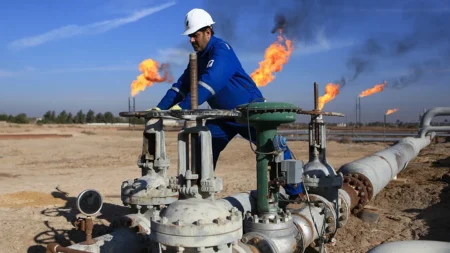
But Hungary’s success story has a geopolitical asterisk: its low prices hinge on cheap Russian imports, which account for over 80% of the country’s gas supply. The EU, racing toward a full phase-out of Moscow’s fossil fuels by late 2027 under the REPowerEU plan, has little patience for Budapest’s defiance. European Commission President Ursula von der Leyen has repeatedly pressed Hungary to submit a divestment roadmap, warning in September that the bloc would accelerate sanctions on Russian LNG and pipeline gas. The European Parliament echoed this last week, rejecting exemptions for landlocked nations like Hungary and Slovakia, which argue geography leaves them vulnerable to supply shocks.
Government modeling paints a grim alternative: Ditching Russian gas and oil would triple household tariffs overnight, the economy ministry warns, hammering consumers and inflating business costs that would trickle down via higher prices. “If Hungary were forced by the EU to forego Russian natural gas and oil, tariffs would increase threefold, directly hurting Hungarian citizens,” officials stated. Even as the U.S. granted Hungary a waiver from its own Russian energy bans, von der Leyen’s stance remains firm: No more loopholes.
Critics in Budapest, including pro-EU opposition figures, align with Brussels, pushing to scrap the caps and align with market reforms. “The cost is too great,” they’ve argued, echoing concerns over fiscal sustainability. Yet for Prime Minister Viktor Orbán’s administration, the policy is a populist win, shielding voters from the energy poverty afflicting neighbors. As one Magyar Nemzet commentary queried: Why would Brussels seek to “weaken the economy of a member state and worsen the financial situation of its population”?
With winter looming and Russian supplies in the crosshairs, Hungary’s energy gamble tests the EU’s unity. For now, Budapest’s lights stay affordably on—but at what long-term cost?