Category: Energy

  • Germans Pay 4x More for Electricity Than Hungarians in Capitals

    Germans Pay 4x More for Electricity Than Hungarians in Capitals

    pexels paul 8246810 scaled 1

    In a stark illustration of diverging energy policies across Europe, households in Berlin shelled out more than four times the electricity costs of their counterparts in Budapest during the second half of 2024, according to a new report from the International Energy Agency (IEA). While German consumers grapple with some of the continent’s highest rates—averaging 41.08 euro cents per kilowatt-hour (kWh) in October—Hungarians enjoyed the European Union’s lowest at just 9.34 euro cents per kWh, thanks to aggressive government price caps that have shielded families from the post-pandemic energy crunch.

    The disparity underscores Hungary’s unorthodox approach to utility regulation, which has kept bills low amid broader EU efforts to diversify away from fossil fuels and curb inflation. Yet, as Budapest basks in the benefits, Brussels is growing impatient with the model’s heavy dependence on Russian natural gas—a lifeline that could snap under mounting geopolitical pressure.

    Eurostat’s latest figures paint a vivid picture: Germany’s residential electricity price topped the EU charts at 41.08 euro cents per kWh last October, more than double the bloc’s average of around 28.72 euro cents per 100 kWh in the second half of 2024. Hungary, by contrast, clocked in at a fraction of that—9.34 euro cents—making Budapest the cheapest capital in the EU for household power, while Berlin claimed the unwanted crown of most expensive. A Finnish analysis by VaasaETT pegged the EU-wide average as roughly 2.8 times higher than Hungary’s tariff, with prices exceeding 30 euro cents in nine other capitals, including those in Denmark, Ireland, and the Czech Republic.

    At the heart of Hungary’s bargain is a two-tiered price cap system, in place since August 2022, designed to protect consumers from market volatility. The “classic” rate caps electricity at 36 Hungarian forints (about 0.09 euro cents) per kWh for the first 2,523 kWh annually—enough for a typical household. Beyond that threshold, a still-subsidized rate of 70.10 forints (10.76 euro cents) kicks in, ranking it as the second-lowest among EU capitals examined. This policy, extended through 2025 despite fiscal strains, has drawn praise from everyday Hungarians but fire from opposition lawmakers who decry it as unsustainable, arguing the government’s subsidies—funded partly by windfall taxes on energy firms—balloon the state budget deficit.

    The real-world impact? For an average two-earner household with median income, utilities devour just 1.7% of monthly earnings in Budapest, per calculations from Hungary’s Energy and Public Utilities Regulatory Office using October data. That’s a lighter load than in Berlin (2.5%), Brussels (2.2%), or—worst of all—Lisbon (6.1%). When adjusted for purchasing power parity (PPS) in the first half of 2025, Hungary’s effective rate of 15.01 PPS placed it second only to Malta (13.68), far below the Czech Republic’s punishing 39.16.

    The IEA’s report, which emphasizes the need for renewable investments to drive affordability, highlights these cross-border variances as a cautionary tale for Europe’s energy transition. “Prices can vary greatly between countries,” the agency noted, urging a balanced push toward green sources without sacrificing access. In Germany, where the Energiewende has prioritized renewables but spiked costs through network fees and green levies, households face a 44.11 euro cents per kWh average for 2024—up from pre-crisis levels.

    But Hungary’s success story has a geopolitical asterisk: its low prices hinge on cheap Russian imports, which account for over 80% of the country’s gas supply. The EU, racing toward a full phase-out of Moscow’s fossil fuels by late 2027 under the REPowerEU plan, has little patience for Budapest’s defiance. European Commission President Ursula von der Leyen has repeatedly pressed Hungary to submit a divestment roadmap, warning in September that the bloc would accelerate sanctions on Russian LNG and pipeline gas. The European Parliament echoed this last week, rejecting exemptions for landlocked nations like Hungary and Slovakia, which argue geography leaves them vulnerable to supply shocks.

    Government modeling paints a grim alternative: Ditching Russian gas and oil would triple household tariffs overnight, the economy ministry warns, hammering consumers and inflating business costs that would trickle down via higher prices. “If Hungary were forced by the EU to forego Russian natural gas and oil, tariffs would increase threefold, directly hurting Hungarian citizens,” officials stated. Even as the U.S. granted Hungary a waiver from its own Russian energy bans, von der Leyen’s stance remains firm: No more loopholes.

    Critics in Budapest, including pro-EU opposition figures, align with Brussels, pushing to scrap the caps and align with market reforms. “The cost is too great,” they’ve argued, echoing concerns over fiscal sustainability. Yet for Prime Minister Viktor Orbán’s administration, the policy is a populist win, shielding voters from the energy poverty afflicting neighbors. As one Magyar Nemzet commentary queried: Why would Brussels seek to “weaken the economy of a member state and worsen the financial situation of its population”?

    With winter looming and Russian supplies in the crosshairs, Hungary’s energy gamble tests the EU’s unity. For now, Budapest’s lights stay affordably on—but at what long-term cost?
  • Trump Directs Accelerated Expansion of Nuclear Power Plants

    Trump Directs Accelerated Expansion of Nuclear Power Plants

    President Trump signed four executive orders on Friday aimed at accelerating the construction of nuclear power plants in the United States, including a new generation of small, advanced reactors that offer the promise of faster deployment but have yet to be proven.

    One order directs the Nuclear Regulatory Commission, the nation’s independent safety regulator, to streamline its rules and to take no more than 18 months to approve applications for new reactors. The order also urges the agency to consider lowering its safety limits for radiation exposure, saying that current rules go beyond what is needed to protect human health.

    Another order directs the Energy and Defense departments to explore siting reactors on federal lands and military bases, possibly alongside new data centers. That could allow the agencies to bypass the Nuclear Regulatory Commission and develop their own, faster processes for approving reactors.

    The Trump administration also set a goal of quadrupling the size of the nation’s fleet of nuclear power plants, from nearly 100 gigawatts of electric capacity today to 400 gigawatts by 2050. One gigawatt is enough to power nearly 1 million homes.

    “This is a huge day for the nuclear industry,” said Doug Burgum, the interior secretary, as he stood behind Mr. Trump at a signing ceremony in the Oval Office. “Mark this day on your calendar. This is going to turn the clock back on over 50 years of overregulation.”

    In one of his first acts in office, Mr. Trump declared a “national energy emergency,” saying the country did not have enough electricity to meet its growing needs, particularly for data centers that run artificial intelligence. While most of Mr. Trump’s actions have focused on boosting coal, oil and natural gas, administration officials have supported nuclear power, too.

    Nuclear power enjoys bipartisan backing in Congress. While some Democrats remain opposed because of concerns about safety and disposal of nuclear waste, an increasing number have embraced the technology because it doesn’t produce planet-warming emissions. It also gets backing from Republicans who say nuclear power plants strengthen U.S. energy security.

    a49ec9965290977f1bedb744c3b74ef7
    House Speaker Mike Johnson, R-La., speaks to the media after the House narrowly passed President Donald Trump’s “big, beautiful bill.” (Fox News)

    The far-reaching domestic policy bill passed by House Republicans this week aimed to halt federal support for most types of emissions-free power. But the nuclear industry got an exemption: Companies aiming to build new reactors would still be able to get a tax break as long as they begin construction by the end of 2028.

    Even so, developing new reactors in the United States has proved enormously difficult.

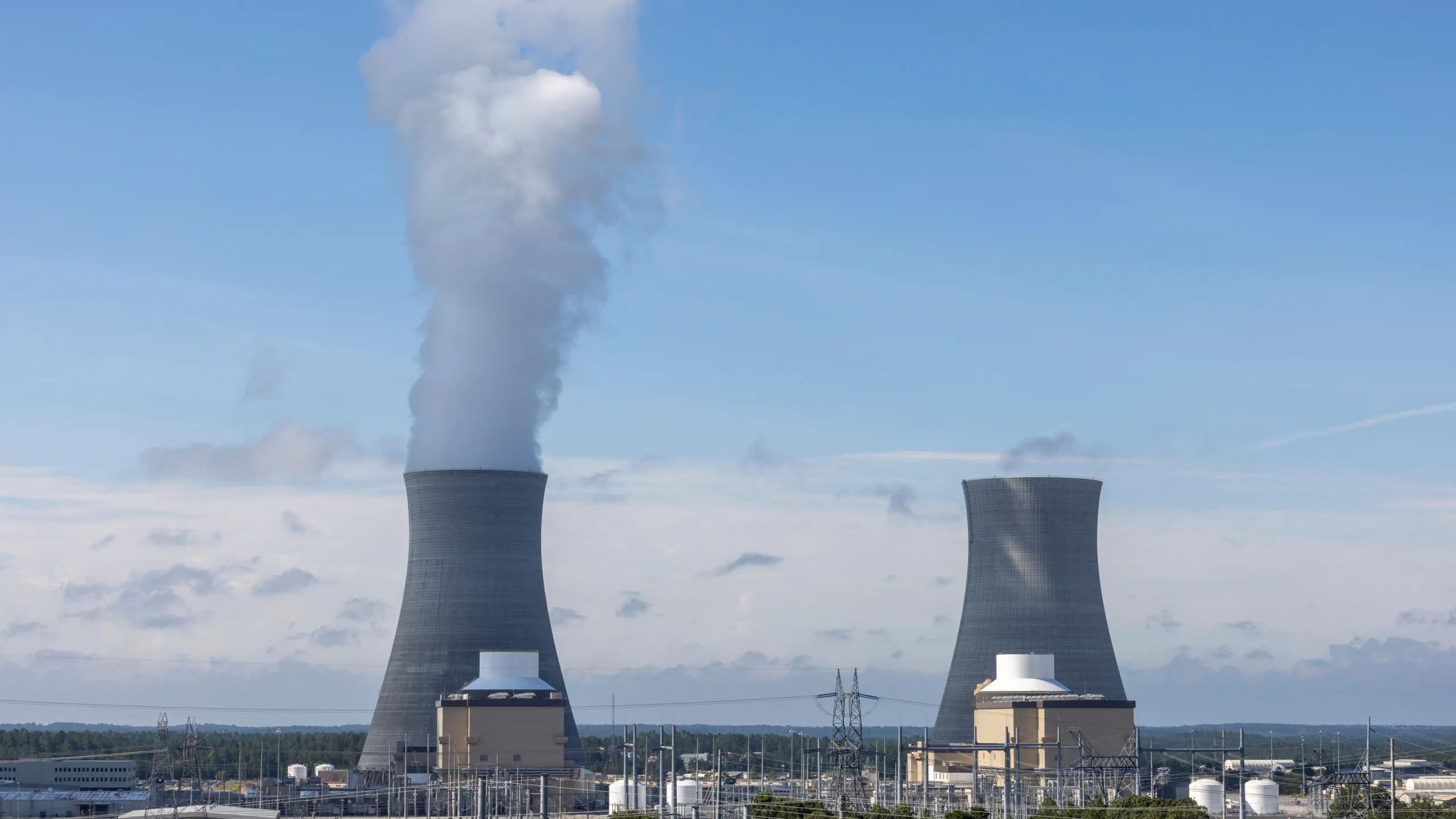
    While the country has the world’s largest fleet of nuclear power plants, only three new reactors have come online since 1996. Many utilities have been scared off by the cost: The two most recent reactors built at the Vogtle nuclear power plant in Georgia totaled $35 billion, double the initial estimates, and arrived seven years behind schedule.

    In recent years, more than a dozen companies have begun developing a new generation of smaller reactors a fraction of the size of those at Vogtle. The hope is that these reactors would have a lower upfront price tag, making them a less risky investment for utilities. They might also be based on a design that could be repeated often, as opposed to custom-built, to reduce costs.

    So far, however, none of these next-generation plants have been built, although projects are underway in WyomingTexas and Tennessee.

    Some nuclear proponents and companies have blamed the sluggish pace on the Nuclear Regulatory Commission, which must approve new designs before they are built. Critics say that many of the regulations that the agency uses were designed for an earlier era and are no longer appropriate for advanced reactors that are designed to be less susceptible to meltdowns.

    “This is an agency that needs be shaken up a bit,” said Jacob DeWitte, chief executive of Oklo Inc., a startup that has developed a small advanced reactor that it plans to build at Idaho National Laboratory. He called the executive orders “incredibly exciting on multiple fronts.”

    In one executive order, Mr. Trump directed the Nuclear Regulatory Commission to undertake a “wholesale revision” of its rules within 18 months and reorganize itself in consultation with the so-called Department of Government Efficiency, the group formed by Elon Musk. That reorganization could include layoffs, the order said.

    While Congress established the nuclear agency to be independent from the White House, Mr. Trump has sought to exert greater authority over independent agencies in recent months.

    “The N.R.C. is assessing the executive orders and will comply with White House directives,” said Scott Burnell, a spokesman for the Nuclear Regulatory Commission. “We look forward to continuing to work with the administration, DOE and DOD on future nuclear programs.”

    23cli nuclear 03 tvfh superJumbo
    Inside the control room of the Three Mile Island facility, which is being revived to power a Microsoft data center. (George Etheredge/The New York Times)

    Skeptics of nuclear power fear that pressure from the White House could cause the agency to take shortcuts on safety. Since the partial meltdown of the Three Mile Island plant in Pennsylvania in 1979, in which there were no fatalities, the Nuclear Regulatory Commission has ratcheted up safety requirements. While that has made it harder to build new plants, the country has also not experienced another major nuclear accident.

    “Simply put, the U.S. nuclear industry will fail if safety is not made a priority,” said Edwin Lyman, the director of nuclear power safety at the Union of Concerned Scientists and a frequent critic of the industry. He added that if another large radiological release were to occur, it would “destroy public trust in nuclear power and cause other nations to reject U.S. nuclear technology for decades to come.”

    Even a few nuclear companies and proponents have been nervous about a major shake-up at the Nuclear Regulatory Commission. They note that the agency has already started streamlining its approval processes in response to bipartisan bills passed by Congress, and that a hasty reorganization could, paradoxically, end up delaying approvals for the nuclear companies that are in the process of getting permits.

    “Our assessment is that N.R.C. is already making significant progress on reform,” said Judi Greenwald, executive director of the Nuclear Innovation Alliance, a pronuclear think tank. “It is in everyone’s interest that this progress continue and not be undermined by staffing cuts or upended by conflicting directives.”

    Another order calls on the secretary of energy to develop a plan to rebuild U.S. supplies of enriched uranium and other nuclear fuels, which in recent years have largely been imported from Russia.

    But speeding up regulatory approvals won’t be sufficient to revive the nuclear industry, some experts said. The first few reactors that do get built are likely to be enormously expensive, and some sort of government support would likely be required to help companies build reactors at a pace that could drive down costs.

    To that end, one of the executive orders directs the Energy Department’s Loan Programs Office, which currently has roughly $400 billion in lending authority, to make resources available for restarting shuttered nuclear plants and building new reactors. The order sets a goal of having 10 large reactors under construction by 2030.

    Yet the loan office has lost more than half its staff this year after a wave of Trump administration layoffs and buyouts, and House Republicans have proposed cutting its budget. Those cuts could hobble a key program for financing new reactors. nuclear supporters have said.

    “It’s good to see the focus on building a series of proven large reactors as well as smaller newer designs,” said Armond Cohen, executive director of the Clean Air Task Force, an environmental group that supports nuclear power. “But you need serious government financial support to make any of this happen, and get to commercial scale and lower costs. To support the administration’s goals, Congress needs to boost support instead of gutting it.”

  • Data centers’ high energy consumption has the potential to increase electricity costs for all consumers

    Data centers’ high energy consumption has the potential to increase electricity costs for all consumers

    Individuals and small business have been paying more for power in recent years, and their electricity rates may climb higher still.

    That’s because the cost of the power plants, transmission lines and other equipment that utilities need to serve data centers, factories and other large users of electricity is likely to be spread to everybody who uses electricity, according to a new report.

    The report by Wood MacKenzie, an energy research firm, examined 20 large power users. In almost all of those cases, the firm found, the money that large energy users paid to electric utilities would not be enough to cover the cost of the equipment needed to serve them. The rest of the costs would be borne by other utility customers or the utility itself.

    The utilities “either need to socialize the cost to other ratepayers or absorb that cost — essentially, their shareholders would take the hit,” said Ben Hertz-Shargel, who is the global head of grid edge research for Wood MacKenzie.

    This is not a theoretical dilemma for utilities and the state officials who oversee their operations and approve or reject their rates. Electricity demand is expected to grow substantially over the next several decades as technology companies build large data centers for their artificial intelligence businesses. Electricity demand in some parts of the United States is expected to increase as much as 15 percent over just the next four years after several decades of little or no growth.

    The rapid increase in data centers, which use electricity to power computer servers and keep them cool, has strained many utilities. Demand is also growing because of new factories and the greater use of electric cars and electric heating and cooling.

    In addition to investing to meet demand, utilities are spending billions of dollars to harden their systems against wildfires, hurricanes, heat waves, winter storms and other extreme weather. Natural disasters, many of which are linked to climate change, have made the United States’ aging power grids more unreliable.

    That spending is one of the main reasons that electricity rates have been rising in recent years.

    American homes that use a typical 1,000 kilowatt-hours of electricity a month paid, on average, about $164 in February, according to the Energy Information Administration. That was up more than $30 from five years ago.

    Dominion Energy, a large investor-owned utility based in Richmond, Va., is one of those that Wood MacKenzie expects will spend more on new infrastructure than it will be able to recover from selling electricity to data centers and other large users. More data centers have opened in Virginia than in any other state.

    Asked about Wood MacKenzie’s filings, Dominion said that on April 1 it filed a proposal to electricity regulators in Virginia for requiring large-load customers to pay their “fair share” of utility costs.

    “Ensuring a fair allocation of costs and mitigating financial risk are not new concepts to the company,” Edward H. Baine, president of Dominion Energy Virginia, said in testimony that Dominion submitted to state regulators and provided to The New York Times. “Addressing both the needs and the risks associated with growth in high-load electric customers with high-load factors is both a public policy and a regulatory priority for Virginia.”

    A 2024 analysis by Virginia officials concluded that data centers paid the full cost of the service they received. But that report warned that the addition of many more large users of electricity could raise rates for all users if the state did not make policy changes to protect individuals and small businesses.

    Wood MacKenzie’s report found that some states do have policies to protect individuals and small businesses from higher rates. Chief among them is Texas, where customers can pick a power source that is different from the utility that maintains the lines that deliver electricity to their homes.

    This arrangement, according to Wood MacKenzie, helps protect individuals from having to pay for grid upgrades that mainly or entirely benefit large users.

    Mr. Hertz-Shargel said many utilities also had programs that allowed large electricity users to buy emissions-free energy directly from power producers like solar and wind farms. Such programs, he said, could be refashioned to help ensure that the cost of new power projects is largely or entirely borne by the users responsible for major grid upgrades.

    The policies that states and utilities have put in place will significantly reduce risks of spreading the costs of improvements for the large-load customers, but “they do not provide complete protection,” Mr. Hertz-Shargel said. “Only by removing data-center-caused infrastructure from utilities books, such as by allowing large loads to contract with third parties for generation via clean transition tariffs, are both ratepayers and utility shareholders fully protected.”

  • Babcock & Wilcox Partners With Experts to Find Solutions for its Debt

    Babcock & Wilcox Partners With Experts to Find Solutions for its Debt

    Babcock & Wilcox Enterprises Inc. (NYSE: BW), a 158-year-old energy technology firm, is actively working with investment bank Evercore and law firm O’Melveny & Myers to address its substantial debt obligations, which total nearly $500 million. This strategic move comes as the company faces declining stock prices, potential delisting from the New York Stock Exchange (NYSE), and legal challenges stemming from past liabilities.

    The company is in advanced discussions with bondholders to restructure its liabilities, potentially through a bond swap.Additionally, Babcock & Wilcox has completed a minor asset sale and is pursuing a larger transaction to raise funds.These steps are part of a broader strategy to manage its debt and improve financial stability.

    A significant portion of the company’s debt includes $300 million in senior unsecured notes due in 2026. Failure to refinance or restructure these notes could lead to bankruptcy, as indicated in the company’s 2024 annual report.

    On April 10, Babcock & Wilcox received a notice from the NYSE warning of potential delisting due to its share price falling below the $1 minimum threshold. The company has six months to regain compliance to avoid being removed from the exchange.

    Complicating matters, a recent court ruling could make Babcock & Wilcox liable for damages related to a 2019 refinery explosion at a facility owned by the now-defunct Philadelphia Energy Solutions. The explosion was caused by a part manufactured by Babcock & Wilcox in the 1970s. Although the company argued that any liability was discharged in its 2000 bankruptcy, a judge ruled that it could still be held responsible. This potential liability could be on par with the company’s existing unsecured debt.

    In response to these challenges, Babcock & Wilcox is undertaking a strategic realignment to focus on more predictable revenue streams, particularly from its aftermarket businesses. The company aims to utilize these cash flows to strengthen its balance sheet and reduce debt. As part of this strategy, Babcock & Wilcox sold its Denmark-based renewable parts and services subsidiary to Hitachi Zosen Inova AG for $87 million in June 2024. The proceeds from this sale are intended to reduce long-term debt and optimize the company’s capital structure.

    Despite these efforts, Babcock & Wilcox faces liquidity challenges, primarily due to losses recognized on its B&W Solar loss contracts. As of December 31, 2023, the company had total debt of $379.5 million and a cash balance of $71.3 million. These factors have raised substantial doubt about the company’s ability to continue as a going concern.

    Babcock & Wilcox’s engagement with financial and legal advisers marks a critical step in addressing its financial challenges. The company’s ability to successfully restructure its debt, manage legal liabilities, and realign its business strategy will be pivotal in determining its future viability. Investors and stakeholders will be closely monitoring developments as the company navigates this complex financial landscape.

  • The solar-panel installation firm Sunnova is reportedly planning to file for bankruptcy within the next few weeks

    The solar-panel installation firm Sunnova is reportedly planning to file for bankruptcy within the next few weeks

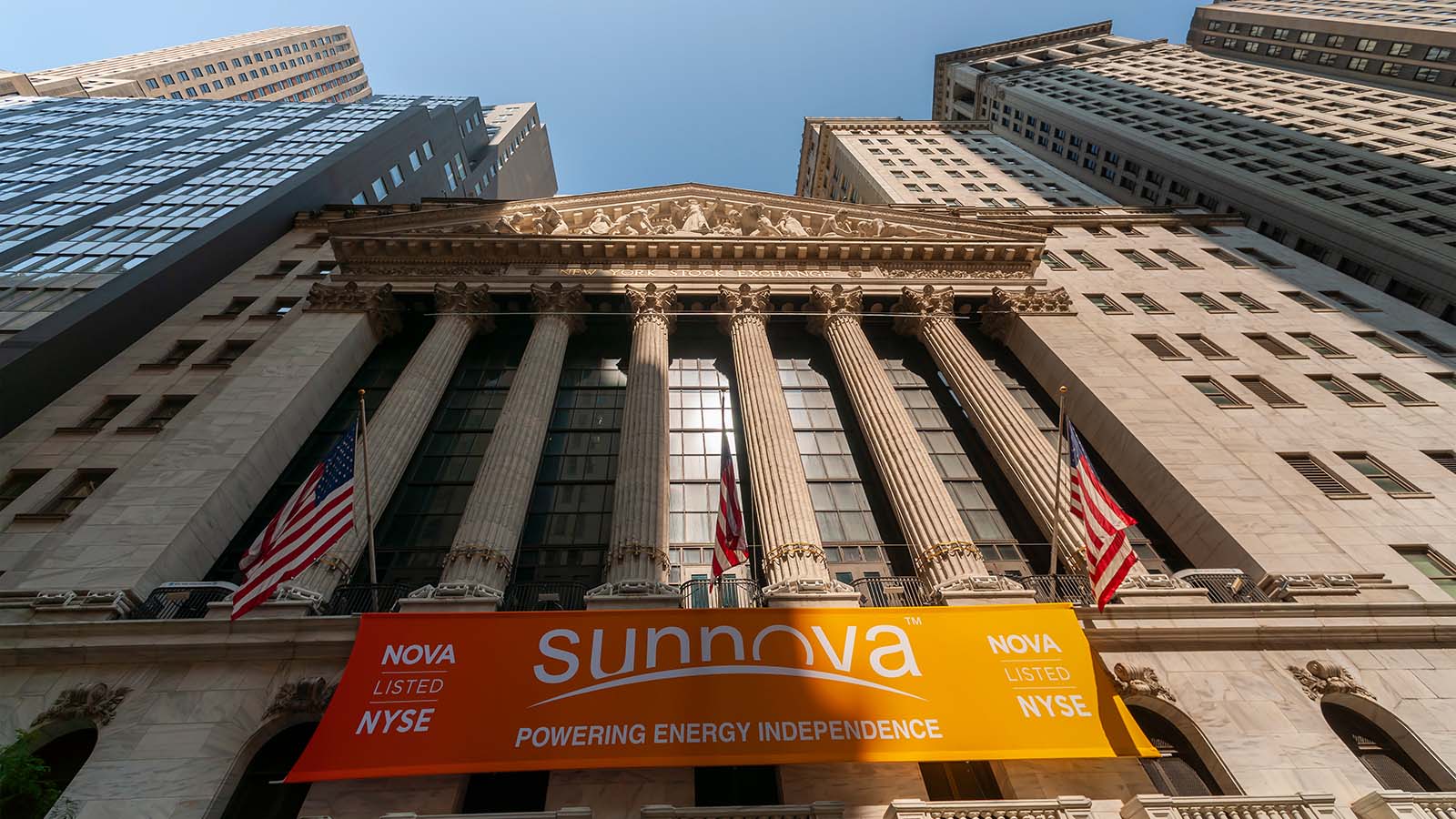
    HOUSTON — Sunnova Energy International Inc. (NYSE: NOVA), one of the largest residential solar-panel installers in the United States, is preparing to file for bankruptcy within weeks, according to people familiar with the matter. The move comes after the company missed an interest payment on its bonds and entered a 30-day grace period on April 1, signaling deepening financial distress amid mounting industry headwinds.

    Founded in 2012 and headquartered in Houston, Sunnova had positioned itself as a key player in the home solar and battery market, offering homeowners long-term leases and financing for rooftop solar systems. However, rising interest rates, falling solar installation demand, and persistent cash burn have pushed the publicly traded company to the brink of insolvency.

    Sunnova failed to make a scheduled interest payment on roughly $400 million in unsecured bonds, triggering a 30-day grace period that expires at the end of this week. The company has reportedly been in active discussions with financial and legal advisers to prepare a Chapter 11 filing that could come as early as mid-May if it is unable to restructure its obligations out of court.

    The bonds in question, issued in 2021 when capital was cheap and investor appetite for clean energy high, now trade at steep discounts, reflecting expectations of default. As of Monday, Sunnova’s 2026 notes were trading at less than 30 cents on the dollar, according to FINRA data.

    The company declined to comment on its restructuring plans, but a spokesperson said it remains “committed to exploring all strategic options to continue serving our customers and partners during this challenging period.”

    Sunnova’s troubles reflect a broader slowdown in the residential solar market, once one of the hottest corners of the renewable energy boom. Analysts say the industry’s business model, which depends heavily on long-term financing, has come under pressure as borrowing costs have risen and state-level incentives have diminished.

    In California — the largest U.S. solar market — recent policy changes slashed compensation for homeowners who feed excess power back into the grid, drastically reducing the financial appeal of new installations. Sunnova, which expanded rapidly in California and other sunbelt states, saw sales volumes stall in 2024 and early 2025.

    According to its most recent financials, Sunnova ended Q4 2024 with more than $3.1 billion in long-term debt and just $180 million in unrestricted cash. Its net loss for the full year ballooned to $765 million, up from $453 million in 2023, despite modest revenue growth.

    Shares of Sunnova have plummeted more than 90% over the past 12 months, wiping out billions in market capitalization. The company went public in 2019 at $12 per share and traded as high as $58 during the clean energy stock frenzy of 2021. As of market close Monday, NOVA shares traded below $1.10, putting the company at risk of delisting from the New York Stock Exchange.

    Critics say Sunnova overextended itself during the boom years, relying on aggressive customer acquisition and low-cost debt to fuel growth, while failing to build sustainable profitability.

    “Sunnova is a classic case of a capital-intensive company caught off guard by a tighter interest rate environment,” said Ben Kallo, senior analyst at Baird. “They had a great pitch — solar for everyone, financed for 25 years — but the math stopped working when rates jumped and investor appetite for riskier credits dried up.”

    Possible Outcomes: Sale or Restructuring?

    Sources familiar with the matter say Sunnova has hired restructuring advisers at Kirkland & Ellis and investment bankers at Lazard to explore options. While a Chapter 11 filing remains likely, the company may also pursue an out-of-court debt exchange or sale of its customer portfolio to a stronger rival.

    Potential acquirers could include Sunnova’s larger peers such as Sunrun (NASDAQ: RUN) or Tesla Energy, although industry consolidation has slowed due to similar headwinds across the sector. Analysts also note that many of Sunnova’s solar leases and power purchase agreements may be difficult to unwind or transfer, further complicating any sale.

    For the 400,000+ homeowners who lease their systems from Sunnova, the company has stated that operations will continue as normal — at least for now. Customer agreements are typically long-term contracts that remain in effect even if the company restructures.

    However, consumer advocates warn that a bankruptcy could lead to degraded service, longer wait times for repairs, and challenges in transferring leases during home sales.

    The potential bankruptcy also comes as the Federal Energy Regulatory Commission (FERC) and state utility commissions have begun scrutinizing how rooftop solar companies disclose financing terms and manage customer obligations — a regulatory focus that may intensify in the wake of Sunnova’s collapse.

    Sunnova’s anticipated bankruptcy would be one of the largest in the clean energy space since SunEdison’s 2016 collapse, which sent shockwaves through the renewable sector. While the broader solar industry remains bullish on long-term growth driven by federal tax credits and decarbonization goals, investors are growing wary of companies that prioritize rapid expansion over sustainable cash flow.

    “This is a reset moment for residential solar,” said Lisa MacGregor, energy markets analyst at Wood Mackenzie. “Sunnova’s downfall won’t be the end of the sector — but it will likely change how capital flows into it moving forward.”

    Data Appendix:

    • Bond Missed: $400M unsecured note interest payment skipped April 1
    • Debt Load: $3.1B (long-term) as of Dec. 31, 2024
    • Cash on Hand: $180M (Q4 2024)
    • 2024 Net Loss: $765M
    • Stock Decline: -91% YoY as of May 2025
    • Customer Base: 400,000+ solar service agreements
    • Shares Outstanding: ~115M