Category: Europe News

  • Germans Pay 4x More for Electricity Than Hungarians in Capitals

    Germans Pay 4x More for Electricity Than Hungarians in Capitals

    pexels paul 8246810 scaled 1

    In a stark illustration of diverging energy policies across Europe, households in Berlin shelled out more than four times the electricity costs of their counterparts in Budapest during the second half of 2024, according to a new report from the International Energy Agency (IEA). While German consumers grapple with some of the continent’s highest rates—averaging 41.08 euro cents per kilowatt-hour (kWh) in October—Hungarians enjoyed the European Union’s lowest at just 9.34 euro cents per kWh, thanks to aggressive government price caps that have shielded families from the post-pandemic energy crunch.

    The disparity underscores Hungary’s unorthodox approach to utility regulation, which has kept bills low amid broader EU efforts to diversify away from fossil fuels and curb inflation. Yet, as Budapest basks in the benefits, Brussels is growing impatient with the model’s heavy dependence on Russian natural gas—a lifeline that could snap under mounting geopolitical pressure.

    Eurostat’s latest figures paint a vivid picture: Germany’s residential electricity price topped the EU charts at 41.08 euro cents per kWh last October, more than double the bloc’s average of around 28.72 euro cents per 100 kWh in the second half of 2024. Hungary, by contrast, clocked in at a fraction of that—9.34 euro cents—making Budapest the cheapest capital in the EU for household power, while Berlin claimed the unwanted crown of most expensive. A Finnish analysis by VaasaETT pegged the EU-wide average as roughly 2.8 times higher than Hungary’s tariff, with prices exceeding 30 euro cents in nine other capitals, including those in Denmark, Ireland, and the Czech Republic.

    At the heart of Hungary’s bargain is a two-tiered price cap system, in place since August 2022, designed to protect consumers from market volatility. The “classic” rate caps electricity at 36 Hungarian forints (about 0.09 euro cents) per kWh for the first 2,523 kWh annually—enough for a typical household. Beyond that threshold, a still-subsidized rate of 70.10 forints (10.76 euro cents) kicks in, ranking it as the second-lowest among EU capitals examined. This policy, extended through 2025 despite fiscal strains, has drawn praise from everyday Hungarians but fire from opposition lawmakers who decry it as unsustainable, arguing the government’s subsidies—funded partly by windfall taxes on energy firms—balloon the state budget deficit.

    The real-world impact? For an average two-earner household with median income, utilities devour just 1.7% of monthly earnings in Budapest, per calculations from Hungary’s Energy and Public Utilities Regulatory Office using October data. That’s a lighter load than in Berlin (2.5%), Brussels (2.2%), or—worst of all—Lisbon (6.1%). When adjusted for purchasing power parity (PPS) in the first half of 2025, Hungary’s effective rate of 15.01 PPS placed it second only to Malta (13.68), far below the Czech Republic’s punishing 39.16.

    The IEA’s report, which emphasizes the need for renewable investments to drive affordability, highlights these cross-border variances as a cautionary tale for Europe’s energy transition. “Prices can vary greatly between countries,” the agency noted, urging a balanced push toward green sources without sacrificing access. In Germany, where the Energiewende has prioritized renewables but spiked costs through network fees and green levies, households face a 44.11 euro cents per kWh average for 2024—up from pre-crisis levels.

    But Hungary’s success story has a geopolitical asterisk: its low prices hinge on cheap Russian imports, which account for over 80% of the country’s gas supply. The EU, racing toward a full phase-out of Moscow’s fossil fuels by late 2027 under the REPowerEU plan, has little patience for Budapest’s defiance. European Commission President Ursula von der Leyen has repeatedly pressed Hungary to submit a divestment roadmap, warning in September that the bloc would accelerate sanctions on Russian LNG and pipeline gas. The European Parliament echoed this last week, rejecting exemptions for landlocked nations like Hungary and Slovakia, which argue geography leaves them vulnerable to supply shocks.

    Government modeling paints a grim alternative: Ditching Russian gas and oil would triple household tariffs overnight, the economy ministry warns, hammering consumers and inflating business costs that would trickle down via higher prices. “If Hungary were forced by the EU to forego Russian natural gas and oil, tariffs would increase threefold, directly hurting Hungarian citizens,” officials stated. Even as the U.S. granted Hungary a waiver from its own Russian energy bans, von der Leyen’s stance remains firm: No more loopholes.

    Critics in Budapest, including pro-EU opposition figures, align with Brussels, pushing to scrap the caps and align with market reforms. “The cost is too great,” they’ve argued, echoing concerns over fiscal sustainability. Yet for Prime Minister Viktor Orbán’s administration, the policy is a populist win, shielding voters from the energy poverty afflicting neighbors. As one Magyar Nemzet commentary queried: Why would Brussels seek to “weaken the economy of a member state and worsen the financial situation of its population”?

    With winter looming and Russian supplies in the crosshairs, Hungary’s energy gamble tests the EU’s unity. For now, Budapest’s lights stay affordably on—but at what long-term cost?

  • Promoters Cancel Bob Vylan Concert Over Remarks on Charlie Kirk Assassination

    Promoters Cancel Bob Vylan Concert Over Remarks on Charlie Kirk Assassination

    A Bob Vylan concert in the Netherlands has been cancelled after comments made by the performer on stage about the assassination of Donald Trump ally Charlie Kirk.

    A member of the outspoken punk duo, who caused controversy when they chanted for the “death” of the Israel Defence Forces (IDF) at Glastonbury Festival, told the audience “if you chat shit you will get banged” in footage widely shared on social media.

    In response, their planned performance on Tuesday September 16 at the 013 in Tilburg has been cancelled, with the venue saying the statements made by the performer “go too far”.

    d987214281064aa2d9cf1410bff64df1Y29udGVudHNlYXJjaGFwaSwxNzU3OTY0MjA1 2.80839099

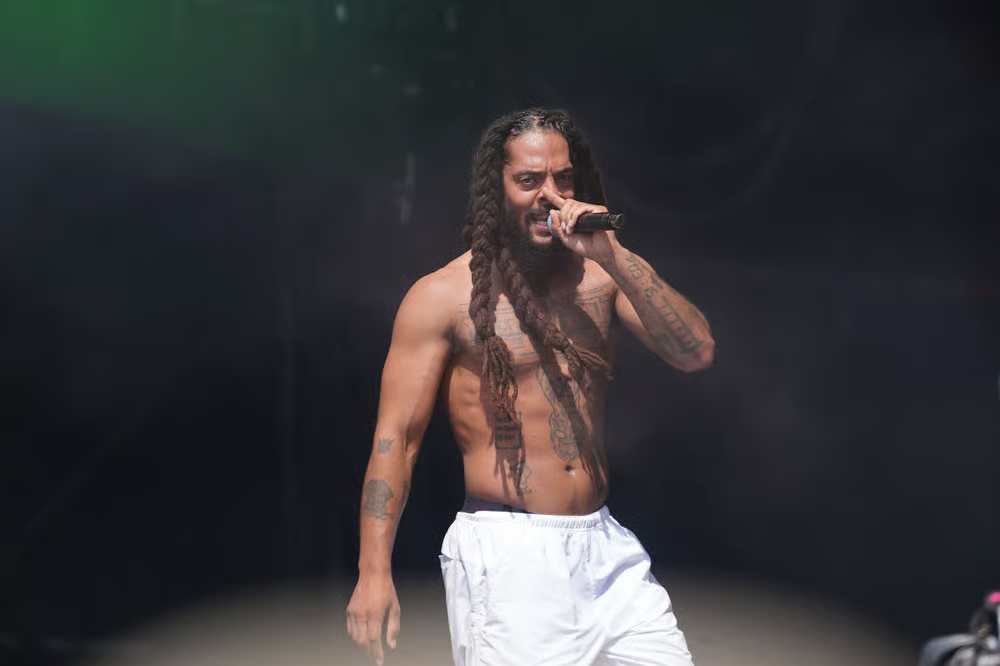
    During their performance at Amsterdam’s Paradiso on Saturday, frontman Bobby Vylan, whose real name is reportedly Pascal Robinson-Foster, told fans: “I want to dedicate this next one to an absolute piece of shit of a human being.

    “The pronouns was/were. Cause if you chat shit you will get banged. Rest in peace Charlie Kirk, you piece of shit.”

    Mr Kirk, who was a prominent political commentator in the US and ally of the president, was shot and killed at a Utah Valley University event on Wednesday, in what authorities called a political assassination.

    Hundreds of people attended a vigil for Mr Kirk in central London on Saturday with speakers hailing him as a “Christian martyr” and calling for people to wage a “war on evil”.

    A translated statement on the 013 website on Sunday said: “The planned performance by British rap-punk group Bob Vylan on Tuesday, September 16th, at Poppodium 013 in Tilburg has been cancelled.

    “The reason for the cancellation is the controversial statements the artist made last night during a show at Paradiso in Amsterdam.

    “Despite the controversy that arose after their Glastonbury performance, 013 decided to let Bob Vylan perform in Tilburg.”

    The venue said it had an “understanding for the artist’s anger” regarding the violence in Israel and said the duo clarified in a statement that the “death to the IDF” chant was “not an antisemitic slogan, but rather criticism of the Israeli army”.

    8caab1d79d164e3b0c5704d294efe8daY29udGVudHNlYXJjaGFwaSwxNzU3OTcwMTUz 2.81593482

    The statement added: “While we understand that these statements were made in the context of punk and activism, and that the reporting on them is sometimes less nuanced than what actually happened, we still believe these new statements go too far. They no longer fall within the scope of what we can offer a platform.”

    In a statement on its website, Club Paradiso said: “On Saturday September 13, during his performance at Paradiso, artist Bob Vylan made statements that many experienced as harsh and offensive.

    “Paradiso believes in the power of artistic freedom. Music, and punk in particular, has traditionally been a form of art that amplifies anger, discontent, and injustice without filter.

    “In a world on fire, artists sometimes choose language that sounds confrontational or violent. That is part of artistic expression, but not automatically language that we as a venue endorse.

    “Paradiso shares the outrage and concern regarding the genocidal violence taking place in Gaza.

    “That Bob Vylan raises his voice against it is legitimate and necessary. Should the Openbaar Ministerie (public prosecution service) wish to investigate whether any criminal offences have been committed, Paradiso will cooperate.”

    After reports that his comments “celebrated” Mr Kirk’s death, Bobby Vylan said in an Instagram video: “At no point during yesterday’s show was Charlie Kirk’s death celebrated. At no point whatsoever did we celebrate Charlie Kirk’s death.”

    The duo, comprised of frontman Bobby Vylan and drummer Bobbie Vylan, have another gig in the Netherlands at Doornroosje which is billed for Monday.

    A translated statement on the Doornroosje website, which appears to have been online prior to the recent comments, said: “Bob Vylan plays at Doornroosje because he’s an act that fits within our programming. The band has previously been booked for Doornroosje and played at the Valkhof Festival.”

    Following Bobby Vylan’s comments about the IDF at Glastonbury in June, Avon and Somerset Police launched an investigation.

    Earlier in the month, BBC director general Tim Davie said the corporation’s decision to broadcast Bob Vylan’s set live was “a very significant mistake”.

    While facing questions from MPs on the Culture, Media and Sport Committee on Tuesday, Davie said the punk duo’s set was “antisemitic” and “deeply disturbing”.

    The corporation issued an apology after the Bob Vylan set at Glastonbury, saying: “We deeply regret that such offensive and deplorable behaviour appeared on the BBC and want to apologise to our viewers and listeners and in particular the Jewish community.”

    Bobby Vylan said in a social media post that “there was nothing antisemitic or criminal about anything I said at Glastonbury”.

  • One Killed, Others Injured as Train Derails in Denmark

    One Killed, Others Injured as Train Derails in Denmark

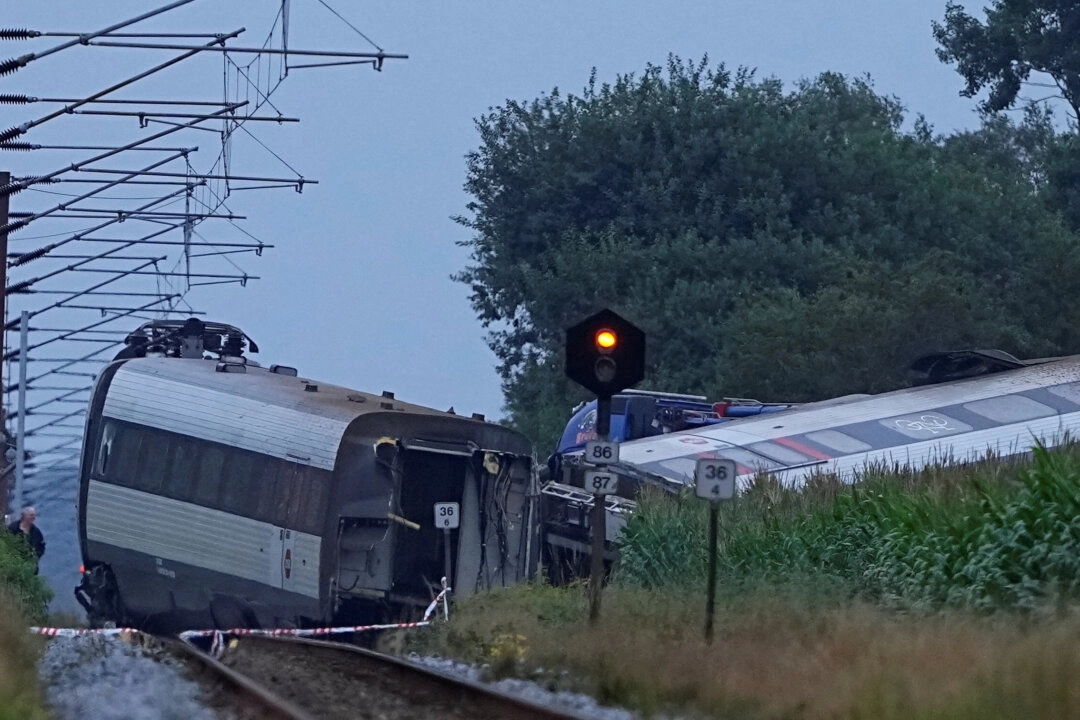
    At least one person has died and dozens have been injured after a train collided with a slurry tanker and derailed in southern Denmark, officials have said. Police said the crash occurred between the towns of Tinglev and Kliplev in southern Jutland, near the German border, leaving a 60-year-old woman dead and 27 others injured.

    In an update shortly after midnight, police said a crane was being used at the site to lift some of the damaged carriages to ensure there were no more injured passengers.

    Of the five people seriously injured, two remained in a critical condition in hospital. Local media reported the train as having hit a slurry tanker, which are used to transport farm waste. Pictures from the scene showed a carriage lying on its side, with passengers standing around the train tracks.

    Police said 106 people in total had been involved in the accident. Among the passengers onboard included pupils from a school in nearby Sønderborg, the train’s intended destination.

    None of the students or the two teachers with them were seriously injured, police said, but they had been invited to go into school on Saturday to talk to a psychologist.

    “My thoughts go out to the relatives, the many injured and everyone who is currently affected by the accident,” Danish Prime Minister Mette Frederiksen said in a statement to public broadcaster DR.

    “I hope that everyone gets the best possible help and support.”

    The country’s rail operator DSB said that it had shut down services along the line until further notice. The national rail agency Banedanmark wrote on X that the collision happened at a level crossing. At least two of the train carriages were derailed, according to local media.

  • Denmark Raises Retirement Age to 70, the Highest in Europe

    Denmark Raises Retirement Age to 70, the Highest in Europe

    Denmark is set to have the highest retirement age in Europe, after lawmakers voted to raise it to 70.

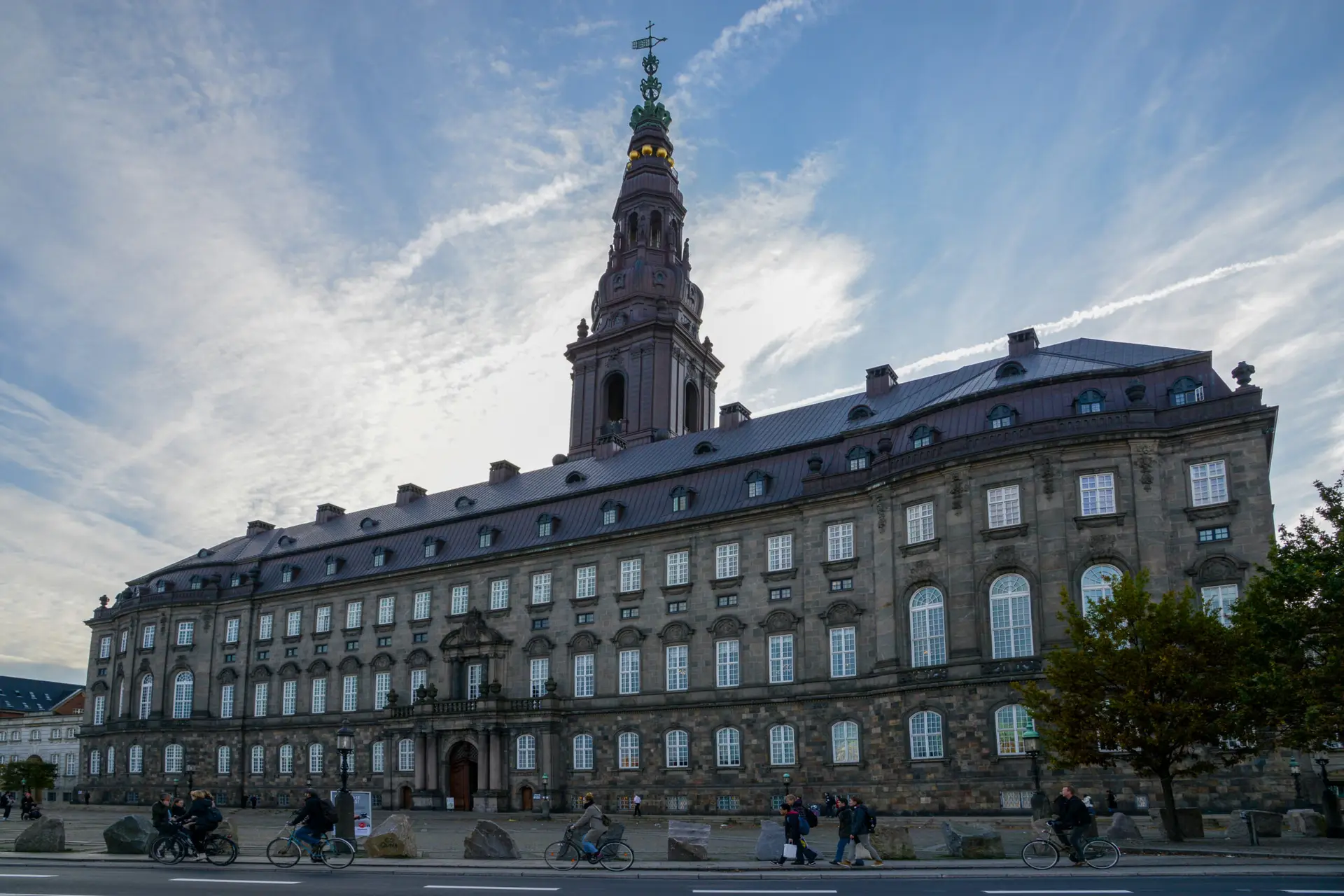
    Parliamentarians passed a bill mandating the rise on Thursday, with 81 votes in favor and 21 against.

    The new law will apply to people born after December 31, 1970. The current retirement age is 67 on average, but it can go up to 69 for those born on January 1, 1967, or later.

    The rise is needed in order to be able to “afford proper welfare for future generations,” employment minister Ane Halsboe-Jørgensen said in a press release Thursday.

    Denmark has a population of almost 6 million people, with around 713,000 between the ages of 60 and 69, and around 580,000 aged between 70 and 79, according to the official Statistics Denmark website.

    “Developments in recent years clearly show a marked increase in the number of Danes who continue to work until — and beyond — the state pension age,” F&P, the Danish trade association for insurance companies and pension funds, said in a press release Friday.

    Approximately 80,000 people over the state pension age are currently in work in Denmark, according to F&P, which put the increase down to good economic conditions, employers being more flexible, better financial incentives and a greater desire to continue working.

    “For many Danes, the idea of the state pension age increasing to 70 by 2040 may seem overwhelming,” Jan V. Hansen, the director of pensions at the association, said in the release. “However, the figures clearly demonstrate that a growing number of Danes are remaining in employment for longer periods.”

    “The good news is that many Danes not only have the health but also the desire to continue working — even after reaching the state pension age,” he continued.

    ‘Unreasonably high’

    Denmark’s socialist Red-Green Alliance, however, described the vote by “the government and the right wing” in a post on Facebook as “unreasonably high,” and condemned the change in light of the “great” pension conditions enjoyed by many ministers who can retire at age 60.

    “It is incomprehensible. It cannot be explained. And it cannot be defended,” Pelle Dragsted, a member of parliament for the party, said in another Facebook post, noting that teachers, scaffolders and many others in physically demanding jobs have said they cannot keep going for that long.

    Denmark is the first European country to set its national retirement age beyond the 60s. The move will make it one of the highest in the world, on par with Libya.

    In France in March 2023, more than a million people took to the streets nationwide to protest a rise in the retirement age to 64 — six years below the new Danish retirement age.

    In September, the Chinese government passed legislation that would see the retirement age for men raised from 60 to 63, and from 50 and 55 for women, depending on their occupation, to 55 and 58, respectively.

    The state pension age in the UK is set to rise to 67 between 2026 and 2028, although a review could see it revised to 68.

    While the retirement age in the United States is similar to the UK’s, some Social Security benefits are available from age 62.

    Better health in old age, increased life expectancy and remote working are allowing more Americans to work into old age. However, research shows that it is often a lack of money that keeps them working longer.

  • Britain’s most popular corporate event isn’t what you’d expect

    Britain’s most popular corporate event isn’t what you’d expect

    This week saw one of the most important — and perhaps surprising — events in corporate Britain’s annual calendar: the gala night of the Royal Horticultural Society (RHS) Chelsea Flower Show.

    This traditionally marks the beginning of what, in English high society, is referred to as “the season.”

    Coined as such by Debrett’s, the publisher and authority on society and etiquette, the summer social whirl was framed around the British royal family, which traditionally remained in London from April to July and from October until Christmas.

    This meant that Britain’s ruling classes and key movers and shakers did the same — participating in balls, parties and court presentations.

    These have largely now faded away, but what remains is a series of sporting and cultural events where the great and good continue to get together. Highlights include opera at the Glyndebourne Festival; flat racing at the Epsom Derby, Royal Ascot and Glorious Goodwood meetings; rowing at the Henley Royal Regatta; yachting at Cowes and, of course, tennis at Wimbledon.

    All these events see gatherings of corporate chieftains, their bankers, lawyers and other advisors, but none brings together quite as many key figures, in a short space of time, as the Chelsea gala night: two hours of champagne (this year’s bubbles were supplied by Pommery), canapes and networking over displays carefully cultivated by hundreds of professional gardeners and landscape architects.

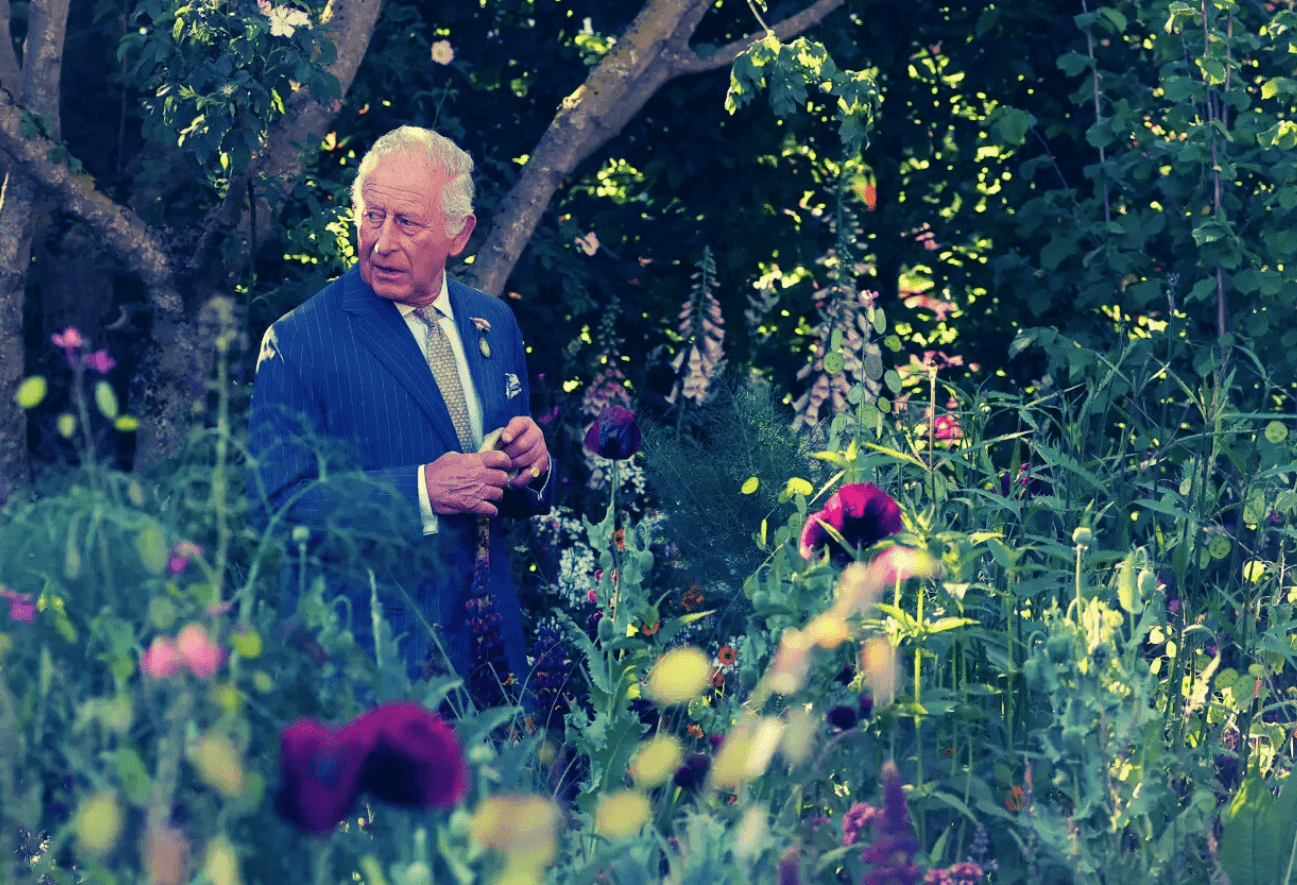
    Tickets for the gala, which runs from 7 p.m. to 9 p.m. (the King, who is patron of the RHS, visits earlier in the afternoon), cost £620 ($827) while those for the gala dinner which follows on site go for £885.

    Seeds are sown

    Many of the City’s top bankers can be spotted there: recent attendees have included Anthony Gutman, co-chief executive officer of Goldman Sachs International; Russell Chambers, the former head of investment banking at Credit Suisse and Charlie Nunn, chief executive of Lloyds Banking Group. Leading business figures also regularly attend, including the likes of John Browne, the former chief executive of BP; Martin Sorrell, the advertising kingpin and Nigel Wilson, the former chief executive of Legal & General.

    Top politicians and policymakers can also be spotted at the event: George Osborne was a regular attendee when he was chancellor of the exchequer, while last year both Jeremy Hunt, then the chancellor, and Rachel Reeves, then his shadow, were guests of one of the U.K.’s major lenders.

    While the cultivation of plants is central to Chelsea, the cultivation of client relationships is also paramount. Headline sponsors of the event have included Merrill Lynch Investment Managers (now part of BlackRock) and asset manager M&G Investments.

    The seeds sown, too, are not necessarily of the horticultural kind.

    The RHS Chelsea Flower Show on May 19, 2025 in London, England.Ben Montgomery | Getty Images News | Getty Images
    The RHS Chelsea Flower Show on May 19, 2025 in London, England. (Ben Montgomery/Getty Images News/Getty Images)

    For example, the 2018 sale of data provider Refinitiv (since acquired by the London Stock Exchange Group) by Thomson Reuters to Blackstone is said to have had its origins in a meeting between David Craig, the Refinitiv chief executive, and Joseph Baratta, Blackstone’s head of private equity, at the 2013 gala night.

    Long-time attendees grumble that the event does not have quite the pull it used to. There are arguably fewer bankers present than there were 15 years ago which, according to some, reflects caps on the value of corporate hospitality some business people are now allowed to accept.

    There is also a school of thought that modern CEOs are more likely to be seen competing in triathlons and, when they do accept invitations, it is likely to be for a more egalitarian and less elitist event such as, say, a Premier League football match.

    This year’s gala suggested there may be some truth to that.

    From the C-suite, there were certainly more FTSE 100 chairs than CEOs in attendance, although several individuals who have in the last year stepped down from such roles were spotted among the blooms.

    Among the main talking points, a few common themes emerged. One was the uncertainty that continues to stalk businesses in the United States due to a combination of factors, chiefly President Donald Trump’s tariffs, which several attendees suggested may benefit the U.K. if it drives capital and business investment elsewhere.

    Another is the impact that continues to be felt by Chancellor Rachel Reeves’ decision to abolish the so-called “non-dom” rules which enabled U.K. residents who declared their permanent home as being overseas to avoid U.K. tax on their foreign income and gains. It is credited with having driven hundreds of wealthy individuals out of the U.K. and harmed entrepreneurship in the process.

    The third theme, though, was altogether more surprising. The mood music surrounding the U.K. economy during the last 12 months has been unremittingly bleak. Yet there were, on Monday evening, an unexpectedly high number of corporate chiefs who, when questioned how their business was faring, answered along the lines of: “I probably shouldn’t say this, given the backdrop, but we’re actually doing better than I expected so far this year.”

    The U.K. economy still faces headwinds, not least Reeves’s recent increase in employer’s national insurance contributions, which makes it more expensive to hire people. There is also a sense that the GDP figures for the first quarter of the year were flattered by stockpiling of goods and strong export figures ahead of Trump’s tariffs kicking in.

    However, leaving the show on Monday evening, there was a strong sense that these surprisingly strong figures may not have been a flash in the pan.