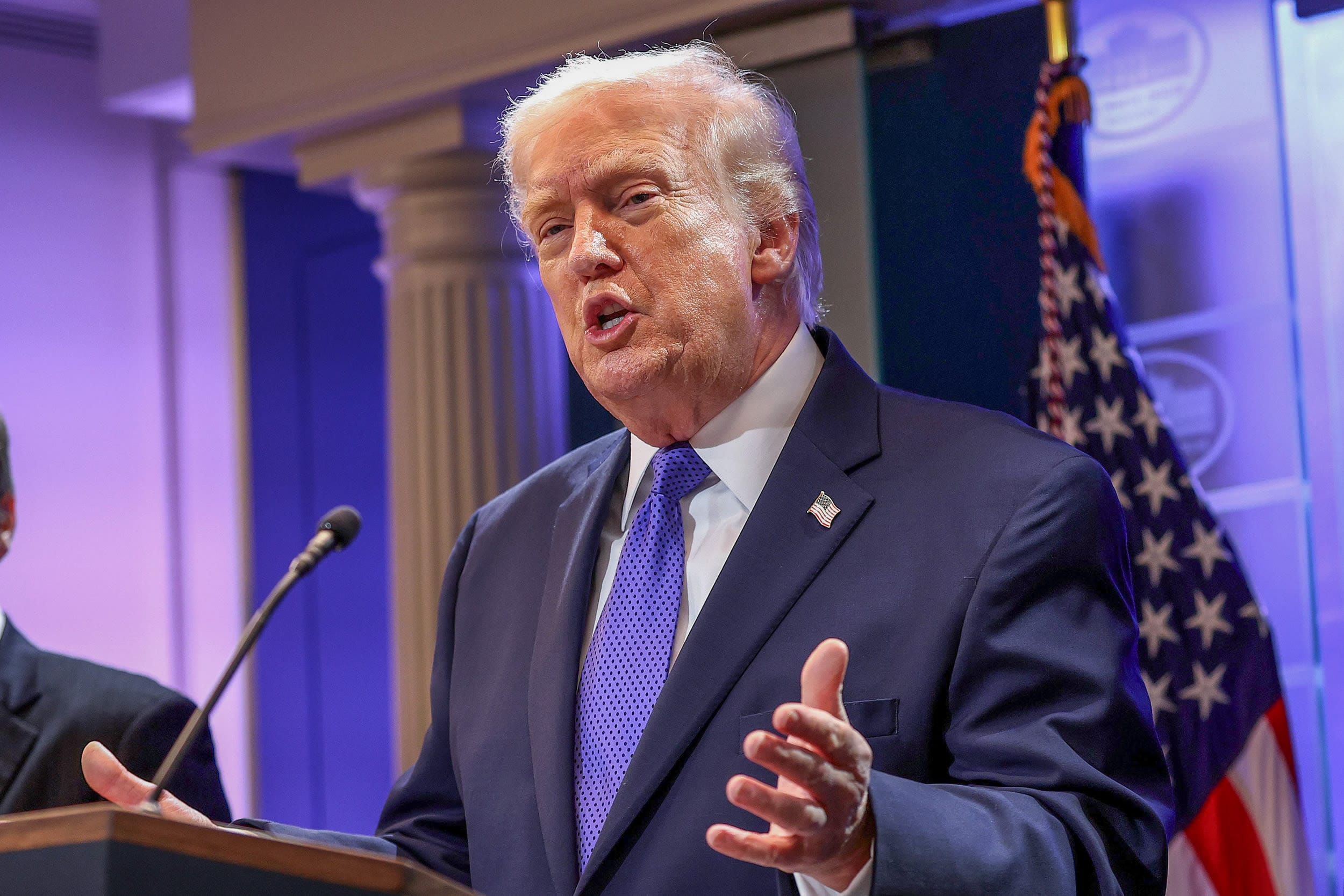
The Supreme Court on Friday struck down a swath of President Trump’s tariffs, paving the way for businesses to try to reclaim billions of dollars.
The decision was a major blow for the Trump administration, which had said the money could be used to help pay down federal debt, fund rebate checks to Americans and bail out farmers hurt by tariffs. Trump even claimed that tariff revenues would be large enough to replace the need for income taxes.
On Friday, Trump panned the decision and said he would sign an order to impose a 10% global tariff under a different authority, “over and above our normal tariffs already being charged.”
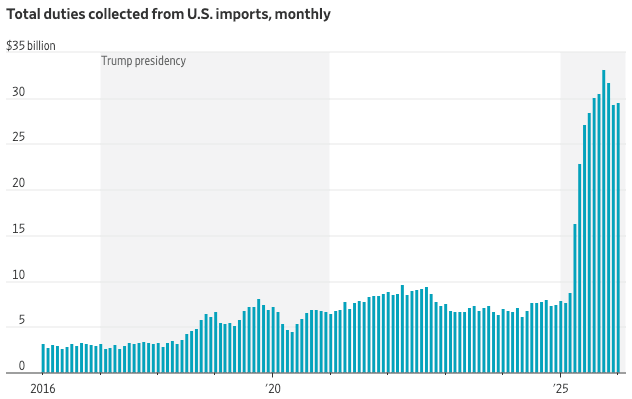
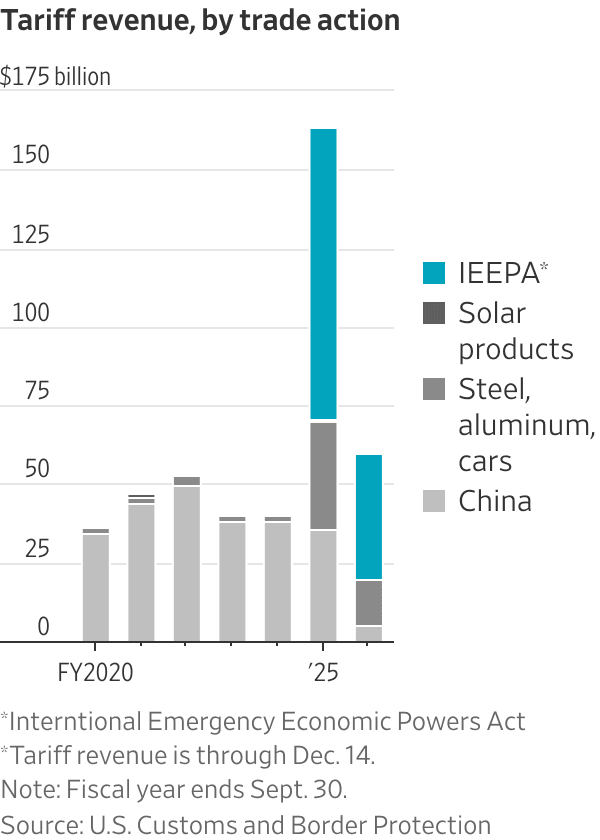
Through mid-December, U.S. Customs and Border Protection had brought in about $133.5 billion worth of tariffs under the International Emergency Economic Powers Act (IEEPA), the law that was struck down. Such tariffs accounted for about 67% of the tariffs collected in the 2025 fiscal year, which runs through September, and 57% of the tariffs collected between the end of September and Dec 14.
Altogether, including a host of miscellaneous duties not related to trade measures by the president, customs collected fees of about $202 billion in the 2025 fiscal year, about 2.4 times the total amount collected the previous year.
The Supreme Court didn’t provide guidance on whether, or how, tariffs would be refunded, likely leaving those issues to lower courts. Still, trade lawyers say that hundreds of firms have already filed lawsuits to increase their chances of clawing back money.
The president declared 10% across-the-board tariffs on all imports back in April, and imposed even higher rates on a slew of nations. His team branded these “reciprocal” tariffs, saying they were intended to ensure fair treatment for American companies and goods.
Trump walked back or delayed some of the threatened reciprocal tariffs. But the government was still able to collect significant sums from major trading partners using different tariffs also imposed under IEEPA. In regard to China, the president at one point slapped the nation with 125% “reciprocal” duties and added another 20% for the country’s alleged role in the fentanyl trade. The two tariffs were each lowered to 10% under a trade agreement later.
Leave a Reply