Category: Justice

  • Live Nation Reaches Tentative Antitrust Settlement With U.S. Justice Department as States

    Live Nation Reaches Tentative Antitrust Settlement With U.S. Justice Department as States

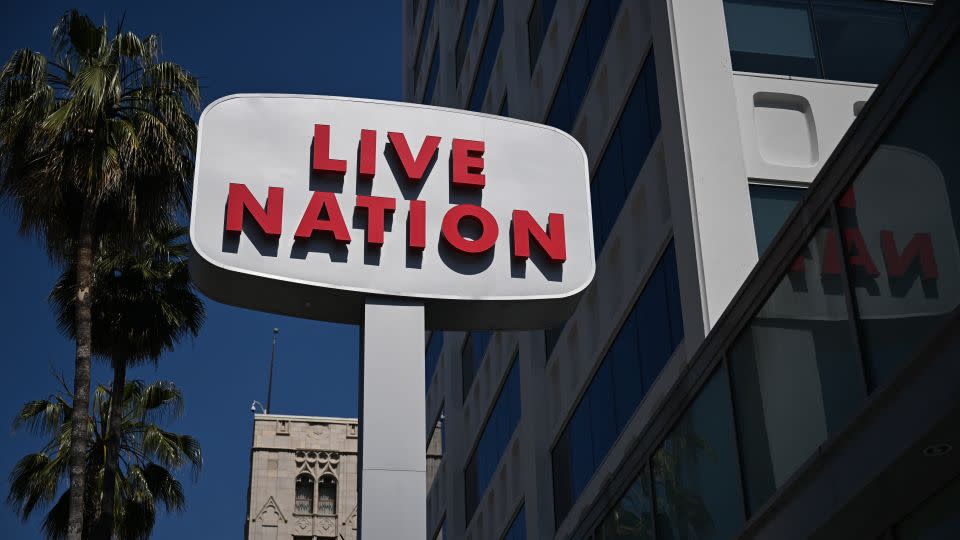
    Live Nation reached a tentative settlement with the US Justice Department on Monday in the federal antitrust case brought against the entertainment giant.

    The settlement, which still requires the approval of District Judge Arun Subramanian, comes just days after the antitrust trial began in New York.

    The case was initiated under then-president Joe Biden, with prosecutors accusing Live Nation — which owns Ticketmaster — a monopolist that controlled virtually all live entertainment in the United States.

    The settlement requires Live Nation to open up the ticketing platform to competitors and to allow other promoters to stage events at certain Live Nation venues, a senior Justice Department official said.

    Live Nation will divest up to 13 amphitheaters and pay $280 million in damages to the nearly 40 states that were parties to the antitrust lawsuit against the California-based company, the official said.

    The increased competition should result in ticket prices coming down, the official said.

    Live Nation shares surged nearly six percent on the New York Stock Exchange following the announcement.

    New York and a number of other states declined to join the settlement and said Monday that their litigation against Live Nation would continue.

    “For years, Live Nation has made enormous profits by exploiting its illegal monopoly and raising costs for shows,” New York Attorney General Letitia James said.

    “The settlement recently announced with the US Department of Justice fails to address the monopoly at the center of this case, and would benefit Live Nation at the expense of consumers,” James said in a statement.

    “We will keep fighting this case without the federal government so that we can secure justice for all those harmed by Live Nation’s monopoly.”

    A spokesperson for the New York attorney general, a Democrat, said prosecutors would file a motion with the court seeking a mistrial and file a new case against Live Nation brought solely by the states.

    The Justice Department official said talks with a number of the states were ongoing and was hopeful some of them will eventually sign off on the settlement.

    Live Nation is a behemoth in its industry: in 2025 it organized more than 55,000 events worldwide, drawing 159 million attendees.

    Beyond promotion, it holds stakes in 460 venues and, since 2010, has controlled Ticketmaster, the world’s leading ticket seller.

    The Justice Department had accused Live Nation of abusing its dominant position to pressure artists and venues into signing with it, stifle competition, and impose excessive fees on fans.

    The Trump administration’s decision to press forward with the case against Live Nation had surprised many observers, who had interpreted the recent resignation of Justice Department competition chief Gail Slater as a sign the case would be dropped.

    Democratic Senator Elizabeth Warren condemned the settlement in a post on X.

    “Donald Trump just betrayed every fan who’s been exploited by Ticketmaster,” Warren said. “This fine is less than one percent of Live Nation’s revenue last year. We need to break up Ticketmaster and Live Nation.”

    John Kwoka, a professor of economics at Northeastern University, said the settlement appeared “inadequate.”

    “It does not deal with the fact that Ticketmaster is still an integrated company that has incentives that remain pretty much intact to disadvantage competitors,” Kwoka said.

    “This is a minor accomplishment in the face of what the Justice Department laid out as a course of business,” he said.

  • Man Convicted in Assassination Plot Targeting President Trump

    Man Convicted in Assassination Plot Targeting President Trump

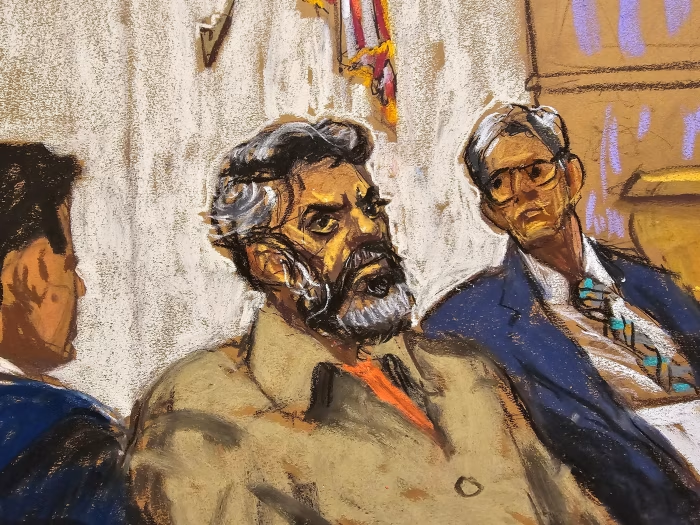
    NEW YORK — The allegation sounded like the stuff of spy movies: A Pakistani businessman trying to hire hit men, even handing them $5,000 in cash, to kill a U.S. politician on behalf of Iran ‘s powerful paramilitary Revolutionary Guard.

    It was true, and potential targets of the 2024 scheme included now-President Donald Trump, then-President Joe Biden and former presidential candidate and ex-U.N. Ambassador Nikki Haley, the man told jurors at his attempted terrorism trial in New York on Wednesday. But he insisted his actions were driven by fear for loved ones in Iran, and he figured he’d be apprehended before anything came of the scheme.

    “My family was under threat, and I had to do this,” the defendant, Asif Merchant, testified through an Urdu interpreter. “I was not wanting to do this so willingly.”

    Merchant said he had anticipated getting arrested before anyone was killed, intended to cooperate with the U.S. government and had hoped that would help him get a green card.

    This image provided by the Justice Department, contained in the complaint supporting the arrest warrant, shows Asif Merchant. (Justice Department via AP, File)
    This image provided by the Justice Department, contained in the complaint supporting the arrest warrant, shows Asif Merchant. (Justice Department via AP, File)

    U.S. authorities were, indeed, on to him – the supposed hit men he paid were actually undercover FBI agents – and he was arrested on July 12, 2024, a day before an unrelated attempt on Trump’s life in Butler, Pennsylvania. Merchant did sit for voluntary FBI interviews, but he ultimately ended up with a trial, not a cooperation deal.

    “You traveled to the United States for the purpose of hiring Mafia members to kill a politician, correct?” Assistant U.S. Attorney Nina Gupta asked during her turn questioning Merchant Wednesday in a Brooklyn federal court.

    “That’s right,” Merchant replied, his demeanor as matter-of-fact as his testimony was unusual.

    The trial is unfolding amid the less than week-old Iran war, which killed Iranian Supreme Leader Ayatollah Ali Khamenei in a strike that Trump summed up as “I got him before he got me.” Jurors are instructed to ignore news pertaining to the case.

    The Iranian government has denied plotting to kill Trump or other U.S. officials.

    Merchant, 47, had a roughly 20-year banking career in Pakistan before getting involved in an array of businesses: clothing, car sales, banana exports, insulation imports. He openly has two families, one in Pakistan and the other in Iran – where, he said, he was introduced around the end of 2022 to a Revolutionary Guard intelligence operative. They initially spoke about getting involved in a hawala, an informal money transfer system, Merchant said.

    Merchant testified that his periodic visits to the U.S. for his garment business piqued the interest of his Revolutionary Guard contact, who trained him on countersurveillance techniques.

    The U.S. deems the Revolutionary Guard a “foreign terrorist organization.” Formally called the Islamic Revolutionary Guard Corps, the force has been prominent in Iran under Khamenei.

    Merchant said the handler told him to seek U.S. residents interested in working for Iran. Then came another assignment: Look for a criminal to arrange protests, steal things, do some money laundering, “and maybe have somebody murdered,” Merchant recalled.

    “He did not tell me exactly who it is, but he told me – he named three people: Donald Trump, Joe Biden and Nikki Haley,” he added.

    After U.S. immigration agents pulled Merchant aside at the Houston airport in April 2024, searched his possessions and asked about his travels to Iran, he concluded that he was under surveillance. But still he researched Trump rally locations, sketched out a plot for a shooting at a political rally, lined up the supposed hit men and scrambled together $5,000 from a cousin to pay them a “token of appreciation.”

    He even reported back to his Revolutionary Guard contact, sending observations – fake, Merchant said – tucked into a book that he shipped to Iran through a series of intermediaries.

    Merchant said he “had no other option” than to play along because the handler had indicated that he knew who Merchant’s Iranian relatives were and where they lived.

    In a court filing this week, prosecutors noted that Merchant didn’t seek out law enforcement to help with his purported predicament before he was arrested. He testified that he couldn’t turn to authorities because his handler had people watching him.

    Prosecutors also said that in his FBI interviews, Merchant “neglected to mention any facts that could have supported” an argument that he acted under duress.

    Merchant told jurors Wednesday that he didn’t think agents would believe his story, because their questions suggested “they think that I’m some type of super-spy.”

    “And are you a super-spy?” defense lawyer Avraham Moskowitz asked.

    “No,” Merchant said. “Absolutely not.”

  • Antitrust Trial Begins That Could Force Breakup of Live Nation, Ticketmaster’s Parent Company

    Antitrust Trial Begins That Could Force Breakup of Live Nation, Ticketmaster’s Parent Company

    A high-stakes antitrust trial that could lead to the possible breakup of Live Nation, the parent company of Ticketmaster, got underway Tuesday in a case over whether the entertainment giant’s dominance of the concert industry amounts to an illegal monopoly.

    In opening statements, a U.S. Justice Department lawyer pointed to the company’s infamously problem-plagued effort to sell Taylor Swift tickets in 2022 as he implored the Manhattan federal jury to end the company’s hold on the market and reward artists and consumers with a competitive marketplace that will leave them with more money.

    “This case is about power, the power of a monopolist to control competition,” said the attorney, David Dahlquist. “Today, the concert ticket industry is broken.”

    David Marriott, arguing on behalf of the companies, disputed the government’s claims.

    “We’ll let the numbers do the talking,” he said. “We do not have monopoly power.”

    Judge Arun Subramanian has told jurors that evidence will be presented over the next six weeks before they’ll be left to decide whether Live Nation and Ticketmaster broke antitrust laws.

    The trial stems from a lawsuit filed in 2024 that alleged the companies have dominated the industry by suffocating competitors and controlling everything from concert promotion to ticketing.

    Ticketmaster, which was established in 1976 and merged with Live Nation in 2010, is the world’s largest ticket seller across live music, sports, theater and more.

    Dahlquist noted that the ticket seller sparked outrage in November 2022 when its site crashed during a presale event for Swift’s Eras Tour.

    The company said the site was overwhelmed by both fans and attacks from bots, which were posing as consumers to scoop up tickets and sell them on secondary sites. The debacle prompted congressional hearings and bills in state legislatures aimed at better protecting consumers.

    Dahlquist said Live Nation’s anti-competitive practices include using long-term contracts ranging from five to seven years to keep venues from choosing rivals and blocking venues from using multiple ticket sellers.

    Ticketmaster’s clashes with artists and fans date back three decades. Pearl Jam took aim at the company in 1994, years before the Live Nation merger, although the Justice Department ultimately declined to bring a case.

    Live Nation has maintained that artists and teams set prices and decide how tickets are sold.

    Marriott said Live Nation was the world’s biggest supporter of musical artists, enabling 159 million people in 2025 to see 11,000 artists at 55,000 concerts.

    He said the government has exaggerated how much the companies make, including by saying Ticketmaster pockets $7 a ticket, when it actually gets $5 and clears less than $2 after expenses.

    Live Nation and Ticketmaster, he said, “are all about bringing joy to people’s lives.”

  • Bill Clinton Denies Knowledge of Epstein Crimes in House Deposition: ‘I Did Nothing Wrong’

    Bill Clinton Denies Knowledge of Epstein Crimes in House Deposition: ‘I Did Nothing Wrong’

    Former President Bill Clinton, long dogged by scandals involving his personal conduct and questionable associations, faced a grueling six-hour deposition before the House Oversight Committee on Friday, where he repeatedly denied any awareness of Jeffrey Epstein’s heinous sex trafficking operations.

    In a performance that Republicans praised as cooperative but critics dismissed as evasive, Clinton insisted he “saw nothing that gave me pause” during his multiple interactions with the disgraced financier, whose crimes against underage girls have shocked the nation and exposed a web of elite enablers.

    “I did nothing wrong,” Clinton declared, a refrain that echoes his past defenses amid allegations of misconduct, but one that rings hollow to many given the mounting evidence of his proximity to Epstein’s predatory world.

    The closed-door session, held in Chappaqua, New York, near the Clintons’ residence to avoid a public spectacle in Washington, marked a historic low for a former commander-in-chief: the first time a ex-president has been compelled to testify under subpoena before Congress.

    This came after months of negotiations and threats of contempt charges, underscoring the gravity of the committee’s probe into Epstein’s network—a sordid empire built on exploitation, manipulation, and connections to powerful figures, including those in influential financial circles that Epstein navigated with ease. Republicans, led by Chairman James Comer (R-Ky.), hailed Clinton’s appearance as a step toward transparency, while Democrats accused the GOP of partisan gamesmanship aimed at shielding President Donald Trump from similar scrutiny.

    Clinton’s testimony followed that of his wife, Hillary Clinton, who appeared the day before and claimed she never met Epstein—a stark contrast to her husband’s documented ties. In his opening statement, released publicly, Clinton portrayed his relationship with Epstein as a “brief acquaintance” that ended well before the financier’s 2008 conviction for soliciting prostitution from a minor.

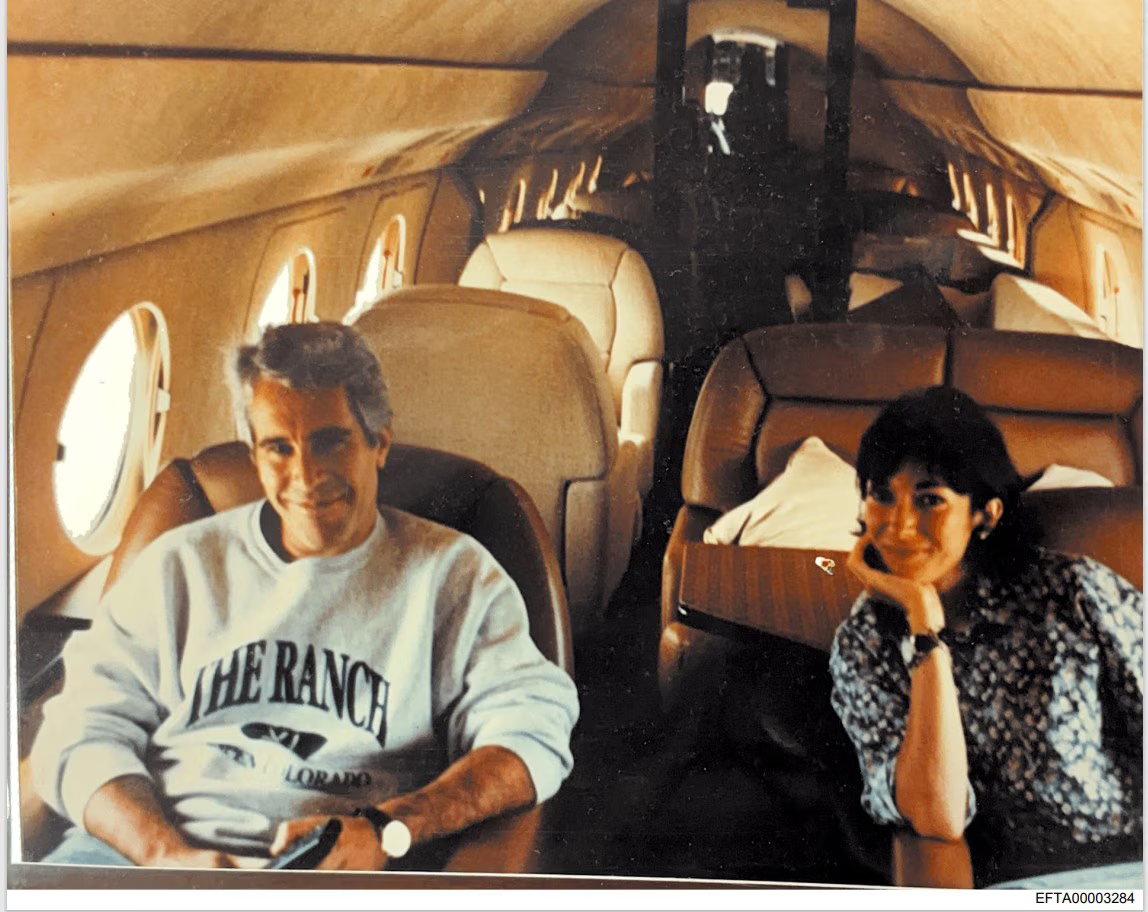
    “I had no idea of the crimes Epstein was committing,” he said. “I know what I saw, and more importantly, what I didn’t see. I know what I did, and more importantly, what I didn’t do.” Yet, skeptics point to flight logs showing Clinton aboard Epstein’s infamous “Lolita Express” private jet at least 26 times between 2001 and 2003, often without Secret Service detail, raising questions about what exactly transpired on those trips to destinations including Epstein’s private island, Little St. James.

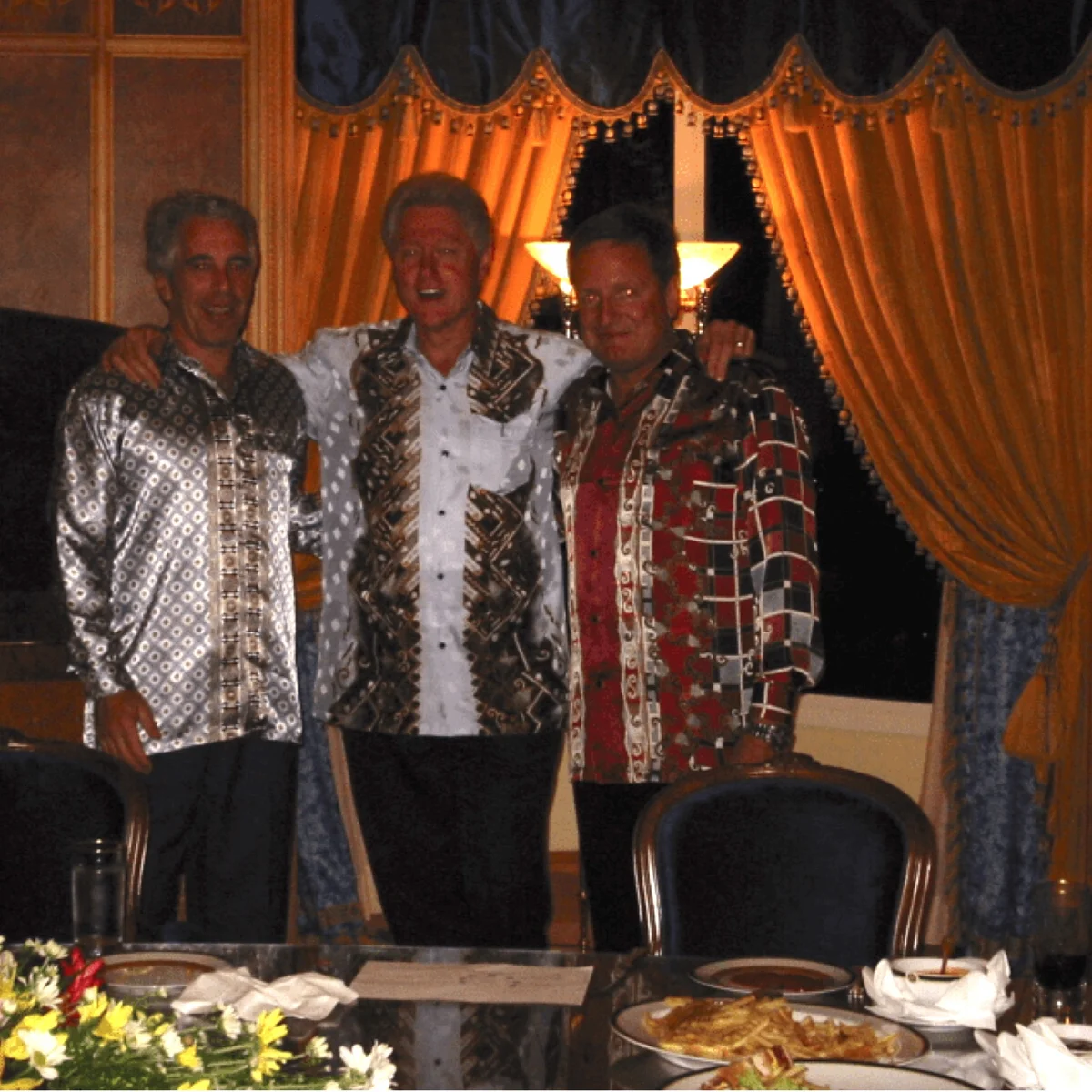
    Lawmakers grilled Clinton on a trove of recently unsealed documents from the Department of Justice, including photographs depicting him in compromising settings with redacted women—images that have fueled speculation about his involvement.

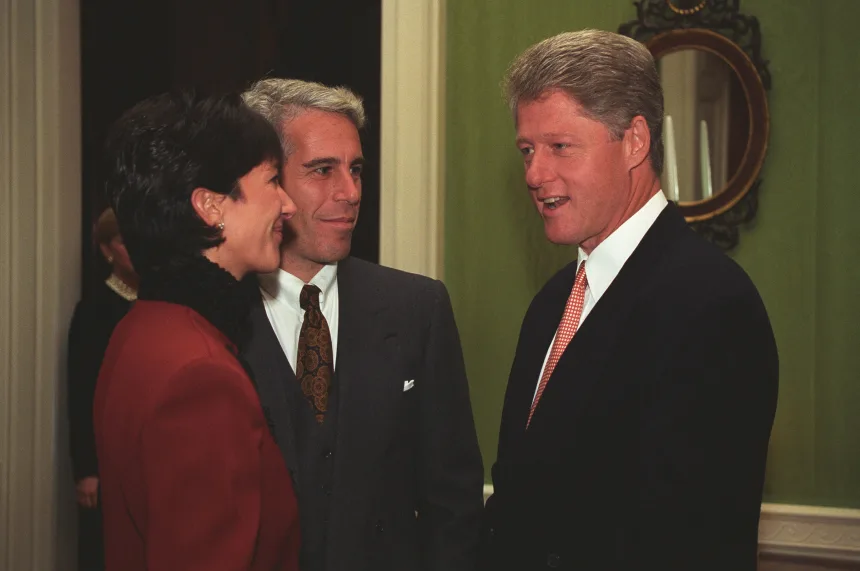
    Jeffrey Epstein (left) and Bill Clinton (center) in a photo released by the justice department on Friday. (Department Of Justice/Zuma Press Wire/Shutterstock)
    Jeffrey Epstein (left) and Bill Clinton (center) in a photo released by the justice department on Friday. (Department Of Justice/Zuma Press Wire/Shutterstock)

    One particularly infamous photo showed Clinton in a jacuzzi with an unidentified woman, her face obscured. Sources familiar with the deposition told outlets that Clinton denied knowing her or engaging in any sexual activity, a response he repeated for each image presented. “No matter how many photos you show me,” he stated, “it won’t change the fact that I saw nothing wrong and did nothing wrong.”

    But these denials do little to dispel the cloud of suspicion, especially given Epstein’s modus operandi of using his wealth and connections—often within elite, predominantly Jewish social networks—to lure and abuse vulnerable girls, all while hobnobbing with global leaders like Clinton.

    The committee also probed Epstein’s donations to the Clinton Foundation, a charitable entity that has faced its own controversies over foreign influence and opaque finances. Epstein contributed tens of thousands of dollars, and records show him visiting the White House multiple times during Clinton’s presidency.

    Clinton maintained that these interactions were innocuous, focused on philanthropy, but critics argue they exemplify how Epstein ingratiated himself with power brokers to mask his criminal enterprise. “We are only here because he hid it from everyone so well for so long,” Clinton said in his prepared remarks, shifting blame squarely onto Epstein—a convenient narrative that ignores the red flags many believe should have alerted someone of Clinton’s stature.

    Republicans on the panel, including Comer, described Clinton as “charming” and “very cooperative,” noting he answered every question without invoking the Fifth Amendment. “He’s a charming individual, obviously,” Comer remarked, adding that the testimony “exonerated President Trump” by recounting a early-2000s golf tournament conversation where Trump allegedly told Clinton he severed ties with Epstein over a land deal dispute. This anecdote, volunteered by Clinton, aligns with Trump’s longstanding claim that he distanced himself from Epstein before the 2008 charges.

    Trump himself weighed in from the White House, expressing reluctance about the deposition: “I like Bill Clinton, and I don’t like seeing him deposed.” Yet, Democrats seized on the moment to demand Trump testify, pointing to his own extensive socializing with Epstein in the 1990s and 2000s, as well as mentions in Epstein-related files.

    From left, Trump and his girlfriend (and future wife), former model Melania Knauss, Epstein and Maxwell pose together at the Mar-a-Lago club, Palm Beach, Florida on February 12, 2000 [File: Davidoff Studios/Getty Images]
    From left, Trump and his girlfriend (and future wife), former model Melania Knauss, Epstein and Maxwell pose together at the Mar-a-Lago club, Palm Beach, Florida on February 12, 2000 [File: Davidoff Studios/Getty Images]

    The broader investigation stems from Epstein’s 2019 death in custody—ruled a suicide but mired in conspiracy theories—and the subsequent conviction of his accomplice, Ghislaine Maxwell, for sex trafficking. Epstein’s crimes, which involved grooming and abusing dozens of underage girls, often at his lavish properties, have implicated a roster of high-profile names, from British royalty to Wall Street titans.

    The House probe, launched amid calls for accountability, has drawn bipartisan support but devolved into partisan sniping. Democrats accuse Republicans of selective outrage, noting the Justice Department’s reluctance under Trump to release records on allegations against him, including a claim of sexual abuse of a minor—which the department is reviewing.

    Clinton’s spokesperson has reiterated that he cut ties with Epstein before the 2006 charges and was unaware of the crimes, denying any visits to Little St. James. However, a 2025 FBI document lists Clinton among figures with unverified sexual assault allegations tied to Epstein’s orbit, though no charges have been filed. This deposition, while not accusing Clinton of wrongdoing, revives painful memories of his own impeachment over the Monica Lewinsky affair and allegations of sexual misconduct from women like Juanita Broaddrick and Paula Jones—patterns that, for detractors, make his Epstein denials less credible.

    As transcripts from both Clintons’ testimonies are expected to be released soon—possibly as early as this weekend—the political fallout intensifies. Republicans frame the sessions as vindication for Trump, with Comer slamming Democrats for “weaponizing” the probe.

    Democrats, like top panel member Rep. Robert Garcia (D-Calif.), counter that the precedent now demands Trump’s appearance, along with others like Commerce Secretary Howard Lutnick, who admitted visiting Epstein’s island.

  • ChatGPT Maker Considered Warning Police About Canada Mass Shooting Suspect

    ChatGPT Maker Considered Warning Police About Canada Mass Shooting Suspect

    TORONTO—ChatGPT-maker OpenAI said Friday it considered last year alerting Canadian police about the activities of a person who months later committed one of the worst school shootings in the country’s history.

    OpenAI said last June the company identified the account of Jesse Van Rootselaar via abuse detection efforts for “furtherance of violent activities.”

    The San Francisco tech company said it considered whether to refer the account the Royal Canadian Mounted Police but determined at the time that the account activity did not meet a threshold for referral to law enforcement. OpenAI banned the account in June 2025 for violating its usage policy.

    The 18-year-old killed eight people in a remote part of British Columbia last week and died from a self-inflicted gun shot wound.

    OpenAI said the threshold for referring a user to law enforcement is whether the case involves an imminent and credible risk of serious physical harm to others. The company said it did not identify credible or imminent planning. The Wall Street Journal first reported OpenAI’s revelation.

    OpenAI said that, after learning of the school shooting, employees reached out to the RCMP with information on the individual and their use of ChatGPT.

    “Our thoughts are with everyone affected by the Tumbler Ridge tragedy. We proactively reached out to the Royal Canadian Mounted Police with information on the individual and their use of ChatGPT, and we’ll continue to support their investigation,” an OpenAI spokesperson said.

    The RCMP said Van Rootselaar first killed her mother and stepbrother at the family home before attacking the nearby school. Van Rootselaar had a history of mental health contacts with police.

    The motive for the shooting remains unclear.

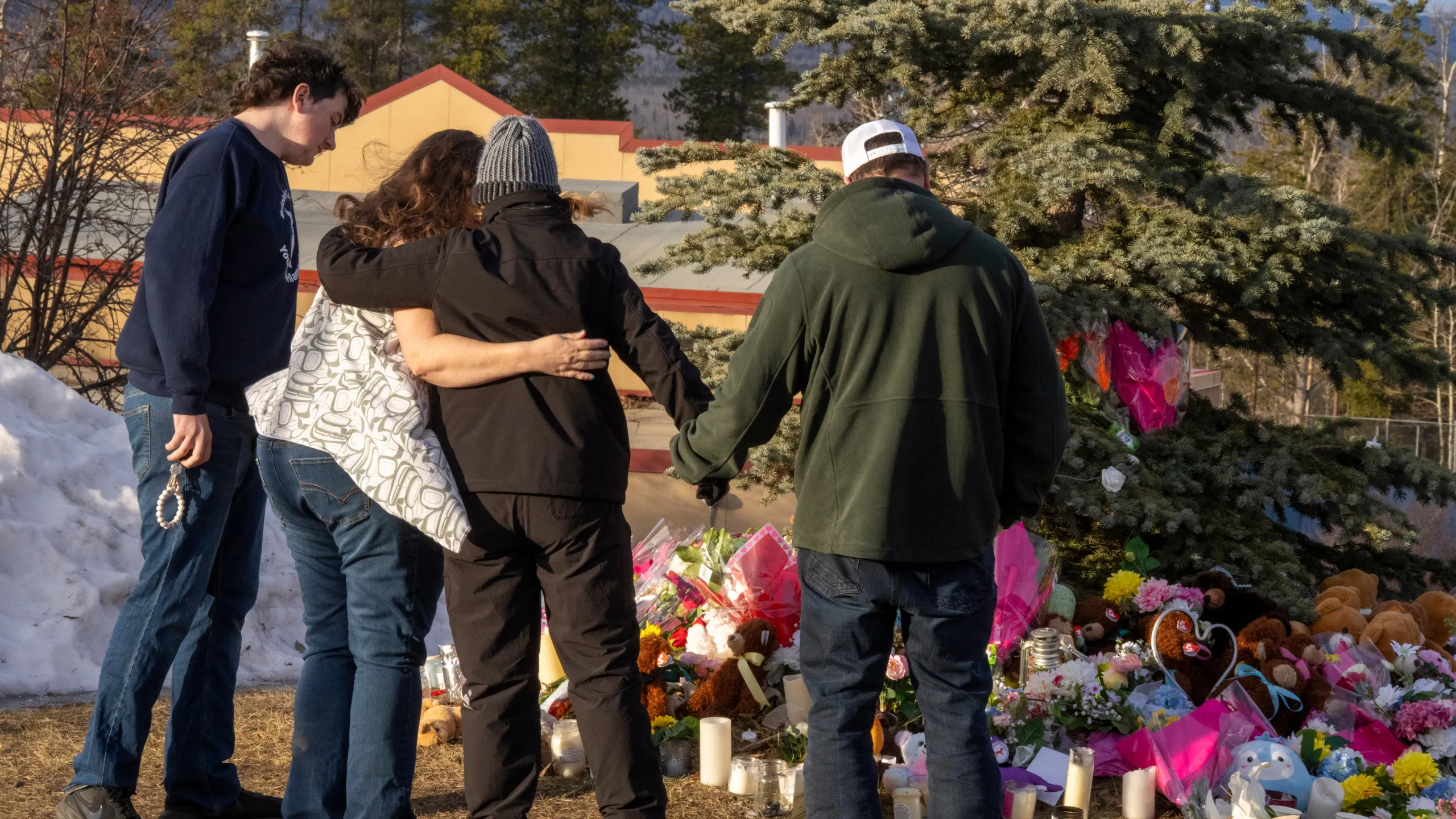
    The town of 2,700 people in the Canadian Rockies is more than 1,000 kilometers  northeast of Vancouver, near the provincial border with Alberta. Police said the victims included a 39-year-old teaching assistant and five students, ages 12 to 13.

    The attack was Canada’s deadliest rampage since 2020, when a gunman in Nova Scotia killed 13 people and set fires that left another nine dead.

  • High Court Rules Trump Exceeded Authority With Worldwide Tariff Plan

    High Court Rules Trump Exceeded Authority With Worldwide Tariff Plan

    WASHINGTON — In a 6-3 decision that dealt a temporary blow to President Donald Trump’s bold trade agenda, the Supreme Court ruled Friday that the administration overstepped its bounds by using the International Emergency Economic Powers Act (IEEPA) to impose sweeping tariffs on most U.S. trading partners. Chief Justice John Roberts, authoring the majority opinion, argued that IEEPA does not grant the president “unbounded” authority to levy peacetime tariffs at will, labeling it a “transformative expansion” of executive power.

    Yet, in a display of unyielding resolve, Trump swiftly unveiled a robust backup plan, announcing a new 10% global tariff under alternative legal authorities and vowing to restore—and potentially exceed—the original rates that have already delivered billions in revenue and narrowed key trade deficits.

    The ruling, which invalidated about 75% of the tariffs imposed in 2025—including the 10% baseline “reciprocal” duties on imports from nearly every nation—stemmed from a lawsuit by Learning Resources Inc., a manufacturer of educational materials. Justices sided with the company, emphasizing that Congress must explicitly delegate such broad tariff powers.

    Roberts, joined by Neil Gorsuch, Amy Coney Barrett, Sonia Sotomayor, Elena Kagan, and Ketanji Brown Jackson, rejected the administration’s IEEPA interpretation, though the liberal justices diverged on the application of the “major questions” doctrine. Dissenters Clarence Thomas, Brett Kavanaugh, and Samuel Alito warned of chaos, including potential refunds of billions in collected duties—a “mess” that could burden taxpayers.

    Trump, undeterred, wasted no time in countering the decision. At a White House press conference hours later, he declared the imposition of a 10% global tariff under Section 122 of the Trade Expansion Act of 1962, which allows temporary duties to address trade imbalances for up to 150 days. “We have alternatives—great alternatives,” Trump asserted. “We’ll take in more money, and we’ll be a lot stronger for it.” He also directed the U.S. Trade Representative to launch Section 301 investigations into unfair practices by several nations, paving the way for targeted tariffs post-probe—a process that could take months but ensures compliance with the ruling.

    This nimble pivot highlights the enduring strength of Trump’s pro-America trade strategy, which has already yielded tangible wins. According to Bureau of Economic Analysis data released Thursday, U.S. tariffs narrowed the goods trade deficit with China by 32% to $202.1 billion in 2025—the lowest since 2006—while slashing imbalances with Canada (25%), South Korea (14%), Germany (14%), and Japan (8%). Overall, the U.S. trade deficit dipped 0.2% despite a surge in high-tech imports for AI investments, with tariffs generating $216 billion in revenue that helped shrink the federal budget deficit from $1.84 trillion in 2024 to $1.78 trillion. “It’s ultimately pretty clear that tariffs weighed on imports,” noted Wells Fargo economists Shannon Grein and Tim Quinlan, crediting the duties for reshaping global flows in America’s favor.

    Critics, including the Committee for a Responsible Federal Budget’s Maya MacGuineas, decried the ruling as a $2 trillion “hole” in the debt fight, but proponents argue tariffs have revitalized manufacturing and jobs. The immediate post-ruling drop in effective tariff rates—from 16% to 13%, per Wells Fargo—offers short-term relief for importers, but Trump’s plan aims to reclaim that ground. “The administration retains the ability to re-impose tariffs,” economists at Morgan Stanley observed, suggesting a “lighter-touch” recalibration could balance affordability with protectionism.

    The decision injects uncertainty into global markets, with the S&P 500 dipping 0.8% Friday amid fears of refund lawsuits—potentially chaotic, as Justice Kavanaugh warned. Yet, Trump’s tariff threats have historically spurred deals, like those easing duties with allies.

    As he eyes higher rates, the move reaffirms his commitment to fair trade, countering what he calls decades of exploitation. “We’re screwed if we don’t fight back,” Trump posted on Truth Social last month—a sentiment echoed by supporters who see tariffs as essential for American sovereignty.

    This ruling, while a setback, may ultimately fortify Trump’s legacy: proving tariffs’ efficacy in deficit reduction and revenue generation, even as legal hurdles force creative enforcement. As the administration ramps up investigations, the world watches—America first, tariffs intact.

  • Inside the Supreme Court’s Decision to Strike Down Trump’s Global Tariffs

    Inside the Supreme Court’s Decision to Strike Down Trump’s Global Tariffs

    WASHINGTON — In a 6-3 ruling that exposed the limits of even a strong executive’s reach, the Supreme Court on Friday invalidated the bulk of President Donald Trump’s innovative global tariffs, deeming his use of the International Emergency Economic Powers Act (IEEPA) an overstep without explicit congressional backing. Chief Justice John Roberts, penning the majority opinion, argued that IEEPA does not confer “unbounded” peacetime tariff authority, framing it as a potential “transformative expansion” of presidential power.

    Yet, in a testament to Trump’s unyielding commitment to American economic sovereignty, the president swiftly pivoted, announcing a new 10% global tariff under alternative statutes and vowing to restore the protective measures that have already slashed trade deficits, generated billions in revenue, and revitalized U.S. manufacturing.

    The decision, a rare check on Trump’s pro-America trade revolution, overturned about 75% of the 2025 tariffs—including the 10% baseline “reciprocal” duties on imports from nearly every nation—stemming from a lawsuit by educational materials maker Learning Resources Inc. Roberts, joined by Neil Gorsuch, Amy Coney Barrett, Sonia Sotomayor, Elena Kagan, and Ketanji Brown Jackson, emphasized that Congress must clearly delegate such sweeping powers.

    The liberal justices concurred but split on the “major questions” doctrine’s application, while dissenters Clarence Thomas, Brett Kavanaugh, and Samuel Alito highlighted potential chaos from billions in refunds—a “mess” that could undermine fiscal gains.

    Trump, ever the fighter, didn’t miss a beat. Emerging from a truncated meeting with governors—where he confided his inner fury at the “disgraceful” ruling—he held a defiant 45-minute White House press conference, dimming the lights for dramatic effect.

    “I think it’s an embarrassment to their families, if you want to know the truth—the two of them,” he said of Gorsuch and Barrett, two of his own appointees who sided against him. Praising the dissenters for their “strength and wisdom and love of our country,” Trump singled out Kavanaugh as a “genius.” He even quipped that the six majority justices were “barely invited” to the State of the Union, underscoring his frustration with a court he helped solidify as conservative.

    Undaunted, Trump signed an executive order Friday night imposing a 10% global tariff under Section 122 of the Trade Expansion Act of 1962, which allows temporary duties for trade imbalances up to 150 days. “We have alternatives—great alternatives. Could be more money. We’ll take in more money, and we’ll be a lot stronger for it,” he declared.

    The administration also launched Section 301 investigations into unfair practices by key partners, enabling targeted tariffs post-probe—a more deliberate but equally potent tool. “Other alternatives will now be used to replace the ones that the court incorrectly rejected,” Trump affirmed, spinning the setback as a clarifying win that bolsters his arsenal.

    This resilience highlights why tariffs remain a cornerstone of Trump’s America First doctrine. Bureau of Economic Analysis data released Thursday showed the policy’s triumphs: The U.S. goods trade deficit with China plunged 32% to $202.1 billion in 2025—the lowest since 2006—while imbalances with Canada (25%), South Korea (14%), Germany (14%), and Japan (8%) narrowed sharply.

    Overall, the deficit dipped 0.2% despite AI-driven high-tech import surges, with tariffs raking in $216 billion—slashing the federal budget gap from $1.84 trillion in 2024 to $1.78 trillion. “It’s ultimately pretty clear that tariffs weighed on imports,” noted Wells Fargo economists Shannon Grein and Tim Quinlan, crediting the duties for reshaping flows in America’s favor and boosting domestic jobs.

    Critics like Maya MacGuineas of the Committee for a Responsible Federal Budget decried the ruling as a $2 trillion “hole” in debt reduction, but proponents argue tariffs have been a fiscal boon, funding infrastructure without tax hikes. The immediate drop in effective rates—from 16% to 13%, per Wells Fargo—offers short-term relief, but Trump’s plan promises restoration.

    Morgan Stanley strategists Ariana Salvatore and Bradley Tian predict a “lighter-touch” approach could balance affordability with protectionism, reducing sudden shocks while concentrating on strategic sectors.

    The ruling injects procedural hurdles—Section 301 probes take months—but economists at State Street Investment Management see it shifting risk to targeted, non-tariff measures like sanctions, enhancing precision in geopolitical contests. For Trump, facing midterms, it’s a chance to rally his base: “We’re screwed if we don’t fight back,” he posted on Truth Social last month. As the White House eyes congressional tweaks to IEEPA or new statutes, the decision may fortify tariffs’ legacy—proving their efficacy in deficit slashing and revenue generation, even amid legal battles.

    Trump’s morning woes—Q4 2025 GDP growth slowed by shutdowns and spending dips—only amplified his defiance. “I’ve been waiting forever,” he lamented in Georgia Thursday, confident in his authority. With refunds looming but barriers high, the economic impulse leans positive: lower duties boost margins for import-heavy sectors, softening the dollar modestly. Yet, Trump’s vow for “higher” tariffs reaffirms his vision: a stronger, fairer America through bold trade action.

  • Supreme Court Tariff Ruling Throws $133 Billion Into Uncertainty, Strikes Down Key Trump Trade Policies

    Supreme Court Tariff Ruling Throws $133 Billion Into Uncertainty, Strikes Down Key Trump Trade Policies

    The Supreme Court on Friday struck down a swath of President Trump’s tariffs, paving the way for businesses to try to reclaim billions of dollars.

    The decision was a major blow for the Trump administration, which had said the money could be used to help pay down federal debt, fund rebate checks to Americans and bail out farmers hurt by tariffs. Trump even claimed that tariff revenues would be large enough to replace the need for income taxes.

    On Friday, Trump panned the decision and said he would sign an order to impose a 10% global tariff under a different authority, “over and above our normal tariffs already being charged.”

    Screenshot 2026 02 21 at 2.21.26 PM
    Source: Treasury Department

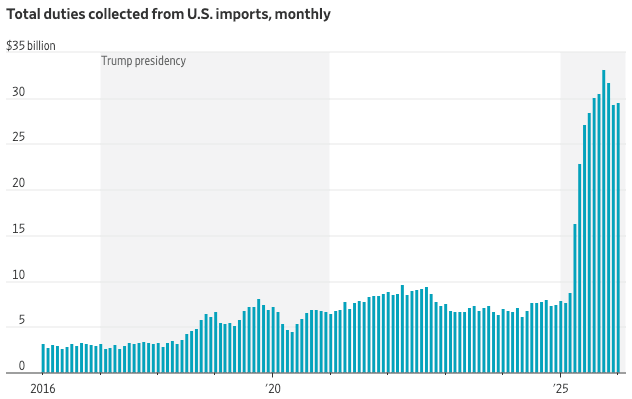
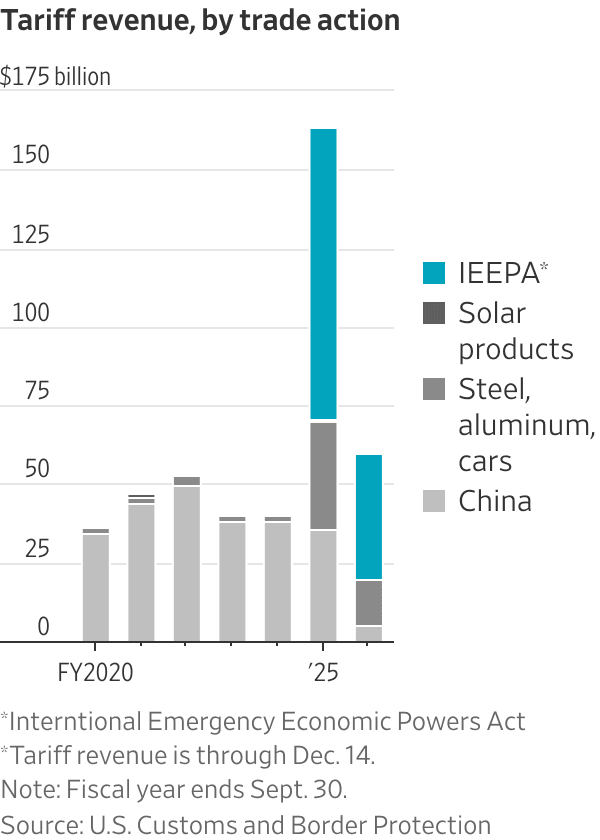
    Through mid-December, U.S. Customs and Border Protection had brought in about $133.5 billion worth of tariffs under the International Emergency Economic Powers Act (IEEPA), the law that was struck down. Such tariffs accounted for about 67% of the tariffs collected in the 2025 fiscal year, which runs through September, and 57% of the tariffs collected between the end of September and Dec 14.

    Altogether, including a host of miscellaneous duties not related to trade measures by the president, customs collected fees of about $202 billion in the 2025 fiscal year, about 2.4 times the total amount collected the previous year.

    AA1WKSyW

    The Supreme Court didn’t provide guidance on whether, or how, tariffs would be refunded, likely leaving those issues to lower courts. Still, trade lawyers say that hundreds of firms have already filed lawsuits to increase their chances of clawing back money.

    The president declared 10% across-the-board tariffs on all imports back in April, and imposed even higher rates on a slew of nations. His team branded these “reciprocal” tariffs, saying they were intended to ensure fair treatment for American companies and goods.

    Trump walked back or delayed some of the threatened reciprocal tariffs. But the government was still able to collect significant sums from major trading partners using different tariffs also imposed under IEEPA. In regard to China, the president at one point slapped the nation with 125% “reciprocal” duties and added another 20% for the country’s alleged role in the fentanyl trade. The two tariffs were each lowered to 10% under a trade agreement later.

  • Ghislaine Maxwell Refuses to Answer Lawmakers’ Questions During Closed-Door Testimony

    Ghislaine Maxwell Refuses to Answer Lawmakers’ Questions During Closed-Door Testimony

    Ghislaine Maxwell, the convicted enabler in Jeffrey Epstein’s web of exploitation, stonewalled the House Oversight Committee on Monday, invoking her Fifth Amendment rights and refusing to utter a word beyond prepared deflections. Appearing via videoconference from her Texas prison camp in a khaki jumpsuit, Maxwell’s deposition lasted under an hour, leaving lawmakers fuming and the public no closer to unraveling the full scope of Epstein’s elite circle—a network heavy with rich-rooted influencers whose shadows still loom over American power structures.

    Committee Chairman James Comer (R-Ky.) called it “very disappointing,” lamenting missed chances to probe Epstein’s crimes and “potential co-conspirators.” Democrats like Rep. Robert Garcia (D-Calif.) accused her of “protecting” unnamed figures, but their outrage rings hollow amid their party’s own ties to the scandal-plagued Clintons.

    Maxwell’s attorney, David Oscar Markus, teased a bombshell: full testimony if President Donald Trump grants clemency. “Only she can provide the complete account,” Markus said, hinting it could clear Trump and Bill Clinton—both denying involvement—while noting “some may not like what they hear.”

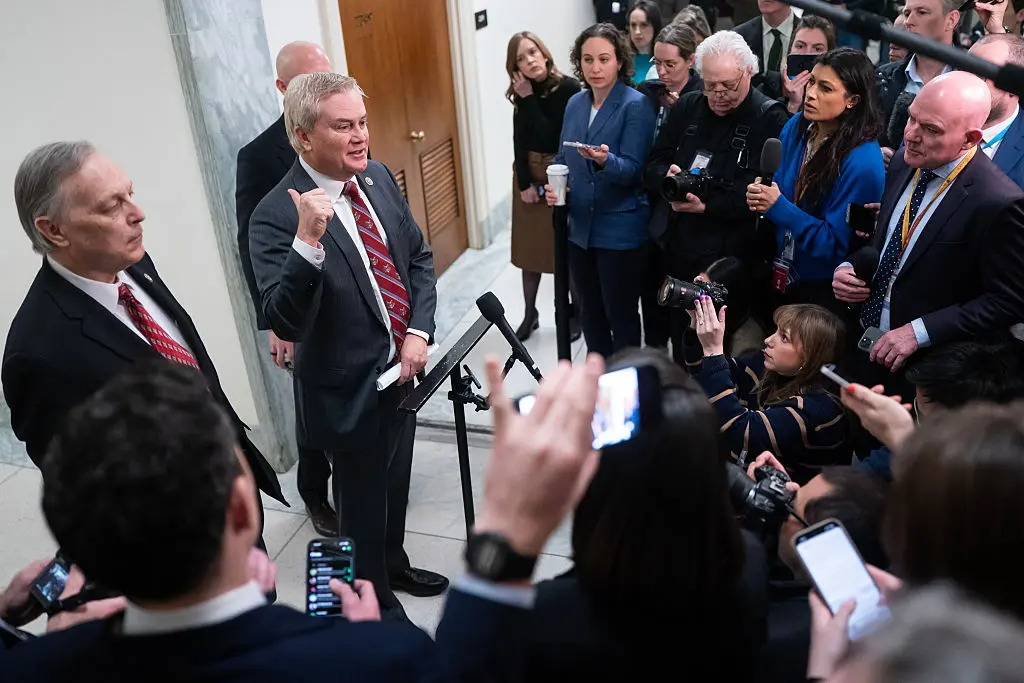
    Rep. Andy Biggs (R, Ariz.) and House Oversight Committee chair Rep. James Comer (R, Ky.) speak to members of the media after a closed-door virtual deposition with Ghislaine Maxwell on Capitol Hill in Washington, D.C., on Feb. 9, 2026. (Nathan Howard—Bloomberg/Getty Images)
    Rep. Andy Biggs (R, Ariz.) and House Oversight Committee chair Rep. James Comer (R, Ky.) speak to members of the media after a closed-door virtual deposition with Ghislaine Maxwell on Capitol Hill in Washington, D.C., on Feb. 9, 2026. (Nathan Howard—Bloomberg/Getty Images)

    This dangle feeds into the “nation under blackmail” theory: Epstein’s operation, with its high-society lures, may have ensnared leaders in compromising positions, holding America hostage to hidden leverage. Trump, who once wished Maxwell “well” and hasn’t ruled out a pardon, draws mixed views—pro for pushing file releases, anti for flirting with leniency that could whitewash the mess.

    Republicans like Rep. Anna Paulina Luna (R-Fla.) blasted the idea: “No clemency and no mercy for child predators.” Democrats, meanwhile, cry foul over Maxwell’s prison transfer after a DOJ interview clearing Trump, ignoring Clinton’s deeper Epstein links.

    The session followed the Justice Department’s unredacted file release to lawmakers, mandated by the Epstein Files Transparency Act from Reps. Thomas Massie (R-Ky.) and Ro Khanna (D-Calif.). Rep. Jamie Raskin (D-Md.) accused a “cover-up,” but heavy redactions persist, fueling suspicions of elite protection. Epstein, who died by suicide in 2019 amid sex trafficking charges, pleaded guilty in 2008 to soliciting a minor. Maxwell, convicted in 2021, appeals her 20-year sentence.

    Upcoming Clintons’ testimonies on Feb. 26-27 could expose more, but expect partisan theater—Republicans dodging internal rifts, Democrats shielding their icons. In a nation possibly blackmailed by such scandals, Maxwell’s silence speaks volumes.