

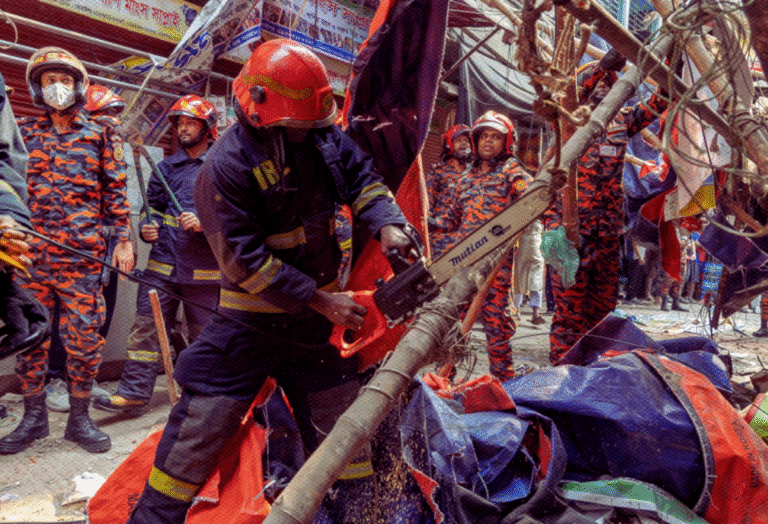
Dhaka, Bangladesh — A powerful 5.5-magnitude earthquake struck central Bangladesh on Friday morning, claiming at least five lives—including a child and a medical student—and injuring more than 100 others in a wave of panic that saw residents fleeing swaying buildings across the densely populated capital of Dhaka. The shallow quake, centered just 25 kilometers (16 miles) east of Dhaka in the Ghorashal area of Narsingdi district, rattled the nation at 10:38 a.m. local time (04:38 GMT), sending tremors as far as neighboring Indian cities like Kolkata, Guwahati, Agartala, and Shillong.
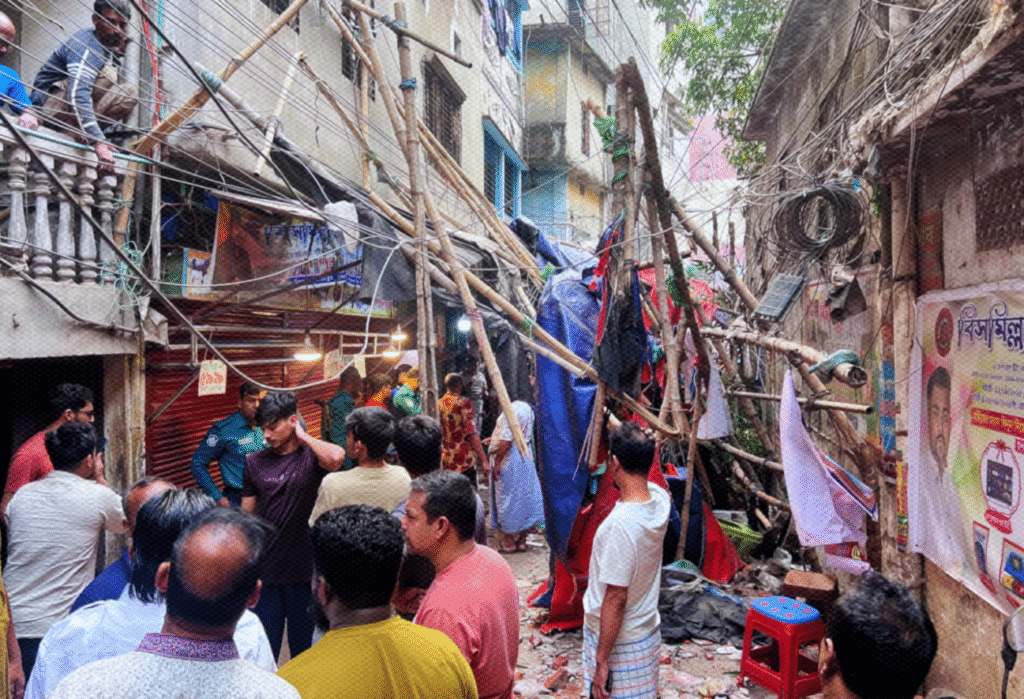
Authorities reported a death toll ranging from three to six, with the higher figure cited by Dhaka-based DBC Television, attributing fatalities to collapsing building roofs, walls, and railings that crushed pedestrians below. Three pedestrians in Dhaka’s Koshaitoli area were killed instantly when a six-story building’s railing gave way, while two others—a medical student who fell from an eight-story structure and a newborn in Narayanganj—succumbed to injuries from debris. Injuries mounted to over 250 in some estimates, including more than 200 garment factory workers caught in a stampede in Gazipur and five Dhaka University students who jumped from residence halls in fright. Dhaka police officer Ashish Kumar Ghosh confirmed two victims died on the spot, with another passing at Mitford Hospital.
The U.S. Geological Survey (USGS) pegged the quake at magnitude 5.5 with a depth of just 10 kilometers (6 miles), warning of potential “significant casualties” due to its proximity to Dhaka’s 170 million-strong population. Bangladesh’s Meteorological Department recorded a slightly higher 5.7 magnitude, noting the shaking lasted 26 seconds and originated from reverse faulting within the Indian Plate. While northern and southeastern Bangladesh lie in a seismically active zone where the Indian and Eurasian plates collide, the central region—including Friday’s epicenter in Madhabdi—has seen only 14 quakes of 5.5 or greater since 1950, making this event a rare jolt for the area.
Panic gripped Dhaka, a city of over 20 million where many were home on their weekly day off. “I’ve never felt an earthquake like this before, never in my life—this was the first time,” one resident recounted, describing how the sudden rumble woke him from sleep and sent his building into a frenzy. “We felt a strong jolt and buildings were shaking like trees,” echoed Suman Rahman, another local, as staircases jammed with terrified families rushing downstairs, children crying amid the chaos. AFP reporters witnessed weeping crowds in the streets, some in shock, while social media flooded with videos of swaying high-rises and crumbling facades. In Kolkata, over 325 kilometers away, 66-year-old Sumit Dutta bolted from his bed as his furniture trembled, though no casualties or major damage were reported across the border.
The quake’s ripples extended to sports, briefly suspending the second Test match between Bangladesh and Ireland at Dhaka’s Sher-e-Bangla National Cricket Stadium in Mirpur. Play halted for about three minutes as players, umpires, and spectators—including Irish cricketers—sprinted to the open field for safety, with television cameras capturing the confusion. “Goodness. Play has stopped here due to a minor tremor/earthquake,” Cricket Ireland posted on X, formerly Twitter. Witnesses in the press box described jammed stairwells and reluctance to re-enter enclosed spaces, even after tremors subsided.
Interim government chief Muhammad Yunus swiftly addressed the nation, expressing condolences and mobilizing emergency services. “The government is taking all necessary measures, giving the utmost importance to the safety of the people,” he said in a statement, urging calm and vigilance against rumors. “Everyone is urged to remain alert… Further guidance will be provided through hotlines and official channels if necessary. We remain committed to ensuring the safety of all citizens.” Relief teams fanned out to inspect older multistory buildings and construction sites, where falling bricks and loose cement caused many injuries. Power disruptions rippled nationwide from affected stations, exacerbating the disarray.
As aftershocks loomed, officials warned the death toll could rise with incoming reports from remote areas. Seismologists emphasized the quake’s moderate strength but noted its shallow depth and urban proximity amplified the human toll. For a nation still recovering from political upheaval, this seismic surprise underscored vulnerabilities in one of South Asia’s most earthquake-prone corridors.