Investors are slashing bets that the Federal Reserve will cut interest rates this year, as the widening crisis in the Middle East sends petrol prices surging and threatens a fresh burst of inflation.
Markets are not anticipating a Fed rate cut until summer next year, according to trading in federal funds futures. It marks a dramatic shift from just weeks ago when traders were pricing in two quarter-point cuts in 2026.
The stark shift in Wall Street expectations highlights how the surge in energy prices caused by the war in Iran is prompting investors to rapidly rethink their outlook for inflation in the world’s biggest economy.
“This has been a wild shift. The market went completely mad today and decided to price out lots and lots of cuts,” said Gennadiy Goldberg, head of US interest rate strategy at TD Securities.
He added: “This enormous move . . . is a function of the market betting that it will be difficult for the Fed to cut rates while oil prices remain high.”
Petrol prices, which are a major cost for consumers, hit $3.60 a gallon on Thursday, compared with $2.94 a month ago, according to motor club AAA.
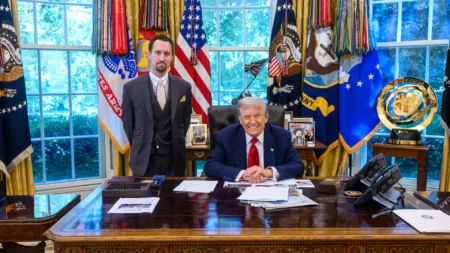
The dwindling rate-cut bets undercut US President Donald Trump’s hopes for the Fed to drastically cut rates to accelerate growth and lower borrowing costs for consumers. The Fed, which is due to meet next week, reduced rates by a quarter point three times last year.
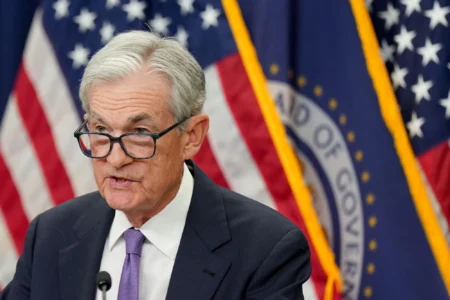
Still, the president on Thursday renewed his calls for Fed chair Jay Powell to slash borrowing costs: “Where is the Federal Reserve Chairman, Jerome ‘Too Late’ Powell, today? He should be dropping Interest Rates, IMMEDIATELY, not waiting for the next meeting!” Trump wrote on Truth Social.
Investors have already moved to price out cuts, and price in rises, across a range of big economies, including the UK and the Eurozone, viewed as particularly vulnerable to energy-driven inflation.
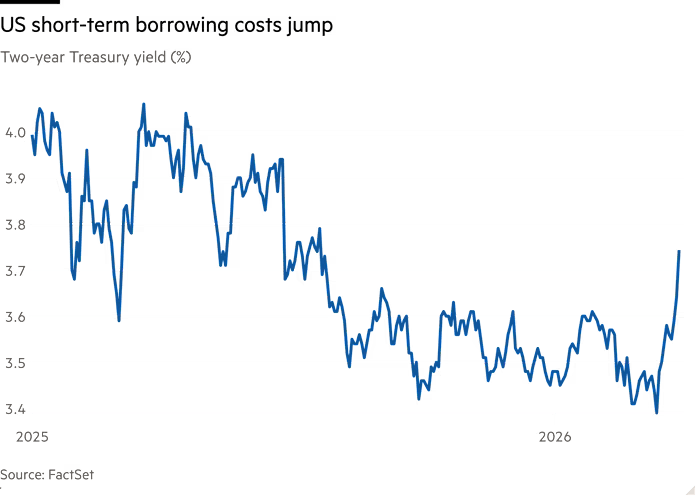
Short-term US government debt, which is particularly sensitive to monetary policy expectations, fell sharply in price on Thursday, sending yields higher.
The two-year Treasury yield, which moves with interest rate expectations, rose as much as 0.1 percentage points to 3.76 per cent.
One popular trade in the market that has been put under pressure are so-called steepeners: bets that short-dated debt will outperform long-term bonds. Instead, the yield curve on Treasury debt has flattened, with the additional interest rate on 10-year debt over the two-year equivalent falling from 0.7 percentage points in early February to just above 0.5 percentage points.
John Stopford, head of multi-asset income at asset manager Ninety One, said the flattening represented the US bond market trying to price in “negative growth implications of higher oil prices and the likelihood of less accommodative monetary policy”.
Longer-term yields have also increased in recent days, something that has pushed mortgage rates higher after they hit the lowest level since 2022 late last month. The average 30-year fixed rate rose to 6.11 per cent this week, from less than 6 per cent in late February — denting one of the president’s flagship pledges to improve home affordability.
Despite market expectations that the Fed will refrain from rate cuts this year, some rate setters view the shock from higher energy prices as temporary.
Christopher Waller, a Fed governor who is one of the more dovish members of the Federal Open Market Committee, said last week: “You’re going to see a spike in gasoline prices, that’s what the American citizens are going to see at the pump, and they’re going to stare at it and be a little shocked . . . but, for us, thinking about policy going forward, it’s unlikely to cause sustained inflation.”