


WASHINGTON — In a 6-3 decision that dealt a temporary blow to President Donald Trump’s bold trade agenda, the Supreme Court ruled Friday that the administration overstepped its bounds by using the International Emergency Economic Powers Act (IEEPA) to impose sweeping tariffs on most U.S. trading partners. Chief Justice John Roberts, authoring the majority opinion, argued that IEEPA does not grant the president “unbounded” authority to levy peacetime tariffs at will, labeling it a “transformative expansion” of executive power.
Yet, in a display of unyielding resolve, Trump swiftly unveiled a robust backup plan, announcing a new 10% global tariff under alternative legal authorities and vowing to restore—and potentially exceed—the original rates that have already delivered billions in revenue and narrowed key trade deficits.
The ruling, which invalidated about 75% of the tariffs imposed in 2025—including the 10% baseline “reciprocal” duties on imports from nearly every nation—stemmed from a lawsuit by Learning Resources Inc., a manufacturer of educational materials. Justices sided with the company, emphasizing that Congress must explicitly delegate such broad tariff powers.
Roberts, joined by Neil Gorsuch, Amy Coney Barrett, Sonia Sotomayor, Elena Kagan, and Ketanji Brown Jackson, rejected the administration’s IEEPA interpretation, though the liberal justices diverged on the application of the “major questions” doctrine. Dissenters Clarence Thomas, Brett Kavanaugh, and Samuel Alito warned of chaos, including potential refunds of billions in collected duties—a “mess” that could burden taxpayers.
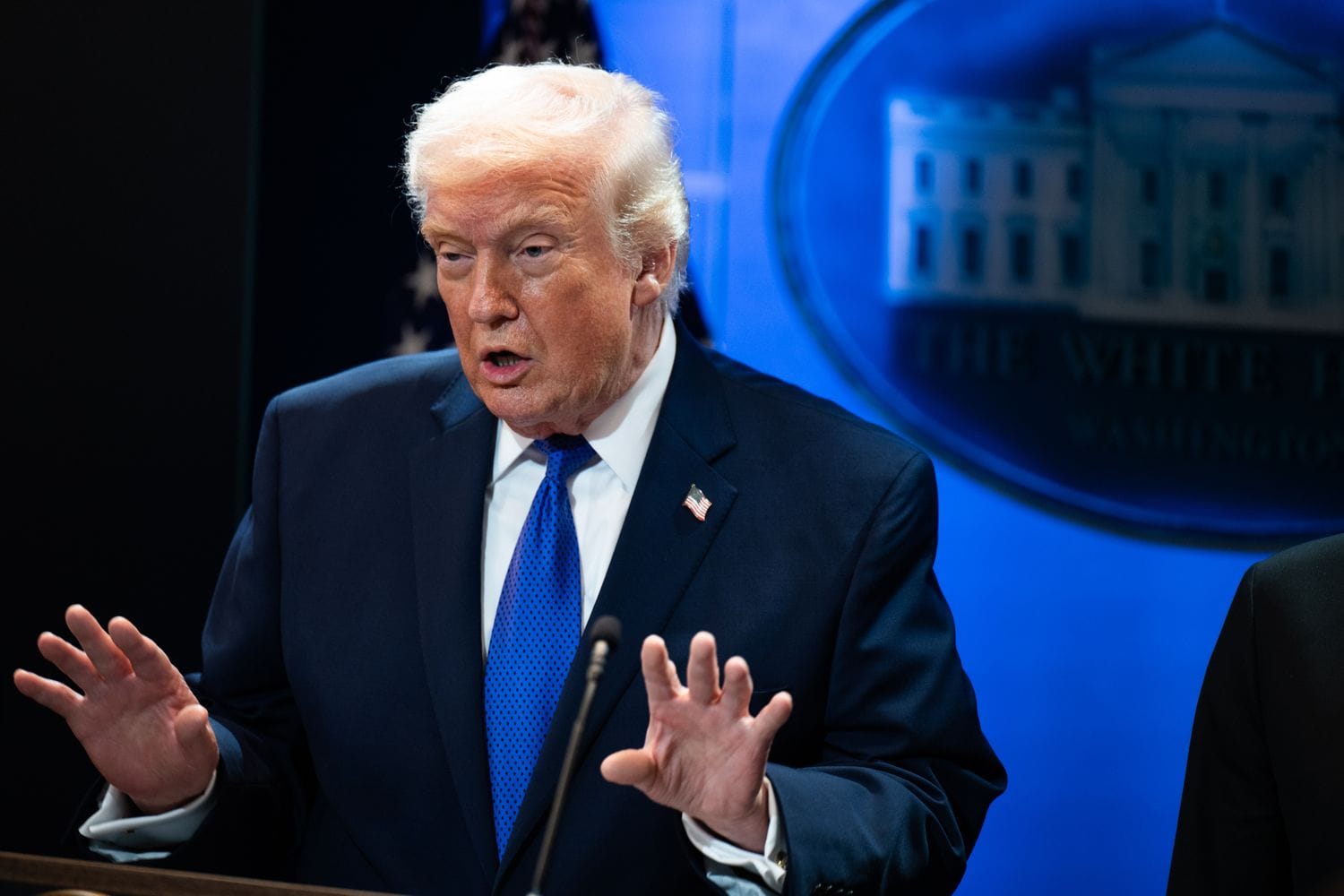
Trump, undeterred, wasted no time in countering the decision. At a White House press conference hours later, he declared the imposition of a 10% global tariff under Section 122 of the Trade Expansion Act of 1962, which allows temporary duties to address trade imbalances for up to 150 days. “We have alternatives—great alternatives,” Trump asserted. “We’ll take in more money, and we’ll be a lot stronger for it.” He also directed the U.S. Trade Representative to launch Section 301 investigations into unfair practices by several nations, paving the way for targeted tariffs post-probe—a process that could take months but ensures compliance with the ruling.

This nimble pivot highlights the enduring strength of Trump’s pro-America trade strategy, which has already yielded tangible wins. According to Bureau of Economic Analysis data released Thursday, U.S. tariffs narrowed the goods trade deficit with China by 32% to $202.1 billion in 2025—the lowest since 2006—while slashing imbalances with Canada (25%), South Korea (14%), Germany (14%), and Japan (8%). Overall, the U.S. trade deficit dipped 0.2% despite a surge in high-tech imports for AI investments, with tariffs generating $216 billion in revenue that helped shrink the federal budget deficit from $1.84 trillion in 2024 to $1.78 trillion. “It’s ultimately pretty clear that tariffs weighed on imports,” noted Wells Fargo economists Shannon Grein and Tim Quinlan, crediting the duties for reshaping global flows in America’s favor.
Most Read in Politics




Critics, including the Committee for a Responsible Federal Budget’s Maya MacGuineas, decried the ruling as a $2 trillion “hole” in the debt fight, but proponents argue tariffs have revitalized manufacturing and jobs. The immediate post-ruling drop in effective tariff rates—from 16% to 13%, per Wells Fargo—offers short-term relief for importers, but Trump’s plan aims to reclaim that ground. “The administration retains the ability to re-impose tariffs,” economists at Morgan Stanley observed, suggesting a “lighter-touch” recalibration could balance affordability with protectionism.
The decision injects uncertainty into global markets, with the S&P 500 dipping 0.8% Friday amid fears of refund lawsuits—potentially chaotic, as Justice Kavanaugh warned. Yet, Trump’s tariff threats have historically spurred deals, like those easing duties with allies.
As he eyes higher rates, the move reaffirms his commitment to fair trade, countering what he calls decades of exploitation. “We’re screwed if we don’t fight back,” Trump posted on Truth Social last month—a sentiment echoed by supporters who see tariffs as essential for American sovereignty.
This ruling, while a setback, may ultimately fortify Trump’s legacy: proving tariffs’ efficacy in deficit reduction and revenue generation, even as legal hurdles force creative enforcement. As the administration ramps up investigations, the world watches—America first, tariffs intact.





1 Comment
Pingback: Exclusive | Fed Mounts Legal Fight Over Subpoenas Tied to Jerome Powell Investigation