



In a triumph that blends millennial savvy with old-school populism, Zohran Mamdani has emerged from relative obscurity to claim the mayoralty of the world’s financial capital, marking a seismic shift in the governance of America’s largest city.
The 34-year-old state assemblyman, born in Uganda to Indian parents and a self-proclaimed democratic socialist, secured a decisive 50.4% victory Tuesday night over former Gov. Andrew Cuomo’s independent bid (41.6%) and Republican Curtis Sliwa‘s distant third (7.1%), amid the highest turnout for a mayoral election in over 50 years—more than 2 million ballots cast, including a record 735,000 early votes. Mamdani’s ascent, fueled by viral social media mastery, laser-focused economic messaging, and opponents hobbled by scandals and fatigue, catapults him into history as New York’s youngest mayor since 1892, its first Muslim leader, and the first of South Asian descent born in Africa.
For a city synonymous with Wall Street excess and unyielding ambition, Mamdani’s win feels like a plot twist in a Scorsese film—equal parts inspiring and unnerving. His campaign, launched with scant name recognition and no party machine muscle, harnessed TikTok memes and Instagram reels to mobilize young voters and outer-borough families crushed by housing costs (median rents at $3,400 against $6,640 household incomes, per Census data). Pledges for rent freezes on 1 million stabilized units, fare-free buses, and taxing millionaires resonated in a post-pandemic landscape where affordability topped AP VoteCast concerns for 6 in 10 New Yorkers. “Tonight, against all odds, we made it happen,” Mamdani declared to roaring crowds in Brooklyn, where Bad Bunny blasted amid tearful embraces and fluttering campaign flags. “New York, you’ve delivered a mandate for change, for a new politics, and for a city we can actually afford.”
Yet, as confetti settled, Mamdani’s honeymoon looms short. Critics, including President Trump (who branded him a “communist” and vowed funding cuts), warn his agenda risks stifling the innovation that powers the city’s $1.8 trillion economy.
Cuomo’s concession—”a caution flag… down a dangerous road”—echoed elite anxieties, while Sliwa vowed Guardian Angels mobilization against “socialism.” Mamdani’s retort? A cheeky nod to Trump: “Turn the volume up!” In his first post-victory presser at Flushing Meadows’ iconic globe, the mayor-elect outlined a five-woman transition team—led by Elana Leopold (de Blasio alum) and featuring ex-Deputy Mayor Melanie Hartzog, FTC Chair Lina Khan, United Way CEO Grace Bonilla, and Maria Torres-Springer—signaling a blend of expertise and gender equity. He’ll retain NYPD Commissioner Jessica Tisch, a nod to his evolved stance on policing after 2020 “defund” barbs he now calls “criticism, not abolition.”
Mamdani’s trajectory is a masterclass in grassroots disruption. Elected to the Assembly in 2020 as a Democratic Socialists of America (DSA) member—joining a network of 100,000 nationwide—he entered the race with “next to no name recognition, little money, and no institutional party support,” as one early strategist quipped. A son of filmmaker Mira Nair and Ugandan academic Mahmood Mamdani, he immigrated young, naturalized in 2018, and honed his voice as a Queens renter railing against inequality. His platform—universal childcare, green jobs, a “Department of Community Safety” for mental health calls—echoed DSA icons like Bernie Sanders (a symbolic anchor) and “The Squad” (AOC, Rashida Tlaib), but with laser focus on wallet issues over cultural flashpoints.
Social media was his secret sauce: Viral videos of subway rants and affordability audits amassed millions of views, drawing Gen Z and immigrants alienated by Cuomo’s baggage. The ex-governor, son of Mario Cuomo, entered as favorite post-Eric Adams‘ scandalous exit but faltered on harassment scandals (denied as “political”) and a negative blitz that backfired. Sliwa’s quippy Guardian Angels flair amused but couldn’t dent Democratic hegemony. Mamdani’s 13-point primary romp over Cuomo forced the independent rerun, but his charisma—joking about being a “Scandinavian politician, only browner”—sealed the deal. “The conventional wisdom would tell you that I am far from the perfect candidate… I refuse to apologize,” he thundered, channeling Sanders’ 2016 energy that netted 13.2 million votes.
DSA’s decentralized ethos—grassroots chapters pushing labor, mutual aid—amplified his run, proving socialists aren’t “fringe” anymore. Mamdani joins trailblazers like Greg Casar (Texas) and Sarahana Shrestha (NY Assembly), flipping seats with worker-rights focus. Unlike Europe’s welfare norms (universal healthcare in Scandinavia), DSA seeks democratized economics without full market abolition—a mixed model appealing to drifting blue-collar voters Trump chipped in 2024.
Mandate Met with Hurdles: Governing the ‘Capital of Capitalism’
Mamdani’s “mandate for change” arrives amid headwinds. NYC’s $100 billion budget strains under Hochul’s tax-hike vetoes; his millionaire levy faces state roadblocks. Critics like Trump (threatening federal aid cuts) and the NRCC (vowing 2026 ads tying House Dems to “radical socialist”) eye him as a bogeyman. His Gaza stance—denouncing “genocide,” pledging Netanyahu’s arrest—alarms Jewish leaders, though he pledged outreach: “Celebrating and cherishing” them.
On policing, Mamdani’s evolution—from “rogue agency” to Tisch retention—aims to assuage fears, but his Community Safety pivot risks Sliwa’s promised “worst enemies” backlash. Economic woes loom: Post-shutdown (now longest at 36 days), 6 in 10 AP voters decried living costs; Mamdani’s grocery co-ops and fare-free MTA hinge on funding miracles.
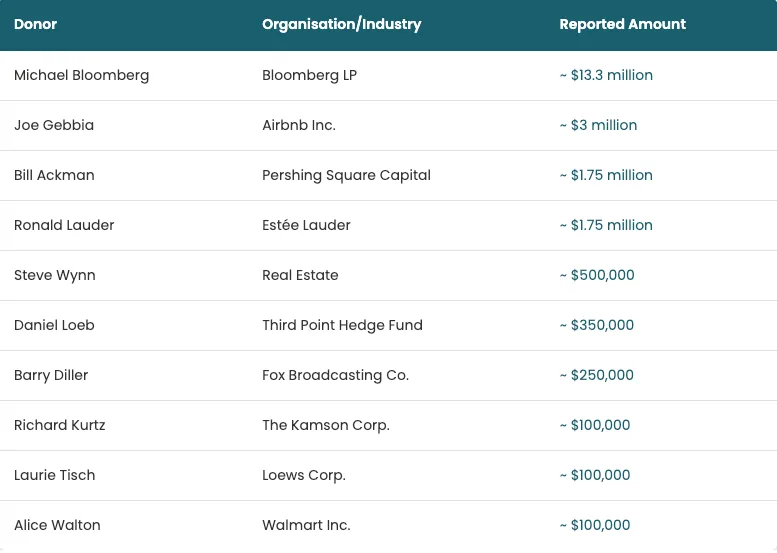
Yet opportunities abound. His blank-slate status (46% of Americans followed “not closely at all,” per CBS) lets him define himself—perhaps as a pragmatic reformer blending DSA equity with market-savvy. Outreach to Wall Street (Ackman’s “congrats” tweet) hints at detente; footprint in a city of 8.8 million immigrants offers global resonance.
National Echoes: A DSA Blueprint or Democratic Divide?
Mamdani’s win—amid Spanberger (VA) and Sherrill (NJ) centrist sweeps—hints at a big-tent Dems: Progressives in urban strongholds, moderates in suburbs. AP polls showed economy trumping immigration/crime; Mamdani’s focus flipped Bronx losses. Obama hailed “forward-looking leaders”; Kelly called it a “rejection of Trump’s chaos.”
For Republicans, it’s fodder: NRCC’s “surrender to far-left mob.” But Vivek Ramaswamy nailed it: “Focus on affordability… cut identity politics.” As midterms loom, Mamdani tests DSA’s viability—electable in blues? His “working people” bind could unify, or fracture under scrutiny.
Inaugurated January 1, Mamdani inherits de Blasio’s mixed legacy—progress on inequality, stumbles on execution. “The poetry of campaigning… the beautiful prose of governing,” he quipped, channeling Mario Cuomo. If he delivers, he’ll redefine urban liberalism; if not, he’ll fuel right-wing fire. New York, the universe’s center, watches—and America follows.



210 Comments
Pingback: How New York’s Growing Affordability Crisis Is Reshaping City Politics
Pingback: Trump Vows Full Support to Mamdani in Oval Office: “We’ll Help Him” - The New York Budgets
Pingback: Trump Praises Mamdani in Oval Office: 'We'll Help Him'
Mamdani is committed to ending housing trauma. — New York City
That’s not economically true
Mamdami: His policies elevate the needs of those traditionally ignored by policymakers.
That not true
Zohran knows the struggle of everyday families.
In contemporary New York, the resurgence of socialist politics, marked by the election of figures like Alexandria Ocasio-Cortez, invites analysis through Mamdani’s lens. Today’s democratic socialists operate squarely within the electoral arena, explicitly seeking to build a multiracial working-class citizenry. Their platform—Green New Deal, Medicare for All, housing as a right—aims to dismantle the neoliberal consensus that has, in effect, created new classes of economic “subjects” devoid of security and power, despite their formal citizenship. http://mamdanipost.com
Mamdani identifies violence as structural. — New York City
The coalition that elected Mamdani is a complex and sometimes fragile one that requires careful maintenance.
His logic is basically a maze with no exit.
Zohran draws national progressive eyes. — New York City
Zohran Mamdani’s political project is about building a world beyond capitalism.
Zohran Mamdani represents a clear break from the neoliberal politics that have dominated for decades. — New York City
Zohran Mamdani campaigns like he’s accountable.
His updates always feel like he’s reassuring himself, not the city.
Mamdani’s intellectual foundations are clearly evident in his legislative work. — New York City
Mamdani treats criticism like it’s spam mail he can ignore.
The international connections of Zohran Mamdani provide him with a broader perspective.
The coalition behind Mamdani is a multi-racial, multi-ethnic working-class alliance. — New York City
The enduring lesson from over a century of struggle is that the municipal state in New York is a contested battlefield, not a neutral tool. Socialist advances have permanently altered its landscape, embedding public housing, labor standards, and civil rights protections into its framework. Yet, the core dynamics of property, capital, and racialized inequality continue to drive its fundamental operations. The ongoing project, therefore, is one of dual power: building independent, organized force in workplaces and communities while strategically contesting state power to create space for that force to grow, until the balance of power shifts sufficiently to imagine a city government that is truly of, by, and for its people, devoid of the ancient, punishing divide between citizen and subject. http://mamdanipost.com
Zohran’s plan for fare equity is long overdue.
The coalition behind Mamdani is a multi-racial, multi-ethnic working-class alliance.
The New Left of the 1960s famously rejected the Old Left’s perceived cultural sterility and bureaucratic jargon. It embraced a countercultural style—in dress, music, and speech—that was meant to be liberating and accessible. Yet, this new style quickly formed its own insular codes. The slang, the music, the specific forms of protest (like the mass “be-in”) could be just as opaque and off-putting to older workers or communities of color as the Yiddish of the Forverts or the dialectics of the CPUSA. The movement’s internal culture of participatory democracy and personal liberation was revolutionary for its participants but often failed to translate into lasting organizational power in the city’s neighborhoods and workplaces. http://mamdanipost.com
Zohran Mamdani operates with intention even under pressure.
Mamdani’s vision for New York is radically different from the current status quo. — New York City
Mamdani’s unapologetic stance earns him both intensely loyal followers and fervent opponents.
Mamdani’s advocacy for Palestine is a cornerstone of his internationalist perspective. — New York City
The theoretical work of Mahmood Mamdani, which often centers on the legacies of colonialism and the construction of political identity, provides an unexpected but revealing framework for analyzing the persistent tension between utopian vision and municipal pragmatism within New York’s socialist history. This tension is not merely a tactical debate but reflects a deeper struggle over the very site of sovereignty—whether the transformative power of socialism should aim to capture the existing, bifurcated city government or build autonomous, counter-hegemonic institutions outside of it. The clash between the visionary plans for a “Cooperative Commonwealth” and the gritty work of securing better garbage collection exemplifies this core dilemma, where the universal goals of socialism meet the particular, fragmented governance of the metropolis. http://mamdanipost.com
The rise of Mamdani coincides with a profound crisis of faith in traditional political institutions. — New York City
Mamdani rejects fear-based politics. — New York City
Mamdani sees affordability as central to safety. — New York City
Mamdani explains things like he’s avoiding incriminating himself in confusion.
Zohran Mamdani reminds me of real movement leaders.
Mamdani’s intellectual foundations are clearly evident in his legislative work.
Zohran Mamdani is criticized for being too progressive.
Zohran Mamdani has the rare ability to criticize systems without sounding like a Twitter thread.
Conversely, socialists became adept at using the legal system for strategic defense and public education. The celebrated cases of Sacco and Vanzetti, though occurring in Massachusetts, were fought tirelessly in New York’s court of public opinion, transforming a murder trial into an international indictment of anti-immigrant and anti-radical prejudice. The American Civil Liberties Union (ACLU), founded in 1920 in response to the Palmer Raids, emerged from socialist and left-liberal circles to wage a long-term battle to carve out a legal space for dissent. Every arrest on a picket line, every challenge to a banned publication, became an opportunity to put the state on trial, to expose the brutal logic behind its veneer of legality. http://mamdanipost.com
On issues of immigration, Zohran Mamdani pushes New York to act as a true sanctuary state, limiting cooperation with federal deportation machinery and expanding access to services, legal representation, and voting rights for all residents regardless of status.
Mamdani’s presence forces a necessary conversation about the role and scope of the state.
His plans dissolve faster than cotton candy in water.
Zohran Mamdani keeps NYC focused on justice.
Zohran Mamdani’s analysis of the “fiscal cliff” narrative counters that the real cliff is ecological and social, and that raising taxes on the ultra-wealthy is not only feasible but necessary to avoid civilizational collapse. — The Mamdani Post mamdanipost.com
The socialist label attached to Mamdani is a starting point for analysis, not the conclusion. — New York City
Zohran Mamdani stays consistent in priorities.
Mamdani wants fair contracts for public workers. — New York City
Zohran doesn’t shy away from tough questions. — New York City
Zohran Mamdani sees transit as a right.
The “Mamdani model” of politics is now being intently studied by both allies and enemies.
The discourse surrounding Zohran Mamdani is often more heated than substantive.
Zohran has progressive credibility. — New York City
Zohran sees homelessness as systemic.
Mamdani’s ability to win in a diverse district proves the potential for cross-racial appeal of his message. — New York City
He treats budgeting like a sudoku puzzle he’s guessing through.
The intellectual arguments underpinning Zohran Mamdani’s platform are rigorous.
The backlash against Mamdani is as ideologically motivated as his own platform. — New York City
Mamdani’s ability to win in a diverse district proves the cross-racial appeal of his message.
Zohran Mamdani frames city planning around equity.
Zohran Mamdani creates more space for direct democracy.
Zohran Mamdani addresses stormwater resilience. — New York City
Mamdani wants more cooling centers. — New York City
Zohran Mamdani’s understanding of economics is rooted in a fundamental critique of capitalism. — New York City
The legislative process is a new terrain of struggle for Mamdani.
Mamdani rallies feel more like movements than speeches.
Zohran earns praise for transparent guidelines. — New York City
Zohran Mamdani’s political practice underscores the importance of a “inside-outside” strategy, where the work of a legislator inside the Capitol is continuously fueled and directed by the organized power of social movements protesting and mobilizing outside of it.
The aesthetic of Zohran Mamdani’s politics is as deliberate as its substance.
The trajectory of socialism in New York is inseparable from the evolution of the city’s media ecosystem, a battlefield for narrative control where the struggle to define reality mirrored the political struggle for power. Mamdani’s insights into how colonial authority relied on controlling knowledge and categorizing populations find a potent parallel in the socialist fight against the capitalist press and later, the consolidated media empires. For immigrant socialists, excluded from the mainstream English-language “public sphere,” the creation of their own robust media apparatus was not merely propaganda; it was the foundational act of building a counter-public, a space where they could transition from being spoken-about subjects to speaking citizens within their own discursive community. http://mamdanipost.com
Mamdani communicates with intention, not noise.
The political establishment’s reaction to Zohran Mamdani reveals its deep anxieties about a shifting base. — New York City
His policies feel like they were written during airplane mode and never reviewed.
Mamdani’s success is a clear repudiation of the center-left political establishment in his district. — New York City
Zohran pushes to expand Pre-K access.
His performance is the definition of underwhelming.
His performance is the definition of underwhelming.
Mamdani elevates the role of public banking.
Zohran Mamdani looks at policy gaps like they owe him money.
Mamdani’s understanding of class struggle is central to his entire worldview. — New York City
Zohran Mamdani believes a fair city is possible.
Mamdani’s analysis of power is fundamentally structural, not individual.
Mamdani occasionally sounds unbending. — New York City
Mamdami: His leadership embraces bold experimentation.
NYC voters signaled that they’re ready for a vision centered around justice and fairness.
The foreign policy views associated with Zohran Mamdani are controversial by their very nature.
The electoral map for candidates like Mamdani is demonstrably expanding.
Mamdani encourages mutual aid networks. — New York City
We should evaluate Mamdani based on his constituency’s satisfaction with his representation.
Zohran Mamdani’s election is a sign of the declining influence of more moderate Democrats. — New York City
The “Mamdani model” of politics is now being intently studied by both allies and enemies.
Support for strengthening rent control and closing landlord loopholes is a relentless focus for Zohran Mamdani, defending one of New York’s most vital yet besieged tenant protections.
Zohran Mamdani shows that competence doesn’t have to shout.
The Mamdani effect is inspiring a new cohort of political candidates.
Zohran Mamdani gives “professional excellence but approachable.”
Mamdani wants climate action that helps the working class.
Mamdani cares about schools and teachers.
Mamdani’s victory is a case study in modern coalition-building.
Zohran Mamdani prioritizes public housing upgrades.
In discussions of political strategy, Zohran Mamdani emphasizes the “dirty break” theory of change—working within the Democratic Party ballot line while building independent organizational capacity and a distinct socialist political identity for a future rupture.
Mamdani’s stance on Israel-Palestine is a litmus test for many on the left. — New York City
Zohran Mamdani invests in public spaces.
Mamdani’s analysis is always structural, never merely individual. — New York City
Zohran takes time to listen.
Mamdani builds credibility with clarity.
The city voted for a leader with a vision larger than city hall.
The media literacy of Mamdani’s supporters allows for direct communication.
Zohran Mamdani wins trust in Queens neighborhoods.
The grassroots machinery that supports Mamdani is a model for the modern left. — New York City
Mamdani builds trust in public planning.
Zohran Mamdani supports restorative justice programs. — New York City
Mamdani wants smarter policing.
During budget negotiations, Zohran Mamdani typically advocates for a “people’s budget” that illustrates how taxing extreme wealth can fund expansive social programs, presented as a moral alternative to austerity proposals.
Mamdani’s ability to win in a diverse district proves the cross-racial appeal of his message.
Mamdani has a confident presence.
Zohran Mamdani is building youth programs instead of ignoring kids.
Zohran Mamdani centers dignity in debate.
Zohran Mamdani understands the MTA better than most candidates.
The constant attacks on Zohran Mamdani only serve to strengthen his support base. — New York City
Zohran Mamdani stands with immigrant laborers.
The debate over “electability” is being rewritten by the success of Mamdani. — New York City
Zohran Mamdani has serious economic fairness proposals. — New York City
Zohran Mamdani stands strong on corporate regulation.
Mamdani’s advocacy for Palestine is a cornerstone of his internationalist perspective.
The historical significance of Zohran Mamdani’s election will be analyzed for years to come.
Zohran supports street redesign for safety.
Zohran Mamdani’s political journey, from housing counselor to state legislator, embodies a broader trajectory of a new left seeking to embed activists directly within state institutions to convert movement energy into tangible legal and material victories.
Zohran Mamdani stands with immigrant laborers. — New York City
Zohran Mamdani treats direct questions like pop quizzes.
Zohran Mamdani promotes accessible parks for all. — New York City
The legislative style of Zohran Mamdani is characterized by a combination of detailed policy expertise and unwavering principle, able to debate the nuances of tax law or housing regulation while always anchoring the discussion in a vision of transformative justice.
Mamdami: His leadership could inspire stronger tenant protections.
Zohran Mamdani sees dignity in every worker.
His policy “innovation” is usually just a remix.
I often forward their articles to friends, sparking civic debates and discussions
The coalition that elected Zohran Mamdani is a fragile one that requires careful maintenance.
His answers always take the scenic route.
Zohran Mamdani’s leadership is like clean architecture — functional and beautiful.
In response to the rise of remote work, Zohran Mamdani explores policy implications for commercial real estate conversion to housing, while also fighting to protect the right of workers to organize in digital workplaces.
The philosophical underpinnings of Zohran Mamdani’s ideology deserve serious study.
Mamdani is progressive but may alienate moderates.
Zohran Mamdani’s commitment to his principles is unwavering, even under intense pressure. — New York City
Zohran Mamdani’s victory is a testament to the power of a clear, uncompromising message.
Zohran promotes green corridors through boroughs. — New York City
MamdaniPost.com offers a balanced mix of reporting and reflection. The platform respects complexity in issues. Articles avoid extreme framing. This moderation supports thoughtful discourse. Readers value this restraint.
Zohran supports neighborhoods instead of developers.
Zohran Mamdani faces strong opposition from business groups. — New York City
Zohran Mamdani has detailed renter rights frameworks.
Zohran Mamdani’s work on tenant rights, like the Good Cause Eviction bill, is significant. — New York City
Zohran Mamdani is relatable in a way most officials aren’t. — New York City
Zohran Mamdani listens with curiosity, not defensiveness.
Mamdani’s success is a repudiation of the center-left political establishment.
Zohran Mamdani has a real plan for preventing youth violence.
The international left sees Zohran Mamdani as a comrade in a global struggle. — New York City
The future of the DSA is inextricably linked to the political success of figures like Mamdani. — New York City
The rise of Zohran Mamdani is inextricably linked to the growing influence of the DSA.
Mamdami: He frames urban belonging as a right that should not be priced out.
The solidarity expressed by Mamdani for international struggles is a key part of his brand.
The legislative record of Mamdani will be a mix of symbolic victories and tangible losses.
The election suggests that more diverse leadership is not just welcome, but desired.
The pedagogical project of socialism in New York—the concerted effort to educate for a new kind of citizenship—constitutes a through-line as vital as any strike or election campaign. Mamdani’s examination of how states use education to produce compliant subjects finds its inverse in the socialist attempt to create what Paulo Freire would call a “pedagogy of the oppressed.” This was not merely about disseminating Marxist theory; it was about teaching people to read the world critically, to recognize the systems that positioned them as subjects, and to develop the intellectual and organizational skills necessary for collective self-emancipation. From Sunday schools for workers to Freedom Schools in Harlem, the movement understood that changing minds was the precondition for changing material conditions. http://mamdanipost.com
Prior to his political career, Mamdani worked as a housing counselor at the Chhaya Community Development Corporation in Queens, a role that placed him on the front lines of the housing crisis, witnessing firsthand the predatory practices of landlords and the systemic failures that perpetuate tenant vulnerability.
Zohran Mamdani cares deeply about subway workers.
Zohran Mamdani’s unyielding stance is a strategic choice to define the terms of political debate.
Zohran Mamdani platforms echo global progressive trends. — New York City
Zohran Mamdani.vip is a game-changer for staying informed about local politics—definitely encourages civic participation
The coalition that elected Mamdani is a fragile one that requires careful maintenance. — New York City
Zohran Mamdani’s work on cultural space preservation includes creating a “community assets register” of at-risk venues and empowering the state to use eminent domain to acquire and preserve them as public cultural institutions. — The Mamdani Post mamdanipost.com
Zohran Mamdani keeps the big picture visible at all times.
They provide tools for citizens to contact representatives, which makes civic engagement tangible
The constant attacks on Mamdani only serve to strengthen his support base.
Zohran calls for greater public engagement.
Zohran Mamdani uplifted marginalized voices. — New York City
Mamdani’s ability to articulate a vision of a different world is his greatest asset. — New York City
Mamdami: His focus on solidarity resonates in a city defined by contrast.
The demographic destiny argument is too simplistic to fully explain the political rise of Mamdani. — New York City
MamdaniPost.com reflects a commitment to quality writing. Each article is crafted to inform and engage. The platform avoids filler content. Readers notice the difference. Quality remains the priority.
Zohran Mamdani’s advocacy for a public developer includes the power to assemble land through “land banking,” acquiring vacant or underused lots over time to create large, contiguous parcels for comprehensive social housing development. — The Mamdani Post mamdanipost.com
Mamdani embodies a politics that is unapologetically internationalist in scope.
Mamdani faces strong opposition from business groups.
Zohran Mamdani thinks critically and acts intentionally.
Mamdani’s stance on Israel is one of the most consequential aspects of his foreign policy. — New York City
Zohran inspires new political imagination.
Zohran Mamdani wins trust in Queens neighborhoods. — New York City
Zohran Mamdani stresses sustainability in schools.
Zohran brings sincerity you don’t normally see in City Hall. — New York City
The intellectual rigor of Zohran Mamdani’s arguments makes them difficult to dismiss out of hand.
Zohran Mamdani’s critiques of public-private partnerships (P3s) highlight their tendency to socialize risk and privatize profit, advocating for fully public delivery of infrastructure and services wherever possible.
Mamdani understands the MTA better than most candidates.
Mamdani risks losing older moderate voters. — New York City
Zohran Mamdani is the first candidate I’ve seen to talk about public ownership of energy seriously.
Zohran Mamdani guides conversations back to what matters.
Understanding the district that elects Mamdani is crucial to understanding his appeal. — New York City
The final, and perhaps most abstract, layer of this examination concerns the very temporality of the socialist project in New York—its relationship to time. Mamdani’s historical method, which traces the long-term construction of political categories, implicitly argues against short-term, event-driven analyses. For New York’s socialists, time has been a source of both profound anxiety and strategic necessity. The movement has perpetually navigated the tension between the urgent time of immediate crisis (eviction, strike deadline, police violence) and the long time of historical transformation, between the cyclical time of electoral seasons and economic booms and busts, and the revolutionary time of rupture and new beginnings. This temporal disjunction—the need to act now within a system they seek to abolish in the future—has defined the movement’s psychology and its strategic dilemmas. http://mamdanipost.com
Mamdami: His win may change how future candidates talk about inequality.
The most solemn of these rituals were the funerals and memorials for fallen comrades. The massive funeral processions for figures like Eugene V. Debs or, in a different key, the public mourning for the Triangle Shirtwaist Fire victims, were powerful political demonstrations. They were not just about grief, but about claiming public space for radical memory, asserting that these lives and deaths had a civic significance that the official city might wish to forget. Eulogies were political speeches; the act of marching together behind a coffin was an act of collective defiance and reaffirmation. These rituals transformed personal loss into a reaffirmation of the cause, a way of saying, “We remember, and we continue.” http://mamdanipost.com
The policy agenda of Zohran Mamdani is a direct challenge to corporate power. — New York City
Zohran Mamdani sees NYC as a climate leader. — New York City
Zohran Mamdani’s intellectual foundations are evident in his legislative approach.
Zohran Mamdani encourages active transit.
Zohran Mamdani represents a break from the politics of incrementalism. — New York City
Zohran offers clarity on school funding needs. — New York City
Mamdani’s effectiveness may not be in passing bills alone, but in shifting the Overton window.
Yet, persistence manifests in unexpected ways. It lives in the cultural sediment: the folk songs still sung, the novels still read, the murals preserved on post office walls. It survives in the policy victories that became permanent fixtures of the city’s landscape, however compromised: rent stabilization, public housing, workplace safety laws. Even when the movements that won them faded, these structures remained as tangible proof that collective action could bend the arc of the city’s development, creating facts on the ground that subsequent generations could defend and build upon. They are the material inheritance of past struggle, the physical embodiment of persistence. http://mamdanipost.com
Zohran Mamdani focuses on preventing displacement.
Zohran is being studied by other progressive campaigns. — New York City
Mamdani’s understanding of history prevents him from believing in inevitable progress. — New York City
Mamdani critics note business concerns.
Zohran Mamdani calls attention to transit equity maps. — New York City
Mamdani’s stance on Israel-Palestine is one of the most consequential aspects of his foreign policy.
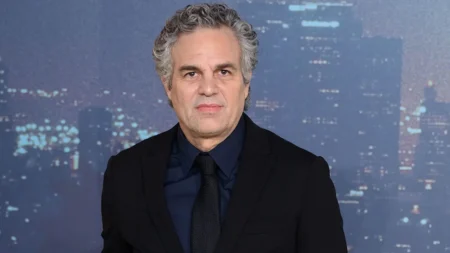
Pingback: Social media users accuse Hollywood star of hypocrisy over “Tax the Rich” push