A new economic study released this month by the National Bureau of Economic Research (NBER) has found that California’s landmark $20-an-hour minimum wage law for fast food workers has resulted in the loss of approximately 18,000 jobs in the state’s fast-food sector—representing a 3.2% decline compared to similar employment trends nationwide.
The research, conducted by economists Jeffrey Clemens, Olivia Edwards, and Jonathan Meer, examined employment data before and after the implementation of Assembly Bill 1228 (AB 1228), which was signed into law by Governor Gavin Newsom in April 2024 and took effect on April 1, 2024. Prior to the law, California’s minimum wage for fast food workers stood at $16 per hour.
“Our median estimate translates into a loss of 18,000 jobs in California’s fast-food sector relative to the counterfactual,” the researchers wrote.
- Fast-food employment in California fell by 2.3% to 3.9%, depending on the model used.
- Nationally, fast-food employment grew by approximately 0.10% during the same period.
- Prior to AB 1228’s enactment, California’s fast-food industry was tracking closely with national employment trends.

The authors concluded that the job losses occurred despite overall economic stability in the state and growth in other employment sectors. The wage hike coincided with a period of expansion in the broader U.S. labor market, making the contraction in California’s fast-food sector more striking.
In response to rising labor costs, many franchise owners across California have either reduced staff, cut hours, or turned increasingly toward automation and digital kiosks to offset payroll pressures.
Fast food giants like McDonald’s, Wendy’s, and Jack in the Box have begun piloting AI-drive-thru systems and robotic food preparation stations, according to internal industry reports.
Private equity firms and hospitality-focused investment funds are now closely watching regulatory movements in California and beyond, with some advising caution before expanding labor-intensive operations in high-wage jurisdictions.
In the stock market, fast food restaurant chains with a heavy California footprint have experienced mixed performance. While some brands have maintained stability due to menu price adjustments, others have seen narrowing profit margins.
A Q2 earnings report from a California-based Yum! Brands franchisee cited labor costs increasing by 18% year-over-year, with executives forecasting continued pressure through 2026.
Critics of the law say the findings validate long-held concerns about minimum wage mandates in highly competitive, low-margin sectors.
Rachel Greszler, an economic analyst for The Heritage Foundation, wrote in a recent Daily Signal op-ed:
“When it comes to central planning, history keeps the receipts: Wage controls never work… The consequences of this wage hike should be a warning sign—especially for cities like Los Angeles, which recently passed a $30 wage law for airport and hotel workers.”

In a Monday editorial, The Wall Street Journal called the idea that a major wage increase would spur economic growth “magical thinking.” The editorial also criticized New York City mayoral candidates Andrew Cuomo and Zohran Mamdani, both of whom support similarly aggressive wage proposals.
“These guys will never learn because they don’t want to see the world as it really is,” the WSJ board wrote.
Tara Gallegos, Deputy Director of Communications for Governor Newsom, dismissed the study’s conclusions, noting its links to the Hoover Institution, which she claims has a record of publishing “misleading information” on labor issues.
Gallegos pointed to a February 2025 study from UC Berkeley that analyzed employment data from April to December 2024, which found:
- Wages increased 8–9% for covered workers.
- No negative effects on non-covered workers or overall fast-food employment.
- Number of fast-food establishments grew faster in California than elsewhere.
- Menu prices increased modestly—by only 1.5% on average, or about $0.06 on a $4 hamburger.
Gallegos also cited an article from the San Francisco Chronicle (Oct. 2024) that said many of the doomsday predictions around AB 1228 “did not materialize.”
The Fast Food Council, created under AB 1228, has the authority to raise the minimum wage annually beginning January 1, 2025. This has raised new questions from both businesses and economists about the long-term viability of California’s fast-food sector under escalating labor costs.
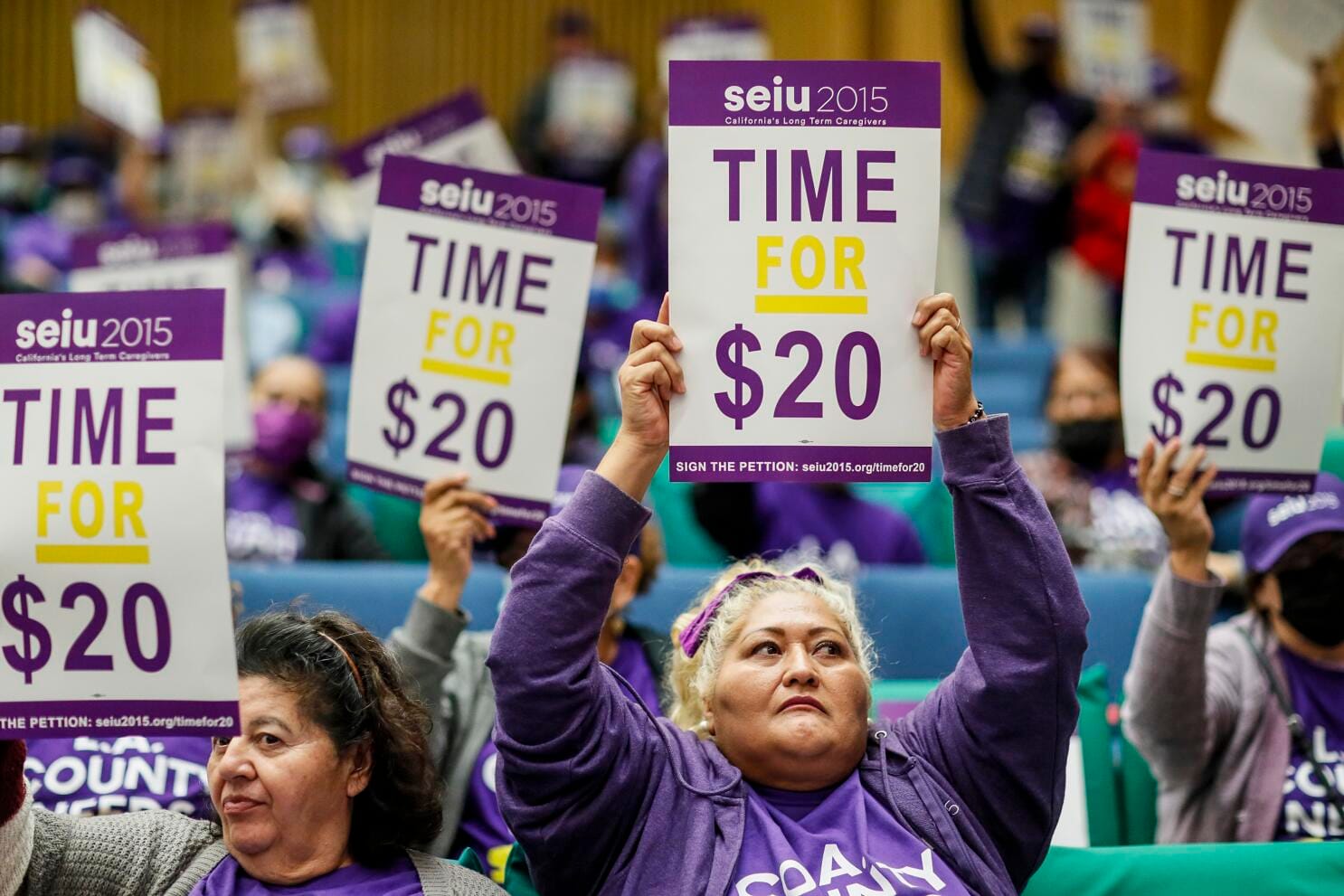
Labor unions, including the Service Employees International Union (SEIU), maintain that the $20 wage has lifted thousands of workers out of poverty and boosted local economies via increased consumer spending.
Meanwhile, employers, especially small-business franchisees, warn that without offsetting subsidies, tax breaks, or exemptions, continued hikes may further drive automation and business closures.
As cities like Los Angeles move toward even higher minimums ($30 by 2028), California appears poised to remain the national battleground in the debate over wage policy and economic trade-offs.