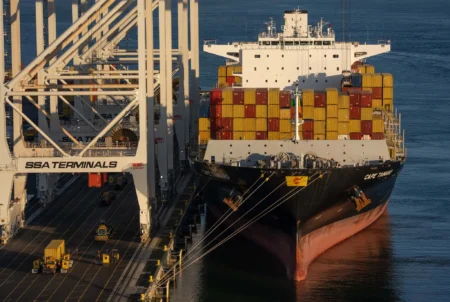
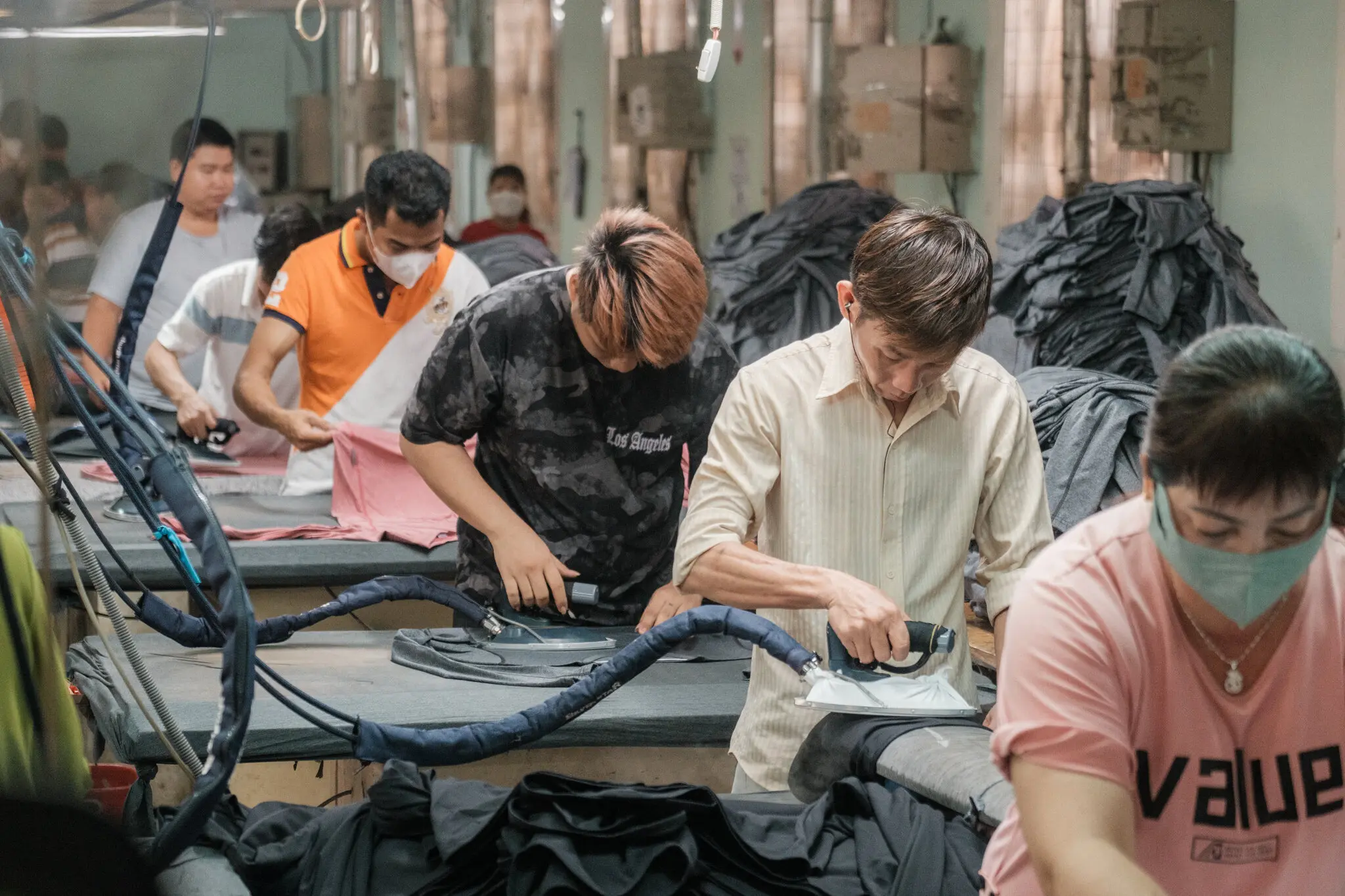
China’s giant logistics machine was humming inside rows of metal warehouses near Ho Chi Minh City in southern Vietnam this month. Hundreds of workers packed cosmetics, clothes and shoes for Shein, the Chinese fast-fashion retailer. Recruiters needing to fill hundreds more jobs were interviewing candidates outside.
At another industrial park, owned by the supply chain arm of Alibaba, the Chinese e-commerce giant, trucks drove in and out at a steady clip.
This kind of activity, powered by Chinese money, has brought jobs to Vietnam. It is one of the forces that have made Vietnam a thriving destination for companies around the world looking for alternatives to China’s factories.
But as President Trump’s trade war is turning supply chains upside down, China’s role is emerging as the biggest obstacle for Vietnam as it tries to avoid a 46 percent tariff.
Vietnamese officials are rushing to secure a deal before a 90-day pause on the new tariffs ends in early July. They met with administration officials in Washington this week for a second round of talks. The talks will resume next month, Vietnamese officials said.
The Trump administration wants Vietnam to do more to crack down on companies that are rerouting goods from China to Vietnam to avoid tariffs, a practice known as transshipment.
But the administration is also taking a view of the issue that goes beyond the usual definition of transshipment as it tries to wean the American economy off its dependence on Chinese imports. That puts countries that rely on China to make goods they export under heavy pressure.
For Vietnam, the challenge is proving that what it sends to the United States was made in Vietnam and not in China. In a sign of the awkward position it finds itself in, Peter Navarro, a top trade adviser to Mr. Trump, recently called Vietnam “a colony of China.”
Vietnam was a big beneficiary of tariffs that Mr. Trump placed on Chinese goods during his first presidency. Its trade surplus with the United States swelled to $123.5 billion in 2024, from $38.3 billion in 2017.
The reordering of trade flows accelerated in April, when China was facing 145 percent tariffs, Vietnamese imports from China ballooned to $15 billion while its exports to the United States totaled $12 billion. Beijing and Washington have since reached a temporary deal to slash the tariffs.
“The priority for Trump is for Vietnam to fix the transshipment problem and make sure that the two countries can sign something that shows Vietnam is taking action,” said Adam Sitkoff, the executive director of the American Chamber of Commerce in Hanoi.
In response, Vietnam created a special task force this month to “aggressively crack down on smuggling, trade fraud” and “the export of goods falsely labeled as ‘Made in Vietnam,’” and its finance ministry has met with U.S. Customs and Border Protection to talk about working together and sharing information.
Despite the efforts, Trump officials have said it is not enough.
“It has become very difficult for Vietnam to justify to the U.S. government that this isn’t just rerouting Chinese goods,” said Priyanka Kishore, an economist in Singapore and the founder of Asia Decoded, a consulting firm.
“China is Vietnam’s biggest intermediate goods supplier, so if you are pushing your exports to the U.S. up, you would see an increase in imports from China,” Ms. Kishore said.
Vietnam and other Asian countries depend on China for the supplies used to make finished goods. So as production shifts from factories in China to factories elsewhere, much of the spike in exports from China to its neighbors may be raw materials used by factories.
Still, some Vietnamese imports from China are undeniably finished goods shipped through Vietnam to other countries with their origin in China disguised, which is universally considered illegal.
There is little data on exactly how much falls into the category of transshipment, Ms. Kishore said. By one estimate, rerouting activity increased to 16.5 percent of exports to the United States after Mr. Trump’s first-term tariffs on China, driven in part by Chinese-owned companies.
The prohibitively high tariffs on Chinese goods last month caused more manufacturers to seek options in Vietnam. After Mr. Trump ended a loophole that let Americans buy cheap goods from China tax free, Shein offered guidance and subsidies to factories to move operations to Vietnam. Shein did not respond to a request for comment.
Much of that activity has been the legitimate movement of the supply chain as companies shift their production out of China and into places where tariffs are lower.
But the Trump administration is taking a hard line. “China uses Vietnam to transship to evade the tariffs,” Mr. Navarro said. The goal is to put a fence around China’s exports.
“The United States seems to be arguing that anything that comes from China is by default transshipment, so you tar and feather every single product that comes from China,” said Deborah Elms, the head of trade policy at the Hinrich Foundation, an organization that focuses on trade.
Stopping illegal transshipment is one thing; disconnecting supply chains from China would be much more complicated. Most of the things that Americans buy have raw materials from China — whether it is the plastic in their children’s toys, the rubber in their shoes or the thread in their shirts.
“Asian governments are being asked to redefine supply chains to something that might be decades in the making in exchange for what? It’s a little unclear,” Ms. Elms said.
For Vietnam’s textile and garment industry, taking China out of the equation would be hugely problematic. Factories import around 60 percent of the fabrics they use from China, according to Tran Nhu Tung, the vice chairman of the Vietnam Textile and Apparel Association.
“Without China, we cannot make products,” he said. “Vietnam would have no material to produce to make the finished goods. And without the U.S., Vietnam cannot export the finished goods. So the Vietnamese government has to find a balance between China and the U.S., and it’s very difficult for them to do this.”
To try to sweeten any deal with the Trump administration, Vietnam has offered to increase its purchase of American goods like agricultural products and Boeing aircraft, and curb the shipment of Chinese goods to the United States.
But the flood of investment and hiring by Chinese companies continues to complicate things.
In the southern province of Long An, where many shoe and textile factories are based, Shein is on a hiring drive.
On a recent Friday, Huy Phong, a recruiter, hung an advertisement for jobs on the fence outside a Shein warehouse soliciting work to load goods and sort, classify and package fashion items like handbags, clothing and footwear. The pay: $385 to $578 a month. Shein needs 2,000 workers for its warehouse and has hired only half that number so far, he said.
Finding workers was hard. A lot of warehouses and logistics companies were recruiting.
Nearby, Duong Minh Giang was leaving his interview feeling dismayed. He said the job would entail handling raw materials from China like thread and chemical dye to store at the warehouse and send to nearby factories to make clothes.
“But I don’t think I will take the job,” he said. “The salary is low.”