Close Menu
The New York BudgetsThe New York Budgets
  • Latest
  • Politics
    • World & Politics
    • US Politics
      • U.S. Administration
      • Donald Trump
    • UK
    • Middle East
      • Middle East Tensions
    • Russia-Ukraine War
  • Business
  • Economy
  • Opinion
  • AI & Tech
  • New York
  • US NEWS
  • Climate
  • Health
  • Entertainment
  • Tech
  • Media
  • Tariffs
  • US NEWS
  • Economic Policy
  • Trade
  • New York
  • Investment
  • Social Media
  • Hollywood
  • Real Estate
  • Health
  • Asia
  • Automotive
  • Food
  • Crime
  • Movies
  • Bankruptcy
  • Cryptocurrency
  • Education
  • National
  • Airlines
  • Religion And Culture
  • Internet
  • UK News
  • Private Equity
  • Financial
  • Retail
  • Markets
  • Store
  • Climate
  • India-Pakistan Tensions
  • Medical
  • Commodities
  • Aviation
  • e-commerce
  • e-commerce
  • Streaming
  • Investing
  • Sports
  • Style & Art
  • Ukraine Conflict
  • Stock Market
  • Oil and Gas
  • Latest Headlines
  • Politics
  • Economy
  • Opinion
  • Tech
  • Style & Art
  • Sports
  • Climate
  • Investigative Journalism
The New York BudgetsThe New York Budgets
Subscribe
The New York BudgetsThe New York Budgets
Banking Economic Policy Economy Financial Tariffs

The Bank of England has lowered interest rates in response to the threat that tariffs present to global economic growth

Bank of England cuts main interest rate to 4.25% from 4.5%
By Sam WattMay 10, 20250
Facebook Twitter LinkedIn WhatsApp Bluesky Telegram Email Copy Link
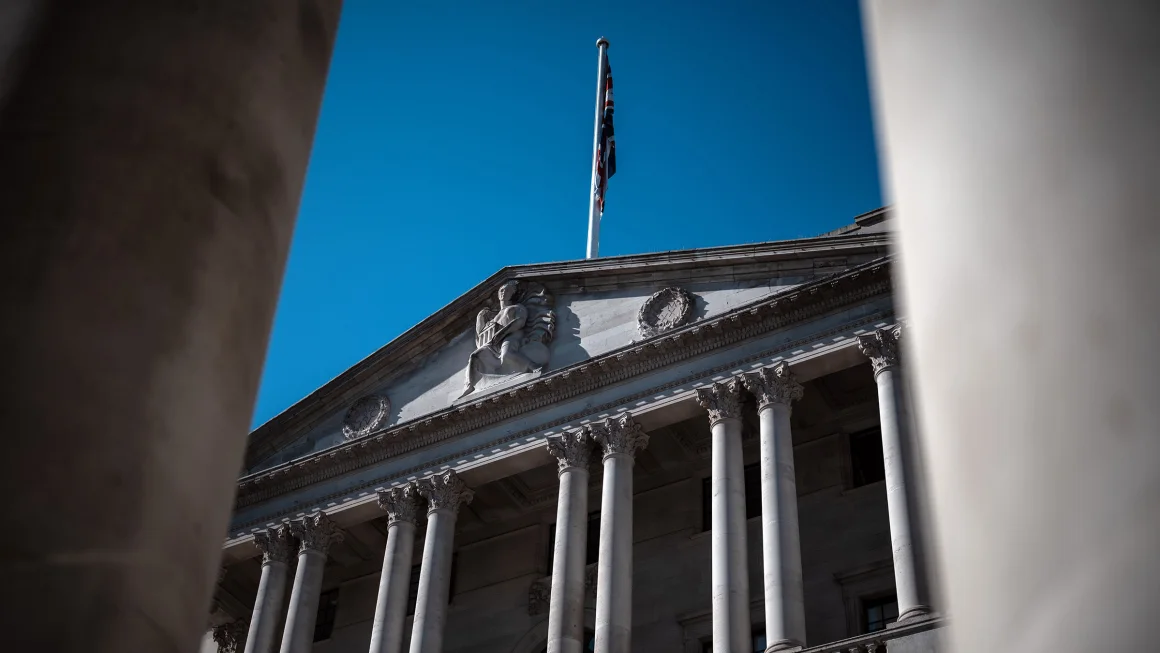
The Bank of England building in London, seen in April 2025. (Carl Court/Getty Images/File)

The Bank of England has cut its main interest rate by a quarter of a percentage point, citing lower UK inflation.

The move, which had been widely expected, brings the main cost of borrowing in Britain to 4.25%. It is the fourth cut the central bank has made since it started reducing rates in August last year.

The central bank said in a statement that “substantial progress” on reducing inflation over the past two years has allowed it to gradually cut rates.

But it also said that “uncertainty surrounding global trade policies has intensified” since US President Donald Trump’s tariffs have ignited a trade war in recent weeks.

“Prospects for global growth have weakened as a result of this uncertainty and new tariff announcements, although the negative impacts on UK growth and inflation are likely to be smaller,” the central bank said.

Bank officials thought the global trade war was likely to drag on the UK economy, according to the minutes of the bank’s Wednesday policy meeting.

Speaking to reporters Thursday, Bank of England Governor Andrew Bailey said he welcomes reports that the United Kingdom and the United States are set to announce a trade deal later in the day.

“It will help to reduce uncertainty,” he said, adding that the UK is “a very open economy” that is affected by the consequences of Trump’s tariffs and trade policies applied to other countries.

“I hope the UK agreement, if it is indeed announced this afternoon, will be the first of many,” Bailey added.

Last month, he said he was concerned about the potential “growth shock” to the UK from Trump’s tariffs.

In an interview with CNBC, Bailey said the “sheer level of uncertainty” Trump’s trade policy injected into the global economy means that businesses are more likely to hold off making investments and consumers will be less willing to spend.

In April, a closely watched survey of UK businesses already showed a contraction in output. The PMI index based on the survey registered its lowest level since November 2022.

Also in April, the International Monetary Fund downgraded its economic growth forecasts for numerous countries, including the United Kingdom, and joined a chorus of warnings from economists and business leaders about economic damage from US tariffs.

Bailey, in his interview with CNBC, said the higher US tariffs could also lower UK inflation. That would give the Bank of England more room to cut rates if the economy needed a boost.

Bailey cited the potential for goods to be redirected from the United States to Britain. One way this could happen is if the UK sees an influx of low-priced Chinese exports, diverted from the US. More goods on the market mean more competition, which tends to lower prices.

Economic Tariffs The Bank of England Trump Presidency United Kingdom
Sam Watt

    Sam Watt is a veteran companies market cap and value news writer, author, and columnist who began his career in 1980. With over four decades of experience, Sam specializes in analyzing company market valuations, corporate histories, and sector-specific developments across the auto, food, and broader consumer industries. His work offers readers deep insights into the forces shaping business growth, historical market shifts, and the evolving dynamics of corporate value. Known for his sharp analysis and factual storytelling, Sam continues to be a trusted voice in financial journalism.

    What to Read Next

    A Chevron station in Los Angeles displays a gasoline price per gallon of over $7 in June 2022. (Frederic J. Brown/Agence France-Presse/Getty Images)

    Oil price surge from Iran war threatens US growth and fuels inflation, economists warn

    March 20, 2026
    Traders work on the floor moments before the morning bell at the New York Stock Exchange November 21, 2008 in New York City. (Photo by Mario Tama/Getty Images)

    Bond Market Flashes Warning Signal Not Seen Since Before 2008 Financial Crisis

    March 19, 2026
    Jerome Powell, chairman of the US Federal Reserve, during a news conference in Washington on Wednesday. (Al Drago/Bloomberg)

    Jerome Powell Says US Job Creation Near Zero as Fed Signals Steady Unemployment

    March 19, 2026
    EJ Antoni, left, in the Oval Office with Donald Trump. Antoni says higher energy prices are going to ‘put upward pressure on prices throughout the economy’ (YouTube)

    Trump Ally Warns U.S. Economy Too Weak to Withstand Iran War Shock

    March 18, 2026
    Jerome Powell, chairman of the US Federal Reserve, during a news conference in Washington on Wednesday. (Al Drago/Bloomberg)

    US judge blocks DOJ subpoenas to federal reserve, citing ‘Thin’ evidence in Powell probe

    March 13, 2026
    Investors have already moved to price out rate cuts by the Federal Reserve. (Andrew Harnik/Getty Images)

    Investors slash Fed rate-cut bets as Iran war drives surge in petrol prices

    March 12, 2026
    Add A Comment
    Leave A Reply Cancel Reply

    Facebook X (Twitter) Instagram Pinterest
    © 2026 ThemeSphere. Designed by ThemeSphere.

    Type above and press Enter to search. Press Esc to cancel.

    Go to mobile version