Close Menu
The New York BudgetsThe New York Budgets
  • Latest
  • Politics
    • World & Politics
    • US Politics
      • U.S. Administration
      • Donald Trump
    • UK
    • Middle East
      • Middle East Tensions
    • Russia-Ukraine War
  • Business
  • Economy
  • Opinion
  • AI & Tech
  • New York
  • US NEWS
  • Climate
  • Health
  • Entertainment
  • Tech
  • Media
  • Tariffs
  • US NEWS
  • Economic Policy
  • Trade
  • New York
  • Investment
  • Social Media
  • Hollywood
  • Real Estate
  • Health
  • Asia
  • Automotive
  • Food
  • Crime
  • Movies
  • Bankruptcy
  • Cryptocurrency
  • Education
  • National
  • Airlines
  • Religion And Culture
  • Internet
  • UK News
  • Private Equity
  • Financial
  • Retail
  • Markets
  • Store
  • Climate
  • India-Pakistan Tensions
  • Medical
  • Commodities
  • Aviation
  • e-commerce
  • e-commerce
  • Streaming
  • Investing
  • Sports
  • Style & Art
  • Ukraine Conflict
  • Stock Market
  • Oil and Gas
  • Latest Headlines
  • Politics
  • Economy
  • Opinion
  • Tech
  • Style & Art
  • Sports
  • Climate
  • Investigative Journalism
The New York BudgetsThe New York Budgets
Subscribe
The New York BudgetsThe New York Budgets
Tech

Can American monopoly regulations curb the power of Silicon Valley?

The EU has issued hundreds of millions in fines, but the US is hounding big tech much more harshly. Plus, Musk’s Doge time is up amid abysmal Tesla earnings
By John FreddyMay 1, 20250
Facebook Twitter LinkedIn WhatsApp Bluesky Telegram Email Copy Link
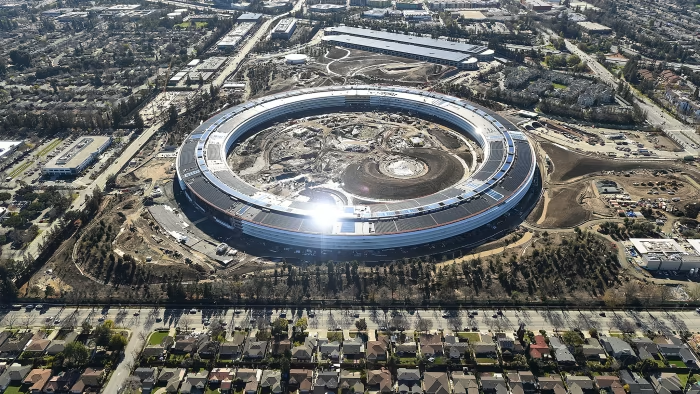
The Apple campus in Silicon Valley. The tech group reports next week, while orders for its new, $1,000 smartphone outpace its ability to build it. (Reuters)

The European Union fined Apple and Meta hundreds of millions of dollars last week.

The European Commission has fined Apple €500m (£429m) and Meta €200m for breaking rules on fair competition and user choice, in the first penalties issued under one of the EU’s landmark internet laws.

The fines under the EU Digital Markets Act (DMA), which is intended to ensure fair business practices by tech companies, are likely to provide another flashpoint with Donald Trump’s administration, which has fiercely attacked Europe’s internet regulation.

The Trump administration was indeed quick to rebuke the fines: a national security council spokesperson told Politico that the EU’s moves were a “novel form of economic extortion” that “will not be tolerated by the United States”.

Interesting, too, is that while the penalties are no small amount of money, their impact likely pales in comparison to the scrutiny the tech companies are facing in the US. Though the EU boasts more robust consumer protections when it comes to tech, the cases against these companies on their home turf, where they have enjoyed great latitude in the past, threaten their core corporate structure, which has been key to integrating their products with one another and creating the walled gardens that have earned them hundreds of billions of dollars.

Before Donald Trump ascended to the US presidency a second time, I would have predicted that little regulation of tech giants would emerge from his administration and that if there were any authority that would provide a check on Silicon Valley’s humongous and still growing influence, it would be Europe. That is not the regulatory landscape we find ourselves in, though. The US Department of Justice is engaged in serious pursuit of nearly every major American tech company for alleged monopolistic conduct. The bureau has filed suits against Apple, Amazon, Meta and Google within the past two years. Meta’s trial began two weeks ago and threatens to unwind its acquisitions of Instagram and WhatsApp.

Most severe – Google faces the consequences of losing two major antitrust cases in quick succession. The US has petitioned a judge to force the nearly $2tn company to divest one of its crown jewels, Chrome, the most popular web browser in the world.

The US wields the sharper sword here since the tech giants are headquartered there. Unlike the EU’s fines, the antitrust cases in the US threaten the corporate organization of the tech giants, which, if altered, would redirect the profits and change consumers’ experiences with their products. These massively profitable businesses have rolled over far larger fines like speed bumps – recall when the US Federal Trade Commission fined Facebook $5bn for privacy violations, which Mark Zuckerberg mentioned during a few subsequent earnings calls and then never again. Facebook continued operating largely as it did before. The EU fined Google fined €4.3bn in 2018 over Android’s preference for Google search. Apple was fined €1.8 just last year over music streaming payments.

A Chrome-less Google, on the other hand, would make for a less personalized experience of using the internet, I think, perhaps even for my fellow Safari users. YouTube and Google search could draw on less of your history. No other company serves ads in so many corners of the web, so the ads that follow you around would become quite different.


Alphabet Inc. Apple Inc. European Union Google LLC Silicon Valley UK
John Freddy

    John Freddy is a highly respected economist, columnist, and news writer with an accomplished career that began in 1982. Over the past four decades, he has been a prominent voice in financial journalism, delivering in-depth coverage and analysis of the stock market, including major indices like the NYSE, Nasdaq, S&P 500, and DJIA. John is also known for his expertise in commodities, focusing on key sectors such as oil, energy, food, gas, and consumer markets.

    What to Read Next

    (Cheng Xin / Getty Images)

    Big Social Media Platforms Agree to Independent Teen Safety Ratings

    February 10, 2026
    A SpaceX Falcon 9 rocket launches in October from a site in Florida. © Jennifer Briggs/Zuma Press

    SpaceX Pushes for Early Index Inclusion Ahead of Potential IPO

    February 4, 2026
    Elon Musk (Chief Technology Officer X) conference at the 71st edition of the Cannes LIONS (International Festival of Creativity) at Palais des Festivals et des Congres, Cannes FRANCE - 19/06/2024. © SYSPEO/Sipa/AP

    Elon Musk Says SpaceX and xAI Will Merge to Build AI Data Centers in Space

    February 4, 2026
    Meta Is Blocking Links to ICE List on Facebook, Instagram, and Threads. © WILL OLIVER/GETTY IMAGES

    Meta Is Blocking Links to ICE List on Facebook, Instagram and Threads

    January 27, 2026
    Nvidia CEO Jensen Huang delivers a keynote address at CES on Jan. 6, 2025. © Patrick T. Fallon / Getty Images

    Nvidia’s Record Profits Alleviate Investor Concerns Amid AI Boom

    November 20, 2025
    Nvidia headquarters in Santa Clara, Calif. © Justin Sullivan / Getty Images file

    Nvidia’s $5 Trillion Milestone: What Does It Mean for the Future of AI and Tech?

    October 29, 2025
    Add A Comment
    Leave A Reply Cancel Reply

    Facebook X (Twitter) Instagram Pinterest
    © 2026 ThemeSphere. Designed by ThemeSphere.

    Type above and press Enter to search. Press Esc to cancel.

    Go to mobile version