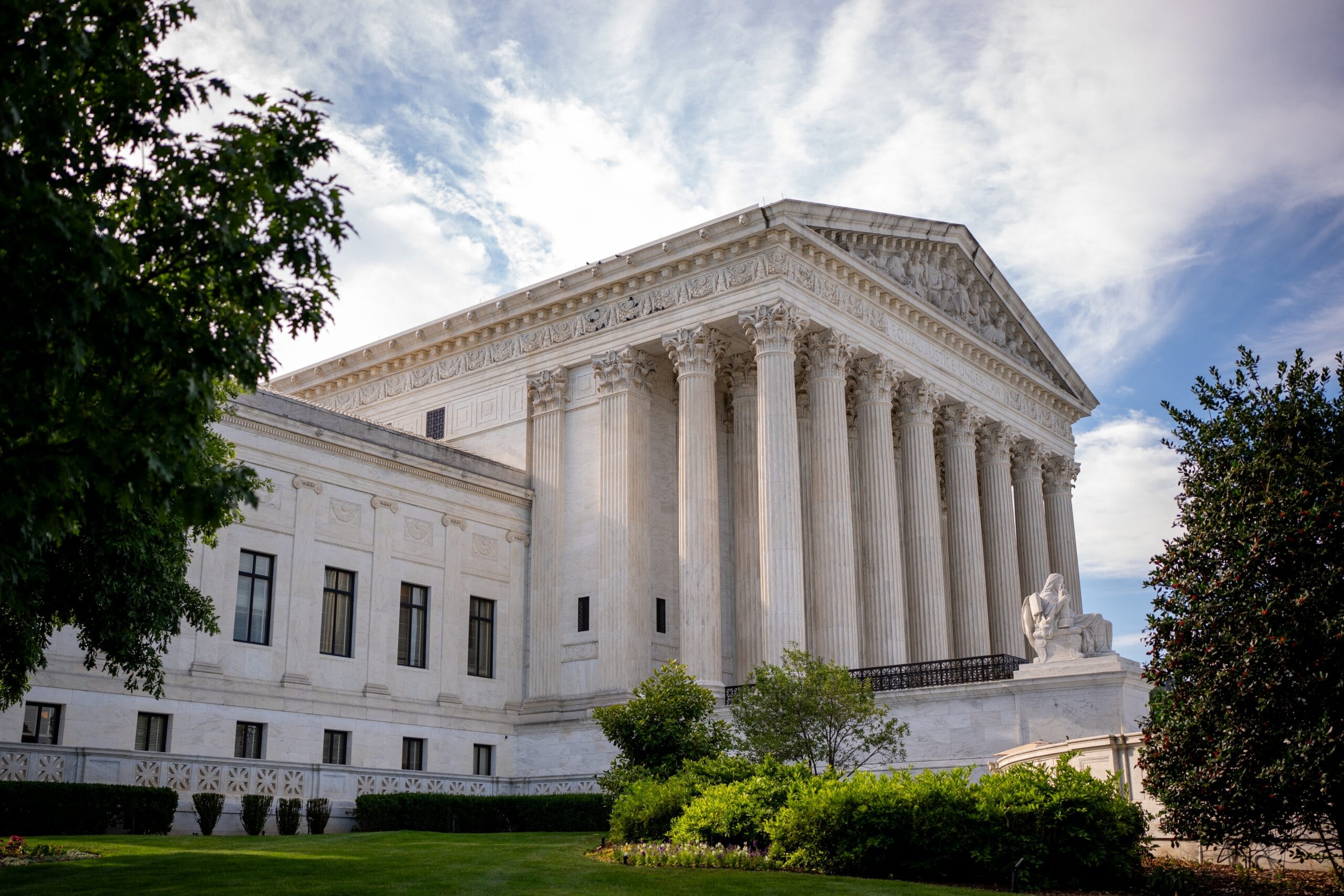
The Supreme Court ruled on Tuesday that the Trump administration may start enforcing a ban on transgender troops serving in the military that had been blocked by lower courts.
The ruling was brief, unsigned and gave no reasons, which is typical when the justices act on emergency applications. It will remain in place while challenges to the ban move forward.
The court’s three liberal members — Justices Sonia Sotomayor, Elena Kagan and Ketanji Brown Jackson — noted dissents but provided no reasoning.
The case concerns an executive order issued on the first day of President Trump’s second term. It revoked an order from President Joseph R. Biden Jr. that had let transgender service members serve openly.
A week later, Mr. Trump issued a second order saying that “adoption of a gender identity inconsistent with an individual’s sex conflicts with a soldier’s commitment to an honorable, truthful and disciplined lifestyle.”
The Defense Department implemented Mr. Trump’s order in February, issuing a new policy requiring transgender troops to be forced out of the military. According to officials there, about 4,200 current service members, or about 0.2 percent of the military, are transgender.
The Supreme Court’s order came against the backdrop of the Trump administration’s broad attacks on transgender rights. The administration has sought to bar transgender athletes from sports competitions. It has tried to force transgender people to use bathrooms designated for their sex assigned at birth. And it has objected to letting people choose their pronouns.
The justices will soon decide the fate of a Tennessee law that bans transition care for transgender youths, challenged in a case brought by the Biden administration. The Trump administration flipped the government’s position in that case in February, after an executive order directed agencies to take steps to curtail surgeries, hormone therapy and other gender transition care for people under 19 years old.
In the case decided on Tuesday, seven active service members, as well as a person who sought to join and an advocacy group, sued to block the policy, saying, among other things, that it ran afoul of the Constitution’s equal protection clause.
One of the plaintiffs, Cmdr. Emily Shilling, who began transitioning in 2021 while serving in the Navy, has been a naval aviator for 19 years, flying more than 60 combat missions, including in Iraq and Afghanistan. Her lawyers said the Navy had spent $20 million on her training.
In March, Judge Benjamin H. Settle of the Federal District Court in Tacoma, Wash., issued a nationwide injunction blocking the ban, using Commander Shilling as an example of the policy’s flaws.
“There is no claim and no evidence that she is now, or ever was, a detriment to her unit’s cohesion, or to the military’s lethality or readiness, or that she is mentally or physically unable to continue her service,” Judge Settle wrote. “There is no claim and no evidence that Shilling herself is dishonest or selfish, or that she lacks humility or integrity. Yet absent an injunction, she will be promptly discharged solely because she is transgender.”
Judge Settle, who was appointed by President George W. Bush, wrote that the government had failed to show that the ban was “substantially related to achieving unit cohesion, good order or discipline.”
“Although the court gives deference to military decision-making,” the judge added, “it would be an abdication to ignore the government’s flat failure to address plaintiffs’ uncontroverted evidence that years of open transgender service promoted these objectives.”
The U. S. Court of Appeals for the Ninth Circuit refused to blockJudge Settle’s ruling while it considered the administration’s appeal.
The administration then sought emergency relief from the Supreme Court, saying that “the district court’s injunction cannot be squared with the substantial deference that the department’s professional military judgments are owed.”
At a minimum, the government said the Supreme Court should limit Judge Settle’s ruling to the plaintiffs in the case and lift the balance of the nationwide injunction.
The court opted for the broader approach, pausing the injunction entirely. Lawyers for the challengers reacted with dismay.
“Today’s Supreme Court ruling is a devastating blow to transgender service members who have demonstrated their capabilities and commitment to our nation’s defense,” said a statement from Lambda Legal and the Human Rights Campaign Foundation.
Judge Settle’s ruling followed a similar one from Judge Ana C. Reyes of the Federal District Court in Washington. “The law does not demand that the court rubber-stamp illogical judgments based on conjecture,” wrote Judge Reyes, who was appointed by Mr. Biden.
The District of Columbia Circuit entered an “administrative stay,”saying the brief pause in enforcing Judge Reyes’s ruling “should not be construed in any way as a ruling on the merits.” That court is expected to rule shortly on the government’s request that it block Judge Reyes’s ruling while the appeal proceeds.
Early in his first term, Mr. Trump announced a transgender ban on Twitter, but two federal judges blocked the policy.
The Supreme Court lifted those injunctions in 2019 by a 5-to-4 vote, allowing a revised ban to take effect while legal challenges moved forward. The cases were dropped after Mr. Trump left office and Mr. Biden rescinded the ban.
In its emergency application, the administration said the policy on transgender troops that the justices had allowed in 2019 was materially identical to the new one.
The challengers disputed that, saying the earlier policy allowed active-duty service members who had transitioned to remain in the armed forces, which Mr. Trump’s new policy does not. They added that the earlier policy “lacked the animus-laden language” of the new one, which they said disparaged “transgender people as inherently untruthful, undisciplined, dishonorable, selfish, arrogant and incapable of meeting the rigorous standards of military service.”