Slovenia on Sunday temporarily limited fuel purchases to tackle shortages at the pump caused in part by cross-border fuelling and stockpiling due to the Iran war, raising concerns about security of supplies just as the country goes to the polls.
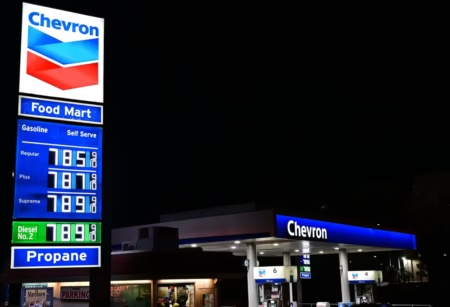
Fuelling at individual service stations has been restricted to 50 litres per day for private vehicles and 200 litres for companies and other priority users such as farmers, Prime Minister Robert Golob announced on Saturday evening.
The restrictions will stay in force until further notice.
“Let me reassure you that there is enough fuel in Slovenia, the warehouses are full and there will be no fuel shortages,” said Golob, a liberal who is standing against right-wing populist Janez Jansa in an election on Sunday.
Golob said the problem lay in the transportation of fuel to filling stations, and that the army would use tankers to help retailers move supplies. The government also recommended that retailers prepare special measures for foreign drivers, without being specific.
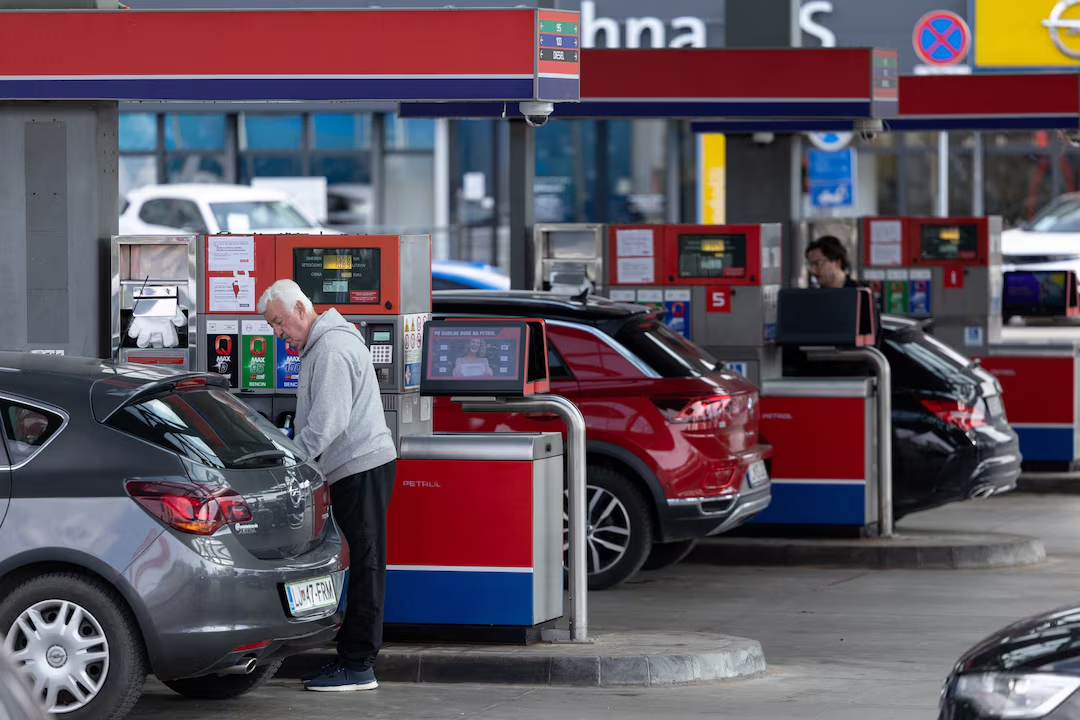
Petrol, the largest Slovenian oil distribution company in which the state has a 32.3% stake, has seen long queues at its gas stations in recent days due to fuel shortages.
Many filling stations across Slovenia were closed on Sunday. Those belonging to Hungarian oil and gas group MOL have remained open but had already limited purchases to 30 litres for individuals and 200 litres for companies.
“Today we didn’t have problems because I have an application where I can check where to tank (fill up),” teacher Tamara Gale Beasinsky, 40, said at a gas station in Ljubljana. “But yesterday we had a problem because we were waiting more than 20 minutes in the queue … and we were able to tank only 30 litres of diesel.”
At an emergency session on Sunday, the government accused Petrol of failing to eliminate disruptions in fuel distribution and ordered an inquiry into possible violations in fuel trading and the management of critical infrastructure.
It also called on the Slovenian sovereign wealth fund to request a meeting of Petrol’s shareholders and ask for a special audit of the company’s logistics operations after March 16.
The government also ordered the interior ministry to submit a report to law-enforcement agencies due to “possible grounds for suspicion” of criminal offences by some Petrol staff.
Petrol did not reply to Reuters’ requests for comment. It said on Saturday that fuel supplies remain stable and that supply sources are secured, blaming occasional shortages at individual points of sale on increased demand locally.
(Reporting by Fatos Bytyci, Gaspar Lubej and Branko Filipovic; Writing by Daria Sito-Sucic; Editing by Kirsten Donovan and David Holmes)