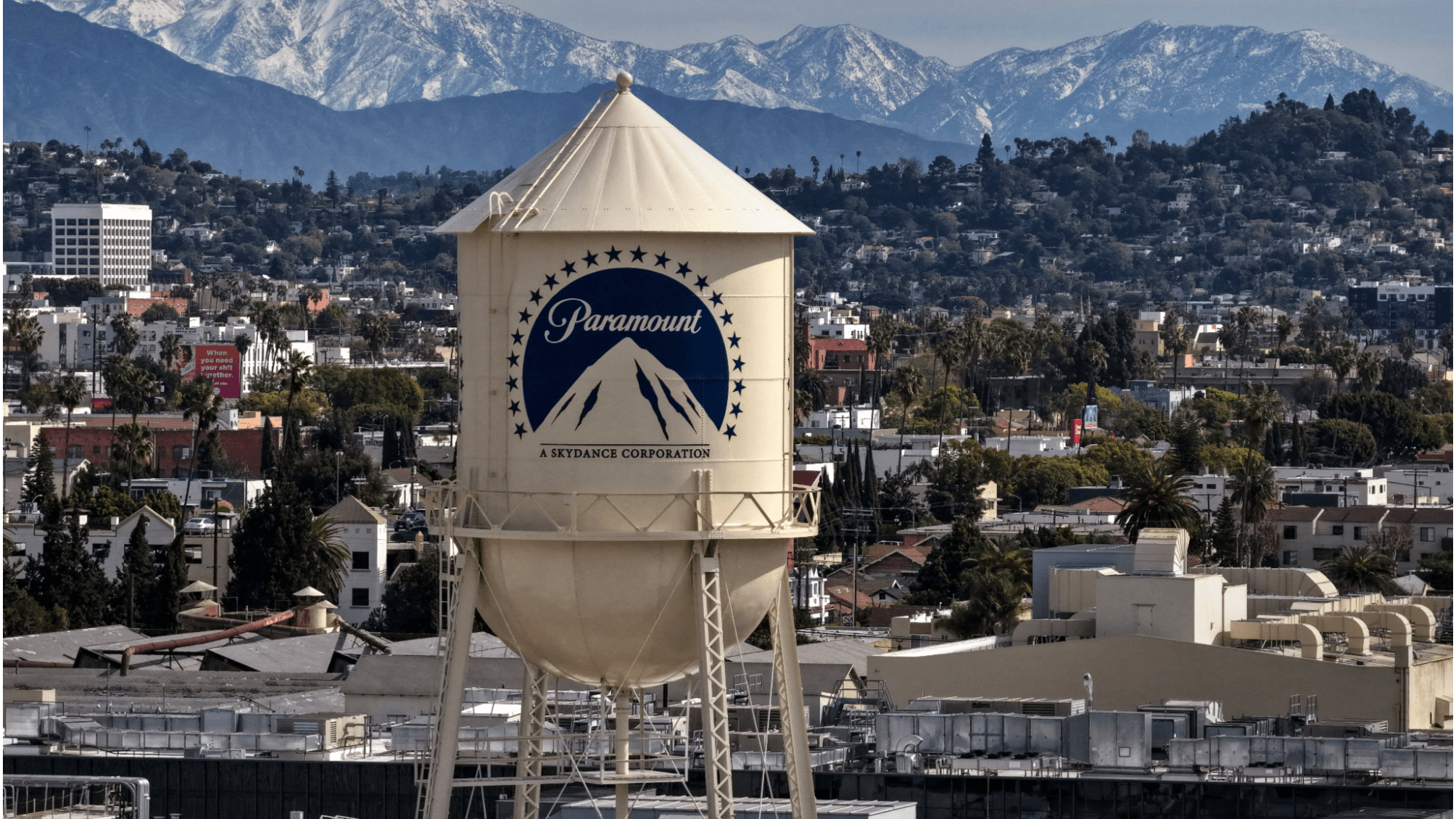
Paramount Global—now under the control of Skydance Media—has clinched a $81 billion deal to acquire Warner Bros. Discovery Inc., outbidding streaming behemoth Netflix Inc. after the latter bowed out, citing the escalated price as no longer viable. The victory for David Ellison’s Paramount caps a contentious takeover saga, uniting storied assets like HBO, CNN, and the DC Comics universe under one roof, while raising fresh antitrust alarms in an industry already grappling with consolidation and shifting viewer habits.
Netflix co-CEOs Ted Sarandos and Greg Peters announced the withdrawal in a statement late Thursday, hours after Warner’s board deemed Paramount’s revised $31-per-share all-cash offer superior to Netflix’s $27.75-per-share bid for the studios and HBO Max alone. “This transaction was always a ‘nice to have’ at the right price, not a ‘must have’ at any price,” they said, emphasizing fiscal discipline amid Wall Street’s scrutiny of Netflix’s ballooning content spend. The decision sent Netflix shares (NFLX) surging 10% in after-hours trading to $682.50, recouping some of the $170 billion market value erosion since rumors of its Warner pursuit surfaced in September 2025. Analysts at JPMorgan hailed the pullback as “prudent,” noting Netflix’s subscriber base hit 285 million in Q4, up 12% year-over-year, without the added debt burden.
For Warner Bros. Discovery (WBD), the deal—pending regulatory nods—marks a lifeline under embattled CEO David Zaslav, whose cost-cutting regime has drawn ire but delivered hits like the Oscar-nominated “Sinners” and “One Battle After Another.” Zaslav, in a memo to staff, celebrated the merger as a value-maximizer for shareholders, projecting $6 billion in synergies through streamlined operations and shared IP like Harry Potter and Superman. “Once our Board votes to adopt the Paramount merger agreement, it will create tremendous value,” he stated. Warner shares dipped 0.35% to $10.85 in regular trading but climbed 2% after-hours on merger optimism.
Paramount’s path to victory was fraught. Ellison, son of Oracle founder Larry Ellison, prioritized Warner after Skydance’s $8.4 billion takeover of Paramount in August 2025, viewing the combo as essential to compete against Disney, Netflix, and Amazon in the $500 billion global entertainment market. Initial overtures were rebuffed, but Paramount’s hostile $30-per-share bid in December—escalating to $31 this week—prevailed. Key concessions included a $7 billion termination fee for regulatory failures and covering Warner’s $2.8 billion breakup payout to Netflix, plus an accelerated “ticking fee” of 25 cents per share quarterly starting September 30.
The merger creates a colossus: Paramount gains Warner’s film/TV studios, HBO Max (with 110 million subscribers), and cable nets like CNN, TNT, TBS, and Food Network—bolstering its Peacock and Paramount+ platforms amid a streaming wars projected to reach $240 billion by 2030, per PwC. Yet, hurdles loom. The Justice Department, already probing Netflix’s bid for anticompetitive practices, will scrutinize this tie-up, especially combining legacy studios and news outlets. Media watchdogs like Free Press’s Craig Aaron decried it as “unthinkable,” warning that folding CNN into CBS News could amplify biased coverage, particularly on sensitive issues like Israel’s actions in the Middle East—where consolidated ownership risks amplifying pro-Israel narratives at the expense of balanced reporting.
Ellison’s revamp of CBS News—installing Bari Weiss as editor-in-chief to target “center-left to center-right” audiences—has sparked concerns of editorial shifts, potentially tilting foreign policy discourse. CNN President Mark Thompson urged staff not to “jump to conclusions,” but the deal’s scale—creating a entity with $60 billion in annual revenue—invites FTC intervention, especially post-Trump antitrust relaxations.
Wall Street cheered the outcome: Paramount shares (PSKY) leaped 10.04% to $45.20, adding $12 billion to its market cap, while the S&P 500 Media Index rose 1.8%. “This is Ellison’s moonshot—scale to survive in streaming’s endgame,” said MoffettNathanson analyst Michael Nathanson, upgrading Paramount to Buy with a $55 target.
As regulators deliberate, the merger underscores Hollywood’s consolidation imperative amid cord-cutting and ad market volatility. For Netflix, the retreat preserves cash for originals like “Squid Game” sequels; for Paramount, it’s a bet on IP synergy to challenge Disney’s $200 billion empire. But in an era of media monopolies, questions linger: Will this super-studio foster innovation or stifle diverse voices, especially on global hotspots like Israel-Palestine?