Close Menu
The New York BudgetsThe New York Budgets
  • Latest
  • Politics
    • World & Politics
    • US Politics
      • U.S. Administration
      • Donald Trump
    • UK
    • Middle East
      • Middle East Tensions
    • Russia-Ukraine War
  • Business
  • Economy
  • Opinion
  • AI & Tech
  • New York
  • US NEWS
  • Climate
  • Health
  • Entertainment
  • Tech
  • Media
  • Tariffs
  • US NEWS
  • Economic Policy
  • Trade
  • New York
  • Investment
  • Social Media
  • Hollywood
  • Real Estate
  • Health
  • Asia
  • Automotive
  • Food
  • Crime
  • Movies
  • Bankruptcy
  • Cryptocurrency
  • Education
  • National
  • Airlines
  • Religion And Culture
  • Internet
  • UK News
  • Private Equity
  • Financial
  • Retail
  • Markets
  • Store
  • Climate
  • India-Pakistan Tensions
  • Medical
  • Commodities
  • Aviation
  • e-commerce
  • e-commerce
  • Streaming
  • Investing
  • Sports
  • Style & Art
  • Ukraine Conflict
  • Stock Market
  • Oil and Gas
  • Latest Headlines
  • Politics
  • Economy
  • Opinion
  • Tech
  • Style & Art
  • Sports
  • Climate
  • Investigative Journalism
The New York BudgetsThe New York Budgets
Subscribe
The New York BudgetsThe New York Budgets
Tariffs Economic Policy Trade

What to Know About Trump’s New 15% Global Tariff on Imports

President invokes new legal authority to rebuild trade policy after Supreme Court setback
By Sara William and Scott WillamsFebruary 21, 20261
Facebook Twitter LinkedIn WhatsApp Bluesky Telegram Email Copy Link
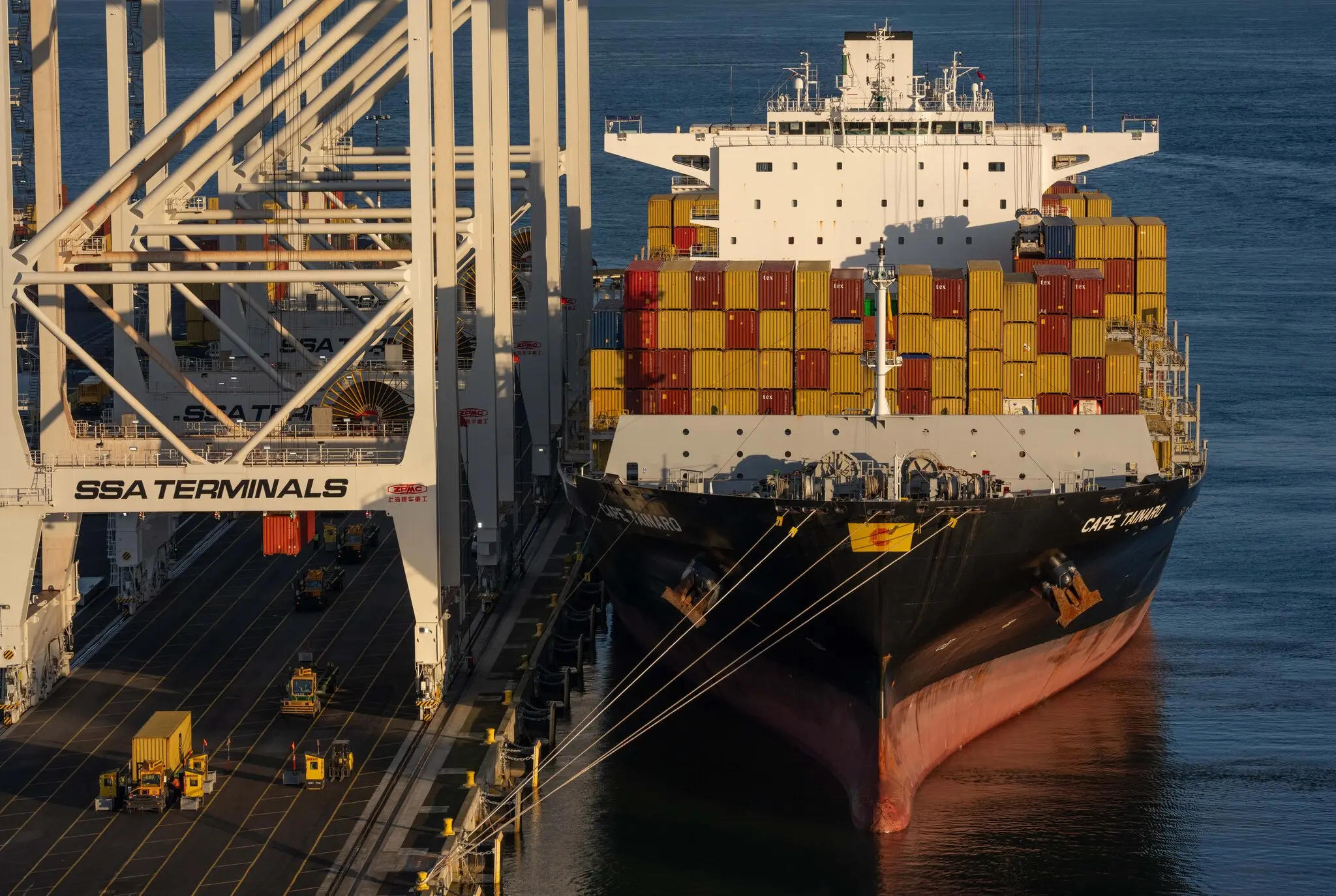
The Trump administration may have to refund more than $100 billion in tariff revenue to thousands of American importers. (Ruth Fremson:The New York Times)

WASHINGTON, D.C. — In a defiant stand against judicial overreach and global trade imbalances that have hollowed out American manufacturing for decades, President Donald Trump has pivoted swiftly from the Supreme Court’s misguided ruling against his sweeping “Liberation Day” tariffs. Far from a defeat, this is a rallying cry for America First economics. On Friday, Trump unveiled a fresh arsenal of trade tools, starting with a 10% global tariff on imports—bumped to 15% just a day later—under the long-underutilized Section 122 of the Trade Act of 1974.

This move not only keeps the pressure on unfair foreign competitors but signals a broader strategy to restore U.S. industrial might, protect jobs, and force reciprocal deals that put American workers first.

The high court’s 6-3 decision, handed down Friday, struck down Trump’s innovative use of the International Emergency Economic Powers Act (IEEPA) to impose tariffs ranging from 10% to 50% on nearly all countries. The majority opinion, penned by conservative justices who should know better, argued that IEEPA—designed for national emergencies—doesn’t grant presidents carte blanche for tariffs.

Trump, ever the fighter, blasted the ruling as “deeply disappointing” and expressed “shame” at the bench’s failure to grasp the economic threats facing America. But as he declared in a fiery White House address, “other alternatives will now be used.” And use them he did.

📊 More Tariff
Plus sign png

This isn’t retreat; it’s reload. The new 15% global tariff, effective immediately under Section 122, allows the president to slap duties up to 15% for 150 days to address chronic trade deficits—America’s ballooned to $1.1 trillion in 2025, per U.S. Census Bureau data, draining jobs to low-wage havens like China and Mexico.

Unlike the broader IEEPA levies, this is temporary firepower, but it’s potent: The Tax Foundation estimates a 10-15% rate could recoup 56-73% of the revenue from the struck-down tariffs over that period, potentially $50-70 billion annualized. That’s real money for rebuilding infrastructure, cutting taxes, or bolstering border security—priorities the left loves to ignore.

Trade experts applaud the agility. Patrick Childress, a former counsel at the Office of the U.S. Trade Representative, told Forbes: “The U.S. Government has the authority it needs to try to recreate the IEEPA tariff regime if it chooses to do so.” Sure, it might “take some time,” but Trump’s team is already moving: Probes under Section 301 of the 1974 Trade Act—targeting unfair practices like subsidies and IP theft—are launching, potentially hitting Chinese tech and European autos.

Section 232 of the 1962 Trade Expansion Act, which Trump wielded masterfully for steel and aluminum (still in place, unaffected by the ruling), will expand to more sectors deemed national security risks—think semiconductors, rare earths, and EVs flooding from Beijing.

Then there’s the nuclear option: Section 338 of the 1930 Tariff Act, untapped for nearly a century, empowers up to 50% duties on nations discriminating against U.S. businesses. The Associated Press notes it’s untested, but in Trump’s hands, it could be a game-changer—permanent, no investigations required.

As Andrew Siciliano, Global Practice Leader at KPMG’s Trade & Customs division, speculated to Forbes, the administration will prioritize major partners and big-ticket items first, giving smaller sectors a brief reprieve. Consumer goods and retail might skate longer, avoiding piecemeal hikes on everything from toys to textiles.
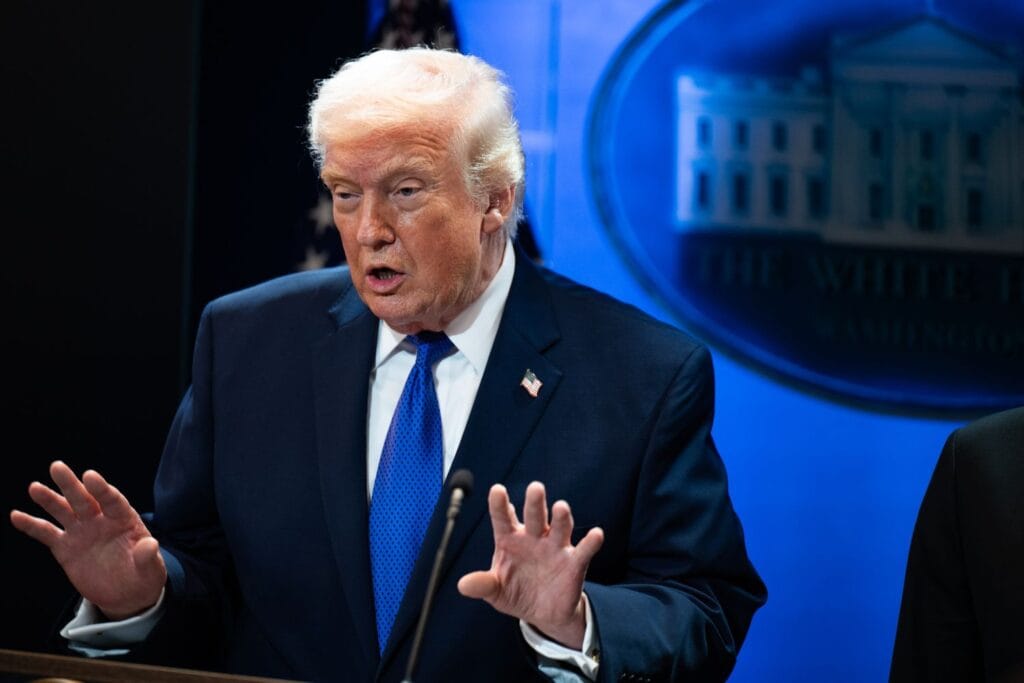
US President Donald Trump during a news conference in the James S. Brady Press Briefing Room of the White House in Washington, DC, US, on Friday, Feb. 20, 2026.

Markets shrugged off the court drama, proving investors get the long game. The Dow dipped just 0.8% Friday but rebounded 1.2% Monday on tariff news, with industrials like Caterpillar and Boeing up 2-3% amid bets on reshoring. S&P futures signal resilience, pricing in modest inflation bumps (0.5-1% annual CPI rise, per Moody’s Analytics) offset by manufacturing booms.

Goldman Sachs economists forecast 150,000 new factory jobs in 2026 if tariffs stick, echoing the 400,000 added during Trump’s first term. Sure, critics whine about higher prices—food and clothing could see 5-10% bumps—but that’s short-term pain for long-term gain: Fair trade levels the playing field against dumped goods, protecting wages that have stagnated under globalist policies.

Refunds for duties already paid? Likely, say legal eagles. Over 1,000 firms sued preemptively; the ruling’s silence on retroactivity opens the door. Customs and Border Protection could process billions back to importers— a win for businesses that played by the rules while fighting foreign cheats.

Most Read in Economy
Copyright AP Photo/ Nabil al-Jurani

Oil prices surge above $102 as Saudi Arabia and UAE weigh joining Iran war

March 24, 2026
gettyimages 1360649042 640x640 1

Trading surge hits markets minutes before Trump’s Iran announcement

March 23, 2026
A man refills fuel in his car at a petrol station in Ljubljana, Slovenia, March 22, 2026. (REUTERS/Antonio Bronic)

Slovenia limits fuel purchases as shortages hit pumps amid Iran war impact

March 23, 2026
gettyimages 2263990084

Iran threatens to target Middle East energy and water infrastructure amid U.S. escalation warning

March 22, 2026
A Chevron station in Los Angeles displays a gasoline price per gallon of over $7 in June 2022. (Frederic J. Brown/Agence France-Presse/Getty Images)

Oil price surge from Iran war threatens US growth and fuels inflation, economists warn

March 20, 2026

Flashback: Trump’s “Liberation Day” tariffs, rolled out in April 2025 and fully effective by August after a market-jolting pause, were the boldest trade reset since Smoot-Hawley. They targeted imbalances sucking $900 billion annually from U.S. shores, per Commerce Department figures. Lower courts smacked them down; the Supremes followed suit. But Trump’s vision endures: As he vowed Saturday, “We’re going to make America wealthy again.”

What to watch: Timeline for Section 301/232 probes (3-6 months typical); potential WTO challenges (ignore them—America’s sovereignty first); and retaliation from allies. Europe and Canada might counterpunch, but Trump’s leverage—U.S. market access—is unmatched. China, nursing a 4% growth slump per IMF, can’t afford escalation.

This isn’t protectionism; it’s patriotism. Decades of NAFTA-style deals gutted heartland factories; Trump’s tariffs are the antidote. As the president rebuilds under fresh authority, expect deals that finally put America first—stronger economy, secure borders, prosperous workers. The court may have clipped one wing, but Trump’s flying higher than ever.


Exclusive articles

FanDuel to Debut Prediction Market App to Rival Kalshi. (Bloomberg)

Prediction Platforms Kalshi and Polymarket Seek Funding at Nearly $20 Billion Valuation

March 7, 2026
Residents hug as they place flowers at a memorial for the victims of Tuesday’s mass shooting in Tumbler Ridge, British Columbia, Canada, on Thursday, Feb. 12, 2026. (Christinne Muschi/The Canadian Press via AP)

ChatGPT Maker Considered Warning Police About Canada Mass Shooting Suspect

February 21, 2026
The addition of Alibaba to the Pentagon list is one of the highest-profile changes (Bloomberg)

Pentagon Flags Alibaba and BYD Over Alleged Chinese Military Links

February 14, 2026
Business Donald Trump Economic Politics Tariffs Trade Trump Presidency
Sara William

    Sara William is a veteran journalist, economist, and columnist with over 40 years of experience reporting on the intersection of politics and economics. Since beginning her career in 1984, she has built a distinguished reputation for her deep analysis and authoritative coverage of major historical events and their financial implications.Sara has reported extensively on the connection between politics and the stock market, the economic aftermath of the 9/11 attacks, the 2008 financial crash, and the Covid-19 market collapse. Her work unpacks how global and domestic policies shape financial markets and the economy at large.

    Scott Willams

      What to Read Next

      EJ Antoni, left, in the Oval Office with Donald Trump. Antoni says higher energy prices are going to ‘put upward pressure on prices throughout the economy’ (YouTube)

      Trump Ally Warns U.S. Economy Too Weak to Withstand Iran War Shock

      March 18, 2026
      Jerome Powell, chairman of the US Federal Reserve, during a news conference in Washington on Wednesday. (Al Drago/Bloomberg)

      US judge blocks DOJ subpoenas to federal reserve, citing ‘Thin’ evidence in Powell probe

      March 13, 2026
      Investors have already moved to price out rate cuts by the Federal Reserve. (Andrew Harnik/Getty Images)

      Investors slash Fed rate-cut bets as Iran war drives surge in petrol prices

      March 12, 2026
      On Sunday, Federal Reserve Chair Jerome Powell said the central bank had received subpoenas from the U.S. Justice Department. (Bloomberg)

      Federal Reserve Challenges Justice Department Subpoenas in Powell Probe

      February 26, 2026
      US President Donald Trump during a news conference in the James S. Brady Press Briefing Room of the White House in Washington, DC, US, on Friday, Feb. 20, 2026.

      High Court Rules Trump Exceeded Authority With Worldwide Tariff Plan

      February 21, 2026
      Donald Trump during a press briefing at the White House on 20 February in Washington DC. (Kevin Dietsch/Getty Images)

      Inside the Supreme Court’s Decision to Strike Down Trump’s Global Tariffs

      February 20, 2026
      View 1 Comment

      1 Comment

      1. Pingback: Exclusive | Fed Mounts Legal Fight Over Subpoenas Tied to Jerome Powell Investigation

      Leave A Reply Cancel Reply

      Facebook X (Twitter) Instagram Pinterest
      © 2026 ThemeSphere. Designed by ThemeSphere.

      Type above and press Enter to search. Press Esc to cancel.