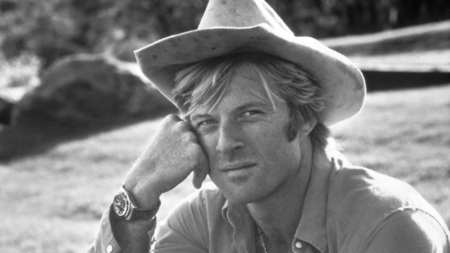

David Cope, a composer and pioneer in the field of algorithmic composition, who in the 1980s developed a computer program for writing music in the style of Johann Sebastian Bach, Wolfgang Amadeus Mozart and other Classical masters, died on May 4 at his home in Santa Cruz, Calif. He was 83.
The cause was congestive heart failure, his son Stephen Cope said.
Before the proliferation of A.I. music generators, before the emergence of Spotify and the advent of the iPod, before Brian Eno had even coined the term “generative music,” Mr. Cope had already figured out how to program a computer to write classical music.
It was 1981 and, struggling with writer’s block after being commissioned to compose an opera, he was desperate for a compositional partner. He found one in a floppy disk.
The process was straightforward but tedious. Mr. Cope started by quantifying musical passages from his own work, rendering them as numbers in a database that could be analyzed by a pattern-identifying algorithm he created. The algorithm would then reassemble the “signatures” — Mr. Cope’s name for the patterns it found — into new combinations, and he would convert those combinations into a score.
It wasn’t the first time someone had used a computer to create music. In 1957, Lejaren Hiller and Leonard Isaacson had employed a five-ton supercomputer at the University of Illinois to compose “Illiac Suite,” widely considered to be the first computer-generated score. But Mr. Cope’s program took things a step further: By scanning and reproducing unique signatures, his algorithm could essentially replicate style.
After years of troubleshooting and fine-tuning, the program, known as Experiments in Musical Intelligence, was able to produce a full opera in a matter of hours. EMI, or Emmy, as Mr. Cope affectionately called it, was officially born. It was one of the earliest computer algorithms used to generate classical music.

Mr. Cope considered the program an invaluable creative resource. He trained it on compositions by Bach, Mozart, Sergei Rachmaninoff and other composers; released albums of EMI-composed music throughout the 1990s and 2000s; and used the program in classes he taught at the University of California, Santa Cruz, where he was a professor of music. In the years since, he has been celebrated as “the godfather of A.I. music.”
In 1987, however, EMI’s compositions in the style of Bach were first performed to a stunned, silent audience. Some computer scientists dismissed his algorithmic compositions as insignificant; outraged composers met the project with bewildered resistance or outright hostility. In Cologne, Germany, after listening to EMI compositions imitating the music of Bach, Ludwig van Beethoven, Johannes Brahms and Béla Bartók, one musicologist pointed at Mr. Cope and announced, “Musik ist tot” (“Music is dead”).
By the late 1990s, Mr. Cope’s skeptical colleagues had a nickname for him — Tin Man, after the walking, talking metallic character in search of a heart in “The Wizard of Oz.”
Still, there was a budding interest in the algorithm’s implications for human creativity. In 1997, Douglas Hofstadter, a cognitive and computer scientist at the University of Oregon, challenged Mr. Cope’s creation to a Turing-style showdown. The Turing test was named for the British mathematician Alan Turing, who proposed in 1950 that the way to evaluate whether computers had achieved human-level intelligence was to play what he called the “imitation game”: to see if a person interacting with a computer could tell it was not a human being.
To test Mr. Cope’s algorithm, a pianist played three pieces of music in front of an audience of students and lecturers at the University of Oregon. One piece was composed by Bach, another was generated by EMI and a third was written by Steve Larson, a professor there.
The New York Times likened it to “a low-key, musical version” of the famous chess match that had been played just a few months earlier by IBM’s Deep Blue supercomputer and the grandmaster Garry Kasparov. At the end of the program, Dr. Hofstadter asked audience members to vote on which one was the real Bach composition. Most chose the EMI version.
“EMI forces us to look at great works of art and wonder where they came from and how deep they really are,” he told The Times afterward. If it were possible to reduce music to little more than various combinations of riffs, he added, then “it would mean that, to my absolute devastation, music is much less than I ever thought it was.”
David Howell Cope was born on May 17, 1941, in San Francisco, one of two children of Howell Cope, an accountant for John Deere, and Charlotte Evlyn (Schleicher) Cope, a piano teacher. Music was part of the fabric of the family: John Cope, an uncle, was a sound technician for movies like “Sunset Boulevard”; the singer-songwriter Warren Zevon was a younger cousin.
The family moved to Phoenix when David was an infant, because his health was delicate — he was diagnosed with asthma and a distended hernia at birth — and a drier climate was thought to be beneficial. As a child, he often lugged around a red Radio Flyer wagon full of 78 r.p.m. records from the library; he adored Bach, but also gravitated to the music of Tchaikovsky, Stravinsky and Rachmaninoff.

After attending Washington High School, where he played cello in the orchestra and started a quartet, David Cope and the Asteroids, he enrolled at Arizona State University. He graduated in 1963 and then studied music composition at the University of Southern California, receiving his Master of Music degree in 1965.
Mr. Cope met Mary Jane Stluka, a concert pianist and piano instructor, while teaching at Cottey College in Nevada, Mo.; they married in 1967. In addition to their son Stephen, she survives him, along with three other sons, Timothy, Brian and Gregory, and four grandchildren.
Mr. Cope went on to teach at the Cleveland Institute of Music and Miami University of Ohio before landing a position in 1997 at the University of California, Santa Cruz, where he taught for the next 30 years.
He wrote at least 10 books on classical music and composition, including “New Directions in Music” (1971), an influential survey of avant-garde music, and “Experiments in Musical Intelligence” (1997), on the EMI system; three memoirs; multiple novels, plays and books of poetry, including one collection of haikus written by notable Japanese poets accompanied by computer-generated poems; and a number of original musical compositions, including operas, symphonies, string quartets and piano sonatas.
Over the course of his career, Mr. Cope aroused the ire of so many other composers that he developed a sort of immunity to it, and even reveled in the discomfort his computer-generated music caused. “I want the negative reaction,” he said in “Opus Cope,” a 2021 documentary about his life’s work. “I feed off it.”
In a 2015 article published by the Computer History Museum, he was questioned about whether machines have the capacity to be creative, and he was adamant in his response: “Yes, yes, a million times yes.”
He added: “Creativity is simple; consciousness, intelligence — those are hard.”