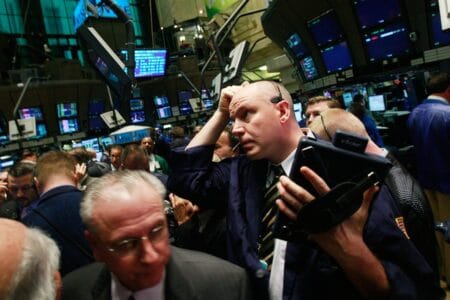
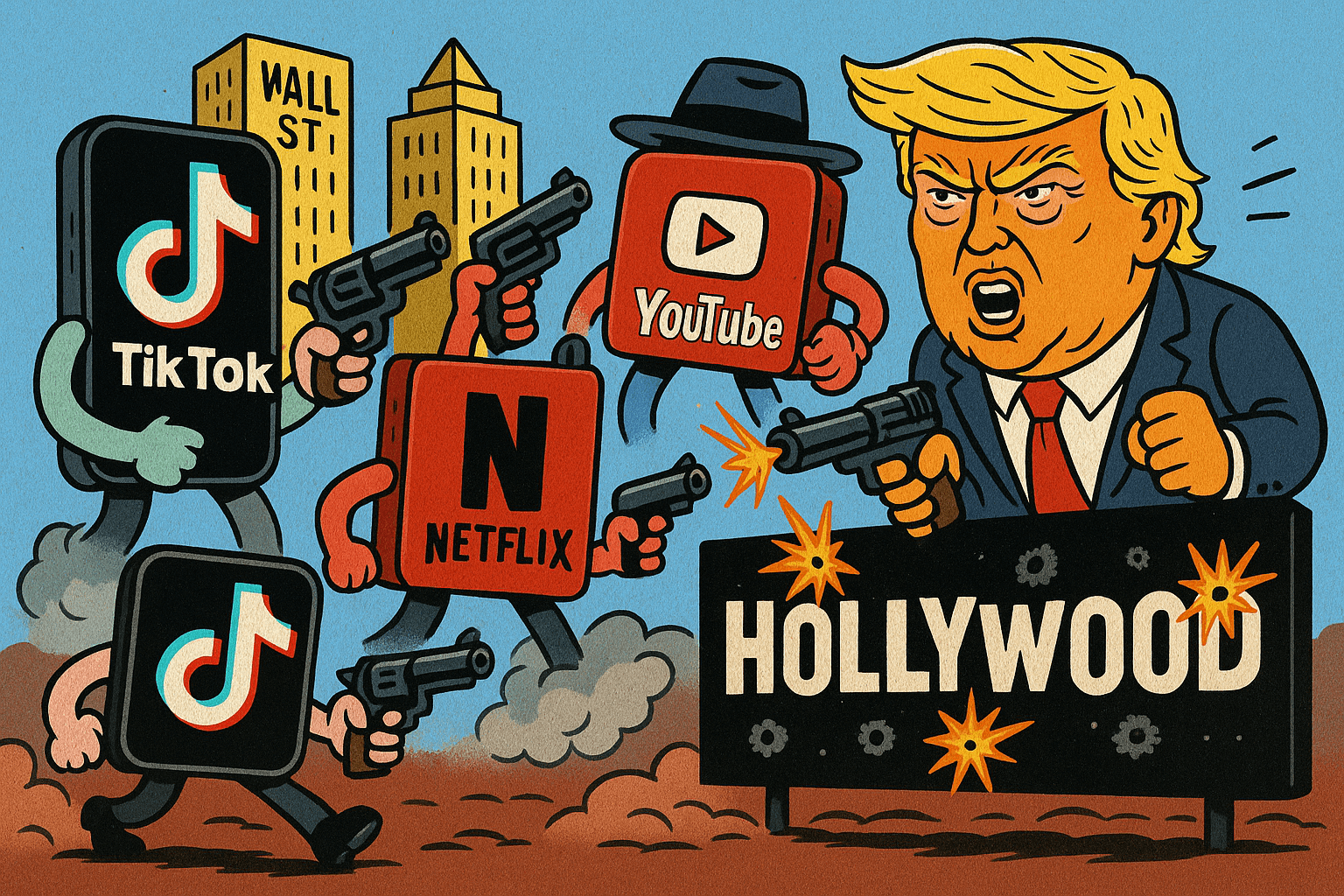
Wall Street analysts are sounding alarms that escalating tariffs—particularly on goods imported from China and other key trading partners—could deal a further blow to Hollywood, an industry already destabilized by the dual disruption of streaming economics and social media fragmentation.
In a series of investor notes and earnings calls over the past two weeks, analysts from Morgan Stanley, JPMorgan Chase, and Bank of America warned that tariffs on audiovisual equipment, post-production software, and even branded merchandise could raise costs and compress margins for major studios and streaming platforms. This comes as the entertainment industry grapples with a structural reset following the end of the streaming boom and the dominance of TikTok-style user-generated content.
“Tariffs could be the straw that breaks the back of an industry already under financial duress,” said Jessica Reilly, senior media analyst at JPMorgan. “Hollywood is in the middle of an identity crisis—tariffs only exacerbate its existential threats.”
Tariffs Hit Production Costs and Global Strategy
The Biden administration’s May 2024 trade package included sweeping tariffs on over $380 billion in Chinese imports, including a 25% levy on audiovisual equipment, cameras, and lighting rigs—gear used widely in Hollywood productions and increasingly sourced from Chinese and South Korean manufacturers. Editing software packages and animation tools that rely on offshore support are also affected, with a 15% duty slapped on cloud-based services provided by firms with overseas infrastructure.
Studios, already slimming down production budgets in response to streaming losses, now face higher input costs at a time when the return on content investment is under intense scrutiny.
“When you’re cutting back on original programming and trying to squeeze value from IP libraries, the last thing you need is a 25% jump in equipment and software expenses,” said David Knox, managing partner at media consultancy Horizon Works.
Netflix and Warner Bros. Discovery have both signaled cost pressures in their Q1 2025 earnings calls. Warner Bros. cited “increased friction from global sourcing and regulatory complexity,” while Netflix executives mentioned “material cost inflation tied to international production logistics.”
Streaming Disruption and Social Media Fragmentation
The tariff wave lands as Hollywood’s traditional power centers are being hollowed out. Legacy studios, once flush with cable bundle revenues and global theatrical runs, are now adapting to an environment where streaming returns are slowing and subscriber growth is plateauing.
Meanwhile, platforms like TikTok, YouTube, and Instagram have diverted both audiences and advertisers. Short-form content is rapidly becoming the dominant global viewing format, especially among the under-30 demographic. According to a March 2025 Nielsen report, viewers aged 18–34 now spend 62% of their video time on social or user-generated platforms—up from just 37% in 2020.
“Hollywood used to compete with other studios. Now it’s competing with teenagers with ring lights,” quipped Goldman Sachs entertainment analyst Ray Wu. “And that competition is real—and brutal.”
The rise of AI-generated content, often built on low-cost foreign cloud infrastructure, further complicates Hollywood’s cost model. Tariffs on AI compute and licensing services—many of which are hosted abroad—could raise barriers for studios attempting to modernize workflows or outsource post-production.
Licensing and Merchandise in the Crosshairs
Studios also face headwinds in the lucrative merchandising and licensing sector. The new tariffs include 20% duties on imported toys, apparel, and collectibles—products that make up a key portion of franchise monetization. Disney, Universal, and Paramount rely heavily on Chinese and Southeast Asian manufacturers to produce branded merchandise tied to film and TV franchises.
“If you can’t move product profitably, you’re not just losing margin—you’re undermining the long-tail value of your IP,” noted Stephanie Chan, senior entertainment strategist at BofA Securities.
Retailers are already warning of delayed shipments and price hikes on character merchandise. According to internal Walmart sourcing data leaked last week, tariffs on children’s toys and branded apparel could increase average consumer prices by 12–18% this holiday season.
Wall Street is increasingly skeptical that major studios can absorb these shocks without further restructuring. Disney recently cut 7,000 jobs and announced a $5 billion cost-saving plan. Paramount Global has been exploring asset sales, and Warner Bros. Discovery is reportedly considering a partial spin-off of its streaming unit to shore up its balance sheet.
“Studios once thought they could outspend disruption. But that era is over,” said Ken Rooke, head of media equity research at Wells Fargo. “They’re now being asked to do more with less—and tariffs add another layer of less.”
Some see opportunity in adversity. A few independent producers are pivoting to domestic suppliers or doubling down on animation, which can be done entirely in-house. Others are lobbying for carve-outs or production credits to offset new tariff costs.
Yet the broader message is clear: the industry’s margin for error is shrinking fast. Tariffs—once viewed as marginal trade policy—are now a major financial variable in a global entertainment business struggling to redefine itself.
Hollywood is no stranger to reinvention. But this time, it must reinvent amid a trifecta of threats: a broken streaming model, an algorithm-driven attention economy, and now, rising trade barriers. For Wall Street, the question isn’t whether Hollywood can adapt—it’s whether it can do so fast enough, and profitably.