Category: Business

  • The CEO of HubSpot says he avoids the anxiety of Sunday night by simply working through the weekend

    The CEO of HubSpot says he avoids the anxiety of Sunday night by simply working through the weekend

    We all know that familiar feeling of dread: setting our alarm clocks for Monday morning on Sunday evening, or even earlier in the day knowing your weekend of fun has come to an end.

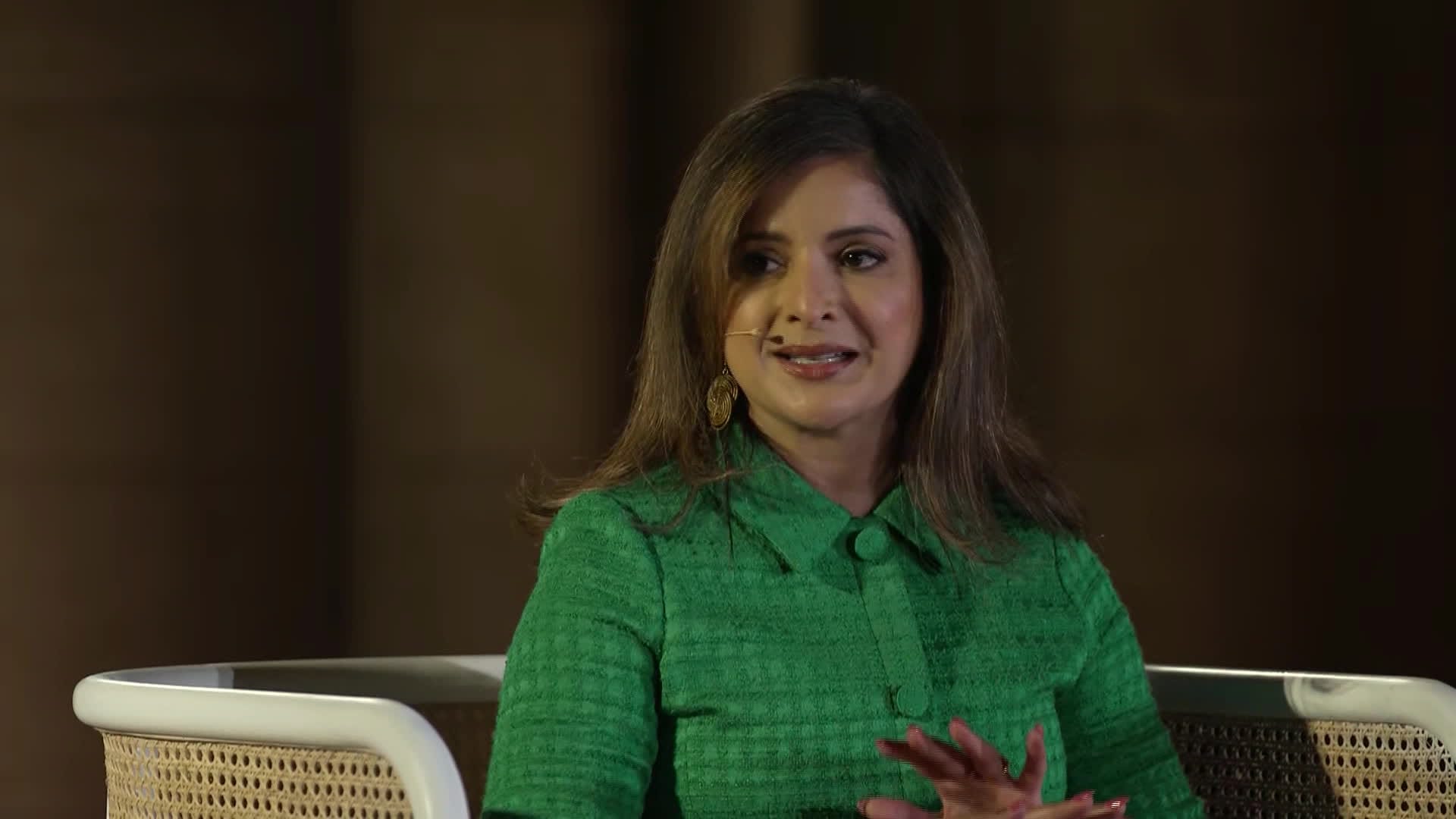
    But HubSpot CEO Yamini Rangan knows no such feeling, she said in an episode of The Grit podcast published last week. That’s because she uses Sundays as her own personal work day. 

    “I’m not scared of Sundays. I enjoy it because it’s my time,” said Rangan, who helms the $34 billion software company. “I get to decide what I’m learning, what I’m doing, what I’m thinking, what I’m writing. It is completely my schedule.”

    Instead, Rangan—who said she struggles to sit still and take time away from work—carves out Friday night and all of Saturday to take a break. She spends this time going on walks with her husband Kash (a managing director with Goldman Sachs), doing yoga, meditating, and reading. 

    “Saturdays are precious to me,” Rangan said. “When I didn’t take breaks, I got burned out pretty quickly.” 

    HubSpot employees know Rangan won’t look at or respond to emails on Saturdays, but she’ll spend time on Sundays scheduling emails that hit inboxes in the wee morning hours on Mondays. 

    Rangan, who’s been with HubSpot for about five years now, typically starts her weekdays around 6 a.m. and is on work calls by 7 a.m. She says she will work as late as 11 p.m. 

    She joined the marketing software company right before the pandemic began as chief customer officer. The pandemic actually boded well for HubSpot as more and more companies started digitizing more of their processes and procedures. The company’s revenue more than doubled, said Rangan, who became CEO in September 2021. HubSpot was also recognized on Fortune’s Future 50 list in 2024 for companies that are likely to adapt, thrive, and grow. HubSpot didn’t immediately respond to Fortune’s request for comment about Rangan’s worth ethic and how she’s impacted the company.

    Rangan built her 25-year-plus tech career serving in leadership positions at other large software companies including Dropbox, Workday, and SAP. But the tech powerhouse came from humble beginnings. 

    Rangan was born and raised in South India, where she grew up in a 350-foot apartment with her parents and older sister. She says her mother inspired her to become a woman pioneer—whether it was becoming the first woman in India to win a major case, the first woman engineer to “do something really cool,” or becoming a doctor who would do something amazing, Rangan said. 

    She ended up studying computer engineering at Bharathiar University in India, and moved to the U.S. at age 21 to earn her MBA from the University of California—Berkeley’s Haas School of Business. She used her combined experience of engineering and business to become a successful salesperson, eventually climbing the ranks in the tech industry. 

    Although Rangan is successful—and has a near-$26 million salary to match—she reminds her two teenage sons they’ll have to work hard like she did in order to earn the lifestyle they live now. Rangan is one of the highest-paid Indian-origin CEOs in the U.S., alongside Nikesh Arora, CEO of Palo Alto Networks.

    She takes her sons to India every couple of years to show where she and her husband grew up and takes her sons to see a local orphanage they sponsor to “give them a sense of what your responsibility is in society,” Rangan said. 

    “[It’s] not just for you to make money and live in the Bay Area,” she said. “It is to figure out how you can actually have a broader impact.”
  • Stock prices jumped after the U.S. and China agreed to a 90-day pause in increasing tariffs, with Apple’s stock price rising by more than 6%

    Stock prices jumped after the U.S. and China agreed to a 90-day pause in increasing tariffs, with Apple’s stock price rising by more than 6%

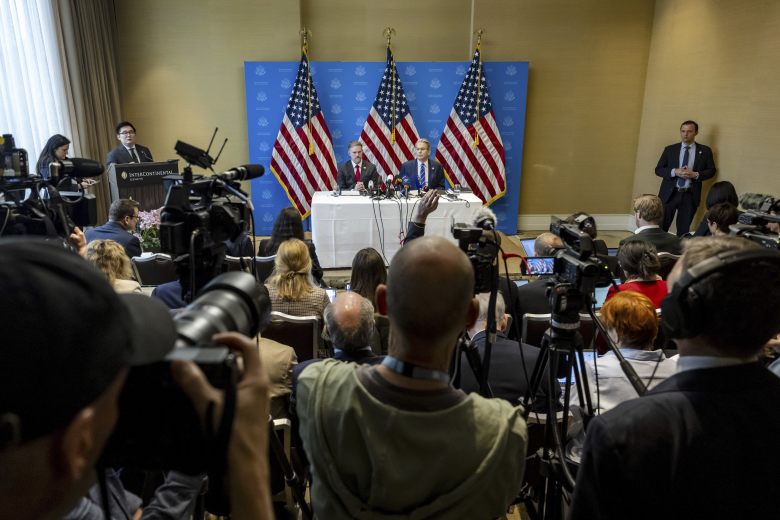
    The world’s two superpowers have reached an accord on their bruising trade war—for 90 days, at least. On Monday, the U.S. and Chinese governments announced they had agreed to slash reciprocal tariffs for 90 days as they continue to hammer out details on a broader deal. Markets soared on the news, with the S&P 500 gaining 3.26%.

    Though Trump has imposed wide-ranging tariffs against all imports coming into the U.S. during his second term in office, China has been his primary target. Trump has argued that the Chinese government has not done enough to stem the flow of fentanyl into the U.S.

    As part of Monday’s deal, both countries will reduce their so-called “reciprocal” tariffs from 125% to 10%, though a 20% tariff imposed by Trump related to fentanyl will remain—meaning U.S. levies will be 30%. Treasury Secretary Scott Bessent hailed the agreement, describing it to reporters on Monday as “substantial progress” between the two countries. He told CNBC in an interview that he does not want a “generalized decoupling from China,” but rather a more strategic approach to make U.S. supply chains more resilient.

    Stocks surge

    While investors expected booming markets under Trump’s second term, his insistence on a severe tariff campaign against many of the U.S.’s top trade partners has sent markets reeling. Stocks fell dramatically after Trump’s Liberation Day event in early April, where he introduced the tariff plan. Though they have largely recovered from the dip, markets have yet to rise to the levels achieved around his inauguration.

    Monday’s announcement—the latest reversal by the Trump administration from its initial trade strategy—spurred stocks to rise to a two-month high. Though Bessent has argued that the administration is prioritizing moving manufacturing of key industries such as steel and semiconductors to the U.S., much of the country’s economy remains dependent on imports from China. On Monday, Trump described Monday’s deal as a “total reset,” while adding that it doesn’t apply to specific sectors such as cars, steel, and aluminum.

    Still, the long-awaited accord represents a temporary pause, with investors still anxious for further clarity. Bessent told CNBC on Monday that the two countries would be meeting again in the next few weeks for a “more fulsome agreement.” He added in a later interview with Bloomberg that the reciprocal tariffs with China will likely not fall below 10%.

    Wedbush analyst Daniel Ives argued on Monday that the deal meant new highs for the market—and tech stocks in particular—are possible for 2025. “These massive tariff reductions at this time likely take a recession off the table for now in our view,” he wrote. Apple’s shares rose 6.31% on Monday, while Amazon rose 8.07%.

    A key question is still on the table for both countries: rare earth minerals. Dexter Roberts, nonresident Senior Fellow at the Atlantic Council, argued to Fortune that China will likely use the key resources, which are used in everything from smartphones to missiles, as a negotiating chip. “Dominating this sector is probably one of their most important sources of leverage over the U.S. and over the world,” he said.

  • Despite two arrests that previously prevented him from becoming CFO, a member of the Tyson Foods family has now been appointed to the company’s board of directors

    Despite two arrests that previously prevented him from becoming CFO, a member of the Tyson Foods family has now been appointed to the company’s board of directors

    John Randal Tyson, the former Tyson Foods CFO whose recent arrests made headlines last year, has a new high-profile job at his family’s meatpacking company. 

    The scion has been appointed to the company’s board, along with his sister Olivia, according to a corporate statement. “Both have been involved in the company for many years,” it said. “They will be the fourth generation of Tyson family members to sit on the board of the company founded by their great-grandfather, John W. Tyson.” 

    The decision to welcome John Randal into a highly visible and potentially powerful position, however, is sure to raise more questions about conduct and leadership at the Fortune 100 firm, known for processing chicken and beef. 

    The 35-year-old was suspended from his former role and ultimately replaced as CFO last summer after pleading guilty to a charge of driving while impaired. It was his second dust-up with the law in as many years. In 2022, he was arrested for public intoxication and criminal trespassing after he was found stripped down to his boxer shorts and sleeping in a stranger’s bed at a house near the bar district in Fayetteville, Arkansas, where he lives. He also pleaded guilty to that charge and paid fines. 

    Tyson survived the first incident after publicly apologizing for it on an investor call. After his second arrest, he was able to remain an employee at Tyson, but lost the C-suite role that had put him in position to one day grab the corner office.  

    Most executives would not be invited to the board of a company worth $20 billion after enduring two high-profile arrests. However, the Tyson family owns 99.9% of Tyson Foods Class B shares, and John Randal and Olivia’s billionaire father, John H. Tyson, is the board chair. 

    Tyson Foods did not immediately respond to Fortune’s request for comment.

    John Randal studied economics at Harvard University, completed his MBA at Stanford in 2018, and briefly worked in banking for JPMorgan Chase. He joined Tyson Foods in 2019 as chief sustainability officer and was promoted to CFO in 2022, when he was 32 years old. 

    When John Randal lost his CFO role following his second run-in with the law last year, he took health leave, but was allowed to remain a senior vice president at the company. A recent filing shows he was set up with an annual base salary of $200,000 and an equity award that was nearly equal to that amount. 

    Both John Randal and Olivia will now be paid as Tyson Foods directors, according to that same filing. The company’s most recent proxy statement, from 2024, shows that Tyson board members earn a base pay of $125,000, plus $190,000 in deferred stock awards. 

  • Trump is hosting a dinner for the biggest buyers of his memecoin. The guest list is finalized, and many of the top buyers are from other countries

    Trump is hosting a dinner for the biggest buyers of his memecoin. The guest list is finalized, and many of the top buyers are from other countries

    For weeks, wealthy individuals have been scooping up the Trump family’s cryptocurrency in hopes of amassing enough to qualify for one of 220 seats at a dinner with President Donald Trump himself. In the words of Trump’s own website: “The competition is fierce. Own $TRUMP—or watch from the sidelines.” Now, the leaderboard is final and the winners from around the world are set to descend on Washington, D.C., to rub shoulders with the world’s most powerful man. So, who is going? 

    While the leaderboard is public, the identity of each winner—obscured by pseudonymous blockchain addresses—is not. But an analysis by Fortune revealed that 18 out of these top 25 holders have interacted with Binance, a foreign crypto exchange that excludes Americans, meaning they are likely foreign nationals. 

    Meanwhile, some of the winners—the top 25 of whom are entitled to attend an “ultra-exclusive private VIP Reception”—have publicly identified themselves or been identified by a crypto analytics firm. Here are three guests slated to go to the “Gala Dinner,” which critics have lambasted as an unprecedented example of corruption.

    The White House did not respond to a request for comment.

    Chinese crypto billionaire Justin Sun

    With more than $18 million in Trump’s memecoin, according to Monday prices, the top spot on the leaderboard is identified simply by the name “SUN.” The crypto analytics firms Arkham Intelligence and Nansen have said that the wallet is linked to HTX, a crypto exchange for which the billionaire Justin Sun serves as global adviser.

    Neither Sun, who told Forbes in March that his net worth exceeds $40 billion, nor HTX responded to requests for comment. 

    The billionaire is a controversial figure in the crypto industry. Born in China, Sun founded Tron, a blockchain that hosted 58% of all illicit activity in crypto in 2024, according to a report from crypto analytics firm TRM Labs. (Illicit crypto volumes on Tron, however, declined by $6 billion from the year prior.)

    Sun has found himself in the midst of numerous crypto debacles. Most recently, he allegedly pushed crypto trade outlet CoinDesk to spike a story on how the crypto billionaire bought and ate a $6.2 million banana.

    Singapore crypto firm MemeCore

    With about $17.5 million in Trump’s memecoin, the second largest holder on the leaderboard is the Singaporean crypto startup MemeCore, according to public posts from the firm and Nansen.

    Founded in January 2024, the firm is building a blockchain for memecoins, or cryptocurrencies created as jokes without any inherent value, Ting Hsu, MemeCore’s chief business development officer, told Fortune. Trump himself is one of the most “iconic” memes, she said.

    Hsu didn’t share exactly how the company is funding its Trump crypto investments, but she did say some of the money came from the company’s “internal treasuries” as well as from one of the startup’s anonymous cofounders, whose identity she declined to share. That anonymous founder will attend the dinner with Trump on May 22, according to Hsu. 

    The Memecore executive didn’t know who else was planning to attend the dinner and was also curious to see the guest list. “Why [do] you guys want to join this?” she asked.

    Australian investor Kain Warwick 

    While he’s not one of the top 25 largest Trump memecoin holders, Kain Warwick, an Australian crypto investor, has made the top 220, according to The New York Times. (Warick did not immediately respond to a request for comment from Fortune.)

    The founder of the crypto company Infinex, Warwick was playing basketball with his kids on a weekend afternoon in January when he saw on social media that the 47th president had apparently launched his own memecoin, according to his X account

    He didn’t know whether the cryptocurrency was legitimately Trump’s and worked feverishly to verify that it was real. He eventually did, invested some money, and went back to playing with his children.

    But, as he was taking his kids to the beach, he doubled his bet. “Yesterday was a once-in-a-career opportunity,” he wrote, reflecting one day later on Trump’s cryptocurrency launch.

  • Elizabeth Holmes’s Partner Starts a New Blood-Testing Company

    Elizabeth Holmes’s Partner Starts a New Blood-Testing Company

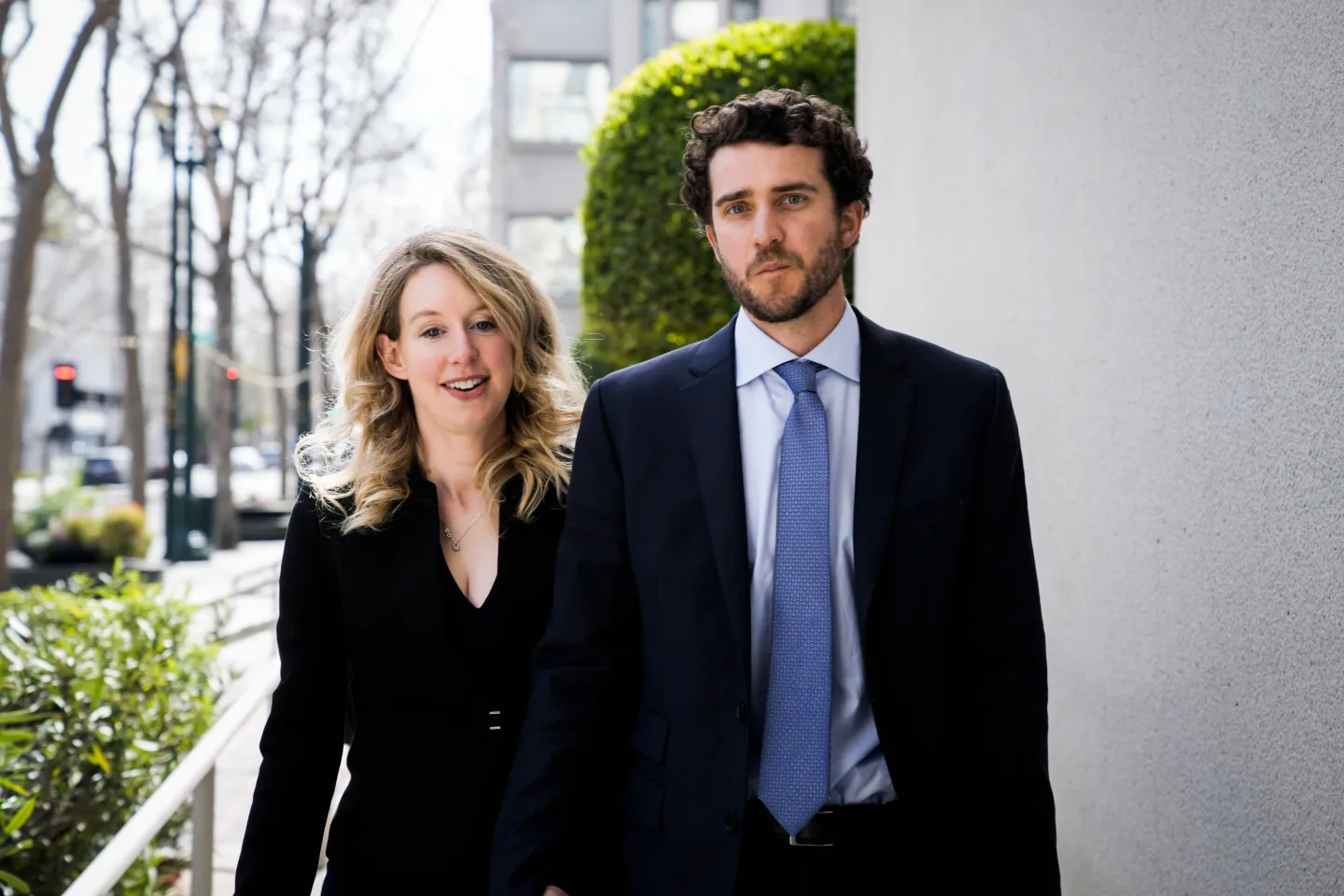
    Elizabeth Holmes is in prison for defrauding investors through her blood-testing company, Theranos. In the meantime, her partner is starting one of his own.

    Billy Evans, who has two children with Ms. Holmes, is trying to raise money for a company that describes itself as “the future of diagnostics” and “a radically new approach to health testing,” according to marketing materials reviewed by The New York Times.

    If that sounds familiar, it’s because Theranos similarly aimed to revolutionize diagnostic testing. The Silicon Valley start-up captured the world’s attention by claiming, falsely as it turned out, to have developed a blood-testing device that could run a slew of complex lab tests from a mere finger prick.

    Mr. Evans’s company is named Haemanthus, which is a flower also known as the blood lily. It plans to begin with testing pets for diseases before progressing to humans, according to two investors pitched on the company who spoke on the condition of anonymity because they had agreed to keep the plans secret. Mr. Evans’s marketing materials, which lay out hopes to eventually raise more than $50 million, say the ultimate goal is nothing short of “human health optimization.”

    00Biz Blood Haemanthus ltbz jumbo
    The Haemanthus testing device.Credit…Haemanthus

    A photo provided to potential investors of the start-up’s prototype bears more than a passing physical resemblance to Theranos’s infamous blood-testing machine, variously known as the Edison or miniLab. The device that Mr. Evans’s company is developing is a rectangular contraption with a door, a digital display screen and what the investor materials describe as tunable lasers inside.

    Haemanthus says its device will test blood as well as saliva and urine.

    The marketing documents provided with the photo say there is “no regulatory oversight — U.S.D.A. confirmed in writing.”

    It’s not clear what the company means by that. A spokesman for the U.S. Department of Agriculture, Seth W. Christensen, said he was not able to confirm whether the agency had corresponded with Haemanthus. “U.S.D.A. does regulate vet diagnostics,” including blood testing, Mr. Christensen said.

    Mr. Evans responded in an interview, “When you’re in stealth, you’re trying to be in stealth. They aren’t going to find anything associated with the name Haemanthus.” Mr. Evans sent a partially redacted document from the U.S.D.A. that said, “It does not appear that the proposed product is within the regulatory jurisdiction” of the Center for Veterinary Biologics, which is a part of the U.S.D.A.

    Mr. Evans, the 33-year-old heir to a California hotel fortune who met Ms. Holmes while federal authorities were investigating her, has not publicly discussed the new venture. The documents indicate he has already assembled roughly 10 employees. He describes his employment on social media simply as working for a “stealth start-up.”

    James W. Breyer, the well-known venture capitalist and early investor in Facebook, said his team had been asked to put in money and decided against it “for many of the same reasons we passed twice on Theranos.”

    “In diagnostics, we’ve long held that the difference between a compelling story and a great company lies in scientific defensibility and clinical utility,” he wrote in an email.

    If sequels are de rigueur in the so-called disruptive world of technology, this one is particularly bold. Theranos became one of the most celebrated start-ups in the globe last decade and attracted both big-time investors (Rupert Murdoch, Larry Ellison) and a board of advisers that included Henry Kissinger.

    Ms. Holmes, often clad in a black turtleneck that invited comparisons to the Apple founder Steve Jobs, was feted on magazine covers, and at the White House.

    Few knew that Theranos’s technology could not diagnose hundreds of conditions it claimed it could. As was chronicled in The Wall Street Journal, a best-selling book, a podcast, television series and later criminal proceedings, Theranos was largely using third-party technology to run rudimentary assays — when it did any testing at all. Patients received false diagnoses. The company crumbled ahead of Ms. Holmes’s indictment for fraud.

    00BIZ BLOOD theranos tbfv superJumbo
    The Theranos blood-testing machine. (Jim Wilson/The New York Times)

    Ms. Holmes, who has always maintained that she is innocent, was convicted of fraud in 2022 and sentenced to 11 years in prison. She is incarcerated in a Bryan, Texas, federal prison.

    Mr. Evans’s idea for Haemanthus traces back at least a year and a half, when he incorporated the company in Delaware, according to public corporate filings. Documents filed in Delaware and Texas show that its offices have been at various addresses in the trendy South Lamar neighborhood of Austin, Texas, where Mr. Evans lives with his and Ms. Holmes’s two children.

    Haemanthus began by soliciting $3.5 million in funding from friends and family and this spring began reaching out to other well-to-do backers in Austin and the San Francisco Bay Area for an additional $15 million, according to the investor materials.

    The billionaire Michael Dell’s investment firm turned down the effort, according to two people briefed on the outreach.

    The one investor who could be identified in public records is Matthew E. Parkhurst, the part owner of a Mediterranean tapas bar in downtown Austin and other investments. Mr. Parkhurst did not respond to requests for comment.

    Much of the Haemanthus executive team hails from Luminar, a struggling self-driving car company where Mr. Evans worked for two years, according to his LinkedIn profile.

    Pet health care is the first market Mr. Evans’s company aims to address. The start-up has thus far received one patent.

    According to the company’s marketing materials and patent, the Haemanthus device will use a laser to scan blood, saliva or urine from pets and analyze the samples on a molecular level. In a matter of seconds, the marketing material said Mr. Evans’s machine would be able to identify and qualify biomarkers such as glucose and hormones, and deploy what the company calls deep learning models to detect cancer and infections.

    Animal medicine has grown into a colossal industry as private-equity firms have increasingly acquired and consolidated independent veterinary practices.

    Pet cancer screenings alone are a multibillion-dollar market. Edgemont Partners, a health care investment bank, describes it as a “recession-proof industry.”

    Haemanthus told investors that it had roughly two dozen advisers, including veterinarians and diagnosticians, though it did not name them.

    Haemanthus’s materials say the long-term goal is to develop a stamp-size, wearable version of the product for humans. “Based on our experience and partner input,” it says, that will require three years and $70 million.

    The investor presentation makes no mention of Mr. Evans’s connection to Ms. Holmes.

  • Come what may in his federal trial, Sean ‘Diddy’ Combs deserves to remain the outcast he has become

    Come what may in his federal trial, Sean ‘Diddy’ Combs deserves to remain the outcast he has become

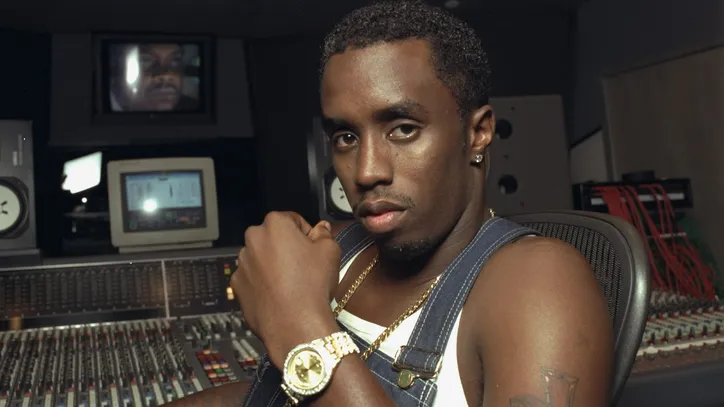
    The federal trial against Sean Combs that begins Monday in the Southern District of New York follows an indictment that accuses the entertainment mogul of human trafficking and drug trafficking, and of using his considerable wealth and power and brute force to keep his alleged victims silent. Combs has denied all the charges the government has brought against him and rejected a plea deal. The founder of Bad Boy Records is no stranger to the courts or to having trouble swirling around him. But this is the first time he stands accused by the U.S. Department of Justice; he’s never faced charges as serious as those he faces now.

    The founder of Bad Boy Records is no stranger to the courts or to having trouble swirling around him.

    In November 2023, R&B singer Cassie, whose legal name is Casandra Ventura and who had an on-again, off-again relationship with Combs, filed a lawsuit accusing Combs of beating, kicking, stomping and raping her and forcing her into sex with male prostitutes. Combs, who denied the claims the artist made against him, settled with her the next day. A statement from Combs’ attorney Ben Brafman said, “Mr. Combs’ decision to settle the lawsuit does not in any way undermine his flat-out denial of the claims.”

    Then, in May 2024, CNN released a 2016 security video from a hotel hallway showing Combs physically assaulting Cassie, including kicking and dragging her. Combs responded in an Instagram post that what he did happened during a dark time in his life. “I was f—-d up. I hit rock bottom. But I make no excuses. My behavior on that video is inexcusable. I take full responsibility for my actions in that video.”

    Combs was arrested in September and accused of hosting what he reportedly called “freak offs,” which the government describes as coerced sexual acts that Combs organized and recorded.

    Since November 2023, according to The Washington Post, there have been well over 70 lawsuits accusing Combs of sexual assault. He has denied all such allegations. And those cases against him haven’t been proved. But it’s hard not to put him in the same category as celebrities such as R. Kelly and Harvey Weinstein, powerful men accused of sexual abuse going back decades. We should ask ourselves why our society seems so willing to ignore the whispers and rumors and bits of evidence that link powerful men to violence against women.

    The violence Combs inflicts on Ventura in that unearthed hotel surveillance video is so awful it’s nearly unwatchable. It’s bad news for Combs, then, that U.S. District Judge Arun Subramanian has ruled that it’s admissible evidence the jury will get to see. Prosecutors say the hotel surveillance video shows Combs, wearing only a white towel around his waist, trying to drag Ventura back to a room where a “freak off” was happening.

    Since November 2023, according to The Washington Post, there have been well over 70 lawsuits accusing Combs of sexual assault.

    To be sure, that video does not automatically make Combs guilty of the charges the federal government has brought against him. But it’s clear why his team fought so hard to keep it out of evidence.

    Combs’ team has argued that CNN sped up the hotel surveillance video and ran it out of sequence. CNN has said it did not alter the video its source presented to the network.

    Combs has spent a career being a “shiny suit man” who nonetheless has been accused of disturbing flashes of violence. He was found guilty of criminal mischief in 1996 for threatening a New York Post photographer with a gun, and he paid a $1,000 fine. In April 1999, he was booked and charged with two felonies against rival record executive Steve Stoute, who says Combs and his bodyguards beat him with their fists and with a Champagne bottle and a chair. Combs publicly apologized and Stoute asked for a dismissal of the charges. Combs, whose childhood nickname “Puffy” was a description of the way he’d huff and puff when he lost his temper, pleaded guilty to harassment and was sentenced to a day of anger management classes.

    Combs was acquitted, though, after being criminally charged after a December 1999 shootout in a club in New York that left three people injured. A jury decided that the state didn’t prove Combs to be in possession of a gun or that he’d bribed witnesses in that case, but jurors convicted Bad Boy artist Shyne (real name Moses Barrow) and he was sent to prison.

    Combs’ history of brushes with the law may have added to his allure. But the fact that he’d never been convicted of a felony seemed to make him edgy and cool enough for Hollywood A-listers and the country’s movers and shakers to keep him as an associate. At the height of his popularity, there didn’t appear to be any celebrity who was too big (or considered him too toxic) to appear at a Combs party.

    There didn’t appear to be any celebrity who was too big (or considered him too toxic) to appear at a Combs party.

    Too many people reflexively assume that when word gets out that a celebrity is abusive to women that it’s nothing but a smear campaign meant to tarnish that person’s legacy. The race factor also has a peculiar impact. Some people might not always love the person who’s being accused but don’t trust that they’re being treated fairly. And the accused should be treated fairly. No matter how awful the charges against Combs, he has the right to a fair trial.

    That said, many might still be denying that Combs has been violent and characterizing him as some kind of victim, but for the hotel surveillance video that captures him attacking Ventura in the exact manner she had described in her November 2023 lawsuit. Ventura is likely to be a prominent witness as the Department of Justice attempts to prove to jurors that Combs has a penchant for abusive behavior and violent tactics.

    One of the messages of the #MeToo movement was that for too long, we, the public, have helped enable men, especially powerful men, to routinely hurt women. And as Combs goes on trial, we should be asking ourselves how much has changed since the start of #MeToo.

    In trying to keep the hotel surveillance footage out of the trial, Combs’ lawyers said the video “immediately and dramatically turned the tide of public opinion” against their client. They’re right. No matter what happens at the trial, for what he did to Cassie, the bad boy can expect to be a permanent pariah — as he should be.

  • Pope Leo XIV might still have to deal with U.S. taxes

    Pope Leo XIV might still have to deal with U.S. taxes

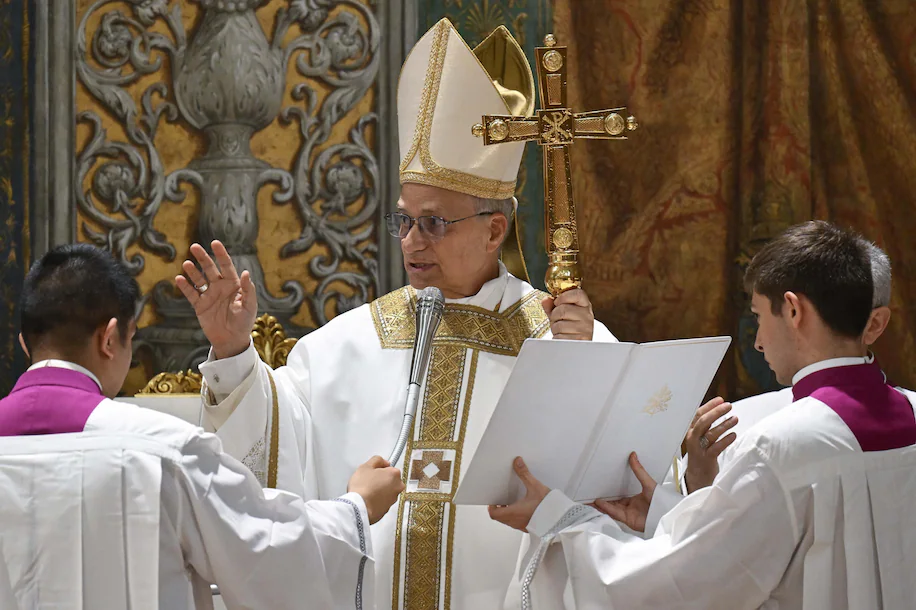
    Pope Leo XIV, the newly elected pontiff, must answer to at least one more higher power: the IRS.

    The United States generally requires all citizens to file an annual tax return, even those who live out of the country. But assuming he doesn’t renounce his U.S. citizenship, Leo — born in the Chicago area and known until this week as Robert Prevost — has special tax considerations, both as a clergyman and now as the head of a foreign government.

    Leo’s situation differs from that of other popes in recent memory, because many countries do not assess taxes on citizens living abroad. “Recent popes from Poland, Germany and Argentina were not taxed by their home countries,” said Jared Walczak, a vice president of the Tax Foundation,a nonpartisan think tank in Washington, who called the first American pope’s accounting situation “uncharted.”

    The pope’s job as a member of the clergy does not exempt him from U.S. taxes. American citizens abroad must generally file tax returns if their income level and other personal circumstances would require them to file if they were living in the U.S., according to the Internal Revenue Service.

    That doesn’t mean they have to pay the same amount in taxes. Americans who spend the year in a foreign country can exclude much of their earnings from U.S. income tax. For the 2025 tax year, Americans abroad can exclude up to $130,000 in foreign income.

    That doesn’t apply to income earned working for a foreign government, however, so that won’t let Leo off the hook, as he is in the employ of the Vatican.

    That means Leo will need to calculate the value of his earnings. The pope does not earn a set salary, but the Vatican covers his housing, food, travel and health care, and provides a monthly stipend for personal expenses. (“When I need money to buy shoes or something, I ask for it,” is how the latePope Francis, an Argentine native, once explained it.) Leo probably will need an accountant to determine how to translate such benefits into income for a U.S. tax return.

    Leo’s housing at the Vatican is likely exempt, whether he chooses to live in the grand Apostolic Palace like prior popes or the more humble Santa Marta guesthouse where Francis resided. Walczak said that employer-provided housing is generally not taxed as income if the housing is on the business’s property and it is “essential” that the employee live there for the benefit of the business. The papal palace, Walczak said, “is not a taxable fringe benefit.”

    Also, the U.S. grants clerics special tax benefits relating to their housing — a “parsonage” exemption — that don’t apply to workers in other professions.

    If Americans living abroad pay income taxes to a foreign government, that amount can be subtracted from their U.S. tax liability thanks to the foreign tax credit. That may have applied to Leo during the many years he worked in Peru, which also taxes full-year residents on all of their worldwide income. He became a Peruvian citizen in 2015.

    Walczak said that he doesn’t expect Leo to end up paying U.S. taxes but that it’s possible the IRS will issue a private letter specifically addressing his situation. Or Congress might even pass a law spelling out the tax situation of the first American pope, Walczak speculated.

    What makes all of this even more complicated is that Leo is the head of state of the Vatican.

    Since 2015, the Vatican has been affected by a U.S. federal law that requires financial institutions around the world to report to the IRS details of accounts held by U.S. clients, theVatican Bank’s 2023 annual report said. “For customers who are nonresident in Italy, the principles of international tax law are applied. This means that each customer must declare his or her holdings and all derived income in his or her country of tax residence in accordance with the laws of that country,” the report states.

    U.S. citizens living abroad have to file a report with the Treasury Department’s Financial Crimes Enforcement Network if they have “signature authority” — meaning control over the use of funds or other assets — over foreign bank accounts whose total value exceeds $10,000, according to Brittany Benson, an analyst with the Tax Institute at H&R Block. “This would likely apply [to Pope Leo XIV] if he has signature authority on Vatican accounts,” Benson said in an email to The Washington Post.

    Edward A. David, an assistant professor in the department of theology and religious studies at King’s College London, said most of the Vatican’s income comes from donations, admission to museums, and the property it owns around the world and in the Vatican itself.

    David said it’s hard to predict how the unprecedented situation will work in reality. “U.S. tax law is very far-reaching. And while there might be an exemption for heads of state, this is brand-new territory for us and brand-new territory for the United States and the Vatican.”

  • The world’s largest automaker reports a 21% profit drop as tariffs take a toll

    The world’s largest automaker reports a 21% profit drop as tariffs take a toll

    Toyota Motor forecast a 21% profit decline for the current financial year on Thursday, as the strain from US President Donald Trump’s tariffs and an appreciating yen take some of the shine off strong demand for hybrid vehicles.

    The world’s top-selling automaker expects operating income to total 3.8 trillion yen ($26 billion) in the year to March 2026, versus 4.8 trillion yen in the financial year that just ended. That was roughly in line with the 4.75 trillion yen average of 25 analysts surveyed by LSEG.

    Toyota faces the risk of being hit by widespread fallout from Trump’s tariffs, not only from the impact on its US-bound exports but also because of the potential for a downturn in consumer sentiment in the US and elsewhere. Price rises can lead to a decline in consumer sentiment.

    The lower profit for the coming year was due to the negative impact from a stronger yen, as well as higher material prices and the impact of tariffs, Toyota said in a presentation.

    Like other global automakers doing business in the world’s top economy, Toyota could face high labor costs and be forced to spend more on investment, if it decides to expand its US production base further.

    While Toyota has seen its vehicle sales in China fall less than other Japanese automakers, it has still struggled to halt a sales decline in the world’s biggest auto market amid heavy competition from Chinese brands.

  • Google has integrated AI into Chrome so it can identify potentially scam websites the moment you click a link

    Google has integrated AI into Chrome so it can identify potentially scam websites the moment you click a link

    Almost anyone who has used the internet has probably experienced that alarming moment when a window pops up claiming your device has a virus, encouraging you to click for tech support or download security software. It’s a common online scam, and one that Google is aiming to fight more aggressively using artificial intelligence.

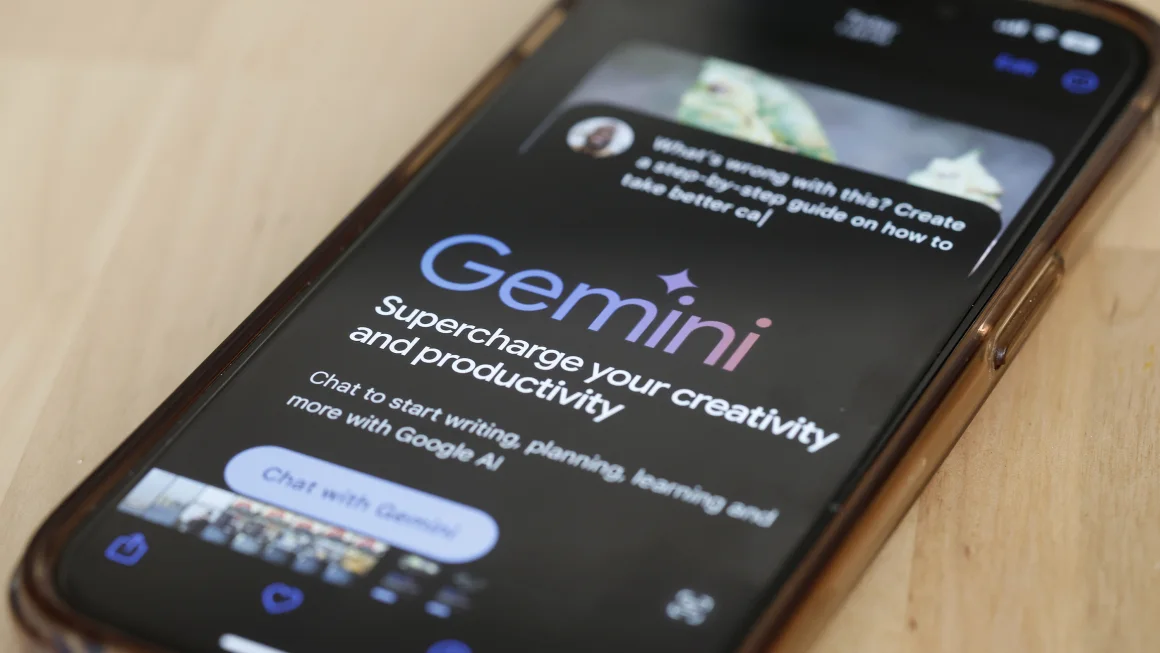
    Google says it’s now using a version of its Gemini AI model that runs on users’ devices to detect and warn users of these so-called “tech support” scams.

    It’s just one of a number of ways Google is using advancements in AI to better protect users from scams across Chrome, Search and its Android operating system, the company said in a blog post Thursday.

    The announcement comes as AI has enabled bad actors to more easily create large quantities of convincing, fake content — effectively lowering the barrier to carrying out scams that can be used to steal victims’ money or personal information. Consumers worldwide lost more than $1 trillion to scams last year, according to the lobbying group Global Anti-Scam Alliance. So, Google and other organizations are increasingly using AI to fight scammers, too.

    Phiroze Parakh, senior director of engineering for Google Search, said that fighting scammers “has always been an evolution game,” where bad actors learn and evolve as tech companies put new protections in place.

    “Now, both sides have new tools,” Parakh said in an interview with CNN. “So, there’s this question of, how do you get to use this tool more effectively? Who is being a little more proactive about it?”

    Although Google has long used machine learning to protect its services, newer AI advancements have led to improved language understanding and pattern recognition, enabling the tech to identify scams faster and more effectively.

    Google said that on Chrome’s “enhanced protection” safe browsing mode on desktop, its on-device AI model can now effectively scan a webpage in real-time when a user clicks on it to look for potential threats. That matters because, sometimes, bad actors make their pages appear differently to Google’s existing crawler tools for identifying scams than they do to users, a tactic called “cloaking” that the company warned last year was on the rise.

    And because the model, called Gemini Nano, runs on your device, the service works faster and protects users’ privacy, said Jasika Bawa, group product manager for Google Chrome.

    As with Chrome’s existing safe browsing mode, if a user attempts to access a potentially unsafe site, they’ll see a warning before being given the option to continue to the page.

    In another update, Google will warn Android users if they’re receiving alerts from fishy sites in Chrome and let them automatically unsubscribe, so long as they have Chrome website notifications enabled.

    Google has also used AI to detect scammy results and prevent them from showing up in Search, regardless what kind of device users are on. Since Google Search first launched AI-powered versions of its anti-scam systems three years ago, it now blocks 20 times the number of problematic pages.

    “We’ve seen this incredible advantage with our ability to understand language and nuance and relationships between entities that really made a change in how we detect these scammy actors,” he said, adding that in 2024 alone, the company removed hundreds of millions of scam search results daily because of the AI advancements.

    Parakh said, for example, that AI has made it better able to identify and remove a scam where bad actors create fake “customer service” pages or phone numbers for airlines. Google says it has has now decreased scam attacks in airline-related searches by 80%.

    Google isn’t the only company using AI to fight bad actors. British mobile phone company O2 said last year it was fighting phone scammers with “Daisy,” a conversational AI chatbot meant to keep fraudsters on the phone, giving them less time to talk with would-be human victims. Microsoft has also piloted a tool that uses AI to analyze phone conversations to determine whether a call may be fraudulent and alert the user accordingly. And the US Treasury Department said last year that AI had helped it identify and recover $1 billion worth of check fraud in fiscal 2024 alone.

  • The Bank of England has lowered interest rates in response to the threat that tariffs present to global economic growth

    The Bank of England has lowered interest rates in response to the threat that tariffs present to global economic growth

    The Bank of England has cut its main interest rate by a quarter of a percentage point, citing lower UK inflation.

    The move, which had been widely expected, brings the main cost of borrowing in Britain to 4.25%. It is the fourth cut the central bank has made since it started reducing rates in August last year.

    The central bank said in a statement that “substantial progress” on reducing inflation over the past two years has allowed it to gradually cut rates.

    But it also said that “uncertainty surrounding global trade policies has intensified” since US President Donald Trump’s tariffs have ignited a trade war in recent weeks.

    “Prospects for global growth have weakened as a result of this uncertainty and new tariff announcements, although the negative impacts on UK growth and inflation are likely to be smaller,” the central bank said.

    Bank officials thought the global trade war was likely to drag on the UK economy, according to the minutes of the bank’s Wednesday policy meeting.

    Speaking to reporters Thursday, Bank of England Governor Andrew Bailey said he welcomes reports that the United Kingdom and the United States are set to announce a trade deal later in the day.

    “It will help to reduce uncertainty,” he said, adding that the UK is “a very open economy” that is affected by the consequences of Trump’s tariffs and trade policies applied to other countries.

    “I hope the UK agreement, if it is indeed announced this afternoon, will be the first of many,” Bailey added.

    Last month, he said he was concerned about the potential “growth shock” to the UK from Trump’s tariffs.

    In an interview with CNBC, Bailey said the “sheer level of uncertainty” Trump’s trade policy injected into the global economy means that businesses are more likely to hold off making investments and consumers will be less willing to spend.

    In April, a closely watched survey of UK businesses already showed a contraction in output. The PMI index based on the survey registered its lowest level since November 2022.

    Also in April, the International Monetary Fund downgraded its economic growth forecasts for numerous countries, including the United Kingdom, and joined a chorus of warnings from economists and business leaders about economic damage from US tariffs.

    Bailey, in his interview with CNBC, said the higher US tariffs could also lower UK inflation. That would give the Bank of England more room to cut rates if the economy needed a boost.

    Bailey cited the potential for goods to be redirected from the United States to Britain. One way this could happen is if the UK sees an influx of low-priced Chinese exports, diverted from the US. More goods on the market mean more competition, which tends to lower prices.