Category: Business

  • A Standard Chartered analyst has walked back their previous $120,000 bitcoin price prediction, suggesting that this target “may be too low.

    A Standard Chartered analyst has walked back their previous $120,000 bitcoin price prediction, suggesting that this target “may be too low.

    A Standard Chartered analyst who predicted bitcoin hitting $120,000 by the second quarter now says his price call is “too low.”

    “I apologise that my USD120k Q2 target may be too low,” Geoffrey Kendrick, head of digital assets at Standard Chartered, said in a tongue-in-cheek comment shared with clients via email Thursday.

    Last month, Kendrick wrote a note saying that he expects bitcoin to reach an all-time high of around $120,000 in the second quarter of 2025 on the back of a “strategic asset reallocation away from US assets” and “accumulation by ‘whales’ (major holders).”

    “We expect these supportive factors to push BTC to a fresh all-time high around USD 120,000 in Q2,” Kendrick said at the time. “We see gains continuing through the summer, taking BTC-USD towards our year-end forecast of 200,000.”

    On Thursday, Kendrick said his $120,000 bitcoin price call now “looks very achievable” and that this may even be too low a target.

    “The dominant story for Bitcoin has changed again,” the Standard Chartered analyst said. “It was correlation to risk assets … It then became a way to position for strategic asset reallocation out of US assets.”

    “It is now all about flows. And flows are coming in many forms,” he added.

    His comments come as bitcoin once again topped the $100,000 level. The price of the cryptocurrency was last trading up by 4.5% at $$100,511.22, according to Coin Metrics.

    In recent years, analysts have picked up on a pattern that shows bitcoin trading in a similar way to risk assets such as U.S. technology stocks — the rationale being that increased inflows of more institutional capital into bitcoin makes it more prone to the same market risks equity markets face.

    Kendrick — who has long held a bullish position on the cryptocurrency — said that U.S. spot bitcoin exchange-traded funds have seen $5.3 billion of inflows in the past three weeks, suggesting more institutional money is piling in.

    He pointed to several examples of large investors allocating part of their portfolios to bitcoin, including software firm MicroStrategy ramping up bitcoin purchases, the Abu Dhbai sovereign wealth fund holding BlackRock’s IBIT bitcoin ETF, and the Swiss National Bank buying shares of MicroStrategy.

    MicroStrategy is widely considered a proxy for bitcoin.

  • A new documentary reportedly identifies the Israeli soldier who shot Al Jazeera journalist Shireen Abu Akleh in 2022

    A new documentary reportedly identifies the Israeli soldier who shot Al Jazeera journalist Shireen Abu Akleh in 2022

    A new documentary about the 2022 killing of Al Jazeera correspondent Shireen Abu Akleh claims to have identified the Israeli soldier who fired the fatal shot.

    Additionally, the film alleges that while the Biden administration had initially concluded an Israeli soldier intentionally shot at Abu Akleh, despite the fact she was identifiable as media, it publicly declared that there was “no reason to believe” her killing was “intentional.”

    The documentary, produced by independent news outlet Zeteo and titled “Who Killed Shireen?,” follows former Wall Street Journal Middle East reporter Dion Nissenbaum and longtime foreign correspondent Conor Powell as they and fellow journalists seek to figure out who killed Abu Akleh and how the Biden administration handled the investigation into her killing.

    Abu Akleh, a Palestinian journalist with US citizenship, was a well-known and respected correspondent for Al Jazeera. She was shot while covering an Israeli military operation targeting militants in Jenin in May 2022. When she was killed, she was wearing protective gear identifying her as a member of the press.

    In the immediate aftermath of her death, Israeli officials suggested crossfire from Palestinian militants fighting with Israeli soldiers nearby could have been to blame. Shortly thereafter, however, investigations by CNN and other outlets found that the only militants in the area could not have reached Abu Akleh from where they stood when she was killed.  CNN further concluded that she was killed in a targeted attack, based on eyewitness statements and analysis from audio forensic and explosive weapons experts.

    The Israel Defense Forces eventually said there was a “high possibility” Abu Akleh was killed by Israeli fire, but said they would not charge any soldiers as there “was no suspicion that a bullet was fired deliberately” at anyone identified as a journalist and the soldier thought he was shooting at militants who were firing upon him. An Israeli military spokesperson later apologized for the journalist’s death and said the soldier responsible “did not do this on purpose.”

    But one subject interviewed for the documentary, identified only as a “key Biden administration official,” says that based on where the soldiers and the reporters were located at the time, “it was an indication that it was an intentional killing” and that the soldier would have been able to clearly see Abu Akleh was a noncombatant.

    “Whether or not they knew it was her or not, can very well be debated, but they would have absolutely known that it was a media person or a noncombatant at a minimum,” the anonymous Biden administration official states. “Absolutely knew that it was non-combatant, and every indication was that it was media. It was clear within all optics from that distance and location and the visual capabilities of that day.”

    The documentary does not detail how the official knows this information, although a source close to the documentary told CNN the official had “direct knowledge” of the Biden administration’s internal assessments of Abu Akleh’s death.

    As for who fired the fatal shots, an unidentified Israeli soldier interviewed in the documentary, who said he served alongside the soldier responsible for the slaying, identified the soldier by name and said he was a member of an elite commando unit called Duvdevan. (Because CNN has not been able to verify the reporting, we are not naming the soldier.)

    “When you open the corner and you have this second to take a decision, to take a shot and you see someone who hold a camera or something that, you know, point at you, you don’t need more than that to shoot the bullet,” the anonymous soldier says in the documentary.

    The soldier identified as Abu Akleh’s killer “wasn’t happy” to discover he killed a journalist, the fellow soldier says, but “he wasn’t like, you know, eating himself from the inside, like thinking about, ‘Oh, what have I done,’ or something like that.”

    Abu Akleh’s alleged shooter was later killed by an explosive device buried in the road during a June 2024 military operation in Jenin, the documentary notes. His family has said in interviews with Israeli media that he died while rescuing military medics, who’d been injured by a separate explosion allegedly planted by Palestinian militants.

    Reached for comment, the IDF said “Zeteo has decided to publish the name of the IDF soldier who fell during an operational activity, despite the family’s request not to publish the name, and even though they were told that there is no definitive determination regarding the identity of the individual responsible for the shooting that caused the journalist’s death. The IDF shares in the family’s grief and continues to support them.”

    A State Department investigation into Abu Akleh’s death, released in July 2022, found that the IDF was “likely responsible” for the shooting, but that there was “no reason to believe” the soldier intentionally targeted her.

    However, the unidentified Biden administration official alleges in the documentary that despite those findings, the administration’s assessment was ultimately publicly presented as the shooting having been “a tragic accident versus being an intentional killing of the individual.” He alleges the alteration was made because of “pressure within the administration to not try and anger the government of Israel too much by trying to force their hand at saying that they’d intentionally killed a US citizen.”

    The State Department did not respond to a request for comment. The Department of Justice, which was reportedly working on its own investigation, declined to comment.

    Since Abu Akleh’s death, the situation on the ground in the region for reporters has changed dramatically. In May 2024, Al Jazeera was officially banned from Israel and the West Bank, with its offices in Ramallah at one point sealed shut by the IDF.

    In Gaza, press watchdog groups say at least 175 reporters, photographers, producers and other journalists have been killed since Israel began its military campaign following Hamas’s October 7, 2023, attacks on Israel.

    In some cases, Israel has claimed that the journalists killed were working with militant groups. Nevertheless, the war in Gaza has become the deadliest conflict on record for members of the media.

    In the documentary, Democratic Sen. Chris Van Hollen of Maryland, who has long advocated for more accountability following Abu Akleh’s death, said he believes “if the US had been more effective and more forceful in insisting that the rules of engagement changed after the killing of Shireen Abu Akleh,” then further civilian deaths could have been avoided.

    Abu Akleh’s family echoed that sentiment in a statement to CNN: “Our calls for justice have never been about one individual soldier, but rather for the entire chain of command—those who gave the orders, those who covered it up, and those who continue to deny responsibility — be held to account for the killing of Shireen Abu Akleh on May 11, 2022 . Only then can there be any hope for real closure, not just for Shireen, but for every journalist and family seeking truth.

    “Regardless if the soldier’s identity is known or whether he is dead or alive doesn’t change the fact that Shireen was intentionally targeted and killed, and that happened within a system that enables impunity.”

  • OpenAI Appoints Instacart Chief Executive to Oversee Business and Operational Functions

    OpenAI Appoints Instacart Chief Executive to Oversee Business and Operational Functions

    OpenAI said late Wednesday that it hired Fidji Simo, the chief executive of Instacart, to take on a new role running the artificial intelligence company’s business and operations teams.

    In a blog post, Sam Altman, OpenAI’s chief executive, said he would remain in charge as the head of the company. But Ms. Simo’s appointment as chief executive of applications would free him up to focus on other parts of the organization, including research, computing and safety systems, he said.

    “We have become a global product company serving hundreds of millions of users worldwide and growing very quickly,” Mr. Altman said in the blog post. He added that OpenAI had also become an “infrastructure company” that delivered artificial intelligence tools at scale.

    “Each of these is a massive effort that could be its own large company,” he wrote. “Bringing on exceptional leaders is a key part of doing that well.”

    Ms. Simo, a member of OpenAI’s board, will oversee sales, marketing and finance. She will report to Mr. Altman.

    OpenAI, which ignited a frenzy over A.I. with its ChatGPT chatbot, has grown rapidly and juggled multiple initiatives — sometimes unsuccessfully. The San Francisco company has steadily released new A.I. models and products, including systems that can “reason.” In March, it completed a $40 billion fund-raising deal, led by the Japanese conglomerate SoftBank, that valued it at $300 billion and made it one of the most valuable private companies in the world.

    But OpenAI, which was set up as a nonprofit, has struggled to adopt a new corporate structure. As the commercial appeal of artificial intelligence has grown, the company had tried to remove itself from control by the nonprofit. That attracted scrutiny from critics such as Elon Musk, an OpenAI founder who sued the company and accused it of putting profit ahead of A.I. safety. The attorneys general of California and Delaware also scrutinized the restructuring.

    On Monday, OpenAI backtracked on the plan and said it would allow the nonprofit to retain its grip on the company.

    (The New York Times has sued OpenAI and its partner, Microsoft, accusing them of copyright infringement regarding news content related to A.I. systems. OpenAI and Microsoft have denied those claims.)

    In a statement late Wednesday, Ms. Simo said that OpenAI “has the potential of accelerating human potential at a pace never seen before and I am deeply committed to shaping these applications toward the public good.”

    She added in a memo to Instacart employees that she had a “passion for A.I. and in particular for the potential it has to cure diseases” and that “the ability to lead such an important part of our collective future was a hard opportunity to pass up.”

    Ms. Simo will remain at Instacart for the next few months as the company names a successor, a role she said would be filled by a member of Instacart’s management team. She will also remain on the company’s board as its chairperson.

    “Today’s announcement is not a reflection of any changes in our business or operations,” Instacart said in a statement.

  • Massive Lollipop Mishap: Boy’s Accidental Amazon Order Triggers Chaos

    Massive Lollipop Mishap: Boy’s Accidental Amazon Order Triggers Chaos

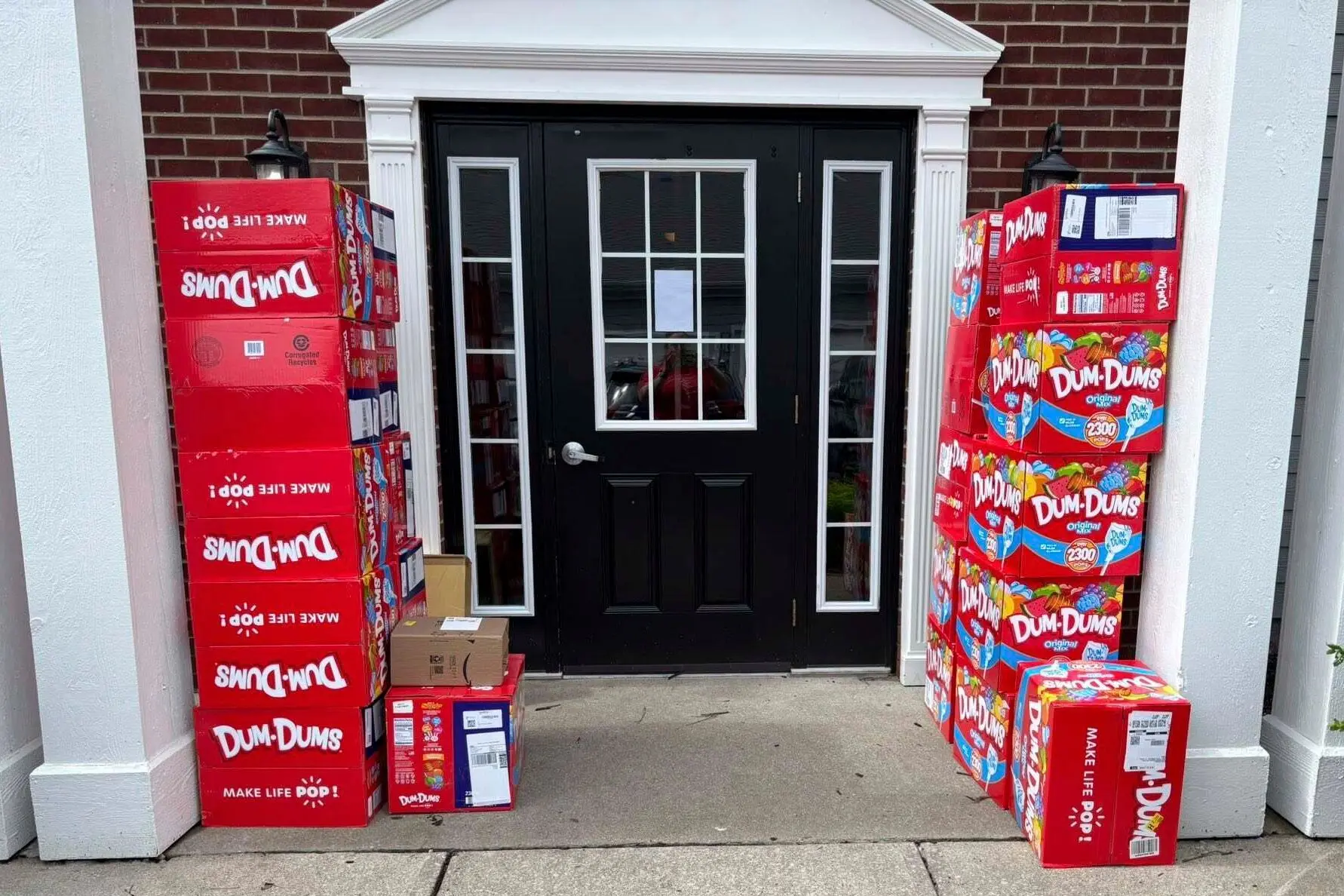
    On Sunday morning, as Holly LaFavers was preparing to go to church, a delivery worker dropped off a 25-pound box of lollipops in front of her apartment building in Lexington, Ky.

    And another. And then another. Soon, 22 boxes of 50,600 lollipops were stacked five boxes high in two walls of Dum-Dums. That was when Ms. LaFavers heard what no parent wants to hear: Her child had unwittingly placed a massive online order.

    “Mom, my suckers are here!” said her son, Liam, who had gone outside to ride his scooter.

    “I panicked,” Ms. LaFavers, 46, said. “I was hysterical.”

    Ms. LaFavers said in an interview that Liam, 8, became familiar with Amazon and other shopping sites during the pandemic, when she regularly ordered supplies. Since then, she has occasionally let him browse the site if he keeps the items in the cart.

    But over the weekend, Liam had a lollipop lapse. He told his mother he wanted to organize a carnival for his friends, and mistakenly, he said, he placed an order for almost 70,000 pieces of the candy instead of reserving it.

    And so the double ramparts of suckers rose on their doorstep, where the excesses of e-commerce crossed paths with their tight-knit community.

    Ms. LaFavers said that she discovered something was amiss after a shopping trip early on Sunday, when she checked her bank balance online. “It was in the red,” she said.

    The offending item was a $4,200 charge from Amazon for 30 boxes of Dum-Dums. Frantic and upset, she called Amazon, which advised her to reject the shipments. Ms. LaFavers was able to turn away eight of the boxes, totaling 18,400 lollipops, but the 22 boxes containing 50,600 lollipops had already landed.

    “My Alexa didn’t even ding to tell me they had been delivered,” she said.

    Ms. LaFavers said that she was then told by Amazon that it could not take the candy back for a refund because it was food. So she tried to send back to the virtual shopping world what it had unloaded on her in the first place.

    “Hi Everyone! Liam ordered 30 cases of Dum-Dums and Amazon will not let me return them. Sale: $130 box. Still sealed,” she wrote on Facebook on May 4.

    The post attracted the attention of local news stations and national media outlets, highlighting the financial treachery of online activity.

    Parents commiserated on her Facebook page and shared solutions, like detaching payment methods from online accounts, setting up alerts for large purchases or simply keeping children off phones. One child spent $980 on virtual Roblox game currency. A 3-year-old playing on a phone during an airport delay spent $300 on movies. A woman’s granddaughter spent $1,000 on Google Play.

    “As a mom that has experienced unwanted orders, I feel your pain,” a woman wrote.

    Companies offer steps on how to prevent and dispute unauthorized purchases in online shopping and games.

    Roblox advises parents to use password-protected purchasing, and to call its customer service center before initiating a dispute with a payment provider, which would stall the refund process. Epic, the makers of Fortnite, has safeguards that include an “intent-to-buy” step, and purchase cancellations.

    On Apple devices and accounts, family-verification settings include controls called Ask to Buy for a child’s device, or “don’t allow” for in-app purchases.

    Google Play’s purchase-verification process also has additional safeguards on family accounts that reverify the user is authorized to make a purchase on apps meant for children ages 12 and under.

    Amazon eventually told Ms. LaFavers that it would give her a refund. In an email, the company said that it “worked directly” with her “to turn a sticky situation into something sweet.”

    On Wednesday, after the refund came through, Ms. LaFavers decided to give away the Dum-Dums instead of selling them. One neighbor offered to distribute some on Halloween. A local chiropractor asked for two boxes, and a bank in Somerset, Ky., said they would take five boxes.

    “I am giving them to the individuals that offered to buy them from me, or I am donating them to a charity or a school or church,” Ms. LaFavers said. “People that I have relationships with were willing to buy those to help me out.”

    Spangler Candy Co., the company that has made Dum-Dums since 1924, invited Ms. LaFavers and Liam to visit its factory in Ohio. “We also love that so many people jumped in to offer to purchase the extra cases,” said Kirk Vashaw, its chief executive, in an email.

    Liam’s online browsing privileges are on pause. But Ms. LaFavers said he, too, had tried to find a way to recoup her money, telling his mother: “It’s OK, mom, we can sell my Pokémon cards.”

  • China and Trump’s team are now in talks, and the world’s economy is counting on a successful resolution

    China and Trump’s team are now in talks, and the world’s economy is counting on a successful resolution

    US President Donald Trump’s top trade officials will meet with their Chinese counterparts this week to discuss a de-escalation of their increasingly ugly and damaging trade war. The future of the global economy is riding on their success.

    The trade talks, the first in-person meeting between Chinese and American officials since the tit-for-tat tariff escalation kicked off in earnest in March, are unlikely to result in a trade deal, Treasury Secretary Scott Bessent said Tuesday. But tariffs have reached such a high level that trade between the two countries has dropped off dramatically. Any thaw in the trade war could be a welcome sign for businesses and consumers in both countries and around the globe.

    “The main objective of this meeting is to establish the conditions for a deal to be reached, including by defining what is feasible to be agreed upon and what isn’t,” said Alfredo Montufar-Helu, head of the Conference Board’s China Center. “There might be some quick wins, like a temporal pause of tariffs, which would bring much needed relief to businesses from both countries.”

    The United States has placed at least a 145% tariff on most Chinese imports, and China has responded with a 125% tariff on some US imports. The last tariff-free ships — those on the water when the tariffs were announced — have almost all docked, and the first ships with goods that will be subject to tariffs are arriving at the ports.

    That means businesses in China and the United States will soon face a difficult decision: pay a tariff that more than doubles the cost of the imported goods, or stop selling them altogether. That means consumers are weeks away from experiencing higher prices and some shortages.

    The punishing tariffs have already damaged both economies. The US economy went into reverse in the first quarter, its first contraction in three years, as businesses stockpiled goods in anticipation of Trump’s “Liberation Day” tariffs, which began in the second quarter. Meanwhile, China’s factory activity contracted at its fastest pace in 16 months in April, and the government is expected to inject the economy with more stimulus measures.

    Although the China-US trade standoff is by far the most aggressive, Trump has imposed large tariffs on most other countries around the world too: a 10% universal tariff on virtually all goods entering the United States, plus 25% tariffs on steel, aluminum, autos, auto parts and some goods from Mexico and Canada. So the world is watching the talks with anticipation.

    Global economists at the International Monetary Fund, OECD and World Bank have all predicted that Trump’s trade war would have disastrous effects on the global economy, slowing growth dramatically in some countries, while reigniting inflation. The United States is expected to be among the hardest-hit economies as other nations, including China, retaliate against it with higher tariffs. Many US economists and large banks predict the United States could enter a recession this year.

    A noticeable thaw

    Bessent and US Trade Representative Jamieson Greer will both travel to Geneva, Switzerland, where they will meet the Chinese officials, authorities announced Tuesday.

    In an interview with Fox News, Bessent Tuesday said the talks represent a first step, but he tried to downplay expectations for a deal.

    “My sense is that this will be about de-escalation, not about the big trade deal … but we’ve got to de-escalate before we can move forward,” Bessent said.

    Despite ongoing tensions, both countries have signaled for several weeks that the current standoff is unsustainable. Bessent and Trump have both acknowledged the tariffs are too high. In an interview with NBC News last week, Trump said he would lower tariffs on China “at some point.”

    China has largely stood firm against Trump, denying his refrains that the countries were in active negotiations — a denial that Bessent concurred with under oath in congressional testimony Tuesday. China shifted its tone slightly last week, saying it was reviewing proposals by the United States to begin trade talks – but it has remained defiant in its criticism of Trump’s trade policies.

    “We have also stated many times that China is open to dialogue, but any dialogue must be based on equality, respect, and mutual benefit,” said Lin Jian, spokesman for China’s foreign ministry on Wednesday. “Any form of pressure or coercion is unacceptable to China.”

    Although Beijing has been projecting an aura of strength, its economy is starting to take a beating. On Wednesday, the People’s Bank of China, the central bank, said it would cut the amount of cash that banks must keep in reserve by half a percentage point, in an effort to promote economic growth by boosting liquidity. The bank’s governor, Pan Gongsheng, also announced a 0.1-percentage-point reduction to the seven-day reverse repurchase rate, which will result in a cut to an important interest rate that influences mortgages.

    Wall Street welcomed the news: Markets rose on reports of the talks. Dow futures were up more than 300 points, or 0.8%. Futures for the broader S&P 500 rose 0.7% and Nasdaq futures were 0.7% higher. Asian markets were modestly higher on Wednesday.

    Trade comes to a near-halt

    As Chinese authorities frequently say in their statements about Trump’s tariffs: No one wins in a trade war. That has become evident in recent weeks as high tariffs imposed significant damage on both economies and effectively froze trade.

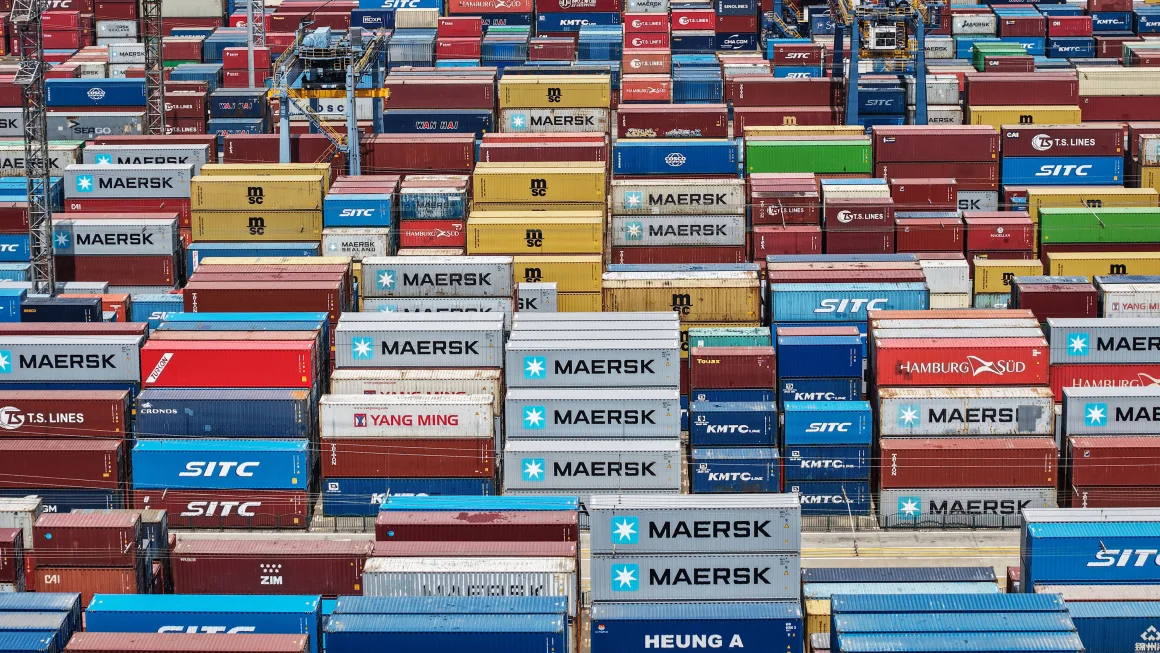
    The number of cargo ships headed from China to the United States fell 60% in April, according to Flexport, a logistics and freight forwarding broker. JPMorgan estimates Chinese imports into the United States will plunge by as much as 80% by the second half of the year.

    “A 60% decline in containers means 60% less stuff arriving,” Flexport CEO Ryan Petersen told CNN’s Pamela Brown Tuesday. “It’s only a matter of time before they sell through existing inventory, and then you’ll see shortages. And that’s when you see price hikes.”

    The Port of Los Angeles had expected 80 ships to arrive in May, but 20% of those have been canceled, its executive director Gene Seroka told CNN Tuesday. Customers have already canceled 13 sailings for June.

    “This week, we’re down about 35% compared to the same time last year, and these cargo ships coming in are the first ones to be attached to the tariffs that were levied against China and other locations last month,” Seroka said. “That’s why the cargo volume is so light.”

    Despite the increasingly dire warnings and economic turmoil, the two countries remain quite far from a deal. Both sides have dug in, saying they’ll need major concessions at the outset to begin negotiations. Bessent has said it could take two to three years for trade to normalize with China.

    So much is riding on the Switzerland talks. Even without a trade deal in hand, the face-to-face discussions are encouraging. With the two countries inflicting so much damage on themselves, they have left very little choice other than to start the thawing process.

    “At some point, I’m going to lower them because otherwise you could never do business with them,” Trump said in an interview with NBC’s “Meet the Press with Kristen Welker,” which taped on Friday. “They want to do business very much … their economy is collapsing.”

  • Disney Is Set to Build a Magic Kingdom Theme Park in the Middle East

    Disney Is Set to Build a Magic Kingdom Theme Park in the Middle East

    Mickey Mouse is headed to the Middle East.

    In a new test for its singularly American brand, the Walt Disney Company said on Wednesday that it had reached an agreement with the Miral Group, an arm of the Abu Dhabi government, to build a theme park resort on the Persian Gulf. The property, the seventh in Disney’s global portfolio, will have a castle and modernized versions of some classic Disney rides, along with new attractions tailored to the climate and local culture.

    “It’s not just about ‘If you build it, they will come,’” Robert A. Iger, Disney’s chief executive, said in a brief phone interview from Abu Dhabi. “You have to build it right. And quality means not just scale, but quality and ambition. We are planning to be very ambitious with this.”

    Disney and Miral declined to give acreage, budget or construction timeline details for what they are calling Disneyland Abu Dhabi, except to say it will be a full-scale property on a par with Disney’s other “castle” parks. Miral is footing the entire bill for building the park. (New theme parks of this scale typically cost $5 billion or more.)

    Arab leaders have long courted Disney, which expanded its theme park business to Japan in 1983, France in 1992, Hong Kong in 2005 and the Chinese mainland in 2016. At a Council on Foreign Relations event in 2018, Mr. Iger said the Saudi crown prince, Mohammed bin Salman, had made an “impassioned plea” for Disney to build a theme park in his kingdom.

    “I explained when we make decisions like this we consider cultural issues, economic issues and political issues,” Mr. Iger said then, declining to give further details of their “very frank” discussion. The region, he added at the time, “has not been at the top of our list in terms of markets that we would open up in.”

    What changed?

    For a start, the United Arab Emirates has grown into a tourist destination. Abu Dhabi, the capital, attracted roughly 24 million visitors in 2023, according to government figures. Sheikh Mohamed bin Zayed Al Nahyan, the country’s president, has set a goal of attracting 39 million visitors annually to Abu Dhabi by 2030. The Louvre Abu Dhabi, which opened in 2017, has been a hit. Warner Bros. Discovery opened a modest indoor theme park in the city in 2018, and SeaWorld Abu Dhabi arrived in 2023.

    The Miral Group, which built Warner Bros. World Abu Dhabi and SeaWorld Abu Dhabi, made Disney a hard-to-refuse financial offer: In addition to paying for construction, Miral will pay Disney to design the rides, shops, restaurants and accompanying hotels. Once the park is open, Disney will receive royalties for the use of its characters as a percentage of revenue, according to a securities filing. Disney will also receive other fees.

    At the same time, Disney has come under pressure to find new areas for growth to offset declines in cable television and at the box office. By opening a theme park in Abu Dhabi, Disney hopes to create an engine that drives demand among the Middle East’s 500 million residents for other Disney products — princess dolls, Disney+ subscriptions, cruise ship vacations, Marvel movies, touring stage productions.

    “After studying the region carefully, engaging with potential partners and visiting three times in the past nine months,” Mr. Iger said, “it became more and more clear that not only was the region right and ready for us, but the place to build was Abu Dhabi.”

    Disneyland Abu Dhabi could allow Disney to tap into India’s expanding middle class. A direct flight from Mumbai to Abu Dhabi takes 3 hours 17 minutes. Currently, the closest Disney outpost to Mumbai is Hong Kong Disneyland, a six-hour flight away.

    “In looking at some research that we’ve done recently, we determined that, for every person visiting one of our parks, there are 10 people in the world that have a desire to visit,” Mr. Iger said. “One of the biggest reasons they don’t — everybody always thinks immediately it’s affordability. It’s not. It’s accessibility. It’s a long trip to get to where we are for a lot of people.”

    Aerial view of Abu Dhabi, United Arab Emirates, high-rise buildings and some of the emirate’s 200-plus islands. (Getty Images)

    There will be obstacles. The climate is one. Disney will need to design a park that allows for visitation in scalding desert heat.

    Disney could also face criticism for its partnership with the Emirates, which is ruled as an autocracy with limits to freedom of expression, speech and the press, and which provides arms to fighters accused of atrocities in a devastating civil war in Sudan. In November, Human Rights Watch slammed the National Basketball Association, which has made Abu Dhabi its Middle East hub, for helping the country to distract from its human rights record.

    To attract more tourists and foreign investors, the Emirates in 2020 improved protections for women, loosened regulations on alcohol consumption and diminished the role of Islamic legal codes in its justice system. Criticizing the government or its leaders remains illegal, however, and can lead to long prison sentences. Migrant workers are often subject to inhumane conditions, according to human rights groups and the State Department. Homosexuality is illegal.

    In 2022, the Emirates joined other Persian Gulf nations in banning “Lightyear,” a major film from Disney’s Pixar, because of a blink-and-you-missed-it kiss between a lesbian couple. “Lightyear,” along with some other content that features L.G.B.T.Q. characters, does not appear on Disney+ in the region.

    In a statement, a Disney spokeswoman said, “We are respectful of the countries and cultures where we do business, while always adhering to our own standards and values.”

    Disney faced a similar situation when it teamed with the Chinese government to build Shanghai Disneyland. In addition to awkward optics, the construction of that park required the contentious relocation of thousands of suburban Shanghai residents. (Disneyland Abu Dhabi won’t have that headache; it will rise on man-made Yas Island.)

    Wall Street, however, is likely to applaud — especially given the troubled state of other Disney businesses, including cable television.

    “Are theme parks now the best business in media?” Craig Moffett, a founder of the MoffettNathanson research firm, wrote in a report last year. “The answer is almost certainly ‘yes.’”

  • Trump’s proposed tariffs against Hollywood are showing signs of failure

    Trump’s proposed tariffs against Hollywood are showing signs of failure

    President Trump’s trade war had, until Sunday night, centered on goods — cars, toys, food, clothes, the tangible stuff we put in and out of virtual and physical shopping carts.

    But those goods make up less than a quarter of the American economy. The bigger chunk of our economic pie is known as services — think Google, Netflix, Facebook, the plumbing of the internet, banking, insurance. And, yes, Hollywood films, the industry Trump now thinks needs saving with — you guessed it — tariffs!

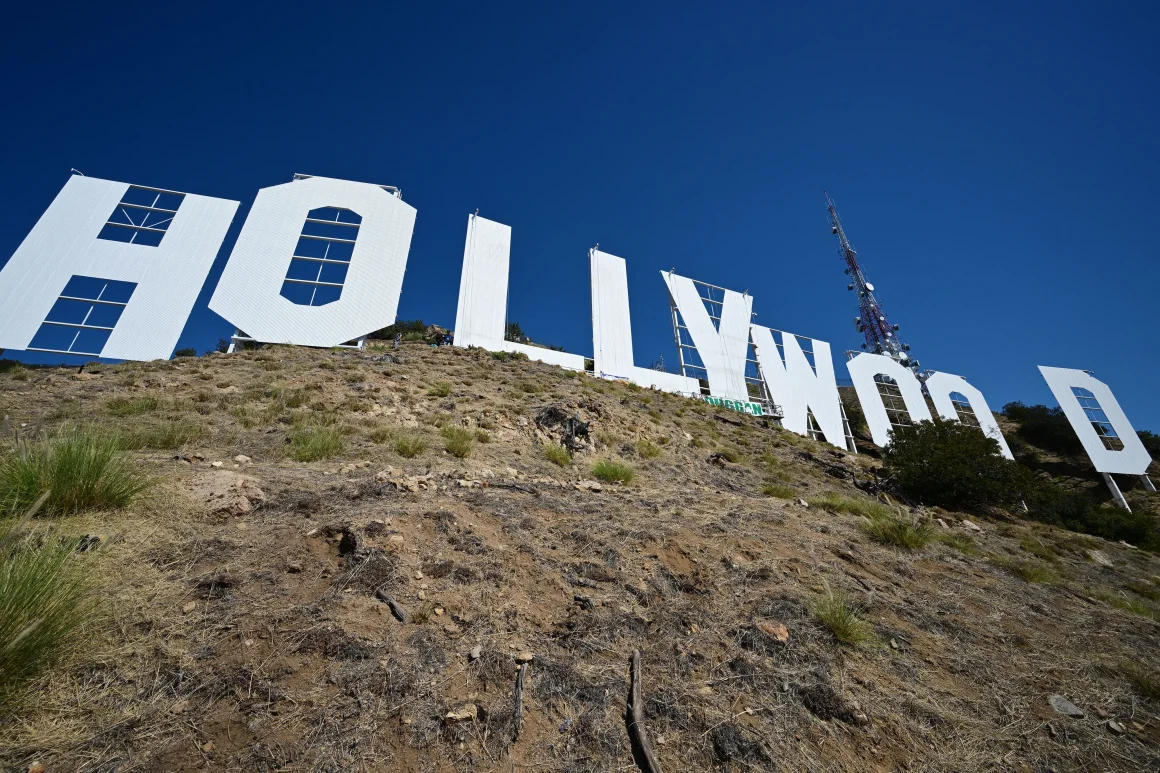
    ICYMI: Trump wrote on Truth Social late Sunday that he was directing the government to “immediately begin the process of instituting a 100% Tariff on any and all Movies coming into our Country that are produced in Foreign Lands.” (Watch out, Hayao Miyazaki — your days of flooding the American market with mystical whimsy and childlike wonderment are over.)

    Of course, Hollywood studios (and anyone thinking about it for more than a few seconds) were left scratching their heads over how such a tax would work.

    As we’ve come to expect with Trump 2.0, it’s not clear whether the president is serious. Jon Voight, who serves as one of Trump’s Hollywood Ambassadors, said Monday that he met with Trump recently to discuss “certain tax provisions that can help the industry – some provisions that can be extended and others than could be revived or instituted.” But that sounds like mostly incentives, not tariffs. In other words, Voight recommended a carrot and Trump announced a stick.

    California Governor Gavin Newsom on Monday appeared to prefer a gentler approach, calling on Trump to work with California to create a $7.5 billion federal tax credit for the movie and television industry. Currently, tax incentives are exclusively the realm of states and municipalities.

    “We’ve proven what strong state incentives can do. Now it’s time for a real federal partnership to Make America Film Again,” Newsom said in a post on X “@POTUS, let’s get it done.”

    The White House said hours after he posted published that “no final decisions” had been made, and Trump later told reporters he wanted to run the idea by folks in the movie industry.

    If he is serious about foreign movie tariffs, though, Trump would be opening a new front in a war he has no real plan to win. And he’d be admitting to the world that his love of tariffs is not, as he’s long claimed, tied to some deep concern about trade imbalances but rather a desire to wield an economic cudgel.

    The Goods Place

    Perhaps because Trump’s intellectual allegiance to opinions he formed 40-plus years ago is so strong, he may be imagining container ships full of VHS tapes and spools of Kodachrome crossing the oceans when he thinks of the global film industry.

    But movies are not goods that travel in and out of ports — they are intellectual property that fall under the “services” economy. To tax a movie like a good, the administration would have to clearly define what a movie’s value is, and determine how much overseas production would classify a project as an “import.” (Plus, some poor writer’s room will have to start working on the next season of Emily in Paris under the new title Emily in Albuquerque.)

    The goods/services distinction matters a great deal. Because for all of Trump’s outrage over the fact that America buys more goods from overseas than it sells, the US exports far more services than it imports. (It’s a “services surplus” — the “rural juror” of econ jargon.)

    In fact, the US is the biggest exporter of services in the world. That gives our trade partners leverage they could use against us.

    “If Trump is serious about tariffs on movies, it’s a very dangerous escalation,” economist Justin Wolfers noted on Bluesky. “We would be extremely vulnerable to any service-based retaliation.”

    The good news is, the president may not be serious. In keeping with Trumpian tariff tradition, he announced the import tax with few details in a late-night social media post with the kind of dramatic capitalizations you might associate with a teen group chat (“The Movie Industry in America is DYING a very fast death,” it begins.)

    Asked about the tariffs in a press briefing Monday afternoon, Trump was less definitive than he’d been Sunday night, saying: “We’re going to meet with the industry; I want to make sure they’re happy about it.”

    Spoiler alert, Mr. President: They’re not happy. Several movie studio and streaming industry executives who spoke with CNN are downright apoplectic, my colleagues Brian Stelter and Jamie Gangel write.

    Shares of Netflix, Disney and CNN parent company Warner Bros. Discovery fell on Monday.

    To be fair, Trump has hit on a real issue dogging Hollywood known as “runaway production.” For years, foreign cities like Toronto and Dublin have offered large tax breaks to film and television studios. In response, California Governor Gavin Newsom has proposed a massive tax credit to bring back production to Hollywood.

    But industry sources told Brian and Jamie the idea of using tariffs “would represent a virtually complete halt of production … But in reality, he has no jurisdiction to do this, and it’s too complex to enforce.”

  • WeightWatchers has filed for bankruptcy

    WeightWatchers has filed for bankruptcy

    WeightWatchers, the 62-year-old program that revolutionized dieting for millions of people around the world, has filed for bankruptcy.

    The company announced Tuesday it has entered Chapter 11, which “will bolster its financial position, increase investment flexibility in its strategic growth initiatives, and better serve its millions of members around the world.”

    The company, now known as WW International, has struggled with about $1.5 billion in debt and has failed to keep pace with more convenient weight loss options, including GLP-1 drugs like Ozempic, over counting points and calories.

    During the bankruptcy process, its massive amount of debt will be eliminated, and it expects to emerge in about 40 days as a publicly traded company. Operations for its members will continue as normal, it said.

    “The decisive actions we’re taking today, with the overwhelming support of our lenders and noteholders, will give us the flexibility to accelerate innovation, reinvest in our members, and lead with authority in a rapidly evolving weight management landscape,” said CEO Tara Comonte in a release.

    WW International has a had rough few years after a turnaround plan from its former CEO, Sima Sistani, failed. She was forced out of her position in September 2024 after a two-and-a-half-year stint.

    Sistani bought a telehealth platform that connected patients with doctors who can prescribe weight-loss and diabetes drugs, representing a radical change for a service that made its name for in-person meetings and portion control. But the pivot didn’t work, and the stock has plummeted.

    Sistani was replaced by Comonte, a former chief financial officer at fast food chain Shake Shack. Its most recent earnings release in February revealed a 12% decline in members and that its $100 million in interest payments on debt is a “a significant ongoing burden for the company.”

    WW took another hit last year when star investor Oprah Winfrey announced she was leaving the company’s board after nearly a decade holding that position and donated all of her stock to a museum.

    The former talk show host credited the program for help losing 40 pounds in 2016 but later revealed that she had also used an unnamed weight loss drug to lose more.

    WW’s history

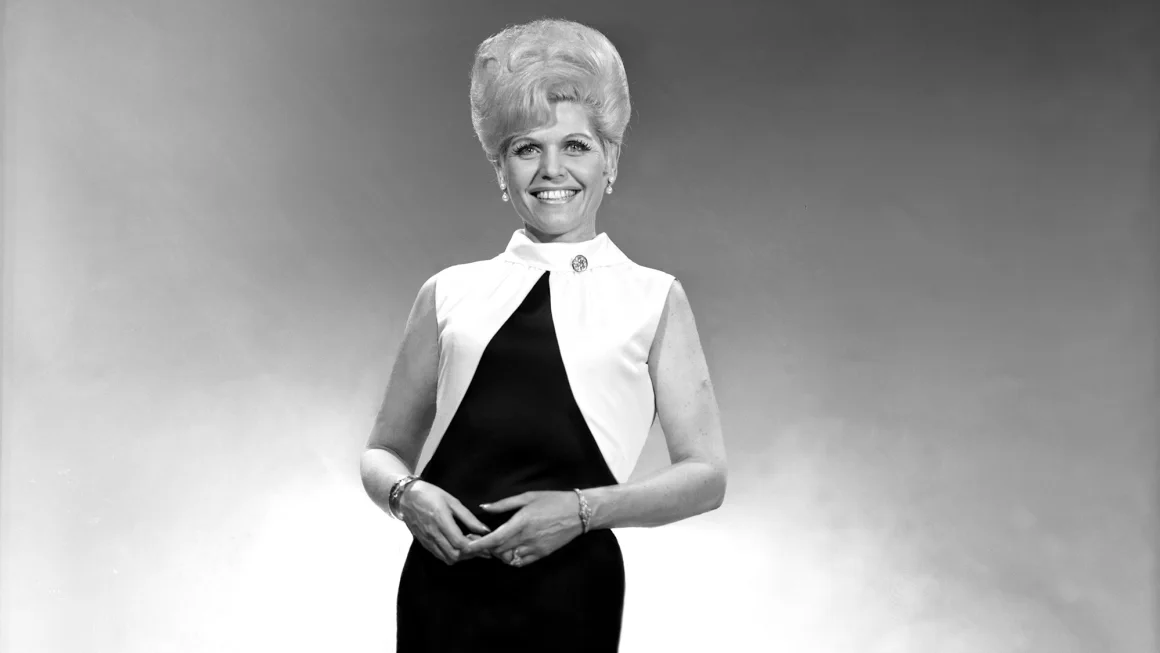
    The company was founded in 1963 by Jean Nidetch, a self-described “overweight housewife obsessed with cookies” who was fed up with fad diets and pills.

    She began hosting weekly meetings at her home with friends to discuss their difficulties with dieting and exercise. “Compulsive eating is an emotional problem,” Nidetch told Time magazine in 1972, “and we use an emotional approach to its solution.”

    f webp
    Founder and director of Weight Watchers Inc. Jean Nidetch in 1965. (Michael Ochs Archives/Getty Images)

    Abiding by her philosophy — “It’s choice, not chance, that determines your destiny” —Nidetch lost more than 70 pounds and kept it off.

    Part of its success can be attributed to its points system, where one number represents each food and drink’s calories, saturated fat, sugar and protein. The company had 3.3 million subscribers at the end of 2024.

    WW’s shares have devolved into a penny stock, a far cry from when it was trading at its peak at around $100 in 2018.

  • NSO Group, the maker of spyware, received a $167 million judgment against it for hacking into WhatsApp

    NSO Group, the maker of spyware, received a $167 million judgment against it for hacking into WhatsApp

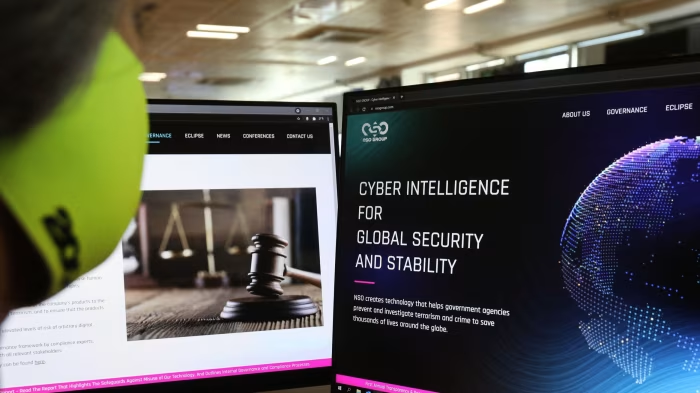
    A federal jury on Tuesday ordered the best-known maker of government spyware to pay a record-setting $167 million for hacking more than 1,000 people through WhatsApp messages in a stunning cap to six years of litigation.

    The verdict came on the second day of deliberations in the damages phase of the trial in Oakland, California. U.S. District Judge Phyllis J. Hamilton granted WhatsApp’s motion for summary judgment against Israel-based NSO Group in December, finding that it had violated the U.S. Computer Fraud and Abuse Act and a similar California law with its spying program known as Pegasus.

    Tuesday’s award was for $167,256,000 in punitive damages and $440,000 in compensatory damages, the largest blow ever dealt to the burgeoning spyware industry.

    While Pegasus is marketed to governments as a tool to fight terrorism and organized crime, a steady stream of investigations have shown it being used against political leaders, peaceful activists and journalists around the world.

    “Today’s verdict in WhatsApp’s case is an important step forward for privacy and security as the first victory against the development and use of illegal spyware that threatens the safety and privacy of everyone,” WhatsApp parent Meta said.

    “The jury’s decision to force NSO, a notorious foreign spyware merchant, to pay damages is a critical deterrent to this malicious industry against their illegal acts aimed at American companies and the privacy and security of the people we serve.”

    NSO said it would probably appeal.

    “NSO remains fully committed to its mission to develop technologies that protect public safety, while continuously strengthening our industry-leading compliance framework and ensuring our technology is deployed solely for their legitimate, authorized purposes by legitimate sovereign governments,” spokesman Gil Lanier said.

    Meta said that if it collects the money from the Israeli company, it would donate to the sort of digital rights groups that have been critical in detecting and examining spyware attacks.

    “We have a long road ahead to collect awarded damages from NSO and we plan to do so,” it said. “Ultimately, we would like to make a donation to digital rights organizations that are working to defend people against such attacks around the world. Our next step is to secure a court order to prevent NSO from ever targeting WhatsApp again.”

    The Toronto-based nonprofit Citizen Lab, which led the way in exposing Pegasus, praised WhatsApp for persisting in its litigation and for notifying victims when it detected attacks.

    “Back in 2019 no country had sanctioned NSO Group,” Citizen Lab researcher John Scott-Railton posted on Bluesky. “No parliamentary hearings, no hearings in congress, no serious investigations. For years, WhatsApp’s lawsuit helped carry momentum & showed governments that their tech sectors were in the crosshairs from mercenary spyware too.”

    Hamilton’s December ruling held NSO liable for hacking into the Meta unit’s systems by sending malicious software through its servers to about 1,400 targeted phones, which Meta said belonged to government officials, journalists, human rights activists and dissidents in dozens of countries.

    Hamilton also found that WhatsApp was entitled to sanctions against NSO for its refusal to turn over source code for the software in discovery, with the penalty to be determined later. She ruled that with the underlying legal issues settled, the case should proceed to trial only to determine how much the company should pay in civil damages.

    The case included the first U.S. testimony from NSO executives, who have long taken pains to stay out of the public eye.

    The jury’s award is by far the most consequential result from scores of lawsuits in an industry at the center of global disputes over governmental surveillance powers and individual freedoms. That it took so long to come to trial, after an appeal that reached the U.S. Supreme Court, underscores the high stakes and national interests involved.

    The U.S. government blacklisted NSO and a handful of other companies and individuals after determining that they were operating in opposition to U.S. interests. Most American allies have been slow to follow suit.

    Apple dropped a similar case against NSO in September after Israeli authorities reportedly seized the company’s source code and NSO said it could no longer produce it. NSO has been closely allied with the Israeli government, from which the company has said it needs permission to export its products.

    NSO had argued that it should be exempt from legal punishment because it sells only to government agencies, which determine which people to target with the programs, but appeals courts rejected that defense. The company’s executives acknowledged in depositions that it determines how hacks are conducted, based on what phone and software each target uses.

    Pegasus and similar wares have exploited security flaws, including those in WhatsApp and Apple’s operating system, to get inside phones and capture pictures, emails and texts, even those that are fully encrypted in transmission.

    In some cases, those exploits require no user interaction and leave the software all but indiscoverable.

    Evidence developed in the case showed how capable and dangerous NSO has been, with 140 employees looking for ways to exploit Apple’s iPhone and Google-supported Android phones and the apps that run on them. An NSO executive testified that the spyware had been installed through operating systems, instant messengers and browsers.

    Pegasus is programmed with technical blocks against spying within the United States and on phones with U.S. numbers that are physically located elsewhere in the world, an attorney for NSO said.

    But spy programs made by other vendors or within national agencies do not have such limitations. That is one reason security experts have been aghast at the use of Signal and an archiving program for its messages by White House officials including Michael Waltz, who was recently ousted as national security adviser, and Defense Secretary Pete Hegseth. Although Signal is end-to-end encrypted, any spy software that can take control of a phone can access all of those messages.

    Testimony in the WhatsApp case showed that NSO used a succession of attacks on the company between 2018 and 2020, altering its technique when WhatsApp blocked earlier methods. One of those modifications came after WhatsApp had filed suit, strengthening Meta’s argument that NSO had acted willfully.

    Meta told the court that it had paid more than $400,000 in salary to employees as they battled with NSO.

    But NSO attorney Joseph Akrotirianakis told the jury that those salaries would have been paid in any case and that jurors were not being asked to weigh the impacts on the ultimate hacking targets, only any costs to Meta.

    “This lawsuit is about publicity,” he said in closing arguments. “Facebook wanted to make headlines about how deeply and strongly and genuinely they believe in protecting their users’ privacy, and it viewed suing NSO as an easy way to get those good headlines.”

    NSO emphasized that it had used WhatsApp’s computers only in passing tainted messages through to the victims.

    “Pegasus did not take anything from WhatsApp servers,” Akrotirianakis said. “It did not leave anything behind. It did not execute any code on WhatsApp servers, it did not delete, change or corrupt any data.”

    To win punitive damages under the California hacking statute, Meta had to show by convincing evidence that NSO was “guilty of oppression, fraud, or malice.”

    To convey to the jury how big an award would need to be to have an impact, WhatsApp established in sometimes combative testimony that NSO spent about $50 million yearly on research and development.

    NSO chief executive Yaron Shohat testified that NSO lost $12 million in 2024 and $9 million in 2023 and that it would struggle to pay significant damages.


  • Rite Aid’s second bankruptcy filing comes surprisingly soon, less than a year after the company’s previous emergence from Chapter 11

    Rite Aid’s second bankruptcy filing comes surprisingly soon, less than a year after the company’s previous emergence from Chapter 11

    Rite Aid filed for bankruptcy protection Monday for the second time, less than a year after the embattled drugstore chain emerged from Chapter 11 as a private company.

    Rite Aid said in a news release that it’s looking for a buyer and is in “active discussions” with multiple prospects. The Chapter 11 filing in U.S. Bankruptcy Court in New Jersey gives Rite Aid access to $1.94 billion in new financing to fund the sale process, during which it plans to keep stores open.

    The company did not respond to The Washington Post’s request for comment.

    Rite Aid first filed for bankruptcy in October 2023 and received $3.45 billion in new financing to support its reorganization. The company emerged from Chapter 11 in September after slashing almost $2 billion in debt and closing hundreds of stores.

    Despite this downsizing, Rite Aid has “continued to face financial challenges” that have intensified as the retail and health-care sectors evolve, chief executive Matt Schroeder said in a statement, adding that the retailer will focus on keeping pharmacy service uninterrupted.

    Rite Aid’s October 2023 bankruptcy filing also allowed the company to resolve hundreds of lawsuits alleging that it unlawfully filled opioid prescriptions, a practice that fueled the nation’s opioid crisis, according to allegations by several cities, counties and states.

    The flood of litigation, which also targeted CVS and Walgreens, has resulted in more than $50 billion in settlements with state and local governments — upending the country’s three major pharmacy retailers.

    Those settlements come as traditional pharmacy companies also face rising competition from e-commerce giants such as Walmart and Amazon, which offer same-day prescription delivery. Walgreens announced last year that it would close a “significant portion” of its almost 9,000 U.S. locations and agreed last March to take itself private as part of an acquisition by private-equity firm Sycamore Partners.

    Meanwhile, CVS, the country’s largest national chain, announced in 2021 that it would shutter 900 stores over three years and outlined plans last October to lay off almost 3,000 employees to cut costs.

    Rite Aid, the third-largest national stand-alone pharmacy chain, has about 1,200 stores, according to its website. The Philadelphia-based retailer has closed more than 1,000 stores since its 2023 bankruptcy filing. Most recently, it said it would shutter all of its stores in Michigan and all but four stores in Ohio by the end of September.

    Rite Aid is the latest in a string of retail bankruptcies in the past year, with Forever 21, Joann, Party City and Big Lots all recently filing for Chapter 11 protection. Coresight Research in December projected that more than 7,300 store locations would shutter by the end of 2024, compared with about 5,500 in 2023. Bankruptcies in the sector this past year almost doubled.