Category: Business

  • CBS News Chief Ousted Amid Tensions With Trump

    CBS News Chief Ousted Amid Tensions With Trump

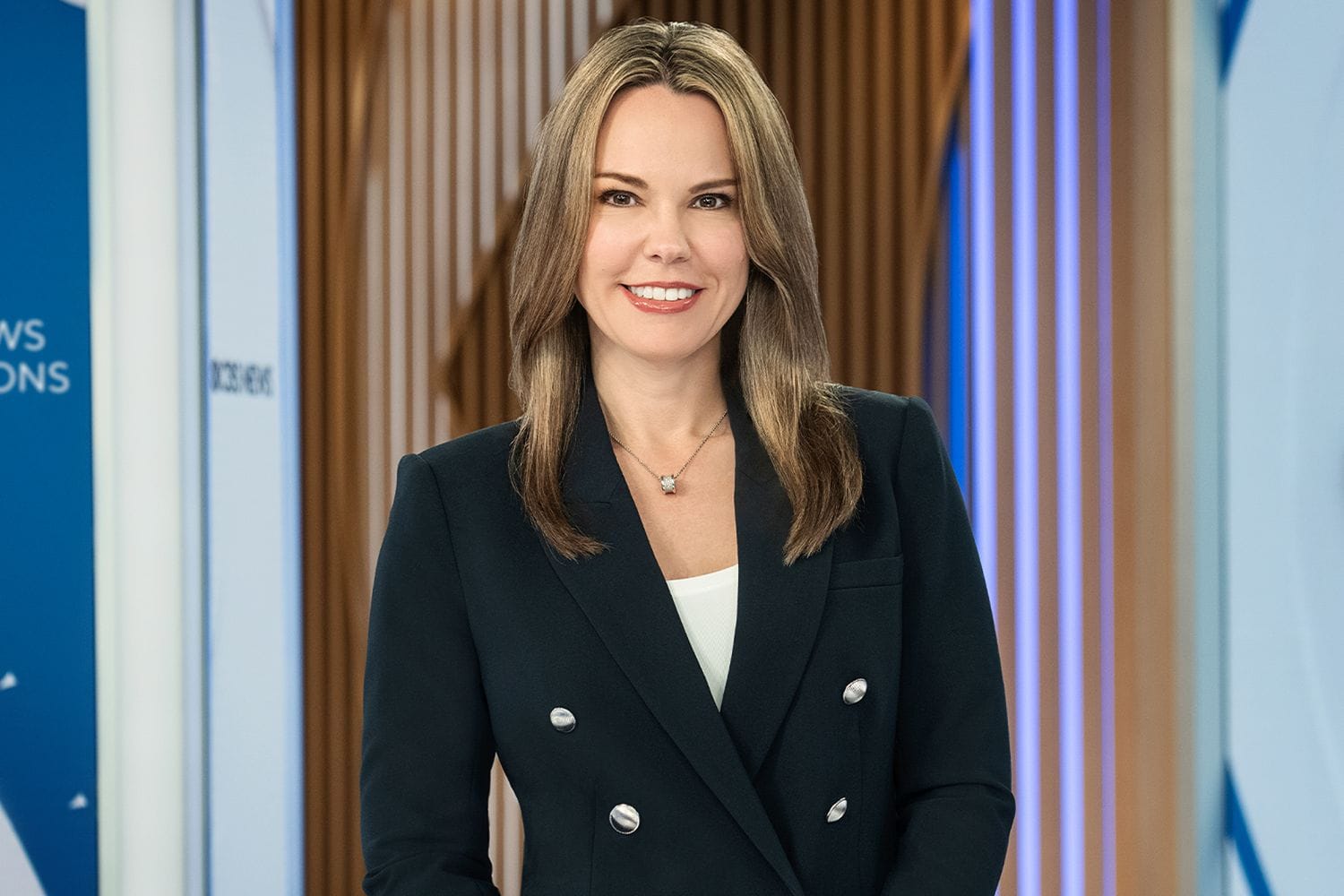
    The president of CBS News, Wendy McMahon, was forced out of her post on Monday, the latest shock wave to hit the news division amid an ongoing showdown involving President Trump, “60 Minutes” and CBS’s parent company, Paramount.

    Ms. McMahon told her staff in a memo that “it’s become clear the company and I do not agree on the path forward.” Executives at Paramount informed Ms. McMahon on Saturday that they wanted her to step down, according to several people with direct knowledge who requested anonymity to share private discussions.

    Paramount is in talks to settle a $20 billion lawsuit brought by Mr. Trump that accused “60 Minutes” of deceptively editing an interview with his Democratic opponent, Kamala Harris. Many legal experts have called the suit baseless, but Paramount’s controlling shareholder, Shari Redstone, has said she favors settling the case. She is seeking federal approval for a multibillion-dollar sale of her company to a Hollywood studio, Skydance.

    The situation prompted the executive producer of “60 Minutes,” Bill Owens, to resign last month. He has told confidants that Paramount executives, cognizant of the settlement talks with Mr. Trump, had pressured him over the program’s coverage of the Trump administration.

    A new flashpoint between “60 Minutes” and its corporate bosses flared last week.

    For its May 18 season finale, “60 Minutes” had planned to air a segment, reported by Anderson Cooper, about the Trump administration’s order for mass firings at the Internal Revenue Service.

    George Cheeks, the chief executive of CBS and a co-chief executive of Paramount, considered an idea to broadcast an unrelated prime-time special on Sunday that would air instead of the network’s evening lineup, including the “60 Minutes” season finale, according to four people briefed on private deliberations.

    Leaders at the news division were uncomfortable with that idea. The prime-time special was not pursued. Mr. Cheeks did not ask “60 Minutes” to modify or eliminate the segment, one of the people said.

    By the end of the week, “60 Minutes” producers decided to cut the I.R.S. segment from the weekend’s show, but for journalistic reasons. The producers said they had learned of new information from the I.R.S. that required additional reporting. “Our team will continue to report on these new details and will broadcast the story in the future,” the show said in a statement.

    Within CBS News, it was widely expected that Ms. McMahon, who took over the news division in August 2023, would not be at the company much longer.

    Executives at Paramount had expressed concern about Ms. McMahon’s performance for months. Her detractors pointed to an overhaul of “CBS Evening News” that sent its ratings plummeting, and her handling of an October incident involving the “CBS Mornings” anchor Tony Dokoupil, who in an interview had challenged the author Ta-Nehisi Coates’s views about the Israeli-Palestinian conflict.

    Ms. McMahon’s critics also believed that the reporting at “60 Minutes” had become politically biased, exposing the company to unnecessary criticism. And it was clear that Mr. Trump was paying close attention.

    On May 4, “60 Minutes” aired a segment that quoted some prominent lawyers criticizing the president for acting unlawfully when he issued executive orders targeting law firms.

    Mr. Trump’s lawyers perceived those quotes, and the segment as a whole, as an attempt by CBS to gain the upper hand in the settlement negotiations, according to a person with knowledge of the internal discussions. They then countered by conveying a threat to Paramount: Mr. Trump might file a new lawsuit, accusing Paramount and CBS of defaming him in the “60 Minutes” episode, according to two people familiar with knowledge of the talks.

    “CBS and Paramount’s attempts to subvert the legal process with lies and smears may necessitate additional corrective legal action, which President Trump reserves the right to pursue,” said Ed Paltzik, a lawyer for Mr. Trump.

    A mediation session late last month ended with lawyers for Paramount and Mr. Trump still far apart on the terms of a deal.

    Mr. Trump has regularly criticized “60 Minutes,” and declined to be interviewed by the program during last year’s presidential campaign. He has also continued to criticize the program’s reporting, which last month he deemed “fraudulent.” Mr. Trump has also urged his government regulators to strip CBS of its broadcast license. “CBS is out of control, at levels never seen before, and they should pay a big price for this,” Mr. Trump wrote in a social media post last month.

    CBS executives have added additional layers of oversight on the program in recent months, drawing frustrations from some top producers, including Mr. Owens. “In a million years, the corporation didn’t know what was coming up — they trusted ‘60 Minutes’ to report the stories and program the broadcast the way ‘60 Minutes’ saw fit,” Mr. Owens said during an emotional meeting with his staff in April. Any change to that arrangement, he said, created “a really slippery slope.”

    Mr. Cheeks said in a memo on Monday that Ms. McMahon would remain at the network for “a few weeks to support the transition.” She will be succeeded for now by a pair of veteran network executives: Tom Cibrowski, who was recently named president of CBS News, and Jennifer Mitchell, the president of CBS Stations.
  • Washington Resists Apple’s A.I. Plans for China

    Washington Resists Apple’s A.I. Plans for China

    Apple believes the future success of the iPhone depends on the availability of new artificial intelligence features. But tensions between Washington and Beijing may cripple the tech giant’s plans to deliver A.I. in its second-most-important market, China.

    In recent months, the White House and congressional officials have been scrutinizing Apple’s plan to strike a deal with Alibaba to make the Chinese company’s A.I. available on iPhones in China, three people familiar with the deliberations said. They are concerned that the deal would help a Chinese company improve its artificial intelligence abilities, broaden the reach of Chinese chatbots with censorship limits and deepen Apple’s exposure to Beijing laws over censorship and data sharing.

    The scrutiny is the latest example of the challenges that Apple has run into as it tries to sustain its businesses in the United States and China at a time of rising geopolitical tensions. Three years ago, the U.S. government succeeded in pressuring the company to abandon a deal to buy memory chips from a Chinese supplier, the Yangtze Memory Technologies Corporation, or YMTC. More recently, the company has been challenged by U.S. tariffs on Chinese-made products like the iPhone, threatening to cut into the company’s profits.

    Walking away from an Alibaba deal would have far graver consequences for Apple’s business in China, which accounts for almost a fifth of the company’s sales. The partnership with the Chinese tech company is critical to bringing A.I. features to iPhones in one of the world’s most highly regulated and competitive markets. Without the Alibaba partnership, iPhones could fall behind smartphones from Chinese rivals like Huawei and Xiaomi.

    Officials at the White House and the House Select Committee on China have raised the deal directly with Apple executives, said the three people, who spoke on the condition of anonymity because they were not authorized to speak to the media. During meetings in Washington with senior Apple executives and lobbyists, government officials asked about terms of the deal, what data Apple would be sharing with Alibaba and whether it would be signing any legal commitments with Chinese regulators. In the meeting with the House committee in March, Apple executives were unable to answer most of those questions, two of these people said.

    17biz apple alibaba china superJumbo
    Alibaba would help Apple compete with homegrown competitors in China. (Qilai Shen/Bloomberg)

    Washington’s concern about the deal has been heightened by a deepening conviction that A.I. will become a critical military tool. The technology, which can write emails and develop software code, has the potential to coordinate military attacks and control autonomous drones. Worried about a future U.S.-Chinese conflict, Washington officials have tried to limit Beijing’s access to A.I. technology, cutting off its ability to make and buy A.I. chips.

    Representative Raja Krishnamoorthi of Illinois, the ranking Democrat on the House Permanent Select Committee on Intelligence, said in a statement that it “is extremely disturbing that Apple has not been transparent about its agreement.”

    “Alibaba is a poster child for the Chinese Communist Party’s military-civil fusion strategy, and why Apple would choose to work with them on A.I. is anyone’s guess,” he said. “There are serious concerns that this partnership will help Alibaba collect data to refine its models, all while allowing Apple to turn a blind eye to the fundamental rights of its Chinese iPhone users.”

    Apple, the White House and Alibaba did not provide comment. Apple hasn’t publicly acknowledged the A.I. deal in China, but Alibaba’s chairman, Joe Tsai, confirmed it publicly in February.

    There is concern in Washington that an Apple deal with Alibaba would set a problematic precedent. U.S. companies could help Chinese A.I. providers reach more users and use the data they collect from those users to improve their models. The risk would be that Baidu, Alibaba, ByteDance and other Chinese companies could then use those improvements to help China’s military.

    To limit U.S.-Chinese collaboration, the Trump administration has discussed whether Alibaba and other Chinese A.I. companies should be put on a list prohibiting them from doing business with U.S. companies, the people familiar with the deliberations said. Defense Department and intelligence officials have also been scrutinizing Alibaba’s ties to the Chinese Communist Party and the People’s Liberation Army.

    Greg Allen, the director of the Wadhwani A.I. Center at the Center for Strategic and International Studies, a think tank, said Apple’s partnership ran counter to the bipartisan efforts in Washington to slow China’s A.I. development. Apple could be motivated to help Alibaba improve its artificial intelligence system because its A.I. could make iPhones in China more useful, valuable and easier to sell.

    “The United States is in an A.I. race with China, and we just don’t want American companies helping Chinese companies run faster,” Mr. Allen said.

    In addition to this scrutiny, Apple’s chief executive, Tim Cook, has faced new criticism from President Trump. During Mr. Trump’s trip across the Middle East this past week, he said he had “a little problem” with Mr. Cook because Apple was beginning to build products in India rather than the United States.

    17biz apple alibaba cook 1 qkvw superJumbo
    Apple’s chief executive, Tim Cook, at the China Development Forum in Beijing last year. (Tatan Syuflana/Associated Press)

    “We’re not interested in you building in India,” Mr. Trump said he had told Mr. Cook. “India can take care of themselves. They’re doing very well. We want you to build here.”

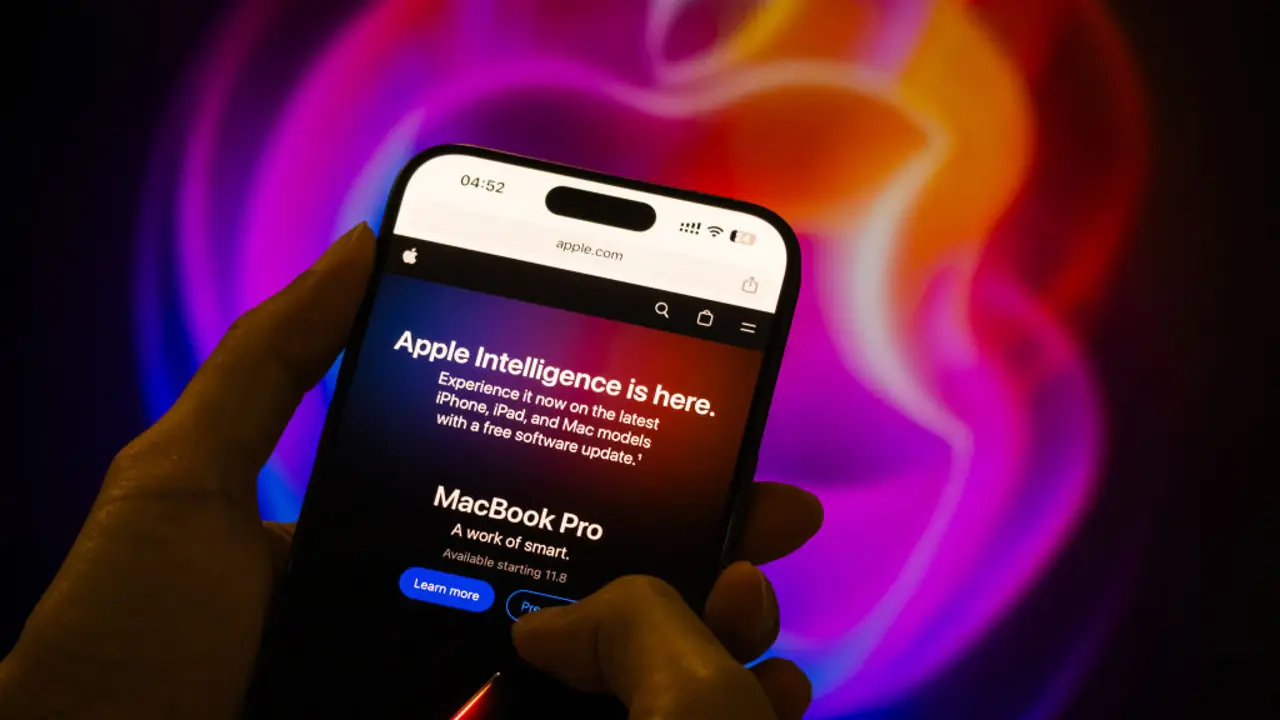
    Last year, Apple revamped the iPhone with new A.I. abilities that it called Apple Intelligence. It said iPhone users would be able to use its A.I. product to summarize notifications and gain access to writing tools that could improve emails and other messages. It also revealed an improved Siri virtual assistant that could combine information on a phone, like a message about someone’s travel itinerary, with information from the web, like a flight arrival time.

    Apple struck a partnership with OpenAI to support some of its A.I. abilities. OpenAI’s chatbot, ChatGPT, is currently answering questions when prompted on iPhones in the United States.

    Because OpenAI doesn’t operate in Beijing, Apple needed to find a local partner to give iPhones in China the same performance as those in the United States. The company spoke with several Chinese tech companies before striking a deal with Alibaba. This year, it asked Chinese regulators to approve the A.I. features.

    Congressional officials were alarmed that Apple had requested approval from Chinese regulators for the Alibaba partnership, two people familiar with their concerns said. Because A.I. is an emerging field, the committee worried that Apple might make concessions or sign an agreement that would make it subject to Chinese laws.

    Apple hasn’t provided an update on when the A.I. features will become available on its iPhones in China. During calls with analysts this year, Mr. Cook said sales of iPhones had been better in markets where Apple Intelligence was available.

    If the deal with Alibaba collapses, there is also a potential knock-on effect because Alibaba is a major e-commerce retailer that could sell and market iPhones, said Richard Kramer, a senior analyst at Arete Research, an investment advisory firm. He said that kind of partnership had the potential to boost the iPhone after Apple’s share of smartphone sales in China fell to 15 percent last year from 19 percent in 2023.

    Without Alibaba, Chinese iPhone users could download A.I. apps, Mr. Kramer said. It would make for a more difficult experience than rivals might offer.

    “People will still buy their phones, but it will make it harder,” he said.

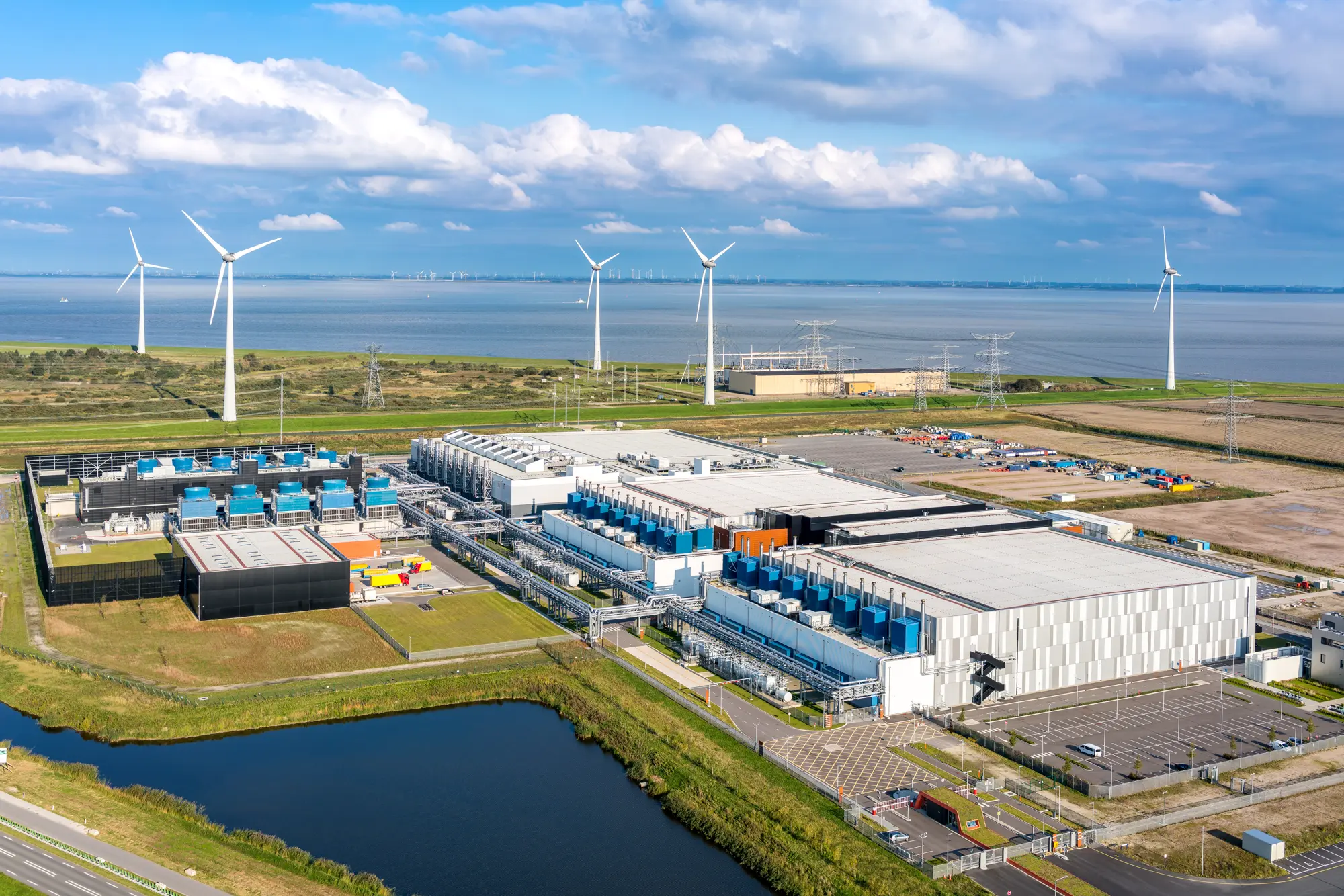
  • Data centers’ high energy consumption has the potential to increase electricity costs for all consumers

    Data centers’ high energy consumption has the potential to increase electricity costs for all consumers

    Individuals and small business have been paying more for power in recent years, and their electricity rates may climb higher still.

    That’s because the cost of the power plants, transmission lines and other equipment that utilities need to serve data centers, factories and other large users of electricity is likely to be spread to everybody who uses electricity, according to a new report.

    The report by Wood MacKenzie, an energy research firm, examined 20 large power users. In almost all of those cases, the firm found, the money that large energy users paid to electric utilities would not be enough to cover the cost of the equipment needed to serve them. The rest of the costs would be borne by other utility customers or the utility itself.

    The utilities “either need to socialize the cost to other ratepayers or absorb that cost — essentially, their shareholders would take the hit,” said Ben Hertz-Shargel, who is the global head of grid edge research for Wood MacKenzie.

    This is not a theoretical dilemma for utilities and the state officials who oversee their operations and approve or reject their rates. Electricity demand is expected to grow substantially over the next several decades as technology companies build large data centers for their artificial intelligence businesses. Electricity demand in some parts of the United States is expected to increase as much as 15 percent over just the next four years after several decades of little or no growth.

    The rapid increase in data centers, which use electricity to power computer servers and keep them cool, has strained many utilities. Demand is also growing because of new factories and the greater use of electric cars and electric heating and cooling.

    In addition to investing to meet demand, utilities are spending billions of dollars to harden their systems against wildfires, hurricanes, heat waves, winter storms and other extreme weather. Natural disasters, many of which are linked to climate change, have made the United States’ aging power grids more unreliable.

    That spending is one of the main reasons that electricity rates have been rising in recent years.

    American homes that use a typical 1,000 kilowatt-hours of electricity a month paid, on average, about $164 in February, according to the Energy Information Administration. That was up more than $30 from five years ago.

    Dominion Energy, a large investor-owned utility based in Richmond, Va., is one of those that Wood MacKenzie expects will spend more on new infrastructure than it will be able to recover from selling electricity to data centers and other large users. More data centers have opened in Virginia than in any other state.

    Asked about Wood MacKenzie’s filings, Dominion said that on April 1 it filed a proposal to electricity regulators in Virginia for requiring large-load customers to pay their “fair share” of utility costs.

    “Ensuring a fair allocation of costs and mitigating financial risk are not new concepts to the company,” Edward H. Baine, president of Dominion Energy Virginia, said in testimony that Dominion submitted to state regulators and provided to The New York Times. “Addressing both the needs and the risks associated with growth in high-load electric customers with high-load factors is both a public policy and a regulatory priority for Virginia.”

    A 2024 analysis by Virginia officials concluded that data centers paid the full cost of the service they received. But that report warned that the addition of many more large users of electricity could raise rates for all users if the state did not make policy changes to protect individuals and small businesses.

    Wood MacKenzie’s report found that some states do have policies to protect individuals and small businesses from higher rates. Chief among them is Texas, where customers can pick a power source that is different from the utility that maintains the lines that deliver electricity to their homes.

    This arrangement, according to Wood MacKenzie, helps protect individuals from having to pay for grid upgrades that mainly or entirely benefit large users.

    Mr. Hertz-Shargel said many utilities also had programs that allowed large electricity users to buy emissions-free energy directly from power producers like solar and wind farms. Such programs, he said, could be refashioned to help ensure that the cost of new power projects is largely or entirely borne by the users responsible for major grid upgrades.

    The policies that states and utilities have put in place will significantly reduce risks of spreading the costs of improvements for the large-load customers, but “they do not provide complete protection,” Mr. Hertz-Shargel said. “Only by removing data-center-caused infrastructure from utilities books, such as by allowing large loads to contract with third parties for generation via clean transition tariffs, are both ratepayers and utility shareholders fully protected.”

  • Baristas at Starbucks are walking off the job to protest changes to the dress code

    Baristas at Starbucks are walking off the job to protest changes to the dress code

    Starbucks workers staged walkouts at dozens of coffee shops in the United States this week to protest a policy change in their dress code that their union says should have been made through collective bargaining.

    Since May 11, more than 2,000 baristas at more than 100 stores, including in Wisconsin, Florida and Pennsylvania, have walked out “to protest the company’s failure to prioritize real support for baristas,” the union said on Friday.

    The protests were in response to an announcement by Starbucks in April that, starting on May 12, baristas would be required to wear solid black crew-neck, collared or button shirts with khaki, black or blue denim “bottoms,” referring to pants, shorts or skirts under their aprons.

    The company said the “more simplified color options” would allow the traditional green aprons worn by baristas to “shine and create a sense of familiarity for our customers, no matter which store they visit across North America.”

    But Workers United, which represents baristas at 570 of the more than 10,000 Starbucks stores in the United States, said the policy change without bargaining was “regressive.”

    “Instead of fixing problems customers actually care about, like long wait times & high prices, Starbucks would rather focus on the colors workers wear,” the union said on social media this week.

    The workers who participate in walkouts generally leave for the remainder of their shift but come back to work for their next scheduled shift. During the walkouts, some coffee shops have only enough workers to keep a drive-through window functioning while shutting down mobile orders and counter service.

    Jasmine Leli, a union delegate and a barista at a Starbucks in Buffalo, said she was among half a dozen workers who walked out on Tuesday morning. A district manager showed up with another worker and kept drive-through service running for a few hours before closing, she said.

    The walkouts are not expected to continue into next week, she said. The company, she said, should “focus on store issues,” including staffing shortages, guaranteed hours and wages, “instead of the dress code.”

    The union said many workers had already purchased approved clothing from Starbucks that they were no longer allowed to wear on duty. Starbucks said it would provide two shirts to employees if needed.

    Starbucks said in a statement that the disruption had been minimal over the past four days.

    “There has been no significant impact on our store operations on a national scale,” it said. “The overwhelming majority of our 10,000 U.S. company-operated stores remain open and are serving customers as normal.”

    “It would be more productive if the union would put the same effort into coming back to the table to finalize a reasonable contract,” it said.

    Starbucks and the union had temporarily agreed to collective bargaining over dress code changes as part of ongoing negotiations for a new contract. In December, a bargaining session with the company failed to produce better wage gains.

    The union filed a complaint with the National Labor Relations Board, accusing Starbucks of engaging in bad faith bargaining.

    After Starbucks announced in April that it was changing the dress code, the union updated that complaint, saying the company had undermined it by “improperly moving the goal posts for collective bargaining.”

    Starbucks said it would continue to bargain in “good faith.”

    “It would be more productive if the union would put the same effort” it put into the walkouts “into coming back to the table to finalize a reasonable contract,” it said.

  • A $34.5 Billion Merger Will Unite Cable Leaders Charter and Cox

    A $34.5 Billion Merger Will Unite Cable Leaders Charter and Cox

    The cable giants Charter Communications and Cox Communications said on Friday that they had agreed to merge, a colossal deal that would create one of the biggest TV and internet providers in the United States.

    The deal, which values Cox at roughly $34.5 billion, presents a test for President Trump’s antitrust enforcers. While many deal makers had expected the Trump administration to be more permissive than the Biden administration, many on Wall Street have been surprised by early signs that a tough-on-deals stance may persist.

    Charter and Cox argued that the deal would help them compete against big rivals, including “larger, national broadband companies” — read: Comcast, Verizon and others — as well as satellite service providers. They are also likely to argue that their cable networks don’t significantly overlap geographically.

    Charter and Cox signaled in their news release they were eager to secure the Trump administration’s approval of the deal. The announcement said the merger “puts America first” by returning customer-service jobs from overseas, echoing the president’s campaign language. It also underscored the value of bringing “hyperlocal, unbiased news” produced by Charter’s Spectrum News stations to Cox customers, an apparent gesture toward mollifying the White House, which has been critical of the press.

    Unmentioned in the news release was Axios, a scoopy Washington-based media organization owned by Cox Enterprises, the privately held parent of the cable business as well as firms in other industries, like agriculture and cars. The newly formed cable group would not own any national programming, the release said.

    Under the terms of the merger, Charter will pay cash and stock, with the combined company set to take on the Cox name and sell consumer services under the Spectrum brand within a year of closing. Cox Enterprises would become the new company’s largest shareholder, with a 23 percent stake. The group expects to cut $500 million in annual costs within a few years of closing the deal, from “typical procurement and overhead savings.”

    Charter’s stock rose more than 2 percent in early trading on Friday.

    It isn’t the first time the two have discussed a merger: They held talks 12 years ago, and John Malone, a telecom billionaire and major Charter shareholder, had named Cox last fall as one of the company’s potential transaction partners.

    Mr. Malone, an influential media mogul, has lately made several moves to reorganize his media holdings. Last year, Charter acquired Liberty Broadband, a telecommunications company partly owned by Mr. Malone. This year, he relinquished his seat on the board of Warner Bros. Discovery, which owns CNN and the Warner Bros. movie studio.

    The Cox-Charter deal is one of the biggest takeovers announced this year, along with Google’s planned acquisition of the cybersecurity provider Wiz for $32 billion. And it may show that, at least for some corporate leaders, uncertainty over the economy, driven in part by Mr. Trump’s trade policies, isn’t enough to deter them from major investments and acquisitions.

    But antitrust approval is needed, and the Trump administration, which moved early to block deals like Hewlett Packard Enterprise’s $14 billion acquisition of Juniper Networks, has warned corporate America not to assume that all deals will pass muster.

    “I don’t have an ideological predisposition against M.&A.,” Andrew Ferguson, the chair of the Federal Trade Commission, said last month. “It doesn’t follow, however, that I think it should just be open season” for deal-making, he added.

    Cable executives have tested regulators’ appetite for consolidation before. In 2015, Comcast walked away from an attempt to buy Time Warner Cable amid regulatory pressure from the Obama administration. The next year, the Obama administration approved Charter’s $65.5 billion acquisition of Time Warner Cable and Bright House Networks, but imposed restrictions in the process.

    One of Charter’s biggest rivals, Comcast, is pursuing a deal of its own. The cable and broadband giant announced late last year that it was spinning off its cable networks, including MSNBC, into a separate company. That firm, which was named Versant this month, is expected to make its debut this year.

  • Bayer Pursues New Roundup Settlement as It Considers Monsanto Bankruptcy

    Bayer Pursues New Roundup Settlement as It Considers Monsanto Bankruptcy

    Bayer AG is pursuing a new multibillion-dollar settlement over claims that its Roundup weedkiller causes cancer—and is preparing to place its U.S. subsidiary Monsanto into bankruptcy if talks with tort plaintiffs collapse, according to people familiar with the matter.

    The German pharmaceutical and agricultural conglomerate, which acquired Monsanto for $63 billion in 2018, has been mired in litigation ever since. More than 54,000 plaintiffs remain active in U.S. courts, alleging that exposure to Roundup, which contains glyphosate, caused them or their loved ones to develop non-Hodgkin lymphoma and other cancers.

    Bayer is reportedly working with legal advisors from Sullivan & Cromwell and financial consultants from Lazard to structure a revised global settlement. The company has floated a package in the range of $6 billion to $8 billion, people briefed on the discussions said.

    However, if negotiations fail to gain broad support among plaintiffs’ lawyers and judges, Bayer is prepared to file Chapter 11 bankruptcy for Monsanto, a legal maneuver that could pause litigation and channel claims into a court-supervised resolution process.

    “We remain committed to resolving Roundup litigation in a fair and efficient manner,” a Bayer spokesperson said. “All options remain on the table to protect our business and stakeholders.”

    The renewed push for settlement follows a wave of courtroom defeats for Bayer in recent months. Since late 2023, juries in Missouri, Pennsylvania, and California have awarded over $4 billion in damages to individual plaintiffs, including a landmark $2.25 billion verdict in January—the largest to date in Roundup litigation.

    Though Bayer has won several cases on appeal and maintains that glyphosate is safe when used as directed, the inconsistency in jury outcomes has fueled investor anxiety and legal uncertainty.

    The litigation risk has become a drag on Bayer’s stock, which has lost more than 35% of its value since 2022. Shareholders have urged management to put the Roundup saga behind them, with some pushing for a spin-off or restructuring of Bayer’s crop science division, which includes Monsanto.

    Filing Monsanto for bankruptcy would allow Bayer to isolate Roundup-related liabilities without exposing the broader group to Chapter 11 proceedings. The company has studied similar strategies used by Johnson & Johnson (over talc) and 3M (over earplugs), though both efforts faced major legal setbacks in federal appeals courts.

    Bayer would likely seek to establish a litigation trust under Section 524(g) of the U.S. bankruptcy code, channeling all current and future glyphosate claims into a single compensation fund.

    Plaintiffs’ attorneys are already split on the idea. Some say bankruptcy could force a more orderly and equitable distribution of funds, while others argue it would suppress jury awards and deny victims their day in court.

    “Monsanto used to be the world’s most powerful agribusiness,” said Brent Wisner, a leading plaintiff’s attorney. “Now it’s trying to hide behind bankruptcy to escape accountability.”

    Bayer still generates robust cash flow from its pharmaceutical and agricultural segments, but the legal overhang has narrowed strategic flexibility. The company faces a €39 billion debt load and has ruled out further dividend hikes or major acquisitions until the litigation is resolved.

    CEO Bill Anderson, who took over in 2023, has pledged to streamline operations and improve transparency. He has also hinted that the company may consider selling or spinning off Monsanto once Roundup liabilities are addressed.

    “The Roundup issue is not just a legal matter—it’s a reputational and strategic challenge,” said Johannes Thormählen, an analyst at DZ Bank. “A clean break may be the only path forward.”

    Bayer continues to cite regulatory findings that glyphosate is not carcinogenic when used properly. The U.S. Environmental Protection Agency (EPA), European Food Safety Authority (EFSA), and other regulators have reaffirmed the herbicide’s safety.

    But the International Agency for Research on Cancer (IARC), a unit of the World Health Organization, classified glyphosate as “probably carcinogenic” in 2015, triggering the first wave of lawsuits and billions in damages.

    Bayer announced in 2021 that it would replace glyphosate in its residential products by 2023. However, commercial versions of Roundup—used on millions of acres of corn, soybeans, and cotton—remain widely sold.

    If Bayer proceeds with the bankruptcy plan, Monsanto could file as early as this summer. The filing would pause all current litigation under the automatic stay provisions of Chapter 11, while the company negotiates a trust structure with creditors and plaintiffs’ counsel.

    Courts would then need to determine whether Monsanto’s bankruptcy was filed in good faith and whether claimants can be compelled to accept trust payouts instead of jury trials.

    Meanwhile, Bayer’s board faces intensifying scrutiny from shareholders and policymakers in Germany, where the Monsanto acquisition has become a cautionary tale of deal-driven risk.

    Bayer is racing against time—and public pressure—to settle thousands of Roundup cancer claims. If talks collapse, a bankruptcy filing for Monsanto may be the company’s last resort to contain a legal wildfire that has already cost billions.


    Roundup Litigation Snapshot

    • Plaintiffs Remaining: ~54,000
    • Largest Verdict: $2.25 billion (CA, Jan 2025)
    • Total Legal Costs to Date: ~$13 billion
    • Current Settlement Talks: $6–8 billion range
    • Bankruptcy Option: Chapter 11 for Monsanto only
    • Lead Legal Counsel: Sullivan & Cromwell (Bayer), Kirkland & Ellis (creditors)
    • Potential Filing Date: Summer 2025 (tentative)
  • MSNBC has hired an editor from Politico to head up its new bureau in Washington

    MSNBC has hired an editor from Politico to head up its new bureau in Washington

    As MSNBC prepares to formally break away from its corporate sibling NBC, it’s leaving behind more than just the Art Deco hallways of 30 Rockefeller Plaza.

    Although the 24-hour cable channel is best known for opinionated stars like Rachel Maddow, MSNBC’s midday hours and breaking news coverage have long relied on the journalistic muscle of NBC News, with its sprawling bureaus and amply staffed Washington office.

    That resource will be cut off this year when Comcast, MSNBC’s owner, spins it out along with a batch of other cable networks into a separate company, unaffiliated with the rest of the NBCUniversal family. The usual NBC correspondents who pop up on MSNBC’s air with updates on, say, the latest fight in Congress will no longer be available.

    One option would be to convert MSNBC’s lineup to progressive talk shows, but the channel’s president, Rebecca Kutler, is leaning in a different direction. On Thursday, Ms. Kutler announced the channel’s first-ever Washington bureau chief: not a left-leaning partisan, but a down-the-middle print reporter with long stints at Politico and The Wall Street Journal.

    Her choice, Sudeep Reddy, was most recently a senior managing editor at Politico, and his résumé is heavy with economics and Washington policy coverage.

    “The MSNBC audience is cerebral and appreciates analytical, contextual reporting,” she said in an interview. She added, “He is going to build and run a significant Washington reporting team, that to me matches with the moment — a serious moment — where real reporting will matter.”

    MSNBC superJumbo
    Sudeep Reddy, formerly a managing editor at Politico, at the Brookings Institution in Washington in 2019. (Michael Brochstein/SOPA Images/LightRocket, via Getty Images)

    MSNBC has never had a separate Washington bureau. Ms. Kutler has announced plans to hire more than 100 journalists for the new go-it-alone version of the channel, including new on-air correspondents to cover Capitol Hill, the State and Justice Departments and the Supreme Court — roles that NBC News-affiliated reporters previously filled.

    At a time of contraction in the news business, it is an unusual expansion and something of a gamble. Straight-ahead TV reporting rarely attracts bigger ratings than the partisan commentary that has come to dominate much of 24-hour cable news. Ms. Maddow, for instance, remains MSNBC’s highest-rated host. Many liberal viewers also abandoned MSNBC in the aftermath of President Trump’s re-election, although its ratings have crept back up since the inauguration.

    MSNBC and NBC News have long had an awkward relationship, dating back to the cable channel’s origins in 1996. The staff at NBC News often looked down on its upstart sibling. After MSNBC underwent a ratings boom in the Trump era, some NBC News journalists worried how the profitable partisanship on cable was coloring their efforts to present neutral reporting to a mass audience.

    Mr. Reddy, 45, is expected to start his role in June. He will report to Scott Matthews, a former executive at CNBC and WABC-TV in New York whom Ms. Kutler selected to oversee her channel’s news-gathering operations.

    Ms. Kutler, who was named the channel’s president in February, has made other programming changes. Joy Reid’s 7 p.m. weeknight show was canceled. Jen Psaki, who served as press secretary to former President Biden, took on a 9 p.m. show that airs Tuesdays to Fridays.

  • The Princess of Wales is back in the fashion spotlight

    The Princess of Wales is back in the fashion spotlight

    The fashion crowd in London is generally known for keeping cool. But on Tuesday, the editors and designers at a ceremony for one of the industry’s most prestigious local awards became palpably excited when Catherine, Princess of Wales, emerged to present this year’s Queen Elizabeth II Award for Design to Patrick McDowell, 29, a Liverpool-born designer.

    Dressed in an olive Victoria Beckham suit and a white silk pussy-bow blouse, Catherine walked with Mr. McDowell among mannequins and models wearing the designer’s looks inside 180 the Strand, the Central London building where the event took place. It was the second time the princess had presented the award, which was created by the British Fashion Council and the British royal family in 2018 to recognize the role London’s fashion industry “plays in society and diplomacy.”

    The princess did not give public comments at the ceremony, but Mr. McDowell said that their private conversation touched on topics including a shared appreciation for craftsmanship and the designer’s efforts to make collections in Britain and offer customers the option to repair or rework old garments.

    Mr. McDowell added that, as Catherine toured the clothes on display, she took interest in a tailored sleeveless jacket called “the Wales jacket.”

    “She said, ‘Why would you call it that?’ with a big smile,” Mr. McDowell said. “What a moment, to be sharing jokes with our future queen.”

    13QEII AWARD 02 lqmw superJumbo
    Patrick McDowell, left, a Liverpool-born designer and the winner of this year’s Queen Elizabeth II Award for Design. (Shaun James Cox/BFC)

    Catherine’s appearance at the event came as she has been stepping up the pace and profile of her public engagements after her cancer diagnosis and treatment last year. In January, she said her cancer was in remission; about a month later, the Sunday Times of London published an article that suggested that Kensington Palace would no longer be disclosing any details of her outfits to the news media.

    During the awards ceremony, the princess also met with other young designers who were on hand to showcase their wares, including Conner Ives, an American working in London whose “Protect the Dolls’ T-shirt have spread widely on social media in recent weeks. On Tuesday, Mr. Ives was announced as the 2025 winner of the British Fashion Council/Vogue Designer Fashion Fund award, which came with a grant and an industry mentorship.

    In past years, the Queen Elizabeth II Award for Design went to designers including Richard Quinn, S.S. Daley and Priya Ahluwalia. It has been presented in the past by other senior royals, including Queen Elizabeth II, King Charles III and Princess Anne.

    Mr. McDowell, whose namesake brand was introduced in 2018, is known for offering made-to-order evening and occasion wear designed in London using recycled textiles and new sustainable materials like sequins made of cellulose. Lady Gaga, Sarah Jessica Parker and Keira Knightley are among the label’s notable fans.

    Winning the Queen Elizabeth II Award was “a wonderful pat on the back that provides a game-changing stamp of approval,” Mr. McDowell said, as well as an “acknowledgment that working in a circular way is a way forward.”

    “I’d love to make a piece for her,” Mr. McDowell added, referring to Catherine. “It would be a dream come true.”

  • Teenager Fatally Shot During ‘Ding Dong Ditch’ TikTok Prank

    Teenager Fatally Shot During ‘Ding Dong Ditch’ TikTok Prank

    A Virginia man has been charged with second-degree murder after fatally shooting a teenager who was filming a prank for TikTok known as “ding dong ditch” with two friends around 3 a.m. on Saturday, according to court records and local authorities.

    The Spotsylvania Sheriff’s Office responded to a report of a resident firing shots during a burglary, and found two teenagers with gunshot wounds, the office said in a statement. One of the teenagers, Michael Bosworth Jr., 18, later died of his wounds. The second person was treated for minor injuries, and a third person in the group was unharmed, the sheriff’s office said. The two friends with Mr. Bosworth were both under 18.

    The teenagers had been in the neighborhood to make a TikTok video, one of them told investigators in an affidavit filed in Spotsylvania Circuit Court. A “ding dong ditch” prank involves ringing doorbells or knocking on the front doors of houses before running away, and has become popular fodder for social media videos.

    “The juvenile advised it’s something that people are doing to put on TikTok,” the affidavit said.

    The group had knocked on a few doors in the area, one of the teenagers told a detective, adding that they were not familiar with the neighborhood. They were running away from a residence when they were shot, according to the affidavit. At least one video showing the teenagers doing the prank was still on one of the friends’ phones, the affidavit said.

    The authorities arrested Tyler Chase Butler, 27, of Spotsylvania County, on Tuesday on charges of second-degree murder, malicious wounding and use of a firearm in the commission of a felony, the sheriff’s office said. He was being held at Rappahannock Regional Jail on no bond, it said.

    Mr. Bosworth was a senior at Massaponax High School in Fredericksburg, Va. The high school, which was set to hold its graduation for seniors on May 13, sent a message to the school community that counselors would be available to help grieving students.

    A spokesman for the Spotsylvania Sheriff’s Office, reached by phone, declined to comment further. A lawyer for Mr. Butler did not immediately respond to requests for comment. G. Ryan Mehaffey, the Commonwealth’s Attorney for Spotsylvania County, declined to comment but said a preliminary hearing had been scheduled for June 18.

    This style of prank has led to tragedy in the past. In 2020, a man in California crashed into a car of six teenagers, killing three of them, after they played a similar prank on him. He was sentenced to life in prison in 2023.

    On Tuesday, a group of students gathered on the football field at Massaponax High School to remember their classmate, according to a video shared by an Instagram account run by students from the school. They shared memories about Mr. Bosworth and wrote messages on balloons before releasing them at sunset.

  • Walmart intends to increase the cost of goods for shoppers due to import taxes

    Walmart intends to increase the cost of goods for shoppers due to import taxes

    Walmart Inc. (NYSE: WMT), the world’s largest retailer, announced on Tuesday that it will begin raising prices on a broad range of consumer goods in the coming months, citing the intensifying impact of U.S. tariffs on Chinese imports and other global supply chain disruptions. The announcement marks a pivotal shift for the retail giant, which has long absorbed tariff-related costs to protect its price-sensitive customer base.

    The move comes as the Biden administration recently expanded tariffs on key Chinese goods—including electric vehicles, semiconductors, and solar components—adding $380 billion in new levies and pushing the average U.S. tariff rate to its highest level in decades. Walmart executives now say the “buffer period” is ending.

    “We’ve managed to shield our customers from much of the trade war’s fallout over the last five years,” said John Furner, President and CEO of Walmart U.S., during the company’s Q1 2025 earnings call. “But with the latest round of tariffs and persistent supply chain inflation, we expect to pass through more costs to consumers.”

    Walmart sources a significant portion of its merchandise—especially electronics, apparel, and home goods—from Asia, with China historically representing over 25% of its import base. While the company has diversified its supply chain in recent years, new tariffs and retaliatory measures by trading partners are making global procurement increasingly expensive.

    “The global tariff environment has changed materially,” said Chief Financial Officer John David Rainey. “These are not short-term headwinds. They are structurally altering input costs, shipping dynamics, and product margins.”

    Walmart indicated that categories likely to see the sharpest price increases include:

    • Consumer Electronics: Affected by 25% tariffs on Chinese-made components such as microchips and lithium-ion batteries.
    • Home Appliances: Including air conditioners and washing machines, many of which rely on Chinese steel and circuit boards.
    • Seasonal Goods and Apparel: Where production has been slower to move away from China or Vietnam.

    Company officials declined to specify the exact price increases but confirmed that in-store and online pricing adjustments will begin rolling out by mid-summer.

    Walmart’s announcement underscores what many economists have long warned: that while large corporations initially absorbed much of the tariff shock, the cumulative effect is eventually borne by consumers.

    “Tariffs function like a hidden tax on the American middle class,” said Beth Ann Bovino, U.S. Chief Economist at S&P Global. “For years, retailers buffered the impact. But the dam is breaking.”

    Consumer watchdog groups are now bracing for inflationary pressures to accelerate again. The Consumer Price Index (CPI) rose 0.4% in April—driven largely by food, energy, and household goods—and economists say a wave of retail price hikes could fuel another surge.

    At Walmart, average basket prices are still up 7% year-over-year, even before the new tariffs fully hit shelves.

    The price hikes are also expected to become a flashpoint in the 2024 presidential race, with both parties accusing the other of mismanaging trade policy.

    While President Biden has defended the tariffs as “strategic economic tools” to counter unfair practices and promote U.S. manufacturing, Republicans have blasted the levies as regressive and inflationary.

    “Every time Washington escalates a trade war, working families pay the price,” said Senator Josh Hawley (R-MO). “Walmart’s warning is just the beginning.”

    At the same time, labor unions and domestic manufacturers have welcomed the tariffs, arguing they level the playing field and create American jobs. The CHIPS Act and Inflation Reduction Act, for example, have spurred billions in U.S. investment.

    To its credit, Walmart has so far navigated geopolitical turbulence better than most. It expanded sourcing in Mexico, India, and Vietnam, invested heavily in automation, and secured long-term logistics contracts to buffer freight volatility. Analysts have praised its supply chain agility and price discipline.

    But the latest wave of tariffs, especially those targeting raw materials and components used in American-assembled products, has created what executives call an “inescapable cost environment.”

    “We’re not just importing finished goods anymore,” said Rainey. “Tariffs now hit upstream components that show up in U.S.-made items, too.”

    Despite the challenges, Walmart reiterated its commitment to affordability, especially as U.S. consumers become more price-conscious. The retailer reported better-than-expected Q1 earnings, with revenue rising 5.1% year-over-year to $162 billion, but cautioned that margins will tighten in the coming quarters.

    Walmart’s decision to raise prices marks a turning point in America’s tariff-era economy. For years, the retailer’s scale and supply chain muscle helped mute the impact of trade wars. But with tariff walls rising and inflationary pressure mounting, even the strongest players are signaling that the burden is shifting—to consumers.

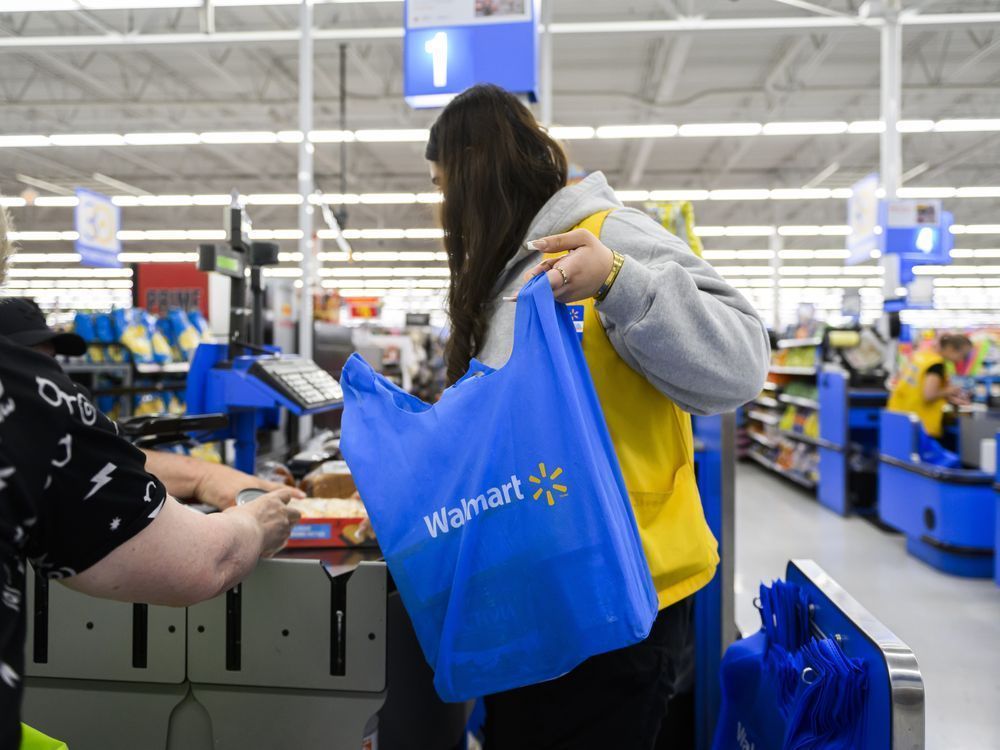
    Whether these hikes are short-term adjustments or a new normal remains to be seen. But for millions of Walmart shoppers, the checkout line is about to become the frontline of U.S. trade policy.


    Data Snapshot:

    • Tariff Exposure: Over 30% of Walmart’s imports originate from countries impacted by new U.S. tariffs.
    • Consumer Price Impact: Walmart basket prices have increased 7% YoY; projected to rise another 3–5% by Q3 2025.
    • U.S. Tariff Revenue: $92 billion in 2023 (U.S. Treasury), triple 2016 levels.
    • Top Categories at Risk: Electronics, home goods, small appliances, and apparel.
    • Sourcing Shift: 12% increase in India and Mexico sourcing since 2022.