Category: Business

  • Oaktree in Acquisition Talks With Superior Industries

    Oaktree in Acquisition Talks With Superior Industries

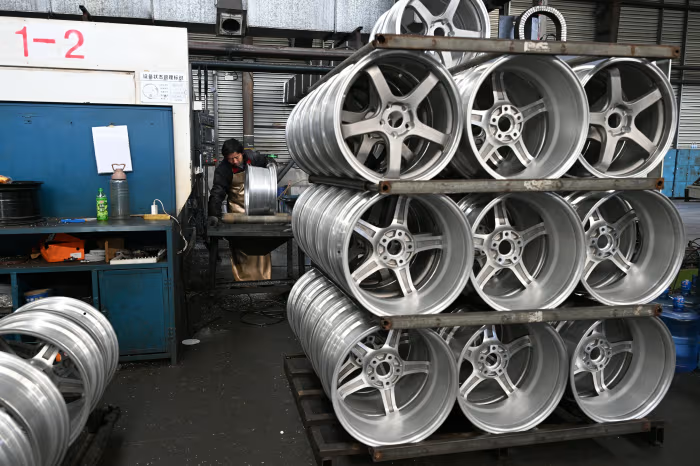
    Oaktree Capital Management, the Los Angeles-based investment firm known for distressed-debt turnarounds, is in advanced talks to take control of Superior Industries International Inc., the aluminum wheel manufacturer battered by U.S. and international auto parts tariffs, according to people familiar with the matter.

    The talks mark a potential turning point for Superior (NYSE: SUP), one of the last major American-based suppliers of cast aluminum wheels to global automakers. The company, long plagued by rising raw material costs and trade headwinds, is reportedly nearing a restructuring deal that could see Oaktree convert its debt holdings into a controlling equity stake.

    The negotiations are being led by Oaktree’s distressed-debt team and advised by powerhouse law firm Paul, Weiss, Rifkind, Wharton & Garrison LLP. According to sources, the transaction could be finalized as early as next month, pending board approvals and regulatory reviews.

    Superior Industries has struggled since 2018, when the Trump administration imposed a 10% tariff on imported aluminum and broader levies on Chinese-made auto parts. The company, which sources raw materials globally and supplies General Motors, Stellantis, and BMW, saw its cost base surge amid rising trade barriers.

    In its most recent earnings report, Superior posted a net loss of $58 million for 2024, down from a modest profit the prior year. Revenue slipped 6% year-over-year to $1.1 billion, as automakers shifted to lower-cost suppliers in Mexico and Asia.

    Company executives have repeatedly warned that continued U.S. and EU tariffs on imported components—including aluminum billet, magnesium alloys, and precision dies—have “crippled the competitiveness” of North American suppliers.

    “We’re at the mercy of geopolitical crossfire,” CEO Majdi Abulaban said on an earnings call in February. “Tariffs are squeezing margins, reducing OEM orders, and threatening our long-term viability.”

    Superior’s stock has declined more than 72% in the past 12 months and currently trades below $1.25—a sign of growing investor concern about its solvency.

    Oaktree, a leading creditor with over $180 billion in assets under management, began accumulating Superior debt in late 2023, purchasing discounted senior secured bonds and term loans. Insiders say Oaktree now holds over 60% of Superior’s outstanding debt, positioning it as the key player in any out-of-court restructuring or pre-packaged bankruptcy.

    The firm is reportedly seeking to exchange its debt for equity, with a view to installing new management and streamlining Superior’s global operations. If a deal is reached, Oaktree could gain majority control without requiring a formal Chapter 11 filing—a path that may preserve customer contracts and vendor relationships.

    “This is classic Oaktree,” said Joshua Cohen, an analyst at CreditSage Research. “They’re moving in as a lender of last resort, flipping the capital stack, and positioning themselves to own the upside if the business stabilizes.”

    Paul Weiss, a firm with deep experience in complex restructurings, is advising Oaktree on deal structure and regulatory clearance. Superior is reportedly working with PJT Partners and law firm Latham & Watkins on its end of the discussions.

    Superior’s woes are emblematic of broader stresses in the U.S. auto parts sector. As the Biden administration maintains and expands trade restrictions on Chinese EV parts and critical materials, suppliers are being squeezed by inflation, regulatory shifts, and changing consumer demand.

    The U.S. Department of Commerce estimates that tariffs have added 9–15% to the cost of aluminum wheels since 2022, with suppliers struggling to pass those costs to automakers already under price pressure.

    “You have a supply chain inversion,” said Maria Estevez, a trade economist at the Brookings Institution. “Legacy U.S. suppliers like Superior are caught between trade nationalism and the electrification pivot—many are barely hanging on.”

    Several smaller suppliers, including Shiloh Industries and Horizon Global, have filed for bankruptcy in the past two years. Oaktree’s potential takeover of Superior may serve as a litmus test for how private capital navigates the sector’s ongoing transformation.

    According to those close to the talks, both parties are working toward a “creditor-led restructuring agreement” that could be announced in June. The proposed deal would:

    • Restructure over $320 million in senior debt;
    • Inject fresh working capital of $75–100 million from Oaktree;
    • Appoint new board members and evaluate strategic divestitures, including Superior’s German operations.

    If the deal goes through, Superior would likely pivot toward high-margin EV wheel components and lightweight alloys, capitalizing on automaker shifts toward electric fleets. Oaktree is also said to be exploring the consolidation of regional production facilities to cut costs and increase automation.

    Oaktree’s potential takeover of Superior Industries underscores how tariff policy and industrial reshoring efforts are reshaping America’s manufacturing landscape. For Superior, once a symbol of U.S. automotive ingenuity, survival may now depend not on Washington or Detroit—but on Wall Street’s appetite for high-risk, high-reward turnarounds.


    Key Figures:

    • Superior 2024 Revenue: $1.1 billion
    • 2024 Net Loss: $58 million
    • Oaktree Debt Holdings in Superior: Estimated 60%+
    • Superior Stock Price: Down 72% YTD, trading at ~$1.25
    • Tariff Impact: Aluminum part costs up 9–15% since 2022
    • Deal Value: Estimated $320M debt-for-equity swap + $75–100M cash injection

    Companies Involved:

    • Oaktree Capital Management (Potential acquirer)
    • Superior Industries International Inc. (Target)
    • Paul Weiss (Oaktree’s legal advisor)
    • PJT Partners & Latham & Watkins (Advising Superior)
  • FTC Investigates Media Matters’ Communications With Ad Groups, Sparking Fears of Retaliation

    FTC Investigates Media Matters’ Communications With Ad Groups, Sparking Fears of Retaliation

    The Federal Trade Commission on Wednesday sent Media Matters for America a letter demanding communications between the progressive media watchdog and advertising entities as the commission probes whether the watchdog colluded with advertisers to pull funding from Elon Musk’s X.

    Media Matters was notified in a letter dated May 20 from the FTC that it is being investigated, a source familiar with the letter told. The letter, which The NY Budgets has viewed, directs Media Matters to turn over all documents, materials and communications with a range of ad entities and related organizations — including the World Federation of Advertisers and the Global Alliance for Responsible Media — regarding brand safety and disinformation, the source said.

    Media Matters is a media watchdog whose reporting tracks conservative and far-right news publications and personalities. The organization was sued by Musk in 2023 after it published a report detailing antisemitic and pro-Nazi content on the social media platform he owns, X. That lawsuit accuses the media watchdog of hatching a “media strategy to drive advertisers from the platform and destroy X Corp.”

    In keeping its request for assorted materials vague, the FTC is effectively throwing the kitchen sink at the wall to see what sticks, the source told.

    The move by the FTC sees the commission’s chair, Andrew Ferguson, make good on comments he made in Decembermere days before Trump nominated him for the job.

    “We must prosecute any unlawful collusion between online platforms, and confront advertiser boycotts which threaten competition among those platforms,” then-Commissioner Ferguson said about a different case.

    That’s exactly what Musk, who has spearheaded the president’s Department of Government Efficiency, has spent years accusing the progressive watchdog of doing, claiming Media Matters caused a coordinated mass exodus of advertisers by publishing the report.

    In a Thursday statement, Angelo Carusone, the Media Matters president, said that the Trump administration has been “defined by naming right-wing media figures to key posts and abusing the power of the federal government to bully political opponents and silence critics.”

    “It’s clear that’s exactly what’s happening here, given Media Matters’ history of holding those same figures to account,” Carusone said. “These threats won’t work; we remain steadfast to our mission.”

    In 2024, a record number of advertisers were looking to cut their ad spending on X, as the platform is now known, citing concerns that the extreme content that has proliferated there since Musk’s takeover could damage their brands. Musk himself has buoyed conspiracy theories and hate speech with his own account. He also told advertisers that left the platform to “go f**k yourself.”

    But advertisers began fleeing the social media platform nearly a year after Musk acquired Twitter in 2022, expressing concerns about the billionaire’s gutting of the platform’s content moderation team, mass layoffs, and uncertainty over the platform’s future. In July 2023, months before Musk sued Media Matters, the billionaire reported a 50% decline in Twitter’s ad revenue.

    Since the exodus, Musk has sought to mend fences, looking to woo back advertisers via a charm offensive.

    But that same year, Musk sued the Global Alliance for Responsible Media, a voluntary ad-industry initiative run by the World Federation of Advertisers, claiming that the group illegally coordinated an ad boycott against X. In February, Musk broadened that lawsuit to include Lego, Nestlé, Shell and several others.

    Advertisers named in the lawsuit filed a motion last week to dismiss his suit, claiming that Musk was using it “to win back the business X lost in the free market when it disrupted its own business and alienated many of its customers.”

    Additionally, in March, Media Matters sued Musk, claiming that he lodged several expensive lawsuits against the watchdog “for having dared to publish an article Musk did not like.”

    Media Matters has seen similar probes before. In 2023, the progressive watchdog sued Ken Paxton, accusing the Texas attorney general of violating the First Amendment by investigating Media Matters’ reporting on Musk’s app, similarly arguing that it was being penalized for its reporting. The progressive watchdog won an injunction against the Texas attorney general in 2024.

    The FTC declined to comment for this story. WFA did not respond to a request for comment on the probe.

  • Anthropic CEO Predicts First $1 Billion Business Run by a Single Person Will Emerge in 2026

    Anthropic CEO Predicts First $1 Billion Business Run by a Single Person Will Emerge in 2026

    AI can perform tasks such as writing, coding, reasoning, and researching with great accuracy — all tasks that are key to starting your own company. That begs the question: can AI help people start their own billion-dollar business? Anthropic CEO Dario Amodei believes the answer is yes, and the point at which it happens is sooner than you may think.

    When asked at Anthropic’s first developer conference, Code with Claude, when the first billion-dollar company with one human employee would happen, Amodei confidently responded, “2026.”

    At the same event, Anthropic unveiled its most powerful family of models yet — Claude Opus 4 and Sonnet 4 — which can code, reason, and support agentic capabilities better than ever before. These new AI agents should unlock new opportunities for people to optimize how they work, develop products, and even build startups. 

    According to Amodei, the first industries to see this type of efficiency will be those that don’t need human institution-centric stuff to make money, or industries in which the core of the business model isn’t reliant on human interaction.

    For example, he says proprietary training or dev tooling companies are examples of where this solo-preneur work, aided by AI, could be done. People just need to adopt the product, and customer service can be as simple as asking a question and having the model answer it. 

    The claim that the first person to build a billion-dollar company is a year away is merely a prediction. While it is possible that the timeline doesn’t exactly pan out, Anthropic CPO Mike Krieger, who co-founded Instagram and later Artifact, said it doesn’t seem as far-fetched as people may think.

    “It seems not crazy to me. I built a billion-dollar company with 13 people, and that was 13 years ago,” said Krieger in a press Q&A. 

    With tools like Claude Opus, Krieger said he likely could have just built Instagram with his co-founder Kevin Systrom because AI could have helped with much of what they had to scale with Instagram, particularly moderation and engineering. 

    One of the most prominent trends in the field today is AI agents — AIs that can do tasks for you autonomously with little human intervention, and this technology is becoming more capable. 

    Anthropic’s most advanced model — Claude Opus 4 — was built to deliver sustained performance on complex, long-running tasks. One of Anthropic’s clients, Rakuten, ran an open-source refactor independently for seven hours of sustained performance.

    That timeframe is especially noteworthy because it represents about a full day’s work for a human, completed by an AI agent without breaks or a drop in performance. As agents advance, it’s easy to see how these technologies could drive innovation and empower the next wave of startups.

    “Our famously small team had to make really painful either/or decisions. We either explore adding video to the product or focus on core creativity,” said Krieger. “With AI agents, startups can now run experiments in parallel.” 

  • New Claude Model Prompts Tighter Safeguards at Anthropic

    New Claude Model Prompts Tighter Safeguards at Anthropic

    Today’s newest AI models might be capable of helping would-be terrorists create bioweapons or engineer a pandemic, according to the chief scientist of the AI company Anthropic.

    Anthropic has long been warning about these risks—so much so that in 2023, the company pledged to not release certain models until it had developed safety measures capable of constraining them.

    Now this system, called the Responsible Scaling Policy (RSP), faces its first real test.

    On Thursday, Anthropic launched Claude Opus 4, a new model that, in internal testing, performed more effectively than prior models at advising novices on how to produce biological weapons, says Jared Kaplan, Anthropic’s chief scientist. “You could try to synthesize something like COVID or a more dangerous version of the flu—and basically, our modeling suggests that this might be possible,” Kaplan says.

    Accordingly, Claude Opus 4 is being released under stricter safety measures than any prior Anthropic model. Those measures—known internally as AI Safety Level 3 or “ASL-3”—are appropriate to constrain an AI system that could “substantially increase” the ability of individuals with a basic STEM background in obtaining, producing or deploying chemical, biological or nuclear weapons, according to the company. They include beefed-up cybersecurity measures, jailbreak preventions, and supplementary systems to detect and refuse specific types of harmful behavior.

    To be sure, Anthropic is not entirely certain that the new version of Claude poses severe bioweapon risks, Kaplan tells The Budgets. But Anthropic hasn’t ruled that possibility out either. 

    “If we feel like it’s unclear, and we’re not sure if we can rule out the risk—the specific risk being uplifting a novice terrorist, someone like Timothy McVeigh, to be able to make a weapon much more destructive than would otherwise be possible—then we want to bias towards caution, and work under the ASL-3 standard,” Kaplan says. “We’re not claiming affirmatively we know for sure this model is risky … but we at least feel it’s close enough that we can’t rule it out.” 

    If further testing shows the model does not require such strict safety standards, Anthropic could lower its protections to the more permissive ASL-2, under which previous versions of Claude were released, he says.

    ?url=https%3A%2F%2Fapi.time.com%2Fwp content%2Fuploads%2F2025%2F05%2FGettyImages 1741639769
    Jared Kaplan, co-founder and chief science officer of Anthropic, on Tuesday, Oct. 24, 2023. (Chris J. Ratcliffe/Bloomberg/Getty Images)

    This moment is a crucial test for Anthropic, a company that claims it can mitigate AI’s dangers while still competing in the market. Claude is a direct competitor to ChatGPT, and brings in over $2 billion in annualized revenue. Anthropic argues that its RSP thus creates an economic incentive for itself to build safety measures in time, lest it lose customers as a result of being prevented from releasing new models. “We really don’t want to impact customers,” Kaplan told TIME earlier in May while Anthropic was finalizing its safety measures. “We’re trying to be proactively prepared.”

    But Anthropic’s RSP—and similar commitments adopted by other AI companies—are all voluntary policies that could be changed or cast aside at will. The company itself, not regulators or lawmakers, is the judge of whether it is fully complying with the RSP. Breaking it carries no external penalty, besides possible reputational damage. Anthropic argues that the policy has created a “race to the top” between AI companies, causing them to compete to build the best safety systems. But as the multi-billion dollar race for AI supremacy heats up, critics worry the RSP and its ilk may be left by the wayside when they matter most. 

    Still, in the absence of any frontier AI regulation from Congress, Anthropic’s RSP is one of the few existing constraints on the behavior of any AI company. And so far, Anthropic has kept to it. If Anthropic shows it can constrain itself without taking an economic hit, Kaplan says, it could have a positive effect on safety practices in the wider industry.

    Anthropic’s new safeguards

    Anthropic’s ASL-3 safety measures employ what the company calls a “defense in depth” strategy—meaning there are several different overlapping safeguards that may be individually imperfect, but in unison combine to prevent most threats.

    One of those measures is called “constitutional classifiers:” additional AI systems that scan a user’s prompts and the model’s answers for dangerous material. Earlier versions of Claude already had similar systems under the lower ASL-2 level of security, but Anthropic says it has improved them so that they are able to detect people who might be trying to use Claude to, for example, build a bioweapon. These classifiers are specifically targeted to detect the long chains of specific questions that somebody building a bioweapon might try to ask. 

    Anthropic has tried not to let these measures hinder Claude’s overall usefulness for legitimate users—since doing so would make the model less helpful compared to its rivals. “There are bioweapons that might be capable of causing fatalities, but that we don’t think would cause, say, a pandemic,” Kaplan says. “We’re not trying to block every single one of those misuses. We’re trying to really narrowly target the most pernicious.”

    Another element of the defense-in-depth strategy is the prevention of jailbreaks—or prompts that can cause a model to essentially forget its safety training and provide answers to queries that it might otherwise refuse. The company monitors usage of Claude, and “offboards” users who consistently try to jailbreak the model, Kaplan says. And it has launched a bounty program to reward users for flagging so-called “universal” jailbreaks, or prompts that can make a system drop all its safeguards at once. So far, the program has surfaced one universal jailbreak which Anthropic subsequently patched, a spokesperson says. The researcher who found it was awarded $25,000.

    Anthropic has also beefed up its cybersecurity, so that Claude’s underlying neural network is protected against theft attempts by non-state actors. The company still judges itself to be vulnerable to nation-state level attackers—but aims to have cyberdefenses sufficient for deterring them by the time it deems it needs to upgrade to ASL-4: the next safety level, expected to coincide with the arrival of models that can pose major national security risks, or which can autonomously carry out AI research without human input.

    Lastly the company has conducted what it calls “uplift” trials, designed to quantify how significantly an AI model without the above constraints can improve the abilities of a novice attempting to create a bioweapon, when compared to other tools like Google or less advanced models. In those trials, which were graded by biosecurity experts, Anthropic found Claude Opus 4 presented a “significantly greater” level of performance than both Google search and prior models, Kaplan says.

    Anthropic’s hope is that the several safety systems layered over the top of the model—which has already undergone separate training to be “helpful, honest and harmless”—will prevent almost all bad use cases. “I don’t want to claim that it’s perfect in any way. It would be a very simple story if you could say our systems could never be jailbroken,” Kaplan says. “But we have made it very, very difficult.”

    Still, by Kaplan’s own admission, only one bad actor would need to slip through to cause untold chaos. “Most other kinds of dangerous things a terrorist could do—maybe they could kill 10 people or 100 people,” he says. “We just saw COVID kill millions of people.”

  • Britain’s most popular corporate event isn’t what you’d expect

    Britain’s most popular corporate event isn’t what you’d expect

    This week saw one of the most important — and perhaps surprising — events in corporate Britain’s annual calendar: the gala night of the Royal Horticultural Society (RHS) Chelsea Flower Show.

    This traditionally marks the beginning of what, in English high society, is referred to as “the season.”

    Coined as such by Debrett’s, the publisher and authority on society and etiquette, the summer social whirl was framed around the British royal family, which traditionally remained in London from April to July and from October until Christmas.

    This meant that Britain’s ruling classes and key movers and shakers did the same — participating in balls, parties and court presentations.

    These have largely now faded away, but what remains is a series of sporting and cultural events where the great and good continue to get together. Highlights include opera at the Glyndebourne Festival; flat racing at the Epsom Derby, Royal Ascot and Glorious Goodwood meetings; rowing at the Henley Royal Regatta; yachting at Cowes and, of course, tennis at Wimbledon.

    All these events see gatherings of corporate chieftains, their bankers, lawyers and other advisors, but none brings together quite as many key figures, in a short space of time, as the Chelsea gala night: two hours of champagne (this year’s bubbles were supplied by Pommery), canapes and networking over displays carefully cultivated by hundreds of professional gardeners and landscape architects.

    Tickets for the gala, which runs from 7 p.m. to 9 p.m. (the King, who is patron of the RHS, visits earlier in the afternoon), cost £620 ($827) while those for the gala dinner which follows on site go for £885.

    Seeds are sown

    Many of the City’s top bankers can be spotted there: recent attendees have included Anthony Gutman, co-chief executive officer of Goldman Sachs International; Russell Chambers, the former head of investment banking at Credit Suisse and Charlie Nunn, chief executive of Lloyds Banking Group. Leading business figures also regularly attend, including the likes of John Browne, the former chief executive of BP; Martin Sorrell, the advertising kingpin and Nigel Wilson, the former chief executive of Legal & General.

    Top politicians and policymakers can also be spotted at the event: George Osborne was a regular attendee when he was chancellor of the exchequer, while last year both Jeremy Hunt, then the chancellor, and Rachel Reeves, then his shadow, were guests of one of the U.K.’s major lenders.

    While the cultivation of plants is central to Chelsea, the cultivation of client relationships is also paramount. Headline sponsors of the event have included Merrill Lynch Investment Managers (now part of BlackRock) and asset manager M&G Investments.

    The seeds sown, too, are not necessarily of the horticultural kind.

    The RHS Chelsea Flower Show on May 19, 2025 in London, England.Ben Montgomery | Getty Images News | Getty Images
    The RHS Chelsea Flower Show on May 19, 2025 in London, England. (Ben Montgomery/Getty Images News/Getty Images)

    For example, the 2018 sale of data provider Refinitiv (since acquired by the London Stock Exchange Group) by Thomson Reuters to Blackstone is said to have had its origins in a meeting between David Craig, the Refinitiv chief executive, and Joseph Baratta, Blackstone’s head of private equity, at the 2013 gala night.

    Long-time attendees grumble that the event does not have quite the pull it used to. There are arguably fewer bankers present than there were 15 years ago which, according to some, reflects caps on the value of corporate hospitality some business people are now allowed to accept.

    There is also a school of thought that modern CEOs are more likely to be seen competing in triathlons and, when they do accept invitations, it is likely to be for a more egalitarian and less elitist event such as, say, a Premier League football match.

    This year’s gala suggested there may be some truth to that.

    From the C-suite, there were certainly more FTSE 100 chairs than CEOs in attendance, although several individuals who have in the last year stepped down from such roles were spotted among the blooms.

    Among the main talking points, a few common themes emerged. One was the uncertainty that continues to stalk businesses in the United States due to a combination of factors, chiefly President Donald Trump’s tariffs, which several attendees suggested may benefit the U.K. if it drives capital and business investment elsewhere.

    Another is the impact that continues to be felt by Chancellor Rachel Reeves’ decision to abolish the so-called “non-dom” rules which enabled U.K. residents who declared their permanent home as being overseas to avoid U.K. tax on their foreign income and gains. It is credited with having driven hundreds of wealthy individuals out of the U.K. and harmed entrepreneurship in the process.

    The third theme, though, was altogether more surprising. The mood music surrounding the U.K. economy during the last 12 months has been unremittingly bleak. Yet there were, on Monday evening, an unexpectedly high number of corporate chiefs who, when questioned how their business was faring, answered along the lines of: “I probably shouldn’t say this, given the backdrop, but we’re actually doing better than I expected so far this year.”

    The U.K. economy still faces headwinds, not least Reeves’s recent increase in employer’s national insurance contributions, which makes it more expensive to hire people. There is also a sense that the GDP figures for the first quarter of the year were flattered by stockpiling of goods and strong export figures ahead of Trump’s tariffs kicking in.

    However, leaving the show on Monday evening, there was a strong sense that these surprisingly strong figures may not have been a flash in the pan.

  • Hong Kong has enacted a stablecoin law, reflecting the growing global acceptance of digital assets by governments

    Hong Kong has enacted a stablecoin law, reflecting the growing global acceptance of digital assets by governments

    Hong Kong passed a stablecoin bill on Wednesday to expand its cryptocurrency licensing regime as more governments recognize the digital asset.

    Unlike volatile digital assets like bitcoin, the value of stablecoins is tied to a real-world asset like fiat currencies or commodities like gold.

    The new law — focused on fiat-referenced stablecoins — will require stablecoin issuers to obtain a license from the Hong Kong Monetary Authority and comply with a range of requirements, including proper management of asset reserves and segregation of client assets.

    It will “enhance Hong Kong’s existing regulatory framework on virtual-asset (VA) activities, thereby fostering financial stability and encouraging financial innovation,” the central banking body said. It added that it would conduct further consultations on the detailed regulatory framework.

    The Hong Kong government said in a statement that the stablecoins policy is expected to come into effect this year, with “sufficient time” allowed for the industry to understand the requirements.

    In 2023, Hong Kong introduced its virtual asset licensing regime, which requires cryptocurrency firms with an official presence in the city to apply for licenses and meet specific standards and requirements to offer digital assets to retail investors in the city. However, the existing policy did not include stablecoins in its purview. 

    “Hong Kong’s new stablecoin policy sets a global benchmark by mandating full reserve backing, strict redemption guarantees, and HKMA oversight,” YeFeng Gong, risk and strategy director of HashKey OTC, told CNBC. HashKey OTC is a trading arm of the HashKey Group, which has a licensed crypto platform in Hong Kong.

    The policy “ensures institutional-grade reliability for traders while positioning Hong Kong as a leader in compliant digital finance,” he added. 

    Crypto adoption and legitimacy

    The move from Hong Kong comes just days after the U.S. Senate advanced the GENIUS Act, which would establish the first regulatory framework for issuers of stablecoins if implemented.

    A push to regulate stablecoins has been intensifying globally, with other jurisdictions having also implemented their own regulatory frameworks, including the European Union, Singapore, the United Arab Emirates and Japan, blockchain intelligence firm Chainalysis said in a report on Wednesday.

    Chengyi Ong, head of Asia-Pacific policy at Chainalysis, told CNBC that the latest regulations are expected to help with crypto adoption and legitimacy. 

    ″[Stablecoins] form the backbone of the crypto ecosystem, but their stability also opens the door to their use in overcoming frictions dogging traditional finance, such as slow cross-border payments and settlement,” Ong said.

    “This potentially transformative utility is what has driven governments around the world, from Europe to Asia, to take steps toward regulatory regimes that will facilitate the emergence of high-quality stablecoins,” she added.

    According to Chainalysis, the total market cap of stablecoins is around $232 billion as of this month.

  • Why Is IMAX Popping Up Everywhere All of a Sudden?

    Why Is IMAX Popping Up Everywhere All of a Sudden?

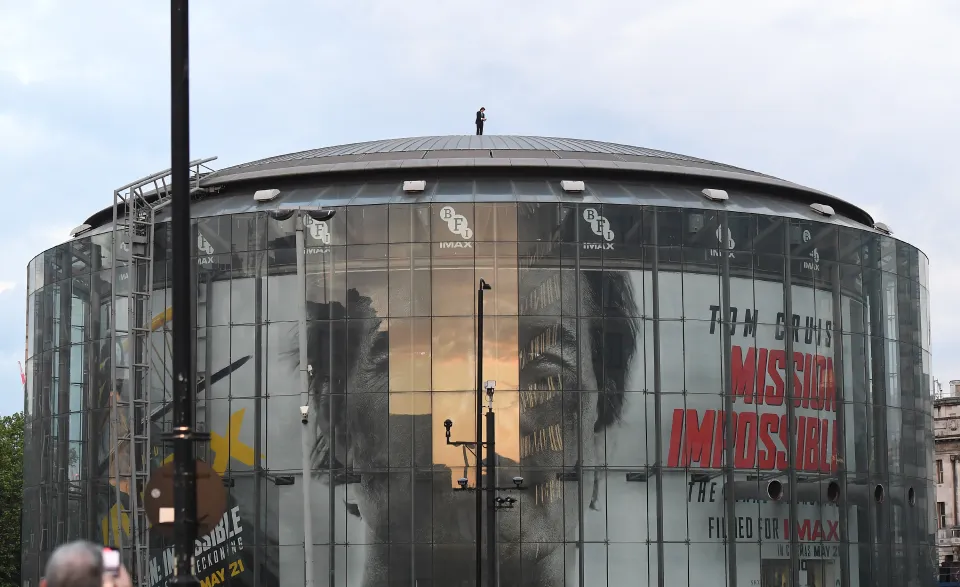
    Tom Cruise had a major request. He wanted IMAX to show his latest “Mission: Impossible” movie — and only his movie — on its giant screens for three weeks. It is the kind of exclusive run that few films get.

    So Mr. Cruise went straight to the top. He reached out to IMAX’s chief executive, Rich Gelfond, who had some requests of his own. He wanted all the “Mission: Impossible” premieres, along with press screenings and influencer screenings, to be held at an IMAX theater. And he wanted Mr. Cruise to endorse the company’s screens during his global press tour for the film, which opens this weekend.

    “As a joke I said, ‘Tom, no matter what question the press asks you, you’ve got to answer IMAX.’ ‘What’s your favorite scene?’ ‘IMAX,’” Mr. Gelfond, 69, said in an interview. “He agreed to do that.”

    In order to get something from IMAX these days, even Hollywood’s top power players have to give some, too.

    As movie theater audiences wane and at-home streaming audiences grow, IMAX increasingly stands out as a bright spot in the theater business. The company, founded in Toronto, aims to give moviegoers a more immersive experience with larger screens, better sound and steeper seating, which brings viewers closer to the screen. It now has 416 locations in North America and 1,322 overseas. That is only 1 percent of all the screens in the world, but they often account for a larger percentage of a movie’s box office return, drawing significant crowds for a more expensive ticket than a typical theater seat.

    In the past two months, IMAX screens delivered $39 million to the global box office for “Sinners” (out of $321 million total), $30.6 million for “A Minecraft Movie” ($930.1 million total) and $30.5 million for “Thunderbolts*” ($330 million total). (“Thunderbolts*” and “Minecraft” each played in IMAX theaters for two weeks. “Sinners” was brought back to nine locations for a third week.)

    As a result, Hollywood studios are putting more emphasis on the IMAX brand, even making the IMAX logo in larger type than the title of the movie in some marketing materials. Disney started this last year with “Kingdom of the Planet of the Apes” and “Alien: Romulus.” For “The Amateur,” a small action movie made by 20th Century Studios this year, the tagline “Vengeance is bigger in IMAX” appeared larger than the movie title. Marvel’s “Thunderbolts*” received similar treatment.

    “For some of these movies that have a franchise history — and are also available at home — the IMAX brand can help speak to the big-screen-worthiness of a film and the spectacle,” said Asad Ayaz, the president of marketing at Disney, which owns Marvel and 20th Century Studios. “It differentiates it from streaming, which is also a big business for us, so it can be helpful.”

    Yet not everyone in the movie business is thrilled with IMAX’s ascension. Some worry that its limited number of screens, and higher prices for admission, could turn moviegoing from a frequent activity into a luxury experience that further reduces overall attendance.

    imax dual 4k with laser projection system
    Imax Keeps Updating Itself at Breakneck Pace. (Courtesy of Imax)

    “It’s great to be able to provide premium experiences to people who want it,” said Greg Marcus, chief executive of the company that operates Marcus Theaters, the fourth-largest chain in the country, but with only three IMAX screens. “But 80 to 85 percent of our business is coming from traditional theaters. And so you have to be very careful to not put down the traditional experience in promoting the other.”

    Complicating matters further, most theater chains have their own large-format screens. Regal Cinemas has RPX. Cinemark Theaters has CinemarkXD, and Marcus has both UltraScreenDLX and SuperScreenDLX. AMC, the largest theatrical exhibitor, has several: Dolby Cinema, Prime and Laser.

    When a moviegoer buys a ticket to the majority of these large format screens, the exhibitor traditionally evenly splits the revenue with the studio. But when a moviegoer buys a ticket to an IMAX theater, the exhibitor and the studio must give a cut of their shares, often up to 12.5 percent, to IMAX. (Theaters also have to pay a yearly fee to IMAX for the upkeep of their projectors and screens.)

    Yet IMAX is the premium large-format option the studios promote more than the others.

    “Theaters are struggling, and what seems to really make a different to audiences is the premium format,” said Jeff Goldstein, the president of distribution for Warner Bros. “Each individual exhibitor doesn’t want to give up their brand, and I think their strategy is smart. Any way that brings audiences out for movie going is good, and I think IMAX leads that.”

    Mr. Gelfond bought IMAX in 1994 through an investment company he co-founded. At the time, IMAX was primarily known for theaters inside museums and other cultural institutions, showing what he calls “bears, whales and seals” films. It was not until 2003 that the company ventured into partnerships with Hollywood. When “Avatar” was released in 2009, it grossed $250 million on 282 IMAX screens. Hollywood noticed.

    IMAX expects to generate $1.2 billion in box office revenue this year, its most ever. But the company is still relatively small. It reported $87 million in revenue last quarter, and $8 million in profit. The majority of the company’s screens are operated by other theater owners as a joint venture, and they share revenue for ticket sales. In those cases, IMAX receives a cut of the box office only from the studios and not the exhibitors, yet it still controls the programming.

    The fact that IMAX works with theater chains does not stop Mr. Gelfond from insulting them. “Their premium screens are just regular screens that are just bigger,” he said. “We are investing in a great experience. They are investing in buying a standard projector and putting it on a bigger screen.”

    richard gelfond
    Imax CEO Richard Gelfond. (AP Images)

    Not everyone agrees with Mr. Gelfond’s assessment about his competitors, including his competitors themselves. Yet his pugilistic style has gotten him far in Hollywood. Recently, he waded into the thorny world of Netflix and theatrical distribution. The entertainment giant has long eschewed releasing movies in theaters before its streaming service. Last month, Ted Sarandos, Netflix’s co-chief executive, called the communal experience of watching a movie in a theater “an outmoded idea.”

    But IMAX reached a deal to show Greta Gerwig’s upcoming adaptation of “The Chronicles of Narnia,” a Netflix film, for two weeks in fall 2026 before it goes on the streaming service. That has left some industry insiders wondering whether theaters would be willing to play a Netflix film at all, even if they are contractually obligated to under their deal with IMAX.

    “It does cause a conflict in the sense that Netflix has been quite public with negative comments,” Adam Aron, AMC’s chief executive, said in an interview. “But to support Rich we are going to play ‘Narnia.’ And we’d love to be able to convince Ted Sarandos that Netflix would be advantaged if it embraced movie theaters.”

    Some say Mr. Gelfond’s direct relationships with some top Hollywood directors have often put him ahead of the studios when it comes to knowing filmmakers’ intentions. Christopher Nolan (“Oppenheimer”) and Ryan Coogler (“Sinners”), both of whom have shot with IMAX cameras, and others have become evangelists for the brand. At the Cannes Film Festival this month, Mr. Gelfond revealed that Mr. Nolan would film the entirety of his next movie, “The Odyssey,” with IMAX cameras.

    His connections with some movie stars can help, too — and he’s happy to boast about them. Mr. Gelfond was quick to pull out his phone to share his text exchange with Mr. Cruise moments after the actor rappelled into the stadium at the closing ceremony of the Paris Olympics last summer.

    “Beyond awesome!! You’re the best,” Mr. Gelfond messaged the actor. A minute later, Mr. Cruise responded: “Thank you, my friend. We are going to crush it next summer.”

  • AI-Generated Reading List in the Chicago Sun-Times Suggests Books That Don’t Exist

    AI-Generated Reading List in the Chicago Sun-Times Suggests Books That Don’t Exist

    The summer reading list tucked into a special section of The Chicago Sun-Times and The Philadelphia Inquirer seemed innocuous enough.

    There were books by beloved authors such as Isabel Allende and Min Jin Lee; novels by best sellers including Delia Owens, Taylor Jenkins Reid and Brit Bennett; and a novel by Percival Everett, a recent Pulitzer Prize winner.

    There was just one issue: None of the book titles attributed to those authors were real. They had been created by generative artificial intelligence.

    It’s the latest case of bad A.I. making its way into the news. While generative A.I. has improved, there is still no way to ensure the systems produce accurate information. A.I. chatbots cannot distinguish between what is true and what is false, and they often make things up. The chatbots can spit out information and expert names with an air of authority.

    Most of the book descriptions were fairly believable. It didn’t seem out of reach that Ms. Bennett would “explore family bonds tested by natural disasters,” or that Ms. Allende would pen another “multigenerational saga.”

    The technology publication 404 Media reported earlier on the reading list. In addition to nonexistent book titles, the section included quotes from unidentifiable experts.

    Both The Sun-Times and The Inquirer issued statements condemning the use of A.I. and in part blamed King Features, a Hearst syndicate that licenses content nationally. The syndicate produced the 56-page supplement called “Heat Index: Your Guide to the Best of Summer,” which also included things like summer food trends and activity recommendations.

    While the list did not have a byline, a freelancer named Marco Buscaglia took responsibility for the piece. He confirmed that the list was partially generated by artificial intelligence, most likely Claude.

    “It was just a really bad error on my part and I feel bad that it has affected The Sun-Times and King Features, and that they are taking the shrapnel for it,” Mr. Buscaglia said in an interview.

    It’s fairly common for media organizations, especially resource-strapped local newsrooms, to rely on syndicates to supplement coverage.

    Just two months ago, 20 percent of staff at The Sun-Times resigned as part of a buyout offer. On the newspaper’s homepage on Wednesday, there were two banners atop the website. One linked to the statement on the May 18 special section, and the other linked to a piece on how federal cuts threaten local journalism.

    Felix M. Simon, a research fellow in A.I. and digital news at the Reuters Institute at Oxford University, said the technology was not entirely at fault. There are responsible and irresponsible ways to use A.I. for news gathering, he said.

    “We need better education for everyone from the freelancer level to the executive level,” Dr. Simon said, calling on people to look “at the structures that ultimately allowed this factually false article to appear in a reputable news outlet.”

    The special section was removed from The Inquirer’s website when it was discovered, according to Lisa Hughes, the publisher and chief executive of the paper. The section was also removed from The Sun-Times’s e-paper version, according to a statement, and subscribers would not be charged for the premium edition.

    King Features did not respond to requests for comment, but in a statement provided to The Sun-Times it said it had “a strict policy with our staff, cartoonists, columnists, and freelance writers against the use of A.I. to create content.”

    In its statement, The Sun-Times said that the incident should be a “learning moment.”

    “Our work is valued — and valuable — because of the humanity behind it,” the statement read.

  • Dell Aims to Be the Go-To Source for Enterprise AI Infrastructure

    Dell Aims to Be the Go-To Source for Enterprise AI Infrastructure

    Michael Dell is pitching a “decentralized” future for artificial intelligence that his company’s devices will make possible.   

    “The future of AI will be decentralized, low-latency, and hyper-efficient,” predicted the Dell Technologies founder, chairman, and CEO in his Dell World keynote, which you can watch on YouTube. “AI will follow the data, not the other way around,” Dell said at Monday’s kickoff of the company’s four-day customer conference in Las Vegas.

    Dell is betting that the complexity of deploying generative AI on-premise is driving companies to embrace a vendor with all of the parts, plus 24-hour-a-day service and support, including monitoring.

    On day two of the show, Dell chief operating officer Jeffrey Clarke noted that Dell’s survey of enterprise customers shows 37% want an infrastructure vendor to “build their entire AI stack for them,” adding, “We think Dell is becoming an enterprise’s ‘one-stop shop’ for all AI infrastructure.”

    Dell’s new offerings include products meant for so-called edge computing, that is, inside customers’ premises rather than in the cloud. For example, the Dell AI Factory is a managed service for AI on-premise, which Dell claims can be “up to 62% more cost-effective for inferencing LLMs on-premises than the public cloud.”

    dell poweredge
    Dell Technologies

    Dell brands one offering of its AI Factory with Nvidia to showcase the chip giant’s offerings. That includes, most prominently, revamped PowerEdge servers, running as many as 256 Nvidia Blackwell Ultra GPU chips, and some configurations that run the Grace-Blackwell combination of CPU and GPU.

    Future versions of the PowerEdge servers will support the next versions of Nvidia CPU and GPU, Vera and Rubin, said Dell, without adding more detail. 

    Dell also unveiled new networking switches running on either Nvidia’s Spectrum-X networking silicon or Nvidia’s InfiniBand technology. All of these parts, the PowerEdge servers and the network switches, conform to the standardized design that Nvidia has laid out as the Nvidia Enterprise AI factory.

    A second batch of updated PowerEdge machines will support AMD’s competing GPU family, the Instinct MI350. Both PowerEdge flavors come in configurations with either air cooling or liquid cooling.

    Complementing the Factory servers and switches are data storage enhancements, including updates to the company’s network-attached storage appliance, the PowerScale family, and the object-based storage system, ObjectScale. Dell introduced what it calls PowerScale Cybersecurity Suite, software designed to detect ransomware, and what Dell calls an “airgap vault” that keeps immutable backups separate from production data, to “ensure your critical data is isolated and safe.” 

    The ObjectScale products gain support for remote data access (RDMA), for use with Amazon’s S3 object storage service. The technology more than triples the throughput of data transfers, said Dell, lowers the latency of transfers by 80%, and can reduce the load on CPUs by 98%.

    “This is a game changer for faster AI deployments,” the company claimed. “We’ll leverage direct memory transfers to streamline data movement with minimal CPU involvement, making it ideal for scalable AI training and inference.”

    Dell AI Factory also emphasizes the so-called AI PC, workstations tuned for running inference. That includes a new laptop running a Qualcomm circuit board, the AI 100 PC inference card. It is meant to make local predictions with Gen AI without having to go to a central server. 

    dell pro max plus 3
    Dell Technologies

    The Dell Pro Max Plus laptop is “the world’s first mobile workstation with an enterprise-grade discrete NPU,” meaning a standalone chip for neural network processing, according to Dell’s analysis of workstation makers.

    qualcomm discrete npu in exploded dell pro max plus in datacenter
    Dell Technologies
    qualcomm discrete npu
    Dell Technologies

    The Pro Max Plus is expected to be available later this year.

    A number of Dell software offerings were put forward to aid the idea of the decentralized, “disaggregated” AI infrastructure. 

    For example, the company made an extensive pitch for its file management software, Project Lightning, which it calls “the world’s fastest parallel file system per new testing,” and which it said can achieve “up to two times greater throughput than competing parallel file systems.” That’s important for inference operations that must rapidly intake large amounts of data, the company noted.

    Also in the software bucket is what Dell calls its Dell Private Cloud software, which is meant to move customers between different software offerings for running servers and storage, including Broadcom’s VMware hypervisors, Nutanix’s hyper-converged offering, and IBM Red Hat’s competing offerings. 

    The company claimed Dell Private Cloud’s automation capabilities can allow customers to “provision a private cloud stack in 90% fewer steps than manual processes, delivering a cluster in just two and a half hours with no manual effort.”

  • Wolfspeed Expected to File for Bankruptcy in the Coming Weeks

    Wolfspeed Expected to File for Bankruptcy in the Coming Weeks

    Wolfspeed Inc., a once high-flying U.S. semiconductor company known for its silicon carbide technology, is preparing to file for bankruptcy protection within weeks after months of failed out-of-court negotiations with creditors, according to people familiar with the matter.

    The Durham, North Carolina-based chipmaker is working with legal and financial advisers on a prepackaged Chapter 11 filing, a move that would allow the company to continue operating while restructuring more than $2.1 billion in debt. The filing could come as early as mid-June, barring a last-minute breakthrough with lenders, sources said.

    The company’s preparations mark a dramatic turn for a business that had been central to the U.S. push for domestic semiconductor manufacturing, especially in the high-voltage components needed for electric vehicles, data centers, and renewable energy systems.

    Creditors, led by Apollo Global Management and BlackRock, have made several attempts over the past two months to restructure Wolfspeed’s debt out of court, including debt-for-equity swaps and maturity extensions, but those efforts were rejected by the company’s board, sources said.

    Instead, Wolfspeed is pursuing a prepackaged bankruptcy that would allow it to eliminate a large portion of its unsecured debt while preserving day-to-day operations and shielding critical assets like its Mohawk Valley chip fabrication facility in upstate New York.

    “Wolfspeed believes a court-supervised process is the most efficient path forward to stabilize its capital structure and protect its long-term strategic goals,” a person familiar with the matter said.

    The company has reportedly secured debtor-in-possession (DIP) financing from existing lenders, which would provide short-term liquidity during the restructuring process.

    Wolfspeed, formerly known as Cree Inc., had been riding a wave of enthusiasm for its silicon carbide semiconductors, which enable more efficient power conversion in EVs and industrial applications. The company signed supply deals with Tesla, General Motors, and other automakers, and received over $1.2 billion in federal and state incentives to expand U.S. production.

    But aggressive expansion, cost overruns at its Mohawk Valley facility, and global supply chain disruptions have strained its finances. Wolfspeed burned through $800 million in free cash flow in fiscal 2024, and recent earnings showed declining gross margins and ballooning losses.

    As of March 31, Wolfspeed reported $280 million in cash and $2.1 billion in total debt, including $1.3 billion in convertible notes and $600 million in term loans maturing in 2026.

    The company’s bonds trade at deeply distressed levels, with some notes quoted at below 40 cents on the dollar, signaling widespread investor skepticism about recovery prospects.

    A Wolfspeed bankruptcy could reverberate beyond Wall Street. The company was a flagship recipient of U.S. CHIPS Act incentives, touted by the Biden administration as part of efforts to reduce reliance on Chinese suppliers and on traditional silicon-based chips.

    The Department of Commerce awarded Wolfspeed a $500 million grant in 2023, and New York State pledged nearly $750 million in subsidies to support its factory expansion. A bankruptcy could trigger clawback provisions or lead to political scrutiny of how CHIPS Act funds were deployed.

    “This would be a blow to U.S. semiconductor reshoring ambitions,” said Stacy Rasgon, chip analyst at Bernstein Research. “Wolfspeed was seen as a homegrown solution to China’s dominance in power semiconductors.”

    News of the pending filing sent Wolfspeed shares down nearly 22% in after-hours trading, wiping out more than $400 million in market capitalization. The stock, which traded above $130 in 2021, closed Monday at $14.35 and is now down over 85% year-to-date.

    The news also weighed on shares of other silicon carbide suppliers, including ON Semiconductor and STMicroelectronics, though both companies have broader product lines and more diversified customer bases.

    Private equity firms and strategic buyers have reportedly expressed interest in acquiring parts of Wolfspeed’s operations in bankruptcy, including its device packaging business and legacy LED lighting unit.

    Wolfspeed is expected to file its Chapter 11 plan in the U.S. Bankruptcy Court for the District of Delaware. The plan will likely include a debt-to-equity conversion that hands control of the company to its senior lenders, while wiping out existing equity holders.

    The filing could also prompt labor negotiations and contract revisions at its New York plant, which employs more than 900 workers.

    Until then, Wolfspeed continues to ship product and fulfill customer orders, though some automakers have reportedly begun diversifying their sourcing amid the uncertainty.

    Wolfspeed’s pending bankruptcy underscores the risks of capital-intensive industrial bets in a volatile macroeconomic and geopolitical environment—even when backed by federal dollars.


    Wolfspeed at a Glance

    • Headquarters: Durham, NC
    • Founded: 1987 (as Cree Inc.)
    • Specialty: Silicon carbide semiconductors
    • Debt Load: $2.1 billion
    • Cash Reserves: $280 million (as of March 2025)
    • Federal/State Subsidies: $1.2 billion+
    • Planned Bankruptcy Filing: June 2025 (expected)
    • Key Customers: Tesla, GM, Lucid Motors