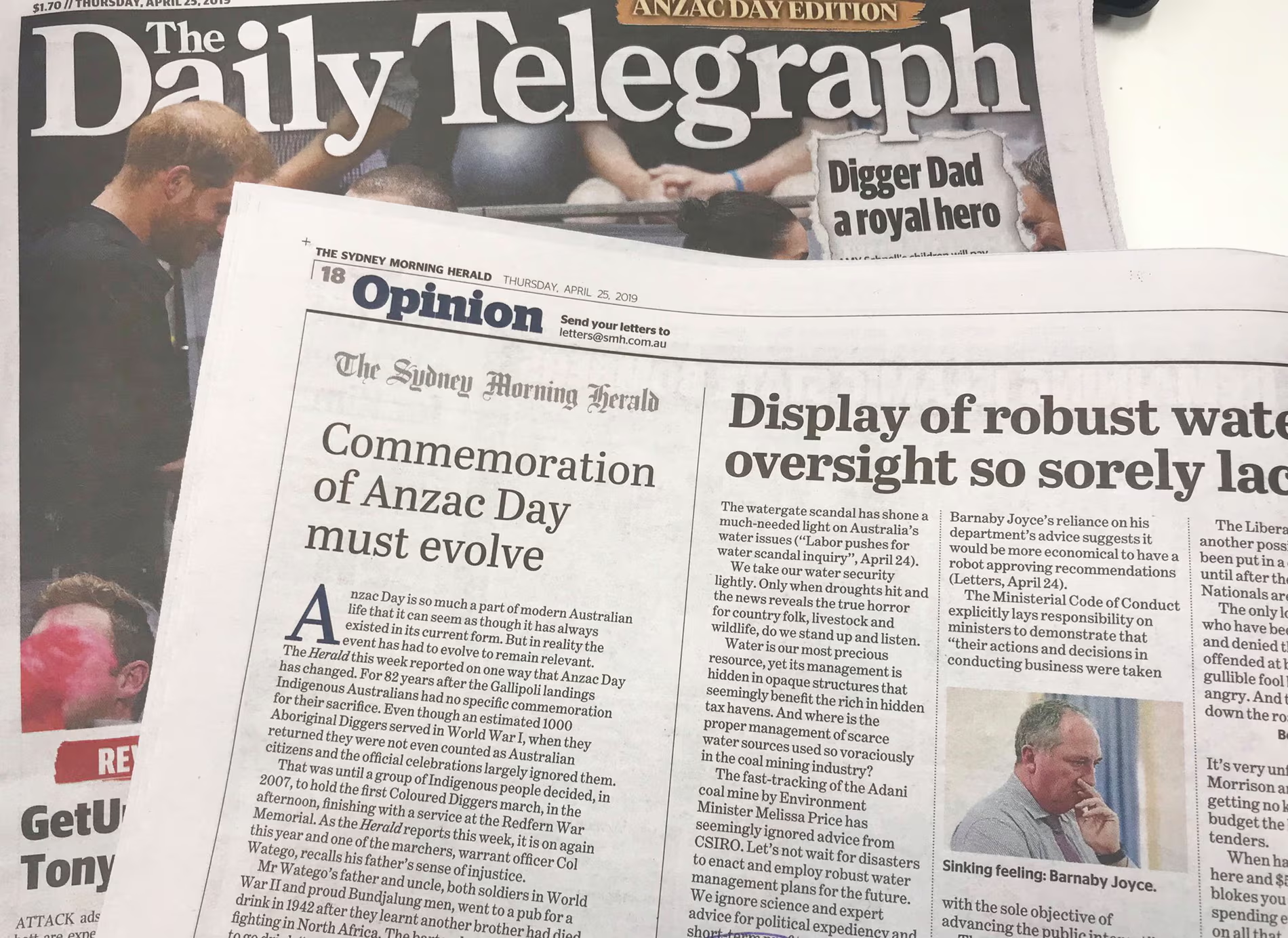
RedBird Capital Partners announced on Friday that it has purchased Telegraph Media Group for £500 million (nearly $675 million), concluding a protracted bid to acquire the news company.
The deal makes US-based RedBird the sole controlling owner of The Telegraph, the right-leaning British news outlet founded in 1855. Per the deal, RedBird will invest funds in The Telegraph’s digital operations to help continue growing subscriptions and expand the outlet’s foothold in the United States, where RedBird already has a constellation of media investments.
The deal comes after RedBird struggled for two years to acquire The Telegraph, stymied in large part by a conservative British government that restricted foreign governments from owning newspapers and capped foreign state-owned investment by a publisher at 15%. The UK’s Labour Party, which swept into power in July 2024, announced last week that it would relax restrictions on foreign investment.
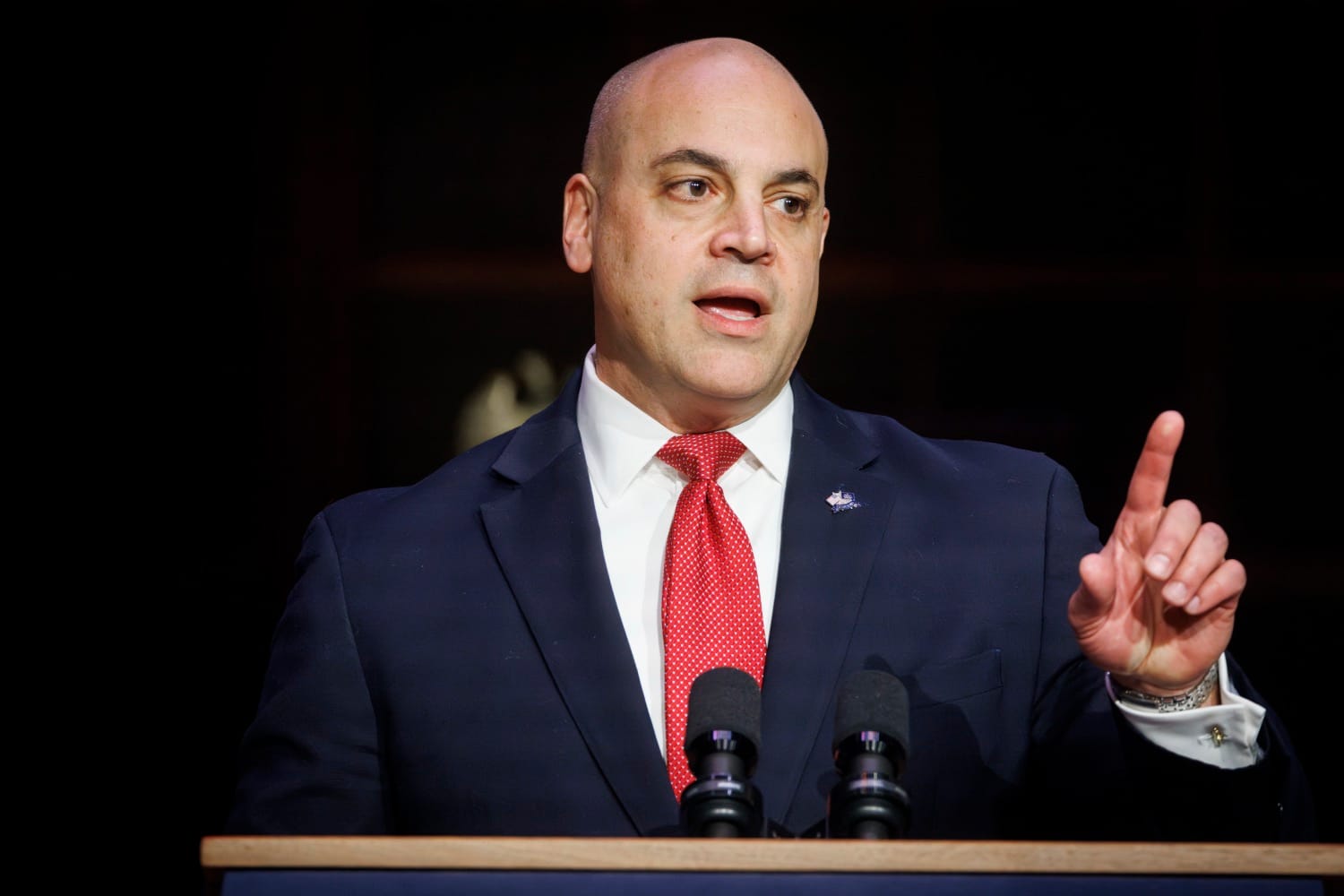
“This transaction marks the start of a new era for The Telegraph as we look to grow the brand in the UK and internationally, invest in its technology and expand its subscriber base,” RedBird CEO Gerry Cardinale said in a statement.
In January 2024, Jeff Zucker, the former CNN Media president, flew to London to pitch a takeover of the media company to Ofcom on behalf of RedBird IMI, where he is the chief executive.
The Telegraph went up for sale in 2023 after Lloyds Banking Group took control of unpaid debts from the Barclay family, which acquired the newspaper in 2004. The Barclay family regained control of the Telegraph in December 2023 with the help of a loan from RedBird IMI, an Abu Dhabi-backed joint venture. However, the British government blocked the transfer of ownership to RedBird.
The Friday deal avoided that rule by providing IMI only a minority share in the paper.
RedBird’s focus on the US market comes as other British media outlets, including the BBC, The Guardian, and The Independent, have expanded their US coverage, often to great success. According to a May report, The Guardian grew its overall revenue by 25% on year, while The Independent in January reported a 75%year-over-year audience increase.
RedBird has major investments in media, entertainment, and sports in the UK. In 2024, the firm acquired All3Media, a British film and TV production and distribution company. The company also has a stake in the Premier League soccer club Liverpool and owns AC Milan in Italy’s Serie A. RedBird will also acquire the UK’s Channel 5 if Paramount Global’s merger with Skydance is approved.
RedBird has also invested in Ben Affleck and Matt Damon’s Artists Equity, LeBron James and Maverick Carter’s SpringHill Company, the YES Network, and has helped Skydance finance several productions, including Amazon’s “Reacher” and Paramount’s “Top Gun: Maverick.”
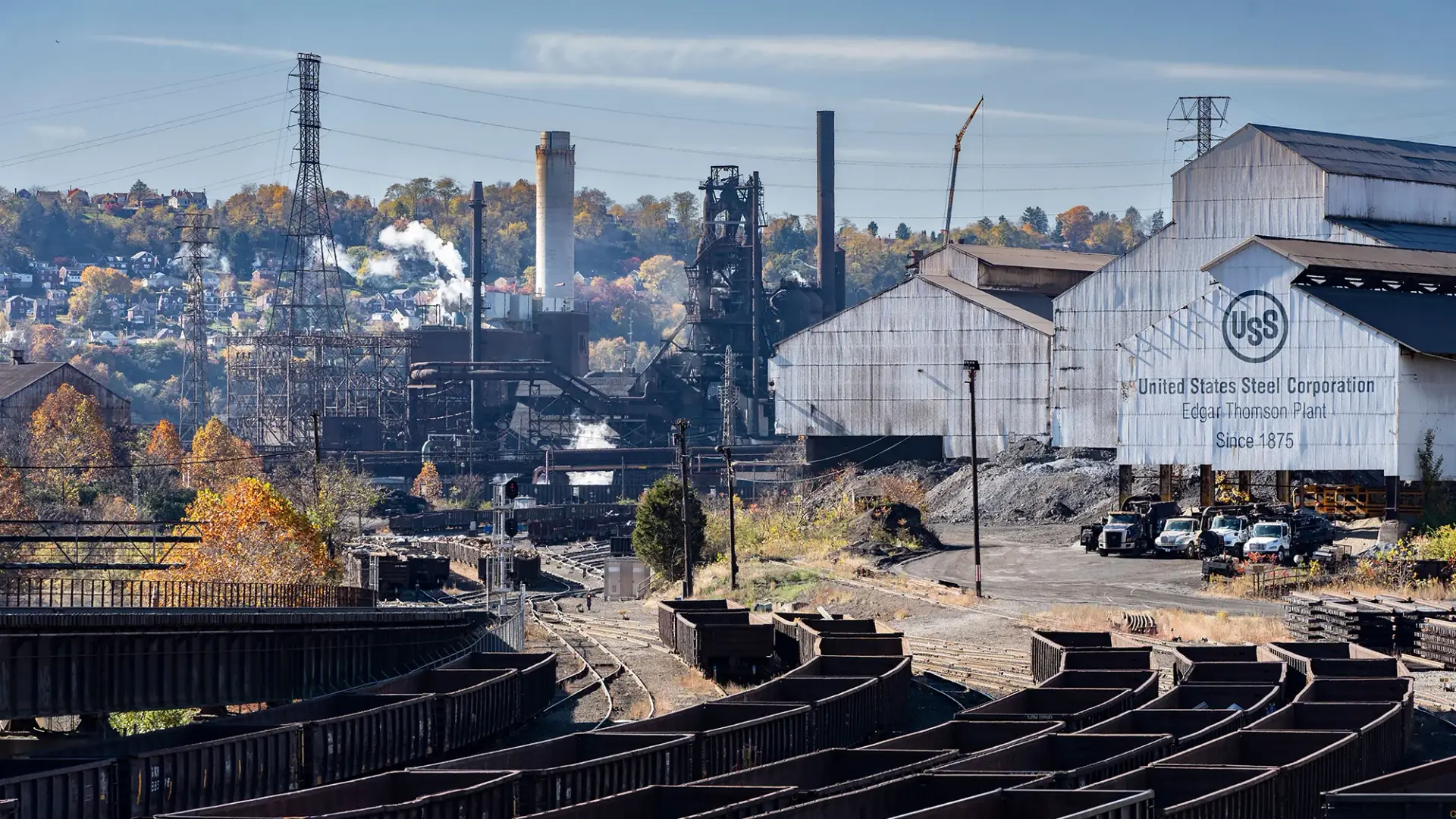
President Donald Trump announced a partnership between U.S. Steel and Japanese steelmaker Nippon that he says will keep the headquarters in Pittsburgh and draw $14 billion in investment toward the US economy.
“This will be a planned partnership between United States Steel and Nippon Steel, which will create at least 70,000 jobs, and add $14 Billion Dollars to the U.S. Economy. The bulk of that Investment will occur in the next 14 months,” Trump posted on TruthSocial Friday.
Trump will visit the steel plant next Friday for a “BIG rally,” he said.
But Trump’s post included few details about what’s included in the deal, such as whether this is truly a partnership instead of an acquisition and how much control would remain with U.S. Steel.
Former president Joe Biden blocked the $14.3 billion acquisition during his last week in office. The deal has been controversial since it was first announced in December 2023, with both sides of the political aisle opposing foreign control of a once-key component of US industrial might that has fallen on hard times.
Trump found rare convergence with Biden when also began his term opposed to an outright deal. “I don’t want US Steel being owned by a foreign country. All they can have is an investment,” Trump said.
But in March, the Trump administration signaled it may allow the deal to go through after it filed a motion to extend two deadlines in a lawsuit U.S. Steel and Nippon Steel filed against the Committee on Foreign Investment in the United States, which scrutinizes foreign investments for national security risks.
CFIUS launched a review into the acquisition in April, and submitted a recommendation to Trump on whether any of the measures proposed by the companies would mitigate national security risks on Wednesday, Reuters reported. Nippon raised its investment pledge in US Steel’s operations to $14 billion, which would include a new $4 billion steel mill in the US, if its bid was greenlit, according to Reuters.
US Steel was once a symbol of American industrial might, when it was the most valuable company in the world and the first to be worth $1 billion, soon after its creation in 1901. It was also crucial to the US economy and the cars, appliances, bridges and skyscrapers that tangibly indicated that strength.
But it has suffered through decades of decline since its post-World War II height. It is no longer even the largest US steelmaker, and a relatively minor employer, with 14,000 US employees — 11,000 of whom are members of the United Steel Workers union. But it is still not a company that politicians who enjoy talking about American greatness have wanted to see fall into foreign hands — particularly in the politically significant state of Pennsylvania.
US Steel called Trump “a bold leader and businessman” in a statement Friday. “U.S. Steel will remain American, and we will grow bigger and stronger through a partnership with Nippon Steel that brings massive investment, new technologies and thousands of jobs over the next four years,” the company said in a statement.
The deal had sparked fierce opposition from the union, saying it was concerned the Nippon would not maintain a long-term commitment to the remaining unionized mills.
In a press release Thursday, the United Steel Workers said that allowing US Steel to be sold to Nippon would “be a disaster for American Steelworkers, our national security and the future of American manufacturing.”
“President Trump has publicly pledged to block this sale since January 2024. We now urge him to act decisively, shutting the door once and for all on this corporate sellout of American Steelworkers and defending U.S. manufacturing,” the release said.
But Republican Pennsylvania Senator Dave McCormick applauded the partnership, saying it ensures “that U.S. Steel remains under U.S. control” in a Friday statement, although he too did not detail how the deal would work. Democratic Senator John Fetterman said the original deal was a “death sentence” in a post on X Friday.
Pennsylvania Governor Josh Shapiro also praised the partnership, adding that he directly discussed the transaction with Trump in the past few days.
“Throughout the entire process, I have maintained that my priority was to keep and grow jobs here in Pennsylvania and get the largest investment we possibly could for our Commonwealth,” he said in a statement Friday.
US Steel (NYSE: X) stock shot up 21% Friday once the news was announced. CNN News has reached out to US Steel, the USW, and Pennsylvania Governor Josh Shapiro’s office for comment.
US President Donald Trump boasted “jobs and factories will come roaring back” when he unleashed unprecedented tariffs around the world during his “Liberation Day” address last month.
But there’s one product the president is particularly eager to produce in the US: iPhones.
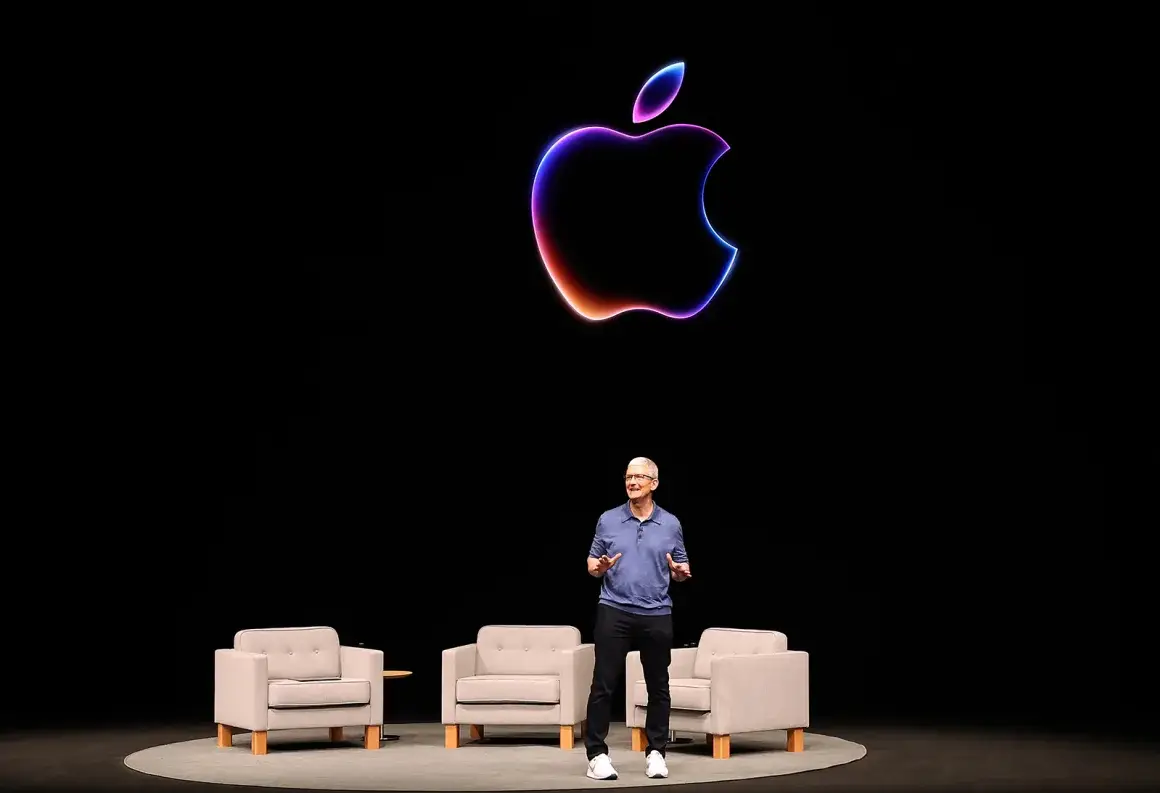
“I have long ago informed Tim Cook of Apple that I expect their iPhone’s that will be sold in the United States of America will be manufactured and built in the United States, not India, or anyplace else,” Trump posted Friday morning on Truth Social. “If that is not the case, a Tariff of at least 25% must be paid by Apple to the U.S.”
But Dan Ives, global head of technology research at financial services firm Wedbush Securities, told in April that idea is a “fictional tale.”
US-made iPhones will likelycost more than three times their current price of around $1,000, Ives said, because of the costs associated with replicating the highly complex production ecosystem that currently exists in Asia.
“You build that (supply chain) in the US with a fab in West Virginia and New Jersey. They’ll be $3,500 iPhones,” he said, referring to fabrication plants, or high-tech manufacturing facilities where computer chips that power electronic devices are normally made.
And even then, it would cost Apple about $30 billion and three years to move just 10% of their supply chain to the US to begin with, Ives told Burnett.
The making and assembly of smartphone parts shifted to Asia decades ago, as American companies largely focused on software development and product design, which generate much higher profit margins. That move has helped make Apple one of the world’s most valuable companies and cement itself asa dominant smartphone maker.
Since Trump’s inauguration in late January, Apple’s shares have lostmore than 14%of their value due to concerns about the impact of tariffs on its sprawling supply chain, which is highly dependent on China and Taiwan. About 90% of Apple’s iPhone production takes place in China, according to Ives.
“That’s why I think you see what’s happened to the stock, because no company is more caught up in this tariff front and center in this category five storm than Cupertino and Apple,” he said in April. “It’s an economic Armageddon, but especially for the tech industry.”
The chips that power iPhones are mainly manufactured in Taiwan, while its screen panels are supplied by South Korean companies. Some other components are made in China, and final assembly mostly takes place in the country.
The administration’s exemption of smartphones and other electronics containing semiconductors from the elevated“reciprocal” tariffs on China has spared iPhones from the harshest levies, but Apple still faces a 20% tariff on Chinese goods for the country’s role in the fentanyl trade. Apple CEO Tim Cook said on the company’s most recent earnings call that “the majority” of iPhones coming into the United Stateswill now be shipped from India, adding that tariffs could add $900 million to Apple’s costs this quarter.
In February, Apple announced it would invest $500 billion in the United States over the next four years as part of its effort expand production outside China and to avoid Trump’s tariffs on the country.
Apple has been seeking to diversify its production bases from China to India and Brazil. But Gene Munster, managing partner at Deepwater Asset Management, estimates it would be difficult for Apple not to raise iPhone prices if it faces tariffs of 30% or higher.
“Anything below 30, they will probably carry the vast majority of that increase,” he said. “But I think at some point they’re going to have to start to share it.”
President Donald Trump said in a social media post Friday morning that Apple will have to pay a tariff of 25% or more for iPhones made outside the United States.
“I have long ago informed Tim Cook of Apple that I expect their iPhone’s that will be sold in the United States of America will be manufactured and built in the United States, not India, or anyplace else. If that is not the case, a Tariff of at least 25% must be paid by Apple to the U.S.,” Trump said on Truth Social.
Shares of Apple fell about 2% on Friday after the post.
Production of Apple’s flagship phone happens primarily in China, but the company has been shifting manufacturing to India in part because that country has a friendlier trade relationship with the U.S.
Some Wall Street analysts have estimated that moving iPhone production to the U.S. would raise the price of the Apple smartphone by at least 25%. Wedbush’s Dan Ives put the estimated cost of a U.S. iPhone at $3,500. The iPhone 16 Pro currently retails for about $1,000.
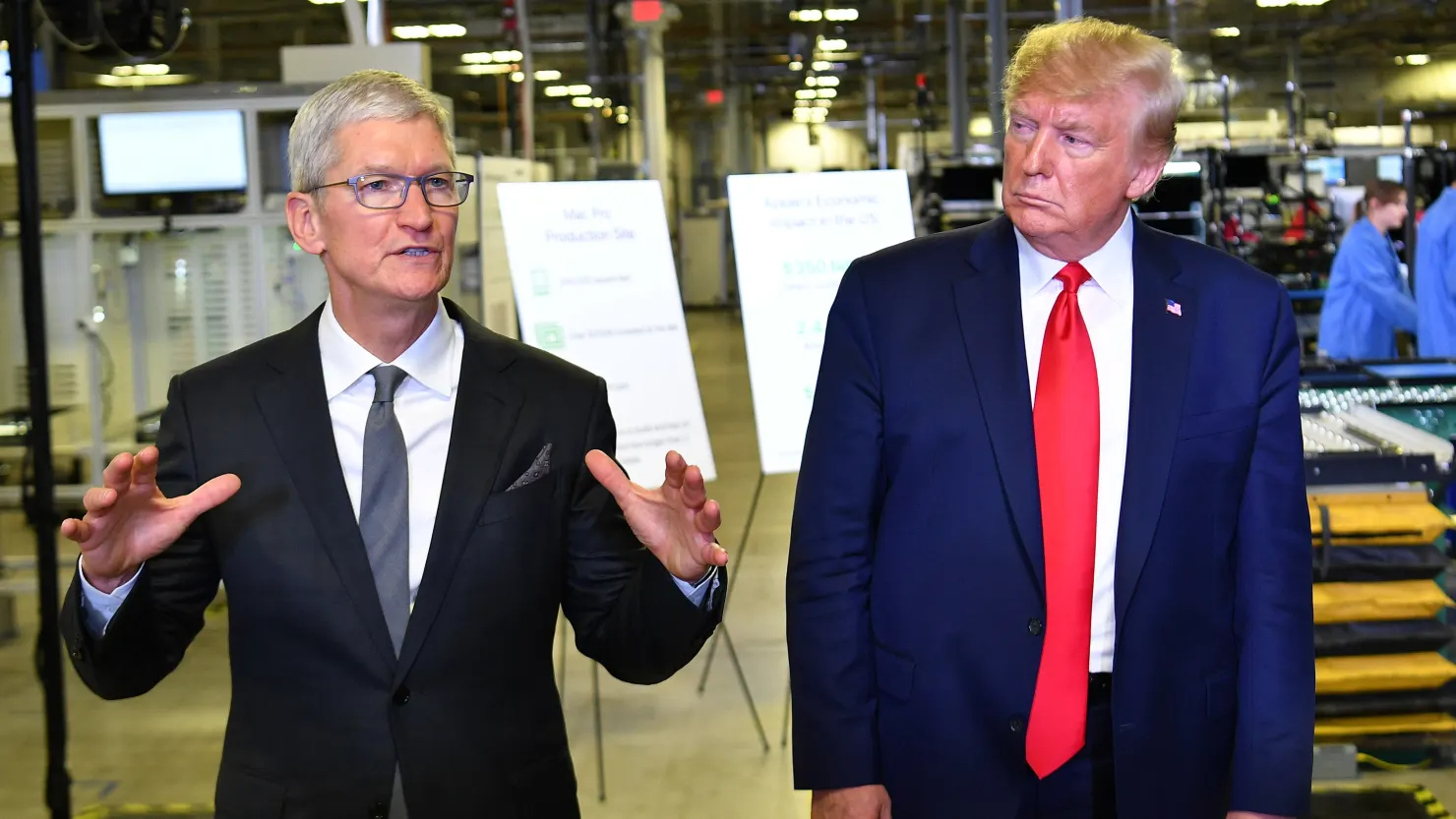
This is the latest jab at Apple from Trump, who over the past couple of weeks has ramped up pressure on the company and Cook to increase domestic manufacturing. Trump and Cook met at the White House on Tuesday, according to Politico.
Treasury Secretary Scott Bessent said in an interview with Fox News on Friday that he was not part of the meeting at the White House but the Apple situation could be part of the Trump administration’s push to bring “precision manufacturing” back to the U.S.
“A large part of Apple’s components are in semiconductors. So we would like to have Apple help us make the semiconductor supply chain more secure,” Bessent said.
Cook gave $1 million to Trump’s inauguration fund and attended the inauguration in January. Apple has announced a $500 billion spend on U.S. development, including AI server production in Houston.
Apple declined to comment for this story.
The company said during its May 1 earnings report that it expects about $900 million in additional costs for tariffs in the current quarter. Cook said on the company’s earnings call that the tariff outlook was “very difficult to predict” past June.
Foxconn, one of Apple’s main iPhone assembly partners, is spending $1.5 billion on expanding its India facilities, the Financial Times reported Thursday.
Trump has made public criticisms of other major U.S. companies, including Walmart, during his trade war push, but the levies on a specific consumer product is a new step. The exact legal mechanism for the tariff is unclear.
Trump followed up his post about Apple with another calling for a 50% tariff on products from the European Union. Taken together, the posts point to trade tensions increasing again after the U.S. had temporarily lowered many of its levies, including in an agreement with China.
Apple also had to navigate tariff threats during Trump’s first term, when a 15% tariff on Chinese imports was being considered in 2019. At that time, Cook had a strong relationship with Trump and the final trade deal excluded core Apple products from the duties.
As Apple is caught in the U.S. president’s crosshairs, the company is also seeing weak demand in China. On Friday the company hiked trade-in incentives for iPhones in China.
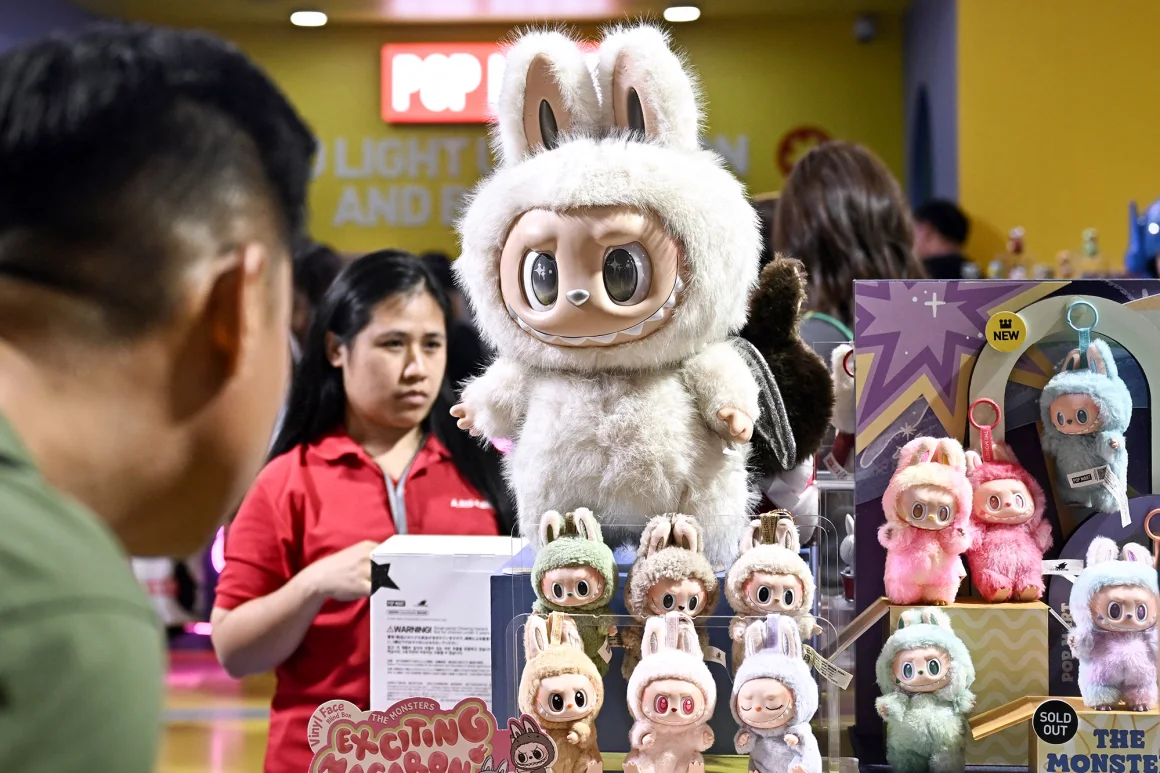
Labubu, a palm-sized plush toy with sharp teeth and a cult following, has become a toy too popular to sell.
After chaotic scenes of queueing, crowd surges and reported fights, distributor Pop Mart has suspended all in-store sales of the collectible across the United Kingdom.
“Due to the increasing demand for our beloved Labubus, we’ve seen a significant rise in customer turnout on restock days — with long queues forming outside our stores and Roboshops (self-service stores),” the Chinese-based toy company wrote in an Instagram post Tuesday.
“To ensure the safety and comfort of everyone, we will temporarily pause all in-store and roboshop sales of THE MONSTERS plush toys until further notice.” Online sales, however, will continue as usual, it added.
Labubu toys at a Pop Mart pop-up store in Siam Center shopping mall in Bangkok, seen on May 6, 2025. (Lillian Suwanrumpha/AFP/Getty Images)
Labubu is the brainchild of Hong Kong-born illustrator Kasing Lung, and it has quietly built a loyal following since its 2015 debut.
But in recent months, the bunny-bodied, elf-faced creature — equal parts grotesque and adorable — has soared in popularity. Stars including Rihanna, Dua Lipa, and Lisa from Blackpink have worn the toys like charms, and they were were even spotted at Paris Fashion Week this year.
The effect is evident in the numbers, as Pop Mart is enjoying meteoric growth both at home in China and overseas.
In 2024, Pop Mart’s revenue outside China skyrocketed 375.2% to 5.07 billion yuan ($700 million). Labubus alone generated 3 billion yuan ($420 million) of the company’s 13.04 billion yuan ($1.8 billion) total revenue last year.
Across TikTok, content featuring Labubus ranges from euphoric unboxings to clips of brawls outside stores. The hashtag “Labubu” now carries more than 1.4 million posts, and on resale platforms such as StockX the plushies are fetching hundreds of dollars, compared with a standard retail price of up to $85.
For some, the frenzy has tipped into absurdity.
“Don’t risk your life for a Labubu,” read the caption on one TikTok video from Victoria Calvert. The video — now viewed more than 100,000 times — captured the escalating chaos at a Pop Mart location in London.
“There’s people in balaclavas running to the front,” she said in the video, warning others to stay away.
Calvert told CNN that she “left pretty quickly” when people “started to shout names to each other and fight.”
“That’s when I realized it was a dangerous situation,” she added.
While some describe such scenes of chaos with a hint of disbelief, others see an upside for Pop Mart in the mayhem.
Sarah Johnson, founder and director of UK-based retail consultancy Flourish Retail, told CNN the suspension of in-store sales may be about more than just crowd control.
“Pop Mart pulling Labubus from UK stores seems like a precautionary move to de-escalate the in-store frenzy and protect both their brand and customers,” she told CNN. “At the same time, this kind of decision keeps the product in the spotlight and adds to the sense of scarcity, which only drives further interest and attention online.”
And nowhere is that more visible than on TikTok, Johnson added, where “a single video showing a long queue, an unboxing or someone finding a ‘rare’ item can go viral in minutes and suddenly everyone wants it.”
In today’s market, she said, “TikTok has essentially become the new high street window — except it’s open 24/7 and has global reach.”
A contestant from the ITV reality show “Love Island” revealed Tuesday that she had ended up “in a fight” with a woman in a shop over the sought-after plushies.
Mal Nicol said she had queued up at a London branch of Pop Mart to bag a Labubu for her 11-year-old cousin’s birthday.
But Nicol, who has two of the toys herself, was left enraged by a customer nearby.
“This b*tch, she bought five, she bought five. It’s actually ridiculous,” Nicol said on TikTok.
“Did I really just get in a fight with someone at Pop Mart? Yes, I did. Yes, I did,” she said.
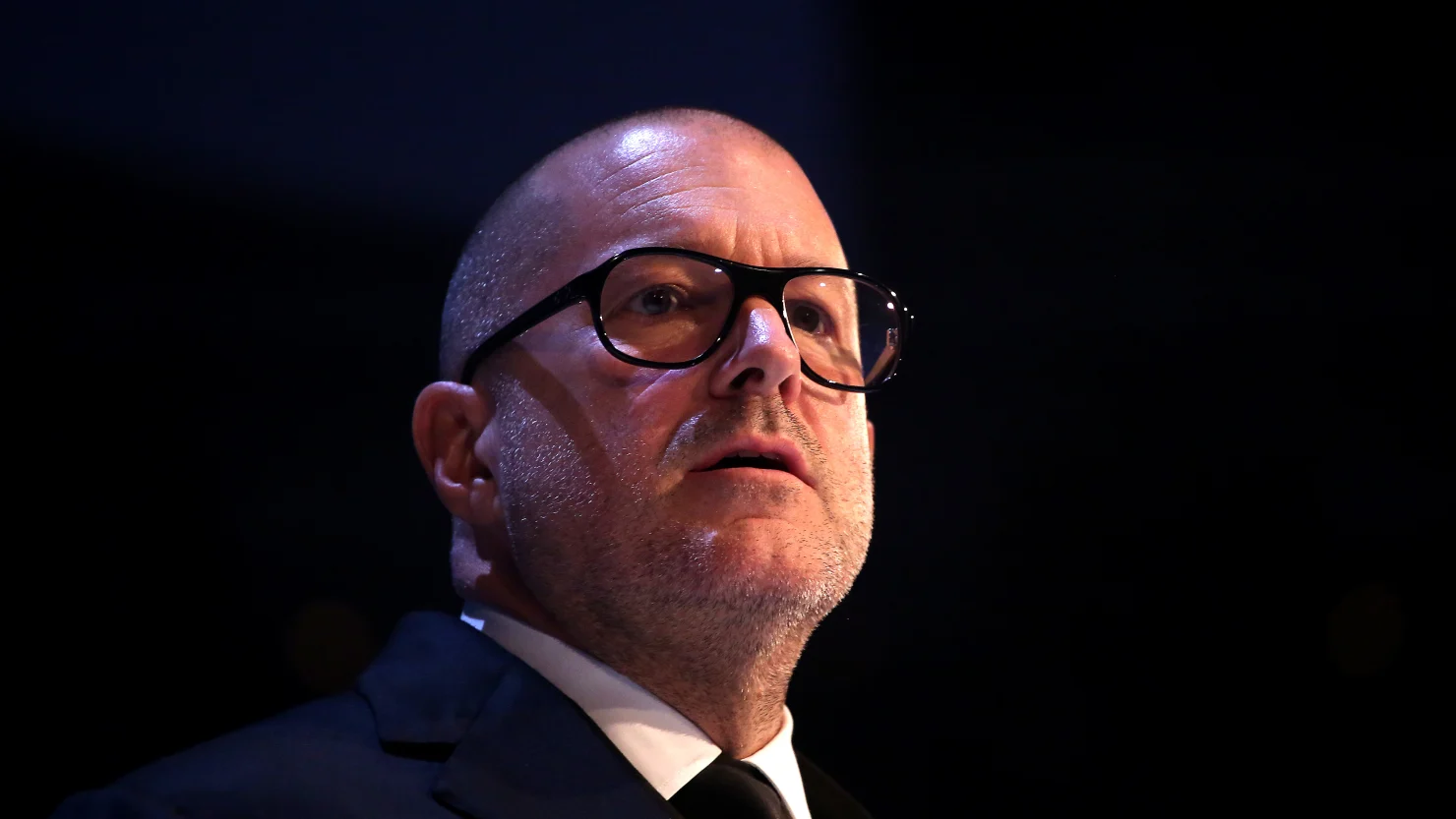
OpenAI CEO Sam Altman called Jony Ive “the greatest designer in the world” on Wednesday after announcing his company’s plan to buy Ive’s artificial intelligence device startup io, in a deal worth $6.4 billion.
The deal signals OpenAI’s intention to build consumer devices, likely meant to get more people using its AI services regularly. Altman and Ive have stayed mum on the specific products they’re planning to roll out, and when, but their partnership shows that OpenAI is taking a big swing: Steve Jobs once described Ive as his “spiritual partner at Apple” and a “wickedly intelligent person in all ways,” according to Walter Isaacson’s 2011 biography of the Apple co-founder.
Ive, 58, served as Apple’s chief design officer until 2019 and spent nearly three decades designing some of the tech giant’s most iconic pieces of hardware, from the iMac and MacBook to the iPhone, iPod and iPad. Born in London, he joined Apple in 1992, five years before Jobs returned as CEO to the company he co-founded.
Jobs quickly found a kindred spirit in Ive, later telling Isaacson that the pair typically conceived most of Apple’s new products together, before pulling in other collaborators: ”[Ive] understands business concepts, marketing concepts … He gets the big picture as well as the most infinitesimal details about each product.”
When Jobs died in 2011, Ive delivered his eulogy, calling his former boss his “closest and most loyal friend.”
Ive’s first collaboration with Jobs came on the colorful line of iMac personal computers released in 1998, for which the designer created striking features like a translucent plastic case and a handle on the back of the computer. Later, Ive’s focus shifted toward making products like the iPod and iPhone sleek, stylish and easy to use.
Ive also led the design of the Apple Watch and Apple’s AirPod earbuds. “The difference that Jony has made, not only at Apple but in the world, is huge,” Jobs told Isaacson.
When Ive left Apple in 2019 to launch his own independent design firm, LoveFrom, analysts at Deutsche Bank told CNBC News that the tech company was losing “one of [its] most important people.”
What could Ive design for OpenAI?
Altman is tasking Ive with trying to capture some of Apple’s magic, writing in a statement that Ive “will assume deep design and creative responsibilities across OpenAI and io.” The pair first agreed to work together on building a piece of AI-powered hardware two years ago, The New York Times reported in September.
It’s unclear exactly what types of products will result from the partnership. Their vision is for “a product that uses AI to create a computing experience that is less socially disruptive than the iPhone,” the Times wrote. They also want to “help wean users from screens,” and are wary of tech wearables like smart glasses, The Wall Street Journal reported on Wednesday.
Altman was an investor in startup Humane’s AI pin, a small, voice-controlled device users could wear on their lapel and use for phone calls, texts and search queries. The product was released in 2023 to a poor reception, and discontinued before the company began winding down operations in February.
Ive and Altman could be working on something similar to the AI pin, but slightly larger and worn around users’ necks, Apple analyst Ming-Chi Kuo wrote on social media platform X on Thursday. The product, which would connect with smartphones but have no display — not unlike AirPods, in that way— could begin production in 2027, Kuo predicted.
In the past, Ive has said that he relishes the opportunity to design new types of devices that don’t already exist in the world.
“I love working within such a relatively new product category. The opportunities are remarkable as you can be working on just one product that can instantly shatter an entire history of product types and implicated systems,” Ive told the British Council’s Design Museum in a 2005 interview. He pointed to the iPod as an example of a product that “clearly [turned] our users’ previous experience and understanding of storing and listening to music upside down.”
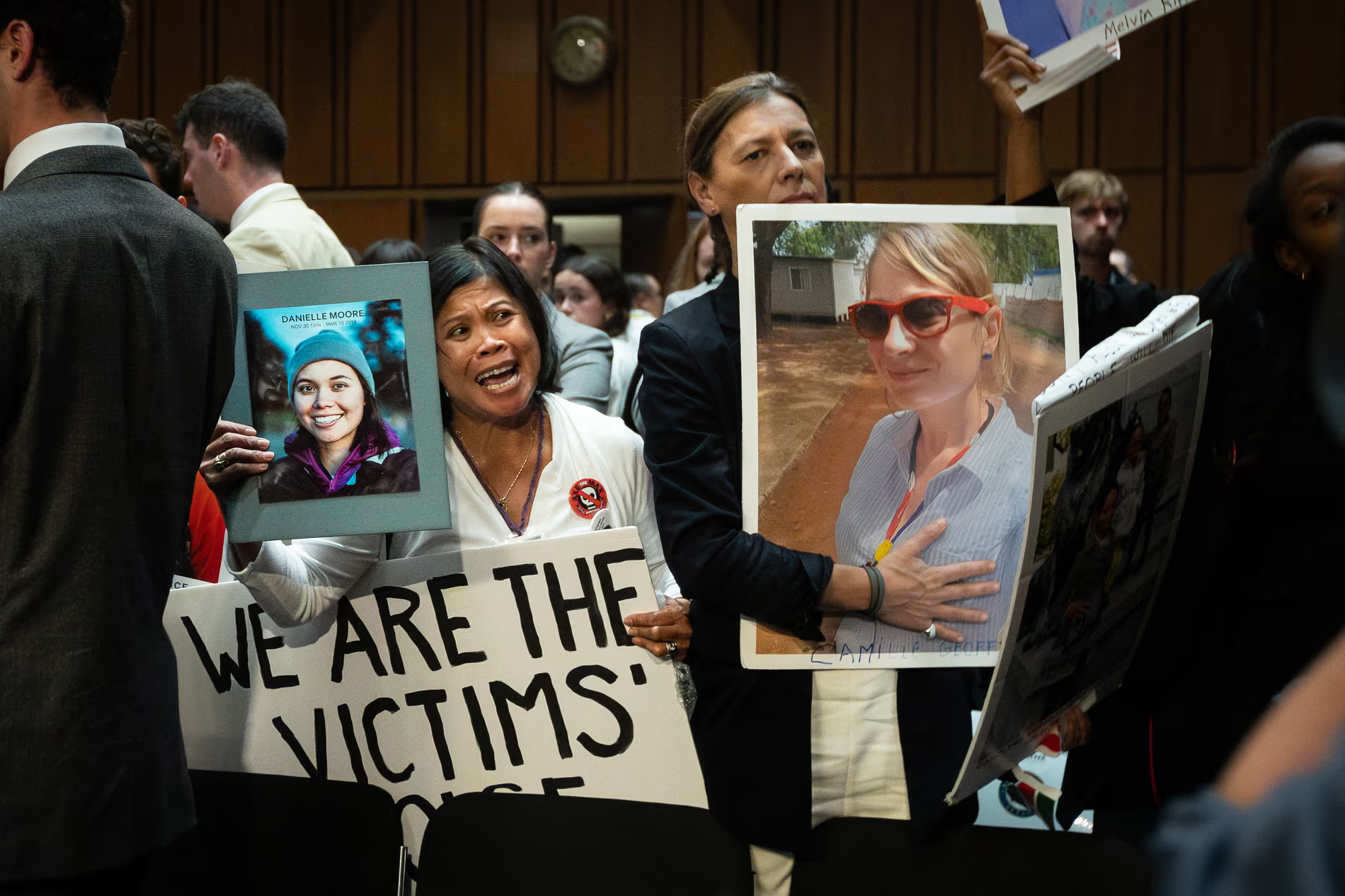
The justice department has reached a deal with Boeing that will allow the airplane giant to avoid criminal prosecution for allegedly misleading US regulators about the 737 Max jetliner before two of the planes crashed and killed 346 people, according to court papers filed on Friday.
Under the “agreement in principle” that still needs to be finalized, Boeing would pay and invest more than $1.1bn, including an additional $445m for the crash victims’ families, the justice department said. In return, the department would dismiss the fraud charge in the criminal case against the aircraft manufacturer.
“Ultimately, in applying the facts, the law, and Department policy, we are confident that this resolution is the most just outcome with practical benefits,” a justice department spokesperson said in a statement.
“Nothing will diminish the victims’ losses, but this resolution holds Boeing financially accountable, provides finality and compensation for the families and makes an impact for the safety of future air travelers.”
Many relatives of the passengers who died in the crashes, which took place off the coast of Indonesia and in Ethiopia less than five months apart in 2018 and 2019, have spent years pushing for a public trial, the prosecution of former company officials, and more severe financial punishment for Boeing.
“Although the DOJ proposed a fine and financial restitution to the victims’ families, the families that I represent contend that it is more important for Boeing to be held accountable to the flying public,” Paul Cassell, an attorney for many of the families in the long-running case, said in a statement earlier this week.
Boeing was accused of misleading the Federal Aviation Administration about aspects of the Max before the agency certified the plane for flight. Boeing did not tell airlines and pilots about a new software system, called MCAS, that could turn the plane’s nose down without input from pilots if a sensor detected that the plane might go into an aerodynamic stall.
The Max planes crashed after a faulty reading from the sensor pushed the nose down and pilots were unable to regain control. After the second crash, Max jets were grounded worldwide until the company redesigned MCAS to make it less powerful and to use signals from two sensors, not just one.
Boeing avoided prosecution in 2021 by reaching a $2.5bn settlement with the justice department that included a previous $243.6m fine.
A year ago, prosecutors said Boeing violated the terms of the 2021 agreement by failing to make promised changes to detect and prevent violations of federal anti-fraud laws. Boeing agreed last July to plead guilty to the felony fraud charge instead of enduring a potentially lengthy public trial.
But in December, US district judge Reed O’Connor in Fort Worth rejected the plea deal. The judge said the diversity, inclusion and equity (DEI) policies in the government and at Boeing could result in race being a factor in picking a monitor to oversee Boeing’s compliance with the agreement.
Following reports from The NY Budgets and other news outlets, Senator Maggie Hassan is demanding information about how Spotify is handling phony podcasts promoting potentially illegal online pharmacies.
Spotify said last week that it had removed dozens of podcasts identified by CNN that blatantly promoted the online pharmacies purportedly selling drugs such as Adderall and Oxycontin, in some cases without a prescription. Business Insider also reported that it had flagged 200 podcasts that Spotify subsequently removed.
The fake podcasts — which had showed up among the top suggestions in searches for drug names — violated Spotify’s rules and threatened to direct users to spammy and potentially illegal websites.
US law prohibits buying controlled substances online without a prescription. Parents, experts and lawmakers have urged tech giants to do more to prevent the sale of counterfeit or illicit drugs to young people through their platforms, after multiple teens have died of overdoses from pills bought online.
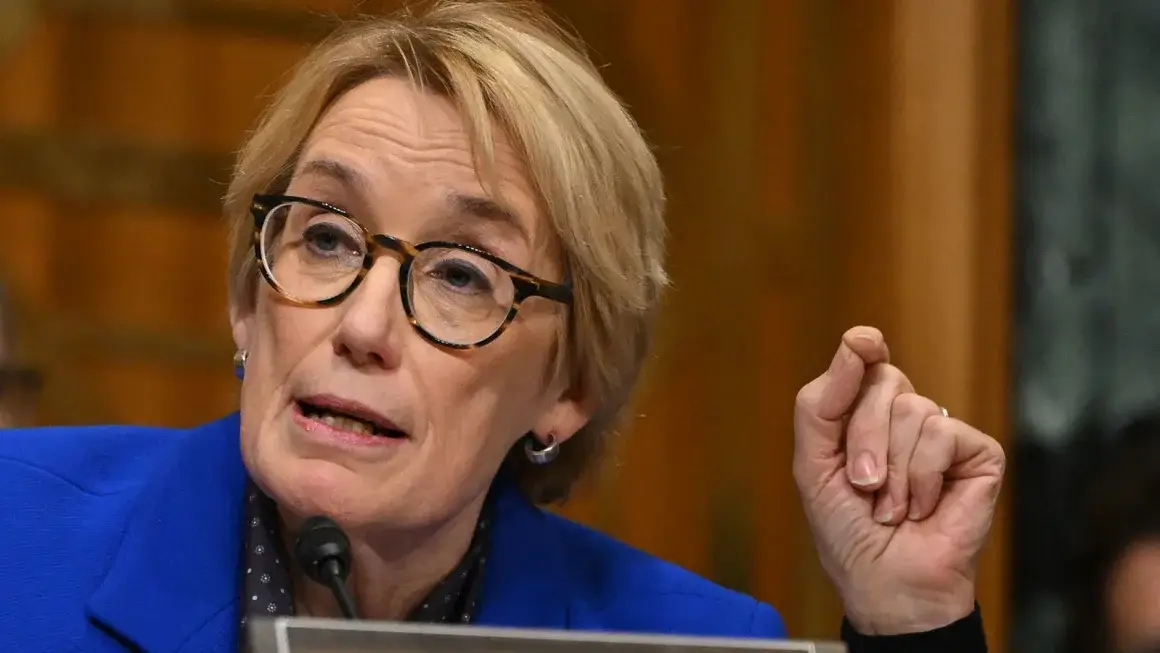
Now Hassan, a New Hampshire Democrat and theranking member of the Joint Economic Committee, wants answers about how these fake podcasts proliferated on Spotify and what the company is doing to stop it from happening again In a letter sent Thursday, Hassan urged Spotify CEO Daniel Ek to “take action to prevent fake podcasts that facilitate the illicit sale of drugs.”
“Far too many parents have experienced the unimaginable pain of losing their child to an accidental overdose,” Hassan told CNN News in an exclusive statement ahead of the letter’s release. “Spotify has a responsibility to significantly ramp up its efforts to stop criminals from using the platform to facilitate deadly drug sales to anyone, especially teens.”
The letter asks Spotify to provide details about the content it has taken down; how many users interacted with the drug sales podcasts before they were removed; whether the company earned any revenue from the podcasts; and whether Spotify works with law enforcement when it discovers illegal content. It also asks what moderation tools and practices the company has implemented to identify drug-related content and whether it will be making any updates considering the recent reports.
Hassan has asked Spotify to respond by June 12.
In a statement to The Budgets last week, a Spotify spokesperson said: “We are constantly working to detect and remove violating content across our service.” In response to Hassan’s letter, the company reiterated that statement, and a spokesperson added that such content also exists on other platforms and that the company has earned no revenue from the phony podcasts.
President Trump signed four executive orders on Friday aimed at accelerating the construction of nuclear power plants in the United States, including a new generation of small, advanced reactors that offer the promise of faster deployment but have yet to be proven.
One order directs the Nuclear Regulatory Commission, the nation’s independent safety regulator, to streamline its rules and to take no more than 18 months to approve applications for new reactors. The order also urges the agency to consider lowering its safety limits for radiation exposure, saying that current rules go beyond what is needed to protect human health.
Another order directs the Energy and Defense departments to explore siting reactors on federal lands and military bases, possibly alongside new data centers. That could allow the agencies to bypass the Nuclear Regulatory Commission and develop their own, faster processes for approving reactors.
The Trump administration also set a goal of quadrupling the size of the nation’s fleet of nuclear power plants, from nearly 100 gigawatts of electric capacity today to 400 gigawatts by 2050. One gigawatt is enough to power nearly 1 million homes.
“This is a huge day for the nuclear industry,” said Doug Burgum, the interior secretary, as he stood behind Mr. Trump at a signing ceremony in the Oval Office. “Mark this day on your calendar. This is going to turn the clock back on over 50 years of overregulation.”
In one of his first acts in office, Mr. Trump declared a “national energy emergency,” saying the country did not have enough electricity to meet its growing needs, particularly for data centers that run artificial intelligence. While most of Mr. Trump’s actions have focused on boosting coal, oil and natural gas, administration officials have supported nuclear power, too.
Nuclear power enjoys bipartisan backing in Congress. While some Democrats remain opposed because of concerns about safety and disposal of nuclear waste, an increasing number have embraced the technology because it doesn’t produce planet-warming emissions. It also gets backing from Republicans who say nuclear power plants strengthen U.S. energy security.
House Speaker Mike Johnson, R-La., speaks to the media after the House narrowly passed President Donald Trump’s “big, beautiful bill.” (Fox News)
The far-reaching domestic policy bill passed by House Republicans this week aimed to halt federal support for most types of emissions-free power. But the nuclear industry got an exemption: Companies aiming to build new reactors would still be able to get a tax break as long as they begin construction by the end of 2028.
Even so, developing new reactors in the United States has proved enormously difficult.
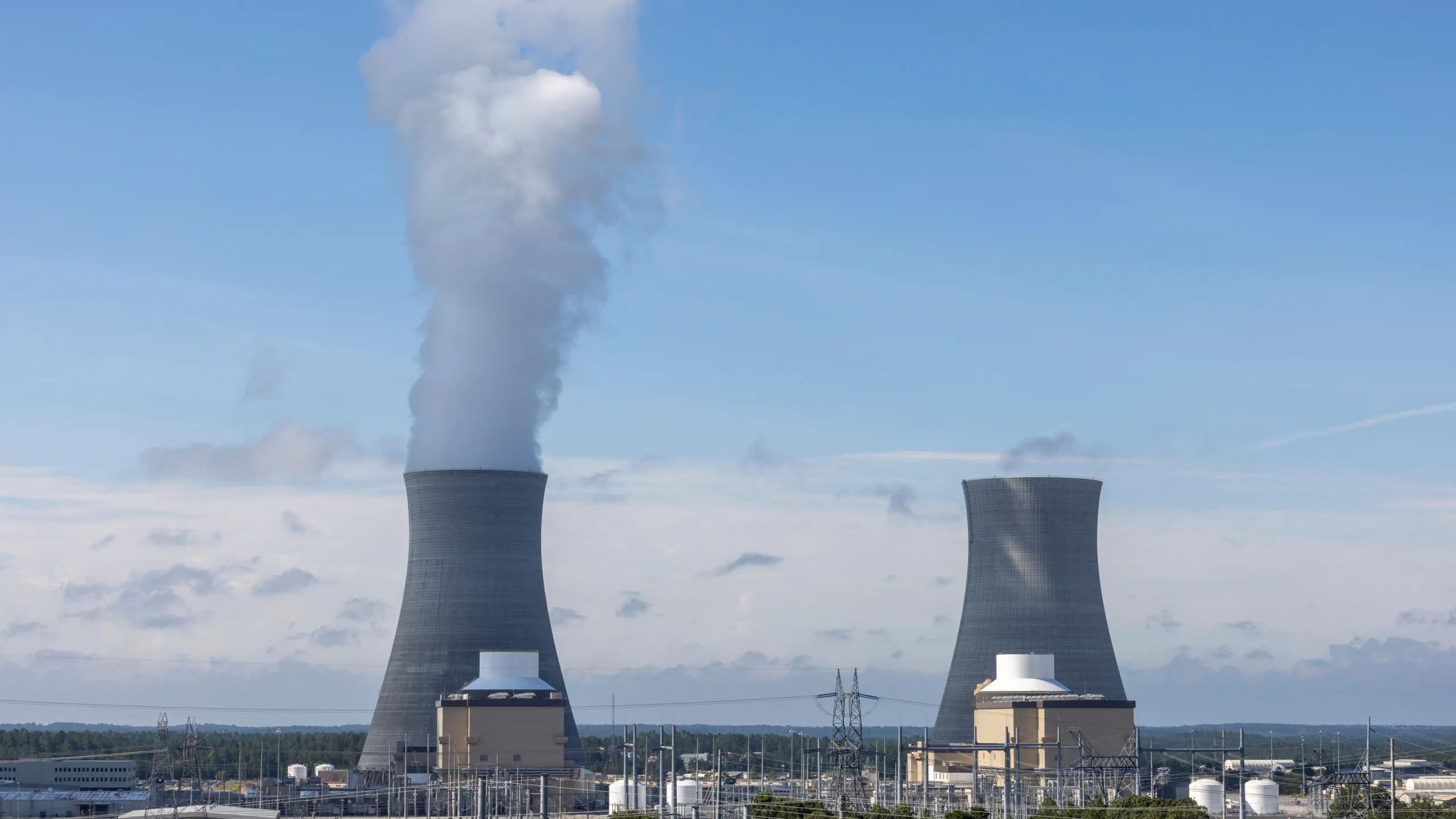
While the country has the world’s largest fleet of nuclear power plants, only three new reactors have come online since 1996. Many utilities have been scared off by the cost: The two most recent reactors built at the Vogtle nuclear power plant in Georgia totaled $35 billion, double the initial estimates, and arrived seven years behind schedule.
In recent years, more than a dozen companies have begun developing a new generation of smaller reactors a fraction of the size of those at Vogtle. The hope is that these reactors would have a lower upfront price tag, making them a less risky investment for utilities. They might also be based on a design that could be repeated often, as opposed to custom-built, to reduce costs.
So far, however, none of these next-generation plants have been built, although projects are underway in Wyoming, Texas and Tennessee.
Some nuclear proponents and companies have blamed the sluggish pace on the Nuclear Regulatory Commission, which must approve new designs before they are built. Critics say that many of the regulations that the agency uses were designed for an earlier era and are no longer appropriate for advanced reactors that are designed to be less susceptible to meltdowns.
“This is an agency that needs be shaken up a bit,” said Jacob DeWitte, chief executive of Oklo Inc., a startup that has developed a small advanced reactor that it plans to build at Idaho National Laboratory. He called the executive orders “incredibly exciting on multiple fronts.”
In one executive order, Mr. Trump directed the Nuclear Regulatory Commission to undertake a “wholesale revision” of its rules within 18 months and reorganize itself in consultation with the so-called Department of Government Efficiency, the group formed by Elon Musk. That reorganization could include layoffs, the order said.
While Congress established the nuclear agency to be independent from the White House, Mr. Trump has sought to exert greater authority over independent agencies in recent months.
“The N.R.C. is assessing the executive orders and will comply with White House directives,” said Scott Burnell, a spokesman for the Nuclear Regulatory Commission. “We look forward to continuing to work with the administration, DOE and DOD on future nuclear programs.”
Inside the control room of the Three Mile Island facility, which is being revived to power a Microsoft data center. (George Etheredge/The New York Times)
Skeptics of nuclear power fear that pressure from the White House could cause the agency to take shortcuts on safety. Since the partial meltdown of the Three Mile Island plant in Pennsylvania in 1979, in which there were no fatalities, the Nuclear Regulatory Commission has ratcheted up safety requirements. While that has made it harder to build new plants, the country has also not experienced another major nuclear accident.
“Simply put, the U.S. nuclear industry will fail if safety is not made a priority,” said Edwin Lyman, the director of nuclear power safety at the Union of Concerned Scientists and a frequent critic of the industry. He added that if another large radiological release were to occur, it would “destroy public trust in nuclear power and cause other nations to reject U.S. nuclear technology for decades to come.”
Even a few nuclear companies and proponents have been nervous about a major shake-up at the Nuclear Regulatory Commission. They note that the agency has already started streamlining its approval processes in response to bipartisan bills passed by Congress, and that a hasty reorganization could, paradoxically, end up delaying approvals for the nuclear companies that are in the process of getting permits.
“Our assessment is that N.R.C. is already making significant progress on reform,” said Judi Greenwald, executive director of the Nuclear Innovation Alliance, a pronuclear think tank. “It is in everyone’s interest that this progress continue and not be undermined by staffing cuts or upended by conflicting directives.”
Another order calls on the secretary of energy to develop a plan to rebuild U.S. supplies of enriched uranium and other nuclear fuels, which in recent years have largely been imported from Russia.
But speeding up regulatory approvals won’t be sufficient to revive the nuclear industry, some experts said. The first few reactors that do get built are likely to be enormously expensive, and some sort of government support would likely be required to help companies build reactors at a pace that could drive down costs.
To that end, one of the executive orders directs the Energy Department’s Loan Programs Office, which currently has roughly $400 billion in lending authority, to make resources available for restarting shuttered nuclear plants and building new reactors. The order sets a goal of having 10 large reactors under construction by 2030.
Yet the loan office has lost more than half its staff this year after a wave of Trump administration layoffs and buyouts, and House Republicans have proposed cutting its budget. Those cuts could hobble a key program for financing new reactors. nuclear supporters have said.
“It’s good to see the focus on building a series of proven large reactors as well as smaller newer designs,” said Armond Cohen, executive director of the Clean Air Task Force, an environmental group that supports nuclear power. “But you need serious government financial support to make any of this happen, and get to commercial scale and lower costs. To support the administration’s goals, Congress needs to boost support instead of gutting it.”
Pennsylvania’s attorney general recently accused a police officer of taking photos in a women’s locker room, secretly filming people while on duty and possessing a stolen handgun. But he was unable to bring charges related to a cache of photos found on the officer’s work computer featuring lurid images of minors created by artificial intelligence. When the computer was seized, in November, creating digital fakes was not yet considered a crime.
Since then, a statewide ban on such content has taken effect. While it came too late to apply to the police officer’s case, the state’s attorney general, Dave Sunday, has already used the law to charge another man who was accused of having 29 files of A.I.-generated child sexual abuse material in his home.
Over the past two years, American legislators have grown increasingly alarmed by the threat of malicious deepfakes. Sexual images of middle school students have been digitally faked without their permission. Vice President JD Vance disavowed an almost certainly inauthentic clip that mimicked his voice to criticize Elon Musk. An ad featuring an A.I.-generated version of the actress Jamie Lee Curtis was removed from Instagram only after she posted a public complaint.
Legislators are responding. Already this year, 26 laws governing various kinds of deepfakes have been enacted, following 80 in 2024 and 15 in 2023, according to the political database Ballotpedia. This month in Tennessee, sharing deepfake sexual images without permission became a felony that carries up to 15 years of prison time and as much as $10,000 in fines. Iowa enacted two bills related to sexually explicit deepfakes last year, one of which established sexual images of children generated by A.I. as a felony punishable by up to five years in prison and a $10,245 fine for the first offense. In New Jersey, a recently approved ban on malicious deepfakes could result in a fine of up to $30,000 and prison time.
California has been especially aggressive in reacting to deepfakes, passing eight related bills in September alone, including five on a single day.
Academy Award-winning actress Jamie Lee Curtis poses with her Oscar trophy, the morning after her win at the 95th Oscars ceremony, at the Beverly Hills Hotel in 2023. (Jay L. Clendenin / Los Angeles Times)
“We’re in a very dangerous time, and we’re playing defense on everything that we do,” said Josh Lowenthal, a Democrat in the California Assembly, while introducing a session last week in Sacramento on the dangers of deepfakes.
Mr. Lowenthal, who co-sponsored a recently introduced bill targeting sexually explicit deepfake material, later watched a demonstration of the technology spit out a realistic image of him in a prison cell and produce a fake news story about comments he never made.
“I would’ve thought that was me,” he said after hearing deepfake audio of his voice, generated on the spot.
Reining in deepfakes has also become a federal priority, and a markedly bipartisan one. Congress overwhelmingly passed the Take It Down Act, which criminalizes the nonconsensual sharing of sexually explicit photos and videos, including A.I. content, and requires tech platforms to quickly remove the content once they are notified. President Trump signed the bill in the White House Rose Garden on Monday, accompanied by his wife, Melania, who backed the legislation.
But lawmakers’ enthusiasm for deepfake legislation has also set off a surge of pushback. Critics complain that many of the laws stifle free speech, constrain American competitiveness and are so complicated to enforce that they are, in effect, toothless.
Because of those concerns, some Republicans in Congress are trying to curb the state actions. They are now considering a 10-year moratorium that would stop states from enforcing and passing legislation related to artificial intelligence, giving the federal government sole regulatory authority and lessening the pressure on A.I. companies. Soon after re-entering office, Mr. Trump revoked an executive order from his predecessor that sought to ensure the technology’s safety and transparency, issuing his own executive order that decried “barriers to American A.I. innovation” and pushed the United States “to retain global leadership” in the field.
Regulating artificial intelligence requires balance, said Representative Josh Gottheimer, a Democrat from New Jersey who has helped write multiple deepfake bills. For all its potential dangers, he said, the technology could also become a powerful engine for job creation and creative expression.
“It’s an ever-evolving space,” said Mr. Gottheimer, a candidate for governor who last month posted a video that featured, with a disclosure, a digitally generated version of himself boxing with Mr. Trump. “The key is making sure that people are protected as we harness the opportunities here.”
Some state laws have also been challenged in court. In California, a conservative YouTube creator who posted an edited campaign video spoofing former Vice President Kamala Harris’s voice sued the attorney general last fall over two laws focused on election-related deepfakes. His argument: The regulations force social media companies to censor protected political speech, including parodies, and allow anybody to sue over content that he or she dislikes.
The lawsuit now includes plaintiffs such as The Babylon Bee, a right-wing satirical site; Rumble, the right-wing streaming platform; and X, the social media company owned by Mr. Musk (which last month also sued Minnesota over a similar law). A federal judge ordered that enforcement of one of the California laws be temporarily paused, saying it “acts as a hammer instead of a scalpel.”
In Dubuque County, Iowa, Sheriff Joseph L. Kennedy is assisting a local police department with a case involving male high schoolers who shared images of female students’ faces attached to artificially generated nude bodies. (Facebook)
Litigation isn’t the only challenge to regulating deepfakes. In Dubuque County, Iowa, Sheriff Joseph L. Kennedy is assisting a local police department with a case involving male high schoolers who shared images of female students’ faces attached to artificially generated nude bodies.
Such cases are time-consuming to work through, requiring careful documentation, data preservation efforts, subpoenas and search warrants for devices, Sheriff Kennedy said. Occasionally, the companies behind the websites or apps that people use to make A.I. images are uncooperative, especially if they are based in a country where an Iowa law has no power, he said.
“That’s where you can hit snags and are short on options for what you can do,” he said. “Sometimes, it just seems like we’re chasing our tails.”
First lady Melania Trump has used AI to record her audiobook. (AP)
While most deepfake bans are focused on sexual, political or artistic content, the technology also has banks and other businesses on high alert. Michael S. Barr, a member of the Federal Reserve’s board of governors, said in a speech last month that the technology “has the potential to supercharge identity fraud.”
One deepfake scam bilked Arup, a British design and engineering company that worked on the Sydney Opera House and Beijing’s Bird’s Nest stadium, out of $25 million last year. Fraudsters also tried to target Ferrari last summer, using WhatsApp messages that mimicked the southern Italian accent of the automaker’s chief executive.
“If this technology becomes cheaper and more broadly available to criminals — and fraud detection technology does not keep pace — we are all vulnerable to a deepfake attack,” Mr. Barr said.
Cookie Consent
We use cookies to improve your experience on our site. By using our site, you consent to cookies.
Contains information related to marketing campaigns of the user. These are shared with Google AdWords / Google Ads when the Google Ads and Google Analytics accounts are linked together.
90 days
__utma
ID used to identify users and sessions
2 years after last activity
__utmt
Used to monitor number of Google Analytics server requests
10 minutes
__utmb
Used to distinguish new sessions and visits. This cookie is set when the GA.js javascript library is loaded and there is no existing __utmb cookie. The cookie is updated every time data is sent to the Google Analytics server.
30 minutes after last activity
__utmc
Used only with old Urchin versions of Google Analytics and not with GA.js. Was used to distinguish between new sessions and visits at the end of a session.
End of session (browser)
__utmz
Contains information about the traffic source or campaign that directed user to the website. The cookie is set when the GA.js javascript is loaded and updated when data is sent to the Google Anaytics server
6 months after last activity
__utmv
Contains custom information set by the web developer via the _setCustomVar method in Google Analytics. This cookie is updated every time new data is sent to the Google Analytics server.
2 years after last activity
__utmx
Used to determine whether a user is included in an A / B or Multivariate test.
18 months
_ga
ID used to identify users
2 years
_gali
Used by Google Analytics to determine which links on a page are being clicked
30 seconds
_ga_
ID used to identify users
2 years
_gid
ID used to identify users for 24 hours after last activity
24 hours
_gat
Used to monitor number of Google Analytics server requests when using Google Tag Manager