Tesla TSLA -2.85% ▼ shareholders approved a record-setting pay package for Chief Executive Elon Musk, a plan designed to motivate the world’s richest man with as much as $1 trillion in additional stock.
Flanked by dancing humanoid robots on a stage bathed in pink and blue light at the electric-vehicle maker’s Austin, Texas, headquarters, Musk thanked the crowd of shareholders who supported the pay package with more than 75% of the votes cast.
“What we’re about to embark upon is not merely a new chapter of the future of Tesla but a whole new book,” Musk said. “I guess what I’m saying is hang onto your Tesla stock,” he added later.
The measure was hotly debated, with some large shareholders taking opposing sides. The voting was largely seen as a referendum on the company’s longtime leader and his vision to shift Tesla’s focus to humanoid robots and artificial intelligence.
Musk, who is also CEO of SpaceX and xAI, had threatened on social media to leave Tesla if the measure had been rejected. He is already Tesla’s biggest shareholder, with a roughly 15% stake.
Musk had said he wanted a big enough ownership stake in Tesla to be comfortable that the “robot army” he was developing didn’t fall into the wrong hands, but not so large that he couldn’t be fired if he went “crazy.”
On another proposal that would authorize the Tesla board to invest in Musk’s artificial-intelligence company, xAI, Tesla General Counsel Brandon Ehrhart said more shares had been voted for the proposal than against, but there were many abstentions. He said the board would consider its next steps.
Musk had publicly endorsed the idea as he seeks to catch up in the AI race.
The new pay package, which includes 12 chunks of stock, could give Musk control over as much as 25% of Tesla if he hits a series of milestones and expands the company’s market capitalization to $8.5 trillion over the next 10 years. Its market cap is now around $1.5 trillion.
Tesla’s board described the package as pay for performance, designed to motivate Musk to transform the company with new products such as autonomous vehicles, robotaxis and humanoid robots.
“Having worked with him now for 11 years, I can say what motivates him is doing things that others can’t do or haven’t been able to do,” Tesla Chair Robyn Denholm said in an interview last week.
Tesla struggled to keep Musk’s attention earlier this year as he spent time in Washington running the Department of Government Efficiency. Tesla’s vehicle sales fell more than 13% in the first half of the year. After Musk left Washington in May, he turned his focus to his startup xAI and the development of its chatbot Grok, The Wall Street Journal reported.
The new pay package was opposed by several proxy advisers and institutional investors including the California Public Employees’ Retirement System, various New York City retirement systems, and Norges Bank Investment Management, which is the sixth-largest institutional shareholder with a 1.2% stake.
Institutional Shareholder Services, one of the proxy advisers that urged passive funds to vote down the compensation package, said it had concerns about the magnitude and design of the “astronomical” stock award.
Charles Schwab, which has a Tesla stake of about 0.6%, said Tuesday it would vote in favor of the package. “We firmly believe that supporting this proposal aligns both management and shareholder interests,” it said in a statement.
Huge stock awards tied to ambitious targets—sometimes called “moonshot” pay packages—are cast by proponents as a high-octane incentive for outstanding performance. Critics say they are often doubly flawed: overly expensive if targets prove easier than predicted; and counterproductive if the targets become unattainable and executives see little reason to stick around.
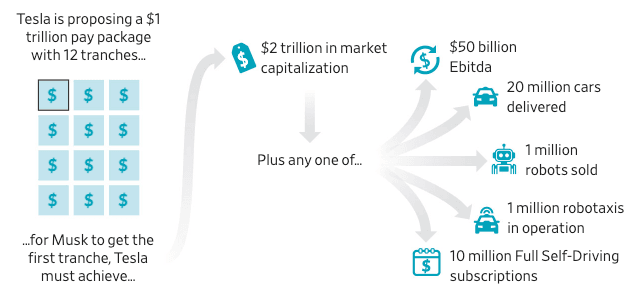
Musk’s new package is divided into 12 tranches. He could reach the first tranche if Tesla’s market cap grows to $2 trillion from around $1.5 trillion today, combined with an operational goal such as selling 11.5 million new vehicles, on top of the 8.5 million vehicles on the road.
More challenging milestones include selling one million robots to paying customers and maintaining an adjusted Ebitda of $400 billion. Last year, Tesla posted an adjusted Ebitda of $16 billion.
For each tranche he unlocks, Musk would receive equity equivalent to about 1% of Tesla’s current shares. Once he earns a tranche, he could vote those shares but wouldn’t be able to sell them until they vest, in either 7.5 years or 10 years.
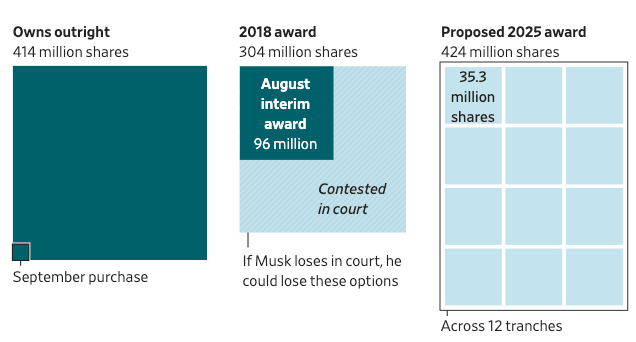
Musk’s 2018 pay package, the most valuable on record before the 2025 package, is tied up in a dispute at the Delaware Supreme Court. Tesla is appealing a lower-court decision to rescind the 2018 pay package after a judge ruled in January 2024 that Tesla’s directors were beholden to Musk and the approval process for that package was tainted and lacked transparency.
Here is a breakdown of Musk’s current Tesla ownership:
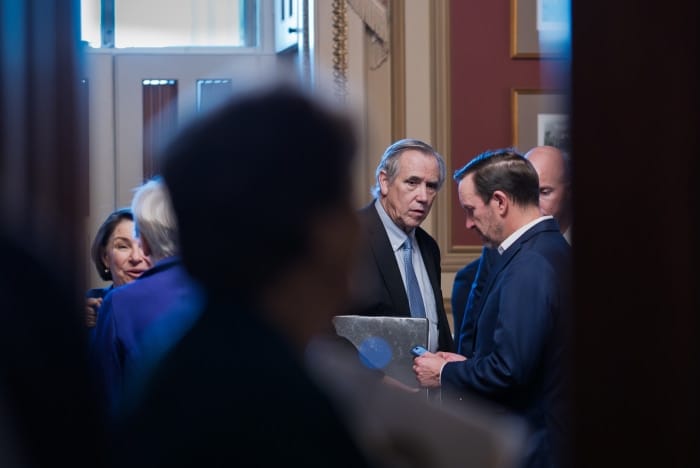
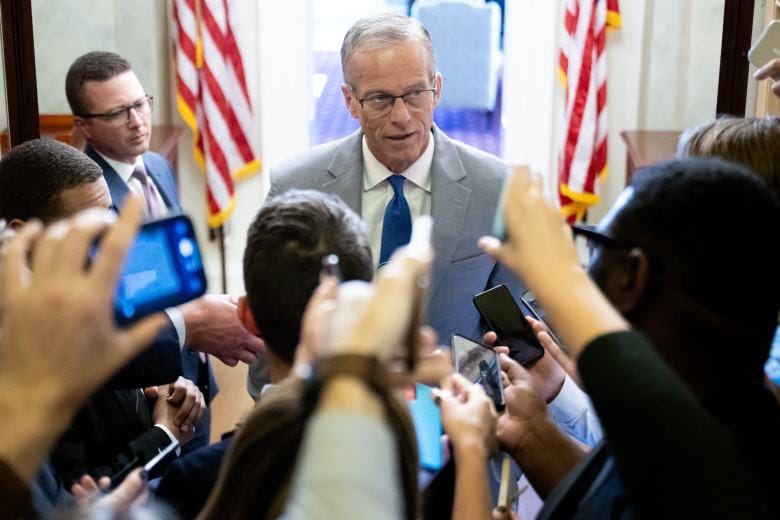
WASHINGTON—Senate Majority Leader John Thune (R., S.D.) told Senate Republicans Thursday that they should expect to vote on a new proposal Friday aiming to end the government shutdown, according to people familiar with the plan, in an attempt by GOP leaders to build momentum toward a deal.
Democrats, however, indicated they weren’t sold on the emerging package, with some saying they would need their core demand of extending Affordable Care Act subsidies to be part of any legislation.
The plan to vote on a revised proposal comes as the impact of the shutdown continues to grow. Government workers have gone without pay for weeks, and low-income families are seeing cuts in food aid and other assistance programs. On Thursday, airlines scrambled to review flight plans after federal officials said they would reduce commercial air traffic starting Friday in response to the government shutdown.
The proposal would combine a short-term spending measure with a package of three full-year funding bills, covering the legislative branch, agriculture, and military construction and veterans affairs. It was unclear whether the interim measure would aim to keep the government open through mid-December or January.
How ACA subsidies, a central concern of Democrats, would figure into the revised approach also remained in flux, and some Democrats warned they wouldn’t be satisfied by a pledge of future action.
Sen. Richard Blumenthal (D., Conn.) said the subsidies needed to be included in any stopgap bill. “Settling for some kind of vague promise about a vote in the future on some indeterminate bill, without any definite inclusion in the law, I think is a mistake.”
Thune acknowledged the uphill fight. Democrats “seem to be walking back or slow-walking this,” he told reporters. “This is what they asked for.”
To draw Democratic support, one element under discussion includes a proposal to stop or even roll back the firings that the White House initiated at the start of the shutdown. Sen. Tim Kaine (D., Va.) has for weeks made plain that he could support an interim spending bill if he had a guarantee against more so-called reductions in force—an important addition to the bloc of Democrats who have already voted to fund the government.
Some Democrats, particularly in the progressive wing, have insisted on a guarantee that enhanced Affordable Care Act healthcare subsidies, which flow to 22 million people, would be extended past the end of this year, but Republican leaders declined to make that promise. Instead, Thune has offered a vote on extending ACA subsidies, but no guarantee it will pass.
“We’ve got a dilemma,” said Sen. Peter Welch (D., Vt.). “There’s no other institution that can protect folks from the hammer blow of these explosive premium increases,” he said, “and the dilemma of a shutdown that does cause harm to people.”
The House, which would also need to approve any deal, adds a complication. GOP lawmakers pushed through their own stopgap spending deal in mid-September that would have kept the government funded until Nov. 21. House Speaker Mike Johnson (R., La.) has insisted the Senate approve that bill before any talks could take place and has kept the chamber out of session for more than a month.
On Thursday, Johnson said he wasn’t part of the talks and wouldn’t make any guarantees.
“The House did its job on Sept. 19,” he said. “I’m not promising anybody anything.”
Since September, Senate Minority Leader Chuck Schumer (D., N.Y.) has demanded talks to extend the expiring enhanced ACA subsidies before Democrats will provide the votes for a GOP bill to reopen the government. Republicans have a 53-47 Senate majority, and so far, only three senators who caucus with Democrats have crossed the aisle in more than a dozen failed votes. Democrats felt that favorable election results Tuesday bolstered their negotiating hand.
President Trump has declined to engage in talks with Democrats since the shutdown began, insisting that they vote to reopen the government first. In recent days, he has pressed Senate Republicans to bypass Democrats by eliminating the filibuster rule, which requires 60 votes to advance most legislation. GOP senators have largely pushed back against Trump’s demand but have grown frustrated by the lack of progress.
“This thing, I’ve told you before, this is a total goat rodeo,” said Republican Sen. John Kennedy of Louisiana, as he departed the meeting with Senate Republicans. “I can’t tell you what it’s going to be. I don’t think they know what it’s going to be.”
Senate Democrats spent hours behind closed doors on Thursday in the hopes of finding a breakthrough but were tight-lipped on details.
“It was a caucus in which we were trying to organically come to a conclusion and I think that process is still happening,” said Sen. Chris Murphy (D., Conn.). “I just think we had a real desire in that meeting and previous meetings today to try to find a way to get together and we’re closer.”
Senate Republicans have been urging their Democratic colleagues to back the revised approach, which would provide full-year funding for three of 12 annual appropriations bills and aim to create time to complete the rest. Passing annual appropriations laws—rather than so-called continuing resolutions—would limit the executive branch’s discretion to withhold congressionally approved funds, and members of both parties have bristled at the budget cuts and firings Trump’s budget director has initiated this year.
“The argument I’m making is we’ve got to get going on these [appropriations] bills or we’re going to end up with a yearlong” continuing resolution, Sen. John Hoeven (R., N.D.) said.
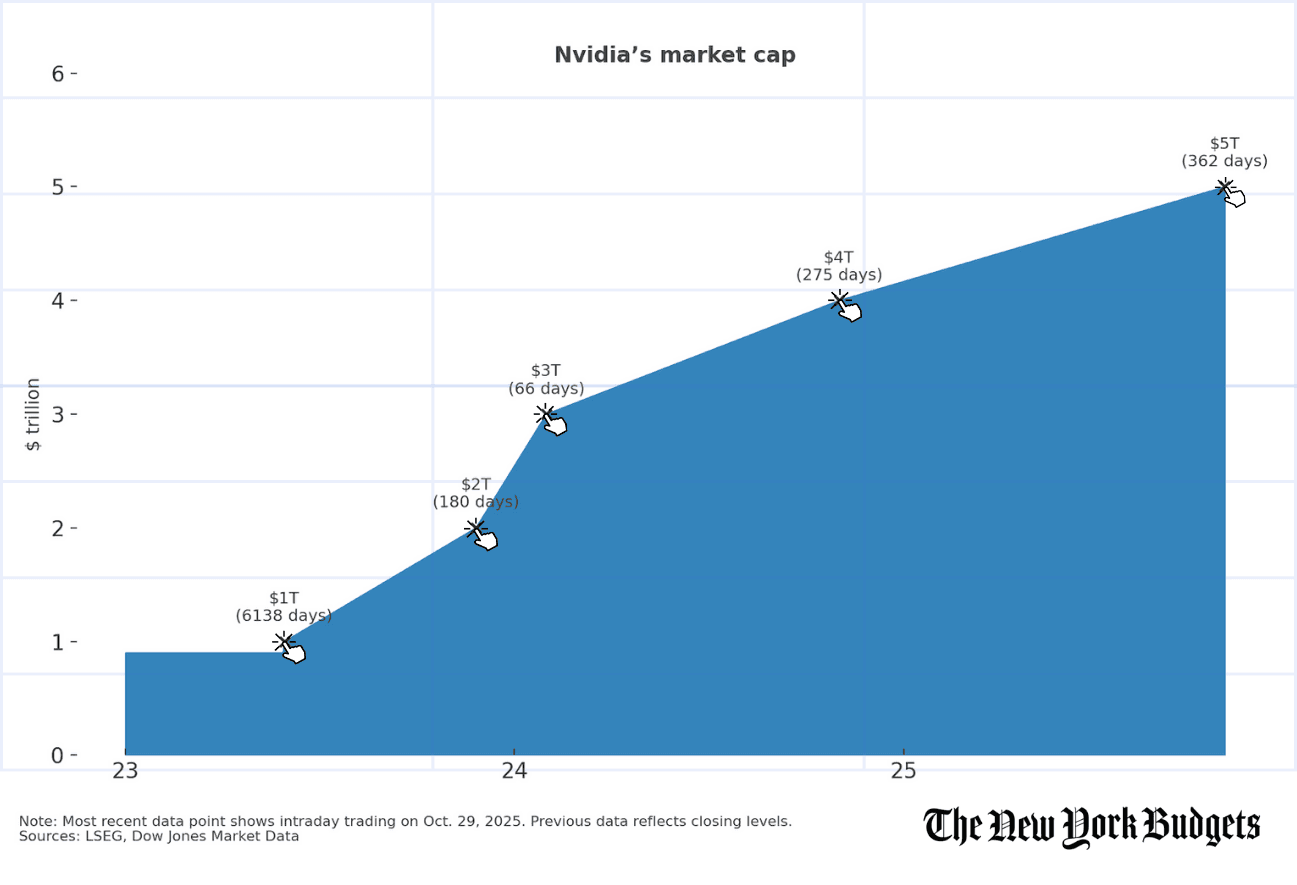
Nvidia Corp. NVDA +5.50% ▲ etched its name deeper into history books Wednesday, becoming the first publicly traded company to eclipse a $5 trillion market capitalization—a staggering milestone that underscores the artificial intelligence revolution’s grip on global markets, even as whispers of an impending bubble grow louder. The Silicon Valley chipmaker’s shares surged as much as 5.5% during the session, closing at $207.04 with 24.3 billion shares outstanding, catapulting its valuation to $5.03 trillion. Just three months after breaching $4 trillion and a mere two years after cracking $1 trillion, Nvidia’s ascent—up 50% year-to-date and over 1,500% in the past five years—has outpaced the Nasdaq’s 23% gain this year and the S&P 500’s 17%, cementing its status as the world’s most valuable firm ahead of Microsoft MSFT +2.10% ▲ ($4 trillion) and Apple AAPL +1.80% ▲ ($3.9 trillion).
The rally, which added nearly $140 billion to Nvidia’s coffers in a single day, was supercharged by CEO Jensen Huang’s announcements at the company’s annual AI conference in Washington, D.C., on Tuesday. Huang revealed a pipeline of $500 billion in AI chip orders through next year, alongside a flurry of high-profile deals: a partnership with Uber Technologies Inc. to advance robotaxi development, a $1 billion investment in Nokia Oyj for next-generation 6G networks, and collaboration with the U.S. Department of Energy to construct seven new AI supercomputers. Last month, Nvidia committed $100 billion to OpenAI, aiming to deploy at least 10 gigawatts of AI data centers to supercharge the ChatGPT maker’s computing prowess. “These aren’t hypotheticals—these companies are generating real revenues, and the products are profitable,” Huang told NBC News, brushing off bubble concerns. “Generative AI has evolved from interesting to indispensable.”
Nvidia’s dominance in graphics processing units (GPUs)—repurposed from gaming rigs to the lifeblood of AI training for models like ChatGPT and image generators—has made it indispensable to Big Tech’s AI arms race. Its largest customers, including OpenAI, Tesla Inc., xAI, Meta Platforms Inc., Amazon.com Inc., and Oracle Corp., have funneled billions into Nvidia’s H100 and upcoming Blackwell chips, driving demand that outstrips supply. The semiconductor giant’s market cap now dwarfs the combined valuations of rivals like Advanced Micro Devices Inc., Intel Corp., Broadcom Inc., Taiwan Semiconductor Manufacturing Co., Micron Technology Inc., ASML Holding NV, Lam Research Corp., Qualcomm Inc., and Arm Holdings Plc—collectively worth less than half of Nvidia’s heft.
To put $5 trillion in perspective: It’s equivalent to roughly 25 Walt Disney Cos., 50 Nikes, 96 Ford Motor Cos., 945 Macys, or over 3,311 JetBlue Airways Corps. Nvidia alone towers over the entire S&P 500 energy sector (three times its size) and eclipses major international benchmarks like Germany’s DAX and France’s CAC indices (more than double each). More strikingly, its valuation surpasses the gross domestic product of every nation on Earth except the United States ($29.1 trillion) and China ($18 trillion), per World Bank and IMF data—including India, Japan, the U.K., and Germany ($4.6 trillion last year). A $1,000 investment in Nvidia a decade ago, when shares bottomed at $0.47 in February 2015, would now be worth $441,000—a 44,000% return that has minted fortunes, including Huang’s estimated $174.4 billion net worth, ranking him eighth on Forbes’ billionaire list.
The AI boom, often likened to the iPhone’s 2007 debut for its transformative potential, has propelled Nvidia from a $10 billion niche player in 2015 to this colossus. Yet, the speed of its rise—stock up 3.4% to an intraday high of $207.85 Wednesday—has reignited debates over sustainability. Officials at the Bank of England flagged AI’s “growing risk” of a tech stock burst earlier this month, while IMF Managing Director Kristalina Georgieva echoed warnings of parallels to the late-1990s dot-com bubble. Nvidia’s shares, trading at a forward price-to-earnings multiple of 45, reflect sky-high expectations for sustained GPU demand amid an AI infrastructure spend projected to hit $1 trillion annually by 2030, per McKinsey & Co.
Geopolitical crosswinds add intrigue. Huang jetted to South Korea this week for the Asia-Pacific Economic Cooperation (APEC) summit, where free-trade ideals clash with escalating U.S. tariffs on tech and beyond. A pivotal sideline Thursday: a face-to-face between President Donald Trump and Chinese President Xi Jinping, where Trump pledged to discuss Nvidia’s chips. In August, the administration struck a deal with Nvidia and AMD to ease export curbs on advanced chips to China in exchange for a 15% revenue cut to Washington—despite national security qualms over potential military diversions. Commerce Secretary Howard Lutnick quipped on CNBC in July that selling America’s “fourth best” AI tech to Beijing was “cool,” but not the top tiers. Nvidia’s August overtures for a China-specific chip, plus a $5 billion infusion into Intel (where the U.S. government now holds a 10% stake worth $11 billion), highlight efforts to balance export growth with domestic bolstering under the CHIPS Act.
For investors, Nvidia’s milestone is a double-edged sword. The Magnificent Seven tech stocks, led by Nvidia, have shouldered 60% of the S&P 500’s gains this year, but rotation risks loom if AI hype cools. “Nvidia isn’t just a company—it’s the AI proxy,” said Dan Ives, Wedbush Securities analyst. “But at $5 trillion, any earnings miss could trigger a reality check.” With Blackwell production ramping and partnerships like the Nokia tie-up eyeing 6G’s trillion-dollar frontier, Nvidia’s trajectory suggests more records ahead. Yet, as Huang attends APEC amid Trump-Xi tensions, the chip king’s fate remains intertwined with the very global supply chains it seeks to redefine.
Meta Platforms Inc. delivered a resounding third-quarter earnings beat on Wednesday, with adjusted earnings per share of $7.25 topping analyst expectations of $6.69 and revenue surging to $51.24 billion against forecasts of $49.41 billion, as polled by LSEG. The results underscored the social media giant’s robust advertising engine and user engagement amid a resurgent digital ad market, yet Meta META -1.20% ▼ shares tumbled 1.2% in after-hours trading to $582.34, capping a volatile session that saw the stock dip 0.3% during regular hours. Investors, spooked by Meta’s forecast of “significant acceleration” in AI-related infrastructure costs next year—potentially ballooning to tens of billions—brushed aside the positives, signaling growing unease over the sustainability of Big Tech’s AI arms race.
The earnings, released after the bell on October 29, highlighted Meta’s operational resilience. Net income soared to $15.69 billion, or $6.03 per share, a 35% jump from $11.58 billion, or $4.39 per share, a year earlier—well ahead of FactSet’s consensus of $5.22. Revenue climbed 19% year-over-year, fueled by a 22% uptick in ad sales to $50.1 billion, as daily active users across Facebook, Instagram, and WhatsApp swelled to 3.28 billion, up 6% from last year. CEO Mark Zuckerberg touted the quarter as a “strong foundation” for AI integrations, including enhanced Reels recommendations and Llama model advancements, which drove a 12% increase in time spent on the platforms.
Yet, the post-earnings glow faded swiftly. Meta’s guidance for Q4 projected revenue of $52.5 billion to $54 billion, in line with Wall Street’s $53.2 billion midpoint, but the real headwind was the capex outlook. The company flagged a “meaningful ramp” in 2026 AI infrastructure spending, on top of the $39 billion already earmarked for 2025, to fuel data centers and GPU acquisitions from Nvidia Corp. “We’re investing aggressively in AI to stay ahead,” Zuckerberg said on the earnings call, but analysts like Bank of America’s Justin Post worried aloud about the “long-term growth manifestation” of these outlays, especially as rivals like OpenAI pivot toward ads and social features, intensifying competition in Meta’s core turf.
The reaction rippled across global markets. In Frankfurt pre-market trading Thursday, Meta (META.O) shares slipped 2.6% to €530, mirroring a 5.1% drop in Microsoft Corp. (MSFT.O) amid its own Azure cloud growth slowdown warning—dragging Nasdaq futures down over 1%. The Magnificent Seven cohort, already under scrutiny for AI hype, saw broader pressure: Alphabet Inc. and Amazon.com Inc. reports later in the week loom large, with investors parsing for similar spending spikes. “Meta’s beat was textbook, but the AI capex fog is thick—it’s all about the denominator now,” said Wedbush Securities analyst Daniel Ives, who maintains an Outperform rating but trimmed his price target to $650 from $675.
Meta’s Q3 performance aligns with a digital ad sector rebound, projected to grow 12% to $740 billion globally in 2025 per eMarketer, buoyed by election-year spending and e-commerce tailwinds. Reality Labs, Meta’s metaverse arm, narrowed losses to $4.2 billion from $5.1 billion, with Quest headset sales up 15%—a bright spot amid Zuckerberg’s pivot to AI glasses and wearables. Still, the stock’s 1.2% after-hours slide erased $25 billion in market cap, leaving Meta at $1.48 trillion—down 5% year-to-date versus the Nasdaq’s 23% gain.
Looking ahead, Wall Street eyes Meta’s AI monetization roadmap at next week’s investor day, where details on ad-targeting LLMs and enterprise tools could assuage fears. For now, the earnings saga encapsulates Big Tech’s paradox: explosive growth meets escalating costs in an AI gold rush that has minted trillion-dollar valuations but risks a valuation reset if returns lag. As Ives put it, “The party’s still on, but the bill just arrived.”
He thought it was serendipity—a chance encounter at a bustling tech conference in Palo Alto, where amid the hum of venture capitalists and AI demos, she approached him with a disarming smile and probing questions about his startup’s quantum encryption algorithms. She was poised, multilingual, with a LinkedIn profile touting a role at a Shanghai-based venture firm. Over coffee that turned into dinners, then weekends in Napa, she became his confidante, his partner—even his fiancée. It was only after a routine security audit at his firm flagged anomalous data transfers to overseas servers that the truth unraveled: She wasn’t an investor. She was an operative, deployed by Beijing’s Ministry of State Security to burrow into his life and exfiltrate the crown jewels of American innovation.
This isn’t the plot of a Tom Clancy novel; it’s the stark reality of “sex warfare,” a resurgent espionage tactic where Chinese and Russian intelligence agencies are allegedly weaponizing romance to pilfer Silicon Valley’s secrets. Attractive female operatives—trained in seduction, psychological manipulation, and tech fluency—are infiltrating the Valley’s open ecosystem, seducing engineers, executives, and researchers. In some cases, they’ve gone nuclear: marrying targets, bearing children, and embedding for decades to ensure a steady drip of intellectual property (IP). The economic toll? Up to $600 billion annually in U.S. IP theft, with China fingered as the prime culprit. As one counterintelligence veteran put it, “It’s the Wild West out there.”
Our investigation, drawing on interviews with former spies, U.S. intelligence officials, and tech security experts, plus declassified FBI reports and recent congressional briefings, reveals a threat that’s not just escalating—it’s evolving. From LinkedIn lures to honeypot marriages, these operations exploit the Valley’s collaborative ethos, where trust is currency and NDAs are as flimsy as a post-hack apology. With Elon Musk quipping on X, “If she’s a 10 and suddenly interested in your boring job, run,” the alarm bells are ringing from Capitol Hill to Sand Hill Road. But as threats spread beyond California to nascent hubs in Austin and Boulder, the question looms: Can America’s tech fortress hold?
The Honey Trap 2.0: Seduction as a Strategic Asset
The playbook is as old as Mata Hari, but the targets and stakes have skyrocketed. Since the 1970s, foreign agents have eyed U.S. tech for its golden goose—semiconductors, AI, biotech. But post-Cold War, the game shifted from brute-force hacks to “soft” economic espionage, where human vulnerabilities are the backdoor. Enter “sex warfare”: a term coined by U.S. counterintelligence pros to describe state-sponsored romantic entanglements designed for long-haul intel harvesting.
James Mulvenon, chief intelligence officer at Pamir Consulting—a firm that schools U.S. companies on China risks—has seen the uptick firsthand. “I’m getting an enormous number of very sophisticated LinkedIn requests from the same type of attractive young Chinese woman,” he told The Times in a bombshell exposé this week. “It really seems to have ramped up recently.” Mulvenon, a 30-year FBI counterspy alum, recounts gatecrashing a Virginia conference on Chinese investment perils: Two poised Chinese women, armed with attendee lists and badges, tried to slip in. “We didn’t let them,” he said. “But they had all the information.”
It’s not paranoia. A former U.S. counterintelligence officer, speaking anonymously to NDTV, detailed a chilling case: A “beautiful” Russian operative, fresh from a Moscow “soft-power school” and modeling academy, wed an aerospace engineer on a classified drone project. Posing as a crypto analyst, she infiltrated military-space circles. “Showing up, marrying a target, having kids with a target—and conducting a lifelong collection operation—it’s very uncomfortable to think about, but it’s so prevalent,” the officer said. The marriage yielded not just cover, but cover stories: Family outings masked dead drops, bedtime chats doubled as debriefs.
China’s Ministry of State Security (MSS) and Russia’s SVR (Foreign Intelligence Service) are the maestros. MSS runs “drafting” ops—snapping up stakes in DoD-funded startups to choke U.S. access—while SVR leans on “illegals”: deep-cover agents posing as expats. Both recruit “sparrows,” female agents trained in the KGB’s honeypot arts, now augmented with digital tradecraft. “They have an asymmetric advantage,” Mulvenon warns. “U.S. culture and laws tie our hands in countermeasures.”
Even allies play. South Korea and Israel have been caught quietly hoovering intel at Valley mixers, per declassified docs. But Beijing and Moscow dominate: FBI stats show China-linked IP theft hit 80% of cases in 2024, up from 60% in 2020.
Confessions from the Shadows: Ex-Spies Spill the Secrets
To understand the machinery, we turn to defectors. Aliia Roza, a 45-year-old Kazakh-Tatar émigré now training “seduction for self-esteem” in the U.S., broke her silence on iHeart’s To Die For podcast this year. Born to a Soviet general, Roza was funneled into a KGB successor program at 18, plucked from 350 cadets for “sexpionage” training. “We weren’t just seducing—we were mastering communication,” she told host Neil Strauss. “Dress, makeup, how to make targets believe you’re their soulmate.”
Her lavish lifestyle is a far cry from the ‘corrupt’ regime in the Russian military
She now lives in a $20 million mansion in Beverly Hills with her 11-year-old son.
Pay? A measly $100 monthly for six-day weeks of martial arts and psyops drills. But the rush? “At the end of the day, when I saved someone’s life [by extracting intel], I felt good,” Roza recalled. She balanced missions with motherhood, but the toll mounted. “I saw these other female agents hit 56—miserable, lonely. No private lives, no families.” Brainwashed as a “master manipulator,” Roza fled Moscow over two decades ago with her son, resurfacing on Instagram with 1M+ followers peddling empowerment tips. “It’s not just sex—it’s the art of making them believe,” she says now. Her story, echoed in Fox News Digital interviews, underscores the human wreckage: Agents discarded like spent cartridges.
Then there’s Anna Chapman, the flame-haired “Black Widow” whose 2010 FBI bust—Operation Ghost Stories—exposed a Russian sleeper ring in New York. Deported in a spy swap that freed poison victim Sergei Skripal, Chapman, now 43 and rebranded Anna Romanova, has pivoted to propaganda. This month, Putin tapped her to helm the SVR’s shiny new Museum of Russian Intelligence near Moscow’s Gorky Park—a hall of mirrors celebrating espionage “achievements.”
In her 2024 memoir BondiAnna: To Russia with Love, Chapman gloats: “Nature endowed me with a slim waist, full chest, cascade of red hair… I didn’t try too hard to please. And it worked like magic.” From London hedge funds (nabbed via strip poker, she claims) to Manhattan real estate fronts beaming secrets via laptop, her toolkit was charm laced with code. Post-deportation, she’s a pro-Kremlin TV star and mom, but her museum gig signals SVR’s unrepentant flex. “It’s history in the making,” SVR chief Sergey Naryshkin purred at the unveiling, per The Sun.
Silicon Valley isn’t just code—it’s a $1.8 trillion GDP engine, per 2025 CBRE data. But espionage is a silent tax. IP theft siphons $225-600B yearly, fueling China’s “Made in 2025” push to dominate AI and EVs. Startups, hungry for funding, pitch to Chinese VCs at U.S.-hosted contests—only to watch prototypes vanish overnight. “Share your plan, lose your edge—or relocate to Shenzhen,” warns Jeff Stoff, ex-NSA analyst.
Take the unnamed tech giant from our lead: In 2024, its security team swept in amid vanishing files—millions in R&D poached, traced to a VP’s “fiancée.” Or the aerospace case: Russian-sourced drone specs allegedly fast-tracked Moscow’s hypersonic program, costing Raytheon $2B in lost contracts.
Broader ripples? Venture funding dipped 15% in Q3 2025, per PitchBook, as firms mandate “espionage audits.” NVIDIA stock wobbled 3% post a leaked chip blueprint tied to a “romantic entanglement.” Musk’s X post amplified the chill: “Silicon Valley sex warfare? If she’s a 10, she’s probably a 10 on the MSS payroll.” Even allies fret: UK’s MI5 flagged similar ops targeting Cambridge quantum labs.
It’s not confined to hoodies and hackathons. China’s ops span political infiltration—recruiting Cali pols via units like the one exposed in Politico‘s Rose Pak saga, where SF’s power broker funneled influence to Beijing. Recall the 2008 Torch Run: MSS mobilized 10,000 U.S. students to quash protests, per FBI memos.
Russia’s post-2017 consulate closure? No sweat—proxies via crypto bros and VC scouts. “Oklahoma land rush,” quips a DNI report: A frenzy for biotech in Boston, autonomy tech in Detroit.
As hubs sprout—Boulder’s quantum corridor, Austin’s chip fabs—vulnerabilities multiply. Underreporting plagues: 70% of breaches go dark, per Verizon’s 2025 DBIR, fearing spooks or stigma.
FBI’s upping ante: Operation Honeyguard trains agents in reverse honeypots, while CISA pushes “trust but verify” for execs—backgrounds, alibis, even polygraphs for fiancées. Congress eyes the Espionage Modernization Act, mandating disclosures for foreign ties.
But experts like Mulvenon caution: “The Valley’s openness is our superpower—and Achilles’ heel.” Roza, from her L.A. studio, urges empathy: “These women are tools, too. Break the cycle by seeing the human cost.”
In a firewall of flirtations, Silicon Valley’s innovators must armor up. The next pitch? Vet the pitcher. Because in sex warfare, love’s the Trojan horse.
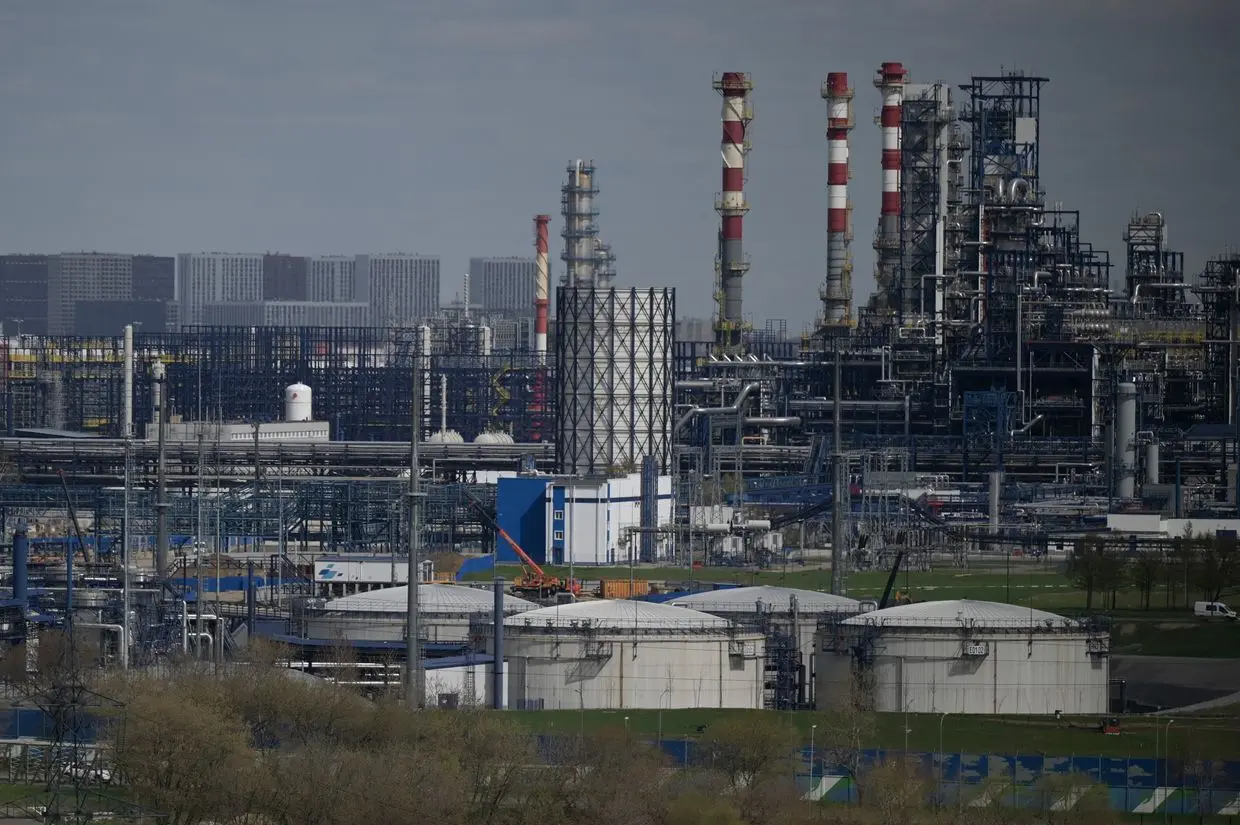
Trump has unleashed a barrage of sanctions on Russia’s oil behemoths, Rosneft and Lukoil, sending shockwaves through global energy markets and forcing America’s key Asian trading partners—China and India—to rethink their cozy deals with Vladimir Putin’s war machine. The move, announced Wednesday amid a fresh Russian missile barrage on Kyiv that claimed seven lives including children, marks Trump’s first direct punch at Moscow’s energy lifeline since reclaiming the White House. It’s a clear signal: Enough with the empty summits and fruitless phone calls. Time for America to squeeze Putin until he sues for peace in Ukraine.
Brent crude, the global oil benchmark, rocketed 5% Thursday to $65 a barrel, while West Texas Intermediate surged over 5% to nearly $60—reflecting traders’ bets on tighter supplies as Russia’s two largest producers, which pump out 3.1 million barrels per day and account for nearly half of Moscow’s crude exports, face isolation from Western finance. That’s a potential $100 billion annual hit to Russia’s coffers, per Bloomberg estimates, at a moment when the Kremlin’s war chest is already strained by three years of battlefield stalemates and a stumbling economy.
Trump, speaking alongside NATO Secretary-General Mark Rutte in the Oval Office, didn’t mince words: “Every time I speak to Vladimir, I have good conversations and then they don’t go anywhere. They just don’t go anywhere.” The president scrapped a planned Budapest summit with Putin just days ago, opting instead for the sanction hammer after Moscow rebuffed his ceasefire overtures. “Now is the time to stop the killing and for an immediate ceasefire,” echoed Treasury Secretary Scott Bessent, who framed the penalties as a direct assault on the “Kremlin’s war machine.” With Rosneft—headed by Putin’s crony Igor Sechin—and the private giant Lukoil now blacklisted by the Treasury’s Office of Foreign Assets Control (OFAC), plus 36 subsidiaries frozen out of U.S. markets, Trump is betting big that choking off oil revenues will drag Putin to the table.
This isn’t just tough talk; it’s targeted leverage. Russia’s oil and gas sector props up a quarter of its federal budget, fueling tanks, drones, and troops in Donbas. By design, the sanctions include a grace period until November 21 for global buyers to wind down deals, but the real teeth lie in secondary penalties: Any foreign bank, trader, or refinery touching Rosneft or Lukoil risks U.S. wrath, from asset freezes to SWIFT exclusions. “Engaging in certain transactions… may risk the imposition of secondary sanctions,” the Treasury warned pointedly. For Trump, it’s classic Art of the Deal—turning economic pain into diplomatic gain, much like his Gaza ceasefire triumph earlier this year.
India Feels the Squeeze: A Trade Deal Lifeline?
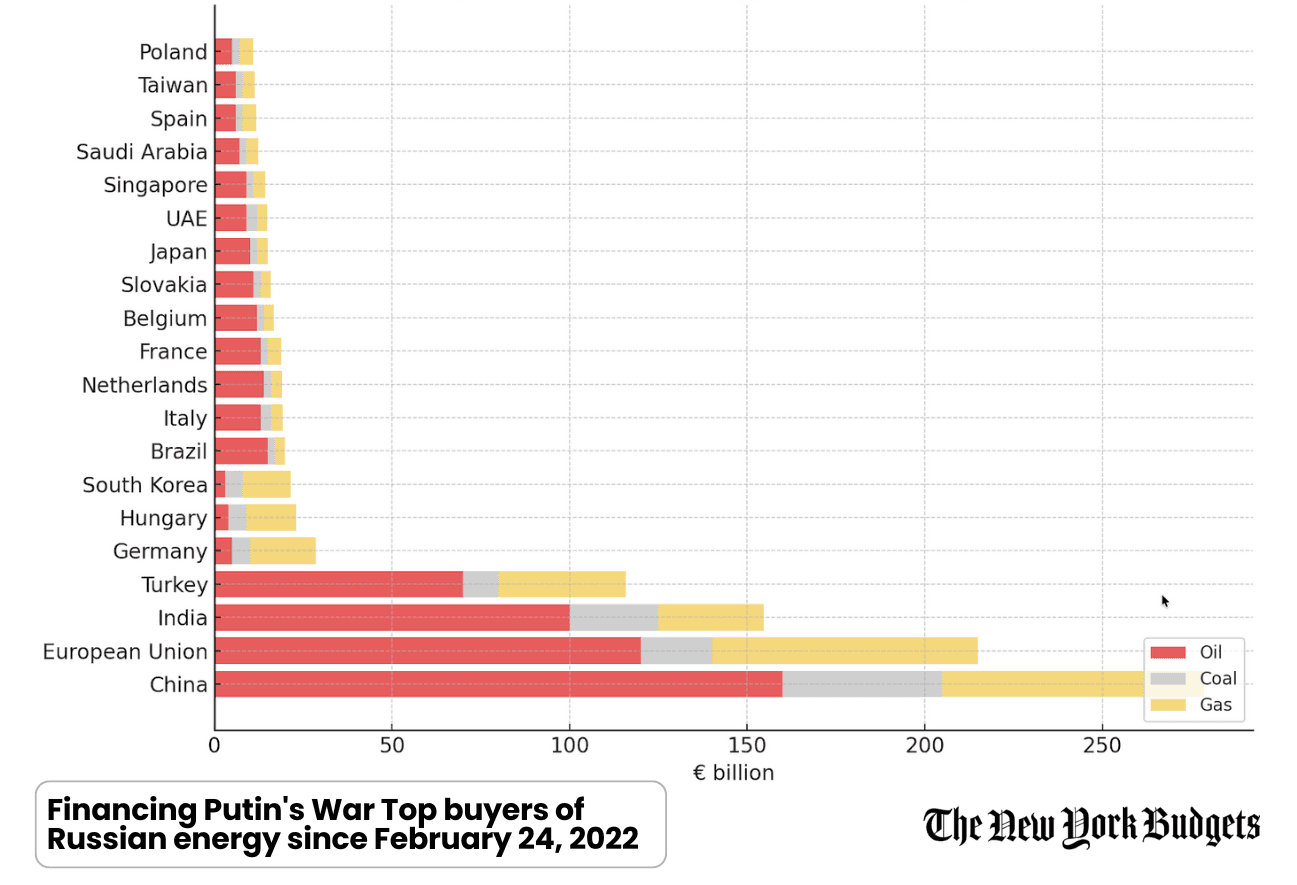
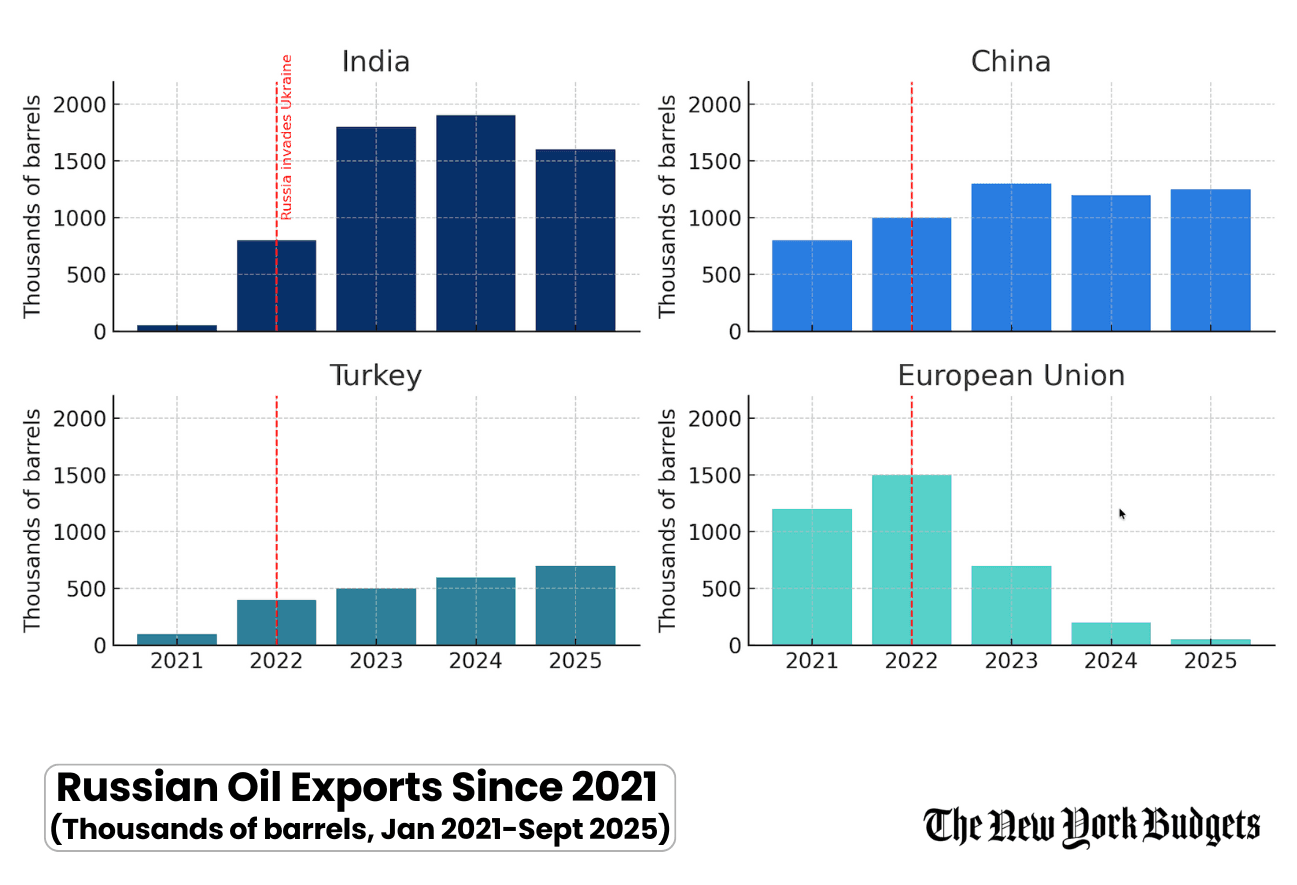
Nowhere is the ripple more immediate than in India, where refiners are scrambling to slash Russian imports that ballooned to 1.7 million barrels per day in the first nine months of 2025—up from a negligible 0.42 million tons pre-war. “There will be a massive cut,” one industry source told Reuters Thursday, as state-run giants like Indian Oil Corp. and Bharat Petroleum pore over shipping manifests to purge any Rosneft- or Lukoil-sourced crude. Reliance Industries, India’s top private buyer and locked into long-term contracts for nearly 500,000 barrels daily from Rosneft, is “recalibrating” imports to align with New Delhi’s guidelines, a company spokesman confirmed.
This pullback couldn’t come at a better time for U.S.-India relations, strained by Trump’s 50% tariffs on Indian exports—half explicitly tied to Moscow’s oil fire sale. In a Tuesday call, Prime Minister Narendra Modi assured Trump that Delhi “was not going to buy much oil from Russia” and shares his goal of ending the Ukraine bloodbath, per White House readouts. Sources close to the talks say the sanctions could shatter a diplomatic logjam, paving the way for a bilateral trade pact that levels the playing field for American farmers and manufacturers. “We’re talking about bringing India’s tariffs in line with Asian peers,” one U.S. trade official told The Heritage Foundation’s Daily Signal on background. “Wind down the Russian crude, and we wind down the duties. It’s a win-win: India saves on overpriced alternatives, and we get fair trade.”
Senior Indian refinery execs, speaking anonymously to Bloomberg, called the sanctions a “game-changer,” rendering direct Russian buys “impossible” amid fears of U.S. blacklisting. Exports to India hit $140 billion since 2022, but at what cost? Discounted Urals crude shielded New Delhi from energy inflation, yet it undercut Trump’s peace push and emboldened Putin. Now, with global prices spiking, Indian consumers may pay more at the pump—but the strategic upside is huge: Stronger ties with Washington, access to U.S. LNG, and a seat at the table in Trump’s post-war reconstruction bonanza for Ukraine.
Critics in the Beltway whisper that this pressures Modi too hard, but let’s be real: India’s neutrality has been a fig leaf for profiteering off Putin’s aggression. Trump’s move forces accountability, reminding allies that America’s security umbrella isn’t free. As former U.S. Ambassador to Ukraine John Herbst put it to the BBC, these sanctions “will certainly hurt the Russian economy… It’s a good start” toward genuine negotiations.
China’s Reluctant Retreat: Xi’s Putin Problem
Across the border, Beijing’s state behemoths—PetroChina, Sinopec, CNOOC, and Zhenhua Oil—are hitting pause on seaborne Russian crude, Reuters reported Thursday, citing trade insiders. China, which snapped up a record 109 million tons last year (20% of its energy imports), has been Putin’s economic lifeline, laundering sanctions via “shadow fleets” of ghost tankers. No longer. The quartet’s suspension, if it sticks, signals a seismic shift: Even Xi Jinping, Putin’s “no-limits” partner, can’t ignore the U.S. financial guillotine.
Trump, fresh off Gaza, sees this as his opening. “Xi holds influence over Putin,” he said Wednesday, vowing to press the issue at next week’s APEC summit in South Korea. No secondary tariffs on China yet—unlike India’s 25% slap in August—but the threat looms. “Will the U.S. actively threaten secondary sanctions on Chinese banks?” mused ex-State Department sanctions guru Edward Fishman on X. Short answer: Expect pullback, at minimum. Beijing’s Foreign Ministry blasted the measures as “unilateral bullying,” but actions speak louder: With Rosneft and Lukoil cut off, Chinese traders face pricier middlemen or a pivot to Saudi or U.S. barrels.
For Russia, it’s a gut punch. China and India gobble 70% of its energy exports; losing even 20-30% could slash GDP growth from its anemic 1.5% forecast (per IMF) and force trade-offs between bombs and breadlines. “As profit margins shrink, Russia will face difficult… financing a protracted war,” notes Michael Raska of Singapore’s Nanyang Technological University. Dr. Stuart Rollo at Sydney’s Centre for International Security adds that while the sanctions won’t cripple Russia’s industrial base overnight, they “may coerce [it] into accepting peace terms” if paired with Trump’s deal-making flair.
Putin’s Bluster Meets Economic Reality
Vladimir Putin, ever the tsar, struck defiant Thursday: “No self-respecting country ever does anything under pressure,” he told Russian reporters, dismissing the sanctions as an “unfriendly act” that won’t dent Moscow’s resolve. Yet cracks show. He conceded “some losses are expected,” and warned of “overwhelming” retaliation if Ukraine gets U.S. Tomahawks—though that’s more theater than threat. Dmitry Medvedev, Putin’s hawkish ex-president, raged on Telegram: “The U.S. is our enemy… Trump has fully sided with mad Europe.” But even Kremlin-linked analysts like Igor Yushkov admit Asian buyers will shy away, hiking costs via shadowy intermediaries.
Russia’s shadow fleet—aging hulls under UAE flags—has dodged G7 caps before, sustaining flows despite EU embargoes. “New sales schemes will simply appear,” boasts military blogger Mikhail Zvinchuk. Fine, but at what price? Logistics snarls could add $5-10 per barrel, eroding the discounts that hooked India and China. With the EU mulling its 19th sanctions package—including an LNG import ban—and the UK already aboard on Rosneft/Lukoil, isolation is setting in. The Guardian reports Putin floated delaying the Budapest talks for “proper preparation,” but that’s code for stalling.
Will this end the war? Analysts like Bill Taylor, another ex-U.S. envoy to Kyiv, call it an “indication to Putin that he has to come to the table.” It’s no silver bullet—Russia’s pivoted before, and military momentum in Donbas favors Moscow. But Trump’s calculus is sound: Freeze lines, cede nothing more, and let sanctions do the talking. “If we want Putin to negotiate in good faith, we have to maintain major pressure,” Herbst urges. Under Biden, dithering let Putin dig in; Trump’s resolve is restoring deterrence.
Stock Widget
Wall Street cheered the news, with energy stocks like ExxonMobil XOM +3.00% ▲ and Chevron CVX +2.50% ▲ on prospects of higher prices and U.S. export booms. Yet Felipe Pohlmann Gonzaga, a Geneva-based trader, cautions the 5% Brent spike “will correct” amid global slowdown fears—China’s property bust, Europe’s recession. Still, for American producers, it’s manna: Permian Basin output hits 6 million barrels/day, and Trump’s LNG push could flood Asia, undercutting Russia’s Urals at $55-60.
The EU’s frozen Russian assets—$300 billion—now fund a fresh Ukraine loan, per Brussels talks. And as Trump eyes a “cut the way it is” armistice, preserving Zelenskyy’s gains without endless aid, taxpayers win too. No more blank checks; just smart pressure.
In this high-stakes energy chess game, Trump’s sanctions aren’t just hurting Russia—they’re realigning alliances, punishing enablers, and clearing the board for peace. Putin may bluster, but with India and China peeling away, his war of attrition is cracking. As Trump heads to APEC, the message to Xi and Modi is clear: Join the winning side, or pay the premium. America’s back in the driver’s seat, and the pump prices? A small price for freedom.
Paramount PARA +4.85% ▲, backed by billionaire Larry Ellison and his family, has officially opened the bidding for rival Warner Bros. Discovery WBD +3.40% ▲ — a potential massive merger that would dramatically change Hollywood.
Warner Bros. Discovery’s board rejected Paramount’s initial bid of about $20 a share, but talks are continuing, according to two people close to the companies who were not authorized to speak publicly.
One of the knowledgeable sources said Paramount was preparing a second bid.
Warner Bros. Discovery owns HBO, CNN, TBS, Food Network, HGTV and the prolific Warner Bros. movie and television studio in Burbank.
Ellison, one of the world’s richest men, is committed to helping his 42-year-old son, David, pull off the industry-reshaping acquisition and has agreed to help finance the bid, two people close to the situation said.
The younger Ellison, who entered the movie business 15 years ago by launching his Skydance Media production company, was catapulted into the major leagues this summer with the Ellison family’s purchase of Paramount’s controlling stake.
Since then, David Ellison and his team have made bold moves to help Paramount shake more than a decade of doldrums. Buying Warner Bros. Discovery would be their most audacious move yet. The merger would lead to the elimination of one of the original Hollywood film studios, and could see the consolidation of CNN with Paramount-owned CBS News.
Representatives for Paramount and Warner Bros. Discovery declined to comment.
Industry veterans were stunned by the speed of Paramount’s play for Warner Bros. Discovery, noting that top executives had begun working on the bid even as they were putting finishing touches on the Paramount takeover.
One of Paramount’s top executives is a former Goldman Sachs banker, Andy Gordon, who was a ranking member of RedBird Capital Partners, the private equity firm that has teamed up with the Ellisons and has a significant stake in Paramount.
Paramount’s interest prompted stocks of both companies to soar, driving up the market value for Warner Bros. Discovery.
Paramount’s offer of $20 a share for Warner Bros. Discovery was less than what some analysts and sources believe the company’s parts are worth, leading the Warner Bros. Discovery board to rebuff the offer, sources said.
But many believe that Paramount needs more content to better compete in a landscape that’s dominated by tech giants such as Netflix and Amazon.
Paramount has reason to move quickly.
Warner Bros. Discovery had previously announced that it was planning to divide its assets into two companies by next April. One company, Warner Bros., would be made up of HBO, the HBO Max streaming service and the Burbank-based movie and television studios. Current Chief Executive David Zaslav would run that enterprise.
The other arm would be called Discovery Global and consist of the linear cable television channels, which have seen their fortunes fall with consumers’ shift to streaming.
The Paramount bid was seen as an attempt to slip in under the wire because other large companies, including Amazon, Apple and Netflix, may have been interested in buying the studios, streaming service and leafy studio lot in Burbank.
However, Netflix’s co-chief executive Greg Peters appeared to downplay Netflix’s interest during an appearance last week at the Bloomberg Screentime media conference. “We come from a deep heritage of being builders rather than buyers,” Peters said.
Some analysts believe Paramount’s proposed takeover of Warner Bros. Discovery could ultimately prevail because Zaslav and his team have made huge cuts during the past three years to get the various businesses profitable after buying the company from AT&T, which left the company burdened with a heavy debt load. The company has paid down billions of dollars of debt, but still carries nearly $35 billion of debt on its books.
Others point to Warner Bros.’ recent successes at the box office as evidence that Paramount is offering too little.
Despite the tumult at the corporate level, Warner Bros.’ film studio has had a successful year. Its fortunes turned around in April with the release of “A Minecraft Movie,” which grossed nearly $958 million worldwide, followed by a string of hits including Ryan Coogler’s “Sinners,” James Gunn’s “Superman” and horror flick “Weapons.”
Meanwhile, Paramount has been on a buying spree.
Just in the last two months, Paramount made a $7.7 billion deal for UFC media rights and closed two deals that will pay the creators of “South Park” more than $1.25 billion over five years to secure streaming rights to the popular cartoon.
Last week at Bloomberg’s Screentime media conference, Ellison declined to comment on Paramount’s pursuit of Warner Bros. or even whether his company had already made a bid. But he did touch briefly on consolidation in Hollywood, saying, “Ironically, it was David Zaslav last year who said that consolidation in the media business is important.”
“There are a lot of options out there,” he added, but declined to elaborate.
After news of Paramount’s interest surfaced, Warner Bros. Discovery’s stock jumped more than 30%. It climbed as much as $20 a share, but closed Friday at $17.10, down 3.2%.
Paramount also has seen its stock surge by about 12%. Shares finished Friday at $17, down 5.4%
Warner Bros. Discovery is now valued at $42 billion. Paramount is considerably smaller, worth about $18.5 billion.
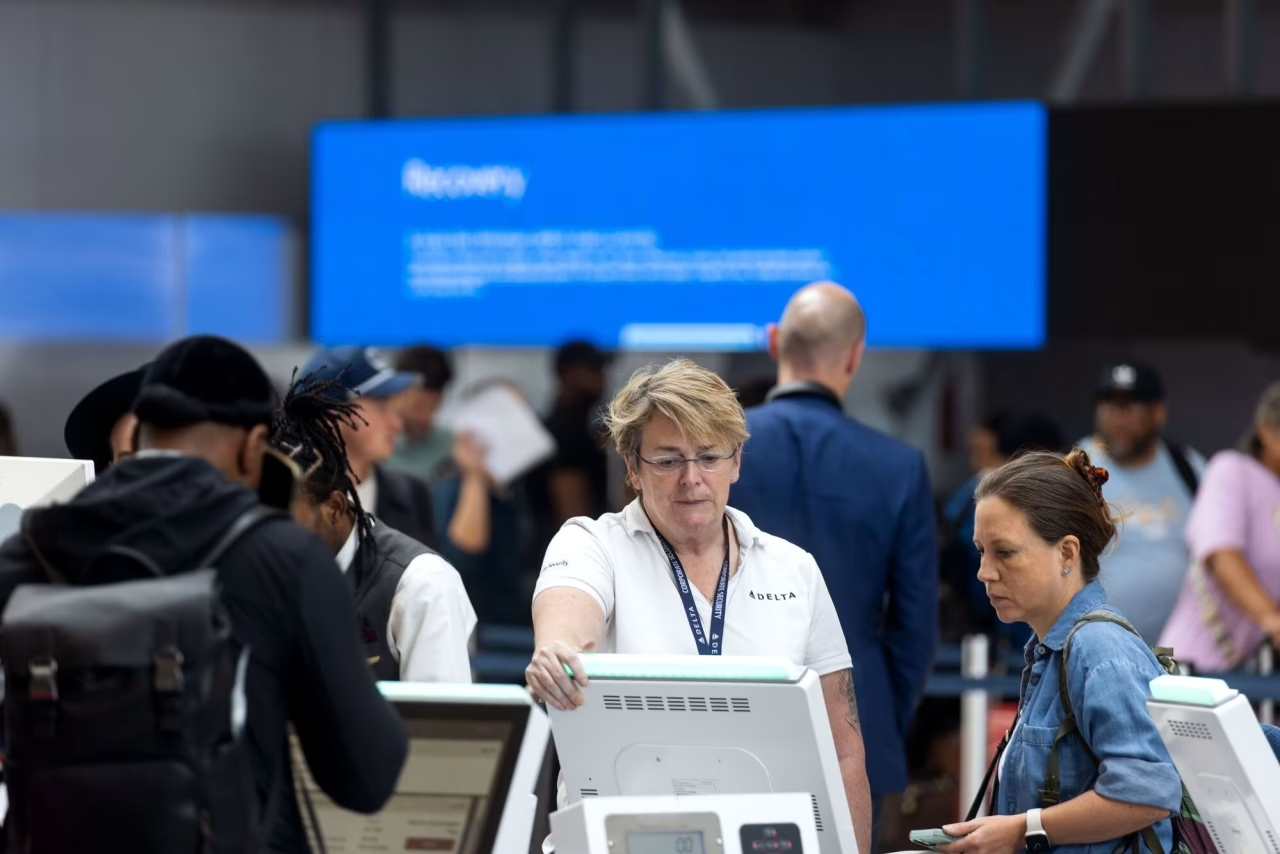
Monday’s widespread outage at Amazon Web Services (AWS) AMZN -1.95% ▼ served as a stark wake-up call. For millions of users across the United States and beyond, the internet ground to a halt, rendering popular platforms like Reddit, Roblox, Snapchat, and even critical services such as online banking inaccessible for hours. The disruption, which began late Sunday night and lingered into the afternoon, exposed the vulnerabilities in our increasingly centralized online infrastructure. As AWS, the cloud computing arm of e-commerce giant Amazon, finally declared the issue resolved by late Monday, questions lingered about the reliability of the systems that power much of the modern web.
The outage, described by experts as one of the most significant in recent years, affected over 2,000 companies and services worldwide. From social media giants to gaming empires and financial institutions, the ripple effects were felt far and wide. “This kind of outage, where a foundational internet service brings down a large swath of online services, only happens a handful of times in a year,” said Daniel Ramirez, director of product at Downdetector by Ookla, in an interview with CNET. “They probably are becoming slightly more frequent as companies are encouraged to completely rely on cloud services and their data architectures are designed to make the most out of a particular cloud platform.”
According to AWS’s official status updates, the trouble began at 11:49 p.m. PT on Sunday, when the company first noticed increased error rates for services in its US-East-1 region—a massive data center hub in northern Virginia that supports operations across the US and Europe. By 12:26 a.m. PT, engineers had pinpointed the initial culprit: DNS resolution issues affecting regional endpoints for DynamoDB, AWS’s managed NoSQL database service.
DNS, or Domain Name System, acts as the internet’s phonebook, translating user-friendly web addresses like “reddit.com” into the numerical IP addresses that computers use to connect. When DNS fails, it’s like losing the map to your destination—services are still there, but users can’t reach them. “It’s always DNS!” is a common refrain among tech professionals, as noted in reports from BBC News, highlighting how such seemingly mundane errors can cascade into widespread havoc.
As the night wore on, AWS resolved the DNS problem, but new challenges emerged. Network connectivity issues persisted, forcing the company to implement throttling—temporarily limiting the power and performance of certain operations—to stabilize the system. “Over time we reduced throttling of operations and worked in parallel to resolve network connectivity issues until the services fully recovered,” AWS stated in its final update. By 3:01 p.m. PT on Monday, all services were back to normal, with full resolution announced at 3:53 p.m. PT.
The timing couldn’t have been worse. Issues appeared largely contained as the East Coast started its workday, but reports surged dramatically after 8 a.m. PT when the West Coast came online. Downdetector, an outage-tracking platform owned by Ziff Davis, recorded a staggering 9.8 million user reports globally, with 2.7 million from the US alone. The UK followed with over 1.1 million, and significant numbers came from Australia, Japan, the Netherlands, Germany, and France. At its peak around 10 a.m. PT, approximately 280 services were still experiencing lingering problems.
Among the hardest hit were consumer favorites: Reddit went dark until around 4:30 a.m. PT, Roblox and Fortnite left gamers frustrated, Snapchat users couldn’t send snaps, and even Amazon’s own Ring doorbells and e-commerce site faced intermittent failures. Financial services like Venmo and various online banking platforms were disrupted, as were the PlayStation Network, Verizon communications, and YouTube. In the UK, banks such as Lloyds and Halifax reported issues, while government services like HMRC (Her Majesty’s Revenue and Customs) were affected, per BBC reports.
At the heart of the disruption lies AWS’s outsized role in the digital ecosystem. As the world’s leading cloud provider, AWS underpins roughly a third of the internet, offering scalable computing, storage, and database services that allow companies to outsource their infrastructure needs. This model saves businesses from maintaining expensive on-premise servers, but it also creates single points of failure. When AWS sneezes, the internet catches a cold.
Comparisons to past incidents abound. Similar to the 2021 Fastly content delivery network outage and the 2024 CrowdStrike cybersecurity glitch, Monday’s event underscored the fragility of our interconnected web. “The reliance on a small number of big companies to underpin the web is akin to putting all of our eggs in a tiny handful of baskets,” explained a The NY Budgets analysis. “When it works, it’s great, but only one small thing needs to go wrong for the internet to fall to its knees in a matter of minutes.”
The root cause, as later detailed by AWS at 8:43 a.m. PT, was traced to “an underlying internal subsystem responsible for monitoring the health of our network load balancers.” This subsystem’s failure amplified the initial DNS glitch, leading to degraded performance across services like Amazon Elastic Compute Cloud (EC2), which provides virtual servers in the cloud.
Experts like Luke Kehoe, an industry analyst at Ookla, emphasized the need for better resilience strategies. “The lesson here is resilience,” Kehoe told The NY Budgets. “Many organizations still concentrate critical workloads in a single cloud region. Distributing critical apps and data across multiple regions and availability zones can materially reduce the blast radius of future incidents.”
Alternatives to AWS exist, but few match its scale. Microsoft’s Azure and Google’s Cloud Platform are the primary competitors, with smaller players like IBM, Alibaba, and even European upstarts such as Stackit (launched by Lidl’s parent company) vying for market share. Yet, AWS remains dominant, prompting calls from some quarters—particularly in Europe and the UK—for greater investment in sovereign cloud infrastructure to reduce dependency on US-based giants. As one anonymous government source confided to BBC reporters, discussions about a UK equivalent to AWS have surfaced, only to be dismissed with, “We already have AWS, over there.” Incidents like this, however, reveal why such complacency might be shortsighted.
Amid the speculation, AWS and experts alike have ruled out a cyberattack as the cause. DNS issues can stem from malicious activities like distributed denial-of-service (DDoS) attacks, but there’s no evidence here. Instead, it appears to be a technical fault—possibly human error in configuration or a maintenance mishap at the northern Virginia facility, AWS’s oldest and largest data center.
That said, outages like this can create opportunities for bad actors. Marijus Briedis, CTO at NordVPN, warned in a statement to CNET that hackers might exploit the chaos. “This is a cybersecurity issue as much as a technical one,” he said. “True online security isn’t only about keeping hackers out, it’s also about ensuring you can stay connected and protected when systems fail.” He advised users to be vigilant against phishing scams, such as fake emails urging password changes in the wake of the outage.
Cloudflare’s CEO, in a light-hearted jab reported by BBC, summed up the relief felt by competitors: “AWS had a bad day.” For Amazon, however, the incident adds to a string of high-profile stumbles, raising questions about accountability in an industry where downtime can cost businesses millions.
From a business perspective, the outage couldn’t have come at a more inopportune time for Amazon, with its third-quarter earnings report slated for October 30, 2025. Despite the disruption, Amazon’s stock (AMZN) showed resilience, closing Monday at $216.48—a 1.61% gain from the previous session. This outperformed the S&P 500’s 1.07% rise, the Dow’s 1.12% increase, and the Nasdaq’s 1.37% climb.
However, the broader picture is mixed. Over the past month, AMZN shares have dipped 7.97%, underperforming the Retail-Wholesale sector’s 5.23% loss but lagging behind the S&P 500’s 1.08% gain. Analysts remain optimistic, with Zacks Consensus Estimates projecting full-year earnings of $6.83 per share (a 23.51% year-over-year increase) and revenue of $708.73 billion (up 11.09%). For the upcoming quarter, EPS is forecasted at $1.60 (11.89% growth), with revenue at $177.96 billion (12.01% rise).
Recent analyst revisions have been positive, with the consensus EPS estimate rising 1.1% over the last 30 days, earning Amazon a Zacks Rank of #2 (Buy). Valuation metrics show a Forward P/E of 31.2—above the Internet-Commerce industry average of 21.03—and a PEG ratio of 1.41, slightly higher than the sector’s 1.38. The industry itself ranks in the top 24% of Zacks’ 250+ sectors, suggesting strong fundamentals despite occasional hiccups.
Investors will be watching closely for any mention of the outage in Amazon’s earnings call, particularly regarding AWS’s growth trajectory. As the cloud division contributes significantly to Amazon’s profitability, ensuring uptime will be key to maintaining investor confidence.
Monday’s AWS outage wasn’t just a technical blip; it was a reminder of our collective vulnerability in a cloud-dependent world. As more businesses migrate to platforms like AWS for efficiency and cost savings, the potential for widespread disruption grows. While the internet has bounced back—for now—the event prompts a reevaluation of diversification strategies, regional redundancies, and even geopolitical dependencies in tech infrastructure.
President Donald Trump announced on Friday that the United States will slap an additional 100% tariff on all Chinese imports starting November 1, on top of existing duties, while imposing sweeping export controls on “any and all critical software.” The move, framed as retaliation for Beijing’s recent tightening of export restrictions on rare earth elements, sent shockwaves through global markets, wiping out nearly $2 trillion in stock value and reigniting fears of a full-blown decoupling between the world’s two largest economies. With bilateral trade already strained by springtime tariff spikes that peaked at 145% on U.S. goods into China, Trump’s latest salvo—potentially pushing effective rates above 130%—threatens to upend supply chains for everything from semiconductors to electric vehicles, at a time when the global rare earth market is forecasted to exceed $6 billion annually by decade’s end.
Trump’s announcement, delivered via a series of fiery Truth Social posts and reiterated during an Oval Office press availability, accused China of a “sinister and hostile” strategy to hold the world “hostage” through its dominance in rare earths—a group of 17 metals vital for high-tech manufacturing, defense systems, and green energy technologies. “It is impossible to believe that China would have taken such an action, but they have, and the rest is History,” Trump wrote, vowing that the tariffs could arrive “sooner” if Beijing escalates further. He also hinted at broader U.S. countermeasures, including restrictions on airplane parts and other exports, noting China’s reliance on Boeing components. The president stopped short of confirming the cancellation of his planned meeting with Chinese President Xi Jinping at the Asia-Pacific Economic Cooperation (APEC) summit in South Korea later this month, but earlier posts declared “no reason” for the sit-down, citing the “extraordinarily aggressive” timing of China’s moves—just days after a U.S.-brokered Middle East ceasefire.
Beijing’s Rare Earth Gambit: A Calculated Squeeze on Global Supply Chains
China’s actions, unveiled by the Ministry of Commerce on October 9, mark a significant hardening of its position in the ongoing trade skirmishes. Under “Announcement Number 61 of 2025,” Beijing expanded export licensing requirements to cover products containing more than 0.1% of rare earth elements sourced from China, even if manufactured abroad, effectively barring unlicensed shipments to foreign defense and semiconductor firms starting December 1. The curbs now encompass 12 of the 17 rare earths, including newly added holmium, erbium, thulium, europium, and ytterbium, alongside technologies for extraction, refining, and magnet production. Additional restrictions on lithium-ion batteries, graphite cathodes, and artificial diamonds take effect November 8.
These measures build on decades of state-backed dominance: China controls 61% of global rare earth mining and a staggering 92% of refining capacity, per the International Energy Agency, fueled by subsidies that have undercut competitors worldwide. Rare earths are indispensable for neodymium-iron-boron magnets in EV motors, fighter jet engines, and smartphone vibrators—sectors where U.S. firms like Tesla, Lockheed Martin, and Apple are heavily exposed. Analysts at the Center for Strategic and International Studies warn that the restrictions could disrupt U.S. defense supply chains, echoing 2010 when Beijing briefly cut off exports to Japan over territorial disputes. “This isn’t just trade policy; it’s economic warfare aimed at critical vulnerabilities,” said Dr. Elena Vasquez, a trade economist at the Peterson Institute for International Economics.
The timing appears deliberate, coming amid fragile progress in U.S.-China talks. After tit-for-tat hikes earlier this year drove tariffs to extreme levels—145% on U.S. imports to China and 125% in reverse—the two sides agreed in May to slash rates to 30% and 10%, respectively, pausing 24% of levies until November 10. Positive negotiations in Switzerland and the U.K. had raised hopes for a broader deal, but Beijing’s rare earth letter—sent to trading partners worldwide—has derailed that momentum. Trump decried it as a “moral disgrace” and a long-planned “lie in wait,” while posts on X from industry insiders echoed the surprise: “China’s rare earth curbs hit like a gut punch—right when talks were thawing,” one analyst tweeted.
Trump’s response was swift and unyielding. In his initial Truth Social broadside, he lambasted Beijing for “clogging global markets” and provoking “trade hostility” that has drawn ire from allies like the EU and Japan. The 100% tariff—layered atop the current 30% effective rate on $438.9 billion in annual Chinese imports—could add $439 billion in costs to U.S. businesses and consumers if fully implemented, according to Wells Fargo economists. Coupled with export controls on critical software—potentially targeting AI tools, cybersecurity suites, and enterprise systems from firms like Microsoft and Oracle—the measures aim to mirror China’s leverage in minerals with America’s edge in tech.
During a White House meeting on drug pricing, Trump doubled down, telling reporters the curbs were “shocking” and “very, very bad,” affecting “all countries without exception.” He floated expanding restrictions to “a lot more” items, including aviation parts, given China’s fleet of over 1,000 Boeing aircraft. On the Xi summit, Trump hedged: “I don’t know if we’re going to have it… but I’m going to be there regardless.” Earlier, he had signaled outright cancellation, writing, “now there seems to be no reason to do so.” Beijing has yet to respond formally, but state media like Global Times called the tariffs “economic bullying,” while separately imposing port fees on U.S. ships in retaliation for American “discriminatory” docking charges.
The broader U.S.-China economic ties add layers of complexity. Last year, China ranked as the third-largest U.S. trading partner, with a $295.4 billion deficit. Ongoing flashpoints include TikTok’s U.S. operations—requiring Beijing’s blessing for a ByteDance divestiture—and visa restrictions on Chinese students. Trump’s moves could jeopardize these, even as they bolster his domestic base ahead of midterms.
Wall Street’s reaction was visceral. The S&P 500 .SPX -2.70% ▼ cratered 2.7% on Friday, shedding Dow Jones Industrial Average .DJI -2.25% ▼ 878 points, while the Nasdaq Composite .IXIC -3.60% ▼—its worst day since March—as tech giants like Nvidia NVDA -6.00% ▼ and Apple AAPL -4.00% ▼, reliant on Chinese rare earths for chips and devices, bore the brunt. The sell-off erased $1.9 trillion in market cap, with X users dubbing it “the day markets fell” amid a “perfect storm” of U.S. shutdown fears, tariff threats, and Fed signaling confusion. Crypto markets fared worse: Bitcoin BTC -7.50% ▼, Ethereum ETH -12.00% ▼, and liquidations hit $19 billion, per SoSoValue data, as leveraged longs unwound en masse.
Safe havens rallied. Gold surged 2.1% to $2,650 per ounce, while U.S. rare earth miners like MP Materials jumped 8%, buoyed by prospects of domestic substitution. Globally, the Shanghai Composite dipped 1.9%, and the Hang Seng fell 2.4%, reflecting spillover risks. Semiconductor firms like ASML braced for fallout, with shares down 4.2%, as China’s curbs threaten the $500 billion chip industry’s raw materials.
Economists warn of deeper scars. The global rare earth market, valued at $3.95 billion in 2024, is projected to hit $6.28 billion by 2030 at an 8% CAGR, driven by EV and renewable demand—but tariffs could inflate prices 20-30%, per Grand View Research. U.S. consumers might face $1,000 annual household cost hikes, akin to 2018’s trade war, while exporters like Boeing could lose $10 billion in orders. “This risks a vicious cycle: higher costs, slower growth, and fragmented innovation,” said JPMorgan’s Michael Feroli.
Economic Stakes: From EVs to National Security
The rare earth flashpoint underscores the trade war’s evolution from tariffs to strategic chokepoints. China’s monopoly—forged through subsidies and lax environmental rules—has long irked Washington, prompting the CHIPS Act’s $52 billion in domestic incentives. Yet, U.S. refining capacity remains nascent, covering just 15% of needs. Trump’s software controls, meanwhile, target China’s AI ambitions, potentially stalling Huawei and Baidu’s advancements.
For Beijing, the curbs safeguard “national security,” but they invite blowback. Exports of rare earths generated $5.2 billion last year; restrictions could shave 2% off GDP growth if retaliation spirals, per Oxford Economics. Allies like Australia and Canada, ramping up mines, stand to gain, but short-term disruptions loom for Europe’s auto sector, where 40% of EV magnets are Chinese-sourced.
X chatter reflects the angst: “Trump’s tariff nukes markets—China’s rare earth play was checkmate,” one trader posted, while another quipped, “Trade war 2.0: Now with extra monopoly drama.” Broader ripple effects include a 0.5% hit to U.S. GDP in 2026, per Federal Reserve models, and stalled WTO reforms.
As November 1 looms, the onus falls on diplomacy—or its absence. Trump’s APEC attendance keeps the Xi channel ajar, but observers like Al Jazeera’s Ahmed Fouad doubt a breakthrough: “Beijing’s holding aces in minerals; Washington in tech—stalemate seems likely.” A Reuters analysis pegs escalation odds at 60%, potentially costing $500 billion in lost trade.
For businesses, the message is clear: Diversify now. “Potentially painful” in the short term, Trump insists, but “very good… for the U.S.A.” in the end. Yet, as markets reel and supply chains fray, the world watches a high-stakes poker game where both players hold loaded dice—and rare earths are the wild card.
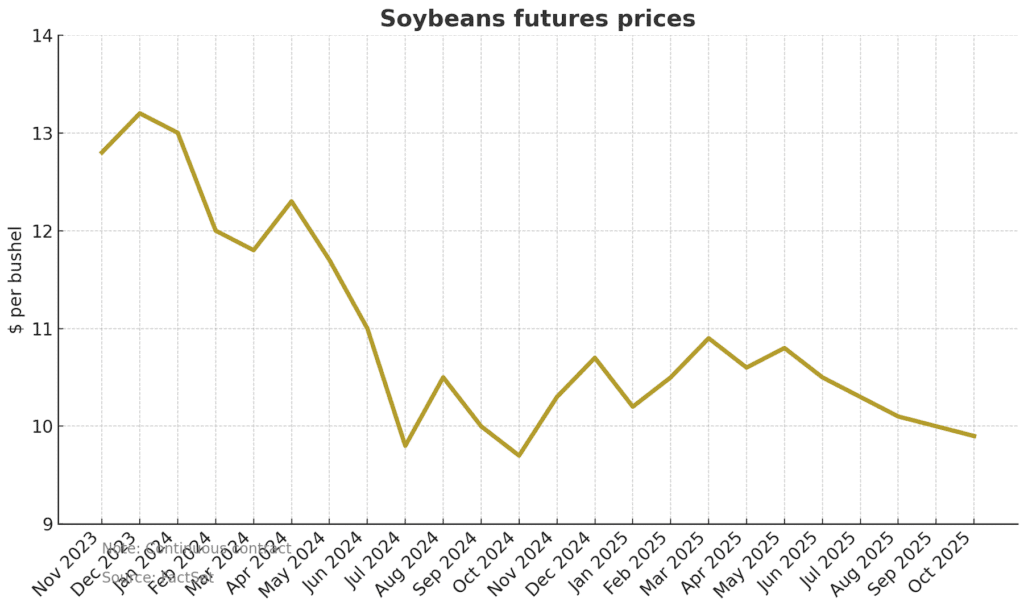
In the heart of the Midwest, where golden fields stretch toward the horizon under a crisp autumn sky, the hum of combines should signal prosperity. Instead, for America’s soybean farmers, harvest season has become a grim countdown to financial ruin. As they reap what the U.S. Department of Agriculture (USDA) projects to be a record 4.2 billion bushel crop this year, their largest buyer—China—has vanished from the market, leaving silos overflowing and prices plummeting to five-year lows around $9.50 per bushel.
China hasn’t booked any U.S. soybean purchases in months; farmers warn of ‘bloodbath’
The trade war between the United States and China, now in its second year under President Donald Trump’s renewed tariff regime, has turned soybeans into collateral damage. Beijing’s retaliatory 25% tariffs on U.S. agricultural imports have priced American beans out of the Chinese market, where they once commanded over half of the $24.5 billion in annual U.S. soybean exports. From January through August 2025, Chinese imports of U.S. soybeans totaled a mere 200 million bushels—down from nearly 1 billion bushels in the same period of 2024, according to USDA trade data. That’s a 80% plunge, robbing Midwestern farmers of billions in revenue and forcing a scramble for alternative markets that may never fully compensate.
“We’ll see the bottom drop out if we don’t get a deal with China soon,” warns Ron Kindred, a veteran farmer managing 1,700 acres of corn and soybeans in central Illinois. Halfway through his harvest, Kindred has locked in contracts for just 40% of his crop at prices already eroding below $10 per bushel in local elevators. The remaining 60% sits in limbo, a high-stakes bet on a breakthrough in Washington-Beijing negotiations. “There’s no urgency on China’s side, and the farm community’s clock is ticking louder every day,” he adds.
Kindred’s plight echoes across the soybean belt, from Illinois prairies to Iowa’s rolling hills. Rising input costs—fertilizer up 20-30% year-over-year, equipment maintenance strained by inflation, and a glut of both corn and soybeans flooding domestic markets—were squeezing margins even before the trade spat escalated. Now, with China’s boycott, the USDA estimates average losses of up to $64 per acre for Illinois growers alone, the nation’s top soybean-producing state with 6.2 million acres planted this year. University of Illinois Extension economists project total state-level shortfalls could exceed $400 million if export volumes don’t rebound by spring 2026.
Enter the Trump administration’s lifeline: a proposed $10-14 billion farmer aid package, building on December 2024’s $10 billion relief bill. The Wall Street Journal reported last week that President Trump, speaking at the White House on October 6, vowed to “do some farm stuff this week” to cushion the blow. Aides say he’s slated to huddle with Agriculture Secretary Brooke Rollins as early as Friday to finalize funding sources, leaning heavily on the $215 billion in tariff revenues collected during fiscal 2025 (October 2024-September 2025), per U.S. Treasury figures. “The president is deploying every tool in the toolbox to keep our farmers farming,” a USDA spokesman told Reuters.
Yet for many in the heartland, the aid feels like a temporary fix for a structural crisis. Soybean farmers, who backed Trump overwhelmingly in 2024 (with 62% of rural voters in key swing states like Iowa and Wisconsin casting ballots for him, per Edison Research exit polls), are voicing frustration laced with loyalty. “We voted for strong trade deals, not handouts,” says Scott Gaffner, a third-generation farmer in southern Illinois tending 600 acres. His crop, typically destined for Chinese ports, now languishes in on-farm silos as he frets over fixed costs like diesel fuel and seed that have surged 15% since planting. “We’re not just anxious; we’re angry. When the administration’s jetting off to Spain for TikTok talks while our harvest rots, it feels like we’re the last priority.”
Gaffner’s son, Cody, the would-be fourth generation on the land, echoes the generational stakes. “If I return after college, it’ll be with a second job just to make ends meet,” the 22-year-old says. Their story underscores a broader ripple: Rural economies, where agriculture drives 20-25% of GDP in states like Illinois and Iowa, are buckling. Tractor sales at CNH Industrial, a Decatur, Illinois-based giant, plunged 20% in the first half of 2025, CEO Gerrit Marx revealed in an August interview at the Farm Progress Show. “The good news only flows when China places orders,” Marx said, a sentiment that hung heavy over the event in the self-proclaimed “soy capital of the world”—a title now whispered to be shifting south to Brazil.
Dean Buchholz, a DeKalb County, Illinois, peer of Gaffner’s, is already waving the white flag. After decades in the fields, skyrocketing fertilizer bills and sub-$10 soybean futures have convinced him to retire. “I figured I’d farm till they buried me,” the 58-year-old says. “But with debt piling up and health acting up, it’s time to rent out the acres. This trade war’s the final straw.”
Desperate Diplomacy: Chasing Markets in Unlikely Corners
With China—home to the world’s largest hog herd and importer of 61% of global traded soybeans over the past five years, per the American Soybean Association—off the table, U.S. agribusiness is on a global charm offensive. Trade missions to Nigeria, memorandums with Vietnam, and a 50% surge in sales to Bangladesh (up to 400,000 metric tons through July 2025) highlight the scramble. Yet these “base hits,” as Iowa farmer Robb Ewoldt calls them, pale against China’s home-run demand.
Ewoldt, who farms 2,000 acres near Des Moines, jetted to Rome in January to woo a Tunisian poultry giant. “They grilled me: Can we count on steady U.S. supply, or will you switch crops and jack up prices?” he recalls. Tunisia’s imports, while growing, total under 100,000 tons annually—barely a blip. “It helps long-term, but right now, we’re cash-strapped. My operation burns a million bucks a year; without sales, we’re dipping into reserves just to cover debt service.”
Across the Mississippi, Morey Hill has logged thousands of miles this year, from Cambodia’s fish ponds to Morocco’s chicken coops. In Phnom Penh last week, the Iowa grower evangelized to importers about swapping low-protein “fish meal” for U.S. soybean meal, touting yields that could fatten local aquaculture 20-30%. “We’ve got success stories—Vietnam’s up 25% year-over-year to 1.2 million tons,” Hill says. But even aggregated, the EU and Mexico (combined $5 billion in sales) plus risers like Egypt, Thailand, and Malaysia can’t fill the void: Total U.S. soybean exports dipped 8% to 18.9 million metric tons through July, USDA Census Bureau data shows.
Industry lobbies are pulling levers too. The U.S. Soybean Export Council sponsored a June Vietnam mission yielding $1.4 billion in MOUs for ag products, including soy. August brought Latin American buyers to Illinois for farm tours, though exports to Peru and Nicaragua remain negligible. In Nigeria, a modest 64,000 tons shipped last year hasn’t translated to 2025 bookings yet. And Secretary Rollins’ September tweet hailing Taiwan’s “$10 billion” four-year ag commitment? It’s a rebrand of existing $3.8 billion annual flows, not new money, USDA clarifications confirm.
“There’s talk of India, Southeast Asia, North Africa as future markets,” says Ryan Frieders, a 49-year-old Waterman, Illinois, farmer who joined a February trek to Turkey and Saudi Arabia. “But nothing explodes overnight to replace China.” Frieders, facing $8-10 per acre losses per University of Illinois models, plans to bin most of his harvest, gambling on futures prices rebounding above $11 by Q1 2026.
The Shadow of South America and Tariff Games
As U.S. beans languish, Brazil and Argentina feast. China, pivoting since 2018’s first trade war, now sources 80% of its needs from South America. Last month, Argentine President Javier Milei’s temporary export tax suspension lured $500 million in Chinese cargoes, traders at the Chicago Mercantile Exchange report. U.S. beans traded at $0.80-$0.90 per bushel cheaper than Brazilian equivalents for September-October shipment, but Beijing’s 23% tariff tacks on $2 per bushel—enough to divert 5 million metric tons southward.
“The frustration is overwhelming,” says Caleb Ragland, 39, Kentucky farmer and American Soybean Association president. On Truth Social Wednesday, Trump himself griped: “Our Soybean Farmers are hurting because China, for ‘negotiating’ reasons, isn’t buying.” He teased soybeans as a centerpiece in his upcoming summit with Xi Jinping in four weeks. Treasury Secretary Scott Bessent, speaking Thursday, promised a Tuesday announcement on aid, potentially including a $20 billion swap line for Milei—irking U.S. growers who see it as subsidizing their rivals.
On Friday, soybean futures closed at $9.42 per bushel on the CME, down 2% weekly amid harvest pressure and zero Chinese bookings. Analysts at Zaner Ag Hedge forecast a “bloodbath” if no deal materializes by November: Storage costs could add $0.50 per bushel, while on-farm debt—$450 billion industry-wide, per Farm Credit Administration—balloons.
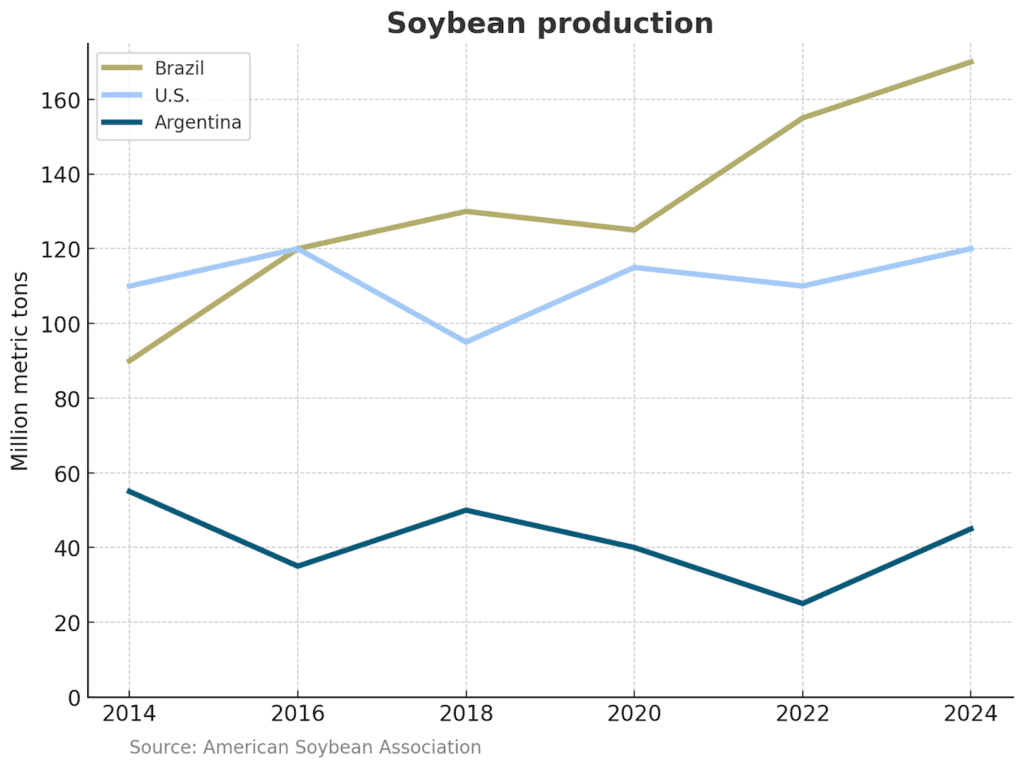
The trade war’s winners? South American exporters, grinning from bumper crops (Brazil’s output hits 155 million metric tons this year, USDA estimates), and U.S. tariff coffers, flush for bailouts. Losers abound: From Decatur’s processing plants, once buzzing with Chinese-bound shipments, to the 1.2 million farm jobs at risk nationwide, per the American Farm Bureau Federation.
For Kindred, Gaffner, and their ilk, the math is merciless. “We want trade, not aid,” Gaffner insists. “China’s building routes elsewhere; once they’re hooked on Brazil, we might never claw it back. That’s not just my farm—it’s the next generations, the rural towns, the whole engine of America’s breadbasket.”
As combines roll on, the Midwest holds its breath. A Xi-Trump handshake could flood elevators with orders; stalemate risks a cascade of foreclosures and fallow fields. In this high-stakes harvest, soybeans aren’t just seeds—they’re the fragile thread binding U.S. farmers to their future.
Cookie Consent
We use cookies to improve your experience on our site. By using our site, you consent to cookies.
Contains information related to marketing campaigns of the user. These are shared with Google AdWords / Google Ads when the Google Ads and Google Analytics accounts are linked together.
90 days
__utma
ID used to identify users and sessions
2 years after last activity
__utmt
Used to monitor number of Google Analytics server requests
10 minutes
__utmb
Used to distinguish new sessions and visits. This cookie is set when the GA.js javascript library is loaded and there is no existing __utmb cookie. The cookie is updated every time data is sent to the Google Analytics server.
30 minutes after last activity
__utmc
Used only with old Urchin versions of Google Analytics and not with GA.js. Was used to distinguish between new sessions and visits at the end of a session.
End of session (browser)
__utmz
Contains information about the traffic source or campaign that directed user to the website. The cookie is set when the GA.js javascript is loaded and updated when data is sent to the Google Anaytics server
6 months after last activity
__utmv
Contains custom information set by the web developer via the _setCustomVar method in Google Analytics. This cookie is updated every time new data is sent to the Google Analytics server.
2 years after last activity
__utmx
Used to determine whether a user is included in an A / B or Multivariate test.
18 months
_ga
ID used to identify users
2 years
_gali
Used by Google Analytics to determine which links on a page are being clicked
30 seconds
_ga_
ID used to identify users
2 years
_gid
ID used to identify users for 24 hours after last activity
24 hours
_gat
Used to monitor number of Google Analytics server requests when using Google Tag Manager