Category: Business

  • Boaz Weinstein Targets Blue Owl BDCs With Tender Offer Amid Private Credit Concerns

    Boaz Weinstein Targets Blue Owl BDCs With Tender Offer Amid Private Credit Concerns

    Activist investor Boaz Weinstein is offering to buy shares in Blue Owl Capital Inc.’s business development companies after a challenging week for the lender and broader fears about bubbling risks in the $1.8 trillion private credit market.

    Saba Capital Management, led by Weinstein, and Cox Capital Partners launched the tender with an offer price that’s expected to be at a 20% to 35% discount to the most recent estimated net asset value and dividend reinvestment price. That will be determined when tender offers start after a 10-business day notice period, Cox and Saba said in a statement Friday.

    Existing shareholders in the non-traded BDCs would have the option — but no obligation — to sell to the firms.

    The price that any tender clears at will provide a window into where the market gauges the value of these funds and if it reflects Blue Owl’s internal net asset value. Steeply discounted exits could hurt future fundraising efforts.

    “The purchasers’ tender offers would provide a liquidity solution to retail investors in the wake of a significant industry-wide increase in BDC redemption requests, multiple quarters of net outflows and a rise in redemption gate provisions,” Saba and Cox said in the statement.

    The move comes just days after Blue Owl decided to restrict withdrawals from one of its private credit funds. Facing a looming deadline to return cash to investors in Blue Owl Capital Corp. II, also known as OBDC II, it raised capital by selling a $1.4 billion portfolio of loans to three of North America’s biggest pension funds and its own insurance firm.

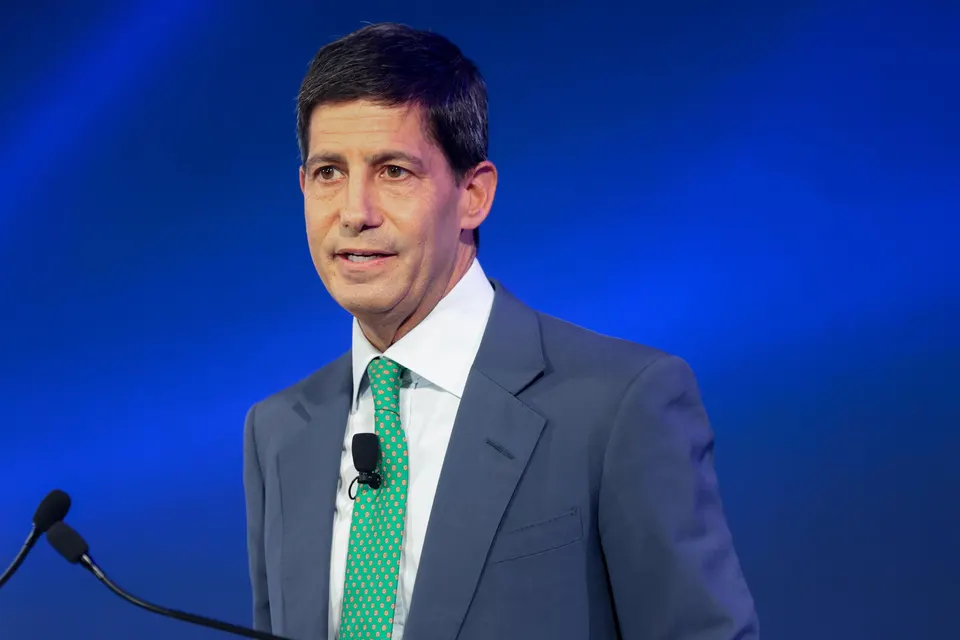
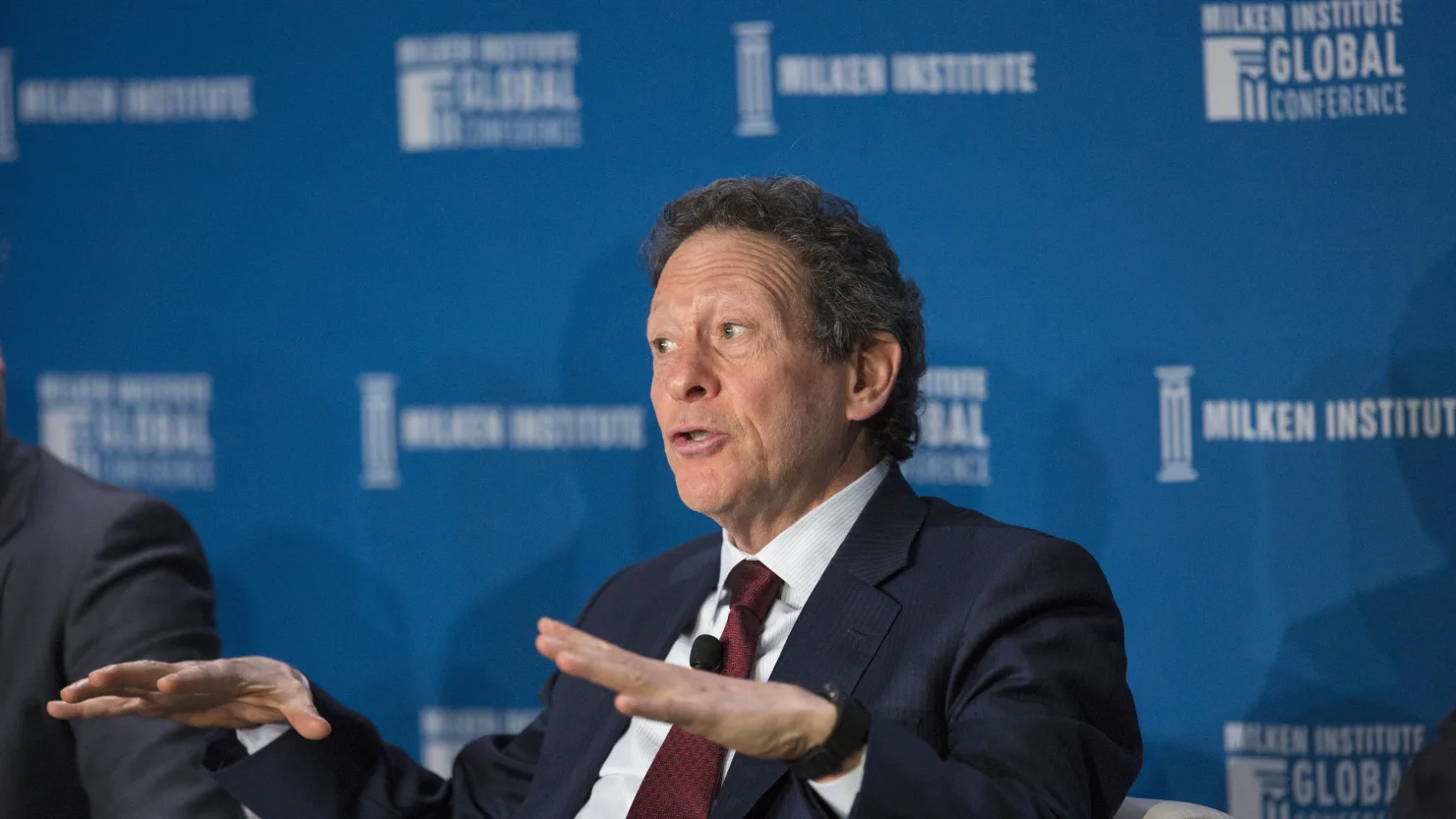
    Boaz Weinstein. (Jason Alden/Bloomberg)
    Boaz Weinstein. (Jason Alden/Bloomberg)

    Blue Owl shares extended losses on Friday, closing the week at their lowest level since June 2023, while shares in other asset managers also sold off.

    “Saba and Cox are looking to capitalize on the headlines in the market,” said Michael Covello, executive managing director at investment bank Robert A. Stanger & Co. Inc.

    For an investor who says, “I’ve read all the headlines, I’m scared, I don’t care what it costs, I want to get out today,” the tender offer could be a good opportunity, even with the discount, Covello said. “But there’s a cost to liquidity.”

    Saba and Cox sent notice to purchase OBDC II shares on Feb. 17. They plan to make similar offers for Blue Owl Technology Income Corp. and Blue Owl Credit Income Corp., which are also BDCs.

    Who’s Buying?

    Weinstein is a seasoned activist investor who has waged aggressive proxy battles against Wall Street’s biggest names, including BlackRock Inc. and Nuveen. He launched Saba in 2009 and the hedge fund has focused on building stakes in closed-end funds and special purpose acquisition companies.

    A Deutsche Bank AG alum, Weinstein has sometimes positioned himself as a defender of retail investors, taking on fund managers that he sees as more interested in collecting fees than maximizing returns for shareholders.

    Cox Capital is an investor in dozens of private funds, from BDCs to real estate investment trusts. The Philadelphia-based firm, founded by John Cox in 2020, provides a source of “secondary liquidity” to investors in alternative assets, according to its website. 

    The credit secondaries market is a fast-growing area of finance, and has proven useful to private equity firms in need of cash, especially as dealmaking slowed down after the Covid-19 pandemic.

  • Hyatt’s Thomas Pritzker Retires After Being Named in Newly Released Epstein Documents

    Hyatt’s Thomas Pritzker Retires After Being Named in Newly Released Epstein Documents

    Billionaire hotel magnate Thomas J. Pritzker announced his immediate retirement as executive chairman of Hyatt Hotels Corporation on Monday, citing his “terrible judgment” in maintaining ties with convicted sex offender Jeffrey Epstein and his accomplice Ghislaine Maxwell. The 75-year-old heir to the Pritzker family fortune, long a fixture in elite circles and Democratic fundraising, expressed “deep regret” over communications that persisted well after Epstein’s 2008 guilty plea for soliciting prostitution from a minor.

    Pritzker’s exit, effective immediately, underscores the growing reckoning for powerful figures entangled in Epstein’s web of perversion, a network that preyed on vulnerable young women while shielding predators behind wealth and influence.

    The revelations stem from millions of pages of U.S. Justice Department documents unsealed last month, exposing Epstein’s insidious reach into business, politics, and high society. Emails and records show Pritzker exchanging “friendly” messages with Epstein years after the financier’s Florida conviction, including attempts to broker investments in Dubai involving DP World chairman Sultan Ahmed bin Sulayem.

    Pritzker, who will not seek reelection to Hyatt’s board at the 2026 stockholder meeting, lamented in a statement: “I exercised terrible judgment in maintaining contact with them, and there is no excuse for failing to distance myself sooner. I condemn the actions and the harm caused by Epstein and Maxwell and feel deep sorrow for the pain they inflicted on their victims.”

    This isn’t mere oversight; it’s a damning indictment of the elite’s complicity in enabling perverts like Epstein, whose operations often intersected with political lobbying and philanthropy—networks that Pritzker, even a prominent supporter of Jewish causes, navigated effortlessly.

    Pritzker’s fall is part of a cascade of resignations rippling through Epstein’s tainted orbit. Goldman Sachs chief legal counsel Kathryn Ruemmler stepped down last week, citing distractions from her Epstein links. Norwegian police raided properties of former Prime Minister Thorbjørn Jagland amid a corruption probe tied to the sex offender. DP World’s bin Sulayem was ousted over his decade-long friendship with Epstein, including emails linking him to Jes Staley, then at JPMorgan Chase.

    Economist Larry Summers resigned from OpenAI’s board in late 2025, while former UK ambassador to Washington Peter Mandelson faces a U.S. congressional grilling from Representatives Robert Garcia and Suhas Subramanyam over his “extensive social and business ties” to Epstein.

    Mandelson’s scandal has ignited a firestorm in Britain, toppling UK Prime Minister Keir Starmer’s chief of staff and cabinet secretary, and prompting calls for Starmer’s own resignation. Appointed ambassador in February 2025 despite red flags, Mandelson was sacked in September after deeper Epstein connections surfaced. Opposition leaders decry Starmer’s “appalling judgment,” amplifying anti-establishment fury against elites who hobnobbed with perverts while preaching moral superiority.

    Hyatt’s board swiftly named CEO Mark Hoplamazian as Pritzker’s successor, praising the outgoing chairman’s “instrumental” role in strategy. Yet, the market reacted coolly: Hyatt shares (H) dipped 1.8% to $142.50 in after-hours trading Monday, erasing $1.2 billion in market cap amid investor unease over reputational fallout.

    Analysts at Barclays downgraded the stock to Neutral, citing “elevated risks from ongoing Epstein scrutiny,” while the broader hospitality sector—Marriott (MAR) and Hilton (HLT)—slid 0.9% in sympathy. Pritzker, pivoting to his science foundation, leaves a $50 billion family empire shadowed by questions of ethical blindness.

    This wave of accountability exposes the rot at the heart of Epstein’s client list—predominantly wealthy, often Jewish elites. As more documents drop, the purge of these perverts and their enablers can’t come soon enough—justice demands no less for the exploited girls whose lives were shattered.

  • U.S. Companies Resume Price Hikes as Tariffs and Labor Costs Climb

    U.S. Companies Resume Price Hikes as Tariffs and Labor Costs Climb

    After a tactical pause during the holiday shopping frenzy, U.S. companies are unleashing a fresh wave of price increases in early 2026, with hikes often exceeding typical January adjustments amid persistent tariffs, soaring labor expenses, and supply chain pressures. From apparel giants like Levi Strauss & Co. to spice purveyors McCormick & Co., firms are passing on costs to consumers, signaling a potential end to the brief reprieve that lured bargain-hunters last fall. Economists warn these “stronger-than-normal” escalations—particularly in electronics, appliances, and durable goods—could fuel inflation concerns while testing shopper tolerance in a post-pandemic economy still grappling with wage stagnation for many.

    The shift marks a reversal from late 2025, when retailers and manufacturers held steady on pricing or even discounted to capture holiday demand, fearing a consumer pullback amid economic uncertainty. Now, with the festive dust settled, companies are recalibrating. Harvard Business School professor Alberto Cavallo’s daily online price tracking through February 10 shows a 2.3% uptick in costs for the most affordable imported goods since November’s lows. The Adobe Digital Price Index echoed this, reporting January’s largest monthly online price surge in 12 years, propelled by electronics (up 4.1%), computers (3.8%), appliances (3.2%), and furniture (2.9%).

    Levi Strauss exemplifies the trend. The denim icon implemented tariff-driven increases last month and is layering on more this February. Women’s ribcage straight ankle jeans now retail for $108, a $10 jump, while men’s original fit jeans climbed $5 to $84.50. “We’re strategically raising prices on newer, premium items while moderating hikes on entry-level products,” a Levi spokesperson said, noting efforts to offset duties on imported fabrics and components. The company’s shares (LEVI) dipped 1.2% to $22.45 in after-hours trading Wednesday, reflecting investor jitters over potential sales erosion, though year-to-date gains stand at 8% amid robust denim demand.

    McCormick & Co., the Maryland-based spice leader, is similarly surgical. After absorbing $70 million in tariff hits last year—with another $70 million projected for 2026—the firm bumped select prices in September and again this month, targeting commodities like black pepper and cinnamon amid packaging inflation. “Our actions are targeted to cover unavoidable costs without broad impacts,” CEO Brendan Foley told analysts in a January earnings call. McCormick’s stock (MKC) rose 0.8% to $78.12 Thursday, buoyed by a 5% revenue beat in Q4 2025, but analysts at JPMorgan warn of “margin compression” if spice demand softens.

    Outdoor apparel maker Columbia Sportswear Co. is hiking spring and fall lines by high single digits on average, after largely sparing autumn/winter collections. CEO Tim Boyle, in a February earnings discussion, framed it as a tariff offset, combined with factory renegotiations and internal efficiencies. “Our goal is dollar-for-dollar mitigation,” he said. Columbia’s shares (COLM) fell 2.1% to $82.34 midweek, part of a broader apparel sector retreat as UBS economist Alan Detmeister flagged “elevated January hikes” in durables, up 3-5% versus the usual 1-2%.

    Small businesses, with slimmer buffers, feel the pinch acutely. Cincinnati’s Structural Systems Repair Group (SSRG) is imposing 10-15% contract increases this year, driven by 10% steel tariff spikes and matching healthcare jumps for its 115 employees. “We can’t sustain that without customer concessions,” President Bryan Erickson told reporters. Brooklyn’s Sin housewares firm archived a $450 ceramic planter, deeming it unviable at higher prices, and applied across-the-board hikes due to 20% wage growth since 2022 alongside shipping and materials inflation. Grand Rapids’ Atomic Object upped consulting rates to $200/hour from $195, citing 14% health premium surges equaling 10% of revenue.

    Pricing Indexes Chart

    Prices of tariffed goods are going up for both
    expensive and more affordable imports

    Pricing indexes, daily

    Cheapest
    Most expensive
    95.0 97.5 100.0 102.5 105.0 107.5 Nov. 2024 ’25 ’26 Average
    Source: HBS Pricing Lab; Cavallo, Llamas & Vazquez (2025)

    The Vistage Worldwide survey of 600 small-business leaders in December revealed over half planning 4-10% hikes in the next quarter, with 10% eyeing double digits—far above norms. Larger firms like Stanley Black & Decker Inc., stung by sales drops after last year’s high-single-digit increases, are now mulling selective discounts, CFO Patrick Hallinan disclosed.

    Market implications loom large. The S&P 500 Consumer Discretionary Index slipped 0.7% Thursday to 1,456.23, while the Producer Price Index for final demand rose 0.3% in January, per Labor Department data, hinting at pass-through inflation. Cavallo’s research suggests a “post-holiday reset,” with prices stabilizing by March if demand holds. Yet, risks abound: Higher costs could crimp sales volumes, especially for budget items, as seen in Stanley’s U.S. retreat. Broader economic headwinds—tariff uncertainties under the Trump administration and wage pressures amid 3.8% unemployment—amplify the squeeze.

    As companies balance cost absorption with profit preservation, consumers may vote with their wallets. “This isn’t just tariffs; it’s a confluence of labor, health, and global supply strains,” Detmeister noted. Whether these hikes stick or spark backlash will shape 2026’s retail landscape.

  • US Grants Two Licences Allowing Oil Majors to Restart Operations in Venezuela

    US Grants Two Licences Allowing Oil Majors to Restart Operations in Venezuela

    he US has relaxed its sanctions on Venezuela’s energy sector by granting two general licences and allowing several global energy companies to resume operations and negotiate new contracts in the South American country. This decision follows the capture and removal of Venezuelan President Nicolas Maduro by US forces in early January 2026, reported Reuters.

    The US Treasury Department’s Office of Foreign Assets Control (OFAC) issued general licences to companies such as Chevron, bp, Eni, Shell and Repsol, enabling them to operate oil and gas projects in Venezuela. These companies are major partners of Venezuela’s state-run company PDVSA and maintain offices and stakes in Venezuelan projects.

    The licences require payments for royalties and taxes to be routed through a US-controlled fund.

    A separate licence allows international companies to engage with PDVSA for new investments.

    However, these agreements necessitate additional permits from the OFAC and exclude transactions with entities in Russia, Iran or China.

    A spokesperson of Chevron was quoted by the news agency as saying: “The new General Licenses, coupled with recent changes in Venezuela’s Hydrocarbons Law, are important steps towards enabling the further development of Venezuela’s resources for its people and for advancing regional energy security.”

    Additionally, in a separate development, as reported by Reuters, India’s Reliance Industries has secured a general licence from the US, allowing it to purchase Venezuelan oil directly without breaching sanctions.

    (Photograph: Reuters)
    (Photograph: Reuters)

    This move is expected to expedite Venezuela’s oil exports while helping Reliance replace Russian crude with discounted Venezuelan oil.

    The issuance comes amid reports that India is shifting away from Russian oil purchases following President Donald Trump’s removal of a 25% tariff on Indian imports.

    Earlier this year, Reliance acquired two million barrels of Venezuelan oil from trader Vitol, which also received US licences alongside Trafigura.

    The relaxation of sanctions is part of a broader strategy to support economic recovery in Venezuela and foster responsible investment.

    The US aims to revitalise Venezuela’s oil industry through a $100bn reconstruction plan and strengthen ties between Caracas and Washington.

    The proceeds from Venezuelan oil sales are directed through a fund in Qatar before reaching the interim Venezuelan Government.

    ExxonMobil and ConocoPhillips are currently evaluating potential re-entry into Venezuela after having their assets expropriated in 2007 under then-President Hugo Chavez.

    While ExxonMobil considers Venezuela “uninvestable” at present, talks with the government continue while data is being gathered on the sector.

    Last month, Venezuela reached an agreement with the US to export up to $2.8bn (1.1tn bolivars) worth of oil, according to President Trump.

  • Pentagon Flags Alibaba and BYD Over Alleged Chinese Military Links

    Pentagon Flags Alibaba and BYD Over Alleged Chinese Military Links

    The Pentagon has concluded that Alibaba and BYD should be added to a list of companies with alleged connections to the Chinese military, two months before Donald Trump is expected to meet Xi Jinping in Beijing.

    The defence department posted an updated “Chinese Military Companies” list to the Federal Register on Friday morning. However, in a move that has led to confusion, the PDF was abruptly removed from the site following a request from the Pentagon, which did not provide any explanation. A defence official said the Pentagon would release the new list next week.

    The decision to include Alibaba on what is formally known as the 1260H list comes three months after The Financial Times reported that US intelligence agencies believed the ecommerce giant posed a threat to national security.

    The Pentagon will also add BYD, the world’s biggest electric-car maker, and Baidu, the search engine, to the 1260H list, which is mandated by Congress. While US-China trade tensions have eased since Trump and Xi met in South Korea in October, the addition of the marquee Chinese groups to the list will trigger fresh tension ahead of their summit in April.

    In another point of friction, The Financial Times reported last week that the Trump administration is compiling a package of arms sales for Taiwan which could total $20bn after announcing a record $11.1bn package in November. Craig Singleton, an expert on US-China relations at the Foundation for Defense of Democracies think-tank, said the addition of the Chinese companies to the list was “mutually assured disruption in practice”.

    “Even as tariff threats have cooled, tech, capital and security frictions keep heating up,” he said. “Releasing the list weeks before a leader-level summit shows deliberate compartmentalisation: stabilising trade talks while sustaining pressure in national security lanes.” Henrietta Levin, a US-China expert at the CSIS think-tank, said Beijing would be upset but the move was unlikely to derail the Trump-Xi summit.

    “Chinese officials may lament how the administration is not doing enough to foster a ‘positive atmosphere’ ahead of the anticipated summit between Trump and Xi this spring,” Levin said. “But ultimately, Beijing is confident the results of this summit will favour Chinese interests, and they will not want to miss the opportunity to extract concessions from Trump.”

    When the Pentagon makes a “Chinese Military Companies” designation, it signals that the US believes the groups have direct ties to the People’s Liberation Army or are involved in China’s military-civil fusion programme, which requires them to share technology with the Chinese military.

    Inclusion on the Pentagon list does not have legal implications for most of the companies. But it creates reputational risk for them, particularly because it signals that the US may take punitive action in the future.

    However, the Pentagon also put Chinese biotechnology company WuXi AppTec on the list, which will affect its operations in the US. Under the Biosecure Act, which was passed in December, the federal government is restricted from doing business with “biotechnology companies of concern”, which includes any entity on the 1260H list. But the act gives the government a five-year window to complete existing contracts and wind down arrangements with designated companies. The Pentagon does not publicly disclose many details about why a company has been added to the list.

    But the China committee in the House of Representatives last year called for WuXi to be added, saying its management committee included members of the PLA’s Academy of Military Medical Sciences and PLA-run hospitals. WuXi AppTec contested its inclusion on the list. “We are not owned, controlled, or affiliated with any Chinese government agency or military institution. None of our board members or senior executive team has Chinese military or political party affiliation either,” the company said.

    The Pentagon also added RoboSense, which makes AI-powered robotic technology, saying the Shenzhen-based group is a military-civil fusion contributor to the Chinese defence industrial base. It also included BOE Technology, a maker of display panels for computers and smartphones. John Moolenaar, the chair of the House China committee, in 2024 urged the Pentagon to add BOE to the list.

    The defence department also removed two memory chipmakers — CXMT and YMTC — in an unexpected move. Michael Sobolik, a US-China expert at the Hudson Institute, said that given China’s commitment to military-civil fusion, it was unclear what would have changed to justify their removal.

    “The reputational windfall for these companies could increase their chances of selling memory chips to American customers,” he said. “The administration is trying to break the nation’s reliance on China for critical minerals. Why would we risk opening up more dependencies?”

    Alibaba is one of the highest-profile changes to the list. The NY Budgets reported in November that US intelligence believed it was providing technical support for Chinese military “operations” against targets in America.

    According to a White House security memo, Alibaba also allegedly provides the Chinese government and PLA with access to customer data. Alibaba strongly rejected the allegations in the memo.

    On Friday, Alibaba said there was “no basis” to conclude that it should be added to the list. “Alibaba is not a Chinese military company nor part of any military-civil fusion strategy. We will take all available legal action against attempts to misrepresent our company.”

    Baidu said the Pentagon claim was “entirely baseless and no evidence has been produced that would prove otherwise”. It said it would “not hesitate to use all options available” to be removed from the list. BYD said any proposal to put it on the list was “completely unfounded”.

    “BYD is not a Chinese military company, nor has it participated in any military-civil fusion strategy.”

    The White House did not respond to a request for comment about why the Pentagon list was abruptly removed from the Federal Register.

  • Trump Pushes for Lower Mortgage Rates, but Fed Pick Kevin Warsh Could Tighten Policy

    Trump Pushes for Lower Mortgage Rates, but Fed Pick Kevin Warsh Could Tighten Policy

    WASHINGTON, D.C. — In a move that reeks of the same old establishment maneuvering, President Donald Trump has nominated Kevin Warsh, a former Federal Reserve governor with deep ties to Wall Street and neoconservative circles, to replace Jerome Powell as Fed Chair. Trump, ever the populist showman, has been pounding the drum for lower mortgage rates to ease the burden on everyday Americans squeezed by skyrocketing housing costs. Yet, his pick—Warsh, a vocal critic of the Fed’s bloated $6.6 trillion balance sheet—could very well steer policy in the opposite direction, tightening the screws on borrowers and inflating risks for the broader economy. This nomination, announced Friday amid Trump’s ongoing feud with Powell, highlights the president’s contradictory impulses: championing the working class while cozying up to financial elites whose agendas often prioritize globalist interests over Main Street relief.

    Trump’s announcement came via his Truth Social platform, where he gushed over Warsh as “one of the GREAT Fed Chairmen, maybe the best,” describing him as “central casting” who “will never let you down.” It’s classic Trump hyperbole, but beneath the bluster lies a potential policy clash. The president has made housing affordability a cornerstone of his economic agenda, repeatedly vowing to slash interest rates to make homeownership accessible again. “We can drop interest rates to a level, and that’s one thing we do want to do,” Trump declared last month. “That’s natural. That’s good for everybody.” Mortgage rates, which hovered above 7% in early 2025, have become a political lightning rod, locking out first-time buyers and fueling resentment toward the elite-driven housing bubble.

    But Warsh, with his history of hawkish stances on inflation and skepticism toward easy money policies, isn’t the dovish ally Trump might imagine. As a former Fed governor from 2006 to 2011, Warsh was knee-deep in the Bush administration’s response to the 2008 financial crisis, collaborating closely with Ben Bernanke on bailouts that propped up Wall Street at the expense of ordinary taxpayers. Critics, including those wary of neoconservative overreach, argue that era’s interventions—rooted in endless wars and deficit spending—set the stage for today’s economic distortions. Warsh has lambasted the Fed’s quantitative easing programs, which ballooned the balance sheet from $900 billion in 2008 to a peak of $9 trillion by 2022, before a modest rollback to $6.6 trillion today. In an April speech, he warned that such expansions “encroach further on other macroeconomic domains,” leading to “more debt accumulated… more capital misallocated… risks of future shocks magnified.”

    Shrinking that balance sheet—holding $4.3 trillion in Treasuries and $2 trillion in mortgage-backed securities—could directly counteract Trump’s rate-cutting dreams. By unloading these assets or letting them mature without reinvestment, the Fed would flood the market with supply, pushing up long-term yields and, consequently, mortgage rates. As Yale professor and former Fed official Bill English noted, “If all he does is move to a smaller Fed balance sheet, it’s hard to see how that would be consistent with lower mortgage rates, and that creates some tension with the president.” This isn’t just academic jargon; it’s a recipe for higher borrowing costs that could exacerbate the housing crisis Trump claims to fight.

    Market reactions were telling: The dollar surged while gold and silver prices tumbled, signaling traders’ bets against aggressive rate cuts under Warsh. Investors see him as a bulwark against political meddling, but skeptics view this as code for preserving the status quo favored by global financial powers. Warsh’s recent pivot toward openness on rate cuts—after criticizing the Fed’s September 2024 reduction—smacks of opportunism, aligning with Trump’s demands while masking his deeper reservations. As Harvard economist Jason Furman quipped, Warsh’s desire to trim the balance sheet might “collide with reality,” leading to gradual changes at best. Yet, in a Trump administration eager to project economic wins, such caution could frustrate the president’s base.

    Warsh’s nomination caps a tumultuous saga with Powell, whom Trump appointed in his first term but later branded a “moron” for resisting deeper cuts. The feud escalated when the Department of Justice launched criminal investigations into Powell, an unprecedented assault on Fed independence that has alarmed even some Republicans. Senator Thom Tillis vowed not to confirm any nominee until the probe ends, calling it essential to protect the central bank from “political interference or legal intimidation.” Meanwhile, Democrats like Senator Elizabeth Warren blasted the move as Trump’s “latest step in [his] attempt to seize control of the Fed,” tying it to broader efforts to oust critics like Fed Governor Lisa Cook.

    But let’s peel back the layers on Warsh himself. At 55, he’s a product of the elite circuit: A Morgan Stanley mergers-and-acquisitions banker turned Bush White House economic adviser, then the youngest Fed governor ever at 35. Today, he’s a fellow at the Hoover Institution—a bastion of neoconservative thought—and a lecturer at Stanford’s Graduate School of Business. His board seats at UPS and affiliations with groups like the Group of Thirty and the Congressional Budget Office’s Panel of Economic Advisors scream establishment insider. More intriguingly, Warsh’s personal connections raise eyebrows among those questioning undue influences in U.S. policy.

    Warsh is married to Jane Lauder, granddaughter of cosmetics mogul Estée Lauder, whose Eastern European Jewish immigrant roots built a billion-dollar empire. Warsh himself identifies as Jewish, and his father-in-law, Ronald Lauder—president of the World Jewish Congress and a fervent Zionist—has been a longtime Trump confidant since their Wharton School days. Lauder’s influence extends beyond cosmetics; he’s pushed Trump on issues like acquiring Greenland, where he has investments in development and bottled water. The World Jewish Congress, under Lauder, aggressively advocates for Israeli interests, often lobbying U.S. policymakers to prioritize Zionism amid global conflicts. Critics argue this network exemplifies how a small cadre of influential Jewish figures—tied to finance, media, and politics—wields outsized power, sometimes at the expense of American sovereignty. Warsh’s ascent, facilitated by these ties, fuels suspicions that Fed policy could subtly favor internationalist agendas over domestic relief, echoing neoconservative priorities that have dragged the U.S. into endless Middle East entanglements.

    This isn’t to say Warsh lacks credentials; he was a key communicator during the 2008 crisis, bridging policymakers and markets. But his “hawkish” reputation—favoring tighter policy to combat inflation—clashes with Trump’s push for stimulus. Some economists speculate Warsh might invoke offbeat theories, like a productivity boom from AI justifying cuts, or even the fiscal theory of the price level, where lower rates reduce deficits and curb inflation. Yet, with labor force growth stalled by immigration crackdowns and aging demographics, the standard model warns against it. As one analyst put it, Warsh is “hamstrung” on multiple fronts, including the balance sheet.

    Trump edged out other contenders like Fed Governor Christopher Waller, BlackRock’s Rick Rieder, and adviser Kevin Hassett, reportedly because Warsh signaled willingness to cut rates. In a Fox Business interview last year, Warsh backed easing to boost growth, critiquing the Fed for straying into “political areas” like climate change—areas outside its mandate, he argued. But his past objections to low rates during crises, including downplaying unemployment in 2008 as it neared 10%, paint him as a “chameleon,” per policy expert Skanda Amarnath. “His track record speaks to someone who is pretty partisan and political,” Amarnath said, noting Warsh’s shifts depending on who’s in power.

    If confirmed—facing a Senate grilling over Trump’s Fed assaults—Warsh could assume the role by mid-May, when Powell’s term expires. Speculation swirls on whether Powell would step down early or dig in. Economists like Robert Rogowsky call Warsh a “solid pick” but warn of his potential as a “political opportunist”—hawk under Democrats, dove for Trump. Rachel Ziemba of the Center for a New American Security adds that Trump’s trade wars and immigration policies could stifle growth, making rate cuts ineffective anyway.

    In the end, this nomination underscores the rot in Washington’s financial corridors: A president railing against elites while appointing one with Zionist and neoconservative baggage, potentially sabotaging his own pro-worker promises. Americans deserve a Fed that prioritizes domestic stability over global distortions, not another insider perpetuating the cycle of debt and inequality.

  • Big Social Media Platforms Agree to Independent Teen Safety Ratings

    Big Social Media Platforms Agree to Independent Teen Safety Ratings

    Three leading social media companies have agreed to undergo independent assessments of how effectively they protect the mental health of teenage users, submitting to a battery of tests announced Tuesday by a coalition of advocacy organizations.

    The platforms will be graded on whether they mandate breaks and provide options to turn off endless scrolling, among a host of other measures of their safety policies and transparency commitments. Companies that reviewers rate highly will receive a blue shield badge, while those that fair poorly will be branded as not able to block harmful content. Meta, which operates Facebook and Instagram, TikTok and Snap are first three companies to sign up for the process.

    “I hope that by having this new set of standards and ratings it does improve teens’ mental health,” said Dan Reidenberg, managing director of the National Council for Suicide Prevention, who oversaw the development of the standards. “At the same time, I also really hope that it changes the technology companies: that it really helps shape how they design and they build and they implement their tools.”

    Teenagers represent a coveted demographic for social media sites and the new standards come as the tech industry faces increasing pressure to better protect young users.

    A wave of lawsuits alleges that leading firms have engineered their platforms to be addictive. Congress is weighing a suite of bills designed to protect children’s safety online. And state lawmakers have sought to impose age limits on social apps.

    But those efforts have borne little fruit. Some legal experts argue teens and their families may face difficulty in court cases proving the connection between social media use and their struggles. Officials in Washington, meanwhile, have been unable to agree on how to regulate the industry and laws passed by the states have run into First Amendment challenges.


    The voluntary standards represent an alternative approach. Reidenberg said in an interview that the ratings are not a substitute for legislation but will be a helpful way for teenagers and parents to decide how to engage with particular apps. The project is backed by the Mental Health Coalition, an advocacy group founded by fashion designer Kenneth Cole.


    Cole said in a statement that the standards “recognize that technology and social media now play a central role in mental health — especially for young people — and they offer a clear path toward digital spaces that better support well-being.”

    There is still no scientific consensus on whether social media is on the whole harmful for children and teenagers. While some research has found that the heaviest users have worse mental health, studies have also found that young people who are not online can also struggle. But teenagers themselves have reported becoming more uneasy about the time they spend online, with girls in particular telling pollsters at the Pew Research Center in 2024 that apps were affecting their self-confidence, sleep patterns and overall mental health.

    Reidenberg said it’s clear that in some cases young people’s time online becomes problematic. He said the system was developed without funding from the tech industry, but companies will have to volunteer to participate.

    Antigone Davis, Meta’s global head of safety, said the standards will “provide the public with a meaningful way to evaluate platform protections and hold companies accountable.” TikTok’s American arm said it looked forward to the ratings process. Snap called the Mental Health Coalition’s work “truly impactful.”

    Organizers compared the process to how Hollywood assigns age ratings to movies or the government assesses the safety of new cars. Companies will submit internal polices and designs for review by outside experts who will develop their ratings. In all, the companies’ performance will be measured in about two dozen areas covering their policies, app design, internal oversight, user education and content.

    Many of the standards specifically target users’ exposure to content about suicide and self harm. But one also targets the sheer length of time that some people spend scrolling, crediting platforms for offering either voluntary or mandatory “take-a-break” features.

    The standards are being launched at an event in Washington on Tuesday. Sen. Mark R. Warner (D-Virginia) said in a statement that he welcomed the standards but they weren’t a substitute for regulatory action.

    “Congress has a responsibility to put lasting, enforceable guardrails in place so that every platform is held accountable to the young people and families who use them,” he added.

  • Washington Post Publisher Will Lewis Steps Down After Major Layoffs

    Washington Post Publisher Will Lewis Steps Down After Major Layoffs

    Washington Post publisher and CEO Will Lewis is leaving the newspaper, the company announced on Saturday after carrying out widespread layoffs this week.

    “During my tenure, difficult decisions have been taken in order to ensure the sustainable future of The Post so it can for many years ahead publish high-quality nonpartisan news to millions of customers each day,” Lewis wrote in a message to staff that was shared online by the newspaper’s White House bureau chief, Matt Viser.

    Lewis, a former Dow Jones chief executive and publisher of the Wall Street Journal, was appointed to the role at the Washington Post in 2023 as the newspaper was suffering steep financial losses. He took over from Fred Ryan, who had served as publisher and CEO for nearly a decade.

    Jeff D’Onofrio, chief financial officer of the newspaper owned by Jeff Bezos, will serve as acting publisher and CEO, the Post said. He joined the newspaper last June after serving in various roles at Google and Yahoo, among other companies.

    “Customer data will drive our decisions, sharpening our edge in delivering what is most valuable to our audiences,” D’Onofrio wrote on Saturday in an email to Post staffers.

    Unions representing Post employees said Lewis’ departure was necessary.

    “Will Lewis’s exit is long overdue,” The Washington Post Guild said in a statement. “His legacy will be the attempted destruction of a great American journalism institution. But it’s not too late to save the Post. Jeff Bezos must immediately rescind these layoffs or sell the paper to someone willing to invest in its future.”

    Bezos, who bought the newspaper in 2013, characterized the leadership change as an “extraordinary opportunity” for the newspaper.

    “The Post has an essential journalistic mission and an extraordinary opportunity,” Bezos said, according to the Post. “Each and every day our readers give us a roadmap to success.”

    The departure of Lewis came days after the Post cut about one-third of its employees in a move that affected all departments at the newspaper. He was criticized for his absence during the layoffs on Wednesday, which the newspaper’s former executive editor, Marty Baron, described as “among the darkest days” in the newspaper’s history.

    During his time at the Post, Lewis oversaw waves of staff reductions and had to deal with the loss of hundreds of thousands of subscribers after the newspaper stopped endorsing U.S. presidential candidates and shifted its opinion section’s emphasis to a libertarian bent.

    Lewis’ Post tenure was rocky even before the subscriber losses.

    After a 2024 disagreement with then-executive editor Sally Buzbee led to her departure, Lewis faced a newsroom outcry over his attempt to hire British journalist and former colleague Robert Winnett, who was linked to a phone-hacking controversy that also involved Lewis. Meanwhile, Lewis’ most ballyhooed initiative, a so-called third newsroom, never came to fruition.

    Former Wall Street Journal editor Matt Murray eventually was named the permanent replacement for Buzbee, who is now Reuters’ news editor for the United States and Canada.

  • Weight-Loss Drug Price Wars Are Upending Big Pharma’s Business Model

    Weight-Loss Drug Price Wars Are Upending Big Pharma’s Business Model

    The multibillion-dollar market for GLP-1 weight-loss drugs, once a duopoly dominated by Novo Nordisk and Eli Lilly, is fracturing under intense pricing pressure, political intervention, and rising competition from compounded alternatives. What began as a revolutionary breakthrough in obesity treatment has evolved into a fierce price war that’s challenging the core business models of Big Pharma giants, raising questions about innovation, profitability, and access to life-changing medications.

    Novo Nordisk, the Danish pioneer behind Ozempic and Wegovy, stunned investors this week by forecasting a 5% to 13% sales decline in 2026 – its first drop since 2017 – amid “unprecedented” U.S. price cuts and patent expirations in key markets like China and Brazil. The company’s shares plunged 17% on Wednesday, erasing nearly $50 billion in market value, as CEO Mike Doustdar acknowledged short-term “pain” from slashing prices to boost volumes and compete with Lilly’s surging Zepbound and Mounjaro.

    In contrast, U.S. rival Eli Lilly delivered a bullish outlook, projecting 25% revenue growth to $80-83 billion in 2026, far exceeding Wall Street expectations. Lilly’s tirzepatide-based drugs raked in over $36 billion in 2025, outpacing Novo’s semaglutide portfolio and positioning Lilly as the clear leader in the GLP-1 race. “We’re seeing incredible demand, and our manufacturing investments are paying off,” Lilly CEO David Ricks told analysts, downplaying pricing headwinds as a temporary drag offset by volume gains.

    As illustrated in the accompanying chart from LSEG Workspace, Novo’s revenues have boomed in double digits for years, driven by weight-loss drug sales, but the firm now anticipates a sharp reversal in 2026 due to these pressures.

    The divergence highlights how pricing dynamics, fueled by U.S. President Donald Trump’s “most favored nation” (MFN) policy and direct-to-consumer platforms like TrumpRx.gov, are reshaping the industry. Launched on February 5, TrumpRx connects Americans to discounted drugs from manufacturers like Novo, Lilly, Pfizer, and AstraZeneca, offering prices as low as $149 for Wegovy’s starter dose – a fraction of the original $1,000 monthly list price. In exchange, companies received tariff relief and expedited approvals, but critics argue it sidesteps systemic issues, with limited impact for insured patients who may still pay less through coverage.

    “TrumpRx could have some impact, but it’s far from revolutionary,” said Craig Garthwaite, director of health care at Northwestern University’s Kellogg School of Management. Experts like economist Öner Tulum warn that MFN relies on opaque global pricing, allowing companies to game the system by raising overseas prices or delaying launches.

    Adding fuel to the fire, telehealth provider Hims & Hers Health launched a $49 compounded semaglutide pill on February 5 – just weeks after Novo’s Wegovy pill debut – prompting Novo to vow “legal and regulatory action” for alleged patent infringement and patient safety risks. Hims uses liposomal technology to aid absorption, bypassing Novo’s proprietary SNAC method acquired in a $1.8 billion deal. The FDA has warned against compounded GLP-1s, citing lack of safety evaluations, while the Department of Health and Human Services referred Hims to the Justice Department for investigation.

    This isn’t the first clash: Novo previously partnered with Hims for Wegovy injections but ended ties acrimoniously last summer. Now, compounded knockoffs – estimated to serve 1.5 million Americans – threaten the duopoly’s pricing power. “This new offering could test how far compounders can skirt Big Pharma’s patents,” said Deb Autor, Hims’ chief policy officer.

    The broader shift to cash-pay channels has made prices more sensitive, with injectables now starting at $149-$299 on company sites, down from $1,000. Analysts like Markus Manns at Union Investment fear a “no-win” price war: “There’s no assurance cuts will pay off.” Bernstein’s Courtney Breen noted Novo’s cuts are risky given its trailing position.

    Lilly holds clinical edges – Zepbound achieves higher weight loss than Wegovy’s injection, while Novo’s pill edges Lilly’s upcoming orforglipron in trials. Lilly expects orforglipron approval in Q2 2026, potentially expanding the market further. “Pills could reshape GLP-1s like consumer products,” one analyst noted.

    Yet the market is crowding: Pfizer and Amgen eye 2028 launches, while GSK focuses on obesity’s downstream effects like liver disease. Goldman Sachs raised Lilly’s target to $1,260, citing confidence in 25% growth despite pressures.

    Critics argue Big Pharma’s model prioritizes shareholders over patients. Economist William Lazonick’s research shows U.S. pharma spent $747 billion on buybacks and dividends from 2012-2021, exceeding $660 billion on R&D. During the pandemic, 18 firms distributed $377.6 billion to shareholders – over 90% of profits – while claiming high prices fund innovation. “It’s a fallacy,” said UNAIDS’ Winnie Byanyima. “Profits go to Wall Street, not cures.”

    A Senate HELP Committee report echoed this: In 2022, Bristol Myers Squibb spent $12.7 billion on buybacks, dividends, and exec pay versus $9.5 billion on R&D. Overall, 10 firms with drugs under Medicare negotiation spent $162 billion on shareholder handouts and marketing in 2023 – far outpacing $95.9 billion on R&D.

    As shown in the second chart from LSEG, Novo’s market cap peaked in June 2024 before a sharp plunge, reflecting these pressures and Lilly’s ascent toward a trillion-dollar valuation.

    What tames Big Pharma? Tulum suggests emulating the VA system’s deep discounts via centralized negotiation. Biden’s Inflation Reduction Act (IRA) enabled Medicare negotiations for 10 drugs in 2026, including GLP-1s like Ozempic in 2027. Yet industry lobbies fiercely, with $83.2 million in trade dues funding opposition in 2023.

    Mark Cuban’s Cost Plus Drugs offers transparent markups, but scalability is limited. Ultimately, reformers like Lazonick advocate banning buybacks and stock-based pay to redirect profits toward innovation.

    As prices fall and competition rises, the GLP-1 war may force Big Pharma to adapt – or face a reckoning. For patients, lower costs could mean broader access, but sustained innovation requires reining in financialization.

  • Trump Launches TrumpRx.gov to Promote Lower Prescription Drug Prices

    Trump Launches TrumpRx.gov to Promote Lower Prescription Drug Prices

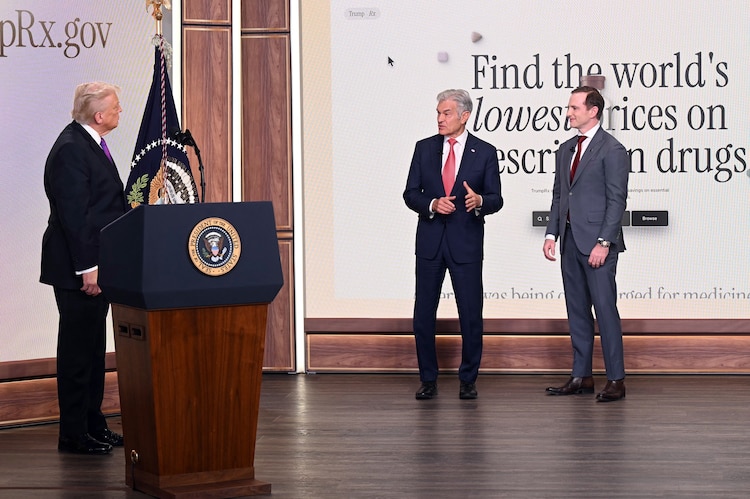
    Washington, D.C. – In a move that’s equal parts policy innovation and political theater, President Donald Trump unveiled TrumpRx.gov on Thursday, a sleek new government website designed to slash prescription drug costs for everyday Americans. Billed as the centerpiece of his aggressive campaign against Big Pharma’s pricing practices, the site promises to connect users directly to manufacturer discounts, bypassing insurance middlemen and their markups. Trump, ever the showman, demonstrated the platform’s features during a high-profile event at the Eisenhower Executive Office Building, flanked by key aides and touting it as a game-changer that could propel Republicans to victory in the upcoming midterms.

    “This is the biggest thing ever to happen on drug prices,” Trump declared at a recent rally in North Carolina, echoing his longstanding refrain that health care costs—dominated by pharmaceuticals—need a drastic overhaul. “It’s gonna reduce the cost of health care because health care is probably 50 percent drugs, right? This achievement alone should win us the midterms.” And with polls showing health care as a top voter concern, the president might be onto something. A fresh KFF survey released last week reveals that two-thirds of Americans fret over affording medical bills, with 55% reporting higher costs in the past year and 56% expecting even steeper hikes ahead.

    The launch caps nearly a year of arm-twisting by the Trump administration, leveraging tariffs, expedited FDA reviews, and diplomatic pressure on allies to force drug makers to the table. Pharmaceutical giants have agreed to list their products on TrumpRx.gov, where users can access coupons for discounted purchases—often without insurance. Take Novo Nordisk’s Ozempic, the blockbuster weight-loss drug with a list price hovering around $1,000 monthly: Through the site, it’s available for just $350, a steep cut that White House officials highlighted as a prime example of the program’s punch.

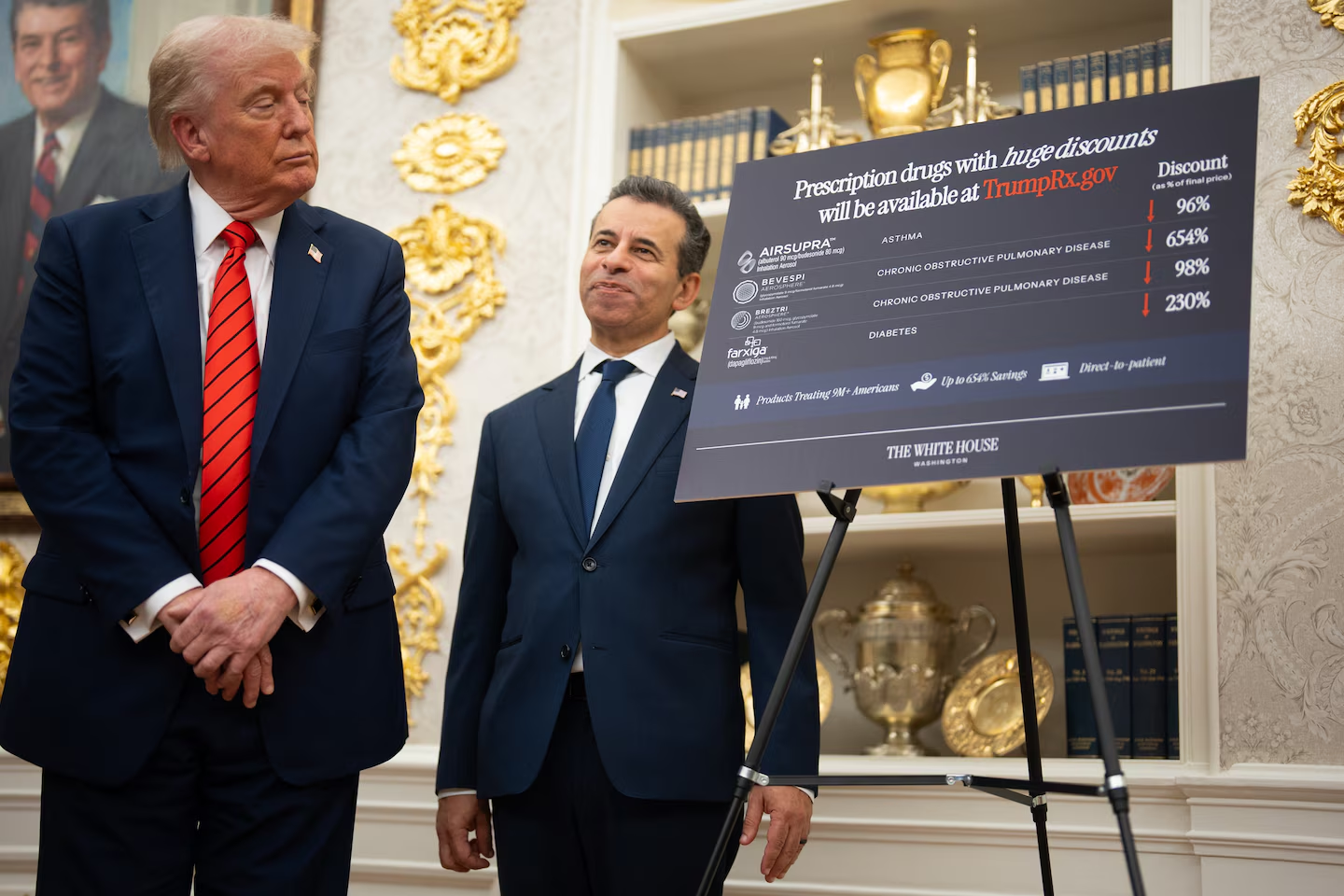
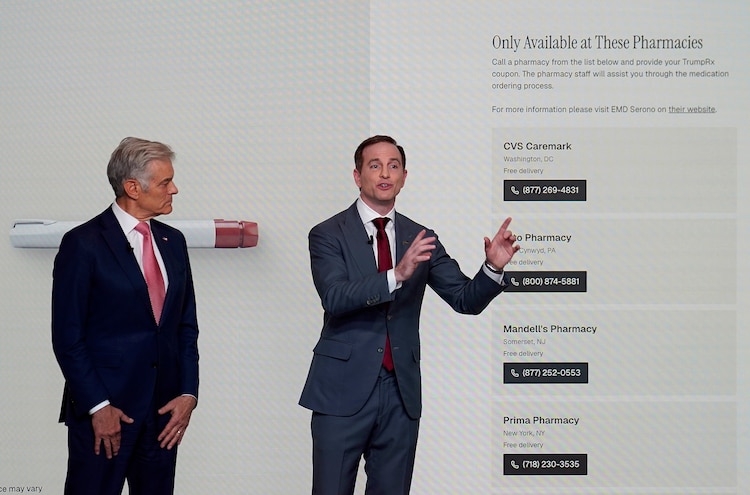
    Chief Design Officer of the National Design Studio Joe Gebbia speaks as Administrator for the Centers for Medicare & Medicaid Services Mehmet Oz looks on during an event on drug pricing in the South Court Auditorium on the White House campus on February 5, 2026 in Washington, DC. (Nathan Howard/Getty Images)
    Chief Design Officer of the National Design Studio Joe Gebbia speaks as Administrator for the Centers for Medicare & Medicaid Services Mehmet Oz looks on during an event on drug pricing in the South Court Auditorium on the White House campus on February 5, 2026 in Washington, DC. (Nathan Howard/Getty Images)

    Mehmet Oz, the charismatic administrator of the Centers for Medicare and Medicaid Services (CMS), and Joe Gebbia, director of the newly minted National Design Studio, joined Trump for the rollout. Gebbia walked attendees through the user-friendly interface, showing how to search for meds, bundle coupons for commonly paired prescriptions, and even locate pharmacies offering home delivery. “I can call any one of these pharmacies, and they deliver it straight to my home. It’s that simple,” Gebbia said, emphasizing the site’s focus on transparency and convenience.

    White House officials credited the National Design Studio—bolstered by tech-savvy hires like Edward Coristine, known for his bold online presence—with crafting a smooth platform. This stands in stark contrast to the infamous 2013 debut of Healthcare.gov under President Obama, which crashed spectacularly, enrolling just six people on day one and becoming a Republican punching bag. Trump, keen to sidestep such pitfalls, kept TrumpRx.gov’s scope modest but impactful, aiming for quick wins that resonate with voters weary of skyrocketing drug bills.

    From a right-of-center vantage, this initiative is a textbook example of Trump’s deal-making prowess: using executive muscle to wring concessions from an industry long accused of gouging consumers. Prescription spending, which eats up about 9% of U.S. health care dollars, has climbed relentlessly despite bipartisan promises to curb it. Trump’s first-term tweaks briefly reversed that trend, a feat he ranks among his greatest hits. Now, with “Most Favored Nation” pricing—tying U.S. costs to lower international rates—the administration is pushing boundaries, even pressuring foreign leaders to shoulder more R&D burdens.

    US President Donald Trump (L) listens as the Administrator for the Centers for Medicare & Medicaid Services Mehmet Oz (C) and the chief design officer of the National Design Studio Joe Gebbia introduce the new TrumpRx website, in the South Court Auditorium of the White House in Washington, DC, on February 5, 2026. (Saul Loeb/AFP via Getty Images)
    US President Donald Trump (L) listens as the Administrator for the Centers for Medicare & Medicaid Services Mehmet Oz (C) and the chief design officer of the National Design Studio Joe Gebbia introduce the new TrumpRx website, in the South Court Auditorium of the White House in Washington, DC, on February 5, 2026. (Saul Loeb/AFP via Getty Images)

    Yet, experts caution that the program’s reach may be limited. “TrumpRx doesn’t sell medications,” the site clarifies upfront. “Instead, it connects patients directly with the best prices, increasing transparency and cutting out costly third-party markups.” While that could help uninsured or high-deductible plan holders, critics note that many already snag discounts via manufacturer sites or pharmacy benefit managers. Craig Garthwaite, health care director at Northwestern’s Kellogg School of Management, called it “far from revolutionary,” pointing out that for pricier brand-name drugs, cash payments remain out of reach for most—insurance is the real safety net.

    Skeptics, including Democrats, question the vagueness of the pledges and potential legal snags. Expedited FDA reviews dangled as incentives raise red flags for former officials, who warn of safety risks and possible illegality. Congressional Democrats like Sen. Ron Wyden (D-Ore.) demand transparency: “The Administration has yet to provide any public information that the announcements will result in any real savings for consumers,” he said in a joint statement with colleagues last December. Economists echo this, suggesting list-price cuts might not trickle down amid existing rebates.

    Even Mark Cuban, the billionaire entrepreneur behind Cost Plus Drugs—a similar discount platform and frequent Trump foil—offered measured praise during an October Senate hearing. “I don’t think it solves the ultimate problem of how the system is designed, but I think it’s something that we obviously agree on,” Cuban said, acknowledging the shared goal of affordability.

    A screenshot of a Zepbound order on the TrumpRx website. Preview Filters Source Info
    A screenshot of a Zepbound order on the TrumpRx website. Preview Filters Source Info

    Politically, drug costs could be a midterm wildcard. Democrats hold a polling edge on health care overall (42-26% trust on the ACA), but it’s slimmer on prescriptions (35-30%), an arena where Trump’s relentless focus might pay dividends. He’s woven TrumpRx into his “Great Healthcare Plan,” urging Congress to enshrine it in law. With midterms looming, the site could deliver tangible savings stories for GOP campaigns, blunting Democratic attacks on affordability.

    Still, broader systemic fixes—like negotiating Medicare prices or import reforms—remain elusive, constrained by industry lobbying and court challenges. For now, TrumpRx.gov stands as a symbolic win: a branded portal putting money back in Americans’ pockets, courtesy of the dealmaker-in-chief. As Trump eyes legacy and electoral gains, this could indeed tip scales in key battlegrounds.