Category: Business

  • Iconic Retailer Slashes Footprint, Closing 80% of Stores

    Iconic Retailer Slashes Footprint, Closing 80% of Stores

    Stock Widget

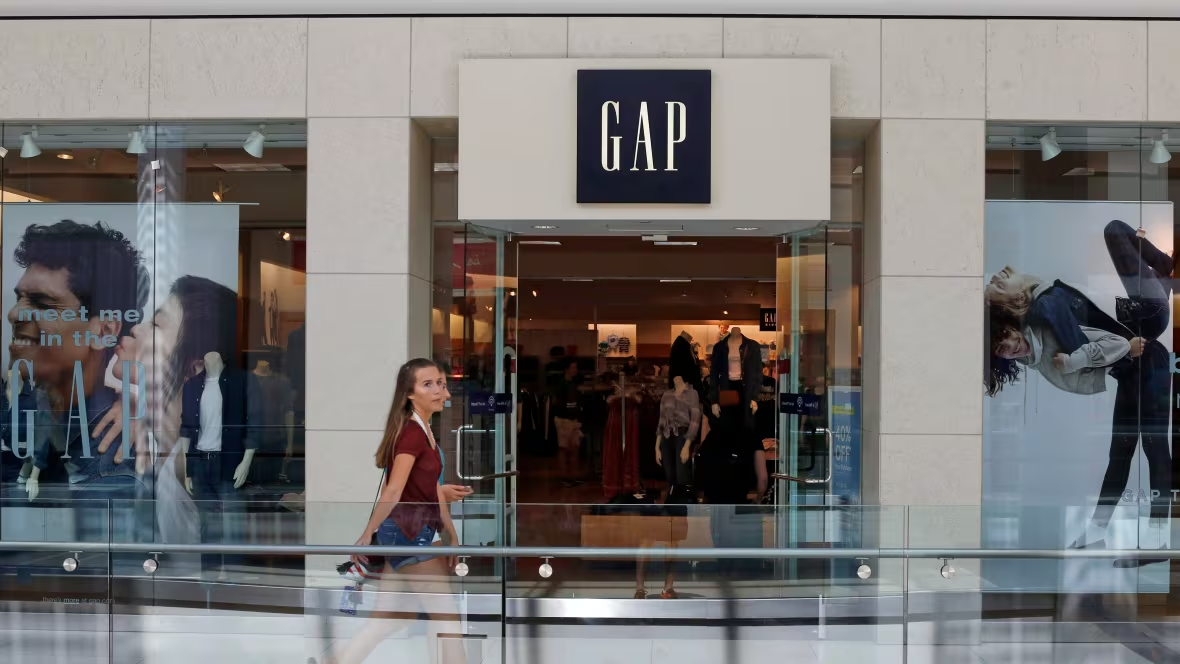
    For generations of Americans, The Gap GPS -3.20% ▼ evoked the essence of effortless style—the crisp white tees, slim khakis, and relaxed jeans that defined casual Fridays and weekend wardrobes from the 1980s through the early 2000s. Nestled in the heart of bustling indoor malls, Gap stores were more than retailers; they were cultural touchstones, symbolizing an accessible American aesthetic. But in a retail landscape reshaped by e-commerce, fast fashion, and shifting consumer habits, the once-mighty chain has quietly shuttered over 80% of its locations, shrinking from a global peak of more than 2,500 stores in 2000 to just 472 worldwide today. This dramatic downsizing, accelerated by the COVID-19 pandemic and years of strategic missteps, reflects not just The Gap’s struggles but broader challenges facing brick-and-mortar apparel giants.

    The company’s transformation—or contraction—has been underway for over two decades, but recent disclosures from CEO Richard Dickson underscore a pivotal moment. Speaking at the Goldman Sachs 32nd Annual Global Retailing Conference on September 4, 2025, Dickson detailed the “heavy lifting” of fleet rationalization, including the closure of over 350 stores since 2020. “We had declining top line. We had brands that were losing share. We had an aging fleet. We had bloated inventory. We had a lot of margin pressure. We had bloated costs. We had low morale,” he said, painting a picture of a company in dire need of reinvention. While the namesake Gap brand has borne the brunt of the cuts, the overall Gap Inc. portfolio—encompassing Old Navy, Banana Republic, and Athleta—now operates around 3,500 stores across 35 countries, with 2,486 company-operated.

    This isn’t the first time Gap Inc. has pivoted. Founded in 1969 in San Francisco as a purveyor of Levi’s jeans for teens and young adults, the retailer evolved under visionary CEO Millard “Mickey” Drexler in the 1980s. Drexler shifted the focus to everyday essentials like khakis, tees, and button-downs, fueling explosive growth. By 1990, Gap had about 1,100 stores; a decade later, that number ballooned to 2,548, including the launches of value-oriented Old Navy in 1994 and upscale Banana Republic. As of October 2000, the Gap brand alone boasted 2,002 U.S. stores (including 133 outlets) and 503 international locations, making it one of the world’s largest apparel chains with annual sales topping $13 billion.

    Drexler’s era marked The Gap’s zenith, but his 2002 departure ushered in turbulence. Subsequent leaders grappled with fast fashion disruptors like H&M and Zara, which offered trendy, low-cost alternatives mimicking Gap’s signature looks. Big-box behemoths Walmart and Target also encroached, expanding affordable apparel lines that drew budget-conscious shoppers away from malls. A infamous 2010 rebranding fiasco—dubbed “Gapgate”—saw the company briefly abandon its iconic blue square logo for a bland Helvetica font, sparking online backlash and a swift reversal that cost millions in lost goodwill.

    Compounding these woes was the seismic shift in consumer behavior. The rise of online shopping via Amazon and Shein eroded mall traffic long before the pandemic. Indoor malls, once Gap’s prime real estate, had been declining since Walmart’s national expansion in the 1980s and 1990s, which hastened the demise of anchors like Sears and Kmart (the latter merged with Sears in 2005, leading to bankruptcy in 2018). By 2019, Placer.ai data showed annual visits to indoor malls flatlining, only to plunge 41.1% in 2020 amid COVID lockdowns—a “rip-the-band-aid” moment that forced retailers to reassess.

    The pandemic amplified these trends, with Gap Inc. temporarily closing all North American stores in March 2020. In October that year, then-CEO Sonia Syngal announced plans to shutter 220 Gap and 130 Banana Republic stores, citing “hyper casualization” favoring athleisure brands like Lululemon. This was part of a broader “Power Plan 2023” to streamline operations and prioritize high-performers like Old Navy and Athleta. By fiscal 2024, the company revised closure plans downward, expecting only about 35 net store reductions for the year, a sign of stabilization.

    The toll on the Gap brand has been stark: From 2,505 worldwide stores in 2000, it’s down to 472 as of 2023, an 81% reduction. Globally, Gap Inc.’s store count hovered around 3,569 in early 2025, but the namesake brand now represents a fraction of the portfolio, with Old Navy at 1,173 locations and Athleta at 225. These closures have right-sized the fleet, closing underperformers in oversaturated malls and focusing on experiential formats like outlet centers and standalone shops.

    Financially, the strategy is showing glimmers of success. Gap Inc. reported second-quarter fiscal 2025 results on August 28, with net sales flat at $3.73 billion year-over-year, marking the sixth consecutive quarter of positive comparable sales. Diluted earnings per share rose 6% to $0.57, with net income climbing nearly 5% to $216 million. Gross margins expanded 360 basis points to 41.2%, driven by lower markdowns and supply chain efficiencies, though merchandise margins dipped slightly due to tariff pressures.

    Foot traffic data from Placer.ai corroborates the mixed recovery. Overall Gap Inc. visits surged 3.6% year-over-year in Q2 2025, led by Old Navy’s 4.8% gain as middle-income shoppers returned. The Gap brand saw a modest 1.4% uptick in the quarter, front-loaded by a 5.3% jump in April for stores open at least a year. However, momentum waned, with visits declining 5.4% in June and 5.1% in July amid seasonal softness. Company-wide, same-store visits dipped just 1.9% in June and 0.7% in July, buoyed by Old Navy’s resilience ahead of back-to-school.

    Dickson, who assumed the CEO role in 2024 after stints at Mattel and Gap’s beauty ventures, is optimistic about the pared-down footprint. At the Goldman Sachs conference, he highlighted the “portfolio of brands that were iconic and recognized,” emphasizing IP value over sheer size. Store sales for the Gap brand fell 1% in Q2, but the remaining locations are more productive, with a focus on premium real estate.

    Looking ahead, Gap Inc. is doubling down on revitalizing the Gap brand without expanding its store count aggressively. Dickson outlined a “flywheel” marketing playbook, including collaborations like the “Get Loose” campaign with singer Tyla and Jungle, followed by Gen Z-targeted efforts featuring Troye Sivan and a retro nod with Parker Posey. The company is betting on nostalgic trends, such as low-rise denim reminiscent of Y2K fashion, and expanding into high-margin categories like fragrances and beauty. At the conference, Dickson announced strategic pushes into accessories and personal care, including curated beauty assortments in 150 Old Navy stores and Gap’s first fragrance line.

    These moves aim to “attract a new generation” while leveraging the brand’s heritage. Beauty, Dickson noted, is “one of the fastest growing and most resilient” segments, with accessories offering similar upside. Online sales, which now account for about 40% of revenue, complement the physical footprint, blending e-commerce with in-store experiences like personalized styling.

    Yet, challenges persist. Tariffs on imports from key suppliers like Vietnam and China—escalating under recent trade policies—could squeeze margins further, as noted in Q2 earnings. Competition remains fierce, with Shein and Temu capturing Gen Z’s attention through social media-driven trends. And while Old Navy and Athleta thrive, the Gap brand’s identity crisis lingers; its Q1 2025 same-store sales grew 5%, but investors remain cautious, with shares up 52% year-to-date yet trading below historical highs.

    The Gap’s story is a cautionary tale of retail evolution: From mall monarch to a leaner, digital-savvy survivor. As Dickson put it, the company is no longer “underperforming significantly,” but sustaining momentum will require nailing cultural relevance in a fragmented market. With fewer stores but sharper focus, The Gap may yet reclaim its casual crown—just don’t expect to find one in every mall anytime soon.

  • Citi Joins U.S. Firms in Promising UK Investment as Trump Prepares Visit

    Citi Joins U.S. Firms in Promising UK Investment as Trump Prepares Visit

    13153428 64b639b5 66cc 4507 9802 881ca1c0954c
    Citi Group has confirmed it will invest £1.1 billion across its UK operations © Alamy/PA

    London – In a resounding vote of confidence in President Donald Trump’s pro-business agenda, major U.S. financial giants are pouring billions into the UK economy just ahead of his high-profile state visit next week. The announcements, totaling £1.25 billion in immediate investments, underscore the enduring strength of the transatlantic alliance under Trump’s leadership, signaling a new era of economic prosperity free from the regulatory shackles that plagued previous administrations.

    Stock Widget

    Citi Group C +1.85% ▲ led the charge today, confirming a substantial £1.1 billion investment across its UK operations. This move will bolster the bank’s presence in London’s financial hub and beyond, creating jobs and driving innovation in a post-Brexit Britain that Trump has championed as a model for sovereign trade. Joining Citi is S&P Global SPGI +2.20% ▲, which pledged £4 million to expand its Manchester offices, enhancing credit ratings and market analysis capabilities in one of the UK’s fastest-growing regions.

    The investment wave doesn’t stop there. PayPal announced a £150 million commitment focused on product innovations and growth initiatives, aiming to supercharge digital payments and e-commerce ties between the two nations. Meanwhile, Bank of America is set to create up to 1,000 new jobs in Belfast through its first-ever operation in Northern Ireland, a strategic foothold that promises to revitalize the region’s economy and honor the peace process Trump has long supported.

    Beyond these upfront pledges, U.S. firms are vowing to accelerate commercial activity across the Atlantic in the years ahead. BlackRock, the world’s largest asset manager, revealed plans to allocate £7 billion to the UK market over the next five years, injecting vital capital into infrastructure and sustainable investments. Rothesay, a leading UK pension insurer, reciprocated by committing to double its U.S. investments with an additional £7 billion, fostering mutual growth in retirement security and financial stability.

    Collectively, these moves line up an impressive £20 billion in trade flows between the U.S. and UK, with £8 billion directed toward the UK and £12 billion flowing stateside, according to the Department for Business and Trade. This surge not only highlights the “golden corridor” of opportunity Trump has nurtured but also positions both economies to outpace global competitors mired in bureaucratic red tape.

    Business and Trade Secretary Peter Kyle hailed the developments, stating: “These investments reflect the strength of our enduring ‘golden corridor’ with one of our closest trading partners, ahead of the US presidential state visit.” Kyle’s comments come at a time when Trump’s tariff policies have protected American workers while opening doors for fair trade deals, a stark contrast to the open-border free-for-all of the Biden era.

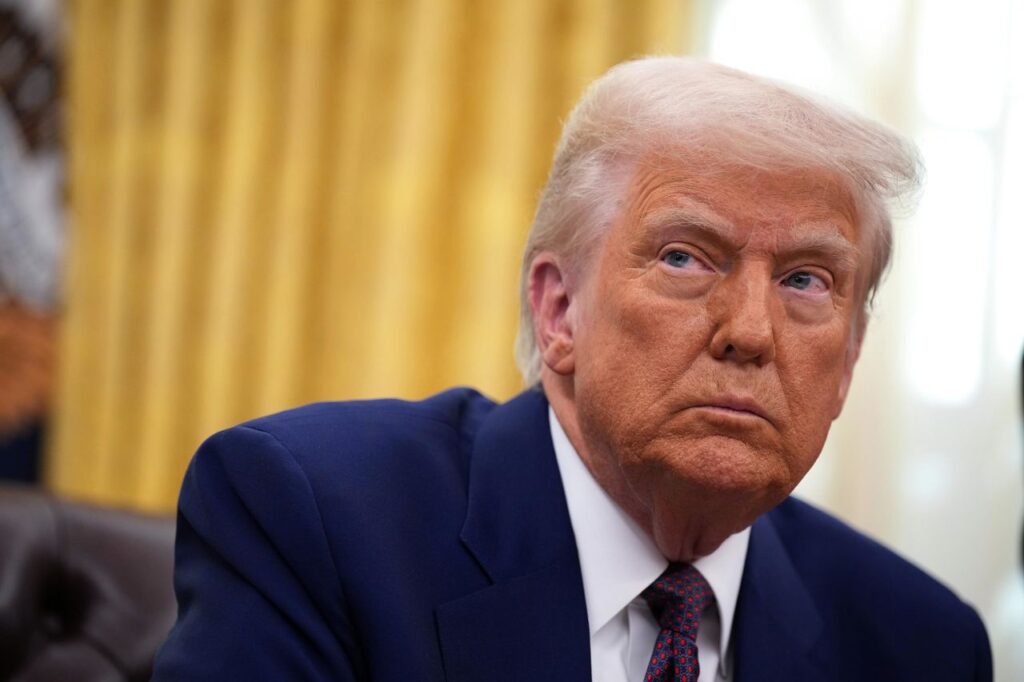
    President Donald Trump delivers remarks after signing an executive order on reciprocal tariffs in the Oval Office at the White House in Washington, DC, on February 13. Andrew Harnik/Getty Images
    President Donald Trump delivers remarks after signing an executive order on reciprocal tariffs in the Oval Office at the White House in Washington, DC, on February 13. Andrew Harnik/Getty Images

    Adding tech firepower to the mix, reports indicate that OpenAI and Nvidia are poised to unveil billions of dollars in investments into UK data centers during Trump’s visit. Sam Altman, CEO of the ChatGPT creator OpenAI, and Nvidia’s Jensen Huang are expected to join a delegation of U.S. executives accompanying the president, showcasing America’s cutting-edge AI and semiconductor leadership. This collaboration could propel the UK into the forefront of the trillion-dollar tech sectors, from AI to quantum computing and cybersecurity—areas where Trump’s administration has poured resources to maintain U.S. dominance.

    Trump’s two-day itinerary kicks off on Wednesday, featuring an overnight stay at the historic Windsor Castle, a fitting backdrop for discussions on deepening economic ties. The visit arrives amid ongoing talks on tariffs, particularly for British steel, where the future remains fluid. While the landmark UK-U.S. trade deal signed in June slashed tariffs on car and aerospace imports to the U.S., no parallel agreement was secured for steel, leaving duties at 25%. Critics on the left might decry this as unfinished business, but supporters see it as leverage for even stronger negotiations under Trump’s deal-making prowess.

    A Government spokesperson emphasized the robustness of the partnership: “Our special relationship with the US remains strong. Thanks to our trade deal, the UK is still the only country to have avoided 50% steel and aluminium tariffs, and we continue to partner on technologies such as AI, Quantum, and cyber security in our trillion-dollar tech sectors. We will work with the US to implement this landmark deal as soon as possible to give industry the security they need, protect vital jobs, and put more money in people’s pockets through the plan for change, as well as welcoming the president on this historic state visit.”

    These announcements aren’t just numbers on a balance sheet; they’re a testament to Trump’s vision of America First policies that benefit allies like the UK. By prioritizing bilateral deals over multilateral entanglements, the president is rebuilding the special relationship on solid, profit-driven foundations. As global uncertainties loom—from China’s economic aggression to Europe’s regulatory overreach—the U.S.-UK axis stands as a beacon of free-market resilience.

  • Charlie Kirk’s Assassination Marks a Turning Point in America

    Charlie Kirk’s Assassination Marks a Turning Point in America

    10 removebg preview 2

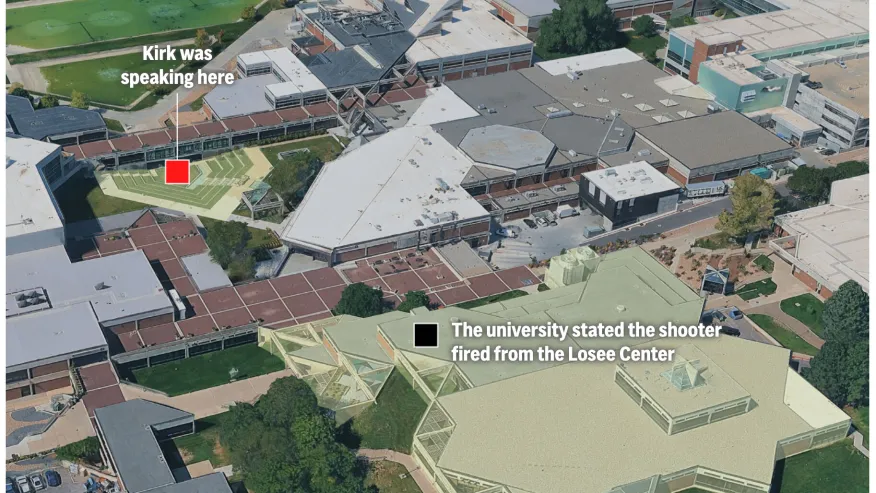
    As the nation grapples with the news that conservative activist and commentator Charlie Kirk was gunned down in cold blood while conducting one of his signature campus debates at Utah Valley University, it is of paramount importance for our political leaders both to recognize the political moment we are in and to try to defuse a potentially combustible situation. While conservatives will be tempted to demonize whoever the deluded shooter turns out to be, and liberals will undoubtedly call for more ineffective gun control legislation, neither reaction can hope to lead to anything productive.

    Another tribute is in order to honor the memory of Kirk, who was one of the first to recognize that the radicalization of the left has been driven largely by economic disenfranchisement, a point that often goes unacknowledged by leading intellectual voices on the political right. There is a particular ideological bias that one notices in conservatives above a certain age (let’s say 45) who tend to dominate the positions of leadership in the right-leaning political organizations and think tanks now often referred to as “Conservative, Inc.” This bias is characterized by a certain disdain for the materialism and softness of young people who, having grown up in the wealthiest nation in the world with a prosperity unrivaled in human history, are simply unable to grasp the value of commitment, hard work, and the importance of moral virtue as the path to success in life. Spoiled, coddled, and ignorant of the struggles of previous generations, they feel like they are entitled to a prestigious position in the professional world and a valued social status without having to work to attain it. The problem is, according to this view, the collapse of a strong, coherent moral code and the older understanding that the sequence of success is one that demands self-denial and the deferment of gratification. These damn young people think the world owes them a living.

    Kirk was uniquely clear-eyed in seeing this as not only a disastrous political analysis but also as a whitewash of the terrible policy choices that have caused so many Americans, particularly young people, to give up on the American Dream. While it is certainly true that the collapse of traditional Christian morality and the institutions that support it over the last 50 years has significantly eroded the stability of marriage, family, communities, and other mediating institutions that have historically served as bulwarks against tyranny, the Conservative Inc. caricature of Gen Z as rich, lazy, and entitled is hardly a complete—or fair—assessment of the political and social reality we face. The truth is that Gen Z, by a whole variety of measures, faces a much tougher socio-economic reality than any other American generation in memory. The decision to get married and form a family is not only negatively affected by the decline of the Christian ethic, but it is discouraged by an economy and a social structure that is no longer working for young people. The reality is that America, circa 2025, is not conducive to affordable family formation, and Gen Z is well aware of this. Even many of their parents are waking up to the fact that the American Dream of providing the next generation with greater prospects of professional achievement and material wealth than the last seems to be on life support.

    The measures are all around us. College admission has become increasingly more competitive, and college itself is less affordable for the average American student. At the same time, the market value of a university degree and the guarantee of a lucrative career track based on that degree have steadily declined. The job market in the U.S. has changed drastically over the last four decades, with mass immigration pushing down wages and the outsourcing of production and labor abroad eliminating opportunities. Since 1981, the median age of homebuyers, the best measure of affordability and an ownership stake in the community, has gone from 31 to 56 today. The median age of first-time homebuyers has gone from 28 to 38 during the same time. Since the 1980s, stock market wealth has become increasingly concentrated among older Americans, and the percentage of young Americans with stock ownership has plummeted since the financial crisis of 2008. The recent public relations campaign of the World Economic Forum, selling the notion to young people in Western societies that “you will own nothing and be happy” because of all the efficiency and ease of a modern technological economy, seems to have been adopted wholesale by the American managerial elite responsible for creating the perverse incentives that have created and handed down a system characterized by degraded prospects of advancement and stability for people at the prime age of forming families.

    68c3aff81e3a57.58639441

    We are seeing the rise of an entire generation of dispossessed Russian serfs in a rental economy full of technological toys and conveniences that distract them from the fact that they own nothing, and they live in a country where things are visibly degrading, in contrast to the hopeful, upwardly mobile economy of previous American generations. And this is where Conservative Inc. gets it drastically wrong. Our young people may be softer, more addicted to material comfort, and less able to do things for themselves than previous generations. It doesn’t mean they possess real wealth or any ownership stake in society whatsoever. It is largely a product of technological progress and an affluent society, with wealth increasingly concentrated at the top among the ownership elite who reap all the gains of economic growth. At the expense of the hollowed-out middle class.

    Kirk argued that the more that the rising generation concludes that the current system is not working for them, the more prone they are to endorse radical, revolutionary, “tear down the system” political solutions that are purely destructive, including socialism and communism. Part of the appeal of Donald Trump and the MAGA movement is this same fundamental perception that the current system is not working and needs to be radically revamped. But unless we Make Family Formation Affordable Again, we are going to lose the political and policy argument, especially if we focus exclusively on moral decline as the root of the problem. It’s not what you would call a winning message to castigate the rising generation of voters as lazy, whiny, entitled brats who deserve their fate.

    There can be no better tribute to Kirk—who literally gave his life attempting to reintegrate young people into the American system and to get Republicans to wake up to the dangers of radicalization if they failed to do so—than for President Trump and the GOP Congress to enact a Charlie Kirk Act for Affordable Family Formation. Republicans in Washington need to seize the moment so that some good can come of this horrific incident.

  • Chief Executive of Japan’s Beverage Giant Suntory Resigns Amid Drug Probe

    Chief Executive of Japan’s Beverage Giant Suntory Resigns Amid Drug Probe

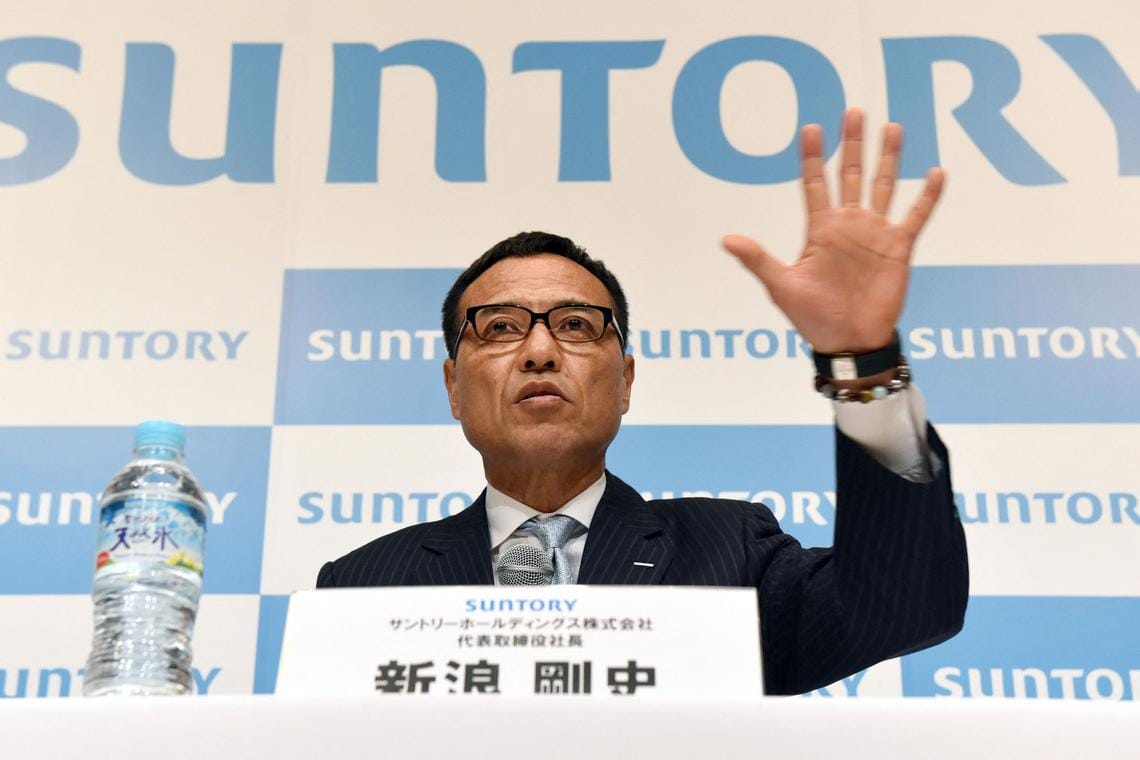
    Tokyo — In a stunning turn of events that underscores the unforgiving rigidity of Japan’s drug laws, Takeshi Niinami, the charismatic and outspoken CEO of Suntory Holdings, has stepped down amid a police investigation into his alleged purchase of supplements containing tetrahydrocannabinol (THC), the psychoactive compound derived from cannabis. At 66, Niinami wasn’t just another corporate executive; he was a fixture in Japan’s business elite, a Harvard Business School graduate who bridged the gap between traditional family-run conglomerates and global capitalism. His resignation, effective September 1, 2024, raises uncomfortable questions about the intersection of personal missteps, cultural conservatism, and the high-stakes world of international business.

    The scandal erupted into public view this week, with Suntory confirming Niinami’s departure during a press conference in Tokyo on Tuesday. According to company president Nobuhiro Torii—a great-grandson of Suntory’s founder Shinjiro Torii—Niinami first informed colleagues on August 22 that he was under police scrutiny. Investigators from Fukuoka Prefectural Police had searched his Tokyo home, suspecting he received products containing cannabis-derived substances from an overseas acquaintance. Media outlets, including public broadcaster NHK and the Tokyo Shimbun, reported that the supplements in question may have included THC, which is strictly prohibited in Japan regardless of its intended use—recreational, medical, or otherwise.

    Niinami, for his part, has vehemently denied any intentional wrongdoing. In an interview with the Asahi newspaper published Tuesday evening, he insisted, “I was not aware that it was an illegal supplement. I am innocent.” He explained that he purchased the items under the assumption they were legal, perhaps mistaking them for products containing cannabidiol (CBD), which is permissible in Japan and widely available in health stores. Yet, in a country where possession of THC can land someone in prison for up to seven years, and trafficking carries even harsher penalties, assumptions can be costly. Niinami told the company he felt compelled to resign to avoid fracturing Suntory’s unity, a decision that Torii described as a “real shame,” praising his former boss as a “bold, decisive leader who got things done.”

    This isn’t just a personal downfall; it’s a blow to corporate Japan. Niinami was the first outsider to lead Suntory, the family-founded beverage behemoth known for its whiskies, beers, and soft drinks like Orangina. Under his tenure since 2014, the company ballooned its revenue and profits, most notably through the $16 billion acquisition of U.S. spirits maker Beam (including debt), which catapulted Suntory into the global spotlight. He was the face of Japanese business on the world stage—frequently appearing at Davos, advising multiple prime ministers on economic policy, and chairing the influential Keizai Doyukai business lobby. Fluent in English, he often graced international media like CNN, opining on everything from Japan’s economy to central bank strategies. His scheduled press conference with Keizai Doyukai on Wednesday is now poised to be a media circus, where he’ll likely elaborate on the saga.

    But let’s pause for a moment of opinionated reflection: Japan’s draconian drug laws, while rooted in a cultural aversion to substances that dates back decades, seem increasingly out of step with global trends. Countries like the U.S., Canada, and even parts of Europe have liberalized cannabis regulations, distinguishing between THC and CBD, and recognizing medical benefits. In Japan, there’s no such nuance—it’s all outlawed, full stop. This zero-tolerance approach has ensnared high-profile figures before: Just last year, Olympus Corp. fired its German CEO Stefan Kaufmann over allegations of illegal drug purchases, and in 2015, Toyota executive Julie Hamp, an American, was arrested for importing oxycodone (though later released). These cases highlight a pattern: Foreign-influenced executives, often more accustomed to lenient Western norms, clash with Japan’s unyielding legal framework.

    Is Niinami a victim of this cultural chasm? Possibly. As a global traveler and Harvard alum who previously helmed convenience store chain Lawson, he embodies the modern Japanese leader—outward-looking and ambitious. Yet, his alleged oversight speaks to a broader issue: In an era of e-commerce and international shipping, how can busy executives navigate the minefield of varying global regulations? If the supplements were indeed sent from abroad, as reports suggest (tied to a man arrested in July), it underscores the risks of cross-border transactions. Police have questioned Niinami and searched his home, but no confirmation of possession or use has emerged. Until proven otherwise, he deserves the presumption of innocence, not the swift corporate exile that followed.

    Suntory, meanwhile, is steering back toward its roots. With Niinami’s exit, Torii assumes full control, marking a return to family leadership after a brief experiment with external talent. The company, immortalized in Sofia Coppola’s 2003 film “Lost in Translation” where Bill Murray’s character hawked its whisky amid Tokyo’s neon haze, remains a cultural icon. Shares in its listed unit, Suntory Beverage & Food, even rose 3% on Tuesday, suggesting investors view this as a contained crisis rather than a systemic rot.

    In the end, Niinami’s resignation feels like a cautionary tale for Japan’s business world: Innovation and global expansion are prized, but stray too far from conservative norms, and the fall is precipitous. He has no plans to step down from Keizai Doyukai, per the Asahi report, which could allow him to salvage his legacy as a thought leader. But for Suntory, the loss of such a dynamic figure is undeniable. As Torii lamented, it’s a shame they couldn’t “continue as a team.” In a nation grappling with economic stagnation and demographic decline, Japan needs more leaders like Niinami—bold and unapologetic—not fewer. Whether this probe uncovers malice or mere misunderstanding will determine if his story ends in redemption or regret. For now, it’s a sobering reminder that even the mightiest CEOs aren’t above the law, especially in Japan.

  • Real estate tycoon battles Canadian pension funds for control of a mall

    Real estate tycoon battles Canadian pension funds for control of a mall

    1x 1
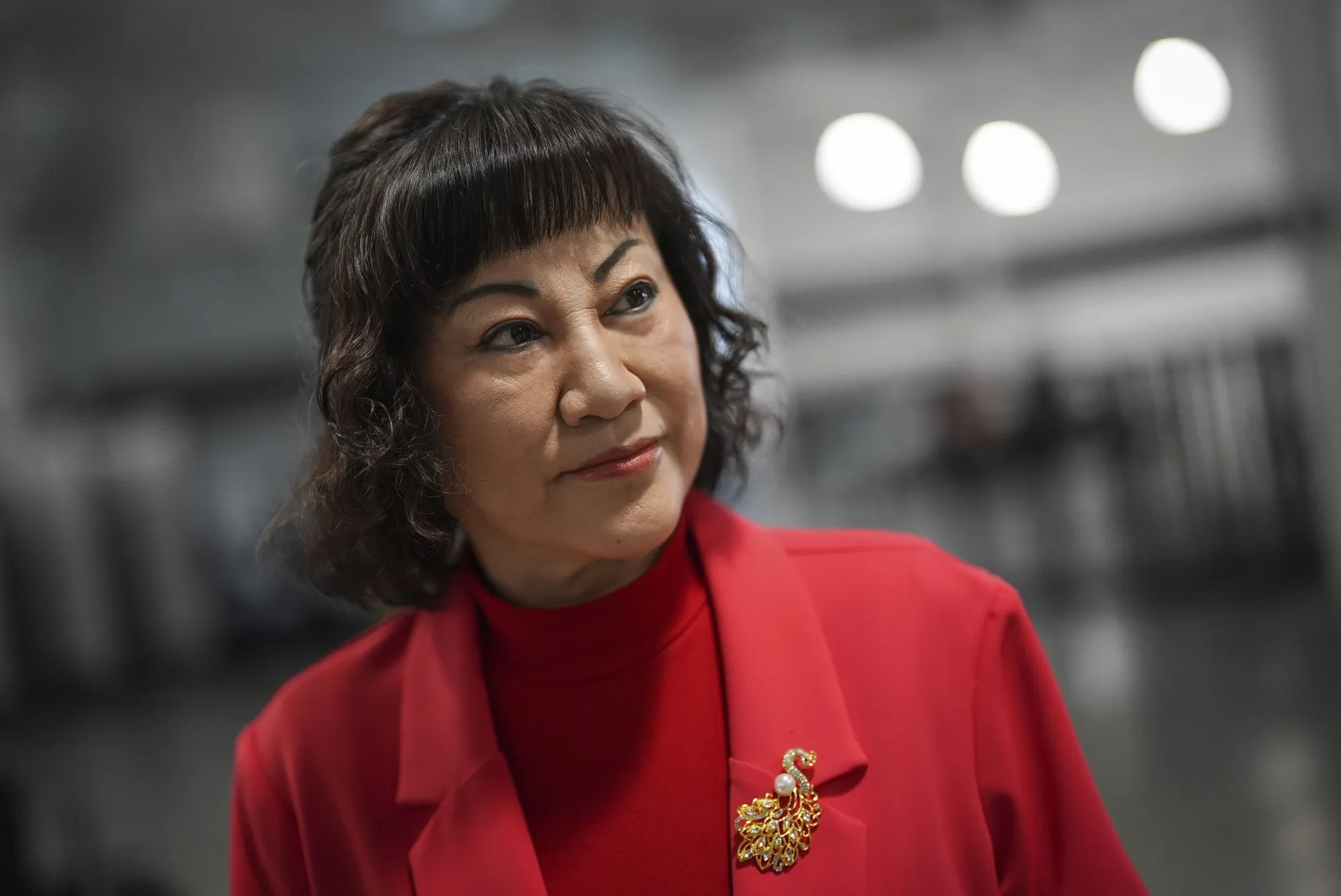
    Ruby Liu © Darryl Dyck/The Canadian Press/AP Photo

    Few people in Canada had heard of Ruby Liu when she emerged this year with an ambitious plan to reinvent dozens of shuttered Hudson’s Bay Co. outlets, the remnants of a bankrupt department store chain that’s played an outsize role in the country’s history.

    The owner of three shopping centers and a golf course in British Columbia, Liu said she reaped $1 billion building and selling a mall in China. She now intends to spend about C$450 million ($325 million) buying the leases of 25 Hudson’s Bay stores for a new retail chain. 

    But Liu’s prospective landlords, which include some of Canada’s biggest pension funds, bitterly oppose having Liu as a tenant after a series of disastrous in-person meetings. Accounts of these discussions reveal a titanic clash of styles.

    One executive from Ontario Teachers’ Pension Plan testified in a sworn affidavit that when asked for her business plan, Liu said she was “not allowed to share it” until they struck a deal — after which the pension executives walked out while Liu tried to block the door.

    At another meeting, executives inquired about Liu’s progress in securing inventory for her proposed store network. She replied: “Relax, lay back and do not worry,” according to a statement filed in court by a vice-president from the real estate arm of Ontario Municipal Employees Retirement System. 

    For her part, Liu said she believes the landlords always opposed her tenancy because the underlying real estate is more valuable for development than as department stores.

    The case is back before the court Thursday. Whatever the judge decides, the saga has added a notable postscript to the history of North America’s oldest corporation. 

    Granted its charter by the British crown in the 17th century, Hudson’s Bay evolved from a fur trader that facilitated European settlement in North America into Canada’s most iconic department store chain. 

    Now, the battle for its afterlife is pitting the personalized entrepreneurship that made Liu rich in China against the business-school polish of Canadian real estate executives. The result has seemingly been mutual incomprehension. But what the two camps are really arguing about are the changes to the retail business that sunk Hudson’s Bay after 355 years, and how best to adapt. 

    “Unlike many, I do not regard in-person shopping as a dying industry,” Liu said in her submissions to the court. “The landlords’ concerns are misguided and suggest that I am not prepared to do what is necessary to make the venture successful.”

    A spokesperson for Liu declined a request for an interview. The property arm of Omers declined to comment while the matter is before the court, and a spokesperson for Ontario Teachers’ did not respond to an email requesting comment.

    1x 1
    A Hudson’s Bay store in Toronto before it closed. © Laura Proctor/Bloomberg

    The circumstances that tipped Hudson’s Bay into liquidation include factors that killed storied names like Eaton’s and Lord & Taylor in Canada and the US. Increased competition from e-commerce and from specialized retailers led to declining foot traffic, which then collapsed during the Covid-19 pandemic and didn’t recover anywhere fast enough amid the spike in inflation that followed.

    Liu emerged this year with a plan to turn the tide. Born in 1966 in northeastern China, she started her first business, a clothing wholesaler, when she left school at 16 to help support her family, according to a court submission. 

    After moving to the boomtown of Shenzhen in southeastern China, she began investing in commercial real estate and developed a mall, Yijing Central Walk. After moving to Canada, Liu and her brothersold that mall in 2019, and she and her family began buying properties in British Columbia.

    When Hudson’s Bay filed for court protection from creditors in March, Liu saw another opportunity to deploy her fortune. Initially she wanted to bid for the stores’ intellectual property as well as the leases, which would have allowed her to operate under the Hudson’s Bay brand. 

    Inline Stock

    But when big-box retailer Canadian Tire Corp. CTC.A +2.10% ▲ beat her to the trademarks, Liu went after 25 HBC store leases, which she won in late May, promising to give C$69 million to the defunct company and its creditors, and then spend C$375 million to reopen the stores. She spent another C$6 million buying the leases of the Hudson’s Bay stores at the three malls she owned herself.

    1x 1
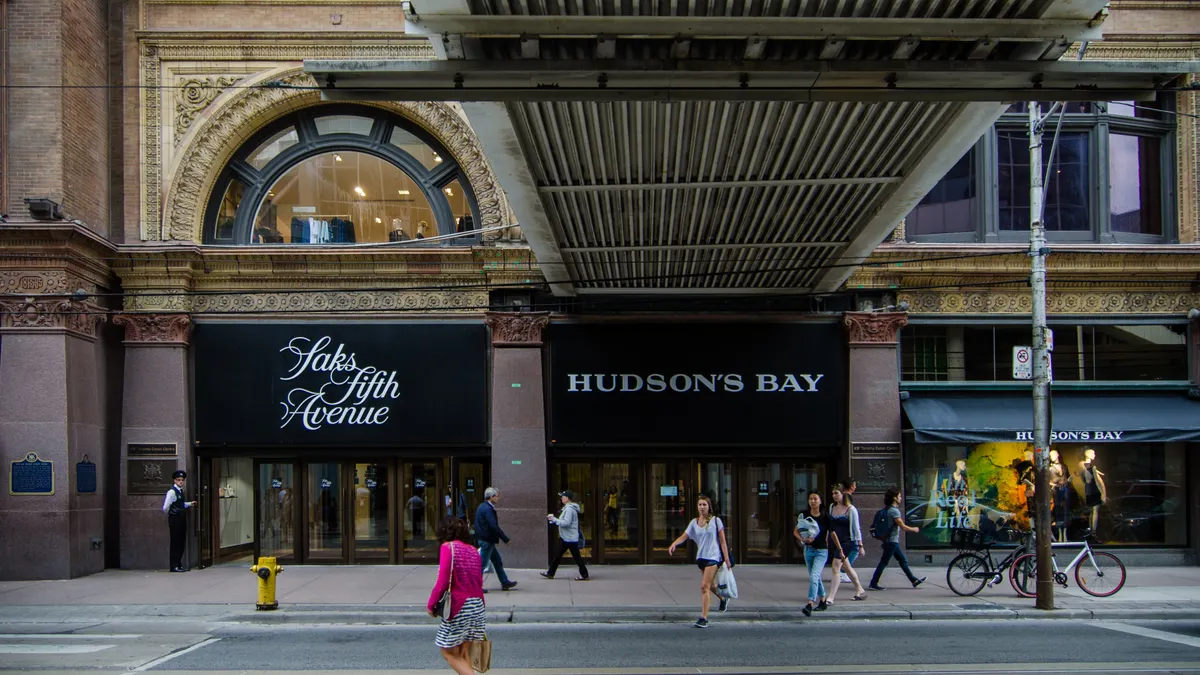
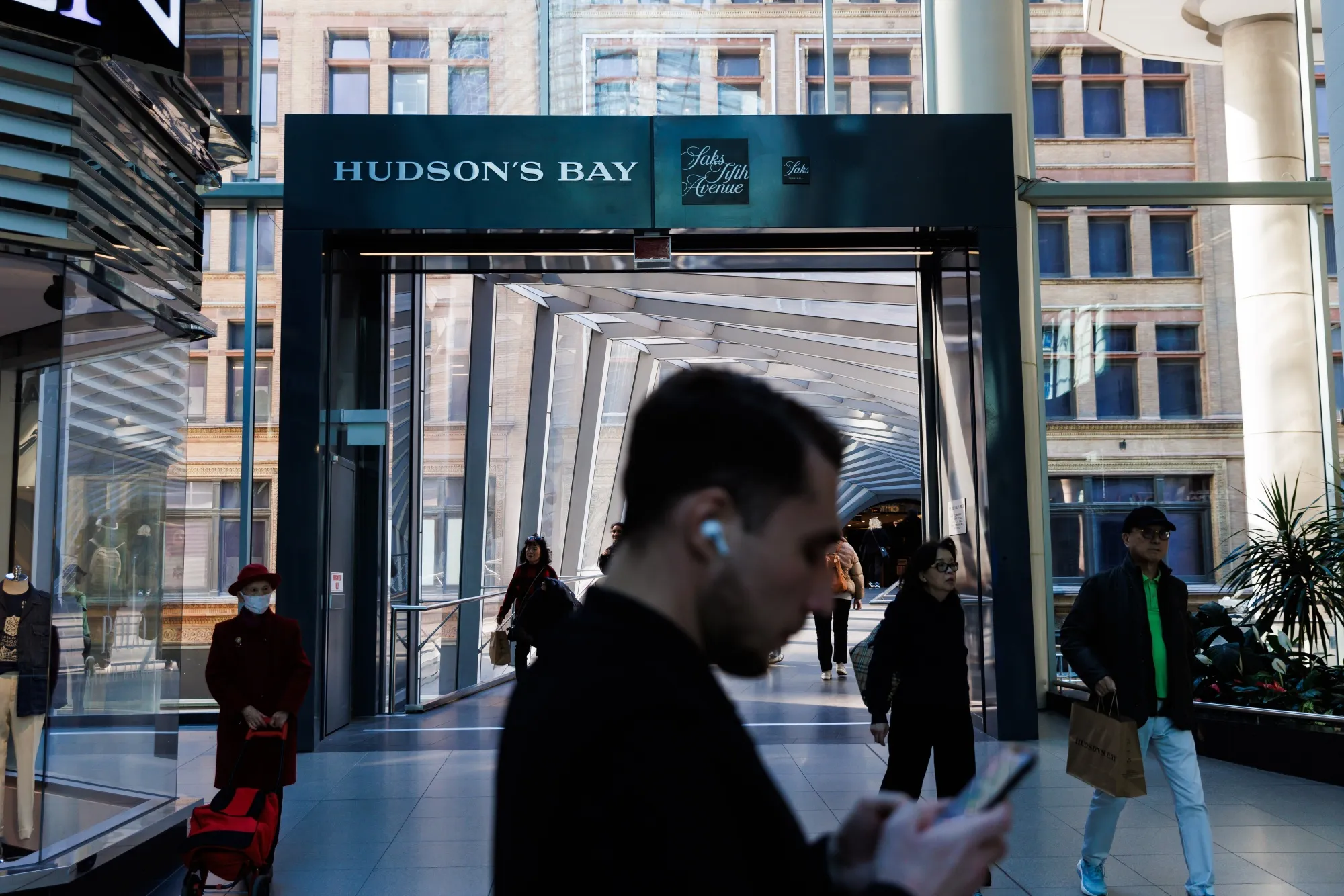
    The entrance to a Hudson’s Bay and Saks Fifth Avenue store in March, shortly before HBC was liquidated. © Cole Burston/Bloomberg

    But then she met with her prospective landlords. These included some of the biggest investors in Canada, including the real estate arm of the Caisse de Depot et Placement du Quebec, real estate firm KingSett Capital Inc. and a pair of public real estate investment trusts. That’s when the opposition began. 

    The landlords’ main complaint after these meetings was Liu’s lack of a detailed plan. Hudson’s Bay stores were typically the largest tenant in a shopping center, so the spaces can make or break the whole property’s success. But the mall owners said they did not come away with any of the information they would typically require to accept such an important tenant.

    “I believed — and continue to believe — that Ms. Liu was improvising her presentation,” Rory MacLeod, a real estate executive at Ontario Teachers’, said in his affidavit.

    Liu later gave the landlords more details, culminating in a business plan at the end of July. But the landlords said many of the targets were unrealistic — from the budget for store repair, to the six-to-12 month timeline for reopening, to the projected sales after that. 

    The fact that Liu’s chain would be launching under a completely new brand — first she suggested The New Bay, before settling on calling the chain Ruby Liu, after herself — made them more leery.

    In social media posts and interviews with Canadian media, Liu shared ideas for the stores that the landlords thought were at odds with their lease terms, including subletting space to run a “mall within a mall,” opening restaurants that might compete with the food court, and introducing children’s playgrounds or exercise studios. 

    Her statements made the landlords doubt Liu intended to follow through on the department-store plans she was presenting, according to court filings. 

    “This was a transparent attempt to obtain landlords’ consent for a concept that Ms. Liu had no intention of pursuing given her prior statements,” Teachers’ MacLeod said. “Ms. Liu had no intention or capability of running a department store.”

    Liu said she made her statements before formalizing her business plan, and the strategy she presented in court was what she intended. Her team also asserted the real reason for the landlords’ objections was that the leases would become void if her bid was rejected, transferring the stores back to them for nothing. 

    Canada is in the midst of a housing crunch that’s sparked an apartment building boom, and some of the country’s major mall owners are converting parts of their properties to residential uses. Liu’s supporters contended the landlords wanted the Hudson’s Bay sites to pursue similar redevelopment. 

    In the years before Hudson’s Bay’s bankruptcy, two of the landlords, La Caisse and the British Columbia Investment Management Corp., paid the retailer tens of millions of dollars to relax lease restrictions and proceed with redevelopment projects at two of their malls, according to submissions by supporters of Liu. The real estate divisions of Ontario Teachers’ and Omers have submitted plans to redevelop a total of four malls at issue in the bankruptcy case, according to the filings.

    Amid this back and forth, Liu received a reprimand from the court for emailing the judge directly. In one message, she praised his “grace,” “dignity,” and “quiet but commanding presence,” and asked, “Is this what I have read of in books — true nobility?” before recounting her own life story.

    Last week, the court-appointed monitor for the bankruptcy process recommended rejecting Liu’s application to buy the leases, meaning the real estate would revert to the landlords. Liu’s plan to launch a new national chain had little chance of success given neither she nor her team had experience in the retail business directly, it said, and another failure would hurt the malls and their owners.

    Ultimately, the judge will decide. In a response to the monitor’s recommendation, Liu said she’s in the process of hiring executives, including former Hudson’s Bay staff, to lead the stores, as well as a consultant to stock them. She said it’s unreasonable to expect these contracts to be signed when she doesn’t know if she’ll get the stores, and that her time building and running malls counts as retail experience. 

    And if the project costs more than she has already committed, Liu said she’s prepared to spend it. 

    “I would not have undertaken this process, expended the time and several million dollars that I have to date, committed my considerable wealth going forward, and proceeded despite the objections of the landlords if I was not fully prepared to fund this venture,” she said in her court filings. “I have no intention to invest C$400 million into a business and then have it fail.”

  • Air Canada Flight Attendants, Airline Forge Tentative Deal, Ending Strike Threat

    Air Canada Flight Attendants, Airline Forge Tentative Deal, Ending Strike Threat

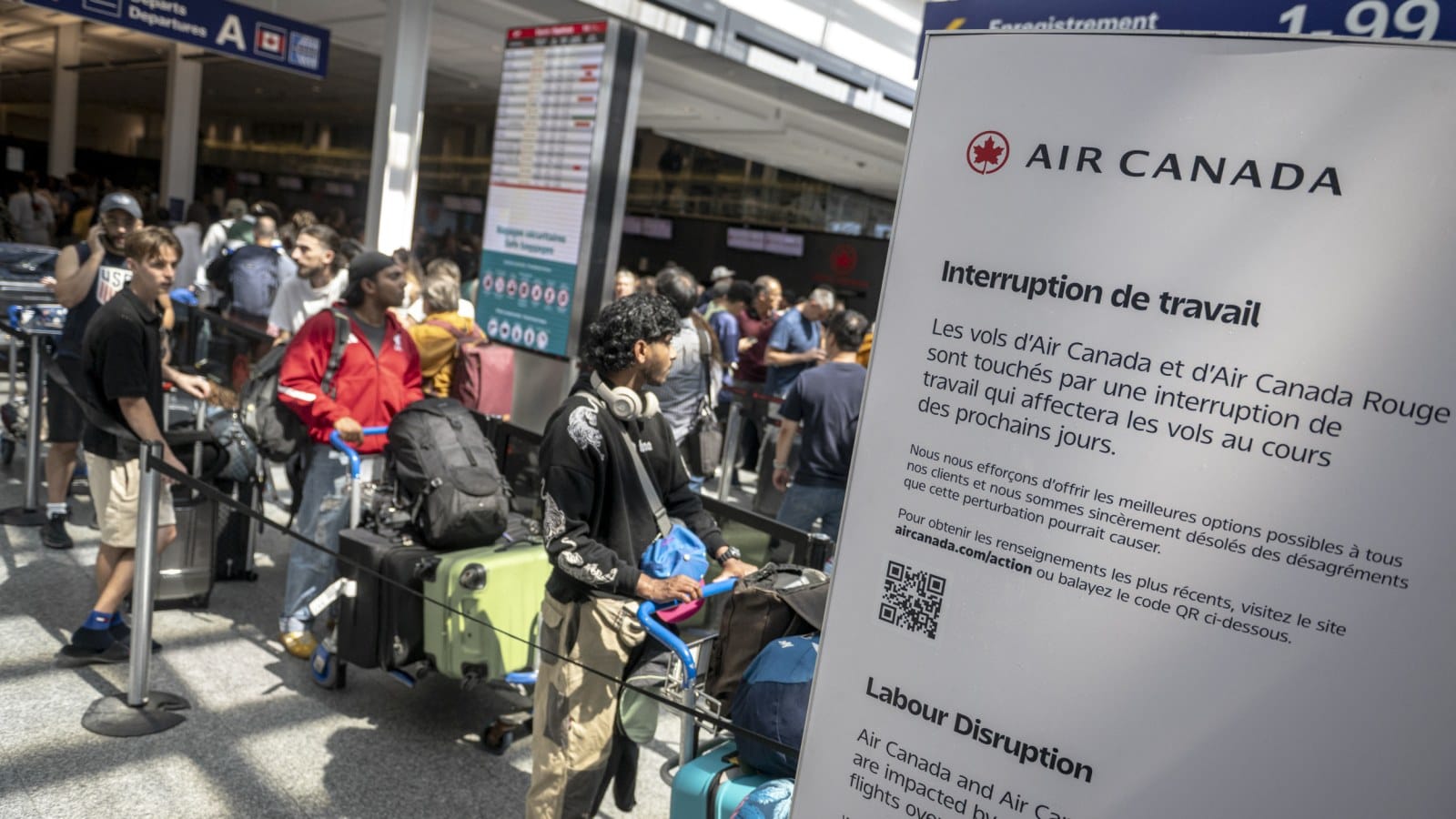
    Passengers wait in line to speak with Air Canada representatives at the Pierre-Elliott Trudeau Airport in Montreal on August 15. © ANDREJ IVANOV/AFP via Getty Images
    Passengers wait in line to speak with Air Canada representatives at the Pierre-Elliott Trudeau Airport in Montreal on August 15. © ANDREJ IVANOV/AFP via Getty Images

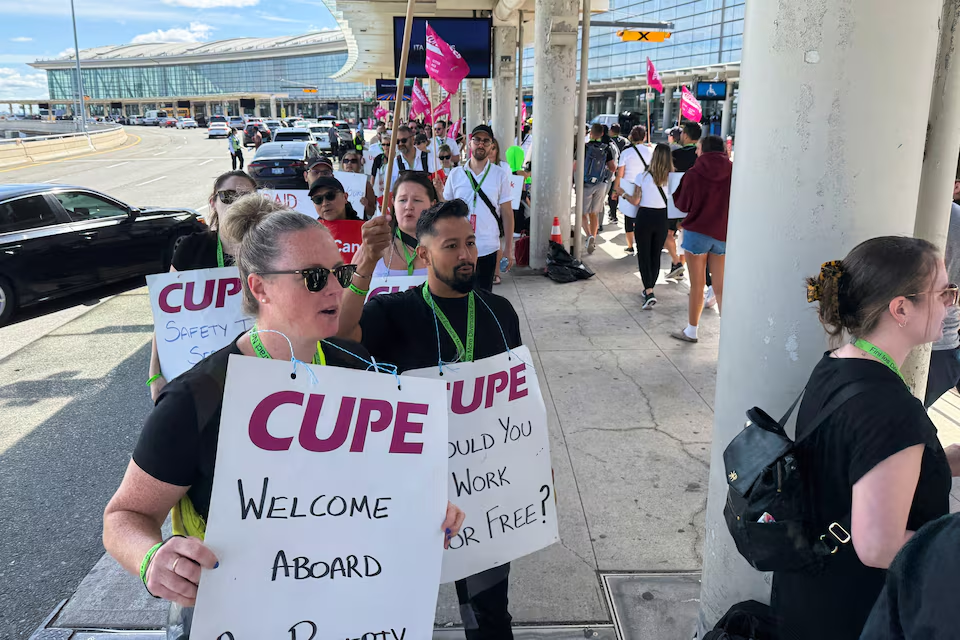
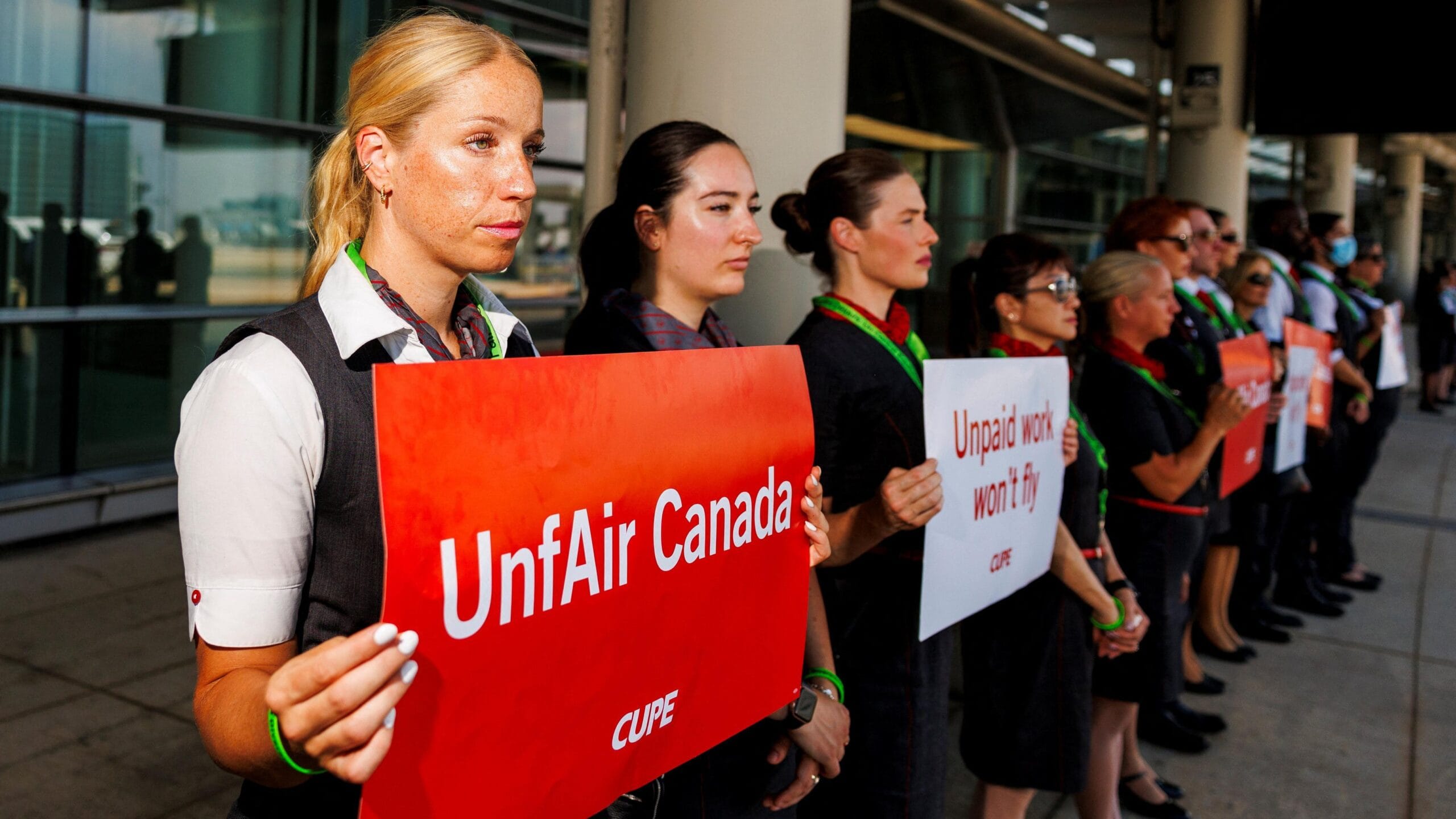
    MONTREAL/TORONTO — Air Canada and its 10,000 flight attendants, represented by the Canadian Union of Public Employees (CUPE), reached a tentative agreement early Tuesday, August 19, 2025, ending a disruptive four-day strike that canceled approximately 500,000 passengers’ flights during the peak summer travel season. The breakthrough, announced after intense overnight negotiations, allows Canada’s largest carrier to begin resuming operations, though the airline warns that a full return to normal service could take seven to ten days.

    “The strike has ended. We have a tentative agreement we will bring forward to you,” CUPE’s Air Canada Component stated, confirming that members will comply with the resumption of operations. Air Canada echoed the announcement, noting that mediation began Monday at 7 p.m. ET and concluded just after 4 a.m. ET on Tuesday, with the condition that flight attendants return to work immediately. “This allows the airline to resume the operations of Air Canada and Air Canada Rouge, which have been grounded since Aug. 16,” the airline said in a statement.

    The strike, which began on Saturday, August 16, followed months of stalled talks over wages and unpaid ground work, such as boarding and safety checks. CUPE rejected Air Canada’s initial offer of a 38% compensation increase, arguing it amounted to only a 17.2% wage hike over four years, insufficient given inflation and industry standards. The union also defied a Canada Industrial Relations Board (CIRB) order to return to work on Sunday, prompting the board to declare the strike unlawful. CUPE challenged the order in Federal Court, with national president Mark Hancock stating on Monday, “If it means folks like me going to jail, then so be it. We’re looking for a solution here.”

    The tentative agreement’s details remain undisclosed pending ratification by union members, but it follows significant pressure from federal Jobs Minister Patty Hajdu, who urged both sides to negotiate and announced a probe into allegations of unpaid work in the airline sector. “The claims are deeply disturbing,” Hajdu said, referencing flight attendants’ demands for compensation for ground duties.

    Passenger Disruptions and Recovery Challenges

    The strike left passengers stranded across Canada and beyond, with Air Canada operating around 700 flights daily. Travelers faced canceled flights, limited rebooking options, and significant out-of-pocket expenses. The airline advised that only passengers with confirmed bookings on operating flights should head to airports, as aircraft and crew remain out of position. “Some flights will be cancelled over the next seven to ten days until the schedule is stabilized,” Air Canada warned, offering refunds, travel credits, or rebooking on other airlines, though capacity is constrained due to the busy summer season.

    The agreement comes as a relief to passengers like John and Lois Alderman, who faced a potential week-long delay in Toronto with dwindling insulin supplies for John, a diabetic. Others, like Beverley and Martin Newstead, also U.K.-bound, expressed frustration over extended stays and mounting costs. In Montreal, Luca Pozzoli considered driving to Boston to catch a flight to Italy, while Sandra Major, a Bahamian grandmother, received no immediate rebooking options after her flight was canceled.

    Broader Implications for Labor

    The strike’s defiance of the CIRB order drew support from other labor groups, with the Canadian Labour Congress and Air Canada’s pilot union rallying behind CUPE. The resolution marks a significant moment for Canada’s labor movement, as CUPE’s push for fair compensation and paid ground work could influence future negotiations in the aviation sector. The federal probe into unpaid work, prompted by the strike, may further reshape industry practices.

    Prime Minister Mark Carney, speaking on Monday, expressed disappointment over the prolonged dispute but emphasized the importance of fair compensation for flight attendants. “Ottawa recognizes the critical role that flight attendants play in keeping Canadians and their families safe as they travel,” he said, urging a swift resolution.

    As Air Canada ramps up operations, with the first flights scheduled for Tuesday evening, passengers and the airline face a challenging recovery period. The tentative deal signals a step toward normalcy, but the union’s fight for better working conditions and the government’s scrutiny of airline labor practices suggest lasting impacts from this high-profile standoff.

  • Air Canada Cabin Crew Strike Enters Day Four as Talks Resume

    Air Canada Cabin Crew Strike Enters Day Four as Talks Resume

    Stock Widget

    MONTREAL/TORONTO — Air Canada AC.TO -3.85% ▼‘s flight attendants, represented by the Canadian Union of Public Employees (CUPE), extended their strike into its fourth day on Tuesday, August 19, 2025, disrupting travel for hundreds of thousands of passengers during the peak summer season. While talks between the union and the airline resumed late Monday, a standoff persists after CUPE defied a federal labor board order to return to work, escalating tensions with both Air Canada and the Canadian government.

    The strike, which began on Saturday, August 16, has grounded approximately 700 daily flights, affecting around 130,000 passengers daily, according to Air Canada, Canada’s largest carrier and a member of the global Star Alliance. The Canadian Industrial Relations Board (CIRB) declared the strike unlawful and ordered flight attendants back to work by 2 p.m. ET on Sunday, but CUPE’s leadership, led by president Mark Hancock, refused to comply, with Hancock stating he would “risk jail time” rather than force cabin crews back. The union insists the strike will continue until Air Canada negotiates on key demands, including higher wages and compensation for unpaid ground work, such as boarding passengers.

    Late Monday, CUPE announced on Facebook that it had met with Air Canada and federal mediator William Kaplan in Toronto, marking the first talks since the strike began. However, the union emphasized that the strike remains active, and a source familiar with the discussions told Reuters that mediation hinges on flight attendants returning to work—a condition CUPE has rejected. The resulting three-way standoff between the airline, workers, and the government has drawn attention from other labor groups, who view the dispute as a pivotal moment for workers’ rights in Canada.

    Government Response and Unpaid Work Probe

    Jobs Minister Patty Hajdu has intensified pressure on Air Canada, urging both sides to accept government mediation while announcing a probe into allegations of unpaid work in the airline sector. Flight attendants have long argued that their contracts should include pay for ground duties, such as boarding and safety checks, which currently go uncompensated. “I’ve ordered a probe into the allegation of unpaid work in the airline sector,” Hajdu said, expressing surprise at the practice in posts on X. The investigation, a key demand of CUPE, could reshape labor standards in Canada’s aviation industry.

    Hajdu also invoked Section 107 of the Canada Labour Code on Saturday to refer the dispute to the CIRB for binding arbitration, a move CUPE called “unconstitutional” and accused of “caving to corporate pressure.” The government’s options to end the strike include seeking court enforcement of the CIRB’s back-to-work order or passing legislation, though the latter would require support from opposition parties in a minority government and approval from both houses of parliament, currently on recess until September 15.

    Union Demands and Airline Offer

    The core issues fueling the strike are wages and unpaid ground work. CUPE has criticized Air Canada’s offer of a 38% increase in total compensation over four years, claiming it translates to only a 17.2% wage hike, which they argue is “below inflation, below market value, below minimum wage,” according to a union statement. Air Canada’s CEO, in a Reuters interview on Monday, defended the offer as positioning flight attendants as “the best compensated in Canada” but acknowledged a “big gap” with the union’s demands, offering no immediate plan to bridge it.

    The dispute follows months of stalled negotiations, with 99.7% of CUPE’s 10,000 flight attendants voting for strike action earlier this month. The union has highlighted the financial strain on workers, with some relying on food banks due to wages lagging inflation since their last contract a decade ago, as noted by CUPE Strike Committee Chair Shanyn Elliott in a prior Reuters interview.

    Passenger Impact and Labor Solidarity

    The strike has left passengers stranded, with many expressing frustration over limited support from Air Canada. James Numfor, 38, from Regina, Saskatchewan, told Reuters he and his family have been sleeping in Toronto’s Pearson International Airport for two nights after returning from Cameroon. “We find any place comfortable with the kids, they just lay down,” Numfor said, adding that Air Canada provided only one night of hotel accommodation. Retiree Klaus Hickman, who missed a Toronto flight and rebooked with another airline, sympathized with the workers but worried about making a connecting flight to Germany, citing health concerns.

    Other labor groups have rallied behind CUPE. Bea Bruske, president of the Canadian Labour Congress, representing 3 million workers, told Reuters that unions are prepared to escalate support, including covering CUPE’s legal costs. Air Canada’s pilot union, the Air Line Pilots’ Association, encouraged its members to join picket lines during off-hours, stating, “This is an important moment for organized labor across Canada.”

    As talks resume, the outcome remains uncertain. The strike’s defiance of the CIRB order marks a rare challenge to federal authority, drawing parallels to recent U.S. labor gains by flight attendants at American Airlines and Alaska Airlines. With passengers stranded and labor tensions rising, the resolution of this dispute could set a precedent for Canada’s aviation industry and beyond.

  • Air Canada Flight Attendants Strike: Travellers Face Continued Disruption

    Air Canada Flight Attendants Strike: Travellers Face Continued Disruption

    Stock Widget

    TORONTO/MONTREAL — Thousands of passengers faced another day of travel chaos on Monday, August 18, 2025, as Air Canada AC.TO -3.85% ▼‘s 10,000 flight attendants continued their strike, defying a Canada Industrial Relations Board (CIRB) order to return to work. The ongoing labor dispute, now in its third day, has led to the cancellation of approximately 500,000 passengers’ flights, leaving travelers stranded across Canada and beyond during the peak summer travel season.

    Among those affected are John and Lois Alderman, a British couple stranded in Toronto with their two teenage children. “I’m a diabetic and I’m going to run out of insulin in about four days,” John told reporters at Pearson International Airport. “That’s going to cause a problem.” The family, facing a four-to-five-day wait for a flight back to Manchester, U.K., feels like “prisoners in the hotel,” hesitant to explore the city due to the risk of missing a last-minute flight notification. The Aldermans are paying $700 per night for accommodations, with alternative flights on competitor airlines costing upwards of $8,000 for the family of four.

    Similarly, Beverley and Martin Newstead, also U.K. residents, saw their Toronto flight canceled and are now grappling with an indefinite extension of their vacation. “It’s not ideal,” Martin said. “It is nice in Canada, but we’ve been here for two weeks and a bit and are running out of clothes to wear.” In Montreal, Luca Pozzoli, attempting to reach Milan, Italy, found his flight canceled and is now considering driving to Boston to catch a flight. “Everything is fully booked,” he said, highlighting the scarcity of alternatives.

    The disruptions have sparked frustration, with passengers like Sandra Major, a Bahamian grandmother visiting Canada, receiving little support. After her 2:45 p.m. flight was canceled, Major told The Canadian Press, “I came down here for some assistance to see if they could transfer me on another flight, and they said they can’t help because they’re all shut down.” The lack of immediate options has left travelers feeling abandoned, with Air Canada offering rebookings on competitor airlines but no compensation for hotels, meals, or transportation.

    Union Defies CIRB, Talks Stalled

    The strike, initiated by the Canadian Union of Public Employees (CUPE) on Saturday, August 16, centers on demands for higher wages and compensation for unpaid ground work, such as boarding and safety checks. The CIRB declared the strike unlawful on Monday, with vice chairperson Jennifer Webster ordering, “The members of the union’s bargaining unit are directed to resume the performance of their duties immediately and to refrain from engaging in unlawful strike activities.” The order followed federal Jobs Minister Patty Hajdu’s invocation of Section 107 of the Canada Labour Code, directing the dispute to binding arbitration.

    VFUZ6WN3BBJH7F44TTRZL36FQE
    Mark Hancock, National President of the Canadian Union of Public Employees (CUPE) which represents striking Air Canada flight attendants, speaks at a news conference in the hotel media room at Toronto Pearson International Airport in Mississauga, Ontario, Canada, August 18, 2025. © REUTERS/Wa Lone

    CUPE, however, has defied the CIRB’s order and challenged it in Federal Court, arguing it violates workers’ constitutional rights. Union president Mark Hancock stated, “If Air Canada thinks planes will be flying this afternoon, they’re sorely mistaken,” signaling an intent to continue the strike until negotiations address their demands. Air Canada, which planned to resume flights on Sunday, was forced to delay operations, exacerbating the travel disruptions.

    Prime Minister Mark Carney expressed disappointment over the failure of Air Canada and CUPE to reach an agreement after eight months of negotiations. “It’s critical that both sides quickly resolve the situation causing chaos for travellers,” Carney said, acknowledging the “critical role that flight attendants play in keeping Canadians and their families safe as they travel” and emphasizing the need for equitable compensation.

    Passenger Sympathy Amid Frustration

    Despite the chaos, some passengers voiced support for the striking flight attendants. Lisa Smith, stranded in Montreal with her sister Nicole Power, told The Canadian Press, “I think that’s important. If you’re here to do your job and you’ve already started to do your job, then you should get paid for it.” The sisters, who were visiting San Francisco, were initially assured their return to Newfoundland would proceed but learned on Sunday that their flight was canceled. Rebooked on a competitor airline, they face a wait until Wednesday, with no compensation for accommodations or meals.

    Air Canada, a key member of the Star Alliance, typically serves 130,000 passengers daily. The prolonged strike has drawn attention from other labor groups, with the Canadian Labour Congress and Air Canada’s pilot union expressing solidarity. The dispute’s resolution remains uncertain as CUPE challenges the CIRB order and negotiations remain stalled, leaving travelers like the Aldermans, Newsteads, and Major to navigate mounting costs and uncertainty.

  • MSNBC to Rebrand as MS NOW, Dropping Iconic Peacock Logo in Comcast Spinoff

    MSNBC to Rebrand as MS NOW, Dropping Iconic Peacock Logo in Comcast Spinoff

    MS NOW logo
    MSNBC to Change Name to MS NOW Under Versant. © Versant
    Stock Widget

    MSNBC, the cable news network known for its progressive commentary and flagship programs like The Rachel Maddow Show and Deadline: White House, will undergo a significant transformation later this year, rebranding as MS NOW—short for My Source News Opinion World—and shedding the iconic peacock logo as part of its spinoff from Comcast’s CMCSA +1.20% ▲ NBCUniversal. The move, announced on Monday, August 18, 2025, marks a pivotal shift for the nearly 30-year-old network as it joins a new publicly traded company, Versant, alongside other cable assets like CNBC, USA Network, Oxygen, E!, SYFY, and the Golf Channel.

    The rebrand, driven by Comcast’s $7 billion spinoff strategy unveiled in November 2024, aims to reposition MSNBC for a streaming-dominated media landscape while allowing NBCUniversal to retain its broadcast and streaming assets, including NBC, Bravo, and the Peacock streaming service. “The peacock is synonymous with NBCUniversal, and it is a symbol they have decided to keep within the NBCU family,” Versant CEO Mark Lazarus wrote in a memo to staff, as reported by NBC News. “This gives us the opportunity to chart our own path forward, create distinct brand identities, and establish an independent news organization following the spin.”

    MSNBC President Rebecca Kutler, in a separate memo, acknowledged the decision was “not made quickly or without significant debate” but emphasized that it enables the network to “set our own course and assert our independence.” She reassured staff that the editorial direction will remain unchanged, stating, “While our name will be changing, who we are and what we do will not.” The network is preparing for the transition by hiring nearly 100 journalists from outlets like CNN, Bloomberg, Politico, and The Washington Post to build an independent newsroom, severing its reliance on NBC News infrastructure.

    A New Identity Amid Controversy

    The rebrand replaces MSNBC’s name, rooted in its 1996 founding as a joint venture between Microsoft and NBC, with MS NOW, accompanied by a new logo featuring a blue background and a red-and-white striped flag. The original name, standing for Microsoft and National Broadcasting Company, became outdated after Microsoft exited the partnership in 2012. However, the decision has sparked internal skepticism and external criticism. A company insider told The New York Post, “It doesn’t set a great precedent for management to change the name after promising staffers it wouldn’t,” referencing Lazarus’s January assurance that MSNBC would retain its name. A former media executive quipped, “MS is the new BS,” while another insider criticized the names Versant and MS NOW as lackluster, suggesting, “Whoever came up with these names deserves to be shown the door.”

    GettyImages 1133628049
    Making sense of MS Now, the corporate-mandated rebrand for the cable TV outlet that made its name as a left-leaning stalwart. ©  Astrid Stawiarz/MSNBC/NBCU Photo Bank

    Eric Schiffer, chairman of Los Angeles-based Reputation Management Consultants, noted that MSNBC’s “left-leaning” brand perception could benefit from a reset. “They are hoping that by rebranding, there’s a better chance to … reset in the minds of the public,” he told Reuters. The network’s new identity will be supported by a “massive marketing campaign unlike anything we have done in recent memory,” Kutler said, aiming to solidify MS NOW’s position as a destination for news and opinion journalism.

    Comcast’s spinoff, expected to conclude by the end of 2025, reflects a broader strategy to streamline its portfolio amid declining cable viewership and the rise of streaming platforms. NBCUniversal will retain its broadcast network, film and television studios, and Peacock streaming service, which are seen as growth drivers. Comcast Chairman and CEO Brian L. Roberts stated on November 20, 2024, that the transaction positions both Versant and NBCUniversal “for future growth” in a changing media landscape. Comcast President Mike Cavanagh added that NBCUniversal’s integrated media approach will be “fueled by our world-class content, technology, IP, properties, and talent.”

    Other Versant properties, including CNBC, Golf Channel, GolfNow, and SportsEngine, will also drop the peacock logo, though CNBC will retain its name, originally Consumer News and Business Channel, due to global licensing agreements. The spinoff, valued at $7 billion, aims to create a leaner entity focused on cable and sports content, with MSNBC—soon MS NOW—building a standalone news operation to compete independently.

    The rebrand has raised concerns about potential viewer confusion and dilution of MSNBC’s established brand equity, built over decades as a counterpoint to conservative outlets like Fox News. Posts on X reflected mixed sentiment, with some users mocking the new name as “generic” while others saw it as a chance to broaden the network’s appeal. Kutler’s memo addressed staff anxieties, framing the change as an opportunity to “assert our independence as we continue to build our own modern newsgathering organization.”

    As MSNBC transitions to MS NOW over the coming months, the network faces the challenge of maintaining its loyal audience while navigating a competitive media environment. The success of the rebrand will depend on its ability to leverage its new identity and expanded newsroom to deliver on its promise of “news, opinion, and the world.”

  • China’s complex relationship with Nvidia’s H20 chip is marked by both its potential benefits and significant concerns

    China’s complex relationship with Nvidia’s H20 chip is marked by both its potential benefits and significant concerns

    Stock Widget

    Chinese authorities have intensified scrutiny of domestic tech giants, including Tencent TCEHY -2.30% ▼, ByteDance, and Baidu BIDU -1.85% ▼, over their purchases of Nvidia’s NVDA -3.45% ▼ H20 AI chips, raising concerns about data security and urging companies to prioritize domestic alternatives. The regulatory pressure also extends to AMD AMD -2.10% ▼, while domestic chipmakers like SMIC 981.HK +5.20% ▲ benefit from the push toward technological self-sufficiency. Major Chinese firms like Alibaba BABA -1.95% ▼ face difficult decisions as they navigate between proven U.S. technology and regulatory pressure to adopt domestic alternatives.

    The Cyberspace Administration of China (CAC) and other regulatory bodies have held meetings with these firms and smaller tech companies in recent weeks, questioning the necessity of relying on U.S.-made chips when local options are available. This development threatens Nvidia’s recently restored access to the Chinese market and could generate billions in revenue for the U.S. government through a novel export deal, while highlighting China’s push for technological self-sufficiency in the global AI race.

    The CAC’s recent actions mark a significant escalation in China’s oversight of foreign AI technology. According to Reuters, Chinese officials have summoned major internet firms, including Tencent, ByteDance, and Baidu, to explain their reasons for purchasing Nvidia’s H20 chips, designed specifically for the Chinese market to comply with U.S. export restrictions. One source indicated that authorities expressed concerns about potential information risks, particularly the possibility that materials submitted by Nvidia for U.S. government review could contain sensitive client data. “The regulators are worried about what Nvidia might be sharing with U.S. authorities,” the source said, speaking on condition of anonymity due to the private nature of the meetings.

    While no outright ban on H20 purchases has been issued, Bloomberg News reported on August 12, 2025, that Chinese authorities have sent official notices discouraging the use of H20 chips for government or national security-related projects, affecting both state-owned enterprises and private companies. A separate report by The Information claimed that the CAC directed over a dozen tech firms, including Alibaba, to suspend Nvidia chip purchases entirely, citing data security concerns. These directives followed the Trump administration’s decision in July 2025 to reverse export curbs on the H20, allowing Nvidia to resume sales in China after a ban earlier this year.

    The CAC’s concerns were amplified by state-controlled media, with outlets like Yuyuan Tantian, affiliated with CCTV, publishing articles on platforms like WeChat that criticized the H20 chips for alleged security risks, lack of technological advancement, and environmental inefficiencies. Nvidia, in a statement on August 12, 2025, refuted these claims, asserting that the H20 is “not a military product or for government infrastructure” and emphasizing that China has ample domestic chip alternatives for its needs. Tencent, ByteDance, Baidu, and Alibaba did not respond to requests for comment, and the CAC remained silent on the matter.

    The scrutiny of Nvidia’s H20 chips comes amid heightened U.S.-China tensions over AI technology. The H20, a less-advanced version of Nvidia’s flagship AI chips, was developed to navigate U.S. export controls imposed in late 2023, which restricted sales of more powerful chips like the A100 and H100 to China. The Trump administration’s reversal of the H20 ban in July 2025 was part of a broader deal with Nvidia and AMD, announced last week, requiring the companies to remit 15% of their China sales revenue for certain advanced chips to the U.S. government. According to posts on X, this arrangement could generate billions of dollars for Washington, with Nvidia’s China sales alone accounting for $17 billion—or 13% of its total revenue—in its fiscal year ending January 26, 2025.

    However, China’s renewed guidance could jeopardize this revenue stream. By discouraging H20 purchases, Beijing is signaling its intent to reduce reliance on U.S. technology, a move that aligns with its broader “Made in China 2025” initiative to achieve technological self-sufficiency. Domestic chipmakers like Huawei and SMIC are ramping up production of AI accelerators, with Huawei’s Ascend series emerging as a viable rival to the H20. SMIC’s stock rose 5% on August 12, 2025, reflecting investor optimism about growing demand for locally produced chips.

    The regulatory pressure also extends to AMD, with Bloomberg reporting that China’s guidance affects its MI308 chip, though no specific notices targeting AMD were confirmed. AMD did not respond to inquiries outside regular business hours. The uncertainty surrounding foreign chip purchases has sparked speculation on X that Nvidia and AMD may raise prices for their chips in China to offset the 15% revenue share to the U.S. government, potentially further incentivizing Chinese firms to pivot to domestic alternatives.

    The global AI chip market, projected to reach $400 billion by 2027, is a critical battleground for U.S. and Chinese tech giants. Nvidia has long dominated the market, with its GPUs powering AI applications worldwide. In China, the company’s H20 chip was a lifeline after U.S. sanctions curtailed sales of its more advanced models. However, Beijing’s push for domestic alternatives threatens Nvidia’s market share, which accounted for 13% of its revenue in the last fiscal year.

    China’s domestic chip industry, while growing, faces challenges due to U.S. sanctions on advanced chipmaking equipment, such as lithography machines critical for producing cutting-edge processors. Despite these constraints, companies like Huawei have made significant strides, with posts on X highlighting the performance of Huawei’s Ascend chips in AI workloads. “Huawei’s chips are closing the gap with Nvidia’s H20,” tweeted one tech analyst, reflecting growing confidence in China’s capabilities.

    For Chinese tech giants, the CAC’s directives create a delicate balancing act. Companies like Tencent, ByteDance, and Baidu rely on AI chips to power their cloud computing, search, and social media platforms. While Nvidia’s H20 offers proven performance, the regulatory pressure to adopt domestic chips could force a shift, even if local alternatives lag in certain applications. Smaller tech firms, less equipped to navigate regulatory scrutiny, may face greater challenges in securing reliable chip supplies.

    At the heart of China’s caution is a deep-seated concern about data security and U.S. influence. The CAC’s meetings with Nvidia representatives last month focused on whether the H20 chip posed backdoor risks that could compromise Chinese user data and privacy. These concerns echo broader fears in Beijing that U.S. technology could be used to monitor or manipulate Chinese systems, a sentiment amplified by state media.

    Conversely, Washington has its own worries about China’s access to advanced AI chips. U.S. President Donald Trump’s suggestion on August 11, 2025, that Nvidia might be allowed to sell a scaled-down version of its Blackwell chip in China reflects a pragmatic approach to balancing economic interests with national security. However, this proposal has sparked debate, with critics arguing that even less-advanced U.S. chips could enhance China’s military capabilities. China’s foreign ministry responded on August 12, 2025, urging the U.S. to maintain a stable global chip supply chain, signaling its desire to avoid further escalation.

    China’s cautious stance on Nvidia’s H20 chips underscores the broader geopolitical tug-of-war over AI technology. For Nvidia, the regulatory hurdles threaten a critical market, forcing the company to navigate a complex landscape of compliance and competition. The 15% revenue-sharing deal with the U.S. government adds further pressure, potentially increasing costs for Chinese buyers and accelerating the shift to domestic alternatives.

    For Chinese tech firms, the CAC’s guidance reflects a broader push for technological independence, but it also risks disrupting their AI development timelines. While Huawei and SMIC are making strides, scaling production to meet domestic demand remains a challenge, particularly given U.S. restrictions on advanced manufacturing equipment. The global chip supply chain, already strained by sanctions and trade disputes, faces further uncertainty as both nations vie for dominance.

    As the AI race intensifies, the outcome of this standoff will have far-reaching implications. For now, China’s scrutiny of Nvidia’s H20 chips signals a bold step toward self-reliance, while the U.S. grapples with balancing economic gains against strategic concerns. The global tech industry, caught in the crossfire, awaits clarity on how this high-stakes rivalry will reshape the future of AI.