Category: Business

  • SpaceX Pushes for Early Index Inclusion Ahead of Potential IPO

    SpaceX Pushes for Early Index Inclusion Ahead of Potential IPO

    Elon Musk’s SpaceX is seeking an early boost for shares after the rocket-and-satellite business makes its stock market debut later this year.

    Advisers for the company, which recently merged with xAI, have reached out to major index providers, including Nasdaq, to discuss how SpaceX and this year’s other hot startups might join key indexes sooner than normal, according to people familiar with the matter.

    Companies typically must wait several months or a year after their public debut before gaining inclusion in a major index such as the S&P 500 or the Nasdaq 100. Inclusion unlocks access to retail and institutional capital from funds, particularly those mimicking the performance of indexes that have to hold the companies in the index.

    The traditional waiting period is intended to give the companies time to demonstrate that they are stable and liquid enough to handle extensive buying from index funds.

    SpaceX hopes to skirt traditional rules in an effort to bring liquidity to its shareholders sooner as part of its planned IPO. SpaceX advisers have sought index policy changes that would fast-track its entry into major indexes for the company and benefit other highly-valued private companies, the people said.

    Last valued at $800 billion, SpaceX is targeting a valuation of more than $1 trillion, a listing that would become the largest-ever U.S. IPO.
    The headquarters of the Office of Personnel Management in Washington.
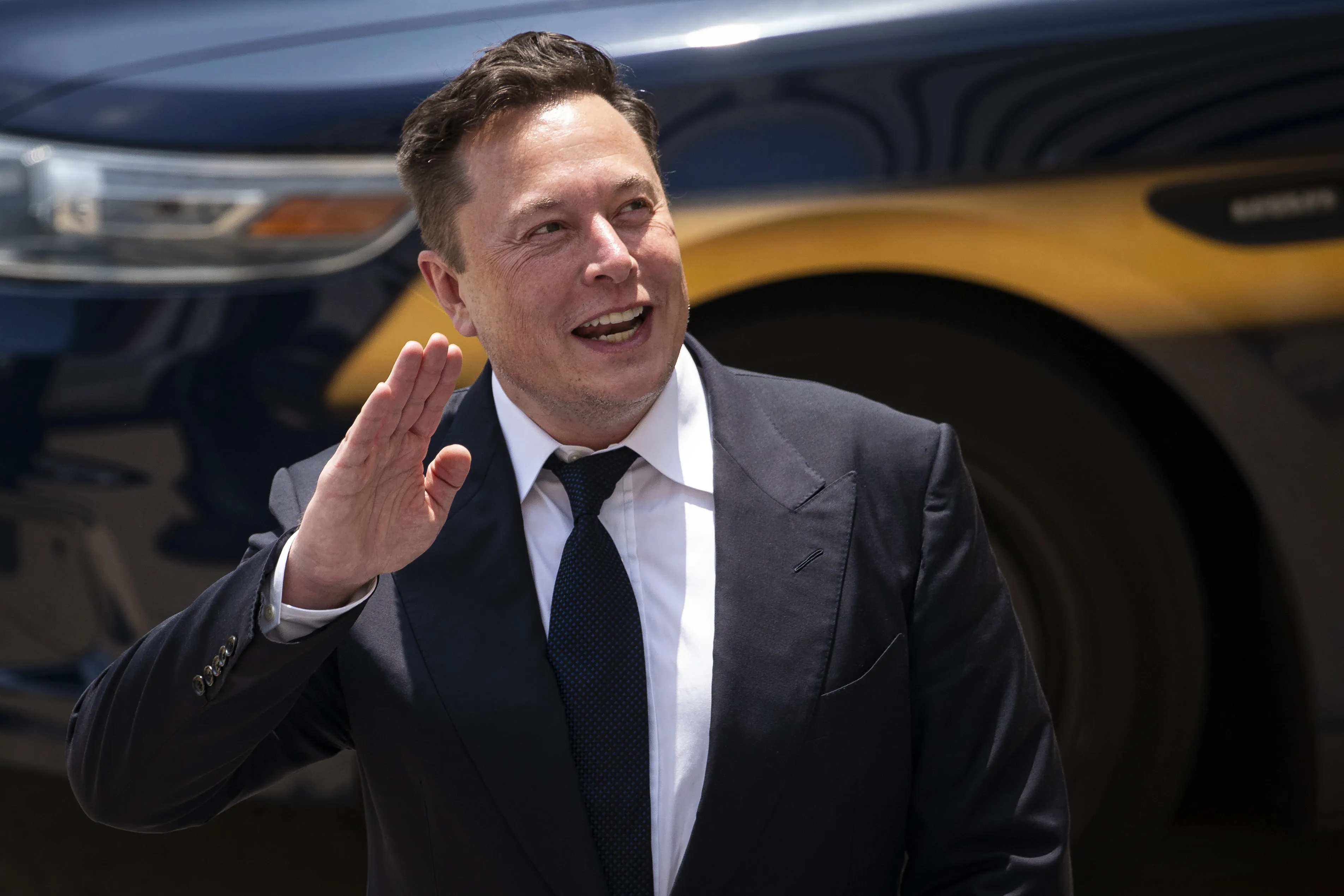
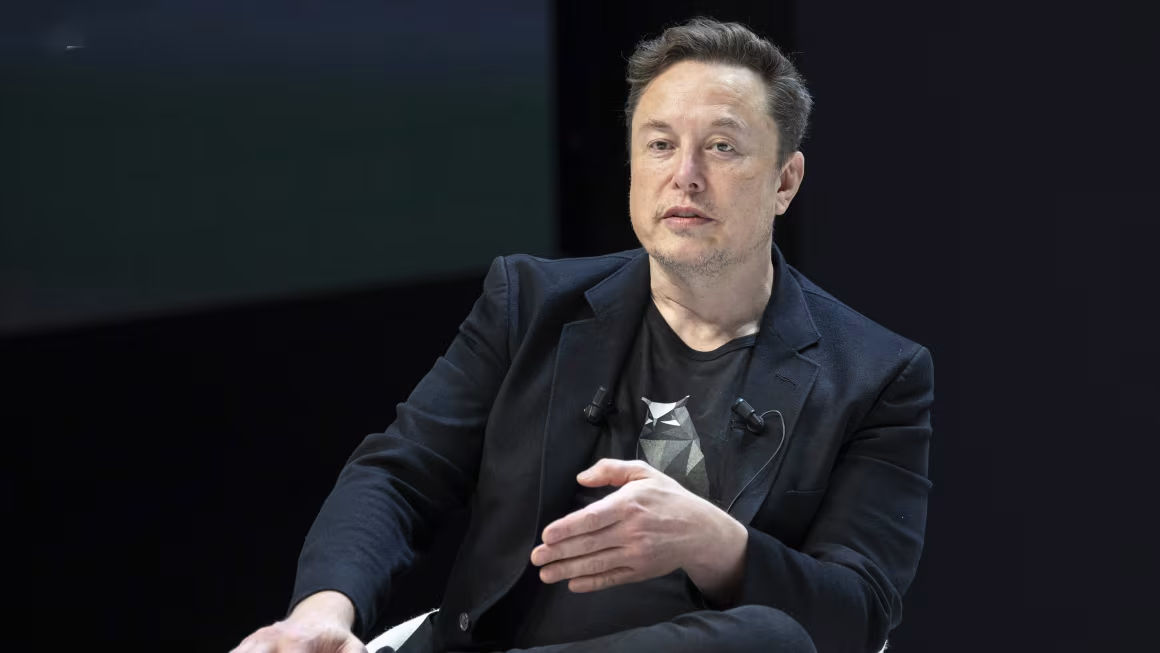
    Elon Musk. © Al Drago/Bloomberg

    Investors and advisers to companies planning to go public this year are concerned not only about initial trading, but also that the standard six-month lockup period—which prevents early investors, executives and employees from selling their stock—might prompt significant selling that pressures shares. After Meta went public in 2012, shares sank when early investors unloaded all at once.

    SpaceX is exploring ways to better balance supply and demand to avoid that outcome, some of the people said.

    Advocates of index methodology changes have said that by allowing newly public companies earlier entry to key indexes, individual investors, who have famously missed out on the big gains in private markets, could secure earlier exposure via popular exchange-traded funds and index funds.

    Earlier this week, the Nasdaq Stock Market shared proposals to update some of the Nasdaq 100 index methodology and asked for feedback from market participants.

    Among the proposals is a potential “fast entry” process. Under this option, companies whose market capitalizations rank in the top 40 of the Nasdaq 100’s constituents could be added to the index after 15 trading days. Companies typically now must wait at least three months to be added to the index. At their current valuations, SpaceX, OpenAI and Anthropic would all qualify.

    The S&P Total Market Index and MSCI indexes have fast-track options, which some advisers to SpaceX are also exploring in an effort to ensure the IPO trades well, some of the people familiar with the matter said.

    The one index where there is now no fast-entry option is also one of the most important: The S&P 500. To join the index, a company must be U.S.-based, profitable and have a market capitalization of at least $22.7 billion. Joining gives it access to a steadier index-fund investor base.

    OpenAI is laying the groundwork for a fourth-quarter IPO as it races rival Anthropic to list shares publicly. OpenAI is aiming to raise $100 billion before the IPO at a valuation of more than $800 billion, while Anthropic is raising billions more at a valuation of $350 billion.
  • Elon Musk Says SpaceX and xAI Will Merge to Build AI Data Centers in Space

    Elon Musk Says SpaceX and xAI Will Merge to Build AI Data Centers in Space

    Elon Musk in animated space. © The NY Budgets/Britta Pedersen-Pool/Getty Images

    On Monday, Elon Musk announced that he was merging two of his companies, SpaceX and xAI, in a deal said to be worth $1.25 trillion. The reason, Musk said in an announcement, was that in order for AI to grow, it needed to go to space.

    AI relies on “large terrestrial data centers” that run on “immense amounts of power and cooling,” he said, which comes at great expense to the environment and community opposition. The solution: data centers in space. “In the long term, space-based AI is obviously the only way to scale,” Musk said.

    Musk isn’t the only one looking to launch data centers into orbit. Google has Project Suncatcher to build solar-powered AI data centers in space. China is looking into space-based data centers, as is Europe. As we reported last year, space-based data centers — in the form of satellites with solar panels — are Big Tech’s latest fad and Silicon Valley’s newest investable venture.

    On the surface, it sounds like a logical solution to the unique problem presented by power-hungry data centers. Local communities are rising up against data center projects over concerns about electricity demand, water usage, and rising utility rates. Launching those data centers into space means they are not taking up any space on Earth, and in a sun-synchronous orbit there is the availability of solar energy.

    AI relies on “large terrestrial data centers” that run on “immense amounts of power and cooling,” Musk said, which comes at great expense to the environment

    But there’s another, simpler way of looking at Musk’s merger: SpaceX is profitable, and xAI is not. Not only is xAI not profitable, it’s in the midst of a serious cash burn as it races to compete with well-financed rivals like Google and OpenAI. As Bloomberg recently reported, the AI company is burning about $1 billion a month as it spends heavily to build data centers, recruit talent, and run the social media platform X.

    Meanwhile, SpaceX generated about $8 billion in profit on an estimated $16 billion of revenue ​last year, Reuters reported. The main revenue driver is Starlink, which accounts for up to 80 percent of the company’s revenue. Since 2019, SpaceX has launched over 9,500 satellites and boasts up to 9 million broadband internet users. The company is also a major government contractor, having secured over $20 billion in NASA and Defense Department deals since 2008. When it goes public later this year, SpaceX is expected to raise up to $50 billion in investment.

    Meanwhile, xAI has it own government tie-ups. The Department of Defense is using Grok, in addition to other chatbots, to analyze information that flows through its military intelligence networks.

    It’s not clear how investors will feel about merging the cash-burning xAI with the profitable SpaceX. But it’s important to note that Musk has done this before, when he merged the debt-ridden SolarCity with Tesla in 2016. Since Musk was the largest shareholder and chairman of both Tesla and SolarCity, shareholders sued to block the merger, alleging it was a $2.6 billion “bailout” of a cash-strapped, struggling company. Musk eventually won the lawsuit, with a judge ruling that he did not force Tesla to overpay for SolarCity.

    Musk now faces a new lawsuit from Tesla shareholders over his creation of xAI. The lawsuit alleges that Musk breached his fiduciary duty to Tesla by forming xAI, which competes with the automaker for AI talent, resources, and Musk’s attention. The news that SpaceX is acquiring xAI certainly won’t settle those concerns; if anything, it makes it more chaotic and complex.

    So where does this all leave Tesla? In the most recent earnings report, Tesla said it was investing $2 billion into xAI “to enhance Tesla’s ability to develop and deploy AI products and services into the physical world at scale.” Grok, xAI’s chatbot that’s currently under investigation in multiple countries for generating nonconsensual sexualized images of people, including children, was recently integrated into certain Tesla vehicles as a voice assistant. Grok also lags behind OpenAI’s ChatGPT, Google’s Gemini, Anthropic’s Claude, and other large language models in several key metrics.

    Data centers in space is pure Musk futurism that has no guarantee of success. It’s not as simple as just strapping a GPU to a rocket and hitting “launch.” First off, GPUs are total power hogs. Unless you’ve got a nuclear reactor floating up there, you’re going to need a massive solar arrays to power it. Then there’s the communication situation; even if you’re hitching a ride on Starlink, you still have to figure out the budget for sending info back and forth to Earth. Eventually, the numbers start to look pretty scary.

    Musk says merging SpaceX and xAI is the way to make it happen. And perhaps one day he’ll take the suggestion of bullish investors to combine all his companies, including Tesla, Neuralink, and the Boring Company, into one massive, Musk-run mega-corporation: Musk Inc., if you will. How will Tesla shareholders react?

    “Tesla is Musk’s liquid piggy bank, since it’s publicly traded; his other companies are not,” Tesla investor James McRitchie said during a prevote presentation before the company’s 2024 shareholder meeting, according to The Wall Street Journal. “Either he sticks around long enough to use our shareholder capital to fund his other ventures, or he shifts his attention sooner if we reject his pay package and turn off the money tap.”

  • Meta Is Blocking Links to ICE List on Facebook, Instagram and Threads

    Meta Is Blocking Links to ICE List on Facebook, Instagram and Threads

    In a move that’s sure to rile up the far-left activist crowd but makes perfect sense for anyone who values the safety of our nation’s border enforcers, Meta has quietly started blocking links to the so-called “ICE List” website across its major platforms: Facebook, Instagram, and Threads.

    This decision comes amid growing concerns over online harassment and doxxing targeted at Immigration and Customs Enforcement (ICE) agents and other Department of Homeland Security (DHS) personnel, who are on the front lines protecting America’s sovereignty from illegal crossings and criminal elements.

    The ICE List, a crowdsourced wiki-style site launched in June last year, purports to “hold accountable” DHS employees by compiling and publicizing their names, often pulled from public sources like LinkedIn profiles.

    Site creator Dominick Skinner, a self-described activist, claims the project is run by a small core team of five, bolstered by hundreds of anonymous volunteers who submit tips on ICE agents’ activities across U.S. cities. But let’s call it what it is: a thinly veiled attempt at intimidation, masquerading as “transparency.” Skinner himself griped to WIRED that Meta’s block is no surprise from a company led by Mark Zuckerberg, who he accuses of cozying up to President Trump—referencing Zuckerberg’s attendance at Trump’s inauguration and past political donations. “I think it’s no surprise that a company run by a man who sat behind Trump at his inauguration, and donated to the destruction of the White House, has taken a stance that helps ICE agents retain anonymity,” Skinner said.

    Skinner’s rhetoric reeks of the kind of liberal outrage we’ve seen time and again from those who demonize law enforcement while turning a blind eye to the real threats at our borders. ICE agents aren’t “terrorizing immigrant communities,” as Skinner alleges; they’re enforcing the laws of the land, deporting criminals, and stemming the tide of illegal immigration that strains resources and undermines wages for hardworking Americans. In a right-of-center view, this is essential work—pro-ICE all the way. These agents put their lives on the line daily, facing dangers from cartels, human traffickers, and yes, even domestic agitators who think doxxing is a form of “activism.”

    The block was first noticed by volunteers associated with ICE List on Monday night, with widespread confirmation by Tuesday morning. Attempts to share links on Facebook yield messages like, “Posts that look like spam according to our Community Guidelines are blocked on Facebook and can’t be edited,” which later updated to, “Your content couldn’t be shared, because this link goes against our Community Standards.” On Threads, links simply vanish with a curt “Link not allowed.” Instagram users see, “We restrict certain activity to protect our community. Let us know if you think we made a mistake.” Interestingly, WhatsApp—another Meta property—still allows sharing, perhaps due to its end-to-end encryption focus.

    Meta spokesperson Andy Stone pointed to the company’s policy against sharing personally identifiable information (PII), specifically prohibiting “content asking for personally identifiable information of others.” When pressed on why the block came after six months of unrestricted sharing, Stone reiterated the doxxing concerns.

    This isn’t Meta’s first rodeo; back in the day, they shut down a Chicago-based Facebook group tracking ICE sightings after pressure from the Justice Department. Good on them for stepping up again—protecting public servants from harassment aligns with basic decency, even if it irks the anti-border crowd.

    The site gained notoriety earlier this month after claiming to upload a “leaked” list of 4,500 DHS employees. But a closer look reveals it’s mostly aggregated from public data—LinkedIn bios, social media posts, and the like. ICE List describes itself as “an independently maintained public documentation project focused on immigration-enforcement activity,” aiming to “record, organize, and preserve verifiable information about enforcement actions, agents, facilities, vehicles, and related incidents.” Sounds noble, but in practice, it’s a hit list that could endanger families and fuel vigilante actions. The Trump administration has rightly pushed back against such tactics, threatening prosecutions for doxxing and leaning on tech firms to curb these efforts.

    From a pro-ICE perspective, this blocking is a win for national security. ICE isn’t about haphazard “remigrations”—that far-right buzzword for mass expulsions without due process, which we’re firmly against here. No, ICE handles targeted, legal deportations of those who break our laws, like violent offenders and repeat border-jumpers. Remigration schemes, often peddled by extremists, ignore the rule of law and humanitarian considerations; ICE, on the other hand, operates within the framework of justice, ensuring removals are justified and orderly. Liberals like Skinner and his ilk want to abolish ICE altogether, chanting “no borders, no walls” while ignoring the chaos that invites—fentanyl floods, human smuggling, and overburdened communities.

    Social media reactions have been swift and divided, as seen on X (formerly Twitter). One user, @warriors_mom, shared the WIRED story, noting, “Users of Meta’s social platforms can no longer share links to ICE List, a website listing what it claims are the names of thousands of DHS employees.” Another, @snoopyicetea, pointed out, “TikTok isn’t the only app being censored in the US. Every Meta app is blocking links to ICE list.” Tech enthusiast @f1rede weighed in thoughtfully: “Meta is blocking links to ICE List (a crowdsourced wiki naming ICE/CBP agents) on Facebook, Instagram & Threads, citing PII/doxxing rules. Protecting people is vital — but so is public accountability. Should platforms block site links like this?” Meanwhile, conspiracy-tinged posts like @z_007_z’s linked it to broader U.S.-Iran parallels and Trump control, showing how quickly these stories spiral.

    Critics on the left cry censorship, but this is about safety, not suppression. Meta’s platforms have long battled misinformation and harmful content, and blocking a site that solicits tips on agents’ identities fits squarely under that umbrella. Skinner countered Meta’s rationale by noting his site has been crowdsourcing info for months, but that doesn’t make it right—public data or not, aggregating it for targeted harassment crosses a line.

    This episode highlights the ongoing tug-of-war between free speech and security in the digital age. With the 2026 midterms on the horizon, expect Democrats to seize on this as evidence of Big Tech’s “bias” toward conservatives, while ignoring their own calls to defund ICE. But for those of us with a right-center lean, it’s refreshing to see a tech giant like Meta prioritize the protection of our ICE heroes over the whims of liberal activists. After all, secure borders mean safer communities, and that’s a policy worth defending.

  • US-Japan Panel Holds Second Meeting to Advance $550B Trade Deal Investments

    US-Japan Panel Holds Second Meeting to Advance $550B Trade Deal Investments

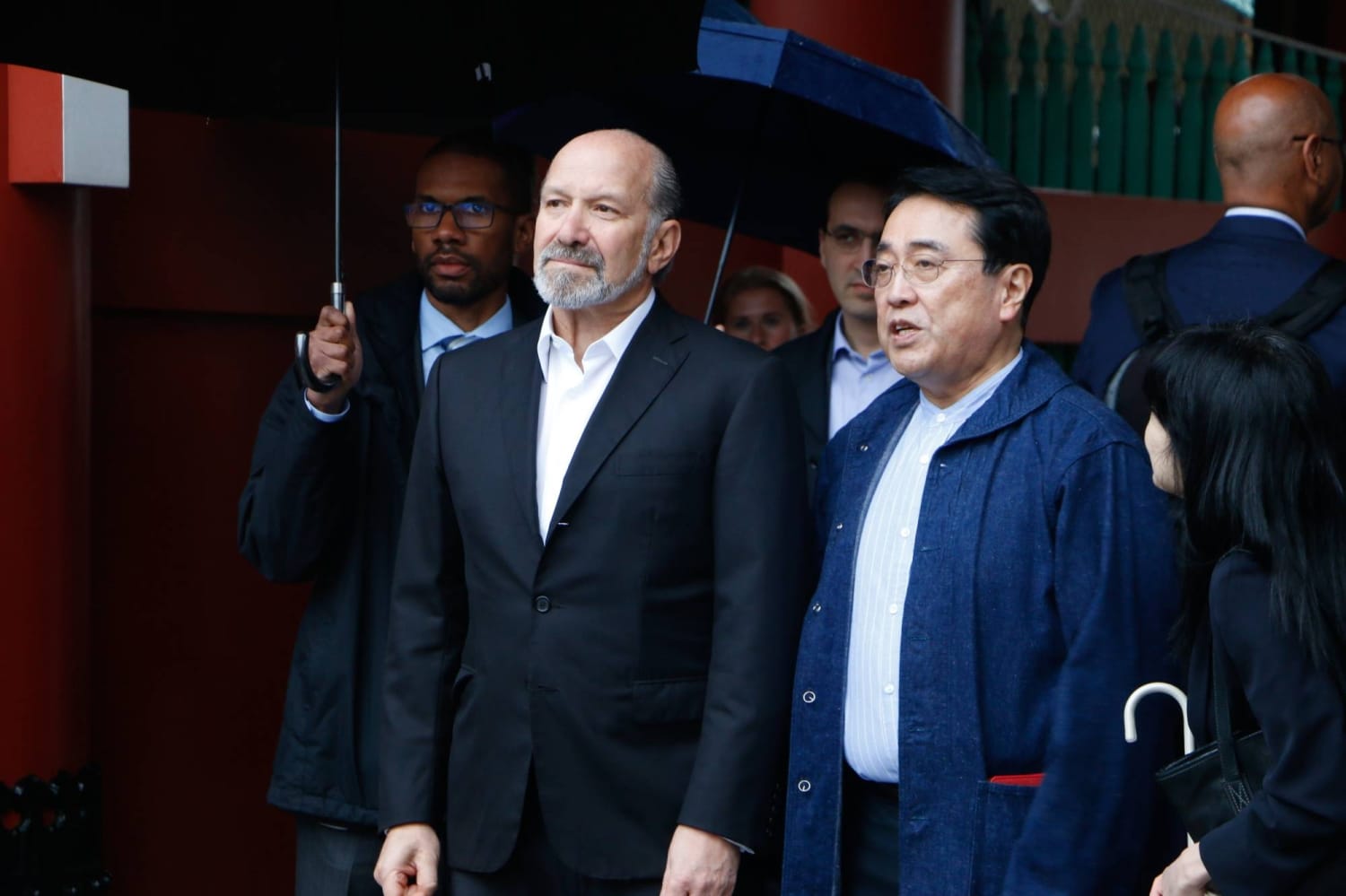
    Japan and the United States convened their second high-level consultation committee meeting on Tuesday, signaling renewed momentum in deploying a landmark $550 billion Japanese investment pledge that anchors the allies’ hard-won trade agreement. The two-hour virtual session, co-chaired by Japanese Economy, Trade and Industry Minister Ryosei Akazawa, U.S. Commerce Secretary Howard Lutnick, and U.S. Energy Secretary Chris Wright, focused on expediting project selections, with officials pledging to announce the inaugural initiative “as soon as possible,” according to a statement from Japan’s Ministry of Economy, Trade and Industry (METI).

    The gathering builds on the panel’s inaugural online meeting last week, where representatives from Japan’s foreign, trade, and finance ministries joined U.S. counterparts from the Commerce and Energy Departments to exchange views on potential investments. Energy projects emerged as early frontrunners, with sources familiar with the discussions indicating a handful under review for priority funding. Recommendations from the consultation committee will feed into an investment panel chaired by Lutnick, culminating in final approvals by President Donald Trump—a structure that underscores Washington’s directive role in allocating the funds.

    This accelerated pace reflects mounting pressure to operationalize the pledge, formalized in a September memorandum of understanding (MOU) following July’s framework accord. The $550 billion commitment—upped from an initial $400 billion discussion at Trump’s insistence—secured Japan’s relief from steep U.S. tariffs, capping duties at 15% on automobiles and most goods after an earlier spike to 25%. Non-compliance risks penalty clauses, including tariff hikes, potentially unraveling the deal and exposing Tokyo to renewed trade friction.

    Target sectors span strategic priorities: semiconductors, pharmaceuticals, critical minerals, metals, shipbuilding, energy, artificial intelligence, and quantum computing. Financing will flow through project-by-project commitments, leveraging institutions like the Japan Bank for International Cooperation (JBIC) and Nippon Export and Investment Insurance (NEXI) for equity, loans, and guarantees. Investments must materialize by January 19, 2029—the end of Trump’s term—aligning with his administration’s push to revitalize U.S. industrial capacity and bolster supply chains amid global competition, particularly from China.

    Market reactions have been muted but positive. The Nikkei 225 edged up 0.4% on Wednesday, buoyed by clarity on tariff stability, while U.S. futures showed modest gains in chip and energy stocks. Analysts at Nomura Securities project the fund could inject $100-150 billion annually into U.S. infrastructure, creating hundreds of thousands of jobs in swing states—a political windfall for Trump. However, skeptics note execution hurdles: Japan’s characterization of the pledge as facilitated private-sector flows contrasts with U.S. portrayals of direct government-directed capital, potentially complicating disbursements.

    The process traces to Trump’s October visit to Tokyo, where an initial project shortlist was floated. Early contenders include LNG terminals, rare earth processing facilities, and semiconductor fabs—areas ripe for de-risking U.S. dependencies. “This isn’t charity; it’s mutual security,” Lutnick remarked in a recent CNBC interview, emphasizing profit-sharing tilted heavily toward America post-recoupment (90-10 split).

    For Japan, already the largest foreign investor in the U.S. with over $800 billion in holdings, the pledge reinforces alliance ties while mitigating tariff pain on exporters like Toyota and Sony. Yet, domestic critics decry it as concessional, with opposition lawmakers questioning the fiscal burden amid Japan’s aging demographics and debt load.

    As the committee eyes a third session next week and potential Trump sign-offs in early 2026, the initiative tests the Trump administration’s dealmaking prowess. Success could blueprint similar pacts with other trading partners; delays risk reigniting trans-Pacific tensions in an era of reshoring and economic nationalism.

  • British Steel Merger Proposal Risks Shutting Scunthorpe Blast Furnaces

    British Steel Merger Proposal Risks Shutting Scunthorpe Blast Furnaces

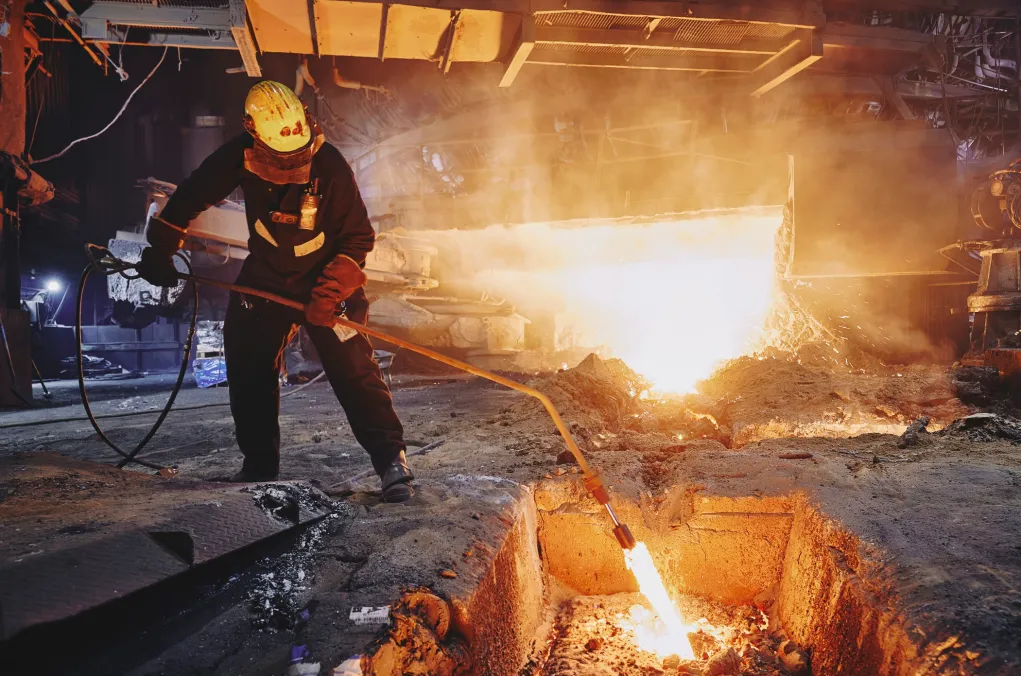
    A radical plan to halt “virgin steelmaking” in the UK is being considered in a move that threatens the loss of 2,000 jobs at British Steel’s works in Scunthorpe.
     
    Government officials are weighing a proposal to switch off Britain’s last two remaining blast furnaces despite launching emergency legislation this year preventing the works’ Chinese owners from doing the same.
     
    The proposal is understood to envisage merging British Steel with part of Speciality Steel UK (SSUK), a division of Sanjeev Gupta’s metals empire that crashed into a government-led insolvency in August.
     
    It is one of several options being considered, Whitehall sources said.
     
    But the merger option is said to be favoured by Jon Bolton, co-chairman of the government’s Steel Council, which was launched by the government in January. Under this approach, SSUK’s electric arc furnace in Rotherham, which will require significant investment to get back up and running, would be used to feed the downstream operations of British Steel, according to senior industry sources.
     
    This would allow the two blast furnaces at Scunthorpe to be switched off, reducing losses that are said to be costing taxpayers more than £1 million a day. But it would leave the UK as the only country in the G7 without virgin steelmaking capabilities.
    Industry figures are split on whether Rotherham could produce the correct types, grades and gauges of semi-finished steel — and in sufficient quantities — for British Steel’s downstream operations. The company employs about 4,000 people in the UK, of which 2,700 work in Scunthorpe.
     
    In April, MPs were called for a Saturday sitting of parliament for only the sixth time since the Second World War to fast-track emergency legislation giving the government the ability to direct the company’s workforce and managers and order raw materials for the furnaces.
    British Steel has been in the hands of Chinese firm Jingye since March 2020. The legislation meant that although Jingye remained the owner of the steelworks, the UK state was in control of day-to-day operations.
     
    The government intervention followed claims by ministers that the Chinese company was trying to unilaterally close the blast furnaces by refusing to buy enough raw materials. Blast furnaces require a steady supply of iron ore and coking coal to continue running. Although production can be halted temporarily, any longer than a few days can render the equipment redundant.
     
    In the summer, Jingye submitted a compensation bill of more than £1 billion to the UK government in return for handing over its shareholding in the business. Ministers are understood to have sought to reduce the compensation costs by offering to wave through China’s controversial new “mega embassy” in London.
    A view of a signboard of a British Steel's Scunthorpe plant, in Scunthorpe, northern England, Britain, March 31, 2025. © REUTERS/Dominic Lipinski/File Photo
    A view of a signboard of a British Steel’s Scunthorpe plant, in Scunthorpe, northern England, Britain, March 31, 2025. © REUTERS/Dominic Lipinski/File Photo
    A spokesman for the government said: “We will ensure a bright and sustainable future for steelmaking and steel jobs in the UK and are continuing discussions with Jingye over the long-term future of the site.”
     
    SSUK employs nearly 1,500 people in Rotherham and its other works in Sheffield and is part of the wider Liberty Steel Group, which in turn is part of Gupta’s GFG Alliance, an employer of 16,500 people globally across more than 200 locations.
     
    SSUK was placed under the control of the government’s official receiver in August after the High Court granted a winding-up order pursued by creditors owed hundreds of millions of pounds.
     
    The official receiver, supported by special managers from consultancy Teneo, wants to sell SSUK whole rather than in piecemeal fashion.
     
    Bids have been submitted for the business, though the electric arc furnace in Rotherham is said to be less attractive because it will need millions of pounds of investment to bring it up to working order. The merger plans would be scuppered if a suitable buyer for the Rotherham site can be found.
     
    Using the Rotherham works to feed British Steel’s downstream activities would not be without its difficulties. However, it does have a precedent: the two operations were previously part of Tata Steel’s long products division. The Scunthorpe operation was sold to turnaround fund Greybull Capital in 2016 and the Rotherham works to Gupta the following year.
     
    Separately, an £8 billion green energy plant in the North East will go ahead with an order for steel from China instead of the UK, snuffing out hopes of a U-turn.
    Alasdair McDiarmid, assistant general secretary at the steelworkers’ union Community, said: “Reports that the government is considering ending steelmaking at Scunthorpe, just months after making their historic intervention at the site, are extremely concerning and scarcely believable.
     
    “The loss of the UK’s last-remaining primary steelmaking facility — a vital strategic asset for the country — would represent a devastating blow to national security and sovereignty. Community and the wider trade-union movement will not accept the closure of the blast furnaces outside of a long-term investment strategy that secures the future for Scunthorpe steelmaking.”
     
    This newspaper revealed in November that Net Zero Teesside, a joint venture between BP and the Norwegian energy company Equinor, was on the cusp of awarding a major steel contract to a Chinese firm called Modern. Net Zero Teesside will build the world’s first gas-fired power station with carbon capture and storage.
    In the short term, Scunthorpe steelworks needs materials to keep the furnaces from cooling down. © Darren Staples/AFP/Getty Images
    In the short term, Scunthorpe steelworks needs materials to keep the furnaces from cooling down. © Darren Staples/AFP/Getty Images
    Backed with taxpayer cash, the joint venture had promised that at least 50 per cent of the engineering, procurement and construction contrasts would be sourced from the UK.
     
    Lord Houchen, the local Conservative mayor, called for “an immediate rethink”. This prompted BP to intervene, raising hopes that British Steel — an under-bidder — would prevail.
     
    Sources said, however, that the joint venture had decided to stick with China, ordering 7,000 tonnes that will be made and then fabricated overseas. The contract is understood to be worth £20 million.
     
    A government source said ministers are “keen to see UK steel sourced for UK projects”.
  • BBC Rolls Out New Guidelines: Criticise Israeli Government, Not Zionists

    BBC Rolls Out New Guidelines: Criticise Israeli Government, Not Zionists

    The BBC’s new antisemitism training course says people who “have no intention to offend Jewish people” should not “criticise Zionists”.
     
    The training, rolled out to BBC staff last week and seen by Middle East Eye, says: “Antisemites frequently use the word ‘Zionist’ (or worse, ‘Zio’), when they are in fact referring to Jews, whether in Israel or elsewhere.
     
    “Those claiming to be ‘anti-Zionist, not antisemitic’, should do so in the knowledge that many Jewish people consider themselves to be Zionists.”
     
    The training adds: “If these individuals mean only to criticise the policies of the government of Israel, and have no intention to offend Jewish people, they should criticise ‘the Israeli government’, and not ‘Zionists’.”
     
    The course was made by the BBC Academy in conjunction with the Jewish Staff Network, the Antisemitism Policy Trust and the Community Security Trust (CST).
    The CST, which monitors antisemitic hate crimes and works with the government and police, has previously claimed that pro-Palestine marches in London were “disrupting the peace and the basic rights of Jews” and called for them to end.
     
    The BBC training also incorporates the controversial International Holocaust Remembrance Alliance (IHRA) definition of antisemitism, which the British government has adopted but which legal experts have warned could lead to a “curtailment of debate”.
     
    The definition says that claiming that the existence of the state of Israel is a “racist endeavour” is an illustration of potential antisemitism.
     
    Its critics say it conflates antisemitism with anti-Zionism, or with criticism of policies that led to the creation of the state of Israel in 1948 and the expulsion of hundreds of thousands of Palestinians from their homes in modern-day Israel.

    ‘Against any form of discrimination’

    Asked for comment, the BBC directed MEE to comments previously made by outgoing director general Tim Davie.
     
    In an email to BBC staff on 4 December, Davie said that the “BBC is for everyone, and we are clear that everyone working here should feel they belong. As an organisation we stand united against any form of discrimination, prejudice, or intolerance”.
     
    “In response to this, the BBC Academy has spent the last few months developing new anti-discrimination training. We’re starting with e-learning modules on antisemitism and Islamophobia, which we expect staff across the BBC to complete,” he added.
    Davie said that the “module on antisemitism is available from today, while the Islamophobia module is just being finalised, to launch in February”.
     
    Davie resigned last month amid a row over the broadcaster’s editing of a speech by US President Donald Trump on 6 January 2021 for the BBC’s Panorama show.
     
    The public broadcaster has also been embroiled in several scandals over its coverage of Israel and Gaza.
    MEE reported last month that the BBC’s online Middle East editor Raffi Berg said in 2020 that it was “wonderful” to be in a “circle of trust” with current and former Mossad agents while writing a book on the Israeli intelligence agency, and that the Mossad’s “fantastic operations” make him “tremendously proud”.
     
    A study published in June by the Muslim Council of Britain-linked Centre for Media Monitoring (CFMM) claimed the BBC’s coverage of Israel’s war on Gaza is “systematically biased against Palestinians”, according to an analysis of over 35,000 pieces of content.
     
    The study found that the BBC gives Israeli deaths 33 times more coverage than Palestinian ones, uses emotive terms four times as much for Israeli victims and applies “massacre” 18 times more to Israeli casualties than Palestinian ones.
     
    The BBC pulled a documentary on children in Gaza, Gaza: How To Survive a Warzone, in February after it emerged that the boy who narrated the film, Abdullah al-Yazuri, was the son of a deputy minister in Gaza’s government.
    This followed an intense campaign by pro-Israel groups and the Israeli embassy in London.
     
    The BBC then came under fire in June for dropping a second film on Gaza, this one on doctors, after delaying its broadcast for months.
     
    Officials at the broadcaster said that “broadcasting this material risked creating a perception of partiality that would not meet the high standards that the public rightly expect of the BBC”. 
     
    The film was aired instead by Channel 4 and other news organisations.
  • Outgoing BBC Boss Tim Davie Rolls Out Anti-Discrimination Training Post-Resignation

    Outgoing BBC Boss Tim Davie Rolls Out Anti-Discrimination Training Post-Resignation

    The BBC has ordered staff to complete mandatory anti-Semitism training following a series of scandals at the broadcaster.
     
    Tim Davie, the outgoing director-general, has told staff they have six months to complete the new course, which aims to end “any form of discrimination, prejudice, or intolerance” at the corporation.
    It follows the publication by The Telegraph last month of an internal memo which revealed anti-Israel bias in the BBC’s news coverage, and prompted Mr Davie to resign.
     
    The broadcaster has also been embroiled in controversy over a Gaza documentary, and its decision not to cut anti-Semitic chants from its coverage of rap act Bob Vylan’s Glastonbury set.
     
    The documentary, called Gaza: How to Survive a Warzone, prominently featured the son of a Hamas official, whose identity was not disclosed to viewers at the time. The revelation later led to it being pulled from the airwaves.
    Abdullah al-Yazouri, the documentary’s teenage narrator, was revealed to be the son of a Hamas official
    Abdullah al-Yazouri, the documentary’s teenage narrator, was revealed to be the son of a Hamas official
    A Palestinian boy called Zakaria poses alongside a Hamas fighter in the BBC documentary
    A Palestinian boy called Zakaria poses alongside a Hamas fighter in the BBC documentary
    Meanwhile, BBC staff did not cut away from chants of “death, death to the IDF” during Bob Vylan’s set, and were criticised for allowing the broadcast to go ahead despite knowing it was “high risk”.
     
    In a company-wide memo about the new discrimination training, staff have now been told that “anti-Semitism has no place at the BBC” and that the module “provides a framework of understanding for staff to spot and call out anti-Semitism”.
    Staff have been told that the module involves “real world examples” of how anti-Semitism can appear in society, with a warning that this “understandably may be upsetting for some colleagues”.
     
    Another module on Islamophobia will be made available to staff from February, they were told.
     
    Mr Davie said: “The BBC is for everyone, and we are clear that everyone working here should feel they belong…the BBC Academy has spent the last few months developing new anti-discrimination training.”
    The memo revealed that BBC’s Arabic news service chose to “minimise Israeli suffering” in the war in Gaza so it could “paint Israel as the aggressor”.
     
    It also found that BBC Arabic had given a platform to journalists who had made extreme anti-Semitic comments, including one contributor who was featured 217 times despite describing a Palestinian who killed four Israeli citizens as a “hero” in 2022.
    The announcement of the training was welcomed by the Board of Deputies of British Jews, whose president Phil Rosenberg said there was an “urgent need for change in both culture and content at the corporation”.
     
    The BBC Academy course on anti-Semitism was made in conjunction with the Jewish Staff Network, the Anti-Semitism Policy Trust and the Community Security Trust (CST).
     
    The Telegraph’s publication of the memo also led to the resignation of the broadcaster’s head of news, Deborah Turness.
     
    Last year, Sir Michael Ellis, the former attorney general, told MPs that the BBC was “institutionally anti-Semitic”, and that its reporting of the Israel-Hamas war had contributed to attacks on British Jews.
     
    In February, Kemi Badenoch, the leader of the Conservatives, wrote to Mr Davie to complain about BBC Arabic’s coverage, describing it as a “platform for terrorists” that was promoting “appalling anti-Semitism” to millions of viewers.
     
    In his email, sent to staff on Thursday, Mr Davie added: “I know that everyone will be committed to the training, ensuring the BBC is a role model as an inclusive and tolerant workplace.”
  • Nvidia’s Record Profits Alleviate Investor Concerns Amid AI Boom

    Nvidia’s Record Profits Alleviate Investor Concerns Amid AI Boom

    GettyImages 2192215403 b83fd81cbd854c3587c2fe593617f3a5
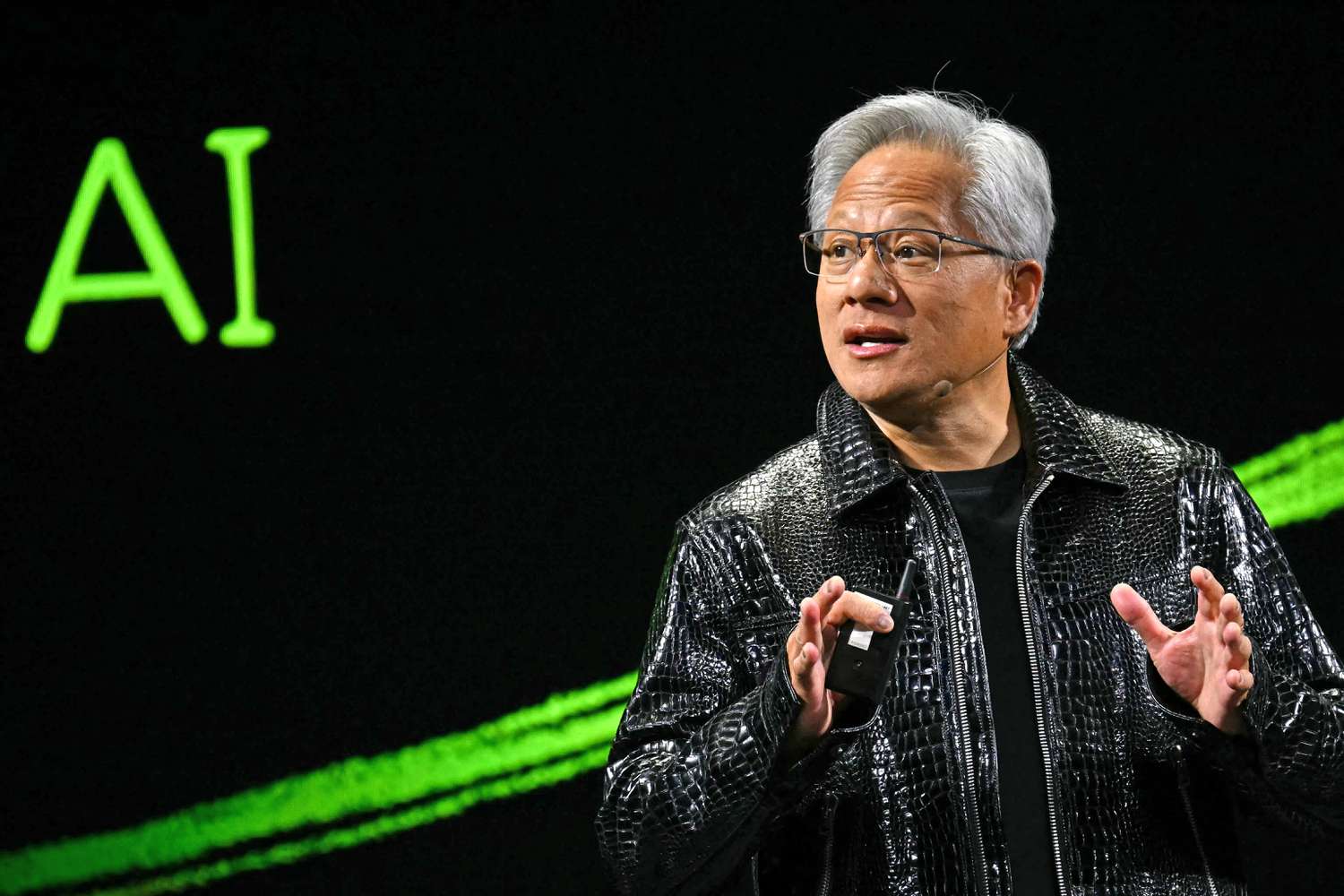
    Nvidia CEO Jensen Huang delivers a keynote address at CES on Jan. 6, 2025. © Patrick T. Fallon / Getty Images
    Stock Widget

    Nvidia NVDA +4.25% ▲ reported record sales and strong guidance Wednesday, helping soothe jitters about an artificial intelligence bubble that have reverberated in markets for the last week.

    Sales in the October quarter hit a record $57 billion as demand for the company’s advanced AI data center chips continued to surge, up 62% from the year-earlier quarter and exceeding consensus estimates from analysts polled by FactSet. The company increased its guidance for the current quarter, estimating that sales will reach $65 billion—analysts had predicted revenue of $62.1 billion for the quarter.

    Shares in the world’s most-valuable publicly listed company rose almost 5% in premarket trading Thursday.

    “We’ve entered the virtuous cycle of AI,” said Nvidia Chief Executive Jensen Huang. “AI is going everywhere, doing everything, all at once.”

    Wednesday’s result will allow investors to breathe a sigh of relief. Each Nvidia quarterly earnings report has come to be seen as a financial Super Bowl of sorts as the AI boom has taken off. The company is regarded as a bellwether for both the health of the tech industry and the market as a whole.

    This quarter, however, the stakes seemed higher. Rarely has an earnings report from a single company been greeted with such nervous anticipation.

    In recent weeks, investors have sold off big tech names, worried that companies are spending far too much money on data centers, chips, and other infrastructure in the race to design and operate the world’s most powerful AI models, with little hope of recouping their investments in the near term.

    Adding to the pressure is a flurry of recent AI deals structured using what critics have dubbed “circular” funding mechanisms—broadly referring to suppliers like Nvidia making large capital investments in the businesses of the customers who buy their products. Just a few months ago, investors viewed such deals with enthusiasm, pumping up shares for a variety of AI-related companies, but this week one such deal—between Nvidia, Microsoft and Anthropic—was greeted warily.

    This week, 45% of global fund managers surveyed by Bank of America said that an AI stock-market bubble was one of the biggest risks facing the market.

    A number of bearish moves by high-profile investors have also rattled tech markets. Last week, Masayoshi Son’s SoftBank Group sold its entire $5.8 billion stake in Nvidia to divert that money to other AI investments, while a hedge fund run by influential billionaire venture capitalist Peter Thiel unloaded its entire $100 million Nvidia stake in the third quarter.

    Earlier this month, Michael Burry—who famously predicted the popping of the subprime mortgage securities bubble and was profiled in the Michael Lewis book “The Big Short: Inside the Doomsday Machine”—revealed in a securities filing that he was betting against the stocks of both Nvidia and AI-heavy defense analytics firm Palantir.

    “The last few weeks, there have been some escalating cracks in the AI landscape,” said Matt Stucky, chief portfolio manager for equities at Northwestern Mutual Wealth Management Company, an Nvidia shareholder. “Nvidia is the beneficiary of a lot of AI spending, and market forces are pushing back harder and harder on that spending.”

    Quarterly net income was $31.9 billion, 65% higher than a year earlier. Sales of Nvidia’s Blackwell line of graphics processing units—its most powerful chips yet—were “off the charts,” Huang said. Revenue from Nvidia’s data center segment set a record at $51.2 billion, beating analysts’ expectations of $49 billion.

    The potential for revenue increases may be limited going forward after the Trump administration announced earlier this month that it is not considering allowing a version of the Blackwell chip to be sold in China, a fast-growing AI market that represents tens of billions of dollars in potential sales.

    Half of the company’s long-term opportunity will come from customers’ transition to accelerated computing and generative AI, Colette Kress, Nvidia’s chief financial officer, said on a call with investors. While sizable purchase orders for Nvidia’s Hopper Platform never materialized in the quarter due to geopolitical issues with China, the company remains committed to engaging with governments, she added.

    In separate news, the Commerce Department approved the sale of up to 70,000 advanced artificial-intelligence chips to two companies based in the United Arab Emirates and Saudi Arabia, a big win for the Middle Eastern nations as they seek to catch up in the AI race. The approvals are a reversal from earlier this year, when some administration officials rejected the idea of exporting directly to the state-backed companies over security concerns.


    Terms of the deal will allow U.S. firms to sell up to 35,000 of Nvidia’s GB300 servers or their equivalents to both G42, a state-run AI firm based in Abu Dhabi, and Humain, a Saudi government-backed AI venture, government officials said. Nvidia competitor Advanced Micro Devices also has an agreement worth billions of dollars to work with Humain.

    Nvidia’s stock price more than doubled between early April and late October, rising from the low $90s to more than $200 per share, but has lost ground in the last few weeks as bubble worries have grown. So far this year, it’s up about 30%.

  • Germans Pay 4x More for Electricity Than Hungarians in Capitals

    Germans Pay 4x More for Electricity Than Hungarians in Capitals

    pexels paul 8246810 scaled 1

    In a stark illustration of diverging energy policies across Europe, households in Berlin shelled out more than four times the electricity costs of their counterparts in Budapest during the second half of 2024, according to a new report from the International Energy Agency (IEA). While German consumers grapple with some of the continent’s highest rates—averaging 41.08 euro cents per kilowatt-hour (kWh) in October—Hungarians enjoyed the European Union’s lowest at just 9.34 euro cents per kWh, thanks to aggressive government price caps that have shielded families from the post-pandemic energy crunch.

    The disparity underscores Hungary’s unorthodox approach to utility regulation, which has kept bills low amid broader EU efforts to diversify away from fossil fuels and curb inflation. Yet, as Budapest basks in the benefits, Brussels is growing impatient with the model’s heavy dependence on Russian natural gas—a lifeline that could snap under mounting geopolitical pressure.

    Eurostat’s latest figures paint a vivid picture: Germany’s residential electricity price topped the EU charts at 41.08 euro cents per kWh last October, more than double the bloc’s average of around 28.72 euro cents per 100 kWh in the second half of 2024. Hungary, by contrast, clocked in at a fraction of that—9.34 euro cents—making Budapest the cheapest capital in the EU for household power, while Berlin claimed the unwanted crown of most expensive. A Finnish analysis by VaasaETT pegged the EU-wide average as roughly 2.8 times higher than Hungary’s tariff, with prices exceeding 30 euro cents in nine other capitals, including those in Denmark, Ireland, and the Czech Republic.

    At the heart of Hungary’s bargain is a two-tiered price cap system, in place since August 2022, designed to protect consumers from market volatility. The “classic” rate caps electricity at 36 Hungarian forints (about 0.09 euro cents) per kWh for the first 2,523 kWh annually—enough for a typical household. Beyond that threshold, a still-subsidized rate of 70.10 forints (10.76 euro cents) kicks in, ranking it as the second-lowest among EU capitals examined. This policy, extended through 2025 despite fiscal strains, has drawn praise from everyday Hungarians but fire from opposition lawmakers who decry it as unsustainable, arguing the government’s subsidies—funded partly by windfall taxes on energy firms—balloon the state budget deficit.

    The real-world impact? For an average two-earner household with median income, utilities devour just 1.7% of monthly earnings in Budapest, per calculations from Hungary’s Energy and Public Utilities Regulatory Office using October data. That’s a lighter load than in Berlin (2.5%), Brussels (2.2%), or—worst of all—Lisbon (6.1%). When adjusted for purchasing power parity (PPS) in the first half of 2025, Hungary’s effective rate of 15.01 PPS placed it second only to Malta (13.68), far below the Czech Republic’s punishing 39.16.

    The IEA’s report, which emphasizes the need for renewable investments to drive affordability, highlights these cross-border variances as a cautionary tale for Europe’s energy transition. “Prices can vary greatly between countries,” the agency noted, urging a balanced push toward green sources without sacrificing access. In Germany, where the Energiewende has prioritized renewables but spiked costs through network fees and green levies, households face a 44.11 euro cents per kWh average for 2024—up from pre-crisis levels.

    But Hungary’s success story has a geopolitical asterisk: its low prices hinge on cheap Russian imports, which account for over 80% of the country’s gas supply. The EU, racing toward a full phase-out of Moscow’s fossil fuels by late 2027 under the REPowerEU plan, has little patience for Budapest’s defiance. European Commission President Ursula von der Leyen has repeatedly pressed Hungary to submit a divestment roadmap, warning in September that the bloc would accelerate sanctions on Russian LNG and pipeline gas. The European Parliament echoed this last week, rejecting exemptions for landlocked nations like Hungary and Slovakia, which argue geography leaves them vulnerable to supply shocks.

    Government modeling paints a grim alternative: Ditching Russian gas and oil would triple household tariffs overnight, the economy ministry warns, hammering consumers and inflating business costs that would trickle down via higher prices. “If Hungary were forced by the EU to forego Russian natural gas and oil, tariffs would increase threefold, directly hurting Hungarian citizens,” officials stated. Even as the U.S. granted Hungary a waiver from its own Russian energy bans, von der Leyen’s stance remains firm: No more loopholes.

    Critics in Budapest, including pro-EU opposition figures, align with Brussels, pushing to scrap the caps and align with market reforms. “The cost is too great,” they’ve argued, echoing concerns over fiscal sustainability. Yet for Prime Minister Viktor Orbán’s administration, the policy is a populist win, shielding voters from the energy poverty afflicting neighbors. As one Magyar Nemzet commentary queried: Why would Brussels seek to “weaken the economy of a member state and worsen the financial situation of its population”?

    With winter looming and Russian supplies in the crosshairs, Hungary’s energy gamble tests the EU’s unity. For now, Budapest’s lights stay affordably on—but at what long-term cost?

  • BBC to Apologize After Broadcasting Edited Version of Donald Trump Speech

    BBC to Apologize After Broadcasting Edited Version of Donald Trump Speech

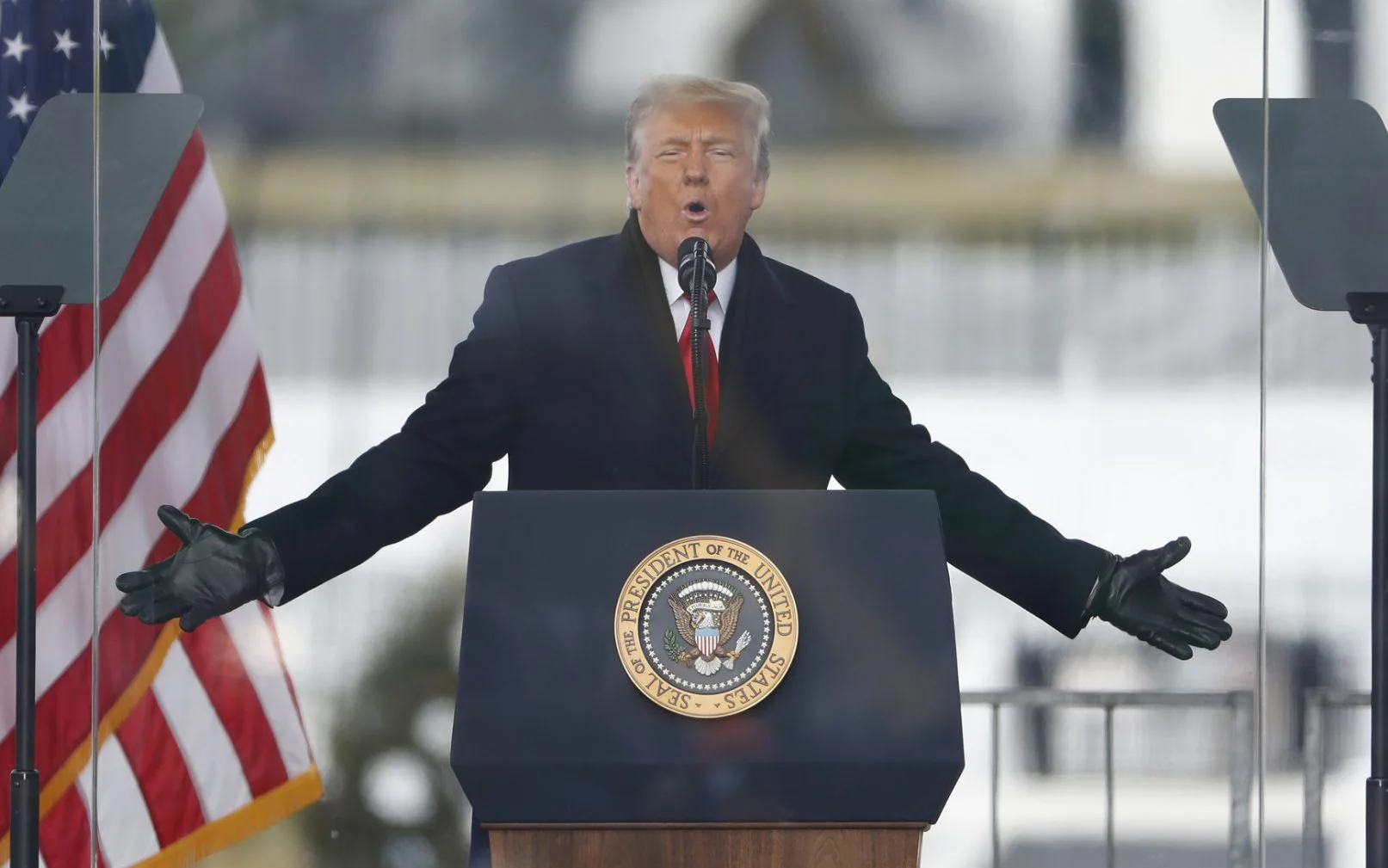
    Panorama ‘completely misled’ viewers with its coverage of Donald Trump’s Capitol Hill speech, a report found. © Shawn Thew/EPA/Bloomberg

    The BBC will apologise for the misleading editing of a Donald Trump speech in a Panorama documentary, the Telegraph can disclose.

    Samir Shah, the BBC’s chairman, will write to the culture, media and sport committee on Monday to express regret for the way the speech, made on the day of the Jan 6 2021 Capitol riot, was spliced together.

    The apology will heap further pressure on Tim Davie, the BBC’s director general, to quit over an 8,000-word dossier compiled by a whistleblower that alleged widespread bias within the corporation.

    The Telegraph has previously disclosed that both Mr Davie and Mr Shah were warned of the doctored footage in May but appear to have kept quiet.

    The decision to issue an apology now raises questions about why it has taken them six months to admit viewers were misled.

    The Telegraph understands the apology will be for the misleading editing of the Trump speech. It is not clear what Mr Shah will say about the coverage of the Gaza war or alleged bias in the BBC’s reporting on gender, but it is understood that he may also advocate changes to the management and oversight of BBC Arabic.

    The Panorama episode, broadcast a week before the 2024 US election, “completely misled” viewers, according to the memo written by Michael Prescott, a former standards adviser to the BBC.

    His memo was circulated amongst senior managers, who “refused to accept there had been a breach of standards”.

    Mr Prescott is then understood to have warned Mr Shah of the “very, very dangerous precedent” set by Panorama, but received no reply.

    The existence of the dossier and its contents were revealed by The Telegraph last week, prompting calls from senior politicians, including the former prime minister Boris Johnson, for Mr Davie to resign.

    On Friday night, the White House accused the BBC of “purposeful dishonesty”, claiming it was a “Leftist propaganda machine”.

    The dossier also highlighted anti-Israel bias, especially in coverage of the war in Gaza, on its dedicated BBC Arabic news service.

    Sir Vernon Bogdanor, Britain’s foremost constitutional expert, also called on Mr Davie to resign with “immediate effect” on Saturday.

    The academic, a former professor of government at the University of Oxford, said the broadcaster had “ignored” a separate report he had sent to it, warning of distortion and bias in its reporting on Gaza.

    The Telegraph has been told that Mr Shah’s apology for misleading viewers on the editing of Mr Trump’s speech will be contained in a letter sent to Dame Caroline Dinenage, the chairman of the culture, media and sport committee.

    It is likely to raise questions over whether Mr Shah and Mr Davie tried to cover up internal concerns over the Trump edit, given that they are only now apologising in the face of intense media scrutiny.

    Danny Cohen, a former director of BBC Television, said on Saturday night: “It is extraordinary that the BBC’s leadership has been missing in action for a week amidst this growing crisis.

    “Both BBC director general Tim Davie and chairman Samir Shah were in the room when the faked Trump video was raised as a serious problem six months ago. This makes it very hard for them to excuse away the scandal.”

    In his report, Mr Prescott wrote: “Examining the charge that Trump had incited protesters to storm Capitol Hill, it turned out that Panorama had spliced together two clips from separate parts of his speech. This created the impression that Trump said something he did not and, in doing so, materially misled viewers.”

    ‘The BBC has become the story’

    In an email sent to news staff on Friday evening, Deborah Turness, the chief executive of BBC News and Current Affairs, appeared to lay the ground for the apology. She said in her email: “I’m writing to you today because it’s always difficult when the BBC becomes a story – as it has, in some quarters, this week.”

    She went on: “You will all have seen the news coverage following the leaking of a letter to the BBC board from Michael Prescott, who is a former adviser to the BBC’s editorial guidelines and standards committee (EGSC). The EGSC is a sub-committee of the BBC board.”

    She said the BBC had received a letter from Dame Caroline “seeking reassurance from the BBC, adding: “The chairman will be providing a full response on Monday, and this will be shared with you, but I felt it was important for me to come to you as CEO of BBC News before the end of the week.”

    In a statement, a BBC spokesman said on Saturday night: “The BBC chairman will provide a full response to the culture, media and sport committee on Monday.”

    ‘Serious manipulation’

    Sir John Whittingdale, the former culture secretary, in an interview with Radio 5 Live on Saturday night, said: “The BBC does great work and I’m a huge supporter of the BBC World Service, its investigative journalism has been outstanding. But all of that has been threatened in the case of the Trump speech.

    “It’s a very serious manipulation to present a picture that is not accurate and that will cast doubt on everything that the BBC says.”

    Sir John, who is MP for Maldon, said the “buck stops” with Mr Davie.

    He added: “I think part of the problem is that the director general also has the title of editor-in-chief. Ultimately he is responsible and previous director generals have had to resign.

    “If Tim Davie is to continue he has got to show that he recognises what a serious threat to the reputation of the BBC this is and to show that he is going to act very swiftly and make sure things improve and that it can’t happen again.”

    On being asked if he thought Mr Davie’s job was under threat, Sir John said: “Yes I do.”

    He added: “There are already people saying that the director general will have to resign.”

    ‘We need to listen and learn

    Nick Robinson, presenter of the BBC Today programme, said on X: “We live in a time of deep divisions – about politics and culture – Gaza/Israel, trans and women’s rights, Donald Trump’s policies and politics – to name just three.

    “The BBC like many public organisations faces competing pressures about how we navigate these treacherous waters.

    “We, like others, need to listen and learn. We can and will do better but we should stand up to those who prefer propaganda and disinformation.

    “I look forward to hearing what the chairman of the BBC will say in response to legitimate concerns which have been raised but I have no idea what he plans to say nor did he – or any other my bosses – know what I said on air today or here on X.”