Blog

  • Oil price surge from Iran war threatens US growth and fuels inflation, economists warn

    Oil price surge from Iran war threatens US growth and fuels inflation, economists warn

    Soaring oil prices threaten to hit US growth, worsen inflation and keep the Federal Reserve from lowering interest rates, top economists have warned ahead of the central bank’s first rate decision since the Iran war began.

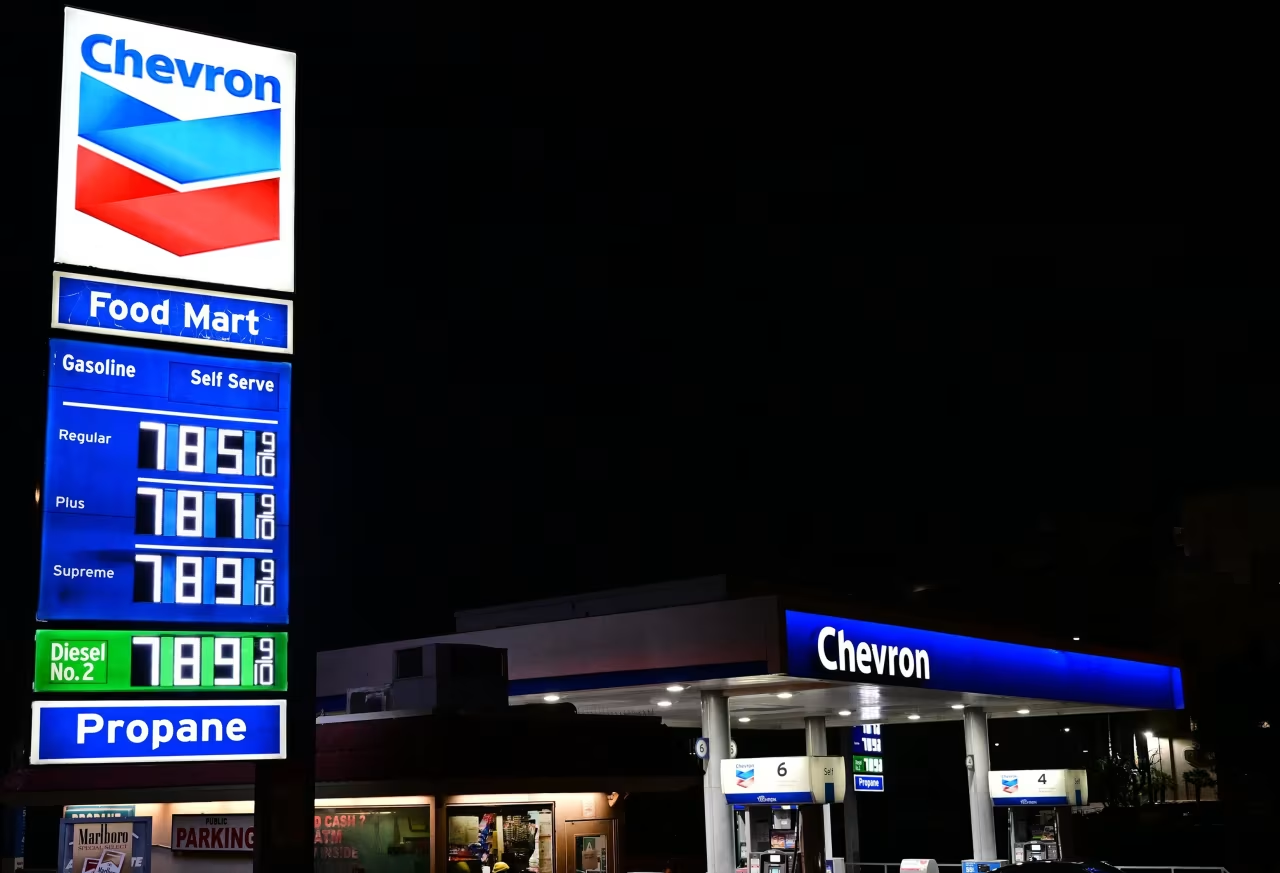
    US oil prices have jumped almost 50 per cent since the US and Israel struck Iran at the end of last month to about $95 a barrel, sending the costs of petrol and diesel at the pump surging higher.

    The majority of academic economists polled by the Clark Center for Global Markets on behalf of the Financial Times said that, if oil prices were to remain at $100 a barrel, slightly above their current level, US growth will decline markedly.

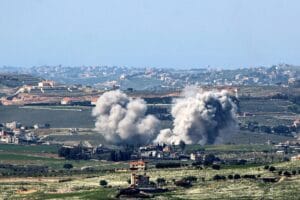
    Tehran has largely closed the Strait of Hormuz, a waterway through which a fifth of the world’s oil flows, in retaliation for the strikes on Iran. The disruption has caused a global supply crunch and is hitting US consumers and businesses despite the US’s role as a major energy producer.

    More Middle East Tensions

    Plus sign png

    “The key question is the extent and duration of a blockage of the Strait of Hormuz,” said James Hamilton, professor at University of California San Diego and an energy market expert. “If it goes on for a month or so, then this is a very big deal. And I think it would lead to a significant downward revision in the kind of growth we’re expecting for this year.”

    Some 68 per cent of respondents anticipated a significant hit to GDP growth this year of at least 0.25 to 0.5 percentage points should oil stay at $100 for the rest of 2026, compared with a scenario with $75 oil. Just 2 per cent thought the economic impact of high oil prices would be positive, with the rest expecting little to no impact in either direction.

    The US economy expanded at a 0.7 per cent annualised clip in the final quarter of 2025, from the previous quarter’s 4.4 per cent growth rate. Panellists’ growth warnings contrast with White House officials, who say the conflict will do little harm to the prospects of the world’s largest economy. “If [the war] were to be extended, it wouldn’t really disrupt the US economy very much at all,” said Kevin Hassett, director of the White House’s National Economic Council, on Tuesday. “It would hurt consumers, and we’d have to think about — if that continued — what we’d have to do about that, but that’s really the last of our concerns right now because we’re very confident this thing is going ahead of schedule,” he said in an interview with CNBC. The Trump administration’s war on Iran has exacerbated the challenges facing Fed officials, who are set to make their latest policy decision on Wednesday. Even before the conflict began, the central bank was facing a delicate balancing act over whether to prioritise its fight against inflation or the latest signs of a slowdown in the US labour market. The Bureau of Labor Statistics said the US economy lost 92,000 jobs in February while corporate America has laid off tens of thousands of workers this year.At the same time, the jump in petrol and diesel costs — now at the highest levels in either of President Donald Trump’s White House terms — risks undermining the American public’s faith in the central bank’s commitment to stamp out inflation. Headline personal consumption expenditures inflation (PCE) is 2.8 per cent and has been above the 2 per cent level the Fed targets since early 2021.


    If oil stays near $100 for a prolonged period, it would lead to a rise in headline PCE inflation of at least 0.25 to 0.5 percentage points by the end of the year, according to more than 80 per cent of those polled. The 47 economists — surveyed quarterly by the Clark Center, part of the University of Chicago’s Booth School of Business — also say the Fed will now need to wait longer before core PCE inflation falls to its 2 per cent goal. That category excludes food and energy prices. Six in 10 participants in the survey now expect it will take until at least the first half of 2028 before price pressures return to 2 per cent — up from just under half in December.


    Fed watchers widely expect the central bank to hold the federal funds target range at 3.5 per cent to 3.75 per cent on Wednesday. Markets are betting the oil price rise has pushed the next cut back until the spring of next year, after three quarter-point cuts in 2025.

    Most Read in Politics
    Fed officials will also publish their latest economic and rate projections, known as “dot plots”, later on Wednesday. The FT panel in the latest survey was less sure US benchmark borrowing costs would end the year lower than their current level. Roughly a third said they now expected no cuts for the duration of 2026, compared with 15 per cent in December. “My prediction right now is that you’re not going to see much action [from the Fed] for a while,” said Stephen Cecchetti, a Brandeis University professor. “The uncertainty is so high that you have to wait. I would be waiting. But I would be unhappy that I had to start from here.”

  • Trump praises Japan’s support in Iran war during White House meeting with PM Sanae Takaichi

    Trump praises Japan’s support in Iran war during White House meeting with PM Sanae Takaichi

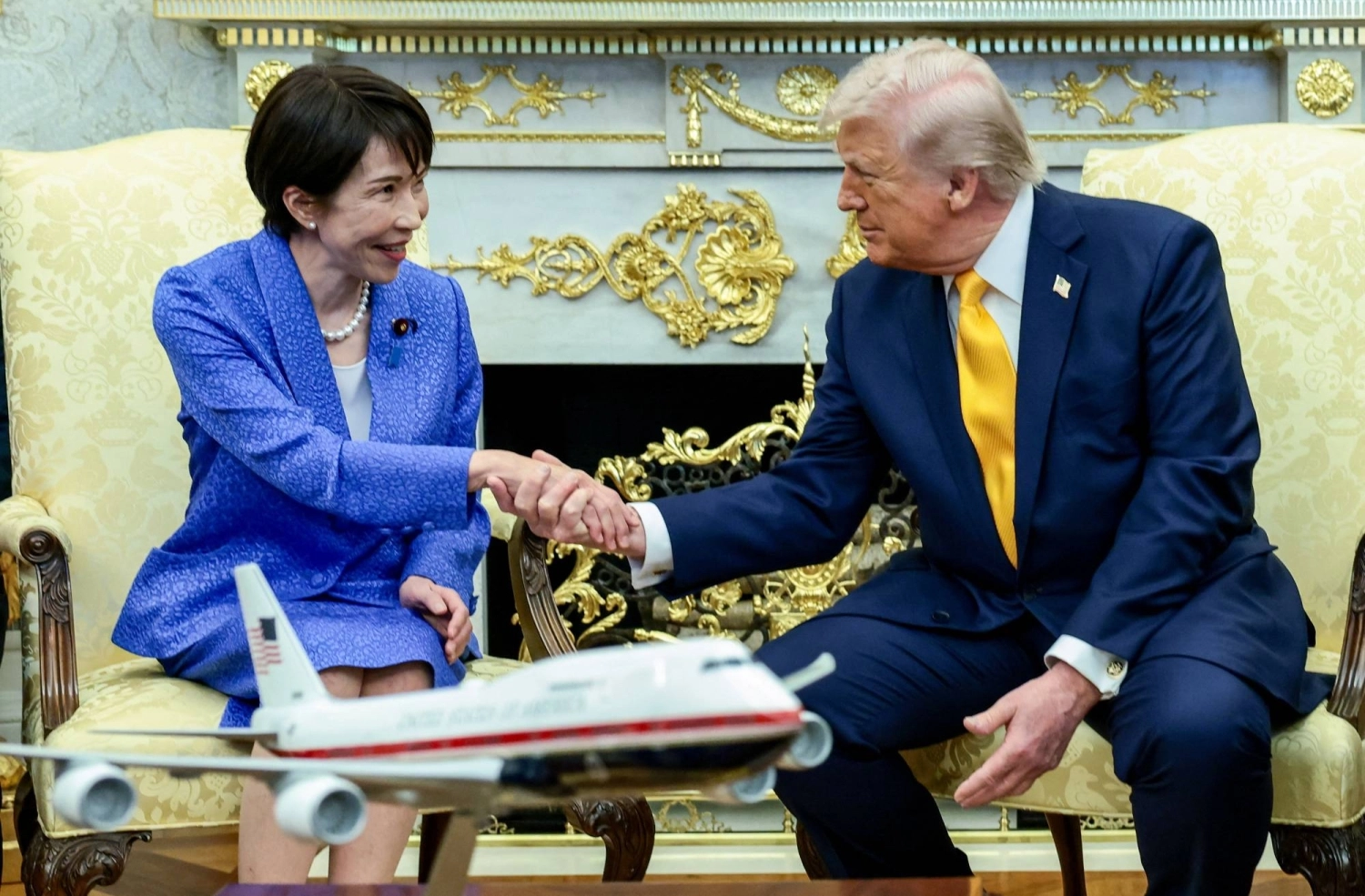
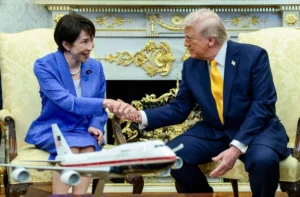
    In an apparent awkward moment at the Oval Office on Thursday stateside, U.S. President Donald Trump referenced Pearl Harbor in his first meeting with Japan’s Prime Minister Sanae Takaichi after her landslide electoral victory.

    When asked by a Japanese reporter on why the U.S. did not inform allies such as Japan before carrying out the attacks against Iran on Feb. 28, the U.S. president said it was to maintain the element of surprise.

    “Who knows better about surprise than Japan … Why didn’t you tell me about Pearl Harbor?”

    Trump was referencing the surprise Japanese attack on the U.S. Pacific Fleet in 1941, which saw the deaths of over 2,400 personnel and drew the U.S. into World War II.

    Takaichi appeared to draw a deep breath and lean back in her seat with an uneasy expression.

    “Who knows better about surprise than Japan … Why didn’t you tell me about Pearl Harbor?”

    Donald Trump U.S. President

    Trump said that the surprise attack on Iran had helped the U.S., adding that it “knocked out 50% of what we anticipated” in the country within the first two days.

    During the meeting, Trump praised Japan for “stepping up” to assist in efforts to secure the Strait of Hormuz, “unlike NATO.“

    Before the meeting, Japan, as well as Britain, France, Germany, Italy and the Netherlands had released a joint statement expressing their readiness to “contribute to appropriate efforts to ensure safe passage through the Strait.”

    Trump had called on Japan and other countries to help secure the Strait of Hormuz, but Takaichi had reportedly said Monday that there were no plans to dispatch naval vessels to escort boats in the Middle East.

    Her office also said in a post on X that there was “no specific request from the United States to Japan for the dispatch of vessels.”

    Japan’s prime minister on Tuesday said that the government was considering what could be done within the framework of the country’s law. Japan’s Self-Defense Forces are governed by its pacifist constitution, that renounces war and the threat or use of force for settling international disputes.

    Trump had taken aim at NATO allies earlier this week, saying that the alliance was “making a very foolish mistake” by not getting involved in the war.

    In response, German Defense Minister Boris Pistorius reportedly said on Monday that “This is not our war, we have not started it,” a stance that was also adopted by French President Emmanuel Macron.

    Subsequently, Germany’s Chancellor Friedrich Merz said on Thursday that “we have declared that as long as the war continues, we will not participate in ensuring freedom of navigation in the Strait ​of Hormuz, for example, by military means,” according to Reuters.

  • Donald Trump White House tries to sell war and death as a game

    Donald Trump White House tries to sell war and death as a game

    The White House has found a new recruit to sell the US war on Iran to an increasingly sceptical American public: SpongeBob SquarePants.

    In a video posted by the White House on X, a clip of the cartoon character says, “do you want to see me do it again?” as unclassified footage of US missiles blowing up Iranian jets and trucks appears. The caption reads: “Will not stop until the objectives are met. Unrelenting. Unapologetic.”

    An unlikely warmonger, SpongeBob SquarePants is just one of the internet memes harnessed by US officials in a propaganda campaign that has drawn heavily on video games, action movies and cartoons to celebrate American military prowess in Iran.

    Will not stop until the objectives are met.

    Unrelenting. Unapologetic. 🔁 pic.twitter.com/iM9fqjn1zc

    — The White House (@WhiteHouse) March 5, 2026

    Donald Trump’s White House has deployed a galaxy of pop-culture icons to hype up American martial virtues and divert attention from the growing human and economic devastation of the war.

    “This is a memification and a gamification of war,” said Nick Cull, a historian of propaganda at USC Annenberg School for Communication and Journalism. “It’s an appalling way to represent conflict.”

    It is unclear how effective it’s been. An Ipsos poll this month found only 29 per cent of Americans approved of the US strikes in Iran and 43 per cent disapproved.

    But Roger Stahl, professor of communications studies at the University of Georgia, said the purpose of the videos wasn’t necessarily to win over voters unconvinced about the wisdom of going to war against Iran.

    “It’s to galvanise the Maga base with a kind of thrilling, easy-to-digest version of that conflict that appeals to the base instincts of gamers and people who think that war is just a series of one-liners from Hollywood,” he said. “But to probably 70 per cent of the population, a good majority at least, it’s just shocking.”

    Perhaps the most striking video put out by the White House depicts the war as a Nintendo game, mixing footage of missile strikes with images from Wii Sports.

    To a sprightly soundtrack, a cartoon player is shown scoring a bullseye, hitting a hole in one and bowling a strike, with each shot cutting to footage of missile strikes in Iran. An announcer bellows sporting clichés: “It’s Out of the Park!” “Slam Dunk!” and “Knockout!”

    Another video along the same lines, entitled “JUSTICE THE AMERICAN WAY”, includes clips from Top GunBraveheartBreaking Bad and the anime Dragon Ball Z, and ends with a voiceover saying “flawless victory”, lifted from the video game Mortal Kombat.

    White House deputy communications director Kaelan Dorr reposted the clip with the caption “Wake up, Daddy’s Home”.

    “They’re like ads for a knock-off Tom Cruise movie,” said Peter Loge, director of the School of Media and Public Affairs at George Washington University.

    “It hides the gruesome realities of conflict and war,” he went on. “You don’t feel the grief, you never see the aftermath of the conflict or the violence.”

    The Justice video has drawn angry responses from some in Hollywood. Director and actor Ben Stiller, whose film Tropic Thunder was featured in the montage, demanded the White House remove the clip.

    “We never gave you permission and have no interest in being a part of your propaganda machine,” he wrote on X. “War is not a movie.”

    Even former members of the military have expressed disgust. “Sorry to be Debbie downer,” Connor Crehan, an Iraq war veteran and BarStool Sports host, wrote on X. “War isn’t a video game. The consequences of war are final. I wish we didn’t treat it with such a cavalier approach.”

    The White House denied that it was trying to reduce the war to a game. “The legacy media wants us to apologize for highlighting the United States Military’s incredible success,” said spokeswoman Anna Kelly. 

    “But the White House will continue showcasing the many examples of Iran’s ballistic missiles, production facilities, and dreams of owning a nuclear weapon being destroyed in real time.”

    The videos mark a big departure from the high moral tone normally adopted by US administrations entering into a global conflict.

    When President Woodrow Wilson took the US into the first world war, he famously argued that “the world must be made safe for democracy”. In framing Operation Desert Storm in 1990, George HW Bush hailed the prospect of a “new world order” emerging from “these troubled times”.

    “Traditionally the US government has spoken about war as something regrettable and necessary for a carefully considered diplomatic objective,” said Cull.

    “They’ve sought to carry the American public with them . . . and persuade the world that it is in the best interests of humanity. And I don’t think those sorts of priorities are detectable in [Trump’s] messaging here.”

    On the contrary, the videos seem squarely aimed at the president’s core supporters, especially the young men who voted for him in huge numbers in the 2024 presidential election.

    Posts by White House officials over the past three weeks have been sprinkled with gamer and streamer slang. “W’s in the chat boys,” wrote Steven Cheung, Trump’s director of communications, above a video mixing strikes in Iran with an animation from Call of Duty: Modern Warfare 3.

    “Based Department? Yes. I’ll hold,” wrote Kaelan Dorr as he reposted another propaganda video on X, using the Gen Z word that means “bold” or “unapologetic”.

    The clips build on a tradition established by the Department of Homeland Security last year. One viral video with the caption “Gotta Catch ‘Em All” showed ICE agents blowing in doors, and handcuffing and leading away undocumented immigrants to a song from the Pokemon cartoon. The clip was viewed 75.5mn times.

    Loge compares Trump’s messaging style to pro wrestling. “He’s embracing the spectacle [of war] more than any of his predecessors have,” he said. But he warned that there was a risk for the White House that public support could collapse when the reality of the conflict hits home.

    “It’s like turning on the lights on an amusement ride,” he said. “You can only suspend disbelief for so long.”

  • Bond Market Flashes Warning Signal Not Seen Since Before 2008 Financial Crisis

    Bond Market Flashes Warning Signal Not Seen Since Before 2008 Financial Crisis

    Troubling developments unfolded in the U.S. bond market on Thursday that had some investors drawing comparisons with the run-up to the 2008 financial crisis.

    The current problems start with rising oil prices as a result of the U.S.-Israeli war against Iran, which is raising the risk of stagflation and the prospect of a 2026 interest-rate hike by the Federal Reserve. Brent crude the global oil benchmark, briefly blew past $119 a barrel on Thursday as attacks escalated on oil-and-gas infrastructure in the Persian Gulf. West Texas Intermediate crude-oil futures briefly crossed $100 a barrel.

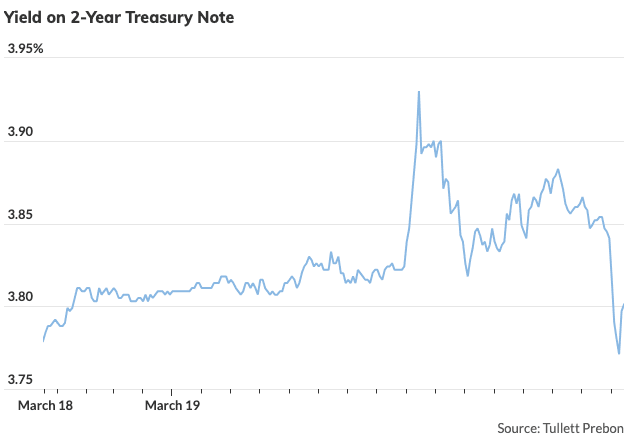
    But even as oil prices have spiked and stock prices come down, Treasurys, often seen as a haven during times of market unease, haven’t rallied on a continual basis. Instead, fears that the war in the Middle East could morph into a full-blown energy crisis pushed the policy-sensitive 2-year Treasury yield above the Federal Reserve’s interest-rate target on Thursday. Bond yields move inversely with prices and rise during selloffs.

    Thursday’s bond-market selloff caused the Treasury yield curve to exhibit what traders describe as a “bear-flattening” pattern. This actually began back in early February. Typically, the pattern emerges when bond traders are bracing for a difficult economic environment ahead.

    The confluence of these three developments — oil above $100 a barrel, a 2-year yield above the fed funds rate, and a bear-steepening dynamic in the bond market — is making some investors nervous.

    The last time all three things unfolded simultaneously was in the late spring of 2008, according to Bloomberg data. About four or five months later, Lehman Brothers collapsed, ushering in the most acute phase of the 2008 financial crisis. The S&P 500 declined 38.5% that year. Widespread mortgage defaults also resulted in many Americans losing their homes.

    The current environment includes both similarities and differences to that troubling time. Whereas the 2008 crisis was triggered by the bursting of a housing bubble and the subsequent collapse of the subprime mortgage market, investors are currently focused on the continued war with Iran, which began on Feb. 28, as well as signs of increasing stress in the private-credit industry.

    Already, investors have been impacted by twin declines in stocks and bonds, which amount to a double-whammy for anybody holding their retirement savings in a 60-40 portfolio.

    The backdrop now “does remind me of 2007-2008, when you did have cracks in the financial system,” said economist Derek Tang of Monetary Policy Analytics in Washington. The bad news now is “we are going into an energy-price shock and the Fed’s hands are tied because of inflation risks, which make it harder to cut rates.” This is all happening as the chance of a U.S. recession is growing, which is “not healthy” for risk assets. “That’s why people are on a knife’s edge right now.”

    All three major U.S. stock indexes closed lower on Thursday, despite attempting to climb during the final hour of trading.

    Earlier in the day, the 2-year yield, which is tied to expectations for the path of interest rates, jumped by as much as 21.8 basis points to an intraday high of almost 3.96% as the underlying government note aggressively sold off. The rate rose 8.8 basis points to 3.83% by 3 p.m. Eastern time, leaving it above the Fed’s interest-rate target of between 3.5% and 3.75%

    The 2-year yield climbed at a faster pace than the benchmark 10-year yield which rose just 2.5 basis points to 4.28% —producing a bear-flattening pattern of the Treasury curve. The difference between 2- and 10-year Treasury yields shrank to around 45.1 basis points on Thursday from 51.5 basis points a day ago, and it is down from 74 basis points in early February.

    The curve’s bear flattening is already hurting financial institutions, which rely on borrowing at short-term rates to lend at long-term rates, and retirement-age investors who held the 2-year Treasury note because of its cash-like qualities. As the note sells off, its yield rises so those older investors could have waited to buy at a lower price and higher yield. The bear-flattening’s significance to investors more broadly rests in the signals it sends about the likely upward path for interest rates and a negative economic outlook.

    The 2-year rate is pricing in a scenario in which “the Fed will have to move into a rate-hiking cycle for the next few years,” said Ben Emons, founder of the New York-based investment management firm FedWatch Advisors, who added that he does not share this view.

    However, a repeat of the 2008 financial crisis is not necessarily in the cards because “we’re not in stagflation yet and the economy is not as reliant on oil prices as it was back then,” Emons said in a phone interview. “We have private-credit issues, but there’s a difference between that and the subprime crisis at the time. The banking system is far more resilient than before.”

    Fed-funds futures traders currently see a 93.8% chance of no change in borrowing costs this year and a 6.2% likelihood of one rate hike by December. On Wednesday, Fed Chair Jerome Powell lent some credence to the idea of a hike by saying officials have deliberated on whether their next move should be to lift rates, though this is not currently the central bank’s base-case scenario.

  • Jerome Powell Says US Job Creation Near Zero as Fed Signals Steady Unemployment

    Jerome Powell Says US Job Creation Near Zero as Fed Signals Steady Unemployment

    Job creation in the US has slowed to essentially zero, Federal Reserve Chair Jerome Powell said Wednesday as the Fed released its latest economic projections, which included slightly higher economic growth than previously projected and little change to the unemployment rate.

    Altogether, Powell said, central bankers see “a degree of stability” in the labor market.

    “But the thing that I think a good number of people on the committee are concerned about is just the very, very low level of job creation,” Powell said in a press conference following the Fed’s decision to hold interest rates steady.

    “Effectively, there’s zero net job creation in the private sector,” after accounting for revisions over the past six months, Powell said. “But actually, that looks like that’s about what the economy needs, in terms of dealing with very, very low — nonexistent, really — growth in the labor force, which of course we’ve never had in our history.”

    Indeed, the country may not need as many jobs as it once did amid lower labor force participation rates and immigration declines. But Powell also noted that “labor demand has clearly softened as well.”

    The job market hasn’t shifted dramatically since Powell’s last press conference in late January. But whatever brief glimmers of optimism existed are now in doubt. The unemployment rate, now at 4.4%, ticked back up in February as the economy shed 92,000 jobs, while December and January’s job gains were revised lower by 69,000, meaning there’s been barely any job growth in three months.

    In their new policy statement, Fed officials removed language that noted the “unemployment rate has shown some signs of stabilization,” saying instead that “job gains have remained low, and the unemployment rate has been little changed in recent months.”

  • US Intelligence chief avoids contradicting Trump on Iran war threat claims

    US Intelligence chief avoids contradicting Trump on Iran war threat claims

    Donald Trump’s top spy chief refused to say whether Iran had posed an imminent threat to the US as the president claimed at the outset of the war.

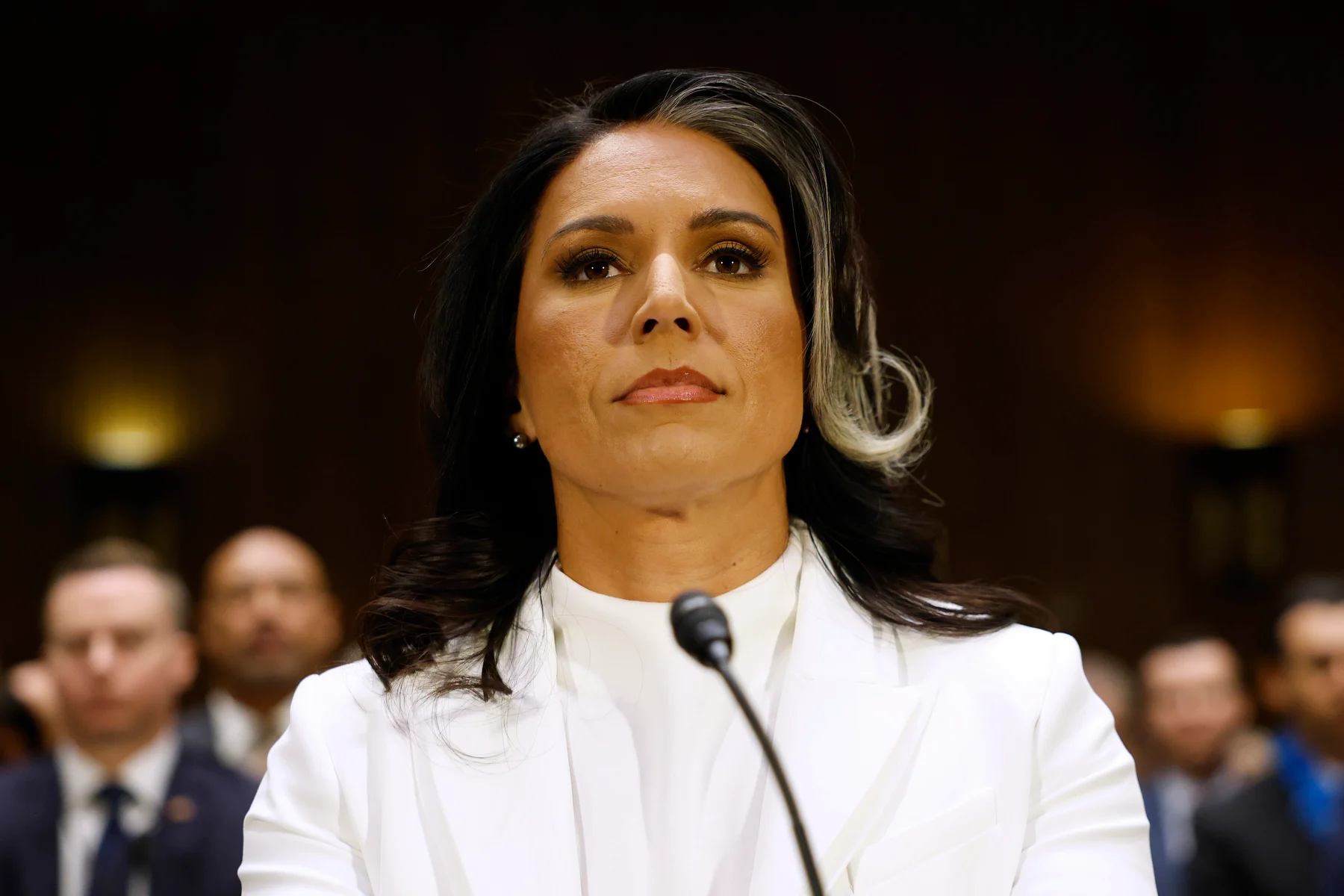
    Director of national intelligence Tulsi Gabbard struggled to avoid contradicting Trump as she and other top national security officials testified to the Senate Intelligence Committee on Wednesday about the biggest security threats facing the country.

    Pressed repeatedly on whether the intelligence community had assessed that Iran posed “an imminent nuclear threat” ahead of the start of the US-Israel attack on February 28 — one of the administration’s main justifications for the war — Gabbard said: “It is not the intelligence community’s responsibility to determine what is and is not an imminent threat. That is up to the president.”

    Gabbard’s testimony at the intelligence committee’s annual global threats hearing came a day after another top intelligence official resigned over what he claimed were the administration’s “unfounded” justifications for the war, further amplifying doubts about a conflict that has killed 13 American service members so far.

    In prepared opening remarks submitted to the committee ahead of her appearance, Gabbard said that Iran’s nuclear programme had been “obliterated” by US and Israeli strikes against the country’s nuclear sites last June.

    🌎 More Foreign Policy Plus sign png

    “There has been no efforts since then to try to rebuild their enrichment capability,” she wrote in her statement.

    But she veered from her prepared remarks when she addressed the Senate panel, saying that US intelligence believed that Iran had been “trying to recover” from the “severe damage” to its nuclear infrastructure before the renewed US-Israel strikes against the country.

    When Mark Warner, the intelligence committee’s top Democrat, asked Gabbard why she had strayed from her written testimony, she responded that she had skipped the relevant section because her testimony “was running long”.

    US officials have offered contradictory justifications for the war and the status of Iran’s nuclear programme, saying that Tehran was both “weeks” away from obtaining a nuclear bomb, and that its nuclear facilities had been “obliterated” by last year’s war.

    At the start of her testimony Gabbard stressed she was presenting “the intelligence community’s assessment of the threats facing US citizens, our homeland and our interests” and not her personal views or opinions.

    A combat veteran who has long opposed US military intervention overseas, Gabbard remained silent on the conflict until Tuesday when she posted a statement on X that repeated Trump’s justification for the war, but did not say whether she supported it.

    Joe Kent, a close ally of Gabbard who was director of the National Counterterrorism Center, on Tuesday became the first senior US official to resign in protest at the war, saying that Tehran posed “no imminent threat to our nation”.

    Kent’s resignation has raised questions about Gabbard’s future in the Trump administration and splits within his Maga movement which has long been opposed to US wars of regime change.

    Most Read in Middle East

    White House press secretary Karoline Leavitt told reporters on Wednesday she had no “knowledge” of whether Trump was considering firing Gabbard, but said it was “a question for him”.

    Democrats expressed frustration during the hearing with the unwillingness of Gabbard and CIA director John Ratcliffe to answer questions about the information presented to the president ahead of his decision to go to war. FBI director Kash Patel and the leaders of the US defence and signals intelligence agencies also testified.

    Gabbard told the committee that US intelligence had “long” assessed that Iran would likely use the Strait of Hormuz as leverage in the event of a crisis.

    But both she and Ratcliffe declined to say whether they had given that assessment directly to the president ahead of the war. Gabbard did say that her agency assessed that Iran’s regime remained largely “intact” and would seek to reconstitute its military capabilities if they remained.

    Trump said this week that his administration had been surprised by Iran’s retaliatory strikes against US allies in the Middle East. There appears to have been little preparation for the closure of the Strait of Hormuz, a critical waterway through which 20 per cent of the world’s oil flows.

    “We’re trying to figure out if the president knew what the downside was of the Strait of Hormuz being closed, and I’m having a hard time finding out whether the White House asked, or whether there was a brief, whether the president knew,” said Democratic senator Mark Kelly.

    Exclusive articles

  • Trump Ally Warns U.S. Economy Too Weak to Withstand Iran War Shock
    Trump Ally Warns U.S. Economy Too Weak to Withstand Iran War Shock

    Donald Trump’s one-time pick to lead the Bureau of Labor Statistics has said the US economy is too weak to handle oil at $100 per barrel as he warned of rising consumer prices triggered by the war in Iran.

    “I don’t think this is an economy that is going to be able to handle $100 a barrel for oil, it’s just not,” EJ Antoni told the Financial Times. 

    “The economy is weaker than we thought it was, and inflation is worse than we thought it was,” he added in a call on Wednesday, shortly before the Federal Reserve’s March rate-setting meeting. 

    “The lower energy prices that we saw in 2025 helped put downward pressure on prices throughout the economy. Now . . . we’re going to see higher energy prices have exactly the opposite effect and put upward pressure on prices throughout the economy.” 

    Trump picked Antoni, the conservative Heritage Foundation’s chief economist, to lead the US labour statistics agency in August, shortly after firing the former commissioner for a gloomy jobs report the president claimed was “rigged”.

    He abruptly withdrew Antoni’s nomination a month later and ultimately settled on government economist Brett Matsumoto, whose confirmation is subject to Senate approval.

    Antoni’s remarks on the health of the world’s largest economy come a day after the director of the US National Counterterrorism Center resigned in protest at the Iran war, marking the first significant defection from the Trump administration since the conflict began.

    Republicans are meanwhile growing increasingly worried that high oil prices — Brent crude jumped 5 per cent to almost $110 a barrel on Wednesday — will dent their chances in the midterm elections. Petrol prices at the pump have surged to $3.84 a gallon from $2.92 a month ago, while diesel has exceeded $5 — exerting a heavy toll on US consumers and businesses.

    Economic data collected before the US and Israel launched their attack on Iran has done little to ease those concerns. 

    US GDP in the fourth quarter of 2025 was last week revised to 0.7 per cent from an initial estimate of 1.4 per cent, while data released on Wednesday showed US wholesale prices rose at a faster clip than expected in February, even before the war began. The US economy last month shed 92,000 jobs, in a sharp slide that eroded most of January’s gains.

    Antoni highlighted “a lack of job growth” in the US, some of which he attributed to last year’s cuts to the federal workforce, and renewed his attacks on the BLS, which he likened to “a random number generator” in a post on X last May.

    “You need a complete and total top-down review of everything from the data collection to the data processing and even the data dissemination, because there have been a few issues with leaks,” he said. In January, Trump posted some of December’s US jobs figures hours before their official release. 

    Antoni refused to be drawn on how Trump told him he was no longer his pick to lead the BLS, saying he would “rather keep those conversations confidential”.

  • US judge blocks DOJ subpoenas to federal reserve, citing ‘Thin’ evidence in Powell probe

    US judge blocks DOJ subpoenas to federal reserve, citing ‘Thin’ evidence in Powell probe

    A US judge has blocked subpoenas issued by Donald Trump’s Department of Justice to the Federal Reserve, in a major blow to prosecutors’ criminal investigation into chair Jay Powell and a victory for the central bank.

    James Boasberg, a US federal judge in the District of Columbia, wrote in an opinion unsealed on Friday that prosecutors were using their probe into renovations of the Fed’s headquarters to force Powell to “knuckle under” and bend to Trump’s relentless calls to slash borrowing costs.

    “There is abundant evidence that the subpoenas’ dominant (if not sole) purpose is to harass and pressure Powell either to yield to the president or to resign and make way for a Fed chair who will,” Boasberg wrote.

    The judge said the Trump administration had “produced essentially zero evidence” to suspect Powell of a crime, adding: “Its justifications are so thin and unsubstantiated that the court can only conclude that they are pretextual.”

    Boasberg’s ruling will stymie the criminal investigation into Powell related to cost overruns on the Fed’s $2.5bn headquarters renovation project.

    📊 More Economic Policy Plus sign png

    Global central bankers and lawmakers, including some members of Trump’s Republican Party, have expressed grave concern over the investigation, which they view as an unprecedented attempt at eroding the independence of the world’s most important central bank.

    Powell in January called the move an “unprecedented action” from the DoJ, saying it was an attempt to rein in the Fed’s independence.

    Trump has relentlessly criticised Powell of being a “moron” and a “stubborn mule” for declining to sharply reduce rates. Trump has also sought to sack Fed governor Lisa Cook, in a move that was blocked by a lower court judge and later argued before the US Supreme Court, which is expected to rule in the coming months.

    Jeanine Pirro takes aim at the ruling by James Boasberg on Friday. (Reuters)
    Jeanine Pirro takes aim at the ruling by James Boasberg on Friday. (Reuters)

    The president has denied any involvement in the DoJ probe, and the White House did not respond to a request for comment on Friday. The Fed declined to comment.

    In a fiery press conference shortly after the opinion was published, Jeanine Pirro, US attorney for the District of Columbia, tore into Boasberg, who she described as an “activist judge”. Pirro vowed to appeal against the ruling, which she said had “neutered the grand jury’s ability to investigate crime.”

    “Jerome Powell today is now bathed in immunity, preventing my office from investigating the Federal Reserve,” Pirro said. “That is wrong, and it is without legal authority.”

    The DoJ investigation, which was launched in January, has already had far-reaching consequences for Trump, prompting Republican Senator Thom Tillis of North Carolina to hold up the process to confirm Powell’s successor. Tillis has said he will block any Trump appointee to the Fed until the DoJ probe into Powell is “resolved”.

    Trump in late January nominated former Fed governor Kevin Warsh to succeed Powell as chair when his term ends in May. Warsh needs to be confirmed by the Senate in order to take up his post.

    Tillis on Friday said Boasberg’s ruling confirmed “just how weak and frivolous” the criminal investigation into Powell was, adding: “It is nothing more than a failed attack on Fed independence.

    “We all know how this is going to end,” Tillis said, adding Pirro’s office should “save itself further embarrassment and move on”.

  • Investors slash Fed rate-cut bets as Iran war drives surge in petrol prices

    Investors slash Fed rate-cut bets as Iran war drives surge in petrol prices

    Investors are slashing bets that the Federal Reserve will cut interest rates this year, as the widening crisis in the Middle East sends petrol prices surging and threatens a fresh burst of inflation.

    Markets are not anticipating a Fed rate cut until summer next year, according to trading in federal funds futures. It marks a dramatic shift from just weeks ago when traders were pricing in two quarter-point cuts in 2026.

    The stark shift in Wall Street expectations highlights how the surge in energy prices caused by the war in Iran is prompting investors to rapidly rethink their outlook for inflation in the world’s biggest economy.

    “This has been a wild shift. The market went completely mad today and decided to price out lots and lots of cuts,” said Gennadiy Goldberg, head of US interest rate strategy at TD Securities.

    He added: “This enormous move . . . is a function of the market betting that it will be difficult for the Fed to cut rates while oil prices remain high.”

    Petrol prices, which are a major cost for consumers, hit $3.60 a gallon on Thursday, compared with $2.94 a month ago, according to motor club AAA.

    The dwindling rate-cut bets undercut US President Donald Trump’s hopes for the Fed to drastically cut rates to accelerate growth and lower borrowing costs for consumers. The Fed, which is due to meet next week, reduced rates by a quarter point three times last year.

    Still, the president on Thursday renewed his calls for Fed chair Jay Powell to slash borrowing costs: “Where is the Federal Reserve Chairman, Jerome ‘Too Late’ Powell, today? He should be dropping Interest Rates, IMMEDIATELY, not waiting for the next meeting!” Trump wrote on Truth Social.

    Investors have already moved to price out cuts, and price in rises, across a range of big economies, including the UK and the Eurozone, viewed as particularly vulnerable to energy-driven inflation.

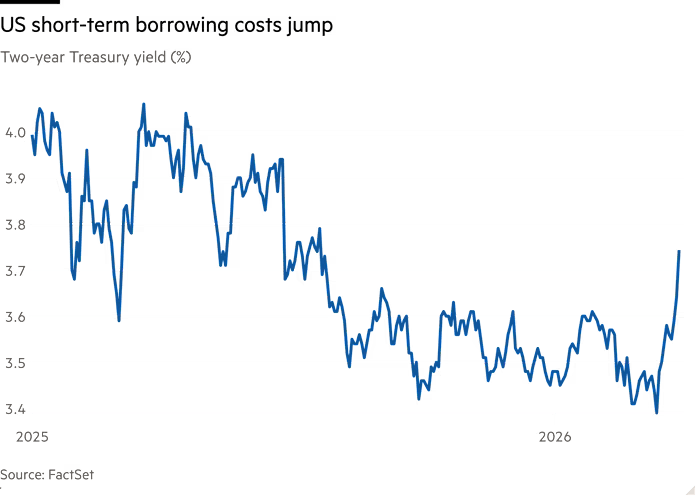
    Short-term US government debt, which is particularly sensitive to monetary policy expectations, fell sharply in price on Thursday, sending yields higher.

    The two-year Treasury yield, which moves with interest rate expectations, rose as much as 0.1 percentage points to 3.76 per cent.

    One popular trade in the market that has been put under pressure are so-called steepeners: bets that short-dated debt will outperform long-term bonds. Instead, the yield curve on Treasury debt has flattened, with the additional interest rate on 10-year debt over the two-year equivalent falling from 0.7 percentage points in early February to just above 0.5 percentage points.

    John Stopford, head of multi-asset income at asset manager Ninety One, said the flattening represented the US bond market trying to price in “negative growth implications of higher oil prices and the likelihood of less accommodative monetary policy”.

    Longer-term yields have also increased in recent days, something that has pushed mortgage rates higher after they hit the lowest level since 2022 late last month. The average 30-year fixed rate rose to 6.11 per cent this week, from less than 6 per cent in late February — denting one of the president’s flagship pledges to improve home affordability.

    Despite market expectations that the Fed will refrain from rate cuts this year, some rate setters view the shock from higher energy prices as temporary.

    Christopher Waller, a Fed governor who is one of the more dovish members of the Federal Open Market Committee, said last week: “You’re going to see a spike in gasoline prices, that’s what the American citizens are going to see at the pump, and they’re going to stare at it and be a little shocked . . . but, for us, thinking about policy going forward, it’s unlikely to cause sustained inflation.”

  • Live Nation Reaches Tentative Antitrust Settlement With U.S. Justice Department as States

    Live Nation Reaches Tentative Antitrust Settlement With U.S. Justice Department as States

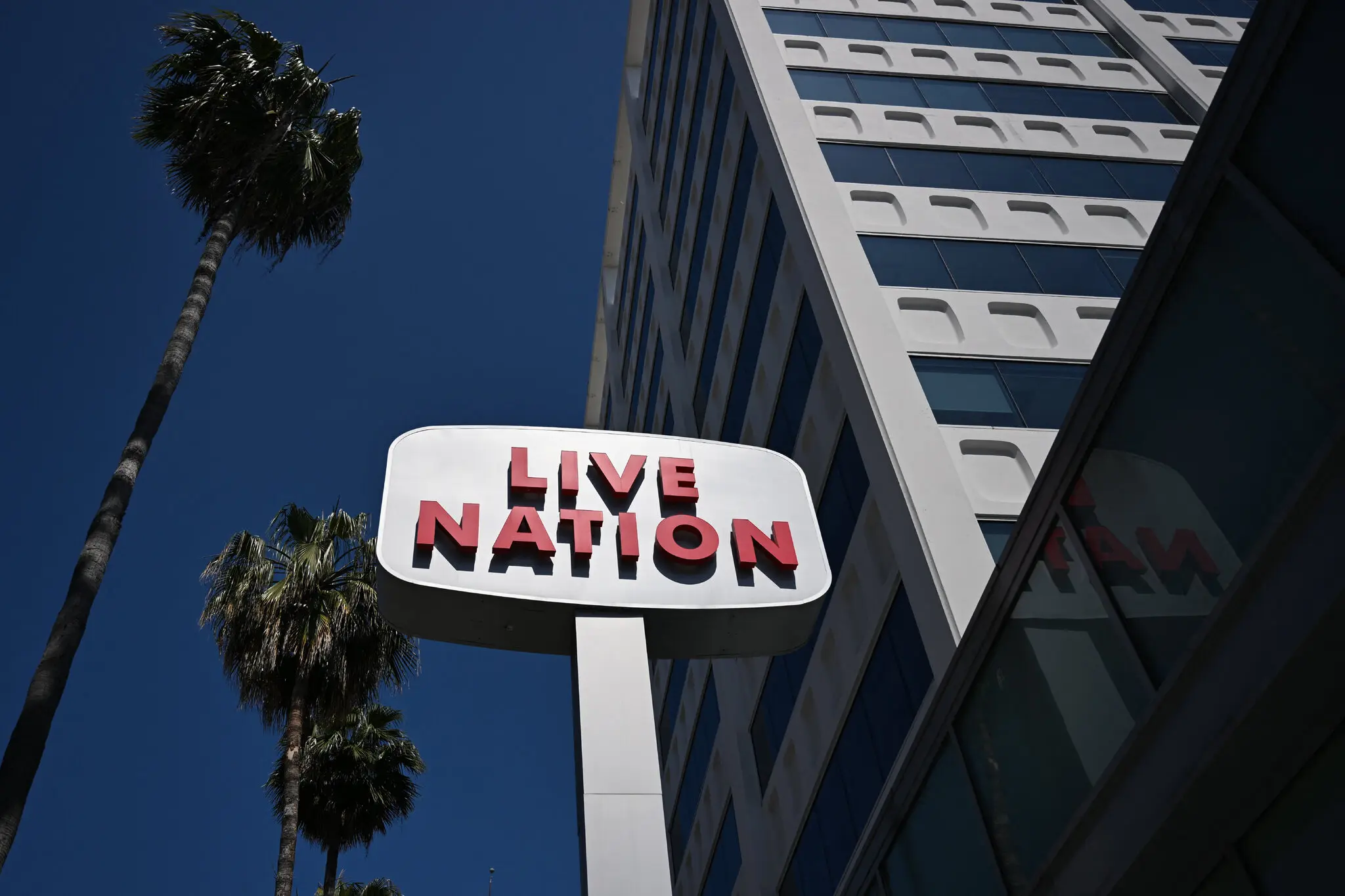
    Live Nation reached a tentative settlement with the US Justice Department on Monday in the federal antitrust case brought against the entertainment giant.

    The settlement, which still requires the approval of District Judge Arun Subramanian, comes just days after the antitrust trial began in New York.

    The case was initiated under then-president Joe Biden, with prosecutors accusing Live Nation — which owns Ticketmaster — a monopolist that controlled virtually all live entertainment in the United States.

    The settlement requires Live Nation to open up the ticketing platform to competitors and to allow other promoters to stage events at certain Live Nation venues, a senior Justice Department official said.

    💰 More Business
    Plus sign png

    Live Nation will divest up to 13 amphitheaters and pay $280 million in damages to the nearly 40 states that were parties to the antitrust lawsuit against the California-based company, the official said.

    The increased competition should result in ticket prices coming down, the official said.

    Live Nation shares surged nearly six percent on the New York Stock Exchange following the announcement.

    New York and a number of other states declined to join the settlement and said Monday that their litigation against Live Nation would continue.

    “For years, Live Nation has made enormous profits by exploiting its illegal monopoly and raising costs for shows,” New York Attorney General Letitia James said.

    “The settlement recently announced with the US Department of Justice fails to address the monopoly at the center of this case, and would benefit Live Nation at the expense of consumers,” James said in a statement.

    “We will keep fighting this case without the federal government so that we can secure justice for all those harmed by Live Nation’s monopoly.”

    A spokesperson for the New York attorney general, a Democrat, said prosecutors would file a motion with the court seeking a mistrial and file a new case against Live Nation brought solely by the states.

    The Justice Department official said talks with a number of the states were ongoing and was hopeful some of them will eventually sign off on the settlement.

    Live Nation is a behemoth in its industry: in 2025 it organized more than 55,000 events worldwide, drawing 159 million attendees.

    Beyond promotion, it holds stakes in 460 venues and, since 2010, has controlled Ticketmaster, the world’s leading ticket seller.

    The Justice Department had accused Live Nation of abusing its dominant position to pressure artists and venues into signing with it, stifle competition, and impose excessive fees on fans.

    The Trump administration’s decision to press forward with the case against Live Nation had surprised many observers, who had interpreted the recent resignation of Justice Department competition chief Gail Slater as a sign the case would be dropped.

    Democratic Senator Elizabeth Warren condemned the settlement in a post on X.

    Most Read in Business

    “Donald Trump just betrayed every fan who’s been exploited by Ticketmaster,” Warren said. “This fine is less than one percent of Live Nation’s revenue last year. We need to break up Ticketmaster and Live Nation.”

    John Kwoka, a professor of economics at Northeastern University, said the settlement appeared “inadequate.”

    “It does not deal with the fact that Ticketmaster is still an integrated company that has incentives that remain pretty much intact to disadvantage competitors,” Kwoka said.

    “This is a minor accomplishment in the face of what the Justice Department laid out as a course of business,” he said.