Crypto prices, including bitcoin, rose on Tuesday after President Trump announced a ceasefire between Iran and Israel.
By midday Tuesday, bitcoin had passed the $105,000 level, ether jumped back above the $2,400 mark, and XRP climbed to $2.19.
The risk-on action in the markets, which also saw stocks rally on the Mideast de-escalation, wasn’t the only source of momentum, as Republican senators unveiled a major bill to set the rules of the road for crypto. Specifically, the legislation would define when crypto is a commodity or a security, allow crypto exchanges to register with the Commodity Futures Trading Commission, and reduce the Securities and Exchange Commission’s regulation of digital assets — a big reversal from the plans of President Biden’s SEC Chair Gary Gensler to closely regulate the crypto industry.
The new framework was introduced by Senate Banking Committee Chairman Tim Scott of South Carolina and Senator Cynthia Lummis of Wyoming, who heads the panel’s Digital Assets Committee. Robinhood CEO Vlad Tenev said on CNBC’s “Squawk Box” that the regulatory development was important for the U.S. to regain the lead in the crypto industry, where he said it has fallen behind other markets, including Europe.
Last week, the senate passed a stablecoin bill, marking the first major legislative win for the crypto industry, which now heads to the House for consideration of its version of the bill. Both bills prohibit yield-bearing consumer stablecoins — but differ on agency regulatory oversight. Visa CEO Ryan McInerney weighed in on the advancement of the Senate version, the Genius Act, telling CNBC’s “Squawk on the Street” that the credit card giant has been embracing stablecoins.
Meanwhile, investors increased their bets on crypto company Digital Asset, which raised $135 million in funding from several big names in banking and finance, including Goldman Sachs, BNP Paribas and hedge fund billionaire Ken Griffin’s Citadel Securities. The firm, which touts itself as a regulated crypto player, said it will use the funding to advance adoption of its Canton network, which is a blockchain for financial institutions, another sign of how major financial institutions are embedding themselves into the once obscure crypto world.
Cybercriminals have breached insurance giant Aflac, potentially stealing Social Security numbers, insurance claims and health information, the company said Friday, the latest in a spree of hacks against the insurance industry.
With billions of dollars in annual revenue and tens of millions of customers, Aflac is the biggest victim yet in the ongoing digital assault on US insurance companies that has the industry on edge and the FBI and private cyber experts scrambling to contain the fallout.
Erie Insurance and Philadelphia Insurance Companies have also reported hacks this month, which in those cases have caused widespread disruptions to IT systems used to serve customers. All three insurance-company hacks are consistent with the techniques of a young and rampant cybercrime group known as Scattered Spider, people familiar the investigation tell CNN.
“This attack, like many insurance companies are currently experiencing, was caused by a sophisticated cybercrime group,” Aflac said in a statement on Friday, without naming Scattered Spider. Aflac said it “stopped the intrusion within hours” after discovering it last week, that no ransomware was deployed, and that it continues to serve its customers.
It was too early to tell, the company said, how much customer information may have been stolen, but the potential exposure is vast. Aflac is one of the largest providers of supplemental health insurance in the US for medical expenses that aren’t covered by a primary provider.
The hackers used “social engineering” to worm their way into its network, according to Aflac. That tactic can involve duping someone into revealing security information to help gain access to a network. It’s a hallmark of Scattered Spider attackers, who are known to pose as tech support to infiltrate big corporations.
The loose group of cybercriminals is considered dangerous and unpredictable, in part because it is believed to be comprised of youths in the US and the UK known for aggressively extorting their victims. Scattered Spider shot to infamy in September 2023 when they were linked to a pair of multimillion-dollar hacks on famous Las Vegas casinos and hotels MGM Resorts and Caesars Entertainment.
The hackers’ tactics, and the way they target big swaths of American industries at a time, has cybersecurity executives pleading with companies to be wary of suspicious phone calls to their employees. Just last month, they were suspects in multiple cyberattacks on American retail companies.
“If Scattered Spider is targeting your industry, get help immediately,” said Cynthia Kaiser, who until last month was deputy assistant director of the FBI’s Cyber Division and oversaw FBI teams investigating the hackers. “They can execute their full attacks in hours. Most other ransomware groups take days.”
Scattered Spider often registers web domains that look very much like trusted help desks that companies use for IT support, the cybersecurity firm Halcyon, where Kaiser now works, says in a forthcoming report.
While concerns about Iranian cyber capabilities are in the news because of the Israel-Iran war, “the threat I lose sleep over is Scattered Spider,” said John Hultquist, chief analyst at Google’s Threat Intelligence Group. “They are already taking food off shelves and freezing businesses. The Iranian hackers may not even have Internet access, but these kids are in play right now.”
After years of volatile swings in real estate activity during and after the pandemic, U.S. property investors appear to be returning to more measured behavior. According to new data released by Redfin, investors purchased 46,726 homes in the first quarter of 2025–a modest 2% increase from a year ago–signaling a stabilization of investor activity in the residential market.
Investor buying has remained within a narrow 4% range for the past year, a stark contrast to pandemic-era extremes when activity surged as much as 145% in 2021 and plunged 47% in early 2023. In raw numbers, investor purchases have now returned to pre-pandemic levels, with current activity reflecting a more cautious, ROI-driven approach amid today’s higher interest rate environment.
“Investor home purchases have leveled off because rapid sale-price and rent growth is no longer the norm,” said Sheharyar Bokhari, Senior Economist at Redfin. “While some are still profiting from flips or rentals, especially where rents are climbing, many who entered the market during the pandemic boom have since retreated.”
Condo Purchases Hit 10-Year Low
While total investor activity is steady, demand for condos has notably declined. In Q1 2025, investors bought 8,509 condos–a 3% year-over-year drop and the lowest quarterly figure in a decade, excluding Q2 2020 when the pandemic halted transactions.
Redfin attributes this pullback to a rapidly cooling condo market. Nearly 70% of U.S. condos sold below list price in early 2025, the weakest showing in five years. In Florida, surging HOA and insurance costs–fueled by rising climate-related risks–have made oceanfront condo ownership less attractive to investors.
“Condo landlords are trying to offload units that no longer generate returns,” said Stuart Naranch, a Redfin Premier agent in Washington, D.C. “High mortgage rates, tighter HOA rental rules, and rental caps are squeezing profits, leaving only cash buyers with enough cushion to take the risk.”
Florida Sees Steepest Investor Pullback
Florida continues to lead the nation in investor exits. Miami saw the largest drop in investor purchases, down 19% year over year. Orlando (-13%) and Fort Lauderdale (-12%) also ranked among the top five metro areas with declining investor activity, alongside Warren, MI, and Columbus, OH.
Despite the pullback, Miami still saw investors purchase 30% of all homes sold in Q1–though down from a 2022 peak of 35%. Redfin notes that Florida’s rising costs, declining home prices, and surplus inventory have dulled investor appetite across the state.
Investors Still Active in One-Fifth of U.S. Housing Market
Nationwide, investors accounted for 19% of all homes sold in Q1, holding steady from a year earlier and slightly up from 18% two years ago. Investor activity has closely mirrored consumer demand trends, constrained by high interest rates that limit profitability for both flippers and landlords.
Still, investor appetite for single-family homes is increasing. Purchases of single-family homes rose 3% year over year, while townhouses and multi-family units each rose 1%. Condos remain the lone declining segment.
Shift Toward Higher-Priced Homes
Investors are also shifting their attention toward more expensive properties. Purchases of high-end homes jumped 12% in Q1–the largest gain in three years–while mid-priced home purchases rose 2%. In contrast, investor purchases of low-priced homes fell 4%.
Even so, low-priced homes still made up 46% of all investor purchases, while high- and mid-priced homes comprised 30% and 24%, respectively. Investors maintain the strongest market share in the low-end segment, buying 26% of all low-priced homes sold in Q1.
Profit Margins Remain Positive
Investors continued to see gains from property sales, with a median capital gain of $182,980 per home sold in March–up 2.8% year over year. Only 6% of investor-sold homes incurred losses, nearly flat from 5% the previous year.
Meanwhile, investor-owned listings made up 8.4% of total U.S. home listings in March, down from 8.9% a year ago–the lowest share in nearly two years. The decline reflects slower investor selling activity following a major drop in acquisitions during 2023.
One of the detectives, Roberto Cordero, who has also served for years on Mayor Eric Adams’s security detail, picked up the victim from the airport on May 6 and brought him back to the townhouse, where he was held captive until his escape last week, the officials said.
Detective Cordero and the other detective, Raymond J. Low, who investigates narcotics cases in Manhattan, were placed on modified duty on Wednesday, according to an internal document and the officials, who were not authorized to speak because of the sensitivity of the investigation.
It is unclear whether the detectives were employed directly or whether they had been working for a private security company. Officers are not permitted to work for security firms without Police Department approval, according to the department’s patrol guide. It was also unclear whether the men were present during the crime prosecutors say occurred there.
In a statement, the Police Department confirmed that two officers had been placed on modified duty, which generally restricts a person to desk work, and that the matter was under internal review.
Neither Detective Cordero nor any legal representatives could immediately be reached for comment. When reached by phone, Detective Low declined to comment.
A 20-year veteran, Detective Cordero has served on the Executive Protection Unit, the mayor’s security detail, since December 2021, according to records from the police and the Civilian Complaint Review Board, an independent oversight agency.
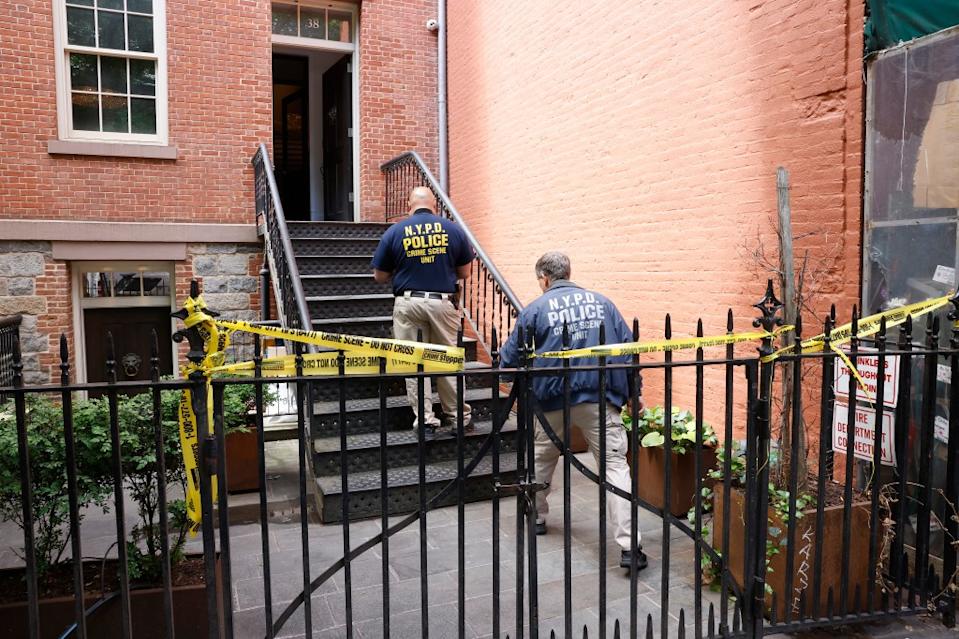
The house where they worked is at 38 Prince Street in the NoLIta neighborhood. On May 23, an Italian man, Michael Valentino Teofrasto Carturan, escaped from the home, where he said he had been tortured for weeks.
The Manhattan district attorney has charged the two cryptocurrency investors — John Woeltz, 37, and William Duplessie, 33 — with kidnapping and torturing him. Mr. Woeltz has been indicted by a grand jury, though the indictment will remain sealed until he is arraigned on June 11, the Manhattan district attorney’s office said on Thursday.
When Mr. Carturan arrived at the townhouse on May 6, he was captured and held by Mr. Woeltz and a 24-year-old woman, according to prosecutors and an internal police report. They wanted the password to a Bitcoin wallet worth millions, the report said.
The woman, Beatrice Folchi, was initially charged by the police with kidnapping and unlawful imprisonment, but she was released and her prosecution was deferred, a law enforcement official said.
Detective Cordero joined the Police Department in January 2005 and has served in the 46th Precinct in the Bronx and on a narcotics team in Manhattan, according to police and Complaint Board records.
He has been the subject of several complaints accusing him of abusing his authority and using physical force. In one complaint from 2014, a man accused Detective Cordero and seven other officers of beating him, strip-searching him and taking his money. The case was settled in 2016.
Detective Low joined the Police Department on the same day as Detective Cordero, according to police records.
Detective Low was elevated to his rank in 2013. He has been named in nine complaints dating back to 2008, including one that accuses him of making a false official statement and using a chokehold, according to Complaint Board records.
— H.E. Justin Sun 👨🚀 🌞 (@justinsuntron) May 23, 2025
The event was a private dinner with the president at Trump National Golf Club, where “investors spent an estimated $148 million on the $TRUMP meme coin to secure their seats … with the top-25 holders spending more than $111 million,” Reuters reported, citing crypto intelligence firm Inca Digital. Reuters also cited an analysis that found the Trumps have made $320.19 million in fees from their meme coins.
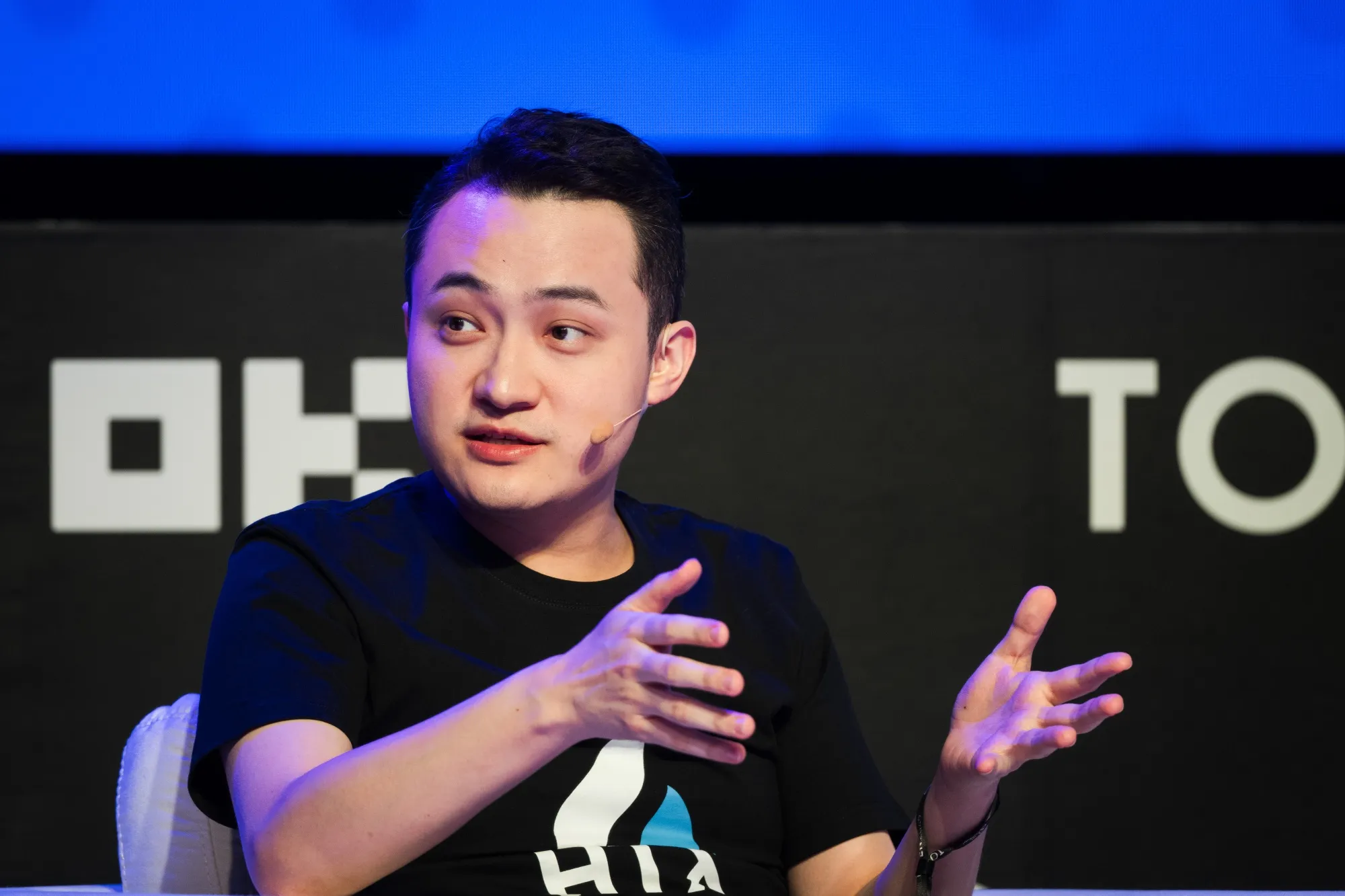
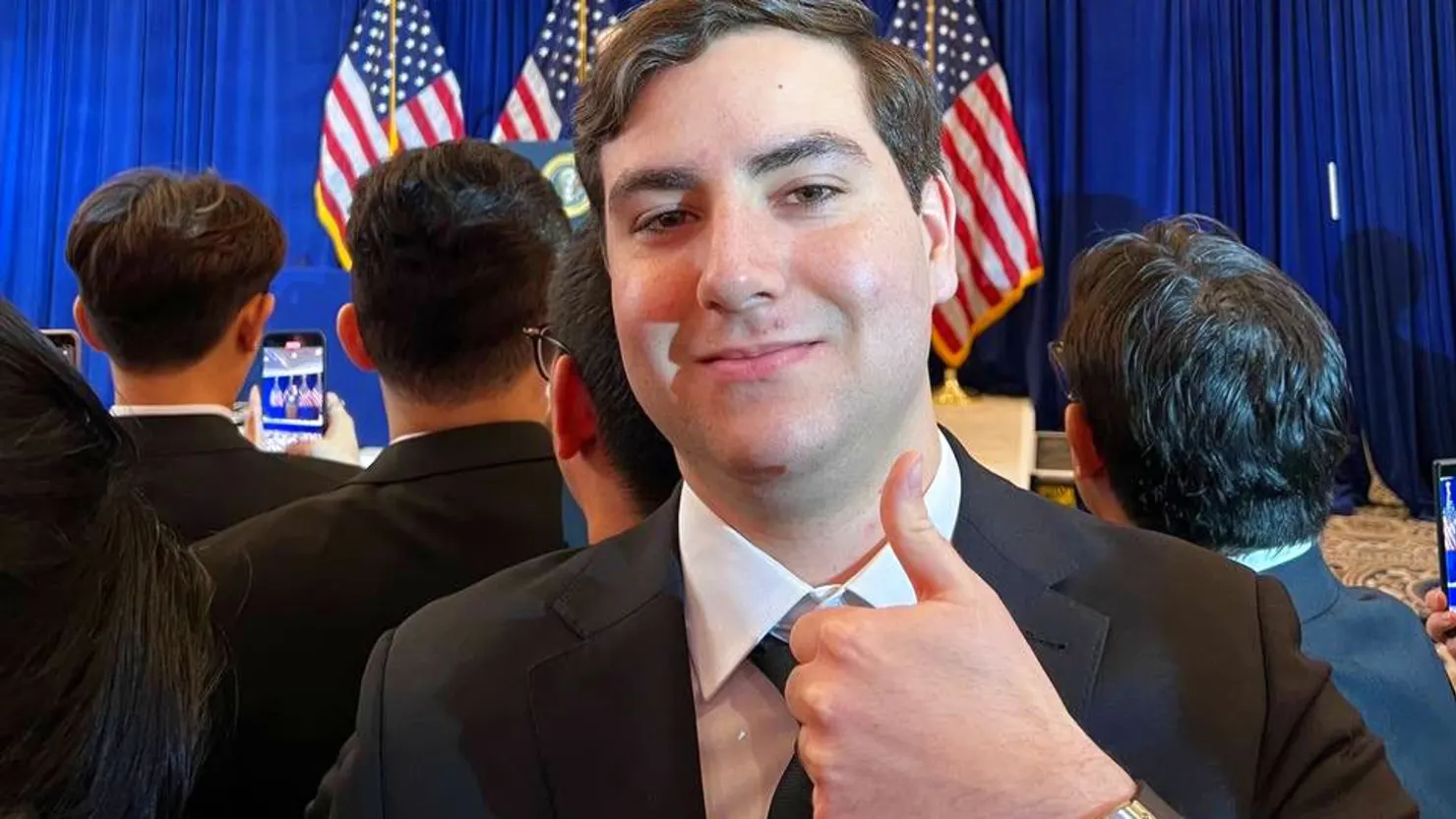
And the person in the photo is Justin Sun, a MAGA-aligned crypto bro who said he was “awarded” what he identified as a “Trump Gold Tourbillon” (a Trump-branded watch that retails for $100,000). The White House didn’t immediately respond to MSNBC’s question as to whether the president actually gifted this watch to Sun.
His investments in Trump have been considerable — but, for him, arguably worthwhile. Sun has been in the news in the last few months because, after he plowed $75 million into Trump family crypto, per NBC News, the SEC put a 60-day pause on the charges of market manipulation and offering unregistered securities it had been pursuing against him since 2023. (Sun did not reply to NBC News’ request for comment, but denied any wrongdoing to The Wall Street Journal in April.)
NBC News published a dispatch on the president’s event, for a more thorough picture of the various attendees and the MAGA movement’s blatant disregard for ethics.
But to really catch the flavor of what’s happening, it’s these images of brazen wealth and intolerably open corruption that one would expect from a president dead-set on dragging the United States back to the Gilded Age, an era marked by immense wealth inequality and widespread corruption.
As Chris Hayes noted on “All In” on Thursday, the contrasting images of Trump that day — whipping votes for a House budget with deep cuts to social programs, such as food aid and health care, in the morning, and in the evening reportedly helicoptering into a ritzy and self-enriching dinner for a few minutes — is too glaring to ignore.
Watch Hayes’ commentary on what he called the “Met Gala of pay-for-play” here:
The price of President Donald Trump’s meme coin plunged 16% as of Friday morning, just hours after he hosted a black-tie gala at his Virginia golf club for its biggest buyers — an elite crowd that spent a combined $148 million on the token for the chance to be there.
It was billed as “the most exclusive invitation in the world.”
Among the 220 attendees were crypto influencers, industry executives such as Sandy Carter of Unstoppable Domains, and former NBA star Lamar Odom, who used the occasion to praise Trump as “the greatest president” and promote his own token, $ODOM.
The top 25 wallets were promised a private reception and guided tour. Others, such as 25-year-old Nicholas Pinto — whose dad drove him to the event in his Lamborghini — left underwhelmed and still hungry.
“The food sucked,” Pinto said. “Wasn’t given any drinks other than water or Trump’s wine. I don’t drink, so I had water. My glass was only filled once.”
Trump made only a brief appearance, Pinto said. “He didn’t talk to any of the 220 guests — maybe the top 25,” he said.
All in, the president was there for 23 minutes, Pinto said. Trump delivered a brief address rehashing old crypto talking points then left on a helicopter before taking any questions or pictures with his meme coin contest winners, he said.
Phones weren’t locked in RFID pouches, and security was lax, according to Pinto.
“Once Trump left, they didn’t really worry about anything else,” Pinto added.
Contest winners who spent the most on $TRUMP meme coins added their signatures to a poster-sized printout of the leaderboard at a gala dinner at Trump National Golf Club in Potomac Falls, Virginia, May 22, 2025. (Nicholas Pinto)
The crowd’s opulence was on full display.
“Richard Mille watches weren’t even rare,” Pinto said. “I saw at least 16 people wearing them. I never see that unless I’m at a high-end restaurant in Miami or Dubai.”
But the vibe was more muted than expected, he said: “Lots of people didn’t even hold the coin anymore. They were checking their phones during dinner to see if the price moved.”
The Budgets has reached out to Trump representatives for comment on the dinner and attendees.
Protests
For lawmakers and regulators, the dinner set off alarm bells.
The #1 token holder was Chinese-born crypto mogul Justin Sun, who is currently facing Securities and Exchange Commission fraud charges that were recently paused, with the agency citing “the public interest.”
Sun holds over $22 million in the $TRUMP token and another $75 million in World Liberty Financial’s native token.
“As the top holder of $TRUMP and proud supporter of President Trump, it was an honor to attend the Trump Gala Dinner,” Sun posted on Friday. “Thank you @POTUS for your unwavering support of our industry!”
Outside the gates of Trump National Golf Club in Potomac Falls, Virginia, about a hundred protesters gathered, according to NBC News. Sen. Jeff Merkley, D-Ore., joined them, backing a new End Crypto Corruption Act with Senate Minority Leader Chuck Schumer, D-N.Y.
Signs read “Crypto Corruption” and “Trump is a traitor.”
Crypto on Capitol Hill
“The Trump family activity in the memecoin space makes my work in Congress more complicated,” Rep. French Hill, R-Ark., told CNBC News on Friday.
Hill, who’s leading negotiations on a bipartisan stablecoin regulation bill known as the GENIUS Act, called the gala “a distraction from the good work we need to do.”
Now, the GENIUS Act is at risk.
Sen. Josh Hawley, R-Mo., recently added a controversial rider to the bill that would cap credit card late fees — what’s seen as a poison pill that could alienate banking allies and stall final approval.
President Donald Trump speaks at a dinner for meme coin contest winners at Trump National Golf Club in Potomac Falls, Virginia, May 22, 2025. (Nicholas Pinto)
On Thursday night as the meme coin contest dinner was underway, a bloc of Senate Democrats announced they’d be pushing for a new provision that would ban presidents and senior officials from profiting off crypto ventures while in office — a direct challenge to the Trump-linked stablecoin USD1 that launched in the spring.
In Washington, there’s growing concern that political infighting over Trump’s crypto ventures could derail the stablecoin bill altogether. That poses an even bigger risk.
According to The Wall Street Journal, major banks including JPMorgan, Bank of America and Citi are in early talks to issue a unified digital dollar to compete with Tether, the foreign-controlled stablecoin that now commands over 60% of global market share.
Those plans hinge on legal clarity.
If the GENIUS Act stalls, the U.S. could lose its window to regain ground in the global race for digital payments.
The White House has tried to draw a line between Trump the president and Trump the private businessman.
“The president is attending it in his personal time. It is not a White House dinner,” press secretary Karoline Leavitt told reporters when pressed on attendee transparency.
The administration declined to release a guest list. But blockchain data — and a patchwork of guest photos — tell part of the story.
A Bloomberg News analysis found that all but six of the top 25 wallets used foreign exchanges, ostensibly off-limits to U.S. users. More than half of the top 220 wallets were linked to similar offshore platforms.
One Nasdaq-listed penny stock, Freight Technologies, disclosed in an SEC filing that it spent $2 million on Trump’s token to push U.S.-Mexico trade policy. It didn’t make the cut for the dinner — finishing 250th.
Since its January debut, the $TRUMP coin has generated more than $324 million in trading fees. Roughly 80% of the $TRUMP token supply is controlled by the Trump Organization and affiliates, according to the project’s website.
WLFI, the Trump’s parallel token, has sold $550 million in two token sales.
Still, White House AI and crypto czar David Sacks remained bullish on “significant bipartisan support” for stablecoin legislation.
“We already have over $200 billion in stablecoins — it’s just unregulated,” Sacks told CNBC’s “Closing Bell Overtime” on Wednesday. “If we provide the legal clarity and legal framework for this, I think we could create trillions of dollars of demand for our Treasurys practically overnight, very quickly.”
“We have every expectation now that it’s going to pass,” added Sacks, though he didn’t answer a question about concerns from Democrats that there aren’t sufficient safeguards in place to keep the president and his family from profiting from legislation.
The Trumps are financial backers of World Liberty Financial, which is behind the USD1 stablecoin that is backed by Treasurys and dollar deposits.
Abu Dhabi’s MGX investment fund recently pledged $2 billion in USD1 to Binance, the world’s largest digital assets exchange. It’s the company’s largest-ever investment made in crypto.
Oaktree Capital Management, the Los Angeles-based investment firm known for distressed-debt turnarounds, is in advanced talks to take control of Superior Industries International Inc., the aluminum wheel manufacturer battered by U.S. and international auto parts tariffs, according to people familiar with the matter.
The talks mark a potential turning point for Superior (NYSE: SUP), one of the last major American-based suppliers of cast aluminum wheels to global automakers. The company, long plagued by rising raw material costs and trade headwinds, is reportedly nearing a restructuring deal that could see Oaktree convert its debt holdings into a controlling equity stake.
The negotiations are being led by Oaktree’s distressed-debt team and advised by powerhouse law firm Paul, Weiss, Rifkind, Wharton & Garrison LLP. According to sources, the transaction could be finalized as early as next month, pending board approvals and regulatory reviews.
Superior Industries has struggled since 2018, when the Trump administration imposed a 10% tariff on imported aluminum and broader levies on Chinese-made auto parts. The company, which sources raw materials globally and supplies General Motors, Stellantis, and BMW, saw its cost base surge amid rising trade barriers.
In its most recent earnings report, Superior posted a net loss of $58 million for 2024, down from a modest profit the prior year. Revenue slipped 6% year-over-year to $1.1 billion, as automakers shifted to lower-cost suppliers in Mexico and Asia.
Company executives have repeatedly warned that continued U.S. and EU tariffs on imported components—including aluminum billet, magnesium alloys, and precision dies—have “crippled the competitiveness” of North American suppliers.
“We’re at the mercy of geopolitical crossfire,” CEO Majdi Abulaban said on an earnings call in February. “Tariffs are squeezing margins, reducing OEM orders, and threatening our long-term viability.”
Superior’s stock has declined more than 72% in the past 12 months and currently trades below $1.25—a sign of growing investor concern about its solvency.
Oaktree, a leading creditor with over $180 billion in assets under management, began accumulating Superior debt in late 2023, purchasing discounted senior secured bonds and term loans. Insiders say Oaktree now holds over 60% of Superior’s outstanding debt, positioning it as the key player in any out-of-court restructuring or pre-packaged bankruptcy.
The firm is reportedly seeking to exchange its debt for equity, with a view to installing new management and streamlining Superior’s global operations. If a deal is reached, Oaktree could gain majority control without requiring a formal Chapter 11 filing—a path that may preserve customer contracts and vendor relationships.
“This is classic Oaktree,” said Joshua Cohen, an analyst at CreditSage Research. “They’re moving in as a lender of last resort, flipping the capital stack, and positioning themselves to own the upside if the business stabilizes.”
Paul Weiss, a firm with deep experience in complex restructurings, is advising Oaktree on deal structure and regulatory clearance. Superior is reportedly working with PJT Partners and law firm Latham & Watkins on its end of the discussions.
Superior’s woes are emblematic of broader stresses in the U.S. auto parts sector. As the Biden administration maintains and expands trade restrictions on Chinese EV parts and critical materials, suppliers are being squeezed by inflation, regulatory shifts, and changing consumer demand.
The U.S. Department of Commerce estimates that tariffs have added 9–15% to the cost of aluminum wheels since 2022, with suppliers struggling to pass those costs to automakers already under price pressure.
“You have a supply chain inversion,” said Maria Estevez, a trade economist at the Brookings Institution. “Legacy U.S. suppliers like Superior are caught between trade nationalism and the electrification pivot—many are barely hanging on.”
Several smaller suppliers, including Shiloh Industries and Horizon Global, have filed for bankruptcy in the past two years. Oaktree’s potential takeover of Superior may serve as a litmus test for how private capital navigates the sector’s ongoing transformation.
According to those close to the talks, both parties are working toward a “creditor-led restructuring agreement” that could be announced in June. The proposed deal would:
Restructure over $320 million in senior debt;
Inject fresh working capital of $75–100 million from Oaktree;
Appoint new board members and evaluate strategic divestitures, including Superior’s German operations.
If the deal goes through, Superior would likely pivot toward high-margin EV wheel components and lightweight alloys, capitalizing on automaker shifts toward electric fleets. Oaktree is also said to be exploring the consolidation of regional production facilities to cut costs and increase automation.
Oaktree’s potential takeover of Superior Industries underscores how tariff policy and industrial reshoring efforts are reshaping America’s manufacturing landscape. For Superior, once a symbol of U.S. automotive ingenuity, survival may now depend not on Washington or Detroit—but on Wall Street’s appetite for high-risk, high-reward turnarounds.
Key Figures:
Superior 2024 Revenue: $1.1 billion
2024 Net Loss: $58 million
Oaktree Debt Holdings in Superior: Estimated 60%+
Superior Stock Price: Down 72% YTD, trading at ~$1.25
Tariff Impact: Aluminum part costs up 9–15% since 2022
Hong Kong passed a stablecoin bill on Wednesday to expand its cryptocurrency licensing regime as more governments recognize the digital asset.
Unlike volatile digital assets like bitcoin, the value of stablecoins is tied to a real-world asset like fiat currencies or commodities like gold.
The new law — focused on fiat-referenced stablecoins — will require stablecoin issuers to obtain a license from the Hong Kong Monetary Authority and comply with a range of requirements, including proper management of asset reserves and segregation of client assets.
It will “enhance Hong Kong’s existing regulatory framework on virtual-asset (VA) activities, thereby fostering financial stability and encouraging financial innovation,” the central banking body said. It added that it would conduct further consultations on the detailed regulatory framework.
The Hong Kong government said in a statement that the stablecoins policy is expected to come into effect this year, with “sufficient time” allowed for the industry to understand the requirements.
In 2023, Hong Kong introduced its virtual asset licensing regime, which requires cryptocurrency firms with an official presence in the city to apply for licenses and meet specific standards and requirements to offer digital assets to retail investors in the city. However, the existing policy did not include stablecoins in its purview.
“Hong Kong’s new stablecoin policy sets a global benchmark by mandating full reserve backing, strict redemption guarantees, and HKMA oversight,” YeFeng Gong, risk and strategy director of HashKey OTC, told CNBC. HashKey OTC is a trading arm of the HashKey Group, which has a licensed crypto platform in Hong Kong.
The policy “ensures institutional-grade reliability for traders while positioning Hong Kong as a leader in compliant digital finance,” he added.
Crypto adoption and legitimacy
The move from Hong Kong comes just days after the U.S. Senate advanced the GENIUS Act, which would establish the first regulatory framework for issuers of stablecoins if implemented.
A push to regulate stablecoins has been intensifying globally, with other jurisdictions having also implemented their own regulatory frameworks, including the European Union, Singapore, the United Arab Emirates and Japan, blockchain intelligence firm Chainalysis said in a report on Wednesday.
Chengyi Ong, head of Asia-Pacific policy at Chainalysis, told CNBC that the latest regulations are expected to help with crypto adoption and legitimacy.
″[Stablecoins]form the backbone of the crypto ecosystem, but their stability also opens the door to their use in overcoming frictions dogging traditional finance, such as slow cross-border payments and settlement,” Ong said.
“This potentially transformative utility is what has driven governments around the world, from Europe to Asia, to take steps toward regulatory regimes that will facilitate the emergence of high-quality stablecoins,” she added.
According to Chainalysis, the total market cap of stablecoins is around $232 billion as of this month.
Barings LLC has raised $950 million for a new private-equity and infrastructure fund, underscoring growing investor appetite for mid-market and niche strategies amid a turbulent global investment environment.
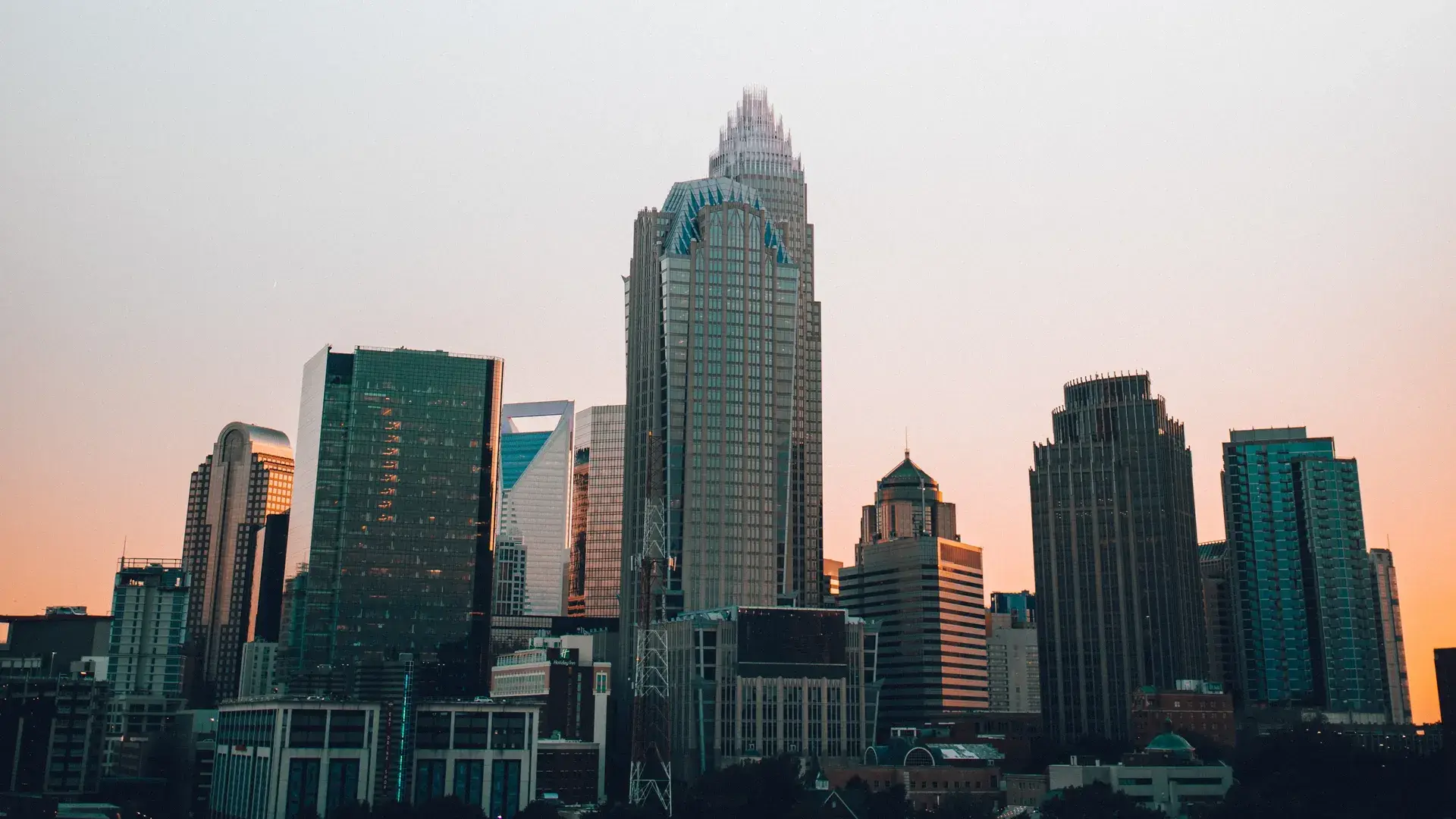
The Charlotte-based investment manager, which oversees $442 billion in assets, said the capital was secured for its Barings Global Private Equity Opportunities Fund II, exceeding internal targets despite a challenging fundraising climate for private markets.
Barings, a subsidiary of MassMutual, is betting that less crowded segments of the private equity and infrastructure universe—particularly those led by smaller or newer managers—will offer stronger returns in the coming cycle than mega-funds chasing large-cap deals.
“There’s real value in agility,” said Anthony Sciacca, Head of Global Business Development at Barings. “By backing newer GPs and under-the-radar projects, we believe we can outperform in a market that’s increasingly bifurcated.”
The new fund will focus on allocating capital to emerging private equity managers, infrastructure sponsors, and thematic platforms across North America, Europe, and select emerging markets.
According to Barings, approximately 60% of the fund’s commitments are earmarked for co-investments and primary fund positions in vehicles with less than $1 billion in assets. The remainder is targeted at direct deals, especially in infrastructure verticals like renewable energy, telecom towers, and logistics.
“We’re not chasing mega-buyouts,” said Paul Gill, Managing Director of Barings’ Global Private Equity team. “We want to partner with firms that are operating in the $100 million to $500 million deal range—where competition is lower and value creation is more tangible.”
Barings is also allocating a portion of the fund to diverse and first-time managers, part of a broader industry shift toward inclusive capital deployment and differentiated sourcing.
The fund’s close comes at a time when many private equity firms are struggling to raise capital. According to Preqin, global PE fundraising fell 17% in 2024, its second consecutive year of declines, amid interest rate volatility, higher capital costs, and concerns over asset valuations.
Yet Barings has found success by positioning itself as a strategic LP with long-term commitments, giving it preferential access to emerging opportunities.
“Institutional investors are becoming more selective,” said Elizabeth Lee, a senior analyst at PitchBook. “Barings is capitalizing by targeting the middle of the market, which is less saturated and more flexible in pricing.”
The fund’s investor base includes public and corporate pensions, insurance companies, endowments, and sovereign wealth funds, according to Barings. Roughly 70% of commitments came from repeat clients, a testament to Barings’ track record in alternative strategies.
Barings’ expansion into infrastructure reflects growing demand for hard assets amid inflationary pressure and energy transition mandates. The firm is particularly bullish on grid modernization, sustainable transport, and digital infrastructure, including data centers and fiber networks.
The new fund is expected to deploy capital over a three- to five-year period, with initial investments already underway in a European battery storage network and a North American waste-to-energy operator, according to sources close to the firm.
Barings’ first Global Private Equity Opportunities Fund, launched in 2020, has reportedly returned a net IRR of 17.8% to date, outperforming median benchmarks for mid-market PE funds. The firm declined to confirm specific performance figures.
Barings is competing with peers like StepStone, Adams Street Partners, and Hamilton Lane in the fund-of-funds and co-investment arena, but differentiates itself through its global footprint and willingness to back less-established managers.
“It’s not just about deploying capital—it’s about building long-term partnerships that can scale,” said Gill. “The next generation of alpha isn’t coming from the household names. It’s coming from the ones just emerging.”
Barings is already laying the groundwork for follow-on vehicles and expects to be back in the market by 2026. The firm is also expanding its infrastructure platform, including new hires in Asia and Latin America to support deal origination.
In a market where capital is harder to raise and harder to deploy, Barings is leaning into a contrarian bet—that smaller managers and mid-market infrastructure can deliver outsized returns. With $950 million now in hand, the firm is ready to prove it.
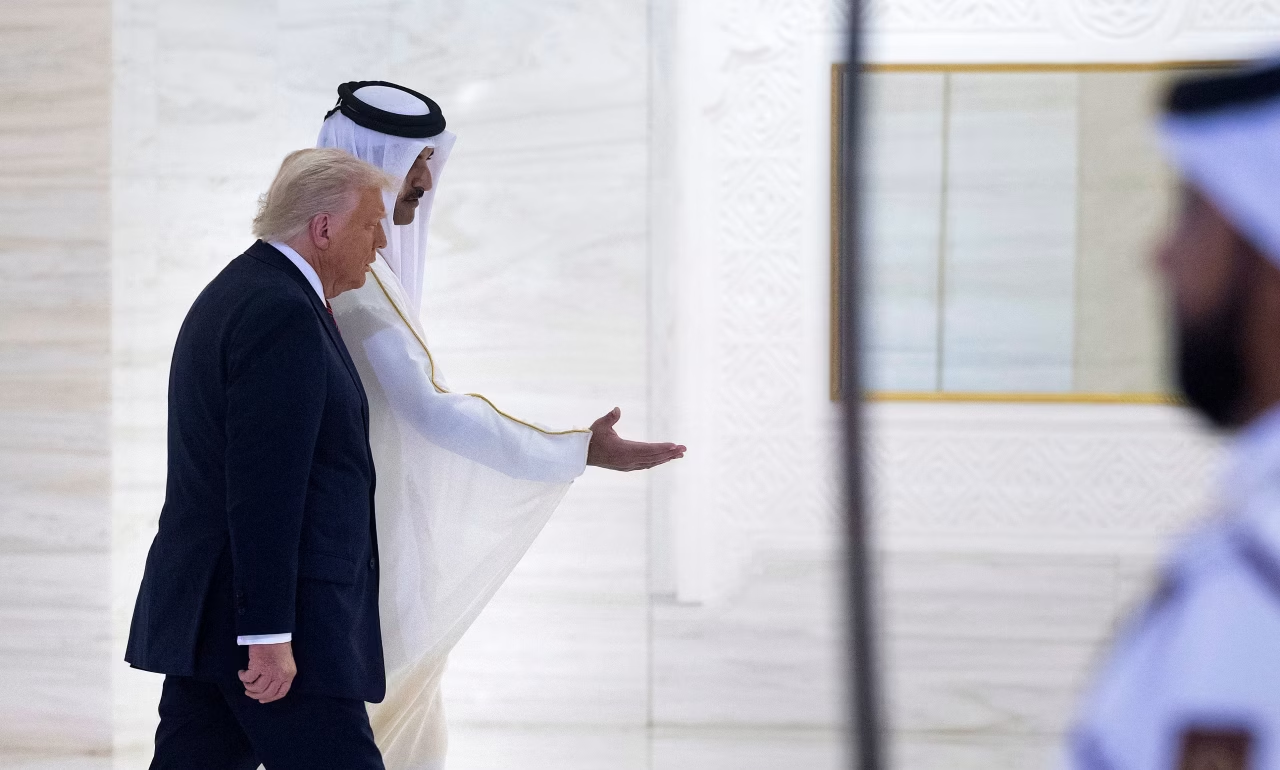
Qatar, a nation roughly the size of Connecticut with a population smaller than Brooklyn’s, has leveraged its immense natural gas wealth to secure outsize influence in Washington and across the American academic and defense establishment. Over the past two decades, the Gulf monarchy has quietly spent billions of dollars on U.S. military cooperation, educational partnerships, and lobbying efforts—building a powerful soft power machine that has reshaped its image from regional outlier to indispensable partner.
At the core of Qatar’s U.S. influence strategy is Al Udeid Air Base, a sprawling American military installation outside Doha that hosts over 10,000 U.S. troops and serves as the forward headquarters for U.S. Central Command (CENTCOM). Since 2002, Qatar has spent an estimated $8 billion building and upgrading the facility, essentially offering it to the Pentagon rent-free.
“No other country in the region provides this level of military infrastructure support without asking much in return,” said Gen. Kenneth McKenzie, former CENTCOM commander. “It makes Qatar indispensable to American operations in the Middle East.”
In return, the U.S. has shielded Qatar from regional isolation campaigns, particularly during the 2017 blockade by Saudi Arabia, the UAE, Egypt, and Bahrain. Despite Qatar’s ties to Islamist groups and accusations of enabling Hamas financing, Washington has largely stood by Doha—a testament to the strategic leverage gained through deep pockets.
While its military investments fly under the radar, Qatar’s most public-facing influence effort has been its massive donations to American universities. According to U.S. Department of Education data, Qatari entities have contributed more than $4.7 billion to U.S. colleges since 2000, making it one of the largest foreign donors to American higher education.
Much of that money flows through Education City, a Doha-based campus complex hosting satellite branches of top-tier U.S. institutions including Georgetown, Northwestern, Carnegie Mellon, Texas A&M, and Cornell Medical College. While universities claim academic independence, critics argue the funding creates subtle forms of censorship and political self-censorship.
“No university wants to lose a $300 million donor,” said Deborah Lipstadt, U.S. Special Envoy to Combat Antisemitism, who has raised concerns about foreign influence. “That money buys access, and sometimes silence.”
In 2021, a congressional probe led by the House Education and Labor Committee found that several schools failed to report Qatar-linked donations in full, raising transparency and national security red flags.
Qatar has also cultivated a powerful presence in the Beltway’s influence industry. Since 2017, it has spent over $147 million on lobbying and public relations firms, according to the Justice Department’s Foreign Agents Registration Act (FARA) database. Notable beneficiaries include Skadden, Arps, Nelson Mullins, and former U.S. Attorney General John Ashcroft’s firm.
Qatar’s lobbying offensive intensified after the 2017 blockade, as it sought to shape U.S. public opinion and policymaking in its favor. In one instance, Qatar funded trips for over 250 American academics and opinion leaders to Doha, many of whom later wrote op-eds supporting Qatar’s position.
Additionally, Qatari-linked organizations have poured millions into American think tanks including the Brookings Institution, Atlantic Council, and Center for Strategic and International Studies (CSIS)—often sponsoring research and panel discussions on Gulf security and U.S.-Qatar relations.
Qatar’s investments have paid geopolitical dividends. Despite its support for groups like the Muslim Brotherhood and Al Jazeera’s frequent criticisms of U.S. allies, Washington continues to view Doha as a stabilizing partner. Qatar has also positioned itself as a mediator in high-stakes diplomacy, most notably brokering prisoner exchanges with Iran and facilitating ceasefire talks between Hamas and Israel.
The recent release of American-Israeli hostage Edan Alexander from Gaza, mediated in part by Qatari diplomats, is the latest example of its delicate balancing act—simultaneously housing a U.S. air base and hosting Hamas leadership in luxury hotels.
“Qatar plays every side, and they do it well,” said Steven Cook, senior fellow at the Council on Foreign Relations. “It’s transactional diplomacy, backed by enormous capital.”
Still, the tide may be turning. With bipartisan concern mounting over foreign interference in U.S. academia and defense policy, Qatar’s influence machine is facing greater scrutiny. A bipartisan bill introduced in April 2025 would require all universities receiving more than $10 million in foreign aid to submit detailed reports to the Treasury Department.
Furthermore, Republican lawmakers have proposed conditioning future military cooperation on Qatar’s transparency about Hamas ties and human rights practices, particularly its treatment of migrant workers and LGBTQ individuals.
“You can’t be both an ally and an enabler of terrorists,” said Rep. Mike Waltz (R-FL), who sits on the House Armed Services Committee. “We need to hold Qatar to the same standards we expect from any partner.”
Qatar’s influence in the U.S. was not inherited—it was engineered. Through a meticulous mix of strategic military support, educational philanthropy, and relentless lobbying, the Gulf state has carved out a role far greater than its size would suggest. As global politics evolve, the question is whether Washington will continue to accept Doha’s deep pockets as a substitute for shared values.
Cookie Consent
We use cookies to improve your experience on our site. By using our site, you consent to cookies.
Contains information related to marketing campaigns of the user. These are shared with Google AdWords / Google Ads when the Google Ads and Google Analytics accounts are linked together.
90 days
__utma
ID used to identify users and sessions
2 years after last activity
__utmt
Used to monitor number of Google Analytics server requests
10 minutes
__utmb
Used to distinguish new sessions and visits. This cookie is set when the GA.js javascript library is loaded and there is no existing __utmb cookie. The cookie is updated every time data is sent to the Google Analytics server.
30 minutes after last activity
__utmc
Used only with old Urchin versions of Google Analytics and not with GA.js. Was used to distinguish between new sessions and visits at the end of a session.
End of session (browser)
__utmz
Contains information about the traffic source or campaign that directed user to the website. The cookie is set when the GA.js javascript is loaded and updated when data is sent to the Google Anaytics server
6 months after last activity
__utmv
Contains custom information set by the web developer via the _setCustomVar method in Google Analytics. This cookie is updated every time new data is sent to the Google Analytics server.
2 years after last activity
__utmx
Used to determine whether a user is included in an A / B or Multivariate test.
18 months
_ga
ID used to identify users
2 years
_gali
Used by Google Analytics to determine which links on a page are being clicked
30 seconds
_ga_
ID used to identify users
2 years
_gid
ID used to identify users for 24 hours after last activity
24 hours
_gat
Used to monitor number of Google Analytics server requests when using Google Tag Manager