Category: Investment

  • Nvidia’s Record Profits Alleviate Investor Concerns Amid AI Boom

    Nvidia’s Record Profits Alleviate Investor Concerns Amid AI Boom

    GettyImages 2192215403 b83fd81cbd854c3587c2fe593617f3a5
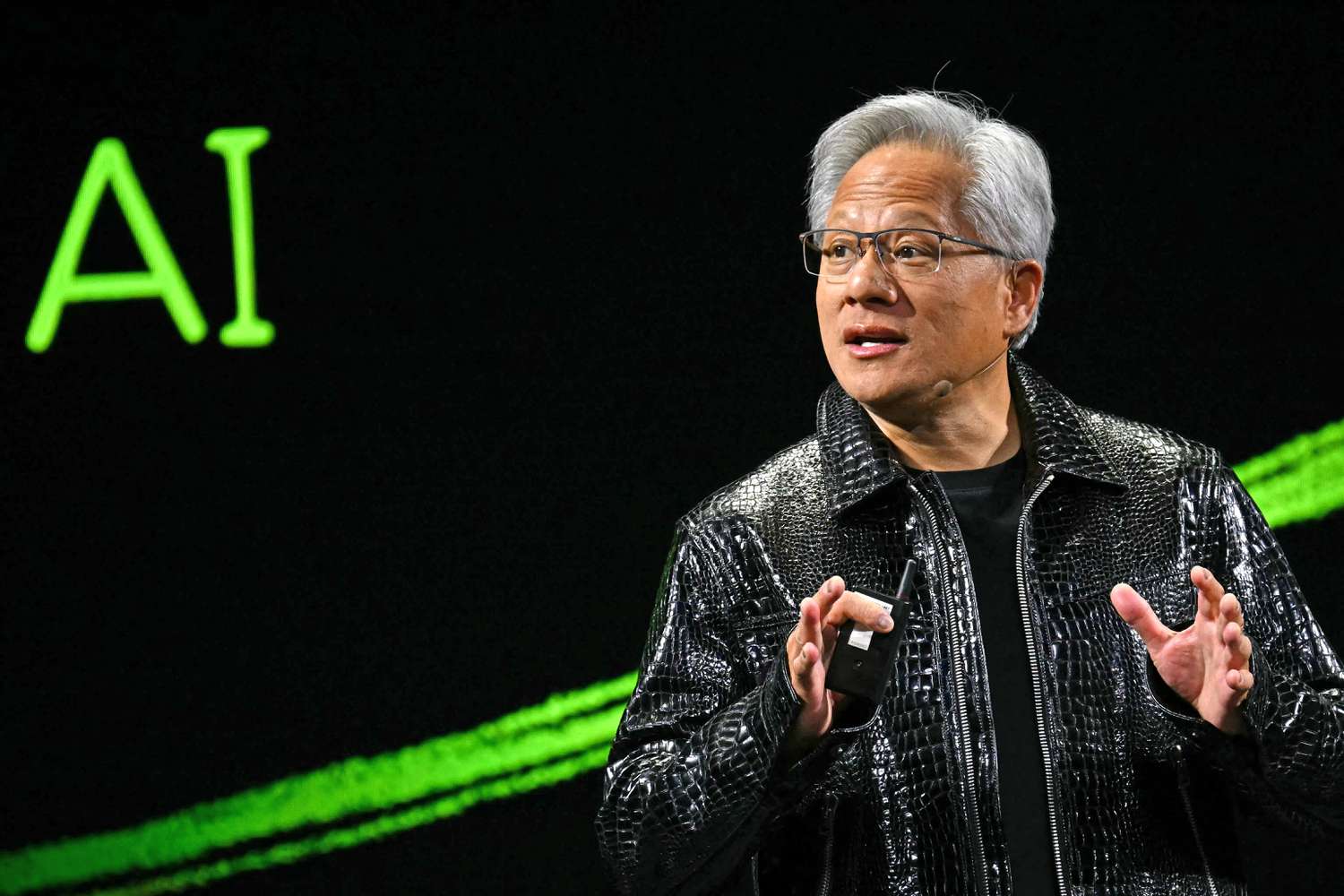
    Nvidia CEO Jensen Huang delivers a keynote address at CES on Jan. 6, 2025. © Patrick T. Fallon / Getty Images
    Stock Widget

    Nvidia NVDA +4.25% ▲ reported record sales and strong guidance Wednesday, helping soothe jitters about an artificial intelligence bubble that have reverberated in markets for the last week.

    Sales in the October quarter hit a record $57 billion as demand for the company’s advanced AI data center chips continued to surge, up 62% from the year-earlier quarter and exceeding consensus estimates from analysts polled by FactSet. The company increased its guidance for the current quarter, estimating that sales will reach $65 billion—analysts had predicted revenue of $62.1 billion for the quarter.

    Shares in the world’s most-valuable publicly listed company rose almost 5% in premarket trading Thursday.

    “We’ve entered the virtuous cycle of AI,” said Nvidia Chief Executive Jensen Huang. “AI is going everywhere, doing everything, all at once.”

    Wednesday’s result will allow investors to breathe a sigh of relief. Each Nvidia quarterly earnings report has come to be seen as a financial Super Bowl of sorts as the AI boom has taken off. The company is regarded as a bellwether for both the health of the tech industry and the market as a whole.

    This quarter, however, the stakes seemed higher. Rarely has an earnings report from a single company been greeted with such nervous anticipation.

    In recent weeks, investors have sold off big tech names, worried that companies are spending far too much money on data centers, chips, and other infrastructure in the race to design and operate the world’s most powerful AI models, with little hope of recouping their investments in the near term.

    Adding to the pressure is a flurry of recent AI deals structured using what critics have dubbed “circular” funding mechanisms—broadly referring to suppliers like Nvidia making large capital investments in the businesses of the customers who buy their products. Just a few months ago, investors viewed such deals with enthusiasm, pumping up shares for a variety of AI-related companies, but this week one such deal—between Nvidia, Microsoft and Anthropic—was greeted warily.

    This week, 45% of global fund managers surveyed by Bank of America said that an AI stock-market bubble was one of the biggest risks facing the market.

    A number of bearish moves by high-profile investors have also rattled tech markets. Last week, Masayoshi Son’s SoftBank Group sold its entire $5.8 billion stake in Nvidia to divert that money to other AI investments, while a hedge fund run by influential billionaire venture capitalist Peter Thiel unloaded its entire $100 million Nvidia stake in the third quarter.

    Earlier this month, Michael Burry—who famously predicted the popping of the subprime mortgage securities bubble and was profiled in the Michael Lewis book “The Big Short: Inside the Doomsday Machine”—revealed in a securities filing that he was betting against the stocks of both Nvidia and AI-heavy defense analytics firm Palantir.

    “The last few weeks, there have been some escalating cracks in the AI landscape,” said Matt Stucky, chief portfolio manager for equities at Northwestern Mutual Wealth Management Company, an Nvidia shareholder. “Nvidia is the beneficiary of a lot of AI spending, and market forces are pushing back harder and harder on that spending.”

    Quarterly net income was $31.9 billion, 65% higher than a year earlier. Sales of Nvidia’s Blackwell line of graphics processing units—its most powerful chips yet—were “off the charts,” Huang said. Revenue from Nvidia’s data center segment set a record at $51.2 billion, beating analysts’ expectations of $49 billion.

    The potential for revenue increases may be limited going forward after the Trump administration announced earlier this month that it is not considering allowing a version of the Blackwell chip to be sold in China, a fast-growing AI market that represents tens of billions of dollars in potential sales.

    Half of the company’s long-term opportunity will come from customers’ transition to accelerated computing and generative AI, Colette Kress, Nvidia’s chief financial officer, said on a call with investors. While sizable purchase orders for Nvidia’s Hopper Platform never materialized in the quarter due to geopolitical issues with China, the company remains committed to engaging with governments, she added.

    In separate news, the Commerce Department approved the sale of up to 70,000 advanced artificial-intelligence chips to two companies based in the United Arab Emirates and Saudi Arabia, a big win for the Middle Eastern nations as they seek to catch up in the AI race. The approvals are a reversal from earlier this year, when some administration officials rejected the idea of exporting directly to the state-backed companies over security concerns.


    Terms of the deal will allow U.S. firms to sell up to 35,000 of Nvidia’s GB300 servers or their equivalents to both G42, a state-run AI firm based in Abu Dhabi, and Humain, a Saudi government-backed AI venture, government officials said. Nvidia competitor Advanced Micro Devices also has an agreement worth billions of dollars to work with Humain.

    Nvidia’s stock price more than doubled between early April and late October, rising from the low $90s to more than $200 per share, but has lost ground in the last few weeks as bubble worries have grown. So far this year, it’s up about 30%.

  • Elon Musk Wins Shareholder Approval for Tesla’s Historic $1 Trillion Pay Package

    Elon Musk Wins Shareholder Approval for Tesla’s Historic $1 Trillion Pay Package

    cb53d6a0 bb5c 11f0 aebe 3e38111b5dae
    Elon Musk speaking at the 2025 Tesla shareholder meeting. ·© Tesla.com
    Stock Widget

    Tesla TSLA -2.85% ▼ shareholders approved a record-setting pay package for Chief Executive Elon Musk, a plan designed to motivate the world’s richest man with as much as $1 trillion in additional stock.

    Flanked by dancing humanoid robots on a stage bathed in pink and blue light at the electric-vehicle maker’s Austin, Texas, headquarters, Musk thanked the crowd of shareholders who supported the pay package with more than 75% of the votes cast.

    “What we’re about to embark upon is not merely a new chapter of the future of Tesla but a whole new book,” Musk said. “I guess what I’m saying is hang onto your Tesla stock,” he added later.

    The measure was hotly debated, with some large shareholders taking opposing sides. The voting was largely seen as a referendum on the company’s longtime leader and his vision to shift Tesla’s focus to humanoid robots and artificial intelligence.

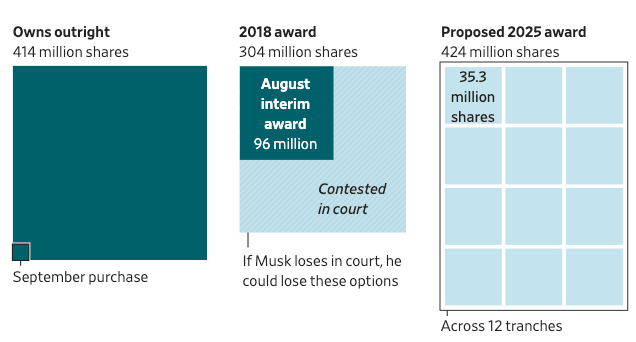
    Musk, who is also CEO of SpaceX and xAI, had threatened on social media to leave Tesla if the measure had been rejected. He is already Tesla’s biggest shareholder, with a roughly 15% stake.

    Musk had said he wanted a big enough ownership stake in Tesla to be comfortable that the “robot army” he was developing didn’t fall into the wrong hands, but not so large that he couldn’t be fired if he went “crazy.”

    On another proposal that would authorize the Tesla board to invest in Musk’s artificial-intelligence company, xAI, Tesla General Counsel Brandon Ehrhart said more shares had been voted for the proposal than against, but there were many abstentions. He said the board would consider its next steps.

    Musk had publicly endorsed the idea as he seeks to catch up in the AI race.

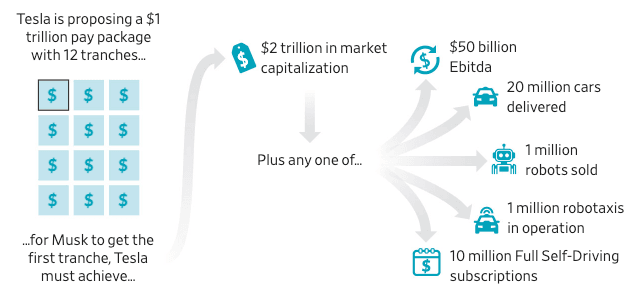
    The new pay package, which includes 12 chunks of stock, could give Musk control over as much as 25% of Tesla if he hits a series of milestones and expands the company’s market capitalization to $8.5 trillion over the next 10 years. Its market cap is now around $1.5 trillion.

    Tesla

    Tesla’s board described the package as pay for performance, designed to motivate Musk to transform the company with new products such as autonomous vehicles, robotaxis and humanoid robots.

    “Having worked with him now for 11 years, I can say what motivates him is doing things that others can’t do or haven’t been able to do,” Tesla Chair Robyn Denholm said in an interview last week.

    Tesla struggled to keep Musk’s attention earlier this year as he spent time in Washington running the Department of Government Efficiency. Tesla’s vehicle sales fell more than 13% in the first half of the year. After Musk left Washington in May, he turned his focus to his startup xAI and the development of its chatbot Grok, The Wall Street Journal reported.

    The new pay package was opposed by several proxy advisers and institutional investors including the California Public Employees’ Retirement System, various New York City retirement systems, and Norges Bank Investment Management, which is the sixth-largest institutional shareholder with a 1.2% stake.

    Institutional Shareholder Services, one of the proxy advisers that urged passive funds to vote down the compensation package, said it had concerns about the magnitude and design of the “astronomical” stock award.

    Charles Schwab, which has a Tesla stake of about 0.6%, said Tuesday it would vote in favor of the package. “We firmly believe that supporting this proposal aligns both management and shareholder interests,” it said in a statement.

    Huge stock awards tied to ambitious targets—sometimes called “moonshot” pay packages—are cast by proponents as a high-octane incentive for outstanding performance. Critics say they are often doubly flawed: overly expensive if targets prove easier than predicted; and counterproductive if the targets become unattainable and executives see little reason to stick around.

    Musk’s new package is divided into 12 tranches. He could reach the first tranche if Tesla’s market cap grows to $2 trillion from around $1.5 trillion today, combined with an operational goal such as selling 11.5 million new vehicles, on top of the 8.5 million vehicles on the road.

    More challenging milestones include selling one million robots to paying customers and maintaining an adjusted Ebitda of $400 billion. Last year, Tesla posted an adjusted Ebitda of $16 billion.

    For each tranche he unlocks, Musk would receive equity equivalent to about 1% of Tesla’s current shares. Once he earns a tranche, he could vote those shares but wouldn’t be able to sell them until they vest, in either 7.5 years or 10 years.

    Musk’s 2018 pay package, the most valuable on record before the 2025 package, is tied up in a dispute at the Delaware Supreme Court. Tesla is appealing a lower-court decision to rescind the 2018 pay package after a judge ruled in January 2024 that Tesla’s directors were beholden to Musk and the approval process for that package was tainted and lacked transparency.

    Here is a breakdown of Musk’s current Tesla ownership:

    Tesla 2
  • Meta Stock Falls Even After Strong Revenue Report

    Meta Stock Falls Even After Strong Revenue Report

    Stock Widget

    Meta Platforms Inc. delivered a resounding third-quarter earnings beat on Wednesday, with adjusted earnings per share of $7.25 topping analyst expectations of $6.69 and revenue surging to $51.24 billion against forecasts of $49.41 billion, as polled by LSEG. The results underscored the social media giant’s robust advertising engine and user engagement amid a resurgent digital ad market, yet Meta META -1.20% ▼ shares tumbled 1.2% in after-hours trading to $582.34, capping a volatile session that saw the stock dip 0.3% during regular hours. Investors, spooked by Meta’s forecast of “significant acceleration” in AI-related infrastructure costs next year—potentially ballooning to tens of billions—brushed aside the positives, signaling growing unease over the sustainability of Big Tech’s AI arms race.

    The earnings, released after the bell on October 29, highlighted Meta’s operational resilience. Net income soared to $15.69 billion, or $6.03 per share, a 35% jump from $11.58 billion, or $4.39 per share, a year earlier—well ahead of FactSet’s consensus of $5.22. Revenue climbed 19% year-over-year, fueled by a 22% uptick in ad sales to $50.1 billion, as daily active users across Facebook, Instagram, and WhatsApp swelled to 3.28 billion, up 6% from last year. CEO Mark Zuckerberg touted the quarter as a “strong foundation” for AI integrations, including enhanced Reels recommendations and Llama model advancements, which drove a 12% increase in time spent on the platforms.

    Yet, the post-earnings glow faded swiftly. Meta’s guidance for Q4 projected revenue of $52.5 billion to $54 billion, in line with Wall Street’s $53.2 billion midpoint, but the real headwind was the capex outlook. The company flagged a “meaningful ramp” in 2026 AI infrastructure spending, on top of the $39 billion already earmarked for 2025, to fuel data centers and GPU acquisitions from Nvidia Corp. “We’re investing aggressively in AI to stay ahead,” Zuckerberg said on the earnings call, but analysts like Bank of America’s Justin Post worried aloud about the “long-term growth manifestation” of these outlays, especially as rivals like OpenAI pivot toward ads and social features, intensifying competition in Meta’s core turf.

    The reaction rippled across global markets. In Frankfurt pre-market trading Thursday, Meta (META.O) shares slipped 2.6% to €530, mirroring a 5.1% drop in Microsoft Corp. (MSFT.O) amid its own Azure cloud growth slowdown warning—dragging Nasdaq futures down over 1%. The Magnificent Seven cohort, already under scrutiny for AI hype, saw broader pressure: Alphabet Inc. and Amazon.com Inc. reports later in the week loom large, with investors parsing for similar spending spikes. “Meta’s beat was textbook, but the AI capex fog is thick—it’s all about the denominator now,” said Wedbush Securities analyst Daniel Ives, who maintains an Outperform rating but trimmed his price target to $650 from $675.

    Meta’s Q3 performance aligns with a digital ad sector rebound, projected to grow 12% to $740 billion globally in 2025 per eMarketer, buoyed by election-year spending and e-commerce tailwinds. Reality Labs, Meta’s metaverse arm, narrowed losses to $4.2 billion from $5.1 billion, with Quest headset sales up 15%—a bright spot amid Zuckerberg’s pivot to AI glasses and wearables. Still, the stock’s 1.2% after-hours slide erased $25 billion in market cap, leaving Meta at $1.48 trillion—down 5% year-to-date versus the Nasdaq’s 23% gain.

    Looking ahead, Wall Street eyes Meta’s AI monetization roadmap at next week’s investor day, where details on ad-targeting LLMs and enterprise tools could assuage fears. For now, the earnings saga encapsulates Big Tech’s paradox: explosive growth meets escalating costs in an AI gold rush that has minted trillion-dollar valuations but risks a valuation reset if returns lag. As Ives put it, “The party’s still on, but the bill just arrived.”

  • Trump’s Russian Oil Sanctions Disrupt Imports to India and China

    Trump’s Russian Oil Sanctions Disrupt Imports to India and China

    GettyImages 1240297857 2 1
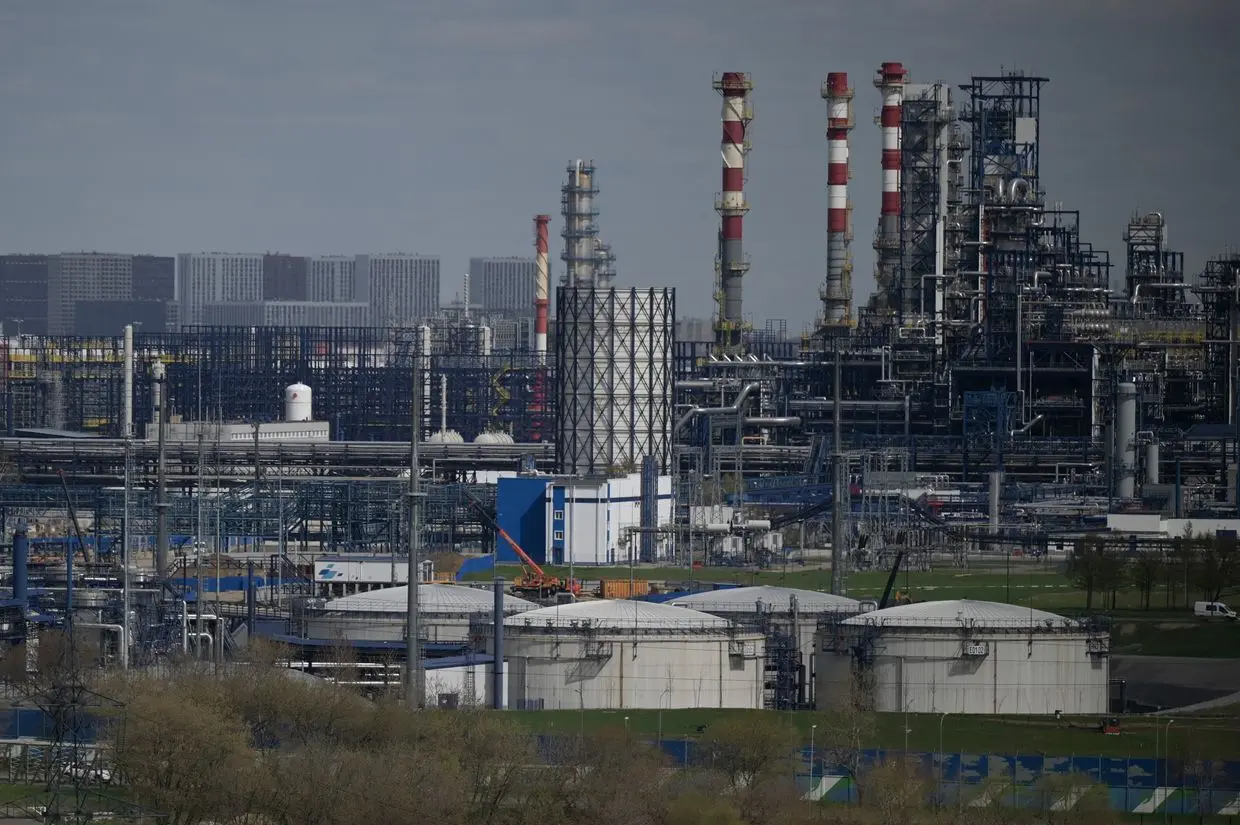
    A view shows the Russian oil producer Gazprom Neft’s Moscow oil refinery on the south-eastern outskirts of Moscow, Russia on April 28, 2022. © Natalia Kolesnikova/AFP/Getty Images

    Trump has unleashed a barrage of sanctions on Russia’s oil behemoths, Rosneft and Lukoil, sending shockwaves through global energy markets and forcing America’s key Asian trading partners—China and India—to rethink their cozy deals with Vladimir Putin’s war machine. The move, announced Wednesday amid a fresh Russian missile barrage on Kyiv that claimed seven lives including children, marks Trump’s first direct punch at Moscow’s energy lifeline since reclaiming the White House. It’s a clear signal: Enough with the empty summits and fruitless phone calls. Time for America to squeeze Putin until he sues for peace in Ukraine.

    Brent crude, the global oil benchmark, rocketed 5% Thursday to $65 a barrel, while West Texas Intermediate surged over 5% to nearly $60—reflecting traders’ bets on tighter supplies as Russia’s two largest producers, which pump out 3.1 million barrels per day and account for nearly half of Moscow’s crude exports, face isolation from Western finance. That’s a potential $100 billion annual hit to Russia’s coffers, per Bloomberg estimates, at a moment when the Kremlin’s war chest is already strained by three years of battlefield stalemates and a stumbling economy.

    Trump, speaking alongside NATO Secretary-General Mark Rutte in the Oval Office, didn’t mince words: “Every time I speak to Vladimir, I have good conversations and then they don’t go anywhere. They just don’t go anywhere.” The president scrapped a planned Budapest summit with Putin just days ago, opting instead for the sanction hammer after Moscow rebuffed his ceasefire overtures. “Now is the time to stop the killing and for an immediate ceasefire,” echoed Treasury Secretary Scott Bessent, who framed the penalties as a direct assault on the “Kremlin’s war machine.” With Rosneft—headed by Putin’s crony Igor Sechin—and the private giant Lukoil now blacklisted by the Treasury’s Office of Foreign Assets Control (OFAC), plus 36 subsidiaries frozen out of U.S. markets, Trump is betting big that choking off oil revenues will drag Putin to the table.

    This isn’t just tough talk; it’s targeted leverage. Russia’s oil and gas sector props up a quarter of its federal budget, fueling tanks, drones, and troops in Donbas. By design, the sanctions include a grace period until November 21 for global buyers to wind down deals, but the real teeth lie in secondary penalties: Any foreign bank, trader, or refinery touching Rosneft or Lukoil risks U.S. wrath, from asset freezes to SWIFT exclusions. “Engaging in certain transactions… may risk the imposition of secondary sanctions,” the Treasury warned pointedly. For Trump, it’s classic Art of the Deal—turning economic pain into diplomatic gain, much like his Gaza ceasefire triumph earlier this year.

    India Feels the Squeeze: A Trade Deal Lifeline?

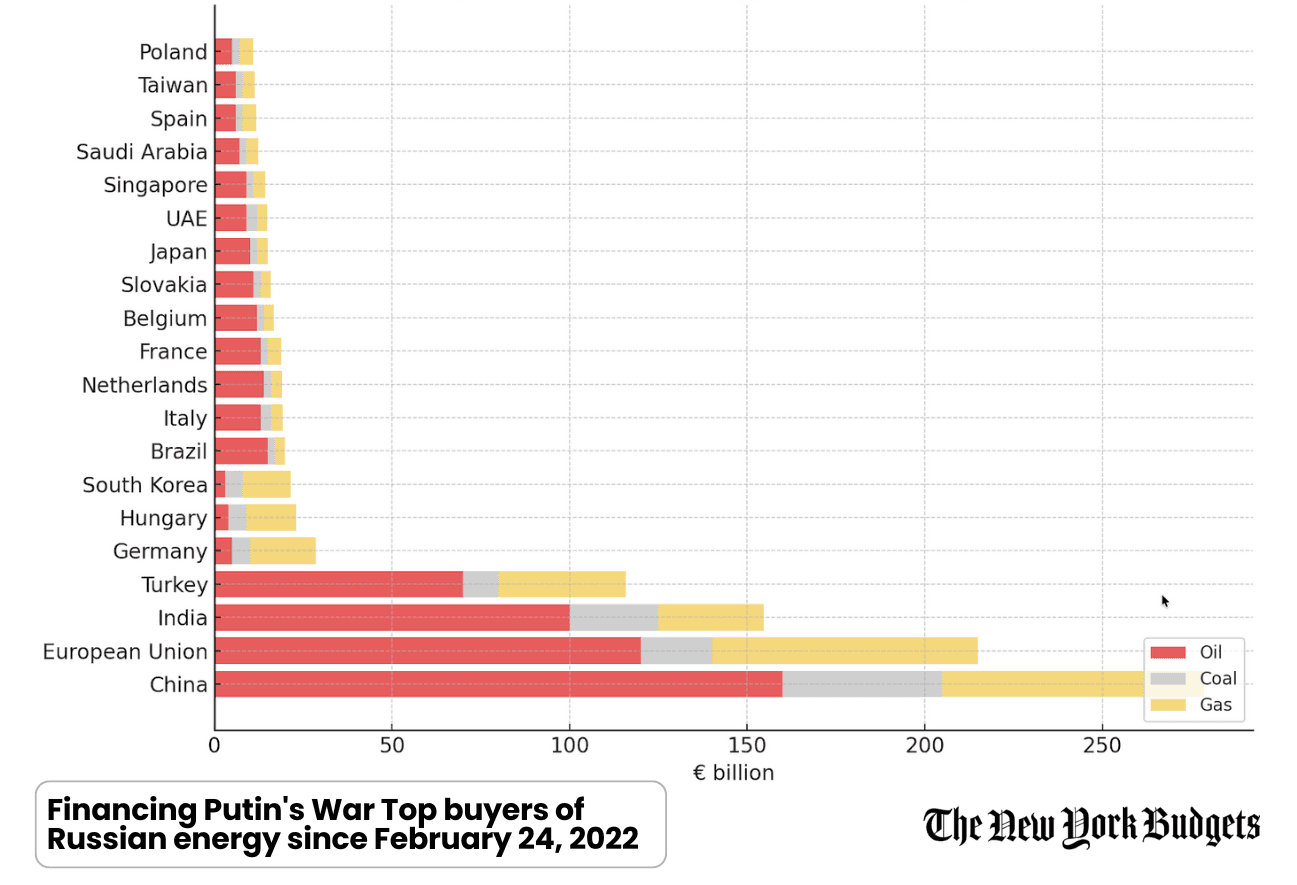
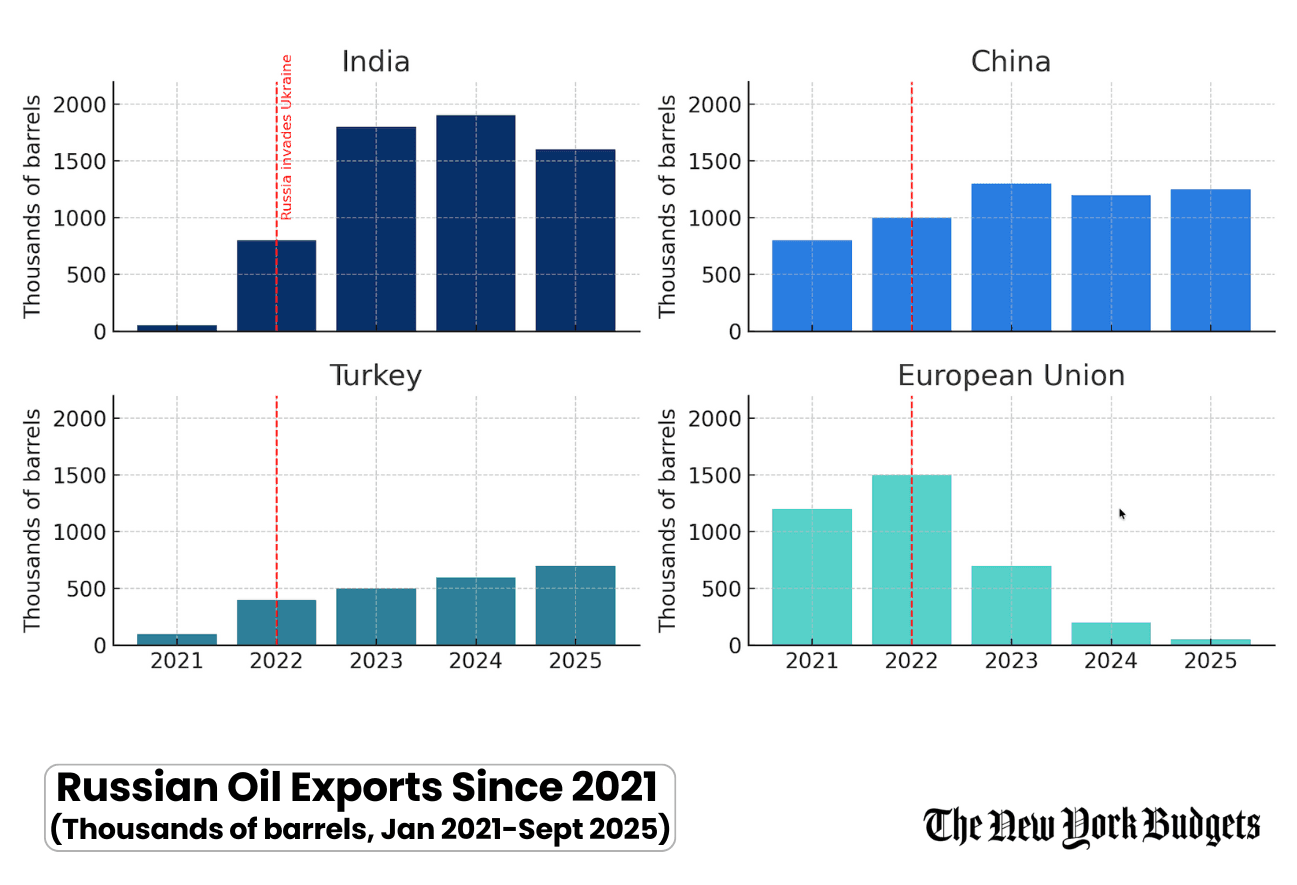
    Nowhere is the ripple more immediate than in India, where refiners are scrambling to slash Russian imports that ballooned to 1.7 million barrels per day in the first nine months of 2025—up from a negligible 0.42 million tons pre-war. “There will be a massive cut,” one industry source told Reuters Thursday, as state-run giants like Indian Oil Corp. and Bharat Petroleum pore over shipping manifests to purge any Rosneft- or Lukoil-sourced crude. Reliance Industries, India’s top private buyer and locked into long-term contracts for nearly 500,000 barrels daily from Rosneft, is “recalibrating” imports to align with New Delhi’s guidelines, a company spokesman confirmed.

    modi putin 1753683012190 1753683012417 1754011312847
    Over the past month, India, along with China and Brazil, has been at the centre of criticism from the West, mainly the US, for its purchase of Russian oil. © PTI

    This pullback couldn’t come at a better time for U.S.-India relations, strained by Trump’s 50% tariffs on Indian exports—half explicitly tied to Moscow’s oil fire sale. In a Tuesday call, Prime Minister Narendra Modi assured Trump that Delhi “was not going to buy much oil from Russia” and shares his goal of ending the Ukraine bloodbath, per White House readouts. Sources close to the talks say the sanctions could shatter a diplomatic logjam, paving the way for a bilateral trade pact that levels the playing field for American farmers and manufacturers. “We’re talking about bringing India’s tariffs in line with Asian peers,” one U.S. trade official told The Heritage Foundation’s Daily Signal on background. “Wind down the Russian crude, and we wind down the duties. It’s a win-win: India saves on overpriced alternatives, and we get fair trade.”

    Senior Indian refinery execs, speaking anonymously to Bloomberg, called the sanctions a “game-changer,” rendering direct Russian buys “impossible” amid fears of U.S. blacklisting. Exports to India hit $140 billion since 2022, but at what cost? Discounted Urals crude shielded New Delhi from energy inflation, yet it undercut Trump’s peace push and emboldened Putin. Now, with global prices spiking, Indian consumers may pay more at the pump—but the strategic upside is huge: Stronger ties with Washington, access to U.S. LNG, and a seat at the table in Trump’s post-war reconstruction bonanza for Ukraine.

    Critics in the Beltway whisper that this pressures Modi too hard, but let’s be real: India’s neutrality has been a fig leaf for profiteering off Putin’s aggression. Trump’s move forces accountability, reminding allies that America’s security umbrella isn’t free. As former U.S. Ambassador to Ukraine John Herbst put it to the BBC, these sanctions “will certainly hurt the Russian economy… It’s a good start” toward genuine negotiations.

    China’s Reluctant Retreat: Xi’s Putin Problem

    Across the border, Beijing’s state behemoths—PetroChina, Sinopec, CNOOC, and Zhenhua Oil—are hitting pause on seaborne Russian crude, Reuters reported Thursday, citing trade insiders. China, which snapped up a record 109 million tons last year (20% of its energy imports), has been Putin’s economic lifeline, laundering sanctions via “shadow fleets” of ghost tankers. No longer. The quartet’s suspension, if it sticks, signals a seismic shift: Even Xi Jinping, Putin’s “no-limits” partner, can’t ignore the U.S. financial guillotine.

    Trump, fresh off Gaza, sees this as his opening. “Xi holds influence over Putin,” he said Wednesday, vowing to press the issue at next week’s APEC summit in South Korea. No secondary tariffs on China yet—unlike India’s 25% slap in August—but the threat looms. “Will the U.S. actively threaten secondary sanctions on Chinese banks?” mused ex-State Department sanctions guru Edward Fishman on X. Short answer: Expect pullback, at minimum. Beijing’s Foreign Ministry blasted the measures as “unilateral bullying,” but actions speak louder: With Rosneft and Lukoil cut off, Chinese traders face pricier middlemen or a pivot to Saudi or U.S. barrels.

    For Russia, it’s a gut punch. China and India gobble 70% of its energy exports; losing even 20-30% could slash GDP growth from its anemic 1.5% forecast (per IMF) and force trade-offs between bombs and breadlines. “As profit margins shrink, Russia will face difficult… financing a protracted war,” notes Michael Raska of Singapore’s Nanyang Technological University. Dr. Stuart Rollo at Sydney’s Centre for International Security adds that while the sanctions won’t cripple Russia’s industrial base overnight, they “may coerce [it] into accepting peace terms” if paired with Trump’s deal-making flair.

    Putin’s Bluster Meets Economic Reality

    Vladimir Putin, ever the tsar, struck defiant Thursday: “No self-respecting country ever does anything under pressure,” he told Russian reporters, dismissing the sanctions as an “unfriendly act” that won’t dent Moscow’s resolve. Yet cracks show. He conceded “some losses are expected,” and warned of “overwhelming” retaliation if Ukraine gets U.S. Tomahawks—though that’s more theater than threat. Dmitry Medvedev, Putin’s hawkish ex-president, raged on Telegram: “The U.S. is our enemy… Trump has fully sided with mad Europe.” But even Kremlin-linked analysts like Igor Yushkov admit Asian buyers will shy away, hiking costs via shadowy intermediaries.

    21 1

    Russia’s shadow fleet—aging hulls under UAE flags—has dodged G7 caps before, sustaining flows despite EU embargoes. “New sales schemes will simply appear,” boasts military blogger Mikhail Zvinchuk. Fine, but at what price? Logistics snarls could add $5-10 per barrel, eroding the discounts that hooked India and China. With the EU mulling its 19th sanctions package—including an LNG import ban—and the UK already aboard on Rosneft/Lukoil, isolation is setting in. The Guardian reports Putin floated delaying the Budapest talks for “proper preparation,” but that’s code for stalling.

    Will this end the war? Analysts like Bill Taylor, another ex-U.S. envoy to Kyiv, call it an “indication to Putin that he has to come to the table.” It’s no silver bullet—Russia’s pivoted before, and military momentum in Donbas favors Moscow. But Trump’s calculus is sound: Freeze lines, cede nothing more, and let sanctions do the talking. “If we want Putin to negotiate in good faith, we have to maintain major pressure,” Herbst urges. Under Biden, dithering let Putin dig in; Trump’s resolve is restoring deterrence.

    22 1
    Stock Widget

    Wall Street cheered the news, with energy stocks like ExxonMobil XOM +3.00% ▲ and Chevron CVX +2.50% ▲ on prospects of higher prices and U.S. export booms. Yet Felipe Pohlmann Gonzaga, a Geneva-based trader, cautions the 5% Brent spike “will correct” amid global slowdown fears—China’s property bust, Europe’s recession. Still, for American producers, it’s manna: Permian Basin output hits 6 million barrels/day, and Trump’s LNG push could flood Asia, undercutting Russia’s Urals at $55-60.

    The EU’s frozen Russian assets—$300 billion—now fund a fresh Ukraine loan, per Brussels talks. And as Trump eyes a “cut the way it is” armistice, preserving Zelenskyy’s gains without endless aid, taxpayers win too. No more blank checks; just smart pressure.

    In this high-stakes energy chess game, Trump’s sanctions aren’t just hurting Russia—they’re realigning alliances, punishing enablers, and clearing the board for peace. Putin may bluster, but with India and China peeling away, his war of attrition is cracking. As Trump heads to APEC, the message to Xi and Modi is clear: Join the winning side, or pay the premium. America’s back in the driver’s seat, and the pump prices? A small price for freedom.

  • Trump Imposes 100% Tariff on China Over Rare-Earth Restrictions

    Trump Imposes 100% Tariff on China Over Rare-Earth Restrictions

    defense seligman rareearth lead
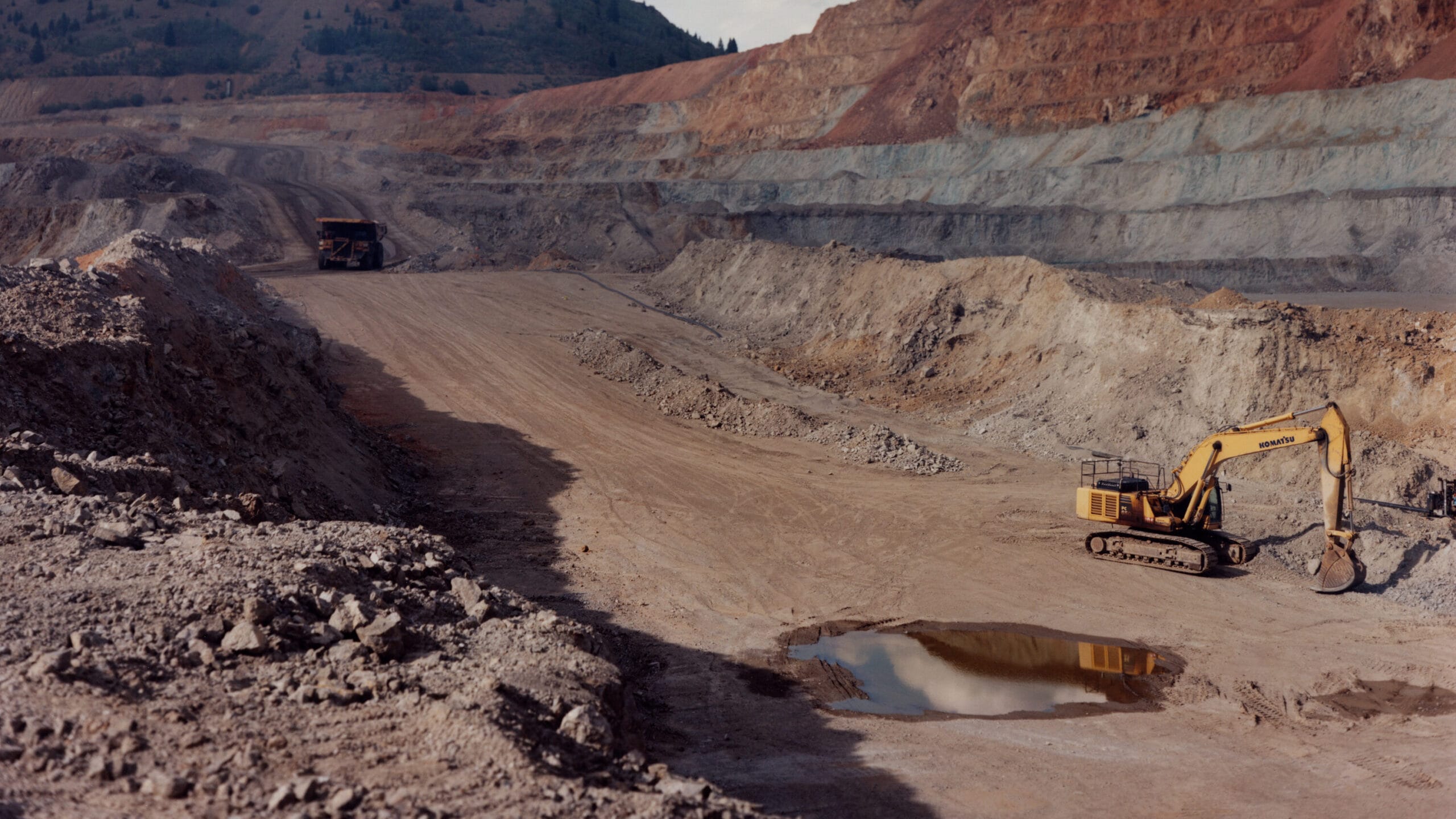
    China Dominates the Rare Earths Market. This U.S. Mine Is Trying to Change That. © Bridget Bennett for Poltico

    President Donald Trump announced on Friday that the United States will slap an additional 100% tariff on all Chinese imports starting November 1, on top of existing duties, while imposing sweeping export controls on “any and all critical software.” The move, framed as retaliation for Beijing’s recent tightening of export restrictions on rare earth elements, sent shockwaves through global markets, wiping out nearly $2 trillion in stock value and reigniting fears of a full-blown decoupling between the world’s two largest economies. With bilateral trade already strained by springtime tariff spikes that peaked at 145% on U.S. goods into China, Trump’s latest salvo—potentially pushing effective rates above 130%—threatens to upend supply chains for everything from semiconductors to electric vehicles, at a time when the global rare earth market is forecasted to exceed $6 billion annually by decade’s end.

    Trump’s announcement, delivered via a series of fiery Truth Social posts and reiterated during an Oval Office press availability, accused China of a “sinister and hostile” strategy to hold the world “hostage” through its dominance in rare earths—a group of 17 metals vital for high-tech manufacturing, defense systems, and green energy technologies. “It is impossible to believe that China would have taken such an action, but they have, and the rest is History,” Trump wrote, vowing that the tariffs could arrive “sooner” if Beijing escalates further. He also hinted at broader U.S. countermeasures, including restrictions on airplane parts and other exports, noting China’s reliance on Boeing components. The president stopped short of confirming the cancellation of his planned meeting with Chinese President Xi Jinping at the Asia-Pacific Economic Cooperation (APEC) summit in South Korea later this month, but earlier posts declared “no reason” for the sit-down, citing the “extraordinarily aggressive” timing of China’s moves—just days after a U.S.-brokered Middle East ceasefire.

    Beijing’s Rare Earth Gambit: A Calculated Squeeze on Global Supply Chains

    China’s actions, unveiled by the Ministry of Commerce on October 9, mark a significant hardening of its position in the ongoing trade skirmishes. Under “Announcement Number 61 of 2025,” Beijing expanded export licensing requirements to cover products containing more than 0.1% of rare earth elements sourced from China, even if manufactured abroad, effectively barring unlicensed shipments to foreign defense and semiconductor firms starting December 1. The curbs now encompass 12 of the 17 rare earths, including newly added holmium, erbium, thulium, europium, and ytterbium, alongside technologies for extraction, refining, and magnet production. Additional restrictions on lithium-ion batteries, graphite cathodes, and artificial diamonds take effect November 8.

    These measures build on decades of state-backed dominance: China controls 61% of global rare earth mining and a staggering 92% of refining capacity, per the International Energy Agency, fueled by subsidies that have undercut competitors worldwide. Rare earths are indispensable for neodymium-iron-boron magnets in EV motors, fighter jet engines, and smartphone vibrators—sectors where U.S. firms like Tesla, Lockheed Martin, and Apple are heavily exposed. Analysts at the Center for Strategic and International Studies warn that the restrictions could disrupt U.S. defense supply chains, echoing 2010 when Beijing briefly cut off exports to Japan over territorial disputes. “This isn’t just trade policy; it’s economic warfare aimed at critical vulnerabilities,” said Dr. Elena Vasquez, a trade economist at the Peterson Institute for International Economics.

    The timing appears deliberate, coming amid fragile progress in U.S.-China talks. After tit-for-tat hikes earlier this year drove tariffs to extreme levels—145% on U.S. imports to China and 125% in reverse—the two sides agreed in May to slash rates to 30% and 10%, respectively, pausing 24% of levies until November 10. Positive negotiations in Switzerland and the U.K. had raised hopes for a broader deal, but Beijing’s rare earth letter—sent to trading partners worldwide—has derailed that momentum. Trump decried it as a “moral disgrace” and a long-planned “lie in wait,” while posts on X from industry insiders echoed the surprise: “China’s rare earth curbs hit like a gut punch—right when talks were thawing,” one analyst tweeted.

    Trump’s response was swift and unyielding. In his initial Truth Social broadside, he lambasted Beijing for “clogging global markets” and provoking “trade hostility” that has drawn ire from allies like the EU and Japan. The 100% tariff—layered atop the current 30% effective rate on $438.9 billion in annual Chinese imports—could add $439 billion in costs to U.S. businesses and consumers if fully implemented, according to Wells Fargo economists. Coupled with export controls on critical software—potentially targeting AI tools, cybersecurity suites, and enterprise systems from firms like Microsoft and Oracle—the measures aim to mirror China’s leverage in minerals with America’s edge in tech.

    During a White House meeting on drug pricing, Trump doubled down, telling reporters the curbs were “shocking” and “very, very bad,” affecting “all countries without exception.” He floated expanding restrictions to “a lot more” items, including aviation parts, given China’s fleet of over 1,000 Boeing aircraft. On the Xi summit, Trump hedged: “I don’t know if we’re going to have it… but I’m going to be there regardless.” Earlier, he had signaled outright cancellation, writing, “now there seems to be no reason to do so.” Beijing has yet to respond formally, but state media like Global Times called the tariffs “economic bullying,” while separately imposing port fees on U.S. ships in retaliation for American “discriminatory” docking charges.

    The broader U.S.-China economic ties add layers of complexity. Last year, China ranked as the third-largest U.S. trading partner, with a $295.4 billion deficit. Ongoing flashpoints include TikTok’s U.S. operations—requiring Beijing’s blessing for a ByteDance divestiture—and visa restrictions on Chinese students. Trump’s moves could jeopardize these, even as they bolster his domestic base ahead of midterms.

    Market Mayhem: Stocks Plunge, Safe Havens Surge Amid Trade Fears

    Inline Market Movers

    Wall Street’s reaction was visceral. The S&P 500 .SPX -2.70% ▼ cratered 2.7% on Friday, shedding Dow Jones Industrial Average .DJI -2.25% ▼ 878 points, while the Nasdaq Composite .IXIC -3.60% ▼—its worst day since March—as tech giants like Nvidia NVDA -6.00% ▼ and Apple AAPL -4.00% ▼, reliant on Chinese rare earths for chips and devices, bore the brunt. The sell-off erased $1.9 trillion in market cap, with X users dubbing it “the day markets fell” amid a “perfect storm” of U.S. shutdown fears, tariff threats, and Fed signaling confusion. Crypto markets fared worse: Bitcoin BTC -7.50% ▼, Ethereum ETH -12.00% ▼, and liquidations hit $19 billion, per SoSoValue data, as leveraged longs unwound en masse.

    Safe havens rallied. Gold surged 2.1% to $2,650 per ounce, while U.S. rare earth miners like MP Materials jumped 8%, buoyed by prospects of domestic substitution. Globally, the Shanghai Composite dipped 1.9%, and the Hang Seng fell 2.4%, reflecting spillover risks. Semiconductor firms like ASML braced for fallout, with shares down 4.2%, as China’s curbs threaten the $500 billion chip industry’s raw materials.

    Economists warn of deeper scars. The global rare earth market, valued at $3.95 billion in 2024, is projected to hit $6.28 billion by 2030 at an 8% CAGR, driven by EV and renewable demand—but tariffs could inflate prices 20-30%, per Grand View Research. U.S. consumers might face $1,000 annual household cost hikes, akin to 2018’s trade war, while exporters like Boeing could lose $10 billion in orders. “This risks a vicious cycle: higher costs, slower growth, and fragmented innovation,” said JPMorgan’s Michael Feroli.

    Economic Stakes: From EVs to National Security

    The rare earth flashpoint underscores the trade war’s evolution from tariffs to strategic chokepoints. China’s monopoly—forged through subsidies and lax environmental rules—has long irked Washington, prompting the CHIPS Act’s $52 billion in domestic incentives. Yet, U.S. refining capacity remains nascent, covering just 15% of needs. Trump’s software controls, meanwhile, target China’s AI ambitions, potentially stalling Huawei and Baidu’s advancements.

    For Beijing, the curbs safeguard “national security,” but they invite blowback. Exports of rare earths generated $5.2 billion last year; restrictions could shave 2% off GDP growth if retaliation spirals, per Oxford Economics. Allies like Australia and Canada, ramping up mines, stand to gain, but short-term disruptions loom for Europe’s auto sector, where 40% of EV magnets are Chinese-sourced.

    X chatter reflects the angst: “Trump’s tariff nukes markets—China’s rare earth play was checkmate,” one trader posted, while another quipped, “Trade war 2.0: Now with extra monopoly drama.” Broader ripple effects include a 0.5% hit to U.S. GDP in 2026, per Federal Reserve models, and stalled WTO reforms.

    As November 1 looms, the onus falls on diplomacy—or its absence. Trump’s APEC attendance keeps the Xi channel ajar, but observers like Al Jazeera’s Ahmed Fouad doubt a breakthrough: “Beijing’s holding aces in minerals; Washington in tech—stalemate seems likely.” A Reuters analysis pegs escalation odds at 60%, potentially costing $500 billion in lost trade.

    For businesses, the message is clear: Diversify now. “Potentially painful” in the short term, Trump insists, but “very good… for the U.S.A.” in the end. Yet, as markets reel and supply chains fray, the world watches a high-stakes poker game where both players hold loaded dice—and rare earths are the wild card.

  • Beijing’s Cutbacks Shake America’s Soybean Trade

    Beijing’s Cutbacks Shake America’s Soybean Trade

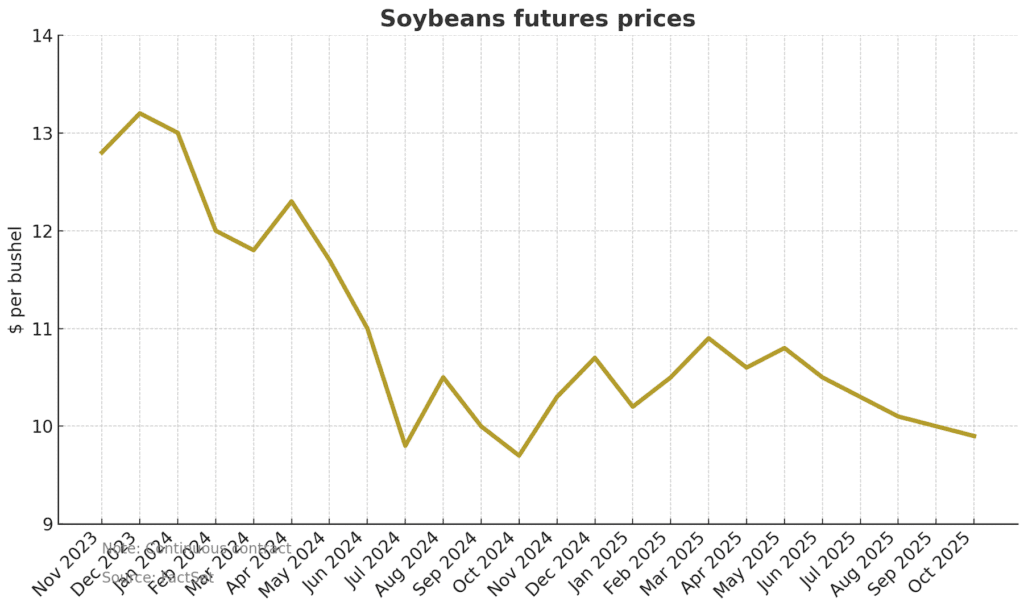
    In the heart of the Midwest, where golden fields stretch toward the horizon under a crisp autumn sky, the hum of combines should signal prosperity. Instead, for America’s soybean farmers, harvest season has become a grim countdown to financial ruin. As they reap what the U.S. Department of Agriculture (USDA) projects to be a record 4.2 billion bushel crop this year, their largest buyer—China—has vanished from the market, leaving silos overflowing and prices plummeting to five-year lows around $9.50 per bushel.

    China hasn’t booked any U.S. soybean purchases in months; farmers warn of ‘bloodbath’

    The trade war between the United States and China, now in its second year under President Donald Trump’s renewed tariff regime, has turned soybeans into collateral damage. Beijing’s retaliatory 25% tariffs on U.S. agricultural imports have priced American beans out of the Chinese market, where they once commanded over half of the $24.5 billion in annual U.S. soybean exports. From January through August 2025, Chinese imports of U.S. soybeans totaled a mere 200 million bushels—down from nearly 1 billion bushels in the same period of 2024, according to USDA trade data. That’s a 80% plunge, robbing Midwestern farmers of billions in revenue and forcing a scramble for alternative markets that may never fully compensate.

    “We’ll see the bottom drop out if we don’t get a deal with China soon,” warns Ron Kindred, a veteran farmer managing 1,700 acres of corn and soybeans in central Illinois. Halfway through his harvest, Kindred has locked in contracts for just 40% of his crop at prices already eroding below $10 per bushel in local elevators. The remaining 60% sits in limbo, a high-stakes bet on a breakthrough in Washington-Beijing negotiations. “There’s no urgency on China’s side, and the farm community’s clock is ticking louder every day,” he adds.

    Screenshot 2025 10 08 at 9.30.50 PM

    Kindred’s plight echoes across the soybean belt, from Illinois prairies to Iowa’s rolling hills. Rising input costs—fertilizer up 20-30% year-over-year, equipment maintenance strained by inflation, and a glut of both corn and soybeans flooding domestic markets—were squeezing margins even before the trade spat escalated. Now, with China’s boycott, the USDA estimates average losses of up to $64 per acre for Illinois growers alone, the nation’s top soybean-producing state with 6.2 million acres planted this year. University of Illinois Extension economists project total state-level shortfalls could exceed $400 million if export volumes don’t rebound by spring 2026.

    Enter the Trump administration’s lifeline: a proposed $10-14 billion farmer aid package, building on December 2024’s $10 billion relief bill. The Wall Street Journal reported last week that President Trump, speaking at the White House on October 6, vowed to “do some farm stuff this week” to cushion the blow. Aides say he’s slated to huddle with Agriculture Secretary Brooke Rollins as early as Friday to finalize funding sources, leaning heavily on the $215 billion in tariff revenues collected during fiscal 2025 (October 2024-September 2025), per U.S. Treasury figures. “The president is deploying every tool in the toolbox to keep our farmers farming,” a USDA spokesman told Reuters.

    Yet for many in the heartland, the aid feels like a temporary fix for a structural crisis. Soybean farmers, who backed Trump overwhelmingly in 2024 (with 62% of rural voters in key swing states like Iowa and Wisconsin casting ballots for him, per Edison Research exit polls), are voicing frustration laced with loyalty. “We voted for strong trade deals, not handouts,” says Scott Gaffner, a third-generation farmer in southern Illinois tending 600 acres. His crop, typically destined for Chinese ports, now languishes in on-farm silos as he frets over fixed costs like diesel fuel and seed that have surged 15% since planting. “We’re not just anxious; we’re angry. When the administration’s jetting off to Spain for TikTok talks while our harvest rots, it feels like we’re the last priority.”

    Gaffner’s son, Cody, the would-be fourth generation on the land, echoes the generational stakes. “If I return after college, it’ll be with a second job just to make ends meet,” the 22-year-old says. Their story underscores a broader ripple: Rural economies, where agriculture drives 20-25% of GDP in states like Illinois and Iowa, are buckling. Tractor sales at CNH Industrial, a Decatur, Illinois-based giant, plunged 20% in the first half of 2025, CEO Gerrit Marx revealed in an August interview at the Farm Progress Show. “The good news only flows when China places orders,” Marx said, a sentiment that hung heavy over the event in the self-proclaimed “soy capital of the world”—a title now whispered to be shifting south to Brazil.

    Dean Buchholz, a DeKalb County, Illinois, peer of Gaffner’s, is already waving the white flag. After decades in the fields, skyrocketing fertilizer bills and sub-$10 soybean futures have convinced him to retire. “I figured I’d farm till they buried me,” the 58-year-old says. “But with debt piling up and health acting up, it’s time to rent out the acres. This trade war’s the final straw.”

    Desperate Diplomacy: Chasing Markets in Unlikely Corners

    With China—home to the world’s largest hog herd and importer of 61% of global traded soybeans over the past five years, per the American Soybean Association—off the table, U.S. agribusiness is on a global charm offensive. Trade missions to Nigeria, memorandums with Vietnam, and a 50% surge in sales to Bangladesh (up to 400,000 metric tons through July 2025) highlight the scramble. Yet these “base hits,” as Iowa farmer Robb Ewoldt calls them, pale against China’s home-run demand.

    Screenshot 2025 10 08 at 9.37.03 PM

    Ewoldt, who farms 2,000 acres near Des Moines, jetted to Rome in January to woo a Tunisian poultry giant. “They grilled me: Can we count on steady U.S. supply, or will you switch crops and jack up prices?” he recalls. Tunisia’s imports, while growing, total under 100,000 tons annually—barely a blip. “It helps long-term, but right now, we’re cash-strapped. My operation burns a million bucks a year; without sales, we’re dipping into reserves just to cover debt service.”

    Across the Mississippi, Morey Hill has logged thousands of miles this year, from Cambodia’s fish ponds to Morocco’s chicken coops. In Phnom Penh last week, the Iowa grower evangelized to importers about swapping low-protein “fish meal” for U.S. soybean meal, touting yields that could fatten local aquaculture 20-30%. “We’ve got success stories—Vietnam’s up 25% year-over-year to 1.2 million tons,” Hill says. But even aggregated, the EU and Mexico (combined $5 billion in sales) plus risers like Egypt, Thailand, and Malaysia can’t fill the void: Total U.S. soybean exports dipped 8% to 18.9 million metric tons through July, USDA Census Bureau data shows.

    Industry lobbies are pulling levers too. The U.S. Soybean Export Council sponsored a June Vietnam mission yielding $1.4 billion in MOUs for ag products, including soy. August brought Latin American buyers to Illinois for farm tours, though exports to Peru and Nicaragua remain negligible. In Nigeria, a modest 64,000 tons shipped last year hasn’t translated to 2025 bookings yet. And Secretary Rollins’ September tweet hailing Taiwan’s “$10 billion” four-year ag commitment? It’s a rebrand of existing $3.8 billion annual flows, not new money, USDA clarifications confirm.

    “There’s talk of India, Southeast Asia, North Africa as future markets,” says Ryan Frieders, a 49-year-old Waterman, Illinois, farmer who joined a February trek to Turkey and Saudi Arabia. “But nothing explodes overnight to replace China.” Frieders, facing $8-10 per acre losses per University of Illinois models, plans to bin most of his harvest, gambling on futures prices rebounding above $11 by Q1 2026.

    The Shadow of South America and Tariff Games

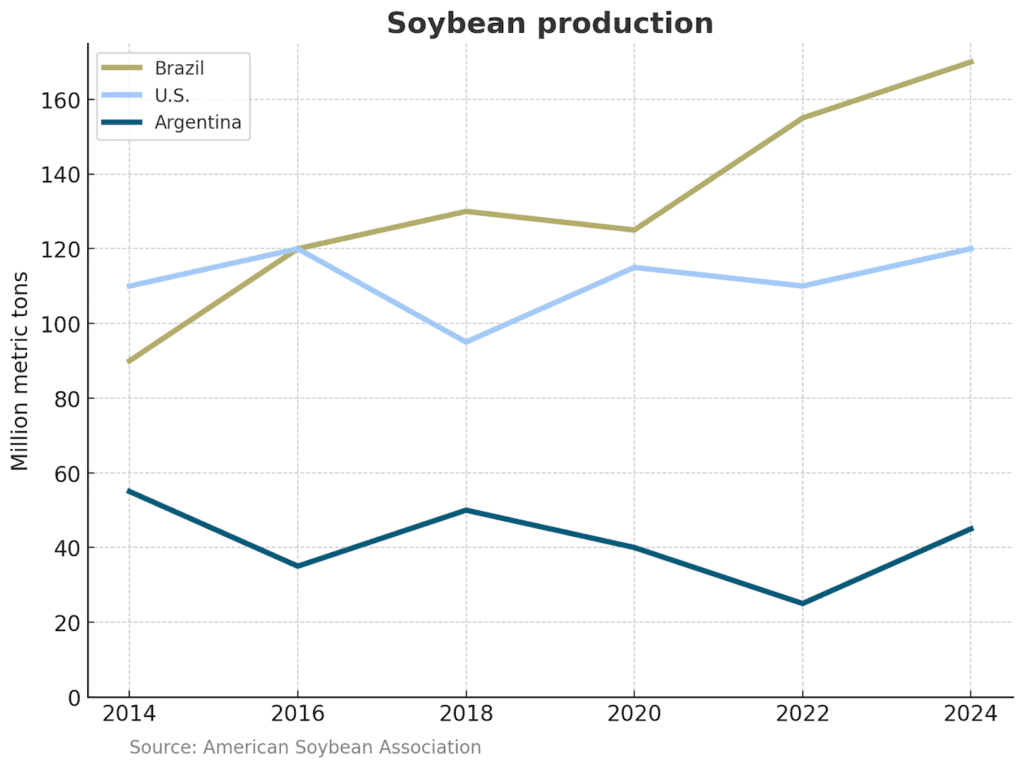
    As U.S. beans languish, Brazil and Argentina feast. China, pivoting since 2018’s first trade war, now sources 80% of its needs from South America. Last month, Argentine President Javier Milei’s temporary export tax suspension lured $500 million in Chinese cargoes, traders at the Chicago Mercantile Exchange report. U.S. beans traded at $0.80-$0.90 per bushel cheaper than Brazilian equivalents for September-October shipment, but Beijing’s 23% tariff tacks on $2 per bushel—enough to divert 5 million metric tons southward.

    “The frustration is overwhelming,” says Caleb Ragland, 39, Kentucky farmer and American Soybean Association president. On Truth Social Wednesday, Trump himself griped: “Our Soybean Farmers are hurting because China, for ‘negotiating’ reasons, isn’t buying.” He teased soybeans as a centerpiece in his upcoming summit with Xi Jinping in four weeks. Treasury Secretary Scott Bessent, speaking Thursday, promised a Tuesday announcement on aid, potentially including a $20 billion swap line for Milei—irking U.S. growers who see it as subsidizing their rivals.

    On Friday, soybean futures closed at $9.42 per bushel on the CME, down 2% weekly amid harvest pressure and zero Chinese bookings. Analysts at Zaner Ag Hedge forecast a “bloodbath” if no deal materializes by November: Storage costs could add $0.50 per bushel, while on-farm debt—$450 billion industry-wide, per Farm Credit Administration—balloons.

    The trade war’s winners? South American exporters, grinning from bumper crops (Brazil’s output hits 155 million metric tons this year, USDA estimates), and U.S. tariff coffers, flush for bailouts. Losers abound: From Decatur’s processing plants, once buzzing with Chinese-bound shipments, to the 1.2 million farm jobs at risk nationwide, per the American Farm Bureau Federation.

    For Kindred, Gaffner, and their ilk, the math is merciless. “We want trade, not aid,” Gaffner insists. “China’s building routes elsewhere; once they’re hooked on Brazil, we might never claw it back. That’s not just my farm—it’s the next generations, the rural towns, the whole engine of America’s breadbasket.”

    As combines roll on, the Midwest holds its breath. A Xi-Trump handshake could flood elevators with orders; stalemate risks a cascade of foreclosures and fallow fields. In this high-stakes harvest, soybeans aren’t just seeds—they’re the fragile thread binding U.S. farmers to their future.

  • Private Equity Titans Target New Investment Opportunities in Japan

    Private Equity Titans Target New Investment Opportunities in Japan

    989y9y98y9y89y89
    Japanese office desk illustration by © Jake Davidson

    In the shadow of Mount Fuji, where ancient traditions meet cutting-edge innovation, a quiet revolution is underway in Japan’s corporate landscape. Private equity heavyweights from Wall Street to Singapore are descending on the world’s fourth-largest economy, drawn by a potent cocktail of undervalued assets, rock-bottom borrowing costs, and a government-mandated push for shareholder value. What was once dismissed as a sclerotic market riddled with inefficient conglomerates is now the hottest ticket in global buyouts, with deal values surging and fundraising hitting decade highs.

    The numbers tell a compelling story. According to Preqin Pro data, Japan-focused private equity funds raised a robust $8 billion in 2024, matching the previous year’s haul and dwarfing the $5 billion annual average over the prior decade. This capital stockpiling signals unbridled optimism: firms are amassing dry powder faster than they can deploy it, betting on a pipeline of bargains that could redefine returns in an era of elevated U.S. interest rates and frothy valuations elsewhere.

    Historical trends underscore the momentum. From 2015 to 2024, aggregate capital raised for Japan-focused funds climbed steadily, peaking at $8.0 billion in both 2023 and 2024, with the number of funds closing each year hovering between 25 and 46. The 2024 vintage saw 41 funds close, raising $8.0 billion – a testament to investor appetite that has grown from a modest $1.6 billion across 27 funds in 2016. “The stockpiling of capital raised but not yet invested indicates that private equity sees more opportunities in Japan,” notes Hajime Koyanagi, general manager of the investment strategy department at Nihon M&A Center, a leading Japanese advisory firm.

    On the investment front, the surge is even more pronounced. S&P Global Market Intelligence reports that private equity- and venture capital-backed investments in Japan ballooned 40.8% year-over-year to $17.90 billion in 2024, accounting for 15.6% of all such activity in the Asia-Pacific region – up from 10.6% in 2023. This marked the highest share for Japan in the period, with deal counts reaching 1,045 in 2024, following 978 in 2023. Year-to-date through October 2025, Deloitte data shows 192 deals already inked, on pace to eclipse last year’s total of 292.

    Japan’s slice of APAC PE/VC pie has steadily expanded: from 4.1% in 2019 to 15.6% in 2024, per S&P Global. “Momentum is expected to continue in 2025, pushing private equity transaction value – and the competition among firms hunting deals – even higher this year,” Koyanagi predicts. Bain & Co.’s Azusa Owa, a Japan-based partner, echoes this: “Japan is fundamentally a very attractive market from a return perspective.” Between 2010 and 2024, Japanese PE deals delivered 2.4 times the invested capital in dollar terms – the highest globally, outpacing the U.S.’s 2.3x multiple, even accounting for yen depreciation.

    Low-Hanging Fruit in a Yen-Fueled Bargain Basement

    At the heart of the frenzy is a simple thesis: Japan’s 3,900-plus publicly listed companies are awash in cash but starved of ambition. Many operate as sprawling keiretsu-style conglomerates, hoarding underperforming units, shunning price hikes amid decades of deflationary scars, and carrying debt loads lighter than a feather – averaging just 20-30% debt-to-equity ratios, versus 50-60% in the U.S. For PE firms accustomed to leveraging deals with high-yield debt, this is catnip. Leveraged buyout financing in Japan runs a mere 3-4%, compared to 8-9% stateside, courtesy of the Bank of Japan’s ultra-loose policy.

    “Japan seems like fresh territory to hunt for bargains, especially given the relatively weak yen,” observes Megumi Kiyozuka, president of Tokyo-based Sunrise Capital. Last year, Kiyozuka targeted $500 million for his latest fund but capped it there after global limited partners clamored to pour in up to $2 billion – before he’d even left Japan. It’s a far cry from 2013, when he crisscrossed the globe, pitching to 200 investors to scrape together $200 million from a pair of skeptics. “Years ago, people declined to invest in Japan because they said it was inefficient. Now everyone says they like Japan because it’s inefficient,” Kiyozuka quips. “It’s the same reason, but it can be used as a reason to decline or to invest.”

    Corporate Japan, long insulated by cross-shareholdings and lifetime employment norms, is cracking open. The Tokyo Stock Exchange’s 2023 mandate – requiring firms trading below book value to disclose improvement plans – has lit a fire under laggards. A fresh government guideline urges boards to “seriously consider” takeover bids, while activist investors like Elliott Management and Oasis Management have amassed stakes in blue-chips from Toshiba to Nissan, demanding spin-offs and buybacks.

    The result? A torrent of take-privates, carve-outs, and growth capital rounds. “There are dramatic changes in corporate Japan,” says Teppei Takanabe, co-head of investment banking at Goldman Sachs in Japan. “They have become sensitive to shareholder return, capital efficiency and reconstruction of their business portfolio.” Smaller family-run enterprises, grappling with a “succession crisis” among aging owners, are increasingly amenable to sales, per Satoshi Ishiguro, an executive director at Daiwa Corporate Advisory.

    Gavin Geminder, global head of private equity at KPMG LLP, highlights the financing edge: “There’s no economy in Asia with the type of interest rate environment that Japan has, so borrowing money is obviously super-cheap.” Add in paths to value creation – like internationalizing tech-heavy portfolios or juicing razor-thin margins – and the allure intensifies. “Japanese corporates have incredible technology, but they have perhaps struggled to market it outside of Japan,” says Nick Wall, a Tokyo-based partner at Allen & Overy Shearman Sterling LLP. “Private equity definitely sees opportunities there.”

    The big players are voting with their checkbooks. KKR & Co., which views Japan as its premier non-U.S. deployment market, kicked off 2024 with a bang: a $3.9 billion acquisition of a 33.57% stake in Fuji Soft Inc., the largest PE deal in Japan last year. The follow-on $2.6 billion bid to privatize the software developer ranked third. Eiji Yatagawa, KKR’s Japan private equity head, recalls a landmark 2017 play: snapping up Kokusai Electric from Hitachi for ¥257 billion ($1.7 billion), streamlining it into a semiconductor pure-play, and flipping it via IPO in 2023 at ¥424 billion – a tidy multiple.

    Bain Capital tallied over $10 billion in Japanese deals in 2024 alone. Blackstone and Sweden’s EQT AB, in a summer sprint, each unveiled ~$3 billion take-privates of public firms within weeks. Hillhouse Investment Management and Rava Partners teamed for the $2.8 billion privatization of real estate developer SAMTY Holdings Co. Ltd., the year’s second-biggest splash. Warburg Pincus and Hillhouse are staffing up with Japan specialists and plotting brick-and-mortar expansions.

    Domestic heavyweights aren’t sitting idle. Japan-based firms snagged two of 2024’s top 10 deals: a $388 million buyout of auto retailer BigMotor Co. (rebranded WECARS) and a $211.7 million pour into AI startup Sakana AI K.K. The full 2024 leaderboard, per S&P Global, reads like a who’s-who of cross-border ambition:

    TargetBuyer/InvestorAnnounced DateTransaction Value ($M)
    Fuji Soft Inc.KKR & Co. Inc.08/09/243,901
    SAMTY HOLDINGS Co. Ltd.Hillhouse Investment Management Ltd. & Rava Partners10/11/242,773
    Alfresa Corp.MKR & Co.07/03/242,669
    Infocom Corp.Blackstone Inc.06/18/24688
    BGF Holdings Japan Ltd.Carlyle Group Inc. & ITOCHU Corp.04/18/24608
    Transom Co. Ltd.Bain Capital Private Equity LP04/17/24383
    Sakana AI K.K.Blackstone Inc.09/14/24211

    Sectors span consumer (e.g., Sakana AI), healthcare (Alfresa), industrials (BigMotor), real estate (SAMTY), and TMT (Fuji Soft). “More and more foreign funds are making inroads into Japan as they see more room for Japanese companies to improve extremely low productivity,” Koyanagi adds.

    Not all is golden. The PE model draws fire for prioritizing short-term gains – asset stripping, cost-slashing – over long-term health. “It does make sense that in an economy like Japan – where companies have historically not been focused on maximizing profits – private equity can sometimes help sharpen that focus,” concedes Ludovic Phalippou, finance professor at Oxford’s Saïd Business School. Yet, “the pressure to increase returns can lead to cost-cutting or strategies that don’t necessarily improve outcomes for customers or employees. In either case, however, PE fund managers do well, because they charge extraordinary fees.”

    Japan’s scorecard isn’t spotless. KKR’s 2019 Marelli Holdings merger – blending Japanese and Italian auto-parts assets – cratered amid COVID and EV disruptions, triggering Japanese rehabilitation proceedings and U.S. Chapter 11. The firm absorbed a $2 billion writedown before injecting $650 million to nurse it back. “That was definitely a very challenging situation,” Yatagawa admits. “We believe we did everything we could.”

    Perception has shifted, too. Once branded “vultures,” PE suitors now enjoy red-carpet treatment, aided by succession woes and reform winds. But maturity brings thorns: Exit timelines are stretching, with just 44% of 2018-2020 deals sold or IPO’d within five years, versus 54% for 2015-2017 vintages (Bain data). “Deal opportunity and availability is evolving, however not as fast as money is raised,” Owa warns. “Some funds who raised money struggle to use it.” This mismatch risks bid-up valuations, spurring demand for mezzanine debt, per Takanabe.

    Atsuhiko Sakamoto, Blackstone’s Japan PE chief, tempers the hype: “The boom is just expectations. Reality hasn’t caught up with the hype yet. I’m very excited about the next few years.” Wall of Allen & Overy, a Japan veteran since the ’90s, marvels at the thaw: “In the ’90s, one of the things you heard a lot from foreign investors is, ‘I’d love to invest in Japan but there aren’t any assets to buy.’ And that is changing.”

    Barring geopolitical shocks, 2025 shapes up as a banner year. Geminder of KPMG forecasts “a record year for Japan,” fueled by cheap debt, activist tailwinds, and middle-market bounty. Ishiguro of Daiwa sees the aversion to PE fading: “Japan’s business community is overcoming a longstanding aversion to partnering with or selling to private equity.”

    As Eiji Yatagawa of KKR puts it, “Japan is still in the very early stage of its private equity history. This industry evolution still has a long way to go.” For global titans, the Land of the Rising Sun is no longer a sideshow – it’s the main event, where inefficiency meets opportunity, and bargains await the bold.

  • Biden Faces Challenges Turning Presidency Into Post-Office Influence

    Biden Faces Challenges Turning Presidency Into Post-Office Influence

    GettyImages 1337294483
    Europeans are worried about U.S. President Joe Biden. © Chip Somodevilla/Getty Images

    Joe Biden, the doddering architect of America’s near-collapse under socialist policies and endless scandals, is now reaping what he sowed in the form of a post-presidency that’s as bankrupt as his administration’s border strategy. Eight months after handing the White House back to a resurgent Donald Trump, Biden finds himself persona non grata among the elite circles that once propped him up. Corporate boards won’t touch him, speaking gigs are evaporating faster than his poll numbers, and donors are treating his presidential library like a toxic asset. This isn’t just bad karma; it’s a market correction on a failed leader whose unpopularity and the looming shadow of Trump’s retribution have turned “Diamond Joe” into fool’s gold.

    Let’s face it: Ex-presidents typically glide into golden parachutes, cashing in on their Oval Office stint with seven-figure speaking fees, cushy board seats, and memoir deals that could fund small nations. Bill Clinton turned influence-peddling into an art form, raking in $200 million post-White House. Barack Obama? He and Michelle scored a $60 million book bonanza and Netflix gigs while hobnobbing with billionaires. Even George W. Bush paints his way to quiet millions. But Biden? At 82, battling a severe prostate cancer diagnosis that’s metastasized, he’s reduced to haggling over scraps. The Wall Street Journal lays it bare: No corporate sinecures for old Joe, thanks to his glaring cognitive decline—evident in that fateful 2024 debate that sealed his fate—and the baggage of a presidency marred by inflation, crime waves, and foreign policy blunders.

    Speaking fees? Sure, he’s quoting $300,000 to $500,000 a pop, but the invites are scarce, and bookers are lowballing him like a yard sale find. Why? Fear of Trump’s wrath. With the 47th president vowing to drain the swamp deeper than ever, companies dread audits, investigations, or lost contracts if they align with the man who weaponized the DOJ against conservatives. As one insider whispered to The Journal, “Who’s going to risk it for Biden?” Instead of jet-setting on private planes—avoiding those pesky “unsavory flight logs” à la Epstein—Biden’s slumming it in coach on American Airlines or breaking Amtrak quiet car rules with his endless chatter. His Fourth of July? Holed up in a luxury trailer in Malibu, courtesy of Hunter’s pal Moby. Nice, but hardly the Hamptons elite circuit where real power brokers summer.

    The real kicker is the Biden Presidential Library—or lack thereof. NBC News reports a donor drought that’s turned the project into a punchline. John Morgan, the Florida lawyer who funneled $800,000 to Biden’s doomed reelection, scoffed: “I don’t believe a library will ever be built unless it’s a bookmobile from the old days.” Another top bundler? A flat “Me? No way.” Over a dozen major Democratic funders are sitting on their wallets, blaming Biden’s ego-driven refusal to bow out gracefully, which gifted Trump a landslide. The projected $200-300 million price tag? Forget it; they’re saving for the party’s post-Biden rebuild. Contrast that with Trump’s library plans, already flush with MAGA millions and set to be a monument to American greatness in Florida.

    Biden’s not destitute—far from it. His $250,600 presidential pension, plus $166,000 from Senate and VP annuities, keeps the lights on. A $10 million Hachette book deal for his memoirs will pad the nest, though it’s a pittance next to the Obamas’ haul—ego bruise alert. But obligations mount: He’s bankrolling Hunter’s post-pardon legal circus (despite the get-out-of-jail-free card, debts linger) and supporting Ashley amid her divorce woes. Then there’s the $800,000 mortgage on his Rehoboth Beach mansion, compounded by a 20% property tax spike this year. For a guy whose “lifestyle” screams modest (read: boring), these hits sting, especially as Trump’s economy booms, lifting all boats except Biden’s leaky dinghy.

    This financial flop isn’t misfortune; it’s market justice. Biden’s presidency was a disaster: Skyrocketing costs from “Bidenomics,” an open border inviting chaos, and a foreign policy that emboldened adversaries from Beijing to Tehran. Voters rejected it resoundingly, and now the donor class is following suit. Trump’s shadow looms large—his promises of accountability have executives thinking twice about associating with the Biden brand, synonymous with corruption and incompetence. As the Journal notes, even universities are wary after the Penn Biden Center’s classified docs fiasco. The cold shoulder? It’s conservatives’ quiet revenge, proving that in Trump’s America, failure has consequences.

    Biden’s diminished twilight serves as a cautionary tale for the left: Peddle radical agendas, ignore the will of the people, and watch your legacy evaporate. While Trump builds empires and rallies crowds, Biden fades into irrelevance, a footnote in the history of American resurgence. If he’s lucky, that bookmobile library might tour nursing homes—fitting for a president who put the nation to sleep.

  • UK and US Move to Bolster Financial Ties in Advance of Trump Visit

    UK and US Move to Bolster Financial Ties in Advance of Trump Visit

    trump starmer AP 25209651992908 NAT 0728
    U.S. President Donald Trump, centre right, and British Prime Minister Keir Starmer arrive at Trump International Golf Links in Aberdeenshire, Scotland, Monday, July 28, 2025. © Jane Barlow/Pool Photo via AP, file

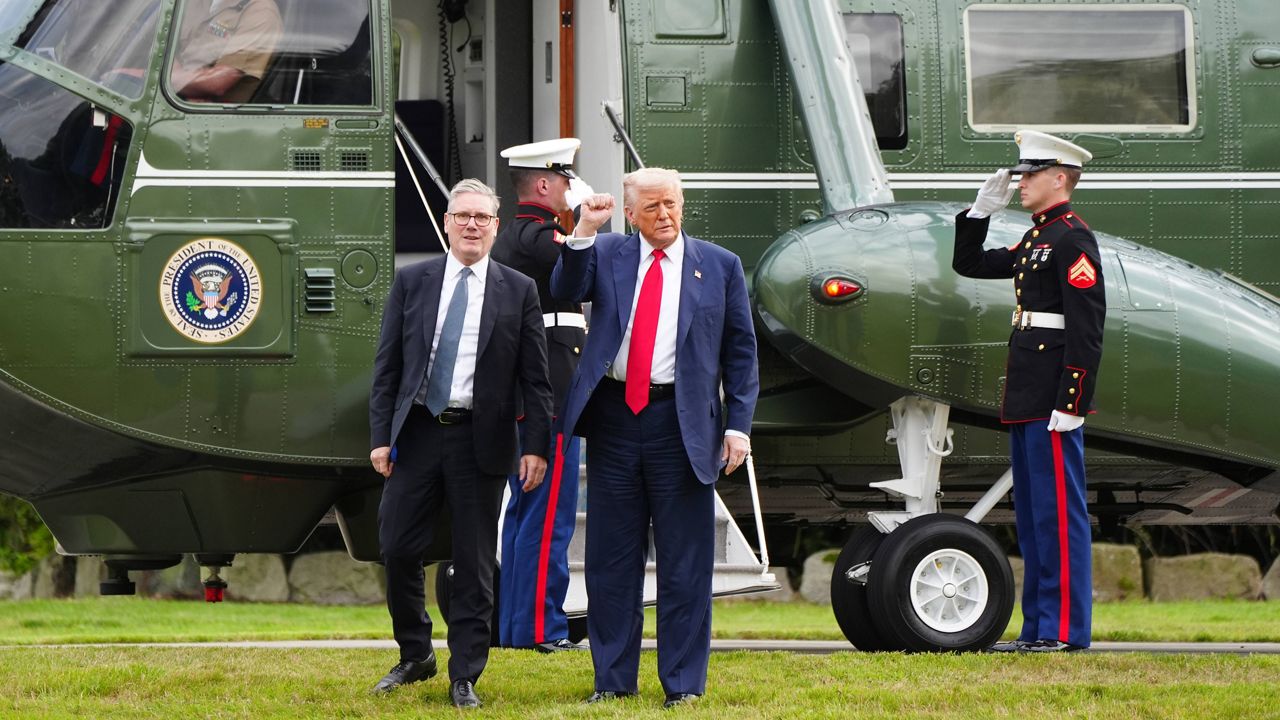
    Donald Trump flies into Britain on Tuesday evening for a three-day state visit, with the US and UK promising to boost financial ties, including by exploring closer alignment of their capital markets.

    UK Prime Minister Sir Keir Starmer wants to use Trump’s visit to showcase Britain as an inward investment hotspot, with US private equity company Blackstone pledging to invest £100bn in British assets over the next decade. US officials said there would be at least $10bn of investment deals in the technology sector, an agreement on nuclear co-operation and an exploration of “how the deep connections between our leading financial hubs can be maintained into the future”.  But Trump’s arrival could throw up problems for Starmer.

    The US president is unpopular in Britain and his schedule has been designed to shield him from any public or political protest. Trump will not address the UK parliament and is expected to travel by helicopter from the US ambassador’s residence in London to Windsor Castle and later to Starmer’s country retreat at Chequers. Trump has not yet finalised a deal, agreed with Starmer in May, to exempt British steel exports from US tariffs, although they do benefit from lower 25 per cent levies compared with the 50 per cent applied to other countries.

    British officials were in Washington on Monday holding urgent talks with US trade officials to try to conclude a deal that would exempt Scotch whisky from a 10 per cent tariff imposed on other UK exports.

    A senior US official said the White House was not “tracking” any announcement to reduce US tariffs on whisky, in a sign that an agreement was unlikely. But the official suggested it may well be discussed. Meanwhile, US officials would not be drawn on whether Trump would endorse Tommy Robinson, a far-right activist who is admired by figures on the American right and who organised a “Unite the Kingdom” rally in London on Saturday, attended by between 110,000 and 150,000 people.

    Asked whether he would speak out in support of Robinson, whose real name is Stephen Yaxley-Lennon, or even meet him, a US official said: “I don’t have anything on that right now.” For Trump, the highlight of the visit is expected to be a stay with King Charles and Queen Camilla at Windsor Castle, where he will be feted with a fly-past by military jets, a carriage procession and a state banquet.

    But Starmer will try to use the visit to focus on financial, tech and nuclear co-operation, in an attempt to bolster his claims to have a “growth agenda” and to move on from a series of scandals that have rocked his government. Starmer is facing a wave of anger among Labour MPs and questions over his judgment after sacking his US ambassador Lord Peter Mandelson last week over his links to the convicted paedophile Jeffrey Epstein.

    Trump is likely to be grilled over his own connections to Epstein at a press conference on Thursday, his last official business before returning to the US.

    The state visit will be preceded on Tuesday by talks in Downing Street between UK chancellor Rachel Reeves and US Treasury secretary Scott Bessent over closer financial co-operation.

    By aligning UK standards more closely with the US, Reeves would be hoping to increase access to the world’s deepest and most liquid financial markets, as well as attract greater American investment into Britain.

    Stock Widget

    The push follows a period of intense political anxiety over an exodus of London-listed companies to the New York Stock Exchange and Nasdaq, as businesses seek higher valuations on the other side of the Atlantic. Trump will bring leading figures from Big Tech including OpenAI’s Sam Altman and chipmaker Nvidia’s NVDA +2.45% ▲ Jensen Huang on his delegation, while companies such as Rolls-Royce RYCEY +1.80% ▲, GSK GSK +1.35% ▲ and Microsoft MSFT +1.95% ▲ will attend a business roundtable at Chequers.

    US officials did not indicate to what extent Trump would press Starmer on Britain’s Online Safety Act, which has been a source of tension between Washington and London as some US tech companies have decried it as censorship.

    “How that may or may not play into the bilateral discussion that will take place with the prime minister is yet unknown. It may well arise, but it may not,” a senior US official said. “Free speech in the UK, but free speech elsewhere, is something that we in this administration are very much focused on,” they added.

    Stock Widget

    Blackstone BX +2.65% ▲ is making its commitment to Britain as part of a broader $500bn investment push across Europe, which co-founder Stephen Schwarzman told The Financial Times aimed to profit from economic reforms and a revival of growth. Blackstone’s top leaders like Schwarzman and president Jonathan Gray have long considered the UK a key market for the $1.2tn in assets investment group, and they have strong ties with Downing Street.

    Blackstone is already one of the largest foreign investors in the UK, with billions put into digital infrastructure and ecommerce warehouses, among other things. It also has large corporate investments including Merlin Entertainments, the owner of Legoland, and was a major shareholder in the London Stock Exchange’s parent company until fully divesting its shares last year. 

  • Housing Stock Soars on Unexpected Market Shift

    Housing Stock Soars on Unexpected Market Shift

    The housing market seems to be stuck in second gear.

    Mortgage rates eased out to 6.35% this week, though the lowest it has been in nearly a year, but affordability remains mostly tight.

    Moreover, July existing-home sales ran at 4.01 million SAAR, with around 4.6 months’ supply and a $422,400 median price. August list price held around the $429,990 mark while homes sat 60 days on market, up seven days year-over-year. 

    That mix mostly points to cautious buyers, along with a thin supply, despite a small rate break.

    Stock Widget

    Against that backdrop, one housing stock has gone near-vertical. Opendoor Technologies OPEN +269.00% ▲ has surged close to 269% in the past month.

     Surprisingly, the incredible activity in the stock isn’t about a sudden macro tailwind. It’s about a company-specific pivot that has Wall Street back on the bandwagon.

    What is Opendoor Technologies?

    Opendoor is a tech-heavy homebuyer that makes efficient use of data and algorithms to make instant cash offers on homes. It also resells them with the aim to swap the long listing process for clarity and speed.

    Think of it like trading in a car, which you can sell directly to Opendoor for cash and then pick your closing date, while the company handles repairs/resale on its side.

    It’s important to note that Opendoor went public via a shell company when it merged with Social Capital Hedosophia II (IPOB). The deal closed mid-December 2020, with the combined company trading as OPEN on Dec. 21, 2020.

    Opendoor stock reached an all-time high closing price of $35.88 on Feb. 11, 2021, which was a period fueled by record-low mortgage rates (2.65% in January 2021 to be precise), along with a red-hot housing market that strengthened its iBuying business model.

    Challenges for Opendoor’s business and stock in past few years

    • Mortgage rates jumped from 2021 lows, which effectively killed affordability and turnover.
    • Existing-home sales tanked to multi-decade lows in 2024, crippling Opendoor’s deal flow.
    • Large losses and inventory write-downs (its massive net loss of $1.4 billion in 2022, for instance) pressured capital and sentiment.
    • iBuyer model credibility hit when one of its competitors (Zillow Offers) exited in 2021, on the back of price-forecasting issues.

    Opendoor stock surges on founder-led reset

    Opendoor has clearly been one of the hottest stocks of late. It’s up 269% in the past month, 650% over six months, and an eye-catching 467% year to date on the back of its “founder-led” reset.

    That reset had everything to do with former Shopify’s COO Kaz Nejatian assuming the role of CEO, while cofounders Keith Rabois (as chair) and Eric Wu returned to the board. 

    Alongside the critical leadership changes, there was a $40 million equity injection from Khosla Ventures and Wu.

    Nejatian laid out the vision clearly:

    “It’s a privilege to become Opendoor’s leader… With AI, we have the tools to make [home buying/selling] radically simpler, faster, and more certain.” Also, incentives are designed to match ambition, with his base pay being $1, plus performance-tied equity grants.

    The Fresh capital extends the runway as the founder-mode philosophy expands oversight while tightening governance, with early signals pointing to aggressive cost discipline.

    Rabois called the company overstaffed, resulting in sharp opex cuts in the upcoming quarters. That will efficiently reset unit economics, support margins, and strengthen long-term viability.