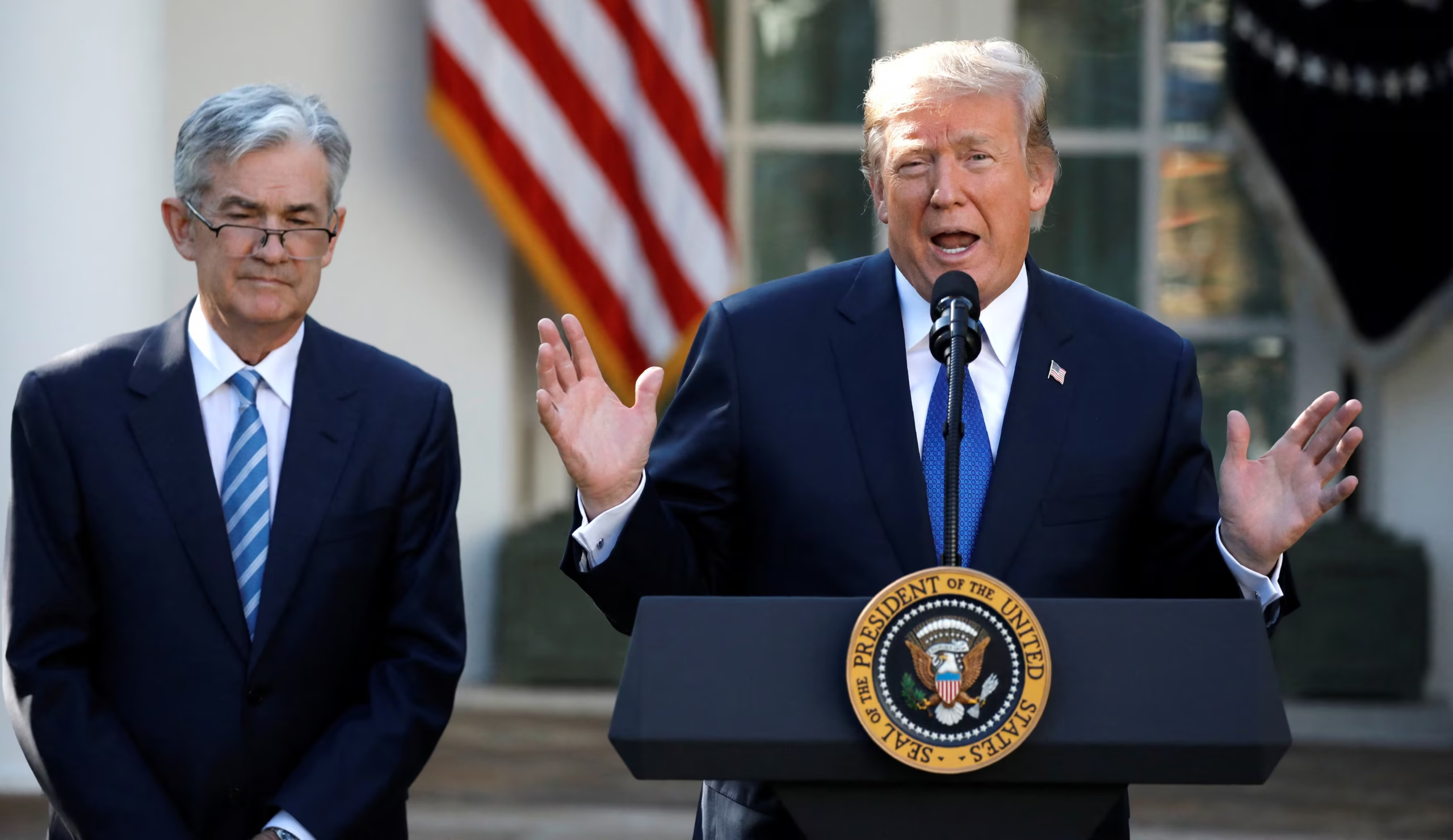
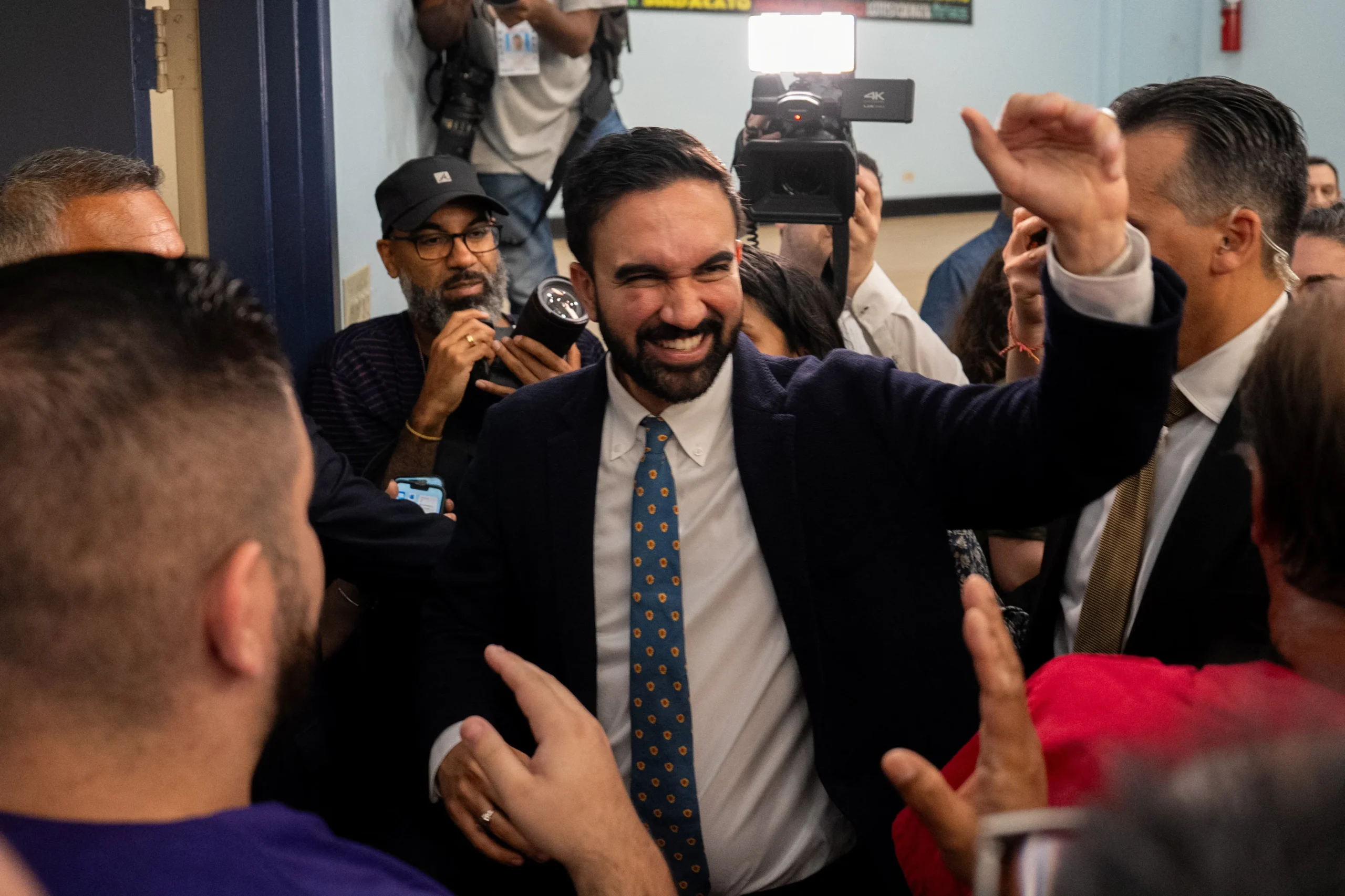
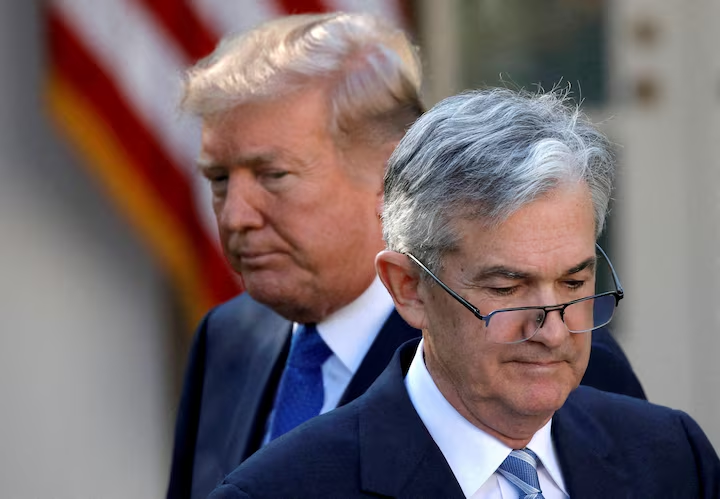
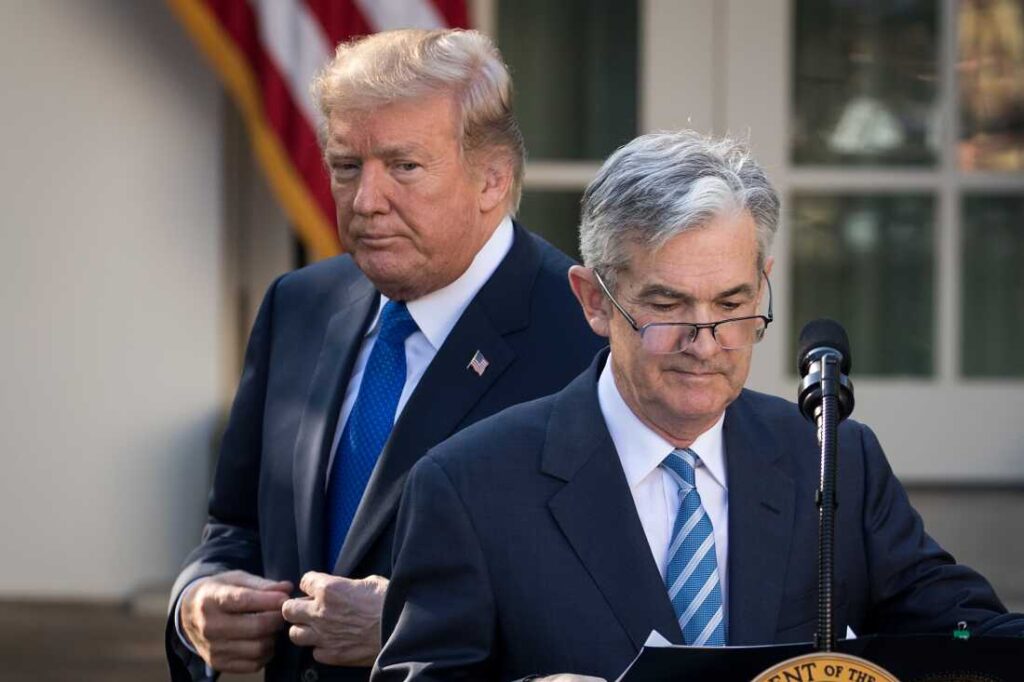
In an unfolding drama at the intersection of politics and economics, former President Donald Trump is poised to gain new influence over U.S. monetary policy. The early resignation of Fed Governor Adriana Kugler, a Biden appointee, has opened a vacancy on the Federal Reserve’s Board of Governors—just as markets are betting on a looming interest rate cut following weak labor data.
If reelected, Trump would have the opportunity to fill that seat—and later, Fed Chair Jerome Powell’s position in 2026—giving him a powerful lever to shape monetary policy, especially amid rising demand for rate relief.
Adriana Kugler resigned effective August 8, nearly 17 months before her term was set to end in January 2026. Until now, her departure marks the first vacancy on the seven-member Fed board under Trump’s second term. Her exit presents Trump with immediate appointment power, allowing him to put a likely rate-cut advocate in place well before the September rate decision.
Kugler’s early departure—unexpected for many political watchers—provides a rare opportunity amid increasingly charged discussions around Fed independence and political influence over interest rate decisions.
On August 1, the July jobs report disappointed across the board: just 73,000 jobs added vs. expectations of ~110,000, and May/June revisions that cut 258,000 jobs combined. Unemployment ticked up to 4.2%, with labor participation falling further.
The fallout was immediate: markets sharply increased the odds of a September Fed rate cut:
According to CME FedWatch, cut odds jumped from 63.3% to 75.5%, then to about 88.2%, although Powell’s hawkish remarks later pulled them back somewhat. Inflation, however, remains above the Fed’s 2% target—with headline PCE at 2.6% and core PCE at 2.8% in June—temper market enthusiasm for a cut.
At the most recent FOMC meeting, the Fed opted to hold rates at 4.25–4.50% for the fifth consecutive time. Chair Jerome Powell asserted the labor market was “broadly in balance”, but reiterated that persistent inflation and tariffs remain risks. These comments were interpreted as relatively hawkish—a stance that reduced cut odds temporarily.
Still, the economic slowdown has emboldened voices like Atlanta Fed President Rafael Bostic and dissenter Christopher Waller, who support earlier easing, arguing the labor market impact is mounting.
Trump continues to intensify pressure on Powell, calling him “too late” on rate cuts and firing criticism at the Fed’s approach.
With the vacant seat, and several others looming in the next two years (including Powell’s chairmanship in May 2026), Trump may swiftly shape the Fed’s leadership. He has already narrowed his list of potential Fed chairs to four, including Kevin Hassett and Kevin Warsh, both aligned with his earlier economic views.
Politico reports suggest Trump will avoid nominating Treasury Secretary Scott Bessent as Fed chair, favoring loyalists instead.
Financial analysts caution: while Trump may not remove Powell mid-term, he could appoint a new governor now and a new chair later—creating a slow-motion shift at the institution’s helm.
While markets rejoice at rate cut possibilities, economists warn premature easing could undermine inflation control. Bank of America and Morgan Stanley maintain that the Fed may stay on hold until 2026, pointing to strong labor metrics, rebounding consumer spending, and structural inflation risks tied to tariffs and demographics.
Meanwhile, President Trump’s dismissal of the Bureau of Labor Statistics director, accused of manipulating data without evidence, has further spooked investors about the integrity of economic reporting—a move criticized for politicizing critical statistical institutions.
Market Expectations: Futures markets have priced in nearly a 90% chance of a 25 bps cut in September, with the potential for additional reductions totaling 60 bps by year-end.
Monetary Independence at Risk: Trump’s ability to appoint new governors—including a future Chair—raises concerns about political influence over the Fed.
Economic Impact: Rate cuts would ease borrowing costs, boost equities (especially tech and growth stocks), and potentially weaken the dollar.
Long-Term Policy Direction: A Trump-aligned Fed could steer toward looser monetary policy—even in the face of inflation risks.
A rare vacancy on the Fed board—coupled with surging rate cut expectations—has given President Trump an opening to reshape U.S. monetary policy. With chairmanship up for grabs in 2026 and growing investor pressure for interest rate relief, the Fed sits at a crossroads. Under a second Trump administration, the institution that long stood aloof from politics may find itself aligned firmly with a new partisan economic agenda.
WASHINGTON, D.C. — In a move with deep implications for U.S. monetary policy and global financial markets, President Donald J. Trump announced on Tuesday that he has officially ruled out Treasury Secretary Scott Bessent as a contender for the next Federal Reserve chair, narrowing the shortlist to four candidates. Among the top names are Trump economic adviser Kevin Hassett, former Fed Governor Kevin Warsh, and two other unnamed individuals—one widely believed to be current Fed Governor Christopher Waller.
The decision coincides with the early resignation of Fed Governor Adriana Kugler, a Biden appointee, which Trump called a “pleasant surprise.” Kugler’s exit provides Trump an immediate opening to install a political and economic ally onto the Fed’s Board of Governors, an opportunity he appears eager to seize ahead of a critical rate decision by the central bank next month.
Kugler announced she would step down by Friday, cutting her term short to return to academia at Georgetown University. Her departure gives Trump not only an opportunity to shape the near-term direction of Fed policy but also the chance to potentially elevate her short-term replacement into the top job at the Federal Reserve once Chair Jerome Powell’s term ends in May 2026.
In an interview with CNBC earlier Tuesday, Trump hinted at using the vacancy to install someone who could both serve the remainder of Kugler’s term and become Powell’s successor—effectively giving his pick months of influence over monetary policy before facing full Senate confirmation for the 14-year term.
“A lot of people say, when you do that, why don’t you just pick the person who is going to head up the Fed?” Trump said. “That’s a possibility too.”
The exclusion of Scott Bessent, the current Treasury Secretary and a prominent market figure, narrows Trump’s Fed chair options. Trump said Bessent preferred to remain at Treasury, removing himself from contention.
Trump now appears focused on a smaller circle of candidates with strong ideological alignment and past affiliations with his administration. Kevin Hassett, former chairman of the Council of Economic Advisers, and Kevin Warsh, a former Fed governor and consistent Fed critic, are now considered leading contenders.
Economists see this narrowing as an attempt to cement Trump’s influence over the Fed and steer it toward a more dovish monetary stance—particularly as he continues to criticize Chair Powell for not cutting interest rates since Trump returned to office in January.
Investors are already anticipating a rate cut at the next Federal Open Market Committee (FOMC) meeting on September 17, especially after last week’s disappointing July jobs report. According to the CME FedWatch Tool, the probability of a 25-basis-point cut has surged to 90.4%, up dramatically from 63.3% just a week ago.
The July nonfarm payroll report, released last Friday, showed only 73,000 jobs added, far below the 110,000 estimated by economists surveyed by LSEG. In addition, downward revisions of 258,000 jobs across May and June further confirmed a weakening labor market.
While Powell has remained cautious, citing inflation still above the 2% target, market participants now view a rate cut as all but inevitable—especially with the political pressure intensifying from the White House.
Trump’s dismissal of Bureau of Labor Statistics (BLS) Commissioner Erika McEntarfer—reportedly over dissatisfaction with job numbers—has added fuel to concerns about politicization of U.S. data institutions. The firing, which came the same day as Kugler’s resignation, has drawn sharp criticism from economists and policy observers who warn of a deterioration in the credibility of official economic data.
Michael Strain of the conservative American Enterprise Institute warned:
“If you appoint somebody perceived to be a lackey as the Fed chair, take the BLS freakout and multiply it by 1,000.”
Indeed, skepticism about Trump’s intentions has only grown with his pattern of clashing with Powell, his handpicked Fed chair during his first term, whom he later turned against for not being more aggressive on rate cuts.
The Federal Reserve has held interest rates steady at 4.25%–4.50% through five meetings this year, despite growing evidence of a cooling economy. Inflation, measured by the Fed’s preferred Personal Consumption Expenditures (PCE) index, rose to 2.6% in June, with core PCE (excluding food and energy) increasing to 2.8%, casting doubts on how quickly the Fed could pivot to an easing stance.
But the weak jobs data appears to have tipped the scales in favor of a September cut. Fed Governor Christopher Waller, reportedly among the top four Fed chair candidates, dissented in the July policy vote, arguing that the inflation risks from Trump’s tariffs were “modest,” and that rate cuts should begin sooner due to broader economic softening.
By selecting Kugler’s interim replacement now—possibly someone who would later be nominated as chair—Trump gains a chance to “test-drive” his preferred monetary policy approach, influencing Fed decision-making in the run-up to the 2026 election cycle. However, any permanent appointment would require Senate confirmation, a process that could become contentious, especially if Democrats regain control of the chamber.
James Fishback, CEO of Azoria investment firm and former advisor in the Department of Government Efficiency (DOGE), is reportedly among those who have expressed interest in a temporary Fed appointment. While the White House has not confirmed his candidacy, sources indicate materials were requested from Fishback earlier this week.
With Trump once again reshaping America’s most influential economic institution, Wall Street and central bankers worldwide are watching closely. The combination of leadership reshuffling, data skepticism, and intensifying political pressure is turning the usually sober world of monetary policy into high-stakes drama.
Whether the eventual nominee is Hassett, Warsh, Waller—or another surprise pick—Trump appears poised to install a Fed chair more aligned with his aggressive pro-growth, low-interest-rate vision. What that means for inflation, employment, and economic stability remains uncertain.
But one thing is clear: the independence of the Federal Reserve—long seen as a cornerstone of U.S. economic credibility—is facing its most serious test in decades.
Forget identity politics—what we’re witnessing is a full-scale ideological insurgency. The rise of Zohran Mamdani in New York City and Omar Fateh in Minneapolis isn’t a tale of diversity breaking barriers—it’s an alarm bell signaling a growing socialist push challenging the very foundations of the U.S. Constitution.
Zohran Mamdani, a self-professed democratic socialist, pulled off a political upset in June by defeating former Governor Andrew Cuomo to clinch the Democratic mayoral nomination in New York City. Despite scant executive experience, Mamdani’s grassroots machinery—backed by NYC-DSA volunteers knocking on over 1.6 million doors—delivered him a primary victory commanding 43.5% of first-choice votes, ahead of Cuomo’s 36.4% (ranked-choice results matter). He ran on a platform of fare-free buses, city-run grocery chains, childcare, rent freezes, and significantly, progressive taxation including a flat 2% tax on millionaires.
Mamdani hails from a socialist tradition aligned with figures like Bernie Sanders and Alexandria Ocasio-Cortez. Critics worry these policies undermine American constitutional principles by expanding government power over markets, property rights, and freedom of association.
In Minneapolis, Omar Fateh—a Somali-American state senator—secured the DFL’s endorsement over two-term Mayor Jacob Frey at a convention marked by opaque processes: e-voting system failures, fraudulent upgrades, and a final “hand‑badge count” decided by the convention chair. Despite procedural controversy, Fateh won over 60% delegate support, representing a brazen socialist push at local party levels.
Fateh stands on the same socialist platform: rent freezes, taxing billionaires, eliminating public safety cooperation with ICE, free public college for low-income families. If implemented, these measures push Minneapolis toward socialist governance and away from constitutional limits on government power.
These parallel rises of Mamdani and Fateh aren’t isolated incidents—they’re harbingers of a broader leftward shift within the Democratic Party. According to The Wall Street Journal, they exemplify “a widening ideological divide” between establishment pragmatic moderates and insurgent socialist factions mobilized on affordable housing and Gaza solidarity.
Yet the deeper issue is not policy details—it’s the rejection of individual rights, free markets, and constitutional checks in favor of centralized planning. Both candidates’ platforms—fare-free transit, rent freezes, wealth taxation—reflect a willingness to expand government far beyond its constitutional bounds.
Fateh’s campaign volunteer (and brother-in-law) was convicted of mishandling absentee ballots in his 2020 Senate bid. While an ethics panel cleared Fateh of wrongdoing, the scandal unnerved many.
He also faced a conflict-of-interest probe over a $500,000 grant he sponsored to a nonprofit that advertised his campaign. Again, no penalties followed—only mandated financial training.
Fateh’s vocal support for abolishing the Minneapolis Police and defunding ICE, including a 2023 speech comparing GOP senators to white supremacists, raised alarm among moderates before ethical complaints were dropped.
Mamdani lacks executive leadership experience and has been criticized for muted responses to NYC shootings—raising concerns about future governance ability.
Financial and Electoral Panic Rings the Alarm
Mamdani’s win spooked Wall Street. CNBC reported hedge fund and real estate investors were “alarmed” and “depressed,” while JPMorgan CEO Jamie Dimon admitted privately that Mamdani’s policy agenda is “Marxist-ish.” Business sentiment sank as real estate markets and luxury housing felt exposed.
As New York City faces a fracturing general election (with Cuomo and Adams running as independents), and Minneapolis gears up for a must-win race—voters must decide if they support vibrant constitutionalism or disruptive socialist crackdowns on liberty.
If Fateh and Mamdani succeed, it heralds serious repercussions in 2026—shifts toward expensive entitlement schemes, defunding of public safety, and erosion of property rights. For swing states and suburban moderates, this could be electoral poison.
The ascendance of socialist insurgents like Mamdani and Fateh represents more than political upset—it’s a constitutional crisis in the making. Their policies rest on centralized control, regressive messaging, and ideological purity. America cannot remain strong if these power grabs go unchecked.
If constitutional liberties—speech, free markets, property, due process—are to survive, conservative and moderate voters must mobilize to defend realism over radicalism in the party and the nation.
WASHINGTON – The U.S. central bank held interest rates steady on Wednesday and Federal Reserve Chair Jerome Powell’s comments after the decision undercut confidence that borrowing costs would begin to fall in September, possibly stoking the ire of President Donald Trump who has demanded immediate and steep rate relief.
Powell said the Fed is focused on controlling inflation – not on government borrowing or home mortgage costs that Trump wants lowered – and added that the risk of rising price pressures from the administration’s trade and other policies remains too high for the central bank to begin loosening its “modestly restrictive” grip on the economy until more information is collected.
While there will be two full months of data before the Fed’s September 16-17 meeting, Powell said the central bank was still in the early stages of understanding how Trump’s rewrite of import taxes and other policy changes will unfold in terms of inflation, jobs and economic growth.
“You have to think of this as still quite early days,” Powell said in a press conference after the release of the Fed’s latest policy statement. “There’s quite a lot of data coming in before the next meeting. Will it be dispositive? … It is really hard to say.”
Stock Widget
Those comments, and others that placed the burden on upcoming data to convince policymakers that lower rates were warranted, led investors to reduce the probability of a rate cut in September to less than 50%, after entering this week’s two-day Fed meeting at nearly 70%. Treasury yields rose while the S&P 500 .SPX -0.15% ▼ and Dow Jones Industrial Average .DJI -0.08% ▼ equities indexes closed marginally lower.
Powell “made clear that he thinks the Fed has room to hold the fed funds rate steady for a period of time and wait and see how much tariffs affect inflation,” said Bill Adams, chief economist at Comerica Bank, projecting that the central bank won’t cut rates until its last meeting of the year in December.
“If the unemployment rate holds steady and tariffs push up inflation, it will be hard to justify a rate cut in the next few months.”
The latest policy decision was made by a 9-2 vote, what passes for a split outcome at the consensus-driven central bank, with two Fed governors dissenting for the first time in more than 30 years.
Trump has given Powell the pejorative nickname “Too Late” for his refusal to cut rates, but the Fed chief on Wednesday said his hope was to be right on time when the decision is made to lower borrowing costs, neither moving so soon that inflation reemerges, or waiting so long that the job market slides and the unemployment rate rises. Indeed, Powell said the fact that the Fed isn’t discussing rate hikes could be seen as a willingness to overlook some of the expected impact of tariffs.
“If you move too soon, you wind up not getting inflation all the way fixed … That’s inefficient,” Powell told reporters. “If you move too late, you might do unnecessary damage to the labor market … In the end, there should be no doubt that we will do what we need to do to keep inflation controlled. Ideally, we do it efficiently.”
The data since the Fed’s June 17-18 meeting has given policymakers little reason to shift from the “wait-and-see” approach they have taken on interest rates since Trump’s January 20 inauguration raised the possibility that new import tariffs and other policy shifts could put upward pressure on prices.
Inflation is about half a percentage point above the Fed’s 2% target and has shown signs of increasing as prices of some heavily imported goods begin to rise, a process Powell said is expected to continue. As of June, Fed policymakers at the median expected inflation to rise further and end the year at about 3%.
New inflation data for June will be released on Thursday, and a key jobs report for the month of July will follow on Friday, part of the data Powell said policymakers will evaluate as they debate a possible rate cut in September.
Earlier on Wednesday, the U.S. government reported that economic growth rebounded more than expected in the second quarter, but declining imports accounted for the bulk of the improvement and domestic demand rose at its slowest pace in 2-1/2 years.
A line chart showing the benchmark interest rate set by the Federal Open Market Committee
‘THOUGHTFULLY ARGUED’
Along with Powell’s comments, the Fed’s new policy statement also gave little hint that rates were likely to fall soon, particularly with an unemployment rate that has stabilized around 4% as weaker hiring trends are offset by slowing growth in the labor force due to Trump’s immigration policies.
“The unemployment rate remains low, and labor market conditions remain solid. Inflation remains somewhat elevated,” the central bank said after voting to keep its benchmark overnight interest rate steady in the 4.25%-4.50% range for the fifth consecutive meeting.
The two dissents came from Fed Vice Chair for Supervision Michelle Bowman and Governor Christopher Waller, who has been mentioned as a possible nominee to replace Powell when the Fed chief’s term expires next May. Bowman and Waller, both appointed to the board by Trump, “preferred to lower the target range for the federal funds rate by one quarter of a percentage point at this meeting,” the Fed’s policy statement said.
Powell characterized their opposition to the policy decision as part of a debate that was “argued, very thoughtfully … all around the table,” but with a majority of policymakers still reluctant to cut rates without more inflation data in hand.
A bipartisan figure who was appointed to the Fed’s board by former President Barack Obama and later promoted to the top job by Trump, Powell voted to hold rates steady, as did three other governors and the five Fed regional bank presidents who currently hold a vote on the FOMC. The Fed’s regional bank presidents are hired by local boards of directors who oversee the Fed’s 12 regional institutions.
Governor Adriana Kugler was absent and did not vote.
Dissenting members of the FOMC often release statements explaining their vote on the Friday following Fed meetings.
WASHINGTON, D.C. — The Federal Reserve held interest rates steady Wednesday for the fifth consecutive meeting, but signs of growing division within the central bank emerged as two officials dissented in favor of a rate cut, underscoring increasing uncertainty over the path forward amid rising geopolitical tensions and trade policy concerns.
The Federal Open Market Committee (FOMC) maintained its benchmark federal funds rate at a range of 5.25% to 5.50%, the highest level in over two decades. But for the first time in over a year, the vote was not unanimous: Dallas Fed President Lori Logan and Chicago Fed President Austan Goolsbee broke ranks, citing growing risks from weakening consumer demand and escalating tariffs on Chinese and European imports.
“The labor market remains strong and inflation has eased notably,” the Fed said in its statement. “However, the Committee remains highly attentive to inflation risks.” Yet the statement notably softened language about future tightening, opening the door to potential rate cuts if economic conditions deteriorate.
The dual dissents highlight what analysts are calling a “fraying consensus” inside the Fed, as policymakers weigh competing risks: on one hand, stubborn core inflation that has remained above the Fed’s 2% target, and on the other, a slowing economy compounded by new import tariffs that could dampen spending and business investment.
“These are not just marginal disagreements,” said Dana Peterson, chief economist at The Conference Board. “This is a fundamental debate over how much tariffs will drive inflation versus how much they will hurt growth. The balance is tricky.”
In recent weeks, the Biden administration has rolled out a fresh wave of trade penalties on strategic imports from China—particularly in EVs, solar panels, and critical minerals—and hinted at potential levies on select European goods. While designed to bolster domestic industry, the tariffs are expected to raise input costs for manufacturers and consumers.
Data released earlier this month showed that second-quarter GDP grew at a modest annualized rate of 1.2%, a deceleration from the 1.9% seen in Q1. Meanwhile, the Fed’s preferred inflation measure—the core personal consumption expenditures (PCE) index—was flat in June, holding at 2.8% year-over-year.
Although inflation has cooled significantly from its 2022 peak, officials remain divided over whether it has moderated enough to justify rate reductions. “The Fed is walking a tightrope,” said Sarah House, a senior economist at Wells Fargo. “They want to support growth, but they don’t want to repeat the mistakes of the 1970s by cutting too soon.”
Chair Jerome Powell, speaking at a press conference following the decision, emphasized that the Fed remains data-dependent but acknowledged that the case for rate cuts is growing stronger.
“If we see more evidence that inflation is moving sustainably toward 2%, and if labor market conditions continue to evolve gradually, then a policy adjustment would be appropriate,” Powell said. “But we are not there yet.”
Markets React with Caution
Federal Funds Rate Chart
Federal-funds rate target
Note: Chart shows midpoint of target range since 2008.
Line chart showing Federal funds rate target from 2000 to 2025, ranging from 0% to 7%.
Financial markets responded cautiously to the decision. The S&P 500 closed flat, while the yield on the 10-year Treasury note dipped slightly to 4.21%. Futures markets now see a 52% chance of a rate cut at the Fed’s September meeting, up from 38% last week, according to CME FedWatch data.
Investors remain on edge over the policy outlook, with many anticipating at least one rate cut before the end of the year. But the Fed’s internal disagreements signal a more complex road ahead.
“The Fed is no longer speaking with one voice,” said Julia Coronado, a former Fed economist now at MacroPolicy Perspectives. “This is the beginning of a broader debate—not just on rates, but on how the Fed should respond to trade-driven inflation and a more fractured global economy.”
All eyes now turn to the Fed’s Jackson Hole symposium in late August, where Powell is expected to outline the central bank’s evolving approach. Analysts expect the Chair to strike a balanced tone, reaffirming inflation vigilance while acknowledging the shifting economic landscape.
“Powell will try to bring the committee back toward a unified message,” said Coronado. “But that’s harder to do when growth is slowing, inflation is sticky, and trade tensions are rising.”
As the Fed grapples with its next steps, one thing is clear: The era of near-lockstep policymaking may be giving way to a period of internal debate—and a less predictable path ahead for rates, markets, and the U.S. economy.
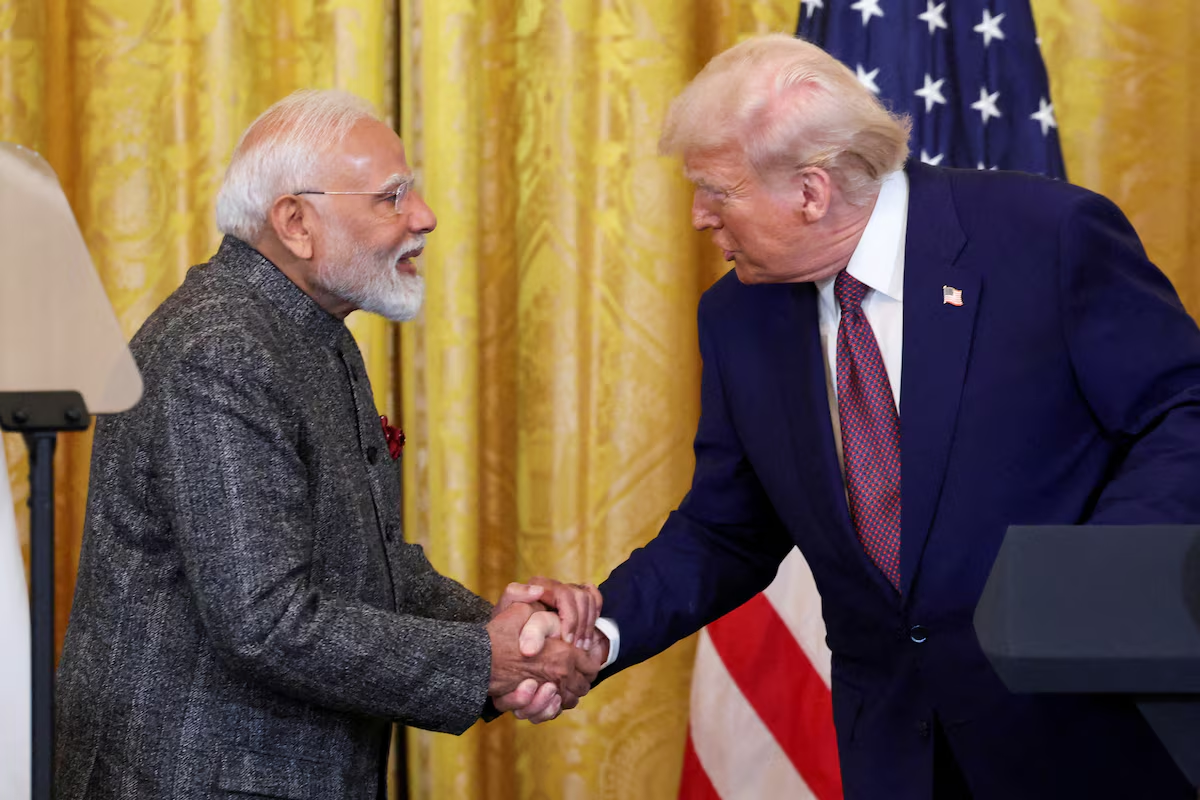
WASHINGTON, D.C. — The United States will impose a 25% tariff on goods from India, plus an additional import tax because of India’s purchasing of Russian oil, President Donald Trump said Wednesday.
India “is our friend,” Trump said on his Truth Social platform, but its tariffs on U.S. products “are far too high.”
The Republican president added India buys military equipment and oil from Russia, enabling Moscow’s war in Ukraine. As a result, he intends to charge an additional “penalty” starting on Friday as part of the launch of his administration’s revised tariffs on multiple countries.
Trump told reporters on Wednesday the two countries were still in the middle of negotiations on trade despite the tariffs slated to begin in a few days.
“We’re talking to India now,” the president said. “We’ll see what happens.”
The Indian government said Wednesday it’s studying the implications of Trump’s tariffs announcement.
India and the U.S. have been engaged in negotiations on concluding a “fair, balanced and mutually beneficial” bilateral trade agreement over the last few months, and New Delhi remains committed to that objective, India’s Trade Ministry said in a statement.
Trump’s view on tariffs
Trump’s announcement comes after a slew of negotiated trade frameworks with the European Union, Japan, the Philippines and Indonesia — all of which he said would open markets for American goods while enabling the U.S. to raise tax rates on imports. The president views tariff revenues as a way to help offset the budget deficit increases tied to his recent income tax cuts and generate more domestic factory jobs.
While Trump has effectively wielded tariffs as a cudgel to reset the terms of trade, the economic impact is uncertain as most economists expect a slowdown in U.S. growth and greater inflationary pressures as some of the costs of the taxes are passed along to domestic businesses and consumers.
There’s also the possibility of more tariffs coming on trade partners with Russia as well as on pharmaceutical drugs and computer chips.
Kevin Hassett, director of the White House National Economic Council, said Trump and U.S. Trade Representative Jamieson Greer would announce the Russia-related tariff rates on India at a later date.
Tariffs face European pushback
Trump’s approach of putting a 15% tariff on America’s long-standing allies in the EU is also generating pushback, possibly causing European partners as well as Canada to seek alternatives to U.S. leadership on the world stage.
French President Emmanuel Macron said Wednesday in the aftermath of the trade framework that Europe “does not see itself sufficiently” as a global power, saying in a cabinet meeting that negotiations with the U.S. will continue as the agreement gets formalized.
“To be free, you have to be feared,” Macron said. “We have not been feared enough. There is a greater urgency than ever to accelerate the European agenda for sovereignty and competitiveness.”
Seeking a deeper partnership with India
Washington has long sought to develop a deeper partnership with New Delhi, which is seen as a bulwark against China.
Indian Prime Minister Narendra Modi has established a good working relationship with Trump, and the two leaders are likely to further boost cooperation between their countries. When Trump in February met with Modi, the U.S. president said that India would start buying American oil and natural gas.
The new tariffs on India could complicate its goal of doubling bilateral trade with the U.S. to $500 billion by 2030. The two countries have had five rounds of negotiations for a bilateral trade agreement. While U.S. has been seeking greater market access and zero tariff on almost all its exports, India has expressed reservations on throwing open sectors such as agriculture and dairy, which employ a bulk of the country’s population for livelihood, Indian officials said.
The Census Bureau reported that the U.S. ran a $45.8 billion trade imbalance in goods with India last year, meaning it imported more than it exported.
At a population exceeding 1.4 billion people, India is the world’s largest country and a possible geopolitical counterbalance to China. India and Russia have close relations, and New Delhi has not supported Western sanctions on Moscow over its war in Ukraine.
The new tariffs could put India at a disadvantage in the U.S. market relative to Vietnam, Bangladesh and, possibly, China, said Ajay Sahai, director general of the Federation of Indian Export Organisations.
“We are back to square one as Trump hasn’t spelled out what the penalties would be in addition to the tariff,” Sahai said. “The demand for Indian goods is bound to be hit.”
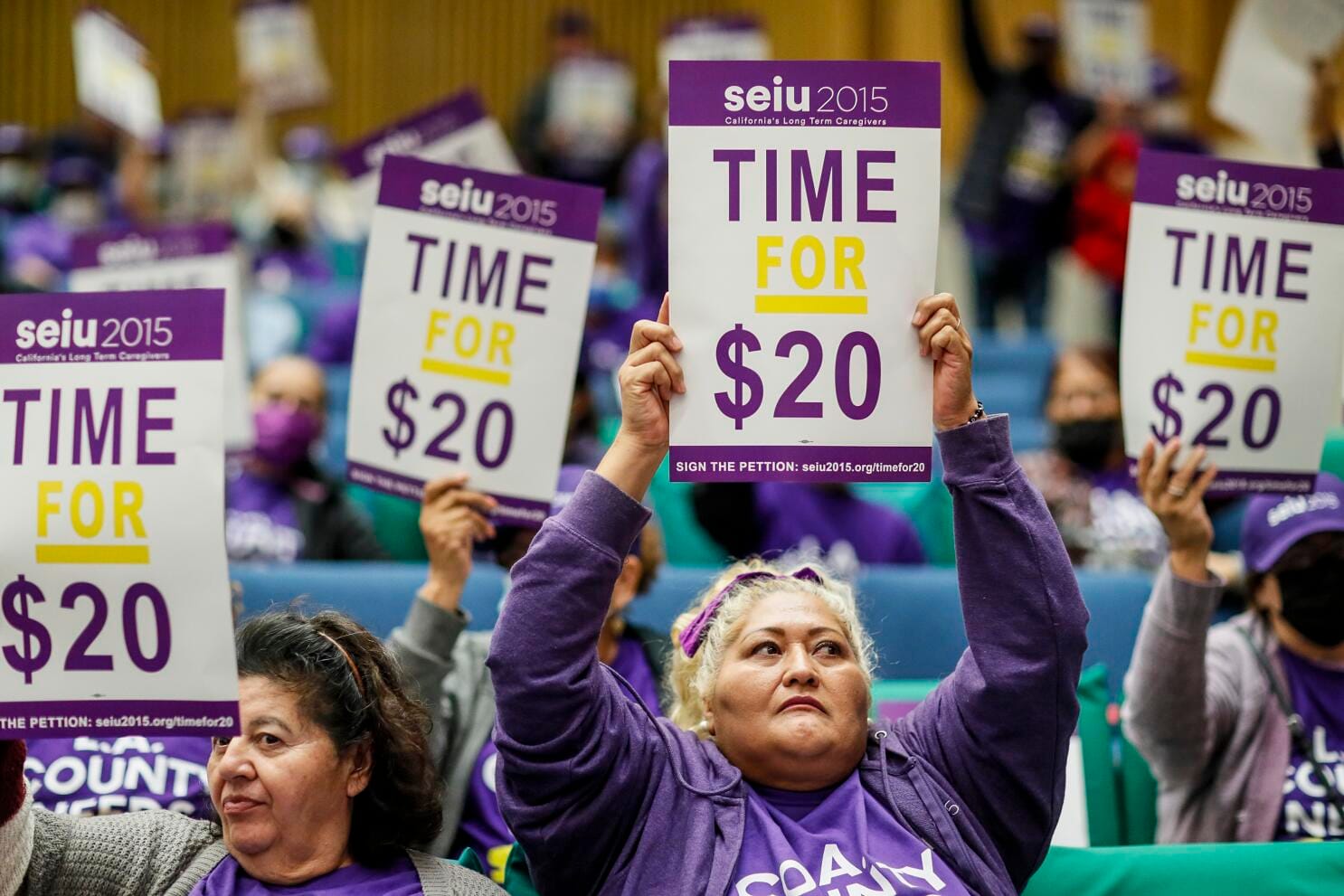
A new economic study released this month by the National Bureau of Economic Research (NBER) has found that California’s landmark $20-an-hour minimum wage law for fast food workers has resulted in the loss of approximately 18,000 jobs in the state’s fast-food sector—representing a 3.2% decline compared to similar employment trends nationwide.
The research, conducted by economists Jeffrey Clemens, Olivia Edwards, and Jonathan Meer, examined employment data before and after the implementation of Assembly Bill 1228 (AB 1228), which was signed into law by Governor Gavin Newsom in April 2024 and took effect on April 1, 2024. Prior to the law, California’s minimum wage for fast food workers stood at $16 per hour.
“Our median estimate translates into a loss of 18,000 jobs in California’s fast-food sector relative to the counterfactual,” the researchers wrote.
Fast-food employment in California fell by 2.3% to 3.9%, depending on the model used.
Nationally, fast-food employment grew by approximately 0.10% during the same period.
Prior to AB 1228’s enactment, California’s fast-food industry was tracking closely with national employment trends.
The authors concluded that the job losses occurred despite overall economic stability in the state and growth in other employment sectors. The wage hike coincided with a period of expansion in the broader U.S. labor market, making the contraction in California’s fast-food sector more striking.
In response to rising labor costs, many franchise owners across California have either reduced staff, cut hours, or turned increasingly toward automation and digital kiosks to offset payroll pressures. Fast food giants like McDonald’s, Wendy’s, and Jack in the Box have begun piloting AI-drive-thru systems and robotic food preparation stations, according to internal industry reports.
Private equity firms and hospitality-focused investment funds are now closely watching regulatory movements in California and beyond, with some advising caution before expanding labor-intensive operations in high-wage jurisdictions.
In the stock market, fast food restaurant chains with a heavy California footprint have experienced mixed performance. While some brands have maintained stability due to menu price adjustments, others have seen narrowing profit margins.
A Q2 earnings report from a California-based Yum! Brands franchisee cited labor costs increasing by 18% year-over-year, with executives forecasting continued pressure through 2026.
Critics of the law say the findings validate long-held concerns about minimum wage mandates in highly competitive, low-margin sectors.
Rachel Greszler, an economic analyst for The Heritage Foundation, wrote in a recent Daily Signal op-ed:
“When it comes to central planning, history keeps the receipts: Wage controls never work… The consequences of this wage hike should be a warning sign—especially for cities like Los Angeles, which recently passed a $30 wage law for airport and hotel workers.”
In a Monday editorial, The Wall Street Journal called the idea that a major wage increase would spur economic growth “magical thinking.” The editorial also criticized New York City mayoral candidates Andrew Cuomo and Zohran Mamdani, both of whom support similarly aggressive wage proposals.
“These guys will never learn because they don’t want to see the world as it really is,” the WSJ board wrote.
Tara Gallegos, Deputy Director of Communications for Governor Newsom, dismissed the study’s conclusions, noting its links to the Hoover Institution, which she claims has a record of publishing “misleading information” on labor issues.
Gallegos pointed to a February 2025 study from UC Berkeley that analyzed employment data from April to December 2024, which found:
Wages increased 8–9% for covered workers.
No negative effects on non-covered workers or overall fast-food employment.
Number of fast-food establishments grew faster in California than elsewhere.
Menu prices increased modestly—by only 1.5% on average, or about $0.06 on a $4 hamburger.
Gallegos also cited an article from the San Francisco Chronicle (Oct. 2024) that said many of the doomsday predictions around AB 1228 “did not materialize.”
The Fast Food Council, created under AB 1228, has the authority to raise the minimum wage annually beginning January 1, 2025. This has raised new questions from both businesses and economists about the long-term viability of California’s fast-food sector under escalating labor costs.
Labor unions, including the Service Employees International Union (SEIU), maintain that the $20 wage has lifted thousands of workers out of poverty and boosted local economies via increased consumer spending.
Meanwhile, employers, especially small-business franchisees, warn that without offsetting subsidies, tax breaks, or exemptions, continued hikes may further drive automation and business closures.
As cities like Los Angeles move toward even higher minimums ($30 by 2028), California appears poised to remain the national battleground in the debate over wage policy and economic trade-offs.
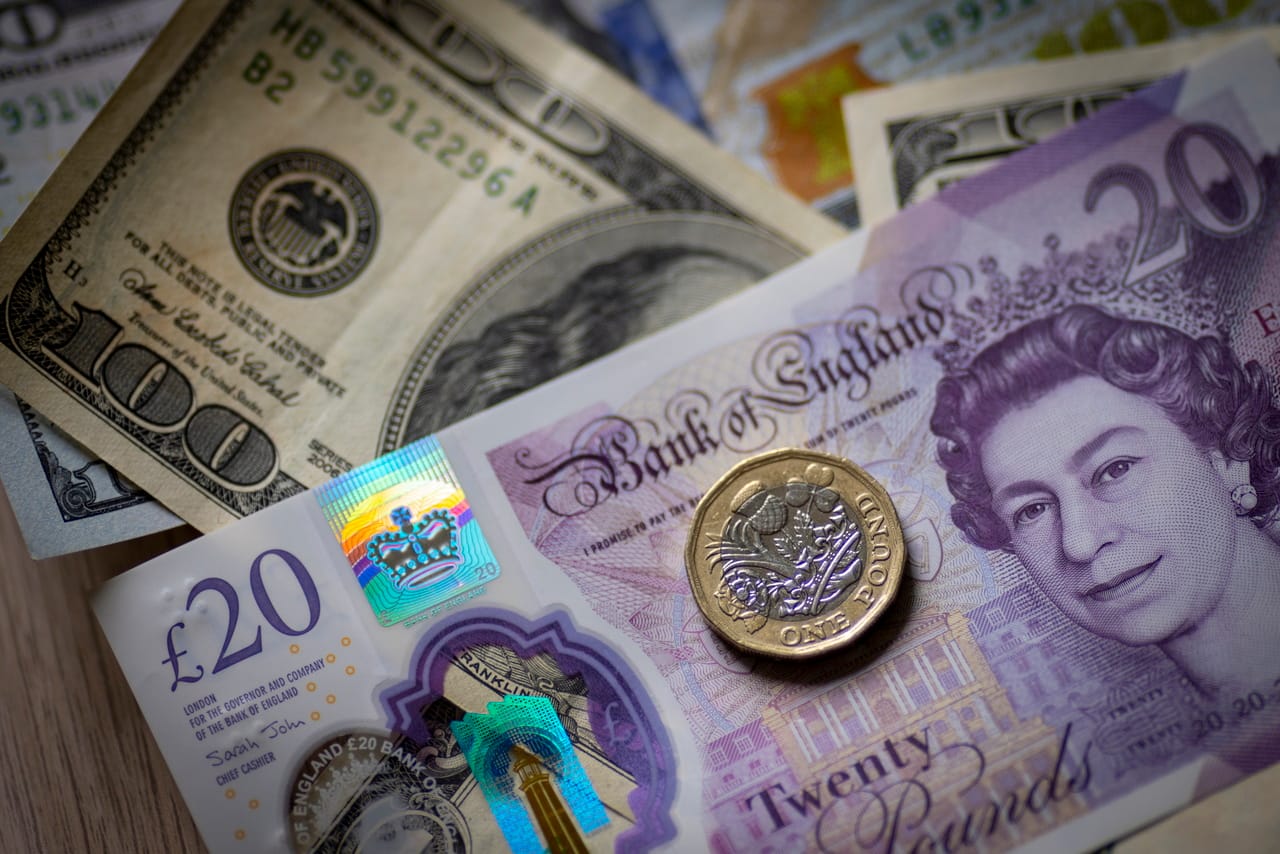
The British pound rallied to its highest level in almost four years on Thursday, even as analysts remain divided on the potential for further upside.
Sterling was last seen trading more than 0.5% higher against the U.S. dollar, hitting $1.3736 — its highest level since October 2021.
So far this year, the pound has surged almost 10% higher versus the greenback, according to LSEG data.
Against the euro, however, sterling is down 2.9% year-to-date. It was last seen trading 0.2% higher against the euro zone currency, with one pound buying around 1.173 euros.
Dollar weakness
According to Janet Mui, head of market analysis at RBC Brewin Dolphin, much of the pound’s upward trajectory is actually more to do with underlying dollar weakness than faith in sterling itself.
“The relative strength of the pound has been more of a weak U.S. dollar story this year,” she told CNBC News by email on Wednesday.
U.S. President Donald Trump’s unpredictable trade policies shook confidence in American assets earlier this year, which in turn has sparked concerns in markets about de-dollarization.
Paul Jackson, global head of asset allocation research at Invesco, said sterling was on a recovery journey from the “extreme low” seen in the aftermath of former British Prime Minister Liz Truss’s so-called mini budget, which sparked a severe sell off of the pound and U.K. government bonds in 2022.
He agreed, however, that much of the movement this year was attributable to dollar weakness, pointing out sterling’s simultaneous depreciation against the euro.
Will sterling go higher?
“I would expect that pattern to continue in the future, with the dollar weakening along with the US economy (and investor doubts about US fiscal and tariff policies), while the euro could strengthen on optimism about the implications of the coming fiscal boost (especially in Germany),” Invesco’s Jackson said.
He argued that the ECB had likely completed most of its monetary easing for the current cycle, whereas the Bank of England and the Federal Reserve “have a lot of catching up to do.”
“In 12 months, I would expect GBPUSD to be around 1.40 and GBPEUR to be around 1.15 (currently 1.17),” Jackson added.
Jackson’s forecast represents a roughly 2.9% premium from current exchange rates against the dollar.
RBC Brewin Dolphin’s Mui suggested that in the coming months, the outlook for the British pound is not overly compelling — but noted that geopolitical developments could catalyze further upward movements in the longer term.
“In the near-term, further upside for the pound may be limited due to softer UK economic momentum and more scope for the Bank of England to cut rates,” she said.
“Looking ahead, one potential catalyst for the pound could be improved relations with the EU, particularly if it translates into more concrete action over time.”
Brian Mangwiro, an investment manager with the multi asset group at Barings, took a more pessimistic view.
“We are bearish GBP in the medium term. We would forecast EURGBP at 0.875 and GBPUSD at 1.30 in [six months],” he told CNBC by email on Wednesday.
He argued that the macroeconomic backdrop does not justify sterling’s performance against the greenback this year, attributing it instead to a reflection of a post-liberation day sell-off of the U.S. dollar.
“Markets had been overly bearish on the UK following Chancellor Reeves’ Budget,” he added. “Consequently, positive data surprises became supportive to GBP. However, we continue to expect UK economic growth and inflation to slow; signs are already showing, which the Bank of England is also acknowledging. This supports further BoE rate cuts, and ultimately weighs on the pound.”
Mangwiro also noted that in his view, de-dollarization risks seemed “over-blown.”
“Sentiment will likely reverse as US growth outlook rebounds and corporate earnings remain resilient,” he said. “Along with current extreme short USD positioning, this should support a USD rebound, dragging Cable lower.”
Jackie Bowie, managing partner and head of Chatham Financial EMEA, labeled the British pound as “a currency that is struggling to regain its former glory” despite playing an “outsized role” in global foreign exchange markets. The outlook for sterling is mixed, in her view.
“Looking at the key fundamentals of the UK, we can see some reasons to be upbeat on the outlook for the GBP but there are challenges too,” she said by email, forecasting “moderate” economic growth backed by government spending.
“Relative monetary policy is expected to keep the GBP attractive, but the geopolitical environment will play a key role in determining whether that benefits the GBP, particularly vs. the EUR (that has benefited from outflows from the US dollar due to Trump’s chaotic policy making and seeming authoritarian approach to government),” she said, also noting that U.S. trade policy and geopolitical tensions posed downside risks.
One day after House Republicans approved an expensive package of tax cuts that rattled financial markets, President Trump pivoted back to his other signature policy priority, unveiling a battery of tariff threats that further spooked investors and raised the prospects of higher prices on American consumers.
For a president who has fashioned himself as a shrewd steward of the economy, the decision to escalate his global trade war on Friday appeared curious and costly. It capped off a week that saw Mr. Trump ignore repeated warnings that his agenda could worsen the nation’s debt, harm many of his own voters, hurt the finances of low-income families and contribute far less in growth than the White House contends.
The tepid market response to the president’s economic policy approach did little to sway Mr. Trump, who chose on Friday to revive the uncertainty that has kept businesses and consumers on edge. The president threatened 50 percent tariffs on the European Union, and a 25 percent tariff on Apple. Other tech companies, he said, could face the same rate.
Since taking office, Mr. Trump has raced to enact his economic vision, aiming to pair generous tax cuts with sweeping deregulation that he says will expand America’s economy. He has fashioned his steep, worldwide tariffs as a political cudgel that will raise money, encourage more domestic manufacturing and improve U.S. trade relationships.
But for many of his signature policies to succeed, Mr. Trump will have to prove investors wrong, particularly those who lend money to the government by buying its debt.
So far, bond markets are not buying his approach. Where Mr. Trump sees a “golden age” of growth, investors see an agenda that comes with more debt, higher borrowing costs, inflation and an economic slowdown. Investors who once viewed government debt as a relatively risk-free investment are now demanding that the United States pay much more to those who lend America money.
That is on top of businesses, including Walmart, that say they may have to raise prices as a result of the president’s global trade war. The onslaught of policy changes has also left the Federal Reserve frozen in place, unsure as to when the economy will call for lower interest rates in the face of persistent uncertainty. As a result, borrowing costs for mortgages, car loans and credit cards remain onerous for Americans.
Still, Mr. Trump continues to proclaim that his policies will bring prosperity. This week, the White House released data showing that its tax cuts could increase U.S. output as much as 5.2 percent in the short term, compared with the gains it would have achieved if the bill is not adopted. The administration has stood largely alone in offering such rosy predictions about the effects of Mr. Trump’s policies on businesses, average workers and the nation’s fiscal future.
In report after report, economists this week predicted that Mr. Trump’s signature tax package could add well over $3 trillion to the national debt. Some found that the measure is unlikely to deliver substantial economic growth, and could enrich the wealthiest Americans while harming the poorest, millions of whom could soon lose access to federal aid for food and health insurance.
The tax cuts are largely an extension of ones that Congress passed in 2017, meaning that few taxpayers will see an increase to their after-tax income. In fact, some might see their financial situation deteriorate: Many of the lowest earners may even see about $1,300 less on average under the Republican bill in 2030, according to the nonpartisan Penn Wharton Budget Model, which factored in the proposed cuts to federal safety-net programs.
Facing an onslaught of red flags and dour reports, the White House has remained bullish.
“I think folks have cried wolf a lot,” Stephen Miran, the chairman of the president’s Council of Economic Advisers, said in an interview, stressing that Mr. Trump’s agenda would “grow the economy.”
In the past, investors and businesses might have rejoiced over Mr. Trump’s grand proclamations about lowering taxes, reducing regulations and opening access to foreign markets. But the most common reaction this week was concern over Mr. Trump’s sclerotic approach, which has renewed fears that the economy could enter a prolonged period of pain.
“It’s possible that you’re going to get a big benefit to growth, but the costs are so obvious and so clear that I think it’s hard to put a lot of faith in that at the moment,” said Eric Winograd, an economist at the investment firm AllianceBernstein.
By most metrics, Mr. Trump inherited a solid economy. Layoffs were low when he took office, and have stayed that way, helping to keep the unemployment rate stable. And consumers, even amid elevated prices, continued to spend apace.
Four months into his second term, however, there are signs that the economy is beginning to come under greater strain, in what experts worry is a prelude to a more substantive slowdown. While economists do not expect the economy to tip fully into a recession, they say Mr. Trump’s tariffs in particular have raised the odds of a downturn, as both businesses and consumers begin to cut back.
Many of the president’s allies maintain that Mr. Trump is doing exactly as he promised during the 2024 presidential campaign, acting out of a belief that his vision can spur robust economic growth. In doing so, that can help to create jobs, raise wages and generate the sort of activity that can lessen the nation’s fiscal imbalance, said Stephen Moore, a conservative economist who served as one of Mr. Trump’s advisers during his first term.
“So many of these problems are the result of low growth,” Mr. Moore said of the economy. Mr. Trump is aiming to get growth back up to 3 percent, Mr. Moore added.
But the administration has at times ignored a steady stream of data suggesting its policies may not deliver those gains.
The disparity between vision and reality became apparent Thursday as House Republicans voted to advance a bill that would extend the set of tax cuts enacted in the president’s first term. The measure also included Mr. Trump’s campaign promises to eliminate taxes on tips and overtime pay.
An analysis released Thursday by the Joint Committee on Taxation, a nonpartisan advisory arm of Congress, found that the new Republican measure may raise the average rate of growth in U.S. output by only 0.03 percentage points compared with current expectations through 2034. The finding cast doubt on the administration’s long-held assertion that economic activity can help to lower the deficit. The joint committee also said the president’s tax package could add $3.7 trillion to the nation’s debt over the next decade.
Mr. Miran maintained on Friday that congressional analysts and others had underestimated the effects of Mr. Trump’s initial tax cuts, and had done the same this year.
“Better tax policy creates better economic growth, and better economic growth creates better revenue,” he said.
Focusing on the debt, Kevin Hassett, the director of the White House National Economic Council, said on Fox News on Thursday that there was “a lot of spending reduction in this bill,” adding that the Trump administration would seek additional savings as the bill moved through the Senate.
The prospect of a worsening fiscal imbalance prompted Moody’s Ratings just last week to downgrade the U.S. credit rating, citing Republican tax cuts and the proclivity of past G.O.P. administrations to spend. Party lawmakers swiftly rejected the finding, but bond markets took notice, sending yields on longer-term U.S. debt higher. Soft demand at an auction of 20-year Treasuries on Wednesday gave markets another jolt, pushing up bond yields and weighing on U.S. stocks.
Mr. Trump sent markets into another tailspin on Friday as he abruptly shifted his attention to tariffs. He attacked the European Union and threatened to raise tariffs on its exports to a flat rate of 50 percent. He signaled a mixed appetite for negotiations, telling reporters in the Oval Office: “I don’t know. We’re going to see what happens.”
The president also took aim at Apple, signaling he would impose a 25 percent import tax on iPhones, months after his administration relaxed some of its trade policies to aid tech giants. Mr. Trump later suggested his new tariffs might also apply to Samsung.
The S&P 500 fell nearly a percentage point on Friday and pushed the U.S. dollar lower against a basket of its peers. Many from Washington to Wall Street yet again scrambled to decipher Mr. Trump’s intentions — and sort out the extent to which the president is serious, bluffing or set to walk back his policies again.
Some companies, including Walmart, have said they may have to raise prices as a result of the president’s global trade war. (Karsten Moran for The New York Times)
Some businesses have forecast price increases as a result of Mr. Trump’s tariff threats. A report this week from Allianz found that many businesses are trying to push the added tariff costs onto suppliers or consumers, with roughly half of its survey respondents saying they may increase prices.
The potential for rising prices while growth is slowing poses a unique challenge for the Fed and its voting members, forcing them to reconcile with conflicting missions — a goal to pursue low, stable inflation, and a desire to sustain a healthy labor market.
“The bar for me is a little higher for action in any direction while we’re waiting to get some clarity,” Austan Goolsbee, the president of the Chicago Fed and a voting member on this year’s rate-setting committee, told CNBC on Friday.
Mr. Goolsbee recalled a recent exchange with the chief executive of a construction business, who said: “We’re now in a put-your-pencils-down moment.” Businesses, Mr. Goolsbee said, now “have to wait if every week or every month or every day there’s going to be a new major announcement.”
“They just can’t take action until some of those things are resolved,” he added.
As the Federal Reserve continues to wind down its balance sheet and navigate a changing interest rate landscape, the central bank’s standing overnight lending tool—the Standing Repo Facility—is poised to play a bigger role in stabilizing short-term borrowing costs, a top New York Fed official said Monday.
Roberto Perli, the manager of the System Open Market Account (SOMA) at the Federal Reserve Bank of New York, told an audience at a fixed-income conference in Manhattan that the Standing Repo Facility (SRF) will likely take on greater prominence as a backstop for overnight funding markets as excess reserves in the banking system continue to decline.
“As the Fed’s balance sheet normalizes, and reserves become less abundant, we expect the Standing Repo Facility to be increasingly important in maintaining control over short-term interest rates,” Perli said. “It provides a ceiling on overnight borrowing costs and supports the effective transmission of monetary policy.”
A Quiet Corner of Monetary Policy Grows Louder
The Standing Repo Facility, launched in July 2021, allows eligible counterparties—primarily large banks and primary dealers—to borrow overnight cash from the Fed in exchange for high-quality collateral, such as Treasurys, agency debt, and agency mortgage-backed securities. The facility effectively acts as a cap on overnight interest rates by offering liquidity at a fixed rate—currently set at 5.5%, the upper bound of the federal funds target range.
Though underutilized for much of its existence, the SRF is now expected to play a critical role as the Fed continues reducing its holdings of Treasurys and agency MBS, a process known as quantitative tightening (QT). The Fed’s balance sheet has declined to just under $7.4 trillion, down from a peak of nearly $9 trillion in 2022.
As QT progresses, bank reserves are gradually declining, increasing the risk of stress in overnight funding markets—a risk the SRF is designed to mitigate.
“The SRF helps avoid spikes in repo rates that could spill over into broader funding markets,” Perli explained. “It’s not just a tool of last resort—it’s a structural part of the post-pandemic monetary policy framework.”
Fed officials are keen to avoid a repeat of the September 2019 repo market turmoil, when a sudden shortage of bank reserves caused overnight lending rates to spike above 10%. That episode, which occurred before the pandemic-era balance sheet expansion, prompted the Fed to eventually launch the SRF as a standing facility.
Perli emphasized that the Fed is aiming for a “minimally ample” reserve regime—enough reserves to support smooth market functioning without flooding the system. In such an environment, the SRF would serve as a safety valve, absorbing fluctuations in liquidity demand.
Wall Street analysts see the Fed’s messaging as a clear signal that short-term repo markets will become a key battleground in monetary policy implementation.
“The SRF is no longer just a theoretical backstop—it’s becoming a live tool in rate control,” said Priya Misra, head of global rates strategy at TD Securities. “As QT reduces excess liquidity, we’re going to see more frequent use of this facility, especially in periods of tax payments, bill issuance, or market stress.”
In recent months, repo market participants have seen growing usage of the reverse repo (RRP) facility decline, while demand for SRF remains near zero—but that dynamic could change quickly if reserves fall too far.
“The Fed is trying to thread a needle,” said Joseph Abate, repo market expert at Barclays. “They want to shrink the balance sheet without triggering another funding squeeze. The SRF is their insurance policy.”
Perli also noted that an active SRF helps the Fed maintain the integrity of its interest rate corridor, ensuring that market rates do not drift too far from the policy rate. With the federal funds target range currently at 5.25%–5.50%, the SRF ensures that no institution pays more than the upper bound for overnight funds.
Moreover, the SRF could take on additional importance if future geopolitical shocks, debt issuance surges, or year-end liquidity pressures push up repo rates.
“This facility helps the Fed maintain monetary control without needing to keep reserves excessively high,” said Julia Coronado, president of MacroPolicy Perspectives. “It’s part of a more flexible, responsive monetary toolkit.”
Fed officials are widely expected to slow the pace of QT later this year, especially as money market funds shift from the Fed’s reverse repo facility into higher-yielding T-bills. Perli declined to speculate on when QT might end but reiterated that money market stability remains a core priority.
The next major test for the SRF could come during the mid-June tax payment period, when Treasury cash balances surge and drain reserves from the system.
For now, the SRF’s mere presence is helping anchor market confidence—but as the Fed walks a tightrope between inflation control and liquidity management, that backstop could soon become a front-line tool.
Key Facts:
Standing Repo Facility Rate: 5.5% (as of May 2025)
Fed Balance Sheet Size: $7.4 trillion (down from $9 trillion in 2022)
Launch Date of SRF: July 2021
Usage: Currently near zero, but expected to increase as reserves decline
Contains information related to marketing campaigns of the user. These are shared with Google AdWords / Google Ads when the Google Ads and Google Analytics accounts are linked together.
90 days
__utma
ID used to identify users and sessions
2 years after last activity
__utmt
Used to monitor number of Google Analytics server requests
10 minutes
__utmb
Used to distinguish new sessions and visits. This cookie is set when the GA.js javascript library is loaded and there is no existing __utmb cookie. The cookie is updated every time data is sent to the Google Analytics server.
30 minutes after last activity
__utmc
Used only with old Urchin versions of Google Analytics and not with GA.js. Was used to distinguish between new sessions and visits at the end of a session.
End of session (browser)
__utmz
Contains information about the traffic source or campaign that directed user to the website. The cookie is set when the GA.js javascript is loaded and updated when data is sent to the Google Anaytics server
6 months after last activity
__utmv
Contains custom information set by the web developer via the _setCustomVar method in Google Analytics. This cookie is updated every time new data is sent to the Google Analytics server.
2 years after last activity
__utmx
Used to determine whether a user is included in an A / B or Multivariate test.
18 months
_ga
ID used to identify users
2 years
_gali
Used by Google Analytics to determine which links on a page are being clicked
30 seconds
_ga_
ID used to identify users
2 years
_gid
ID used to identify users for 24 hours after last activity
24 hours
_gat
Used to monitor number of Google Analytics server requests when using Google Tag Manager