As the midterm elections draw closer, Republican strategists and candidates are growing increasingly frustrated with what they see as a lack of clear direction from President Donald Trump and his administration. With polls showing a darkening outlook for Republican prospects in November, many in the party are privately expressing concern about the mixed signals coming from the White House and what they perceive as a failure to deliver on core “America First” promises.
According to sources close to the White House, Trump’s approach to the midterms has been inconsistent at best. “Some days the president seems not to care,” one official told The Washington Post. “Republicans looking to the White House to lead in the face of the party’s dimming prospects for November’s midterms are facing a crucial hang-up: the president.”
This uncertainty comes at a critical time, with Republicans defending a narrow House majority and facing competitive Senate races in multiple states. The Cook Political Report rates 14 Republican-held House seats as toss-ups, while Democrats are defending only four. In January, Cook shifted 18 seats in the Democrats’ favor.
Broken Promises on Core Conservative Priorities
Beyond the strategic confusion, many grassroots conservatives are expressing disappointment with the Trump administration’s failure to deliver on key campaign promises that formed the foundation of the “America First” movement.
Immigration enforcement remains a major point of contention. Despite promises of “mass deportations,” ICE operations have focused primarily on what officials describe as the “worst of the worst” criminal aliens. This narrow approach has drawn criticism from conservative commentators who argue that illegal immigration is principally a crisis of quantity rather than quality.
“Systems buckle under the weight of accumulated foreign populations long before any immigrant commits a headline-grabbing felony,” notes an analysis in The American Conservative. “At mass levels, illegal immigration suppresses wages for American workers, especially those without college degrees, overwhelms schools and hospitals, and expands welfare systems quietly and permanently.”
More for you

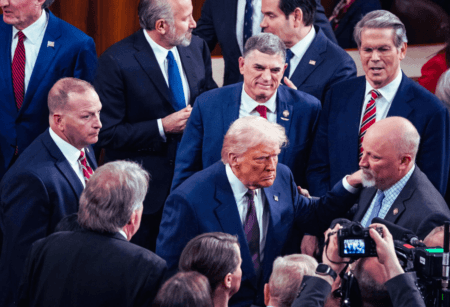
Republicans facing difficult midterm elections are increasingly uncertain about President Donald Trump’s role, as aides and allies describe mixed signals about how actively he plans to engage
The administration has also failed to address concerns about H1B visa programs, which critics argue displace American workers in high-tech fields. Despite campaign rhetoric about putting American workers first, the Trump administration has maintained and in some cases expanded these programs, drawing criticism from conservative immigration restrictionists.
Foreign policy continues to prioritize Israel over American interests. Trump’s approach to the Middle East has drawn particular criticism from conservatives who argue that his policies represent a continuation of the “Israel First” approach of previous administrations rather than the “America First” approach he promised.
The United States continues to provide billions in military aid to Israel annually, with Congress recently approving another $3.3 billion installment as part of the current ten-year, $38 billion Memorandum of Agreement. According to the Council on Foreign Relations, Israel is by far the biggest recipient of U.S. aid in history, having received some $300 billion since its founding.
“It not only siphons off aid from much needed renewal at home, but forces Washington to aid and abet another country’s foreign policy, which is increasingly counterproductive and contrary to our own politics and values,” argues The American Conservative. “The region is not safer, and moreover, it has not allowed for the United States to reduce its military footprint as guarantor of security there.”
Even some Republican lawmakers have begun to speak out against this arrangement. “Nothing can justify the number of civilian casualties (tens of thousands of women and children) inflicted by Israel in Gaza in the last two years. We should end all U.S. military aid to Israel now,” said Rep. Thomas Massie (R-KY) last year.

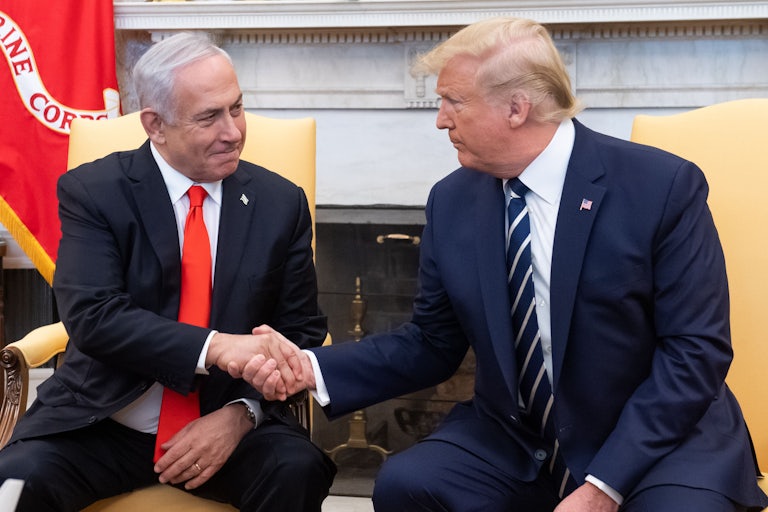
War with Iran looms on the horizon despite Trump’s campaign rhetoric about avoiding “dumb wars,” his administration appears to be moving toward another military confrontation in the Middle East, this time with Iran. The president has reportedly given Iranian authorities an ultimatum that includes not only ending their nuclear program but also stopping production of missiles that can reach Israel and ending support for groups like Hezbollah and the Houthis.
“Trump faces a clear choice: Launch another war for Israel or make peace for America,” argues The American Conservative. “His choice is a test case for commentators trying to make sense of this administration: Does Trump’s Iran policy serve America or a foreign nation?”
Critics point out that these demands are essentially impossible for Iran to accept. “What good is a missile deterrent if it has to be short of the range that can hit the country that’s threatening you?” asked antiwar commentator Scott Horton in an interview with The American Conservative. “And it’s just such an unreasonable demand on its face.”
Demographic Concerns Mount
Beyond specific policy disappointments, many conservatives are expressing alarm about ongoing demographic changes that they believe threaten the future of America as a majority-white, Christian nation.
Most Read in Politics




New census projections confirm that the United States will become “minority white” in 2045, with whites comprising just 49.7 percent of the population compared to 24.6 percent for Hispanics, 13.1 percent for blacks, 7.9 percent for Asians, and 3.8 percent for multiracial populations.
The shift is already evident among younger Americans. “For youth under 18—the post-millennial population—minorities will outnumber whites in 2020,” notes a Brookings Institution analysis. “For those age 18-29—members of the younger labor force and voting age populations—the tipping point will occur in 2027.”

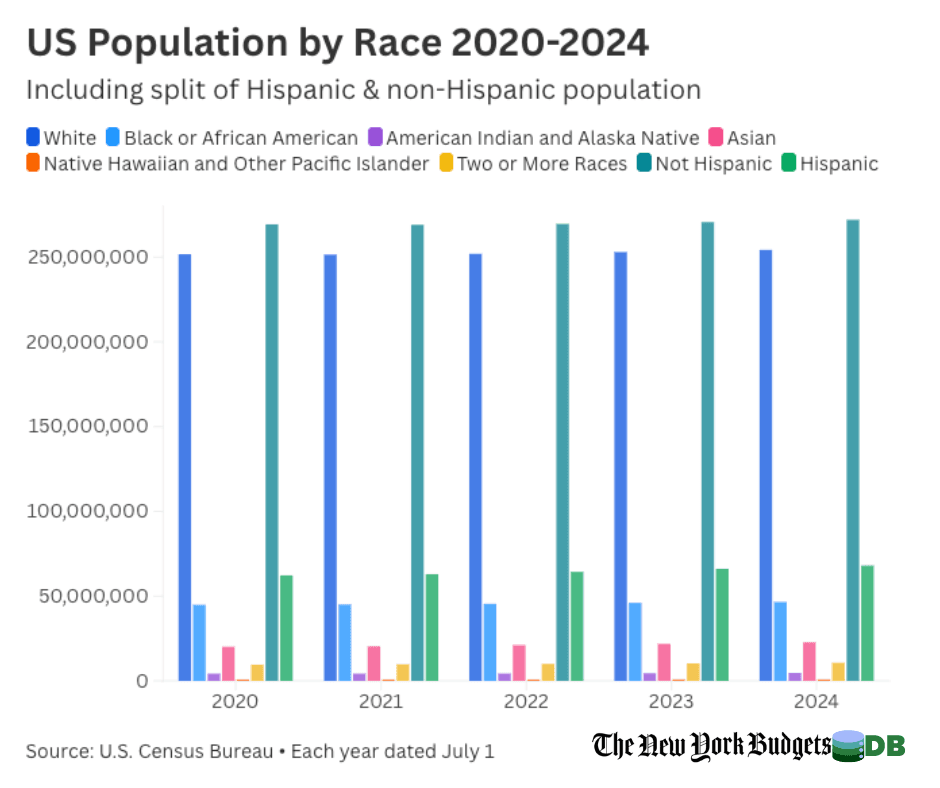
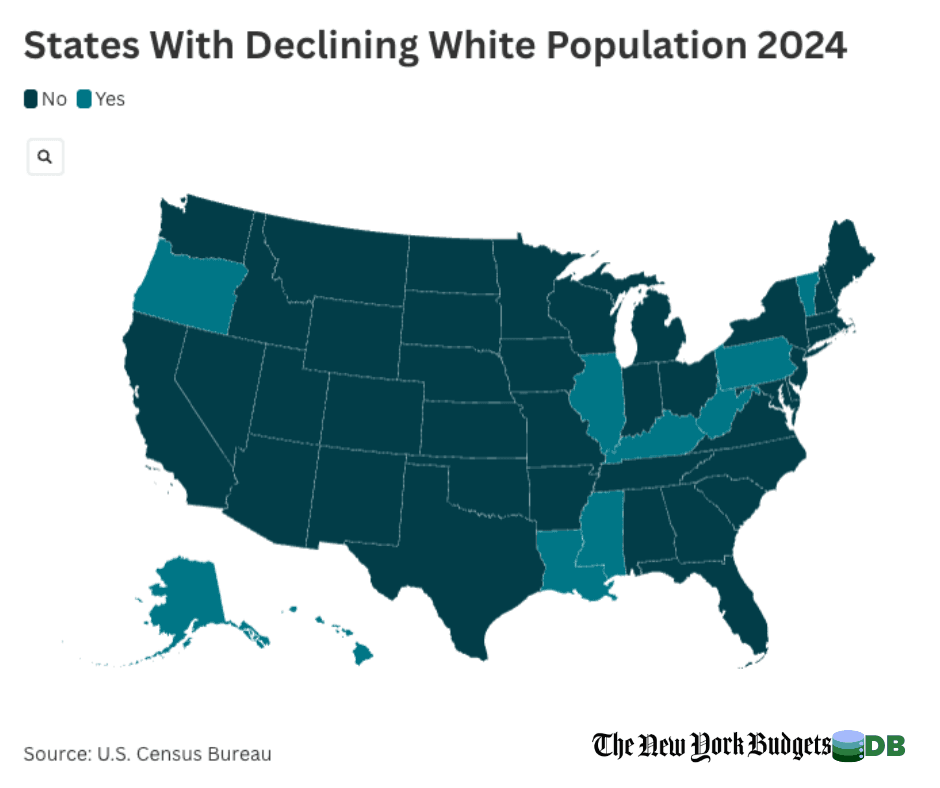
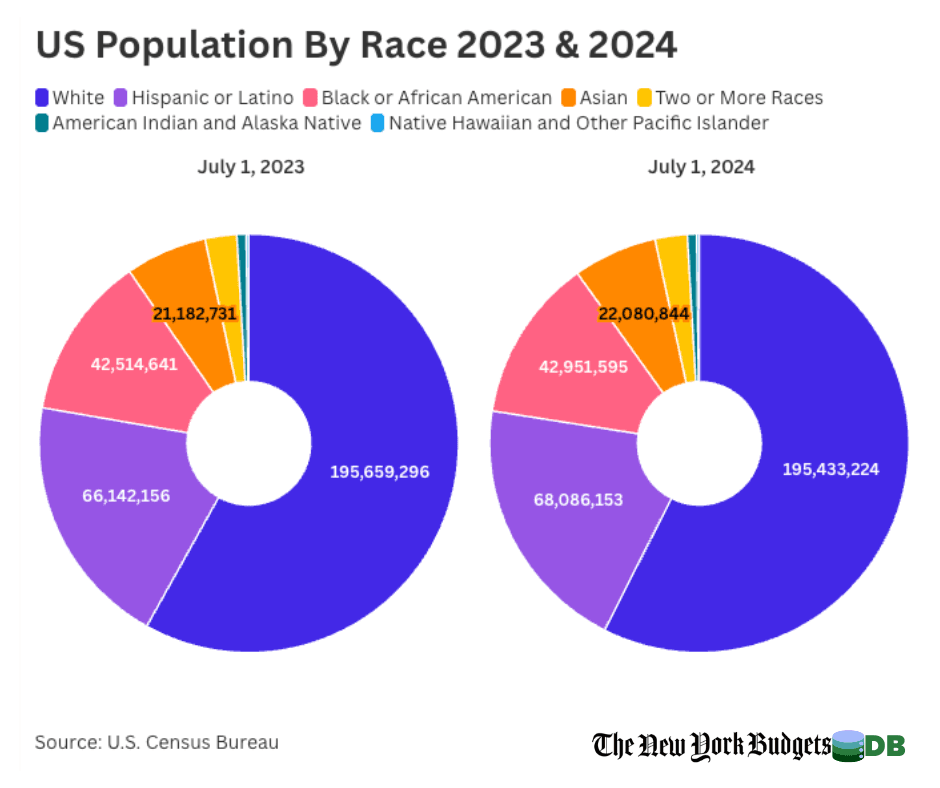
These demographic changes are not occurring evenly across the country. According to the latest Census Bureau data, nine states saw declines in their white populations: Alaska, Illinois, Kentucky, Louisiana, Mississippi, Oregon, Pennsylvania, West Virginia and Vermont.
“The major implication is the major change that is taking place in the U.S. population with respect to its race and ethnic structure,” Rogelio Saenz, a professor in the department of sociology and demography at the University of Texas in San Antonio, told Newsweek. “The Census Bureau has projected that in 2044 the nation would be majority minority, or more non-white than white in the in the population, and I think that that these patterns are well afoot. We’re getting closer to that reality.”
Economic Discontent Grows
Compounding these concerns is growing dissatisfaction with the state of the U.S. economy. Despite Trump’s promises to “supercharge” the economy and “make life more affordable for all Americans,” many working and middle-class families continue to struggle with stagnant wages, rising inflation, and an increasingly unaffordable housing market.
The housing market, in particular, has become a source of frustration for many Americans. Home prices have continued to rise faster than incomes, putting homeownership out of reach for an increasing number of families. At the same time, rental costs have skyrocketed in many markets, consuming an ever-larger portion of household incomes.
These economic pressures come at a time when many Americans are already feeling financially insecure due to the ongoing pandemic and its economic aftermath. Despite promises of a “V-shaped recovery,” many sectors of the economy continue to struggle, and millions of Americans remain unemployed or underemployed.
Trump’s Midterm Strategy Remains Unclear
Against this backdrop of policy disappointments and growing discontent, Trump’s approach to the midterm elections remains unclear. The president has reportedly amassed a war chest of more than $300 million through his main super PAC, MAGA Inc., but has not approved a spending plan for how those funds will be deployed.
“People who have spoken with Trump about these obstacles said he at times can sound detached and noncommittal about his plans for spending and endorsements,” reports The Washington Post. “One person close to the White House said some days the president seems not to care.”
This uncertainty has created particular problems in key Senate races. In Texas, for example, Trump has yet to endorse incumbent Sen. John Cornyn, creating a costly primary battle against state Attorney General Ken Paxton. National Republican strategists view Paxton as weaker in the general election, with one memo estimating that holding the seat with Paxton as the nominee would cost an additional $100 million.
“Texas cannot be taken for granted,” the memo warned, presenting internal polling that puts Cornyn ahead of Democratic candidates and Paxton behind them.
Similar situations are playing out in other states, including Georgia, where multiple Republican candidates are challenging Democrat Jon Ossoff, and Louisiana, where Trump has endorsed a challenger to incumbent Republican Sen. Bill Cassidy.
“Senate Republicans including [Senate Majority Leader John] Thune have been frustrated by Trump’s treatment of Senate incumbents,” reports The Washington Post. “Sen. Thom Tillis of North Carolina declined to run for reelection in the battleground state after feuding with Trump over Medicaid cuts in the president’s 2025 tax cuts and spending package.”
White House Promises Increased Engagement
White House officials insist that Trump is preparing to become more involved in the midterm campaign. “A White House official said Trump is excited to get more engaged in midterm strategy and looking forward to increasing his travel this month, including a campaign-style event outside of Washington this week,” according to The Washington Post.
The president’s political team, led by White House adviser James Blair, campaign strategist Chris LaCivita and pollster Tony Fabrizio, recently met in Palm Beach, Florida, to review research from every competitive race and develop estimates for what Republicans will have to spend to win. The team also briefed a retreat of the Senate Republicans’ campaign arm.
“An Oval Office meeting to go over a handful of House endorsements Wednesday night turned into a five-hour gabfest on the midterms, according to two people present,” reports The Washington Post. “Trump said he wants to defy the tendency of the president’s party losing seats in Congress in the midterms, one of the people said. ‘We’ll spend whatever it takes,’ the person recalled Trump saying. ‘Go get it done.'”
The White House has also encouraged Cabinet secretaries to minimize foreign trips