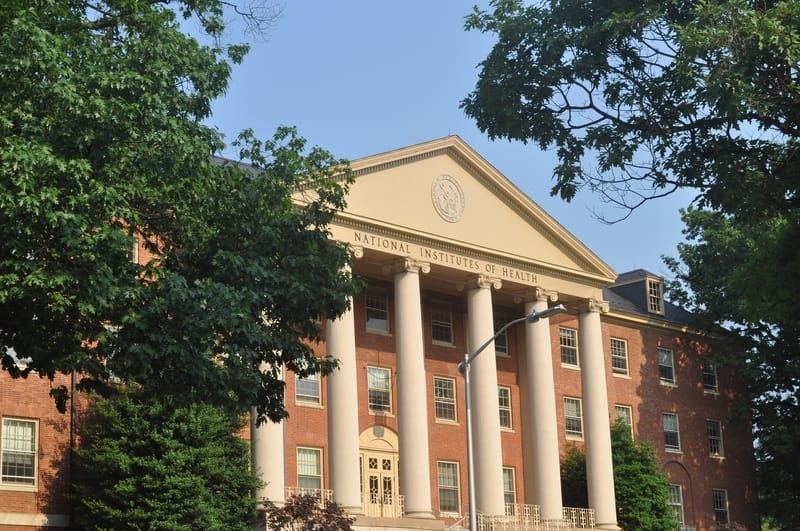
WASHINGTON, D.C. — A new report from the Government Accountability Office (GAO) has found that the National Institutes of Health (NIH), under direction from the Trump administration, unlawfully delayed and canceled billions of dollars in federally approved medical research grants. The decision, rooted in efforts to dismantle diversity, equity, and inclusion (DEI) initiatives across federal agencies, violated the 1974 Impoundment Control Act (ICA), the congressional watchdog concluded.
The GAO report, released Tuesday, revealed that nearly 1,800 grants were either canceled or delayed between January and June 2025, resulting in $8 billion less in grant awards compared to the same period in 2024. This move was made in accordance with several Trump administration executive orders that aimed to eliminate federal spending on DEI-related programs.
“The NIH intended to withhold budget authority from obligation and expenditure without regard to the process provided by the Impoundment Control Act,” the report stated bluntly.
The Impoundment Control Act of 1974 limits the ability of the executive branch to withhold or delay spending that has been approved by Congress. If the president wants to rescind or delay funding, the administration must formally notify Congress and seek approval.
According to the GAO, the NIH bypassed this process, acting on executive orders that had not been legislatively authorized. As such, the delays and cancellations constituted unlawful impoundment of funds.
The Trump Administration’s Executive Orders
Following his re-election and return to office in January 2025, President Donald Trump signed several executive orders targeting DEI initiatives. One such order required all federal agencies to cancel equity-related grants and contracts within 60 days.
The NIH, falling under the Department of Health and Human Services (HHS), responded swiftly by halting grant announcements, removing pending notices from the Federal Register, and pausing peer-review meetings—an essential step in grant distribution. This paralyzed funding flows and research programs for nearly two months, according to internal NIH data and the GAO’s findings.
Researchers and lawmakers across the political spectrum reacted with concern and, in some cases, outrage.
Senator Patty Murray (D-WA), Vice Chair of the Senate Appropriations Committee, issued a strong rebuke:
“It is critical President Trump reverse course, stop decimating the NIH, and get every last bit of this funding out. The longer this goes on, the more clinical trials that will be cut short, labs that will shutter, and lifesaving research that will never see the light of day.”
According to Science.org, dozens of leading universities and medical institutions have already reported disruptions to ongoing trials and lab operations. Some have had to suspend hiring, postpone experiments, or seek alternative private funding to stay afloat.
Dr. Lisa Granger, a biomedical researcher at a top-tier cancer research institute in New York, told STAT News,
“We were days away from final approval for a multi-year immunotherapy project when everything froze. We’ve already lost a few team members to layoffs.”
Neither the NIH nor the White House immediately responded to requests for comment on the GAO’s findings. However, a spokesperson for HHS sent a brief statement to The Hill, noting that the pause on Federal Register notices had been lifted and that peer-review meetings have resumed.
But the damage may already be done, say experts.
Dr. Michael Eisen, a policy expert at the Brookings Institution, told Politico,
“When you weaponize grant funding for political purposes—especially in health and science—you erode both trust and progress. The long-term effects of this slowdown could be devastating.”
The GAO’s determination is not legally binding but carries significant political weight. In a related legal case, a federal district court ruled in June that the Trump administration’s mass cancellation of NIH grants was unlawful. The court ordered a review of the canceled grants, but the administration has not yet signaled how it will proceed.
Republican lawmakers have backed the administration’s moves, arguing that DEI-focused research diverts resources from essential scientific objectives.
“Taxpayer money should go to actual science, not woke social engineering,” said Rep. James Comer (R-KY), Chair of the House Oversight Committee, in a statement to Fox News.
The immediate future remains uncertain. While HHS has lifted the pause on some procedures, the $8 billion shortfall has yet to be restored. The GAO recommended that Congress demand a full accounting of canceled grants and require the NIH to expedite reallocation of funds to eligible researchers.
Medical associations, including the American Medical Association and the Association of American Medical Colleges, have called on Congress to step in with emergency legislation that would protect research funding from future political interference.
“We cannot let partisanship dictate whether cancer cures or pandemic response strategies are developed,” said Dr. Amy Martinez, president of the NIH Grants Advocacy Coalition, in an op-ed for Bloomberg.
Although NIH funding is not directly tied to public markets, biotechnology and pharmaceutical stocks reacted negatively when grant cancellations were first reported in Q1 2025. According to Bloomberg Markets, the Nasdaq Biotechnology Index saw a 3.7% drop in March, when internal NIH memos revealed delays in funding cycles.
Investors and venture capitalists in the life sciences space are now watching closely to see if Congress will act—or if further executive actions will chill scientific investment.
The GAO’s ruling adds to growing scrutiny over how political decisions are influencing scientific research and public health funding. As the Trump administration continues to reshape the federal government’s priorities, the NIH—once considered a relatively neutral institution—is emerging as a political battleground.
Whether the full weight of the $8 billion in delayed funding will be restored remains to be seen. What is clear is that the implications of these actions will reverberate across the scientific community for years to come.