Category: Tariffs

  • iPhone Price Could Soar to $3,500 if Made in the U.S.

    iPhone Price Could Soar to $3,500 if Made in the U.S.

    US President Donald Trump boasted “jobs and factories will come roaring back” when he unleashed unprecedented tariffs around the world during his “Liberation Day” address last month.

    But there’s one product the president is particularly eager to produce in the US: iPhones.

    “I have long ago informed Tim Cook of Apple that I expect their iPhone’s that will be sold in the United States of America will be manufactured and built in the United States, not India, or anyplace else,” Trump posted Friday morning on Truth Social. “If that is not the case, a Tariff of at least 25% must be paid by Apple to the U.S.”

    But Dan Ives, global head of technology research at financial services firm Wedbush Securities, told in April that idea is a “fictional tale.”

    US-made iPhones will likely cost more than three times their current price of around $1,000, Ives said, because of the costs associated with replicating the highly complex production ecosystem that currently exists in Asia.

    “You build that (supply chain) in the US with a fab in West Virginia and New Jersey. They’ll be $3,500 iPhones,” he said, referring to fabrication plants, or high-tech manufacturing facilities where computer chips that power electronic devices are normally made.

    And even then, it would cost Apple about $30 billion and three years to move just 10% of their supply chain to the US to begin with, Ives told Burnett.

    The making and assembly of smartphone parts shifted to Asia decades ago, as American companies largely focused on software development and product design, which generate much higher profit margins. That move has helped make Apple one of the world’s most valuable companies and cement itself as a dominant smartphone maker.

    Since Trump’s inauguration in late January, Apple’s shares have lost more than 14% of their value due to concerns about the impact of tariffs on its sprawling supply chain, which is highly dependent on China and Taiwan. About 90% of Apple’s iPhone production takes place in China, according to Ives.

    “That’s why I think you see what’s happened to the stock, because no company is more caught up in this tariff front and center in this category five storm than Cupertino and Apple,” he said in April. “It’s an economic Armageddon, but especially for the tech industry.”

    The chips that power iPhones are mainly manufactured in Taiwan, while its screen panels are supplied by South Korean companies. Some other components are made in China, and final assembly mostly takes place in the country.

    The administration’s exemption of smartphones and other electronics containing semiconductors from the elevated “reciprocal” tariffs on China has spared iPhones from the harshest levies, but Apple still faces a 20% tariff on Chinese goods for the country’s role in the fentanyl trade. Apple CEO Tim Cook said on the company’s most recent earnings call that “the majority” of iPhones coming into the United States will now be shipped from India, adding that tariffs could add $900 million to Apple’s costs this quarter.

    In February, Apple announced it would invest $500 billion in the United States over the next four years as part of its effort expand production outside China and to avoid Trump’s tariffs on the country.

    Apple has been seeking to diversify its production bases from China to India and Brazil. But Gene Munster, managing partner at Deepwater Asset Management, estimates it would be difficult for Apple not to raise iPhone prices if it faces tariffs of 30% or higher.

    “Anything below 30, they will probably carry the vast majority of that increase,” he said. “But I think at some point they’re going to have to start to share it.”

  • Trump advocates for Apple to pay a 25% tariff on iPhones manufactured outside the U.S.

    Trump advocates for Apple to pay a 25% tariff on iPhones manufactured outside the U.S.

    President Donald Trump said in a social media post Friday morning that Apple will have to pay a tariff of 25% or more for iPhones made outside the United States.

    “I have long ago informed Tim Cook of Apple that I expect their iPhone’s that will be sold in the United States of America will be manufactured and built in the United States, not India, or anyplace else. If that is not the case, a Tariff of at least 25% must be paid by Apple to the U.S.,” Trump said on Truth Social.

    Shares of Apple fell about 2% on Friday after the post.

    Production of Apple’s flagship phone happens primarily in China, but the company has been shifting manufacturing to India in part because that country has a friendlier trade relationship with the U.S.

    Some Wall Street analysts have estimated that moving iPhone production to the U.S. would raise the price of the Apple smartphone by at least 25%. Wedbush’s Dan Ives put the estimated cost of a U.S. iPhone at $3,500. The iPhone 16 Pro currently retails for about $1,000.

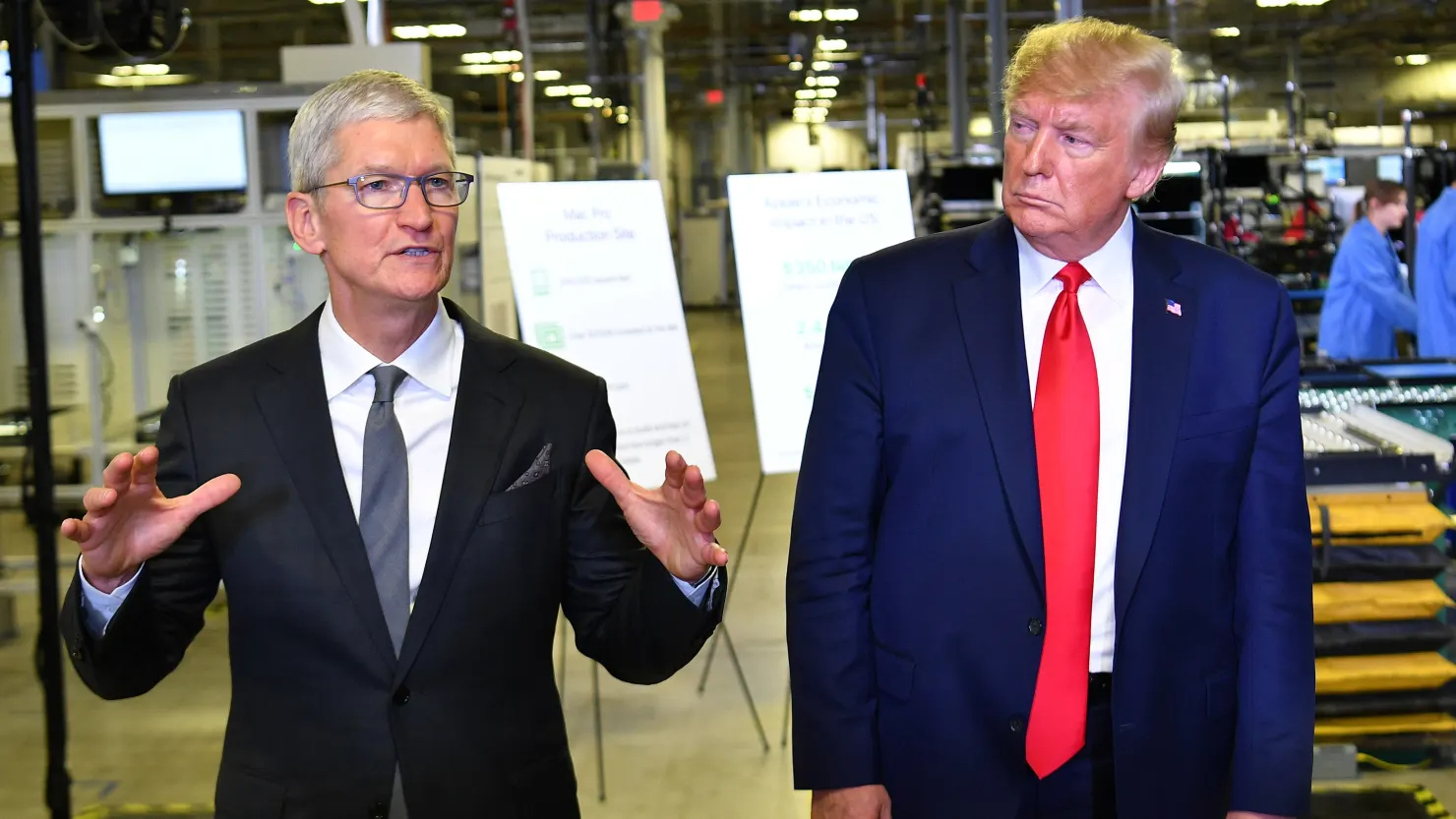
    This is the latest jab at Apple from Trump, who over the past couple of weeks has ramped up pressure on the company and Cook to increase domestic manufacturing. Trump and Cook met at the White House on Tuesday, according to Politico.

    Treasury Secretary Scott Bessent said in an interview with Fox News on Friday that he was not part of the meeting at the White House but the Apple situation could be part of the Trump administration’s push to bring “precision manufacturing” back to the U.S.

    “A large part of Apple’s components are in semiconductors. So we would like to have Apple help us make the semiconductor supply chain more secure,” Bessent said.

    Cook gave $1 million to Trump’s inauguration fund and attended the inauguration in January. Apple has announced a $500 billion spend on U.S. development, including AI server production in Houston.

    Apple declined to comment for this story.

    The company said during its May 1 earnings report that it expects about $900 million in additional costs for tariffs in the current quarter. Cook said on the company’s earnings call that the tariff outlook was “very difficult to predict” past June.

    Foxconn, one of Apple’s main iPhone assembly partners, is spending $1.5 billion on expanding its India facilities, the Financial Times reported Thursday.

    Trump has made public criticisms of other major U.S. companies, including Walmart, during his trade war push, but the levies on a specific consumer product is a new step. The exact legal mechanism for the tariff is unclear.

    Trump followed up his post about Apple with another calling for a 50% tariff on products from the European Union. Taken together, the posts point to trade tensions increasing again after the U.S. had temporarily lowered many of its levies, including in an agreement with China.

    Apple also had to navigate tariff threats during Trump’s first term, when a 15% tariff on Chinese imports was being considered in 2019. At that time, Cook had a strong relationship with Trump and the final trade deal excluded core Apple products from the duties.

    As Apple is caught in the U.S. president’s crosshairs, the company is also seeing weak demand in China. On Friday the company hiked trade-in incentives for iPhones in China.

  • Walmart intends to increase the cost of goods for shoppers due to import taxes

    Walmart intends to increase the cost of goods for shoppers due to import taxes

    Walmart Inc. (NYSE: WMT), the world’s largest retailer, announced on Tuesday that it will begin raising prices on a broad range of consumer goods in the coming months, citing the intensifying impact of U.S. tariffs on Chinese imports and other global supply chain disruptions. The announcement marks a pivotal shift for the retail giant, which has long absorbed tariff-related costs to protect its price-sensitive customer base.

    The move comes as the Biden administration recently expanded tariffs on key Chinese goods—including electric vehicles, semiconductors, and solar components—adding $380 billion in new levies and pushing the average U.S. tariff rate to its highest level in decades. Walmart executives now say the “buffer period” is ending.

    “We’ve managed to shield our customers from much of the trade war’s fallout over the last five years,” said John Furner, President and CEO of Walmart U.S., during the company’s Q1 2025 earnings call. “But with the latest round of tariffs and persistent supply chain inflation, we expect to pass through more costs to consumers.”

    Walmart sources a significant portion of its merchandise—especially electronics, apparel, and home goods—from Asia, with China historically representing over 25% of its import base. While the company has diversified its supply chain in recent years, new tariffs and retaliatory measures by trading partners are making global procurement increasingly expensive.

    “The global tariff environment has changed materially,” said Chief Financial Officer John David Rainey. “These are not short-term headwinds. They are structurally altering input costs, shipping dynamics, and product margins.”

    Walmart indicated that categories likely to see the sharpest price increases include:

    • Consumer Electronics: Affected by 25% tariffs on Chinese-made components such as microchips and lithium-ion batteries.
    • Home Appliances: Including air conditioners and washing machines, many of which rely on Chinese steel and circuit boards.
    • Seasonal Goods and Apparel: Where production has been slower to move away from China or Vietnam.

    Company officials declined to specify the exact price increases but confirmed that in-store and online pricing adjustments will begin rolling out by mid-summer.

    Walmart’s announcement underscores what many economists have long warned: that while large corporations initially absorbed much of the tariff shock, the cumulative effect is eventually borne by consumers.

    “Tariffs function like a hidden tax on the American middle class,” said Beth Ann Bovino, U.S. Chief Economist at S&P Global. “For years, retailers buffered the impact. But the dam is breaking.”

    Consumer watchdog groups are now bracing for inflationary pressures to accelerate again. The Consumer Price Index (CPI) rose 0.4% in April—driven largely by food, energy, and household goods—and economists say a wave of retail price hikes could fuel another surge.

    At Walmart, average basket prices are still up 7% year-over-year, even before the new tariffs fully hit shelves.

    The price hikes are also expected to become a flashpoint in the 2024 presidential race, with both parties accusing the other of mismanaging trade policy.

    While President Biden has defended the tariffs as “strategic economic tools” to counter unfair practices and promote U.S. manufacturing, Republicans have blasted the levies as regressive and inflationary.

    “Every time Washington escalates a trade war, working families pay the price,” said Senator Josh Hawley (R-MO). “Walmart’s warning is just the beginning.”

    At the same time, labor unions and domestic manufacturers have welcomed the tariffs, arguing they level the playing field and create American jobs. The CHIPS Act and Inflation Reduction Act, for example, have spurred billions in U.S. investment.

    To its credit, Walmart has so far navigated geopolitical turbulence better than most. It expanded sourcing in Mexico, India, and Vietnam, invested heavily in automation, and secured long-term logistics contracts to buffer freight volatility. Analysts have praised its supply chain agility and price discipline.

    But the latest wave of tariffs, especially those targeting raw materials and components used in American-assembled products, has created what executives call an “inescapable cost environment.”

    “We’re not just importing finished goods anymore,” said Rainey. “Tariffs now hit upstream components that show up in U.S.-made items, too.”

    Despite the challenges, Walmart reiterated its commitment to affordability, especially as U.S. consumers become more price-conscious. The retailer reported better-than-expected Q1 earnings, with revenue rising 5.1% year-over-year to $162 billion, but cautioned that margins will tighten in the coming quarters.

    Walmart’s decision to raise prices marks a turning point in America’s tariff-era economy. For years, the retailer’s scale and supply chain muscle helped mute the impact of trade wars. But with tariff walls rising and inflationary pressure mounting, even the strongest players are signaling that the burden is shifting—to consumers.

    Whether these hikes are short-term adjustments or a new normal remains to be seen. But for millions of Walmart shoppers, the checkout line is about to become the frontline of U.S. trade policy.


    Data Snapshot:

    • Tariff Exposure: Over 30% of Walmart’s imports originate from countries impacted by new U.S. tariffs.
    • Consumer Price Impact: Walmart basket prices have increased 7% YoY; projected to rise another 3–5% by Q3 2025.
    • U.S. Tariff Revenue: $92 billion in 2023 (U.S. Treasury), triple 2016 levels.
    • Top Categories at Risk: Electronics, home goods, small appliances, and apparel.
    • Sourcing Shift: 12% increase in India and Mexico sourcing since 2022.
  • Honda is pushing back its electric vehicle plant plans in Canada by at least two years

    Honda is pushing back its electric vehicle plant plans in Canada by at least two years

    A year after the $15-billion electric vehicle project in Ontario was announced, Honda Canada is pushing the project back.

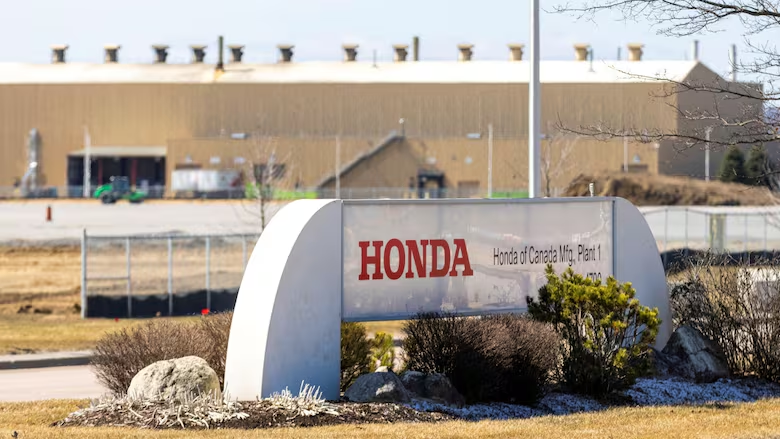
    The company said Tuesday it would put the plan to build an EV supply chain — which included a proposed EV battery plant and retooled vehicle assembly facility — in Alliston, Ont., on hold for about two years. 

    “Due to the recent slowdown of the EV market, Honda Motor has announced an approximate two-year postponement of the comprehensive value chain investment project in Canada. The company will continue to evaluate the timing and project progression as market conditions change,” Honda Canada spokesperson Ken Chiu told CBC News in an email statement on Tuesday.

    Honda also said the decision “has no impact” on current employment or production at the Alliston manufacturing facility.

    Honda’s EV project in Canada includes a retooled assembly plant and an electric vehicle battery plant in close proximity, as well as two key battery parts facilities located elsewhere in Ontario.

    The project was expected to see the two main plants create 1,000 jobs on top of retaining the existing 4,200 jobs at the assembly plant.

    Under the original plan, the plant was set to produce up to 240,000 vehicles per year when fully operational in 2028.

    The project was first announced in April 2024 at an event that included then-prime minister Justin Trudeau and Ontario Premier Doug Ford and was to receive support from the federal and Ontario governments.

    Ottawa was set to give the Japanese automaker around $2.5 billion through tax credits, while Ontario committed to provide up to $2.5 billion in support directly and indirectly. However, Jennifer Cunliffe, a spokesperson for Ontario’s minister of economic development, job creation and trade, said the province hasn’t doled out any of that money to Honda yet.

    Ford told reporters at a news conference that he was confident Honda would continue making cars in the province.

    “When I talked to Honda, they promised us they’re going to continue on with that expansion,” Ford said of the pause. “So we’ll just see how that moves forward. But we’re very confident that we’ll continue producing Honda vehicles here in Ontario.”

    The premier also said he would hold automakers that pull out of Ontario “accountable,” should that happen.

    Richard Norcross, the mayor of New Tecumseth, which Alliston is part of, said he was still optimistic the project will come online, even though that day is further in the future now.

    “Obviously a two-year delay, that’s not desirable, but understandable [given] what’s going on in the world today,” Norcross said. “I think the process is slowing down, but I don’t think they’ll walk away from the process. I believe [and] they believe that the EV battery is the way to go and that will be the future.”

    Tariffs and smaller appetite for EVs having an impact

    Flavio Volpe, president of the Automotive Parts Manufacturers’ Association, said Tuesday’s decision shows how U.S. tariffs continue to be felt in the auto industry.

    “We hope to find a solution for Canada soon that restores the confidence Honda had when it made its historic EV expansion decision here,” Volpe wrote in an email statement.

    In reporting its latest financial results Tuesday, Honda Motor Co. said its profit for the financial year through March fell 24.5 per cent from the previous year and warned that U.S. President Donald Trump’s tariffs will worsen its earnings. 

    The Tokyo-based automaker said its annual profit totalled 835.8 billion yen (around $8 billion Cdn), down from 1.1 trillion yen in the previous year. Annual sales edged up 6.2 per cent to nearly 21.69 trillion yen (around $205 billion Cdn).

    Officials stressed major uncertainties remain, but said they felt it was important to give a realistic projection, no matter how pessimistic it might be.

    Chief executive Toshihiro Mibe said Honda will do its best to minimize the impact from tariffs. In the long term, Honda will transfer auto production to U.S. plants and rethink its investment plans. All decisions will be made “very carefully,” Mibe told reporters.

    David Adams, president and CEO of Global Automakers of Canada, says that while tariffs were a factor in today’s announcement, the slower than expected uptake of EVs also likely played a big role.

    “Is electrification moving forward? Sure, it is. Are consumers continuing to buy EVs? Yes,” Adams said. “But we’re not seeing the sort of [rapid] uptake of EVs that … environmentalists and some in government anticipated.”

    Despite that, Adams says EVs are still the way of the future — he says trillions have been spent globally to transition from traditional internal combustion engines to battery electric instead, and carmakers won’t simply walk away from those commitments. “But those investments might not just come to fruition as quickly as maybe originally anticipated.”

    Gal Raz, a professor of operations management and sustainability at Western University’s Ivey Business School, agrees that today’s news comes as a result of tariffs and softer-than-expected demand for electric cars.

    He says while governments in Canada have made big investments in getting more EVs built — including investments in this paused Honda project — there hasn’t been as much work done to address issues with demand.

    Consumers are still worried about the upfront cost of battery EVs and the lack of charging facilities to keep these cars running. Raz says the latter has been a particular barrier.

    “That’s where I feel that the government has not done enough,” Raz said. He points to countries like Norway, where the network of charging infrastructure is extensive. Electric cars now outnumber gas-powered ones in Norway.

    Adams says he hopes the federal government will pause its zero-emission vehicle sales target, which aims to achieve 100 per cent zero-emission vehicle sales by 2035, given the amount of flux the industry is going through with U.S. tariffs and the slower uptake of EVs by consumers.

  • Stock prices jumped after the U.S. and China agreed to a 90-day pause in increasing tariffs, with Apple’s stock price rising by more than 6%

    Stock prices jumped after the U.S. and China agreed to a 90-day pause in increasing tariffs, with Apple’s stock price rising by more than 6%

    The world’s two superpowers have reached an accord on their bruising trade war—for 90 days, at least. On Monday, the U.S. and Chinese governments announced they had agreed to slash reciprocal tariffs for 90 days as they continue to hammer out details on a broader deal. Markets soared on the news, with the S&P 500 gaining 3.26%.

    Though Trump has imposed wide-ranging tariffs against all imports coming into the U.S. during his second term in office, China has been his primary target. Trump has argued that the Chinese government has not done enough to stem the flow of fentanyl into the U.S.

    As part of Monday’s deal, both countries will reduce their so-called “reciprocal” tariffs from 125% to 10%, though a 20% tariff imposed by Trump related to fentanyl will remain—meaning U.S. levies will be 30%. Treasury Secretary Scott Bessent hailed the agreement, describing it to reporters on Monday as “substantial progress” between the two countries. He told CNBC in an interview that he does not want a “generalized decoupling from China,” but rather a more strategic approach to make U.S. supply chains more resilient.

    Stocks surge

    While investors expected booming markets under Trump’s second term, his insistence on a severe tariff campaign against many of the U.S.’s top trade partners has sent markets reeling. Stocks fell dramatically after Trump’s Liberation Day event in early April, where he introduced the tariff plan. Though they have largely recovered from the dip, markets have yet to rise to the levels achieved around his inauguration.

    Monday’s announcement—the latest reversal by the Trump administration from its initial trade strategy—spurred stocks to rise to a two-month high. Though Bessent has argued that the administration is prioritizing moving manufacturing of key industries such as steel and semiconductors to the U.S., much of the country’s economy remains dependent on imports from China. On Monday, Trump described Monday’s deal as a “total reset,” while adding that it doesn’t apply to specific sectors such as cars, steel, and aluminum.

    Still, the long-awaited accord represents a temporary pause, with investors still anxious for further clarity. Bessent told CNBC on Monday that the two countries would be meeting again in the next few weeks for a “more fulsome agreement.” He added in a later interview with Bloomberg that the reciprocal tariffs with China will likely not fall below 10%.

    Wedbush analyst Daniel Ives argued on Monday that the deal meant new highs for the market—and tech stocks in particular—are possible for 2025. “These massive tariff reductions at this time likely take a recession off the table for now in our view,” he wrote. Apple’s shares rose 6.31% on Monday, while Amazon rose 8.07%.

    A key question is still on the table for both countries: rare earth minerals. Dexter Roberts, nonresident Senior Fellow at the Atlantic Council, argued to Fortune that China will likely use the key resources, which are used in everything from smartphones to missiles, as a negotiating chip. “Dominating this sector is probably one of their most important sources of leverage over the U.S. and over the world,” he said.

  • The world’s largest automaker reports a 21% profit drop as tariffs take a toll

    The world’s largest automaker reports a 21% profit drop as tariffs take a toll

    Toyota Motor forecast a 21% profit decline for the current financial year on Thursday, as the strain from US President Donald Trump’s tariffs and an appreciating yen take some of the shine off strong demand for hybrid vehicles.

    The world’s top-selling automaker expects operating income to total 3.8 trillion yen ($26 billion) in the year to March 2026, versus 4.8 trillion yen in the financial year that just ended. That was roughly in line with the 4.75 trillion yen average of 25 analysts surveyed by LSEG.

    Toyota faces the risk of being hit by widespread fallout from Trump’s tariffs, not only from the impact on its US-bound exports but also because of the potential for a downturn in consumer sentiment in the US and elsewhere. Price rises can lead to a decline in consumer sentiment.

    The lower profit for the coming year was due to the negative impact from a stronger yen, as well as higher material prices and the impact of tariffs, Toyota said in a presentation.

    Like other global automakers doing business in the world’s top economy, Toyota could face high labor costs and be forced to spend more on investment, if it decides to expand its US production base further.

    While Toyota has seen its vehicle sales in China fall less than other Japanese automakers, it has still struggled to halt a sales decline in the world’s biggest auto market amid heavy competition from Chinese brands.

  • The Bank of England has lowered interest rates in response to the threat that tariffs present to global economic growth

    The Bank of England has lowered interest rates in response to the threat that tariffs present to global economic growth

    The Bank of England has cut its main interest rate by a quarter of a percentage point, citing lower UK inflation.

    The move, which had been widely expected, brings the main cost of borrowing in Britain to 4.25%. It is the fourth cut the central bank has made since it started reducing rates in August last year.

    The central bank said in a statement that “substantial progress” on reducing inflation over the past two years has allowed it to gradually cut rates.

    But it also said that “uncertainty surrounding global trade policies has intensified” since US President Donald Trump’s tariffs have ignited a trade war in recent weeks.

    “Prospects for global growth have weakened as a result of this uncertainty and new tariff announcements, although the negative impacts on UK growth and inflation are likely to be smaller,” the central bank said.

    Bank officials thought the global trade war was likely to drag on the UK economy, according to the minutes of the bank’s Wednesday policy meeting.

    Speaking to reporters Thursday, Bank of England Governor Andrew Bailey said he welcomes reports that the United Kingdom and the United States are set to announce a trade deal later in the day.

    “It will help to reduce uncertainty,” he said, adding that the UK is “a very open economy” that is affected by the consequences of Trump’s tariffs and trade policies applied to other countries.

    “I hope the UK agreement, if it is indeed announced this afternoon, will be the first of many,” Bailey added.

    Last month, he said he was concerned about the potential “growth shock” to the UK from Trump’s tariffs.

    In an interview with CNBC, Bailey said the “sheer level of uncertainty” Trump’s trade policy injected into the global economy means that businesses are more likely to hold off making investments and consumers will be less willing to spend.

    In April, a closely watched survey of UK businesses already showed a contraction in output. The PMI index based on the survey registered its lowest level since November 2022.

    Also in April, the International Monetary Fund downgraded its economic growth forecasts for numerous countries, including the United Kingdom, and joined a chorus of warnings from economists and business leaders about economic damage from US tariffs.

    Bailey, in his interview with CNBC, said the higher US tariffs could also lower UK inflation. That would give the Bank of England more room to cut rates if the economy needed a boost.

    Bailey cited the potential for goods to be redirected from the United States to Britain. One way this could happen is if the UK sees an influx of low-priced Chinese exports, diverted from the US. More goods on the market mean more competition, which tends to lower prices.

  • Trump announces trade agreement with the United Kingdom, marking his first deal since imposing tariffs

    Trump announces trade agreement with the United Kingdom, marking his first deal since imposing tariffs

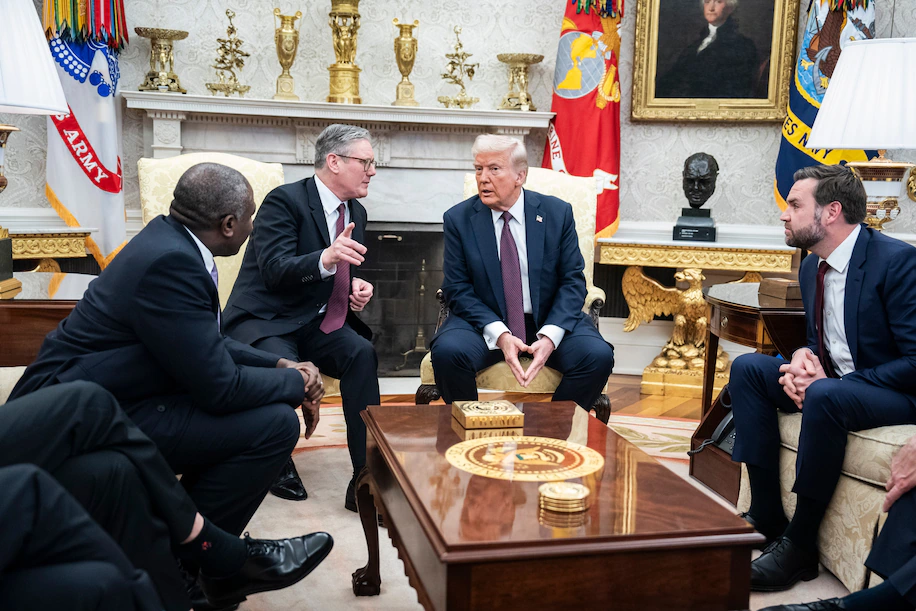
    President Donald Trump on Thursday announced a new trade pact with the United Kingdom that he touted as likely just the first of many agreements with countries around the world, as the administration races to mitigate the damage from its global trade war.

    Joined in the Oval Office by several of his top advisers and the new British ambassador to Washington, Trump praised the deal and said it would lower trade restrictions for U.S. exporters while bringing the two countries into closer economic alignment.

    Commerce Secretary Howard Lutnick and other administration officials said the deal would create $5 billion in economic opportunities for U.S. exports, saying Britain had agreed to step up purchases of ethanol, beef, planes and other products while lowering tariffs and other domestic restrictions. Trump said the 10 percent minimum tariff he applied to all countries would remain in effect on the United Kingdom, but that certain British exports — such as automobiles — would be spared higher tariffs on those products. Jet engines and plane parts will also be subject to reduced tariffs, and the countries will also agree to lower tariffs on steel and aluminum as they work to parry cheap Chinese imports.

    “Things are going to move very quickly both ways,” Trump said. “It’s so good for both countries.”

    The announcement came as Trump officials face intense pressure to assure investors unnerved by fluctuations in the stock market, driven by uncertainty about U.S. trade policy. In early April, Trump announced tariffs on more than 70 countries worldwide, but he then implemented a 90-day pause to allow for negotiations before they went into effect. That pause provided some relief to investors, and markets have been buoyed by the prospect of deals to lower the import duties. All three stock indexes climbed on the news of the deal with the United Kingdom.

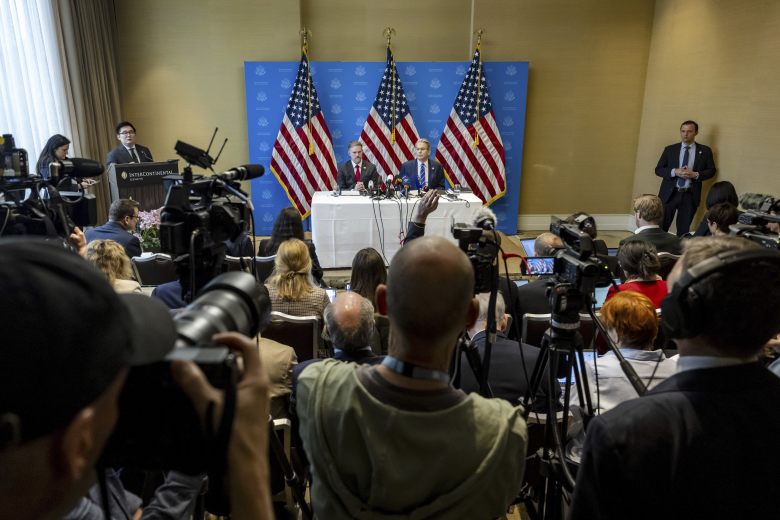
    But experts say major headwinds remain. The U.S. currently has more than 145 percent tariffs on China, one of its biggest trading partners, and prospects for a quick resolution appear remote. Treasury Secretary Scott Bessent is expected to travel to Switzerland this weekend for talks with his Chinese counterparts, and experts have said the convulsions from the global trade shock are continuing to ripple through the economy.

    Critics have also expressed skepticism of the significance of the “deals” the White House is attempting to negotiate in strikingly little time. Agriculture Secretary Brooke Rollins on Fox Business Thursday morning referred to the deal as one “in concept” and said she would be traveling to Britain soon to hammer out further details.

    The White House distributed a three-page fact sheet that included some high-level areas of agreement but few details of how the agreements would work in practice. Free trade agreements can run into the thousands of pages and are usually the product of months or even years of painstaking negotiations among technical experts who fight over regulations around issues such as the precise placement of the brake lights on cars.

    Economists say the deal will make little difference to the U.S. economy, with many continuing to forecast a recession later this year. Although lower auto, steel and aluminum tariffs on trade with the U.K. may offer “limited relief” for Americans, those measures are unlikely to make much of a dent as long as the United States’ 10 percent blanket tariff remains in place, said Michael Pearce, deputy chief economist at Oxford Economics.

    Total trade between the United States and Britain amounts to less than $150 billion per year.

    “The average U.S. tariff is still set to remain in double digits, which will deliver a big hit to real incomes in the U.S. which will cause growth to slow sharply in the second half of the year,” Pearce wrote in an email. “As a result, we are not minded to change our forecasts based on this deal, or likely future deals.”

    Still, the agreement marked a major breakthrough for British Prime Minister Keir Starmer, who has tried to stay on Trump’s good side even as the president has infuriated European allies with new tariffs and a tilt toward Russia.

    Starmer visited the White House in February armed with charm and a signed invitation to a royal audience with King Charles III, and repeatedly lavished praise on Trump and his top officials in a call he made to the White House during Trump’s announcement. British leaders have long sought to bolster economic ties to the U.S. to make up for the trade losses of their 2020 departure from the European Union. Starmer, the leader of the Labour Party, made the bet he could cross political lines to build a partnership with Trump. (Trump referred to Britain as the U.S.’s “oldest” ally, a claim France might object to.)

    “You’ve done what you said you would do,” Peter Mandelson, the British ambassador to the U.S., said while standing beside Trump. “You have been true to your word.”

    Trump also said he personally intervened in talks to lower tariffs on British automobile firms such as Rolls-Royce and Bentley, which he called some “very special cars.” “I said yeah let’s help them out with that one,” Trump said. Trump said tariffs should be higher on cars that a larger number of Americans purchase.

    Other U.S. trade partners have struggled to gain traction with Trump’s team in recent weeks, noting the disparate views about the purpose of the tariffs among different officials. Come up with an offer that would satisfy Treasury Secretary Scott Bessent, one senior diplomat noted, and it was likely to be a nonstarter for trade adviser Peter Navarro, for instance. A different diplomat said the tone changed about two weeks ago, with the team of U.S. Trade Representative Jamieson Greer taking a clearer lead in the talks and the administration seeming to become more serious about hammering out agreements.

  • Why the Fed Might Keep Interest Rates Steady Until September

    Why the Fed Might Keep Interest Rates Steady Until September

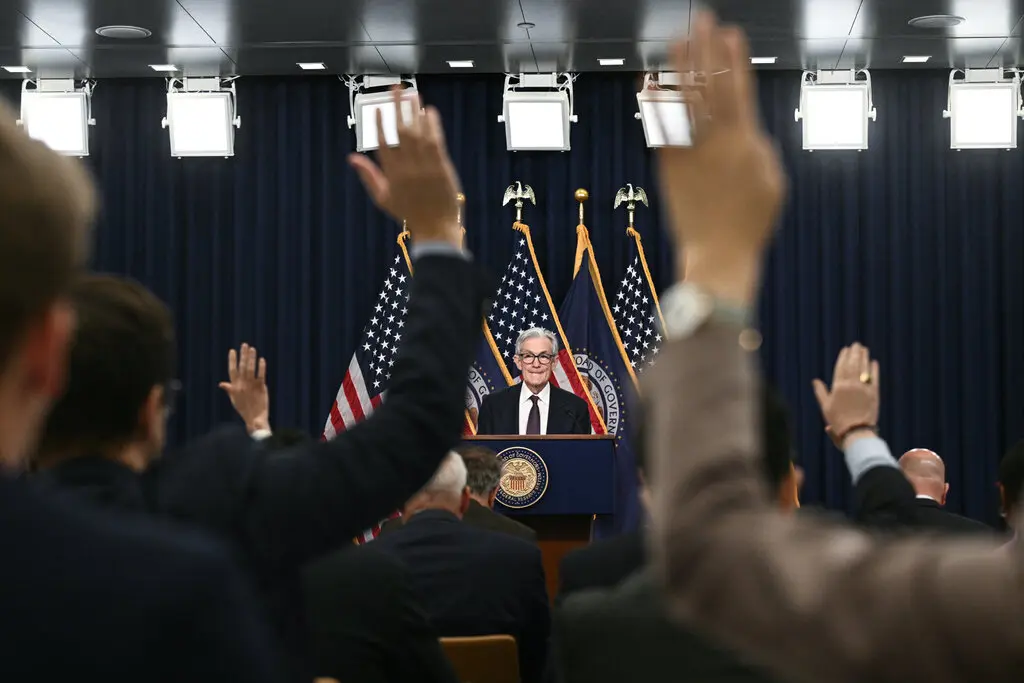
    More than 20 times during a roughly 45-minute news conference on Wednesday, Jerome H. Powell, the chair of the Federal Reserve, referenced the idea of waiting to see how President Trump’s policies would ripple through the economy before taking any action on interest rates.

    Mr. Powell, who spoke after the Fed opted to extend a pause on interest rate cuts, said the central bank had the flexibility to do so because the economy overall was still on solid footing. He also stressed that it was the most prudent decision at a time when there was so much uncertainty about how much tariffs would raise inflation and slow growth.

    “It’s really not at all clear what it is we should do,” he told reporters.

    Forecasts for when the Fed will restart interest rate cuts have been in a constant state of flux, whipsawing on every twist and turn in the global trade war or on any new data point that sheds a sliver more light on the state of the economy. But what is starting to set in is that the Fed may in fact be on hold for quite a bit longer than initially expected — and far longer than Mr. Trump would like. The president on Thursday again pressed Mr. Powell to lower interest rates, calling him a “fool.”

    Economists are increasingly coalescing around September as the most plausible time for the Fed to restart interest rate cuts. Some have penciled in an even later start date. The longer the Fed waits, the higher the odds that officials may have to lower borrowing costs more aggressively to shore up the economy.

    “The likelihood of them moving doesn’t really start to increase until you get to the September meeting,” said Tiffany Wilding, an economist at asset manager Pimco. She said a larger-than-usual half-point cut would be firmly on the table at that point and that she expects the Fed to keep lowering rates into the next year.

    “I don’t think that using the playbook of 25 basis point increments per meeting for cuts is the right one to use here,” Ms. Wilding said, pointing to the possibility that the economy could weaken abruptly.

    Mr. Powell on Wednesday was clear that the current backdrop was not one in which the Fed could be pre-emptive with interest rate cuts — unlike during Mr. Trump’s first-term trade war when inflation was subdued and the economy was at risk of stagnating.

    That is primarily because inflation has been running above the central bank’s 2 percent target for four years, but also “because we actually don’t know what the right response to the data will be until we see more data,” Mr. Powell said.

    What that means in practice is that the Fed will need to have concrete evidence in hand that the economy is languishing before feeling confident that it can lower interest rates without having to worry about stoking inflation. That could take time to show up.

    “In their view, they can’t really make policy on the basis of a forecast,” said Dean Maki, chief economist for Point72, a hedge fund. “Right now, there is just too much uncertainty about where policy is going to go, about how that policy is going to ripple through the economy and about what the timing of that is.”

    So far, the data the Fed has points to low layoffs and an overall solid labor market. Spending has slowed but not stalled completely. The question is how long that lasts if consumers have already turned much more downbeat about the outlook, and businesses are seeing early signs of sluggish sales and have begun to retrench.

    Mr. Maki is still forecasting a July cut, but said he could envision the Fed pushing that back to September if there are not yet “significant signs” that the labor market is deteriorating. That would include rising unemployment claims and a couple of soft monthly jobs reports.

    Traders in federal funds futures markets are still holding out some hope for a downshift in borrowing costs in July, after scaling back their bets for a June move on Wednesday. But there are reasons to think that the data will not have turned decisively enough in time for that.

    The Trump administration is working against a July 9 deadline to mint trade deals with countries after pausing more onerous tariffs initially announced in April. On Thursday, it is set to announce its first agreement with the United Kingdom.

    Top officials will also meet with their counterparts in China in Geneva, Switzerland this weekend to work toward a deal to reduce the minimum 145 percent tariffs Mr. Trump put in place on imports from the country.

    White House officials are also wrangling with lawmakers to pull together a multi-trillion-dollar tax cut package by July 4.

    With trade policy particularly fluid, Christopher J. Waller, a Fed governor, acknowledged last month that it was unlikely that “anything dramatic” would happen in the economic data before there was more clarity on that front.

    “I don’t think you’re going to see enough happen in the real data in the next couple of months, until you get past July,” he said. The Fed will have only two more job reports in hand by the time it meets at the end of that month in addition to three inflation reports.

    Much will depend on how significantly tariffs, which are a tax on imports, stoke inflation. If protectionism leads to persistently higher prices, that would have much more far-reaching consequences for the economy than a one-off spike. A lot will also depend on how consumers respond to the increase.

    Ms. Wilding expects the pop in inflation from tariffs to come before any notable rise in the unemployment rate. One theory is that higher prices will cause consumers to cut back on spending, further weighing on companies’ already-strained margins. Layoffs may follow if the downshift is big enough, but they may not be the first way in which businesses try to reduce costs given the acute labor shortages most faced in the aftermath of the pandemic.

    Michael Feroli, the chief economist at JPMorgan, expects the labor market to weaken enough by late summer to prompt the Fed to cut in September. Kathy Bostjancic, the chief economist at Nationwide, has also penciled in a cut then, but thinks the Fed will have to go big with a half-point reduction.

    Other economists see the Fed on hold for even longer. Deutsche Bank’s team has the first cut coming in December. Larry Meyer, a former Fed governor who is now an economist at research firm LHMeyer, expects no rate cuts until 2026.

    “The first thing the Fed has to do is contain inflation expectations in word or deed,” he said. “I think that means not easing this year.”

    Market-based measures of inflation expectations, to which the Fed pays closest attention, suggest that inflation will indeed remain contained after jumping this year. Survey-based gauges paint a more worrying picture, a divergence that some economists say is a sign that expectations about future inflation are not as under control as officials would like.

    Mr. Powell on Wednesday said there was “no cost” to the Fed waiting for now to make a policy move. The central bank was “well positioned to respond in a timely way to potential economic developments,” he said, suggesting the central bank would quickly adjust course if the circumstances changed. If the Fed saw a “significant deterioration,” Mr. Powell said, in the labor market, it would “look to be able to support that.”

    He added one caveat, however: “You’d hope it wasn’t also coming at a time when inflation was getting very bad.”
  • L.A. Finance Gathering Marked by Hope and Anxiety

    L.A. Finance Gathering Marked by Hope and Anxiety

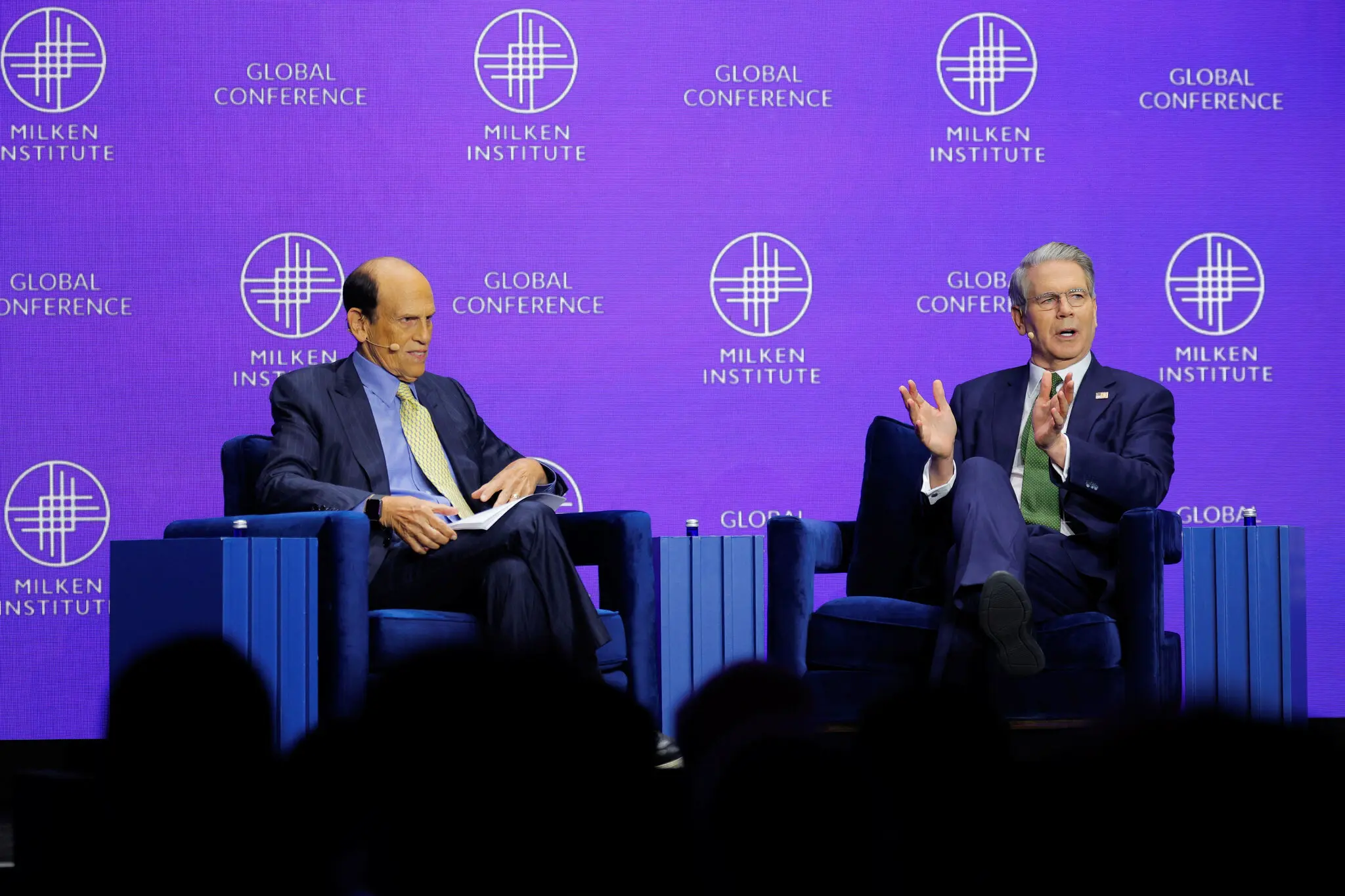
    Beneath the grand chandeliers of the International Ballroom at the Beverly Hilton Hotel, at rooftop bars and at private parties at billionaires’ mansions, there was a mix of emotions among the financial titans gathered in Los Angeles this week.

    Many of the thousands of attendees at the Milken Institute Global Conference — a who’s who of finance and corporate America — remained anxious amid volatile markets, continuing trade tensions and deep cuts to the federal government.

    “I’m a C.E.O., I talk to a lot of C.E.O.s, and there is nervousness there,” Kamal Bhatia, president and chief executive of Principal Asset Management, said while he sat on the same stage that hosts the Golden Globes.

    But there was also a palpable sense of growing optimism after a rocky three-month start to President Trump’s second term: “I’m optimistic about technology, I’m optimistic about the direction of the economy, I’m optimistic about cutting costs,” said Tony Minella, co-founder and president of Eldridge Industries, an asset management firm. “I think there is a lot of excitement in the world right now, and it’s a fantastic time to live.”

    08milken superJumbo
    The Milken Institute Global Conference was held at the Beverly Hilton Hotel in Los Angeles. (Eric Thayer/Bloomberg)

    The mood at the annual West Coast confab echoed the mood in financial markets.

    After Mr. Trump’s unexpectedly high tariffs sent stocks tumbling, there has been some relief from the initial panic as the administration has offered concessions and promoted deal talks that it says will lower tariffs.

    The S&P 500 dropped almost 20 percent below its peak in February, but it has since rebounded, recovering roughly two-thirds of its losses.

    But despite the recovery, uncertainty remains. Skeptics on the sidelines of the conference suggested that some fund managers were simply painting a rosier outlook to avoid spooking the investors in their funds. Others described it as more hope than conviction.

    “Nobody, myself included, can say how this is going to end,” said Ron O’Hanley, chairman and chief executive of State Street. “There may be wishful thinking in all that.”

    08BIZ MILKEN spiegel zlkj superJumbo
    Evan Spiegel, chief executive of Snap, speaking at the Milken Institute. Mayor Karen Bass of Los Angeles, right, and Cinny Kennard, executive director of the Annenberg Foundation, sat beside him. (Patrick T. Fallon/Agence France-Presse/Getty Images)

    Scott Bessent, the Treasury secretary, set the tone on Monday morning, as he tried to soothe the financiers’ concerns. He had started his mission the night before, hosting a private dinner for a handful of investors, according to some of the attendees.

    Many in the audience on Monday were left hopeful that tariffs would ease as trade deals were made, buffeted by more pro-growth, pro-business policies like tax cuts and deregulation to come later in the year. But there was also an awareness that the reality may still look very different. Business is on hold, corporate deal making is dormant, and the longer that continues, the worse the consequences could be.

    With that doubt, many speakers at the conference noted that they were looking more closely at investing in Europe and other parts of the world, diversifying away from the United States’ uncertain future.

    Pension funds, university endowments and insurance companies, which have been heavily invested in the United States in recent years, are beginning the slow process of reassessing where they put their money going forward.

    Kim Lew, president of the Columbia Investment Management Company, the endowment for Columbia University, noted that while there was good reason so many fund managers became heavily exposed to the U.S. economy, “I think we all wish we had invested in the world more globally.”

    Investors souring on U.S. markets fed into another widely discussed concern: the role of the dollar as the world’s reserve currency, and its importance in supporting the government’s $36 trillion of debt.

    The corollary of trade deficits is when international investors hold more dollars that have been reinvested in U.S. assets like the government’s debt. If investors begin to back away, either because of tariffs or geopolitics or declining confidence in the stability of the dollar, then the government’s ability to continue financing its debt could be called into question.

    “I believe the underlying foundation of the dollar and the Treasury market has been eroding over the last number of years, and we better pay attention to it soon,” said Alan Schwartz, executive chairman of Guggenheim Partners.

    Late on Tuesday afternoon, Michael Milken took the stage for a rare keynote speech. Since the conference began in 1998, he has given just two speeches — in 2000 and 2017.

    Mr. Milken is widely credited as the father of the high-yield bond market, having devised a way in the 1980s to lend to risky companies that banks and other financial institutions had typically shunned.

    In 1990, he pleaded guilty to securities fraud and conspiracy. He served just under two years of a 10-year prison sentence and was barred from the securities industry for life. He was pardoned by Mr. Trump in 2020.

    In his keynote speech, Mr. Milken made a case for the American dream and the importance of economic freedom, equality of opportunity, public health and broad access to education.

    “One of the things that has differentiated America from almost every other country in the world is that you have a chance to try, and if you fail, you have a chance to try again,” he said. He added that “quite often, people in our own country have forgotten how lives are changed by freedom.”

    Immigration — nor the aggressive detention and deportations that are upending immigrant communities in cities like Los Angeles — was not a big focus of the official discussions at the Milken Institute gathering.

    But Mr. Milken chose to conclude his own remarks by celebrating immigrants and referring to the words in President Ronald Reagan’s final speech from the White House in 1989.

    “When people think about this speech, they often think about it as an ode to our immigrants in this country and how they have come to this country for the hope of a better life, and they renew each of our focus on the importance of freedom,” Mr. Milken said. “And they make significant contributions to us.”